The Anunnaki: Gods, Astronauts, or a Story We Rewrote?
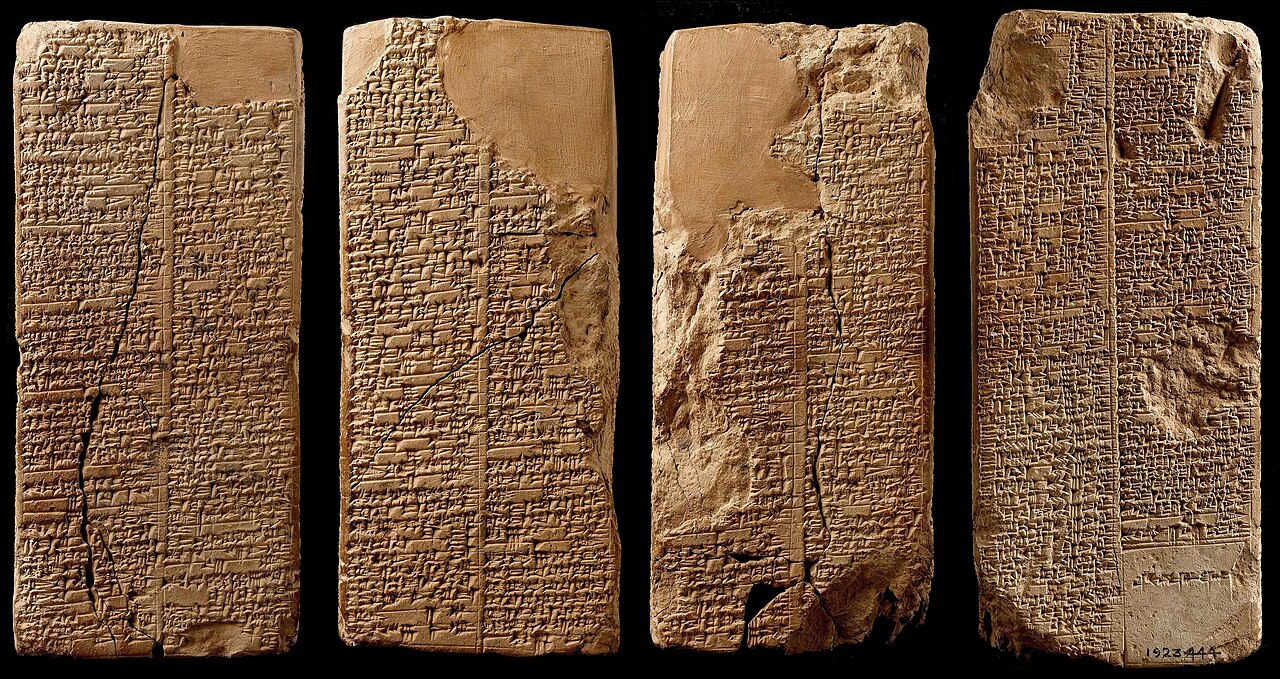
Three men handed us three different Anunnaki: the Sumerian scribes, then Zecharia Sitchin, then David Icke. Here they are layer by layer, and every claim on this page wears its evidence.
Say "Anunnaki" out loud and you'll get one of three reactions. A historian pictures a Sumerian pantheon. A late-night documentary fan pictures astronauts mining gold. A conspiracy forum pictures shape-shifting lizards running the banks. Remarkably, all three are talking about the same word off the same clay tablets. The gap between them is the whole story, so let's open the file from the bottom up.
01Who they were, before we got hold of them
In the oldest texts, the Anunnaki are simply the great gods of Sumer, Akkad, Assyria and Babylon. The name comes from An (sky) and Ki (earth), and the standard scholarly reading is "Princely Offspring" or "Royal Seed."
| Period | What they were |
|---|---|
| Early Sumerian | Heavenly deities of immense power |
| Post-Akkadian | Gods who decree the fates of humanity |
| Old Babylonian | Distinguished from the Igigi, the lesser gods |
| Middle Babylonian on | Increasingly underworld deities |
| Late Babylonian | 300 in heaven, 600 in the underworld |
The Anunnaki were the ruling deities of the Sumerian pantheon who "decreed the fates of mankind" and met in a divine assembly. The name means "Princely Offspring." This is settled Assyriology.
Sitchin's famous rendering, "Those who from heaven to earth came," is rejected by mainstream Assyriologists. It is a reinterpretation, not the standard translation.
The core decision-makers were the Seven Who Decree: An, Enlil, Enki, Ninhursag, Nanna, Utu and Inanna. And note the arc in the table: sky gods who slowly became underground gods, the exact path the serpent takes across world mythology, from heavenly teacher to thing-in-the-dark. Hold that thought.
02Built to work
The most detailed creation account, the Atra-Hasis, is bracingly unsentimental. The lesser gods, the Igigi, do the back-breaking labor. After forty days they throw down their tools and rebel. Enki proposes a fix: make a new being to carry the load. He and the birth goddess Ninhursag form humans from clay mixed with the blood and flesh of a slain god, the one "who had intelligence."
In the texts, humans are created as a labor force for the gods, from earthly clay combined with a divine, specifically intelligent, component. This is what the tablets say.
Read forward, "clay plus divine intelligence to make a working hybrid" sounds like genetic engineering. That reading is coherent but interpretive.
Creation-from-clay is a widespread Near Eastern motif, and "blood" almost certainly means life-force, not literal DNA. Reading modern biotech into a Bronze Age poem is anachronistic. Both readings belong on the table.
03Sitchin's Nibiru
In 1976, Zecharia Sitchin's The Twelfth Planet turned the pantheon into a space program. His Anunnaki are extraterrestrials from a planet, Nibiru, on a 3,600-year orbit. They came 450,000 years ago to mine gold, engineered humans from Homo erectus to do the digging, and seeded civilization.
The entire Nibiru / ancient-astronaut framework is Sitchin's interpretation. It is a hypothesis layered on top of the texts, not something the texts state.
Every mainstream Assyriologist who has checked Sitchin's translations rejects them. Michael Heiser documented the specific errors (his "shem = rocket" is really "name/monument"). In Babylonian astronomy "Nibiru" is a crossing-point term tied to Jupiter, never a 12th planet, and no astronomer recognizes such a world.
None of which means he did nothing. Sitchin dragged Sumerian literature and its biblical parallels in front of millions of people who would never have opened a cuneiform textbook. Wrong translation, real doorway.
04Icke's reptilians
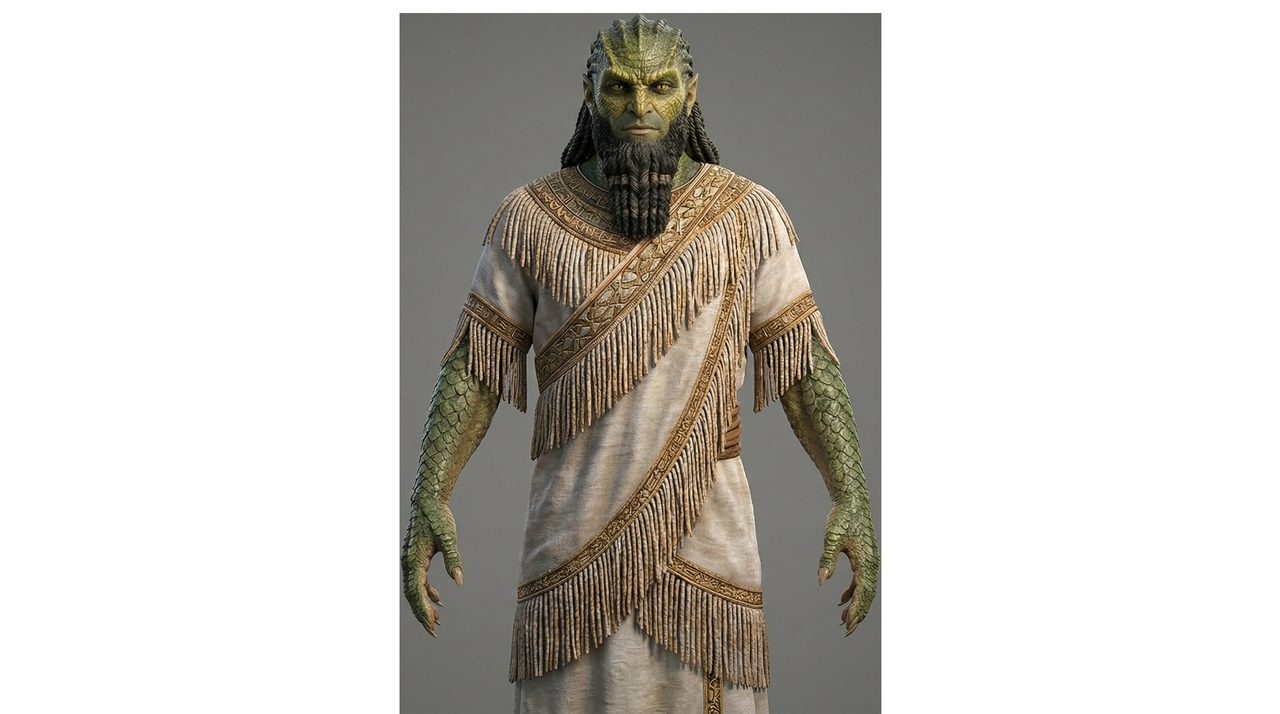
In 1999, David Icke's The Biggest Secret took Sitchin's astronauts and made them reptilian shapeshifters: interbred bloodlines, human disguises, secret control of royalty, banks and governments.
No Sumerian or Akkadian text describes the Anunnaki as reptilian. In the original art they are anthropomorphic, in horned caps, sometimes winged. The "reptilian" layer is Icke's 1990s synthesis of Sitchin, Theosophy's "serpent race," and even pulp fiction.
Handle with care: the "secret shape-shifting world-controllers" narrative, which names families like the Rothschilds, mirrors the fabricated antisemitic Protocols of the Elders of Zion. Scholars (Lewis & Kahn, 2005) treat it as exactly that lineage. We keep the reptilian as neutral mythic lore here and go nowhere near the conspiracy.
05The part that is actually real
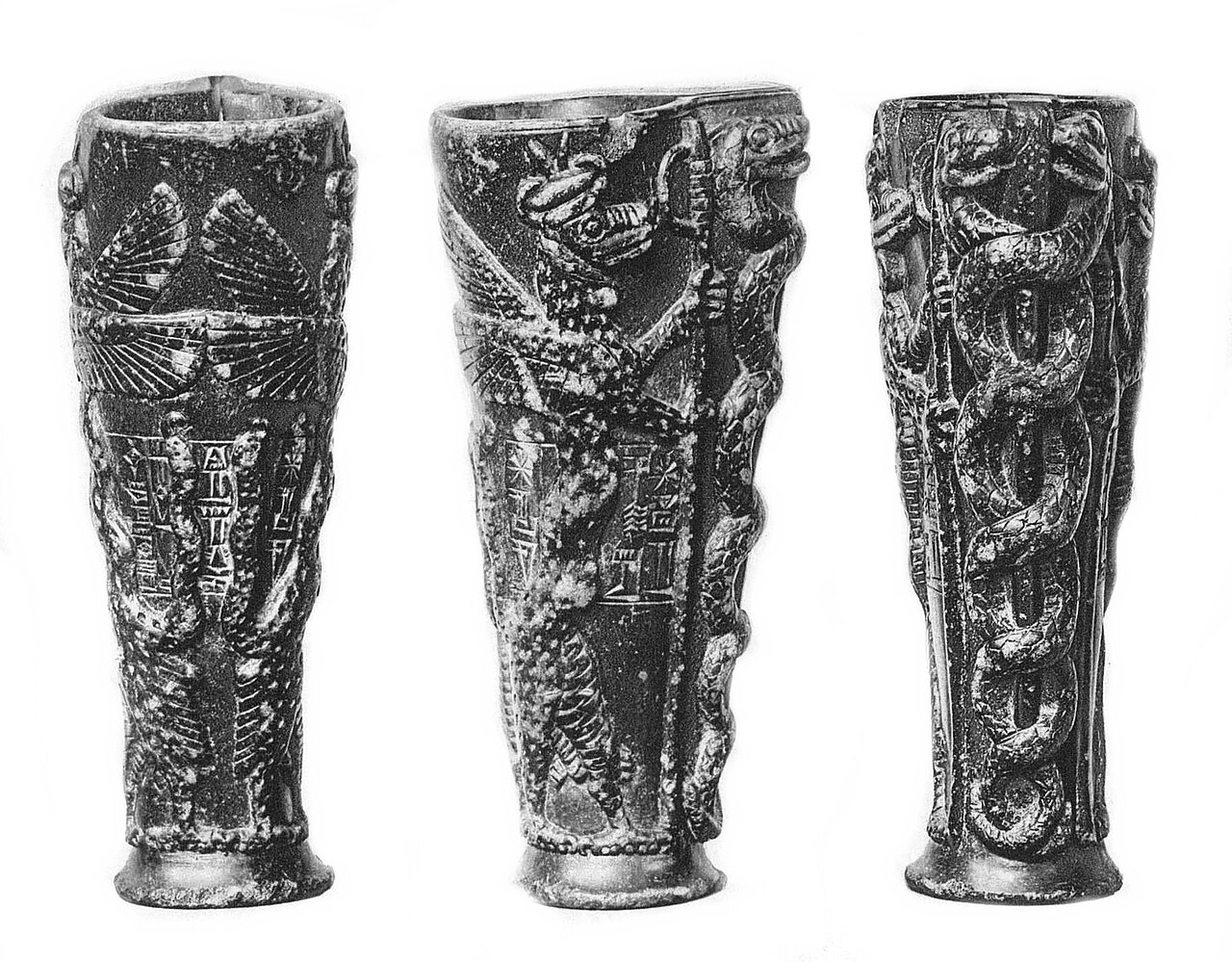
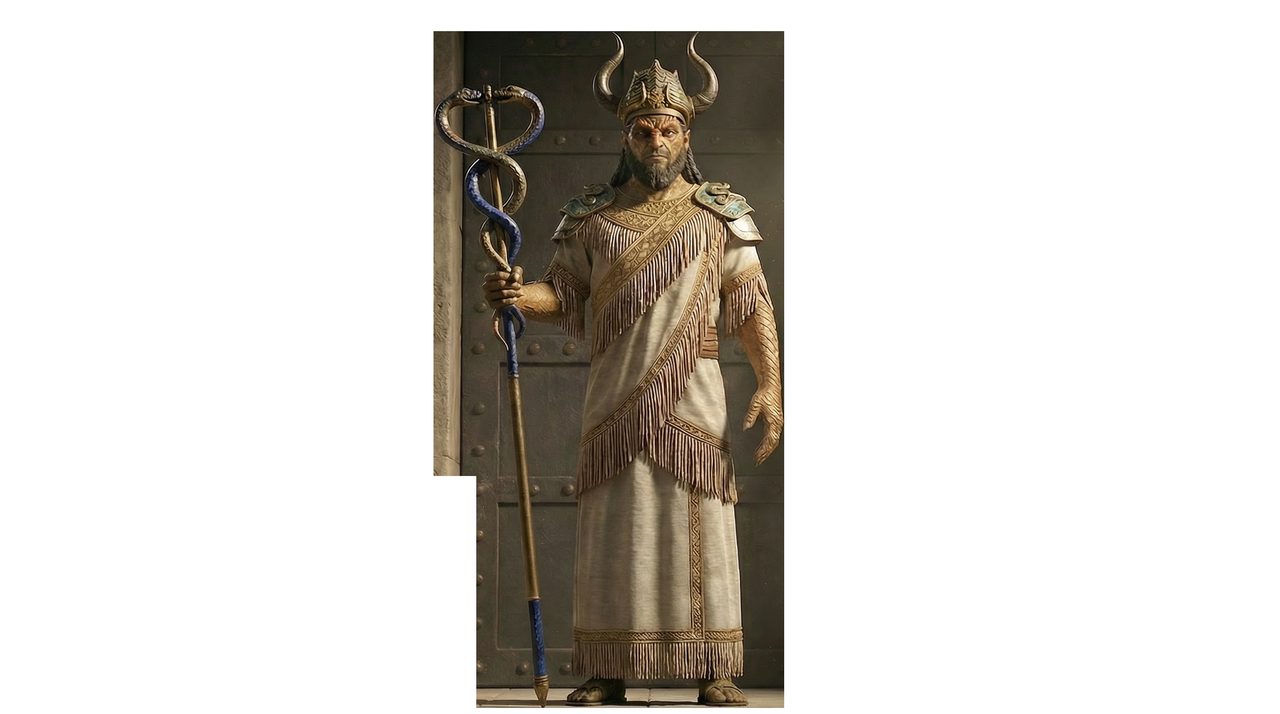
Strip away the astronauts and the lizards and something genuine is still sitting in the texts: the Anunnaki really are tangled up with serpents, through one god in particular. Enki, the creator, is symbolized by two intertwined snakes (yes, the caduceus). He lives underground in the Abzu, gives humanity forbidden knowledge, and defies the other gods to help us. His son Ningishzida is depicted as a serpent and titled "Lord of the Good Tree."
The Enki-to-serpent connection is explicit in the texts: the twin-serpent emblem, the underground realm, the knowledge-giving, the serpent-son Ningishzida. This is real, and it is what the modern theories are (loosely) built on.
An Akkadian "temptation seal" (British Museum, c. 2300 BCE) shows two figures beside a tree with a serpent, an Eden-shaped scene carved in stone more than a thousand years before Genesis was written down.
Fast Facts
- Name means
- "Princely Offspring" (not "those who came from heaven")
- First appear
- Sumer, 3rd millennium BCE
- The Seven
- An · Enlil · Enki · Ninhursag · Nanna · Utu · Inanna
- Made humans
- To work, per the Atra-Hasis
- "Nibiru" is
- A Babylonian crossing-point term, not a planet
- Reptilian claim
- Added in 1999 by Icke, absent from the texts
What we can actually stand behind
The Anunnaki were real Sumerian deities, and their genuine link to serpents runs through Enki and Ningishzida. That part is textual.
The extraterrestrial "Nibiru" layer is Sitchin's speculation, built on translations mainstream scholars reject.
The reptilian-overlord layer is Icke's, unsupported by the texts and entangled with an antisemitic conspiracy tradition. We flag it and leave it.
Sources & further reading
Everything above is drawn from our research library on Theories of Anything. Open the full files to check the sourcing and go deeper.
Image credits
- Sumerian King List ("Lista Reale Sumerica"), via Wikimedia Commons. Public domain
- Libation vase of Gudea (Ningishzida's entwined serpents), photograph by Ernest de Sarzec, via Wikimedia Commons. Public domain
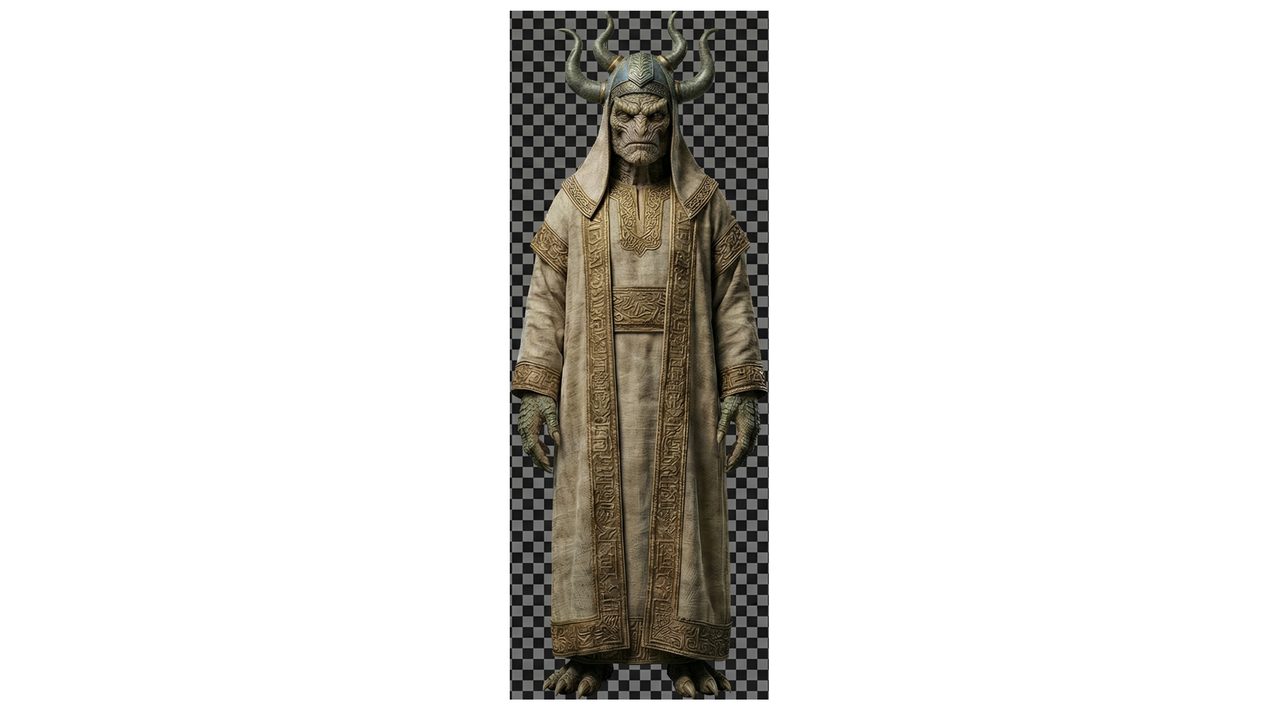
- Anu — AI-generated artist's impression; not a photograph, no Anunnaki figure has ever been documented outside the texts and reliefs. AI-generated
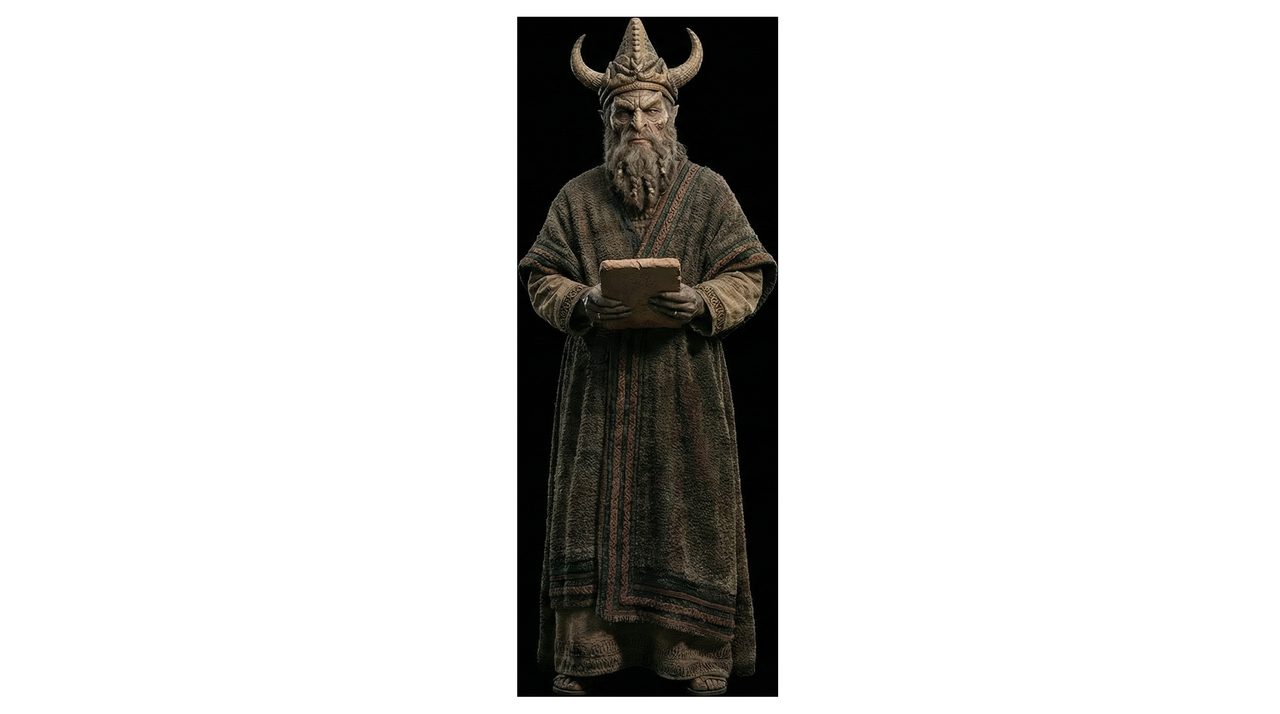
- Enlil — AI-generated artist's impression; not a photograph. AI-generated
- Enki — AI-generated artist's impression; not a photograph. AI-generated
- Ningishzida — AI-generated artist's impression; not a photograph. AI-generated