The Bronze Age Collapse: When a Connected World Went Dark
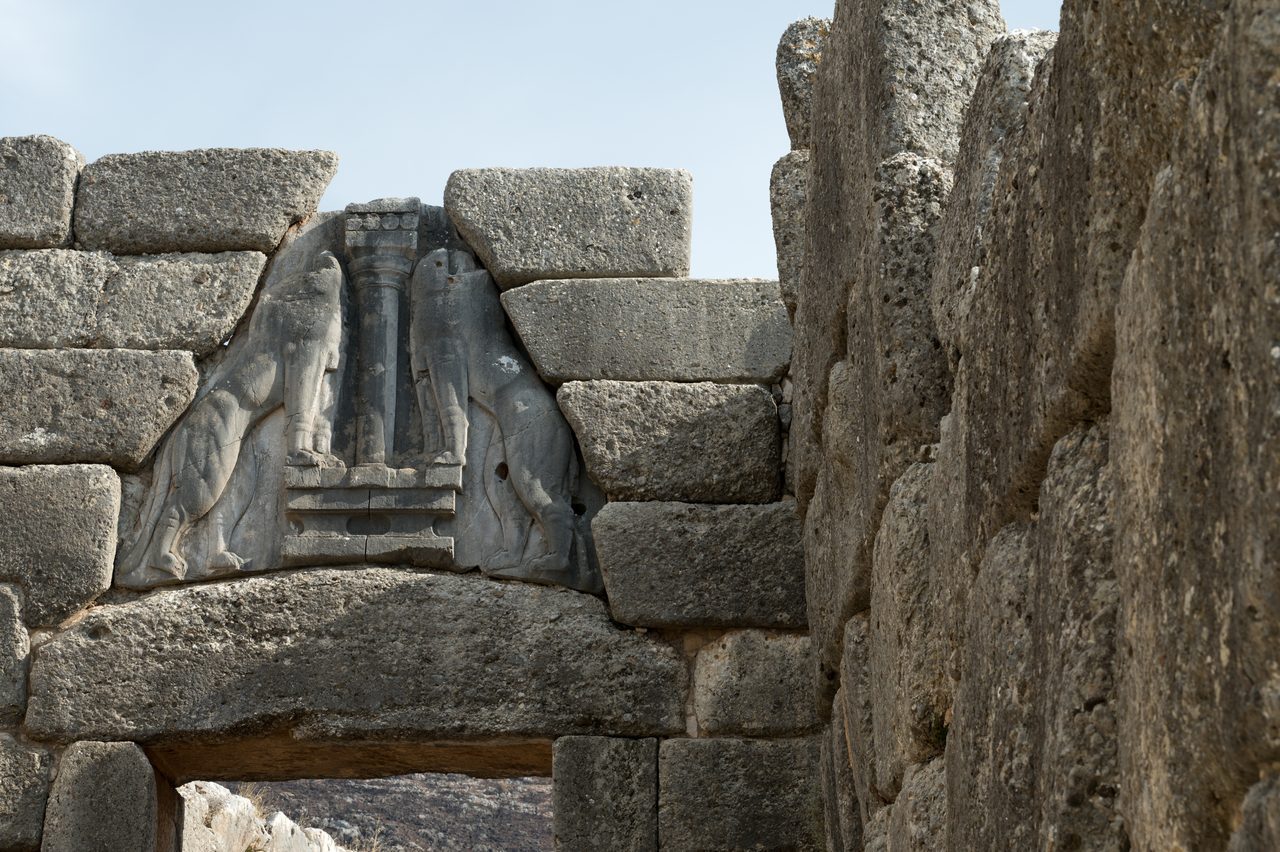
Around 1200 BCE the most connected world that had ever existed came apart. For three centuries the great powers of the eastern Mediterranean, Egypt and the Hittites, Mycenaean Greece and Kassite Babylon, the rich port of Ugarit and the copper island of Cyprus, had been bound together by trade routes thousands of kilometers long, royal marriages, and the oldest peace treaty on Earth. Then, within about fifty years, most of it burned or fell silent. Palaces collapsed, whole writing systems were forgotten, and the raiders history now calls the Sea Peoples moved across a starving, drought-stricken region. This is not a fringe mystery, and no serious scholar denies it happened. What they argue about, fiercely and to this day, is why: drought, invasion, earthquakes, rebellion from within, or the slow structural rot of a system too tightly wired to bend. Eric Cline's answer is that it was all of them at once. A very recent reassessment argues that far fewer cities were even destroyed than a century of dramatic retellings assumed. Both sit inside the mainstream. Here is the file, claim by claim, every fact wearing its evidence.
One correction up front, because it reframes everything that follows. Almost nobody who studies this doubts that the Late Bronze Age world fell. The destruction layers are in the ground, the panicked letters are in the archives, the abandoned capitals are still standing empty. This is mainstream, hard-evidenced history, not a mystery the establishment is hiding. The genuine argument, the one that has run for decades and is louder now than ever, is about cause and about degree: which combination of shocks brought the system down, and how violent and how sudden it really was. Slide those two questions, what happened and why it happened, gently apart, and the story gets sharper instead of shakier. Let us open the file.
01The Most Connected World There Had Ever Been
Picture the map before the fall, because you cannot feel the loss without it. For roughly three centuries the eastern Mediterranean and Near East ran as a single interconnected system, arguably the most internationally connected the world had seen before the modern era. A club of great powers, Egypt, the Hittite Empire of Hatti in Anatolia, Mycenaean Greece, Kassite Babylonia, and Assyria, plus the wealthy trading city of Ugarit and the copper island of Cyprus, were bound together by diplomacy, royal marriage alliances, and long-distance trade. The historian Eric Cline calls it a 'globalized' Bronze Age world, and the word is not loose. These kingdoms knew each other, wrote to each other, and depended on each other.
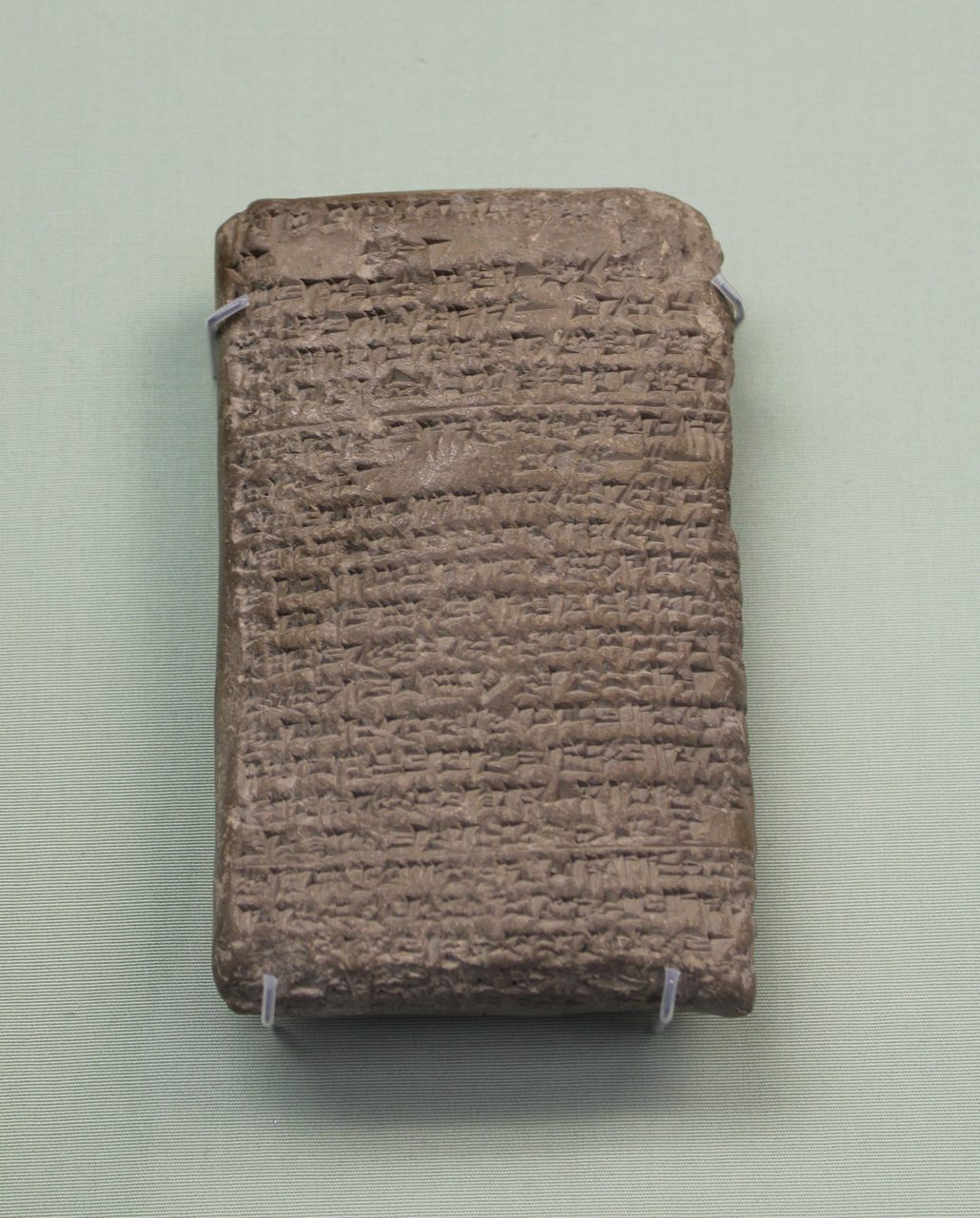
The paper trail is extraordinary for its age. Egypt and the Hittites fought the Battle of Kadesh to a bloody draw around 1274 BCE, then signed the Egyptian-Hittite Peace Treaty around 1259 BCE, the oldest surviving international peace treaty on Earth, preserved in both Egyptian hieroglyphics and Hittite cuneiform. And from the Egyptian side we have the Amarna Letters, a cache of roughly 382 clay tablets found in 1887 at Tell el-Amarna, written mostly in Akkadian, the era's diplomatic common tongue. They record marriage alliances, elaborate gift exchanges, and a great deal of anxious vassal correspondence between Egypt and the kings of Babylonia, Hatti, Mitanni, Assyria, and Cyprus. This was not a scatter of isolated cultures. It was a network with a switchboard.
And the network was physical, not just diplomatic. Bronze, the metal that named the age, needs both copper and tin, and tin was geologically rare and concentrated in a few distant places: Afghanistan, Cornwall in England, the Iberian Peninsula, parts of Central Asia. Any civilization that wanted bronze weapons had to reach across hundreds or thousands of kilometers to get the tin. This is not a guess. Tin isotope analysis published in 2019 matched Cornish tin signatures to Mediterranean bronzes from the 13th century BCE, meaning raw tin actually traveled more than 3,000 kilometers from a British mine to a Mediterranean workshop. And the Uluburun shipwreck, a single trading vessel that went down off the Turkish coast around 1300 BCE and was found in 1982, carried roughly ten tons of copper ingots, a ton of tin, Canaanite jars, African ebony, Baltic amber, Mycenaean pottery, Egyptian scarabs, and a Kassite cylinder seal. One ship, cargo from at least seven cultures. That is how far this world reached.
Here is the catch the whole rest of the story turns on. All that connection created real wealth, but it also created a hidden fragility. Because tin in particular had to travel such an enormous distance from source to workshop, a single broken supply chain could, in principle, choke bronze weapon production across several civilizations at once. The strength was the weakness. A tightly wired system is efficient right up until something cuts the wires.
02Fifty Years, Not Fifty Days
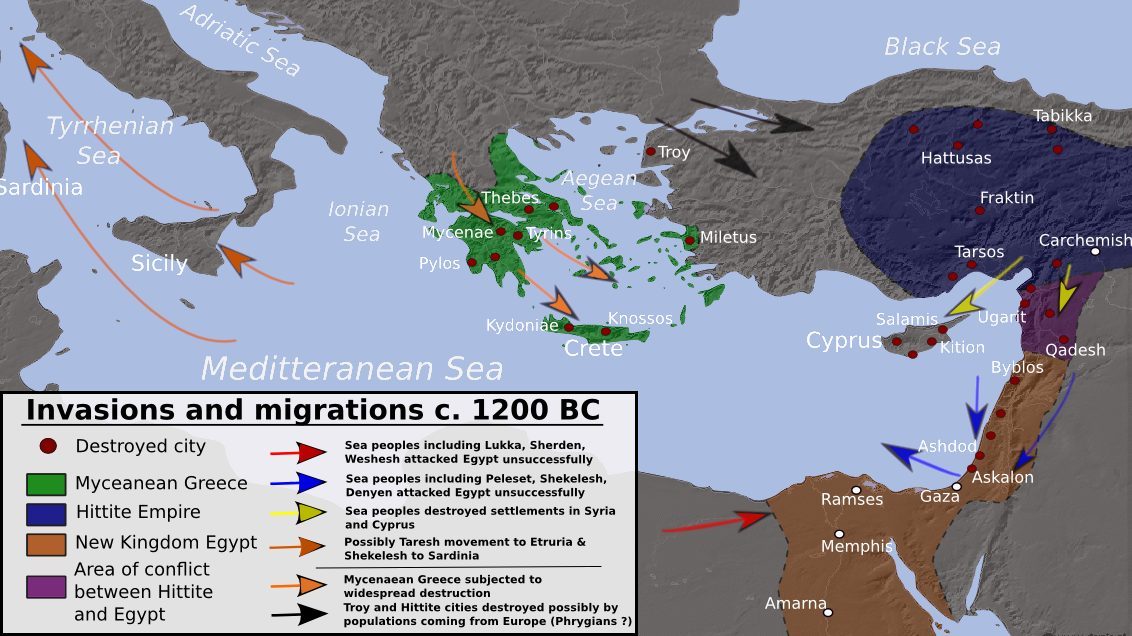
Then it fell. Between roughly 1200 and 1150 BCE nearly every major civilization in the eastern Mediterranean was destroyed or severely reduced: the Mycenaean palaces of Greece, the Hittite Empire, the Kassite dynasty in Babylon, the major port of Ugarit, and the Egyptian New Kingdom, which survived but never recovered its old reach. The important correction to the myth is the tempo. This was not a single apocalyptic afternoon. The destruction rolled across the region in waves over roughly fifty years, not fifty days. But measure it the other way and it is still staggering: more than three centuries of accumulated civilization unwound inside a single human lifetime.
Take the Hittites first, because their fall is the cleanest. From the capital Hattusa in central Anatolia, the Hittite kings had ruled an empire reaching into northern Syria. Around 1180 BCE Hattusa was burned and then permanently abandoned, and the excavations show it plainly: a great capital emptied and never truly reoccupied. The last known Hittite king, Suppiluliuma II, left records of naval battles against attackers on the Anatolian coast, a startling image of a land empire suddenly fighting for its life at sea. Tellingly, relatively few valuable objects were found in the ruins, which suggests the royal court may have packed up and evacuated before the end. Some smaller Neo-Hittite successor states, Carchemish, Tabal, Que, survived in the south, but as shadows of the empire that made them.
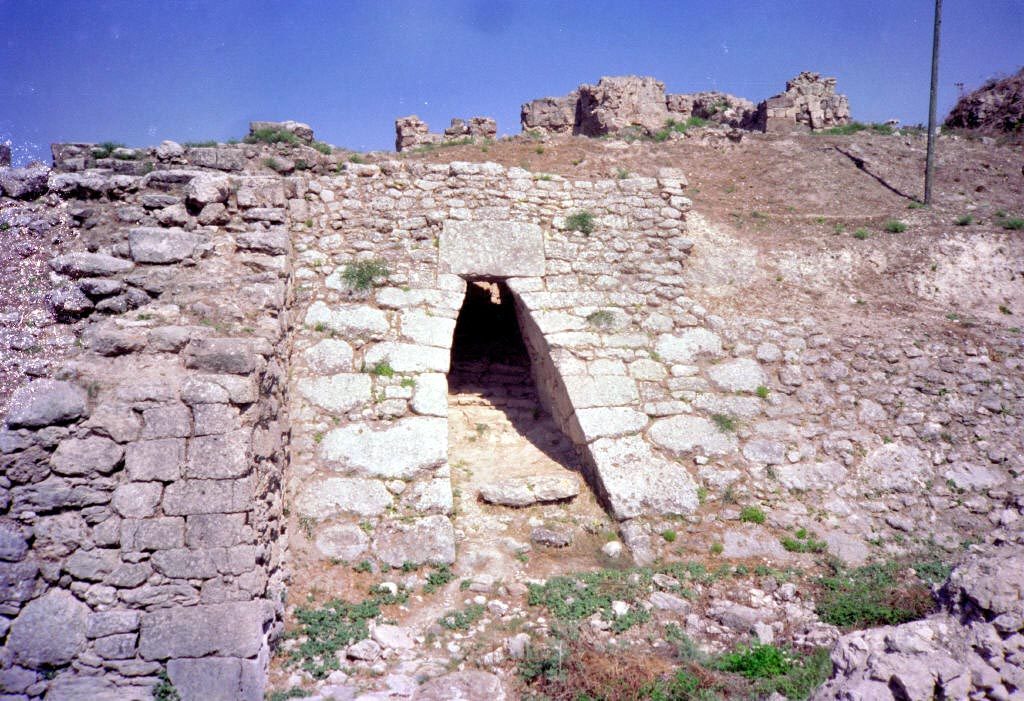
Ugarit gives us the most human record of the crisis. A rich port on the Syrian coast that linked the Hittite and Egyptian worlds, it was destroyed around 1185 BCE and, unlike so many sites, never reoccupied. Baked into the ruins, archaeologists found a clay tablet, the last letter of the king of Ugarit to the king of Cyprus: 'enemy ships have been seen at sea... my troops and chariots are stationed in Hatti and my ships in Lukka.' The city, in other words, was defenseless, its army and navy away, when it fell. Two details make it almost unbearable. That last tablet, catalogued RS 20.238, was found still in the kiln. It was never even sent. And a companion tablet, the Hittite viceroy of Carchemish replying to an earlier warning, reads back across the centuries like cold comfort: 'even if it is true that enemy ships have been seen, be firm.' Ugarit lay buried until 1928, when a farmer's plow struck a tomb, and the French archaeologist Claude Schaeffer excavated it from 1929 to 1970.
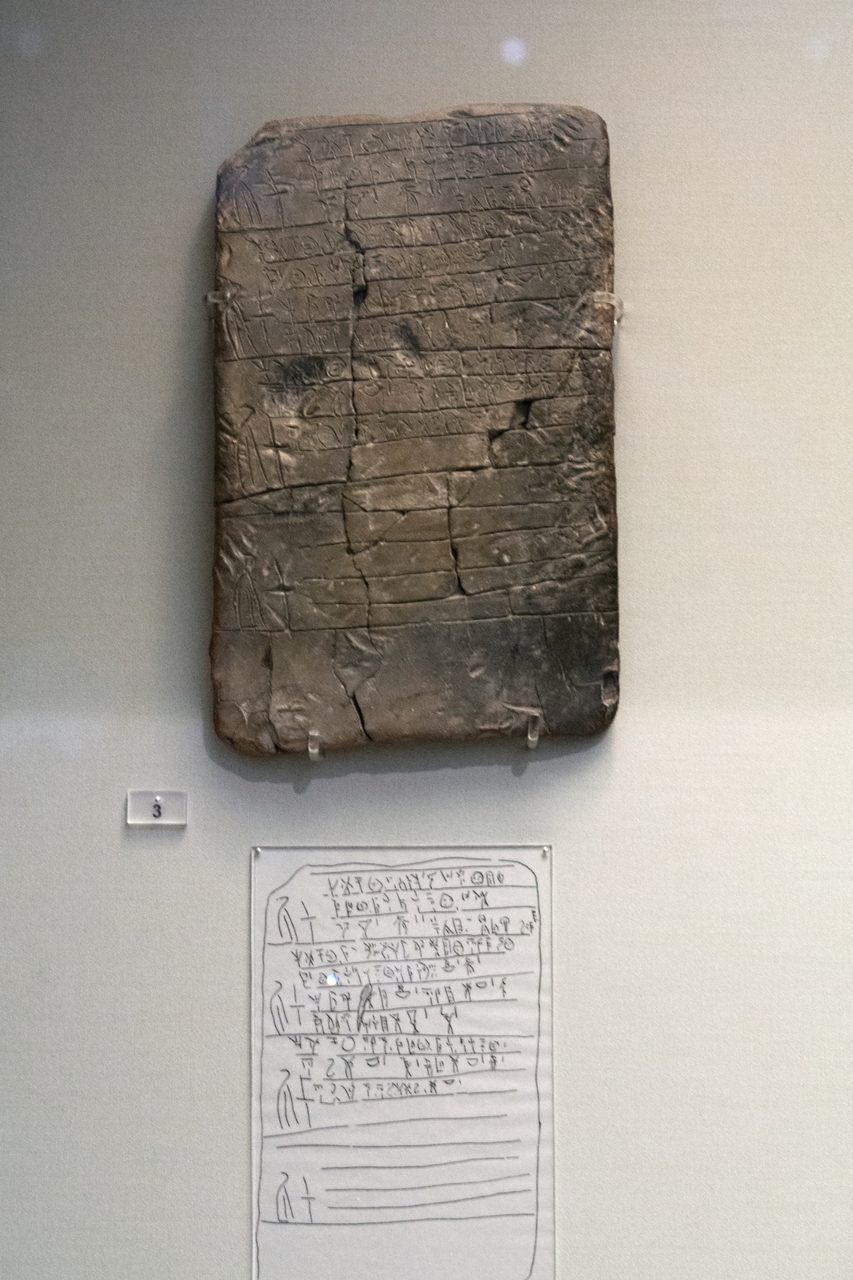
Across the Aegean, the same fire. The Mycenaean palace centers at Pylos, Mycenae, Tiryns, and Thebes were burned between roughly 1200 and 1150 BCE. Linear B record-keeping stopped, monumental building stopped, and the population fell hard. At Pylos, the palace burned around 1180 BCE, and the fire did one accidental favor for history: it baked and preserved the palace's Linear B clay tablets. Their very last entries read like a civilization bracing for impact, coastal watchers deployed, towers manned, rowers conscripted, bronze gathered for weapons. Mycenae itself, damaged around 1200 BCE, limped on at reduced scale and was abandoned around 1100 BCE. Tiryns was destroyed, partly rebuilt, and destroyed again.
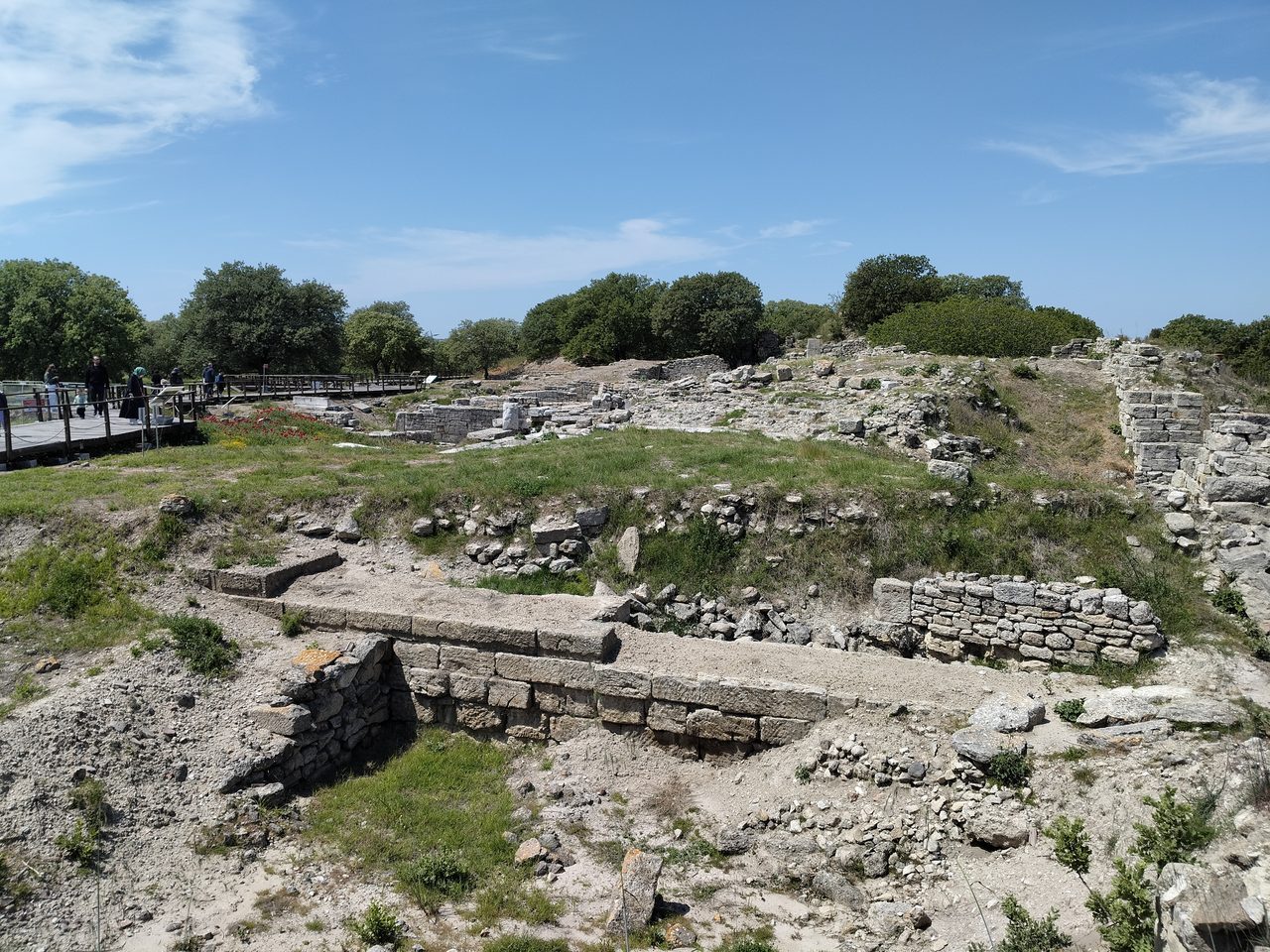
And there is Troy. The archaeological layer called Troy VIIa, at the mound of Hisarlik in northwestern Turkey, shows destruction by fire at the end of the 13th century BCE, part of the same wave. Many scholars, including the excavators Carl Blegen and later Manfred Korfmann, identify this burned city with the Troy of the war tradition, though the identification is not universal and the archaeologist Frank Kolb has sharply challenged the site's importance. Homer's war, if it hides a real event anywhere, hides it here.
Further east, the crisis reached Mesopotamia last. Around 1155 BCE the kingdom of Elam conquered Babylon and ended the Kassite dynasty that had ruled it for more than four centuries, carrying off the statue of Marduk, Babylon's chief god, as war plunder, a wound as symbolic as it was political. City by city, the roll call is grim and specific.
| Center | What Happened | Approximate Date |
|---|---|---|
| Hattusa, the Hittite capital | Burned and permanently abandoned | c. 1180 BCE |
| Ugarit, the Syrian port | Destroyed, never reoccupied | c. 1185 BCE |
| Pylos, a Mycenaean palace | Burned; its Linear B tablets baked in the fire | c. 1180 BCE |
| Mycenae | Damaged, reduced, then abandoned | c. 1200 to 1100 BCE |
| Troy VIIa, at Hisarlik | Destroyed by fire | end of the 13th century BCE |
| Babylon, under the Kassites | Sacked by Elam; the Marduk statue taken | c. 1155 BCE |
03A Sky That Stopped Raining
Something in the environment was going badly wrong at the same time, and this part is not speculation. Tree rings, pollen records, lake levels, and cave mineral deposits all point to a severe drought gripping the eastern Mediterranean between roughly 1200 and 1150 BCE. In 2012 the researcher Brandon Drake pulled this proxy evidence together from the Aegean, the Levant, and Cyprus and documented a sharp turn to hotter, drier conditions right across the collapse window. And the kingdoms felt it in real time. Hittite royal letters record genuine grain shortages, with the Hittite king writing to both the Egyptian pharaoh and the king of Ugarit begging for emergency grain, in one case calling it 'a matter of life and death.'
The specific fingerprints keep turning up. Sediment cores from Lake Van in eastern Turkey show the land drying out around 1200 BCE, the Dead Sea dropped between roughly 1200 and 1100 BCE, and the mineral record from Soreq Cave in Israel registers drier conditions across the 13th and 12th centuries BCE. A hungry, thirsty, over-stretched world is a world primed to break.
04The People From The Sea
Onto that primed world came the raiders. In the eighth year of his reign, around 1178 to 1177 BCE, the Egyptian pharaoh Ramesses III recorded a war against a coalition he lumped together as foreigners from the sea, naming groups called the Peleset, Tjeker, Shekelesh, Denyen, and Weshesh. He carved the account, a land battle and a naval battle both, onto the walls of his mortuary temple at Medinet Habu, and it remains the single most detailed contemporary account of the whole crisis. This year, 1177 BCE, is the one Eric Cline borrowed for the title of his book, a convenient marker for a process that was never really about a single year.
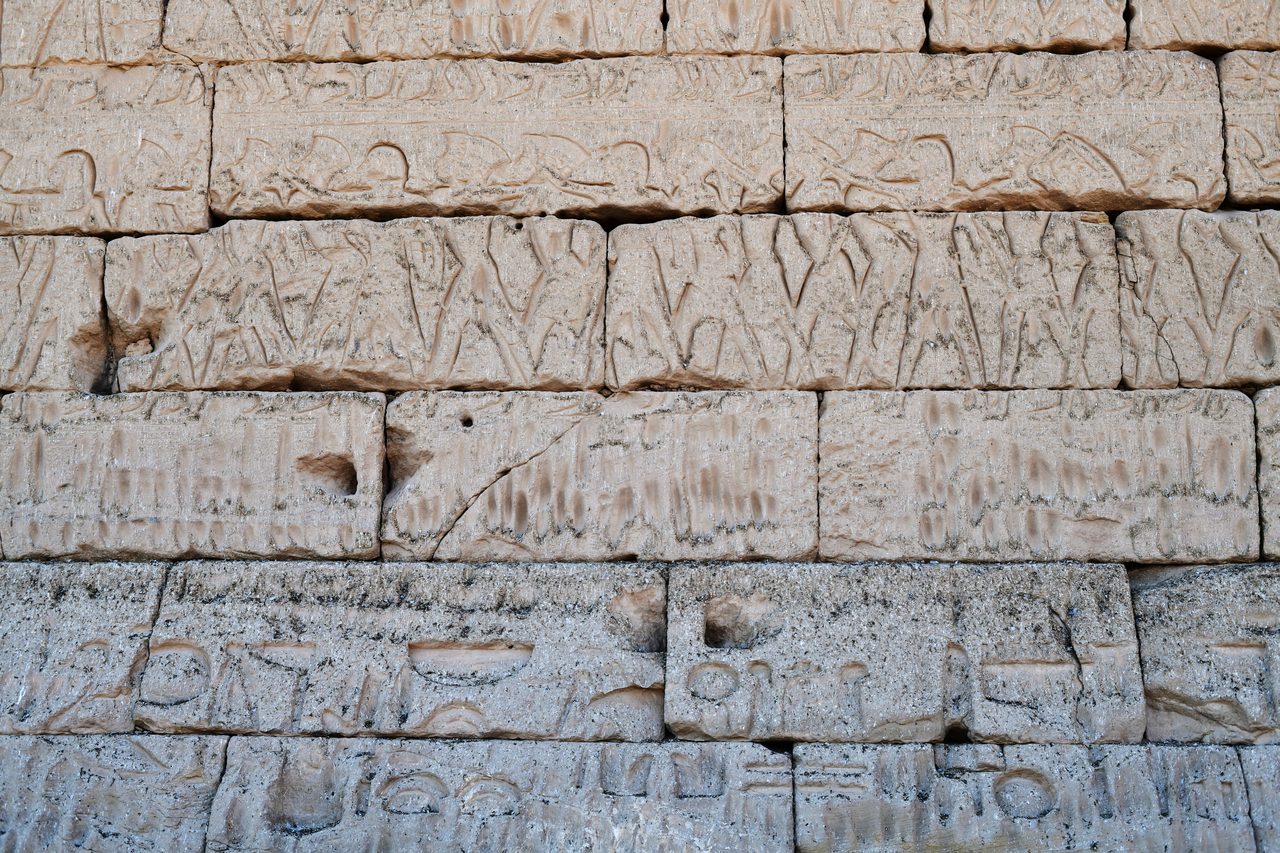
But the raiders were not new in Year 8. A full generation earlier, around 1208 to 1207 BCE, the pharaoh Merneptah had already fought a coalition of Libyans and named sea groups, the Sherden, Shekelesh, Lukka, Tursha, and Ekwesh, and recorded it at Karnak. The threat built over decades, not days. And notice the aftermath of Ramesses III's supposedly total victory: within roughly a generation of it, Egypt lost control of its territories in the Levant anyway. Whatever the reliefs boasted, Egypt came out of the crisis badly weakened.
Start with what the name is not. 'Sea Peoples' is a modern scholarly label, not a phrase the Egyptians used. The French Egyptologist Emmanuel de Rouge coined it in 1855, and Gaston Maspero popularized it in 1881. The Egyptians named specific groups, and sometimes called them simply peoples of the islands or northerners from all lands. The tidy collective noun is ours, not theirs, and it hides a great deal of messiness.
Who were they really? Genuinely debated, and likely to stay that way. The best current reading is that they were not one unified invading army but a mix of populations displaced from the Aegean, Anatolia, and the western Mediterranean, moving and fighting under pressure. Matching the named groups to later known peoples mostly rests on how their names sound, which is thin evidence, with one strong exception: the Peleset are widely identified with the biblical Philistines, and that link has real archaeological muscle behind it from excavations at Ashkelon, Ekron, and Gath.
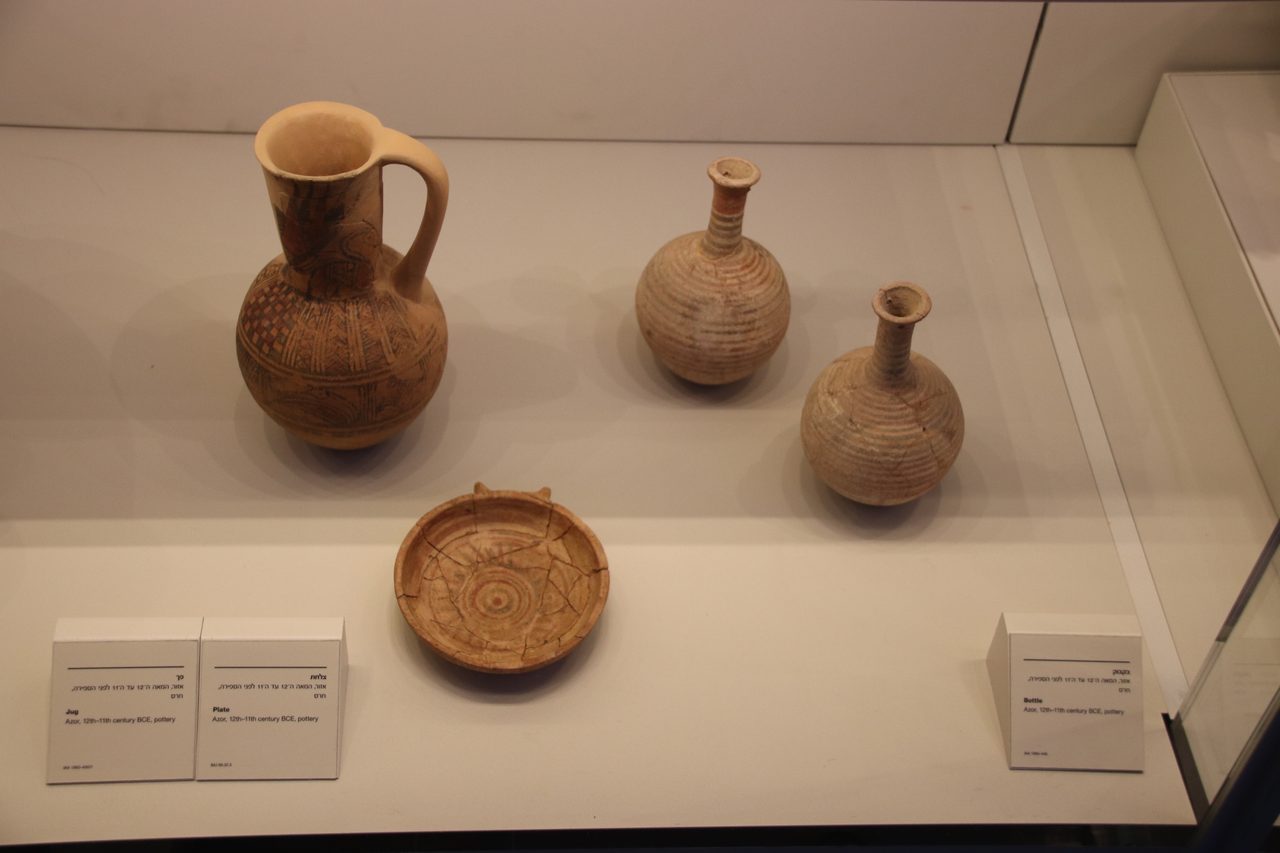
The exception got stronger in 2019, when ancient DNA from Philistine burials at Ashkelon showed a pulse of European ancestry entering the population in the early Iron Age, exactly what an Aegean origin would predict. It even fits an Egyptian document: Papyrus Harris I, written under Ramesses IV but describing Ramesses III's reign, says the pharaoh settled defeated sea groups as garrison troops, a detail some scholars connect directly to how the Philistines ended up planted in southern Canaan.
Two more details reshape the picture from raid to migration. The Medinet Habu land-battle relief shows something no simple pirate fleet would bring: ox-carts loaded with women and children moving alongside the fighters. That looks like whole families searching for new homes, not a smash-and-grab. And some of the groups later filed under 'Sea Peoples,' the Sherden and the Lukka among them, had already served Egypt as mercenaries before the crisis. These were not aliens from nowhere. Egypt knew them.
So here is where mainstream scholarship has actually landed, and it is the opposite of the old story. The once-standard picture, in which Sea Peoples invasions simply caused the Bronze Age collapse, has been abandoned. The raiders are now read as a symptom and an accelerant of a system already destabilizing, not as its root cause. Which raises the real question this whole file has been circling: if not the Sea Peoples, then what?
05Why It Happened: The Real Argument
The mainstream answer today is not a single villain but a pile-up. In his 2014 book 1177 B.C.: The Year Civilization Collapsed, Eric Cline gathered decades of research into a 'systems collapse' model: the Late Bronze Age Mediterranean was a complex, interdependent web, and no one shock, not the Sea Peoples, not drought, not earthquakes, not trade failure, not internal revolt, was enough on its own. It was their convergence that overwhelmed the system's ability to absorb them. Cline puts it plainly: 'The LBA civilizations were so intertwined and interdependent that the failure of one could, and did, lead to the failure of all. The domino effect could have turned what might have been a minor incident into a complete catastrophe.' Hold that as the frame, then meet the suspects one at a time.
Earthquakes are the most physical suspect. The Stanford geophysicist Amos Nur argued that a sequence of quakes along the region's active faults, the Dead Sea Transform, the East Anatolian Fault, the Hellenic Arc, struck as an 'earthquake storm' between roughly 1225 and 1175 BCE, and he lined the timing up against destruction at Mycenae, Tiryns, Midea, Thebes, Troy, Hattusa, and Ugarit. It is a serious case, and not everyone buys it. Critics point out that earthquakes alone cannot explain why so many of these places were never meaningfully rebuilt, because societies recover from earthquakes all the time. A quake can knock a city down. It does not usually keep it down for centuries.
Then there is the enemy within. Texts from both Ugarit and the Hittite capital mention food shortages, disputes over forced labor, and populations fleeing, hints of real social strain and class conflict pushing up from below at the same moment the external blows were landing. Some scholars even reread those frantic final Pylos tablets, the coastal watchers and bronze levies, as a palace bracing against its own people rather than only against a fleet on the horizon. Hittite records, for their part, show the Lukka lands defying central authority for years. Empires do not only fall to outsiders. Sometimes the people holding them up simply stop.
The historian Robert Drews put the weight on warfare itself. In his 1993 book The End of the Bronze Age he argued that a military revolution unseated the palaces: the expensive chariot armies that only kings could afford were undone by cheaper massed infantry wielding new weapons, above all the Naue II cut-and-thrust sword out of central Europe or Italy. Suddenly a band of determined raiders could beat a royal army. Critics answer that this may have the arrow backwards, that the new style of fighting could just as easily be a consequence of the collapse, born of necessity, rather than a cause of it.
And the supply chain. Given how far tin had to travel and how central bronze was to everything from farming to war, some researchers propose that a disruption to the tin trade could have been the economic trigger that cascaded through the whole interdependent network. It is a clean idea that fits the systems logic neatly. It is also, honestly, the thinnest of the major threads: direct archaeological evidence that a tin-supply failure specifically kicked off the collapse remains limited. It sits at the speculative end for a reason.
Two more possibilities hover at the edges, both frankly speculative. Disease is one: the Hittite 'Plague Prayers' of King Mursili II describe an epidemic that killed his father and brother, though those deaths came a century before 1200 BCE and direct evidence that plague drove the collapse itself is almost nonexistent. And climate modeling has floated a mechanism for the drought, a shift in North Atlantic Oscillation patterns nudging the Mediterranean's winter storm tracks and starving its grain lands of rain, tentatively tied to the same broad family of climate swings behind bigger shifts elsewhere. Both are worth naming. Neither is close to proven.
Underneath all of these sits a deeper argument about fragility itself. Building on Joseph Tainter's work on the collapse of complex societies, some scholars frame the Late Bronze Age as a textbook case of diminishing returns on complexity: a highly centralized, interdependent system is wonderfully efficient while conditions hold, and dangerously brittle the moment they do not. This world had few backup suppliers, slow communication, and no institutional safety nets. Arguably it was more exposed to a shock than a modern economy, not less. The interconnection everyone admired was also the crack running through the foundation.
One caution before the table below. A high tier here means the phenomenon itself is well attested, not that it single-handedly brought the world down. The entire point of the systems model is that no single row is the answer. Read the tiers as how solid each strand of evidence is, and the debate as how much weight each one deserves.
| Proposed Cause | The Case For It | Evidence Tier |
|---|---|---|
| Drought | Proxy climate records and grain-crisis letters show a real, severe regional drought across the collapse window | Tier 1 |
| Sea Peoples | Contemporary Egyptian reliefs record coalitions attacking by land and sea | Tier 1 |
| Earthquake storm | Fault activity c. 1225 to 1175 BCE lines up with many destruction layers | Tier 2 |
| Internal revolt | Texts record food shortages, forced-labor disputes, and fleeing populations | Tier 2 |
| Military change | Cheaper infantry and the Naue II sword let raiders beat palace armies | Tier 2 |
| Systems fragility | An interdependent network magnified every shock and could not adapt | Tier 2 |
| Tin-trade collapse | A broken metal supply chain as the economic trigger | Tier 3 |
06What Survived, And What Grew Back
The collapse was never total or uniform, and the survivors matter as much as the casualties. Egypt lived, battered. Cyprus was transformed more than it was destroyed. Some Levantine coastal cities, Byblos and Sidon among them, simply kept going. Resilience tracked geography and economic structure: the places that were not wholly dependent on a single palace redistributing everything tended to come through.
On Cyprus the sites of Kition and Paphos show little destruction around 1200 BCE and instead appear to have flourished afterward, not declined. Further east, the Middle Assyrian Empire came through largely intact and kept control of significant territory under King Tiglath-Pileser I, around 1114 to 1076 BCE. Babylon fared worse, sacked by the Elamites and losing ground to Assyria as the Kassite dynasty fell in the first half of the 12th century BCE. Uneven is the word. This was a landscape of collapse with islands of continuity inside it.
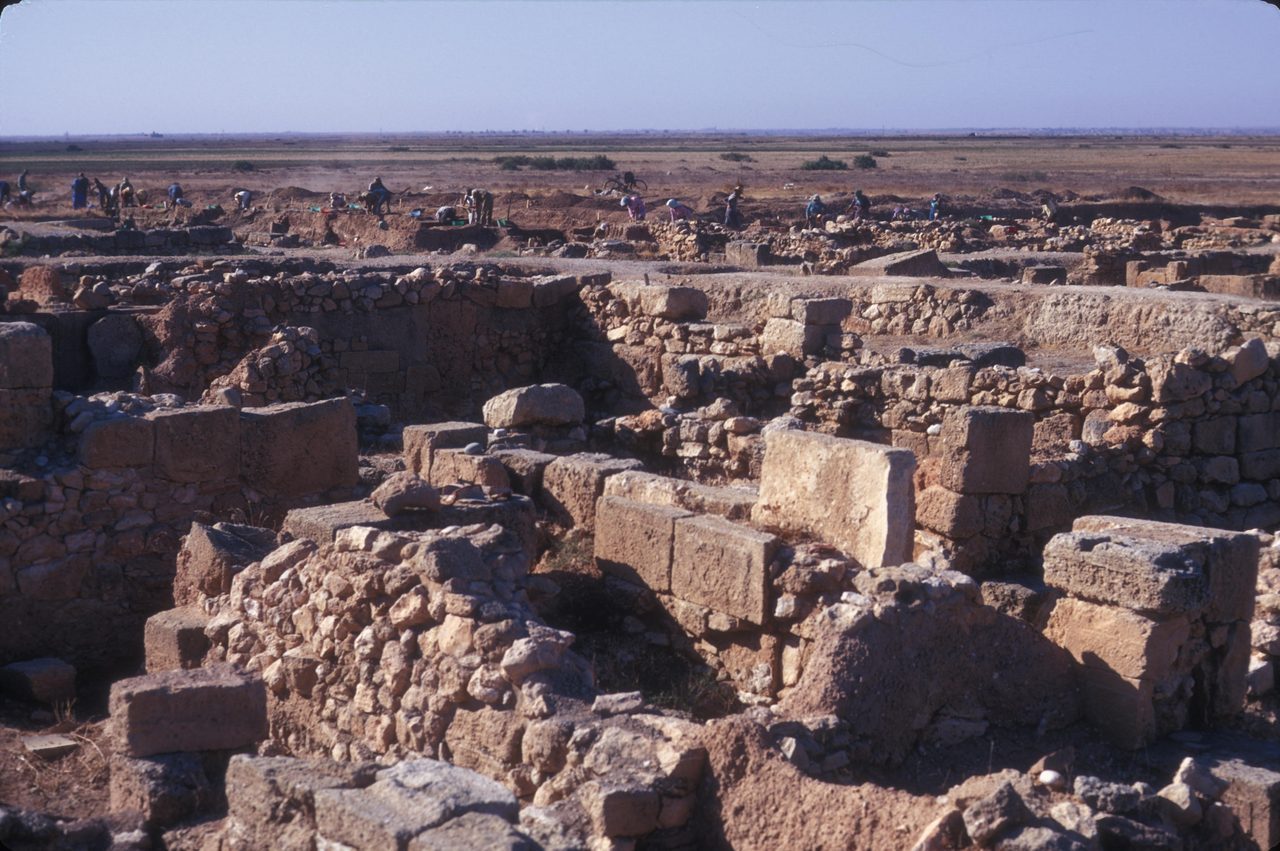
And out of the wreckage came something that outlasted every palace. The Phoenician coastal cities, Byblos, Sidon, and Tyre, were among the few that not only survived but thrived, expanding into the power vacuum the collapse tore open. In doing so they carried a writing system forward: the Proto-Canaanite script matured into the Phoenician alphabet by around 1050 BCE, a lean 22-letter consonantal system. The Greeks borrowed it around 800 BCE and added vowels, producing the Greek alphabet and, through it, the Latin one; Aramean scribes adapted it into the Aramaic alphabet, ancestor of Hebrew, Arabic, Syriac, and a long tree of scripts across Asia. The alphabet these very words are written in was born from the ruins of the Bronze Age. The collapse did not only end things.
It also, indirectly, ended the Bronze Age in the most literal sense. When the trade networks broke, tin became hard to get, and bronze along with it. Iron ore, by contrast, is common almost everywhere in the region and needs no long-distance trade to obtain. So even though early iron was often worse than a well-made bronze, iron tools and weapons spread in the aftermath, for the simple reason that you could actually get the raw material. The age was renamed by a supply-chain failure.
The cost, though, was real and long. With the Mycenaean palaces gone, Linear B writing was lost entirely and Greece slid into centuries of illiteracy. Population estimates suggest a decline of 75 to 90 percent in some regions during what is still called the Greek Dark Age, conventionally dated to roughly 1100 to 800 BCE, until the Greek alphabet arrived from Phoenician script around 800 BCE and writing returned.
That gap is why Homer matters here. The Iliad and Odyssey, composed around 750 to 700 BCE, are widely read as an oral memory of the vanished Mycenaean palace world, carried across roughly four centuries of illiteracy before anyone could write them down. The poems' chariots, palace warriors, and bronze weapons fit the Late Bronze Age, and the Catalogue of Ships in the Iliad may preserve fragments of genuine Bronze Age geography, though how much real history survives inside the epic is very much an interpretive call, not a settled one.
All of which has pushed some scholars to question the phrase 'Dark Age' itself. What followed the collapse also included the spread of iron, alphabetic writing, more decentralized politics such as the Greek city-state, and eventually a wider maritime trade than before. Darkness is one word for it. Reset might be another.
07Even The Story Is Still Being Argued
The deeper you go, the more the collapse argues with itself, and that is a sign of live scholarship, not a weakness in it. The archaeologist Guy Middleton has challenged the whole 'collapse' framing, pointing out that it takes an elite, palace-eye view. For the roughly 80 percent of people who were rural farmers, the end of a centralized palace economy that taxed and directed them may have felt less like catastrophe and more like release from an exploitative order. Whose collapse are we even describing?
Others aim at the systems model directly. If the explanation for the collapse is simply 'many causes interacting,' critics warn, it risks explaining everything and therefore nothing, a description dressed up as a cause, hard to falsify and easy to stretch over any historical wreck you like. A theory that cannot fail is not doing much work.
And the neat 'domino' picture has a timing problem. As far back as 2009, the archaeologist Jan Driessen argued that the destructions across different Mycenaean sites may not have been synchronous at all. Sharper radiocarbon dating spreads them out over several decades, which quietly loosens the whole cascade narrative. If the dominoes fell years apart, maybe they were never one falling line.
The hardest challenge is the newest. In a 2023 book, the archaeologist Jesse Millek went back through roughly 150 years of published claims about destruction at the end of the Bronze Age and actually counted them. Of 148 sites carrying 153 supposed destruction events dated to around 1200 BCE, he found that 94 of those events, 61 percent, had been misdated, assumed on thin evidence, or simply never happened. Turning the same scrutiny on Robert Drews's widely reproduced map of 1200 BCE destructions, Millek judged 31 of its 60 claimed destructions, 52 percent, to be unsupported. His larger point is deflationary: warfare and violent destruction played a much smaller role than a century of dramatic retellings assumed, and the real end of the Bronze Age was slower and quieter than the '1200 BCE apocalypse' headline suggests. This is one scholar's recent reassessment, not yet the field's consensus, and it has not been absorbed into most standard accounts. But it lands exactly where honesty demands it: even the mainstream story of the collapse has genuine, unresolved uncertainty inside it.
08What This Is Not
Two claims tend to attach themselves to this story, and both are contradicted or unsupported by the evidence. Naming them is not a distraction from the real debate. It is how the real debate, which is genuinely open, keeps from being buried under one that is not.
First, the Bronze Age collapse was not caused by a volcano, at least not the ones usually blamed. The Hekla 3 eruption in Iceland is conventionally dated to around 1021 BCE, and the Thera, or Santorini, eruption to around 1628 BCE. Neither date sits anywhere near the roughly 1200 to 1150 BCE collapse window, so blaming either for it simply confuses the chronology. This is separate, worth saying clearly, from the legitimate and much older debate about Thera's role in the fall of Minoan Crete centuries earlier. That is a real question. This is a date error.
Second, and to close one door before it opens: no, the Sea Peoples were not the survivors of Atlantis. There is a genuine fringe thread in the wider literature that ties the two together. The German writer Jurgen Spanuth placed Atlantis in the North Sea and identified its people directly with the Sea Peoples, while the archaeologist Rodney Castleden has suggested more loosely that the Bronze Age collapse may have colored Plato's Atlantis story. Even Wikipedia's own Atlantis article notes that some have proposed the Thera eruption, the Sea Peoples, or the Trojan War as inspirations for the tale, while flatly adding that most classicists regard Atlantis as fiction and that 'none has been demonstrated to be a true historical Atlantis.' It is a striking correlation and nothing more. Mainstream Bronze Age archaeology does not touch it, and neither does the real mystery here.
09One Fall, Or A Pattern?
Step back far enough and the Bronze Age collapse stops looking unique. Scholars who study civilizational collapse line it up beside a long row of others: the Akkadian Empire falling around 2154 BCE after a mega-drought written into ice cores, Old Kingdom Egypt's First Intermediate Period after decades of failed Nile floods, the gradual dispersal of the Indus Valley cities, the long unwinding of the Western Roman Empire, the Classic Maya, Norse Greenland, Rapa Nui. Jared Diamond's survey of such cases names five factors that recur: environmental damage, climate change, hostile neighbors, the loss of trade partners, and a society's failure to see or respond to its own problems in time. Every one of those five is visible, to some degree, in the Late Bronze Age. That is either a coincidence or a warning.
10Every Claim, Every Tier
Here is the whole file on one page, each claim carrying its tier, because the fastest way to get this story wrong is to flatten a well-evidenced event, a genuinely open debate, and a couple of contradicted add-ons into one shapeless 'mystery.' They are not the same thing, and the tiers are what keep them apart.
| The Claim | Tier | The Basis |
|---|---|---|
| The Late Bronze Age was a tightly interconnected world of great powers | Tier 1 | The Amarna Letters, the Kadesh treaty, the Uluburun cargo |
| Nearly every major eastern-Mediterranean civilization fell c. 1200 to 1150 BCE | Tier 1 | Destruction layers at Hattusa, Ugarit, and the Mycenaean palaces |
| The collapse rolled out over decades, not one single day | Tier 1 | Site dates spanning c. 1200 to 1150 BCE |
| A severe drought struck the region across the collapse window | Tier 1 | Drake 2012; proxy records; the Hittite grain-crisis letters |
| The Sea Peoples attacked, recorded by Egypt | Tier 1 | Ramesses III's Medinet Habu reliefs; Merneptah at Karnak |
| The Peleset are identified with the biblical Philistines | Tier 2 | Widely accepted; backed by archaeology and 2019 Ashkelon DNA |
| The monocausal 'Sea Peoples did it' explanation is abandoned | Tier 1 | Mainstream scholarly consensus |
| Cline's 'systems collapse': many converging causes, no single one | Tier 2 | Cline, 1177 B.C., 2014 |
| An earthquake 'storm' contributed | Tier 2 | Nur and Burgess, 2008; the chronology is contested |
| Internal revolt and social strain contributed | Tier 2 | Ugarit and Hittite texts |
| A military shift helped raiders beat palace armies | Tier 2 | Drews, 1993; contested |
| The collapse was less uniform and violent than long assumed | Tier 2 | Middleton; Driessen 2009; Millek 2023 |
| A tin-trade disruption was the economic trigger | Tier 3 | Proposed; direct evidence limited |
| Plague meaningfully drove the collapse | Tier 3 | The Hittite Plague Prayers; evidence thin |
| Homer's epics encode specific Bronze Age events (specific events, not general cultural memory) | Tier 3 | Interpretive; highly speculative |
| A volcano, Hekla 3 or Thera, caused the collapse | Tier 4 | Contradicted; both dates are centuries off |
| The Sea Peoples were Atlanteans | Tier 4 | Fringe correlation; not accepted |
Fast Facts
- The Event
- The fall of the interconnected Late Bronze Age civilizations of the eastern Mediterranean, c. 1200 to 1150 BCE
- The Casualties
- Mycenaean Greece, the Hittite Empire, Ugarit, Kassite Babylon; Egypt survived but weakened
- The Tempo
- Roughly fifty years of rolling destruction, not one single day
- The Famous Date
- '1177 BC,' Eric Cline's shorthand, from Ramesses III's Year 8 battle
- The Sea Peoples
- A modern label for named raider groups; now read as a symptom, not the root cause
- The Leading Model
- Cline's 'systems collapse': many converging shocks, no single villain
- The Drought
- Real, and recorded in both proxy climate data and grain-crisis letters
- The 2023 Twist
- Jesse Millek finds 61 percent of claimed destructions misdated or never real
- What Grew Back
- Iron tools, the Greek city-state, and the Phoenician alphabet behind nearly every alphabet today
- The Verdict
- The collapse is real; which causes mattered most is still argued
What We Can Actually Stand Behind
The collapse is real, and this is not the contested part. Across a few decades around 1200 to 1150 BCE, the interconnected civilizations of the eastern Mediterranean, the Mycenaean palaces, the Hittite Empire, Ugarit, Kassite Babylon, were destroyed or gutted, and Egypt came through only badly weakened. The setting was as connected as the fall was dramatic: the Amarna Letters, the Kadesh peace treaty, and the Uluburun shipwreck's seven-culture cargo are hard physical proof of it. A severe drought is documented in the climate proxies and in the kingdoms' own desperate grain letters. The Sea Peoples attacks are recorded in Egyptian stone. And the aftermath is just as solid: the Greek Dark Age, the spread of iron, and the Phoenician alphabet that fathered our own. All of that is Tier 1, and none of it is what scholars are fighting about.
What they are fighting about is the why, and it is genuinely unsettled. Eric Cline's 'systems collapse' model, in which drought, invasion, earthquakes, internal revolt, and trade failure converged on a system too interdependent to absorb them, is the leading synthesis, but it draws real fire. Critics call it close to unfalsifiable, an earthquake 'storm' is proposed but its chronology is disputed, internal rebellion and a military shift are plausible contributors rather than proven ones, and Guy Middleton, Jan Driessen, and, in 2023, Jesse Millek have each argued the collapse was less uniform, less synchronized, and less violent than a century of retellings claimed. Millek's count that most of the famous destruction layers may be misdated or imaginary is not yet consensus, but it is a live and serious challenge. All of this is Tier 2, and after decades of argument nobody has closed it.
Some threads stay frankly speculative. That a tin-trade collapse was the specific economic trigger fits the systems logic but lacks direct evidence. Plague is attested in Hittite prayers a century too early to pin on the collapse itself. A shift in North Atlantic climate patterns is a plausible driver of the drought but remains a model, not a measurement. And the idea that Homer's epics preserve specific Bronze Age events, rather than a general memory of that world, is an interpretive reach. These belong at the speculative tier, and that is where they stay.
And a couple of claims are simply wrong, so say so plainly. No, the collapse was not triggered by the Hekla 3 or Thera eruptions; both are dated centuries away from the 1200 to 1150 BCE window, and blaming them just confuses the calendar. And no, the Sea Peoples were not refugees from Atlantis, and the collapse is not Plato's sunken empire in disguise; that correlation lives entirely in fringe writing and has never been accepted by anyone actually excavating these sites. The real mystery is bigger than either, and it does not need them.
So hold the two questions apart and the file stays honest. That the Late Bronze Age world fell is not in doubt: the palaces burned, the scripts were forgotten, the great powers went quiet, and the trade that had laced them together frayed to nothing. What is genuinely open, and what serious researchers are still contesting right now, is the weighting. How much was drought, how much invasion, how much the slow structural rot of a system too tightly wired to bend. The newest work even asks how much was ever really destroyed at all. Some historians, following efforts like Peter Turchin's to find a mathematical rhythm in the rise and fall of societies, suspect that a collapse like this is less an accident than a beat that complex civilizations keep returning to. And we now live in the most interconnected world since that one, laced end to end, leaning on supply chains longer than any Bronze Age tin route ever was. So here is the question the empty capitals leave sitting on the table: if the very thing that made that world strong is also the thing that let it fall, what does that make of ours?
Sources & further reading
Everything above is drawn from our research library on Theories of Anything, deep-read in full rather than skimmed. The corpus files are where we worked from; the papers and books listed beneath them are where you can check us independently.
Image credits
- The Lion Gate, Mycenae photograph via Wikimedia Commons. CC BY-SA 4.0 Source.
- Amarna Letter EA 9, British Museum photograph via Wikimedia Commons. CC BY-SA 4.0 Source.
- Bronze Age Collapse, c. 1200 BCE, Destruction Map map via Wikimedia Commons. CC BY-SA 3.0 Source.
- Ugarit (Ras Shamra), Syria photograph via Wikimedia Commons. CC BY-SA 3.0 / GFDL Source.
- Linear B Tablet, Pylos, 13th Century BCE photograph via Wikimedia Commons. CC BY-SA 4.0 Source.
- Hisarlik, Site of Ancient Troy photograph via Wikimedia Commons. CC BY-SA 4.0 Source.
- Sea Peoples Relief, Medinet Habu photograph via Wikimedia Commons (Commons categorizes this relief under Medinet Habu, despite the filename). CC BY-SA 2.0 Source.
- Philistine Painted Pottery, Israel Museum photograph via Wikimedia Commons. CC0 Source.
- Enkomi Ruins, Cyprus photograph via Wikimedia Commons. CC BY-SA 3.0 Source.
- Card crop of The Lion Gate, Mycenae photograph via Wikimedia Commons. CC BY-SA 4.0 Source.


.jpg)

.jpg)
