Costa Rica's Stone Spheres: The Mystery Was Never How
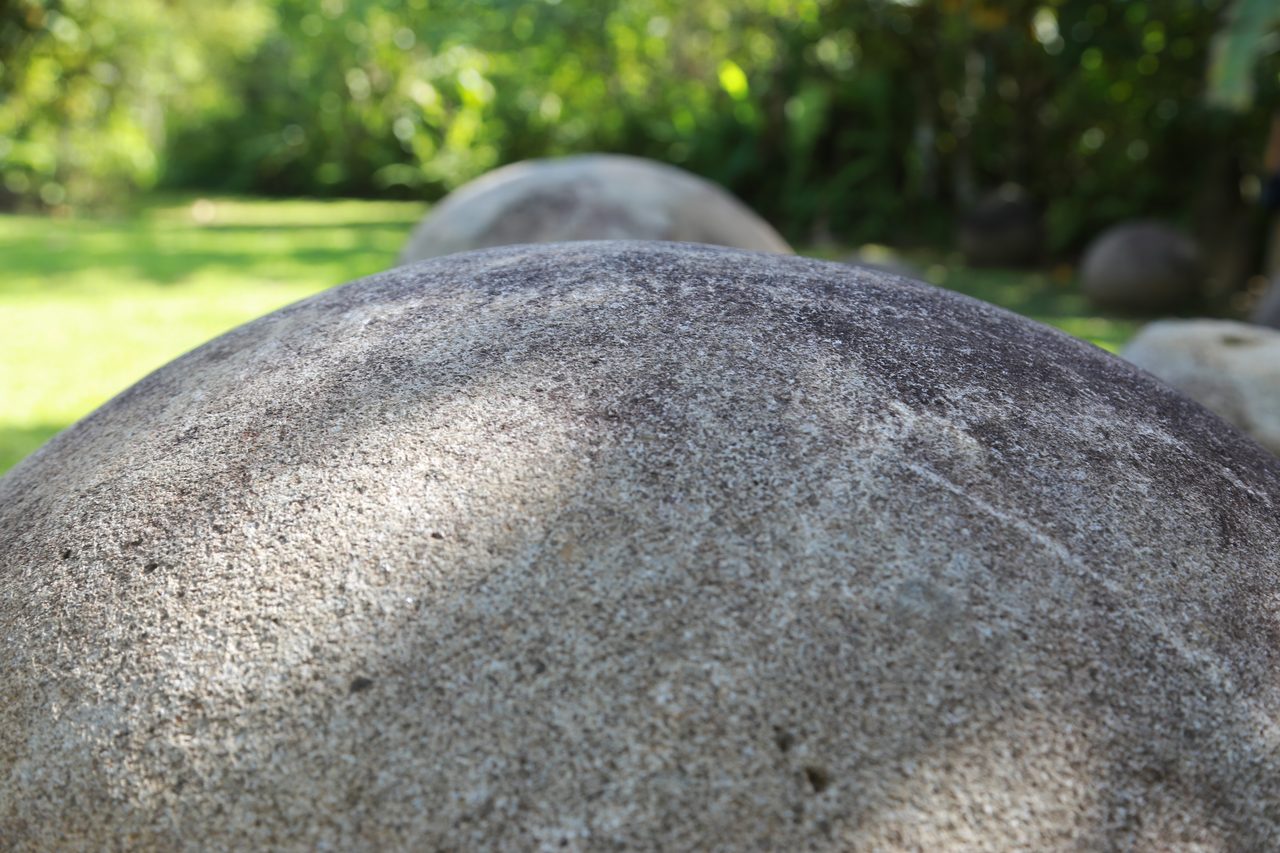
More than 300 stone spheres, some ground almost perfectly round by hand, sit in the Diquis Delta of Costa Rica, the largest of them over two meters across and an estimated 16 metric tons. We know who carved them, roughly when, and exactly how. What no one can tell you, not even a UNESCO World Heritage listing, is why. Here is the file, opened claim by claim, every fact wearing its evidence.
Most ancient mysteries reach you as a question about hands and tools. How did they cut it, lift it, shape it, without the machines we would reach for today. The stone spheres of Costa Rica break that pattern. Archaeologists know what they are made of, who made them, roughly when, and, from the marks left on the stone itself, exactly how. The technique is not in doubt. And yet stand in a field in the Diquis Delta beside a two meter ball of gabbro ground almost perfectly round by hand, and the real question is still there, untouched by any of that knowledge. Not how. Why. Let us open the file.
01Found By Accident In A Banana Field
The spheres came to the wider world in the 1930s, when the United Fruit Company cleared jungle in the Diquis Delta of southwestern Costa Rica to plant bananas. Workers at Loteria Farm, the site now known as Finca 6, kept turning up stone balls in the ground, many still sitting in clusters and straight lines where they had been placed. The first systematic archaeological study came in the 1940s, led by Samuel Lothrop of the Peabody Museum.
More than 300 spheres have since been documented, most of them in the Diquis Delta, with some as far out as the offshore island of Isla del Cano. But the record was damaged almost as fast as it was found. Through the 20th century, landowners and collectors hauled spheres off to serve as garden ornaments and gate decorations, and some were simply rolled into rivers. Every sphere moved off its original spot erased a piece of the one thing we most need, the pattern they were set in.
02The Stones Themselves
The spheres run from about 10 centimeters across to a giant of 2.57 meters. The largest examples are estimated at 16 metric tons. What sets them apart is not just the size but the roundness. The finest examples deviate from a true sphere by less than 0.2 percent of their diameter, and even ordinary ones stay under 1 percent. That is remarkable consistency, and it was achieved by hand.
You will see bigger weight figures elsewhere. Popular and tourism sources sometimes push the largest sphere as high as 24 to 26 tons. We are staying with the conservative figure the peer reviewed archaeology actually supports, roughly 16 metric tons, and flagging plainly that the higher numbers come from the softer end of the literature.
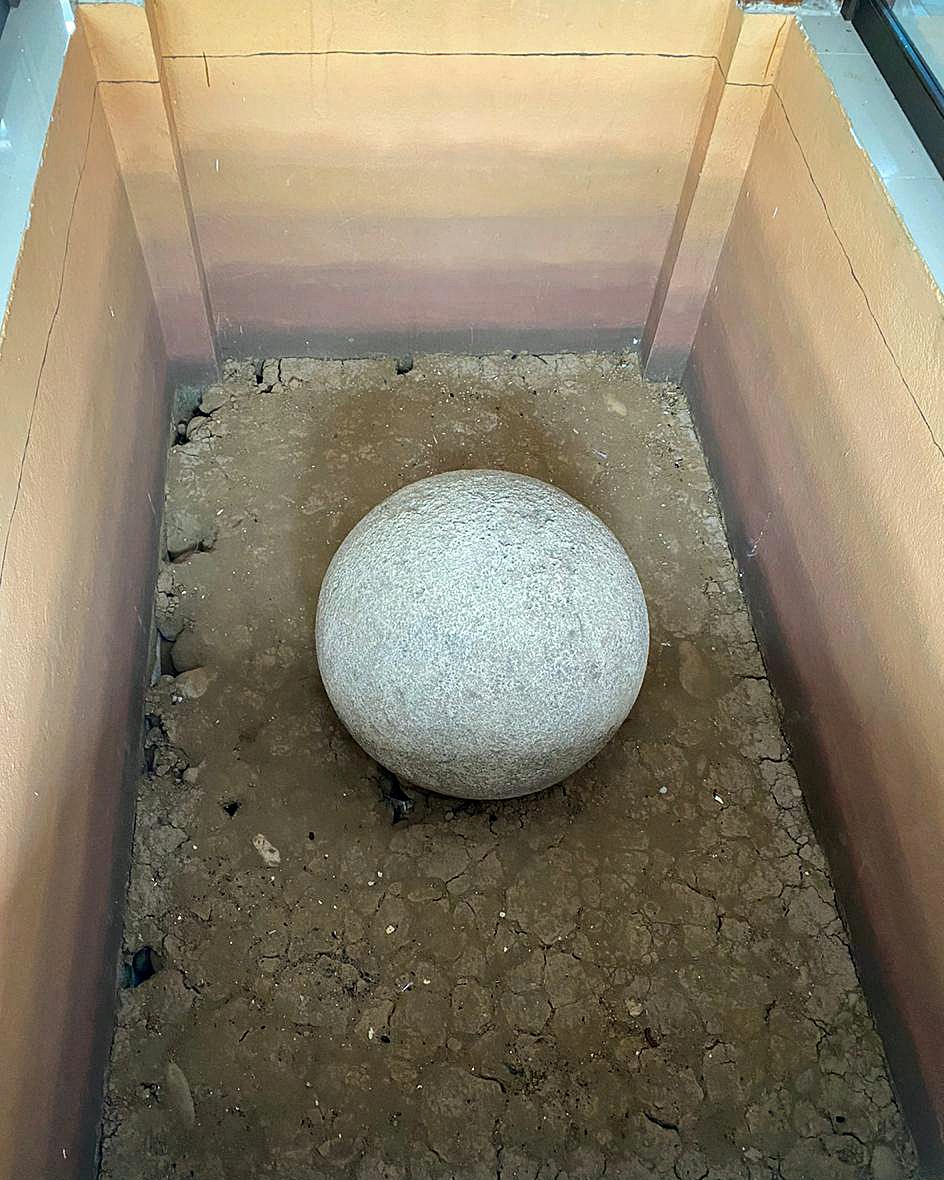
Most of the spheres were carved from gabbro, an igneous rock, with smaller numbers made from granodiorite, sandstone, and limestone. This was local material. Gabbro outcrops sit in the foothills of the Diquis region, and some of the limestone spheres were shaped from river cobbles, which tells us the carvers worked with whatever good stone the landscape handed them.
| Feature | Detail |
|---|---|
| Count | More than 300 documented |
| Diameter | About 10 cm to 2.57 m |
| Largest mass | An estimated 16 metric tons |
| Roundness | Best examples under 0.2% deviation; average under 1% |
| Main material | Gabbro; also granodiorite, sandstone, limestone |
| Maker | The Diquis culture, roughly 800 to 1500 CE |
| Status | UNESCO World Heritage, 2014 (Ref. No. 1453) |
03We Know Exactly How They Were Made
Experimental archaeology and close study of the stone surfaces confirm a three stage process, and nothing more exotic. First, rough shaping by controlled fracturing, pecking the boulder down with harder stone hammers. Then fine shaping by grinding with sand and water as an abrasive. Then final polishing to bring up the smooth finish. No rotary machinery, no advanced tooling, and no unknown technology appears anywhere in the marks the work left behind.
Stone working experiments with replica hammers and abrasives suggest that a single 2 meter sphere could have taken several hundred worker days to finish. If that estimate is close, each of the largest spheres represents an enormous, deliberate investment of a community's labor, the kind of effort a chiefdom spends only on things that matter.
04The People Who Carved Them
The spheres belong to the Diquis culture, a chiefdom level society that flourished in southern Costa Rica from roughly 800 to 1500 CE. These were the same people who produced fine gold aguila pendants and accomplished stone sculpture. Associated ceramics, radiocarbon dates from surrounding deposits, and settlement patterns all place the spheres in that window. What we do not have is their own account of the spheres, because the Spanish conquest and the diseases that came with it erased the direct cultural memory of what these objects meant.
In 2014 the site was inscribed on the UNESCO World Heritage List as the Precolumbian Chiefdom Settlements with Stone Spheres of the Diquis, World Heritage reference number 1453. It is a serial listing covering four specific archaeological sites in the delta, Finca 6, Batambal, El Silencio, and Grijalba-2, and it was the first cultural site from Costa Rica ever added to the list. The inscription protects not only the spheres but the wider landscape around them, the mounds, plazas, and burial sites of the settlements that made them.
05Set In Deliberate Patterns
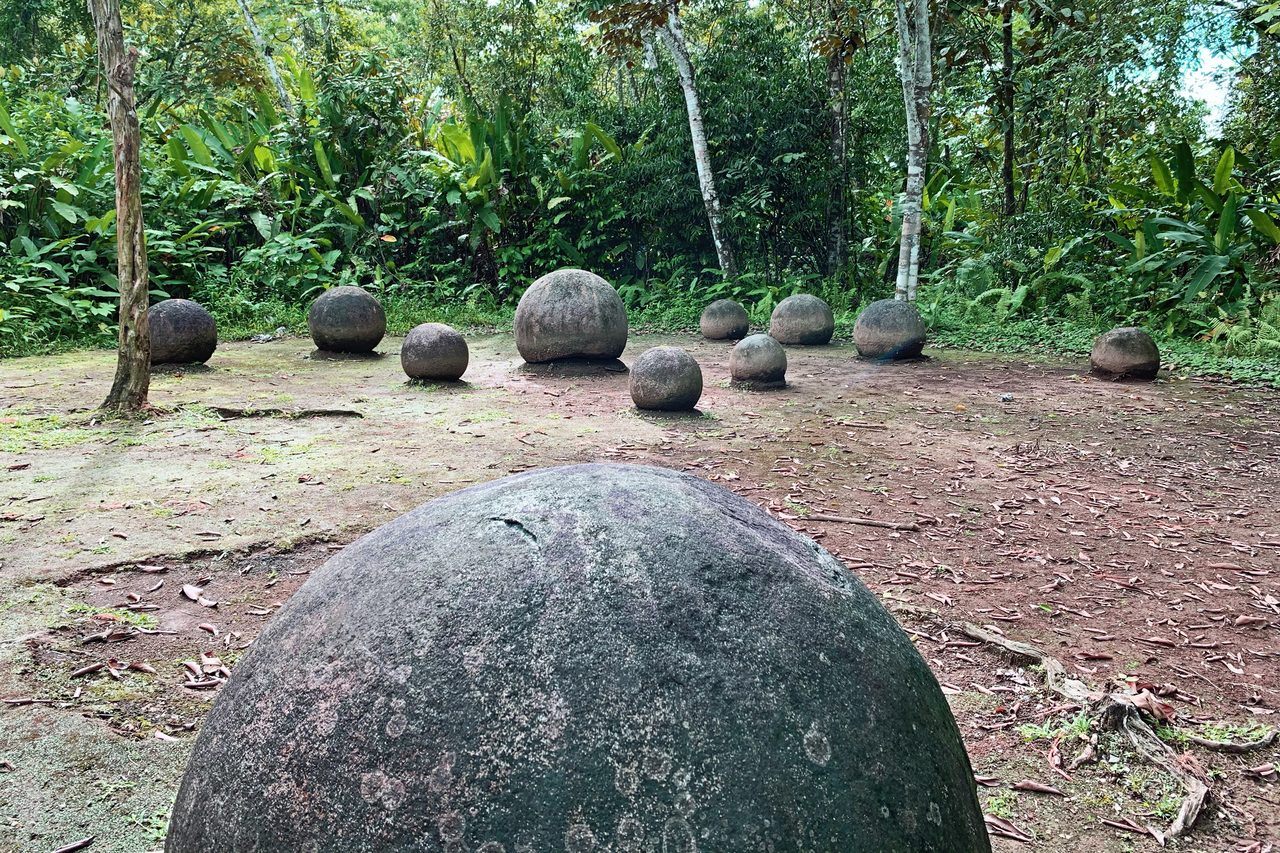
Where the original positions were recorded before anything was moved, the spheres were not scattered at random. They were found in straight lines of three to six, in triangular clusters, in pairs flanking plazas and pathways, and standing alone beside the mounds of high status homes. The placement was organized on purpose. That is the fact every theory about meaning has to explain, and it is also the fact most badly wounded by all the spheres that got dragged away before anyone drew a map.
06Why? The Answers With Real Support
Because the Diquis left no writing, and their descendants' memory of the spheres was destroyed at the conquest, every explanation of purpose has to be built back up from the objects, their materials, and the patterns they were set in. Several of these are genuinely credible. None has won a full consensus. Here is the honest scorecard.
Markers of chiefly power. The spheres sit in prominent places, in plazas, along causeways, and beside elite residences, exactly where a society signals authority. Larger spheres tend to turn up in higher status settlement areas, and carving a 2.5 meter ball out of gabbro cost a fortune in labor. That combination reads naturally as a display of political importance and social rank.
Boundary and territory markers. Another reading takes the spheres as markers delineating chiefdom boundaries across the Diquis landscape, in the same spirit as boundary stones in other cultures, such as the kudurru of Mesopotamia. Their distribution, concentrated at settlement nodes, is consistent with staking out territory.
Cosmological symbols. A sphere is the most complete and universal of shapes, and it may have carried cosmological meaning for the Diquis, standing for celestial bodies, for wholeness, or for cyclical time. Circular and spherical symbolism runs through the broader Mesoamerican and Chibchan world in other media, which makes this more than a guess, though still short of proof.
Astronomical alignments. In 1998 Ivar Zapp and George Erikson argued that some sphere arrangements lined up with celestial bodies or geographic features. Their method drew heavy criticism for fitting patterns after the fact and for ignoring how many spheres had already been moved. Lothrop's early records of genuine linear and triangular arrangements keep the door open, but they leave any astronomical intent unresolved rather than confirmed.
A tradition that changed over time. The spheres vary in size, material, finish, and spacing, which suggests the practice ran for centuries and may have shifted in meaning along the way. The earlier, smaller spheres could have served a different purpose than the later monumental giants, so there may be no single answer to find.
Pieces of a trade world. The Diquis chiefdoms sat inside long distance exchange networks that moved gold, jade, and marine shell between Central and South America. Whether the spheres themselves ever traveled those routes is unknown, but the examples out on Isla del Cano show that at least some of them were carried across water on purpose.
| Theory | Evidence tier | The main objection |
|---|---|---|
| Markers of chiefly power | Tier 2 | Fits the context, but no single sphere is directly shown to be a rank marker |
| Territorial boundary markers | Tier 2 | Matches the distribution, but rests on analogy to other cultures, not local proof |
| Cosmological symbols | Tier 2 | Consistent with regional symbolism, yet unprovable from the stones alone |
| Astronomical alignments | Tier 2 | Method criticized as post-hoc; too many spheres were moved to test it |
| A shifting, centuries-long tradition | Tier 2 | Explains the variation, but predicts no single verifiable purpose |
| Pieces of a trade network | Tier 2 | Only Isla del Cano clearly shows movement; exchange of spheres is unproven |
07Thinner Threads
Below the credible theories sit a set of ideas that are possible but poorly supported, resting on selective data or on tests nobody has actually run.
A long distance navigation system. Zapp and Erikson went further than alignment and proposed that the sphere arrangements pointed toward far off places like Easter Island and Stonehenge. This needs highly selective data, ignores every displaced sphere, and has found no acceptance among mainstream archaeologists. The distances and precision it demands go well beyond any pre-Columbian navigation system documented anywhere in the Americas.
Acoustic instruments. Some alternative researchers have floated the idea that the spheres were tuned to produce specific tones when struck. No formal acoustic study has ever been published, and there is no testable mechanism behind the claim, only anecdote.
Part of a wider regional tradition. Smaller and rougher stone spheres have been reported in Panama, Colombia, and Ecuador. That raises a real question about whether the Diquis spheres were one local expression of a broader Chibchan or Isthmian practice, though the connection is not yet established.
Older than the record shows. The accepted dating puts the spheres between roughly 800 and 1500 CE, but the humid tropical delta, with its heavy erosion and vegetation, is hard on the organic material needed for direct dating. Earlier, undocumented spheres cannot be ruled out, even if none has yet been demonstrated.
08Broken, Dynamited, And Rescued
The spheres have not survived untouched. Weathering and lichen have worn many down, and treasure hunters convinced that gold was hidden inside them blew spheres apart with dynamite. Of the original 300 and more, a great many now survive only in damaged condition. Costa Rica's National Museum has led the work of conservation, and the UNESCO designation added another layer of legal protection.
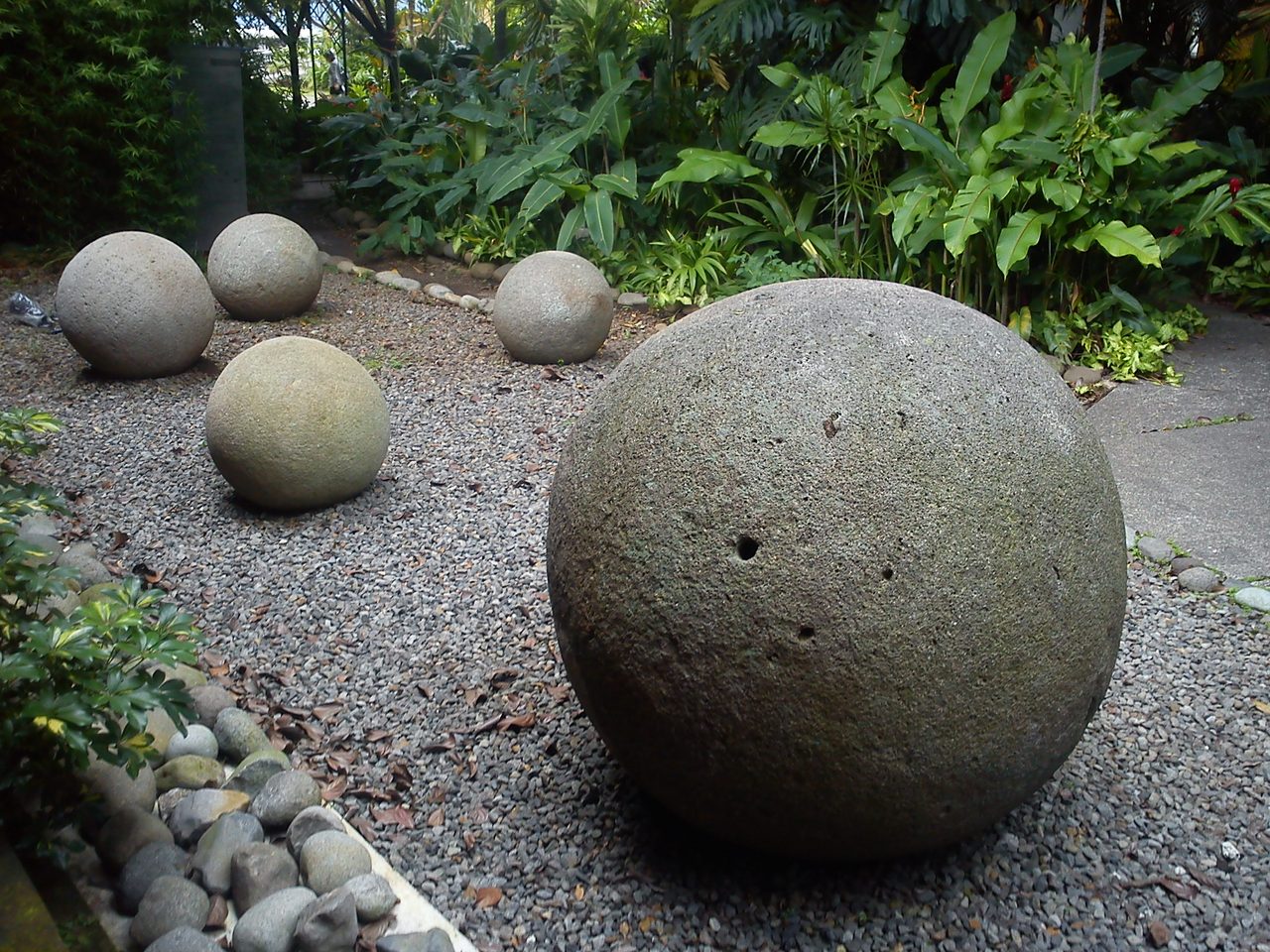
Six of the spheres, several of them reassembled after being shattered by that dynamite, now stand on permanent public display at the National Museum of Costa Rica in San Jose, where they are presented as a symbol of national identity.
09Where The Fringe Comes In, And Why It Fails
A near perfect stone ball that an ancient people made and never explained is an open invitation to bigger claims. Almost all of them lean on the same move, that the spheres are too perfect, too advanced, or too mysterious to be the ordinary work of the Diquis. That move does not survive contact with the stone.
Not one of the spheres is geometrically perfect. The old talk of superhuman precision rests partly on measurement error in early studies, read too generously. Modern laser scanning and photogrammetry show exactly the variation you would expect from skilled work done by hand, extraordinary craftsmanship, not machine tolerance and not magic.
Claims that the spheres are the work of a lost advanced civilization, Atlantean or Lemurian, have no archaeological basis at all. The Diquis cultural context, the local stone, and the documented technique place them squarely inside a known pre-Columbian tradition.
Ancient astronaut narratives that hold up the spheres as impossible artifacts requiring alien technology fail for the same plain reason. Pecking and grinding stone is one of the oldest human skills on Earth, documented in cultures worldwide since the Paleolithic. There is nothing here a person with hard stone, sand, water, and patience could not do.
The internet favorite, that the spheres hide hollow chambers, crystals, or encoded geographic information, is simply contradicted by the evidence. X-ray, ultrasound, and density analysis of accessible spheres show solid, homogeneous stone all the way through, marked only by the natural banding of the minerals in the rock. The treasure hunters who dynamited them for hidden gold were blasting apart solid stone.
And the claim that the spheres worked as electromagnetic or etheric energy devices has no physical basis whatsoever. It borrows the vocabulary of electrical engineering and applies it to a solid lump of igneous rock, where it means nothing.
Fast Facts
- Object
- Carved stone spheres, from 10 cm to 2.57 m across
- Known count
- More than 300 documented
- Largest mass
- An estimated 16 metric tons
- Maker
- The Diquis culture, roughly 800 to 1500 CE
- Main material
- Gabbro, quarried locally
- How made
- Pecked, ground, and polished by hand; technique confirmed
- Heritage status
- UNESCO World Heritage, 2014, Ref. No. 1453, four sites
- Purpose
- Unknown; no theory has full consensus
What We Can Actually Stand Behind
The spheres are real, and so is almost everything about their making. More than 300 exist, carved by the Diquis of southern Costa Rica between about 800 and 1500 CE from local gabbro, pecked and ground and polished by hand, some reaching 2.57 meters and an estimated 16 metric tons, and protected today as a UNESCO World Heritage site across four delta locations. That is all settled.
Why they were made is not. Markers of chiefly power, boundary stones, cosmological symbols, astronomical alignments, a tradition shifting over centuries, pieces of a trade world: each is credible, each fits part of the evidence, and none has won consensus. The most honest answer to what the spheres were for is that we do not yet know.
The spheres are not too perfect to be human, not the work of Atlantis or aliens, not hollow vessels for gold or crystals, and not energy machines. Not one of them is even geometrically perfect. The making is thoroughly ordinary human skill; only the reason is missing.
So the file closes where it opened. We can name the stone, the hammers, the hands, the century, and the culture. We can walk the four sites the world agreed to protect. The one thing we cannot do is say why a chiefdom in the Diquis Delta spent hundreds of days of labor turning boulders into near perfect spheres, set them in lines and triangles across their plazas, and carried some of them out to sea. When a people invests that much in a single shape and leaves no word of what it meant, what were they trying to say, and to whom?
Sources & further reading
Everything above is drawn from our research library on Theories of Anything. Open the full file to check the sourcing and go deeper.
Image credits
- Multiple Diquis stone spheres sitting in a grassy field at the Finca 6 archaeological site Photo: Francois Bianco. CC BY-SA 2.0 Source.
- Diquis stone spheres photographed in situ at the Finca 6 archaeological site Photo: Diego Padilla Duran and Mariordo. CC BY-SA 4.0 Source.
- A single Diquis stone sphere on display at the site museum at Finca 6 Photo: Diego Padilla Duran and Mariordo. CC BY-SA 4.0 Source.
- An alignment of Diquis stone spheres at the National Museum of Costa Rica in San Jose Photo: Rodtico21. CC BY-SA 3.0 Source.
- Card crop of multiple Diquis stone spheres at the Finca 6 archaeological site Photo: Francois Bianco. CC BY-SA 2.0 Source.
.jpg)


