The Denisovans: A Human Species Found in a Fingerbone
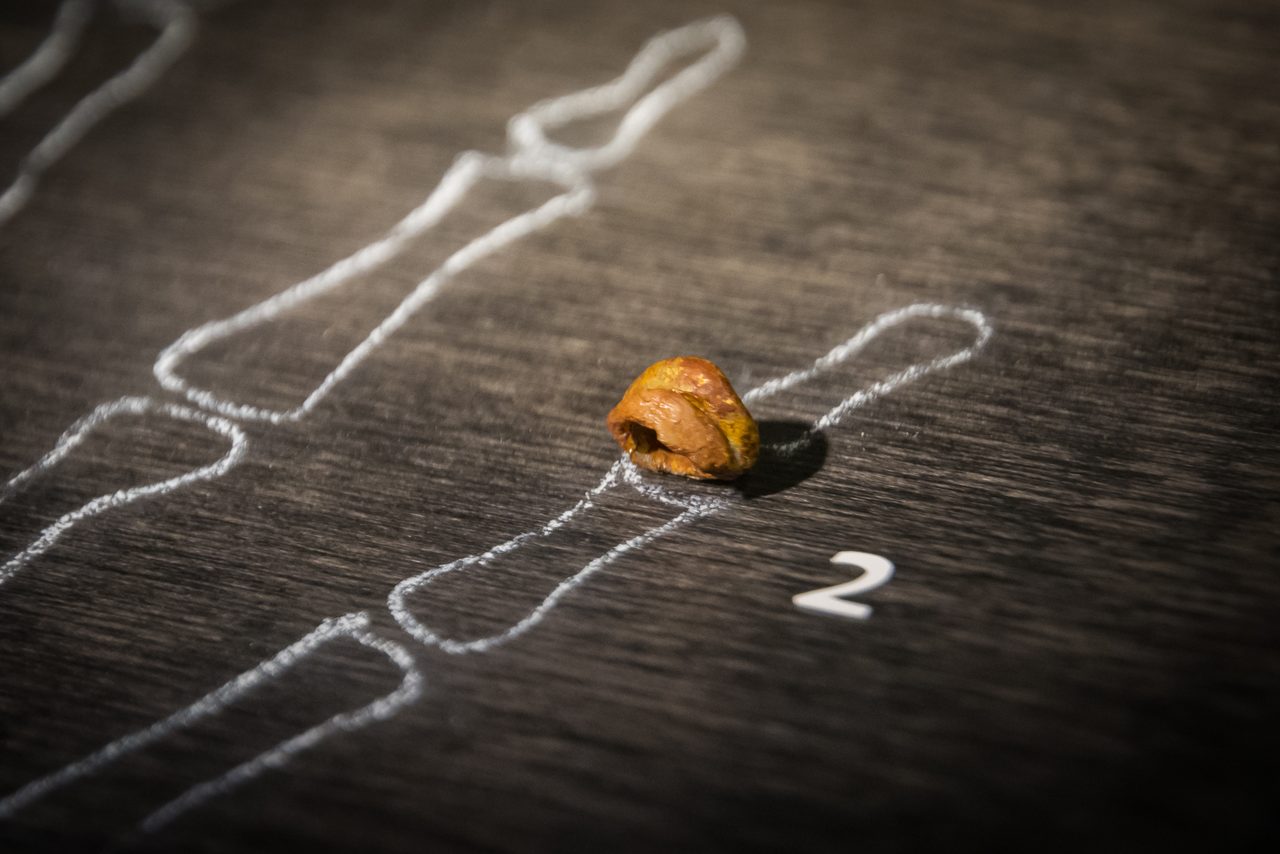
In 2008 a sliver of finger bone came out of a cave in Siberia, and two years later it did something no fossil had ever done. It announced an entire species of human that nobody had ever knowingly seen. No skull, no skeleton, no name in any textbook, just a genome read off a chip of bone so genetically distinct from us and from Neanderthals that it could only be a third kind of human. We call them Denisovans, after the cave, because we had nothing else to call them. More than fifteen years later the physical evidence still fits on a single tray: a finger bone, a scatter of teeth, two jawbones, a skull cap, and one nearly complete skull whose story we tell in our sister file on Ghost Populations. And yet from that almost nothing, geneticists have sequenced a genome as complete as your own, traced Denisovan DNA through a dozen living peoples from Papua New Guinea to Tibet, and pinned one inherited Denisovan gene to the reason Tibetans can thrive where the air itself runs thin. That is the strangest thing about them, and the reason this file goes slowly, tier by tier. We know almost nothing of their bodies, and almost everything of their blood. Here is the file, every fact wearing its evidence.
Hold one strange fact in your head before we start, because everything about the Denisovans hangs off it. We have almost none of their bodies, and almost all of their genome. Most extinct humans are the opposite. We find their bones, argue over their skulls, and can only guess at their DNA. The Denisovans arrived backwards. First came the genome, read off a chip of finger bone, and only afterward, slowly, a handful of teeth and jaws to hang it on. That inversion is why the story is worth telling carefully, tier by tier, because it is genuinely easy to overstate what a genome alone can tell you about a people, and just as easy to understate how much this one already has. Let us open the file.
01A Species Found In A Fingerbone

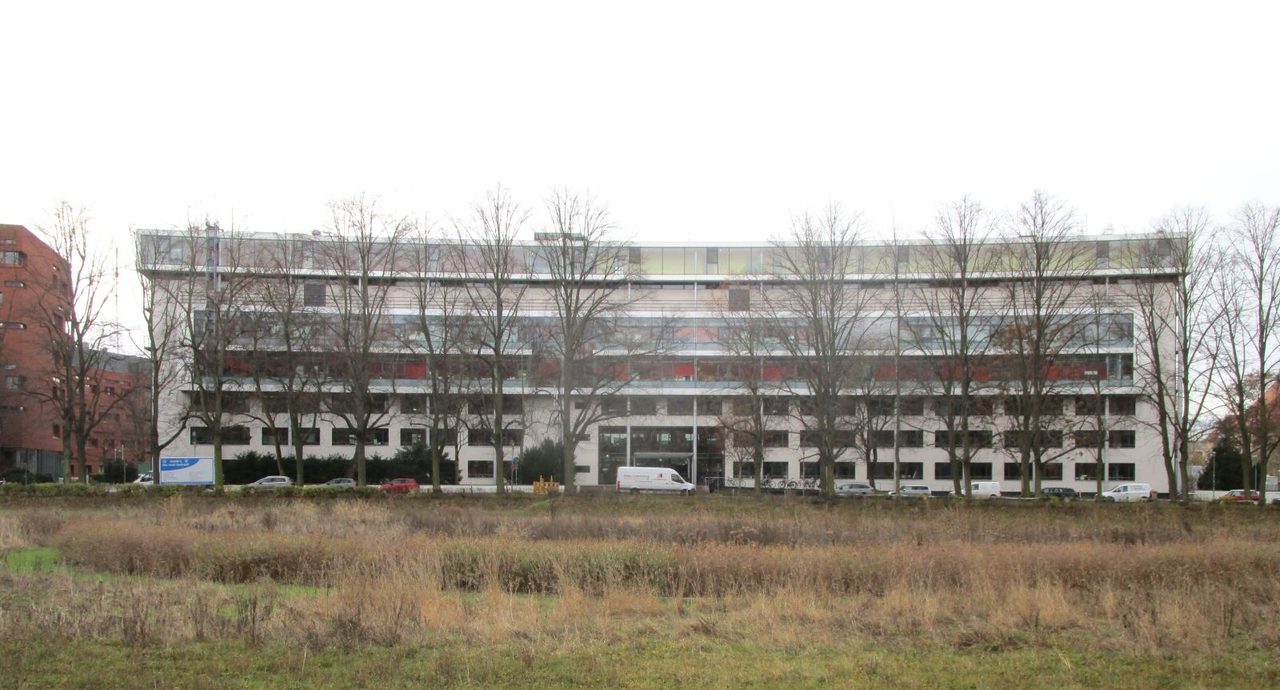
Start where the science started, with something almost too small to matter. In 2008, in Denisova Cave in the Altai Mountains of southern Siberia, excavators recovered a sliver of finger bone, a distal phalanx from the hand of a juvenile girl. It sat in a drawer until a team led by the geneticist Svante Paabo, at the Max Planck Institute for Evolutionary Anthropology, pulled DNA out of it. When they read the mitochondrial DNA in 2010, it was twice as divergent from ours as Neanderthal DNA is. That single number meant this was not a Neanderthal and not a modern human. It was a third kind of human nobody had ever knowingly held. For the first time in the history of the field, a whole hominin population had been discovered by its genes rather than by finding a body. We named them Denisovans, after the cave, because we had nothing else to name them after.
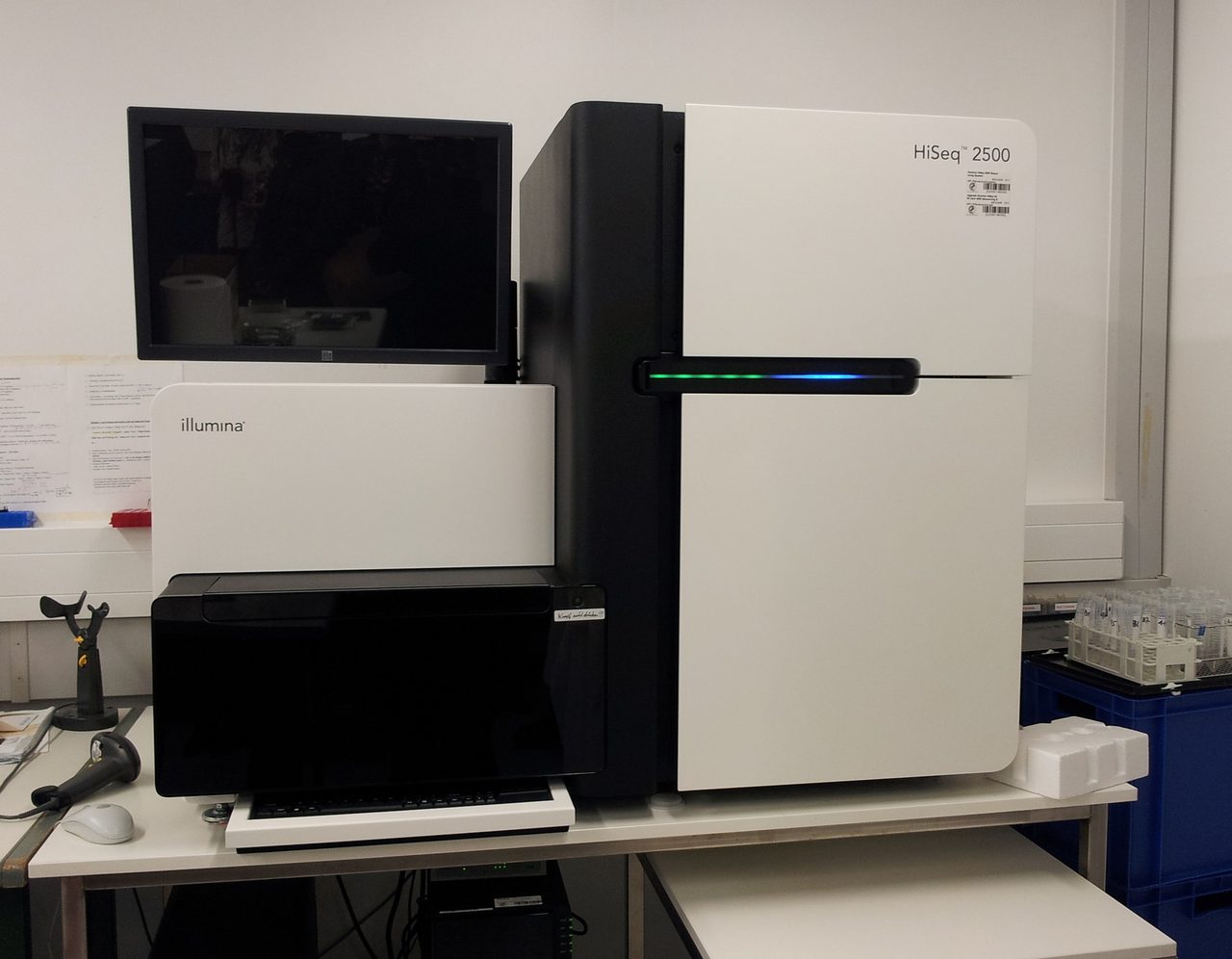
Then it got more remarkable, not less. From that same finger bone, in 2012, the team sequenced a complete nuclear genome at roughly thirty-fold coverage, a genome as detailed as one you could pull from a living person today. They managed it with a single-stranded DNA library technique built in Paabo's own lab specifically to squeeze a full genome out of degraded ancient material. The genome carried its own surprise: very low genetic diversity, the signature of a small population that never grew large. We had read a human species to modern quality, and the entire physical source of that reading was one girl's fingertip.
The genome also fixed the Denisovans on the family tree, and their position is worth getting right, because our sister file on the Neanderthals still inside you depends on it. Denisovans and Neanderthals are sister lineages: they shared a common ancestor with each other after both had already split from us. The modern-human line branched off the shared Denisovan-Neanderthal line somewhere around 550,000 to 765,000 years ago, and then Denisovans and Neanderthals diverged from each other roughly 390,000 to 440,000 years ago. Three branches of humanity, all alive at once, all descended from one older stock.
02A Genome With Almost No Body
Here is the fact that should stop you. More than fifteen years after the discovery, the total physical evidence for the entire Denisovan population, everything confirmed as Denisovan by DNA or by protein anywhere on Earth, amounts to roughly a dozen specimens: a finger bone, a scatter of isolated molars, one limb-bone fragment, two jawbones, a skull cap fragment, one detection made from cave dirt alone with no bone at all, and, as of 2025, one nearly complete skull. They come from only a handful of sites across the whole Asian continent. You could lay the lot on a single museum tray. And yet the Denisovans are, in genetic terms, one of the best-documented archaic humans there are. That gap, between how little we can touch and how much we can read, is the truest thing about them.
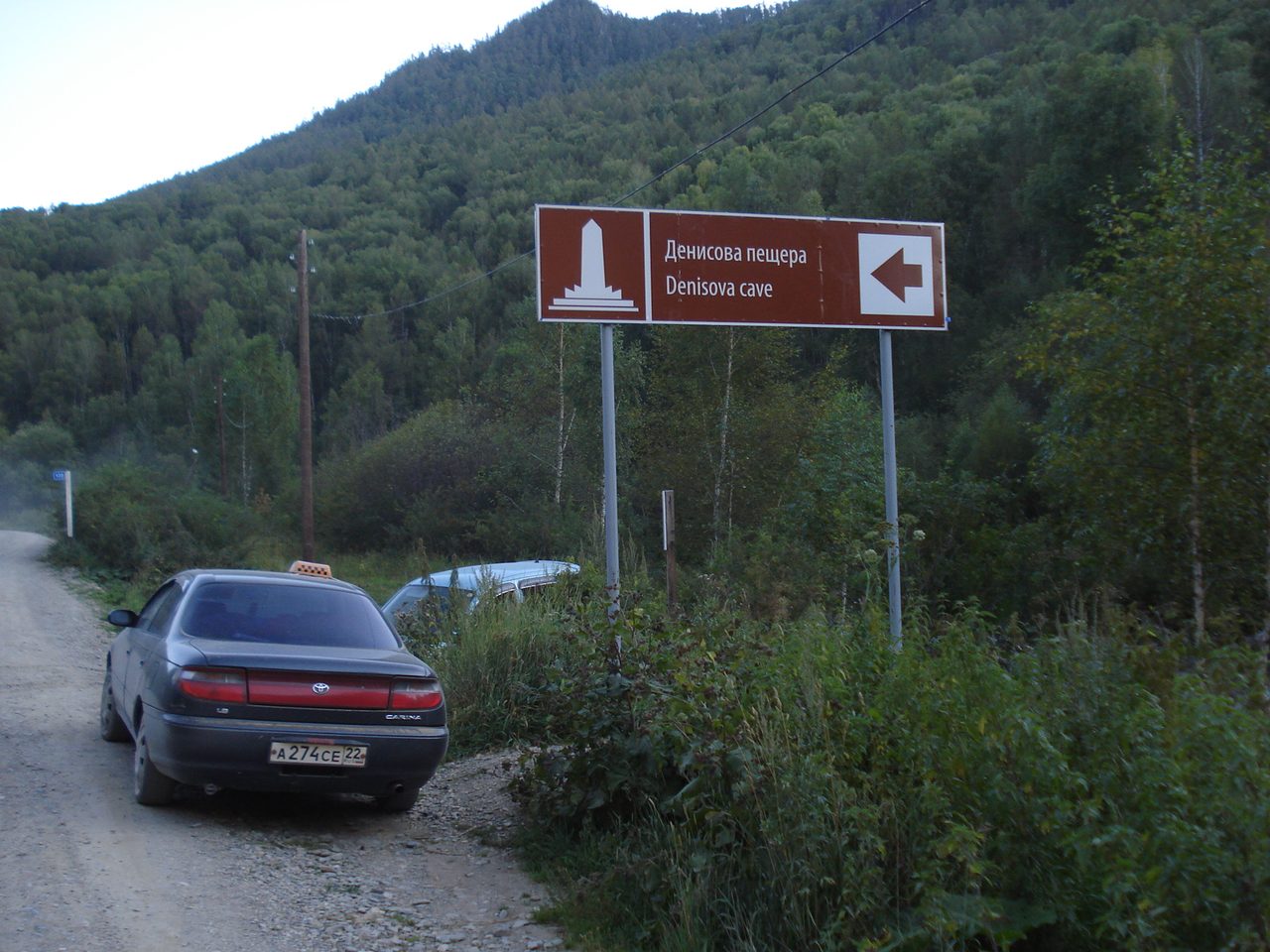
Denisova Cave itself is the strangest address in human prehistory: over more than 300,000 years it was occupied, at different times, by Denisovans, Neanderthals, and modern humans, the only site on Earth known to hold physical traces of all three. From its layers came the finger bone, plus a run of teeth. Denisova 4 and Denisova 8 are upper molars so large they dwarf any known Neanderthal or modern-human molar, and Denisova 2 is a baby tooth from a layer dated past 200,000 years ago, the oldest Denisovan yet recovered. Enormous teeth and a child's fingertip. That was the founding evidence for a species.
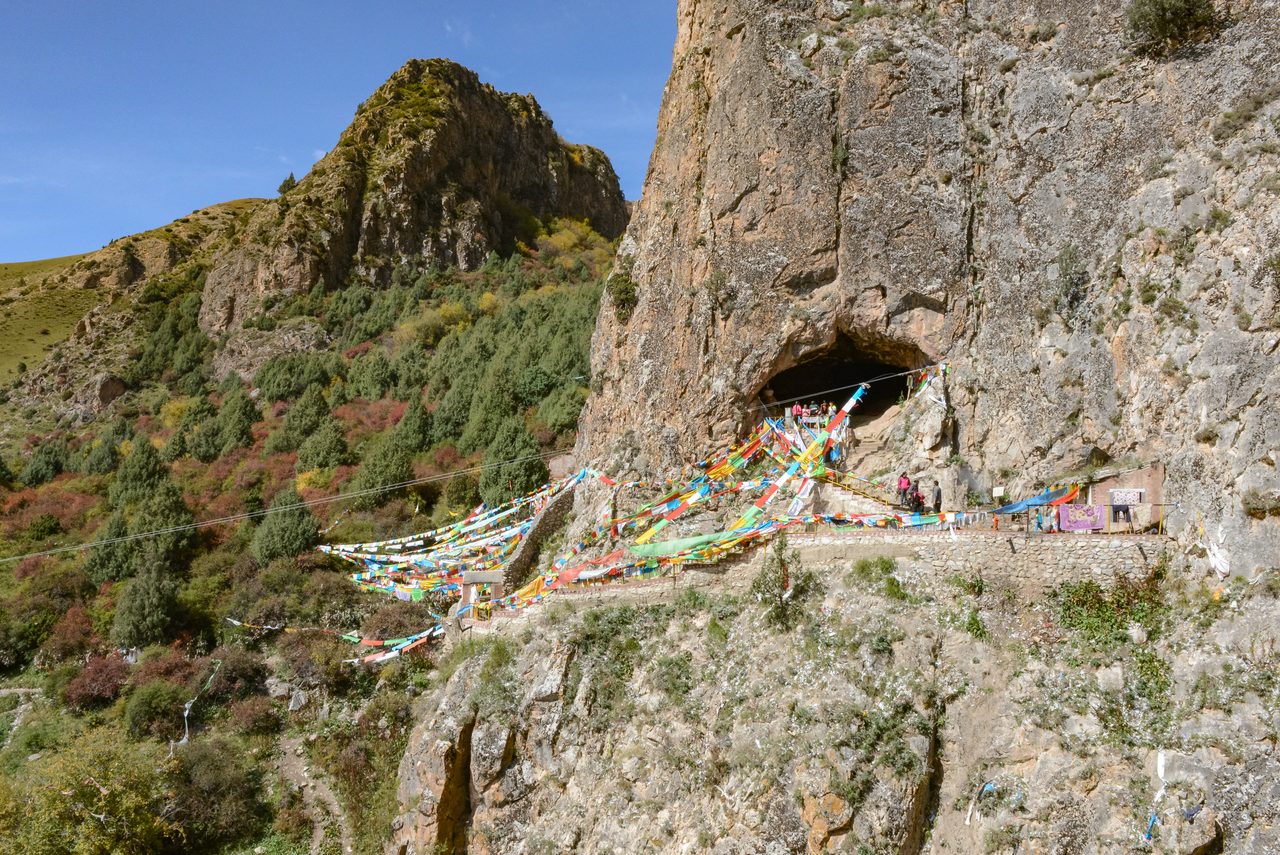
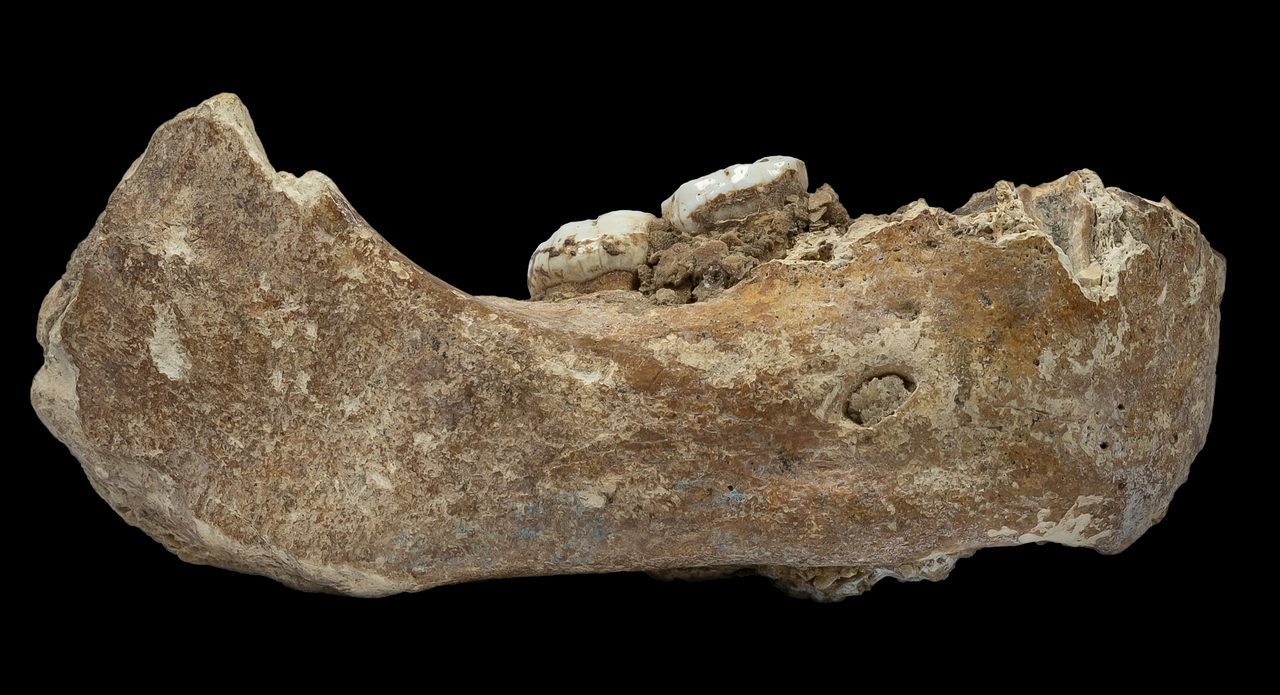
Then the range broke wide open. In 2019 the Xiahe mandible, a robust lower jaw from Baishiya Karst Cave on the Tibetan Plateau, became the first Denisovan identified outside Denisova Cave, sitting at 3,280 meters and dating to around 160,000 years ago. It carried no usable DNA at all. It was identified as Denisovan through ancient proteins instead, a method that reads surviving amino-acid sequences when the DNA is gone. A year later, Denisovan mitochondrial DNA was pulled straight out of that cave's sediment, no bone required, confirming a Denisovan presence on the plateau by a second, independent route.
The map kept widening. A molar from Cobra Cave in Laos, published in 2022 and dated to roughly 164,000 to 131,000 years ago, put Denisovans deep into Southeast Asia. Then in 2025 a jawbone dredged by fishermen from the seabed of the Taiwan Strait, known as Penghu 1, was identified as a male Denisovan from 4,241 amino-acid residues across 51 proteins, carrying the confirmed range down into subtropical Taiwan. From frozen Siberia to the high Tibetan Plateau to the humid coast of Taiwan, one archaic human population ranged across nearly the whole of Asia and adapted to climates that could hardly be more different.
One more find belongs here, with a lighter touch. A skull cap fragment from Salkhit in Mongolia, analyzed in 2021, shows what the source file describes as mixed Denisovan and modern-human ancestry. It is the most softly sourced entry in the whole specimen list, without the clean single citation that anchors the other rows, so it earns credible rather than verified, and it is worth leaning on gently.
Notice the thread running through the newest finds. The Xiahe jaw and the Penghu jaw were both confirmed as Denisovan not by DNA but by ancient protein analysis, because DNA simply does not survive in the warm, humid places where much of the population lived. Proteomics has become a second, parallel way to name a Denisovan when the genetics fail. It is also a blunt explanation for why the fossil record is so thin: across most of the Denisovan range, the very molecule we would most like to read rots away first. The Harbin skull our sister file covers was confirmed by both routes at once, mitochondrial DNA recovered from dental calculus and proteomics together, the first time a virtually complete Denisovan skull had been pinned down by either method.
So keep the discipline the researchers themselves keep. Denisovans were discovered genetically, but the fossils behind that discovery are a few teeth, scattered fragments, two jawbones, and a single skull. The DNA-based body reconstructions are clever and genuinely informative, but they are inferences, not a skeleton in hand. Confident statements about Denisovan anatomy, regional variation, or exactly how late they survived in Southeast Asia should be read as provisional. The genome is rich. The bone box is nearly empty.
| Specimen Or Site | Where And When | How It Was Identified |
|---|---|---|
| Denisova 3 (finger bone) | Denisova Cave, Siberia; found 2008 | Mitochondrial and nuclear DNA, 2010 and 2012 |
| Denisova 2, 4, 8 (teeth) | Denisova Cave; oldest dated past 200,000 years | DNA |
| Denisova 11 ('Denny') | Denisova Cave; published 2018 | DNA; a first-generation hybrid |
| Xiahe mandible | Baishiya Karst Cave, Tibet; ~160,000 years | Ancient proteins; no DNA recovered |
| Baishiya sediment | Tibetan Plateau; published 2020 | Mitochondrial DNA from cave dirt alone |
| Cobra Cave molar | Laos; ~164,000 to 131,000 years | Attributed 2022 |
| Penghu 1 mandible | Taiwan Strait; published 2025 | Ancient proteins, 51 proteins |
| Salkhit skull cap | Mongolia; analyzed 2021 | Mixed ancestry, softly sourced |
| Harbin cranium ('Dragon Man') | Harbin, China; confirmed 2025 | See our sister file on Ghost Populations |
03The People Inside The Living
The Denisovans are gone, but they are not entirely gone. When modern humans spread across Asia they interbred with Denisovans, and the DNA has been passed down ever since, in wildly uneven amounts. The peak is in the Pacific: Melanesians in Papua New Guinea and the Solomon Islands, and Aboriginal Australians, each carry roughly 4 to 6 percent Denisovan DNA. The single highest figure recorded anywhere belongs to the Ayta Magbukon, a Negrito people of the Philippines, at around 5 percent. From there it thins fast. Mainland Southeast Asians carry 0.5 to 2 percent, South Asians 0.5 to 1 percent, East Asians 0.2 to 0.5 percent, and Europeans essentially none. Tibetans carry only about 0.4 percent overall, and yet one gene they got from Denisovans may be the most important archaic inheritance any living people carry.
That patchwork is not from one meeting. Genomic analysis shows at least two, and possibly three, separate Denisovan introgression events into different modern populations. In 2019 Guy Jacobs and colleagues showed in Cell that living Papuans carry Denisovan DNA from at least three genetically distinct Denisovan-related lineages, informally labeled D0, D1, and D2: one that fed Siberia and East Asia, one that fed New Guinea and nearby islands, and one that fed Oceania and parts of Asia. Here is the part that folds straight back into our sister file on ghost populations. Only one of those three lineages matches the actual Denisova Cave genome. The other two are themselves ghost populations, real people proven only by the DNA they left behind, with no fossil of their own. The Cave lineage is estimated to have split from one of them around 283,000 years ago and from another around 363,000 years ago.
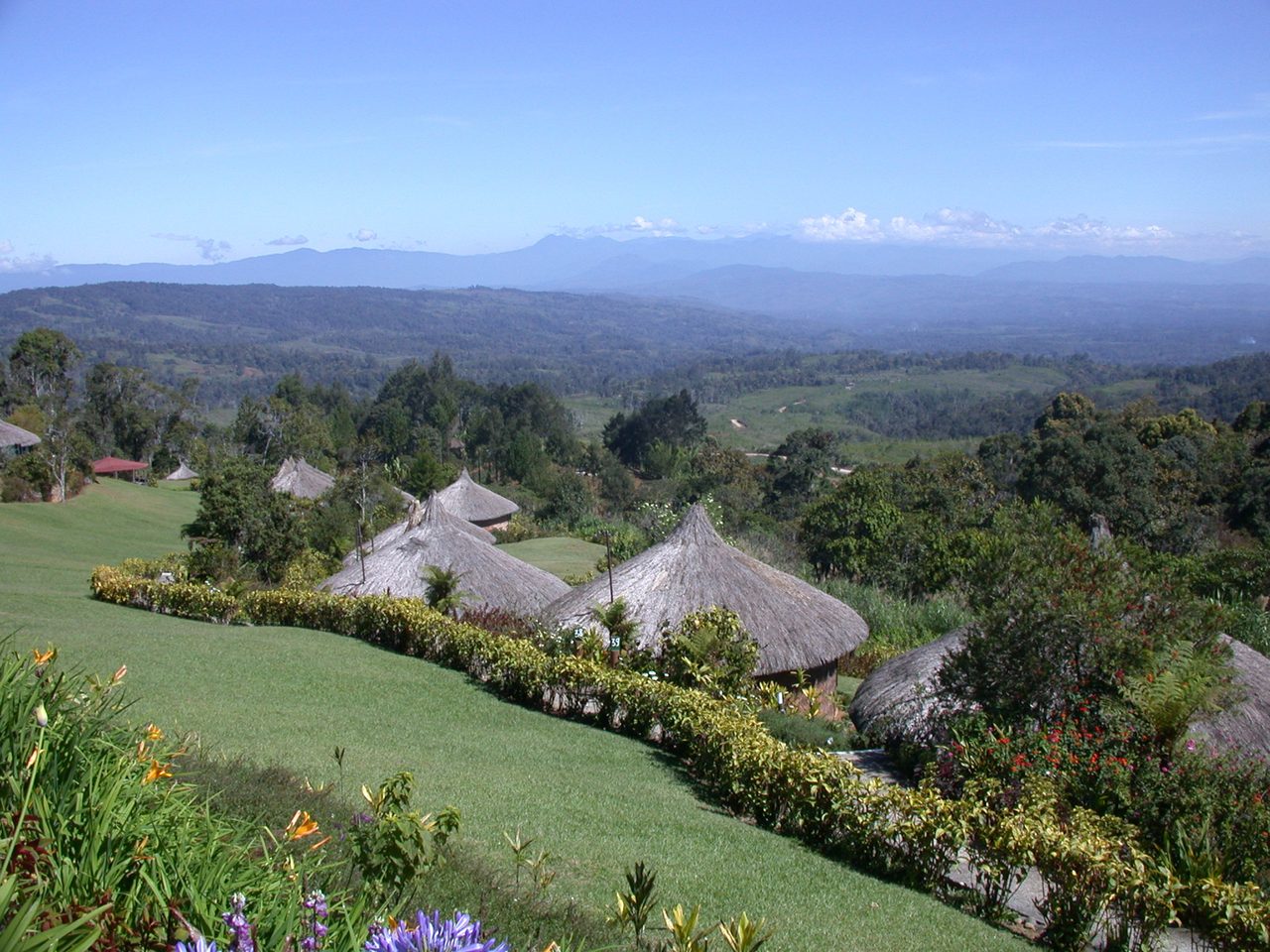
The exact percentages, though, deserve a caveat the popular summaries usually drop. Figures like the famous 4 to 6 percent in Papuans are robust in broad outline, but the precise value shifts with the reference populations a study uses, the masking thresholds it sets, and the demographic assumptions built into it. Trace Denisovan ancestry in mainland Asia is especially slippery, because it has to be statistically peeled apart from Neanderthal ancestry and later population mixing. So the strongest, most defensible claim here is not any single percentage. It is the bigger fact underneath them all: that multiple distinct Denisovan lineages mixed into us at all.
| Population | Denisovan DNA | Note |
|---|---|---|
| Melanesians, Aboriginal Australians | ~4 to 6% | The highest broad levels on Earth |
| Ayta Magbukon (Philippines) | ~5% | The single highest recorded figure |
| Mainland Southeast Asians | 0.5 to 2% | |
| South Asians | 0.5 to 1% | |
| East Asians | 0.2 to 0.5% | |
| Tibetans | ~0.4% overall | But carry the crucial EPAS1 gene |
| Europeans | Close to 0% | Only a trace |
04The Gene That Lets People Breathe Thin Air
If you want one reason the Denisovans matter to living people, it is a gene called EPAS1. It governs how the body responds to low oxygen. Most lowlanders who move to high altitude overproduce red blood cells, which thickens the blood and raises the risk of chronic mountain sickness, stroke, and pregnancy complications. Tibetans carry a version of EPAS1 that prevents exactly that overproduction, letting them live and bear children on a plateau that averages around 4,500 meters. In 2014 Emilia Huerta-Sanchez and colleagues showed in Nature that this Tibetan haplotype came from Denisovans. It is found at meaningful frequency in essentially no other population on Earth, and it sits in the sequenced Denisovan genome. Researchers call it the single strongest case of adaptive introgression in all of human evolution: a gene from an extinct human species that lets living humans survive somewhere they otherwise could not.
EPAS1 is not the only Denisovan gene still doing work, though the others sit a rung lower on the evidence. A gene region called TBX15/WARS2, which affects body-fat distribution and cold response, shows a probable Denisovan-derived adaptive signal in Inuit and East Asian populations. Several immune-system genes in the HLA family show a probable Denisovan contribution to pathogen resistance across Asian and Oceanian peoples. Both are credible, both are plausibly adaptive, and neither is as nailed down as EPAS1.
And one candidate sits lower still. WDFY2, a metabolism gene, shows a possible Denisovan-derived signal in Melanesians, but the source file marks it explicitly as under investigation. That makes it speculative rather than established, and it is labeled so here on purpose.
This spread is the honest picture, and it is worth stating against the way these stories usually get told. Adaptive-introgression claims are not all equal. EPAS1 is the clear, replicated, best-supported case. The others are plausible but genuinely debated, because selection scans can be fooled by demographic history, by genetic linkage, and by uncertainty over which archaic population a given stretch of DNA even came from. Popular retellings tend to flatten all of that into one confident list where every archaic gene sounds equally proven. The literature does not support that, and neither will we.
| Gene | Effect | Strength Of Evidence |
|---|---|---|
| EPAS1 | High-altitude survival in Tibetans | Tier 1: the strongest case known |
| TBX15/WARS2 | Body-fat and cold response | Tier 2: probable, in Inuit and East Asians |
| HLA immune genes | Pathogen resistance | Tier 2: probable, across Asia and Oceania |
| WDFY2 | Metabolism, in Melanesians | Tier 3: under investigation |
05Denny, And The Ghost Inside The Ghost
Some of the best evidence comes not from statistics but from a single person. In 2018 Viviane Slon and colleagues published, in Nature, the genome of Denisova 11, a girl of about thirteen who died in Denisova Cave. Her mitochondrial DNA and her X chromosome were Neanderthal, inherited from her mother. Her father was Denisovan. She was, quite literally, a first-generation hybrid of two different kinds of human, the only one ever found. And her father's own genome carried traces of earlier Neanderthal ancestry too. Nicknamed Denny, she is direct physical proof that Neanderthals and Denisovans did not merely overlap in theory. They met, and had children. Finding such a person at all, among the tiny scatter of fragments recovered from this one cave, strongly suggests that where the two groups' ranges overlapped, interbreeding was ordinary rather than rare.
A very recent finding sharpens that picture, and it needs the right caution. In October 2025 a team led by Stephane Peyregne posted a preprint, not yet peer-reviewed, reporting a high-coverage genome from Denisova 25, a molar from a deep cave layer dated to around 200,000 years ago, more than three times older than the original finger bone. The analysis argues that at least two genetically distinct Denisovan groups occupied the Altai at different times, one replacing the other, and that this much older individual carried more Neanderthal ancestry than the younger Denisovans did, meaning Neanderthal-Denisovan mixing happened repeatedly across a very long span rather than once. Because it is a preprint, treat the specific numbers as provisional. Its headline, though, lines up with everything else here: Denisovans were never one stable population.
Then the story folds in on itself in a way that still feels vertiginous. When Prufer's team sequenced the high-coverage Altai Denisovan genome, published in Nature in 2014, they found that the Denisovans carried DNA from someone even older than themselves: a superarchaic population that had split off from the common ancestor of modern humans, Neanderthals, and Denisovans more than a million years ago. The best figure for how much of the Denisovan genome came from that lineage is about 1 percent. A ghost, folded inside a ghost.
How much, and how old, is where one study reaches further than the rest, and it earns a lower tier for reaching. In 2020 Alan Rogers and colleagues, using wider Approximate Bayesian Computation modeling, argued in Science Advances that the superarchaic contribution might run as high as roughly 5 percent, and that its source population had split off around 2 million years ago, deep enough to be Homo erectus or a close relative. That is a bolder claim on broader assumptions than the original 1 percent, so it stands as one team's extension rather than settled fact. Either way, the identity of the superarchaic source is unknown. The candidates are Homo erectus, which was in Asia for something like 1.8 million years, Homo heidelbergensis or its eastern cousin, or a hominin nobody has named. We may never confirm it genetically, because no ancient DNA has ever been recovered from any Homo erectus fossil, and DNA is not thought to survive much past a million years outside permafrost.
And in May 2026 a study led by Qiaomei Fu, published in Nature, brought the first molecular evidence to bear on that exact question. Her team read dental-enamel proteins from six Chinese Homo erectus individuals roughly 400,000 years old, and found that all six, along with two separately sequenced Denisovans, share a specific protein variant, M273V in ameloblastin, that is absent from Neanderthals and from earlier, more distant Homo erectus. The team reads this as evidence that a population closely related to these Chinese Homo erectus interbred with early Denisovans and passed the variant in, while being careful to note that these particular Homo erectus were their own distinct species, not direct Denisovan ancestors. It comes with a real caveat, raised by the paleoanthropologist John Hawks: the same variant can in principle arise independently in separate populations, so inheritance through interbreeding is the authors' favored reading, not a proven one. Credible, first of its kind, and not the last word.
06What Did They Look Like
With so few bones, what can anyone say about a Denisovan face? Less than you would hope, and more than you would expect. In 2019 David Gokhman and colleagues published, in Cell, a reconstruction built not from a skull but from chemistry. Patterns of DNA methylation, the molecular tags that switch genes on and off without changing the DNA sequence itself, can be mapped from the genome and read for their skeletal effects. From that, the team predicted a Denisovan with a skull wider than ours or a Neanderthal's, a longer dental arch, a broader face, and a larger jaw than either, a profile distinct from both while sharing scattered features with each. When the Xiahe mandible turned up, it partly confirmed the prediction: robust, chinless like a Neanderthal, with very large molars, yet unlike any Neanderthal jaw known. Partly confirmed, note, not fully. The method is novel and the checks against real bone are few. This is a credible sketch, not a photograph.
07One Species, Or Many, And What To Even Call Them
The deeper the genetics push, the less the word Denisovan behaves like the name of one species. The evidence increasingly says Denisovan is best read as a convenient label for several deeply structured archaic populations spread across Asia, not one uniform group fully captured by the Denisova Cave genomes. That is why the Papuan, East Asian, and Philippine ancestry signals refuse to line up behind a single introgression event or a single reference genome. It also means the known fossils may sample only a sliver of the group's real diversity, and that their true range, appearance, and extinction timing are only partly pinned down.
That uncertainty is not a loose end, it is a live scholarly question, and it deserves to be said plainly. Denisovans are genetically real beyond any doubt. But whether Denisovan names one species, several regional populations, or a whole Denisovan-related clade sampled unevenly across a continent is genuinely unsettled. The Cave genomes are still the anchor, yet the introgression patterns in living peoples imply more diversity than any single fossil population could hold. This matters because a great deal of popular writing quietly overstates what can actually be said about Denisovan looks, range, or behavior from so small a record.
The confusion runs right down to the name. There is still no agreed scientific binomial for the Denisovans. Since 2010 at least five have been floated, Homo altaiensis, Homo denisoviensis, Homo denisovan, Homo denisova, and, after the 2021 description of the huge Harbin skull nicknamed Dragon Man, Homo longi as a proposed name for the whole group, and not one has been formally adopted. That Harbin skull matters here for a single reason: in June 2025 it was confirmed as Denisovan, finally putting a face to a people known until then from a finger bone, some teeth, and two jaws. We do not retell that confirmation, because it is the centerpiece of our sister file on ghost populations, where the mitochondrial DNA and the proteomics are laid out in full. For this article it is enough that the first Denisovan face has arrived, and the fight over its Latin name has not ended. Fifteen years on, the most rigorous thing most researchers do is exactly what this article does: call them the Denisovans and leave the binomial blank.
The naming fight is not just historical housekeeping either. In 2024 Christopher Bae and Xiujie Wu proposed, in Nature Communications, an entirely new species, Homo juluensis, built around Middle Pleistocene Chinese fossils from Xujiayao and Xuchang, and suggested that the Denisovans, represented by the Xiahe jaw, should be folded into it. It is a real, published attempt to answer the field's own open question of whether Denisovans are one species. It is also openly contested: critics including Kaifu and Athreya point out that the Xujiayao fossils preserve the mandibular ramus while the Xiahe jaw preserves the mandibular body, so the two specimens share no overlapping anatomy to compare in the first place. A credible proposal, and an unresolved argument.
And when did they end? There is no single clean answer, which is itself the honest finding. The best current evidence points to Denisovans disappearing from Denisova Cave itself somewhere around 30,000 to 50,000 years ago, though some Denisovan-related lineages may have hung on later in Southeast Asia. No one secure extinction date covers every Denisovan population at once, which is exactly what you would expect if Denisovan never named one uniformly-timed population to begin with.
08Where The Evidence Runs Thin
None of this is a finished science, and the people who built it say so first. The Denisovans are the clearest proof in the whole field that you can know a population was real, and rich, and consequential, and still be missing almost everything you would most like to know about it.
So here are the questions the researchers themselves leave open, on purpose. How many distinct Denisovan populations actually existed, when the honest current answer is only multiple, at least two, possibly widely separated? What did they truly look like, when all we have is a chemical prediction and a couple of jaws to check it against? How far did their range really stretch beyond the confirmed arc from Siberia to Tibet to Southeast Asia? Did they have language, art, or symbolic thought, when there is no direct evidence either way, though their closeness to the symbol-making Neanderthals makes it plausible? And was Denisovan ever really one species at all? These are not rhetorical flourishes. They are the actual working edge of the field.
09What This Is Not
Because this is a site that takes the strange seriously, it has to take the false seriously too. A few readings attach themselves to the Denisovans that the evidence simply does not carry, and on this of all sites they need saying out loud.
No, the Denisovans were not giants, or the Nephilim, or a lost advanced civilization. There is zero evidence of abnormal height. The original finger bone falls within the normal human size range, and it belonged to a child. The famously large molars point to a robust jaw, not a giant body. And there are no Denisovan artifacts suggesting technology beyond what other archaic humans of the same era used. The line connecting them to biblical giants or vanished super-civilizations has no evidential basis at all.
No, the Denisovans do not overturn the out-of-Africa origin of our species. They enrich it. Modern humans arose in Africa and then, spreading out, interbred with archaic populations already in place, Neanderthals across Europe and West Asia, Denisovans across Asia and into Oceania. That is a more tangled picture than a clean total replacement, sometimes called a leaky-replacement or assimilation model, but it is a refinement of the standard story, not a refutation of it. Denisovan science is out-of-Africa with more chapters, not a different book.
And two last readings, the ones this site has a duty to shut down. Denisovan DNA is not alien or non-human DNA. Every archaic lineage found so far, Denisovans included, sits squarely inside ordinary hominin evolution; they are deeply diverged human cousins, not unknown creatures and not extraterrestrial genomes. Nor does any of this support a biological idea of human races. Denisovan admixture has been misused by racist and polygenist ideologues to argue that human groups are fundamentally different kinds of people. They are not. Every living human shares more than 99.9 percent of their genome with every other, the archaic fractions are small in every population measured and shade gradually across geography, and none of it sorts humanity into types. The inheritance is shared, and reading it as a dividing line is both false and harmful.
10Every Claim, Every Tier
Here is the whole file on one page, each claim wearing its tier, because the fastest way to get the Denisovans wrong is to blur a rock-solid genetic discovery, a set of genuinely open questions, and a couple of contradicted fantasies into one shapeless mystery. They are not the same thing, and the tiers are what keep them apart.
| The Claim | Tier | The Basis |
|---|---|---|
| Denisovans are a real, genetically distinct archaic human population | Tier 1 | Krause 2010 and Meyer 2012, Nature and Science |
| A full Denisovan genome was read from one finger bone at ~30x coverage | Tier 1 | Meyer et al. 2012, Science |
| Denisovans are a sister lineage to Neanderthals | Tier 1 | The 2012 nuclear-genome phylogeny |
| Living peoples carry Denisovan DNA, up to ~4 to 6% in Melanesians | Tier 1 | Published in Science, Nature, Current Biology |
| Living Papuans carry at least three distinct Denisovan-related lineages | Tier 1 | Jacobs et al. 2019, Cell |
| The Tibetan EPAS1 high-altitude gene is Denisovan-derived | Tier 1 | Huerta-Sanchez et al. 2014, Nature |
| 'Denny' was a first-generation Neanderthal-Denisovan hybrid | Tier 1 | Slon et al. 2018, Nature |
| Denisovans carry about 1 percent superarchaic ancestry | Tier 1 | Prufer et al. 2014, Nature |
| No agreed scientific name for the Denisovans exists | Tier 1 | At least five proposed since 2010, none adopted |
| Exact admixture percentages depend on models and reference panels | Tier 2 | The source file's own caveat |
| The superarchaic estimate may reach 5 percent, source near Homo erectus | Tier 2 | Rogers et al. 2020, one study's extension |
| Chinese Homo erectus may have interbred with early Denisovans | Tier 2 | Fu et al. 2026, Nature; a convergence alternative remains |
| Denisovans were never one stable population | Tier 2 | Denisova 25, a 2025 preprint not yet peer-reviewed |
| Denisovan body shape, predicted from DNA methylation | Tier 2 | Gokhman et al. 2019, Cell; only partly checked |
| Homo juluensis should absorb the Denisovans | Tier 2 | Bae and Wu 2024, proposed and openly contested |
| The identity of the superarchaic source population | Tier 3 | No fossil matched; possibly Homo erectus |
| WDFY2 as a Denisovan adaptive gene in Melanesians | Tier 3 | Marked 'under investigation' |
| Denisovans were giants, Nephilim, or an advanced civilization | Tier 4 | Contradicted; no evidence of unusual size or tech |
| Denisovans disprove the out-of-Africa model | Tier 4 | Contradicted; they enrich it, not refute it |
| Denisovan DNA is alien, or proof of biological human 'races' | Tier 4 | Contradicted; ordinary hominin DNA, shared and gradual |
Fast Facts
- The Discovery
- A finger bone in Denisova Cave, Siberia, found 2008; genome published 2010 to 2012
- How They Were Found
- By DNA and protein, not by a skeleton; the first human species discovered by genetics
- The Whole Fossil Record
- Roughly a dozen specimens from a handful of Asian sites; it fits on one tray
- In Living People
- Up to ~4 to 6% of Melanesian DNA; ~5% in the Philippine Ayta; a trace in Europe
- The Great Inheritance
- EPAS1, the Denisovan gene that lets Tibetans survive high altitude
- Denny
- A girl with a Neanderthal mother and a Denisovan father, the only known first-generation hybrid
- The Ghost Within
- About 1 percent of the Denisovan genome came from an unknown superarchaic human
- The Name
- No agreed scientific binomial; at least five proposed, none adopted
- What It Is Not
- Not giants, not aliens, not a disproof of out-of-Africa, not support for human 'races'
- The Verdict
- The genome is certain; the bodies, the name, and the count are mostly still open
What We Can Actually Stand Behind
That the Denisovans were a real, genetically distinct archaic human population is not in doubt. Their genome was sequenced from a single finger bone to a quality matching a living person's, placing them as a sister lineage to Neanderthals. Living peoples across Asia and the Pacific carry their DNA, up to roughly 4 to 6 percent in Melanesians. Papuans alone carry at least three distinct Denisovan-related lineages. The EPAS1 gene that lets Tibetans live at altitude came from them. A girl named Denny was a first-generation Neanderthal-Denisovan hybrid. And their own genome carries about 1 percent of a still-older superarchaic human. All of that is Tier 1, and none of it is what remains open.
The specifics are where honest uncertainty lives. The exact admixture percentages shift with the models and reference panels a study uses. The superarchaic contribution's upper end, one study's extension pushing the roughly 1 percent figure as high as 5 percent, along with a source near Homo erectus, is model-dependent, not fixed. The 2026 proteomic case for Chinese Homo erectus interbreeding with early Denisovans is credible but carries its own acknowledged convergence alternative. The claim that Denisovans were never one stable population rests partly on a 2025 preprint not yet peer-reviewed. The DNA-methylation body reconstruction is only partly checked against bone. And whether Denisovan names one species, several populations, or a whole clade, with Homo juluensis one contested attempt to settle it, is a live and open debate.
Some things stay guesswork, and stay labeled so. The identity of the superarchaic population folded inside the Denisovan genome is unknown; the candidates include Homo erectus, but no fossil has been matched and no ancient DNA is likely ever recoverable that deep in time. The weaker adaptive-gene candidates, WDFY2 among them, are flagged as under investigation rather than established. A divergence date is not an identity, and much about who these people actually were remains speculation.
And some readings are simply wrong, so say it flatly. No, the Denisovans were not giants or Nephilim or a lost advanced civilization; the bones show ordinary human proportions and ordinary tools. No, they do not overturn the out-of-Africa model; they enrich it. No, their DNA is not alien; every lineage detected is an ordinary, deeply diverged branch of the human family. And no, none of this supports a biological concept of human races; all living humans share more than 99.9 percent of their genome, the archaic fractions are tiny and vary gradually, and reading them as dividing lines is both false and harmful.
So hold the layers apart and the Denisovans stay honest. That they existed, that they mixed into us, that a piece of them lets a Tibetan mother breathe on the roof of the world, all of that is as solid as this science gets. What they looked like, what to call them, how many kinds of them there were, and when the last of them died, most of that is still dark. For fifteen years a species this consequential has rested on evidence you could hold in two cupped hands. Then, in 2025, one of them finally got a face. So here is the question the finger bone leaves sitting on the table: if this much certainty can grow from this little bone, how many more lost kinds of human are still waiting inside us, unnamed, for the one fragment that would finally let us see them?
Sources & further reading
Everything above is drawn from our research library on Theories of Anything, which is where we worked from. The papers, reports and primary records listed beneath them are where you can check us independently.
Image credits
- Denisova 3 Finger Bone, Museum Replica photograph via Wikimedia Commons. CC BY-SA 3.0 Source.
- Denisova Cave, Altai Mountains, Siberia photograph via Wikimedia Commons, Yuriy59. CC BY-SA 3.0 Source.
- Baishiya Karst Cave, Tibetan Plateau photograph via Wikimedia Commons. CC BY-SA 4.0 Source.
- The Xiahe Mandible photograph via Wikimedia Commons, Dongju Zhang. CC BY-SA 4.0 Source.
- Svante Paabo portrait via Wikimedia Commons. CC BY-SA 4.0 Source.
- Illumina HiSeq 2500 DNA Sequencer photograph via Wikimedia Commons, Konrad Forstner. CC0 1.0 Source.
- Max Planck Institute for Evolutionary Anthropology, Leipzig photograph via Wikimedia Commons, Andreas Wolf 01. CC0 1.0 Source.
- Southern Highlands, Papua New Guinea photograph via Wikimedia Commons, sussexbirder (Ron Knight). CC BY 2.0 Source.
- Card crop of Denisova 3 Finger Bone, Museum Replica photograph via Wikimedia Commons. CC BY-SA 3.0 Source.


