The Djinn: The Unseen Species That 1.9 Billion People Hold As An Article Of Faith
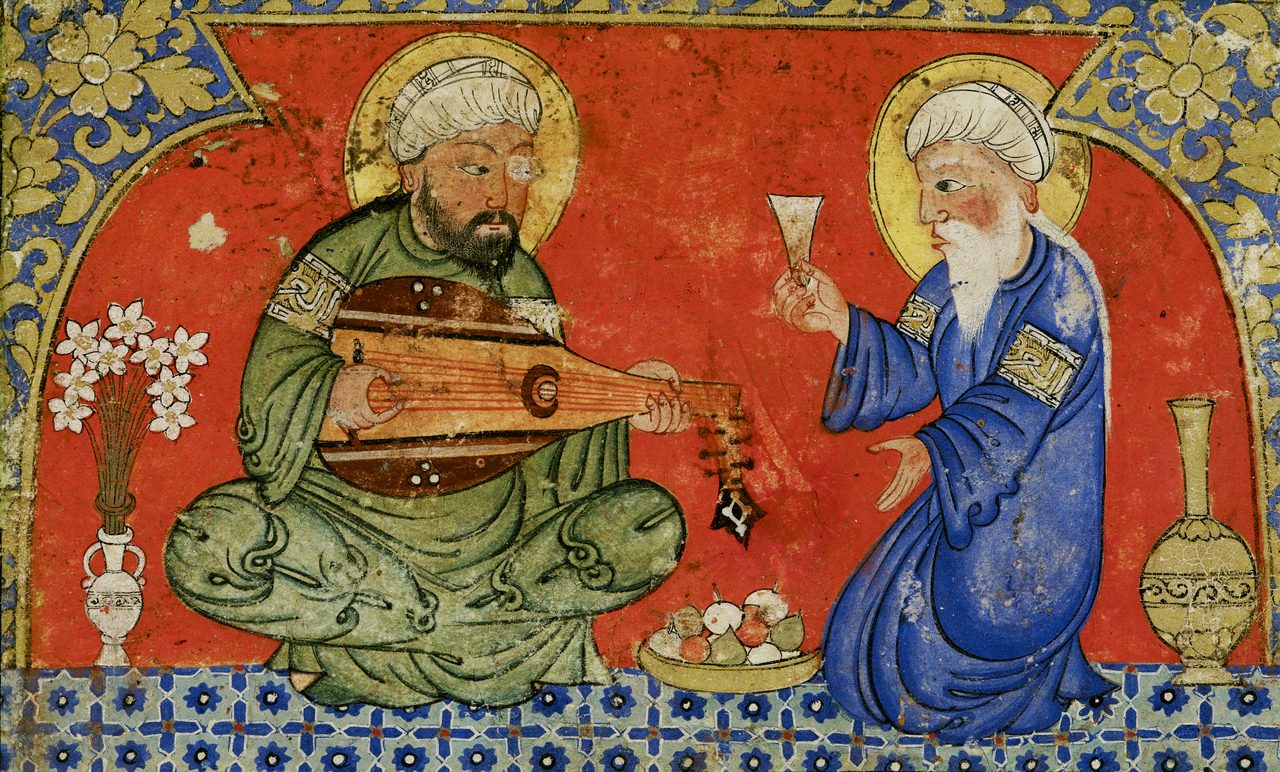
To roughly 1.9 billion Muslims the jinn are neither folklore nor fantasy. They are a real class of created beings, made from smokeless fire, sharing the earth with us, possessed of free will and answerable on the Day of Judgment. Belief in them is not optional. It is a required article of faith, written into the Quran and the hadith and worked out over fourteen centuries of scholarship into the most detailed taxonomy of non-human beings any living religion has produced. This file reports that tradition in its own terms, tier by tier, and refuses only the two claims that try to pull it somewhere it never was.
Most of what this wing catalogs, a culture believed once and studies now. The jinn are different, and the difference is the reason for the care that follows. This is not a dead mythology examined from a safe distance. It is a living article of faith, held right now by roughly 1.9 billion people, and the honest way to report it is on its own terms, in the language of the tradition and the scholarship that built it, tier by tier. So that is what this file does. It reports what the Quran, the hadith, and fourteen centuries of Islamic scholarship actually say about the jinn, gives the classical taxonomy the room its detail earns, and refuses only the two claims that try to make the jinn into something the tradition never said they were.
01An Article Of Faith
Islam holds a distinction no other major world religion shares. It requires its followers to believe in a specific non-human intelligent species as a formal article of creed. That is not a poetic way of talking about angels or demons in general. It is the jinn, named and defined, and the research file states the scale of it plainly: roughly 1.9 billion people affirm the existence of the jinn as part of their faith. Belief in them is a required article of faith in mainstream Sunni and Shia Islam, and denial of them is treated, by majority scholarly opinion, as kufr, disbelief. This is not folklore a believer may take or leave. It is doctrine, and that is why this file handles it as doctrine and not as curiosity.
It is not a marginal doctrine hiding in a single verse, either. The jinn appear in the Quran roughly 29 times, across 10 or more chapters. They are a core, recurring theological category, woven through the text the way angels and prophets are, not a footnote the tradition could quietly drop.
02The Genie Is Not The Jinn
Before going further, clear away the picture the word drags in for most English speakers: a blue spirit curling out of a lamp, summoned to grant wishes, familiar from Aladdin and a century of film and cartoon. That figure, the genie, is not the jinn of Islamic doctrine, and the reason is a documented accident of translation. When Antoine Galland produced the first European edition of One Thousand and One Nights, in French, in 1704, he rendered the Arabic jinni as the French genie, not because the two words shared a meaning but because they sounded alike. Genie already existed in French, from the Latin genius, a Roman guardian-spirit concept with its own separate history. The lamp, the wishes, the servant bound to a master: those crystallized later still, layered onto the borrowed word through the twentieth century of film and animation. None of it comes from the Quran or the hadith. This is a matter of documented literary history rather than of Islamic doctrine, and it sits outside the research file that anchors the rest of this page. It is worth saying once and then setting aside, because everything that follows describes the jinn as the tradition actually describes them, which has almost nothing in common with the lamp.
03What The Quran Says
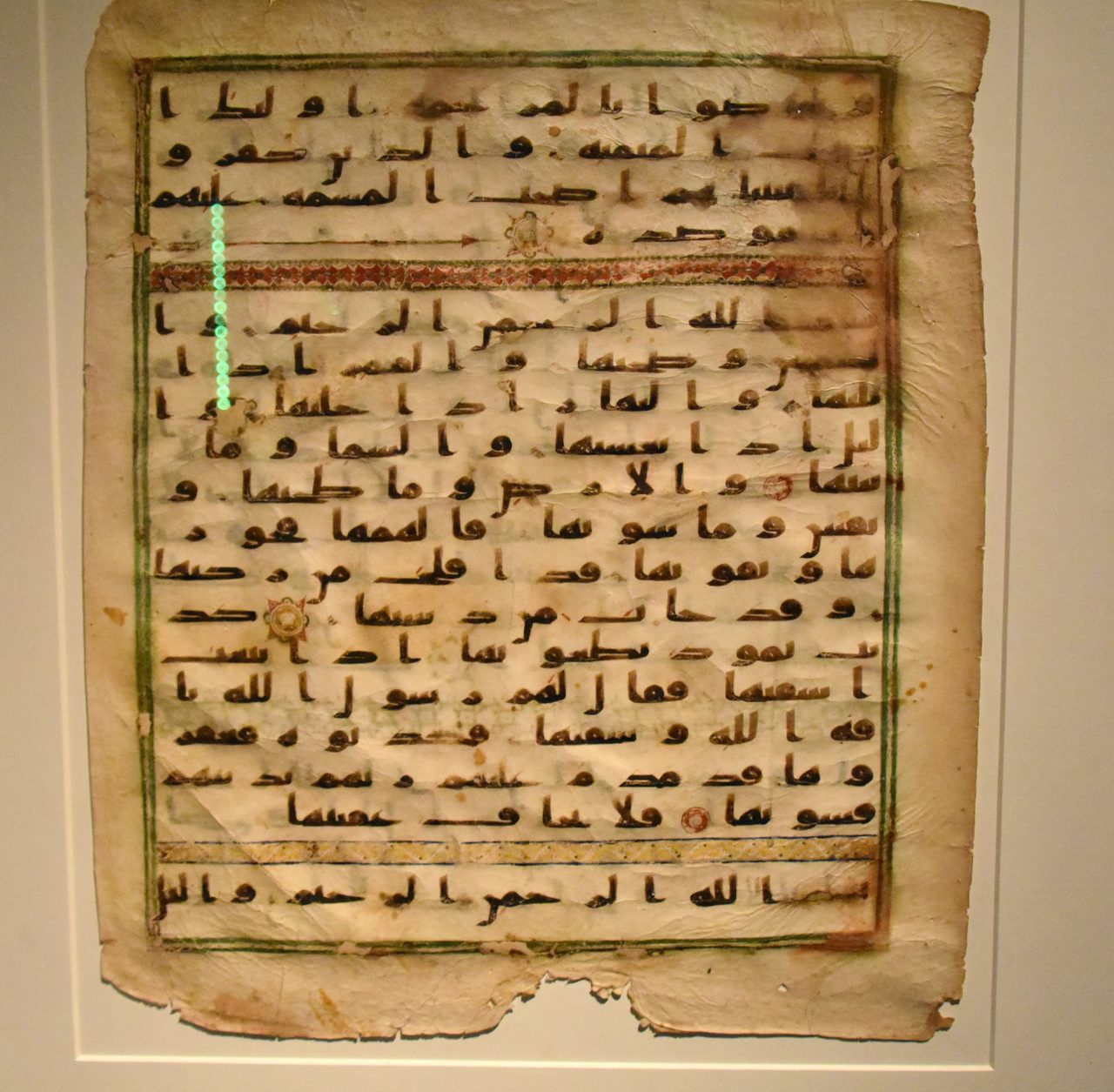
Start with what the beings are made of. 'And He created the jinn from a smokeless flame of fire,' says Quran 55:15, marijin min nar. Quran 15:27 sets it beside the creation of man: 'And the jinn, We created beforehand from scorching fire.' Two things are fixed here. The jinn are a distinct created substance, fire, and their creation precedes the creation of humankind. They were here first.
They were also made for the same reason we were. 'I did not create the jinn and mankind except to worship Me,' says Quran 51:56. The jinn share humanity's created purpose, and with it humanity's moral weight. Quran 6:130 has God addressing jinn and mankind together at the Judgment, which establishes the jinn as morally accountable beings, and Quran 55:33 calls out to 'O company of jinn and mankind' as one audience of subjects. Free will and consequence apply to them exactly as they apply to us.
That moral agency is not abstract. An entire chapter of the Quran, Surat al-Jinn (72:1-28), tells of a group of jinn who overhear the Quran being recited, are moved by it, and convert to Islam. Quran 46:29-32 tells much the same story: jinn listen to Muhammad recite, then return to their own people to warn them and call them to the faith. Beings that can hear a revelation, be persuaded, change their allegiance, and go home to preach it are not forces of nature. They are persons.
04Iblis Is Not A Fallen Angel
Here is the single point where the Islamic framework parts most sharply from the one many Western readers bring to it, and the file marks it as a governing distinction. In the Judeo-Christian tradition, Satan is a fallen angel. In Islam he is not. Quran 18:50 states that Iblis was 'one of the jinn,' kana min al-jinn. He is not a rebellious member of the angelic host. He is a jinn, of the same fiery species as every other, created like them with free will. This is not a small matter of vocabulary. It means the Islamic account of evil runs through the jinn rather than through a fallen angel, and the two frameworks must never be collapsed into one. Where this article names Iblis, it means the Quranic jinn, and not the fallen angel of Judeo-Christian tradition.
05The Law In The Hadith
Beyond the Quran, the hadith, the recorded sayings and practice of the Prophet, fill in how the jinn behave and how humans are to conduct themselves around them. Sahih Muslim 2236 reports the Prophet describing three forms the jinn take: those that fly, those that appear as snakes, and those that travel and rest, the nomads.
From that flow specific instructions. Sahih Bukhari 3303 teaches that a snake found in a house should be warned three times before it is killed, since it may be a jinn in serpent form. Sunan Abu Dawud 5088 records the Prophet teaching that saying 'Bismillah,' in the name of God, before entering the bathroom guards against jinn. Sahih Muslim 450 places the creation of the jinn on Saturday, within the sequence of creation the hadith report.
The point the file is careful to make is what kind of material this is. These are not campfire warnings. They are the raw material of fiqh, Islamic jurisprudence, the practical rulings that govern how a believer is to act. In the tradition's own terms this is normative religious law, not folk superstition, and it is treated with the seriousness law is treated with.
06Before The Quran: A Theological Revolution
The jinn did not begin with Islam. Pre-Islamic Arabian poets already spoke of them as the inhabitants of deserts, ruins, and wild places. The jahiliyya, the age before Islam, had a whole institution built on them: the mushai'ir, a poet believed to be inspired by a personal jinn called a tabi', a 'follower.' The belief is older still than the poetry. South Arabian inscriptions in Sabaean and Minnaean script name 'jn' as a class of supernatural being, an epigraphic record of the concept that predates the Quran outright.
The framework ran deep enough to shape how Muhammad's own message was first heard. The kahin, the pre-Islamic soothsayer, drew his authority from a jinn-companion, and Muhammad's opponents accused him of being exactly that, a kahin, or majnun, 'jinn-possessed.' Inspiration by a jinn was the ready cultural category his contemporaries reached for when a man began speaking words that sounded as if they came from beyond him.
What Islam did with this inherited belief is the genuinely interesting part, and the file frames it as a theological revolution. Before Islam, the jinn were propitiated: Arabs offered sacrifices to them at particular stones (ansab), trees, and springs, and could ally with them, bargain with them, even marry them. They were regarded as morally neutral at best and dangerous at worst, and above all they were quasi-divine, close enough to the divine to be given sacrifices. The Quran demolished that standing and rebuilt it. It condemned the sacrifices outright and stripped the jinn of every trace of divinity, demoting them to created beings wholly subject to God. And in the same motion it did the opposite of a demotion: it raised them morally, into beings capable of belief, of faith, of salvation. Islam introduced a category the jahiliyya did not have, the believing jinn and the disbelieving jinn. The same revelation that took away their altars gave them a soul that could be saved.
07The Most Detailed Taxonomy In Any Religion
This is where the tradition does something no other does. Over centuries, drawing on hadith and on classical scholars, al-Jahiz, al-Suyuti, Ibn Taymiyyah, and on ethnographic report, Islamic thought produced what the research file calls the most elaborate and internally consistent classification system for non-human intelligent beings in any world religion. It sorts the jinn into named types by element, power, and temperament. The table below is that taxonomy, drawn from those sources, not invented for this page.
| Type | Element or Domain | Power | What the tradition describes |
|---|---|---|---|
| Jinn | Smokeless fire (the whole species) | Variable | The blanket term for the entire species. Can be Muslim or not, weak or mighty; every type below is a kind of jinn. |
| Marid | Water and sea | Highest | Arrogant and the hardest of all to control. The most powerful class. |
| Ifrit | Fire | Very high | Fierce and cunning. The Ifrit of Quran 27:39 offers to carry a throne. |
| Si'la | Shapeshifting | High | Female shapeshifters who seduce and deceive. The rarest class. |
| Ghul | Graveyards and waste ground | Moderate | Devours corpses and lures travelers off the road with false lights. |
| Qareen | Bound to every human | Moderate | The personal jinn attached to each person, whispering temptation. The Prophet's own Qareen is reported to have converted to Islam (Sahih Muslim 2814). |
| Hinn | Primitive, animal-like | Lowest | Dog-like or serpent-like and the least intelligent. Some scholars deny they are a separate kind at all. |
| Nasnas | Half-formed | Very low | Half-bodied and one-legged. Possibly a degraded or hybrid form. |
| Shaytan | A moral category, not a species | Varies | Not a separate kind of being but a role: any jinn who serves Iblis. The word names allegiance, not biology. |
08Where The Jinn Live
The taxonomy comes with an ecology. The tradition maps not just what the jinn are but where they gather, and pairs each place with a protective protocol, a way for a human to pass through safely. The pattern is consistent: the jinn favor the liminal and the neglected, the edges of settled human life, and most of the protections are acts of naming God before you cross a threshold.
| Place | Why the jinn are said to gather there | The protective protocol |
|---|---|---|
| Deserts | Mirages that mislead travelers | Travel in groups; recite Quran. |
| Ruins and abandoned places | The jinn inhabit ruined buildings and are disturbed by construction | Seek permission before entering; say Bismillah. |
| Crossroads | The jinn congregate at intersections | Do not sleep there. |
| Bathhouses and toilets | The jinn frequent unclean, moist places | Say Bismillah; enter with the left foot. |
| Marketplaces | The jinn are drawn to conflict, noise, and commerce | The first and last to enter or leave are the most vulnerable. |
| Water sources | Marid-class jinn inhabit seas, wells, and rivers | Do not pour hot water down drains without warning; say Bismillah. |
| Trees | Certain isolated trees house jinn | Do not urinate under them; ask permission before cutting. |
| Graveyards | Ghul-class jinn inhabit burial grounds | Recite protective surahs; avoid visiting at night. |
09Protection, And A Live Argument About It
The protective toolkit runs wider than place-specific rules. Iron repels or weakens jinn, a detail worth holding onto for the fairy parallel later. Salt is laid at thresholds and around sleeping areas as a barrier. 'Bismillah,' in the name of God, is said before any exposed act: eating, entering the bathroom, entering the home, intimacy. Ayat al-Kursi, the Throne Verse (Quran 2:255), is considered the single most powerful protective verse against the jinn, and Surah al-Falaq and Surah al-Nas, chapters 113 and 114, the mu'awwidhatayn or 'two protections,' are recited as a daily shield. Solomonic Seals, geometric figures attributed to Solomon's ring, run through Islamic talismanic tradition as ways to bind or repel jinn.
The orthodox channel for all of this is ruqyah, healing through Quranic recitation, offered as the lawful alternative to folk magic. But the boundary is contested, and the contest is current. Ruqyah shar'iyyah, lawful recitation of Quran, stands against ruqyah shirkiyyah, recitation adulterated with magical or idolatrous practice, and where exactly the one shades into the other is one of the major live debates in contemporary Islamic jurisprudence. This is not settled folk practice. It is an argument scholars are still having.
10Possession, And Two Frameworks That Do Not Fit
The tradition also has a theology of possession, called al-Mass, the 'touch.' It is the majority position among Sunni scholars, and Ibn Taymiyyah's Majmu' al-Fatawa devotes extended discussion to it and to the protocols of exorcism. The reported signs are specific: seizures resembling epilepsy, sudden personality change, superhuman strength, speech in unknown languages, and an aversion to hearing the Quran recited. The exorcist, the raqi, recites Quran over the afflicted person, commands the jinn to name itself, its religion, and its reason for coming, and orders it to leave in the name of God. The reported causes are as domestic as the habitat rules: stepping on a jinn by accident, failing to say Bismillah, entering a bathroom unprotected, or a moment of extreme emotion.
Here two accounts of the same experience sit side by side without resolving. Modern psychiatry reads these cases as somatization or dissociative disorder. The tradition reads them as al-Mass. The file does not flatten one into the other: it says plainly that the theological and clinical frameworks coexist uneasily, and it leaves them there. Nor is the tradition itself of one mind. Mu'tazili rationalists and some modern reformist scholars deny physical possession altogether and read al-Mass as metaphor, influence rather than invasion. Meanwhile dedicated ruqyah clinics operate today in Saudi Arabia, Egypt, Jordan, Pakistan, and diaspora communities, treating al-Mass as real and present. This is a tension the honest thing to do is preserve, not settle.
11Marriage Across The Boundary
Classical jurisprudence went as far as to rule on marriage between the species. Ibn Taymiyyah and others acknowledged the theoretical possibility of sexual relations, and offspring, between jinn and humans, and al-Shibli's fourteenth-century Akam al-Marjan fi Ahkam al-Jann is one of the most detailed treatises on the jinn, its legal rulings on jinn marriage included. Hadith and folk tradition report jinn taking human form and entering marriages, with the children said to be physically weak or emotionally unstable. Most modern scholars discourage the whole idea, judging it theologically permissible but practically harmful, and associating it with sihr, sorcery. The structure will look familiar from elsewhere: it is close kin to the fairy-wife and fairy-changeling traditions of European folklore, which is where the next section goes.
12The Parallels, And Their Limits
Step back from the tradition and it starts to rhyme with others, and the file is careful to mark everything from here as speculative rather than established. The closest rhyme is with the fairy and fae traditions of Europe. Both are invisible species sharing human spaces; both are repelled by iron; both can marry humans and produce hybrid children; both haunt the liminal, ruins and crossroads and wild ground; both predate the dominant regional religion and were partly absorbed into it; both carry complex internal hierarchies; both can bless or harm. The Icelandic huldufolk, the 'hidden people' who live in rocks and hills and must not be disturbed by construction, are an especially close match. What that resemblance means is genuinely open. It could be shared deep ancestry, a universal pattern in how human minds work, or, the file lists this too, genuine encounters with the same phenomena read through different cultures. The parallel is offered as a question, not an answer.
A stranger parallel runs to the present. Researchers have noted that jinn-encounter reports and modern 'alien abduction' narratives share a structure: paralysis, a visitation in the bedroom, communication with an entity, a warped sense of time. In Saudi, Egyptian, and Pakistani settings, experiences a Western frame would file as 'alien contact' are consistently understood as jinn encounters instead, which suggests the raw experience may be universal while the interpretation is supplied by the culture. Jacques Vallee made the connection explicit in Passport to Magonia (1969), setting fairy and jinn traditions beside modern UFO contact reports. This is structural observation, not a claim that the beings are the same, and the file keeps it at Tier 3.
A third reading is functional. Some scholars propose that jinn belief quietly encodes ecological knowledge: groves kept safe by fear of the jinn in them, water sources guarded by Marid legends, ruins preserved by their association with the Ghul. If the taboo keeps people from destroying an ecologically sensitive site, the belief works as conservation whether or not the jinn are real. It is a suggestive idea, and the file flags its own danger in the same breath: it risks reducing a complex theological system to mere environmental functionalism, explaining away a doctrine by what it happens to be useful for.
The last reading turns inward, and it carries the firmest caution of the four. The Qareen, the personal jinn bound to every human, has been compared to Jung's Shadow, the personification of the repressed self, and Freudian and Jungian frames have been offered for possession and for the inner 'voice' of temptation. The file states the tradition's own verdict on this without hedging: Islamic scholars overwhelmingly reject the psychological reduction. Within Islam the Qareen is not a metaphor for a part of your own mind. It is a real, independent entity, a being in its own right, and reading it as a figure of speech is a move the tradition does not accept. None of these outside parallels, it is worth saying clearly, changes anything about the standing of the doctrine they are held up against. They are comparisons drawn from outside, and the tradition they describe is under no obligation to agree with them.
13The Two Claims This File Refuses
Everything to this point has stayed inside the tradition or at its documented edges. Two claims sit outside it, and here the file draws a hard line, though not the line a casual skeptic would draw.
The first is that the jinn are extraterrestrials, aliens by another name, the argument running that beings 'made of fire or energy' with 'interdimensional' qualities must be visitors from elsewhere. The file refuses it plainly. This reads a science-fiction category backward onto a theological system that never used it, and no Islamic scholarly tradition supports it. The Quran is specific in the other direction: the jinn are terrestrial beings who share the Earth with us, not travelers from other planets. The alien framing is not a bold new reading of the doctrine. It is a category imported from a different genre entirely.
The second is the recurring internet claim of a jinn caught in a bottle, photographed, or studied under laboratory conditions. Every such claim is a hoax, and the reason is the most theologically careful point in the whole research file. By the tradition's own definition, the jinn are invisible and made of smokeless fire. They are, by definition, not the kind of thing a camera or a specimen jar could ever capture, and no credible scientific report has ever documented one. Note what this does and does not say. It is not the tired complaint that the jinn 'lack physical evidence,' as if they were a cryptid awaiting a trail camera. It is the sharper point that the tradition never claimed they were physical in that sense, so demanding a body misunderstands the claim rather than refuting it. The hoaxes fail on Islam's own terms, before science is even needed.
Fast Facts
- Who believes
- Roughly 1.9 billion Muslims, as a required article of faith. Denial is treated as kufr, disbelief, by majority scholarly opinion
- What they are
- A created species made from smokeless fire (Quran 55:15), created before humankind, with free will and moral accountability at the Judgment
- In the Quran
- Named about 29 times across 10 or more chapters, with a whole chapter, Surat al-Jinn (72), about jinn who hear the Quran and convert
- Iblis
- Named in Quran 18:50 as one of the jinn, not a fallen angel. The Islamic framework is not the Judeo-Christian one and should not be merged with it
- The taxonomy
- Nine named types, from the sea-dwelling Marid to the Qareen bound to every person, drawn from hadith and the classical scholars al-Jahiz, al-Suyuti, and Ibn Taymiyyah
- Possession (al-Mass)
- The majority Sunni position, contested by Mu'tazili rationalists and some modern reformists who read it as metaphor. The theological and psychiatric accounts coexist uneasily
- Where they gather
- The liminal and neglected: deserts, ruins, crossroads, bathhouses, marketplaces, water, trees, graveyards, each with its own protective protocol
- What the file refuses
- That the jinn are extraterrestrials, and that any jinn has ever been bottled, photographed, or studied in a lab. Both fail on the tradition's own terms
What We Can Actually Stand Behind
What is verified here is the record, not a ruling on the unseen. The Quranic citations are real and say what this file says they say (55:15, 51:56, 72, 18:50, and the rest). The hadith references are real. Belief in the jinn is, as a documented matter of Islamic doctrine, a required article of faith in mainstream Sunni and Shia Islam, and the pre-Islamic attestation in poetry and in South Arabian inscriptions is real. Whether the jinn themselves exist is a question the tradition answers on faith, and one this file does not presume to settle. What we can stand behind is that the doctrine, the texts, and the fourteen centuries of scholarship built on them are exactly as reported.
The nine-type taxonomy and the eight-habitat ecology are drawn from named classical scholars (al-Jahiz, al-Suyuti, Ibn Taymiyyah) and from hadith, and they stand as the most detailed classification of non-human beings in any world religion. The possession theology (al-Mass), the interaction and protection protocols, the live ruqyah shar'iyyah versus shirkiyyah debate, and the classical marriage jurisprudence (al-Shibli's Akam al-Marjan) are real, well-attested scholarship, and the file reports them as the contested, living jurisprudence they are, not as settled fact.
The parallels are interesting and no more. The structural echoes to European fairy tradition and the Icelandic huldufolk, the overlap with modern alien-abduction reports (Vallee), the ecological-memory reading, and the Qareen-as-Shadow comparison are all speculative, and the file carries their cautions: the ecological reading risks flattening a theology into mere environmental function, and the psychological reading is one the tradition itself overwhelmingly rejects. None of these outside comparisons touches the standing of the doctrine they are compared to.
Two claims are refused outright, and refused on the tradition's own terms rather than by a skeptic's checklist. The jinn are not extraterrestrials: equating them with aliens imposes a science-fiction category the Quran never uses, and the Quran places the jinn on Earth, sharing it with us, not arriving from other planets. And no jinn has ever been captured in a bottle, photographed, or studied in a laboratory: every such claim is a hoax, and it has to be, because the tradition defines the jinn as invisible and made of smokeless fire. That is the honest point the loud skepticism usually misses. These are not the kind of being a specimen jar or a fossil could ever confirm or deny, and demanding one misunderstands the claim rather than testing it. On both, the answer is no.
So the jinn end up on this page beside the fairies and the shapeshifters and the hidden folk, filed under mythology, and that filing is exactly where the honesty has to sharpen. Most of the beings in this wing are studied now from the outside, as heritage, as folklore, as systems a culture once believed and scholars now catalog. The jinn are not that. This is a living creed. Nearly a fifth of the people alive today hold, as a matter of faith they would never call myth, that these beings are real, that they were here before us, that they share the earth, that some of them are Muslim and some are not, and that they will stand beside humankind on the Day of Judgment. The tradition drew the most complete map of a non-human species any religion has ever attempted, and that map is not a museum piece. It is doctrine, still argued in living courts of law. Which leaves the question this whole file keeps circling back to. When we call the jinn mythology and shelve them here, are we describing them, or only measuring the distance between our own worldview and the one held by 1.9 billion people who do not hear a myth at all when they say the word?
Sources & further reading
Everything above is drawn from our research library on Theories of Anything, and every claim traces back to the files below. Open the full file to check the sourcing and go deeper. The one exception is the note on the word 'genie,' which is documented literary history rather than part of the B_4_06 research file.
Image credits
- The Singer Ibrahim and the Jinn, Diez Albums folio unknown medieval artist, manuscript held by the Staatsbibliothek zu Berlin, via Wikimedia Commons. Public domain Source.
- Takht-i Marmar (the Marble Throne), Gulistan Palace, Tehran photograph by VenusFeuerFalle, via Wikimedia Commons. CC0 1.0 Source.
- Parchment leaf from an early Kufic Quran manuscript, Syria, early 8th century photograph by Richard Mortel, manuscript held by The David Collection, Copenhagen, via Wikimedia Commons. CC BY 2.0 Source.


,_The_David_Collection,_Copenhagen_(35599513863).jpg)