Earth's Bombardment History: The Complete Impact Catalog
Before there was a stable Earth to hit, something the size of Mars hit it, and the splash became the Moon. Sixty-six million years ago a single asteroid ended the age of dinosaurs in an afternoon. In between, and since, the sky has struck this planet many thousands of times, and time has quietly erased almost all of it. What survives is a few hundred scars: the oldest crater, the largest crater, the one full of diamonds, the ones a person could have watched fall, and a careful handful of cases where a real impact may live on inside an ancient story. This is the deep-time catalog, the counterpart to the human-scale file next door, and every entry wears its evidence, from settled-to-the-year to formally retracted.
Some catastrophes leave an argument, like the contested Younger Dryas comet that has its own file in this same wing. This one leaves scars. It is the deep-time catalog, the counterpart to the human-scale story of Tunguska and Chelyabinsk and the asteroid we finally learned to shove aside, which lives in the sibling file next door, and to the single disputed Younger Dryas strike, which lives in another. This file goes back before there was a Moon and forward to craters a person could have stood beside and watched fill. Read it as what it is: a reference shelf, not a thriller. One honest spine runs through every entry, and it is scale. Earth has been hit thousands of times, and time is a thorough janitor. A few hundred scars are the whole readable record, and even the handful we can still stand in has to wear its evidence, because some of these events are settled to the year and some are still being fought over in this decade's journals. Let us open the catalog.
01The Blow That Made The Moon
Start before the catalog, before there was a stable Earth to catalog. The dominant scientific model for how the Moon came to exist is the Giant Impact Hypothesis, and it is a violent one. Around 4.51 billion years ago a Mars-sized protoplanet, nicknamed Theia and roughly 6,000 kilometers across, slammed into the proto-Earth at high speed, releasing energy on the order of 10^32 joules and hurling a disk of vaporized and molten rock into orbit. The Moon condensed out of that disk. The idea was first floated by Hartmann and Davis in 1975 and by Cameron and Ward in 1976, became the field's preferred model after a 1984 conference in Kona, and is held up today by the isotopic chemistry of the Apollo lunar samples, by computer simulation, and by the peculiar angular momentum of the Earth-Moon system. Read the tier with care. This is Tier 1 as the consensus best-available explanation, and the research file is scrupulous about the next words: consensus, not proven. Real problems remain, and the very next claim is one of them.
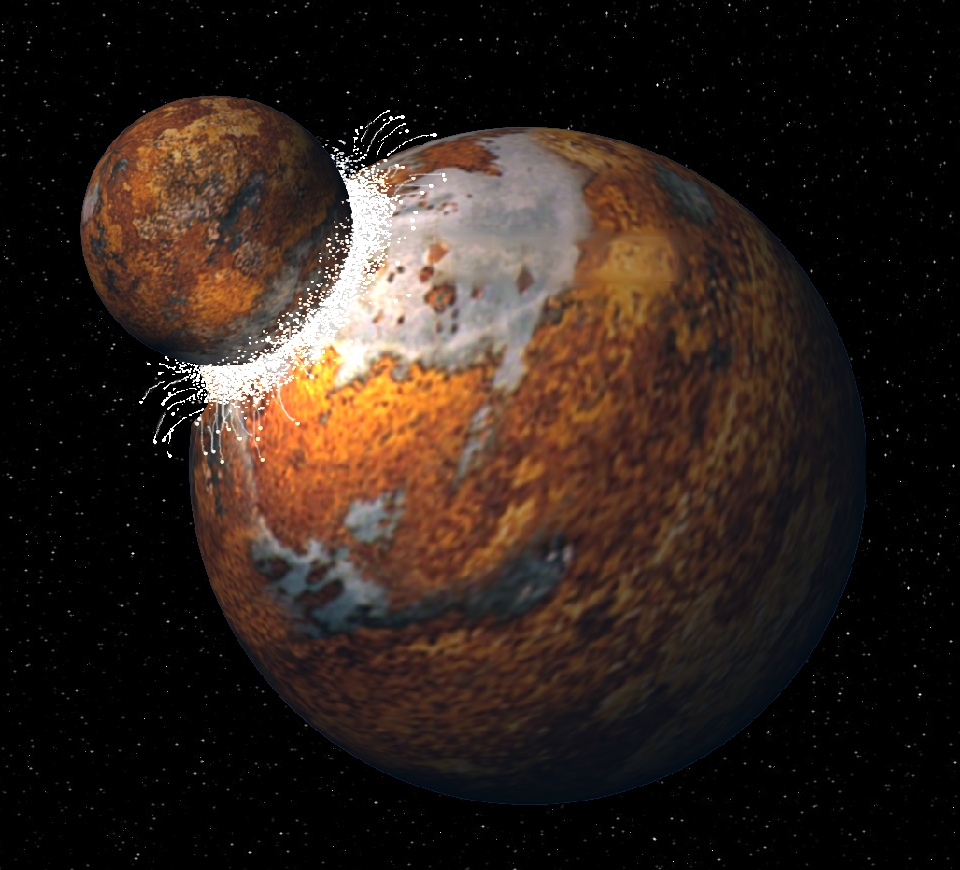
Here is the crack in the model that will not close. If Theia was a separate world, the Moon should carry a distinct chemical signature partly inherited from it. It does not. The oxygen isotope ratios in the Apollo samples are virtually identical to Earth's own (Wiechert and colleagues, 2001), no clean fingerprint of a foreign impactor has ever been isolated in either Moon rock or Earth rock, and the Moon is unusually massive for a satellite, one eighty-first the mass of its planet. That measured isotopic near-identity is itself Tier 1, a hard fact the standard story has to explain away. The leading answer is the synestia hypothesis (Lock and Stewart, 2017 to 2018): the collision was violent enough to vaporize both bodies into a single spinning, doughnut-shaped cloud of rock, hot and turbulent enough that Earth and Theia material homogenized completely before the Moon condensed back out of it, which would explain the matching isotopes without demanding that Theia happen to be chemically identical to Earth in the first place. That fix is Tier 2, a leading proposal, not a settled result.
The model keeps getting refined, and the refinements keep arriving. In 2022 a high-resolution simulation study (Kegerreis and colleagues, in The Astrophysical Journal Letters) ran the collision with more than 100 million particles and found the Moon may have assembled within hours of the impact rather than over the months or years earlier models assumed, producing a simulated body with an iron-poor exterior and a partly molten interior that match the real Moon's properties well. It is a genuine, published result and it is widely discussed, but the research file is honest about its standing: it is still being tested at higher resolution, promising rather than proven.
The most startling recent idea is that pieces of Theia may still be inside us. In 2023 a team led by Qian Yuan published a study in Nature proposing that two continent-sized regions of dense, anomalous rock deep in Earth's lowest mantle, the Large Low-Velocity Provinces that seismologists map sitting on the core beneath Africa and the Pacific, each about twice the mass of the Moon, are surviving iron-rich remnants of Theia's own mantle. Rather than mixing evenly into Earth, the idea goes, that foreign material sank and solidified down there. The team's simulations produced two blobs whose size and position roughly match the real seismic anomalies. If it holds, identifiable fragments of the world that made the Moon are still buried inside this one. It is a single peer-reviewed paper with a specific mechanism, and those deep-mantle blobs have several competing explanations, so it sits at Tier 2, not higher.
And the impactor itself is getting a home address. A study published on November 20, 2025 in Science, credited to researchers at the Max Planck Institute for Solar System Research and the University of Chicago, used chemical modeling to reconstruct Theia's likely original composition and concluded it probably formed in the inner solar system, closer to the Sun than Earth's own orbit. That narrows where the Moon-forming body came from without disturbing the core impact model. We flag it at Tier 2 for its recency, and note plainly that this file could pin the study down only through its science-news coverage, not the full primary paper.
| The Question | Where It Stands |
|---|---|
| When | About 4.51 billion years ago |
| The impactor | Theia, a Mars-sized body roughly 6,000 km across |
| The energy | On the order of 10^32 joules |
| The core model | Tier 1 consensus: a giant impact formed the Moon |
| The open problem | The Moon's oxygen isotopes match Earth's too closely (Tier 1 fact) |
| The leading fix | The synestia: total vaporization and mixing (Tier 2) |
| 2022 refinement | The Moon may have formed within hours (Tier 2, still testing) |
| 2023 twist | Theia's remnants may be the deep-mantle blobs (Tier 2) |
| 2025 refinement | Theia likely formed in the inner solar system (Tier 2) |
02After The Moon, A Sky Full Of Rock
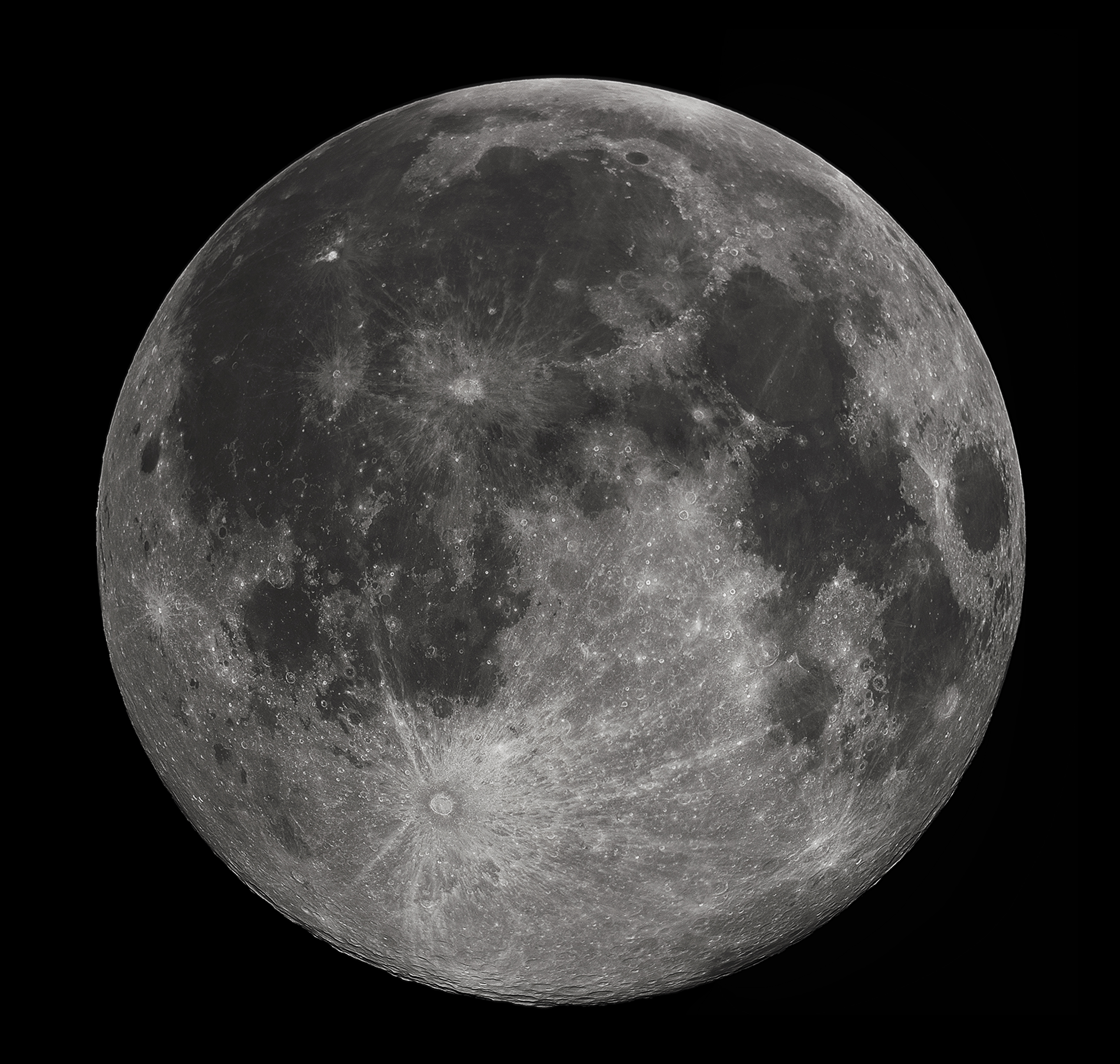
For the first half-billion years after the Moon formed, the inner solar system was a shooting gallery, and here the honesty has to be careful. The research file describes a Late Heavy Bombardment, a roughly 300-million-year stretch from about 4.1 to 3.8 billion years ago when Earth and its neighbors were struck by a dramatically elevated rate of impactors, some models proposing more than 22,000 craters larger than 20 kilometers on Earth alone, driven by the migrating orbits of the giant planets and possibly sterilizing the surface more than once. That the early Earth took a far heavier pounding than the modern Earth is not in dispute. Whether it came as a single sharp cataclysm spiking around 3.9 billion years ago, which is how the older framing reads, or as a longer and more gradual decline across hundreds of millions of years with no distinct spike, is a live and unresolved argument in current planetary science, complicated by how genuinely hard the individual lunar basins are to date. The elevated bombardment is Tier 1. The cataclysm shape of it is Tier 2, and openly contested.
The oldest direct evidence of those early strikes on Earth's own surface, rather than inferred from the Moon's cratering, is written in South Africa. The Barberton Greenstone Belt preserves three distinct spherule beds, layers of tiny glass droplets that formed when impact-vaporized rock condensed and rained back down, dated to roughly 3.47, 3.26, and 3.24 billion years ago. The largest, the S4 layer, points to an impactor estimated between 20 and 58 kilometers across, a body that would make anything in the human-era catalog look like a pebble. This is Tier 1.
03The Deep-Time Crater Catalog
The oldest confirmed crater still readable on Earth is Yarrabubba, in Western Australia, radiometrically dated by Erickson and colleagues in a 2020 Nature Communications study to 2,229 million years ago, roughly 30 kilometers across. Its date is more than a curiosity. The impact struck during a global glaciation, a Snowball Earth, and may have helped end it, blasting enough water vapor and carbon dioxide into the atmosphere to warm the planet back out of the ice. It is the first solid evidence of an impact tied to a climate recovery rather than a climate catastrophe: a strike that may have thawed the world instead of freezing it.
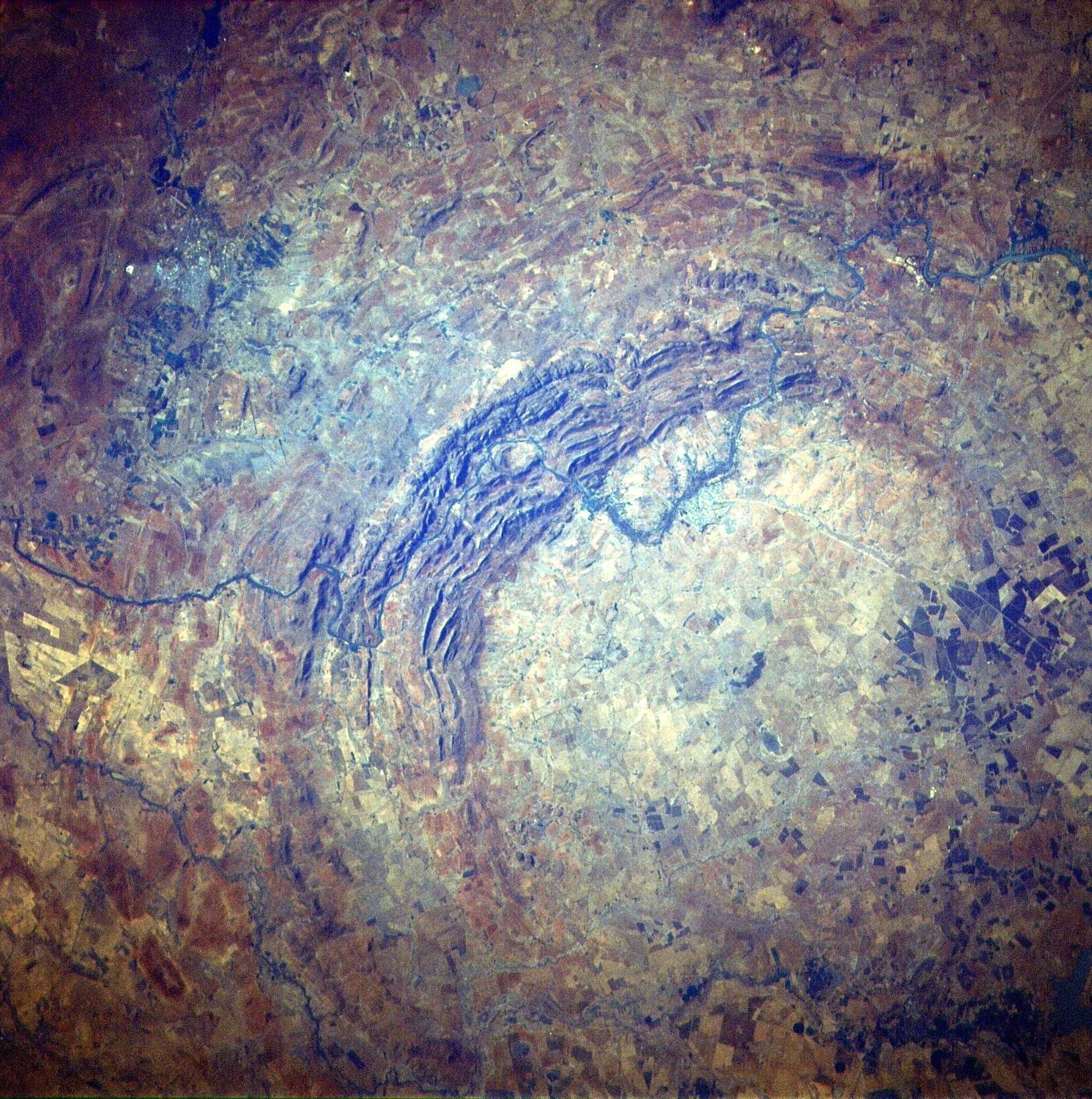
The largest confirmed crater on Earth is Vredefort, in South Africa: a battered structure about 160 kilometers across as it survives today, dated to roughly 2.023 billion years ago. But surviving is the key word. A 2022 study (Allen, Nakajima and colleagues, in the Journal of Geophysical Research: Planets) argued that the long-accepted impactor, something like 15 kilometers wide moving at about 15 kilometers per second, simply could not have carved the original Vredefort structure. Reconstructions put that original diameter, before two billion years of erosion stripped everything down to the crater's central uplift, at roughly 250 to 300 kilometers, which means the impactor was considerably larger than 15 kilometers and the blow far more energetic than long assumed. The crater and its age are Tier 1. The upward revision of its true scale is a recent Tier 2 refinement, and it makes the biggest scar on Earth bigger still.
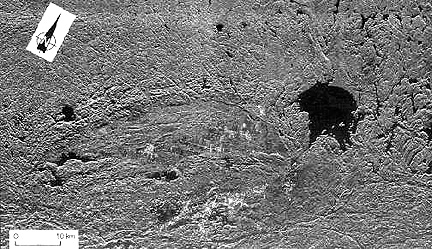
Third on the size list is the Sudbury Basin in Ontario, Canada, about 130 kilometers across and dated to roughly 1.849 billion years ago, and it pays rent. The impact's melt sheet concentrated nickel and copper into one of the world's major ore districts, still mined commercially today, so a nearly two-billion-year-old catastrophe now underwrites a mining economy. That same near two billion years of tectonic squeezing has since deformed the once-circular crater into an elongated ellipse, roughly 60 by 30 kilometers as it is mapped now.
Around 470 million years ago the sky itself changed for a while. A roughly 200-kilometer asteroid broke apart out in the asteroid belt, and for several million years afterward the debris raised the meteorite flux reaching Earth roughly a hundredfold. We can hold the proof in hand: fossil meteorites from that very breakup are found embedded in Swedish limestone. The event, the breakup and the elevated flux, is Tier 1. The tempting further claim, that the resulting dust cooled the climate and helped trigger the Great Ordovician Biodiversification Event, a major expansion of marine life, is proposed but unproven, and sits at Tier 3.
One deep-time crater is worth visiting for what it made. The Popigai crater in Siberia, about 100 kilometers across and 35.7 million years old, turned the graphite in its target rock into industrial diamonds under the impact's heat and pressure, across an area so wide the deposit is estimated in the trillions of carats, reportedly more than every other known diamond deposit on Earth combined. The stones are too small and flawed for jewelry but ideal for cutting and grinding, and the Soviet Union kept the whole deposit secret for decades. An asteroid strike left behind the largest diamond field on the planet.
| Structure | Diameter | Age | Why It Matters |
|---|---|---|---|
| Vredefort, South Africa | About 160 km surviving (250 to 300 km original) | About 2.023 billion years | Largest confirmed crater on Earth |
| Sudbury, Canada | About 130 km, now an ellipse | About 1.849 billion years | Feeds a major nickel-copper mining district |
| Chicxulub, Mexico | About 180 km | 66.043 million years | The K-Pg extinction impact |
| Popigai, Russia | About 100 km | 35.7 million years | The largest diamond deposit on Earth |
| Yarrabubba, Australia | About 30 km | 2,229 million years | Oldest confirmed crater; may have ended a Snowball Earth |
| Barberton beds, South Africa | Impactor 20 to 58 km, no crater survives | 3.47 to 3.24 billion years | Oldest direct impact evidence on Earth's surface |
| Barringer, Arizona | About 1.2 km | About 50,000 years | Best-preserved crater on Earth |
04The Day The Cretaceous Ended
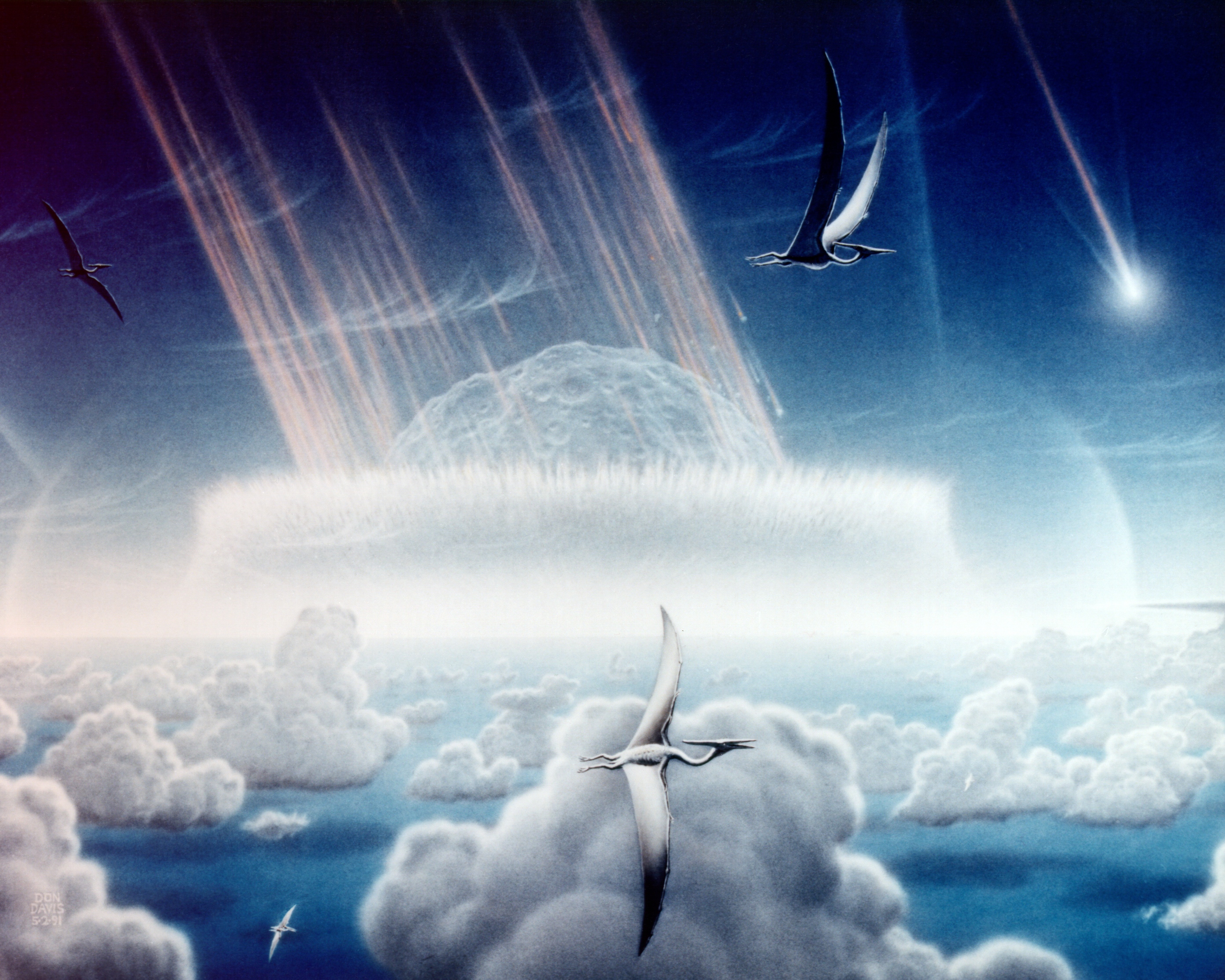
Sixty-six million years ago the catalog produced its most consequential entry. The Chicxulub impact struck the Yucatan Peninsula of Mexico 66.043 million years ago, give or take about 11,000 years, gouging a multi-ring crater about 180 kilometers across, now buried under 600 to 1,100 meters of younger limestone. The impactor was a carbonaceous chondrite asteroid roughly 10 to 15 kilometers wide, confirmed by chromium isotope analysis, and it came in steep, at about 60 degrees from horizontal (Collins and colleagues, 2020) and around 20 kilometers per second, releasing energy on the order of 4.2 x 10^23 joules. It was found almost by accident: the geophysicists Antonio Camargo and Glen Penfield spotted the buried structure during a 1978 PEMEX oil survey, and Alan Hildebrand tied it to the extinction boundary in 1991. You can still trace its rim today as a ring of cenotes, water-filled sinkholes, curving across the Yucatan.
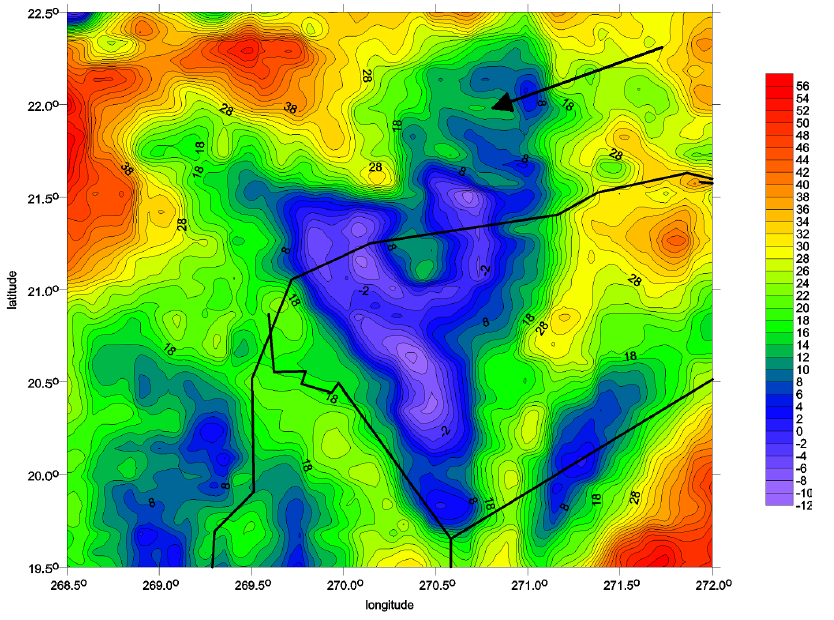
| Measure | The Figure |
|---|---|
| Date | 66.043 million years ago (give or take about 11,000 years) |
| Crater diameter | About 180 km, buried under 600 to 1,100 m of limestone |
| Impactor | A carbonaceous chondrite asteroid, 10 to 15 km across |
| Impact angle and speed | About 60 degrees from horizontal, about 20 km per second |
| Energy released | On the order of 4.2 x 10^23 joules |
| Species lost at the K-Pg boundary | An estimated 75 percent or more, every non-avian dinosaur |
| Iridium signature | At 100+ sites worldwide; about 160x background at Stevns Klint |
| The long-term killer | An impact winter: 80 to 90 percent of sunlight blocked for months to years |
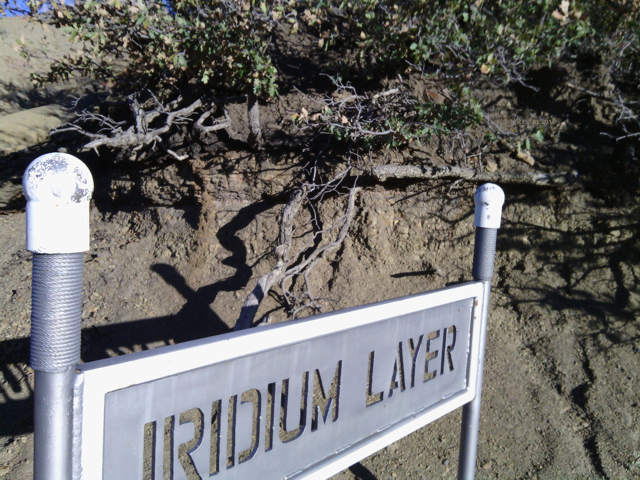
The strike lines up with one of the great dyings. The Chicxulub impact is understood as the primary driver of the K-Pg mass extinction, in which an estimated 75 percent or more of all species on Earth vanished, every non-avian dinosaur among them. The idea began in 1980 with the physicist Luis Alvarez, his geologist son Walter Alvarez, and the chemists Frank Asaro and Helen Michel, who found an anomalous spike of iridium, an element rare at Earth's surface but common in asteroids, in a thin clay layer at the K-Pg boundary at Gubbio, Italy. That same iridium anomaly has since turned up at over 100 boundary sites worldwide, including the Fish Clay layer at Stevns Klint in Denmark, a UNESCO-listed cliff where the iridium runs about 160 times background. Paleontologists resisted the impact story hard at first, until the crater was found; by 2010 a 41-author consensus paper in Science (Schulte and colleagues) had largely settled it.
The killing came in stages, on wildly different clocks. Within minutes, seismic shaking equivalent to a magnitude 9 to 11 earthquake and vast landslides. Within hours, a pulse of heat from re-entering ejecta and global wildfires, recorded now as a worldwide layer of soot and charcoal, and megatsunamis over 100 meters high across the Gulf of Mexico. And then the long killer: an impact winter, as sulfur aerosols and dust blocked an estimated 80 to 90 percent of sunlight for months to years, dropping global temperatures by roughly 10 degrees Celsius and starving the food web from its photosynthetic base upward. One detail of location made it far worse. The Yucatan bedrock was unusually rich in sulfates, so the impact vaporized much more climate-forcing sulfur than a strike into granite or basalt would have. The staged mechanisms and the global soot layer are Tier 1; the exact percentage of sunlight lost and the exact degrees dropped are debated within a credible range.
We can read the first hours of the aftermath almost like a diary, because in 2016 a drilling expedition (IODP Expedition 364) cored straight into the crater's peak ring, and the 2019 analysis (Gulick and colleagues, in PNAS) recovered a single preserved day. The core runs from impact melt rock, up through sediment dumped by tsunami backwash, up into fine ejecta that settled out of the sky. Within minutes, rock from more than 10 kilometers down had been excavated and flung out. Within hours, tsunami waves over 100 meters high struck the Gulf and re-entering debris heated the surface to hundreds of degrees. Within a day, soot from global fires and a heavy load of dust and sulfur had reached the stratosphere worldwide. It is, in the study's own phrase, the first day of the Cenozoic, held in a few meters of rock.
There is a genuine complication, and the file does not hide it. As Chicxulub hit, India was already on fire. The Deccan Traps, a flood-basalt province covering some 500,000 square kilometers, erupted from roughly 250,000 years before the impact to about 500,000 years after it, venting its own climate-forcing carbon dioxide and sulfur dioxide. The mainstream press-pulse model (Arens and West, 2008) casts the Deccan volcanism as a long ecological press that had already stressed the world's ecosystems, with the sudden impact as the acute pulse that pushed them over; 2019 studies (Schoene and colleagues; Sprain and colleagues) even found the eruptions accelerated just after the impact, as if its seismic energy stoked the volcanism. A minority position, most associated with the geologist Gerta Keller, argues the volcanism was the main killer and the impact secondary. The research file names this a minority view against the weight of the evidence, with the consensus holding that both mattered but the impact pulled the trigger. It is Tier 2, honestly contested.
05Craters A Person Could Have Watched Fall
Move forward to the window where humans and impacts overlap, and the catalog gets vivid. The best-preserved crater on Earth is Barringer Crater in Arizona, widely called Meteor Crater, about 1.2 kilometers across and roughly 50,000 years old, punched out by an iron-nickel meteorite about 50 meters wide. There is no scientific dispute about its origin at all, which is exactly why it became the textbook crater against which more eroded, more arguable structures are measured.
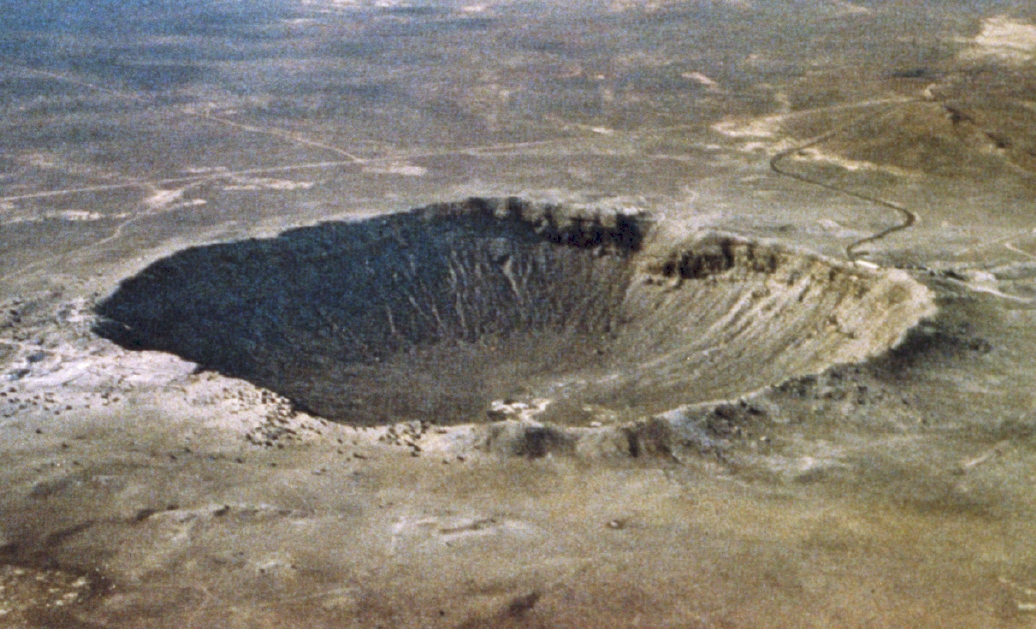
Barringer has company, all of it confirmed, some of it recent enough that people were certainly alive nearby. Odessa in Texas, about 49,000 years ago, a 170-meter crater. Lonar Lake in India, about 39,000 years ago, a 1.8-kilometer crater blasted into Deccan basalt. Henbury in Australia, about 5,000 years ago, a field of 13 or 14 craters. Morasko in Poland, about 4,700 years ago, seven craters. Campo del Cielo in Argentina, about 4,500 years ago, more than 26 craters and a recovered iron mass of 37 tonnes, among the largest single meteorite masses ever found. Wabar in Saudi Arabia, about 3,000 years ago, craters partly filled with impact glass. And Whitecourt in Canada, only 36 meters across and only discovered in 2007, dated to around 1,000 CE. These are Tier 1, every one.
One of these deserves its own line, because it is where a real crater collides with a famous story. Kaali, on the Estonian island of Saaremaa, is a genuine, confirmed field of nine craters, the largest about 110 meters wide and 22 meters deep with a lake in its floor, formed when a small meteorite, 4 to 8 meters across, fragmented on the way down. The crater is Tier 1. The date has quietly moved, though: where the research file places the impact around 4,500 years ago, the best current radiocarbon dating of the crater's own formation puts it between about 1530 and 1450 BCE, roughly 3,500 years ago, close to a thousand years more recent. Hold that corrected date, because the story built on Kaali is the doorway into the trickiest section of this whole catalog.

| Site | Approximate Age | The Scar |
|---|---|---|
| Barringer (Meteor Crater), Arizona | 50,000 years | A 1.2 km crater, the best-preserved on Earth |
| Odessa, Texas | 49,000 years | A 170-meter crater |
| Lonar Lake, India | 39,000 years | A 1.8 km crater in Deccan basalt |
| Henbury, Australia | 5,000 years | 13 to 14 craters, the largest 180 meters |
| Morasko, Poland | 4,700 years | 7 craters up to 100 meters |
| Campo del Cielo, Argentina | 4,500 years | 26+ craters; a recovered 37-tonne iron mass |
| Kaali, Estonia | 3,500 years (1530 to 1450 BCE) | 9 craters, the largest 110 meters wide |
| Wabar, Saudi Arabia | 3,000 years | Craters partly filled with impact glass |
| Whitecourt, Canada | About 1,000 CE | A 36-meter crater, found in 2007 |
06When Cultures Remembered The Sky Falling
This is the section where a catalog of rock has to become a catalog of claims about memory, and where the tiers matter most, because three very different kinds of impact-and-myth material get lumped together in popular tellings and must be pulled firmly apart. One is genuine peer-reviewed science. One is a popular and evocative guess. One has been formally withdrawn from the scientific record. Same shelf, three completely different weights.
Start with the real thing. There is a legitimate, peer-reviewed field of cultural astronomy studying cases where Indigenous Australian oral tradition preserves verifiable knowledge of actual impact craters. Duane Hamacher, now Director of the Burrin Program for Cultural and Indigenous Astronomy at the University of Melbourne, and his colleagues have documented traditions, art, and named sites tied to at least four real craters: Gosses Bluff, Henbury, Liverpool, and Wolfe Creek. The Wolfe Creek crater, about 880 meters across, is known in the Djaru language as Kandimalal and described in living tradition as the work of a falling star or a serpent; one recorded account from the Djaru elder Jack Jugarie tells of the evening star coming down to the ground in an explosion, a flash, a dust cloud, and a great noise, exactly what a witnessed or long-transmitted memory of an airburst would sound like. And Hamacher's own work carries a crucial discipline built in: he found that widely repeated Hopi and Navajo oral traditions about Barringer Crater were actually an early-twentieth-century media invention, not authentic Indigenous knowledge, a warning against swallowing every claimed ancient crater myth whole. This is Tier 2, credible, precisely because the field polices itself this way.
Now the popular guess, and note how the tier drops. The Estonian scholar and former president Lennart Meri proposed, in his book Hobevalge, that the Kaali impact was witnessed and encoded into regional oral tradition, including the fire-from-heaven imagery in runes 47 through 49 of the Finnish national epic, the Kalevala. It is a genuinely lovely idea and it has real cultural staying power. It also has no independent evidence linking the meteorite to those specific verses, and current scholarship says so directly. The corrected dating actually helps the general plausibility, since 1530 to 1450 BCE places the impact within human memory in the region, but plausibility is not evidence, and the specific Kalevala connection stays an unproven correlate at Tier 4, not the equal of the Australian work above.
A larger version of the same temptation runs across the whole sky. The Taurid Complex is a real, debated stream of debris, including Comet 2P/Encke, which at 3.3 years has the shortest orbital period of any known comet, and the twice-yearly Taurid meteor showers Earth crosses each June and November. The astronomers Victor Clube and Bill Napier proposed, in their 1982 book The Cosmic Serpent and in work extended by Asher and Steel in 1998, that all of it came from a single giant comet, 100 to 200 kilometers across, that entered the inner solar system 20,000 to 30,000 years ago and has been fragmenting ever since. That much is Tier 2, a published and argued hypothesis in cometary astronomy. But Clube and Napier went further, suggesting the world's sky-serpent and dragon traditions, Chinese flying dragons, the Mesoamerican feathered serpent, the Norse Midgard Serpent, Babylonian Tiamat, might all encode ancestral memories of a fragmenting comet overhead. That last leap is Tier 5, mythological: the research file itself offers it only as a possible reading, never a demonstrated link, and it belongs in a different column from the astronomy that carries it.
And now the claim that has to be named as withdrawn, not merely doubted. In 2021 a high-profile paper (Bunch and colleagues, in Scientific Reports) argued that a Tunguska-scale cosmic airburst destroyed the Middle Bronze Age city of Tall el-Hammam in the Jordan Valley around 1650 BCE, citing shocked quartz, melted pottery and mudbrick, and surface temperatures above 2,000 degrees Celsius, and framed it explicitly as a possible physical basis for the biblical destruction of Sodom. On April 24, 2025, Scientific Reports formally retracted the paper, after critics (Jaret and Harris; Boslough and Bruno) identified errors in its mineralogical and geochemical analyses and showed that its comparison to Tunguska leaned on outdated, overstated figures for Tunguska's own blast. Several of the original authors disagreed with the retraction and say they intend to republish with new data, but as this file is written the claim has no standing peer-reviewed publication behind it. That is what an honest Tier 4 looks like: not the site or its destruction in question, but this specific cosmic-airburst explanation pulled from the record by the journal that printed it.
07How To Prove A Crater Is A Crater
How does anyone confirm that a battered ring in the ground was made by the sky and not by a volcano or a fault? Impacts leave diagnostic fingerprints that nothing else on Earth can fake. Moldavites, the green tektite glass thrown from the Ries crater in Germany 14.8 million years ago and scattered more than 200 kilometers, have been worn as gemstones for centuries. Libyan Desert Glass, a 98-percent-silica glass about 29 million years old from a source crater still not pinned down, was carved into the centerpiece scarab of a pectoral buried with Tutankhamun. Shocked quartz and maskelynite form only above pressures of 10 gigapascals, reached in nature only by hypervelocity impact, and shatter cones, distinctive nested fracture patterns, are similarly unique to impacts. These, together with the iridium anomaly behind the Chicxulub story, are the evidence that turns a suspicious circle in the landscape into a confirmed scar. This is standard, uncontested Tier 1 geology, and it is the reason the rest of the catalog can be trusted at all.
08The Ones In Doubt, And The Ones Still Out There
Step back and the honest scale of the whole catalog comes into focus. The Earth Impact Database at the University of New Brunswick currently lists over 200 confirmed craters worldwide, and they are wildly unevenly spread: 59 in North America, 44 in Europe, 27 in Australia, 20 in Africa, 19 in Asia. That distribution is not a map of where impacts happened. It is a map of where stable, well-studied, well-exposed old rock has survived for craters to be found in. Erosion, ocean-floor recycling, ice, and vegetation have erased or hidden the rest, which is almost all of it. Over the planet's history Earth was struck many thousands of times; a few hundred scars are what is left to read.
Several proposed giants remain unconfirmed, and the file keeps them at arm's length. Wilkes Land in Antarctica is a proposed 480-kilometer structure known only from a gravity anomaly under the ice sheet, which if it were ever confirmed would be the largest impact structure on Earth. Bedout, off Western Australia, is a proposed 250-kilometer structure once tied to the Permian-Triassic extinction, a link widely criticized since. Shiva, off the Mumbai coast, is a proposed 500-by-400-kilometer feature once floated as a second K-Pg impact, which most geophysicists now read as volcanic or tectonic instead. And the Burckle Crater, a proposed 29-kilometer submarine structure in the Indian Ocean dated to about 3,000 BCE and offered as the source of a Holocene mega-tsunami, is likewise unconfirmed, held by the research file at Tier 2 to 3, not the Tier 1 of the real craters above. All of these are speculative until the diagnostic evidence of the previous section turns up. They are candidates, not entries.
Finally, the catalog does not stop at what has hit; it includes what has come close and what is still out there. The full story of the rocks at human scale, the ones we have filmed, the missions that now track them, the asteroid we deliberately shoved onto a new path, and the Apophis scare that flared and vanished, lives in the sibling file next door and is not repeated here. What belongs to the deep-time record is the wider tally of close passes and long-odds risk. In 1989 the asteroid 4581 Asclepius crossed within 690,000 kilometers of Earth, through the very point in space Earth had occupied only about six hours earlier. On January 26, 2023, the object 2023 BU passed just 3,600 kilometers above the surface, closer than the geostationary satellites and the nearest non-impacting approach ever recorded. And 3122 Florence, about 4.4 kilometers across, is the largest asteroid ever tracked passing this near, about 7,066,000 kilometers out in September 2017. For the long horizon, 101955 Bennu carries an estimated cumulative impact chance of about 1 in 2,700 through the year 2182, the highest of any known object, and (29075) 1950 DA, about 1.1 kilometers wide, about 1 in 8,300 for the year 2880, a figure that hinges on the Yarkovsky effect, the faint thermal nudge that can shift an asteroid's orbit over centuries. These are Tier 1: published NASA and JPL assessments and observed records.
09Every Scar, Every Tier
The whole point of a catalog like this is that the entries do not all weigh the same, so here they are stacked with their tiers showing. Read down the column and the discipline of the file is visible at a glance: settled craters at the top, live scientific arguments in the middle, popular guesses and one withdrawn claim at the bottom. That is the cure for both bad readings at once, the one that says every impact myth remembers a real strike and the one that says none of them could.
| The Claim | Tier |
|---|---|
| Confirmed craters (Vredefort, Sudbury, Chicxulub, Popigai, Yarrabubba, Barringer) and their parameters | Tier 1 |
| Chicxulub as the primary driver of the K-Pg extinction | Tier 1 |
| Impact-diagnostic materials (shocked quartz, tektites, iridium, shatter cones) | Tier 1 |
| Human-era impacts (Kaali, Campo del Cielo, Henbury, Wabar, Whitecourt) | Tier 1 |
| Near-miss records and long-term risk figures (Bennu 2182, 1950 DA 2880) | Tier 1 |
| The Giant Impact Hypothesis for the Moon | Tier 1 consensus, not proven |
| The synestia, rapid-formation, mantle-blob, and 2025 Theia-origin refinements | Tier 2 |
| The Late Heavy Bombardment as a single sharp cataclysm | Tier 2, contested |
| Deccan volcanism's exact share of the K-Pg extinction | Tier 2, contested |
| Indigenous Australian oral traditions of real craters (Hamacher) | Tier 2, credible |
| Unconfirmed structures (Wilkes Land, Bedout, Shiva, Burckle) | Tier 2 to 3 |
| Ordovician impact dust as trigger of the biodiversification event | Tier 3 |
| The Kaali and Kalevala myth correlate | Tier 4, unproven |
| The Taurid Complex as the source of world serpent myths | Tier 5, mythological |
| The Tall el-Hammam and Sodom cosmic airburst | Tier 4, retracted |
Fast Facts
- The Moon's Origin
- A giant impact by Mars-sized Theia, about 4.51 billion years ago
- The Open Problem
- The Moon's isotopes match Earth's too closely to call it settled
- Oldest Confirmed Crater
- Yarrabubba, Australia, 2,229 million years old
- Largest Confirmed Crater
- Vredefort, South Africa, up to 250 to 300 km originally
- The Extinction Impact
- Chicxulub, 66.043 million years ago, roughly 75 percent of species lost
- Best-Preserved Crater
- Barringer, Arizona, about 50,000 years old
- The Diamond Crater
- Popigai, Siberia, trillions of carats of impact diamonds
- Credible Impact Myths
- Indigenous Australian traditions of real craters (Hamacher, Tier 2)
- Retracted
- The Tall el-Hammam and Sodom airburst paper, withdrawn April 2025
- The Survivors
- Over 200 confirmed craters out of many thousands of real strikes
What We Can Actually Stand Behind
The craters are real, dated, and measured. Vredefort, Sudbury, Chicxulub, Popigai, Yarrabubba, and Barringer are confirmed impact structures with settled parameters. Chicxulub struck 66.043 million years ago and drove the K-Pg extinction that took roughly 75 percent of species. The human-era craters, from Campo del Cielo to Kaali to Whitecourt, happened on the record. The diagnostic materials that confirm an impact, shocked quartz, tektites, iridium, shatter cones, are uncontested geology. And the near-miss and long-term-risk figures are published NASA and JPL assessments. None of this depends on a story being true.
A wide middle layer is genuine science that is honestly not finished. The Giant Impact Hypothesis is the consensus for the Moon's origin, but the isotopic near-identity is a real unsolved problem, and every proposed fix, the synestia, the hours-long formation, the deep-mantle remnants, the 2025 origin study, is a live thread rather than a closed case. Whether the Late Heavy Bombardment was a single sharp cataclysm is contested. The exact share the Deccan volcanism played in the K-Pg extinction is contested. And the credible Indigenous Australian traditions of real craters are Tier 2 precisely because that field checks its own claims. Nothing here is dismissed; nothing here is finished.
Some entries are candidates, not confirmations. Wilkes Land, Bedout, Shiva, and Burckle are proposed structures that lack the diagnostic evidence to be entered as real craters, and each would rewrite part of the catalog if it were ever confirmed. The idea that Ordovician impact dust triggered a great expansion of marine life is a plausible link with no proof. These sit at Tier 3, and they stay there until the rock says otherwise.
And one widely shared claim has to be named as a failure, not a maybe. The 2021 paper arguing a cosmic airburst destroyed Tall el-Hammam and seeded the Sodom story was formally retracted by Scientific Reports in April 2025 over errors in its own data and methods, and it cannot be cited as evidence of anything. The Kaali and Kalevala connection is not retracted but is genuinely unproven, with no evidence tying the meteorite to those verses. Be exact about the reach of that no: it lands on these specific claims, the withdrawn airburst and the unsupported myth correlate, not on the real craters underneath them, which stand.
So the catalog closes the way an honest catalog should, not with a bow but with a proportion. The Moon over your head is a shard of the largest impact this planet ever took. A single asteroid 66 million years ago cleared the stage for the mammals, and one of those mammals eventually learned to date the very rock it left behind. And yet everything we can point to, every crater we can stand in and every scar we can name, is the surviving fraction of a bombardment that struck Earth many thousands of times and left almost nothing behind. The record is not the history. It is the little that erosion forgot to erase. So the open question is not whether the sky has stopped throwing rocks, because it has not, and the sibling file next door counts the ones still in flight. The open question is quieter and stranger: how much of Earth's real story is written in craters we will never find, in scars the planet has already healed over, and how would our sense of this world change if we could read the ones that are gone?
Sources & further reading
Everything above is drawn from our research library on Theories of Anything, which is where we worked from. The papers, reports and primary records listed beneath them are where you can check us independently.
Image credits
- Artist's Impression of the Chicxulub Impact illustration by Donald E. Davis via Wikimedia Commons. Public Domain Source.
- Artistic Rendering of the Theia-Earth Giant Impact illustration by H.Seldon via Wikimedia Commons. Public Domain Source.
- The Full Moon photograph by Gregory H. Revera via Wikimedia Commons. CC BY-SA 3.0 Source.
- Vredefort Dome, South Africa, Photographed from Orbit photograph by NASA, Space Shuttle Challenger STS-51-I via Wikimedia Commons. Public Domain Source.
- Sudbury and Wanapitei Impact Craters, Radar Image image by NASA, Space Shuttle Challenger mission 41-G via Wikimedia Commons. Public Domain Source.
- Gravity Anomaly Map of the Chicxulub Impact Crater map by J. Klokočník et al. via Wikimedia Commons. CC BY 3.0 Source.
- Exposed K-Pg Boundary Iridium Layer, Raton, New Mexico photograph by Expeditionradio via Wikimedia Commons. CC BY-SA 4.0 Source.
- Barringer Meteor Crater, Arizona photograph by D. Roddy, USGS via Wikimedia Commons. Public Domain Source.
- The Kaali Meteorite Crater, Saaremaa, Estonia photograph by Fry72 (Karel Frydrýšek) via Wikimedia Commons. CC BY-SA 4.0 Source.
- Card crop of Artist's Impression of the Chicxulub Impact illustration by Donald E. Davis via Wikimedia Commons. Public Domain Source.


