Ghost Populations: The People We Only Know From Their DNA
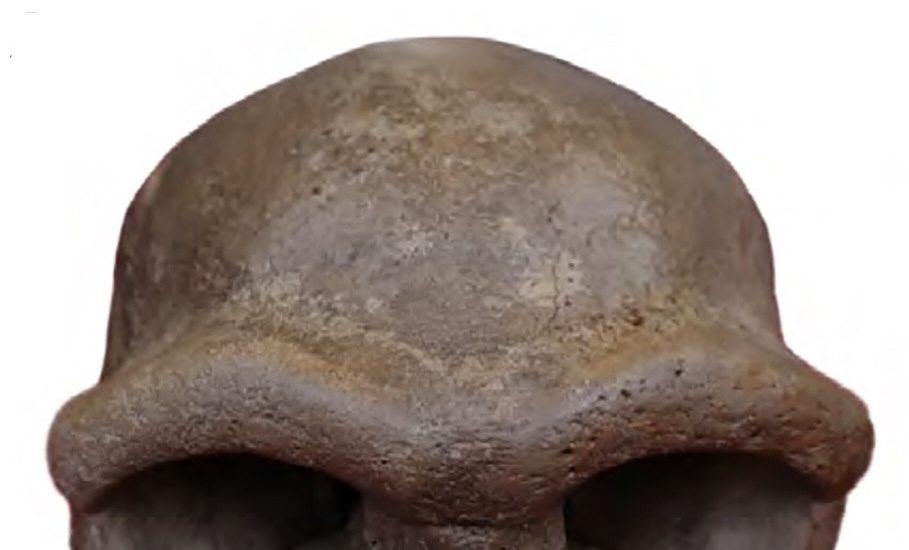
Somewhere in the DNA of billions of people alive today are fragments of humans who left no bones we can find, no tools we can date, no graves we can open. Geneticists call them ghost populations: extinct human groups proven to exist by the statistical fingerprints they left in living and ancient genomes, yet never matched to a single fossil. They are, quite literally, people we know only from their DNA. West Africa carries one. The Denisovans carry an even older one inside themselves. The ancestors of Europe's first farmers carried one that thinned out their Neanderthal blood. And in June 2025 something happened that almost never happens: one of these ghosts got a face. Two papers, one in Science and one in Cell, one of them co-authored by Svante Paabo, the paleogeneticist whose Neanderthal work anchors our sister file, confirmed that a massive skull from Harbin in northeast China, nicknamed Dragon Man, belongs to the Denisovan lineage, putting flesh on a people we had known only from a finger bone, a few teeth, and a jaw. This is not fringe science. It is Nature, Science, and Cell, argued claim by claim. Here is the file, every fact wearing its evidence.
Keep two questions apart, because the boldest tellings of this story crush them together. First: are there really extinct human populations proven only by the DNA they left behind, with no fossil to show for them? Yes. That is about as solid as population genetics gets, confirmed by independent methods, in unrelated peoples, again and again. Second: do we know who these people were, what they looked like, or what to call them? Almost never, and the honest researchers say so out loud. Slide those two apart and the science gets sharper, not shakier. And then there is the rarest event in the whole field, the one this file is really about. Every so often, a ghost stops being a ghost. Let us open the file.
01The Ghosts In The Genome
Start with the idea, because it is stranger than it sounds. A ghost population is a human group whose existence is inferred entirely from statistical signatures in modern or ancient genomes, not from any bone, tool, or grave. The concept has to exist because of a brutal limitation at the heart of paleoanthropology: the fossil and ancient-DNA record samples only a tiny sliver of all the populations that ever actually lived. Most people who ever existed left nothing we can dig up. But some of them left something we can read, written into the genomes of their descendants, and that is enough to prove they were here.
Here is the catch, worth stating early and plainly. A ghost population is defined by what it is NOT. It is the missing piece a demographic model needs in order to fit the real genetic data, the shape of an absence rather than a face. Nobody has ever observed the population directly. They have observed the hole it left behind and worked backward to its size and its age. Hold onto that, because it is exactly the line between the parts of this story that are rock solid and the parts that are genuinely guesswork.
And here is the framing that snaps the whole field into focus. Everyone has heard the headline that modern humans leaving Africa interbred with Neanderthals and Denisovans, the archaic cousins we cover in the sister file on the Neanderthals still inside you. Ghost populations are that same story with the lights off. The humans who stayed in Africa appear to have interbred with their own distinct archaic hominins, and the humans who spread across Asia met still older lineages, but for these partners there is no fossil at all. Same kind of event. No face on the other side of it.
02Dragon Man: A Ghost Gets A Face
In 1933 a massive human skull was recovered from the ground in Harbin, in Heilongjiang Province in northeast China. It was hidden away for decades and only brought to scientific attention in 2018, then formally described in 2021: a colossal cranium with a brain capacity of roughly 1,420 cubic centimeters, dated by uranium-series methods to at least 146,000 years old. The team led by Qiang Ji argued it was so distinct it deserved a brand new species name, Homo longi, and claimed it sat closer to modern humans on the family tree than Neanderthals do. Others, the veteran human-origins researcher Chris Stringer chief among them, suspected something bolder still: that this face, with its size and its geography and its age, was the long-missing physical form of a Denisovan. For years it stayed a standoff, because the one thing nobody could pull from the skull was DNA.
Then, on June 18, 2025, the standoff ended. Two companion papers landed the same day, one in Science and one in Cell, led by Qiaomei Fu and by Qiang Ji himself, the skull's original describer. Direct attempts on a tooth and on the skull's petrous bone failed, as they had for years. So the teams went after the mineralized plaque on the teeth, the dental calculus, and it worked: they recovered mitochondrial DNA that falls squarely inside known Denisovan variation. The proteomic analysis was richer still, identifying more than 20,000 peptides and confirming 95 endogenous proteins, three of them carrying variants unique to Denisovans, tying the skull directly to the original Denisova finger-bone specimen. One of the Cell paper's authors is Svante Paabo, whose Neanderthal genome work anchors our sister file. This was the first time a virtually complete human skull had been definitively linked to the Denisovan lineage. A people known only from a finger bone, a handful of teeth, and a jawbone suddenly had a face.
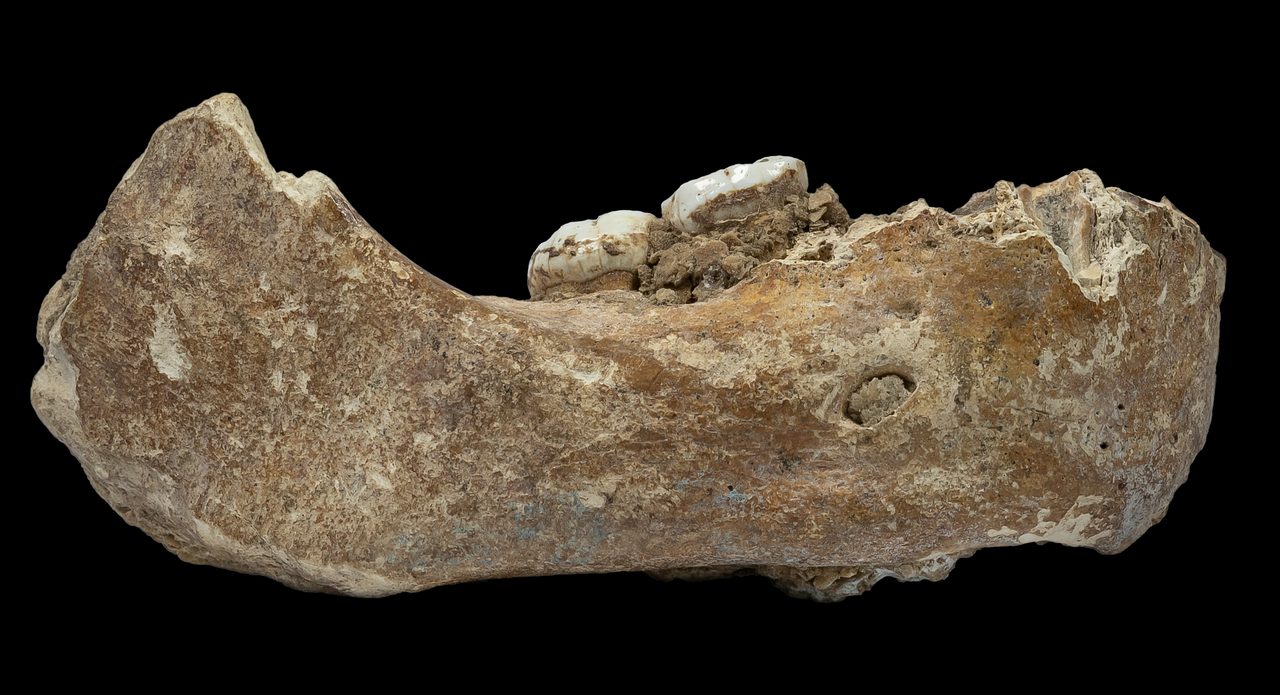
The way it got resolved is worth pausing on, because it is a small masterclass in how science is supposed to work. Back in 2021 Chris Stringer had warned that naming Harbin as an entirely new species risked inflating the apparent diversity of the human family tree, when the skull might simply belong to an already-recognized group that just happened to have no DNA of its own. That was not timidity. It was calibrated caution, and the 2025 evidence proved it well-placed: Harbin was not a new branch after all, it was the missing face of a branch we already knew from its genes. The lesson for everything that follows is blunt. A ghost with a name is not the same as a ghost with a body, and it pays to keep the two apart.
03The Ghost Inside West Africa
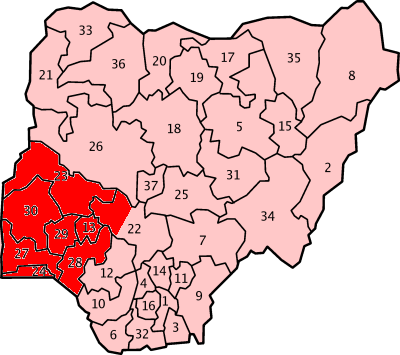
Dragon Man is the exception, the ghost that got its face. Most never do. Start with one still hiding inside living people right now. In 2020 Arun Durvasula and Sriram Sankararaman published an analysis in Science Advances that did something clever: using Approximate Bayesian Computation and machine learning on whole genomes, they searched for archaic ancestry without needing a reference genome to compare against, which matters enormously in a place where no archaic fossil DNA has ever been recovered. They focused on West African populations chosen for carrying very little Eurasian admixture, the Yoruba of Nigeria and the Mende of Sierra Leone, and the primary paper extends the same signal to two more, the Esan and the Gambian. What they found there is neither Neanderthal nor Denisovan.
The size of it is startling. Depending on the population and the modeling assumptions, an estimated 2 to 19 percent of these West Africans' genomes appears to descend from an unknown archaic hominin. The best estimate for when that ghost lineage split off from the common ancestor of modern humans, Neanderthals, and Denisovans is roughly 625,000 years ago, with a confidence range running from about 360,000 to over a million years. In plain terms, something very deeply divergent, older than the Neanderthal split, is woven into the DNA of hundreds of millions of living people. It has no name and no fossil.
The interbreeding itself came much later than the split, and the timing is easy to garble, because the figure often quoted is really just the upper edge of a wide range. Checked against the original paper, the actual best estimate for when the mixing happened is around 43,000 years ago, with a 95 percent range of roughly 6,000 to 124,000 years. So the ghost lineage branched off more than half a million years ago, then rejoined the human story, inside Africa, around the same era our own species was spreading out of it.
And these are not inert fragments. The archaic-derived stretches of DNA in West African genomes cluster near genes involved in hormone regulation and immune function, the same functional signature seen for Neanderthal DNA in the sister file on the Neanderthals still inside you. Whoever these people were, pieces of them may still be doing a job.
So who were they? Here the honesty has to kick in, because nobody knows. No fossil has ever been definitively matched to the West African ghost. There are candidates, skulls with archaic-looking features like Iwo Eleru in Nigeria, roughly 13,000 years old, and Ishango in the Democratic Republic of Congo, but neither has yielded a scrap of recoverable ancient DNA, so neither can be confirmed or ruled out. The ghost stays a ghost.
What keeps this from being one lab's fluke is that the result does not stand alone. Independent teams keep hitting the same wall from different directions. Michael Hammer's group found introgressed archaic haplotypes in Central African hunter-gatherers back in 2011. Joseph Lachance's team found archaic-introgression signals in African whole genomes in 2012 that had nothing to do with the Neanderthal or Denisovan signal. In 2019 Aaron Ragsdale and Simon Gravel showed that formal demographic modeling of African population history simply refuses to fit unless you add at least one ghost archaic population. And Hsieh's team found deeply divergent haplotypes clustered at the MUC7 salivary-mucin gene, a gene under balancing selection. Different populations, different genes, different methods, one conclusion: there was somebody else in Africa.
04A Ghost Within A Ghost
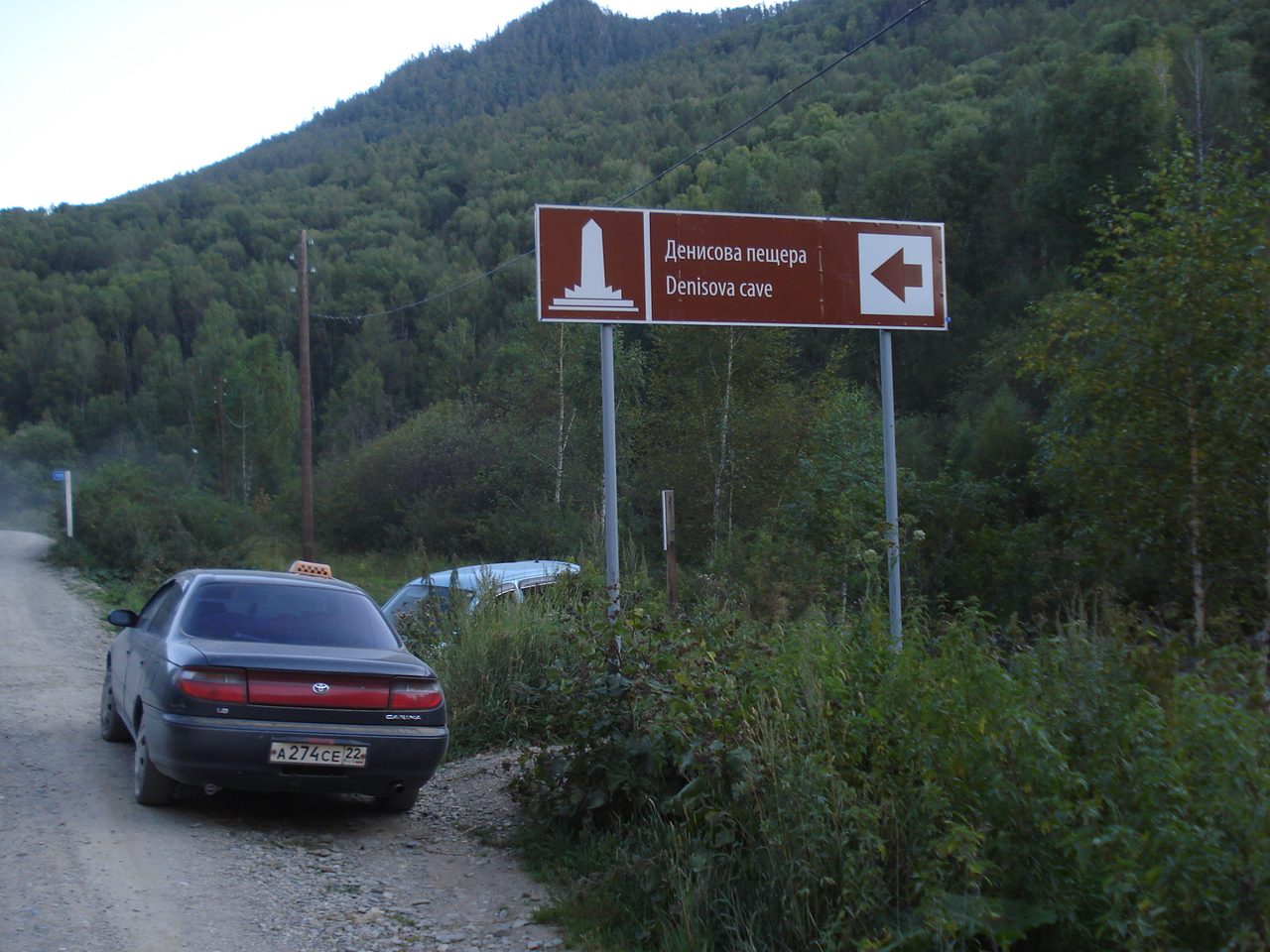
Now the story folds in on itself. The Denisovans, the archaic humans who gave Dragon Man his face, turn out to carry a ghost of their own. When Kay Prufer's team sequenced the high-coverage Denisovan genome from the Altai Mountains in 2014 and published it in Nature, they found that roughly 1 percent of it came from a population that had split from the common ancestor of modern humans, Neanderthals, and Denisovans more than a million years ago. A superarchaic lineage. A ghost inside a ghost.
How much and how old is where a single study pushes further than the rest. In 2020 Alan Rogers and colleagues used Approximate Bayesian Computation to argue the superarchaic contribution might run as high as roughly 5 percent, and that the source population itself split off around 2 million years ago, deep enough to be Homo erectus or a close relative. That is a bolder claim on wider modeling assumptions than the original 1 percent, and it is worth flagging as one team's extension rather than settled fact.
The consequence is almost dizzying. In 2019 Guy Jacobs and colleagues documented in Cell what they called introgression of introgression. The Denisovan ancestry carried by living people in New Guinea includes variants that had first entered the Denisovan lineage from that superarchaic source. Which means people alive today carry DNA that passed through a lineage more than a million years divergent from us, not by meeting it, but by meeting someone who met it. A genetic relay across a million years, ending in a person breathing right now.
And the superarchaic source itself? Unknown, of course. The candidates are Homo erectus, which was present in Asia for something like 1.8 million years, or Homo heidelbergensis or its eastern equivalent, or a hominin nobody has named yet. We will probably never confirm it genetically, because no ancient DNA has ever been recovered from any Homo erectus fossil, and DNA is thought not to survive much beyond a million years except under permafrost. This ghost may be permanently faceless.
05The Ghost That Diluted Europe
Ghosts are not only deep-time archaic hominins. Some are far more recent, and one of them helped shape modern Europe. In 2014 Iosif Lazaridis and colleagues found that you cannot explain the genomes of Europe's first farmers without invoking a population they named the Basal Eurasians, a group that contributed somewhere between 25 and 45 percent of the ancestry of the early Neolithic farmers who spread across the Near East and into Europe. It is a foundational, heavily cited result.
What makes the Basal Eurasians distinctive is what they lack. They carry less Neanderthal ancestry than other populations outside Africa, which suggests they branched off the main out-of-Africa line before the big Neanderthal admixture event, or caught much less of it. When their ancestry flowed into early farmers, it diluted the Neanderthal signal, and that is the currently favored explanation for a real and slightly odd fact: modern Europeans carry somewhat less Neanderthal DNA than modern East Asians do. A ghost is the reason your Neanderthal fraction depends on which continent your ancestors farmed.
And yet, for all their importance, nobody has ever found them. As of the careful current statement in our source file, no ancient genome has been identified representing a pure, unmixed Basal Eurasian population. Every ancient Near Eastern genome tested, the Natufians, the Pre-Pottery Neolithic farmers, the Epipaleolithic populations of the Maghreb, carries Basal Eurasian ancestry only blended with other components. The source itself has never been sampled. It remains, in the most literal sense, a true ghost.
06A Whole Crowd Of Ghosts
Once you know the signature, you start seeing ghosts everywhere. In 2015 Pontus Skoglund's team found that two Amazonian populations, the Surui and the Karitiana, share a genetic affinity with Australo-Melanesian peoples that no other Native American group shows. They nicknamed the source Population Y. It hints at either an early migration wave into the Americas that genuinely carried Australasian ancestry, or a distinct southern coastal route that the other first Americans did not travel. The statistical signal is firmer than any one story told to explain it.
Not every ghost stays faceless, and the Ancient North Eurasians are the encouraging case. This population contributed an estimated 14 to 38 percent of Native American ancestry and about 20 percent of European ancestry, the latter carried in much later by the Yamnaya steppe migration. For a while they too were purely statistical. Then real ancient DNA turned up to match them: the Mal'ta boy and the Afontova Gora specimens from Siberia. The Ancient North Eurasians are a genuine, if partial, de-ghosting, proof that a ghost can be dragged into the light when the right frozen bones are found.
Others are barely sketched. Joseph Pickrell's team, in 2012, found a signature of admixture from an uncharacterized East African source inside Bantu-speaking populations of southern Africa, sometimes called the Xhosa ghost, read as an unknown group absorbed during the great Bantu expansion. It is a single study, and the source population has no identity yet.
So is the eastern one. Melinda Yang's 2020 modeling of ancient Chinese DNA found that the data only fits if you add an early-diverging eastern lineage, informally the Eastern Non-African or ENA ghost, feeding into both East Asian and Australasian populations, perhaps tied to an early coastal dispersal out of Africa separate from the main inland route. Model-dependent, single study, genuinely speculative, and named here so the picture is complete rather than tidy.
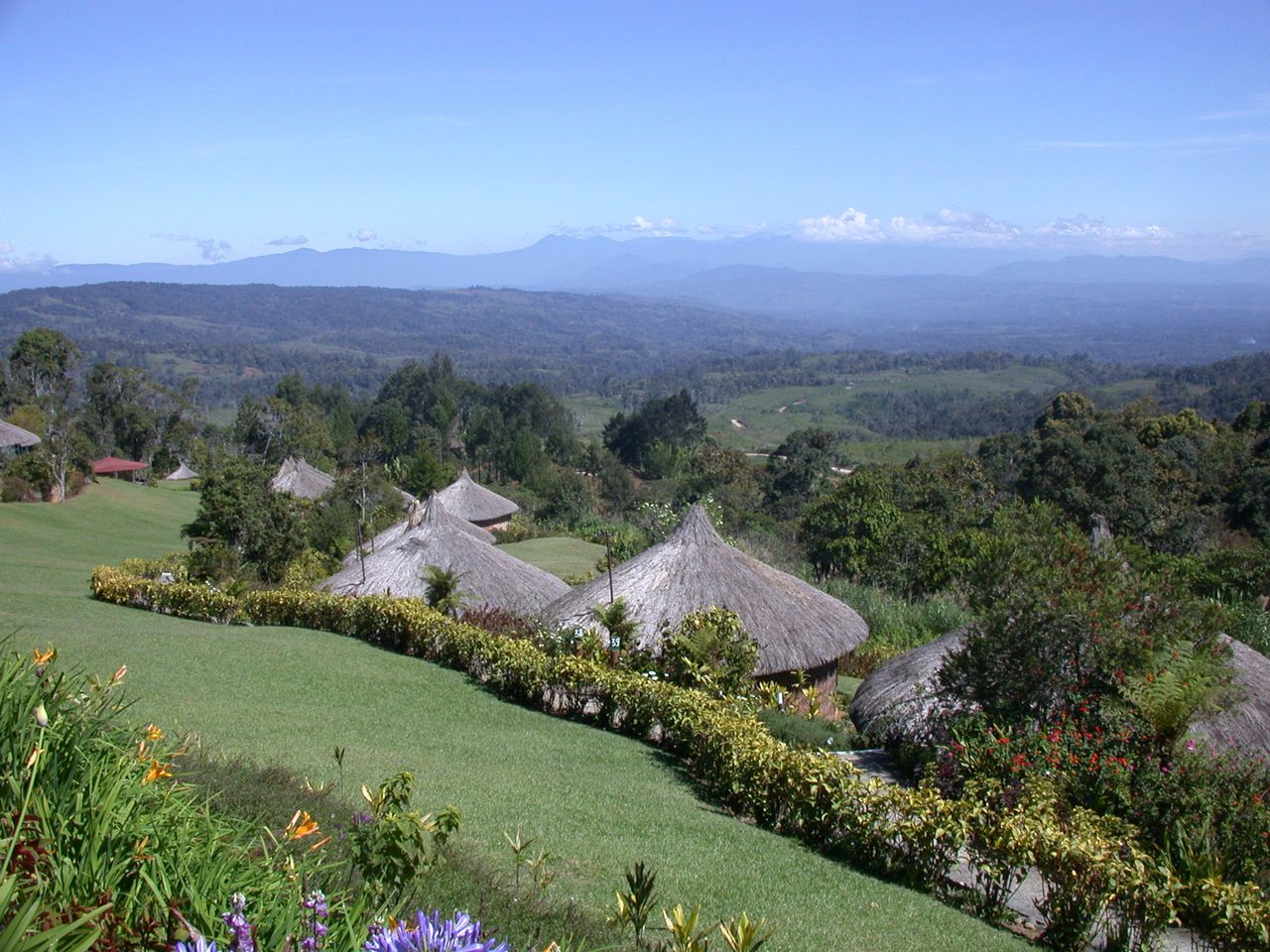
But the sharpest ghost of all leads straight back to Dragon Man's people. In that same 2019 Cell study, Jacobs and colleagues found that living New Guineans carry Denisovan DNA from at least three genetically distinct Denisovan-related populations, informally D0, D1, and D2. Only one of the three is represented by the actual Denisova Cave genome. The other two are, themselves, literal ghost populations with no fossil at all. So even now, with a face finally on the Denisovan lineage, at least two of its close cousins remain exactly what this whole file is about: people we know only from the DNA they left in the living.
| Ghost Population | What Revealed It | Fossil Match? |
|---|---|---|
| West African archaic | Durvasula and Sankararaman 2020: an unknown archaic in Yoruba and Mende | None found |
| Superarchaic in Denisovans | Prufer 2014: a lineage over a million years divergent, inside the Altai genome | None; possibly Homo erectus |
| Basal Eurasians | Lazaridis 2014: needed to explain Europe's first farmers | None; a true ghost |
| Population Y | Skoglund 2015: an Australasian affinity in Amazonia | None found |
| Ancient North Eurasians | Ancestry in Native Americans and Europeans | Yes: Mal'ta boy, Afontova Gora |
| The Xhosa ghost | Pickrell 2012: an unknown source in Bantu speakers | None found |
| The ENA ghost | Yang 2020: an early eastern lineage in ancient China | None found |
| Denisovan lineages D0, D1, D2 | Jacobs 2019: three lineages in New Guineans | Only one matches the cave fossil; two are ghosts |
07How You Find A People Who Left No Bones
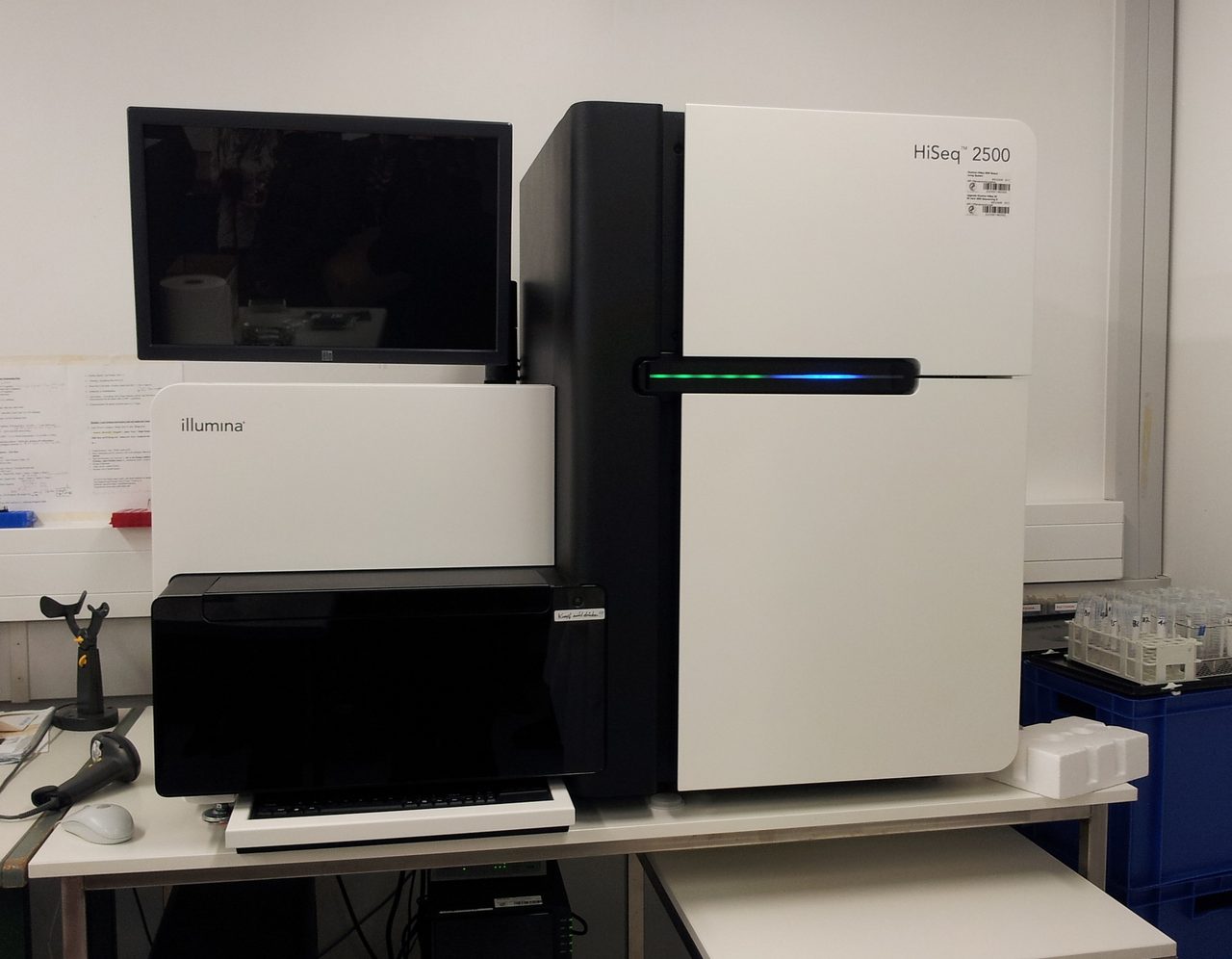
So how do you find a people who left no bones? Entirely in the math, and the methods are worth understanding, because they are also the source of every honest doubt about the whole enterprise. The workhorse is the D-statistic, the so-called ABBA-BABA test, which asks whether two populations share more genetic variants with a third than a simple family tree would predict. It is simple, robust, and everywhere. Its weakness is fundamental: it can tell you that reality deviates from the simple tree, but it cannot tell you what the missing source actually was.
The heavier tools each buy power at a price. Approximate Bayesian Computation simulates enormous numbers of possible population histories and asks which ones reproduce the real data, which is how you get an estimated divergence time or admixture percentage, but the answer depends heavily on which models the researcher chose to test in the first place. Conditional Random Fields, a machine-learning method, can actually map introgressed segments along a person's chromosomes, but it needs reference genomes to train on. And the f-statistic frameworks, qpAdm and qpGraph, allow rigorous testing of specific admixture models, at the cost of model choices that can be somewhat arbitrary and calculations that are computationally demanding. Every one of these is real science. Every one of them is only as good as the assumptions fed into it.
| Method | What It Does | What It Cannot Do |
|---|---|---|
| D-statistics (ABBA-BABA) | Detects that the data breaks the simple family tree | Identify the missing source population |
| Approximate Bayesian Computation | Estimates divergence times and admixture percentages | Escape the models the researcher chose to test |
| Conditional Random Fields | Maps introgressed DNA along real chromosomes | Work without reference genomes to train on |
| qpAdm and qpGraph | Rigorously test specific admixture models | Avoid model choices that can be arbitrary |
And the field keeps moving. As new ancient DNA comes out of the ground, some ghosts get de-ghosted, the way the Ancient North Eurasians did when the Mal'ta boy turned up. Others go the other way and grow more complex as better math is applied to the same old data, the way a single Denisovan lineage became at least three. The whole discipline is drifting away from tidy branching family trees toward admixture graphs, tangled diagrams that can hold many overlapping mixing events at once, because that messier picture is simply closer to what happened.
08Where The Evidence Runs Thin
None of this is a finished science, and the researchers who built it are the first to say so. The deeper you go, the more the honest caveats stack up, and naming them is not undermining the field. It is the field.
The most serious challenge is that a ghost might not be a person at all. In 2018 Daniel Lawson and colleagues raised a live methodological worry: some ghost populations may be statistical artifacts thrown off by a misspecified model rather than real extinct groups. The standard answer is convergence. When several independent methods, D-statistics, Approximate Bayesian Computation, segment mapping, all point at the same ghost in the same case, that agreement is what makes it credible, rather than any single method's assumptions. It is a genuine, unresolved debate, not a settled question, and the good findings survive it precisely because more than one tool sees them.
There is a subtler trap underneath it. As far back as 2011, Pontus Skoglund and Mattias Jakobsson warned that these inferences are sensitive to which reference populations you happen to include. Leave a real but unsampled close relative of the true source out of your comparison, and the math can conjure a spurious ghost to fill the gap. The ghost you detect can sometimes be an artifact of who you forgot to invite to the analysis.
Even a clean detection tells you less than you would like. Knowing that a population split from our lineage around 625,000 years ago does not tell you what it looked like or how to classify it. It could turn out to be a species we already have a name for, like Homo heidelbergensis, that simply left no DNA of its own, rather than a genuinely new and unnamed branch. A divergence date is not an identity, and the Dragon Man story is exactly why: a ghost that looked like a brand new species turned out to be a face we already half knew.
And one hard limitation hangs over almost the entire African side of this research, stated plainly rather than hedged. Ancient DNA barely survives in tropical and equatorial Africa, where heat and humidity destroy it far faster than the cold does, a problem confirmed by our own file on the missing fossil record. So unlike the Eurasian Neanderthal and Denisovan story, which rests on actual recovered ancient genomes, nearly every African ghost is inferred from the DNA of living people alone, with no ancient specimen to check it against. That is a categorically weaker kind of evidence, and the honest move is to say so out loud.
Which leaves the questions the researchers themselves put on the table, unanswered on purpose. Can any new extraction method ever pull usable DNA from a bone that sat in the African tropics? How many distinct archaic human populations were actually alive in the window between roughly 100,000 and 50,000 years ago, when current evidence suggests at least four to six, and there may have been more? Which genes, if any, did these ghosts hand us, and are any of them still under natural selection in living people today? And did the far-flung populations of Homo erectus, spread across their own enormous range, interbreed among themselves in ways some future method might one day reveal? These are not rhetorical. They are open.
09What This Is Not
Two readings tend to attach themselves to ghost DNA, especially in circles that like their mysteries wilder than the truth. Both are contradicted by the evidence, and on this site of all places, they need naming out loud.
First, ghost DNA is not alien DNA. There is a persistent fringe claim that these unidentified archaic sequences are traces of contact with non-human or non-terrestrial intelligence. The genetics says otherwise, flatly. Every ghost lineage detected so far is phylogenetically consistent with ordinary hominin evolution. They are deeply diverged branches of our own family, extinct cousins, not unknown creatures and not alien genomes. The mystery is real. Its answer is human.
Second, and more important to get right, none of this supports any biological notion of human 'races.' Ghost-population findings have been misappropriated to argue that different human groups are fundamentally different kinds of people. They are not. Every living human shares more than 99.9 percent of their genome with every other. Archaic admixture proportions are small, a few percent, and they vary gradually and continuously across geography rather than sorting humanity into types. The ghosts are shared inheritance, not dividing lines, and any reading that turns them into the latter is both wrong and harmful.
10Every Claim, Every Tier
Here is the whole file on one page, each claim wearing its tier, because the fastest way to get this story wrong is to flatten a rock-solid discovery, a set of genuinely open questions, and a couple of contradicted fantasies into one shapeless mystery. They are not the same thing, and the tiers are what keep them apart.
| The Claim | Tier | The Basis |
|---|---|---|
| Unexplained deep archaic ancestry is real, across independent methods and peoples | Tier 1 | Hammer, Lachance, Ragsdale, Hsieh, Durvasula |
| A ghost population is defined by a genetic absence, not a direct observation | Tier 1 | The detection methodology itself |
| The Harbin cranium, 'Dragon Man,' is confirmed Denisovan | Tier 1 | Fu and Ji et al., Science and Cell, June 2025 |
| Denisovans carry about 1 percent superarchaic ancestry | Tier 1 | Prufer et al. 2014, Nature |
| Living New Guineans carry at least three Denisovan-related lineages | Tier 1 | Jacobs et al. 2019, Cell |
| The Ancient North Eurasians were de-ghosted by real Siberian fossils | Tier 1 | The Mal'ta boy and Afontova Gora |
| West Africans carry 2 to 19 percent unknown archaic ancestry, split around 625,000 years ago | Tier 2 | Durvasula and Sankararaman 2020, model-dependent |
| The introgression event happened around 43,000 years ago | Tier 2 | The primary paper's point estimate |
| The superarchaic source may reach 5 percent and approach Homo erectus | Tier 2 | Rogers et al. 2020, one study's extension |
| Basal Eurasians diluted the Neanderthal ancestry of Europe's first farmers | Tier 2 | Lazaridis et al. 2014, the favored explanation |
| No unmixed Basal Eurasian genome has ever been found | Tier 2 | Every Near Eastern genome tests as blended |
| Population Y links Amazonia to Australasian ancestry | Tier 2 | Skoglund 2015; a real signal, an unsettled story |
| Ghost signals could sometimes be statistical artifacts | Tier 2 | Lawson 2018; answered by method convergence |
| No fossil confirms the West African or superarchaic ghost | Tier 3 | Candidate fossils yield no recoverable DNA |
| The Xhosa ghost and the ENA ghost | Tier 3 | Single studies; the source stays unidentified |
| Ghost DNA is evidence of alien or non-human contact | Tier 4 | Contradicted; every lineage is hominin |
| Ghost admixture supports biological human 'races' | Tier 4 | Contradicted; shared, gradual, and tiny |
Fast Facts
- The Concept
- Extinct human populations proven only by the DNA they left in living or ancient genomes, with no matching fossil
- The Method
- Statistical genetics: D-statistics, Approximate Bayesian Computation, segment mapping, admixture graphs
- The West African Ghost
- An unknown archaic hominin, 2 to 19 percent of some West Africans' DNA, split around 625,000 years ago
- The Ghost Inside Denisovans
- A superarchaic lineage over a million years divergent, possibly near Homo erectus
- The Basal Eurasian Ghost
- Diluted the Neanderthal ancestry of Europe's first farmers; never found in the flesh
- The Denisovan Lineages
- New Guineans carry three; only one has a fossil, two are pure ghosts
- The 2025 Breakthrough
- Harbin's 'Dragon Man' skull confirmed Denisovan, a face on a ghost lineage at last
- The Hard Limit
- Ancient DNA rarely survives in tropical Africa, so most African ghosts rest on living genomes alone
- What It Is Not
- Not alien DNA, and not support for any biological idea of human 'races'
- The Verdict
- The ghosts are real; who they were is mostly still unknown
What We Can Actually Stand Behind
That extinct human populations exist which we know only from their DNA is not in doubt. Independent methods, Approximate Bayesian Computation, D-statistics, segment mapping, converge on the same answer in unrelated peoples: deep archaic ancestry that is neither Neanderthal nor Denisovan is real and widespread. Denisovans themselves carry about 1 percent of a lineage more than a million years divergent. Living New Guineans carry at least three distinct Denisovan-related lineages. The Ancient North Eurasians, once purely statistical, were matched to real Siberian fossils. And in June 2025 the Harbin cranium was confirmed Denisovan in Science and Cell, putting a face on a ghost lineage for the first time. All of that is Tier 1, and none of it is what remains genuinely open.
The specifics are where honest uncertainty lives. The exact numbers, 2 to 19 percent archaic ancestry in West Africans, a split around 625,000 years ago, an introgression around 43,000 years ago, and the upper end of the superarchaic estimate, one study's extension pushing the roughly 1 percent Denisovan figure as high as 5 percent, are model-dependent estimates, not fixed measurements. The Basal Eurasian dilution model is the favored explanation for Europe's lower Neanderthal fraction, but the population itself has never been sampled. The Population Y signal linking Amazonia to Australasian peoples is real, though the migration story behind it is unsettled. And there is a live methodological debate, raised by Lawson and by Skoglund and Jakobsson, over when a ghost is a real population and when it is an artifact of the models and reference samples chosen. Method convergence is the answer, and it is a good one, but the argument is not closed.
Who these people actually were is mostly guesswork, and it stays there. No fossil has ever been definitively matched to the West African ghost or the superarchaic one; the candidate skulls yield no ancient DNA. The Xhosa ghost and the ENA ghost each rest on a single study with an unidentified source. A divergence date is not an identity, and any given ghost could still turn out to be an already-named species that simply left no DNA. Speculative, and labeled so.
And two claims are simply wrong, so say it plainly. No, ghost DNA is not the fingerprint of aliens or any non-human intelligence; every lineage detected is an ordinary, deeply diverged branch of the human family. And no, none of this supports a biological concept of human 'races'; all living humans share more than 99.9 percent of their genome, the archaic fractions are tiny and vary gradually across geography, and reading them as dividing lines is both false and harmful. The real mystery needs neither, and is stranger than both.
So hold the layers apart and the file stays honest. That these people existed is beyond doubt, proven by the traces they left in the living. What they looked like, what to call them, and how many of them there were is mostly still dark. For almost the entire history of this science, a ghost was a permanent condition, an absence you could measure but never meet. Then a skull recovered in 1933 and hidden away for decades finally gave up its secret, and in 2025 the Denisovans had a face. Current evidence says at least four to six distinct archaic human populations were alive in the window before our own kind spread across the world, and there may have been more. Most of them are still out there in the data, faceless, waiting. So here is the question the genome leaves sitting on the table: how many more of the people inside us are still waiting for a skull to give up its secret, and would we even recognize them if we finally saw one?
Sources & further reading
Everything above is drawn from our research library on Theories of Anything, which is where we worked from. The papers, reports and primary records listed beneath them are where you can check us independently.
Image credits
- Harbin Cranium Holotype (Homo longi / Dragon Man) photograph via Wikimedia Commons, Fu et al. (2025). CC BY 4.0 Source.
- Xiahe Mandible, Baishiya Karst Cave photograph via Wikimedia Commons, Dongju Zhang. CC BY-SA 4.0 Source.
- Denisova Cave, Altai Mountains photograph via Wikimedia Commons, Yuriy59. CC BY-SA 3.0 Source.
- Map of the Yoruba-Speaking Region map via Wikimedia Commons, Kapitan Nemo. CC BY-SA 3.0 / GFDL 1.2+ Source.
- Southern Highlands, Papua New Guinea photograph via Wikimedia Commons, sussexbirder (Ron Knight). CC BY 2.0 Source.
- Illumina HiSeq 2500 DNA Sequencer photograph via Wikimedia Commons, Konrad Forstner. CC0 1.0 Source.
- Max Planck Institute for Evolutionary Anthropology, Leipzig photograph via Wikimedia Commons, Andreas Wolf 01. CC0 1.0 Source.
- Card crop of Harbin Cranium Holotype (Homo longi / Dragon Man) photograph via Wikimedia Commons, Fu et al. (2025). CC BY 4.0 Source.


