Human-Alien Hybrids

Abductees say the Greys are running a breeding program to build a half-human, half-alien species that could pass among us. Here is every layer of that claim, opened one at a time, with each one wearing its evidence.
Ask a self-described abductee what the aliens wanted, and a startling number give the same answer: not our planet, not our leaders, but our bodies. They describe being taken, examined, and used, they say, to build something new. A being that is half us and half them. The human-alien hybrid is the darkest and most intimate claim in all of ufology, and it arrives with named researchers, bestselling books, and a Harvard psychiatrist attached. It also arrives with a problem that never goes away. So let us open the file layer by layer, and make every layer wear its evidence.
01The being at the center of it
Every hybrid story begins with the same creature. Before there is a breeding program, there is the abductor doing the breeding, and across thousands of separate accounts that abductor looks remarkably like one specific thing.
The Grey is the being at the heart of the hybrid story: 3 to 7 feet tall, smooth grey skin, an oversized bulbous head, large black almond or wrap-around eyes, a small slit mouth, and a thin, three or four fingered frame that communicates by telepathy. It is the single most consistently reported abductor description in modern ufology, and it is specifically the type that abductees tie to claimed medical examinations and reproductive procedures. The creature and the breeding claim arrive together.
The abduction narrative's origin case is one night in 1961, when Betty and Barney Hill reported a roadside abduction in New Hampshire and, under hypnosis, described the beings and the physical examination they said they underwent. The ufology literature credits the Hill case as the one that established the alien abduction and medical-examination narrative, putting reproductive-examination accounts into the modern record for the first time. The reproductive-exam story begins here with Hill; the now-canonical Grey visual look would only be standardized later, through the film and book imagery of the late 1970s and 1980s (see Section 04). Kenneth Arnold's celebrated 1947 sighting predates it but does not include hybrid or reproductive elements.
This is not one couple's impression. Thomas E. Bullard, whose survey research on close-encounter (CE-III and CE-IV) abduction reports is among the most systematic in the field, found the Grey-type being present in roughly 43% of cases. Bullard also documented something that cuts the other way: 'hybrid breeding' became one of several standardized elements of the abduction script, alongside the medical examination and the screen memory, and it spread through cultural transmission across cases rather than through independent, unconnected experience. The consistency is real. What it proves is the open question.
02The men who built the breeding program
Between the late 1980s and the mid-1990s, three researchers turned scattered abduction reports into a single, disturbing thesis: that the Greys are running a deliberate program to cross-breed with humanity. Each brought different credentials, and each rested his case on the same method.
| Researcher | The book | What it was built on | The claim |
|---|---|---|---|
| Budd Hopkins | Intruders (1987) | Hypnotic regression, the Kathie Davis case | A systematic cross-breeding program |
| David M. Jacobs | The Threat (1998) | 700+ hypnotic-regression interviews | 'Hubrids' engineered to pass as human |
| John E. Mack | Abduction (1994) | ~13 patients, treated as trauma survivors | Hybrid children shown to abductees |
Budd Hopkins's 1987 bestseller Intruders: The Incredible Visitations at Copley Woods centered on an Indianapolis woman, Kathie Davis, who under hypnotic regression reported repeated abductions, the extraction of reproductive material, and being shown a hybrid child. Hopkins concluded that the abductors were running a systematic cross-breeding program, an 'extraterrestrial eugenics' effort to reinvigorate a declining alien lineage. The book spent four weeks on the New York Times bestseller list and was adapted into a 1992 television movie. It also rests, start to finish, on hypnosis-derived testimony with no independent corroboration.
Historian David M. Jacobs of Temple University, drawing on more than 700 hypnotic-regression interviews conducted from the 1980s onward and detailed in Secret Life (1992) and The Threat (1998), pushed the thesis to its endpoint. He argued the program aims at 'hubrids': hybrids engineered to look fully human, whom abductees said they were made to train in ordinary tasks, using appliances, shopping, handling social situations, so the hubrids could blend into society and pass unnoticed. This is the specific mechanism behind claims of grey-eyed infants maturing toward human-passing adults. It is also single-researcher work built entirely on hypnotic regression, with no independent physical corroboration.
The most credentialed voice was John E. Mack, a Harvard psychiatrist and a Pulitzer Prize winner for his 1976 biography of T.E. Lawrence. His 1994 book Abduction: Human Encounters with Aliens, a case series built from roughly 13 patients, broke from his peers in one crucial way: he treated the abductees not as delusional but as genuine trauma survivors, and reported accounts consistent with hybrid-nursery and hybrid-child viewings. The book became a national bestseller. The credentials are not in doubt. The content still rests on hypnosis-assisted patient testimony.
03What a hybrid actually is, on paper
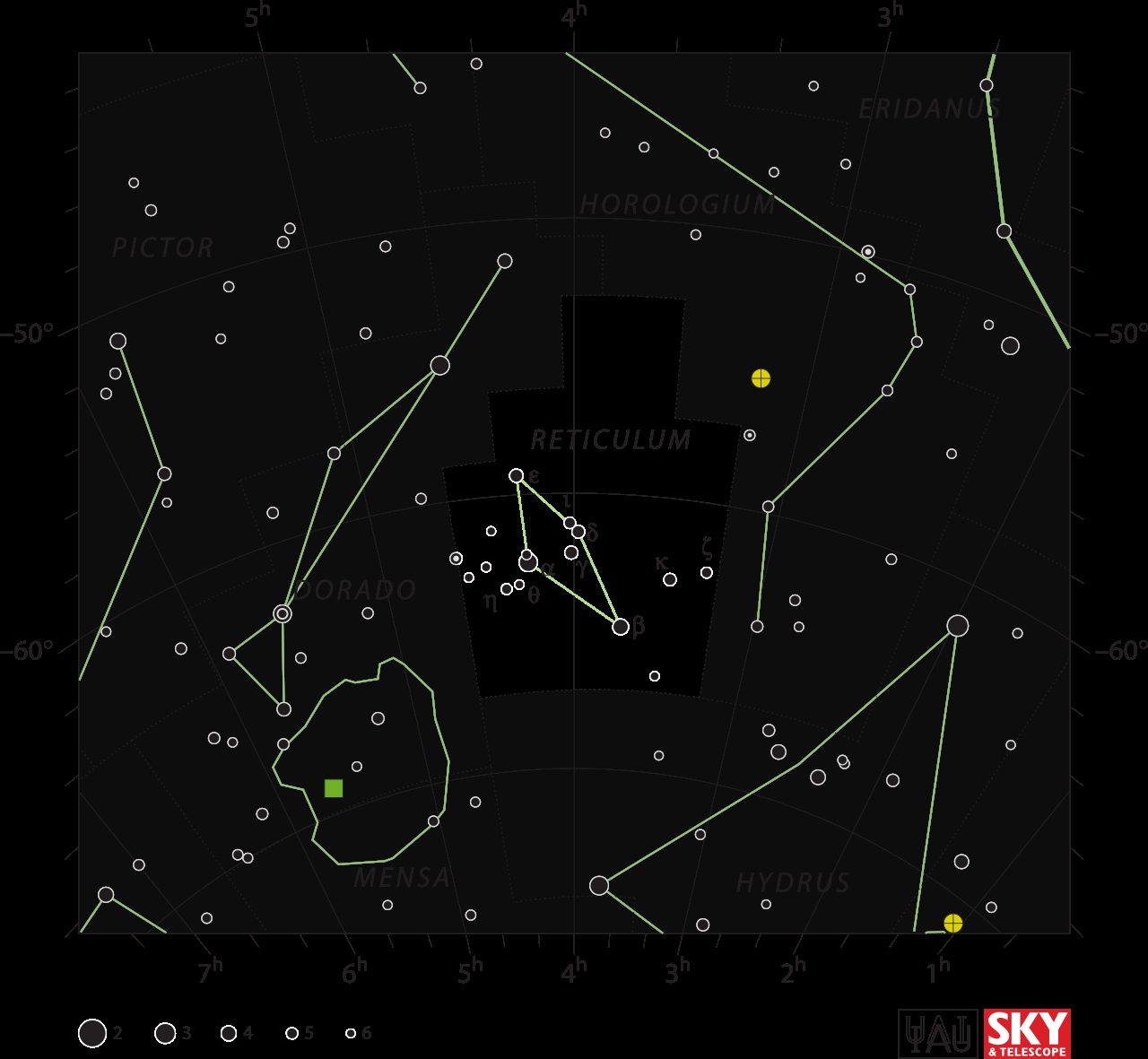
Strip away the narrative and ask the flat question: what is a hybrid supposed to be, and where is it said to come from? Here the story thins out fast, and the backing research document is unusually blunt about how little there is.
| The claimed origin | What it proposes |
|---|---|
| Zeta Reticuli | A specific nearby star system |
| Interdimensional | A non-physical-space origin |
| Engineered entity | A lab-created biological being |
Three competing explanations circulate for where the Greys come from, and none has any independent corroboration: the Zeta Reticuli star system, an interdimensional (non-physical-space) origin, or an engineered, lab-created biological entity. It is the last of these that abduction researchers tie directly to the hybrid-breeding narrative, the idea that the Greys are themselves a manufactured species trying to rebuild their genome through us. None of the three carries independent corroboration, which is why we hold the whole origin question at the bottom of the scale.
The backing research document catalogs the modern reported types, and its only direct entry for 'Hybrids' is a single line in its taxonomy table: description, 'human-alien mixed genetics'; origin, 'lab-created'; source, 'abduction reports.' The document rates that entry Tier 4, dubious, its lowest confidence rating for any named modern type. When even the file that houses the claim files it at the bottom, that is worth reading out loud.
04When the mainstream checked the work
A thesis this large does not go unexamined, and the checks came from serious places, including the one institution that had the most to lose by looking. What they found was not a smoking gun for the hybrids. It was a problem with the method that produced them.
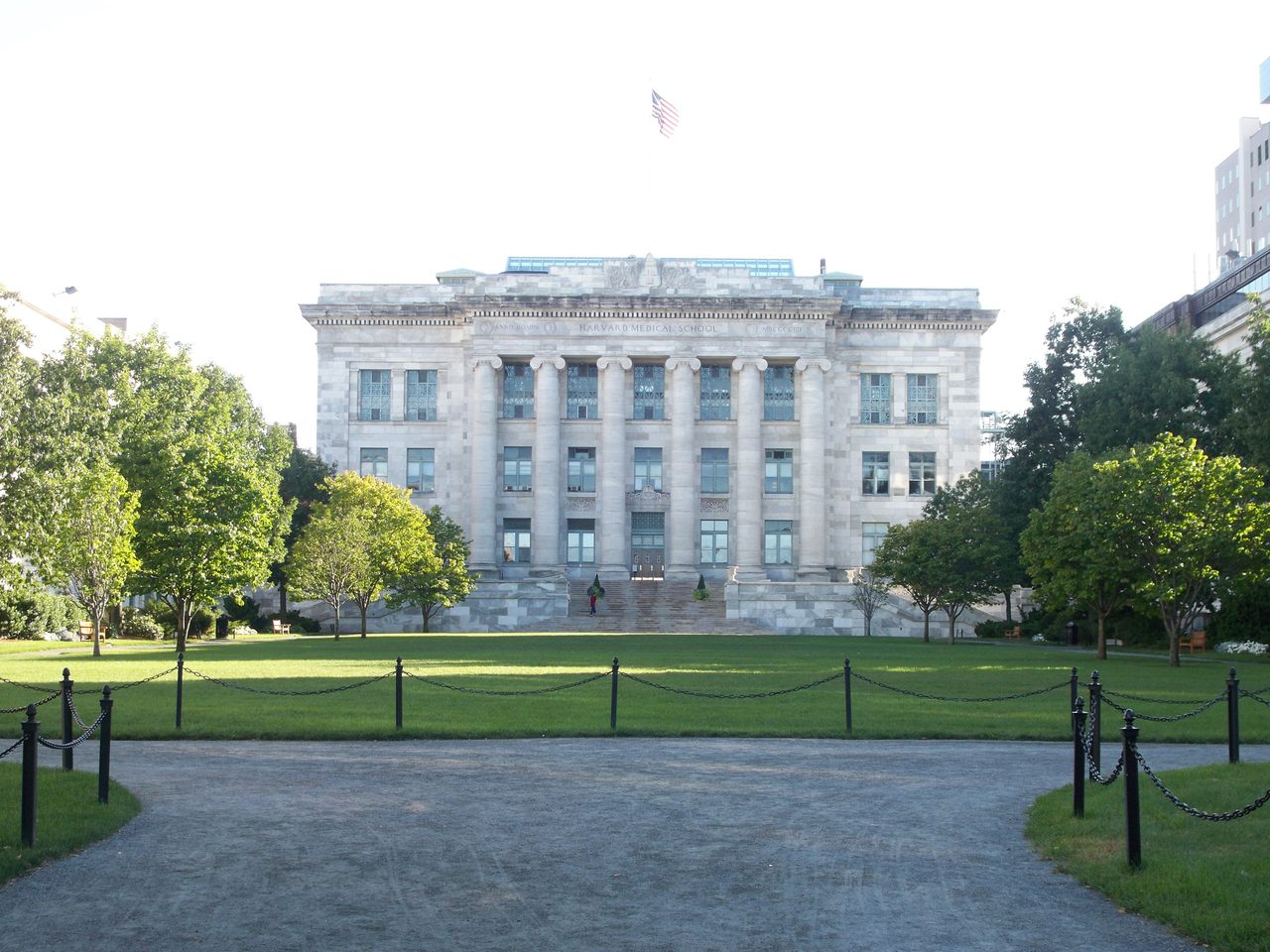
In May 1994, after Abduction was published, Harvard Medical School Dean Daniel C. Tosteson convened a confidential peer-review committee to examine John Mack's clinical methods. The committee concluded that Mack was not using 'rational and scholarly' methods, though it permitted him to continue practicing with recommended changes. Whatever one thinks of the abduction claims, this is a documented, verifiable event: mainstream medicine formally scrutinizing an abduction researcher's methodology, and finding it wanting.
The deeper objection struck at the tool all three men shared. Astronomer Carl Sagan and psychologist Susan Clancy, among others, criticized the core method behind Hopkins, Jacobs, and Mack, recovering 'memories' through hypnotic regression, on the well-documented grounds that hypnosis produces confabulated and false memories when the hypnotist asks leading questions. Every hybrid-breeding account derived that way inherits the flaw. The testimony can be perfectly sincere and still be manufactured in the very session that recovered it.
Harvard psychologist Susan A. Clancy's controlled studies, published as Abducted: How People Come to Believe They Were Kidnapped by Aliens (Harvard University Press, 2005), found that alien-encounter descriptions track the era's science-fiction imagery. The abductor shifts from the 1950s 'little green men' to the large-eyed Grey only after Close Encounters of the Third Kind (1977) and Whitley Strieber's Communion (1987) put that face on screens and book covers. If the hybrid's maker turns out to be a movie, the hybrid has a problem.
There is one old-world echo worth handling honestly. Some researchers, including a cross-reference table in this catalog, point to Zulu shaman-informant Credo Mutwa's account of the 'Mantindane,' small grey-skinned beings said to carry out abductions, as a pre-1947 African parallel to the modern Grey. It is a genuine cultural account. It cannot, however, serve as independent corroboration: it rests entirely on a single ethnographic informant, and it was recorded well after Western Grey-alien imagery had already begun circulating. A parallel is not a witness.
05The explanation that needs no aliens
If the memories are unreliable and the imagery is borrowed, what is actually happening to the people who report these encounters? For a large share of them, there is a well-mapped answer sitting in the sleep-medicine literature, and it does not require a spacecraft.
| The reported experience | The clinical phenomenon |
|---|---|
| A hostile presence in the room | Sleep paralysis |
| Crushing pressure on the chest | Sleep paralysis |
| Unable to move or speak | Sleep paralysis |
| Vivid humanoid figures | Hypnagogic/hypnopompic hallucination |
Cognitive scientist J. Allan Cheyne's published research (2001) documented that many abduction experiences, the sense of a hostile presence, crushing chest pressure, total immobility, and vivid humanoid hallucinations, map cleanly onto the well-established clinical phenomenology of sleep paralysis and hypnagogic and hypnopompic hallucination. This offers a non-extraterrestrial explanation for a substantial share of reported encounters, hybrid-viewing accounts included, without asking anyone to be lying.
The telling part is that even John Mack, the researcher most sympathetic to the abductees as real trauma survivors, conceded the point. His own Harvard work acknowledged that many of the reported encounters happened while the patient was in bed or in a drowsy state, and Mack could not rule out hypnagogic phenomena as the source of the hybrid and abduction imagery his patients described. When the friendliest expert cannot exclude the mundane explanation, the mundane explanation has to stay on the table.
06The specimen that never survives
Everything above is testimony. The one thing that would settle the hybrid question outright is a body, a tissue sample, anything with a genome to sequence. Across the entire history of the claim, that object has never once materialized under examination.
As of 2026, no biological specimen, tissue sample, or genetic material from an alleged human-alien hybrid has ever been produced, physically examined, or independently verified by any peer-reviewed laboratory or government body. That includes AARO, whose Historical Report Volume 1 (February 2024) reviewed the U.S. government programs in its scope and found 'no evidence' of extraterrestrial technology or biological material. The single test that could confirm a hybrid has, in effect, been running for decades, and it keeps returning nothing.
The most prominent recent attempt to hand a government a physical 'non-human biological' shows how this ends. In 2023, purported 'alien mummies' presented to Mexico's Congress by Jaime Maussan were examined by multiple independent researchers and found to be assembled from human and animal bones, with no novel or non-terrestrial DNA. It was not a hybrid. It was a construction, and it was debunked.
One caution before anyone reaches for the other 2023 headlines. David Grusch's sworn Congressional testimony that year concerned recovered non-human 'craft' and 'biologics' from alleged crash-retrieval programs, claims the Office of the Director of National Intelligence and AARO have said they found no evidence for. That is a factually distinct claim family from abductee-reported hybrid breeding. Craft-retrieval biologics and a bedroom breeding program are different alleged evidence chains, and one does not corroborate the other, however tempting it is to file them under the same headline.
Fast Facts
- The core claim
- Greys abduct humans to breed a half-human hybrid species
- Where it starts
- The Betty and Barney Hill abduction case, 1961
- Chief architects
- Budd Hopkins, David Jacobs, and Harvard's John Mack
- The method
- Memories recovered under hypnotic regression
- The endpoint claimed
- 'Hubrids' engineered to pass as human (Jacobs)
- Physical specimens
- None ever verified; the 2023 Maussan 'mummies' were debunked
- Document's own rating
- Tier 4, dubious, its lowest for a named type
What we can actually stand behind
The skeptical spine is the solid part. No hybrid specimen has ever survived examination (AARO, and the debunked 2023 Maussan 'mummies'); the abductor imagery tracks pop culture rather than a stable independent phenomenon (Clancy); and much of the experience maps onto sleep paralysis (Cheyne). Even Harvard's own review found the method behind the claims wanting.
Bullard's survey work is real data: the Grey appears in roughly 43% of close-encounter reports, and 'hybrid breeding' is a genuine, recurring, standardized element of the abduction narrative. That tells us something true about human reporting. It does not tell us a hybrid exists.
The breeding-program case from Hopkins, Jacobs, and Mack is a serious, sustained body of testimony worth studying as a psychological and cultural phenomenon. But it is hypnosis-derived and uncorroborated, and it stays at the level of what people report, not confirmed biology.
The claim we refuse is the literal one: that a real, engineered, lab-created hybrid species exists and walks among us. The backing document rates its own one-line 'Hybrids: human-alien mixed genetics, lab-created' entry Tier 4, its lowest confidence for any named type, and not a single specimen has ever been produced. It is the least-supported claim on this page, and it does not earn a place among the things we can stand behind.
So the hybrid file closes the way it opened, with a story far bigger than its evidence. A consistent creature, a named group of researchers, bestselling books, sworn testimony, and sixty-five years of accounts, all set against an examination table that has never once held a body. The most honest question left is not whether the Greys are breeding with us. It is why so many people, across so many years, keep describing the same grey-eyed child in the same drowsy hour, when there is nothing there to find. Is the hybrid a visitor, or a mirror, something we keep building out of our own deepest fears about reproduction, control, and what might be done to us while we sleep? The reports still arrive, and the table is still empty.
Sources & further reading
Everything above is drawn from our research library on Theories of Anything, which is where we worked from. The papers, reports and primary records listed beneath them are where you can check us independently.
Image credits
- Zeta Reticuli star system photograph by NiKo, via Wikimedia Commons. CC BY 4.0 Source.
- Reticulum constellation diagram diagram by the International Astronomical Union and Sky & Telescope magazine (Roger Sinnott and Rick Fienberg), via Wikimedia Commons. CC BY 3.0 Source.
- Harvard Medical School quadrangle photograph by EgorovaSvetlana, via Wikimedia Commons. CC BY-SA 4.0 Source.
- Card crop of Zeta Reticuli star system photograph by NiKo, via Wikimedia Commons. CC BY 4.0 Source.


