Iargans: The People of Iarga
A Dutch industrialist says his boat struck something invisible in a Zeeland estuary, and two days later he had a book's worth of physics, politics, and philosophy from a waterworld about ten light-years away. Here is the file on Iarga, opened claim by claim, with every line wearing its evidence.
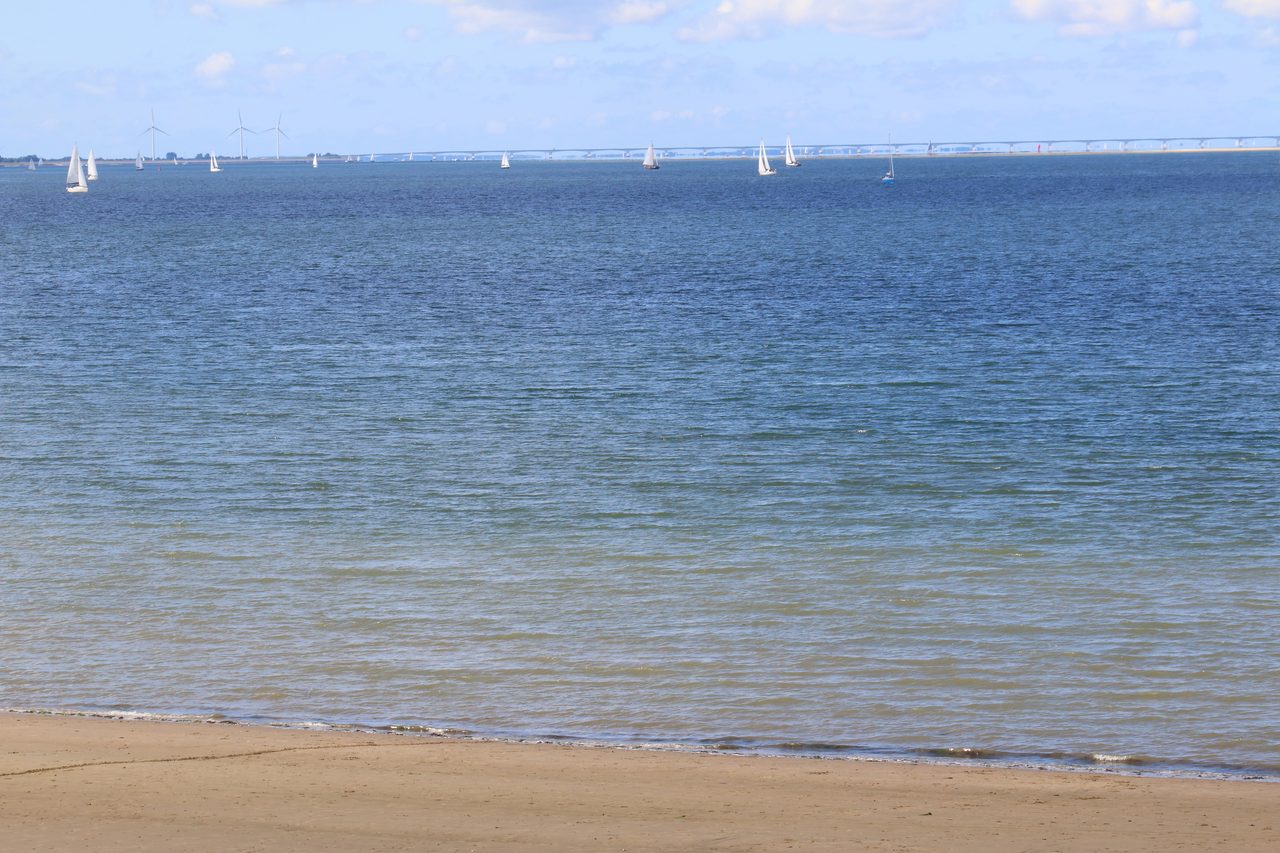
On an evening on the Oosterschelde, the wide tidal estuary off the coast of Zeeland, a Dutch industrialist writing under the name Stefan Denaerde was sailing when his boat struck something that should not have been there. So far, that is the ordinary opening of a boating mishap. What he says happened next is not ordinary at all: across roughly the next two days he was taken aboard an alien craft, shown a waterworld circling a star about ten light-years away, and briefed on its science, its politics, and its philosophy. He came back with a book. He never came back with proof. This is the file on Iarga, opened claim by claim.
01The book, and the man who would not sign it
Before the encounter, start with the object you can actually hold: the book. Its bibliography is the one part of this story that sits on firm ground, and it is worth laying out plainly before we get anywhere near a waterworld.
The English-language edition is titled UFO...Contact from Planet Iarga: A Report of the Investigation, credited to Stefan Denaerde and Wendelle C. Stevens and published in June 1982 by UFO Photo Archives of Tucson, Arizona. It is a 365-page hardcover, translated by Jim Lodge, ISBN 0-9608558-1-5. That the book exists, in that form, on that date, is not in dispute.
The work is not originally American, or even originally in English. It first appeared in Dutch in 1969 as Buitenaardse beschaving: de planeet Iarga ('Extraterrestrial Civilization: the Planet Iarga'), published in the Netherlands under the pseudonym Stefan Denaerde, and it became a Dutch bestseller. Current catalog listings name Ankh-Hermes of Deventer as the publisher.
'Stefan Denaerde' was a pen name, and the book itself never says whose. Independent sources identify the real author as Adriaan ('Ad') C. M. Beers (1924 to 1998), a Dutch mechanical engineer and industrialist. It is a credible attribution rather than a certainty the book confirms, which is why we hold it at Tier 2: the man on the cover and the man in the sources are, by every account, the same person, but he chose never to say so himself.
| Year | Title | Language and publisher | What is notable |
|---|---|---|---|
| 1969 | Buitenaardse beschaving: de planeet Iarga | Dutch · Ankh-Hermes, Deventer | First edition; a Dutch bestseller; framed and sold as fiction |
| 1977 | Operation Survival Earth | English · Pocket Books, New York | 159-page paperback; translator disputed in the record |
| 1982 | UFO...Contact from Planet Iarga | English · UFO Photo Archives, Tucson | 365-page hardcover; expanded and edited by Wendelle Stevens |
One edition muddies even the tidy bibliography. A separate English version, Operation Survival Earth, was issued in 1977 by Pocket Books of New York, and the record cannot agree on who translated it: the Science Fiction Encyclopedia credits Ed Soyka, while bookseller listings for the 159-page paperback name Jim Lodge. Whether this is an earlier independent translation or simply a labeling error in the secondary sources is unresolved. It is a small thing, but it is the kind of small thing that tells you how loosely this case has been catalogued.
02The encounter, as told
Now the part that made the book sell. Everything from here rests on Denaerde's own telling, so read it as testimony, not as record.
By his account, the contact began on the water. Denaerde's boat collided with, or narrowly missed, an unidentified object submerged in the Oosterschelde estuary in Zeeland. Even the date of this founding moment will not hold still: some secondary sources put it in 1965, others in July 1967, and no contemporary 1960s news account of the incident has been located. When the opening scene of a contact story cannot be fixed to a single year, that is worth noticing early.
What followed, in the narrative, was compressed and dense. Denaerde says he spent roughly 8 hours across two days in contact with the Iargans, was taken briefly aboard their craft, and was shown scenes of the home planet through a described 'electronic projection' system, along with discussions of Iargan science, technology, society, and philosophy. It is a great deal of civilization to absorb in eight hours, and all of it reaches us through a single set of eyes.
03The people of Iarga
So who did he say he met? The Iargans are described in unusual anatomical detail, and the detail is internally consistent in a way that is genuinely interesting, whatever its origin.
The Iargans are described, and illustrated by the artist Rudolf Dass working under Denaerde's direction, as stocky bipedal humanoids of amphibian ancestry, roughly five feet tall, with webbed fingers and toes, long arms, heavily muscled builds, an armored and ridged skull, large rectangular pupils, and pale, glass-like skin. The narrative ties that build to a single cause: a home planet whose surface gravity is far stronger than Earth's. It is a body engineered, on paper, to stand up under heavier weight.
04The world he says he saw
| Measure | The book's figure |
|---|---|
| Distance from Earth | About 10 light-years |
| Size | About 2.5x Earth's diameter and mass |
| Surface gravity | Near 3g |
| Atmosphere | Over 7 bar, high in nitrogen and ammonia |
| Population density | Around 100x Earth's |
Iarga, as Denaerde describes it, is a heavy, crowded waterworld about ten light-years from Earth: roughly 2.5 times Earth's diameter and mass, with surface gravity near 3g, an atmosphere above 7 bar thick with nitrogen and ammonia, and a population density around 100 times our own. Notice how neatly the planet explains the people: three gravities of pull is exactly what would compress a species into the short, powerful, thick-boned frame described a moment ago. The internal logic is tidy. Tidy internal logic, though, is what a careful author produces, not only what a real planet does.
05How the story crossed the ocean
The 1969 Dutch book might have stayed a Dutch curiosity. It reached English, and reached ufology, through one specific man, and that man matters to how much weight the English-language case can carry.
Retired USAF Lieutenant Colonel Wendelle C. Stevens, a career UFO investigator, traveled to Europe in the late 1970s, located the author, and arranged an expanded manuscript that he translated, edited, and published in the United States in 1982 through his own small press, UFO Photo Archives. Without Stevens, there is very likely no English 'Planet Iarga' at all.
And here the file has to say something uncomfortable out loud. Wendelle Stevens (1923 to 2010) is among the most compromised figures in the history of ufology. He was the lead American promoter of the widely disputed Billy Meier contactee case, and, separately, he pleaded guilty to felony child molestation and to producing and distributing child sexual-abuse material. We record this for one narrow, specific reason: it bears on the reliability of the man who packaged and sold the English-language Iarga case. It says nothing, by itself, about whether Denaerde saw what he says he saw. Keep the messenger and the message in separate hands, but do not pretend you cannot see the messenger.
06Fiction first, investigation later
There is one more twist in how the book was framed, and it cuts to the heart of what kind of claim this even is.
According to secondary accounts, the contact story was deliberately presented and marketed as fiction in the 1969 Dutch first edition, because the publisher believed the claims would not otherwise be accepted. The nonfiction, investigative framing, the 'Report of the Investigation' promised in the later title, was applied only afterward, for the 1982 English edition, via Stevens. The same material was sold first as a novel and then as a case file, which means the genre of the thing was a marketing decision as much as a factual one.
The Dutch skeptics foundation Skepsis later published a critical profile, interviewing Denaerde at about age 65, around 1990. By then, it reported, he had distanced himself from the flying-saucer framing of his 1969 book and moved toward a self-styled Christian-mystical belief system he called the draagveldparadigma ('field-carrier paradigm'), which Skepsis characterized as a closed, unfalsifiable thought system. The author, in other words, had walked away from the saucer before his English-language promoters were finished selling it.
07What it actually reached
For all that, it is worth keeping the scale of this honest. This was never a mass phenomenon.
Fan and bookseller sources report that the Dutch original ran through roughly 11 editions and some 40,000 hardbound copies at home. That would make it a real domestic success for its genre, but the figure has not been checked against publisher or library records in this pass, so we carry it as a claim, not a count.
In English, the reach is plainly modest. Goodreads shows just 52 ratings and 9 written reviews for the 1982 edition, at an average of 3.62 out of 5. That is a small, niche readership, even by the standards of ufology. Whatever Iarga is, it is not a widely known case, and we will not dress it up as one.
Fast Facts
- The book
- UFO...Contact from Planet Iarga (1982); Dutch original 1969
- The author
- 'Stefan Denaerde', identified as Ad Beers (1924 to 1998)
- The encounter
- About 8 hours over two days, on the water off Zeeland
- The date
- Unfixed: 1965 or July 1967, depending on the source
- The world
- A 3g waterworld, said to be about 10 light-years away
- English promoter
- Wendelle Stevens, a deeply discredited ufologist
- The evidence
- None beyond Denaerde's own account
What we can actually stand behind
The book is real and its bibliography is solid: a 1969 Dutch bestseller by the pseudonymous 'Stefan Denaerde,' expanded into a 1982 English edition by Wendelle Stevens, with a small, verifiable modern readership. Everything in this line can be checked.
The authorship (Ad Beers behind the pen name), the fiction-then-investigation reframing, and Skepsis's account of the author's later retreat into an unfalsifiable belief system are all credible and reasonably sourced, though none is confirmed by the book itself.
The Iargans and their heavy waterworld, the amphibian anatomy, the 3g gravity, the ten-light-year distance, make a vivid and internally consistent picture. They are also, every one of them, a description and nothing more, resting entirely on the narrative.
The encounter itself is the least-supported claim on this page, and we will not pretend otherwise. No news archive, no scientific investigation, no photograph, no physical evidence, and no independent witness for the Oosterschelde event has ever been found; the whole case rests on one man's account, relayed and expanded by a promoter with a felony record. By ufology's own internal standard it is a single-contactee case, and even the secondary record cannot agree on what year it began or who translated one of its editions. That is not a foundation. That is a story we cannot stand behind.
So the Iarga file closes the way it opened, on the water, with one man and no corroboration. What is strange is not that it is unproven; most contact stories are. What lingers is the craftsmanship: a planet whose physics explains its people, a people whose bodies explain their planet, all of it fitted together too well to wave off as nonsense and far too thin to accept as fact. So which is the more interesting question: whether an engineer from Zeeland really met the people of Iarga, or why a mind under no obligation to be consistent built a world that holds together this cleanly? The estuary is still there. The proof never was.
Sources & further reading
This is an Alien Life Creations original research file. No Theories of Anything corpus document exists for the Iarga case yet, so the references below point to the external bibliographic, skeptical, and ufology sources the file was built from. Open them to check the sourcing yourself.
Image credits
- The Oosterschelde, the wide tidal estuary in Zeeland, the Netherlands photograph by FrDr, via Wikimedia Commons. CC BY-SA 4.0 Source.
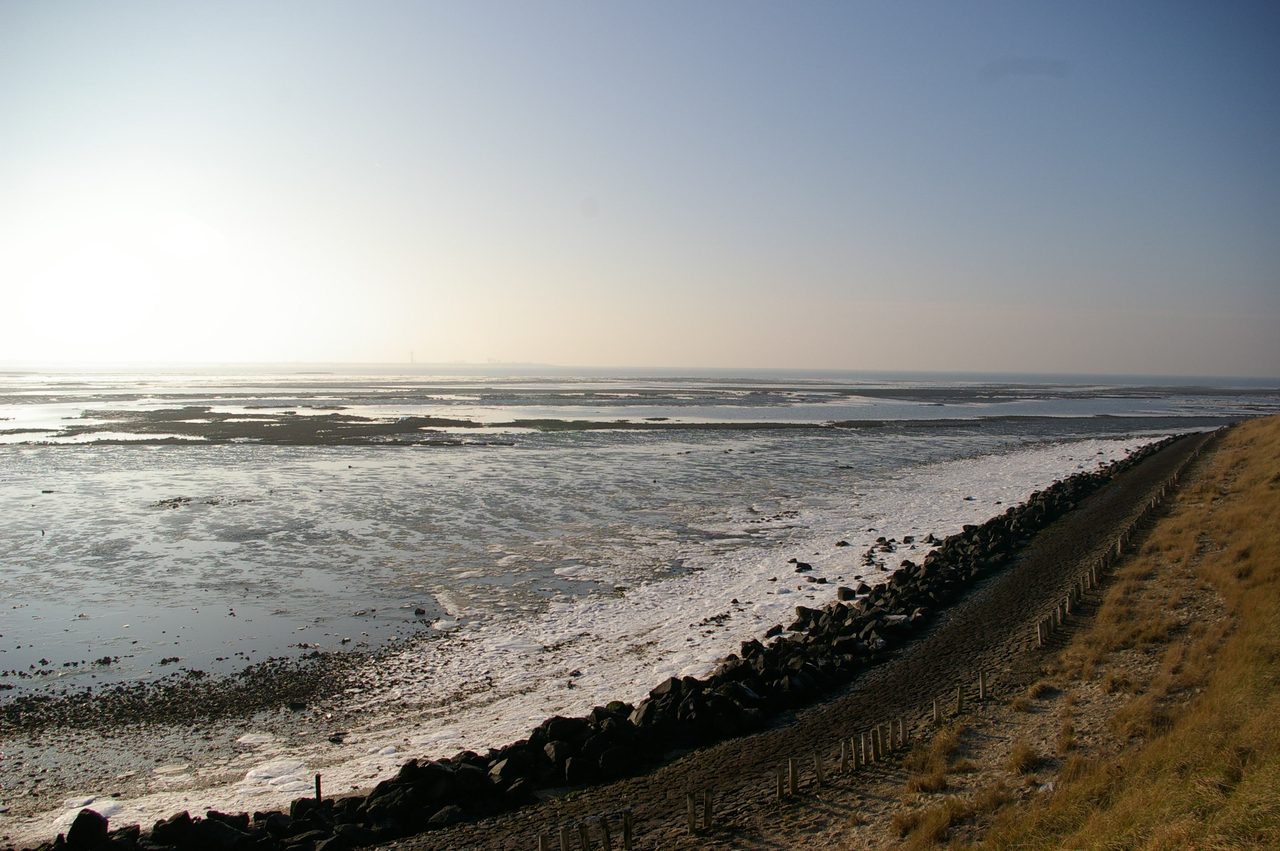
- A quiet stretch of the Oosterschelde near Viane in Zeeland photograph by MartinD, via Wikimedia Commons. CC BY-SA 3.0 Source.
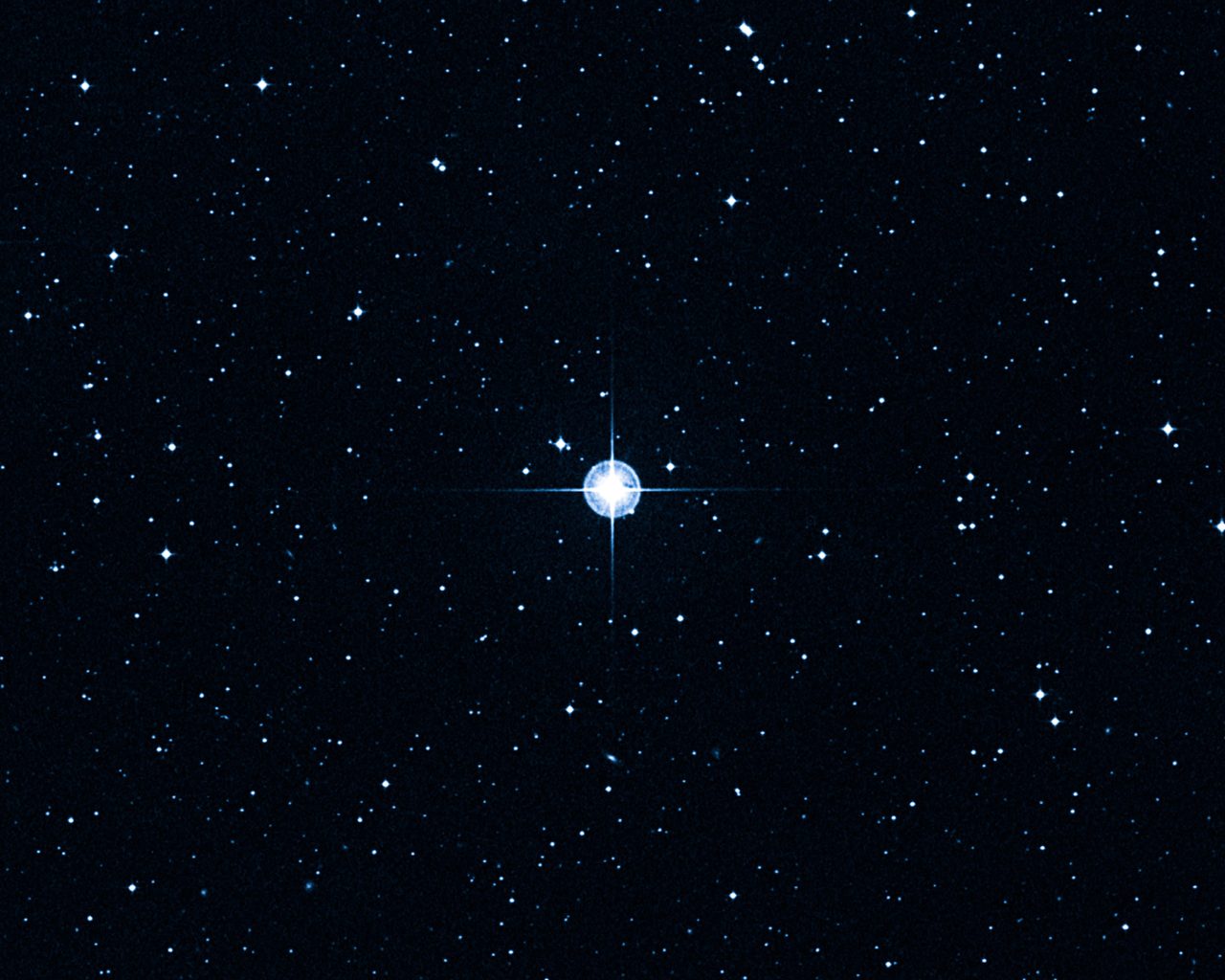
- A Hubble Space Telescope and Digitized Sky Survey image of HD 140283 photograph by ESA/Hubble; Digitized Sky Survey (DSS), STScI/AURA, Palomar/Caltech, UKSTU/AAO, via Wikimedia Commons. CC BY 4.0 Source.
- Card crop of the Oosterschelde, the wide tidal estuary in Zeeland, the Netherlands photograph by FrDr, via Wikimedia Commons. CC BY-SA 4.0 Source.


