Lost Material Science: Knowledge We Actually Forgot
Concrete that heals its own cracks, a steel nobody can reliably remake, a fire that burned on water and died with an empire, and a geared computer we know existed only because one ship sank. Four technologies humanity genuinely lost, plus one rustless pillar that modern science has fully explained, every claim wearing its evidence.
Most “lost ancient technology” stories end with a spaceship. This one does not. Everything in this file was made by human hands and documented by human sources. Most of it was then genuinely lost: forgotten, superseded, or buried until someone dug it back up. Concrete that grows stronger as it ages. A steel nobody alive can reliably remake. A weapon that burned on water, whose recipe died with an empire. A gear-driven computer that had no equal for fourteen centuries. And one outlier that was never truly lost at all: a pillar of iron that simply refuses to rust, long paraded as impossible ancient magic and now fully explained. Let's open the file, one case at a time.
| Technology | Its moment | What became of the know-how |
|---|---|---|
| Roman marine concrete | 1st to 2nd c. CE | Superseded by cheaper Portland cement; its self-healing chemistry only re-explained in 2014 and 2023 |
| Damascus (wootz) steel | before the 1750s | Lost around the 1750s as its special ore ran out and trade routes were cut |
| Greek Fire | sieges of 674 to 678 and 717 to 718 CE | Died with the Byzantine Empire in 1453; the formula was a state secret and is still unknown |
| Antikythera gearing | roughly 70 to 60 BCE | Differential gearing was not seen again in Europe for about 1,400 years |
| Iron Pillar of Delhi | around 402 CE | Never truly lost; now a solved case in corrosion-science textbooks |
01The one rule this file follows
The research document behind this file contains no Tier 3 speculative entries at all. Every documented lost-technology case in this file sits at Tier 1, resting on peer-reviewed science, or Tier 2, resting on credible but still-debated research. A separate Tier 4 line later in this piece addresses, and rejects, the alien-origin framing some readers bring to this material. The document itself flags this evidentiary discipline as what sets it apart from the more speculative files elsewhere in the corpus. Nothing here needs a lost civilization or a visitor from off-world to make sense.
So the mystery on this page is never “who could possibly have done this.” It is quieter and stranger than that: how a civilization can hold a piece of knowledge in its hands, use it for centuries, and then let it slip through its fingers completely.
02The concrete that heals itself
Start underfoot, with the material half the Roman world was built on. Modern concrete has a shelf life. Roman concrete, in the right conditions, does the opposite of decay.
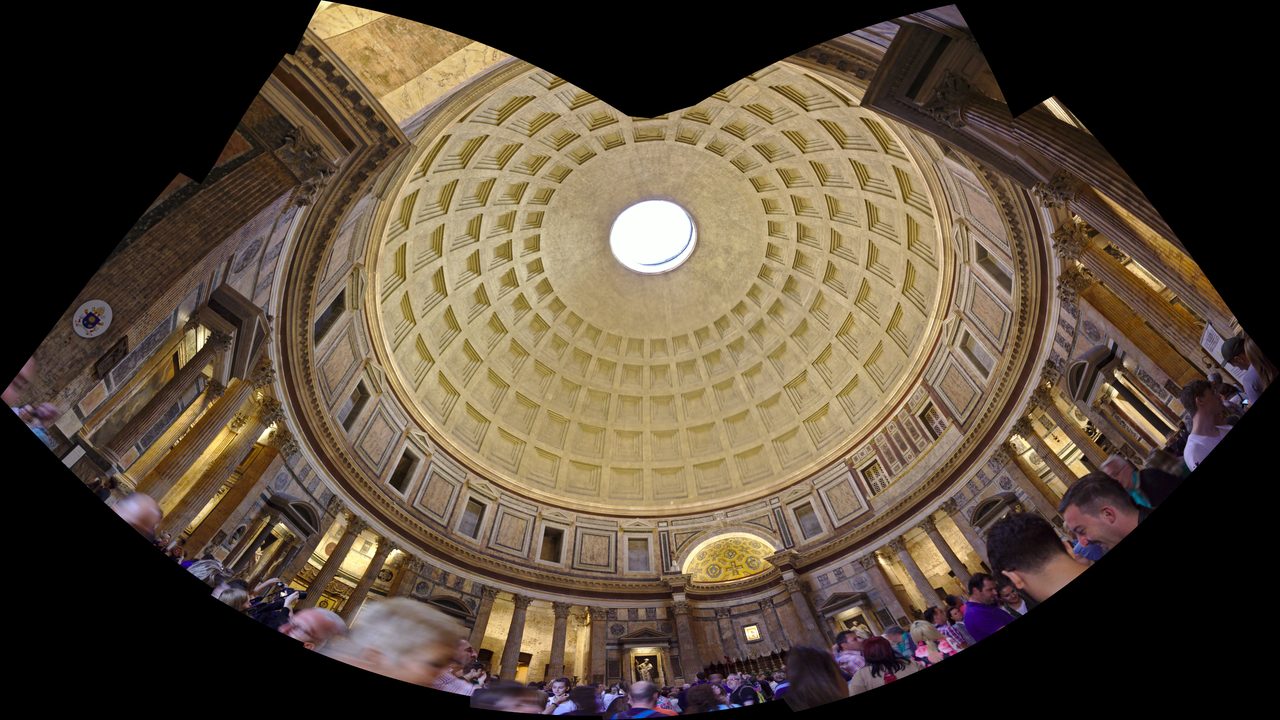
The Pantheon in Rome, finished in 126 CE, is roofed by a 43-meter unreinforced concrete dome, and nearly 1,900 years on it is still the largest unreinforced concrete dome in the world. For comparison, a typical modern concrete structure begins to degrade within roughly 50 to 100 years.
Roman maritime concrete is measurably stronger today than the day it was poured some 2,000 years ago. Seawater reacts with the volcanic ash in the mix to grow crystals of aluminum tobermorite, which push into cracks and fill them from within. The sea that should be eating the concrete is quietly rebuilding it instead (Jackson and colleagues, 2014).
A 2023 MIT-led study identified a second self-healing mechanism: “hot mixing,” deliberately folding quicklime (calcium oxide) into the concrete as it was made. That leaves reactive lime clasts scattered through the finished material. When water later works into a crack, the clasts dissolve and reprecipitate as calcium carbonate, sealing the gap on their own (Masic and colleagues, 2023).
03The steel we cannot reliably remake
Next, a metal with a mythology all its own: true Damascus steel, forged from the wootz ingots of India and the Middle East and prized across the pre-industrial world.
Analysis of an authentic Damascus (wootz) steel sabre has found carbon nanotubes and cementite nanowires threaded through its microstructure. Pre-industrial Indian and Middle Eastern smiths were, in effect, producing nanoscale structures in steel by purely empirical metallurgical technique (Reibold and colleagues, 2006).
The process for making true wootz steel was lost by roughly the 1750s. The likeliest cause is mundane: the specific Caspian-region ore deposits that carried the trace vanadium and other elements the method depended on were exhausted, and the trade routes that supplied that ore were disrupted during the colonial period. The recipe did not vanish into mystery; its ingredients ran out.
How intentional were those nanostructures? Reibold's team confirmed the carbon nanotubes are really there, but the prevailing interpretation is that they were incidental byproducts of a particular ore chemistry and repeated heating and cooling. The smiths mastered the outcome by trial and repetition; they were almost certainly not consciously engineering at the nanoscale.
04The fire that burned on water
Some knowledge was not exhausted but guarded to death. Greek Fire is the classic case: a Byzantine incendiary weapon so effective that its makers took its formula to the grave.
Greek Fire burned on contact with water and was delivered from pressurized ship-mounted siphons. It is credited with saving Constantinople twice: during the siege of 674 to 678 CE, and again in 717 to 718 CE.
The formula was a closely guarded state secret, known only to the Kallinikos family and the Byzantine emperors, and it was lost entirely when the empire fell in 1453. Modern analysis suggests a petroleum-based (naphtha) mixture with additives such as quicklime, sulfur, and saltpeter, but the exact formula remains unknown after centuries of study.
And it may stay unknown. No definitive chemical analysis of Greek Fire residue from an actual documented naval battle site has ever been published. Every modern recipe is an educated guess reconstructed from fragmentary ancient descriptions, not a confirmed formula.
05A computer from a shipwreck
If any single object proves the ancient world could build things we assume it could not, it is a corroded lump of bronze that divers pulled off the sea floor.
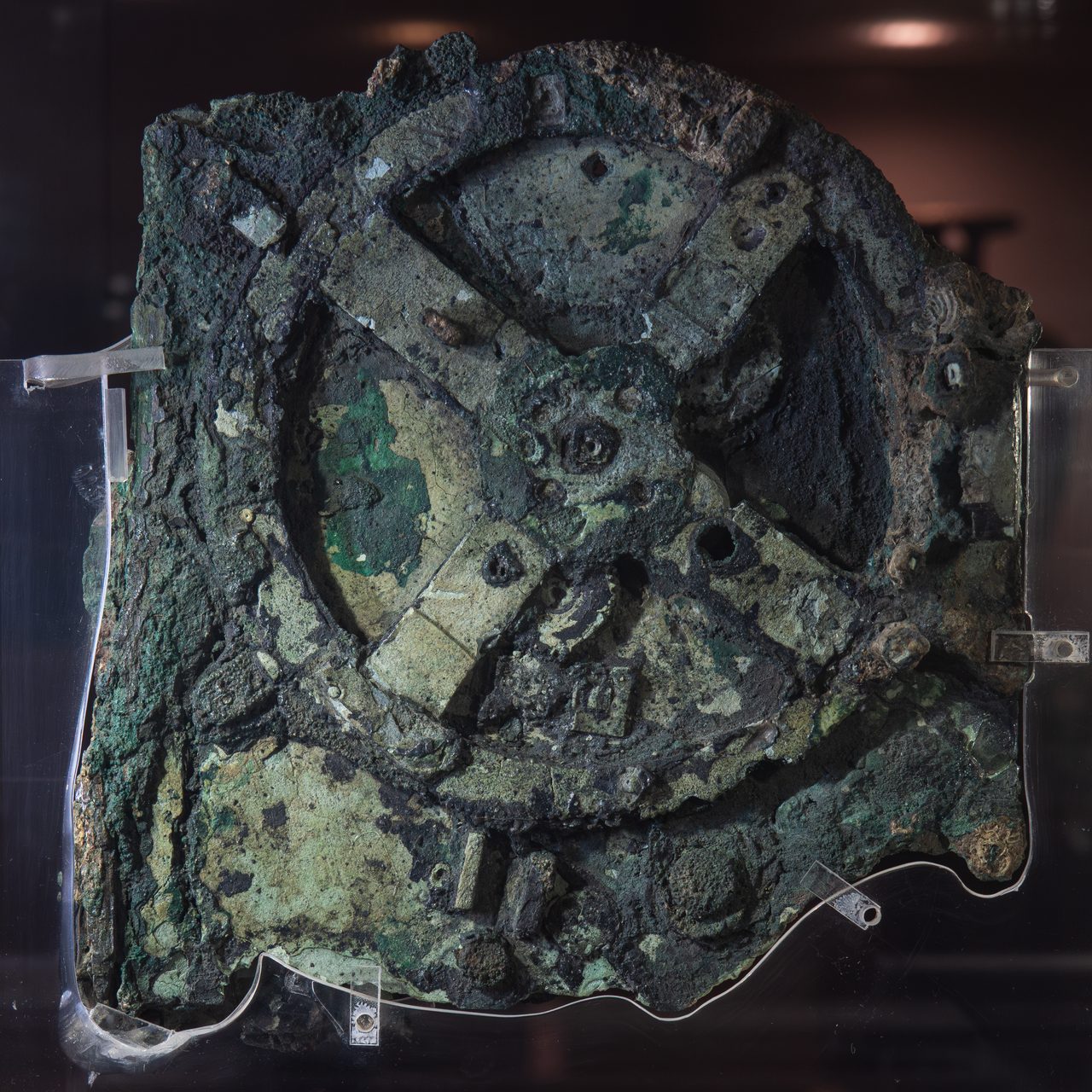
The Antikythera Mechanism, recovered from a shipwreck near the Greek island of Antikythera in 1901 and dated to roughly 70 to 60 BCE, holds more than 30 bronze gears with teeth cut to sub-millimeter precision. It functioned as an analog computer: predicting solar and lunar eclipses through the Saros cycle, tracking the positions of the five then-known planets, running several calendar systems at once (Egyptian, Callippic, and Metonic), and even counting down the four-year cycle of the Olympic Games on a dedicated Olympiad dial.
Nothing else of comparable mechanical sophistication survives from antiquity. The differential gearing it demonstrates was not reinvented in Europe until roughly the 14th century CE, a gap of about 1,400 years. We know this technology existed at all only because one particular ship happened to sink and preserve it.
A caution worth keeping: the mechanism's inner workings are not fully settled. Freeth's 2021 model of the complete gear train remains a proposal on paper; no full physical reconstruction of the proposed lost gearing has yet been built and tested. We can read much of what it did without having rebuilt every wheel that did it.
| Property | Value |
|---|---|
| Height | 7.21 m total, 6.12 m above ground |
| Base diameter | ≈ 0.42 m |
| Weight | ≈ 6.5 tons |
| Composition | 99.72% wrought iron, 0.15% phosphorus |
| Date | ≈ 402 CE (Brahmi inscription naming a king ‘Chandra’) |
| Location | Qutub complex, Mehrauli (UNESCO World Heritage Site) |
06The pillar that refuses to rust
The Iron Pillar of Delhi stands in the Qutub complex at Mehrauli, a UNESCO World Heritage Site. It is about 7.21 meters tall with 6.12 meters above ground, roughly 0.42 meters across at the base, and weighs around 6.5 tons. It is 99.72% wrought iron with an unusually high 0.15% phosphorus content, and a Brahmi inscription naming a king ‘Chandra,’ almost certainly Chandragupta II of the Gupta dynasty, dates it to around 402 CE.
It has stood in open air for roughly 1,600 years with barely any rust, and peer-reviewed materials science has explained why. The high phosphorus content catalyzes a protective crystalline layer of misawite (delta-FeOOH) about 50 micrometers thick that blocks oxygen and moisture. That phosphorus enrichment was almost certainly an accidental byproduct of the specific ore and charcoal-smelting process, not a deliberate design choice.
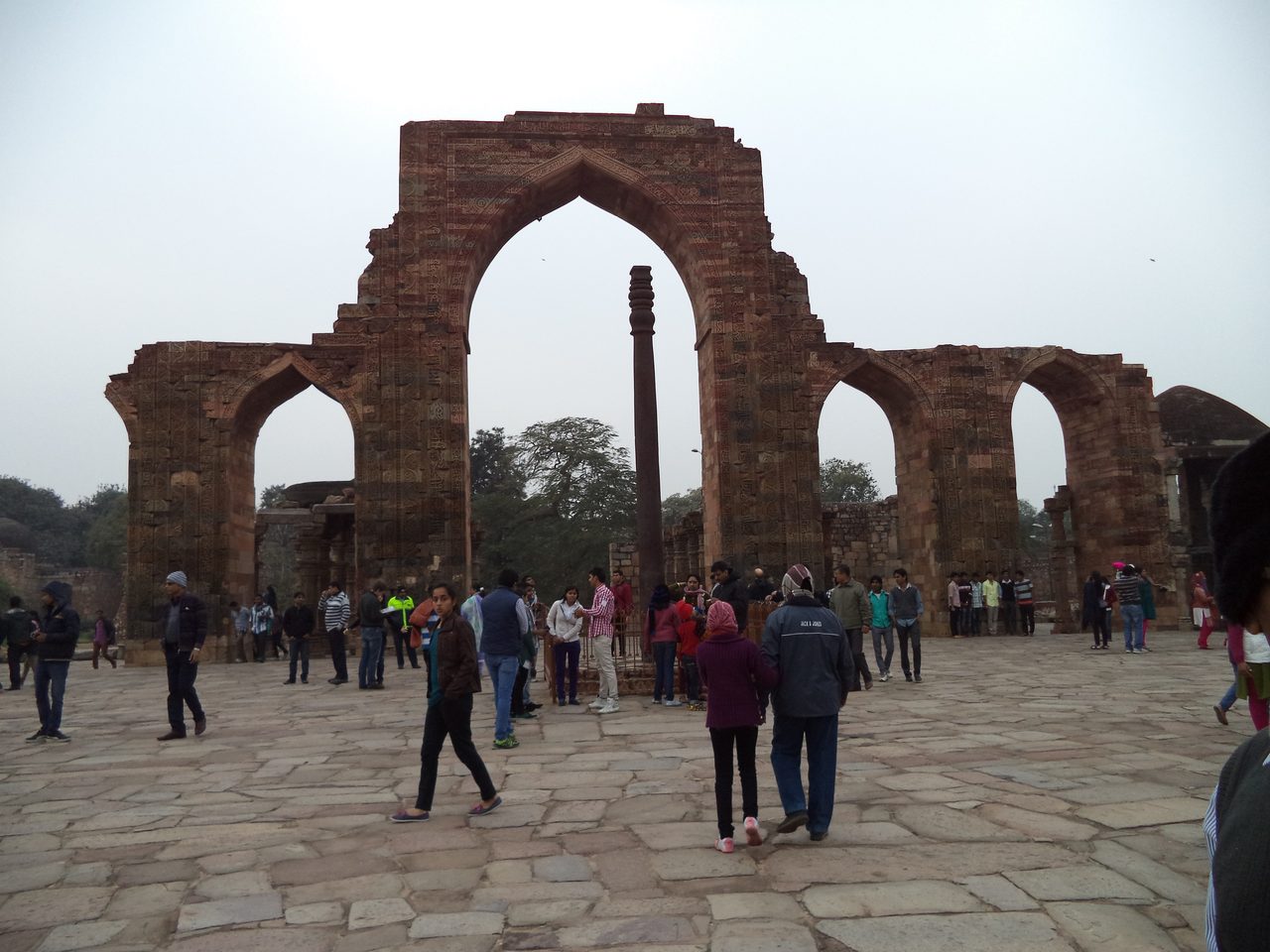
This is the pattern in miniature. The Iron Pillar was once paraded as proof of lost, exotic, or impossibly advanced ancient metallurgy. After proper investigation it became something far less romantic and far more useful: a standard, solved example in corrosion-science textbooks. A mystery, once fully worked out, stops being a mystery.
07Trial and error, mistaken for magic
Two more cases sit a notch lower on the confidence scale, at Tier 2: credible but not fully closed. Both show artisans getting spectacular results without the theory to explain them.
The Lycurgus Cup, a 4th-century CE Roman glass cup, looks green when light bounces off it and glows red when light passes through it. The effect comes from gold-silver alloy nanoparticles roughly 70 nanometers across, embedded in the glass, and it matches modern surface plasmon resonance theory exactly. It is genuine nanotechnology, achieved by trial and error rather than any theoretical understanding (Barber and Freestone, 1990).
Violins from the Stradivari era of the 1700s still routinely outperform modern instruments in blind listening tests, and nobody has settled why. Proposed causes include mineral treatments of the wood, unusually dense timber grown during the Little Ice Age, fungal treatment, and varnish chemistry. To date, no one has definitively recreated the original sound.
08Lost, superseded, or just unlucky
Before the word “lost” does too much work, it is worth being precise about what actually happened to each of these.
A lot of “lost” technology was really superseded. Roman concrete gave way to cheaper, faster-setting Portland cement once 2,000-year durability stopped being the priority. Damascus steel's specific ore source was exhausted rather than its knowledge suppressed. Greek Fire's loss was a political event, its secret-keepers gone and its empire fallen, not a civilization forgetting how to think. Different losses, different lessons.
And here is the caveat this file refuses to bury: every headline case survives only because a physical object did, whether a shipwreck, a buried pillar, a preserved cup, or a standing dome. An unknown number of other ancient technologies may have vanished leaving no trace at all. These few cases are a survivorship-biased sample of ancient loss, not a complete inventory of it.
09Where the aliens come in, and why they don't
Because these losses feel uncanny, they get recruited as evidence for something bigger: that ancient people could not have done this alone, that someone, or something, must have helped.
The framing of these cases as evidence of aliens or non-human intervention does not hold, and the source document rejects it outright. The reason is simple: ordinary human causes account for every one of these losses. Trade routes were cut. Empires collapsed. Secrets were kept, and then their keepers died. There is nothing here that requires an outside hand, and nothing here that provides one.
Fast Facts
- Roman concrete
- Self-healing; Pantheon dome (126 CE) is still the largest unreinforced concrete dome
- Damascus steel
- Lost ~1750s; carbon nanotubes found inside a real wootz sabre
- Greek Fire
- Byzantine, burned on water; formula lost in 1453 and still unknown
- Antikythera Mechanism
- 30+ gears, ~70 to 60 BCE; its gearing unmatched for ~1,400 years
- Iron Pillar of Delhi
- ~402 CE, 99.72% iron; barely rusts after ~1,600 years
- Speculative claims
- None among the five core cases; a closing Tier 4 line explicitly rejects the alien-origin framing
What we can actually stand behind
Self-healing Roman concrete, nanotube-bearing Damascus steel, water-burning Greek Fire, the geared Antikythera computer, and the rustless Iron Pillar of Delhi are all real, and all documented by peer-reviewed science or surviving physical artifacts.
Why Stradivari violins still win blind tests is unresolved, the Lycurgus Cup's nanotech was empirical rather than understood, and the Antikythera Mechanism's full gear train has been modeled but not yet physically rebuilt and tested.
The alien or lost-civilization framing fails. Not because the losses are not striking, but because trade collapse, exhausted ore, political catastrophe, and plain secrecy already explain every one of them. No outside hand is needed, and none is in evidence.
Which leaves the uncomfortable question this file cannot answer. We only know about the technologies whose proof happened to survive: one ship that sank, one pillar left standing, one cup that was never smashed. How many other things did people once know how to make, and then lose so completely that not even the memory of the loss came down to us?
Sources & further reading
Everything above is drawn from research document J_1_03 in our library on Theories of Anything, a file built entirely on peer-reviewed science and surviving physical artifacts. Open the full file to check the sourcing, and follow the primary papers below to go deeper.
Image credits
- Antikythera Mechanism, Fragment A photograph by Logg Tandy, via Wikimedia Commons. CC BY 4.0 Source.
- Pantheon dome interior, Rome photograph by Nils Holle, via Wikimedia Commons. CC BY-SA 4.0 Source.
- Iron Pillar of Delhi photograph by Rounik Ghosh, via Wikimedia Commons. CC BY-SA 4.0 Source.
- Card crop of Antikythera Mechanism, Fragment A photograph by Logg Tandy, via Wikimedia Commons. CC BY 4.0 Source.
.webp)

