Men in Black
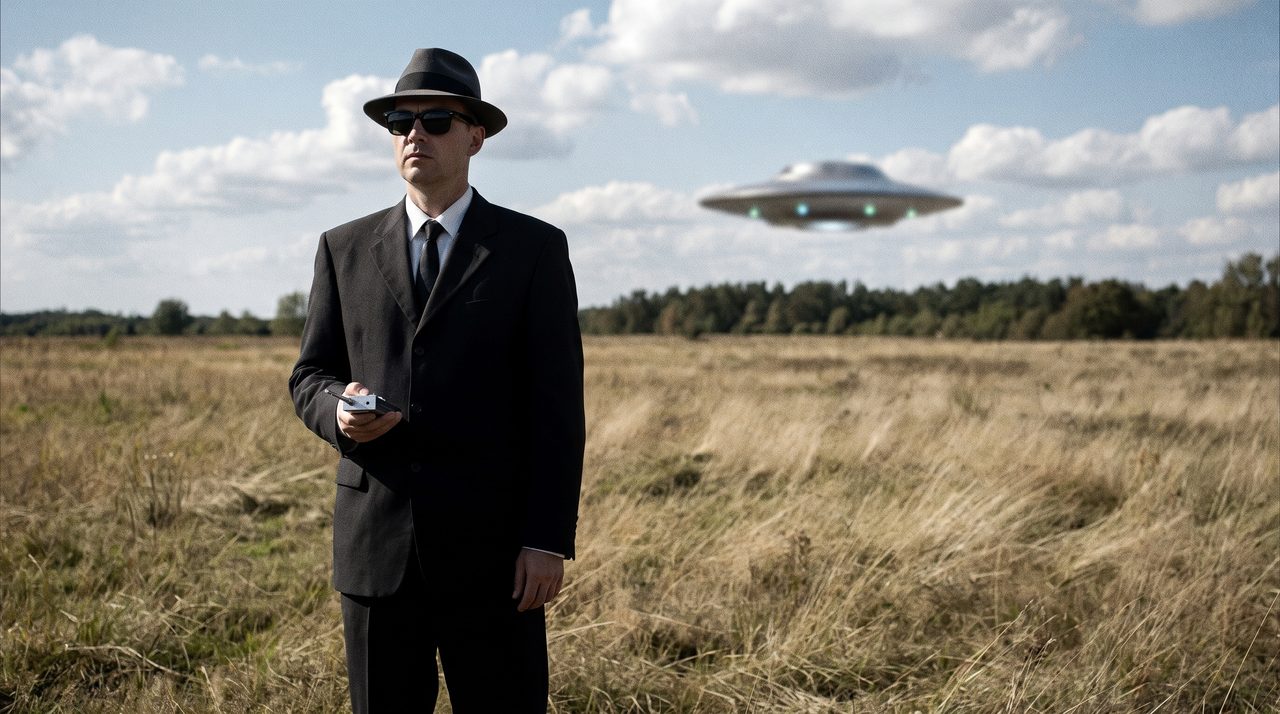
In September 1953 a Connecticut saucer club folded overnight, its founder muttering about three men in dark suits. Seven decades later the question still stands: federal agents, folklore, or fabrication?
01The Bureau That Shut Its Doors
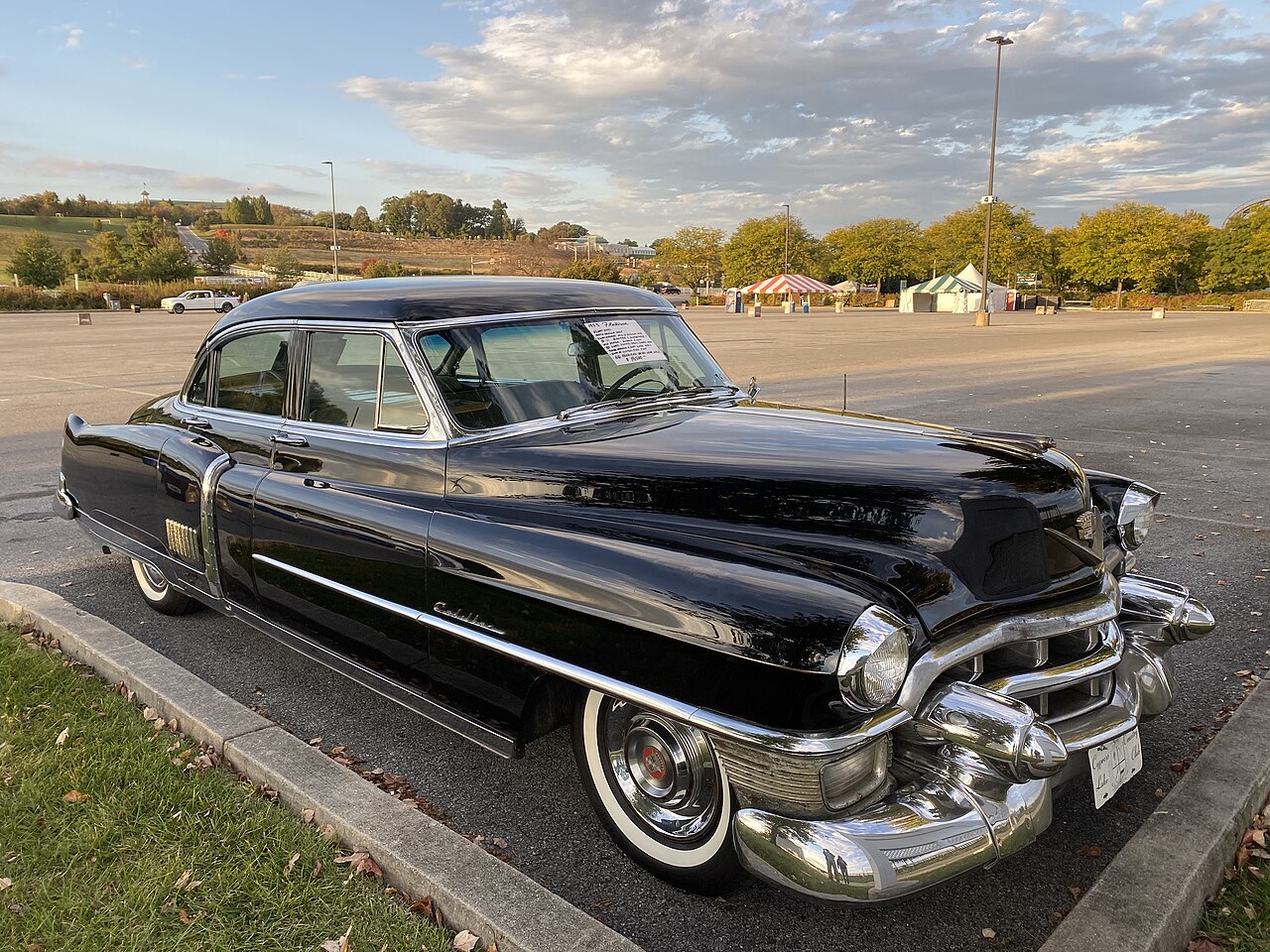
On a September day in 1953, one of America's busiest amateur UFO organizations simply stopped. The International Flying Saucer Bureau, run out of a Bridgeport, Connecticut home by a young UFO enthusiast named Albert K. Bender (1921–2016), ceased publishing, disbanded, and went quiet. The reason its founder gave would seed an entire mythology.
Bender founded the IFSB in 1952 and published the newsletter Space Review. In September 1953 he abruptly shut it all down, saying three men dressed in dark clothing had visited him, told him the secret of the flying saucers, and instructed him to stop investigating.
The episode might have stayed a footnote. Instead Bender's own story mutated, and in doing so it fixed the central ambiguity that has haunted the phenomenon ever since.
When Bender finally elaborated in his 1962 book Flying Saucers and the Three Men, his visitors had transformed from plausible officials into glowing-eyed, sulphur-scented supernatural beings. The about-face left MIB lore permanently unable to decide whether the men were government agents, alien entities, or psychological projections.
Six years earlier, harbor patrolman Harold Dahl claimed that after watching a UFO drop slag-like debris over Puget Sound on June 21, 1947 — the Maury Island incident — a man in a dark suit warned him to forget what he saw. The case is widely regarded as a hoax, but it is frequently cited as the earliest MIB-type encounter.
02Gray Barker Writes the Rulebook
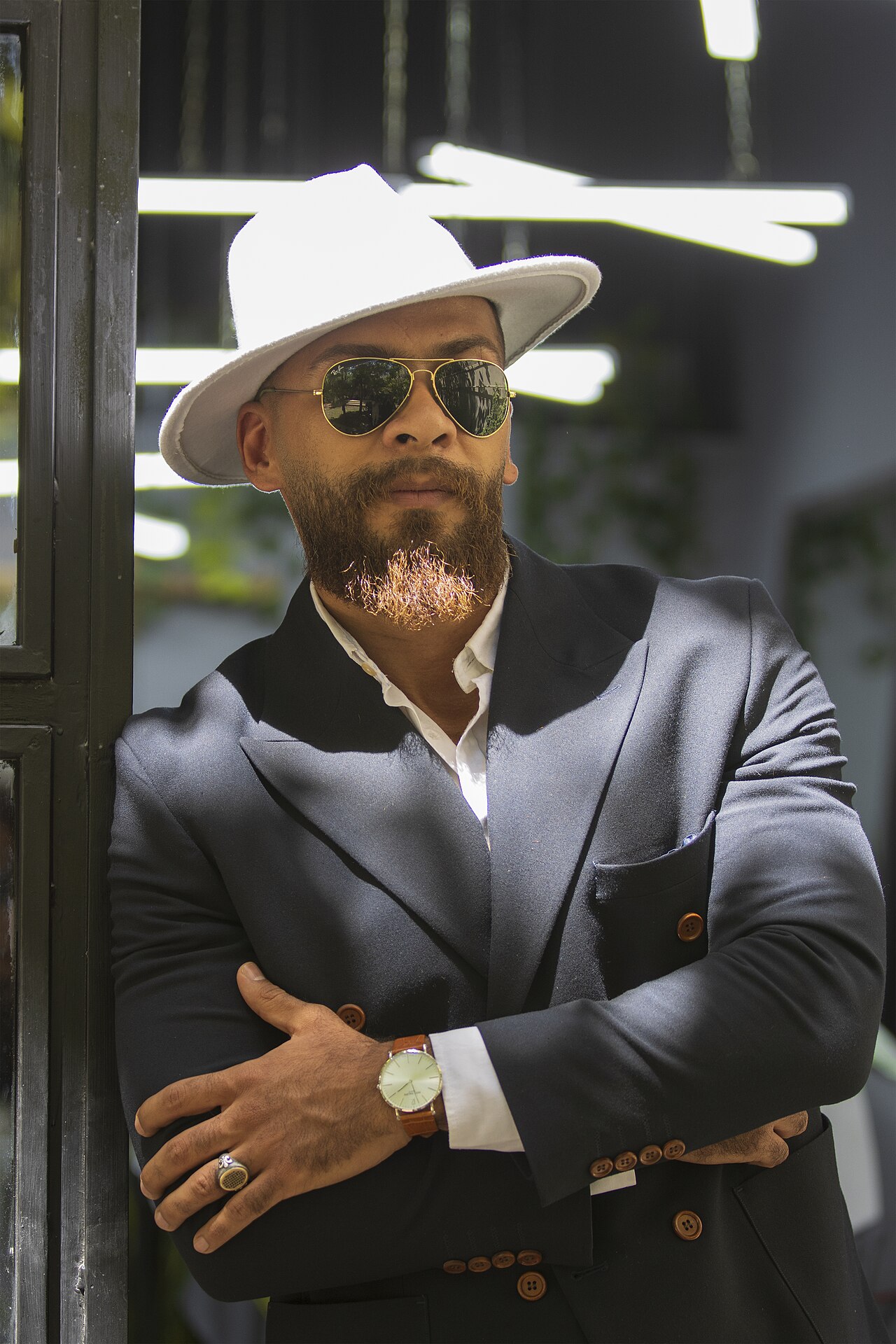
Bender's silence found its chronicler in Gray Barker (1925–1984), a West Virginia journalist who turned one man's fright into a genre. His 1956 book is the founding text of everything that followed.
In They Knew Too Much About Flying Saucers (University Books, 1956), Barker compiled Bender's account and other reports into a coherent narrative, codifying the conventions still recognised today: dark suits and fedoras, black Cadillacs, unannounced home visits by men who knew things they shouldn't, warnings to stop investigating, and a strange, mechanical, 'not quite human' manner.
But the man who built the template was also its weakest joint. The two figures at the root of MIB lore — Bender and Barker — are precisely the two the record cannot trust.
Barker's correspondence, discovered after his death, shows he was aware of hoaxes in the UFO community and may have embellished or fabricated some MIB reports. His unreliability was documented by John Keel and by admitted hoax collaborator John Sherwood, who confessed the partnership in 1998.
And yet the reports did not stop with Barker. Witnesses with no connection to his network kept describing the same visits — which is exactly what makes the phenomenon worth taking seriously as a pattern, whatever its cause.
03Men With Badges, Not From Space
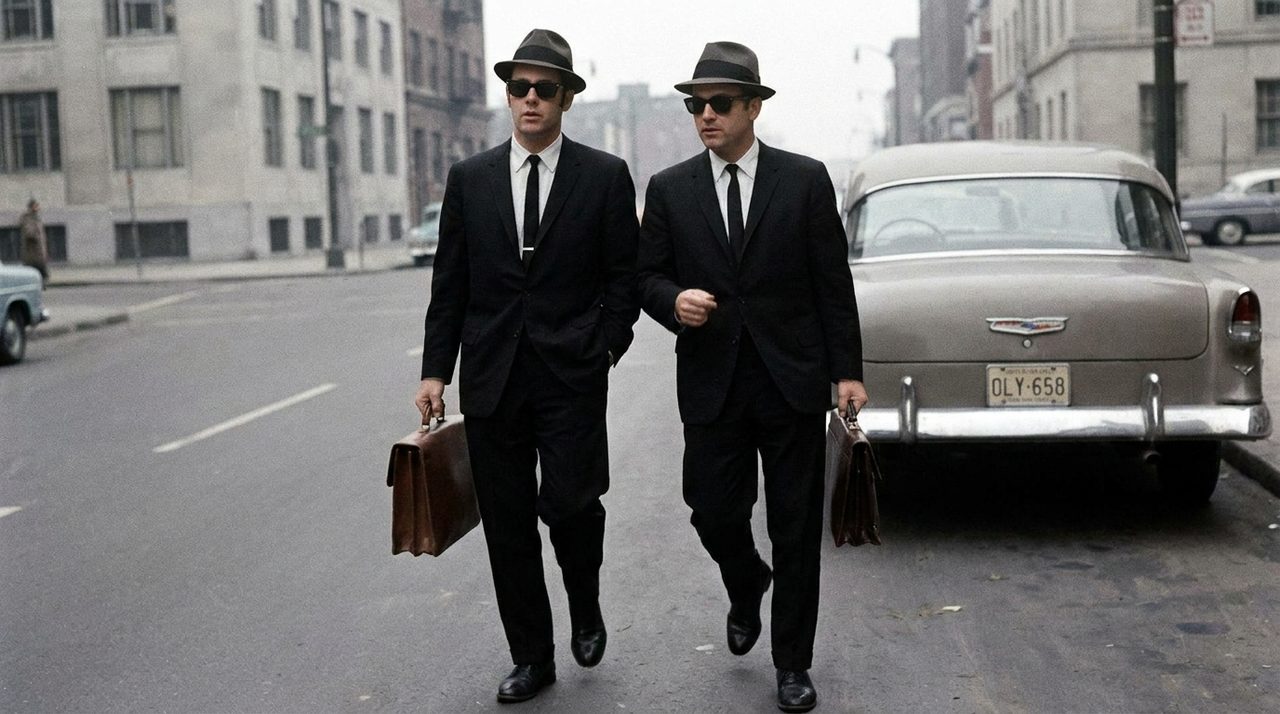
There is a mundane candidate hiding in plain sight. Through the peak MIB years, the United States government really was sending officials — often in suits, often unannounced, sometimes asking witnesses to keep quiet — to the doors of people who reported UFOs.
From 1947 to 1969 the US Air Force ran Projects Sign, Grudge, and Blue Book, which sent personnel to interview civilian witnesses. The FBI under J. Edgar Hoover investigated UFO reports for national-security implications (documented in FOIA-released files), AFOSI interviewed witnesses as part of intelligence work, and the 1953 CIA Robertson Panel recommended monitoring UFO groups for subversive infiltration.
| Program / Agency | Active | Role |
|---|---|---|
| Project Sign | 1947–1949 | First systematic USAF UFO study; interviewed civilian witnesses |
| Project Grudge | 1949–1952 | Successor study with a more skeptical posture |
| Project Blue Book | 1952–1969 | Long-running USAF investigation; personnel visited witnesses to collect testimony |
| FBI | 1947 onward | Hoover directed field offices to probe reports; agents in dark suits and fedoras is documented fact |
| AFOSI | 1950s–1970s | Investigated sightings and interviewed civilians for intelligence and counter-intelligence |
| CIA / Robertson Panel | 1953 | Recommended monitoring ufological organisations for communist infiltration |
It is plausible that a significant share of 'MIB' encounters were routine official interviews, reinterpreted through a paranormal lens by witnesses already primed and unsettled by their sighting.
04The Cases That Kept Coming
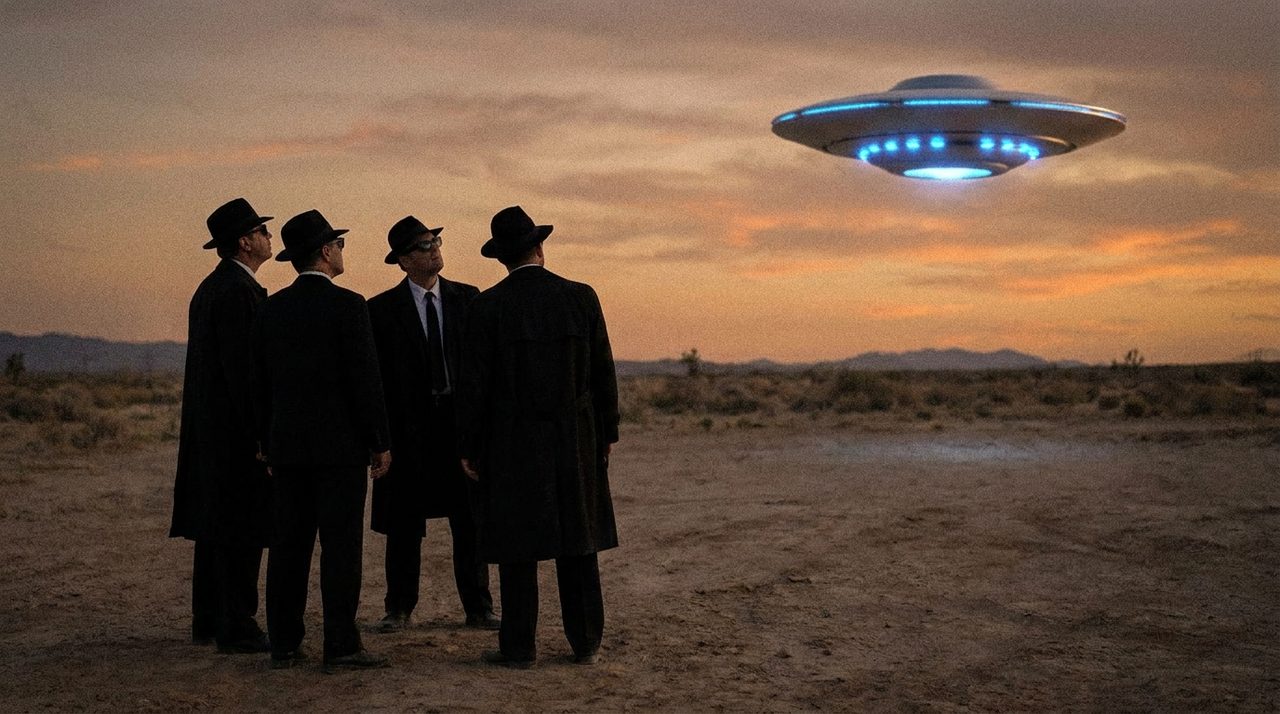
If Barker had simply invented the MIB, the reports should have ended with him. They didn't. A trickle of documented encounters ran on for decades, from named, checkable witnesses.
On September 11, 1976, in Old Orchard Beach, Maine, physician and UFO investigator Dr. Herbert Hopkins reported a visit from a pale, hairless man in a new black suit who appeared to make a coin vanish and told him to destroy his UFO research tapes. Hopkins said the man's lipstick had smeared, suggesting a disguise.
| Witness | Year / Place | Account |
|---|---|---|
| Dr. Herbert Hopkins | 1976 · Old Orchard Beach, ME | Pale visitor in black; coin trick; ordered to destroy research tapes |
| Rex Heflin | 1965 · Santa Ana, CA | Highway inspector's UFO Polaroids taken by men claiming NORAD ties; NORAD denied it; photos returned years later |
| Brazilian witnesses | cataloged 1990 | Threatening visitors to witnesses in remote areas, documented by Jacques Vallée in Confrontations |
What unites these is less a physical description than a structure — an uninvited arrival, uncanny knowledge, a warning, an unsettling exit. That shape is the real clue, and it points somewhere older than the Cold War.
05Trickster, Devil, or Cold-War Nerves
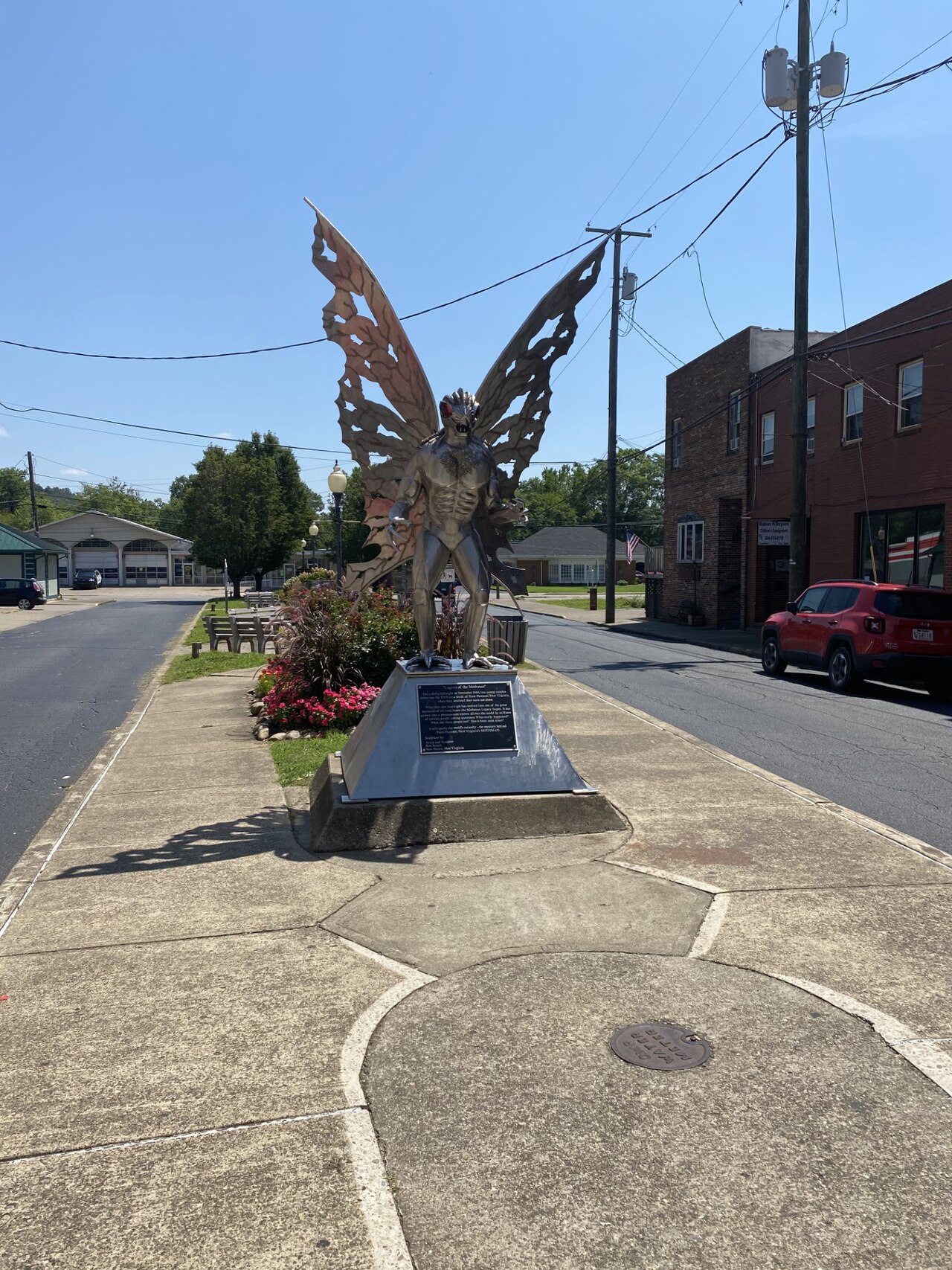
Three serious attempts have been made to explain the pattern without a saucer in sight — one phenomenological, one folkloric, one psychological.
Journalist John A. Keel (1930–2009), who reported his own MIB-type visits while investigating the 1966–67 Mothman events in Point Pleasant, West Virginia, proposed that the MIB are neither agents nor aliens but shape-shifting 'ultraterrestrial' tricksters that take whatever form an era expects — fairies in medieval times, men in black in the Cold War. The idea is unverifiable, but it remains the most developed such framework.
Folklorist Peter Rojcewicz argued in the Journal of American Folklore (1987) that the MIB visit mirrors the structure of encounters with demons, fairies, and the Devil in European tradition — the same sudden arrival, uncanny knowledge, threat, and shaken departure, retold in a modern key.
Historian David Clarke (How UFOs Conquered the World, 2015) situates the MIB in Cold War surveillance dread and McCarthyism: authority figures in dark suits demanding silence were, he argues, the anxiety archetype of the era made flesh.
06Mirage Men — When Agents Lied on Purpose

The most provocative modern reading turns the original story inside out: the men in black were real, but they weren't hiding UFO truth — they were manufacturing UFO nonsense.
Researchers such as Mark Pilkington (Mirage Men, 2010) propose the theory that MIB visits were deliberate government disinformation, meant not to suppress genuine data but to amplify paranoia, discredit ufology by association with bizarre claims, and use the subculture as cover for classified aircraft and signals-intelligence programs. It is an argued interpretation, not an established fact.
The theory has a documented anchor: in the 1980s, AFOSI agent Richard Doty fed fabricated alien material to Albuquerque researcher Paul Bennewitz to stop him correctly identifying classified Air Force technology he had detected near Kirtland Air Force Base. This confirms that agencies did, at least once, actively manipulate a UFO researcher.
Similar 'silencer' figures appear in British, Australian, Scandinavian, and Brazilian cases, and arguably in older lore — the black friars said to hush witnesses of medieval miracles, the dark strangers of fairy tradition who warn against speaking of what one has seen. This suggests an archetype of the enforcer of forbidden knowledge, though the parallel is speculative.
Which makes the phenomenon's final twist the strangest of all. In Lowell Cunningham's 1990 comic and the 1997 Columbia Pictures film with Will Smith and Tommy Lee Jones, the silencers became protectors — heroic agents managing alien contact. The threat that terrified Albert Bender was reborn as a summer blockbuster.
The Men in Black films descend from Cunningham's comic (Aircel, 1990), itself loosely inspired by the lore. They are entertainment, not evidence — no part of the franchise documents real events.
Fast Facts
- Phenomenon
- Dark-suited figures who allegedly visit UFO witnesses to intimidate or silence them
- Origin
- Albert K. Bender & the International Flying Saucer Bureau, Bridgeport CT — shut down Sept 1953
- Founding text
- Gray Barker, They Knew Too Much About Flying Saucers (1956)
- Signature
- Dark suits, fedoras, black Cadillacs, a mechanical or 'not quite human' manner
- Earliest precedent
- Maury Island, June 21 1947 — Harold Dahl's dark-suited warner (widely called a hoax)
- Real basis
- USAF Projects Sign / Grudge / Blue Book (1947–69), FBI, AFOSI, CIA Robertson Panel
- Pop-culture pivot
- Cunningham comic (1990) → 1997 film; silencers reimagined as protectors
The Honest Verdict
Bender's 1953 shutdown, Barker's 1956 book, and decades of real government UFO interviews (Blue Book, FBI, AFOSI, the Robertson Panel) are well-sourced facts.
The most defensible reading is prosaic: many MIB encounters were routine official interviews or hoaxes reinterpreted through fear, a pattern the folklore (Rojcewicz) and Cold-War-anxiety (Clarke) analyses explain without anything paranormal.
Keel's ultraterrestrial trickster and the MIB-as-disinformation theory are unproven; the Bennewitz affair proves one such operation happened, not that MIB in general were staged.
No physical evidence supports MIB as disguised aliens — the 'uncanny' traits fit stress-distorted memory, embellishment, or admitted hoaxing — and the Will Smith films are fiction, not disclosure.
Sources & further reading
Everything above is drawn from our research library on Theories of Anything. Open the full files to check the sourcing and go deeper.
Image credits
- The genre's calling card: a black car with no plates, idling where it has no business being.. Wikimedia Commons. source CC BY-SA 4.0
- Dark suit, black Cadillac, and the fedora that Gray Barker made all but mandatory for a self-respecting Man in Black.. Wikimedia Commons. source CC0
- Point Pleasant's Mothman — the case where John Keel says the men in black came calling on him, too.. Wikimedia Commons. source CC0
- Kirtland's fence line, where a genuine disinformation campaign turned one UFO researcher into a target.. Wikimedia Commons. source Public domain
- Man in a dark suit with a UFO in a field — AI-generated artist's impression; not a documented being or event. AI-generated
- Two men in dark suits with briefcases — AI-generated artist's impression; not a documented event. AI-generated
- Group watching a UFO at dusk — AI-generated artist's impression; not a documented event. AI-generated