Metamaterials & 'Reverse Engineering'
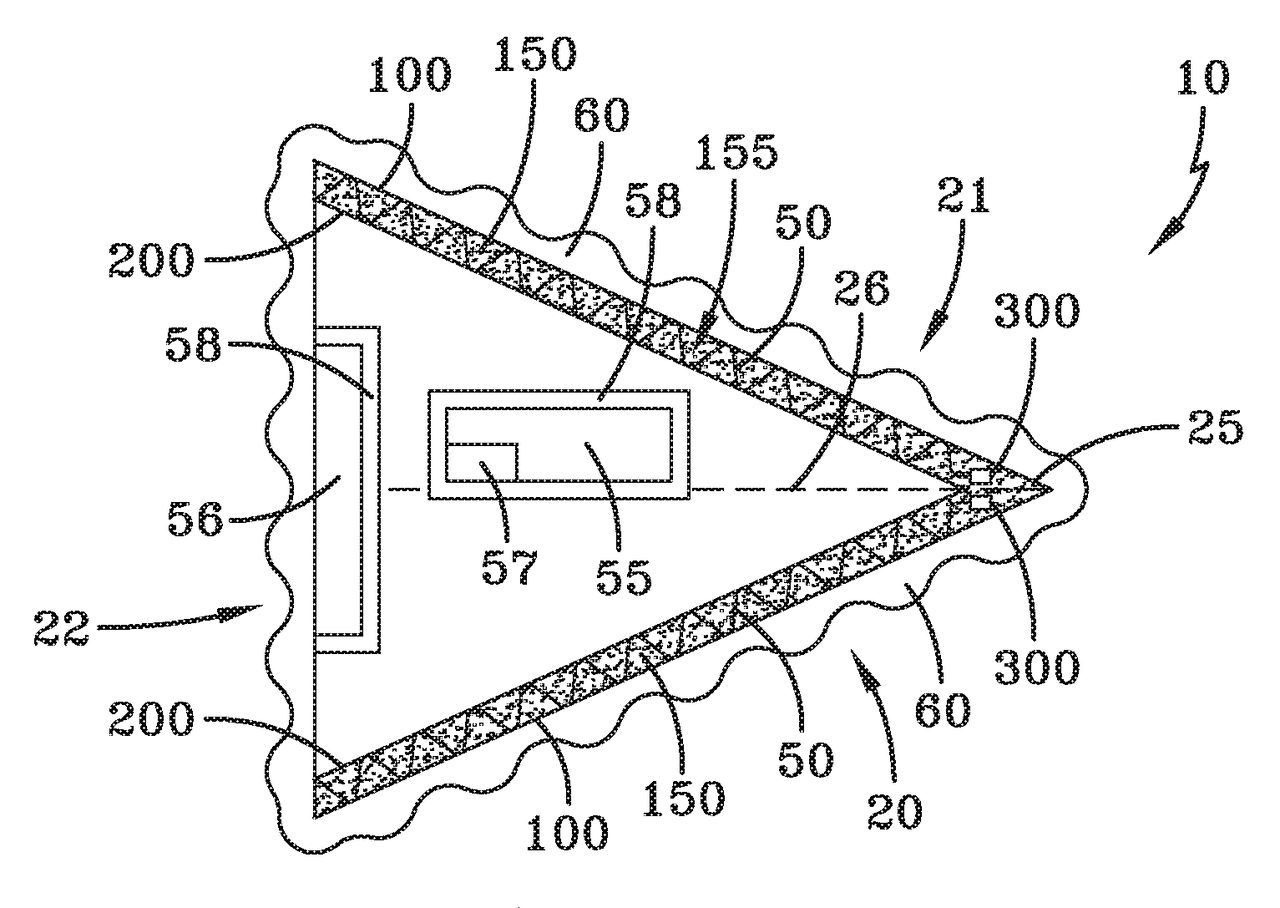
Somewhere in the United States Patent and Trademark Office sits a granted patent for a 'Craft Using an Inertial Mass Reduction Device,' filed by a US Navy engineer, describing a spaceship that sheds its own inertia using high frequency gravitational waves. When the patent office balked, the Navy's own Chief Technology Officer wrote in to insist the invention was 'operable.' Somewhere else, in a lab, sits a layered sliver of bismuth and magnesium alloy that arrived anonymously at a radio host's studio in the 1990s and got treated, for two decades, as a possible piece of a crashed craft. These things are real. The documents exist, the patents are genuine, the sample was analyzed by actual government laboratories. That is the honest and genuinely strange core of the UAP 'reverse engineering' story: not a hangar full of saucers, but a paper trail and a box of metal. The question this article asks is the only one that matters. What do those real things actually prove? The answer is far less than the headlines promise, and it is not quite nothing. Here it is, tier by tier.
Most of this subject is testimony: a pilot saw a thing, a sensor caught a thing, a witness swears to a thing. This corner of it is different, and that is why it is worth taking seriously. Here there are objects you can point to. A granted patent with a number. A layered piece of metal sitting in a laboratory. Government contracts with dollar figures attached. The evidence for UAP propulsion being understood, or recovered, or reverse-engineered is not a story someone told. It is a small pile of real documents and one real box of metal, and you can check every item on it.
So this article does something simple and, in this field, almost never done. It separates two questions that the whole 'reverse engineering' narrative depends on quietly fusing. First: is the thing real? The patent, the sample, the contract, the laboratory report. Very often the answer is yes. Second, and completely different: does the real thing actually prove what people say it proves, a working anti-gravity engine, an alien alloy, a captured technology? There the answer is almost always no. Keep those two apart and the evidence stops being a smoking gun and becomes something more honest and, frankly, more interesting: a genuine paper trail that reaches all the way up to the thing everyone wants, and stops one crucial step short of it.
01The Physics Is Not Forbidden. That Is the Whole Trap.
The place to start is not a saucer but an equation. In 1994 the Mexican physicist Miguel Alcubierre, writing in the journal Classical and Quantum Gravity, showed that Einstein's field equations permit a strange and specific solution: a 'warp bubble' that contracts spacetime in front of a craft and expands it behind, carrying the craft along a wave of distorted space so that it can travel effectively faster than light without ever locally breaking the speed limit of special relativity. On paper, it works. That is not a fringe claim. It is peer-reviewed general relativity, and it is Tier 1.
There is a catch the size of a star. Alcubierre's bubble runs on matter with negative energy density, so-called exotic matter, and his original version needed an amount of it comparable to the mass of a planet or more. The refinements since have chipped that mountain down: Van Den Broeck brought the requirement to roughly one solar mass in 1999, NASA's White proposed a modified 'thick shell' geometry in 2011 that cut it to something like 700 kilograms of exotic matter, Lentz proposed a 'soliton' configuration in 2021 that in principle needs only positive energy, and Bobrick and Martire published a general classification of physically possible warp geometries the same year. Every one of these is real, published work. Every one of them is still pure theory: no laboratory has ever produced a macroscopic warp bubble of any kind.
What this establishes matters for everything that follows. The physics of apparent anti-gravity propulsion is not prohibited by general relativity. It is merely, at the moment, prohibitively expensive in energy and entirely unbuilt. The deep theoretical dive into how such a drive might actually work, the warp metrics and traversable wormholes and negative-energy geometries in full, belongs to a companion piece on this site still to be written; here the warp drive is only the doorway. The point is that the door is not locked. It is just extraordinarily heavy.
Now the government part. The Pentagon's Advanced Aerospace Threat Identification Program, AATIP, commissioned 38 Defense Intelligence Reference Documents, DIRDs, through a Defense Intelligence Agency contract with Bigelow Aerospace Advanced Space Studies. Taken together they are the largest documented US government investment in advanced-propulsion and exotic-physics research tied to UAP. The titles read like a wish list for a science-fiction engine room: Hal Puthoff on vacuum and spacetime-metric engineering, Richard Obousy on warp drive and dark energy, Eric Davis on traversable wormholes and negative energy, alongside studies of negative-mass propulsion, invisibility cloaking, and fusion.
Here is the deflation. The DIRDs were literature reviews and theoretical analyses, not experimental results. They show what the US intelligence community thought was worth understanding about how such craft might work, not that any such craft exists or has ever been reproduced. Their quality is uneven: some, like Puthoff's and Obousy's, are competent surveys consistent with published physics; others wander into open speculation; and none was ever peer-reviewed outside the contract that paid for it. The DIRDs are the umbrella that produced this whole research landscape, and they produced papers, not prototypes.
02The Navy's UFO Patents
So the theory is permissible and the government was interested. That combination is exactly the soil in which the most concrete artifacts in this entire subject grew: not sightings, not testimony, but filings you can pull up in a public database.
Between 2016 and 2019, a US Navy engineer named Dr. Salvatore Cezar Pais, working at the Naval Air Warfare Center Aircraft Division, filed a series of patents with the US Patent and Trademark Office that read like something torn out of the DIRDs and handed to a patent attorney. The flagship, pictured at the top of this page, is US Patent 10,144,532, granted in 2018: 'Craft Using an Inertial Mass Reduction Device.' It describes a vehicle that reduces its own inertial mass using 'high frequency gravitational waves' produced by 'an accelerated vibration or rotation of electrically charged matter.' If that sounds like a description of exactly the anti-gravity performance UAP witnesses report, that resemblance is the entire reason anyone paid attention.
| The Patent | Status | What It Claims |
|---|---|---|
| Craft Using an Inertial Mass Reduction Device | US Patent 10,144,532, granted 2018 | A craft whose inertial mass is reduced by high frequency gravitational waves, generated by the accelerated vibration or rotation of electrically charged matter |
| High Frequency Gravitational Wave Generator | US Patent Application 2019/0295733 | A device to generate high frequency gravitational waves directly |
| Electromagnetic Field Generator and Method to Generate an Electromagnetic Field | US Patent 10,135,366, granted 2018 | A method to generate a high-energy electromagnetic field |
| Piezoelectricity-Induced Room-Temperature Superconductor | US Patent Application 2019/0348597 | A room-temperature superconductor induced by piezoelectricity |
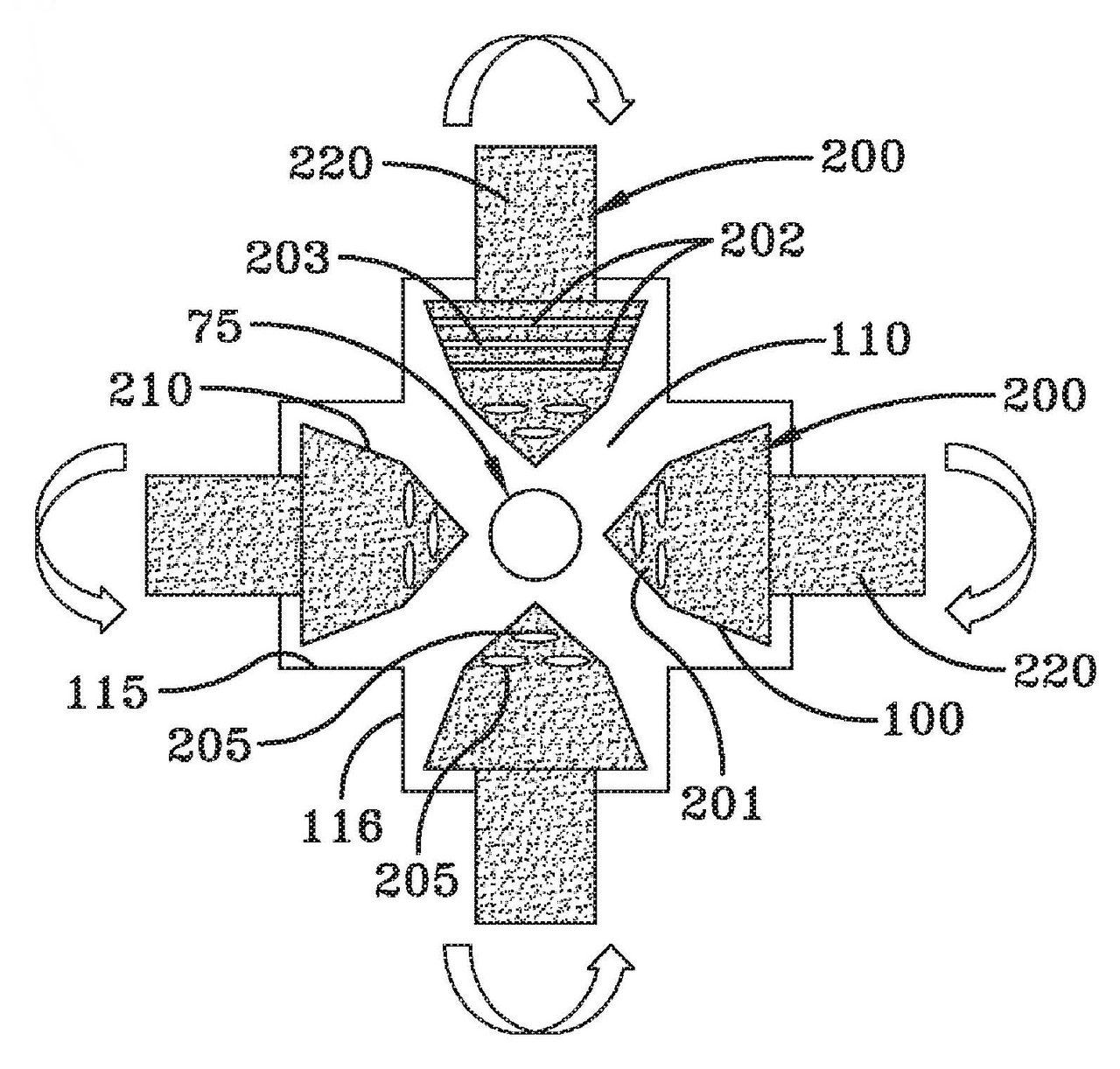
The inertial mass reduction craft was never filed alone. Pais's portfolio interlocks into a single speculative propulsion concept across four filings: alongside the craft patent sit the 'High Frequency Gravitational Wave Generator' drawn here, an 'Electromagnetic Field Generator' granted as US Patent 10,135,366, and a 'Piezoelectricity-Induced Room-Temperature Superconductor.' Read together they sketch a machine that generates gravitational waves and shapes intense fields to move without propellant. The research file's own careful framing is that these described technologies, if they actually functioned, would produce effects consistent with reported UAP performance. If.
The patents drew real attention for a reason that has nothing to do with their physics and everything to do with who backed them. When the patent office initially rejected the inertial mass reduction application as implausible, the Navy's Chief Technology Officer, Dr. James Sheehy, personally wrote to the examiner insisting the invention was 'operable' and was being pursued as part of the Navy's research. A sitting Navy CTO vouching to a patent examiner that an anti-gravity craft is real is genuinely unusual, and that letter is what lifted these filings out of the crank pile and into the news.
Now the cold water. A patent is not a working device, and it was never meant to be. Patents require novelty and a description of how something would work in principle; they require no experimental validation whatsoever, and the office grants them without ever building the thing. The physics in the Pais patents is broadly regarded by mainstream physicists as speculative to implausible, and The War Zone, which investigated them for years, reported that every physicist it contacted said there was no scientific reality to the jargon in the filings. The Navy's intervention has a mundane possible reading too: defensive patenting, locking in a claim so that an adversary cannot patent the idea first, which is a strategy that has nothing to do with whether the device works.
And then the Navy actually tested it, which is the part the headlines almost always skip. From October 2016 to September 2019, the Naval Air Warfare Center Aircraft Division spent about 508,000 dollars, roughly 90 percent of it on researcher salaries, testing the 'Pais Effect' behind the patents, specifically a 'High Energy Electromagnetic Field Generator.' The result was not a breakthrough. NAWCAD's own communications director, Timothy Boulay, put it on the record: "When NAWCAD concluded testing in September 2019, the 'Pais Effect' could not be proven." No further research was conducted, he confirmed, and the project transitioned to no other government or civilian organization. It did not get buried or reassigned. It ended.
A separate, later review reached the same place. In 2023 the All-domain Anomaly Resolution Office examined Pais's work and reportedly found no experimental results confirming that any of it functions. Pais has published legitimate peer-reviewed papers on charged-particle dynamics; he has never published a demonstration of inertial mass reduction, for the plain reason that there is not one to publish.
03Art's Parts: The Metal That Fell Off a Radio Show
If the patents are this subject's paper trail, this is its one famous piece of hardware. Since the 1990s, a small layered sample of metal, alternating micron-thin layers of bismuth and a magnesium-zinc alloy, has circulated in UFO research as possible debris from a crashed craft. Its origin story is almost too on the nose: it arrived anonymously in the mail to the radio host Art Bell, which is why researchers have called it, ever since, 'Art's Parts.'
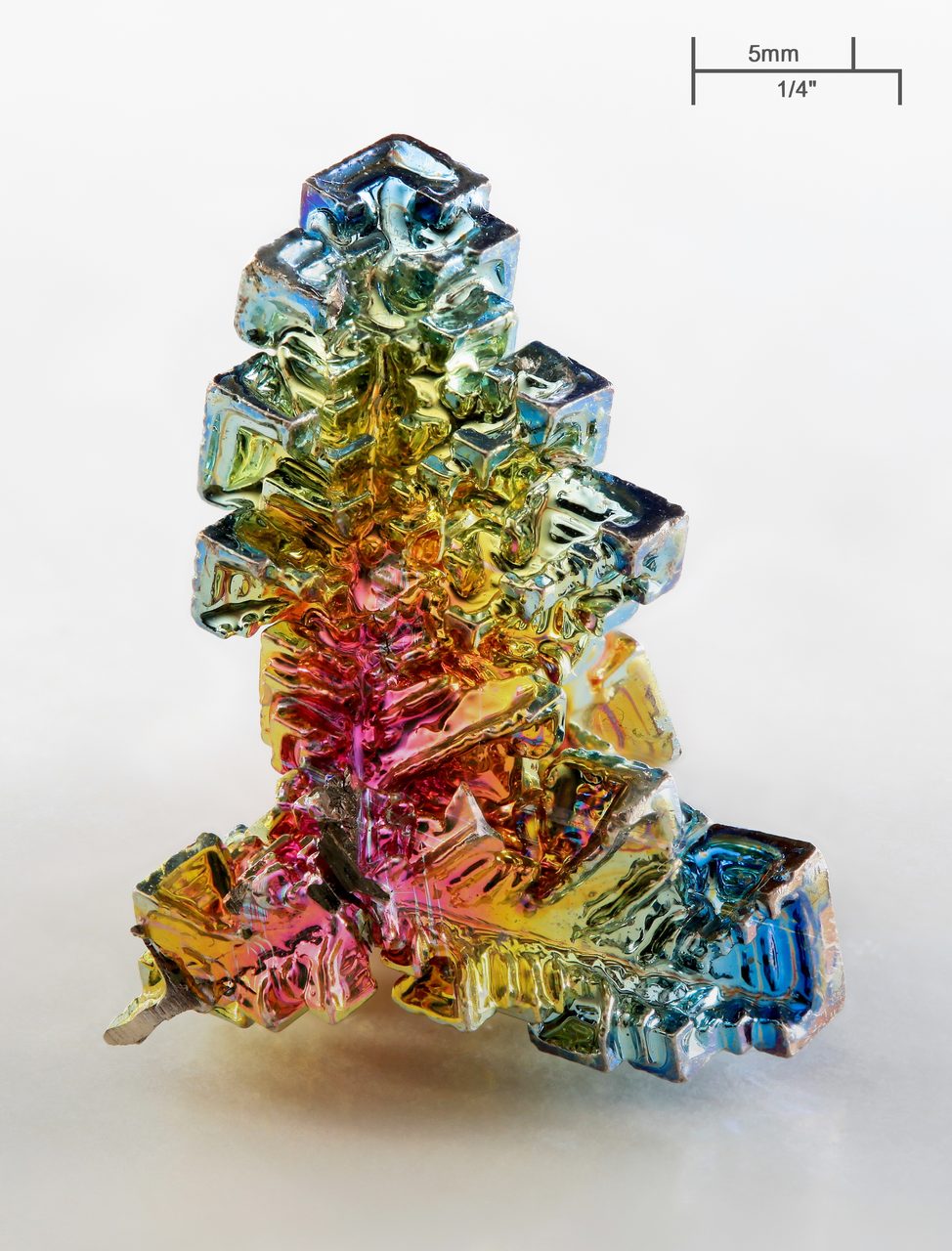
To The Stars Academy, a private UFO research company, acquired the sample in 2017 and submitted it for analysis. Hal Puthoff described it as a 'metamaterial,' an engineered material whose layered structure gives it electromagnetic properties not found in nature. Puthoff had in fact examined it before, reportedly as early as 2012, and found that it produced no interesting or anomalous result under applied fields, but he recommended one specific further test: whether the sample could function as a terahertz waveguide, channeling very high frequency radiation in a way that would hint at deliberate exotic engineering.
The broader lab verdict was underwhelming even before that test was ever run. Analysis by multiple laboratories, including the US Army Research Laboratory, characterized the sample as exactly what it looks like: bismuth and magnesium-zinc alloy in layered form. The structure is genuinely unusual and matches no known commercial product, but that is a long way from anomalous. It can be produced by ordinary metallurgical processes such as melt spinning. No anti-gravity, no waveguide effect, no anomalous physical property of any kind was ever demonstrated in a published experiment.
Then, in 2022, the Pentagon's All-domain Anomaly Resolution Office did the thing that should have been done all along: it commissioned Oak Ridge National Laboratory, a federal laboratory with no stake in the answer, to run a proper materials analysis. Oak Ridge finished in April 2024 and released its findings that July, and they deserve to be stated plainly, because they are the strongest, most authoritative word yet on the most famous piece of alleged UFO metal in the world. The sample's magnesium and lead isotope ratios fall within ordinary terrestrial ranges. Its lead signature matches 'common lead' found naturally on Earth, distinctly separate even from lunar material. It cannot function as a terahertz waveguide, because its bismuth layers are contaminated with lead and lack the pure single-crystal structure such a function would require, so Puthoff's one open test came back negative. Oak Ridge's own conclusion is that the sample is most likely 'a test object, a manufacturing product or byproduct, or a material component of aerospace performance studies.' In a word: mundane.
Step back and the sample's problem was structural from the very start. It has no verified chain of custody linking it to any actual UAP event; it is a piece of metal that showed up in the mail. Even before Oak Ridge, that missing provenance capped how much it could ever prove. The 2024 analysis simply closed a door that was already barely ajar. The isotopic anomaly some researchers had genuinely hoped to find did not pan out, and in honest science that is not a disappointment to bury. It is a result, and a good one.
04Spinning Superconductors: Ning Li and Podkletnov
Spin a superconductor fast enough and, some physicists have argued, you might do something to gravity itself. In the 1990s Dr. Ning Li, a physicist at the University of Alabama in Huntsville, published papers proposing exactly that: a rapidly rotating superconducting disc could, through a mechanism she described as the gravitomagnetic coupling of Cooper pairs, produce a gravitational shielding or modification effect. This was serious theoretical work in real journals, not a garage experiment.
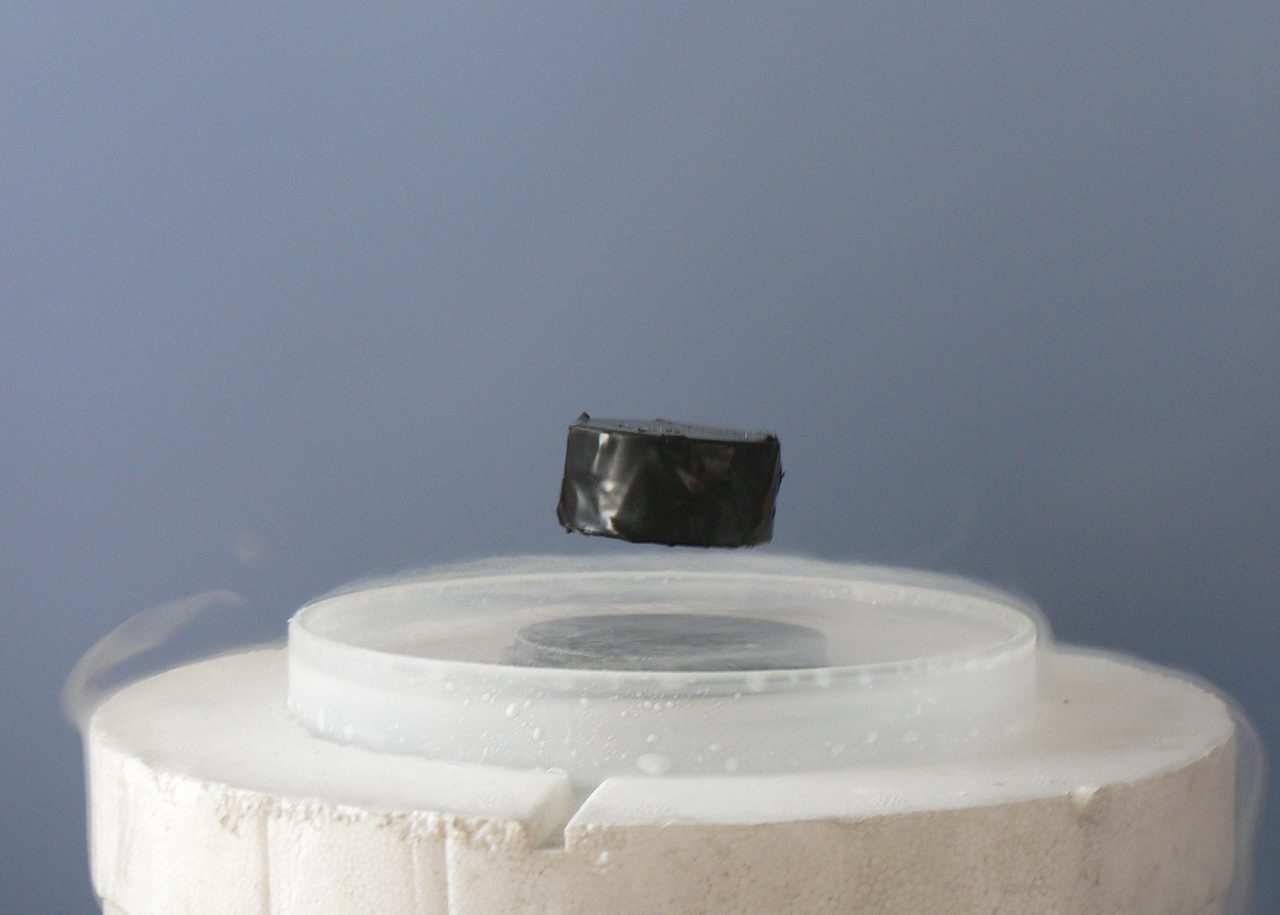
The story then takes the turn that keeps it alive in UFO circles. Around 2000 to 2002, Li received a Department of Defense contract to pursue the experimental side through her company, AC Gravity, LLC. The results were never published. Li ceased public activity after the contract ended, and the silence has fed two decades of speculation that her work was classified rather than simply abandoned. Nobody outside the program can currently say which it was.
She was not alone. In 1992, Eugene Podkletnov, working at Tampere University of Technology in Finland, reported that a small non-magnetic sample suspended above a rotating superconducting disc lost a measurable fraction of its weight: between 0.05 and 0.3 percent for a 5.48-gram sample, depending on how fast the disc spun. It is a specific, checkable claim. It has also never been independently replicated, despite multiple attempts, including one by NASA's Marshall Space Flight Center in the early 2000s that returned null results.
This is a legitimate, if controversial, corner of experimental physics, not pseudoscience. But legitimacy is not confirmation. Without a single independent replication, and with the key experimental work unpublished, the whole Li and Podkletnov line has lain dormant since the early 2000s, a genuinely interesting question that nobody has managed to answer either way.
05Electrogravitics: A Cautionary Tale With a Clean Ending
The dream of coupling electricity to gravity is older than the modern UFO era. In the 1950s and 1960s several US aerospace companies, among them Douglas Aircraft, Convair, and Lear, chased 'electrogravitics,' a proposed link between electromagnetic and gravitational fields. A run of semi-classified 'Gravity Research Group' reports, since declassified, documents just how seriously the idea was taken inside the industry.
Its central figure was Thomas Townsend Brown, who demonstrated that a high-voltage capacitor appeared to produce a small anomalous thrust, an effect that came to be called the Biefeld-Brown effect. Brown's demonstrations were real and repeatable, they drew genuine military interest, and he worked with several classified programs. His 1960 US Patent 2,949,550, 'Electrokinetic Apparatus,' is the primary document behind the whole electrogravitics legend.
And here is why this is the single most useful cautionary tale in the entire field. For decades the Biefeld-Brown thrust was cited as possible evidence of an electric road to anti-gravity. Then, in 2004, the physicist Martin Tajmar built a dedicated experiment to isolate the effect, and when he properly controlled for corona discharge and ionic wind, the movement of charged air molecules around the high-voltage electrodes, the thrust vanished. Not reduced. Gone. The Biefeld-Brown effect is ionic wind, ordinary electrostatics pushing on air, and not a coupling to gravity at all.
That is the pattern this whole subject should be read against. A real, repeatable, government-interesting effect, pursued for half a century, turned out under one careful controlled experiment to be completely mundane. The electrogravitics story is genuinely important, but not for the reason its fans think. It is a worked example of how far real institutional interest can run ahead of a real physical effect, which is precisely the shape of the concern hanging over the Pais patents and everything else here.
06The Real Physics Underneath the Hype
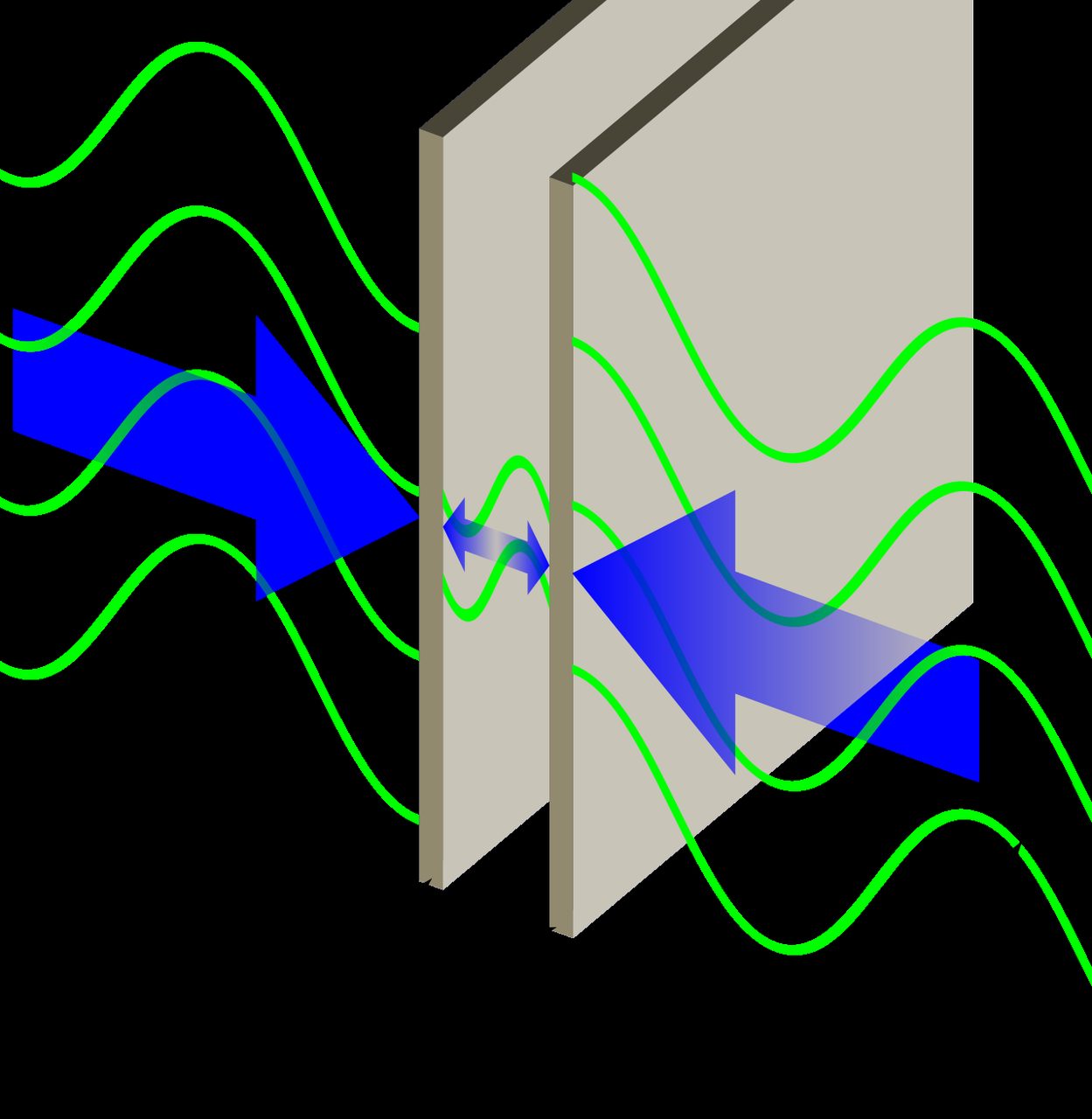
Underneath all the speculation there is a real, strange, settled piece of physics, and it deserves to be told straight. The Casimir effect, predicted in 1948 and first cleanly measured by Lamoreaux in 1997, is genuine: place two uncharged conducting plates a fraction of a micron apart and the quantum vacuum between them pushes them together. Empty space is not empty, and it exerts a measurable force. This has been confirmed repeatedly and is not in any doubt.
But look at the size of it. The Casimir force at those separations is on the order of nanonewtons, billionths of a newton. To turn that into something that could lift a craft, you would need to amplify the effect by many orders of magnitude, and no one has identified even a theoretical pathway to doing so, let alone demonstrated one. The distance between 'real quantum force' and 'propulsion' here is not a gap. It is a chasm with no bridge drawn on any blueprint.
This is where 'vacuum engineering' lives. The idea of manipulating the quantum vacuum to extract energy or produce thrust is a legitimate area of theoretical physics, and figures associated with AATIP, Puthoff and Davis among them, have proposed that advanced UAP propulsion might exploit vacuum energy in ways not yet understood. The mathematics has been explored in real journals, by Puthoff in 1989, by Forward, and by Cole and Puthoff in 1993. What none of those papers provides is a practical extraction mechanism, and the thermodynamic constraints on pulling usable energy from the vacuum remain unresolved and may turn out to be fundamental.
There is a specific correction the research file leaves out, and honesty requires putting it back in. Puthoff's foundational 1989 paper, which modeled gravity itself as a force arising from vacuum zero-point fluctuations, was the subject of a published 1993 Comment by the physicist Daniel Cole identifying a serious computational error. Corrected, the result no longer describes gravity at all, and the force it predicts is negligible. The single most-cited theoretical support for the idea that 'gravity is a vacuum effect we might one day engineer' was quietly undercut in the peer-reviewed literature decades ago, and the popular version of the story never caught up.
So the honest status of the zero-point propulsion idea is this: the vacuum energy is real, the engineering is not, and any claim that UAP 'run on zero-point energy' is untestable until someone specifies the actual mechanism. Right now nobody has.
07Eric Davis, Wormholes, and a Word to the Times
One more government-program figure belongs here, briefly. Dr. Eric Davis, of EarthTech International, authored the AATIP DIRD on 'Traversable Wormholes, Stargates, and Negative Energy,' a review of Thorne-Morris wormhole physics that is theoretically sound within general relativity. The practical obstacles, the same negative-energy requirements and stability problems that haunt the warp drive, remain entirely unresolved. The deep treatment of wormhole propulsion, what a real theory of it would actually have to explain, belongs to a companion piece on this site still to come. Here Davis matters for a different reason.
In 2020, Davis told The New York Times, on the record, that he had briefed Congressional staffers about 'off-world vehicles not made on this earth.' The statement generated enormous attention. It has never been substantiated by any physical evidence, and a claim of that magnitude, from a credentialed physicist inside the program, resting entirely on his word with nothing material behind it, is a near-perfect miniature of this whole subject: extraordinary assertions, real institutional settings, and an empty table where the recovered craft should be sitting.
08The Bar Any Real Answer Has to Clear
Strip away the individual cases and three plain objections govern all of it, and the research file lays them out as its own.
Conservation laws come first. Any real propulsion system, however exotic its geometry, must obey conservation of energy and momentum. General relativity does permit spacetime geometries like Alcubierre's that appear to sidestep ordinary Newtonian mechanics, but every one of them requires exotic energy conditions that have never been produced at any macroscopic scale. The loophole is real on paper and has never once been opened in a lab.
Patents come second, and the point cannot be repeated too often: a patent describes a theoretical device, not a working one. Patent law requires no experimental validation, so the existence of the Pais filings, or any filing, is evidence that someone described an idea, and nothing more. A granted patent for a warp craft carries exactly the evidentiary weight of a granted patent for a perpetual-motion machine, of which the office has issued a great many.
And the burden of proof comes last. The claim that UAP propulsion has been understood, recovered, or replicated is an extraordinary one, and it calls for extraordinary evidence: a working device, repeatable experimental results, or recovered technology with a verified provenance. None of those has ever been presented publicly. Not once, by anyone.
09The Two Claims the Record Refuses
That leaves two claims that go further than the evidence can follow, and the research file marks both as debunked.
The first is the grand suppression story: that working anti-gravity propulsion was built in the 1950s under programs like Project Winterhaven or Boeing's Gravity Research Group and has been hidden ever since, for seventy years and counting. It does not hold. The declassified documents from exactly these programs show theoretical interest and preliminary research, an industry taking an idea seriously, and not a working craft locked in a hangar. [DEBUNKED as stated]
The second is its cousin: that working zero-point or free-energy devices have been invented and are being suppressed by energy-industry interests. The narrative overlaps constantly with UAP propulsion talk, and it has no supporting evidence whatsoever. Every 'free energy' device ever publicly demonstrated has been debunked through conventional physics, usually as measurement error or an unnoticed ordinary power source. [DEBUNKED]
| The Artifact | Is It Real? | What It Actually Shows |
|---|---|---|
| The Alcubierre warp metric (1994) | Yes, peer-reviewed physics | A valid solution of Einstein's equations that needs exotic negative energy; pure theory, no bubble ever built |
| The 38 AATIP DIRDs | Yes, real government documents | Literature reviews and theory, not experiments; never peer-reviewed outside the contract |
| The Pais patents (2016 to 2019) | Yes, genuine USPTO filings | Devices described in principle; the Navy's own 508,000-dollar test could not prove the effect |
| The Art's Parts sample | Yes, a real physical object | Ordinary terrestrial isotopes, no terahertz function; Oak Ridge calls it a mundane manufacturing artifact |
| Ning Li and Podkletnov's results | Yes, published claims | Never independently replicated; NASA got null results; dormant since the early 2000s |
| Townsend Brown's thrust | Yes, a demonstrated effect | Ionic wind, not gravity; Tajmar found zero thrust once corona discharge was controlled for |
| The Casimir effect | Yes, settled physics | A real but nanonewton-scale vacuum force; no known path to scale it up to propulsion |
Fast Facts
- The Navy's 'UFO' Patents
- Dr. Salvatore Pais, an engineer at the Naval Air Warfare Center Aircraft Division, filed four patents from 2016 to 2019, including 'Craft Using an Inertial Mass Reduction Device' (US Patent 10,144,532). They describe devices in principle; a patent is not a working machine.
- The Navy Vouched For Them
- When the patent office balked, the Navy's Chief Technology Officer, Dr. James Sheehy, wrote in calling the work 'operable.' That may reflect defensive patenting, blocking rivals from filing first, as much as any confidence it works.
- What The Testing Found
- The Naval Air Warfare Center spent about 508,000 dollars from 2016 to 2019 testing the underlying 'Pais Effect.' Its own spokesman, Timothy Boulay, stated the effect could not be proven, and no further research was conducted.
- Art's Parts
- A layered bismuth and magnesium-alloy sample sent anonymously to radio host Art Bell in the 1990s, later acquired by To The Stars Academy and floated for years as possible recovered craft material.
- The 2024 Oak Ridge Verdict
- The Pentagon's AARO had Oak Ridge National Laboratory analyze the sample. Result: ordinary terrestrial isotope ratios, lead matching common terrestrial lead, no terahertz function, most likely a mundane manufacturing byproduct or aerospace-materials test object.
- Ning Li And Podkletnov
- 1990s claims that spinning superconductors could modify gravity. Never independently replicated; NASA's own attempt got null results; the field has been dormant since the early 2000s.
- The Electrogravitics Lesson
- Townsend Brown's 1950s high-voltage 'anti-gravity' thrust drew real military interest. In 2004, Martin Tajmar found it vanished entirely once ionic wind was controlled for. Not gravity, just electrostatics.
- The Bottom Line
- The documents, patents, and samples are genuinely real. None of them demonstrates a working exotic-propulsion device, and the strongest recent tests point the other way.
So Has Anyone Reverse-Engineered a UFO?
Start with what is not in dispute, because it is more than you would expect. Miguel Alcubierre really did publish a valid warp-drive solution to Einstein's equations in 1994, so 'anti-gravity' propulsion is not forbidden by physics, only staggeringly expensive in energy. The 38 AATIP Defense Intelligence Reference Documents are real government-commissioned papers. Salvatore Pais's patents, the inertial mass reduction device among them, are genuine USPTO filings, and the Navy's Chief Technology Officer really did write to call the work 'operable.' The Casimir effect is settled, repeatedly-measured physics. All of that is Tier 1, and this article softens none of it. The catch is what none of it establishes: a real solution, a real patent, and a real memo are documents, not a demonstration.
A tier down sit the credible-but-unproven experimental threads. Ning Li's rotating-superconductor gravity theory and Eugene Podkletnov's reported weight loss above a spinning disc are real, published, and were taken seriously enough that the Department of Defense funded Li and NASA tried to replicate Podkletnov, yet neither has ever been independently reproduced. Townsend Brown's mid-century electrogravitics drew genuine military interest. Eric Davis's wormhole work is sound general relativity on paper. These are legitimate lines of inquiry. Not one has produced a repeatable anomalous result, and most have been dormant for two decades.
The physical evidence the whole reverse-engineering story leans on stays speculative, and one piece of it just got weaker. The Art's Parts bismuth-magnesium sample is a real, unusual object with no verified chain of custody to any UAP event, and in 2024 Oak Ridge National Laboratory found its isotopes ordinary, its lead signature common terrestrial lead, and its structure incapable of the terahertz-waveguide function that was its last exotic hope. The idea that UAP tap zero-point energy is untestable without a named mechanism, and the one foundational paper often cited for it, Puthoff's 1989 zero-point-force calculation, was shown in a 1993 published Comment to contain an error that, corrected, leaves the force negligible.
And two claims get refused outright, because the research file refuses them. The story that working anti-gravity craft were built in the 1950s under programs like Project Winterhaven or Boeing's Gravity Research Group and buried for seventy years does not survive contact with the declassified record, which shows theoretical interest and preliminary research, never a working device. [DEBUNKED as stated] And the claim that working zero-point or free-energy machines exist and are being suppressed by energy-industry interests has no evidence behind it; every publicly demonstrated 'free energy' device has been explained by conventional physics. [DEBUNKED] The paperwork is real. The engine is not, or at least no one has ever shown you one that works.
Here is something you almost never get to say about this subject: two of its real open questions just got answered. The research file behind this article lists five, and two of them have quietly closed since it was written. What happened with the Pais experiments at the Navy's own warfare center? They ran, for three years and half a million dollars, and the effect could not be proven. Can the Art's Parts sample be shown to have anomalous properties? Oak Ridge looked, and the answer is no, it is ordinary terrestrial metal. That is what honest progress actually looks like, not a cover-up cracked open, but a hopeful hypothesis tested and let go. The rest stays genuinely open. Can a warp geometry be built from positive energy alone, the way Lentz proposed? What truly became of Ning Li's DoD-funded research, classified or simply abandoned? And do any of the 38 DIRDs rest on classified experimental data that never made it into the public summaries? Nobody outside a few cleared offices can say. So the patents are real, the sample is real, the programs were real, and not one of them has yet produced the thing everyone is actually asking about: a working engine, out in the open, that anyone can test. Until one exists, the honest question is not 'how do they fly,' but the smaller and sharper one underneath it. What would it actually take to convince you, and has anyone shown you that yet?
Sources & further reading
Everything above is drawn from our research library on Theories of Anything, which is where we worked from. The papers, reports and primary records listed beneath them are where you can check us independently.
Image credits
- US Patent 10,144,532 diagram, 'Craft Using an Inertial Mass Reduction Device' patent drawing by Salvatore Cezar Pais (inventor), uploaded by Philafrenzy, via Wikimedia Commons. Public domain (a work of the U.S. federal government) Source.
- US Patent Application 2019/0295733 drawing, 'High Frequency Gravitational Wave Generator' patent drawing by Salvatore Pais (inventor), via Wikimedia Commons. Public domain (a work of the U.S. federal government) Source.
- Diagram of the Casimir effect diagram by Wikimedia Commons user Emok, via Wikimedia Commons. Creative Commons Attribution-ShareAlike 3.0 Unported (CC BY-SA 3.0), or GNU Free Documentation License 1.2 or later Source.
- The Meissner effect: a magnet levitating above a cooled superconductor photograph by Mai-Linh Doan, via Wikimedia Commons. Creative Commons Attribution-ShareAlike 3.0 Unported (CC BY-SA 3.0), or GNU Free Documentation License 1.2 or later Source.
- A laboratory-grown bismuth crystal (shown for material reference only) photograph by Alchemist-hp and Richard Bartz, via Wikimedia Commons. Creative Commons Attribution-ShareAlike 3.0 (Unported and Germany) Source.
- Card crop of US Patent 10,144,532 diagram, 'Craft Using an Inertial Mass Reduction Device' patent drawing by Salvatore Cezar Pais (inventor), uploaded by Philafrenzy, via Wikimedia Commons. Public domain (a work of the U.S. federal government) Source.


