Neanderthals Are Still Inside You: The Two Percent That Never Left
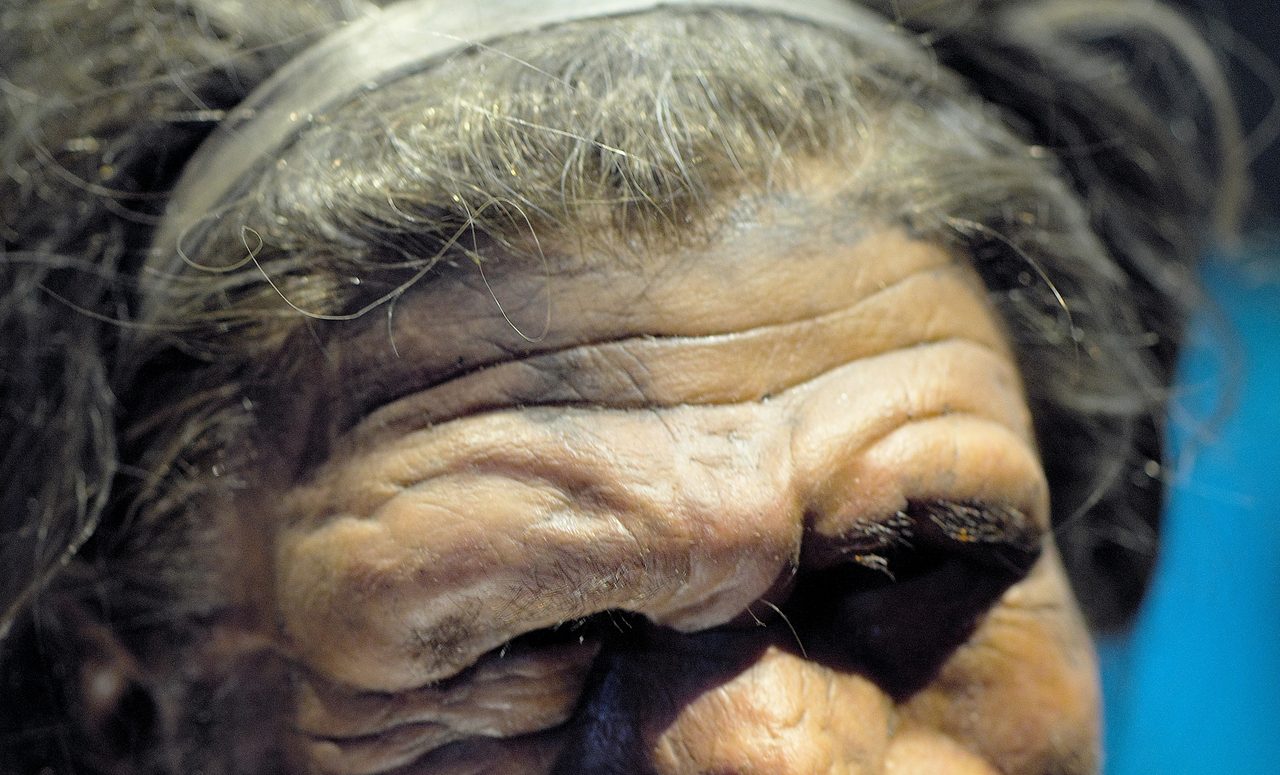
Unless every one of your ancestors lived and died in sub-Saharan Africa, you are carrying another human species inside your cells right now. Roughly 1.5 to 2.5 percent of your DNA was written by Neanderthals, a people who vanished as a distinct population tens of thousands of years ago and yet never fully left. This is not a fringe claim. The work that proved it won Svante Paabo the 2022 Nobel Prize, and it is some of the most settled science on this entire wing. The interesting part is what those genes are doing. Some tune your immune system. Some shape your skin and hair. Some raise or lower your odds against diseases your Neanderthal ancestors never met, including COVID-19. And two of the most repeated stories about Neanderthals, that they were a separate race and that they were slow-witted brutes, are flatly wrong. Here is the file, opened claim by claim, every fact wearing its evidence.
Start with the sentence that unsettles people the first time they hear it: there is another human species living inside your body. Not as a metaphor. As DNA, sitting in your chromosomes, copied faithfully every time your cells divide, inherited from an ancestor who met a Neanderthal roughly fifty to sixty thousand years ago and had a child. Almost everyone has heard the cartoon version of the Neanderthal, the stooped, grunting brute who lost the evolutionary race. Almost no one has heard the part that actually matters: they did not entirely lose, and they did not entirely leave. To read this honestly, keep three questions apart. Do you carry their genes? Yes, and it is measured to a decimal. Are those genes doing anything? Often, and we can name which ones. Were the Neanderthals the dim, brutish losers of the story? No, and the evidence against that is not close. Let us open the file.
01You Are Part Neanderthal, And That Is Settled
Begin with how solid the ground is, because everything here rests on it. Sequencing the Neanderthal genome ranks among the most significant achievements in all of modern biology, and it is not a claim any fringe would make. The ancient-DNA work behind it won Svante Paabo the 2022 Nobel Prize in Physiology or Medicine, awarded for his discoveries concerning the genomes of extinct hominins and human evolution. The research file's own verdict is blunt: this is one of the best-established findings in evolutionary genetics. So when you read the tiers below, understand that the core of this article is not a theory anyone is still fighting about. It is textbook.

Now the number that makes it personal. Most people alive today whose ancestry runs outside Africa carry roughly 1.5 to 2.5 percent Neanderthal DNA, present in every cell, copied forward without a break ever since. East Asian populations tend to carry somewhat more of it than Europeans do. Present-day African populations carry small amounts too, usually read as the trace of later back-migration from Eurasia rather than interbreeding inside Africa itself. Two percent sounds trivial until you remember what it is: functional instructions from a separate human species, still switched on inside modern people.
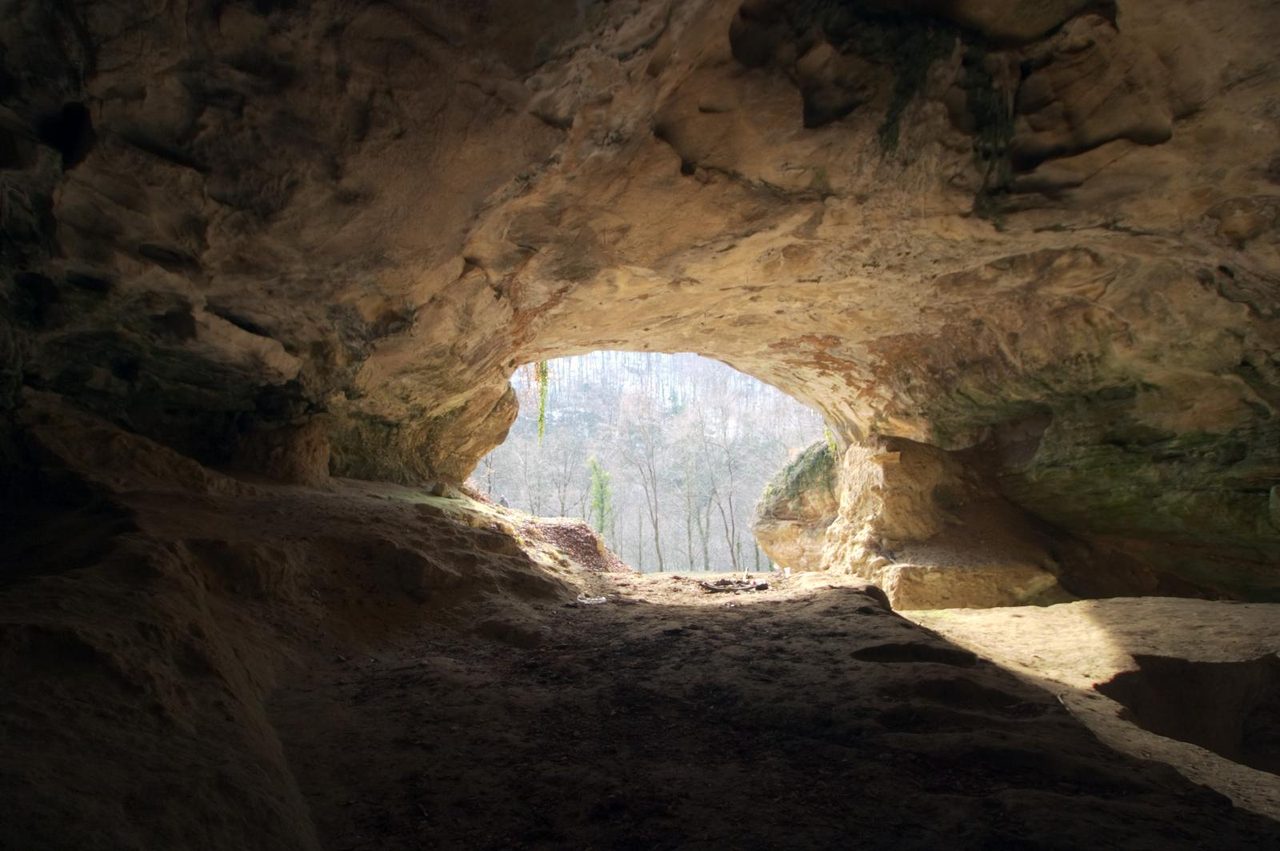
The proof arrived in 2010. Richard Green and colleagues published the first draft sequence of the Neanderthal genome in Science, reconstructed from bones recovered at Vindija Cave in Croatia. It showed that all non-Africans carry between one and four percent Neanderthal ancestry, later refined toward the 1.5 to 2.5 percent figure above, and that the amount looked, at first, roughly equal in Europeans and East Asians. That early equality carried a clue: the interbreeding had to have happened before those two populations split, most likely in the Near East somewhere around fifty to sixty thousand years ago, as the ancestors of everyone outside Africa were passing through.
Since that first rough draft, the genomes have only gotten sharper. Kay Prufer's team sequenced the Altai Neanderthal, roughly 120,000 years old, at fifty-fold coverage in 2014, then the Vindija 33.19 Neanderthal, roughly 52,000 years old, at thirty-fold coverage in 2017. Fabrizio Mafessoni and colleagues added a high-coverage Chagyrskaya Neanderthal, roughly 80,000 years old, in 2020. These are not blurry fragments. They are high-resolution readouts of an extinct human genome, precise enough to line up gene by gene against your own.
| Genome | Approximate Age | Study | Coverage |
|---|---|---|---|
| Draft Neanderthal genome (Vindija, Croatia) | Published 2010 | Green et al., Science | Draft quality |
| Altai Neanderthal | About 120,000 years old | Prufer et al., 2014 | 50x |
| Vindija 33.19 Neanderthal | About 52,000 years old | Prufer et al., 2017 | 30x |
| Chagyrskaya Neanderthal | About 80,000 years old | Mafessoni et al., 2020 | High coverage |
02How They Got Inside You
The main event has a place and a date. Around fifty to sixty thousand years ago, as anatomically modern humans expanded out of Africa and pushed through the Levant and the Near East, they met Neanderthals who were already living there, and they had children together. That single stretch of encounters accounts for the majority of the Neanderthal ancestry shared by every non-African population walking the Earth today. One region, one narrow window of time, written into billions of living genomes.
It was not the only meeting. Beyond that primary pulse there is clear evidence for at least one additional interbreeding event that fed extra Neanderthal ancestry specifically into East Asian populations, work laid out by Benjamin Vernot and Joshua Akey in 2015. There is also a possible separate, distinct introgression into the ancestors of Melanesians. The picture is not one clean handshake between two species. It is several, spread across tens of thousands of years and thousands of miles.
And sometimes the encounter was startlingly close. The Oase 1 individual, a roughly 40,000-year-old modern human found in Romania, carried between six and nine percent Neanderthal DNA, and it sat in unusually long, unbroken stretches. Inherited DNA gets chopped shorter with every generation, so segments that long mean a Neanderthal ancestor only four to six generations back, a great-great-great-grandparent, give or take. This is Qiaomei Fu's 2015 finding, and it is interbreeding caught almost in the act. Here is the twist that keeps it honest: Oase 1's own lineage led nowhere. It contributed nothing to modern Europeans. It is a dead-end branch on the family tree, proof that the mixing happened without being proof of your particular descent.
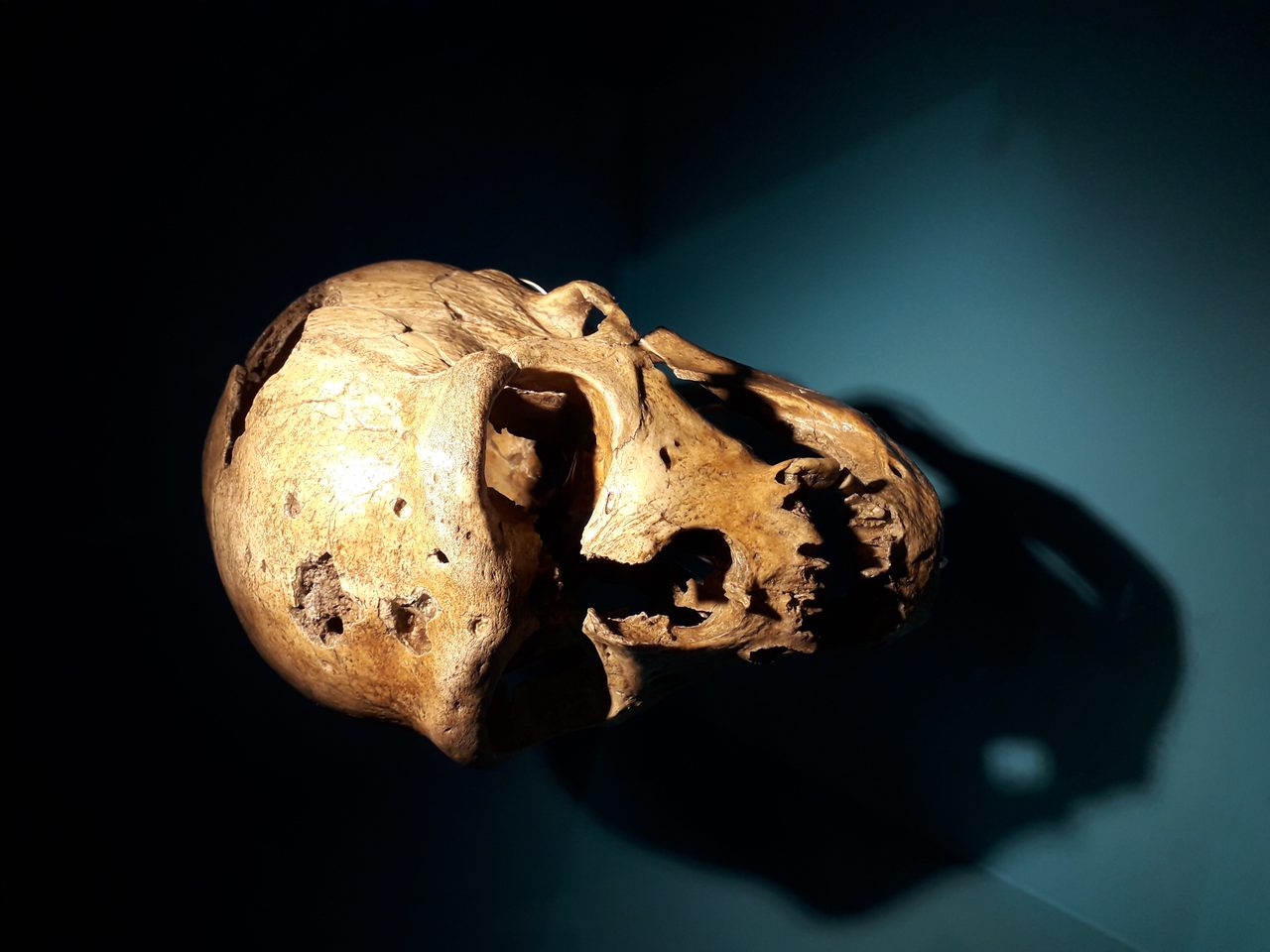
In February 2026 a paper in Science added a detail nobody expected: the mixing was lopsided by sex. Alexander Platt, Daniel Harris, and Sarah Tishkoff found that gene flow ran predominantly one direction, between Neanderthal males and modern human females. The fingerprint is on the X chromosome. Neanderthal X chromosomes carry a 62 percent relative excess of modern-human DNA compared with their other chromosomes, while modern humans in turn carry very little Neanderthal ancestry on the X at all. Because females carry two X chromosomes and males carry one, a mating pattern skewed toward Neanderthal fathers and human mothers would let fewer Neanderthal X chromosomes into the human gene pool from the very start. This is one recent paper, not yet weighed by years of follow-up, so it sits at Tier 2, and it does not overturn the older explanation so much as sit alongside it. But it proposes something vivid: not just that two species mixed, but who tended to pair with whom.
03The Genes Are Still Working
Some of what they gave you is useful, and the immune system is the clearest case. Neanderthal-derived versions of the genes TLR1, TLR6, and TLR10, a cluster of Toll-like receptors that form part of your innate immune system, the body's first-line pathogen sensors, are among the best-documented examples of beneficial archaic DNA in living people, work published by Michael Dannemann and colleagues in 2016. They likely shape how your innate immunity responds to microbes. Other immune loci, including some HLA-related signals, have been proposed too, though not every candidate carries equally strong evidence.
Skin and hair are the other recurring theme. Neanderthal-derived variants near the gene BNC2 and across keratin-related pathways are tied to pigmentation, skin, and hair biology in modern humans. It makes a certain evolutionary sense. Neanderthals had spent hundreds of thousands of years adapting to Eurasian light and climate before modern humans ever arrived, and inheriting a few of their skin and hair settings may have been a shortcut worth keeping.
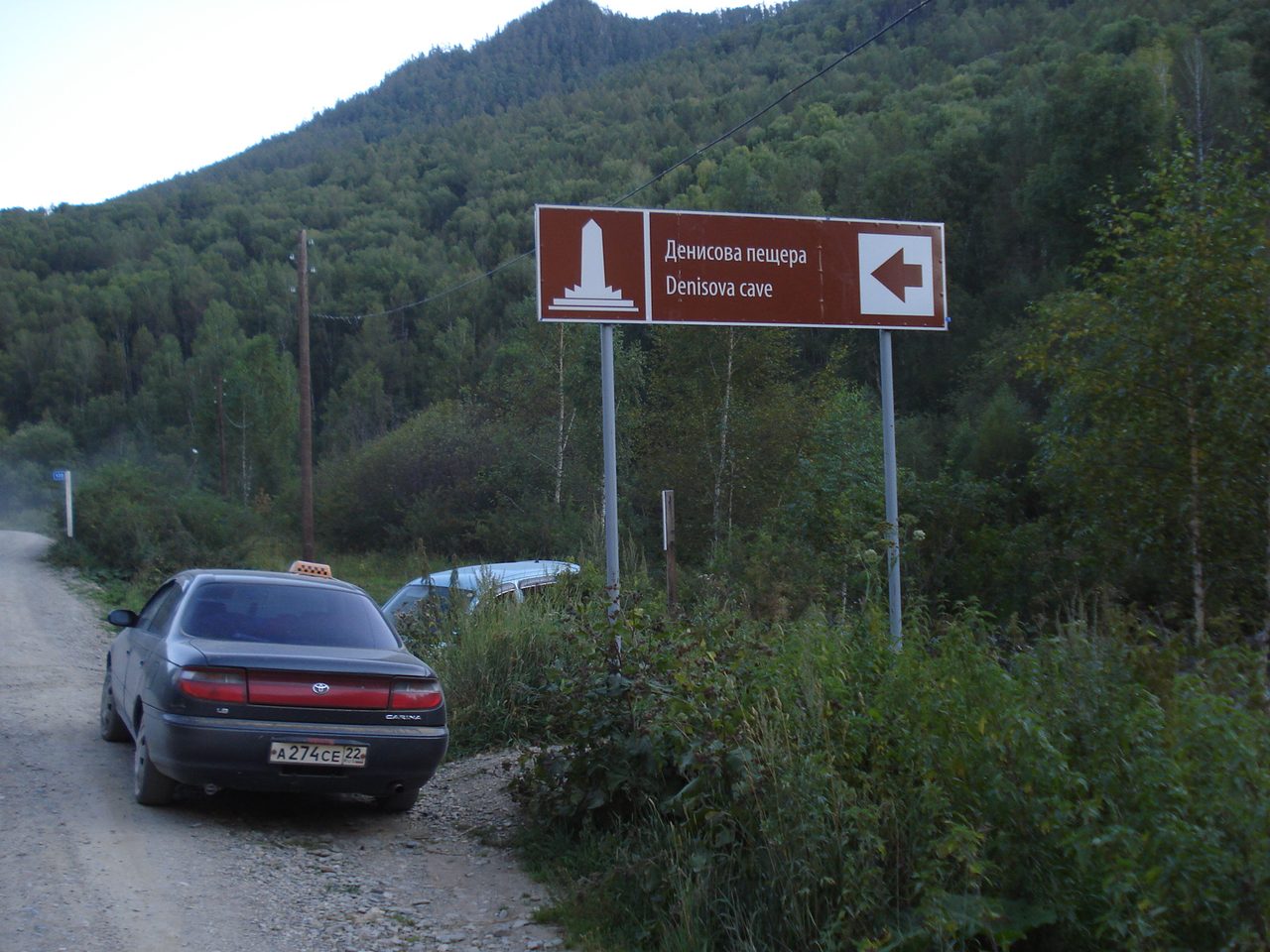
Here is where you have to be careful, because the single most famous story of an archaic gene helping modern humans is not actually Neanderthal. The EPAS1 variant that lets Tibetans thrive in the thin air of high altitude, the textbook case of beneficial archaic DNA, came from Denisovans, the Neanderthals' sister lineage, not from Neanderthals themselves, per Emilia Huerta-Sanchez and colleagues in 2014. Popular articles blur the two constantly. Do not. If you want a genuine Neanderthal gene doing you a favor, point at the immune receptors or the skin genes above, never the high-altitude one.
And the gift is double-edged. Some Neanderthal haplotypes that may once have been advantages now show context-dependent links to inflammatory, metabolic, or infectious-disease traits. The logic is that an adaptation tuned for an Ice Age Eurasian body can read as a liability in a modern one, warm, fed, medicated, and living far longer than any Neanderthal did. Same gene, different world, different verdict.
04The Genes They Could Not Give You
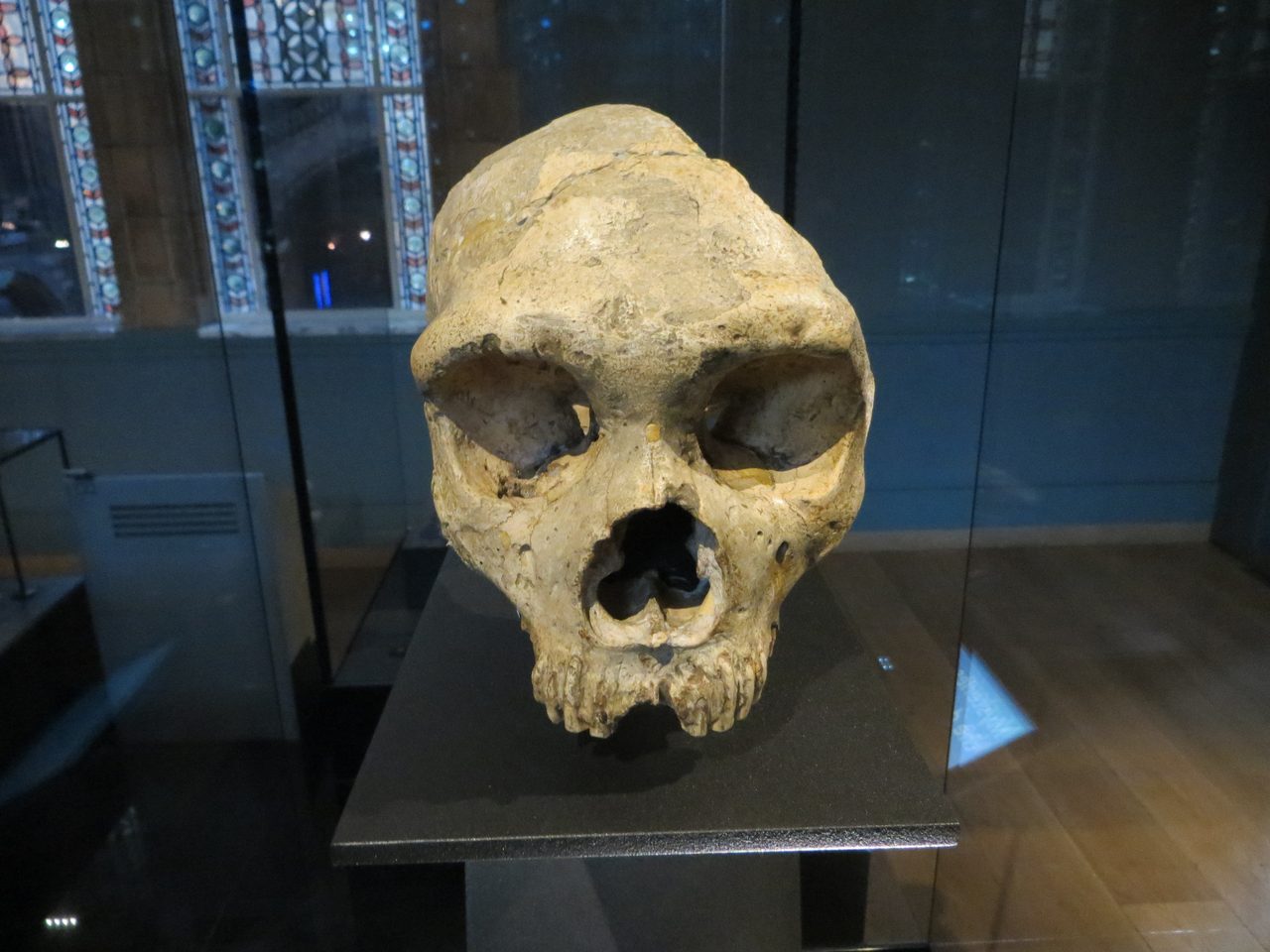
If interbreeding were the whole story, your genome would be an even blend. It is not, and the unevenness is the tell. In 2014 Sriram Sankararaman and colleagues mapped Neanderthal ancestry across modern genomes and found deserts of introgression, whole regions swept nearly clean of Neanderthal DNA. Three patterns stand out. The X chromosome carries about five times less Neanderthal ancestry than the other chromosomes, exactly what you would expect if hybrid males were less fertile, since the sex chromosomes drive that kind of incompatibility. Genes switched on in the testes are depleted too, more evidence that Neanderthal versions hurt male fertility in hybrids. And genes highly active during brain development are stripped of Neanderthal DNA, hinting that some Neanderthal neurological variants simply did not work in a modern human head.
Those deserts were carved out slowly, by selection. Kelley Harris and Rasmus Nielsen estimated in 2016 that right after the interbreeding, early modern humans may have carried around ten percent Neanderthal ancestry, five times today's level. Over roughly fifty thousand years, weak but relentless purifying selection pared that down to about two percent, quietly deleting the slightly harmful Neanderthal variants generation after generation. The two percent you carry is not what was handed over. It is what survived the edit.
Ivan Juric's team modeled why the purge happened at all, in 2016, and the answer is population size. Neanderthals lived in small, scattered bands, with an effective population roughly forty percent smaller than that of modern humans. In a small population, weakly harmful mutations slip through, because random drift outmuscles selection. Once those same variants crossed into the far larger modern human population, selection could finally see them clearly, and it went to work removing them.
The Y chromosome tells a matching story. Martin Petr and colleagues traced the Neanderthal and Denisovan Y chromosomes in 2020 and found further sex-linked incompatibilities and replacements deep in these archaic lineages. The lesson repeats: some stretches of the genome were open borders for ancient DNA, and others were nearly sealed shut.
05The Legacy That Cuts Both Ways
Start with a genuine puzzle the field has not fully closed. East Asians carry roughly 15 to 20 percent more Neanderthal ancestry than Europeans do, and there are three live explanations. Maybe East Asia got an extra dose of admixture. Maybe Europeans had theirs diluted, by later mixing with a group called Basal Eurasians who split off before the Neanderthal encounter and were carried into Europe by Neolithic farmers. Or maybe selection simply worked at different strengths in the two populations. The dilution model, from Iosif Lazaridis and colleagues in 2014, is currently the favored answer, but this one is still Tier 2, credible and debated rather than closed.
The clearest way to feel your Neanderthal inheritance is in a doctor's office. Association studies, notably Corinne Simonti and colleagues in 2016, have linked Neanderthal-derived DNA to raised risk for depression and mood disorders, actinic keratosis (sun-related skin damage), hypercoagulation (a tendency to clot), nicotine addiction, and urinary tract dysfunction. Read that list with the tier in mind. Each individual effect is small, a nudge and not a sentence, and the associations are statistical, not destiny. But they are real enough to keep turning up in biobank-scale data.
Then a pandemic put the whole question on the front page. A Neanderthal-derived stretch of chromosome 3, inherited from Vindija-like Neanderthals, turned out to be the single strongest known genetic risk factor for severe COVID-19, with an odds ratio of about 1.6, reported by Hugo Zeberg and Svante Paabo in 2020. It is common in South Asian populations, around 50 percent, moderate in Europeans, around 16 percent, and rare in East Asians, around 4 percent. A gene variant fifty thousand years old was helping decide who ended up on a ventilator in 2020. And the balance sheet is not all bad: a separate Neanderthal haplotype, on chromosome 12, turned out to protect against severe COVID-19 instead.
| Population | Frequency Of The Neanderthal Chromosome 3 Risk Variant |
|---|---|
| South Asian | About 50 percent |
| European | About 16 percent |
| East Asian | About 4 percent |
So is the Neanderthal in you a health asset or a health tax? The honest answer is that no one has settled it. Whether these disease links reflect ancient tradeoffs that were once worth making, a mismatch between an Ice Age genome and a modern lifestyle, plain statistical correlation without direct cause, or some mix of all three, remains an open debate. That uncertainty is not a weakness in the science. It is the field being careful about what a correlation can and cannot prove.
06Meet The Relatives You Carry
You can now put a rough number on your own inheritance without leaving your kitchen. The consumer testing company 23andMe screens each customer against more than 7,462 known Neanderthal-associated genetic variants and reports the count back as a personal Neanderthal Ancestry Report. By the company's own published figures, the average customer carries about 267 of these variants, with observed counts running from zero all the way up to a reported high of 387. Treat this for exactly what it is: a consumer product's individualized comparison, useful for making the abstract feel personal, not a stand-in for the peer-reviewed population percentages above. The science that says about two percent is the number that has been checked to a decimal. This is the number that has been marketed. Both can be interesting; only one is Tier 1.
The same report goes further, and lighter. It ties specific Neanderthal-derived variants to a grab-bag of everyday traits: whether you sneeze after eating dark chocolate, your sense of direction, how often mosquitoes bite you, your body type, your dandruff, even whether you are naturally strong. Enjoy these for what they are, playful color from a consumer product, not peer-reviewed findings carrying anything like the weight of the immune and skin genes established in the lab. If a spit-tube tells you that your poor sense of direction is the Neanderthal's fault, smile, and keep it in the Tier 3 drawer where it belongs.
07The Two Myths To Kill
Two stories about Neanderthals are repeated so often that they feel like common knowledge. Both are contradicted by the evidence, and correcting them is not political tidiness, it is just reading the data. The research file flags both at Tier 4, the level reserved for claims the science actively works against.
First myth: that Neanderthals are the specific ancestors of some modern human race, a genetic dividing line between peoples. The data says the opposite. Everyone whose ancestry lies outside Africa carries a similar small proportion of Neanderthal DNA, and the differences between populations are minor, fractions of a percent. Neanderthal ancestry does not line up with racial categories in any meaningful way. If anything, this DNA is a unifier: it marks the shared out-of-Africa journey of nearly everyone on the planet, not a border between them.
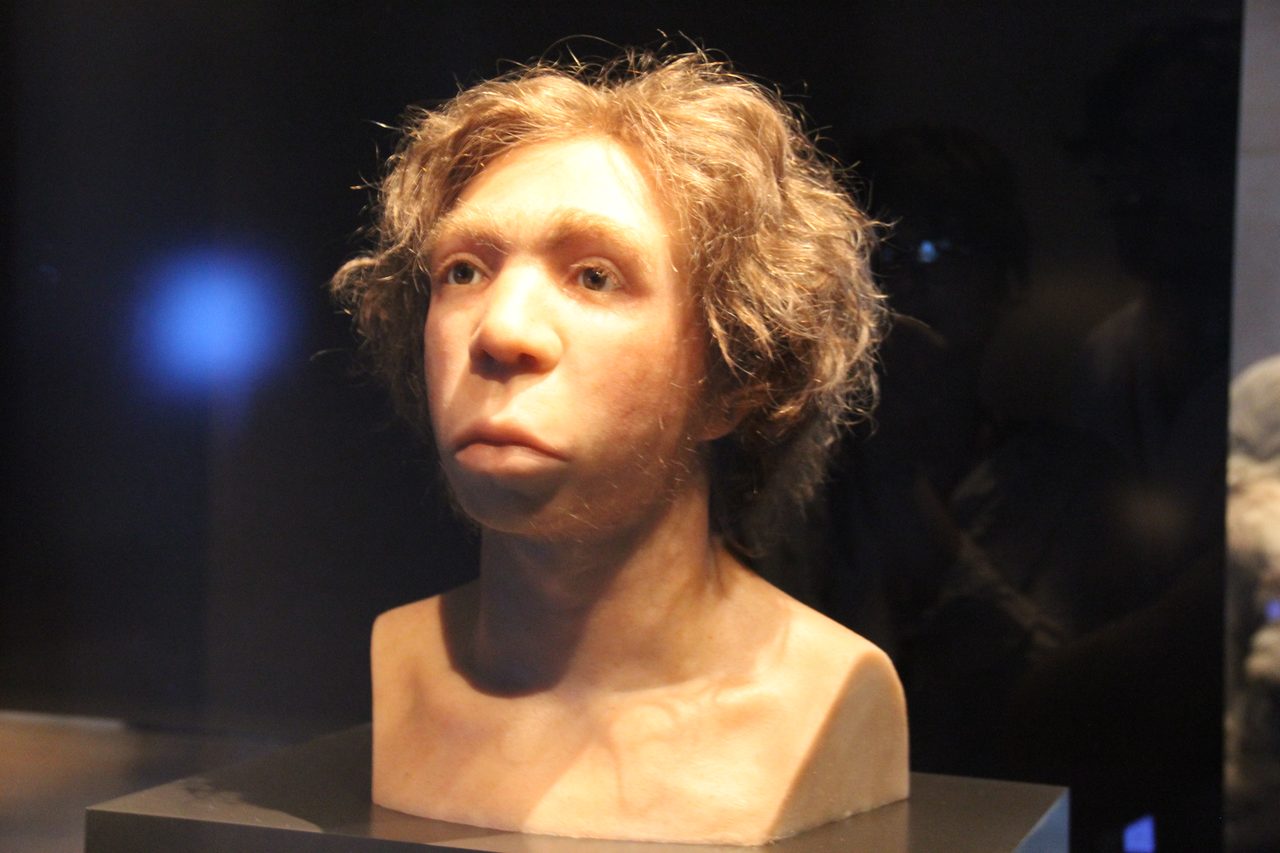
Second myth: the shuffling, dim-witted caveman. The archaeological record does not support it, and has not for a long time. Neanderthals made sophisticated tools, controlled fire, buried their dead, used ochre as pigment, cared for their injured and disabled, and may have made cave art. Their brains were large, averaging around 1,600 cubic centimeters, bigger on average than the modern human brain. And they were no failed experiment. Neanderthals endured across Eurasia for more than three hundred thousand years, far longer than our own species has yet managed. Whatever ended them, it was not stupidity.
08What We Still Cannot Say
There is real debate about how close a Neanderthal mind was to yours, and it deserves to stay a debate. Archaeologists increasingly credit Neanderthals with symbolic behavior, personal ornaments, deliberate burial, and complex toolmaking. The cave-painting claims at certain Spanish sites are important but genuinely contested, because both the dating and the interpretation are disputed. Whether Neanderthal cognition was fully equivalent to ours or subtly different is unresolved, and the genomic deserts around brain-development genes are a quiet argument that at least some real neurological difference existed between the two species.
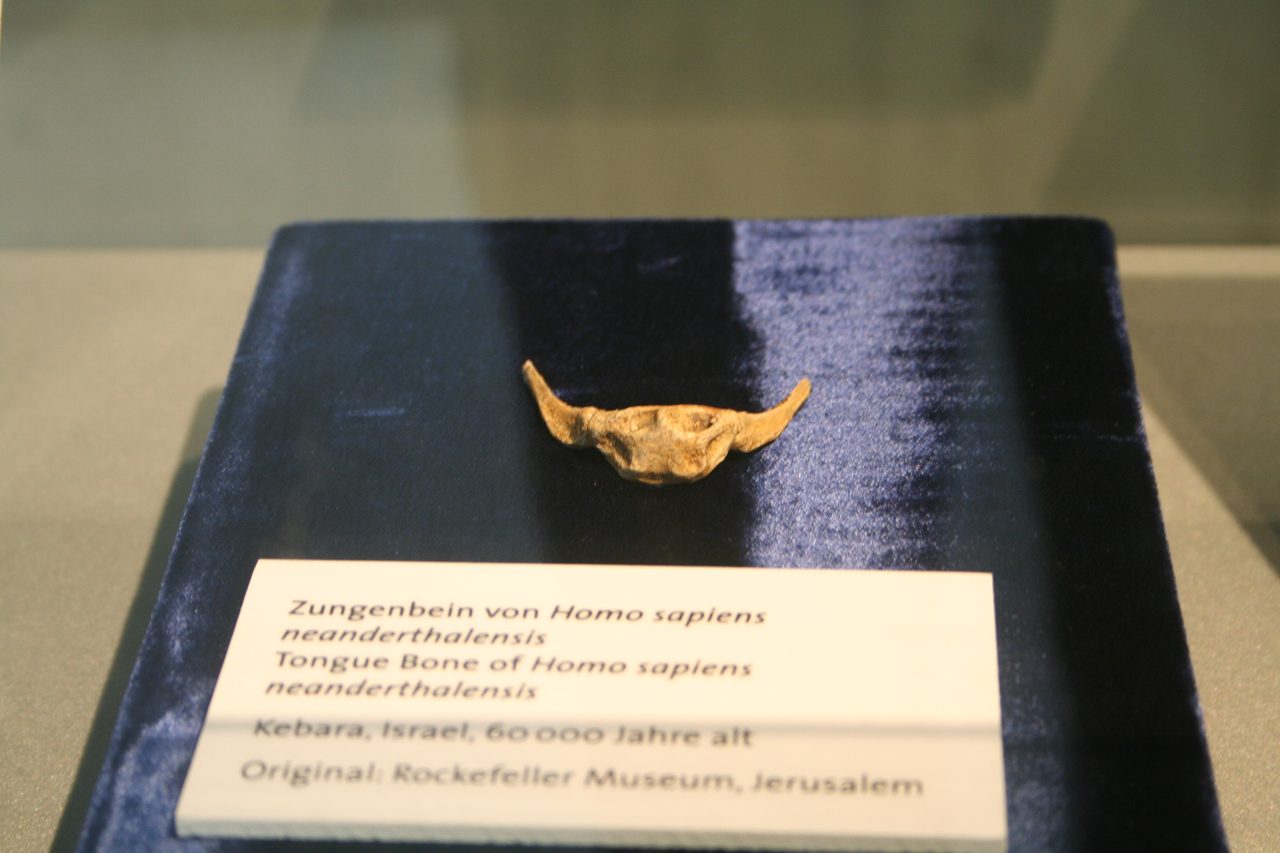
Could they speak? The clues point toward yes and stop short of proof. Neanderthals had a hyoid bone, the small throat bone that anchors the machinery of speech, and they carried the same FOXP2 gene variant linked to speech and language in us. Computer modeling of their ear-canal structure, by Mercedes Conde-Valverde and colleagues in 2021, suggests hearing tuned to exactly the frequency band that human speech uses. It is a suggestive stack of anatomy. But the full neurocognitive wiring that turns sound into language cannot be read off a skeleton or a gene, so genuine Neanderthal speech stays Tier 3, plausible and unproven.
And there may be more ancestors still hiding. Statistical analyses hint at interbreeding with archaic populations other than Neanderthals and Denisovans, so-called ghost lineages known only from the genetic traces they left, never from a single recovered fossil. These inferences are model-dependent, and they are a separate line of research from the Neanderthal story proper. This wing follows that thread on its own, in the Ghost Populations file next door.
None of this comes without fine print, and the research file is candid about it. Introgression maps are statistical reconstructions that depend on reference genomes, demographic assumptions, and the methods used to call ancient DNA segments, so exact percentages and gene assignments can shift as the tools improve. A Neanderthal variant's link to a modern trait is not automatic proof the trait was ever adaptive, and most archaic-derived variants explain only a sliver of any trait. Behavior, intelligence, language, consciousness, cannot be read straight from a genome. And the small amount of Neanderthal DNA in African populations, usually chalked up to Eurasian back-migration, still has an unsettled timing and scale. The numbers here are strong. They are also honest about their own edges.
09Every Claim, Every Tier
Here is the whole file on one page, each claim wearing its tier, because the fastest way to get Neanderthals wrong is to flatten the settled science and the open questions into a single story. They are not the same thing, and the tiers keep them apart.
| The Claim | Tier | The Basis |
|---|---|---|
| Non-Africans carry about 1.5 to 2.5 percent Neanderthal DNA | Tier 1 | Whole-genome sequencing, Nobel-backed |
| Interbreeding happened around 50 to 60 thousand years ago in the Near East | Tier 1 | The 2010 draft genome and admixture dating |
| Extra admixture into East Asians, a separate pulse into Melanesians | Tier 1 | Vernot and Akey, 2015 |
| Neanderthal immune (TLR) and skin/hair (BNC2) genes persist and function | Tier 1 | Dannemann et al.; adaptive introgression |
| Deserts of introgression on the X, testes, and brain-development genes | Tier 1 | Sankararaman et al., 2014 |
| Selection pared Neanderthal ancestry from about 10 percent to about 2 percent | Tier 1 | Harris and Nielsen, 2016 |
| The EPAS1 high-altitude gene is Denisovan, not Neanderthal | Tier 1 | Huerta-Sanchez et al., 2014 |
| The interbreeding was sex-biased: Neanderthal males, human females | Tier 2 | Platt, Harris and Tishkoff, Science 2026 |
| East Asians carry 15 to 20 percent more Neanderthal DNA than Europeans | Tier 2 | Debated; Basal Eurasian dilution favored |
| Neanderthal DNA links to depression, clotting, nicotine, and other risks | Tier 2 | Simonti et al., 2016; small effects |
| A chromosome 3 haplotype is the top genetic risk for severe COVID-19 | Tier 2 | Zeberg and Paabo, 2020 |
| Neanderthals could speak as modern humans do | Tier 3 | Hyoid, FOXP2, ear modeling; unprovable |
| Ghost archaic populations beyond Neanderthals and Denisovans | Tier 3 | Model-dependent statistical signals |
| Neanderthals are the ancestors of a specific modern race | Tier 4 | Contradicted; all non-Africans carry a similar share |
| Neanderthals were unintelligent brutes | Tier 4 | Contradicted; tools, fire, burial, ochre, large brains |
Fast Facts
- Your Share
- About 1.5 to 2.5 percent Neanderthal DNA, if your roots run outside Africa
- When You Got It
- Mainly 50 to 60 thousand years ago, in the Near East
- The Nobel
- Svante Paabo, 2022, for the ancient-DNA work behind all of this
- Still Useful
- Neanderthal immune (TLR1, TLR6, TLR10) and skin (BNC2) genes
- Still Costly
- A chromosome 3 variant, the top genetic risk for severe COVID-19
- The Denisovan Mix-Up
- The famous EPAS1 altitude gene is Denisovan, not Neanderthal
- A 2026 Twist
- The mixing was sex-biased: Neanderthal fathers, human mothers
- The Myths
- Not a race, not dumb brutes: both are Tier 4, contradicted
- Their Run
- More than 300,000 years across Eurasia, brains larger than ours
What We Can Actually Stand Behind
You carry it, and this part is not in dispute. Non-Africans hold roughly 1.5 to 2.5 percent Neanderthal DNA, from interbreeding around fifty to sixty thousand years ago in the Near East. Neanderthal immune and skin genes still function in living people. Whole regions of your genome, the X chromosome, the testes genes, the brain-development genes, were swept nearly clean of Neanderthal DNA by selection, which cut the total from about ten percent to about two. This is Nobel-backed, textbook science.
What that inheritance means for your health is the real open question. Neanderthal DNA is associated with everything from depression to blood clotting, and a chromosome 3 haplotype is the strongest known genetic risk factor for severe COVID-19, while another Neanderthal variant protects against it. Whether these are ancient tradeoffs, modern mismatches, or mere correlations is unsettled. The 2026 finding that the interbreeding was sex-biased is credible and new, not yet stress-tested by the field. Treat all of it as Tier 2.
Some things we genuinely cannot say yet. Whether Neanderthals spoke as we do is suggested by their hyoid bone, their FOXP2 gene, and the shape of their ears, but it cannot be proven from bone and DNA alone. Ghost archaic populations, ancestors known only from statistical traces with no fossil to show, remain model-dependent inferences. And the consumer-test trait claims, dark-chocolate sneezes and all, are light color, not evidence.
And two popular claims are simply wrong, so say so plainly. No, Neanderthals are not the ancestors of any specific modern race: everyone outside Africa carries a similar small share, and the DNA marks a shared journey, not a border. No, they were not dim-witted brutes: they made sophisticated tools, buried their dead, controlled fire, used ochre, carried brains larger than ours on average, and lasted more than three hundred thousand years. Both claims are contradicted by the evidence, and both belong in the ground.
So keep the layers straight and the file stays honest. You are, measurably, part Neanderthal, and that much is as settled as anything in human genetics. Some of their genes are working for you and some are working against you, and which is which depends on a modern world they never saw. The myths that they were a separate race or a lesser kind of human do not survive contact with the data. What we still cannot fully read is the inside of a Neanderthal mind, whether it heard language the way you do, whether it dreamed, whether the two percent you carry includes anything of how they thought. The bones are in the museums and the genes are in your cells. The question that keeps the file open is the one neither can quite answer alone: how much of what you call being human was actually theirs first?
Sources & further reading
Everything above is drawn from our research library on Theories of Anything, which is where we worked from. The papers, reports and primary records listed beneath them are where you can check us independently.
Image credits
- Neanderthal Reconstruction, Natural History Museum, London photograph by Werner Ustorf, via Wikimedia Commons. CC BY-SA 2.0 Source.
- Svante Paabo, 2022 Nobel Laureate photograph by Duncan.Hull, via Wikimedia Commons. CC BY-SA 4.0 Source.
- Vindija Cave, Croatia photograph by Tomislav Kranjcic, via Wikimedia Commons. CC BY-SA 2.0 Source.
- La Chapelle-aux-Saints Skull and Mandible photograph by Eunostos, via Wikimedia Commons. CC BY-SA 4.0 Source.
- Denisova Cave, Altai Mountains photograph by Yuriy59, via Wikimedia Commons. CC BY-SA 3.0 Source.
- Forbes' Quarry Skull, Gibraltar photograph by Jononmac46, via Wikimedia Commons. CC BY-SA 3.0 Source.
- Le Moustier Neanderthal Skull, Neues Museum Berlin photograph by Gary Todd, via Wikimedia Commons. CC0 1.0 (Public Domain) Source.
- Kebara 2 Hyoid Bone, Neanderthal Museum Mettmann photograph by Einsamer Schütze, via Wikimedia Commons. CC BY-SA 4.0 Source.
- Card crop of Neanderthal Reconstruction, Natural History Museum, London photograph by Werner Ustorf, via Wikimedia Commons. CC BY-SA 2.0 Source.

.jpg)


.JPG)

