The Nimitz Tic Tac: The Best-Evidenced UFO Case on the Record
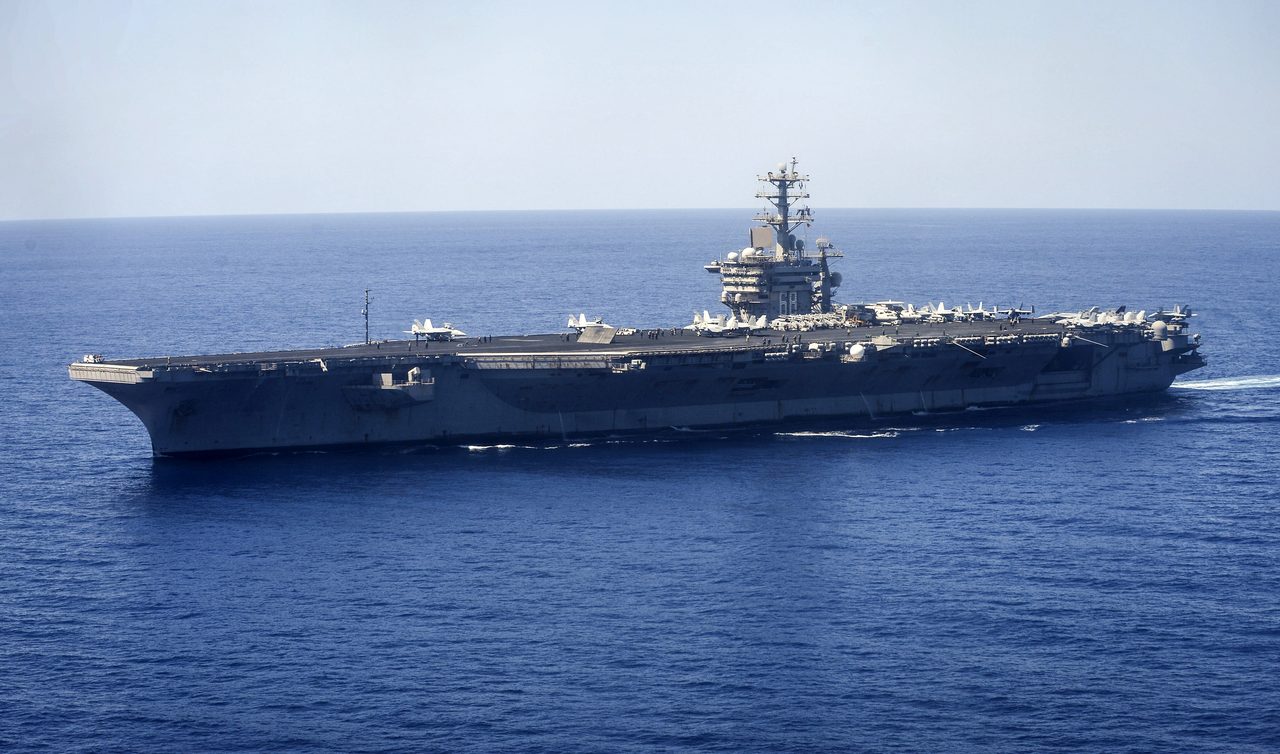
For two weeks in November 2004, the most capable radar in the US Navy tracked objects it could not explain off the coast of Southern California. Then a decorated combat pilot flew out to meet one, watched it hover over the ocean and vanish in under two seconds, and a second jet caught it on infrared. Sixteen years later the Pentagon released that video and confirmed it was real. Four independent sensor and witness streams, a decorated aircrew, and an official paper trail that reaches Congress: this is the UFO case nobody serious gets to wave away. Here is exactly what the evidence holds, tier by tier, and the two easy explanations the record refuses by name.
In November 2004, off the coast of Southern California, the most capable air-defense radar in the United States Navy spent two weeks tracking objects it could not explain. Then a decorated combat pilot flew out to look at one of them, watched it hover over the ocean, mirror his dive, and vanish, and a second jet caught it on infrared. Sixteen years later the Pentagon released that video and confirmed it was real. This is not a blurry light in a backyard sky. This is Carrier Strike Group Eleven, four independent sensor and witness streams, and an official government paper trail, and it is the reason the Nimitz case is the one nobody serious gets to wave away.
The research file behind this dossier rates the Nimitz encounter Tier 1, officially authenticated, the single strongest rating anywhere in this wing. So this article is not going to hedge where the evidence does not. It will tell you exactly what happened, exactly how well each piece is sourced, and exactly where the honest uncertainty still lives, and it will refuse two tidy explanations by name, because the record refuses them too.
01Two Weeks The Radar Could Not Explain
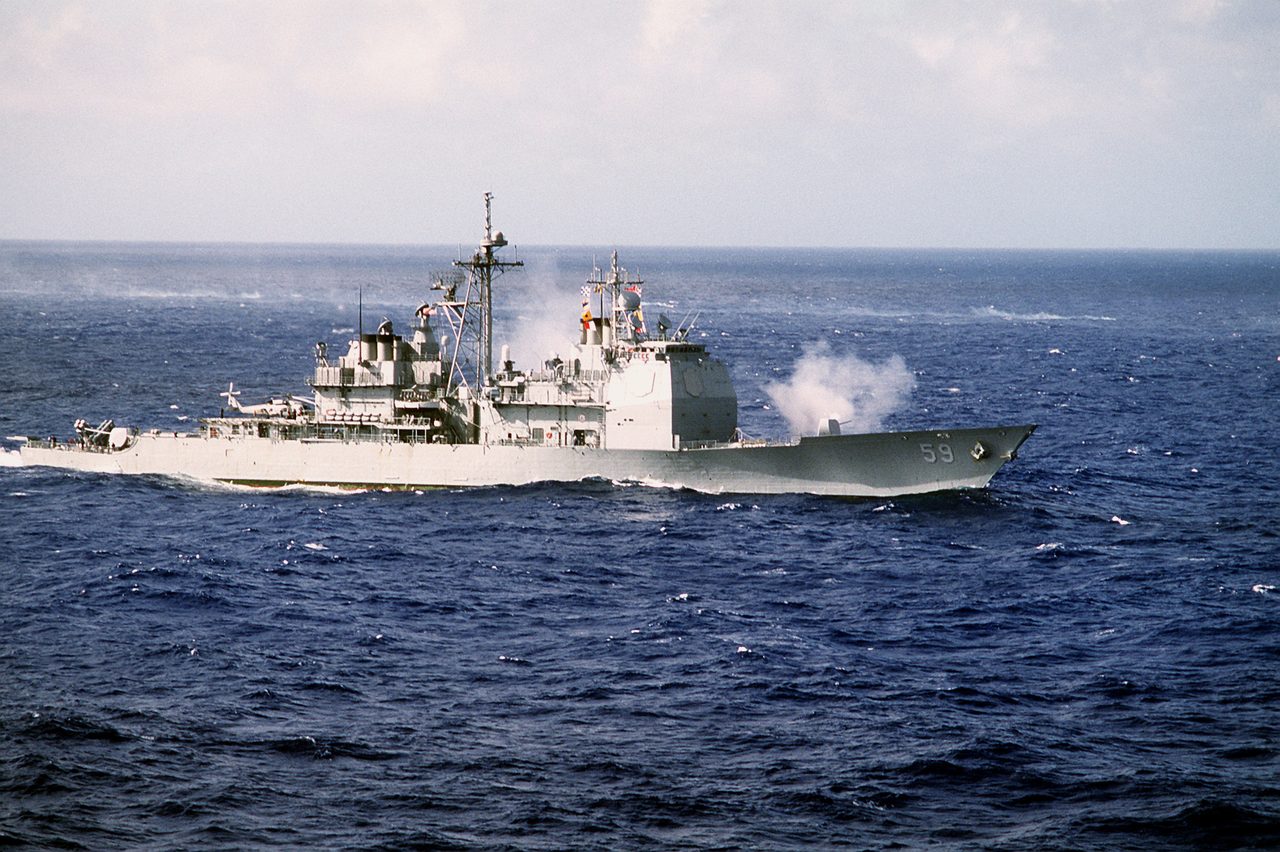
The story starts with the radar, not the video. USS Princeton (CG-59), a Ticonderoga-class guided missile cruiser running the Aegis Combat System and the AN/SPY-1B phased-array radar, the most capable naval air-defense radar in the world at the time, began detecting anomalous contacts around November 10, 2004, during Carrier Strike Group Eleven's pre-deployment exercises off Southern California.
Senior Chief Operations Specialist Kevin Day, the Princeton's air-intercept controller in the Combat Information Center, has testified publicly to what the radar kept showing: groups of 5 to 10 objects appearing above 80,000 feet, higher than any known aircraft can operate, then dropping to near sea level in a matter of seconds, hovering just off the water, and leaving at better than Mach 2. No transponder. No flight plan. No answer to IFF.
The first assumption was the obvious one: the radar was broken. So they recalibrated the SPY-1B. The contacts stayed. And they were not drifting through the exercise area at random, they were pacing the strike group, holding its course, behaving less like a glitch and more like something that knew where the ships were headed.
Day's account stretches the event out. Over the two weeks before November 14 the contacts kept returning, appearing to descend from the direction of Guadalupe Island off Mexico, which turns the case from a single strange afternoon into a sustained engagement the Navy watched build for days. The file grades this stretch of the timeline Tier 2, credible: it rests on Day's detailed testimony rather than a released tape, but it is specific, consistent, and never recanted.
02The Tic Tac Over The Water
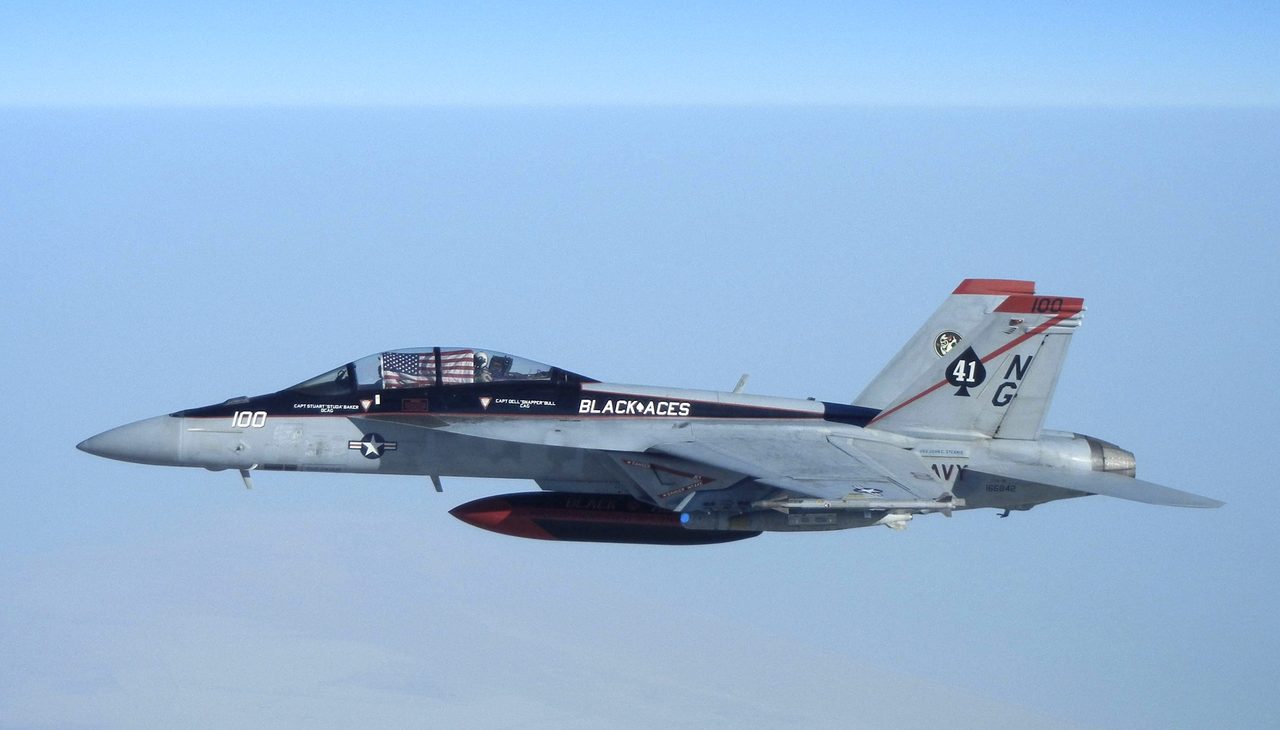
On November 14, 2004, the Princeton vectored two F/A-18F Super Hornets to investigate one of the contacts about 60 miles west. Commander David Fravor, commanding officer of the VFA-41 'Black Aces' with more than eighteen years and 3,500 flight hours behind him, took the intercept, with his wingman Lieutenant Commander Alex Dietrich flying above him.
What they found first was the water. In an otherwise calm sea, a cross-shaped patch of churning whitewater, as if something large sat just beneath the surface. Hovering above it was the object: white, smooth, oblong, roughly 40 feet long. Fravor's description has become the case's signature, and it is worth reading for how ordinary the comparison is: like a Tic Tac. Like a white 747 fuselage with the wings, windows, control surfaces, and engines all deleted. It jittered over the disturbance, he said, like a ping-pong ball in a glass.
Fravor dropped toward it to get closer. As he spiraled down, the object rose to meet him, the two of them circling in opposite directions like two fighters in a merge. Then, at about the midpoint of that spiral, it stopped playing. It accelerated south and was gone in less than two seconds, covering, by Fravor's estimate, more than 60 miles in that time. There is no aircraft on Earth that does that.
Here is the detail that should stop you. Within seconds, the Princeton's Combat Information Center called back up: the object had reappeared on radar about 60 miles away, sitting exactly at the strike group's CAP point, the pre-arranged combat air patrol rendezvous coordinate known only to the group and never broadcast. Whatever it was, it had not just outrun two Super Hornets. It had gone straight to a spot it should not have known existed.
This is not one pilot's story. Alex Dietrich, flying above Fravor in a separate jet, has independently backed every load-bearing part of it, most publicly on CBS's 60 Minutes in May 2021, confirming the object and the way it left.
The water is its own small mystery. Both aircrew saw the cross-shaped disturbance, roughly the size of a 737, directly below the object, and when the Tic Tac departed the churn went with it. No submarine was known to be operating there. The file weighs a submerged object, propulsion wash from the hovering craft, or an unrelated ocean event, and rates the disturbance Tier 2: the timing, directly beneath the object and gone the instant it left, argues hard against coincidence, but no sonar tape has been released to settle it.
03FLIR1: The Video The Pentagon Released
Fravor's jet came home without usable targeting video, but the Navy was not done. After he landed, another VFA-41 crew launched, and weapons systems officer Lieutenant Chad Underwood locked the object up on his F/A-18F's AN/ASQ-228 ATFLIR infrared targeting pod. The footage he recorded is the clip the world now knows as FLIR1.
Watch what the infrared shows. An oblong shape glowing white-hot against a cool sky, moving laterally with no exhaust plume behind it, nothing consistent with a jet or a rocket. It appears to rotate around its long axis. Then it accelerates hard to the left and shoots out of frame so fast the pod, a system built to hold a lock on a maneuvering fighter, simply loses it.
This is where the Nimitz case leaves every other UFO story behind. FLIR1 is not a leaked frame of dubious origin. To The Stars Academy first put it out in December 2017; then, in September 2019, the US Department of Defense confirmed it was authentic Navy footage; and on April 27, 2020, the Pentagon formally released it alongside two other videos, GIMBAL and GOFAST, stating that they were unclassified and that their release revealed no sensitive capabilities or systems. The government did not explain the object. It authenticated the recording of it.
The confirmation held at the top. Deputy Secretary of Defense Kathleen Hicks affirmed the videos as part of the Pentagon's broader UAP transparency effort in 2021, the same year the department began building formal machinery to track exactly this kind of report.
You will not find the clip embedded on this page, and there is a reason worth stating out loud. This dossier only shows still photographs it can verify frame by frame, and FLIR1 is a video, not a photograph. But it is a public, government-released primary source, it sits in the public domain as a work of the US federal government, and it is linked in full at the foot of this article. Go watch it.
04Four Sensors, One Object
Any single piece of this could be argued with. A radar can duct. A pilot can misjudge. A camera can produce an artifact. What makes the Nimitz encounter so hard to dismiss is that all of them recorded the same object, and they did it independently of one another.
Count the streams. The Princeton's AN/SPY-1B radar tracked the contacts for two weeks. Fravor's own F/A-18 radar, the AN/APG-73, painted the object in the air. Underwood's ATFLIR pod filmed it in infrared. Four aircrew across two jets watched it with their own eyes. And an E-2C Hawkeye early-warning aircraft from VAW-117 held contact data too, a quieter fifth stream whose crew has stayed less public but has never contradicted the rest. Radar, a second radar, infrared, and human vision converging on one object is what rules out the easy outs: not a hallucination, not a lens artifact, not one broken sensor.
| Stream | Platform | What It Recorded |
|---|---|---|
| AN/SPY-1B radar | USS Princeton (CG-59) | Groups of 5 to 10 objects over two weeks: above 80,000 feet, near-instant descents to sea level, hovering, then departures above Mach 2 with no IFF response |
| AN/APG-73 radar | Fravor's F/A-18F | The object painted on the fighter's own onboard radar during the intercept |
| ATFLIR infrared | Underwood's F/A-18F | FLIR1: a white-hot oblong with no exhaust plume, rotating, then accelerating out of the pod's lock |
| Human vision | 4 aircrew in 2 jets | Fravor, Dietrich, and their WSOs watching the hover, the merge, and the departure directly |
| E-2C Hawkeye | VAW-117, airborne early warning | Contact data consistent with the rest; the crew has stayed publicly quiet but has never contradicted the other streams |
The case did not just get filed and forgotten. It was studied inside the Pentagon's Advanced Aerospace Threat Identification Program (AATIP), which ran from 2007 to 2012, and that study concluded the object demonstrated capabilities beyond known human technology. Luis Elizondo, who has said he led AATIP's investigations, later carried the case into public view, though the Pentagon has at times publicly disputed the precise scope of his role in the program. That dispute is about Elizondo's job description, not about the radar returns, the video, or the four aircrew, none of which depend on him at all.
By June 2021 the case had reached Congress. The Unidentified Aerial Phenomena Task Force reviewed 144 similar incidents in its preliminary assessment, Nimitz among them, and found that a subset of those cases "appear to demonstrate advanced technology", objects that stayed put in high winds, moved against the wind, maneuvered abruptly, or moved at considerable speed "without discernible means of propulsion". In November 2021 Deputy Secretary Hicks stood up a dedicated office, the Airborne Object Identification and Management Synchronization Group, to manage these reports. In May 2022 the House held the first public congressional hearing on the subject in more than fifty years, where the Navy put the count of reported military sightings at about 400 and climbing. AARO, the All-domain Anomaly Resolution Office, still carries the Nimitz case on its books.
05What The Performance Actually Implies
Set the eyewitness drama aside and just look at the behavior. AATIP built a framework called the Five Observables to describe how these objects move, and the Nimitz object hits nearly all of them: it lifted and hovered with no wings, rotors, or exhaust (anti-gravity lift); it went from a hover to hypersonic-equivalent speed in seconds (instantaneous acceleration); it moved at those speeds with no sonic boom and no friction-heat signature (hypersonic velocity without signatures); it showed on some sensors and not others (low observability); and the ocean disturbance hints at movement between air and water (trans-medium travel). The file grades this Tier 2, the framework applied to this case rather than proven from first principles, and this article keeps it there.
| Observable | What It Means | What The Tic Tac Did |
|---|---|---|
| Anti-gravity lift | Staying aloft with no wings, rotor, or visible propulsion | Hovered over the ocean as a smooth 40-foot object with no lift surfaces at all |
| Instantaneous acceleration | Going from a standstill to extreme speed with no ramp-up | Hover to gone in under two seconds, more than 60 miles crossed almost at once |
| Hypersonic velocity without signatures | Extreme speed with no sonic boom or heat trail | Departed at those speeds with no boom and no exhaust plume on infrared |
| Low observability | Showing on some sensors and not others | Held on radar and infrared, yet slipped the ATFLIR lock the instant it accelerated |
| Trans-medium travel | Operating in air and water alike | Hovered over a churning, cross-shaped sea disturbance that vanished when it left |
Someone did the arithmetic. The Scientific Coalition for UAP Studies analyzed Fravor's account in 2019, and a peer-reviewed paper the same year in the journal Entropy, by Knuth, Powell, and Reali, put numbers on it: to move the way witnesses described, the object would have pulled accelerations ranging from almost 100 g to thousands of g, with no observed air disturbance, no sonic booms, and no heat to match even the least of those energies. These figures live at Tier 2, credible modeling built on eyewitness inputs rather than a recovered flight recorder, but they mark the size of the problem: those are accelerations far beyond what any human body or known material can tolerate, and nothing built by human hands survives, or hides, them.
06The Skeptics, Taken Seriously
A case this strong earns a serious challenge, not a lazy one, and there are real ones on the table. This article gives them their best form rather than a strawman.
The most substantial is Mick West's. West argues that FLIR1 on its own can be read as a distant aircraft, that the apparent rotation is an artifact of the ATFLIR pod's own optics and its loss of lock, and that the infrared glow is consistent with the exhaust of a far-off jet seen from behind. It is careful, technically literate work, and it deserves a careful answer, which is this: West's reading is an analysis of the video, and the video is one stream out of four. It does not touch Fravor and Dietrich watching the object with their own eyes, the Princeton's two weeks of radar, or the object reappearing 60 miles away at a coordinate known only to the strike group. Explain the tape as a distant jet and you still have to explain everything the tape is not.
A second challenge says the Tic Tac was a classified American aircraft, a black project flown against the strike group to test detection. Fravor's own rebuttal is the sharpest counter here: flying experimental hardware into an active carrier group's airspace, unannounced and without safety coordination, at the speeds observed, would be not just recklessly dangerous but very likely criminal under military flight-safety rules. Militaries do not test secret aircraft by nearly colliding with their own fighters.
A third says the radar contacts were ducting or anomalous propagation, atmospheric tricks that can conjure false returns. But the contacts survived a full recalibration of the SPY-1B, appeared on multiple independent sensor systems, and were then confirmed by human eyes on the object. An artifact does not do all three.
07What Stays Open
Confidence where the evidence is strong is not the same as pretending the case is closed. Three threads are genuinely unresolved, and the honest move is to name them at the tier the file gives them, not a tier higher.
The first is the missing data. Kevin Day and other Princeton crew have said that within days of the encounter, people who were not part of the normal chain of command, arriving by helicopter, collected the ship's radar recordings and other evidence, and that pilots were told the event "didn't happen". Fravor has said his own aircraft's data was already gone when he landed. It is a striking allegation and it may be exactly true, but it sits at Tier 3: it rests on witness testimony with no confiscation order ever produced, and routine data collection after an unusual event is a plausible innocent explanation. Speculative, not established.
The second is the water again. The cross-shaped disturbance has fed speculation about an accompanying underwater craft, an Unidentified Submerged Object moving between sea and sky. It fits a broader pattern of trans-medium reports, but no sonar data from the Princeton or any nearby submarine has been released, and without it the undersea component stays Tier 3, a real question with nothing yet to answer it.
And the file names its own open questions, the ones a real investigation would still chase: Where are the original Princeton radar recordings, and if they were taken, by whom and under what authority? Were any satellite intelligence assets tasked to the area during those weeks? Can the E-2C Hawkeye crew's data be formally documented and compared with the rest? What does the complete, unedited FLIR1 recording show, since the released clip is understood to be only a piece of a longer tape? And were any sonar contacts logged beneath that churning patch of sea? None of these have public answers. All of them could be answered with records that already exist.
Fast Facts
- The Date And Place
- November 2004, off the coast of Southern California, during Carrier Strike Group Eleven's pre-deployment exercises. The visual encounter was November 14.
- The Radar
- USS Princeton (CG-59) tracked groups of 5 to 10 objects for two weeks on its AN/SPY-1B radar: above 80,000 feet, dropping to sea level in seconds, hovering, then leaving above Mach 2, with no transponder or IFF response.
- The Object
- White, smooth, oblong, roughly 40 feet long, with no wings, windows, exhaust, or visible propulsion. Fravor's phrase: like a Tic Tac.
- The Departure
- It accelerated south and vanished in under two seconds, covering an estimated 60-plus miles, then reappeared on radar at the strike group's private CAP point about 60 miles away.
- The Video
- FLIR1, the ATFLIR infrared clip shot by Lt. Chad Underwood. Confirmed authentic by the DoD in September 2019 and officially released on April 27, 2020, alongside GIMBAL and GOFAST.
- The Witnesses
- Cdr. David Fravor and Lt. Cdr. Alex Dietrich (2 jets, 4 aircrew total), plus Senior Chief Kevin Day on the Princeton's radar and Lt. Chad Underwood on the camera.
- The Physics
- A 2019 Entropy paper (Knuth, Powell, and Reali) estimated accelerations from almost 100 g to thousands of g, with no sonic boom, air disturbance, or matching heat: forces far beyond what any human body or known material can tolerate.
- The Official Record
- Studied under AATIP; listed among the UAPTF's 144 incidents in June 2021; carried forward by AARO today.
What The Evidence Actually Holds
Start with what is documented, because it is a lot. In November 2004 the USS Princeton's AN/SPY-1B radar tracked anomalous contacts off Southern California, and it kept tracking them after it was recalibrated. On November 14, Commander David Fravor and Lieutenant Commander Alex Dietrich flew out and watched a white, wingless, roughly 40-foot object hover over a disturbance in the sea, rise to meet Fravor's dive, and then cross more than 60 miles in under two seconds, reappearing at the group's private CAP point. Lieutenant Chad Underwood filmed it on infrared as FLIR1, which the Department of Defense confirmed authentic in September 2019 and released on April 27, 2020. Radar, a second radar, infrared, and four aircrew recorded the same object, and the case has been acknowledged at the level of AATIP, the UAPTF's 144-incident assessment, and AARO. This is the Tier 1 spine, and it holds.
The analysis built on that spine holds at Tier 2. The Nimitz object exhibits nearly all of AATIP's Five Observables, and a peer-reviewed 2019 Entropy paper by Knuth, Powell, and Reali estimated the implied accelerations at almost 100 g to thousands of g, with no sonic boom, air disturbance, or commensurate heat, numbers no known aircraft or material tolerates. The cross-shaped ocean disturbance directly beneath the object, gone the moment it left, and Kevin Day's two-week radar history sit here too: credible, specific, and consistent, resting on modeling and detailed testimony rather than a released tape.
Two threads stay speculative, and this article keeps them there. The allegation that unidentified personnel confiscated the Princeton's radar data within days rests on witness testimony alone, with no order ever produced and routine post-event collection as a live alternative. And the idea that an Unidentified Submerged Object accompanied the Tic Tac under the water has no released sonar to stand on. Both are real questions. Neither is established. Tier 3.
And two tidy explanations get refused outright, because the file refuses them. It was not a weather balloon or a surveillance drone: nothing that flies in 2004, or in 2026, hovers, accelerates to hypersonic-equivalent speed in a heartbeat, mirrors a fighter's maneuver, and crosses 60 miles in under a minute. And the pilots were not simply confused: Fravor had eighteen years and combat deployments behind him, Dietrich went on to instruct at the Navy's own top-tier warfighting school, and no misperception explains an object that four aircrew, two radars, and an infrared pod all recorded at once. Both are Tier 4 in the research file, marked debunked, and this article rules them out with it.
So here is where the Nimitz Tic Tac actually leaves us. This is not a case that asks you to believe a grainy photo or a lone witness on a dark road. It is a case where the United States Navy tracked something on its best radar for two weeks, sent its best-trained people to look, filmed it on infrared, and then watched its own government authenticate the tape and carry the incident all the way to Congress, without ever explaining the object. The evidence that something real was there is about as strong as this subject ever gets. The one thing nobody can yet tell you is the only thing that finally matters: what was it, and who, if anyone, was flying it?
Sources & further reading
Everything above is drawn from our research library on Theories of Anything, which is where we worked from. The papers, reports and primary records listed beneath them are where you can check us independently.
Image credits
- USS Nimitz (CVN-68) underway in the Red Sea, 2013 photograph by Mass Communication Specialist Seaman Derek A. Harkins, U.S. Navy, via Wikimedia Commons. Public domain Source.
- USS Princeton (CG-59) underway, 1993 photograph by PH2 Dale W. Novotasky, U.S. Navy, via Wikimedia Commons. Public domain Source.
- F/A-18F Super Hornet of VFA-41 'Black Aces' in flight, 2013 photograph by Lt. Daniel Hilligrass, U.S. Navy, via Wikimedia Commons. Public domain Source.
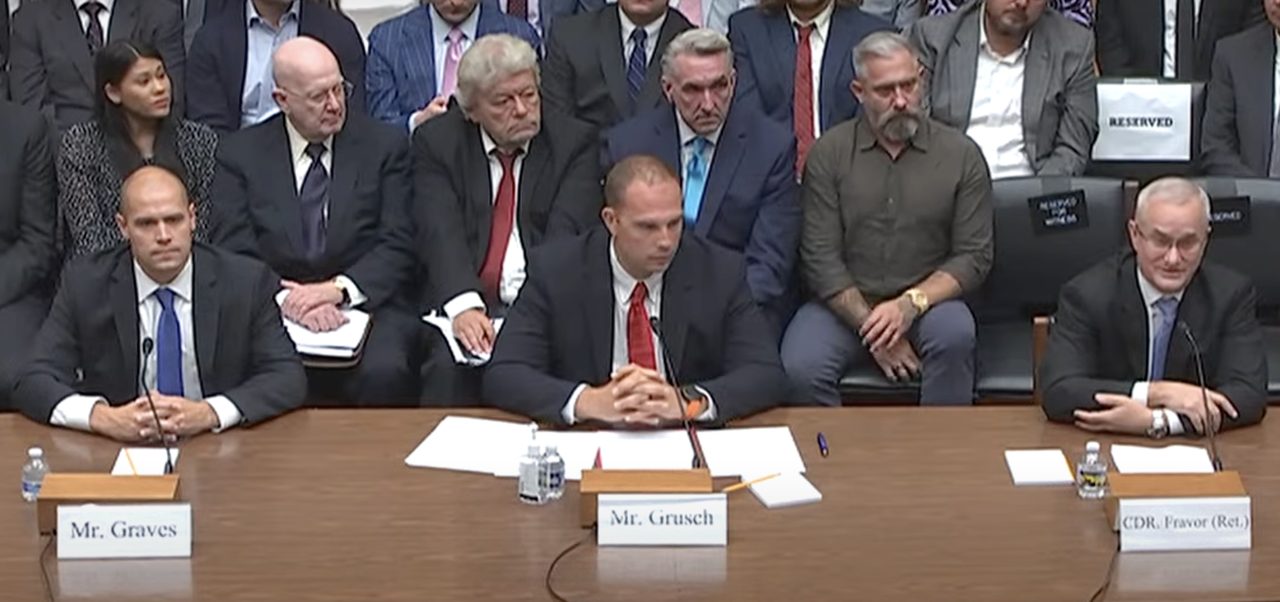
- David Fravor testifying at the U.S. House hearing on unidentified anomalous phenomena, July 26, 2023 U.S. House Committee on Oversight and Accountability, via Wikimedia Commons. Public domain Source.
- Card crop of USS Nimitz (CVN-68) underway in the Red Sea, 2013 photograph by Mass Communication Specialist Seaman Derek A. Harkins, U.S. Navy, via Wikimedia Commons. Public domain Source.
_underway_in_the_Red_Sea_2013.JPG)
.jpg)

