The Pascagoula Beings
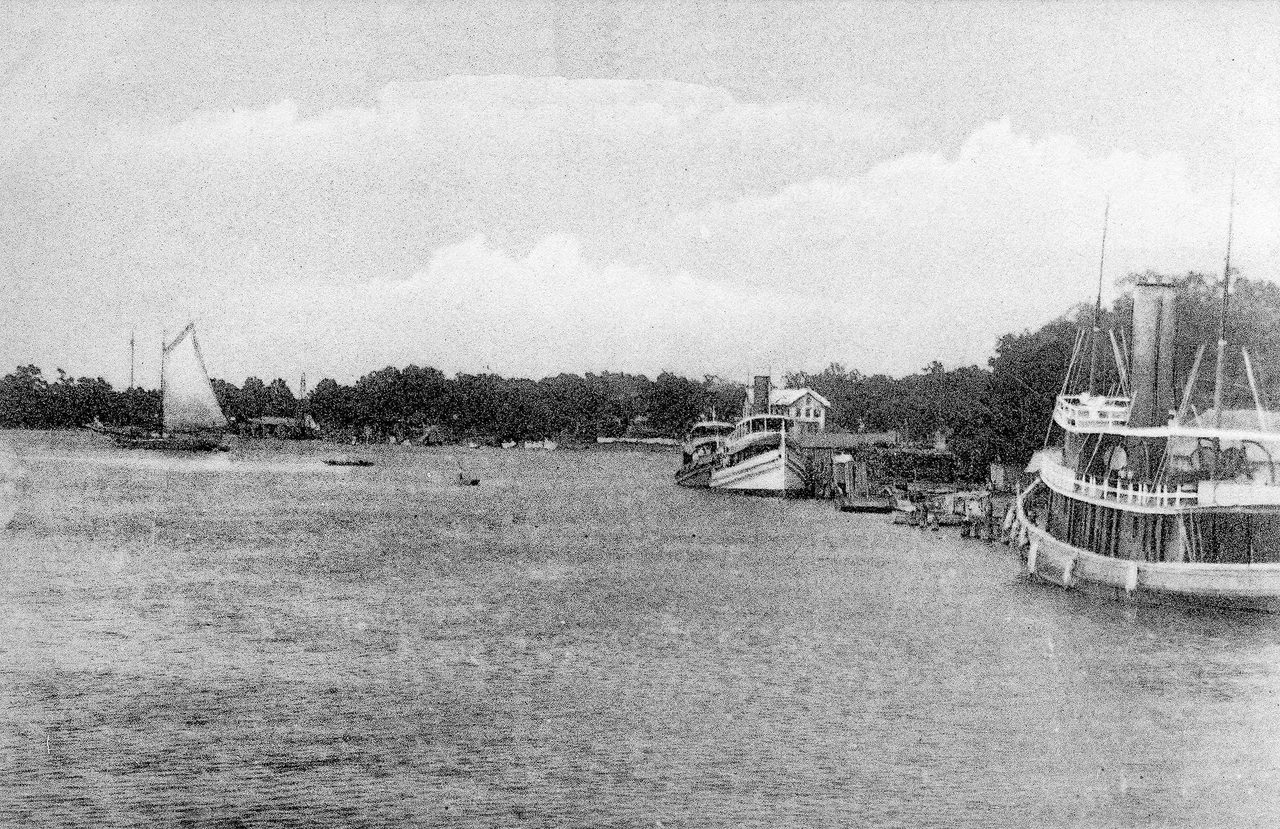
On one October night in 1973, two fishermen said three gray, wrinkled, claw-handed beings took them from a riverbank. Hickson said he was floated aboard a hovering craft while conscious; Parker said he fainted from fright and has no memory of boarding. A Project Blue Book astronomer believed them. Half a century later there is still not one piece of physical proof. Here is the case file, opened claim by claim, with every line wearing its evidence.
It was after dark on the Mississippi coast, and the fishing was slow. Then, Charles Hickson would insist for the rest of his life, a light came down out of the sky, and three things that were not men floated across the water toward him and the teenager fishing beside him. What Hickson and Calvin Parker reported from that riverbank on the night of October 11, 1973, would go on to draw a Project Blue Book scientist, a career UFO debunker, and four national television shows. It has never been resolved. Here is the file, opened claim by claim, with every line wearing its evidence.
01The night on the river
On the night of October 11, 1973, Charles Hickson, 42, and Calvin Parker, 19, were fishing off an abandoned pier on the west bank of the Pascagoula River, near Pascagoula, Mississippi, when they reported being taken aboard a hovering, egg-shaped craft. That much is not in dispute: two named men, a fixed place, a fixed date, and a report they made that same night and never took back.
They did not sit on the story. The same night, Hickson and Parker reported the encounter to Keesler Air Force Base and the Jackson County Sheriff's Department. Skeptical deputies tried a trap: they left the two men alone in a room and secretly tape-recorded their private conversation, hoping the men would drop the act and expose the inconsistencies of a hoax. Instead, talking only to each other with no audience they knew of, their accounts matched the testimony they had just given. That recording remains one of the more quietly persuasive details in the whole case.
02What they said they saw
Strip away the noise, and the physical description Hickson gave, and repeated for decades, is remarkably specific. It is also where the ground starts to soften, because almost everything about the beings themselves comes from a single pair of witnesses with no second sighting anywhere to check them against.
| Feature | What Hickson described |
|---|---|
| Height | Roughly 5 feet tall |
| Skin | Pale, wrinkled, grayish |
| Head | Bullet-shaped, no visible neck |
| Face | Slit-like mouth, no visible eyes |
| Hands | Crab-like pincers |
| Movement | Stiff, floating glide, not walking |
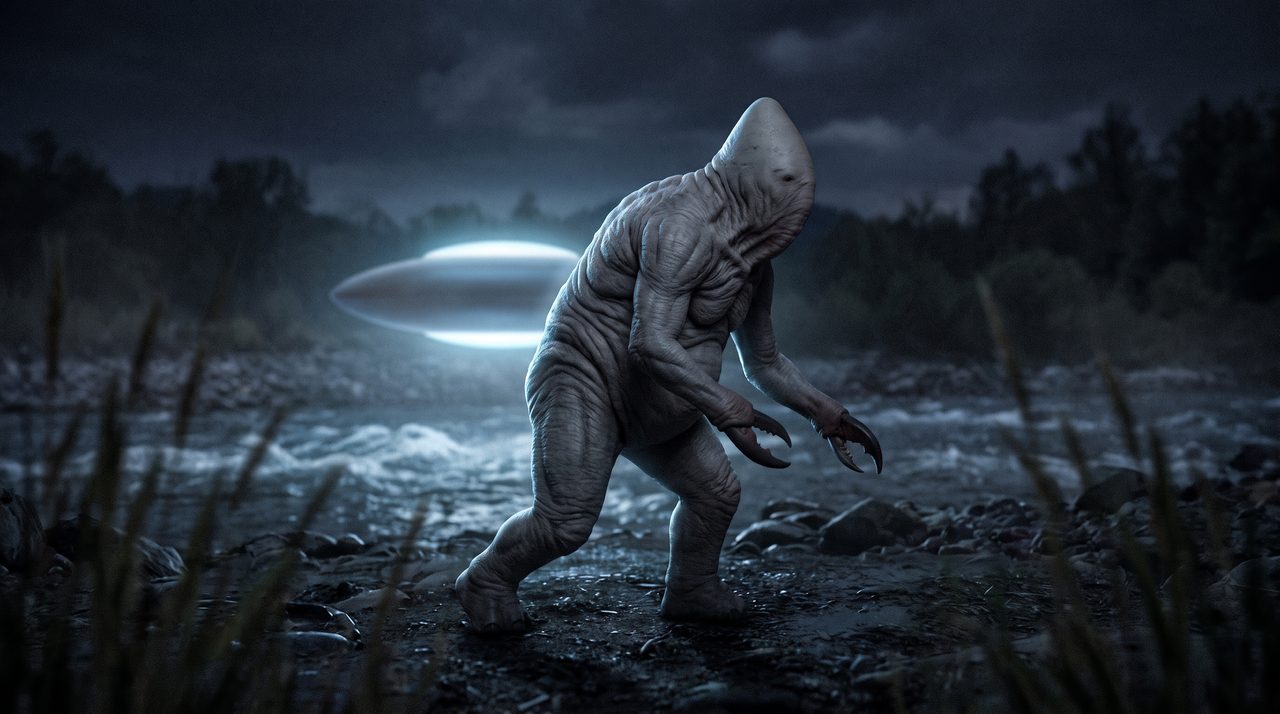
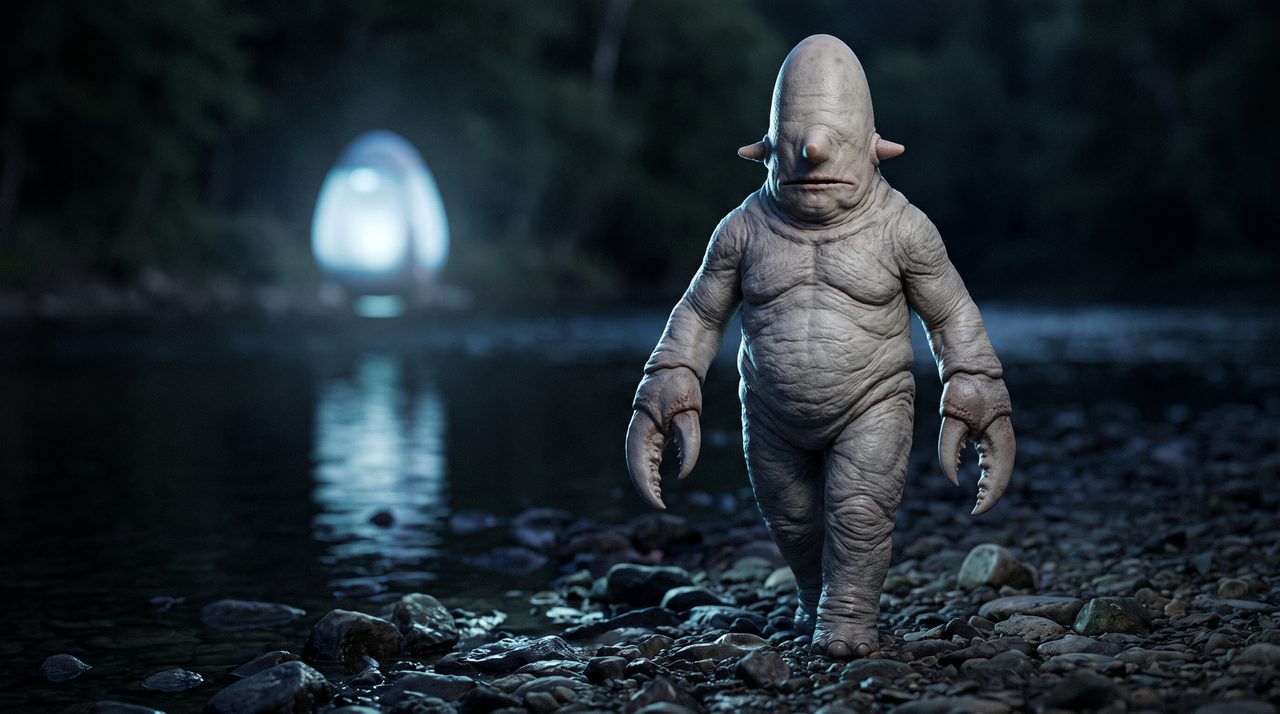
Hickson described three creatures, each roughly five feet tall, with pale, wrinkled grayish skin and bullet-shaped heads set on no visible neck. Their mouths were slits; they had no visible eyes; and where hands should have been, they had crab-like pincers. They did not walk so much as glide, stiff and floating, across the ground. The physical details vary a little from one retelling to the next, which is exactly what you would expect from a single witness pair with no corroborating second sighting.
Some accounts push the description further: thin, conical or carrot-like projections where a nose or ears might sit, and an overall impression, as Hickson told it, less of a living animal than of a machine, a programmed 'robot' doing a job. Handle these details with more care than the rest. They come from secondhand descriptive elaboration in the retellings, not from an independent second witness, which is why they sit a full tier below the core description.
03Aboard the craft
The two men did not have the same night. That difference matters, and the skeptics would later lean on it hard.
Hickson said he stayed conscious but paralyzed while two of the beings floated him into the craft for what he described as an examination. Parker's night was different. He said he fainted from fright the instant he saw the beings and has no memory of being taken aboard at all. Two men, one event, two very different vantage points, and only one of them claiming to have seen the inside.
Inside, Hickson described being scanned by a mechanical, eye-like device that moved slowly over his body. Decades later, in an interview, Parker reached for a comparison the modern reader will recognize at once: he compared the sensation to being inside an MRI machine. It is a vivid image. It is also a single-witness recollection with nothing independent to confirm it.
04The men who came to check
What lifts Pascagoula above a hundred forgotten sighting reports is who showed up to investigate it, and how fast they moved.
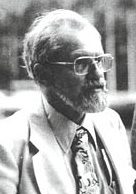
Within roughly 36 hours of the report, the astronomer J. Allen Hynek was in Pascagoula interviewing the two men in person. Hynek was no fringe figure: a Northwestern University professor, the former scientific consultant to the U.S. Air Force's Project Blue Book, and the founder of the Center for UFO Studies. He came with James Harder, a UC Berkeley engineering professor and a consultant to the civilian research group APRO. When two credentialed scientists get on a plane inside two days, the case has already stopped being ordinary.
After hypnosis sessions with both men, Hynek and Harder came away convinced they were telling the truth. Hynek told reporters the pair were absolutely honest... they have had a fantastic experience,
and that there was definitely something here that was not terrestrial.
Harder argued that a genuine strong feeling of terror is practically impossible to fake under hypnosis.
Read this for exactly what it is: two investigators' subjective judgment of the men's honesty and demeanor, not physical proof of what they claim happened.
Both men were also reported at the time to have passed polygraph examinations, but the specifics are contested. One account has Hickson sitting a roughly two-and-a-half-hour test that read as truthful, with Parker declining a polygraph on his attorney's advice. The skeptic Philip J. Klass countered that the examiner was not fully certified or experienced, that the test was shorter and looser than reported, and that Hickson later refused a retest by a more seasoned examiner. Treat passed the polygraph
as debated, not settled.
05The case against
For every investigator who believed them, there was a skeptic who did not, and the skeptics raised questions that have never fully gone away.
Philip J. Klass, the aviation journalist and prominent UFO debunker, argued publicly that Pascagoula was most likely a hoax, pointing to what he called discrepancies in Hickson's account and irregularities in the polygraph process. Note the tier carefully: this is a named skeptic's published conclusion, not an independently verified finding that a hoax actually occurred.
The skeptical investigator Joe Nickell later offered a naturalistic reading: that Hickson and Parker may have slipped into a hypnagogic 'waking dream', the vivid half-sleep state that can feel utterly real. He also made a sharper structural point, that Parker's own claim to have fainted undercuts him as a corroborating second witness, leaving the whole account resting more heavily on one man than it first appears.
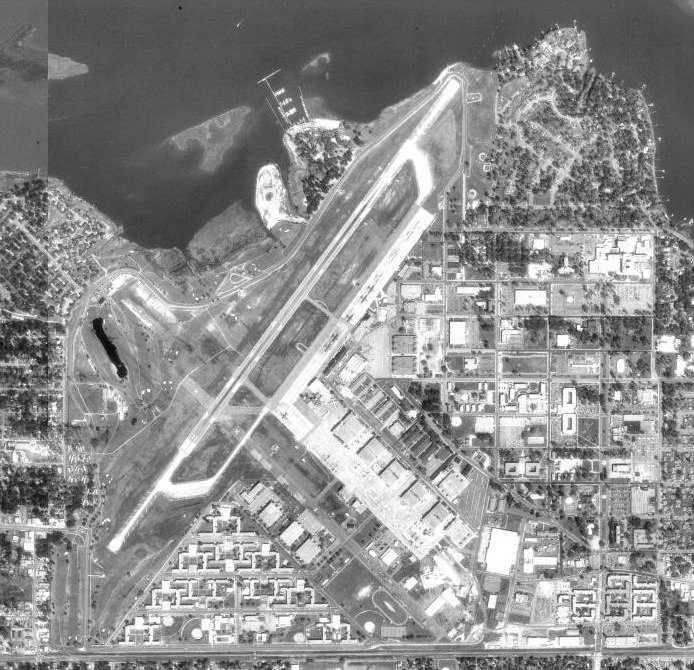
And here is the hard floor under all of it. No physical evidence was ever produced: no radiation traces, no debris, no independent eyewitness of the craft. A medical examination at Keesler Air Force Base the night of the report reportedly found no radiation exposure, only stress consistent with a genuinely traumatic experience. Every source reviewed agrees on this, believers included: there is no physical proof that any of it happened.
06The long afterlife
Whatever happened on that riverbank, the story it set off is fully documented, and it never really stopped.
| When | What happened | Tier |
|---|---|---|
| Oct 11, 1973 | Hickson (42) and Parker (19) report being taken aboard an egg-shaped craft | Tier 1 |
| Same night | They report to Keesler AFB and the sheriff; a secret recording matches their story | Tier 1 |
| Within ~36 hrs | Hynek and Harder interview the two men in person | Tier 1 |
| Late 1973 | After hypnosis, investigators judge the men truthful; a polygraph is reported passed, then disputed | Tier 2 |
| Nov 2, 1973 | The pair appear on The Dick Cavett Show, then more national TV | Tier 1 |
| 1983 / 2018 | Hickson, then Parker, publish first-person books on the encounter | Tier 1 |
| Jun 22, 2019 | A Mississippi historical marker is unveiled at the site | Tier 1 |
| 2011 / 2023 | Hickson dies (80); Parker dies (68), his account intact | Tier 1 |
The case went national within weeks. Hickson and Parker appeared on The Dick Cavett Show on November 2, 1973, and went on to The Mike Douglas Show, The Tonight Show, and To Tell the Truth. For a Mississippi fisherman and a nineteen-year-old, it was a sudden and total collision with the national spotlight.
Both men eventually put their accounts in print. Hickson self-published a book, UFO Contact at Pascagoula, in 1983. Parker went the other way first, staying publicly silent for roughly four decades before breaking it in 2018 with his own account, Pascagoula, The Closest Encounter: My Story. That long silence, then a deliberate return to the same story, is part of why the case refuses to die.
Neither man ever recanted. Charles Hickson died in September 2011 of a heart attack, aged 80. Calvin Parker died in August 2023 of kidney cancer, aged 68, having spent his final years giving interviews and holding to his account of that night to the very end. Whatever else is true, both men told the same story for the rest of their lives.
And the state made it official geography. On June 22, 2019, a Mississippi historical marker commemorating the reported encounter was unveiled at the site, turning a disputed fishing trip into a fixed point on the map of the Gulf Coast.
07Why this one stands alone
There is one more thing that sets Pascagoula apart, and it cuts against reading the beings as a species at all.
Unlike the Grays or the Nordics, the wrinkled, pincer-handed 'robot' beings of Pascagoula are essentially a one-off: a single witness pair's description, not a recurring type reported across independent cases. No substantial body of separate encounters describes matching wrinkled-skin, pincer-handed creatures. That is precisely why this belongs in the case files, filed as a singular event, rather than catalogued as a 'star nation' or a standing species. It is an interpretive framing, not a hard sourced fact, but it is the honest way to shelve it.
So what is left when the television lights go out and the investigators fly home? A fixed date, two named men, a secret recording that caught them telling the same story to no one, two scientists who believed them, two skeptics who did not, and a complete absence of anything you could put under a microscope. The Pascagoula file is unusually well documented and unusually empty at the same time.
Fast Facts
- When and where
- October 11, 1973, Pascagoula River, Mississippi
- The witnesses
- Charles Hickson (42) and Calvin Parker (19)
- The beings
- Three, about 5 ft, gray, pincer-handed, no visible eyes
- Lead investigator
- J. Allen Hynek, former Project Blue Book consultant
- Physical evidence
- None; the Keesler exam found only stress
- Best skeptical case
- Klass (hoax) and Nickell (waking dream)
- Status (2026)
- Documented report, unverified abduction
What the file can actually support
The events around the claim are documented. The report was made the same night, secretly recorded and found consistent, investigated in person by Hynek and Harder within 36 hours, carried onto four national television shows, and eventually fixed with a state historical marker. All of that verifiably happened.
The investigators' judgment is credible but unproven. Hynek and Harder believed the two men were truthful, and Hickson was reported to have passed a polygraph. That is a credible read of two frightened witnesses, not physical evidence, and the polygraph itself is disputed by Klass. Genuinely unresolved.
The extraordinary claim fails the physical test. No radiation, no debris, no independent witness of the craft was ever produced; the Keesler medical exam found only stress. Fifty years on, the abduction itself remains entirely unverified, and every source agrees no physical proof exists.
The least-supported claims are the most vivid ones. The carrot-like nose projections, the machine-like 'robot' impression, and the mechanical scanning eye Hickson said moved over his body (which Parker later likened to an MRI) rest on one witness pair and secondhand retellings, with no independent corroboration of any kind. Named plainly: this is the thinnest part of the whole file.
So the Pascagoula file closes the way the honest ones do, wide open. Two men told the same strange story for fifty years, one of them right up to his last interview, and neither the believers nor the debunkers ever produced the one thing that would settle it. What do you do with testimony that never wavered and never left a mark? Is a story that stubborn a window onto something real, or only onto how badly two frightened men needed to be believed? The river is still there. The proof never arrived.
Sources & further reading
There is no Theories of Anything corpus document for this case yet. The file below was built from external sources, listed here so you can check the sourcing and go deeper.
Image credits
- Pascagoula River photograph by the Mississippi Department of Archives and History (Cooper Postcard Collection), via Wikimedia Commons. Public Domain ("No known copyright restrictions", Flickr Commons designation) Source.
- J. Allen Hynek photograph by the United States Government, via Wikimedia Commons. Public Domain (US Government work, 17 U.S.C. §105, work of a federal officer/employee in official duties) Source.
- Keesler Air Force Base photograph by the United States Geological Survey (via Terraserver), via Wikimedia Commons. Public Domain (US Government work, USGS/USGov-PD) Source.
- Pascagoula beings, portrait A AI-generated artist's impression, Google Flow, 2026-07-21. AI-generated
- Pascagoula beings, portrait B AI-generated artist's impression, Google Flow, 2026-07-21. AI-generated
- Card crop of Pascagoula River photograph by the Mississippi Department of Archives and History (Cooper Postcard Collection), via Wikimedia Commons. Public Domain ("No known copyright restrictions", Flickr Commons designation) Source.


