Zombie Microbes in the Permafrost
In 2014, French researchers thawed a scoop of 30,000-year-old Siberian permafrost and watched a giant virus wake up and start infecting cells again. It was harmless to us. Two years later, in the summer of 2016, thawing ground in the Russian Arctic did something far less academic: it exhaled anthrax from a reindeer that had lain frozen in the soil for 75 years, killing a child and more than two thousand animals. Permafrost is not a passive freezer. It is a quarter of the Northern Hemisphere's land, holding pathogens, mammoths, ancient air, and twice as much carbon as the entire atmosphere, and it is thawing faster than almost anywhere on Earth. Here is everything the deep freeze is keeping, and everything it has started to let go, tier by tier, including the alien-biology claim the ice flatly refuses.
Start with the fact that should not be possible and is. A virus that stopped moving 30,000 years ago, while mammoths still walked the tundra, can be scooped out of the frozen ground today, warmed in a dish, and watched as it comes back to life and starts infecting cells again. This is not science fiction and it is not a maybe. It has been done, more than once, and the ground it came out of is thawing. Permafrost covers a quarter of the northern world, and for almost all of human history it has been the planet's most reliable freezer. Now it is failing, and everything it was keeping is beginning to come out at once: the carbon, the mammoths, the ancient air, and yes, the pathogens. Here is the whole of what the deep freeze holds, tier by tier, starting with the things that wake up.
01The Things That Wake Up
In 2014, a French team led by Matthieu Legendre reached into permafrost that had been frozen for 30,000 years and pulled out a giant virus they named Pithovirus sibericum. Giant is not a figure of speech: at about 1.5 micrometers long it is large enough to see under an ordinary light microscope, which no virus is supposed to be. They thawed it, and it worked. It found amoebae, infected them, and replicated, thirty millennia after it had last been alive. It is harmless to humans and to animals, but the thing it proved is not harmless at all: freezing does not kill everything, and deep time is not the barrier we assumed it was.
It was not a fluke. In 2015 the same team revived a second giant virus, Mollivirus sibericum, from the very same layer of frozen ground. Two ancient viruses, two revivals, from one core of Siberian permafrost.
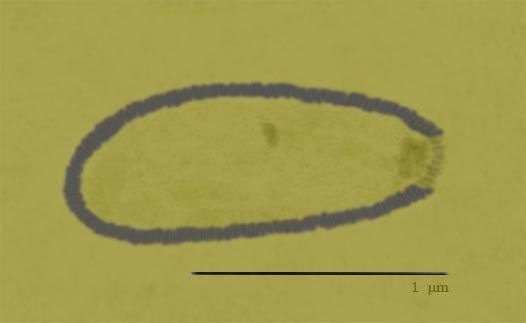
Then it got older. In 2022 and 2023, a team led by Jean-Michel Claverie and Chantal Abergel described reviving several more ancient viruses from Siberian permafrost, including a Pandoravirus dated to 48,500 years old, the oldest virus ever brought back to life. Their report carried the flatly unsettling title 'An Update on Eukaryotic Viruses Revived from Ancient Permafrost,' published in the journal Viruses in 2023. An update, as if this were now a routine we run.
Put together, these revivals establish a plain and uncomfortable fact. Viable, infectious agents can survive tens of thousands of years locked in frozen ground and resume activity when they are thawed. The viruses recovered so far attack amoebae, not people. But the cold that kept them intact does not check what it is preserving, and permafrost is now thawing and exposing material that has been sealed away since before the last ice age ended. That is a biosafety question, not a curiosity.
These are also not simple organisms. Giant viruses from permafrost carry complex genomes of up to 2,500 genes, more than many living bacteria, which means the ancient virosphere was far richer than anything in our current catalogs. Some of these lineages have no living descendants at all. They are not old copies of modern viruses. They are branches of life we would never have known existed if the ice had not handed them back.
02The Outbreak That Already Happened
Here is where the thought experiment stops being a thought experiment. In 2011, a risk assessment by Boris Revich and Marina Podolnaya warned that thawing permafrost could disturb old anthrax burial grounds across East Siberia and expose people and livestock to a disease long thought safely buried. Five years later, in the summer of 2016, it happened almost exactly as described. On the Yamal Peninsula, thawing ground exposed the carcass of a reindeer from a burial about 75 years old, and the anthrax it carried was still viable. The outbreak that followed killed a child, hospitalized around 90 people, and killed more than 2,000 reindeer. This is not a model or a projection. It is a modern anthrax epidemic caused directly by permafrost giving up its dead.
And anthrax is only the disease we happen to have a name for here. The Russian permafrost also holds abandoned Soviet-era biological research facilities, cattle burial grounds from historical outbreaks, and cemeteries where smallpox victims were laid in ground that never thawed. Every one of them is a sealed archive of something we spent enormous effort to bury or defeat, and every one of them becomes a possible exposure route as the ground warms.
03What The Word Permafrost Actually Means
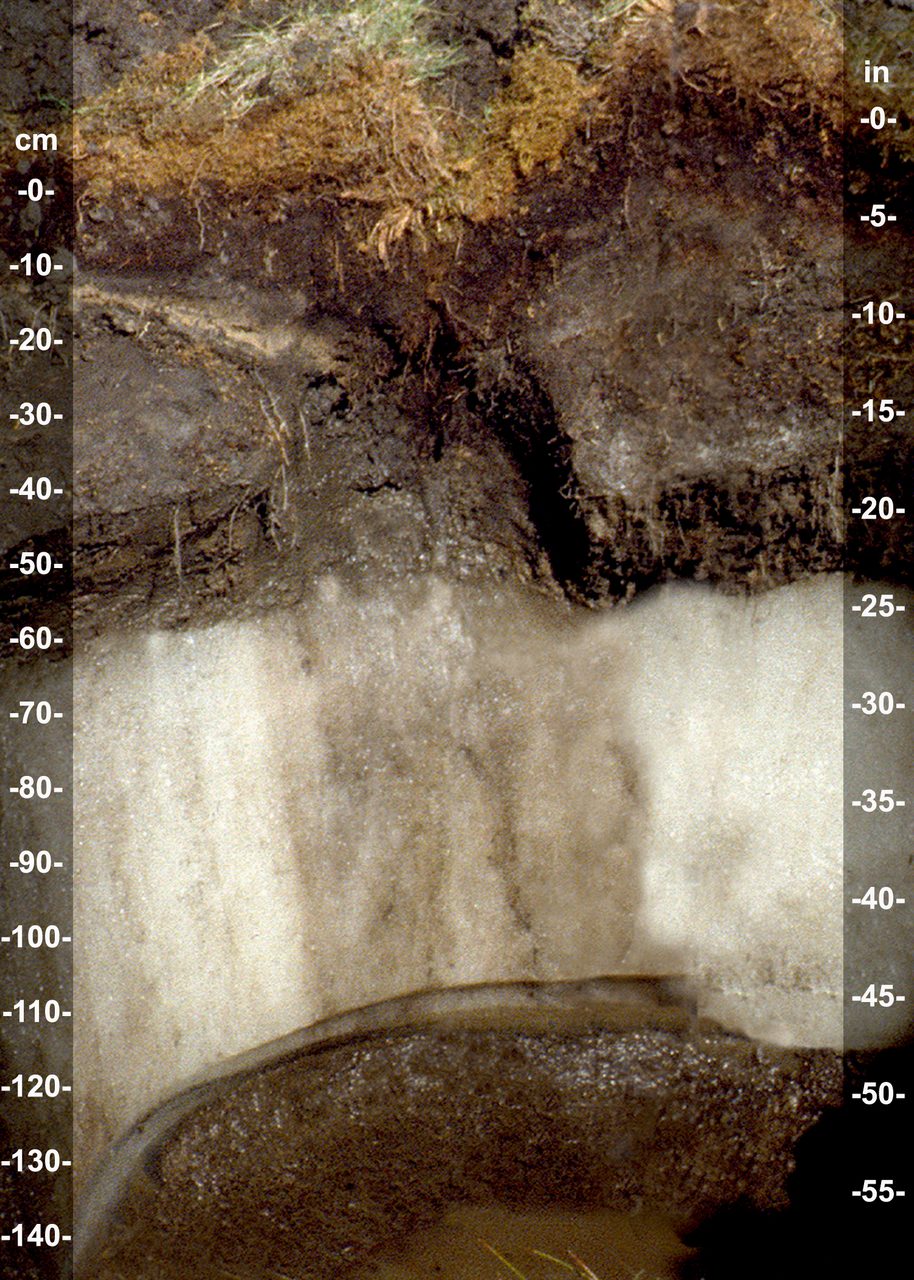
Permafrost has a precise definition: ground that stays at or below zero degrees Celsius for at least two consecutive years. In practice that undersells it. Much of the world's permafrost has been frozen solid not for two years but for thousands to millions of them, which is exactly why it can hold a virus or a mammoth intact across an entire ice age.
It is also not a fringe feature of the planet. Permafrost underlies roughly 23 to 25 million square kilometers of the Northern Hemisphere, about a quarter of all its land, spread across Siberia, northern Canada, Alaska, the Tibetan Plateau, and Scandinavia. A full quarter of the northern world is, structurally, frozen.
On top of the permanently frozen ground sits the active layer, a skin of soil from a few centimeters to several meters thick that thaws each summer and refreezes each winter. That thin seasonal layer is where the tundra plants root, where the microbes work, and where anything we build has to stand.
Below the active layer the frozen ground can run astonishingly deep. It ranges from a few meters near its warm southern edge to more than 1,500 meters thick in parts of Yakutia in eastern Siberia, where some of it dates back to the Pliocene, roughly 3 million years ago. That is ground that was frozen before there were modern humans to walk on it.
Scientists sort permafrost by how completely it blankets a region: continuous, covering more than 90 percent of the ground where the mean annual air temperature sits below minus 8 degrees Celsius; discontinuous, at 50 to 90 percent; sporadic, at 10 to 50 percent; and isolated patches under 10 percent. The categories describe how thoroughly the frozen ground covers a landscape, not how deep it reaches beneath it.
04The Frozen Giants
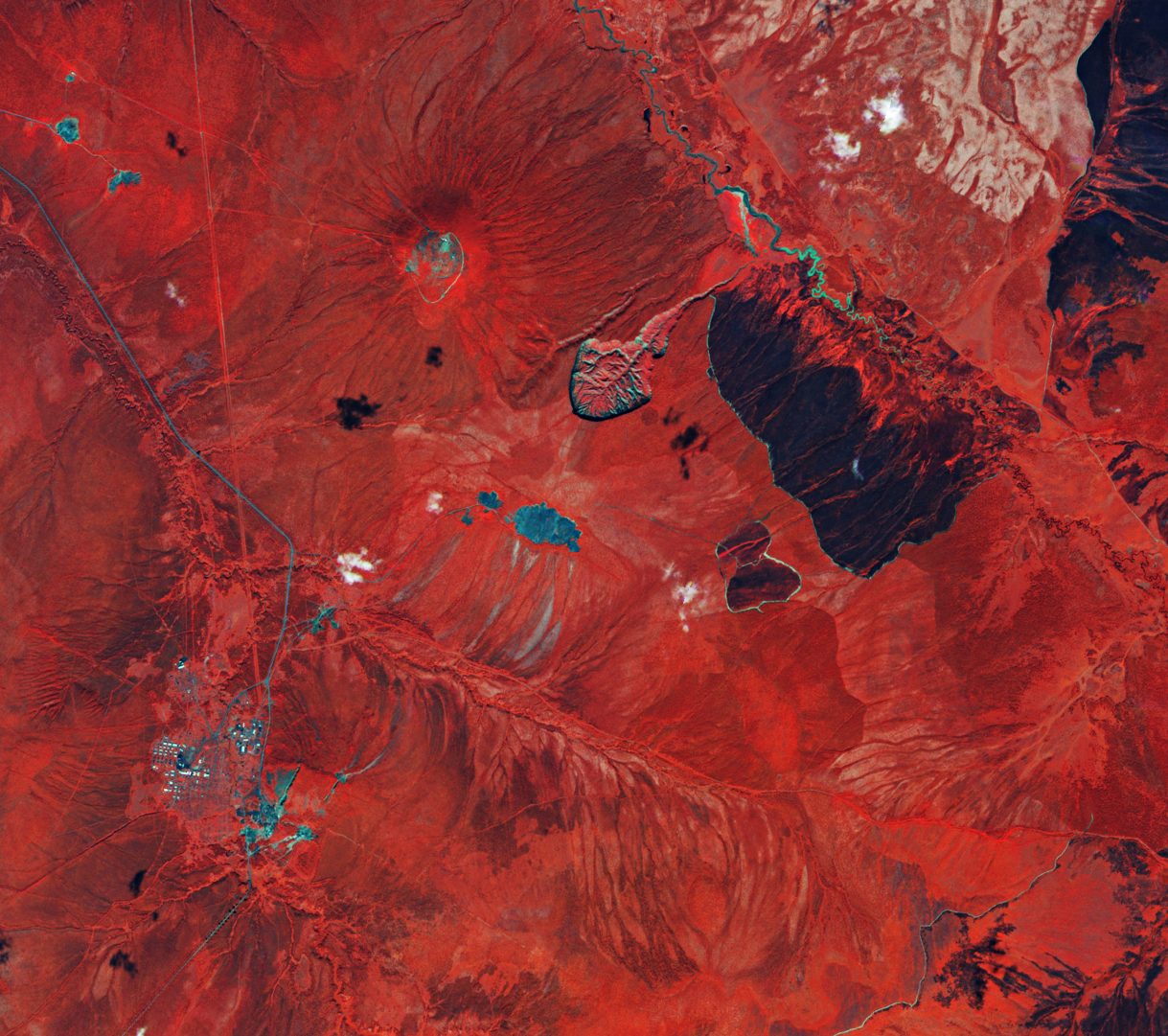
The permafrost's most famous residents are not microbes. They are giants. The frozen ground has preserved intact carcasses of Pleistocene megafauna in a state no ordinary fossil can match: woolly mammoths, woolly rhinoceroses, cave lions, steppe bison, and even an ancient horse recovered from the walls of the Batagaika crater. Not bones. Bodies, with skin and hair and organs still in place.
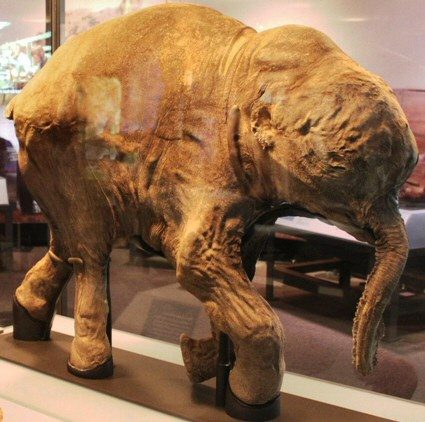
The best of them has a name. Lyuba, a baby mammoth about 42,000 years old, was found in 2007 on the Yamal Peninsula, and she is the best-preserved mammoth ever discovered. Her internal organs were intact, and traces of her mother's milk were still in her stomach, a last meal held for 42,000 years.
She is not alone. Yuka, a juvenile mammoth roughly 28,000 years old, was recovered in 2010 with liquid blood still preserved in the body.
In places the ground has gathered them by the hundred. The Berelyokh mammoth cemetery holds more than 140 tusks concentrated in a single spot, a graveyard of the ice age laid down in one place.
Preservation this good is not just a spectacle, it is data. The complete woolly mammoth genome has been sequenced from permafrost-preserved DNA, and it turns out to share about 99.6 percent of its sequence with the Asian elephant. Mammoth DNA has even been recovered straight from frozen sediment as environmental DNA, letting researchers reconstruct whole vanished ecosystems and map where the megafauna roamed without ever finding a body.
The ground is still handing them over. In 2021 a remarkably preserved woolly rhinoceros calf emerged from melting permafrost in Yakutia with its fur, its horn, and its soft tissues still attached, one of the finest specimens of its kind ever found.
And the science has moved past DNA. Ancient proteomics, the analysis of preserved proteins alongside the genes, now pulls information out of these bodies that DNA alone cannot give: what the animals ate, what diseases they carried, how their bodies actually worked. The frozen giants are not trophies. They are the most complete records of extinct life we will ever hold.
05The Longest Memory On Earth
Permafrost is not the only ice keeping records. The great ice sheets keep a different and even longer archive. Cores drilled from Greenland, at sites named GRIP, GISP2, NEEM, NGRIP, and EastGRIP, and from Antarctica, at Vostok, EPICA Dome C, Dome Fuji, and WAIS Divide, pull up layered columns of snow and ice that preserve the state of the planet stretching back hundreds of thousands of years, one layer at a time.
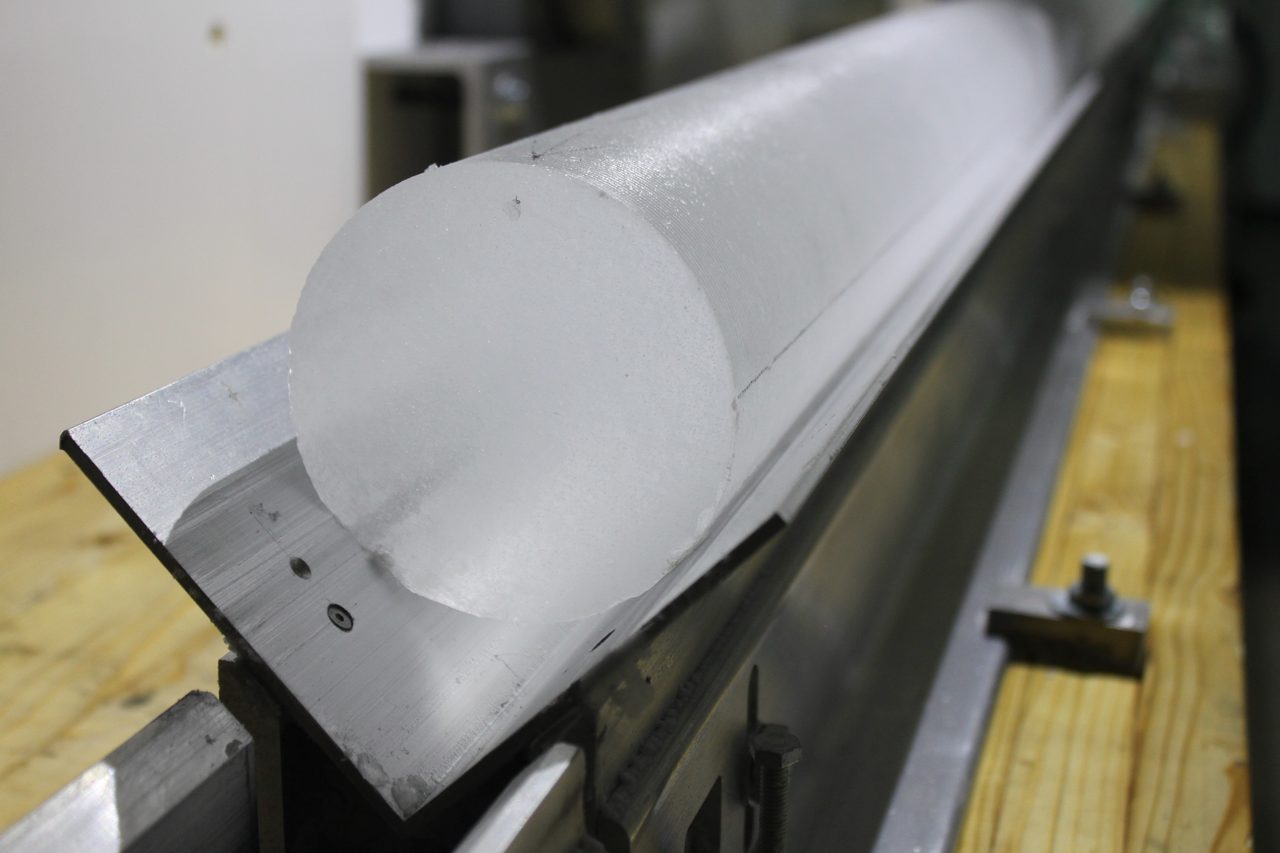
The deepest of them is staggering. The EPICA Dome C core in Antarctica reaches back about 800,000 years, the longest continuous climate record ever pulled from ice, and it captures eight full glacial and interglacial cycles, eight complete swings of the planet in and out of ice ages, recorded in a single frozen column.
A single core reads out an astonishing range of the past. The ratios of deuterium and oxygen-18 record temperature. Air bubbles trapped in the ice hold actual samples of the ancient atmosphere, preserving its carbon dioxide, methane, and nitrous oxide. Sulfate spikes mark distant volcanic eruptions, from Toba around 74,000 years ago to Tambora in 1815. Wind-blown dust records how arid the world was, biological traces hold pollen and bacteria and fungal spores, and cosmogenic isotopes like beryllium-10 and chlorine-36 track past changes in the sun and the Earth's magnetic field. One frozen column, and nearly the whole state of the planet written into it.
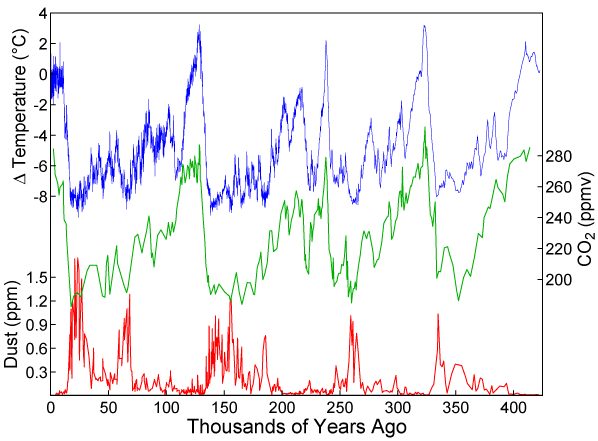
The headline the ice delivers is blunt. Across 800,000 years, carbon dioxide and temperature move in tight lockstep, with CO2 swinging between about 180 parts per million in the depths of an ice age and about 280 in the warm periods between. Today's atmosphere sits above 420 parts per million, higher than any point anywhere in the entire ice-core record. We are already outside the range the ice has been keeping for the better part of a million years.
The ice also proves that climate can turn violently fast on its own. Dansgaard-Oeschger events, named for the researchers who first read them out of the Greenland ice, are episodes where the region warmed by 5 to 10 degrees Celsius within a few decades, and they happened roughly 25 times during the last glacial period. Abrupt climate change is not a modern invention. The planet has done it to itself, again and again.
Alongside them run the Heinrich events, periodic surges when armadas of icebergs broke off the Laurentide Ice Sheet and poured into the North Atlantic, dropping layers of rock debris across the ocean floor and coinciding with the coldest, harshest phases of the northern climate.
And the archive is about to get longer. The Beyond EPICA project is drilling at Little Dome C in East Antarctica for ice reaching back 1.5 million years, old enough to capture the Mid-Pleistocene Transition, when the planet's ice-age rhythm shifted from a 41,000-year cycle to a 100,000-year one. It would be the oldest continuous climate record ever recovered from ice.
06Twice The Carbon Of The Sky
Now the part that turns the permafrost from a wonder into a problem. Frozen into the Northern Hemisphere's permafrost is an estimated 1,460 to 1,600 gigatons of organic carbon. That is roughly twice the total amount of carbon currently in Earth's entire atmosphere, which stands at about 870 gigatons. The ground is holding double the sky, and it is beginning to melt.
That carbon is old dead plants. Over thousands of years, generation after generation of tundra vegetation died, was partly rotted, and then froze before microbes could finish breaking it down. The cold hit pause on decomposition and held it there, stockpiling half-digested carbon in the ground for millennia.
Thaw hits play again. As the ground warms, the microbes wake up and resume the work they left unfinished, releasing carbon dioxide where there is oxygen and methane where the ground is waterlogged and airless. That distinction matters more than it sounds, because methane is roughly 80 times as potent a greenhouse gas as carbon dioxide over a 20-year span. The wettest, most thawed ground releases the most dangerous gas.
How much comes out is a real number with real stakes. Under a moderate warming scenario, permafrost thaw is projected to release roughly 130 to 160 gigatons of carbon by the year 2100. That works out to around 5 to 15 percent of total projected human emissions, which makes it a significant feedback on the warming, though not the single dominant driver of it. It is not the end of the world. It is a heavy thumb pressed on the scale.
And here is a place where the science is honestly unsettled, whatever a tidy summary might tell you. Researchers genuinely disagree about how the thaw will actually proceed. One picture is gradual: the active layer deepens a little more each year, from the top down, releasing carbon slowly. The other is abrupt: the ground collapses in sudden thermokarst failures that crack open deep, ancient carbon far faster than the gradual models predict. Which process dominates is an open, actively argued question, and the answer changes how fast the whole feedback arrives. Anyone who tells you the permafrost carbon story is settled is skipping the part the scientists are still fighting over.
07The Craters That Blow Themselves Open
Some of the thaw does not proceed quietly at all. Since 2014, a series of enormous craters has begun appearing without warning on the Yamal and Gydan peninsulas in Siberia, some of them up to 50 meters across and 70 meters deep, punched into the tundra as if by an artillery shell.
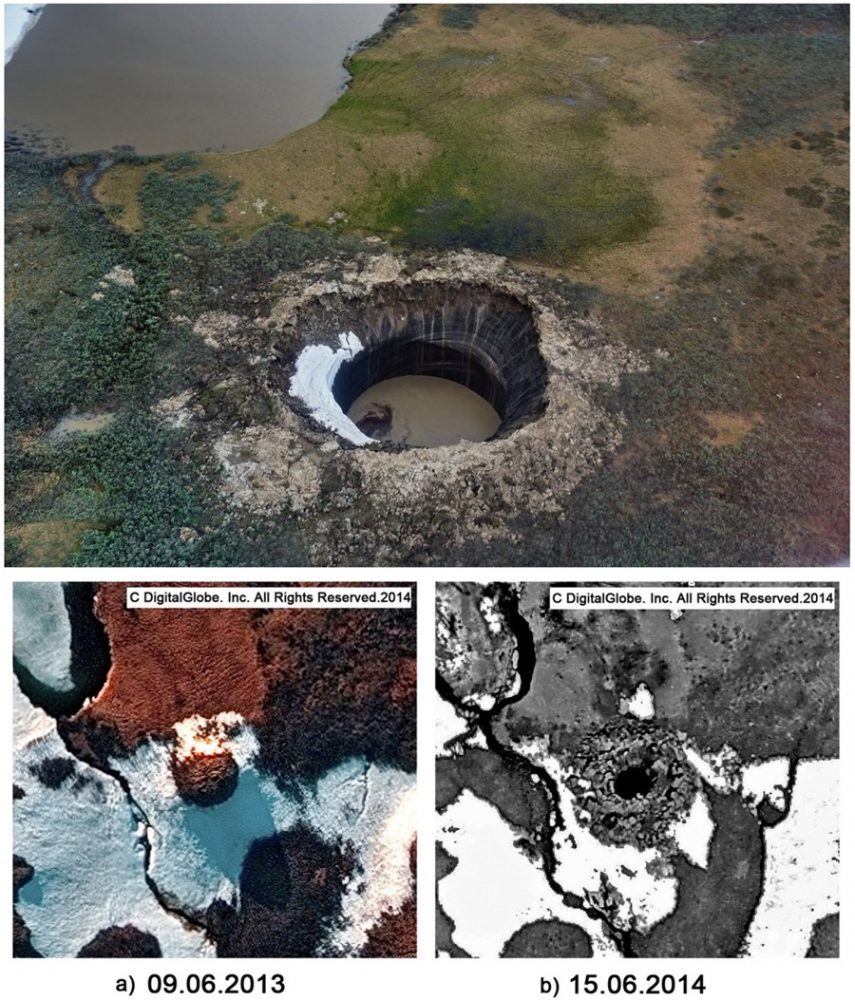
The leading explanation is a blowout. Methane gas, released by thawing permafrost or by the breakdown of icy methane hydrates underground, accumulates beneath a still-frozen cap of ground and builds pressure until the cap fails and the whole thing erupts, blasting out a crater in a single violent release. The ground is not just softening. In places it is pressurizing, and then exploding.
The evidence fits the explanation. Instruments have measured elevated methane concentrations in and around the craters, and satellite imagery suggests that more of these features, smaller and easier to miss, are scattered across the Arctic. We are almost certainly only finding the biggest ones.
What makes them genuinely unnerving is that this is a brand new process. Craters forming this way had never been documented before 2014, and their arrival lines up with an Arctic that is warming roughly 3 to 4 times faster than the global average. The far north is not just getting warmer. It is starting to behave in ways the textbooks did not contain.
08The Ground Gives Way
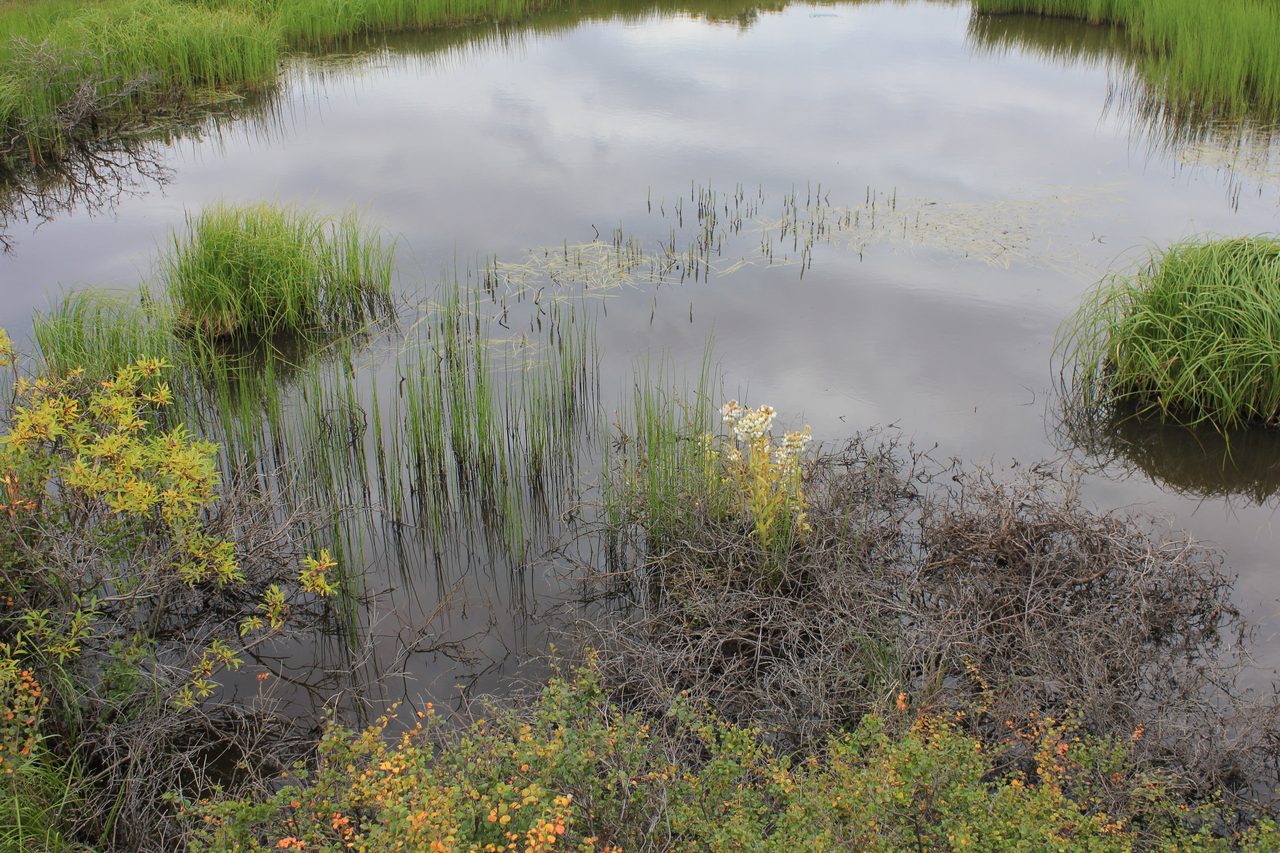
When ice-rich permafrost thaws, the ground it was holding up simply loses its structure. The result is called thermokarst: a landscape of subsidence, sudden lakes, collapsing drainage, and erosion, terrain that behaves less like solid earth and more like something melting, because that is exactly what it is.
Thermokarst lakes can appear over just years to decades, and they can drain just as fast when they breach the frozen channels beneath them, so the map itself becomes unstable. Ponds show up where there was dry ground, then vanish where there was open water. The land will not hold still.
For anything built on it, this is a slow catastrophe. Across northern Siberia and Alaska, thermokarst is already undermining infrastructure that was engineered for stable frozen ground: roads buckle, buildings tilt, pipelines and runways subside and fail. Yakutsk, home to about 300,000 people and the largest city on Earth built on permafrost, faces escalating structural damage as the ground beneath it softens.
The bill is enormous. Estimates put the annual cost of permafrost-thaw damage to Arctic infrastructure at 15 to 30 billion dollars by the middle of this century under moderate warming. The freezer that held the north together is failing, and the north was built on the assumption that it never would.
09A Flower From The Deep Freeze, And The Ice That Is Leaving
Not everything the permafrost releases is a threat. In 2012, a Russian team led by Svetlana Yashina regenerated a living plant, Silene stenophylla, from fruit tissue about 32,000 years old that had been cached in a fossilized squirrel burrow and frozen ever since. It is the oldest plant ever brought back from tissue, and it did not merely survive: it grew, flowered, set seed, and produced a second generation. An ice-age flower, cached by a squirrel tens of thousands of years ago, blooming again in a modern greenhouse.
The largest bodies of ice on the planet are also on the move, and unlike permafrost their retreat is measured directly in sea level. Three great ice sheets hold most of the world's fresh water, and each is a different piece of the same rising problem.
| Ice Sheet | Ice Volume | Sea-Level Equivalent | Current Status |
|---|---|---|---|
| Greenland | ~2.85 million cubic km | 7.2 meters | Losing mass at an accelerating rate; about 0.7 mm per year of sea-level rise as of 2020 |
| West Antarctic | ~3.3 million cubic km | 3.3 meters | The most vulnerable major ice body; Pine Island and Thwaites glaciers retreating as warm ocean water reaches them |
| East Antarctic | ~21.7 million cubic km | 53.3 meters | Long thought stable, but parts (the Wilkes and Aurora basins) may be vulnerable to long-term warming |
The ice cores put all of this in perspective, and the perspective is not reassuring. Over 800,000 years, carbon dioxide and Antarctic temperature stayed tightly coupled, with CO2 acting as both a response to warming and a driver of it, amplifying every swing between ice age and warm period. The dust records from those same cores show that glacial times were far dustier and more arid, and that the wind-borne iron may have fertilized the Southern Ocean enough to help draw carbon dioxide back down. But the single most sobering number is the speed. Carbon dioxide is now rising at about 2.5 parts per million every year, roughly 100 times faster than the fastest natural increase anywhere in the entire ice-core record. The planet has changed its climate before. It has essentially never changed it this fast.
10What We Genuinely Do Not Know Yet
Everything above is either established fact or well-supported, actively-researched science. Past this line the ground gets less certain, and honesty means marking it clearly. These are the real open questions, the places where the evidence is genuine but the conclusion is not yet in.
The most dramatic scenario has a name: the clathrate gun hypothesis, put forward by James Kennett and colleagues in 2003. It proposes that a rapid destabilization of methane hydrates, the ice-like structures that trap huge volumes of methane in ocean sediments and permafrost, could fire off a burst of the gas violent enough to trigger runaway warming. The gun, in the metaphor, is loaded. The argument is over whether anything can pull the trigger.
Here the mainstream view is more measured than the headlines. The Paleocene-Eocene Thermal Maximum, a genuine episode of abrupt warming about 56 million years ago, may well have involved hydrate destabilization on a large scale, which shows the mechanism is real. But most climate scientists consider a modern, catastrophically abrupt methane bomb unlikely on human timescales. What they do not dismiss is the slower danger: a chronic, sustained release of methane as the Arctic warms, which is a real and growing concern even if the sudden apocalyptic version is not the expected outcome. The catastrophe is doubtful. The steady leak is not.
We are at least starting to watch it directly. NASA's ABoVE campaign, the Arctic-Boreal Vulnerability Experiment, has used aircraft and satellites to map extensive methane hotspots across Alaska and northern Canada, spotting concentrated plumes rising off thawing thermokarst lakes. For the first time the leak is being measured from above rather than only modeled.
That measurement matters because of a gap in the models. The abrupt kind of thaw, thermokarst collapse, coastal erosion, and landslides, can mobilize deep carbon far faster than the gradual top-down thawing that most climate models assume. Abrupt thaw already appears to account for something like 20 percent of permafrost carbon emissions, yet it is still poorly represented in the models, which means the standard projections may be quietly underestimating how fast the carbon comes out.
The permafrost has also given back pieces of ourselves. At the Yana Rhinoceros Horn Site in Siberia, occupied roughly 31,600 years ago, the frozen ground preserved some of the oldest DNA of anatomically modern humans ever found in the Arctic, proof that people were living in that brutal high-latitude world far earlier than once believed.
From here it is openly speculative, and the research file flags it as such. It is possible that deeper, older permafrost layers preserve biological material from human populations we have never identified, or push the date of human presence in the Arctic back further than any current evidence supports. Possible is the honest word. The ground may be holding chapters of the human story we have not read, and it may not. We do not yet know.
The mammoth genome has fed the boldest ambition of all: bringing the animal back. Colossal Biosciences, founded in 2021, aims to use CRISPR gene editing to insert key mammoth genes into Asian elephant cells, splicing in the traits for cold-adapted hemoglobin, a shaggy coat, and heavy fat metabolism, to create a mammoth-elephant hybrid engineered for the Arctic.
Whether that would truly be de-extinction or simply the invention of a novel cold-adapted elephant is genuinely debated, and the ecological, ethical, and logistical obstacles are enormous. A gene-edited hybrid is not a resurrected species, and a resurrected species would still need a world to live in.
There is even a place waiting for them. Since 1996, Sergey Zimov's Pleistocene Park in Siberia has been testing whether reintroducing large herbivores to the Arctic could actually slow the thaw, by trampling and compacting the insulating snow and maintaining bright, reflective grassland instead of dark, heat-absorbing shrubs. It is the strange point where de-extinction dreams and climate strategy meet: not bringing the mammoth back for its own sake, but to see whether a herd of giants could help keep the carbon in the ground.
11What The Ice Refuses
And then there are the claims that do not survive contact with the evidence at all. The research file grades them Tier 4 and grants them the flat refusal they have earned, because the permafrost is strange enough without inventing things it does not hold.
First, there are no aliens in the ice. The idea that permafrost or Antarctic ice harbors extraterrestrial organisms has no support. The nearest thing to a serious version of it was the ALH84001 affair in 1996, when tiny structures inside a Martian meteorite were argued to be microfossils, but even that was about a rock from Mars, not Earth's ice, and the scientific consensus has since shifted firmly against reading those structures as biological. Frozen alien biology is not a finding. It is a wish. [UNSUPPORTED]
Second, there is no lost civilization under Antarctica. The fringe theory that the Antarctic ice sheet hides an ancient advanced society, usually tied to some version of the Atlantis myth, gets no support whatsoever from glaciology. The ice cores and radar surveys tell a continuous story of snow piling into ice over millions of years, with no buried cities, no ruins, and no anthropogenic artifacts anywhere in the record. The ice has been accumulating peacefully since long before there was anyone to build anything. [UNSUPPORTED]
Third, you cannot geoengineer your way out of this by thawing the permafrost on purpose. Proposals to deliberately melt specific permafrost deposits, whether to reach the resources underneath or to let the carbon out gradually rather than abruptly, have no scientific credibility. Every honest reading says deliberate thaw would accelerate the harm, not manage it. You do not defuse a carbon bomb by lighting the fuse yourself. [UNSUPPORTED]
Fast Facts
- The Zombies
- In 2014 a giant virus, Pithovirus sibericum, was revived from 30,000-year-old Siberian permafrost and infected amoebae in the lab. By 2023 a team had revived a Pandoravirus dated to 48,500 years old, the oldest ever brought back.
- The Real Outbreak
- In 2016 a thawed reindeer carcass from a burial about 75 years old triggered an anthrax outbreak on the Yamal Peninsula that killed a child, hospitalized around 90 people, and killed more than 2,000 reindeer.
- The Extent
- Permafrost is ground frozen for at least two years straight, much of it for thousands to millions. It underlies about 23 to 25 million square kilometers, roughly a quarter of the Northern Hemisphere's land.
- The Longest Record
- The EPICA Dome C ice core in Antarctica reaches back about 800,000 years and captures eight ice-age cycles. It shows CO2 swinging between 180 and 280 parts per million; today's is above 420, off the top of the whole record.
- The Carbon
- Permafrost holds an estimated 1,460 to 1,600 gigatons of organic carbon, roughly twice the carbon in Earth's entire atmosphere. Moderate warming may release 130 to 160 gigatons of it by 2100.
- The Craters
- Since 2014, methane-blowout craters up to 50 meters wide and 70 deep have been erupting across the Yamal and Gydan peninsulas, in an Arctic warming 3 to 4 times faster than the global average.
- The Refused Claims
- No aliens in the ice, no lost civilization under Antarctica, and no safe way to thaw permafrost on purpose. All three are graded Tier 4 and refused.
- The Bottom Line
- Permafrost is not a passive freezer. It is an active system now releasing carbon, methane, and, rarely but really, live pathogens as it warms. The 2016 anthrax outbreak already proved the last part is not hypothetical.
So Is The Permafrost Really Handing Back Its Dead?
Yes, and the core of it is not in doubt. The giant-virus revivals from 30,000 to 48,500 years old, the real 2016 Yamal anthrax outbreak, the definition and quarter-of-the-hemisphere extent of permafrost, the intact mammoths like Lyuba and Yuka, and the 800,000-year ice-core record are all measured, peer-reviewed, mainstream science. Frozen life really does come back, and the ground that held it really is thawing.
The climate consequences are well supported and being actively worked out. The permafrost carbon store of twice the atmosphere, the methane-blowout craters, the thermokarst already wrecking Arctic infrastructure, and the accelerating loss of the great ice sheets are all solid. But the file is honest about a real, unsettled question inside this tier: scientists genuinely disagree over whether the thaw comes gradually, from the top down, or abruptly, in sudden collapses that expose deep ancient carbon much faster. That debate is not a footnote. It changes how fast the whole thing arrives.
Several big questions stay genuinely open. The catastrophic methane-bomb scenario is considered unlikely to be abrupt by most climate scientists, though the slower, chronic methane release is a real and growing concern. Whether deeper permafrost hides DNA from unknown human populations is possible but unproven. And whether Colossal's gene-edited elephant would ever count as a resurrected mammoth, or help slow the thaw at Pleistocene Park, is a live experiment, not a settled result.
Three claims are refused outright. There are no extraterrestrial organisms in the permafrost or the Antarctic ice, and the ALH84001 Martian-meteorite case that once flirted with the idea has fallen to scientific consensus. There is no ancient civilization buried under the Antarctic ice sheet; the cores and radar show unbroken ice accumulation over millions of years with nothing built into it. And deliberately thawing permafrost as a geoengineering trick has no credibility and would only accelerate the damage. [UNSUPPORTED]
So the honest picture is not a horror movie, and it is not a shrug either. The permafrost is not a sealed museum where the past sits safely behind glass. It is an active system, and as it warms it is handing things back: carbon by the gigaton, methane in sudden violent bursts, mammoths and ice-age flowers, and on at least one documented occasion a lethal disease that had been buried for three generations. The 2016 anthrax outbreak settled the question of whether the zombie pathogen was hypothetical. It is not. A quarter of the Northern Hemisphere is frozen ground, it has been the planet's most faithful archive for a million years, and it is now opening faster than almost anywhere on Earth. The viruses we have pulled out so far only infect amoebae. The mammoths are only mammoths. So the real question is not whether the ice is releasing what it holds, because it plainly is. The question is what else is still down there, in the layers we have not thawed yet, waiting for a warm enough summer.
Sources & further reading
Everything above is drawn from our research library on Theories of Anything, which is where we worked from. The papers, reports and primary records listed beneath them are where you can check us independently.
Image credits
- Satellite view of the Batagaika Crater, Siberia (Sentinel-2, 10 July 2020) imagery by the European Space Agency (ESA), via the Copernicus Sentinel-2 mission, on Wikimedia Commons. Free use with attribution (Copernicus Sentinel data 2020) Source.
- Illustrator's rendering of the giant virus Pithovirus sibericum illustration by Pavel Hrdlička (Wikipedia user Packa), based on the original research team's microscopy, via Wikimedia Commons. Creative Commons Attribution-ShareAlike 3.0 Unported (CC BY-SA 3.0) Source.
- A permafrost ice wedge exposed in frozen ground, Alaska photograph by John A. Kelley, USDA Natural Resources Conservation Service, via Wikimedia Commons. Creative Commons Attribution 2.0 Generic (CC BY 2.0) Source.
- The Lyuba baby-mammoth specimen on display photograph by Matt Howry, via Wikimedia Commons. Creative Commons Attribution 2.0 Generic (CC BY 2.0) Source.
- A freshly cut EastGRIP ice core, Greenland photograph by Helle Astrid Kjaer, via Wikimedia Commons. Creative Commons Attribution 4.0 International (CC BY 4.0) Source.
- CO2, temperature, and dust from the Vostok, Antarctica ice core (about 450,000 years) chart by Wikimedia Commons user Dragons flight, built from Petit et al. 1999 data (NOAA/NGDC Vostok ice-core dataset), via Wikimedia Commons. Dual-licensed: Creative Commons Attribution-ShareAlike 3.0 Unported, and GNU Free Documentation License v1.2 or later Source.
- Composite figure of a Yamal gas-emission crater (ground photograph and satellite view) figure by Sergey N. Buldovicz and colleagues, from their open-access Scientific Reports paper (ground photograph by Ruslan Amanzhurov, 15 July 2015, combined with satellite imagery), via Wikimedia Commons. Creative Commons Attribution 4.0 International (CC BY 4.0) Source.
- A thermokarst melt pond on the Seward Peninsula, Alaska photograph by Dr. John Cloud, NOAA Central Library, via Wikimedia Commons. Public domain (NOAA, an official-duties work of a U.S. federal employee). Source.
- Card crop of Satellite view of the Batagaika Crater, Siberia (Sentinel-2, 10 July 2020) imagery by the European Space Agency (ESA), via the Copernicus Sentinel-2 mission, on Wikimedia Commons. Free use with attribution (Copernicus Sentinel data 2020) Source.


