Pillar 43: Did Stone-Age Carvers Record a Comet?
One limestone pillar in southern Turkey carries a vulture, a scorpion, and a headless man, carved eleven thousand years ago. Two researchers say it is the date a comet hit the Earth. The excavators say they are reading their own sky into ancient stone. Here is the file, every claim wearing its evidence.
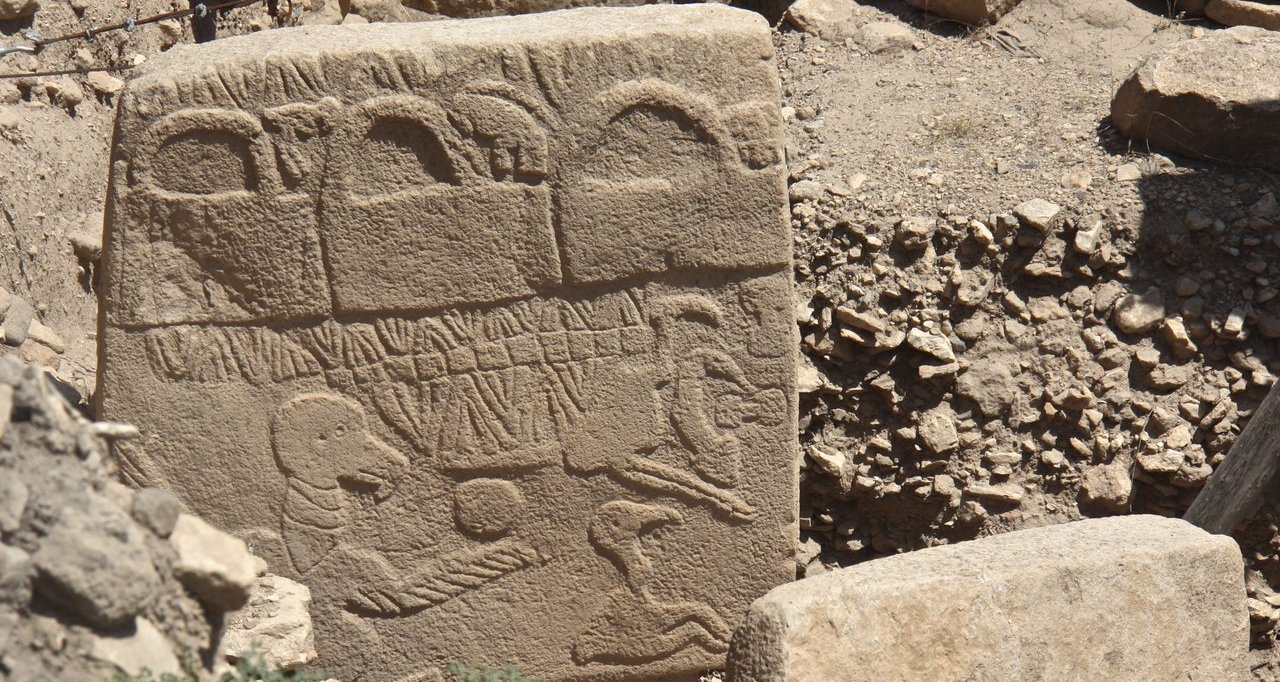
One pillar at Gobekli Tepe carries a vulture with its wings spread, a scorpion, a fox, a scatter of birds and snakes, and at the bottom a headless man. It was carved into limestone in southern Turkey around eleven thousand years ago, by people with no farms, no pottery, and no metal. Archaeologists call it the Vulture Stone. One physicist calls it something else entirely: a date, the day a comet struck the Earth, written into the oldest astronomical record on the planet. Let's open the file.
| Feature | Detail |
|---|---|
| Where it stands | Enclosure D, northwest ring, Gobekli Tepe |
| When it was carved | Layer III, roughly 9600 to 8800 BCE |
| Nickname | the Vulture Stone |
| The central scene | a vulture, a disc above its wing, a scorpion, a headless man |
| Other animals | fox, boar, cranes, snakes, smaller creatures |
| Top of the pillar | three rectangular handbag or bucket symbols |
01The most decorated stone at the oldest temple on Earth
Pillar 43 is a real perimeter pillar on the northwest side of Enclosure D at Gobekli Tepe, carved in low relief with a crowded tableau of animals and a single headless human figure. Enclosure D, one of the largest and most elaborate rings at the site, is dated by its excavators to Layer III, roughly 9600 to 8800 BCE, and centers on two T-shaped pillars about 5.5 meters tall. None of this is in dispute. You can stand in front of the stone and count the carvings.
Gobekli Tepe is the oldest monumental architecture we know of, raised by pre-pottery hunter-gatherers thousands of years before Stonehenge or the Pyramids (the full site file is linked below). Over sixty animal species are carved across its pillars. Pillar 43 is simply the busiest and most argued-over surface of them all.
02Read the stone from top to bottom

The carving reads in registers. Across the top sit three rectangular handbag or bucket shapes. In the middle, a large vulture spreads its wings, with a circular disc or sphere resting just above the left wing, flanked by a scorpion and a scatter of other creatures: a fox, a boar, long-legged birds, and snakes. At the bottom lies a headless man, ithyphallic, his head shown separately beside the body. Every one of these figures is physically there in the limestone. This is the raw material both sides argue over.
Nobody disputes what is carved. The entire fight is about what it means. To the excavators the pillar is symbolic and ritual, a bestiary tied to death and the sacred. To one team of researchers it is a star map with a timestamp.
03The comet reading
In 2017, Martin Sweatman and Dimitrios Tsikritsis published a paper in the journal Mediterranean Archaeology and Archaeometry with a startling premise. The animals on Pillar 43, they argued, are not just animals. They are constellations. The vulture is Sagittarius. The scorpion is Scorpius. The disc above the vulture's wing marks the position of the Sun. Correct the star positions for the slow wobble of precession, they claimed, and the scene resolves into one specific day: the summer solstice of roughly 10,950 BCE.
Sweatman and Tsikritsis read Pillar 43 as a datable snapshot of the sky, and the date they extract, around 10,950 BCE, lands almost exactly on the onset of the Younger Dryas, the abrupt cold spell that some scientists blame on a comet striking the Earth. On their reading the headless man is not a ritual figure but a record of mass death, and the whole pillar is a memorial to a cosmic catastrophe. This is a genuine peer-reviewed hypothesis, not a late-night documentary. It is also fiercely disputed.
Sweatman calculated that the odds of the animal figures lining up with those constellation positions by pure chance are lower than one in five million. That number sounds decisive. It holds only if his specific animal-to-constellation matches are the correct ones. Change a single assignment and the statistic collapses. The math is real. What it rests on is the interpretation.
| The carving | Sweatman reads it as |
|---|---|
| The vulture | the constellation Sagittarius |
| The scorpion | the constellation Scorpius |
| The disc above the wing | the position of the Sun |
| The headless man | mass death from the impact |
| The whole scene | summer solstice, around 10,950 BCE |
04Why 10,950 BCE matters
The date is the whole point. Around 10,900 BCE the planet lurched back into near-glacial cold for more than a thousand years, the event geologists call the Younger Dryas. In 2007 Firestone, West, and Kennett proposed in the journal PNAS that a comet airburst or impact triggered it, wiping out the mammoths and the Clovis culture of North America. Supporting evidence, including a platinum spike and microscopic nanodiamonds in sediments of the right age, has since been reported, though the impact itself remains debated. Sweatman's carved date and that impact point at the same moment in time.
Gobekli Tepe's oldest carvings postdate the proposed impact by roughly 1,350 years. Sweatman argues that is a plausible span for a catastrophe to survive as oral memory before being fixed in stone, the way flood stories persisted for millennia elsewhere. In 2019 he extended the reading, claiming a nearby central pillar, Pillar 18, encodes the autumn equinox of the very same year. To supporters that is accumulating evidence. To critics it is accumulating interpretation.
05Where the critics dig in
The trouble with the comet reading is not that it is obviously wrong. It is that it may be impossible to prove wrong, and the people who have spent their careers excavating Gobekli Tepe think it imports a sky that was never there.
Jens Notroff and colleagues from the excavation team answered Sweatman directly, in the same journal, in a paper titled More Than a Vulture. Their objection: the reading pins modern Western constellations onto Neolithic carvings and ignores the archaeological context. The same animals, foxes, snakes, vultures, scorpions, recur all across the site, on pillar after pillar, not only on this one. Pillar 43 may have been carved and re-carved over generations rather than composed as a single dated scene. If the vulture is a constellation here, why is it just a vulture everywhere else?
Constellations are inventions, not facts of nature. The same stars have been grouped into wildly different figures by different cultures, and there is no reason a hunter-gatherer in 10,950 BCE saw Sagittarius the way a Greek astronomer would thousands of years later. Give an interpreter that much freedom in matching carvings to stars, critics argue, and almost any wall of animals can be made to point at almost any date. That is the core reason the comet reading cannot climb to Tier 1: as it stands, it may not be falsifiable.
06The bird that meant death, with or without a comet
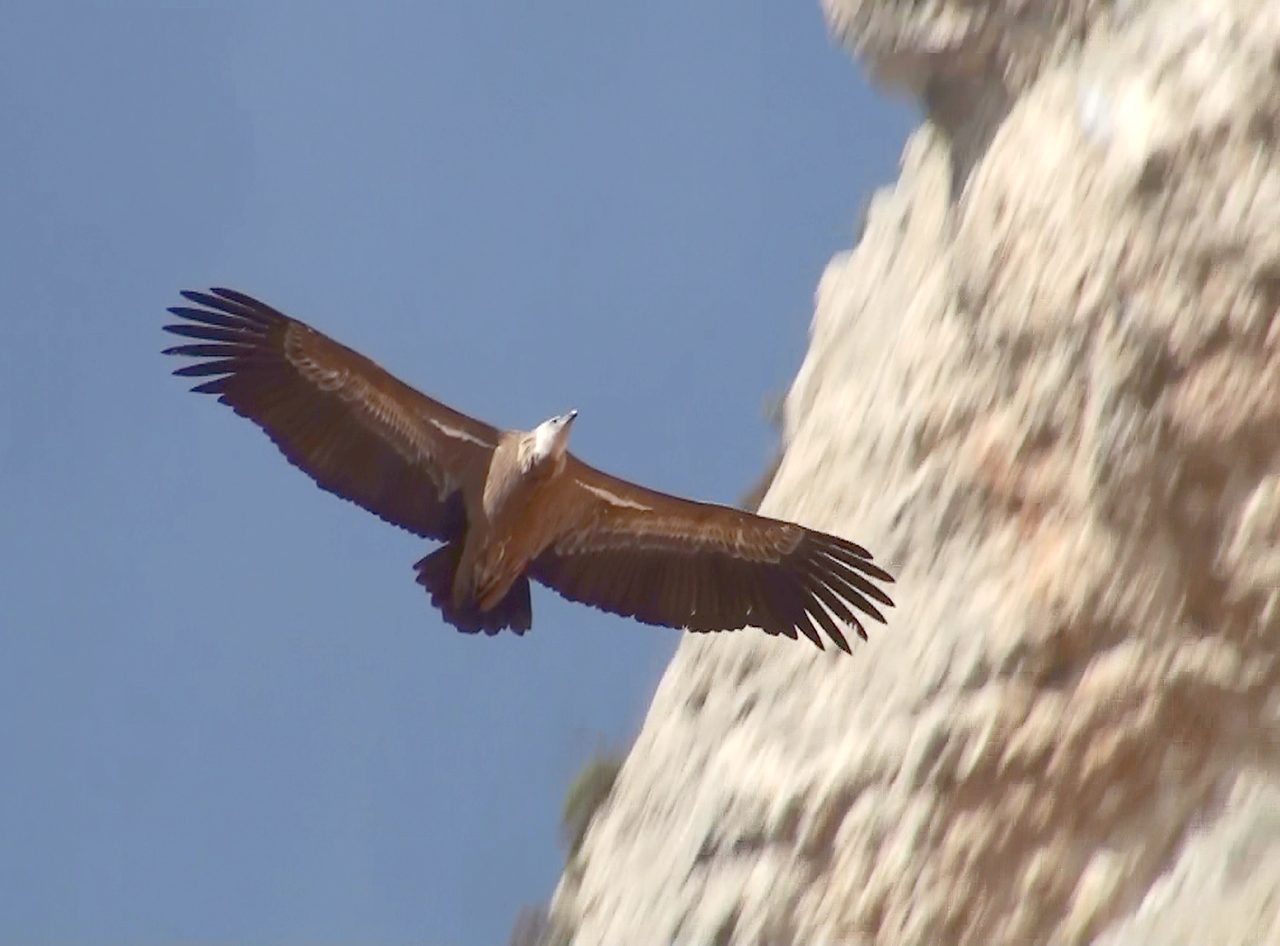
There is a mundane reading of Pillar 43 that needs no comet at all, and it is well documented. Across the Neolithic Near East, vultures and headless bodies belong to the world of death ritual. At Catalhoyuk, a settlement a few thousand years younger than Gobekli Tepe, wall paintings show vultures hovering over headless human figures, widely read as excarnation, the sky burial in which the dead are exposed for birds to strip. Human skulls were removed and curated at Jericho and Catalhoyuk. A vulture attending a headless man is, on this reading, exactly what these people believed happened when you died.
So the same carving carries two readings. It could be Sagittarius above the day the sky fell. Or it could be the bird of death doing what these people believed vultures did, carry the dead upward, no astronomy required. The erect phallus on the headless body fits a theme of death and regeneration that runs through the whole region. The stone will not tell you which meaning its carvers intended.
07The precession problem
There is one more weight the comet reading has to carry. If the carvers really encoded a precession-corrected sky, they understood precession, the 26,000-year wobble of Earth's axis that slowly drags the constellations against the seasons. Precession is conventionally credited to the Greek astronomer Hipparchus around 130 BCE, roughly 9,500 years after Pillar 43 was carved. Crediting that knowledge to pre-pottery hunter-gatherers would be one of the most revolutionary claims in the history of astronomy, and a claim that size needs far more than one contested pillar.
There is a gentler possibility. The builders may have watched the solstice sunrise creep along the horizon across many generations and simply recorded what they saw, with no theory of precession behind it, the way you can keep a calendar without knowing why the seasons slip. Even that lighter claim, naked-eye astronomy tracked over centuries and fixed in carving, is unproven for this period. It is possible. It is not established.
08Where it tips into fringe, and why that fails
Past the peer-reviewed debate, the comet reading has been pulled into a much larger story. Writers such as Graham Hancock use Pillar 43 as evidence for a lost advanced civilization, erased by the Younger Dryas impact, whose survivors then taught astronomy and monument-building to the world's surviving hunter-gatherers.
This goes far beyond anything Sweatman argues, and nothing at Gobekli Tepe supports it. There is no earlier advanced layer under the site, no metal, no machinery, no lost toolkit, only flint, stone, and the debris of hunter-gatherers who were plainly capable of extraordinary things on their own. The lost-civilization reading runs on the same engine as every alien-builder claim on this wing: the feeling that ancient people could not have done this themselves. Gobekli Tepe is the single best proof that they could.
Fast Facts
- Site
- Gobekli Tepe, near Sanliurfa, southeastern Turkey
- The pillar
- Pillar 43, the Vulture Stone, Enclosure D
- Carved
- Layer III, roughly 9600 to 8800 BCE
- The claim
- the animals encode a date, around 10,950 BCE
- Proposed by
- Sweatman and Tsikritsis, 2017
- The event
- the Younger Dryas cold spell and a possible comet impact
- The rebuttal
- Notroff and the excavation team, 2017
- Odds of chance
- under 1 in 5 million, if the matches are right
What we can actually stand behind
Pillar 43 is real, it is roughly eleven thousand years old, and its vulture-and-headless-man scene fits a documented Neolithic language of death and excarnation. The stone and its carvings are not in question.
The Sweatman and Tsikritsis reading, that the animals encode the date of a Younger Dryas comet impact, is a real, published, statistically argued hypothesis. It is neither proven nor refuted, and the excavators' objections carry serious weight. This one is honestly open.
The reading only works if pre-pottery hunter-gatherers understood precession, which would push the history of astronomy back by nine thousand years. That is an enormous, unproven claim resting on a single contested stone.
A lost Ice Age civilization surviving a comet and seeding its star-knowledge into hunter-gatherers fails outright. Nothing under the site supports it, and the builders needed no tutor.
So the Vulture Stone keeps its secret. Stand in front of it and you are looking at either the oldest calendar of catastrophe ever found, a day of fire remembered for thirteen centuries and cut into rock, or a bird of death doing exactly what these people always believed it did. The carvers left us the animals. They left no key. Which one are you looking at?
Sources & further reading
Everything above is drawn from our research library on Theories of Anything, which is where we worked from. The papers, reports and primary records listed beneath them are where you can check us independently.
Image credits
- Pillar 43, the Vulture Stone, at Gobekli Tepe photograph via Wikimedia Commons (Sue Fleckney). CC BY-SA 2.0 (Creative Commons Attribution-Share Alike 2.0 Generic) Source.
- Enclosure D at Gobekli Tepe photograph via Wikimedia Commons (Beytullah eles). CC BY-SA 4.0 (Creative Commons Attribution-Share Alike 4.0 International) Source.
- A griffon vulture (Gyps fulvus) in flight with wings fully photograph via Wikimedia Commons (BirdingInSpain). CC BY-SA 3.0 (also dual-licensed GFDL 1.2+) Source.
- Card crop of Pillar 43, the Vulture Stone, at Gobekli Tepe photograph via Wikimedia Commons (Sue Fleckney). CC BY-SA 2.0 (Creative Commons Attribution-Share Alike 2.0 Generic) Source.


