Project Blue Book: The Air Force's UFO Desk
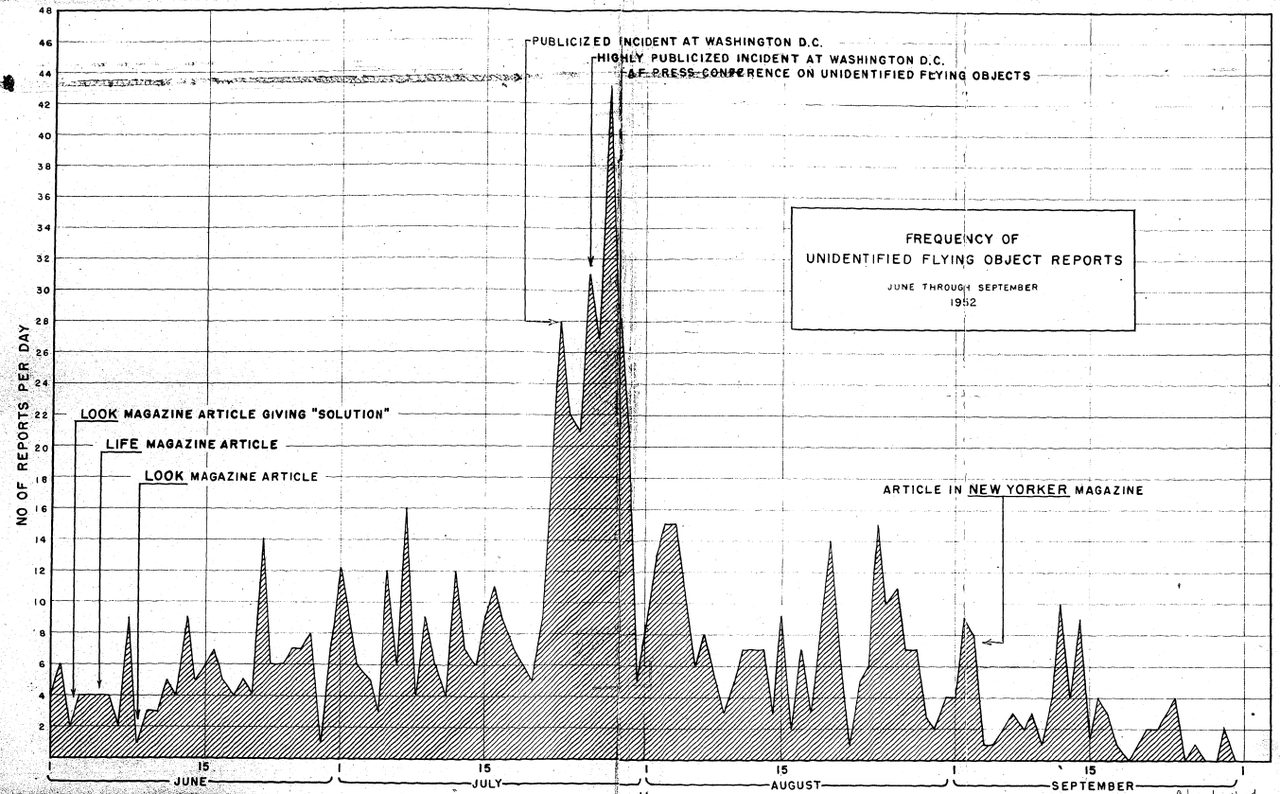
For seventeen years the United States Air Force ran an official desk for unidentified flying objects. Project Blue Book opened 12,618 case files, and when it shut down in December 1969 it told the country the matter was closed: nothing that flew was a threat, and nothing left unexplained was extraterrestrial. But 701 of those cases were never solved, the program's own first analysts had concluded in 1948 that the objects were interplanetary and been overruled, their report reportedly ordered destroyed, and a secret CIA panel had ordered the whole enterprise to debunk sightings rather than investigate them. This is the institutional biography of the Air Force's UFO desk: who built it, who reformed it, who buried its most explosive conclusion, and why its files still refuse to close the way the Air Force said they had.
For most of the Cold War, the United States Air Force ran an official government desk whose entire job was unidentified flying objects. It had a name, a director, a filing system, and a home at Wright-Patterson Air Force Base in Ohio. Between 1948 and 1969 it worked under three successive names, Project Sign, then Project Grudge, and finally Project Blue Book, and it collected 12,618 case files before the Air Force closed it down and declared the question settled. This is the story of that desk: not a single sighting, but the institution built to explain them all, and the conclusions it reached, reversed, and buried along the way.
This article is the institutional biography of Blue Book, not a history of UFO disclosure at large. It stays on the program itself: the officer who briefly gave it real scientific teeth, the astronomer who walked in a skeptic and walked out an advocate, the general who reportedly ordered its most explosive report destroyed, the CIA panel that told it to debunk rather than investigate, and the committee that finally switched off the lights. Every claim below wears the tier the research file gives it, from documented fact to the file's own speculation, and it ends by refusing, at Tier 4, the tidy story the Air Force told the public on its way out the door.
01Sign, Grudge, And Blue Book
The desk opened as Project Sign in January 1948, established under the Air Materiel Command at Wright-Patterson Air Force Base, and it ran until February 1949. Sign investigated the founding cases of the American UFO era: the Kenneth Arnold sighting of June 24, 1947, the Mantell incident of January 7, 1948, and the Chiles-Whitted encounter of July 24, 1948. At the very start, the Air Force was genuinely trying to work out what people were seeing.
In February 1949 Sign became Project Grudge, and the new name was a new posture. Grudge ran to 1951 with a far more dismissive attitude, and it published a 600-page report attributing most sightings to misidentification, hoaxes, and psychological factors. The desk had gone from investigating the phenomenon to explaining it away.
In March 1952 the program was reorganized once more, this time as Project Blue Book, the name history remembers. Blue Book ran as the formal USAF investigation program until December 17, 1969, and over those seventeen years it compiled 12,618 case files. Of those, 701, about 5.5 percent, were still classified 'unidentified' after investigation. That residual, the fraction the Air Force's own investigators looked at and could not explain, is the number the rest of this story keeps circling back to.
When Blue Book closed, its files did not vanish. All of the case files were declassified and transferred to the National Archives as Record Group 341 in 1975, where they remain publicly accessible and have since been digitized. Anyone can read the government's UFO files today, which is exactly why the argument over what they show is still live.
| Program | Years | Posture And Legacy |
|---|---|---|
| Project Sign | Jan 1948 to Feb 1949 | Established at Wright-Patterson under the Air Materiel Command; investigated the Arnold, Mantell, and Chiles-Whitted cases; reportedly produced the suppressed Estimate of the Situation |
| Project Grudge | Feb 1949 to 1951 | A dismissive posture; a 600-page report attributing most sightings to misidentification, hoaxes, and psychological factors |
| Project Blue Book | Mar 1952 to Dec 17, 1969 | The formal USAF program; 12,618 files, of which 701 (about 5.5 percent) stayed unidentified; all files declassified to the National Archives (RG 341) in 1975 |
Three names, one desk, and a clear arc from open inquiry to institutional dismissal. But an institution is its people, and Blue Book's real story belongs to a handful of them: the officer who briefly made it rigorous, the scientist it hired to debunk and slowly converted, the general who killed its boldest finding, the panel that wrote its marching orders, and the physicist whose report switched off the lights.
| Figure | Role | What They Did |
|---|---|---|
| Capt. Edward Ruppelt | Blue Book director, early 1950s | Rebuilt Grudge into Blue Book with standardized forms, statistical tracking, and scientific consultants; wrote the authoritative 1956 insider account |
| Maj. Hector Quintanilla Jr. | Director, 1963 to the 1969 close | Ran Blue Book through its decline; the physicist James McDonald judged him 'not competent,' while noting he was following a superior's orders |
| Gen. Hoyt Vandenberg | USAF Chief of Staff | Reportedly rejected Project Sign's 1948 Estimate of the Situation for insufficient proof and ordered it destroyed |
| J. Allen Hynek | Astronomical consultant, two decades | Hired to debunk; concluded a core of cases defied explanation; created the close-encounter scale and founded CUFOS in 1973 |
| H.P. Robertson | Chaired the 1953 CIA panel | Led the secret panel that recommended debunking UFO reports and monitoring civilian UFO groups |
| Edward Condon | Led the 1966 to 1968 Colorado review | His committee concluded further study was not justified, triggering Blue Book's 1969 closure |
02The Estimate Of The Situation
Blue Book's most explosive document may be one that no longer exists. According to Blue Book insiders, the analysts of Project Sign produced a top-secret 'Estimate of the Situation' in 1948 that reached a startling conclusion: the objects were interplanetary vehicles. The Estimate is said to have been built on the Chiles-Whitted case and other reports its authors judged too compelling to dismiss.
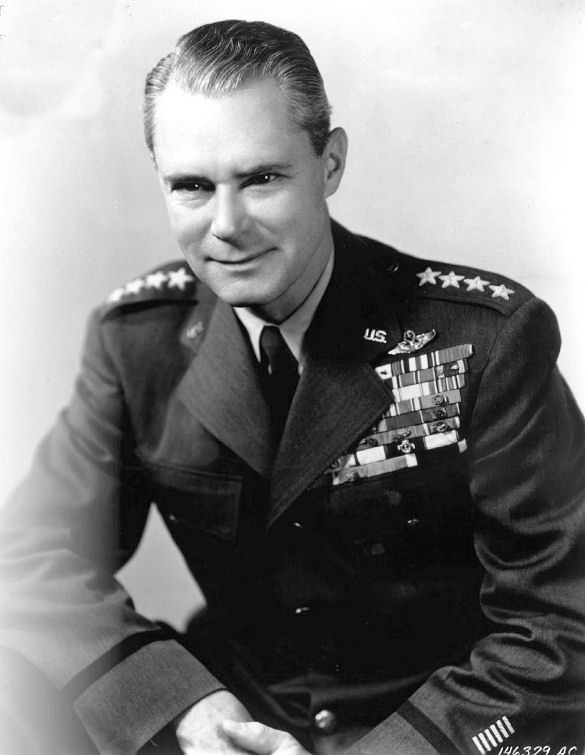
The Estimate did not survive contact with the top of the Air Force. It was reportedly rejected by General Hoyt Vandenberg, the USAF Chief of Staff, on the grounds of insufficient proof, and ordered destroyed. Its existence is attested by Ruppelt, Hynek, and other Blue Book insiders who say they saw or handled it, but no physical copy has ever been confirmed to exist. The document is a hole in the record shaped exactly like the conclusion it reached.
The file argues for what that hole would mean. If the Estimate was genuine, it writes, it represents the earliest institutional conclusion by U.S. military intelligence that UFOs might be extraterrestrial, a conclusion reached and then suppressed almost in the same motion. That reading rests entirely on the insider testimony above, not on a surviving document, and the file presents it as its own characterization rather than proven fact.
03Ruppelt Makes It Real
For a brief window in the early 1950s, the Air Force's UFO desk became a genuine investigation. Captain Edward Ruppelt took the dismissive machinery of Grudge and rebuilt it into Blue Book with real rigor. He standardized the reporting forms, established statistical tracking of sightings, recruited scientific consultants, and insisted that reports be analyzed with an open mind rather than dismissed on arrival. For the first time, the desk was trying to find out rather than trying to close the case.
Ruppelt also wrote the definitive account. His 1956 book The Report on Unidentified Flying Objects, revised in 1960, remains the authoritative insider history of Blue Book's early years, and its authority comes from its balance: he described the genuinely compelling cases and the routine misidentifications with the same even candor.
The rigor did not outlast the man. Ruppelt transferred out in 1953, and after his departure Blue Book's investigative quality declined significantly under the directors who followed. The desk drifted back toward its Grudge-era instinct to explain and dismiss.
The corpus file names no one for that decline, but the history does. Major Hector Quintanilla Jr. took over as Blue Book's director in August 1963, succeeding Lieutenant Colonel Robert Friend, and held the post until the project closed. Quintanilla held a physics degree from St. Mary's University, earned in 1950, yet the physicist and UFO researcher James E. McDonald publicly judged him 'not competent' from either a scientific or an investigative standpoint. McDonald was careful, though, to add that Quintanilla was following orders from a superior officer who had selected him for the job, and should not be personally blamed for the posture he was put there to hold.
04Hynek: The Debunker Who Changed His Mind
The most important convert Blue Book ever produced was the scientist it hired to debunk. J. Allen Hynek, an astronomy professor at Northwestern University who lived from 1910 to 1986, was brought on precisely to supply tidy astronomical explanations for sightings, to be the man who explained the lights away. Over two decades of doing exactly that job, he arrived at the opposite conclusion: a hard core of cases simply defied conventional explanation.
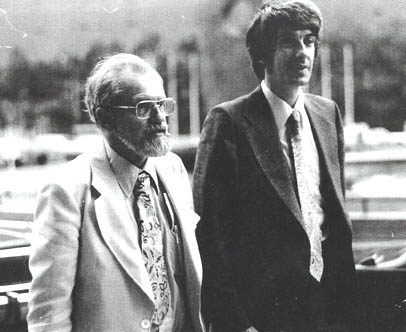
Hynek did not just change his mind, he built the tools the subject still uses. He developed the close encounter classification system, the CE-I through CE-III scale that others later extended to CE-IV and CE-V, published The UFO Experience: A Scientific Inquiry in 1972, and founded the Center for UFO Studies (CUFOS) in 1973. In a single career, the man brought in to close cases had opened a field.
The irony ran deep enough to be self-defeating. In 1966, at the Air Force's own request, Hynek offered a 'swamp gas' explanation for a wave of Michigan sightings. It was mocked, it triggered public backlash and Congressional hearings, and it helped accelerate the very process that produced the Condon Committee, the review that would end Blue Book. The debunker's most famous debunking helped kill the program he debunked for.
05The Order To Debunk
Behind Blue Book's public face, the intelligence community had already decided how the program should behave. In January 1953 the CIA convened a secret panel of scientists, chaired by the Caltech physicist H.P. Robertson, to review the UFO evidence. The panel concluded, in a classified report, that UFOs posed no direct threat to national security, but that the publicity surrounding UFO reports could be exploited by foreign adversaries to overwhelm military communications and to create mass hysteria.
So the panel's fix was not to investigate the phenomenon but to manage the public. The Robertson Panel recommended that UFO reports be actively debunked and that civilian UFO groups be monitored. That recommendation set Blue Book's institutional posture for the remainder of its existence: an intelligence-community decision to steer public perception rather than chase the objects, made years before most of the cases in the files were even reported.
06Condon Turns Off The Lights
The end came wearing the costume of independent science. From 1966 to 1968 the University of Colorado ran a UFO project headed by the physicist Edward Condon, commissioned by the USAF to deliver an independent scientific assessment. Its final report was published as Scientific Study of Unidentified Flying Objects by Bantam Books in 1969, and it was reviewed by a panel of the National Academy of Sciences.
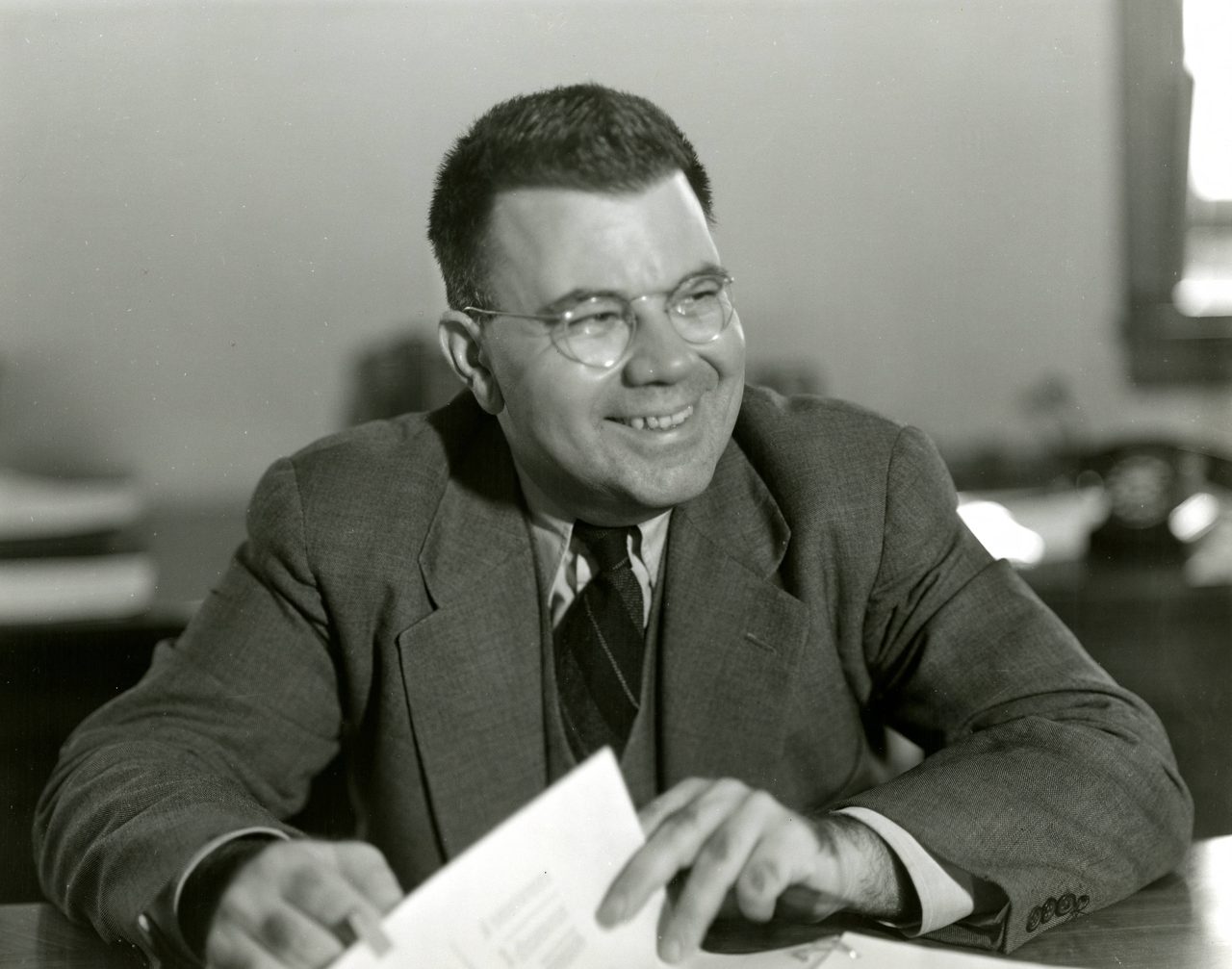
Condon's own summary delivered the verdict the Air Force needed. It concluded that 'further extensive study of UFOs probably cannot be justified in the expectation that science will be advanced thereby,' and the National Academy of Sciences panel endorsed that conclusion. In a single sentence, the study told the United States government it could stop looking.
But the report did not agree with itself. Inside its own pages, the case-by-case analyses left approximately 30 percent of the investigated sightings unexplained, a glaring gap between the reassuring summary and the studies underneath it. Critics including Hynek, McDonald, and Swords pointed straight at the discrepancy: a report that concluded the subject was not worth studying had failed to explain nearly a third of the cases it actually studied.
The Air Force did not linger on the contradiction. Citing the Condon Report, it closed Project Blue Book effective December 17, 1969. The desk that had opened as Project Sign in 1948 was, after three names, finally switched off.
07The Rules Of Silence
The public heard very little of any of this while it was happening, and that was by regulation. Air Force Regulation 200-2, issued in 1953 and updated in 1954, set the procedures for reporting UFO sightings through military channels, and it restricted public disclosure of those reports until a sighting had been identified. In practice it prohibited military personnel from discussing 'unidentified' cases publicly, which is to say the one category that mattered most.
A second rule carried real teeth. JANAP 146, the Joint Army-Navy-Air Force Publication, classified certain UFO reports as intelligence information, and violating its secrecy was punishable under federal espionage law (18 U.S.C. Section 793). For a pilot or a radar operator, reporting a UFO sighting to the public was not just discouraged, it was framed as a potential espionage offense. The deterrent was the point.
08Was Blue Book A Cover?
Here the story moves from the record into the argument about the record, and the tier drops with it. Researchers, most prominently Richard Dolan in UFOs and the National Security State (2002), argue that Blue Book was never the real investigation at all, that it functioned as a public-facing cover while the serious analysis happened inside the CIA, the NSA, and Air Force intelligence, safely outside Blue Book's purview. The file names three things that fit the theory: the Robertson Panel's explicit order to debunk rather than investigate, Blue Book's chronic understaffing, and documents showing that the most sensitive cases were routed through intelligence channels instead of the desk. And then, in the same breath, the file names the theory's limit in its own words: direct evidence of a parallel classified UFO program during Blue Book's era, as distinct from individual intelligence analyses, remains limited. The pattern is suggestive. The smoking gun has not been produced.
09The Official Story, And Why It Misleads
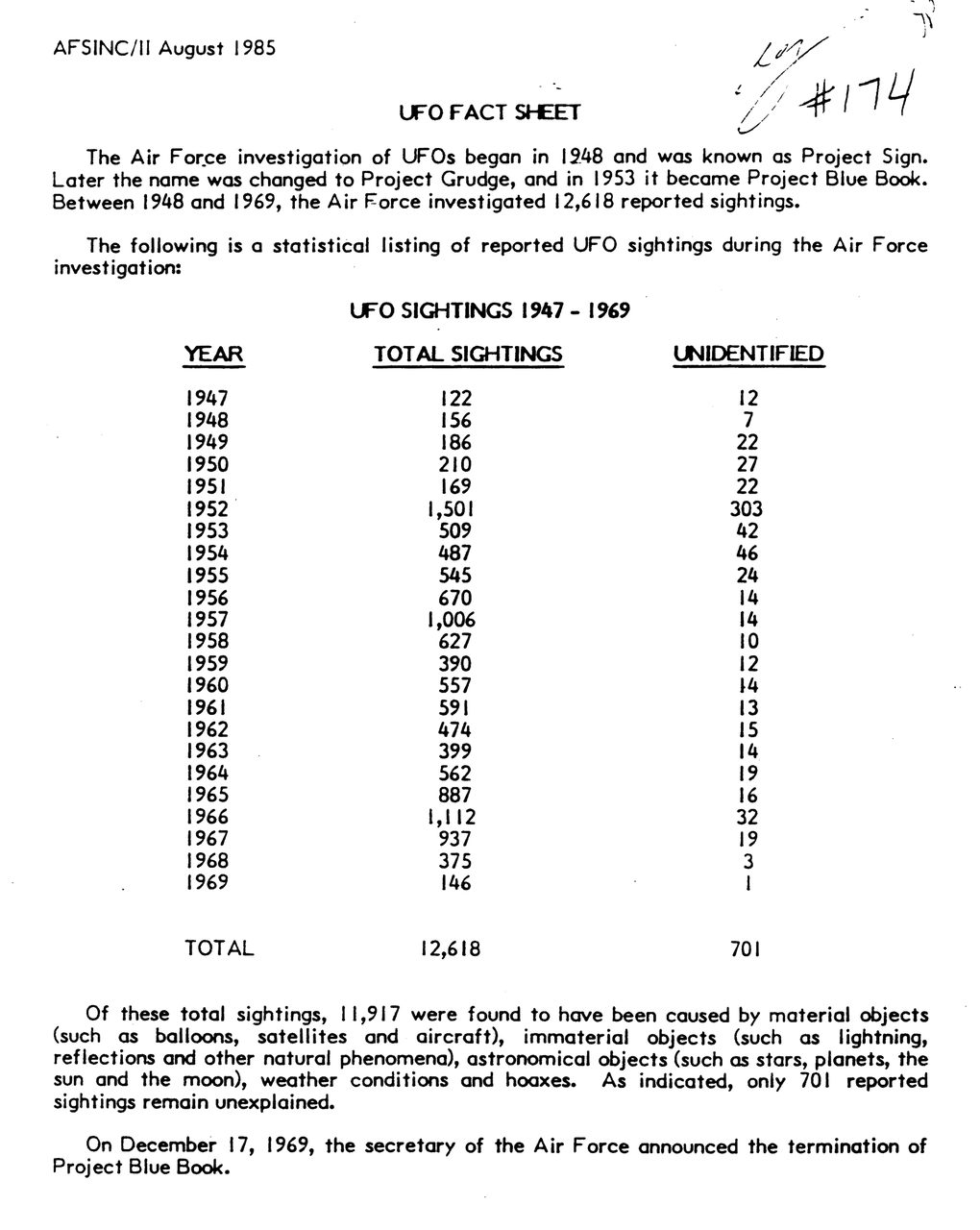
When Blue Book closed, the Air Force gave the public a clean summary, and it is still the summary you will hear today. It is also, in the research file's grading, the one claim in this whole story marked debunked, not because the numbers are wrong, but because of what the numbers are made to imply.
The Air Force's post-closure position is that Blue Book found 'nothing which was a threat to national security' and 'no evidence that sightings categorized as unidentified were extraterrestrial.' Every word of that is technically accurate. It is also misleading, and the file marks the framing, not the underlying facts, as debunked. Because 701 cases, that same 5.5 percent, stayed unexplained, and the program's chronic underfunding meant many cases were never investigated well enough to explain in the first place. 'We identified everything worth identifying' is a very different statement from 'we could not explain 701 of our own cases and often lacked the resources to try,' and only the first one made it onto the fact sheet.
There is a fair counter to all of this, and the file gives it room. For all its limitations, Blue Book's data is still the largest government UFO database ever assembled, and its 5.5 percent 'unidentified' rate does not sit alone. It lines up with the Condon Committee's own roughly 30 percent of unexplained internal cases and with France's official GEIPAN program, which lands at 3 to 5 percent. Different countries, different decades, different investigators, and a stubborn residual keeps showing up, a fraction of cases that genuinely resists a prosaic explanation.
And there is a broader lesson in the arc from Sign to Grudge to a debunking desk. Blue Book's slide from serious investigation to institutional dismissal is a case study in how institutional incentives can shape scientific outcomes, how the answer an organization is built to want can quietly become the answer it finds.
Fast Facts
- The Three Programs
- Project Sign (Jan 1948 to Feb 1949), Project Grudge (Feb 1949 to 1951), and Project Blue Book (Mar 1952 to Dec 17, 1969), all run out of Wright-Patterson Air Force Base.
- The Files
- 12,618 case files, of which 701, about 5.5 percent, were still classified 'unidentified' after investigation.
- The Archive
- All Blue Book files were declassified and transferred to the National Archives as Record Group 341 in 1975. They are public and digitized.
- The Reformer
- Captain Edward Ruppelt rebuilt Grudge into Blue Book with standardized forms, statistical tracking, and scientific consultants, and wrote the authoritative insider account in 1956. Investigative quality declined after he transferred out in 1953.
- The Convert
- J. Allen Hynek (1910 to 1986), hired as a debunker, spent two decades concluding a core of cases defied explanation, created the close-encounter scale, and founded CUFOS in 1973.
- The Buried Report
- Project Sign's 1948 'Estimate of the Situation' reportedly concluded the objects were interplanetary. General Hoyt Vandenberg is said to have rejected it and ordered it destroyed; no copy is confirmed to exist.
- The Order To Debunk
- The CIA's January 1953 Robertson Panel recommended debunking UFO reports and monitoring civilian groups, setting Blue Book's posture for the rest of its run.
- The Shutdown
- The Condon Committee (1966 to 1968) concluded further study was not justified; the Air Force closed Blue Book on December 17, 1969, even though roughly 30 percent of the Condon Report's own cases were left unexplained.
What The Files Actually Hold
The documented spine is not in dispute. The Air Force ran an official UFO program under three names, Sign, Grudge, and Blue Book, from 1948 until its closure on December 17, 1969. Blue Book compiled 12,618 case files and left 701 of them, about 5.5 percent, unidentified. The University of Colorado's Condon Committee delivered the conclusion that ended the program, its own case studies left roughly 30 percent of sightings unexplained, and the entire archive now sits in the public domain at the National Archives as Record Group 341. Reporting was governed by AFR 200-2 and JANAP 146, the latter backed by federal espionage law. All Tier 1, all on the record.
The human story built on that spine holds at Tier 2. Captain Edward Ruppelt genuinely reformed the program before it decayed under the directors who followed, Major Hector Quintanilla among them. J. Allen Hynek really did travel from hired debunker to open advocate, building the close-encounter scale and founding CUFOS along the way. The CIA's Robertson Panel really did recommend debunking rather than investigating. And Blue Book insiders including Ruppelt and Hynek really did describe a 1948 'Estimate of the Situation' that concluded the objects were interplanetary, which Vandenberg reportedly rejected and ordered destroyed. Credible and well-attested, resting on insider testimony and documented history rather than a surviving smoking-gun document.
One large claim stays speculative, and this article keeps it there. The argument that Blue Book was a deliberate public cover for a serious classified program running elsewhere in the intelligence community fits several real facts: the debunking order, the understaffing, the sensitive cases routed around the desk. But the file says so itself, direct evidence of a parallel classified UFO program during Blue Book's era remains limited. A suggestive pattern is not a proven cover-up. Tier 3.
And one tidy story gets refused outright, because the file refuses it. The Air Force's parting line, that Blue Book found nothing threatening and no evidence of anything extraterrestrial, is technically true and quietly misleading, and it is marked debunked as framing. It papers over 701 cases the Air Force's own investigators could not explain and a program too underfunded to investigate many of them properly. The 701 figure itself is rock-solid Tier 1; it is only the reassurance built on top of it that fails. 'We solved it' was never what the files actually said. Tier 4, no.
So this is where the Air Force's UFO desk actually leaves us. Across three programs and the length of the Cold War's most anxious years, the United States government investigated unidentified flying objects, briefly made the effort rigorous, watched its own scientists conclude that a core of cases could not be explained, buried the boldest of those conclusions, accepted an order to debunk rather than look, and then shut the whole thing down while telling the public the matter was closed. The files are open now, and anyone can read the 701 cases the government never explained. Which leaves the one question the desk was built to answer and never did: if the investigation had ever truly been allowed to investigate, what would it have found?
Sources & further reading
Everything above is drawn from our research library on Theories of Anything, which is where we worked from. The papers, reports and primary records listed beneath them are where you can check us independently.
Image credits
- U.S. Air Force graph of UFO report frequency, June to September 1952 United States Air Force, via Wikimedia Commons. Public domain Source.
- General Hoyt S. Vandenberg, U.S. Air Force Chief of Staff United States Air Force, via Wikimedia Commons. Public domain Source.
- Dr. J. Allen Hynek and Dr. Jacques Vallee United States Government, via Wikimedia Commons. Public domain Source.
- Physicist Edward U. Condon National Institute of Standards and Technology (NIST), via Wikimedia Commons. Public domain Source.
- 1985 U.S. Air Force Fact Sheet on UFOs and Project Blue Book (page 1 of 3) United States Air Force, dated August 31, 1985, sourced via the Defense Technical Information Center and Wikimedia Commons. Public domain Source.
- Card crop of U.S. Air Force graph of UFO report frequency, June to September 1952 United States Air Force, via Wikimedia Commons. Public domain Source.


