Quetzalcoatl: The Feathered Serpent Who Promised to Return
The Olmec were carving the feathered serpent three thousand years ago, and the same being was still being worshipped when Cortes landed in 1519. In between, it rules the oldest feathered-serpent temple on earth, a pyramid at Teotihuacan built over two hundred bound and sacrificed soldiers, and slides down a Yucatan staircase as a serpent of light and shadow every equinox. Then Spain arrived, and two new stories were bolted onto him: that an Aztec emperor froze because he mistook a conquistador for his returning god, and that the god himself had always been a white bearded stranger from across the sea. Both stories are famous. Both are false, and the people who built them left their fingerprints. Here is the feathered serpent as the evidence actually has him, every claim wearing its tier.
Start on a basalt slab in the swamps of Tabasco, nearly three thousand years old. A man sits inside the coils of a serpent whose body is covered in feathers. This is the oldest feathered serpent anyone has found, carved by the Olmec long before Teotihuacan, before the Maya cities, before the Aztecs existed as a people, and the being on that stone was still being worshipped when Spanish ships appeared off the Mexican coast in 1519. For three thousand years Mesoamerica told his story. Then, in the century after the conquest, two more stories were welded onto him, and they are the two most people now know: that an Aztec emperor froze because he mistook the conquistador Hernan Cortes for the returning god, and that the god himself had always secretly been a white bearded man from across the sea. This file takes the feathered serpent apart claim by claim, every one wearing its evidence, and it ends by throwing both of those late stories out.
01The Name That Joins Earth To Sky
The name is already a cosmological statement. Quetzalcoatl is a Nahuatl compound: quetzalli, the long green tail feather of the resplendent quetzal, Pharomachrus mocinno, the most precious feather in Mesoamerica and a marker of royalty, divinity, and the sky, joined to coatl, serpent. Precious feathered serpent. It welds the terrestrial snake to the celestial bird, earth to sky, in a single word, and every culture that inherited the figure inherited that built-in dualism. This is a foundational idea, not an ornament.
The feathered serpent was never only an Aztec god. The same being surfaces across Mesoamerica under different names and in different centuries, and the document lays them out in a single table. The Aztec Quetzalcoatl is the latest and most famous, but the Yucatec Maya Kukulkan, the K'iche' Maya Q'uq'umatz or Gucumatz, and the Toltec Ce Acatl are all the same fused creature, and behind all of them stand the unnamed feathered serpents that the Teotihuacanos and, earlier still, the Olmec carved into stone before anyone could write their name down.
| Culture | The Serpent's Name | When |
|---|---|---|
| Aztec / Mexica | Quetzalcoatl (Nahuatl) | Roughly 1300 to 1521 CE |
| Yucatec Maya | Kukulkan / K'uk'ulkan | Roughly 900 to 1500 CE |
| K'iche' Maya | Q'uq'umatz / Gucumatz | Roughly 1000 to 1524 CE |
| Toltec | Quetzalcoatl / Ce Acatl (Nahuatl) | Roughly 900 to 1168 CE |
| Teotihuacan | Unnamed, known only from its carvings | Roughly 100 BCE to 550 CE |
| Olmec | Unnamed, known only from its carvings | Roughly 1200 to 400 BCE |
| Mixtec | 9 Wind (a calendar name) | Roughly 900 to 1521 CE |
In the Popol Vuh, the K'iche' Maya book of creation, the feathered serpent is present at the beginning of the world itself. Q'uq'umatz, Gucumatz, lies in the primordial water covered in green and blue feathers, and together with the Heart of Sky, Huracan, he is one of the makers who shape the first world. The serpent that flies is not a late decoration on the tradition. It is there at the creation.
02Older Than The Aztecs
The oldest feathered serpent we can point to is Olmec. Monument 19 from La Venta, in Tabasco, dated to roughly 900 to 400 BCE, is a basalt stele showing a person seated inside the coils of a feathered serpent, its body covered in feathers, its mouth open. David Joralemon, in his 1971 Study of Olmec Iconography for Dumbarton Oaks, identified this as the prototype of every later Quetzalcoatl image. It does not stand alone: serpent imagery with possible avian features appears in the reliefs at Chalcatzingo in Morelos, roughly 900 to 500 BCE, and serpent ritual motifs turn up in the Olmec cave paintings at Juxtlahuaca and Oxtotitlan in Guerrero.
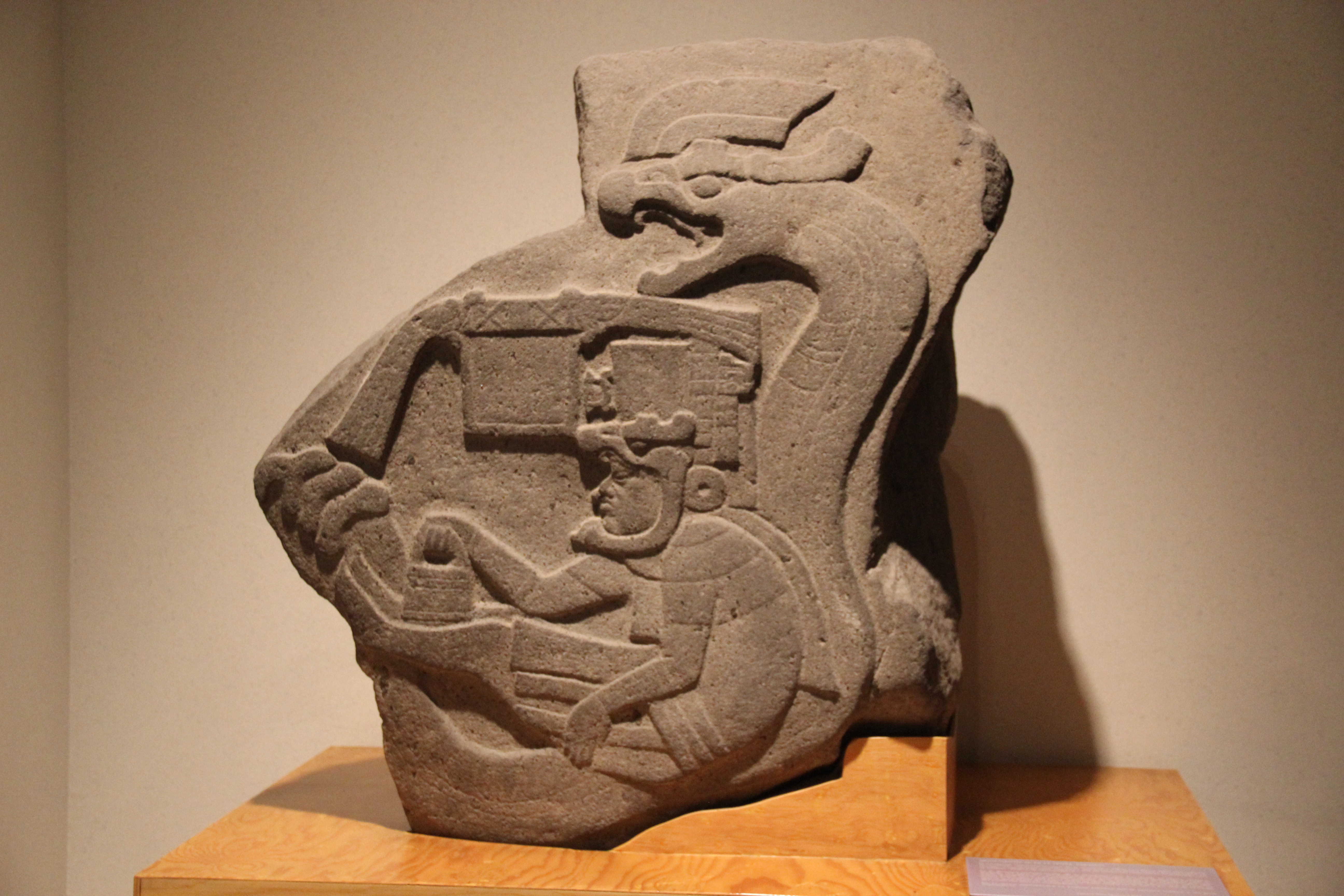
That gives the feathered serpent a span almost nobody's gods can match. From its Olmec origins around 1200 BCE to the Spanish conquest in 1521, the concept runs roughly three thousand years. The Olmec worked some eight hundred years before Teotihuacan and around two thousand years before the Aztecs, which makes this, in the document's own words, one of the longest-lived religious symbols in the Americas. When the Aztecs prayed to Quetzalcoatl they were joining a conversation already twenty centuries old.
03The Temple Built On The Dead
Teotihuacan was one of the largest cities on earth at its height, between roughly 100 and 550 CE, with a population estimated at 100,000 to 200,000, and we still do not know who built it. Its writing is undeciphered and its language is unsettled. The Aztecs arrived centuries after it had already collapsed, found the ruins, and named it the place where the gods were born, but they did not build a stone of it. Around 200 CE its people raised the Temple of the Feathered Serpent, the third-largest pyramid at the site, at the southern end of the Avenue of the Dead inside the walled Ciudadela. Its facades carry sculpted feathered-serpent heads with undulating bodies ringed by feather-like petals, alternating with the heads of a second being, tentatively read as a War Serpent or a Tlaloc-like rain deity.
Then archaeologists dug underneath it. Excavations led by Ruben Cabrera Castro, Saburo Sugiyama, and George Cowgill from the 1980s into the 2000s found more than two hundred sacrificial burials beneath and around the temple. The victims were soldiers, their hands bound behind their backs, wearing necklaces strung with real and imitation human jawbones and shell ornaments carved to look like teeth. That is not folklore. It is excavated, catalogued, physical evidence.
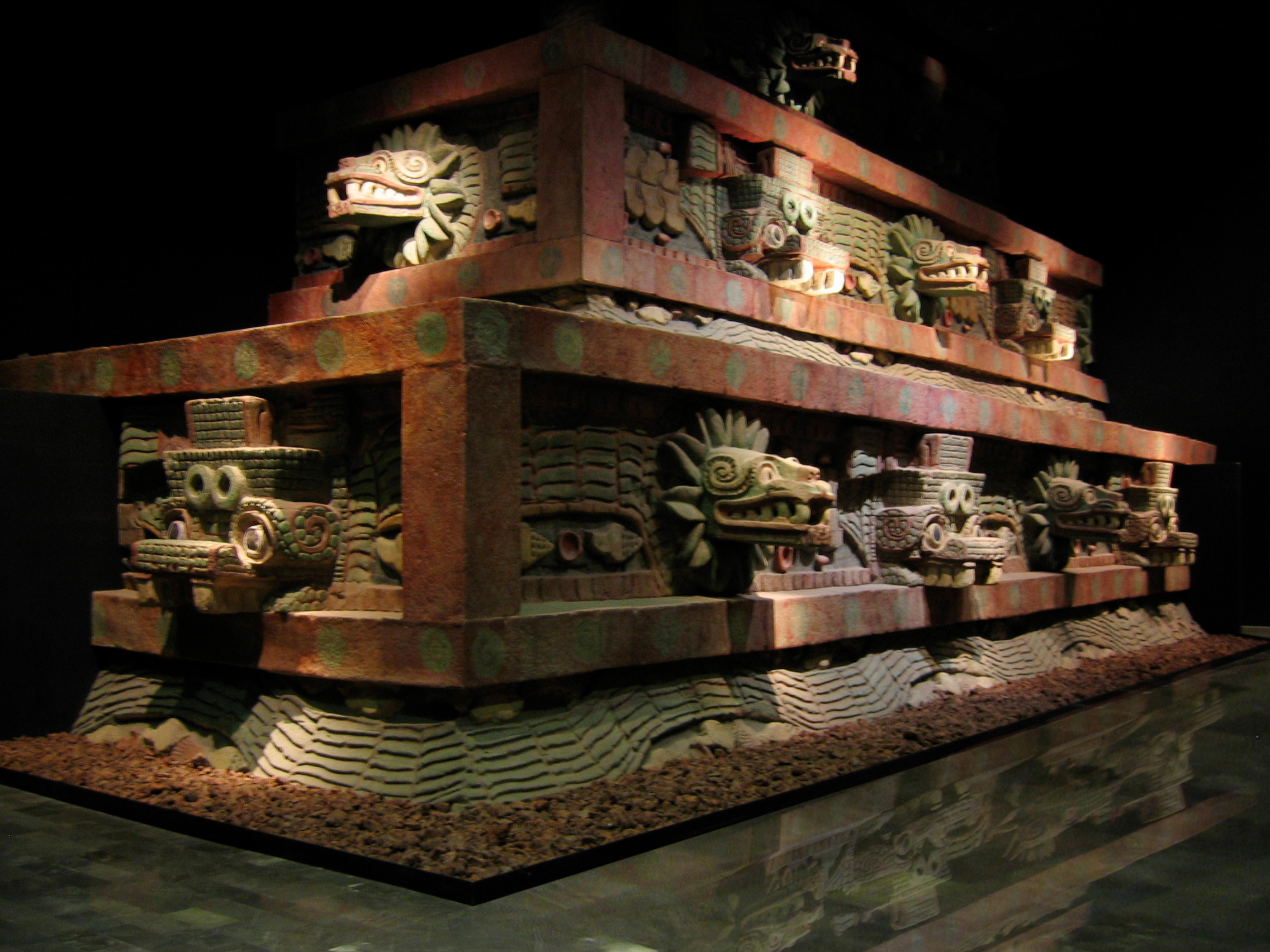
Sugiyama read the burials, in his 2005 study, as a foundational sacrifice, the temple staged as the origin point of the cosmos through mass ritual killing. That reading is his interpretation of the evidence rather than a settled fact, and it leaves a genuine paradox the document refuses to paper over. In the later Aztec tradition the feathered serpent is the god who opposes human sacrifice. Yet the earliest monumental temple ever raised to him was consecrated with the largest killing at the site. Peaceful knowledge-giver or violent sacrificial cult, the tension between the two is unresolved, and it may record competing factions or a theology that changed across the centuries.
04The Serpent Of Light At Chichen Itza
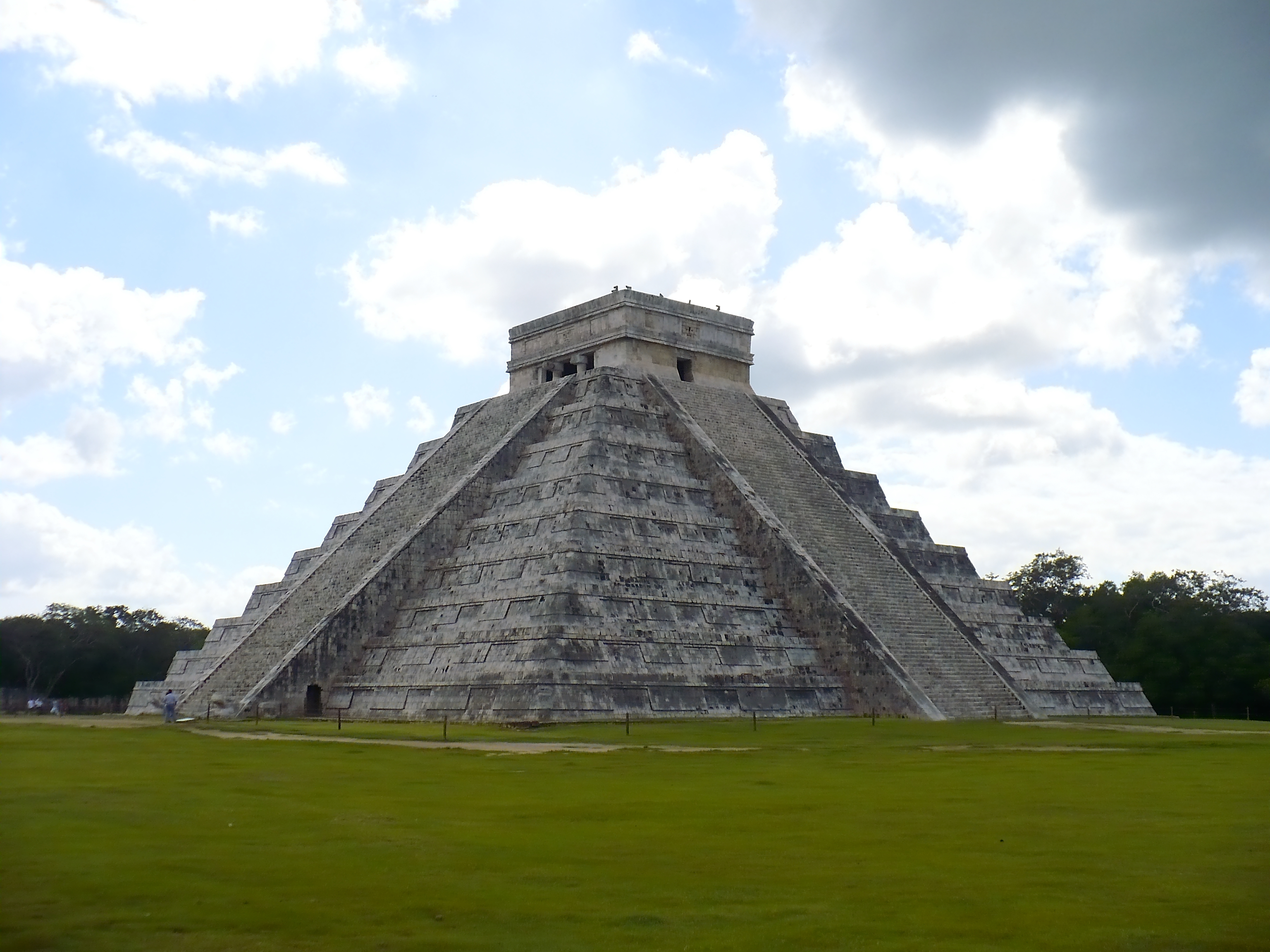
Seven hundred years later and far to the east, the Maya built the feathered serpent a calendar in stone. El Castillo, the Pyramid of Kukulkan at Chichen Itza in the Yucatan, raised between roughly 800 and 1000 CE, is a working almanac. Its four staircases carry 91 steps each, and with the single platform step at the top they total 365, the days of the solar year. Nine terraces split by the stairways read as 18 sections, the 18 months of the Maya haab. Fifty-two flat panels on each face count out the 52-year Calendar Round. The building is the calendar.
And twice a year the building performs. Around the spring equinox on March 20 and the autumn equinox on September 22, the late-afternoon sun throws a row of triangular shadows down the northwest balustrade of the northern staircase, and they line up with the carved serpent heads at its foot, so that a serpent of light and shadow appears to pour down the pyramid. Pedro Francisco Sanchez Nava and Ivan Sprajc of INAH note the effect shows over a range of days around each equinox, not the exact date alone, so whether it was deliberately engineered is debated. But the document judges an accident implausible given the calendrical precision built into everything else about the pyramid, and reports that the consensus among Mesoamerican archaeologists is that the alignment was very likely intentional.
05Stolen From The Land Of The Dead
The central Aztec story about Quetzalcoatl is a heist in the underworld. In the Leyenda de los Soles and in Sahagun's Florentine Codex, the great colonial compilation drawn from interviews with Nahua elders between roughly 1545 and 1590, the god descends into Mictlan, the land of the dead ruled by Mictlantecuhtli and Mictecacihuatl, to recover the bones of the people of the earlier world ages. He escapes by trickery, stumbles so that the bones shatter into unequal pieces, which is why humans come in different sizes, carries them to Tamoanchan, grinds them, and mixes the powder with blood drawn from his own body. Current humanity is made from ground bone and a god's self-sacrifice.
Maize has its own origin story, and it is just as much a theft. Quetzalcoatl watched a red ant hauling a single maize kernel out of Tonacatepetl, the Mountain of Sustenance, turned himself into a black ant to follow it inside, and carried maize back out to feed people. The other gods then sent the rain god Tlaloc to crack the mountain open with lightning, releasing beans, amaranth, chia, and sage along with it. The staple that fed every Mesoamerican civilization arrives, in the telling, because a god was willing to shrink himself to an insect and steal it.
06The God Who Brought Everything
Maize is only the start of the inventory. Aztec tradition, in the Florentine Codex and the Historia de los Mexicanos por sus Pinturas, credits Quetzalcoatl with the 260-day sacred calendar, with writing, with the arts of featherwork and goldsmithing and lapidary and painting, with architecture, metallurgy, agriculture and irrigation, and astronomy, and with the moral law, including the prohibition of human sacrifice and the practice of drawing one's own blood in its place. He is the patron of priests, so much so that the two highest priests of Tenochtitlan both carried the title Quetzalcoatl. As Ehecatl he is the god of wind, wearing the beak-shaped wind mask, the ehecailacocozcatl, and by that same wind he is patron of merchants, whose sails he fills. He is, in short, the god who hands civilization to human beings piece by piece.
That profile, one being who gives a people every fundamental skill at once, is not unique to Mexico, and this is where the document steps carefully from fact into comparison. The same role belongs to the Sumerian Apkallu, to the Egyptian Thoth, to the Greek Prometheus, to the Andean Viracocha, and to the Dogon Nommo. The maize story rhymes with Prometheus almost exactly, a divine being stealing the essential gift from a forbidden place at real personal cost, though the document is quick to mark the difference in key: Quetzalcoatl bleeds for humanity, while Prometheus is chained and tortured for it. The pattern is real and, the document argues, structural rather than superficial. Whether it points to a shared human mind, shared history, or coincidence is a separate question this file comes back to at the end.
07The Smoking Mirror And The Fall Of Tula
The feathered serpent has an opposite, and their war is the spine of the mythology. In the Anales de Cuauhtitlan and again in the Florentine Codex, Tezcatlipoca, the Smoking Mirror, is night, sorcery, war, the jaguar, the obsidian mirror, caprice, and raw power, while Quetzalcoatl is day, light, knowledge, peace, wind, learning, and order. In the story, Quetzalcoatl rules the city of Tula as a wise priest-king who refuses human sacrifice, offering only snakes, birds, and butterflies, and punishes himself with severe penance. Tezcatlipoca undoes him by trickery: he shows the god his own aging face in a mirror, which horrifies a being who should never grow old, then gets him drunk on pulque, and in his shame at what he does while drunk, in some versions incest with his sister Quetzalpetlatl, Quetzalcoatl abandons Tula.
He leaves in one of two ways, and both matter. In one version he walks to the eastern coast and sails away on a raft of serpents, promising to return. In the other he burns himself on a funeral pyre at the shore, and his heart rises into the sky to become the Morning Star. That second ending is the seed of everything that came later, because a god who dies at the coast and vows to return from the east is a god who can, centuries on, be expected back.
The document places this inside a pattern it tracks across traditions: the knowledge-giver locked in conflict with an adversary and losing the immediate contest. Enki against Enlil in Sumer, Prometheus against Zeus in Greece, Quetzalcoatl against Tezcatlipoca in Mexico. In each case the giver of knowledge is beaten and driven out, and in each case he survives anyway, through the culture he leaves behind and the promise that he will come back. That is a comparative reading rather than a documented link, and it belongs in Tier 2, but the shape is hard to miss once you see it three times.
08The Heart That Became A Planet
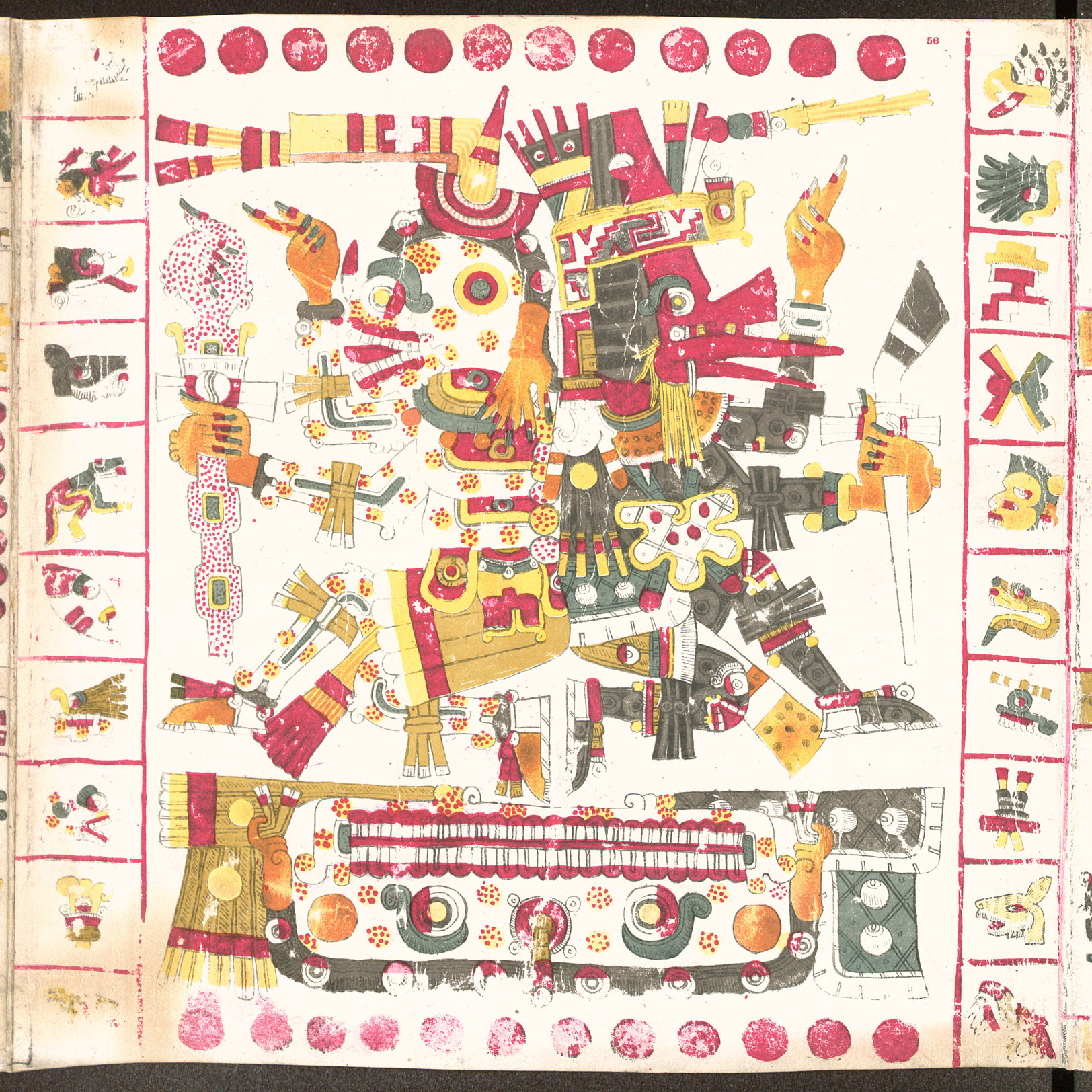
The Morning Star is not a metaphor tacked onto the myth. Quetzalcoatl is identified with Venus as the Morning Star, Tlahuizcalpantecuhtli, and the identification puts him in famous company: Inanna and Ishtar in Mesopotamia, who also descend into the underworld and return, and Lucifer, the Latin light-bearer, who was the Morning Star before he was anything darker. The Codex Borgia, a screenfold in the Mixtec-Puebla style, devotes pages 29 to 46 to the death of Quetzalcoatl and his transformation into the Morning Star, his passage through the underworld and his re-emergence, the clearest picture-story of the pattern anywhere. And the astronomy behind it was real work: the Maya Dresden Codex, one of only three pre-Columbian Maya books to survive, carries Venus tables that track the planet's 584-day cycle across decades with errors under a single day over centuries, precise enough that Maya kings timed their wars to its risings.
09The Man Behind The God
Behind the deity there was very likely a man. Ce Acatl Topiltzin Quetzalcoatl, a ruler of Tula in what is now Hidalgo, appears throughout the sources: Ce Acatl, One Reed, is a calendar birth-name, and Topiltzin means Our Revered Lord. The colonial-era chronicles, the Anales de Cuauhtitlan, the Historia Tolteca-Chichimeca, Sahagun, all of them written down centuries after the fact, place his reign in the tenth century CE, though the proposed dates scatter contradictorily from the late ninth to the late eleventh century. He is probable, not certain.
The city is solidly real. Excavations at Tula, begun by Jorge Acosta in the 1940s and continued into the 1960s, and later still by Robert Cobean, Alba Guadalupe Mastache, and Dan Healan, show it peaking between roughly 950 and 1150 CE with a population of some 30,000 to 60,000. Its famous Atlantean columns, the atlantes, are monumental warrior figures about four meters tall that once stood atop Pyramid B, and the city carries clear evidence of violent destruction around 1150 to 1175 CE.
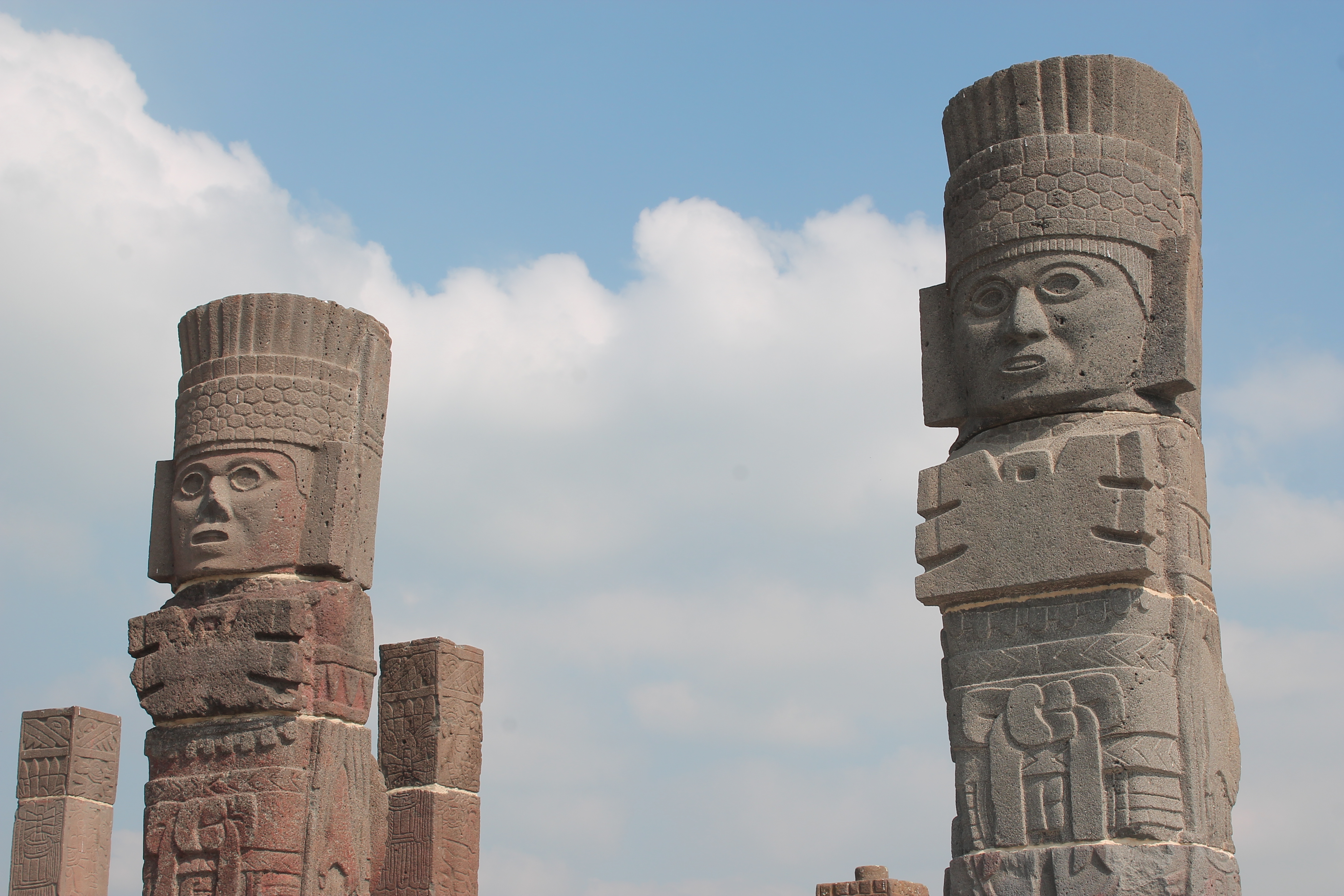
Whether a specific king named Ce Acatl Topiltzin actually ruled there is, in the document's honest phrasing, probable but not provable from archaeology alone. The colonial accounts agree closely enough in outline to suggest a historical kernel wrapped in myth, the same situation as Gilgamesh, a likely real king of Uruk whose epic is not history, or Troy, a real city whose Iliad is not a battlefield report. A real ruler is a reasonable inference. He is not a proven one, and the document says so plainly.
10The Emperor Who Did Not Mistake A Man For A God
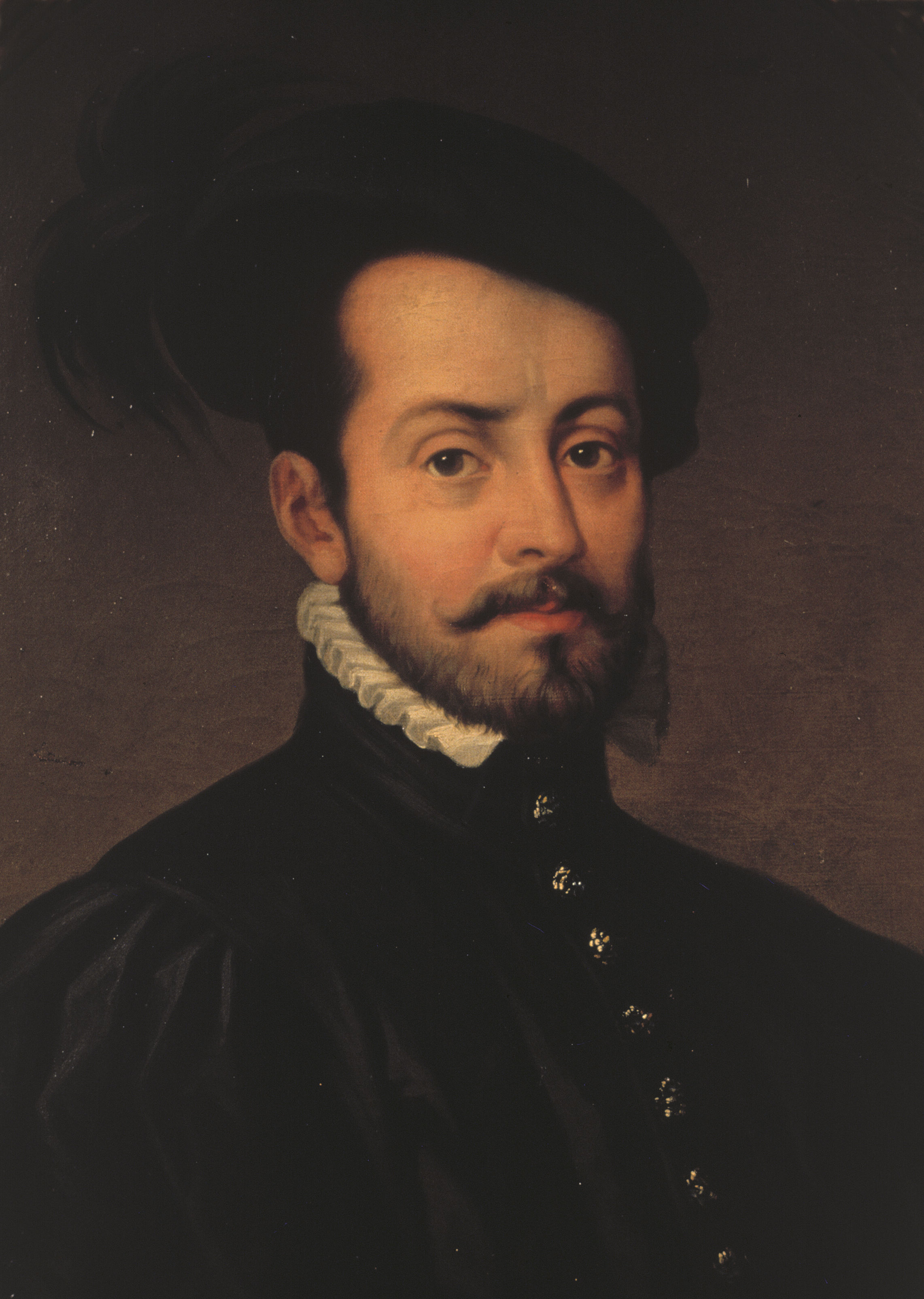
Here is the story almost everyone has heard. When Hernan Cortes landed on the Mexican coast in 1519, the emperor Moctezuma II is said to have believed him to be the returning Quetzalcoatl, because Cortes came out of the east, had a light complexion, and arrived in a year One Reed, Ce Acatl, the god's own calendar name. The belief supposedly paralyzed Moctezuma, made him welcome the Spanish into Tenochtitlan, and so handed Cortes the conquest. It is a gripping story. In the words of the document, it is almost certainly wrong.
Matthew Restall, a historian of colonial Latin America at Penn State, argues in When Montezuma Met Cortes, 2018, that the whole tale was manufactured after the conquest, not before it, and largely by three parties with reasons to build it. Cortes himself put it in his letters to Charles V, where casting the emperor as a man who surrendered to a returning god helped justify Cortes's own illegal, insubordinate campaign. Sahagun's indigenous informants, drawn from the Tlatelolco elite, had their own reasons to shift blame onto Moctezuma and align themselves with the winners. And Francisco Lopez de Gomara, Cortes's personal chaplain and biographer, wrote it up in full without ever setting foot in Mexico. Hugh Thomas, in his 1993 Conquest, had already flagged the contradictions running through the primary sources.
Camilla Townsend, a historian at Rutgers, drives it home in Fifth Sun, 2019. The earliest Nahuatl-language sources, written by indigenous authors in the 1540s and 1560s, do not describe Moctezuma believing any such thing. The returning-god narrative only surfaces in later sources, after the conquest was finished and colonial power was secure, at exactly the point when indigenous elites had an incentive to frame a military defeat as something divinely ordained rather than something that was lost. The document is blunt about why this matters. The Cortes-as-Quetzalcoatl story is one of the most widely believed historical errors in popular culture, and it survives because it flatters a colonial idea: that indigenous people could not tell a foreign human from one of their own gods, which quietly implies they were the conquistadors' cognitive inferiors. Stripping the fabrication away is the only way to reach what the feathered serpent tradition actually meant.
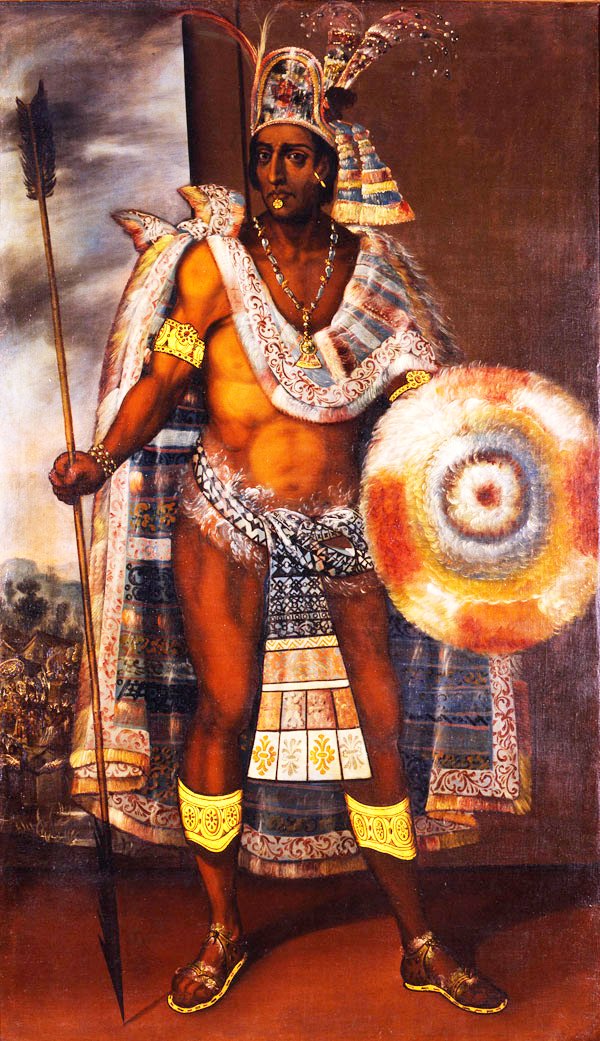
And the One Reed claim collapses on its own logic. It needs three things to be true at once. It needs Moctezuma to have believed Quetzalcoatl was coming back, which the pre-conquest sources do not clearly establish. It needs him to have matched Spanish sailing ships to the mythic raft of serpents, for which there is no evidence he did. And it needs the sophisticated intelligence network that tracked the Spanish from their first landing to have somehow failed to tell humans from gods, which is not plausible for a world-class ruler. Restall's reconstruction is simpler and fits the record better: Moctezuma sized up the Spanish exactly as he would any other foreign power, as possible allies, vassals, or enemies, and invited them into the city to keep a potential threat close, not to bow to a god. And the moment that settles it comes soon after, on the Noche Triste of June 30, 1520, when Aztec forces nearly wiped out Cortes's army as it fled the city. Whatever else was going on, no lasting paralysis of superstition existed.
11The White Bearded Teacher Who Never Existed
The second story is uglier, and it took hold in the nineteenth century. It claims that Quetzalcoatl was described as white-skinned, bearded, tall, and arriving from across the sea, and it uses that description to argue he was really a foreign visitor: a Viking, a Phoenician, or a Celt, a refugee from a sunken Atlantis, Jesus Christ appearing in the Americas after the resurrection, as the Book of Mormon has it in 3 Nephi 11, or an ancient astronaut, as Erich von Daniken proposed in Chariots of the Gods in 1968. The names attached to it are a lineage of their own: Augustus Le Plongeon, who tied the Maya to Atlantis; Harold Wilkins in 1946; Constance Irwin in 1963; L. Taylor Hansen, whose 1963 He Walked the Americas had a white-robed teacher visiting every indigenous civilization in the hemisphere; and Graham Hancock, in Fingerprints of the Gods in 1995, though Hancock has since distanced himself from the racial readings. In the document's own tier classification, the narrative is colonial contamination, unsupported by pre-Columbian evidence.
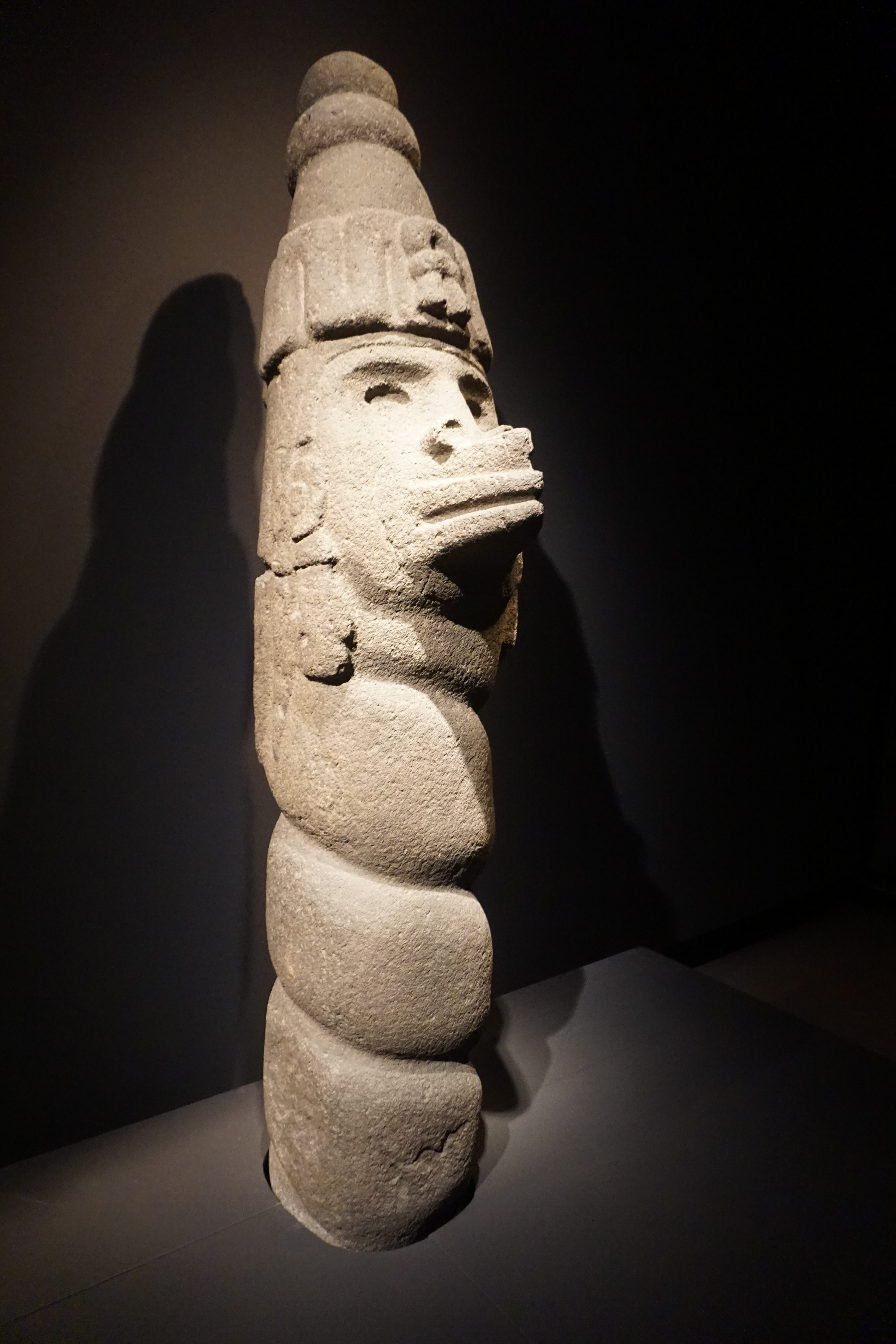
Look at what the pre-Columbian artists actually made, and the white bearded man is simply not there. Across stone sculpture, pottery, codices, and murals, Quetzalcoatl is shown one of two ways: as a literal feathered serpent, on the Teotihuacan temple, on the Chichen Itza balustrades, on countless pots, or as Ehecatl wearing a curved, beak-shaped wind mask, the ehecailacocozcatl, often under a conical hat. The document states the crucial point without flinching: the beard that some viewers think they see is the lower edge of that mask, not facial hair. The Codex Borgia, the Codex Borbonicus, and the Codex Telleriano-Remensis all render Quetzalcoatl and Ehecatl with black priestly body paint, the beak mask, and serpent and wind signs, and never as a white-skinned figure. Every white-bearded description comes from a post-conquest colonial text, written by Spanish friars or by indigenous elites working under colonial supervision, decades or centuries after the fact.
The reasons the colonial sources reach for a white god are not mysterious, and the document names them. A pre-existing white-god belief made the conquest look divinely ordained. It let missionaries recast indigenous religion as a garbled memory of Christianity, which is where the old claim that Quetzalcoatl was really Saint Thomas the Apostle comes from. And it implied that indigenous civilization must have been seeded by earlier European or Christian contact. There is even a physical detail being misread: Mesoamerican populations naturally grow little facial hair, so a bearded figure in their art carries religious meaning, age, wisdom, the supernatural, rather than depicting a literal foreign beard, and Sahagun's informants may well have meant bearded in exactly that symbolic sense. Underneath all of it sits a single ideological move, that indigenous peoples could not have built their own civilizations without light-skinned founders, which the document names for what it is: a colonial ideology with deep roots in nineteenth-century racial pseudoscience. Daniel Brinton saw it happening as early as 1882, when his American Hero-Myths complained that native culture heroes were being systematically whitened by their European interpreters.
One branch of the white-Quetzalcoatl story is specifically religious. The Book of Mormon, in 3 Nephi 11 to 28, describes Jesus visiting the Americas after his resurrection and appearing to the Nephites, and some Latter-day Saint writers, such as Brant Gardner in Traditions of the Fathers, 2015, have identified that visit with Quetzalcoatl. The document is direct about what this is: confessional theology, not historical scholarship. It assumes the historicity of the Book of Mormon narrative, which mainstream archaeology, linguistics, and genetics reject, and it cites Simon Southerton's 2004 Losing a Lost Tribe and a 1998 statement by the National Geographic Society to that effect. No pre-Columbian evidence supports any Mediterranean presence in the Americas after the first century.
12What Is Actually Left
Take both colonial stories away and the feathered serpent does not shrink. What remains is fully documented and quietly enormous: a feathered serpent deity, an animal-composite being and not a human foreigner; a wind god, Ehecatl, who carries breath and life and motion; a knowledge-giver who brought maize and the calendar and writing and the arts; a figure who, at least in the Tula cycle, stood against human sacrifice; a god defeated by a rival and driven into exile; the Morning Star; and a being who promised to come back. That profile, the document concludes, fits the global knowledge-giver pattern completely without needing a single foreign origin. The insistence on whiteness does not add to the feathered serpent. It hides the real point, that this is Mesoamerica's own version of the same archetype the Sumerians, Egyptians, Greeks, Indians, and Africans all reached for independently.
13The Serpent That Learned To Fly
The image at the center of all this fuses the two most loaded animals a culture can pick. The serpent is the earth, the underground, water, death, fertility, the renewal of shedding its own skin, forbidden knowledge, everything chthonic. The bird, the quetzal, is the sky, the air, light, beauty, divinity, freedom. Join them and you get a being that is neither only of the ground nor only of the heavens, and the document points out that Mesoamerica is far from the only place that made this move.
| Tradition | The Fusion | Note |
|---|---|---|
| Mesoamerica | Quetzalcoatl, feathers on a serpent's body | The earth serpent welded to the celestial quetzal |
| Egypt | The winged uraeus; Wadjet and Nekhbet | Cobra paired with vulture, from around 3000 BCE |
| Greece | The caduceus | Two serpents and a pair of wings on Hermes's staff |
| India | Nagas given wings, set against Garuda | Serpent and bird as cosmic opposites in Vedic and Hindu tradition |
| China | The dragon (lung) | Serpentine body, composite features, often in flight, from the Shang dynasty on |
| Mesopotamia | The Mushhushshu | Dragon-serpent with a bird's talons and a scorpion's tail, Neo-Babylonian |
| Norse | Jormungandr with Huginn and Muninn | The world serpent set against Odin's ravens in the Prose Edda |
Read the row of them together and a deeper logic shows through, though this is the document's own interpretation and sits at Tier 2, not fact. Everywhere the serpent joins the bird, a culture seems to be saying the same thing: that the highest sacred power is the one that holds opposites together, earth and sky, death and life, the thing that crawls and the thing that flies, refusing to be only one. The feathered serpent is that refusal, carved and painted, three thousand years of it.
14One Idea, Or Many?
Which leaves the honest hard question the document ends on, and it does not pretend to close it. Do these parallels across unconnected cultures mean anything, or are we fooling ourselves? The skeptical case is strong. Cross-cultural resemblances may just reflect universal human experience and the built-in habits of human cognition rather than any shared history or contact. People who argue for global connections tend to spotlight the similarities and skip past the significant differences, a plain selection bias. And without a systematic account of both the likenesses and the differences, confirmed routes of transmission, and proper chronological ordering, the parallels stay suggestive rather than proven. The document names two ways the resemblances could arise with no contact at all: cognitive universals, the mind's tendencies toward detecting agents, reading purpose into events, and remembering slightly counterintuitive ideas, and environmental determinism, similar ecological pressures producing similar stories on their own. These are not knockdown refutations. They are the reason the verdict below cannot simply declare that the world's feathered serpents are one story.
Fast Facts
- The name
- Quetzalcoatl, Nahuatl for 'precious feathered serpent': quetzalli, the quetzal's tail feather, joined to coatl, serpent
- Oldest depiction
- Olmec Monument 19 at La Venta, roughly 900 to 400 BCE, the earliest known feathered serpent
- Longest-lived symbol
- Roughly 3,000 years, from Olmec origins around 1200 BCE to the Spanish conquest of 1521
- The sacrificial paradox
- The oldest feathered-serpent temple, at Teotihuacan, was built over 200-plus bound and sacrificed people
- The Morning Star
- Quetzalcoatl's heart becomes Venus; the Dresden Codex tracks its 584-day cycle to under a day's error over centuries
- The man behind the god
- Ce Acatl Topiltzin, a probable historical ruler of Tula, likely tenth century CE, probable but not provable
- Ruled out
- That Moctezuma mistook Cortes for the returning god, and that Quetzalcoatl was ever a white bearded foreigner; both are post-conquest inventions
What We Can Actually Stand Behind
The feathered serpent, and almost everything the tradition actually says about him, is solid ground. The being is attested across three thousand years and many cultures, from the Olmec Monument 19 at La Venta through Teotihuacan, Chichen Itza, and Tula to the Aztec Quetzalcoatl. The archaeology is real: the Temple of the Feathered Serpent and its two hundred sacrificial burials, the calendar built into El Castillo, the ruins and the atlantes of Tula. The mythological corpus is a documented body of belief, recorded in the Florentine Codex, the Anales de Cuauhtitlan, the Popol Vuh, the Leyenda de los Soles, and the surviving codices, and what those sources say, the maize brought up from Mictlan, the war with Tezcatlipoca, the departure and the Morning Star, is not in dispute. Crucially, the pre-Columbian art itself is Tier 1 evidence, and it shows a feathered serpent or a masked wind god, never a white bearded man.
Several real questions stay open, and the file marks them so. Whether a historical Ce Acatl Topiltzin ruled Tula is probable but not provable from the archaeology alone. Whether the equinox serpent-shadow at El Castillo was deliberately engineered is very likely but still debated. Sugiyama's reading of the Teotihuacan burials as a cosmos-creating foundation sacrifice is a strong interpretation, not a settled fact. And the largest open question is the comparative one: the knowledge-giver who gives a people everything, and the serpent joined to a bird, recur across cultures that never met, and whether that reflects shared history, a shared human mind, or similar environments producing similar stories independently is genuinely unresolved. The parallels are real. Their cause is not settled.
Moctezuma did not mistake Cortes for the returning Quetzalcoatl. The story is a post-conquest fabrication, assembled by Cortes to justify himself to Charles V, by later indigenous informants with reasons to blame Moctezuma, and by a biographer who never crossed the Atlantic, and demonstrated as such by Restall in 2018 and Townsend in 2019. The earliest indigenous sources say nothing of it; the claim requires an intelligence-savvy emperor to have confused sailing ships with a raft of serpents; and the near-destruction of Cortes's army on the Noche Triste shows no paralysis of superstition ever existed. It endures only because it flatters a colonial fantasy that indigenous people could not tell a foreign man from a god. It is not history.
And Quetzalcoatl was never a white bearded foreigner from across the sea. Every pre-Columbian depiction shows a feathered serpent or the wind god Ehecatl in his beaked mask, and the beard that gets read into him is the lower edge of that mask, not a face. The white-teacher narrative appears only in post-conquest colonial texts and was inflated by nineteenth and twentieth-century writers into claims of Vikings, Atlanteans, or ancient astronauts, all of them, in the document's own words, colonial contamination rooted in nineteenth-century racial pseudoscience whose function is to deny that indigenous people built their own civilizations. The Book of Mormon version, identifying Quetzalcoatl with a resurrected Jesus in the Americas, is confessional theology and not historical evidence, and it rests on a narrative that mainstream archaeology, linguistics, and genetics reject. No pre-Columbian evidence places any Mediterranean visitor in the Americas at all.
So the two stories the conquest bolted on come off, and the feathered serpent underneath them is older, stranger, and entirely his own. The Olmec carved him three thousand years ago. Teotihuacan raised him the oldest and bloodiest of his temples. The Aztecs made him the god who bled to lift the dead out of the underworld as the living, and the wind that fills a sail, and the star that rises before the sun. What is left when the colonial paint is scraped away is the harder figure to explain: a being deliberately built out of opposites, the creature that burrows into the earth welded to the creature that vanishes into the sky. And he has relatives everywhere, the winged cobra on a pharaoh's brow, the flying dragon of China, the world-serpent and the ravens of the North. Nobody has settled whether those relatives are one idea that traveled the world, or one idea the human mind keeps arriving at on its own, or just the same snakes and the same sky producing the same picture in a dozen places at once. So here is the question to carry out of the file: when a civilization takes the thing that crawls in the dirt and the thing that flies out of sight and fuses them into its highest god, what is it trying to say about the gap between the ground and the heavens, and about the creatures, us, caught in between?
Sources & further reading
Everything above is drawn from our research library on Theories of Anything, and every claim traces back to the files below. Open the full file to check the sourcing and go deeper.
Image credits
- El Castillo, Pyramid of Kukulkan, Chichen Itza photograph by Altairisfar, via Wikimedia Commons. Public domain Source.
- Olmec Monument 19, La Venta photograph by Gary Todd, via Wikimedia Commons. CC0 1.0 Source.
- Facade of the Temple of the Feathered Serpent, Teotihuacan (museum reconstruction) photograph by Flickr user 'rosemania', via Wikimedia Commons. CC BY 2.0 Source.
- Codex Borgia, page 56 unknown pre-Columbian/early-colonial artist, via Wikimedia Commons. Public domain Source.
- Atlantes de Tula, Hidalgo photograph by Karen Rojo Martínez, via Wikimedia Commons. CC BY-SA 4.0 Source.
- Ehecatl statue, Rautenstrauch-Joest Museum, Cologne photograph by Arjuno3, via Wikimedia Commons. CC BY-SA 4.0 Source.
- Portrait of Hernan Cortes anonymous colonial-period painter, via Wikimedia Commons. CC0 1.0 Source.
- Portrait of Moctezuma II (attributed to Antonio Rodriguez, c. 1680) via Wikimedia Commons. Public domain Source.
- Card crop of El Castillo, Pyramid of Kukulkan, Chichen Itza photograph by Altairisfar, via Wikimedia Commons. Public domain Source.


.jpg)


.jpg)
,_marqu%C3%A9s_del_Valle_de_Oaxaca_-_An%C3%B3nimo.jpg)
