Sasquatch and the Wild Man: The Hairy Giant on Every Inhabited Continent
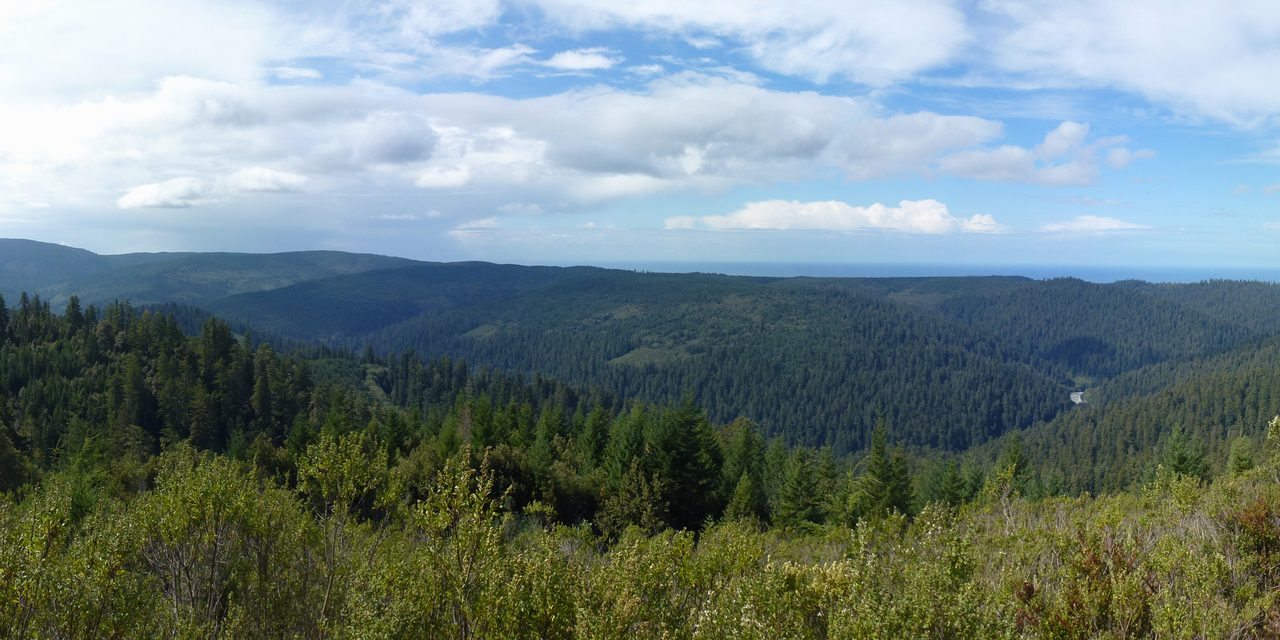
A hairy giant at the treeline turns up on every inhabited continent, from the oldest surviving work of literature to a strip of film shot in 1967 that people still argue about today. Some of it is solid ground: a genuine fossil ape the size of the story, living First Nations traditions that predate the whole Bigfoot industry, human cousins who survived far more recently than anyone expected. Some of it dissolves the moment a laboratory gets hold of it. Here is the file, opened from the ground up, every claim wearing its evidence.
Say 'wild man' and most people picture Bigfoot: a figure in a 1967 film, a fixture of pop culture and roadside tourism. That is the newest and smallest part of the story. A large, hairy, human-like being living out past the edge of the fields is one of the most stubborn and widespread ideas our species has ever had, turning up on every inhabited continent, from the oldest surviving work of literature to living oral tradition. Three very different things get folded into that one hairy silhouette, and an honest file keeps them apart: a genuine cross-cultural literary and folk tradition thousands of years deep, a set of pre-contact Indigenous North American traditions that are real cultural knowledge in their own right, and a modern fringe-science hunt of footprint casts, film frames, and DNA swabs that in turn fed a commercial Bigfoot phenomenon. Collapse them into one blur and you get nonsense. Keep them apart and each one gets a fair hearing. Let's open the file.
| Tradition | Where it appears |
|---|---|
| Enkidu | Mesopotamia, in the Epic of Gilgamesh |
| The woodwose | Medieval and Renaissance Europe |
| The yeti | The Himalaya |
| Sasquatch / Bigfoot | North America |
| The yeren | China |
| The almas | Mongolia |
| The orang pendek | Sumatra |
01The Oldest Wild Men In Writing
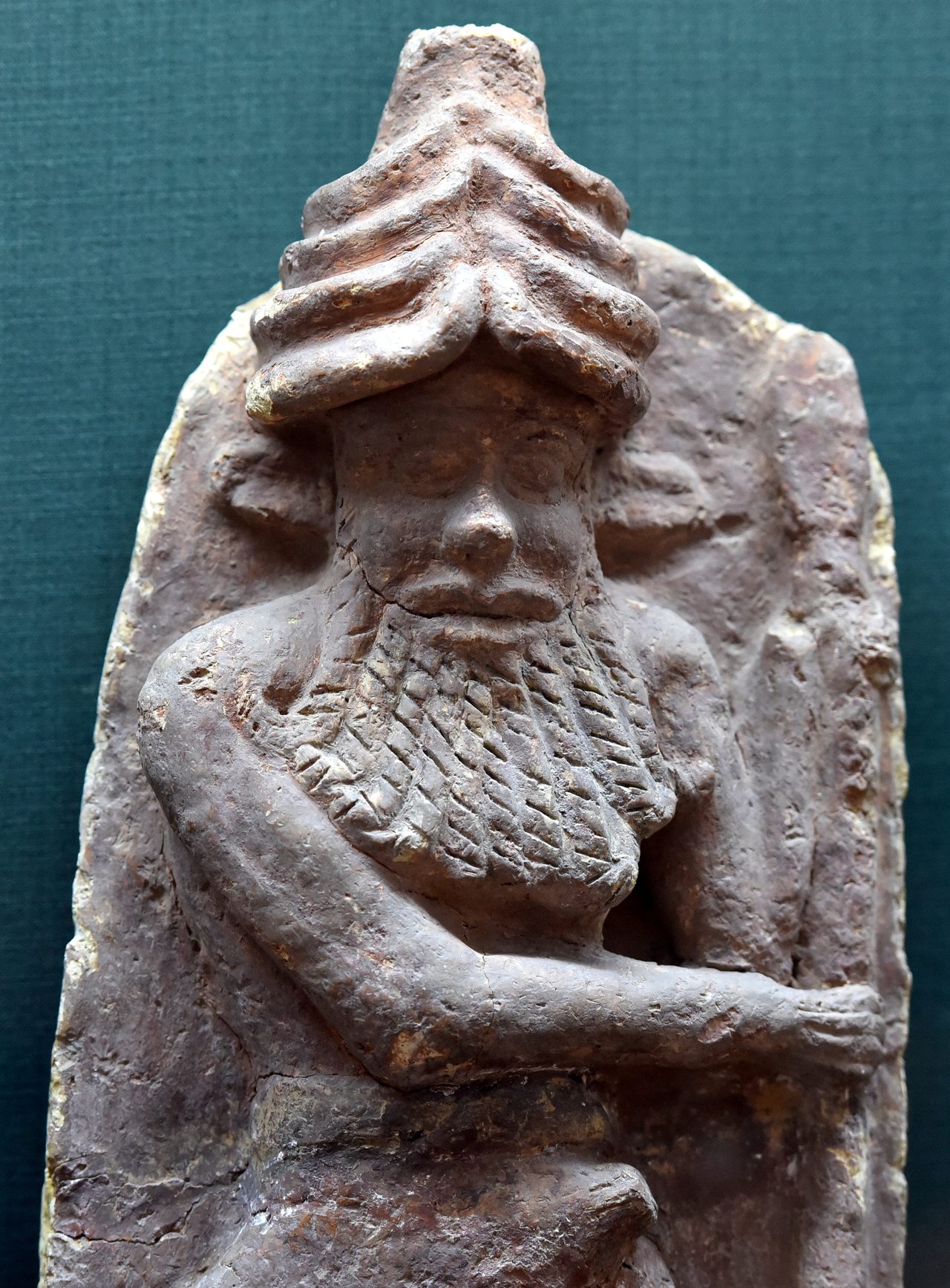
The oldest wild man in world literature is also one of the oldest characters in it. In the Epic of Gilgamesh, first written down around 2100 BCE, the gods create Enkidu as a wild counterpart to the king Gilgamesh. His body, the text says, is 'shaggy with hair,' and he 'knew nothing of cultivated land.' He lives among the animals, eats grass, and drinks at the watering holes alongside the herds. The archetype is there, fully formed, at the very start of the written record.
Grendel is the same figure wearing a darker face. In the Old English poem Beowulf, composed somewhere between the 8th and 11th centuries CE, Grendel haunts the wild marshes at the edge of the human world. The poet calls him a 'mearcstapa,' a 'border-walker,' a creature of the exact seam between the lit hall and the darkness outside it.
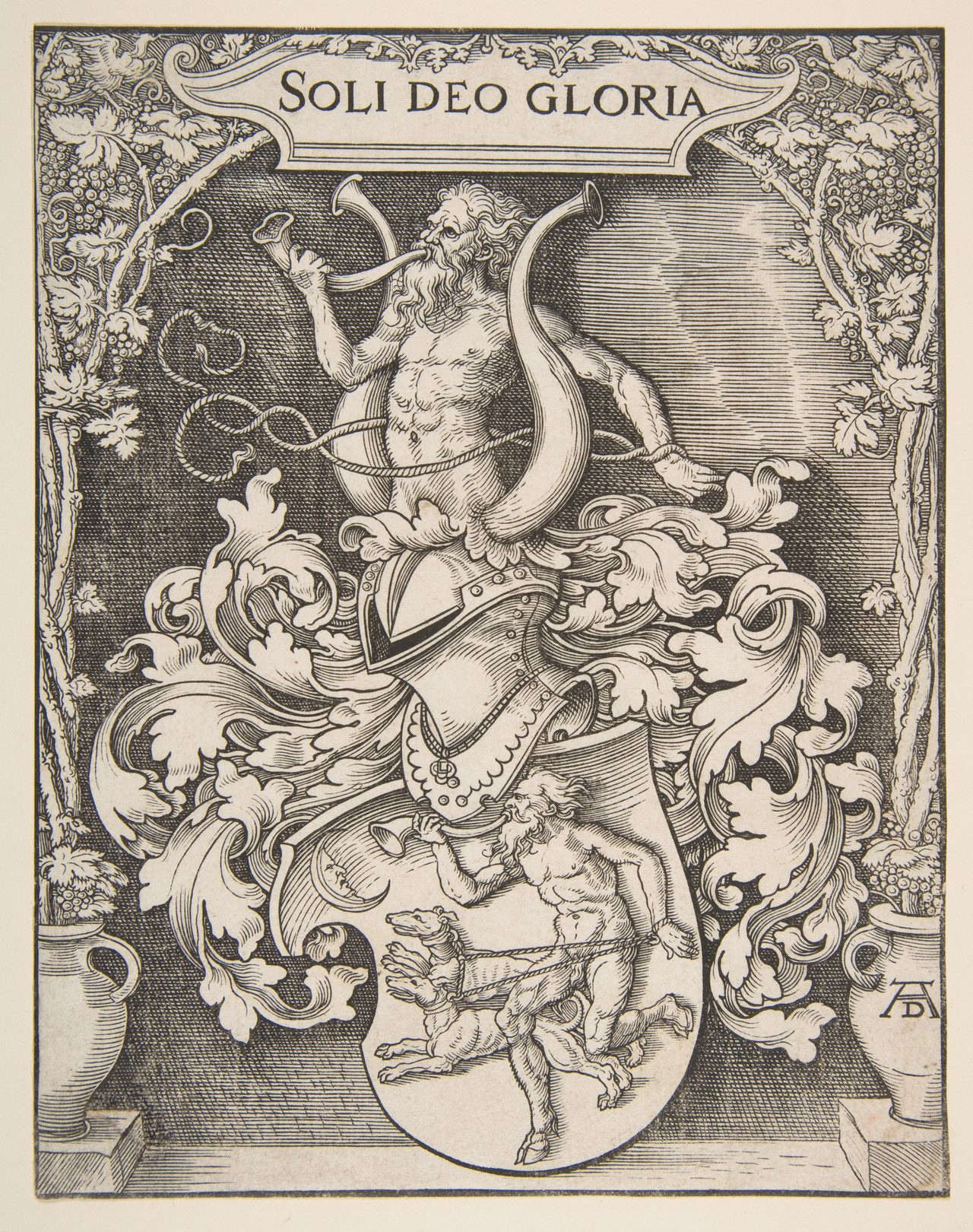
By the Middle Ages the wild man is everywhere in European art. The woodwose, a hairy, club-wielding man of the woods, stares out of church carvings, the margins of manuscripts, and coats of arms across England, France, Germany, and Italy. Greek tradition had already run a parallel line in Silenus and the satyrs, half-human, half-animal woodland beings in the retinue of Dionysus.
Read across all of these, one thing stays constant. The wild man stands on a line: between the town and the forest, between culture and nature, between the human and whatever is not quite human. He is the shape a civilization gives to its own edge.
02A Real Giant Ape Once Walked Asia
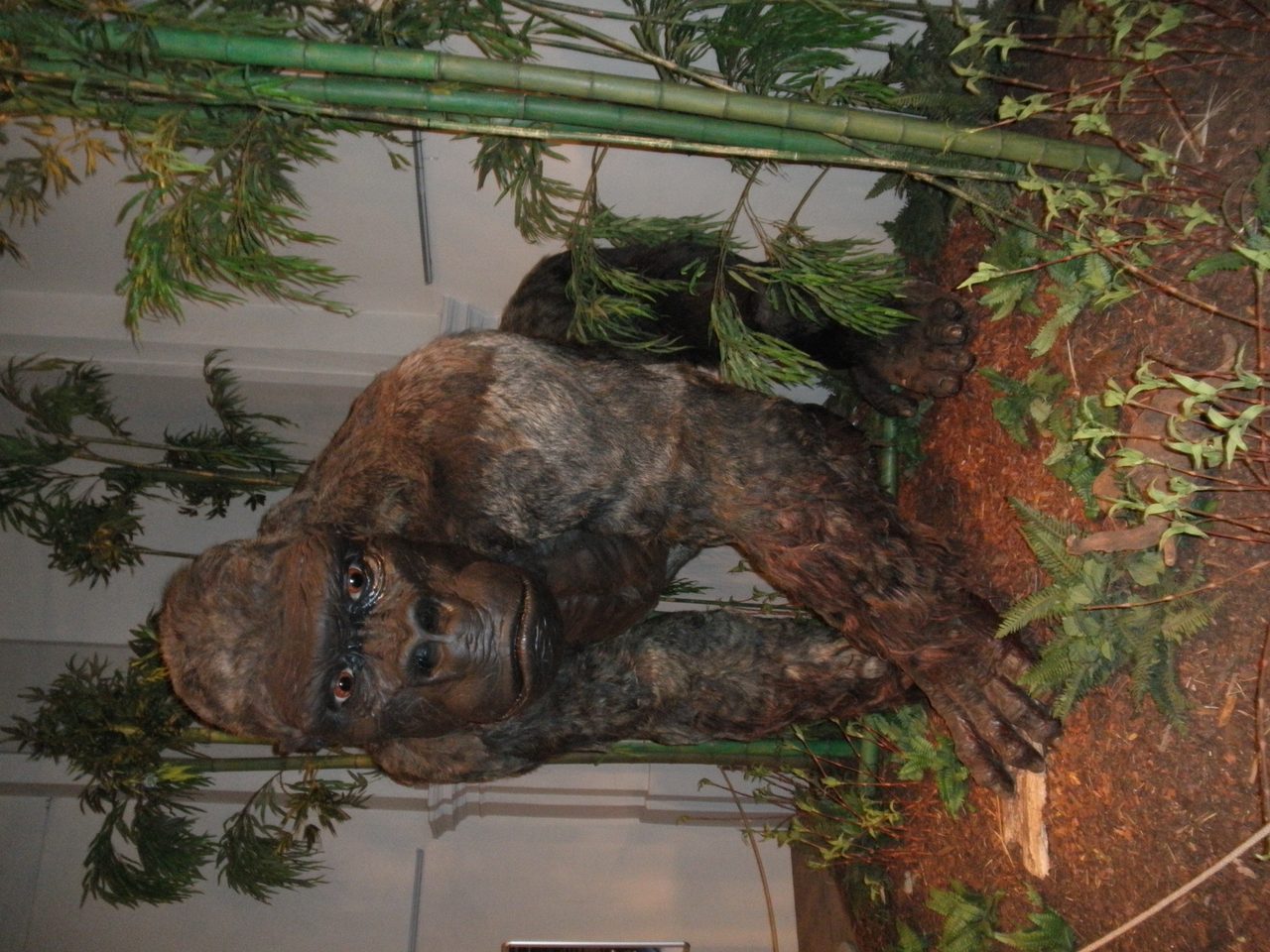
Here is where the story stops being only literary. Gigantopithecus blacki was a real ape, and it really was enormous. It lived across southern China and Southeast Asia from roughly 2 million to 300,000 years ago, and we know it almost entirely from its teeth: about 2,000 of them, plus four lower jaws, recovered from caves in Guangxi, China, and from cave deposits in Vietnam and Thailand. No arm, leg, or spine bones have ever been found. Scaling up from the teeth, researchers estimate a body mass of 200 to 300 kilograms and a standing height around 3 meters, which would make it the largest primate that has ever existed. Analysis of its teeth, by stable isotopes and microscopic wear, points to a plant diet of forest fruit and bamboo.
Two facts about Gigantopithecus matter enormously for what comes later, and both cut against the legend. In 2019 a proteomic study led by Yingqi Zhang, published in Nature, placed the animal firmly with the orangutans, not with our own human line. And while it did overlap in time with Homo erectus in Southeast Asia, nothing suggests it survived past the Pleistocene into the modern age. The giant ape is real. It is also long gone, and it was a relative of the orangutan, not a proto-human on its way to becoming Bigfoot.
03The Cousins Who Really Did Survive
The reason the 'undiscovered human cousin' idea is not absurd on its face is that we keep finding real ones. Homo floresiensis, the 'Hobbit' of the Indonesian island of Flores, survived until roughly 50,000 years ago, long enough to overlap with modern humans. The Denisovans, known so far only from Denisova Cave and one cave in Tibet, interbred with our ancestors across Southeast Asia, and their DNA still runs through living Melanesian and some East Asian populations today. Multiple human species really did share the planet with us far more recently than the old story allowed.
But the research file draws a careful line here, and so do we. That archaic human populations survived into the recent past is established fact. That an undiscovered large primate is still out there in the present is a completely different claim, and it remains undemonstrated. Russell Ciochon's 2009 assessment is the mainstream one: Gigantopithecus went extinct under pressure from Homo erectus and the shifting vegetation of the Ice Ages, not into hiding.
04The Names That Came Before Bigfoot
The word Sasquatch is not American tabloid folklore. It is an anglicization of Sasq'ets, a term from the Sts'ailes people of the Halkomelem-speaking Salish, and it is only one of many. Long before any film or magazine cover, First Nations across the Pacific Northwest had their own names for large, hairy beings, each carrying its own character and its own rules.
| People (language) | Name | What the name carries |
|---|---|---|
| Sts'ailes (Halkomelem Salish) | Sasq'ets | Large, hairy, and wild, and able to be either benign or dangerous. This is the source of the English word Sasquatch. |
| Lummi | Ts'emekwes | A giant hairy being |
| Yakama | Qah-lin-me | Nocturnal, and known for stealing fish |
| Spokane | Sc'wen'ey'ti | A tall timber giant |
| Klamath | Oh-Mah | The mountain devil |
| Tlingit | Kushtaka | A shape-shifting otter-man, a distinct tradition of its own |
These traditions are pre-contact. They are genuine Indigenous knowledge and cultural practice, not spin-offs of modern Bigfoot culture, and they deserve to be read that way. The anthropologist Wayne Suttles, writing in 1972, documented something the pop version usually flattens: many Northwest Coast groups drew a careful distinction of their own, between physical wild men on the one hand and spiritual or supernatural hairy beings on the other, treating them as different kinds of thing entirely. Whatever one finally makes of the commercial Bigfoot phenomenon, it is a separate matter from these traditions, and confusing the two does a disservice to both.
05The Film Nobody Can Close
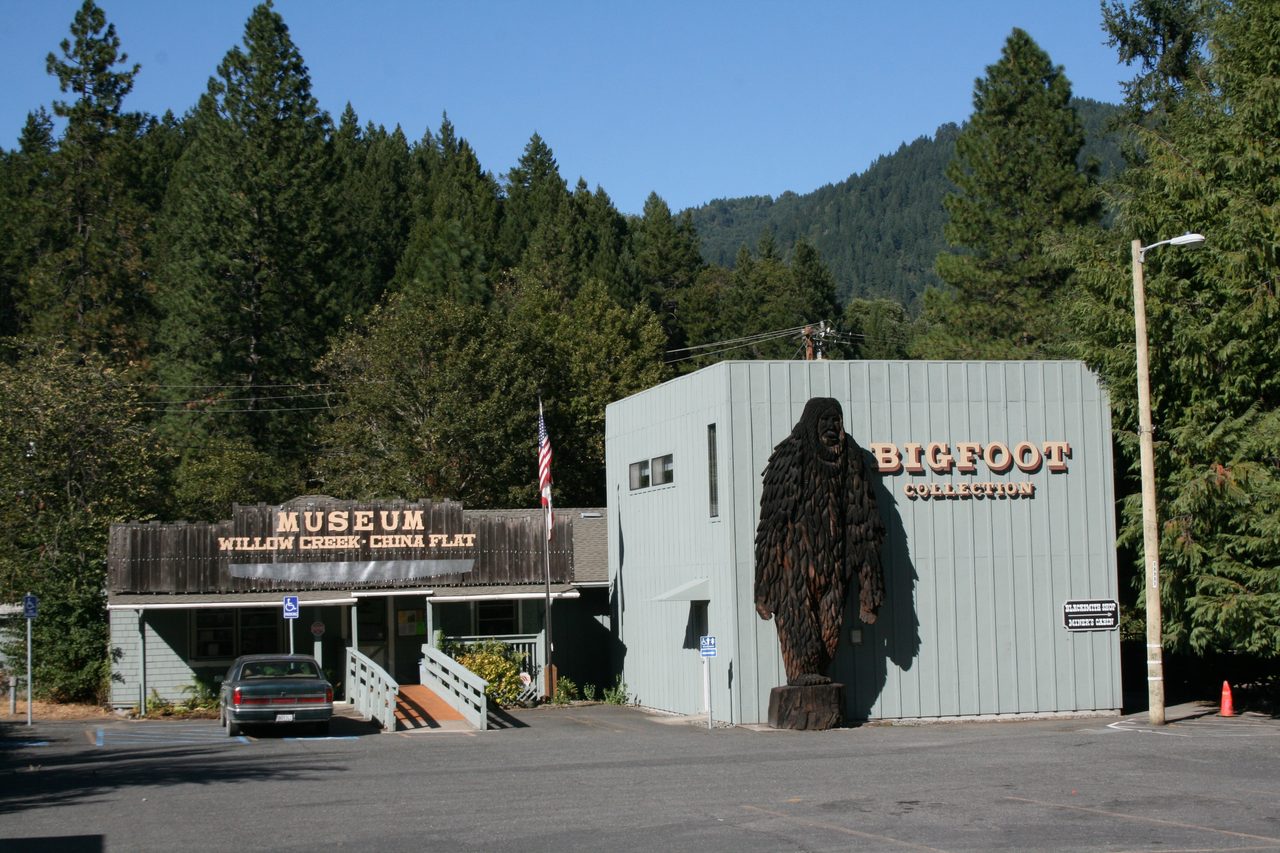
On October 20, 1967, Roger Patterson and Bob Gimlin pointed a camera at Bluff Creek, in northern California, and shot the single most famous piece of Bigfoot footage ever recorded. It shows a tall, hair-covered figure walking upright, apparently female with visible breasts, moving with a compliant gait on deeply flexed knees, and, crucially, with a visible flex in the middle of the foot that later analysts would call a mid-tarsal break.
Decades on, the film has not been closed, and serious people sit on both sides. For authenticity, Jeff Meldrum, an anatomist at Idaho State University, argues that the biomechanics are wrong for a man in a suit: the depth of the knee flexion, the mid-tarsal break, the estimated stride length, and the way muscle seems to shift under the hair. No costume maker of the era has ever been convincingly identified as capable of building such an apparatus, and the walk has never been definitively reproduced.
Against authenticity, the case is just as concrete. In 2002 a costume maker named Philip Morris said he had sold Patterson a gorilla suit, and a man named Bob Heironimus said he was the one who wore it. Neither claim has held up cleanly, and both have been disputed on technical and internally contradictory grounds. The anthropologist David Daegling, in Bigfoot Exposed (2004), argues that as evidence the film simply cannot carry the weight placed on it, in either direction.
So where does that leave it? Exactly where the research file leaves it, and we are not going to pretend otherwise. The Patterson-Gimlin film is genuinely contested: neither proven authentic nor definitively debunked. Anyone who tells you it is settled, in either direction, is telling you more than the evidence does.
06The Footprints That Won't Go Away
The footprints are the other body of evidence, and they are more than a handful of casual casts. Meldrum has examined over 300 footprint casts attributed to Sasquatch and reports a consistent pattern across them: a flat foot with a pressure ridge across the midfoot, hinting at a flexible joint that modern humans do not have but great apes do and early hominins are thought to have had, plus five toes, a divergent big toe, and a length of roughly 35 to 45 centimeters.
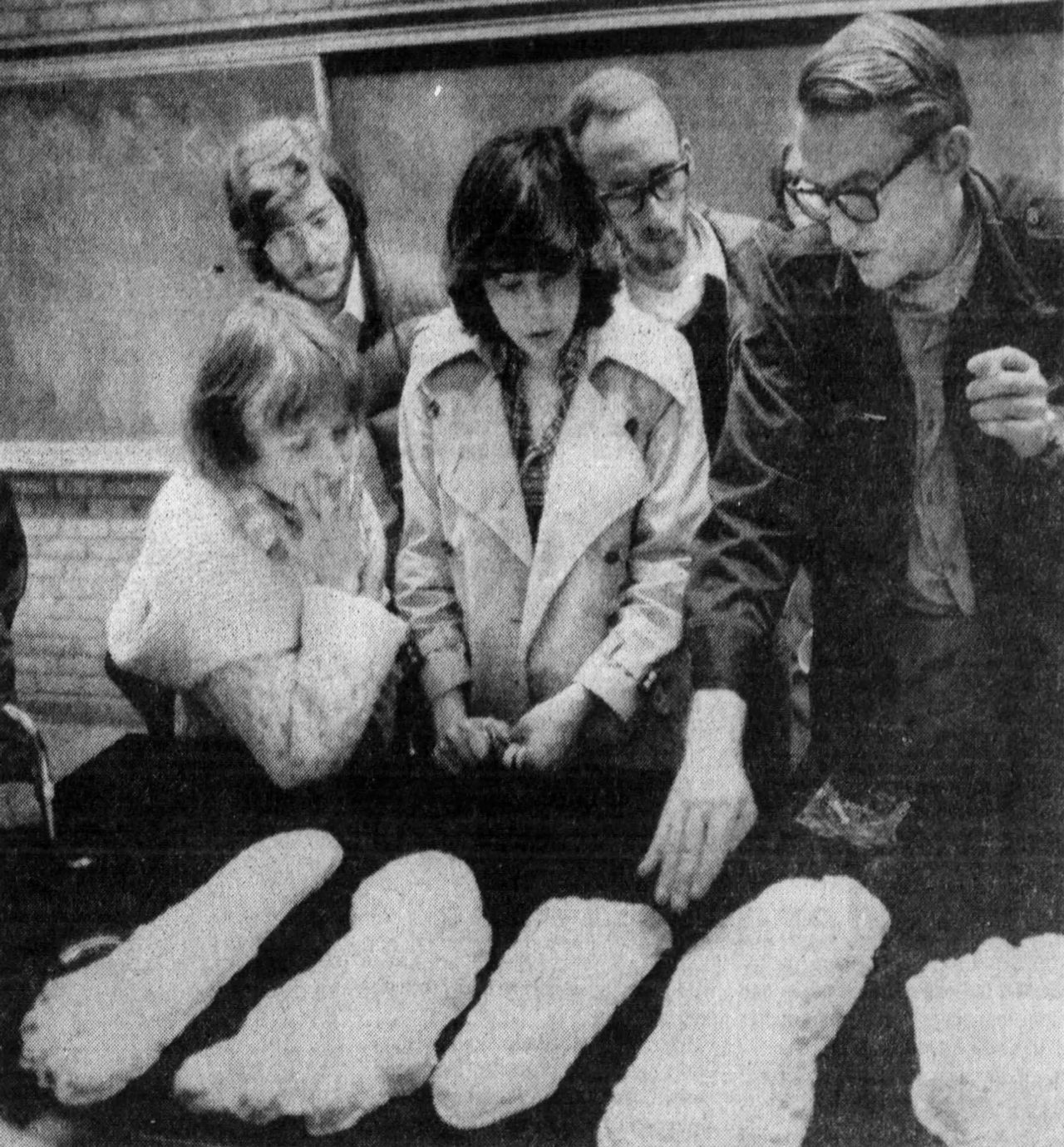
Grover Krantz, an anthropologist at Washington State University who died in 2002, was the first tenured academic to publicly stake his name on the question. He argued that some casts preserved dermatoglyphics, the fine ridge patterns of skin, which he considered extremely hard to fake. The skeptical reply is equally serious and comes from named critics such as Daegling and Radford: casts get contaminated, observers see what they expect to see, and the field is riddled with proven hoaxes, above all the Ray Wallace case that surfaced in 2002. Each of those weakens the chain between a cast in a drawer and a living animal in the woods.
07The Yeti, Tested In A Lab
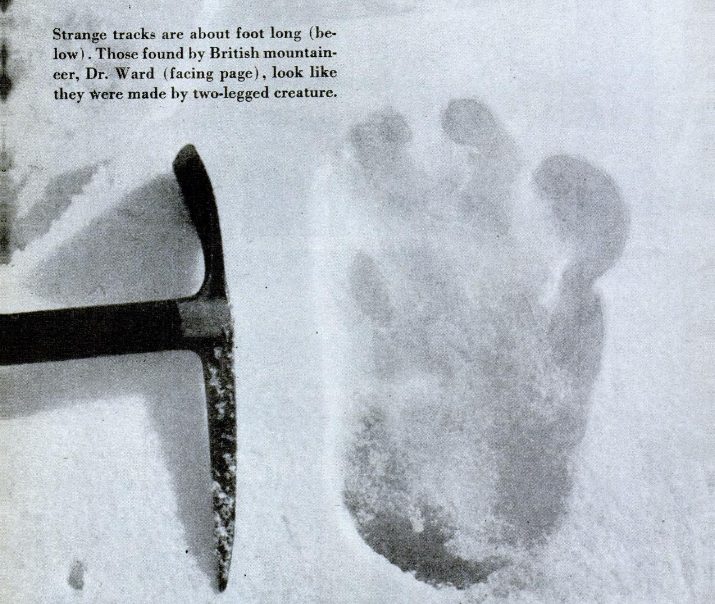
Halfway around the world, the Himalayan version has been getting the same treatment, and the results there are far less ambiguous. The yeti, in Tibetan g.ya' dred, roughly 'rock bear,' belongs to genuine Tibetan Buddhist and Sherpa tradition. In 1951 Eric Shipton photographed a large, clear footprint in the snow of the Menlung Glacier, and that single image did more than anything else to launch the modern yeti into the Western imagination.
Then the physical evidence started going to laboratories. One relic at a time, the results came back mundane.
| Sample | Tested by | What it turned out to be |
|---|---|---|
| The Pangboche and Khumjung 'yeti scalps' | Edmund Hillary's expedition, 1960 | Serow (goat-antelope) skin |
| 36 purported yeti and Bigfoot hair samples | Bryan Sykes and colleagues, 2014 | Two Himalayan samples matched a Pleistocene polar bear sequence; the rest were bear, horse, cow, raccoon, and human |
| 9 'yeti' specimens | Charlotte Lindqvist and colleagues, 2017 | Every one was a Himalayan brown bear (Ursus arctos isabellinus) or a Tibetan brown bear |
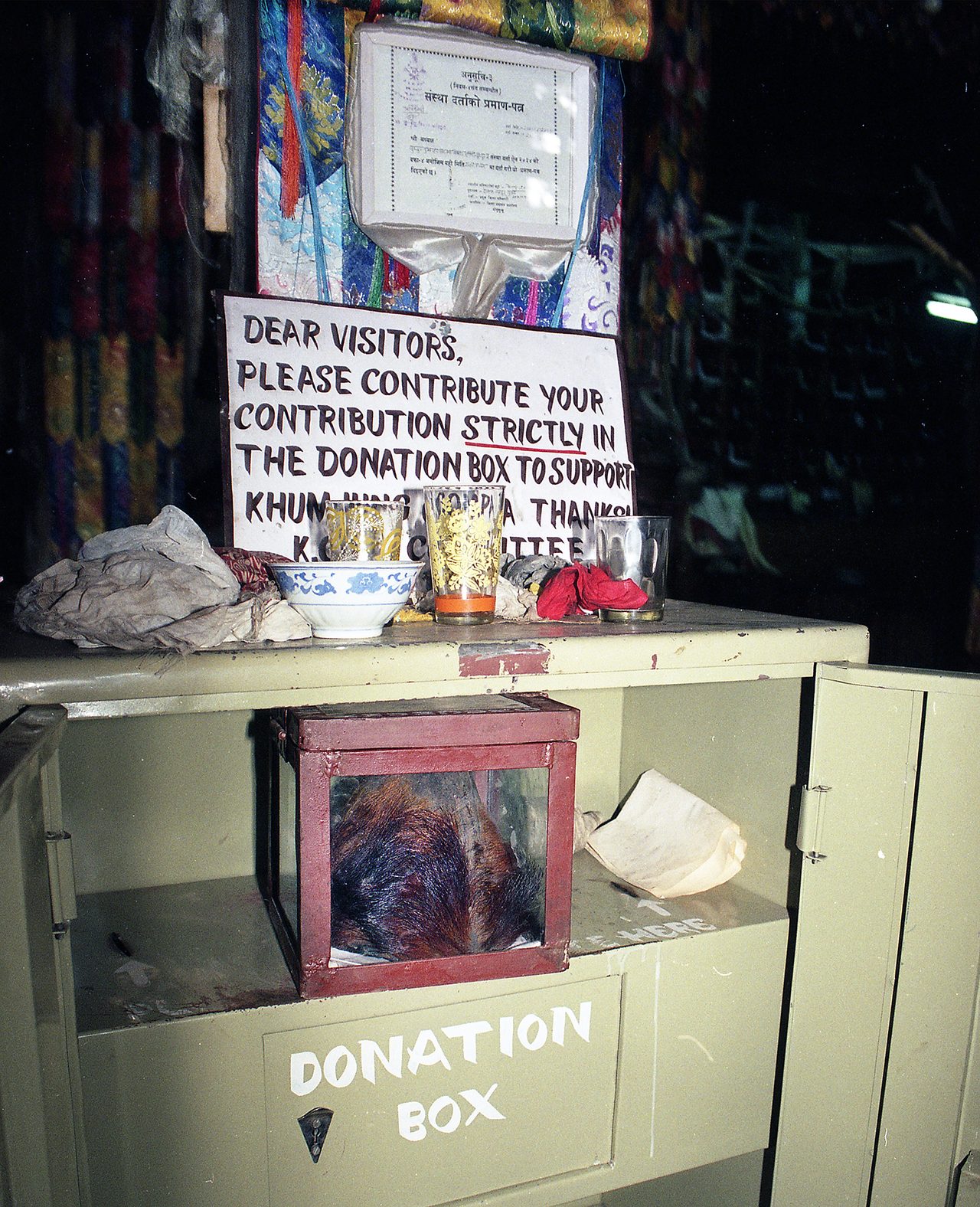
The pattern is hard to miss. When Bryan Sykes and colleagues ran 36 hair samples in 2014, two Himalayan ones matched a Pleistocene polar bear sequence and the rest were ordinary bear, horse, cow, raccoon, and human. When Charlotte Lindqvist and colleagues did a more thorough job in 2017 on nine 'yeti' specimens, every single one came back a Himalayan or Tibetan brown bear. The research file states the resulting scientific position plainly: the zoological consensus is that yeti accounts most likely represent misidentified bears, even if some footprint evidence remains unexplained.
08The One Candidate That Fits
Not every hairy-hominid report is the same size, and one of them is genuinely interesting. The orang pendek, the 'short person' of the Sumatran mountains, is described by local communities as small, roughly 1 to 1.5 meters, walking upright and covered in hair. That matters, because unlike a 3-meter Sasquatch or yeti, a creature that size sits comfortably inside the range of primate diversity we already know. Debbie Martyr, a journalist who went on to manage conservation at Kerinci Seblat National Park, reported multiple sightings through the 1990s and recorded detailed behavior. Hair samples collected by her and others have been analyzed and come back inconclusive or matching known species. The file calls the orang pendek the most plausible cryptid primate candidate of the lot, pointing to Sumatra's real biodiversity and the discovery of Homo floresiensis on nearby Flores as the reason it cannot simply be waved away.
09Where The Bigger Claims Come In
A real fossil ape, real surviving cousins, and a genuinely open candidate in Sumatra all raise an obvious temptation: to reach for a single grand answer that ties the hairy giants together. Three such answers have been offered seriously. None of them holds up as well as its supporters hope.
The oldest is the relict-Gigantopithecus hypothesis, associated with Grover Krantz among others: that Sasquatch is a surviving population of Gigantopithecus that crossed the Bering land bridge during the Ice Age. It is a tidy story, and it does not survive contact with the fossils. Gigantopithecus was a close relative of the orangutan and was very likely a quadruped, while Sasquatch is always described as a strider on two legs. Not one Gigantopithecus fossil has ever been found outside Southeast Asia, let alone in the Americas. And the 2019 protein work only deepened the problem by confirming the orangutan connection. The research file's verdict is blunt: the hypothesis is effectively abandoned by serious primatologists.
The second is the surviving-Neanderthal idea, put forward by Myra Shackley in her 1983 book Still Living?, aimed at the almas of Mongolia and the almasty of the Caucasus. It has one thing going for it: the almas is consistently described as far more human than the other hairy hominids, shorter, with more human features, using tools and wearing crude clothing. But wanting it to be a relict Neanderthal does not make it one. No bones and no DNA support the survival of any archaic Homo species into the present. The Denisovan genes we carry prove these cousins once lived alongside us. They say nothing about anyone still being out there.
The third is China's yeren, the 'wild man' of Hubei province, especially the Shennongjia forests, which the Chinese state has taken seriously enough to investigate since the 1970s. Expeditions by the Chinese Academy of Sciences between 1976 and 1981 collected hair samples and cast footprints, and came away with nothing definitive. Reports describe a reddish-brown, upright creature, with the occasional unverified claim of a captured specimen that never quite materializes.
10The Claims We Refuse Outright
Past the speculation sits a final tier, and here the file stops hedging, so we will too.
The idea that Sasquatch can vanish, teleport, or slip into a parallel dimension is not a daring hypothesis. It is a way of making the creature impossible to test. It is unfalsifiable, unsupported by any physical evidence, and it quietly contradicts the entire rest of the case, because footprints, recorded vocalizations, and broken trees are all claims about a physical animal that leaves physical traces. You cannot have it both ways.
The companion claim, that the Forest Service, the Park Service, or the military is concealing known Bigfoot populations to head off economic disruption, has no documentary evidence behind it at all. As the file notes, it is structurally implausible given the sheer number of agencies and individuals who would have to keep the secret, forever, without a single leak. This is not us refusing to look. It is us reporting that there is nothing there to find.
11Why We Keep Meeting Him
There is a quieter explanation for the whole pattern, and it is less a dismissal than a mirror. Beings like this may recur across cultures because human minds are built to produce them. We are pattern-finders to a fault, prone to pareidolia, seeing a face or a figure in the ambiguous shape at the edge of the trees, and prone to agency detection, reading intention into things that have none. Add that oral traditions shift and grow over generations, and separating a genuine historical kernel from centuries of retelling becomes genuinely hard.
And under all of it sits one stubborn fact. For all the accounts, ancient and modern, no one has ever produced independently verified physical evidence, no skeleton, no artifact, no confirmed DNA, for any of the beings in this file. Well-documented experiences like sleep paralysis and hypnagogic hallucination can generate vivid encounters with non-human figures that feel completely real. And when a physical specimen has been offered as proof, it has a habit of turning, under ordinary laboratory analysis, back into something already in the textbooks. The yeti hair is the cleanest example there is.
Fast Facts
- The archetype
- A large, hairy, human-like being of the wilderness, attested on every inhabited continent
- Oldest in writing
- Enkidu, in the Epic of Gilgamesh, around 2100 BCE
- Where the name comes from
- Sasquatch is an anglicization of Sasq'ets, from the Sts'ailes people of the Halkomelem Salish
- The real giant ape
- Gigantopithecus blacki, up to about 3 meters and 200 to 300 kilograms, extinct by roughly 300,000 years ago
- The famous film
- Patterson and Gimlin, Bluff Creek, October 20, 1967, still genuinely contested
- The yeti samples
- DNA-tested to bears (Sykes 2014, Lindqvist 2017)
- Relict Gigantopithecus
- Effectively abandoned by serious primatologists
- Confirmed physical proof of a living wild man
- None, anywhere, to date
What We Can Actually Stand Behind
The solid ground is genuinely solid. The wild man is one of the oldest and most widespread ideas humans have ever recorded. Gigantopithecus was a real giant ape. Homo floresiensis and the Denisovans really did share the planet with us far more recently than we used to think. And the First Nations wild-man traditions are authentic pre-contact knowledge, not a modern invention. None of that is in doubt.
A few threads are honestly unresolved, and we are leaving them that way. The Patterson-Gimlin film is neither proven authentic nor definitively debunked. The footprint-cast morphology has never been fully explained away. And the orang pendek of Sumatra remains the one hairy-hominid report small enough, and close enough to real primate diversity, to still be worth chasing.
The grand unifying hypotheses stay speculative, and most lean toward no. Sasquatch as a surviving Gigantopithecus is effectively abandoned by primatologists, undone by the animal's orangutan kinship and its total absence from the American fossil record. The almas as a relict Neanderthal has not a single bone or strand of DNA behind it. Interesting stories, thin evidence.
And two claims fail outright. An interdimensional, teleporting Bigfoot is unfalsifiable and contradicts the physical evidence its own believers cite. A government conspiracy concealing known Bigfoot populations has no documentary support and would require an unbroken silence across countless people and agencies. These are not open questions. The answer is no.
So the wild man leaves us with a genuinely split verdict, and the honest thing is to hold both halves at once. The archetype is ancient and real as an archetype. The fossil ape was real. The human cousins were real. The First Nations traditions are real knowledge. And every attempt to turn all of that into a living animal still hiding in the woods has, so far, come up empty or come back a bear. Skeptics rightly warn that noticing resemblances across cultures while ignoring the differences is a known way to fool yourself. Which leaves the one question the scholars themselves cannot close, and the one worth ending on: how much of this vast, recurring story is genuine historical memory of something once seen, and how much is the human mind doing what it has always done, drawing a face at the edge of the forest and giving it a name?
Sources & further reading
Everything above is drawn from our research library on Theories of Anything, which is where we worked from. The papers, reports and primary records listed beneath them are where you can check us independently.
Image credits
- Old-growth redwood forest, Redwood National Park photograph by Little Mountain 5, via Wikimedia Commons. CC BY-SA 4.0 Source.
- Terracotta relief of Enkidu, from Ur, Iraq (Iraq Museum) photograph by Osama Shukir Muhammed Amin FRCP(Glasg), via Wikimedia Commons. CC BY-SA 4.0 Source.
- Coat of arms of Johann Tscherte, woodcut by Albrecht Durer (woodwose heraldic supporter) Albrecht Durer (1471-1528), via Wikimedia Commons. CC0 1.0 Source.
- Restoration model of Gigantopithecus blacki, 'Gigants' exhibition, Czech Republic (2014) photograph by Michal Maňas, via Wikimedia Commons. CC BY 4.0 Source.
- Bigfoot Museum, Willow Creek, California photograph by Bob Doran, via Wikimedia Commons. CC BY 2.0 Source.
- Grover Krantz displaying plaster casts of purported Sasquatch footprints, 1974 photograph by Alan King, via Wikimedia Commons. Public domain Source.
- Eric Shipton's 1951 photograph of an alleged yeti footprint, Menlung Glacier photograph by Gardner Soule, via Wikimedia Commons. Public domain Source.
- Purported yeti scalp displayed at Khumjung monastery, Nepal (photographed 1998) photograph by Jaan Künnap, via Wikimedia Commons. CC BY-SA 4.0 Source.
- Card crop of Old-growth redwood forest, Redwood National Park photograph by Little Mountain 5, via Wikimedia Commons. CC BY-SA 4.0 Source.


