Shadow People: The Dark Figure At The Edge Of Sleep, From The Old Hag To The Hatman
Millions of people wake in the dark unable to move, a shadowy figure standing over them, a weight crushing their chest. That much is settled science, mapped down to the brainstem circuit that runs it, and it carries a name in nearly every culture that ever kept records. The harder part is the figure itself: the tall silhouette in the wide-brimmed hat that strangers keep describing in almost the same words, a convergence no laboratory has yet explained, and the confident claims that dissolve the moment you test them. Here is the file, opened from the neuroscience up, with the science and the folklore kept honestly apart and every claim wearing its evidence.
Say 'shadow people' and two completely different things are riding inside one phrase, and an honest file keeps them apart. The first is a documented neurological event that happens to a large slice of humanity and has been mapped down to the individual brainstem nuclei behind it: sleep paralysis, the state where you wake with your mind switched on and your body still switched off, and something dark seems to be in the room. The second is the folk reading laid over that event, that the dark figure is a real external being, a spirit, a visitor, a specific man in a hat who calls on sleepers around the world. The first is Tier 1 science. The second runs from genuinely open to flatly refused. Collapse them into one question and you get nonsense in both directions. Keep them apart and each one gets a fair hearing. Let's open the file.
01What Is Actually Happening In The Body
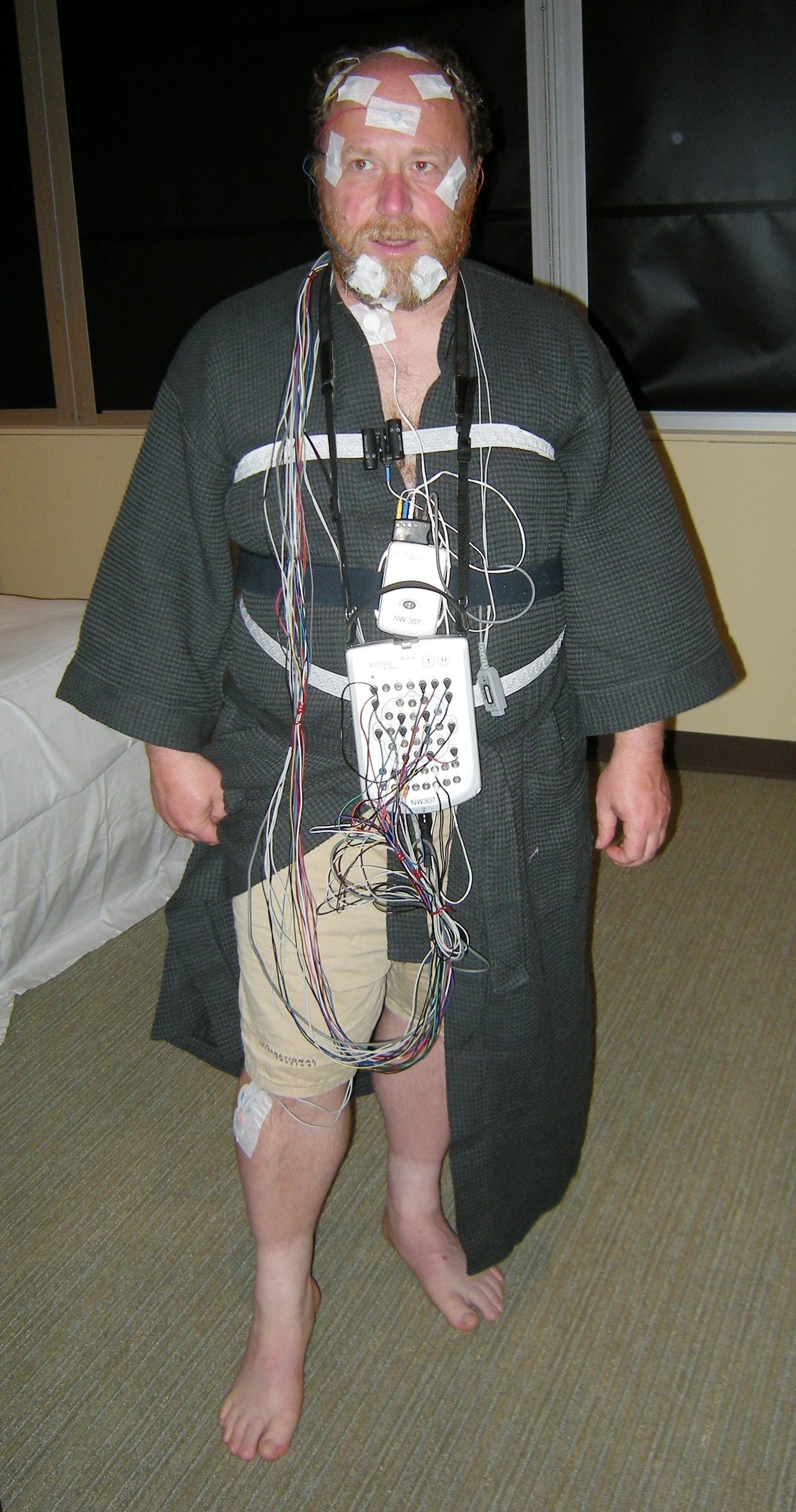
Start with the part that is not in dispute. Sleep paralysis is a period when you cannot perform voluntary movement, either as you are falling asleep or, more often, as you are waking, while your consciousness and your breathing carry on normally. The cause is known. During REM sleep the brainstem, specifically the sublaterodorsal nucleus and the ventromedial medulla, actively shuts down your voluntary motor neurons. This is REM atonia, and it exists for a good reason: it stops you from physically acting out your dreams. Sleep paralysis is simply what happens when consciousness comes back online before that shutdown lifts. You are awake, aware, and for a moment genuinely unable to move. Episodes typically last one to four minutes and rarely run past ten.
What makes it terrifying rather than merely strange is what the mind does with that moment. In 1999 the researchers Cheyne, Rueffer, and Newby-Clark sorted the hallucinations that accompany sleep paralysis into three consistent categories, and every one of them maps onto a known piece of brain activity. Nothing in the list requires a ghost. All of it requires a brain under a very specific kind of stress.
| Category | What it feels like | What the brain is doing |
|---|---|---|
| Intruder | A threatening presence, a shadowy figure, the visual sense of an entity in the room | Amygdala hyperactivation and the threat-vigilance system firing |
| Incubus | Chest pressure, difficulty breathing, the feeling of being sat upon or suffocated | Disrupted respiratory monitoring during REM |
| Vestibular-motor | Floating, flying, out-of-body sensations, vibrations | Temporo-parietal junction (TPJ) activation |
This is not a rare malfunction. A 2011 meta-analysis by Sharpless and Barber pulled together 35 studies and found a lifetime prevalence of 7.6 percent in the general population, 28.3 percent among students, and 31.9 percent among psychiatric patients. The risk climbs with sleep deprivation and irregular schedules such as shift work, with sleeping on your back, and with anxiety disorders, PTSD, and panic disorder. In narcolepsy it is a cardinal symptom, showing up in roughly half of all patients. Put plainly, meeting the shadow at the edge of sleep is a common human experience, not a freak event.
And it happens everywhere. Cross-cultural prevalence of sleep paralysis is remarkably consistent, which the research file reads as a sign of a universal neurological susceptibility rather than a culturally invented experience. The event does not need a particular belief system in order to occur. What changes from one place to the next is only the name given to whatever is doing it.
02The Same Night Visitor, Culture By Culture
Long before neuroscience had a word for it, nearly every culture that kept records had a name for the thing that sits on your chest in the dark. The names are not vague, and they cluster around the same few images: an old woman or a witch crouching on the sleeper, a demon that presses down, a being that climbs onto the body, invisible restraints holding you flat. Here is a sample of the same experience wearing a different face in each language.
| Culture | Name | What the name describes |
|---|---|---|
| Newfoundland | Old Hag (Ag Rog) | A witch who sits on the sleeper's chest; attested before the 19th century |
| Germanic / English | Mare (mara) | A female night-demon who presses on the sleeper; Anglo-Saxon and Old Norse |
| Japan | Kanashibari (金縛り, 'bound in metal') | Invisible restraints holding the body down; Edo period onward |
| Brazil | Pisadeira | A thin old woman with long nails who steps on the chest; colonial period onward |
| Turkey | Karabasan ('dark presser') | A dark entity pressing down; Ottoman era onward |
| Thailand | Phi Am (ผีอำ) | A ghost that smothers the sleeper |
| China | Guǐ yā chuáng (鬼压床, 'ghost pressing bed') | A ghost that sits on the sleeper |
| Mexico | Se me subió el muerto | 'The dead one climbed on me' |
| Inuit | Aqtuqsinniq (Uqumangirniq) | A spirit attack during sleep; pre-contact |
| Arabic / Islamic | Al-jathoom (الجاثوم) | A jinn sitting on the chest; classical |
| Ancient Greece | Ephialtes (ἐφιάλτης, 'leaper') | A demon that leaps upon sleepers; classical |
| Nigeria (Yoruba) | Ogun Oru ('nocturnal warfare') | A spiritual attack during sleep |
The folklorist David Hufford was the first to make the crucial point, in his 1982 book The Terror That Comes in the Night. Strip away the local explanations, he showed, and the experiential core is the same everywhere: paralysis, dread, pressure on the body, and the sense of a presence in the room, regardless of the framework a culture uses to interpret it. The interpretation is local. The experience underneath it is not.
The word 'nightmare' is a fossil of this. It comes from 'mare' (Old English mære, Old Norse mara), the supernatural female being who sits on the sleeper's chest, and it originally referred to the entity, not the bad dream. To be 'mare-ridden,' or to suffer the 'mare-ride,' was to undergo the paralysis itself. The same root survives across the Germanic languages, in the German Nachtmahr, the Dutch nachtmerrie, the Swedish mardröm. Only across the 17th and 18th centuries did the meaning drift from 'entity attack' to 'bad dream,' quietly burying the sleep-paralysis experience the word was built to name.
03The Man In The Hat
Now the ground shifts, and the file shifts tiers with it. Among modern shadow-people reports, one figure turns up again and again with unusual specificity: the Hatman. He is described as a tall, dark silhouette in a wide-brimmed hat or fedora, often with glowing red eyes. He appears during sleep-paralysis episodes, in the drowsy hypnagogic state at the edge of sleep, and occasionally in fully waking experiences, most often tied to extreme fatigue or drug withdrawal.
Here is the honest problem, and the file does not pretend to solve it. The consistency of the Hatman description across independent reports has been noted by researchers, but it has never been the subject of a formal clinical investigation. Nobody has run the study. That leaves three explanations on the table, and none of them is ruled in or out. The figure could be an archetypal pattern, a dark shape the mind reaches for the way Jung described the shadow. It could be cultural transmission, a template spread through media and internet communities so that people report what they have already half-heard. Or it could be a common feature of the brain's threat-detection systems, unconnected people building the same visual construct because they are running the same hardware. This is a real open question. It is not evidence that something external is visiting sleepers, and it is not proof that the Hatman is merely a story that went viral. It is a convergence nobody has yet explained, and we are going to leave it standing exactly there.
04What The Brain Does When It Builds A Stranger
There is at least one hard clue about where the shadow figure comes from, and it points inward. The temporo-parietal junction, or TPJ, is the part of the brain that integrates multisensory information about body position and spatial orientation. In 2002, Olaf Blanke and colleagues, publishing in Nature, found that electrically stimulating the TPJ produces the experience of a 'shadow person': a vivid sense that another being is present nearby, mimicking the experiencer's own body position.
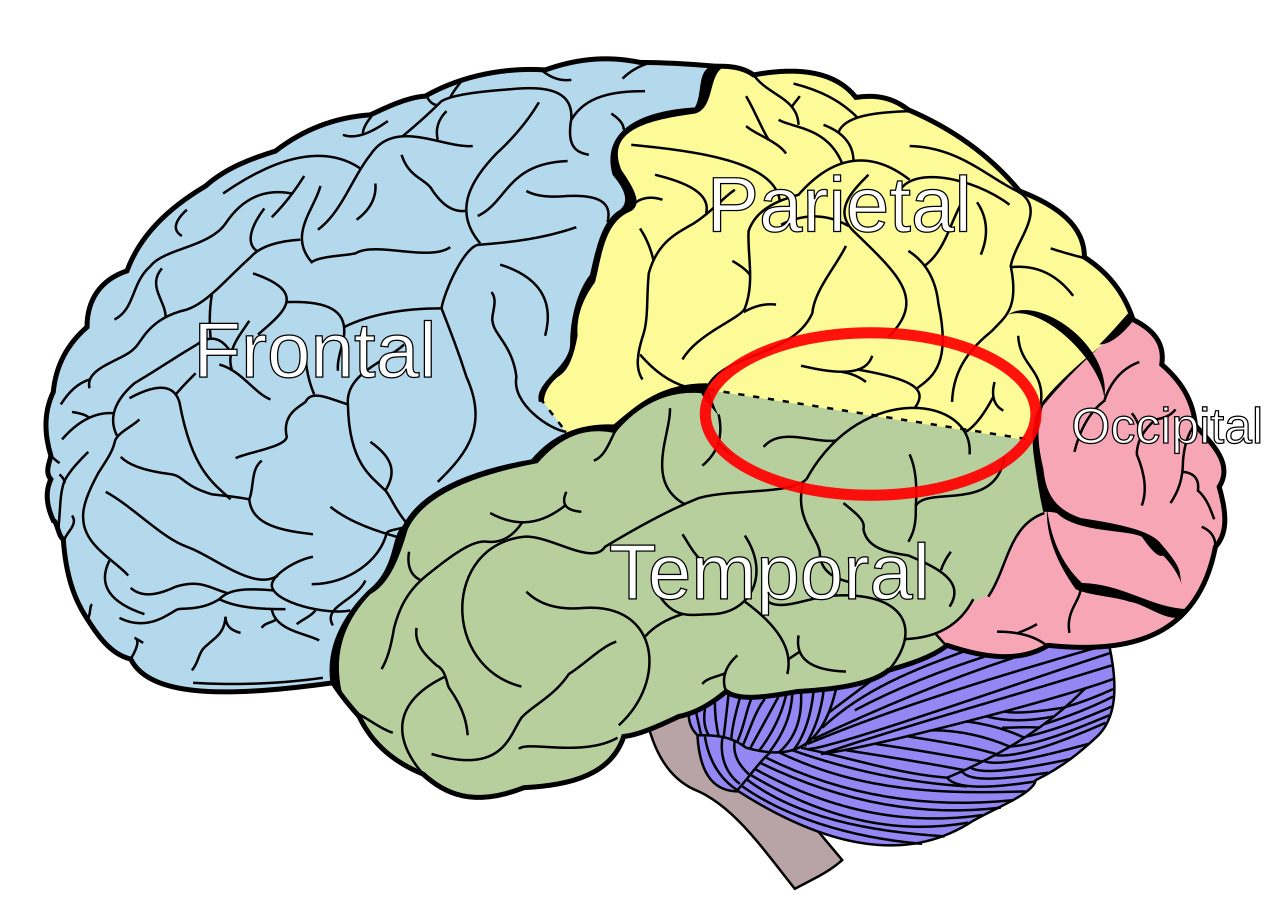
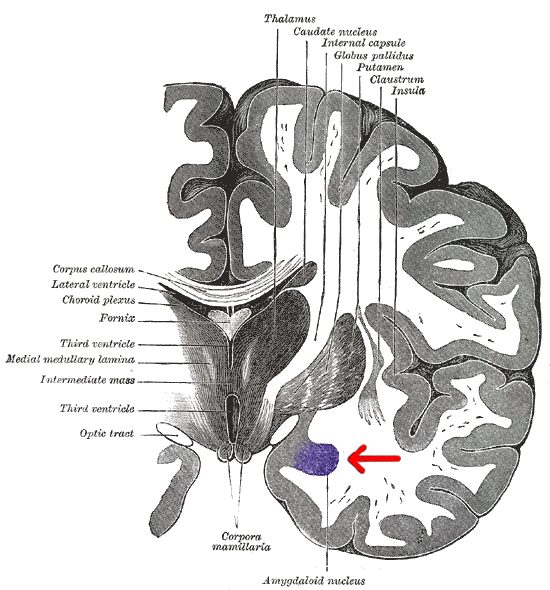
That points to an explanation for the shadow at the edge of sleep. If the TPJ misfires during REM intrusion, the brain may generate a copy of its own body-model and project it outward as a separate presence in the room. The reason that projected 'other' feels menacing rather than neutral is the amygdala, which is running hot at the same moment and throws the whole scene into threat. In this reading the intruder is you, doubled and misread as a stranger, then painted in dread. The file offers this as a hypothesis built on the Blanke result, not as a directly tested finding, and that is exactly how we hand it to you.
The same machinery may reach further than the bedroom. In 2005, Richard McNally and Susan Clancy showed that people who believe they were abducted by aliens produce real psychophysiological responses, elevated heart rate and skin conductance, when they recall the experience, a pattern the file notes is consistent with genuine trauma memory rather than deliberate confabulation. And the overlap between reported sleep-paralysis entities and reported alien-abduction entities is striking: both feature paralysis, a looming presence, total helplessness, and sometimes the sense of being examined or manipulated. The experience is real to the person having it. What it is an experience of is the open part.
Hufford drew a conclusion from all this that turns the usual story inside out. His 'experiential source hypothesis' argues that supernatural belief is often generated by real anomalous experiences, sleep paralysis, near-death experiences, out-of-body states, rather than the other way around. The order most people assume is backwards. People do not hallucinate shadow people because they already believe in ghosts. They come to believe in ghosts because they have hallucinated shadow people.
05The Painting That Got There First
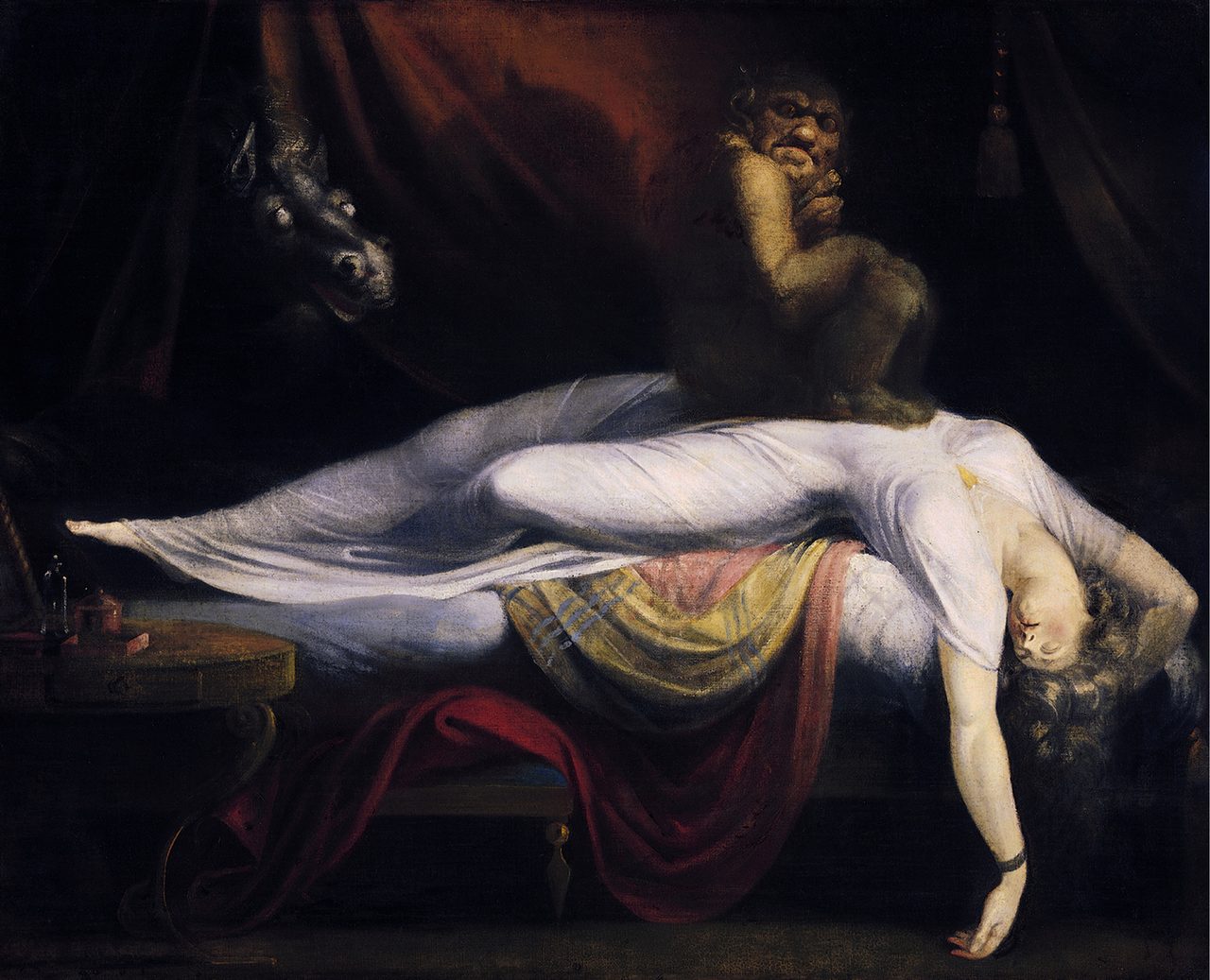
None of this is new. In 1781, more than two centuries before anyone imaged a temporo-parietal junction, the painter Henry Fuseli put the whole experience on canvas. The Nightmare shows a woman sprawled in sleep with a squat demonic incubus crouched on her chest and a dark horse's head, the 'mare' of the title, pushing through the curtain behind her. It is the most famous artistic representation of sleep paralysis in Western art. Fuseli knew the Germanic mara folklore and the night-terror accounts of his day, and he painted the phenomenon's exact experiential features: the paralysis, the crushing weight on the chest, the dark entity, the dread. The file treats the painting as documentation, and it is right to. Fuseli recorded the experience faithfully. He just used the vocabulary of demons, because in 1781 that was the only vocabulary there was.
06Where The Bigger Claims Come In
So far the file has stayed close to the evidence. Here is where some researchers reach past it for a bigger answer. Three such answers have been offered seriously, and the file weighs each one on its merits rather than waving it away.
The boldest is that shadow people are genuinely external. Some paranormal researchers, notably Jason Offutt in Darkness Walks (2009), propose that they are real beings: interdimensional intelligences, spirits of the dead, or non-physical minds perceived only during altered states. The evidence offered is the cross-cultural consistency of the reports and the occasional multiple-witness sighting. The file gives that its hearing and then weighs it honestly. Because shadow-person reports correlate so strongly with documented neurological states, sleep paralysis, hypnagogia, temporal-lobe activity, and because not one piece of physical evidence has ever been produced, the interdimensional hypothesis is both unfalsifiable and non-parsimonious. It has not been disproven so much as made unnecessary: it explains nothing the brain does not already explain, while asking you to believe a great deal more. It does not sit level with the neurological account, and we are not going to pretend it does.
The second thread runs through pharmacology, and it cuts the other way. Shadow people are reported with striking regularity by people in specific drug states: diphenhydramine (Benadryl) overdose, which produces anticholinergic delirium; methamphetamine psychosis after long stretches without sleep; and the deliriant compounds datura and high-dose DPH, which generate remarkably consistent shadow-figure hallucinations. The pattern is itself telling. It is the anticholinergic and deliriant compounds that summon shadow figures, while the serotonergic psychedelics produce entirely different hallucinations, which points to a specific neural pathway rather than a doorway to anywhere. The file reads this as support for a neurological explanation over a supernatural one. It also notes, fairly, that a consistent chemical trigger does not by itself prove these states cannot reveal something otherwise imperceptible, its own 'tuning the radio' possibility, but that is a hedge on the very last step, not a rival theory standing beside the first one.
The third answer is evolutionary. On this reading the 'intruder' hallucination is not a bug but an evolved alarm: a hypervigilant predator-detection response that fires when consciousness notices the body is vulnerable and paralyzed during awakening. It would explain why the figure is so reliably dark, looming, and threatening, since a threat-detection system with no clear stimulus defaults to the most dangerous template it has. The file calls this evolutionarily plausible but speculative, and difficult to test experimentally. It is a good story with the right shape. It is not yet a demonstrated one.
07The Claims We Refuse Outright
Past the speculation sits a final tier, and here the file stops hedging, so we will too. Two specific claims are not open questions. They are refused, in plain terms.
The first is that particular religious rituals reliably prevent or end sleep-paralysis episodes. Many cultures have developed practices for driving off the night visitor, and that tradition is real and human and worth respecting. But the claim that a specific prayer or rite dependably works has never been shown in a controlled study, and there is a simpler reason it can feel like it does. Episodes end on their own, on their own short timetable. If you pray as an episode is already breaking, the relief lands right on cue, and the ritual takes credit for something the body was going to do anyway. That is the natural time-course of the paralysis coinciding with your arousal from it, not a cause.
The second claim is stronger and fails harder: that the Hatman is one specific being who travels to sleepers all over the world. This confuses two different things. Human neurology is consistent, so it produces similar hallucinations in people who have never met, and that consistency gets misread as the footprints of a single roaming agent. Hold the distinction carefully, because it is the whole point. That independent Hatman descriptions converge so tightly is a genuine open question, the one we left standing earlier. That the convergence is caused by one literal entity making house calls across the planet is a different and far bigger claim, and it is the one the file refuses. The open question is why the descriptions match. The refused claim is that a single figure in a hat is really out there doing the visiting. Those are not the same sentence, and only one of them is on the table.
08Why We Keep Meeting Him
There is a quieter account of the whole pattern, and it is less a dismissal than a mirror. Shadow people, night visitors, and dark figures may be best explained by how human minds work rather than by what is actually in the room. The same beings recur across cultures because our cognition is built to produce them. We are pattern-finders to a fault, prone to pareidolia, seeing a face or a figure in an ambiguous shape, and prone to agency detection, reading intention into things that have none. Layer on the way oral traditions grow and reshape themselves over generations, and separating a genuine historical kernel from centuries of retelling becomes methodologically hard. On this view the shadow figures are archetypal projections of human fear, not encounters with actual entities.
And under all of it sits one stubborn fact. For all the accounts, ancient and modern, no independently verified physical evidence, no remains, no artifact, no DNA, has ever been produced for the beings described in this category. Meanwhile sleep paralysis, hypnagogic hallucination, temporal-lobe activity, and psychoactive substance use are all thoroughly documented, and every one of them can generate a vivid, wholly convincing experience of meeting a non-human presence. When the choice is between a mechanism we can measure and an entity we cannot find, the file knows which way the weight falls.
Fast Facts
- What it is
- Sleep paralysis: waking with the mind conscious while REM atonia still holds the body still
- The mechanism
- The brainstem shuts down voluntary movement during REM; consciousness returns before it lifts
- How common
- Lifetime prevalence 7.6 percent general, 28.3 percent students, 31.9 percent psychiatric patients (Sharpless and Barber, 2011)
- The three hallucinations
- Intruder, Incubus, and Vestibular-motor (Cheyne, Rueffer, and Newby-Clark, 1999)
- Where 'nightmare' comes from
- The 'mare,' a female being who sits on the sleeper's chest; the word meant the entity, not the bad dream
- The modern figure
- The Hatman: a tall dark silhouette in a wide-brimmed hat; why the reports match so closely is unexplained
- The brain clue
- Stimulating the temporo-parietal junction induces a 'shadow person' (Blanke et al., 2002)
- The famous painting
- Henry Fuseli, The Nightmare, 1781
- Confirmed physical proof of an external entity
- None, anywhere, to date
What We Can Actually Stand Behind
The neuroscience is solid ground. Sleep paralysis is real, common, and mapped down to the brainstem circuit that causes it. Its hallucinations sort into three consistent categories, each tied to known brain activity. It carries a name in nearly every culture on record, and the experiential core, paralysis, dread, pressure, a sensed presence, is the same everywhere, whatever the local story. The word 'nightmare' is a linguistic fossil of exactly this. None of that is in doubt.
One thread is honestly unresolved, and we are leaving it that way. Independent descriptions of the Hatman converge more tightly than anyone has yet explained, and no one has run the clinical study that would settle why. Archetype, cultural transmission, shared threat-detection wiring: all three remain candidates and none has won. This is a real open question, and it resolves neither toward 'just a viral story' nor toward 'something is really out there.'
The bigger explanations stay speculative, and the weight leans against them. The interdimensional-entity hypothesis is unfalsifiable and non-parsimonious, explaining nothing the brain does not already explain while asking for far more, so it does not stand level with the neurological account. The drug-state and evolutionary readings are plausible and even useful, but neither is demonstrated. Interesting stories, thin evidence.
And two claims fail outright. That a specific ritual reliably ends an episode mistakes the natural end of the paralysis for a cure. That the Hatman is a single literal being touring the world's bedrooms mistakes the consistency of human neurology for one roaming agent, a different and stronger claim than the still-open question of why the descriptions match. These are not open questions. The answer is no.
So the shadow at the edge of sleep leaves us holding two truths at once. The event is real and understood: a specific, common brain state wearing a hundred cultural masks. The being laid over it is a different kind of thing. The Hatman's uncanny consistency across strangers is a genuine puzzle no laboratory has yet closed, while the strong claims stacked on top of it, the entity that travels, the ritual that banishes, do not survive contact with the evidence. That leaves the one question the scholars themselves keep open. Skeptics are right that harvesting cross-cultural resemblances while quietly dropping the differences is a well-worn way to fool yourself. So when a sleeper in Nigeria, in Newfoundland, and in Edo-era Japan each wakes pinned and certain someone is in the room, how much of what they carry down the centuries is real memory of a shared human experience, and how much is invention laid over it? The degree to which these night-accounts preserve genuine historical memory rather than cultural invention remains, in the words of the researchers themselves, genuinely debated. The question is still open. That is the honest place to leave it.
Sources & further reading
Everything above is drawn from our research library on Theories of Anything, which is where we worked from. The papers, reports and primary records listed beneath them are where you can check us independently.
Image credits
- Henry Fuseli, The Nightmare (1781) Henry Fuseli (1741-1825), via Wikimedia Commons. Public domain Source.
- Anatomical diagram of the temporo-parietal junction (TPJ) diagram by Henry Vandyke Carter, a Gray's Anatomy plate derivative, via Wikimedia Commons. Public domain Source.
- A person wired for a polysomnography (clinical sleep study) session photograph by Joe Mabel, via Wikimedia Commons. CC BY-SA 3.0 / GFDL Source.
- Coronal brain cross-section highlighting the amygdala (Gray's Anatomy plate) illustration by Henry Vandyke Carter, via Wikimedia Commons. Public domain Source.
- Card crop of Henry Fuseli, The Nightmare (1781) Henry Fuseli (1741-1825), via Wikimedia Commons. Public domain Source.


