Skinwalker And Wendigo: The Navajo Witch, The Algonquian Hunger, And Why They Were Never One Story
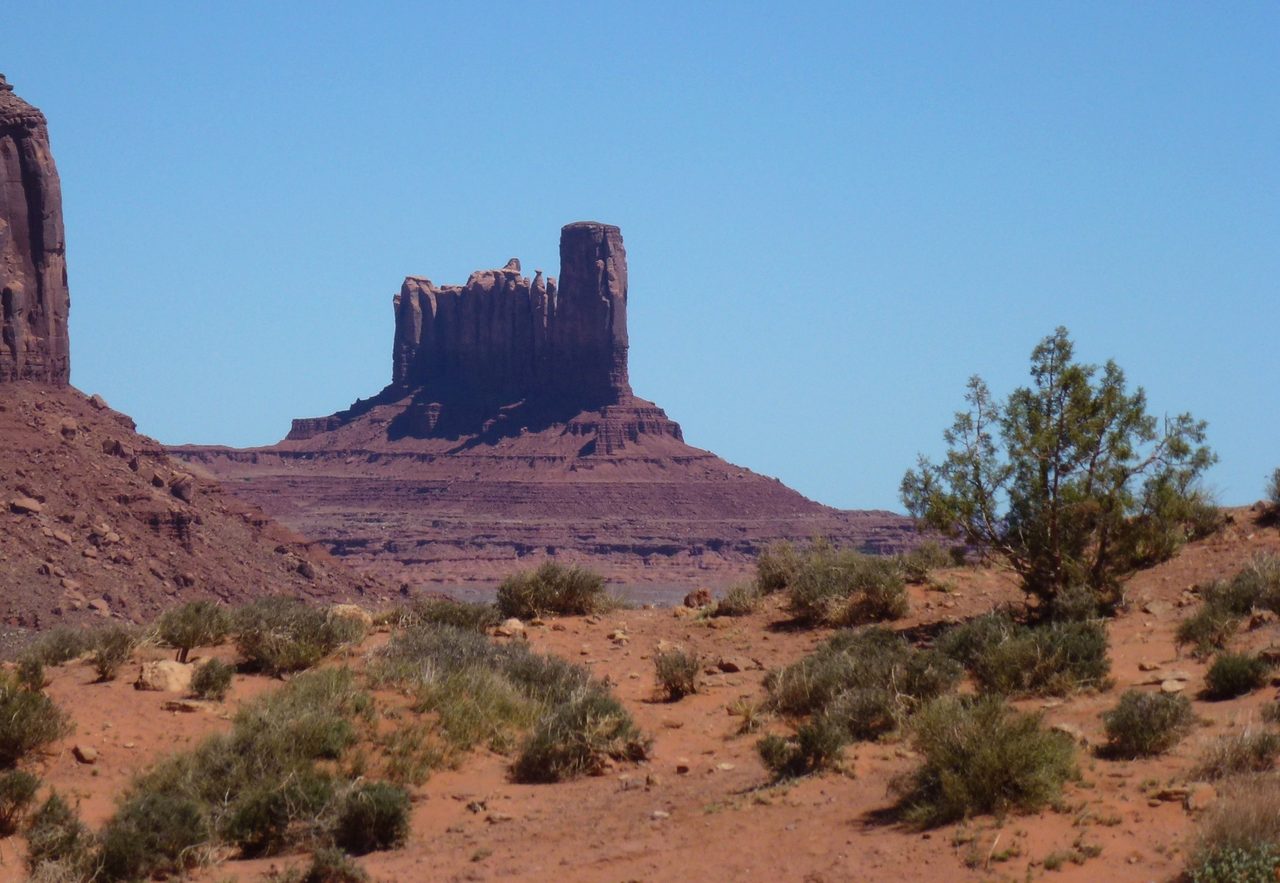
Search either name and the internet hands you the same lazy promise: an 'evil shapeshifter' from 'Native American legend,' the two words spoken in one breath as if they were one creature in two costumes. They are not, and the difference is the whole point. The skin-walker belongs to the Navajo, the Diné: a human witch who murders a close relative to buy an unnatural power. The wendigo belongs to the Algonquian nations of the northern forests: an ice-hearted hunger born of winter, starvation, and the ethics of sharing food. Different peoples, different worldviews, different moral logic. This file reports each tradition in its own terms, treats the living beliefs with the seriousness they are owed, and refuses the two claims that have been built on top of them for profit and for clicks.
Search either name and you tend to be handed the same lazy promise: an 'evil shapeshifter,' a monster from 'Native American legend,' the two words often used in the same breath as if they named one creature with two costumes. They do not. The skin-walker belongs to the Navajo, the Diné, and to a specific idea inside that culture: a human witch who committed the deepest taboo there is in order to buy an unnatural power. The wendigo belongs to the Algonquian-speaking nations of the northern forests, and to a completely different idea: an insatiable, ice-hearted hunger tied to winter, starvation, and the ethics of sharing food. Different peoples. Different geographies. Different moral logic. Our research file states the point plainly, so we will too. These are two traditions that share only 'the common quality of being entities of profound transgression,' and each has to be understood inside its own philosophy rather than flattened into one generic monster. They sit on the same page here as a shelving convenience, nothing more. This file keeps them apart.
01The Skin-Walker: A Human Who Broke The Deepest Taboo
In Diné tradition the being usually meant by 'skin-walker' is the yee naaldlooshii, a name that translates roughly as 'with it, he goes on all fours' or 'he who walks on all fours.' It is the most commonly referenced of several distinct types of Navajo witch. The crucial thing the pop-culture version drops is that a skin-walker is not a creature at all. It is a person. In the tradition, skin-walkers are humans, often described as former healers or ceremonial practitioners who have turned their knowledge inside out, and the power they gain, the power to take animal form, most often as a coyote, wolf, owl, or crow, is bought at a fixed and terrible price: the murder of a close relative. The evil is the entry fee.
What the tradition says such a person can then do is bounded, and worth stating exactly rather than embroidering. Skin-walkers are described as operating at night, wearing the skins of animals, able to run at superhuman speed, to imitate voices, and to cause illness with a bone or corpse powder, sometimes called corpse poison or ánt'įįhnii, among other malevolent acts. That is the documented description, and we are going to leave it there rather than invent the rest, for a reason the tradition itself will make clear in a moment.
The first major ethnographic study of this belief was Clyde Kluckhohn's Navaho Witchcraft, published in 1944 through Harvard's Peabody Museum. Kluckhohn documented not one undifferentiated 'witchcraft' but several categories the Diné distinguished carefully: witchery way, which is the skin-walker type; sorcery; wizardry; and frenzy witchcraft, each with its own methods and characteristics. This was a coherent system described from within the culture, catalogued from the inside, not a single vague bogey.
And it sits inside something larger. Diné cosmology is organized around hózhó, the concept of harmony, beauty, balance, and right relationship, the state a well-lived life is meant to move toward and restore. The skin-walker is the exact inverse of that: a person who deliberately destroys harmony, balance, and kinship in exchange for personal power. You cannot understand what the skin-walker means without understanding what it is the negation of. It is not a monster that wandered in from outside the culture. It is the culture's own image of what it would look like to betray everything the culture holds together.
02Why The Tradition Asks For Silence
This is the point at which a responsible file has to slow down. Many Diné community members consider public discussion of skin-walkers inappropriate, and some consider it dangerous, and the reason is not the Western idea of a guarded secret. Within the tradition itself, naming and discussing malevolent forces is understood to give them power, or to invite their attention. Our research document does not file this as an optional courtesy or an editorial hedge tacked on at the end. It records it inside the verified ethnographic record, alongside the rest of what is documented, as a fact about how the tradition works. So we report it as exactly that. This article describes what anthropologists and community members have chosen to put on the record, and stops there. It does not narrate an encounter, it does not stage a sighting, and it does not manufacture the detail the tradition itself withholds.
The anthropologist Margaret Brady spent a study on how these narratives actually function inside Navajo communities. Her 1984 work, 'Some Kind of Power': Navajo Children's Skinwalker Narratives, documented the stories doing real social work: moral education, boundary-marking that defines the limits of acceptable behavior, and a shared framework for explaining illness and misfortune. Told among children, the skin-walker story teaches where the edges of the community are by showing what stands just past them.
There is one more verified fact to put down before we move north, and the research file treats it as a fact, not an opinion. The appropriation and sensationalization of skin-walker narratives in popular culture, in internet creepypasta, in horror films, and in the 'Skinwalker Ranch' franchise, is widely criticized by Diné scholars and community members as disrespectful, decontextualized, and commercialized. Hold that thought. We will come back to the Ranch by name, and it does not come out well.
03The Wendigo: A Hunger That Grows With Every Meal
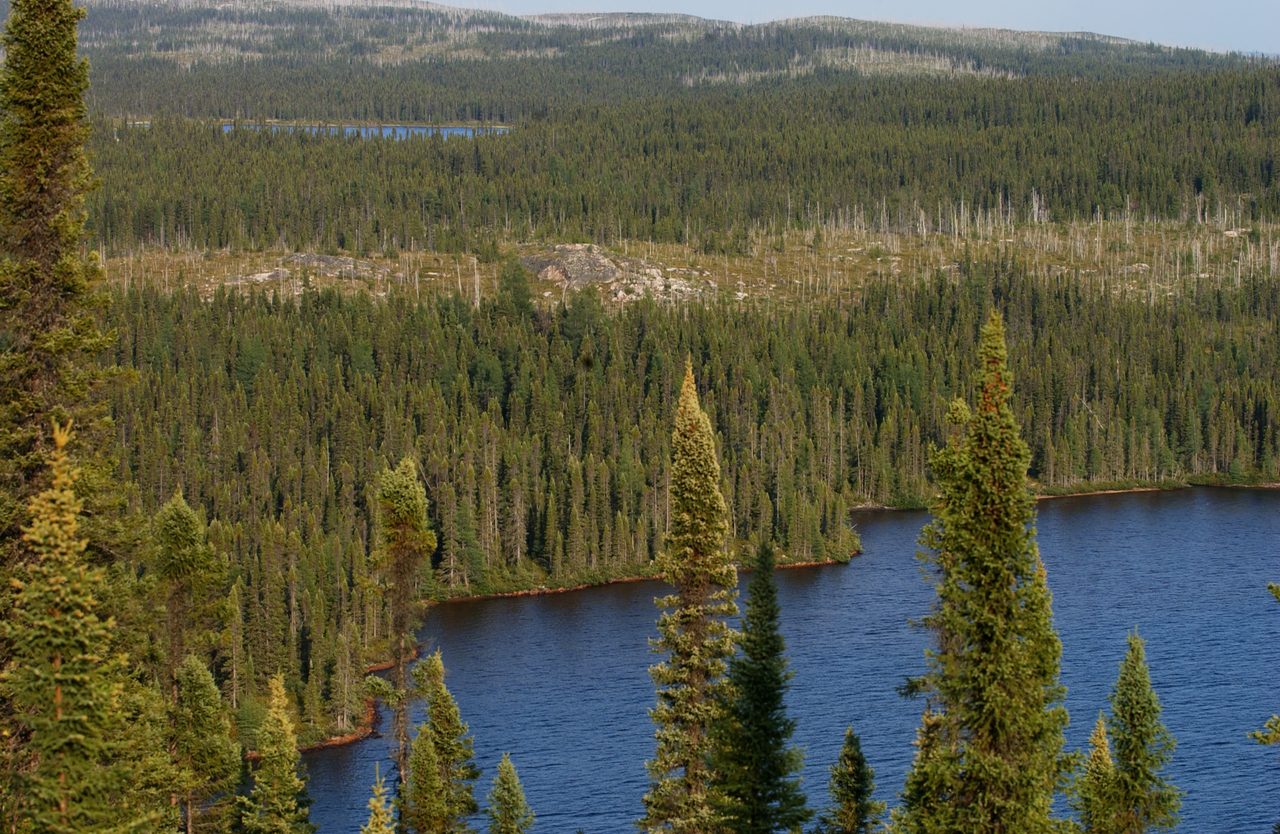
Now cross a continent and a worldview. The wendigo, wiindigoo in Ojibwe, wîhtikow in Cree, atchen in Innu, is attested across a wide band of Algonquian-speaking nations, through the Great Lakes region, the subarctic of Canada, and the northern United States. It is not one nation's private figure but a shared reference point among many related peoples, each with its own version, all recognizably describing the same kind of thing.
And the thing they describe is specific. The wendigo is a giant, emaciated, ice-hearted creature overwhelmed by a hunger it can never satisfy, above all a hunger for human flesh. In some traditions the detail that makes it unforgettable is a piece of pitiless arithmetic: its body grows in proportion to whatever it eats. Feed it and it gets larger, and its hunger scales up with its size, so it is never one meal closer to full. The more it consumes, the hungrier it becomes.
A person can become a wendigo. Algonquian tradition names three routes: through cannibalism, particularly the kind forced by winter starvation; through extreme greed or the hoarding of resources; or through spiritual or sorcerous transformation. Notice that two of those three are moral failures rather than supernatural accidents. The wendigo is, in large part, something a person can turn into by how they behave toward other people.
The anthropologist Victor Barnouw documented the wendigo at the center of Ojibwe winter storytelling. The stories were told in the season they were about, and they served as warnings: about the moral and spiritual dangers of the desperation that comes when the food runs low and the cold does not break.
Read in its own setting, the wendigo is an argument about survival. It is the embodiment of everything that destroys a community that depends on sharing to get through winter: selfishness, greed, hoarding food while others starve, and, at the far end, the cannibalism that is the ultimate betrayal of the group. These are not abstract sins. In a small winter camp living on mutual aid, a person who hoards or preys on the others can literally end the camp. The monster is the behavior, drawn large enough to see.
04Swift Runner, 1879
The tradition also has a documented human case, and it is a grim one. In 1879 a Cree man known as Swift Runner killed and consumed members of his own family over the course of a winter. He was tried and executed at Fort Saskatchewan. His was the most documented instance of a person identified as having 'become' wendigo, and it raised hard questions that outlived him, about how one culture's legal and psychological categories can or cannot read another culture's experience.
Those questions are where the trouble started. The anthropologist Lou Marano would later challenge the habit of lumping historical cases like Swift Runner's together with a much later clinical idea, arguing that many of the historical reports had been distorted by missionary and colonial biases before they ever reached a researcher's desk. To see why that matters, we have to follow the idea he was arguing against.
05The Diagnosis That Was Really A Projection
For much of the twentieth century, 'wendigo psychosis' had a place in psychiatric and anthropological literature as a proposed culture-bound syndrome: a compulsive fear of, or desire for, cannibalism, said to strike primarily among northern Algonquian peoples under winter starvation conditions. That is what was once proposed. Keep the tense in mind, because it does not survive the century.
The concept was popularized above all by Morton Teicher's 1960 monograph Windigo Psychosis, which compiled seventy historical reports of alleged cases dating from 1636 to 1936. It worked. For decades afterward, 'wendigo psychosis' appeared in cross-cultural psychiatry textbooks as a paradigmatic example, the standard illustration of how culture was supposed to shape psychopathology.
Then the idea was taken apart. In a 1982 paper in Current Anthropology with the pointed title 'Windigo Psychosis: The Anatomy of an Emic-Etic Confusion,' Lou Marano argued that most of the reported cases were better explained by things that had nothing to do with a special syndrome: actual starvation, ordinary homicide, community scapegoating, or plain colonial misinterpretation of what had happened. 'Windigo psychosis' as a distinct clinical entity, he concluded, was an artifact of anthropological projection, a disorder that lived in the observers' framework rather than in the people being observed.
The evidence deepened. Robert Brightman's 1993 study Grateful Prey: Rock Cree Human-Animal Relationships showed at length that wendigo beliefs among the Rock Cree were primarily cosmological, not psychiatric. They were beliefs about spiritual beings and the relationships between humans and animals, not descriptions of a mental disorder. The category error was in the reading, not in the belief.
So here is where the scholarship actually stands, stated as plainly as the file states it. The whole 'culture-bound syndrome' category has been criticized for pathologizing Indigenous belief, for taking a complex cosmological concept and forcing it into a Western diagnostic box. Most scholars now treat 'wendigo psychosis' not as a real psychiatric entity but as a cautionary example of cultural misinterpretation, and treat the wendigo itself as what the people who tell of it always said it was: a spiritual and cosmological figure inside a coherent worldview. This is not a live debate with two evenly matched sides. It is a resolved critique of a colonial-era idea, and honesty requires reporting it that way, not staging a fake tie between Teicher's framing and the decades of work that dismantled it.
06The Neighbors: Four Traditions, Each Its Own
It is worth pausing to make a point the research file is careful about. Skin-walker and wendigo are not the only predatory beings in Indigenous North America, and the others are not variants of either one. Each belongs to its own nation and its own worldview. Grouping them as 'the same kind of thing' would repeat exactly the flattening this whole article is trying to undo. Here are four, kept separate on purpose.
| Being | People | What the tradition describes |
|---|---|---|
| Stikini | Seminole | Owl-witch beings said to vomit up their own internal organs at night in order to fly as owls and feed on human hearts |
| Uktena | Cherokee | A great horned serpent with a blazing crystal on its forehead: dangerous, but a source of powerful medicine for anyone who obtains its crest crystal |
| Wechuge | Athabaskan (Sekani) | A person possessed by a cannibalistic winter spirit, similar in function to the wendigo but its own distinct being |
| Nalusa Falaya | Choctaw | Shadow-like beings that lurk in dark places and can cause illness |
Each of these serves a function you can recognize from the two main traditions: marking moral boundaries, explaining illness and misfortune, encoding the specific danger of a specific environment and season. But recognizing a shared function is not the same as collapsing them into one being, and the whole discipline of this file lives in the gap between those two moves.
07The Wendigo As Moral Philosophy
The most interesting recent work on the wendigo does not treat it as folklore to be catalogued but as philosophy to be read. The Anishinaabe scholar Grace Dillon, editor of the 2012 anthology Walking the Clouds: An Anthology of Indigenous Science Fiction, and others have argued that in the modern era the wendigo functions as a critique of capitalist extractivism. The being's insatiable, world-consuming hunger reads cleanly as the logic of unlimited resource exploitation: a system that consumes without limit and is never satisfied by consuming, growing larger and hungrier at the same time.
The Cree scholar Neal McLeod reads the wendigo stories through wâhkôtowin, the Cree principle of kinship and relational responsibility, the web of obligations that binds a person to their relatives and their community. On this reading the wendigo is what appears when those bonds are violated: the stories teach wâhkôtowin by showing its opposite. That places the wendigo where it belongs, as sophisticated moral philosophy expressed in narrative form, not a 'primitive superstition' to be explained away.
08The Parallels, And Why They Can Mislead
Step back far enough and resemblances to other traditions come into view. Researchers have noted structural parallels between these Indigenous predatory spirits and beings from elsewhere: the ghūl of Arabic tradition, the rakshasa of Hindu tradition, and the draugr and berserker of Norse tradition, all of them involving transformation, predation, and the violation of social taboos. Whether that pattern reflects some universal psychological fear or is simply the coincidental product of very different cultures solving similar problems remains debated, and the file marks it as speculative rather than pretending otherwise.
And the file adds its own warning about its own comparison, which is the part most worth keeping. Drawing these cross-cultural parallels risks flattening the specific meaning of each tradition. A wendigo is not 'the same thing as' a ghūl. Each is embedded in a particular cosmology, a particular landscape, a particular moral world, and the resemblance lives only at the surface. If that caution sounds familiar, it should. It is the identical discipline we opened with, the reason the skin-walker and the wendigo do not belong in the same sentence except to say that they do not belong in the same sentence. The comparison is allowed. The collapse is not.
09The Claims We Refuse
Everything to this point has stayed close to the record. Two claims stand outside it, and here the file stops being gentle, because these are the claims that trade on the traditions without respecting them.
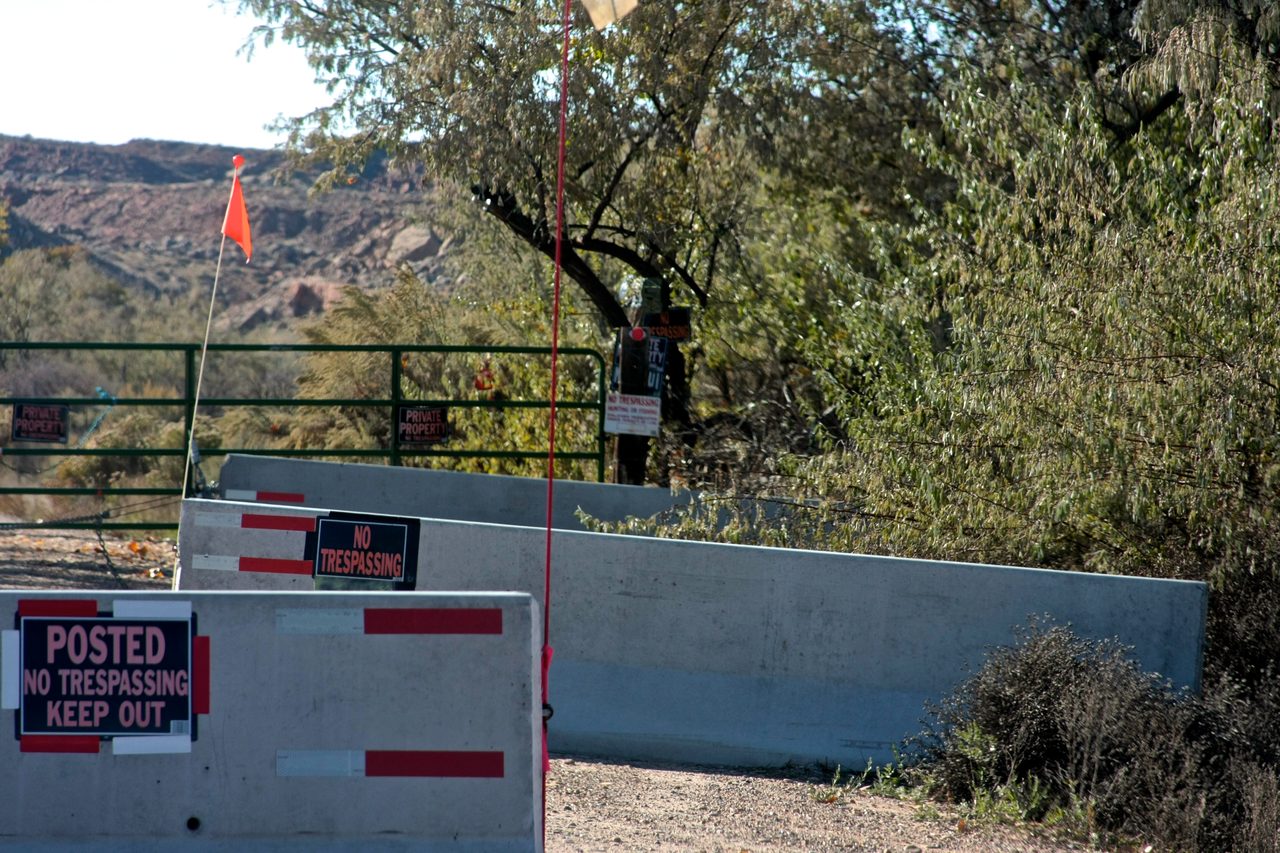
The first is 'Skinwalker Ranch.' The property, actually the Sherman Ranch in Uintah County, Utah, is the subject of books by George Knapp and Colm Kelleher, a television series, and a run of government contracts under the AAWSAP and BAASS programs, all built around alleged UFO and paranormal activity on the land. What it is not built around is any documented connection to actual Diné witchcraft tradition. There is none. The name was borrowed, wholesale, to lend a commercial paranormal-entertainment property an air of ancient dread it had not earned, and the borrowing is widely regarded as misappropriation by Diné scholars and communities. Note the careful line the research file draws and we draw with it. Whatever is or is not happening on that ranch, lights in the sky or anything else, is a separate question this file does not rule on either way. The Tier 4 claim we are refusing is narrower and firmer than that: it is the claim that the place has anything to do with the real tradition whose name it is selling. It does not.
The second is the wendigo as a literal animal: the cryptozoological claim that somewhere in the northern forests there is an undiscovered physical creature answering to the name, waiting to be caught on a trail camera. There is no evidentiary basis for it, and there is a deeper reason it misses the point entirely. The wendigo was never proposed, by the people whose figure it is, as a biological organism awaiting zoological discovery. It is a spiritual and cosmological being inside Algonquian worldviews, an argument about hunger and kinship and winter. Going looking for its carcass is not skepticism and it is not belief. It is a category error with a flashlight.
Fast Facts
- The two traditions
- Skin-walker is Navajo (Diné); wendigo is Algonquian. Different peoples, different worldviews, different moral logic, shelved together here only as a convenience
- Skin-walker (yee naaldlooshii)
- A human witch, often a corrupted healer, who gains the power to take animal form by murdering a close relative (Kluckhohn, 1944)
- Its meaning
- The exact inverse of hózhó, the Diné concept of harmony, beauty, balance, and right relationship
- Wendigo
- A giant, ice-hearted being of insatiable hunger; a person can become one through cannibalism, greed, or sorcerous transformation
- Attested among
- Ojibwe (wiindigoo), Cree (wîhtikow), Innu (atchen), and other Algonquian nations of the Great Lakes and subarctic
- The documented case
- Swift Runner (Cree, 1879), tried and executed at Fort Saskatchewan
- 'Wendigo psychosis'
- A proposed culture-bound syndrome (Teicher, 1960); most scholars now treat it as cultural misinterpretation, not a real clinical entity
- Skinwalker Ranch
- A Utah paranormal-entertainment property with no documented connection to actual Diné tradition; widely considered misappropriation
What We Can Actually Stand Behind
The ethnographic and historical record is solid, and it records two separate traditions, not one. The Navajo skin-walker, the yee naaldlooshii, is a documented category of Diné witchcraft (Kluckhohn, 1944; Brady, 1984): a human who takes animal form at the price of murdering a relative, the deliberate inverse of hózhó. The Algonquian wendigo is attested across many nations as a being of insatiable hunger tied to winter and the ethics of sharing, with the most documented human case, Swift Runner, tried and executed in 1879. And the Diné protocol against casually discussing skin-walkers is itself part of that verified record, not an add-on. All of that stands.
'Wendigo psychosis' is a resolved case, not an open one. Proposed and popularized by Teicher in 1960, it was dismantled by Marano in 1982 and Brightman in 1993, and the current scholarly consensus treats it as a cautionary example of colonial-era cultural misinterpretation rather than a genuine psychiatric entity. Alongside it stand four other distinct predatory traditions, the Stikini, Uktena, Wechuge, and Nalusa Falaya, each its own, and a serious body of contemporary Indigenous scholarship (Dillon, McLeod) that reads the wendigo as moral philosophy about kinship and consumption.
The cross-cultural parallels are interesting and no more. The structural echoes between these beings and the ghūl, the rakshasa, the draugr, and the berserker may point to a shared human fear or may be coincidence, and it is not settled. The file's own warning is the load-bearing part: the resemblance is at the surface, and treating a wendigo as 'the same thing as' a ghūl flattens exactly the specific meaning that makes each tradition what it is.
Two claims are refused outright. 'Skinwalker Ranch' has no documented connection to actual Navajo tradition; the name was borrowed to sell a commercial paranormal property, and that borrowing is misappropriation, whatever one makes of the ranch's separate UFO claims, which this file does not adjudicate. And the wendigo is not an undiscovered animal hiding in the northern woods, waiting for a cryptozoologist; it is a spiritual and cosmological being, and looking for its body is a category error. On both, the answer is no.
So we are left holding two different truths, and the discipline is to keep them two. The skin-walker is the Diné image of a person who murders a relative to gain a power that runs against everything hózhó stands for. The wendigo is the Algonquian image of a person who hoards or devours while the camp starves, and becomes a hunger that can never be fed. They come from different peoples and mean different things, and yet notice what they hold in common at the root: each culture built its most frightening figure not out of a stranger or an outside beast, but out of one of its own who turned on the people who depended on them. The worst thing these traditions could imagine was betrayal from inside, predation on your own kin, an appetite that will not stop for the sake of the group. That is not a monster story. It is a survival ethic, encoded so vividly that children remember it. Which leaves a question worth sitting with. If a community's deepest fear is the neighbor who consumes without limit and only grows hungrier for it, and if that community's own scholars now read the fear as a mirror held up to a world that rewards precisely that appetite, then what does it say about us that we keep meeting the wendigo and choosing to see a creature in the woods instead of the warning it was built to be?
Sources & further reading
Everything above is drawn from our research library on Theories of Anything, which is where we worked from. The papers, reports and primary records listed beneath them are where you can check us independently.
Image credits
- Monument Valley Navajo Tribal Park photograph by Pierre André Leclercq, via Wikimedia Commons. CC BY-SA 4.0 Source.
- Taiga (boreal forest) landscape, James Bay region, northern Quebec photograph by peupleloup, via Wikimedia Commons. CC BY-SA 2.0 Source.
- Perimeter signage at the Sherman Ranch property, Uintah County, Utah photograph by Paul, via Wikimedia Commons. CC BY-SA 2.0 Source.
- Card crop of Monument Valley Navajo Tribal Park photograph by Pierre André Leclercq, via Wikimedia Commons. CC BY-SA 4.0 Source.
.jpg)

.jpg)