Stonehenge: The Monument They Kept Rebuilding for 1,600 Years
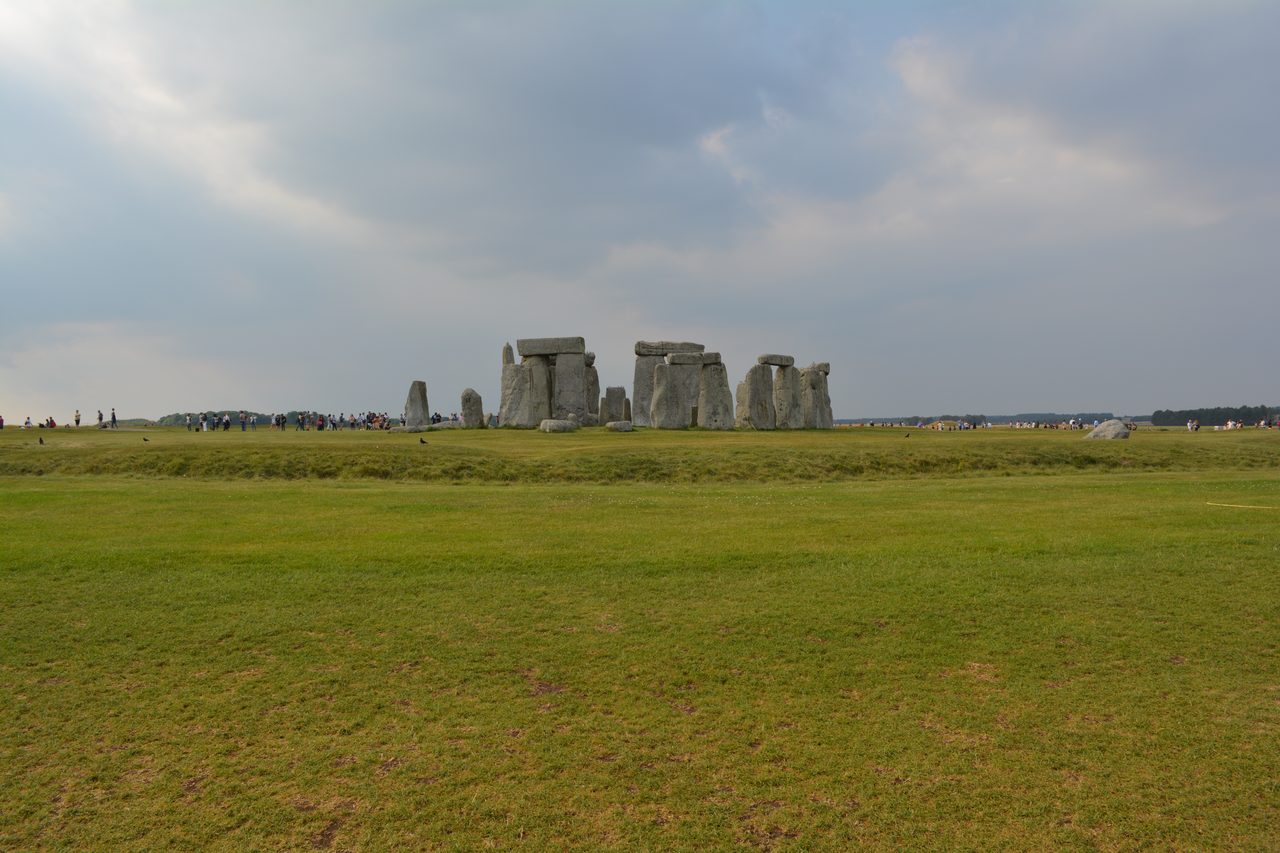
Between roughly 3100 and 1500 BCE, people on Salisbury Plain dug it, raised it, pulled it down, and raised it again. Some of its stones traveled 240 kilometers from Wales, and the slab lying at its center has now been traced to Scotland. Here is the file, opened phase by phase, every claim wearing its evidence.
Almost everyone can draw it from memory: a ring of standing stones with lintels laid across the top, alone on an English plain. What almost nobody knows is that the shape in your head is one phase of a project people kept tearing down and rebuilding for more than 1,600 years. Or that the smaller stones inside the ring were brought roughly 240 kilometers from a range of hills in Wales. Or that the slab lying flat at the physical center, barely visible beneath two fallen stones, has now been traced to northeast Scotland. Let's open the file.
| Phase | When | What Went Up |
|---|---|---|
| Phase 1 | ~3100 BCE | The circular ditch and bank, plus 56 Aubrey Holes holding cremation burials |
| Phase 2 | ~3000 to 2620 BCE | Timber structures inside the enclosure; cremation burials continue |
| Phase 3a | ~2620 to 2480 BCE | Bluestones raised for the first time, in the Q and R Holes |
| Phase 3b | ~2480 to 2280 BCE | The sarsen circle and trilithon horseshoe, dressed and jointed |
| Phase 3c | ~2280 to 1500 BCE | Bluestones rearranged; the Avenue built; Y and Z Holes dug, never filled |
01A monument built across 1,600 years
Stonehenge stands on Salisbury Plain in Wiltshire, and it was built in phases running from roughly 3100 BCE to about 1500 BCE. That is a span of more than 1,600 years between the first earthwork and the last construction on the site. The silhouette everyone recognizes, the sarsen circle with its trilithon horseshoe inside, belongs to only one of those phases, raised somewhere between about 2480 and 2280 BCE.
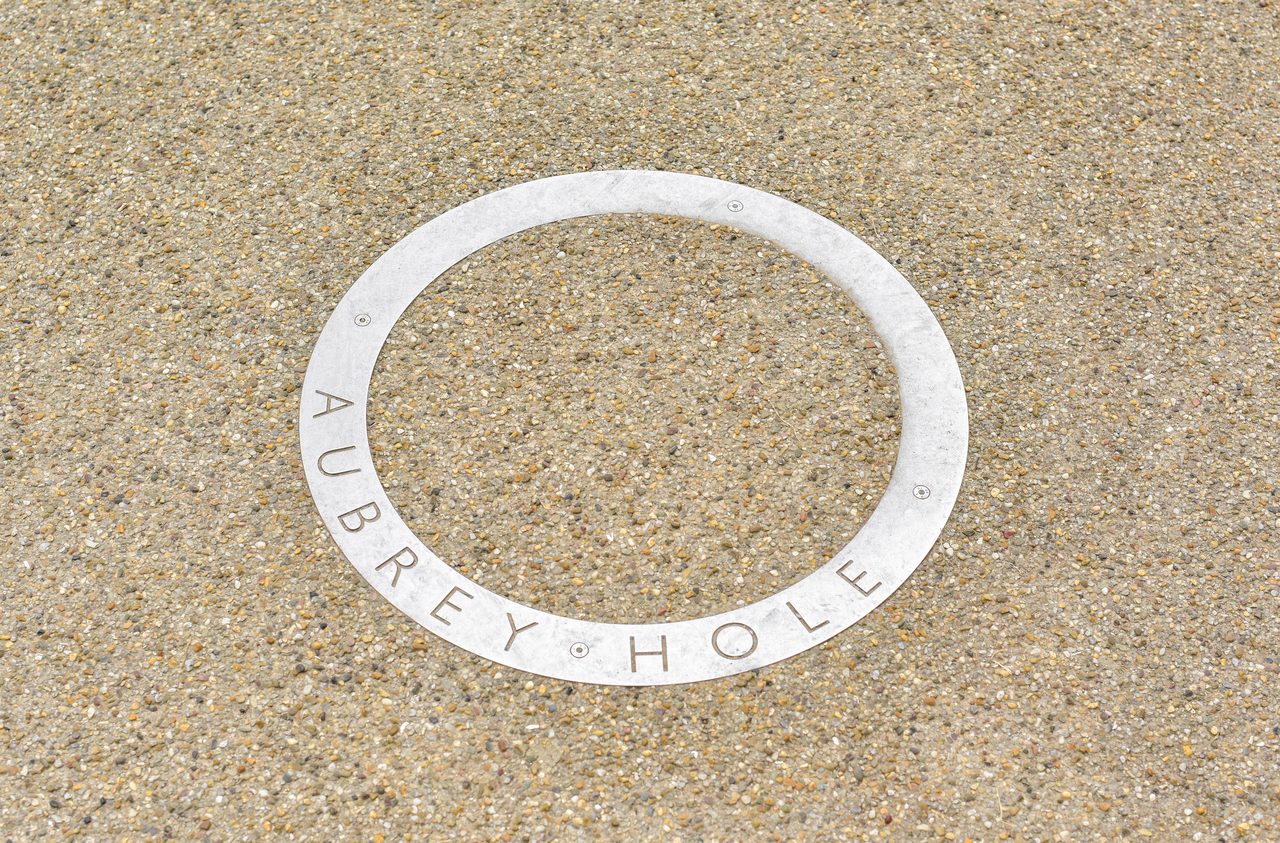
The first thing built here was not a stone circle at all. It was a ditch, a bank, and a ring of 56 pits called the Aubrey Holes, cut around 3100 BCE. Timber structures came next. Then the bluestones arrived, were set up in one arrangement, pulled out, and set up again. The sarsens went up. Then the bluestones were moved again, into the layout you can walk around today, and an earthwork avenue was cut to link the monument to the River Avon. The last features dug here, the Y and Z Holes, never received their stones at all.
Before it was a stone monument, this was a cemetery. Cremated remains were deposited in and around the Aubrey Holes from the very first phase, and burials continued through the timber phase, which holds the largest Neolithic cremation cemetery known in Britain: roughly 150 individuals identified so far.
02Carpentry joints, cut into solid sarsen
52 sarsen stones survive on the site today, out of an estimated 75 originally raised. Almost all of them were quarried from the Marlborough Downs, roughly 25 kilometers north. The largest of them, Stone 56, stands about 6.7 meters above ground with a further 2.4 meters buried beneath it, and weighs an estimated 25 tonnes.
The sarsens are not stacked. They are joined. Each upright carries a raised knob, a tenon, carved into its top, fitting a socket, a mortise, cut into the underside of the lintel above it. The lintels are then locked to each other side to side with tongue-and-groove joints, which the research file calls unique in megalithic architecture. And each lintel is curved on both faces, inner and outer, so the finished ring of lintels reads as a true circle instead of a polygon of straight segments.
The shaping was done by pounding. The builders dressed the sarsens smooth with mauls, hard sarsen hammerstones, and thousands of maul fragments have been recovered from the site itself. That is not an inference about method. That is the physical debris of the work.
03The stones that traveled 240 kilometers
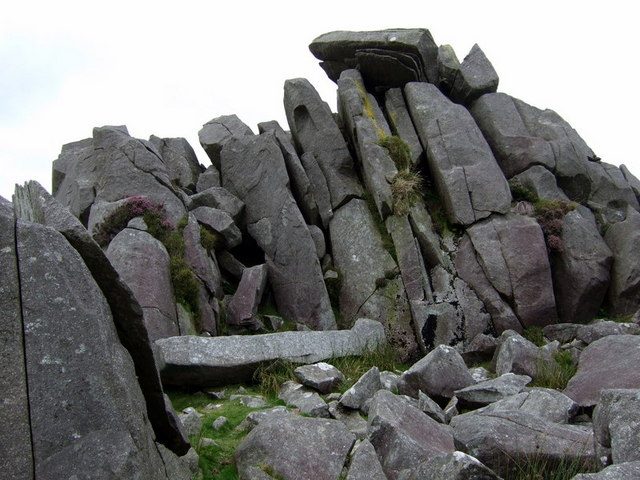
More than 80 bluestones at Stonehenge, made of spotted dolerite, rhyolite and volcanic ash, have been matched by petrology to specific rock outcrops in the Preseli Hills of Pembrokeshire, Wales. That is roughly 240 kilometers from Salisbury Plain. They are the small stones on site, 2 to 5 tonnes on average, with some reaching about 8 tonnes. The origin is not a guess: the petrology ties them to named outcrops.
How they made the journey is the fight. The human-transport case (Atkinson, and later Parker Pearson) has them rafted along the Welsh coast and up the Bristol Avon, then hauled overland, and experimental archaeology has shown that this is feasible with Neolithic technology. The glacial case (Kellaway, 1971, revised by later researchers) has ice carrying the stones part of the way and people finishing the trip. The glacial version has a problem it has never solved: no glacial erratics have been found on Salisbury Plain itself.
Between 2011 and 2015, a team led by Mike Parker Pearson excavated Craig Rhos-y-felin in the Preseli Hills and identified it as an actual bluestone extraction site, with a partly worked pillar, a proto-orthostat, still lying in place. The radiocarbon dates put quarrying there at roughly 3400 to 3200 BCE. Which is strange, because that is centuries before those stones were standing at Stonehenge.
Centuries is a long time for a quarried megalith to sit somewhere doing nothing. Hold onto that gap. The newest research has a suggestion about what the stones were doing in the meantime, and we will get to it.
04Why those stones, and what they sound like
Research out of the Royal College of Art (Devereux and Jahn, alongside Till's 2010 study) found that certain bluestones ring with clear, distinct tones when struck. They work as natural lithophones, which is to say stone bells. This is not a modern discovery imposed on the landscape either: some Preseli outcrops are known locally as ringing rocks, and maenclochog is Welsh for ringing stones.
From that comes a real hypothesis, and it is a hypothesis, not a finding: that acoustic properties were part of why these particular stones were chosen, rather than size, color or sheer availability alone. Inside the monument the acoustics do something too. Sound reflecting off the sarsen circle creates standing waves, and speech at certain points inside the ring carries anomalously well.
| Stone | What It Is | Where It Came From |
|---|---|---|
| Sarsens (52 surviving) | The huge uprights and lintels | West Woods, Marlborough Downs, ~25 km north, for 50 of the 52 (Nash et al., 2020) |
| Bluestones (80+) | Spotted dolerite, rhyolite, volcanic ash | Preseli Hills, Pembrokeshire, Wales, ~240 km (petrology) |
| The Altar Stone | A sandstone slab about 5 m long | Northeast Scotland, more than 750 km away (Clarke et al., 2024) |
05Three findings not yet in the file
Almost everything above comes from the Theories of Anything research file this article is built on. Three significant results published between 2020 and 2024 are not in that file yet, and they rewrite parts of the sourcing story, so they were verified independently for this article. Two of them are already in play: the Altar Stone's Scottish origin, named in the opening lines, and the West Woods sarsen source. Both of those sit in the table beside this paragraph. Here all three are stated properly, each attributed to its own published study.
In 2020, a study in Science Advances (Nash et al.) fingerprinted the sarsens geochemically, using a core drilled out of Stone 58 during 1958 conservation work and returned to the site only in 2018. Fifty of the 52 surviving sarsens match a single source: West Woods, on the Marlborough Downs, roughly 25 kilometers north. Two of them, Stone 26 and Stone 160, carry a different signature and remain unmatched to any known source. The West Woods identification itself is well supported and not seriously contested. The finer methodological argument over the geochemistry has continued in the literature since, and that part is genuinely unresolved.
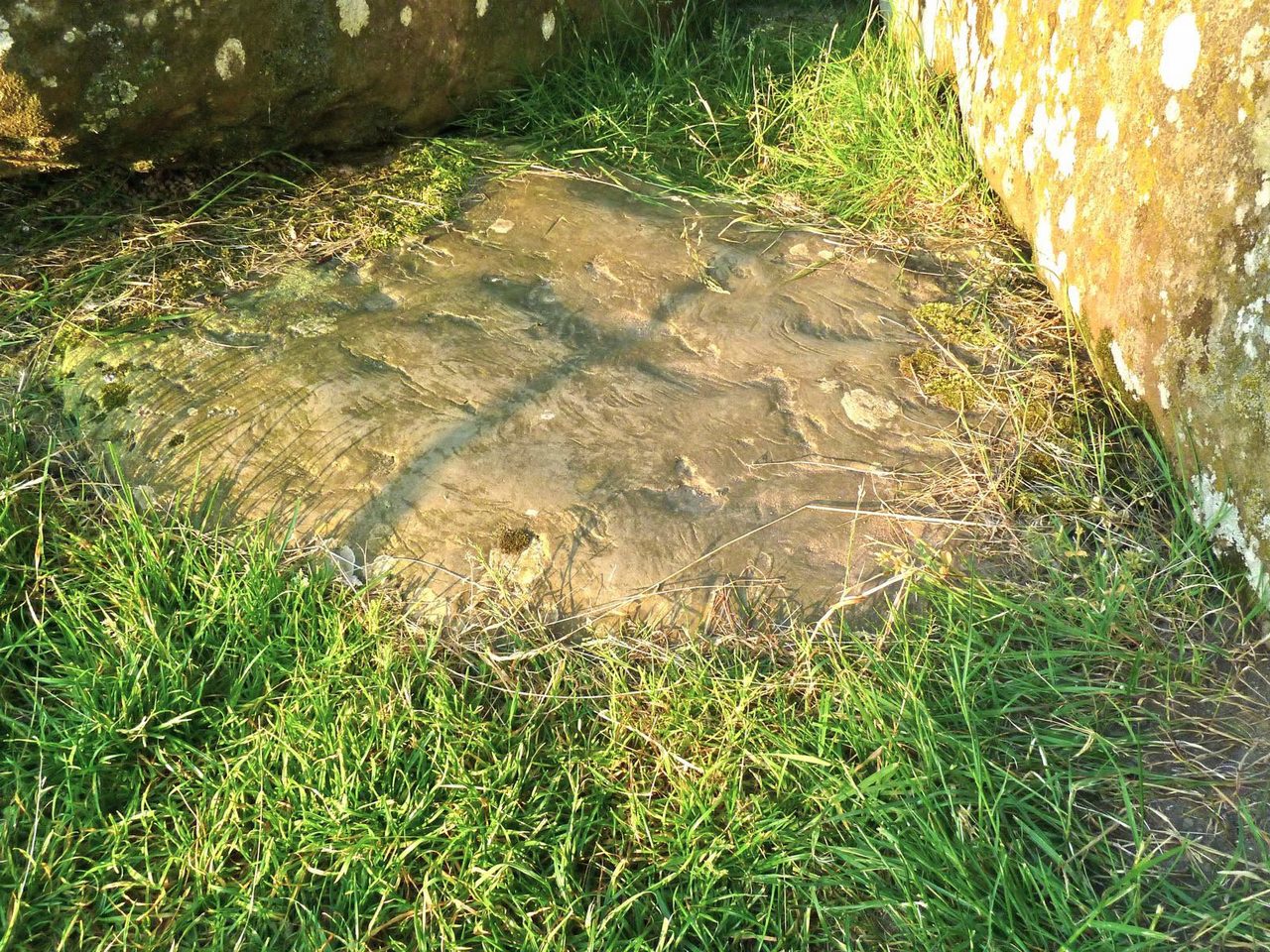
The Altar Stone is a sandstone slab roughly 5 meters long, lying flat at the physical center of Stonehenge and barely visible today beneath two fallen sarsens. It was long assumed to be Welsh, like the bluestones. In 2024, a study published in Nature (Clarke et al.) dated the minerals inside fragments of it and analyzed their chemistry, and the answer was not Wales. The Altar Stone came from northeast Scotland, more than 750 kilometers away, and it most probably traveled by sea. A follow-up study has since ruled out Mainland Orkney as the specific source, so the exact quarry is still unknown. The Scottish origin itself is now corroborated across multiple independent reports.
In 2021, a team led by Mike Parker Pearson reported a large, mostly dismantled stone circle at Waun Mawn in the Preseli Hills, radiocarbon dated to around 3400 BCE. Only four of what may have been as many as 17 stones are still standing, and empty stoneholes show the rest were pulled out and taken away. Waun Mawn has the same diameter as the ditch enclosing Stonehenge and the same orientation on the midsummer solstice sunrise, and one recovered stonehole has a cross-section matching an unusually shaped Stonehenge bluestone. The excavators propose that at least part of the Waun Mawn circle was taken down and moved roughly 240 kilometers to become Stonehenge's earliest stone phase. If it holds, it also fills the awkward gap in the quarry dates: stones cut in Wales centuries before they ever stood on Salisbury Plain, because they stood in Wales first. This is a serious, actively discussed hypothesis. It is not settled consensus, and it should not be read as one.
06Aimed at one sunrise
One alignment at Stonehenge is accepted by most archaeoastronomers: the monument's main axis and the Avenue running out from it line up with the midsummer sunrise to the northeast and the midwinter sunset to the southwest. That much is not really in dispute. The builders aimed this thing at the solstice.
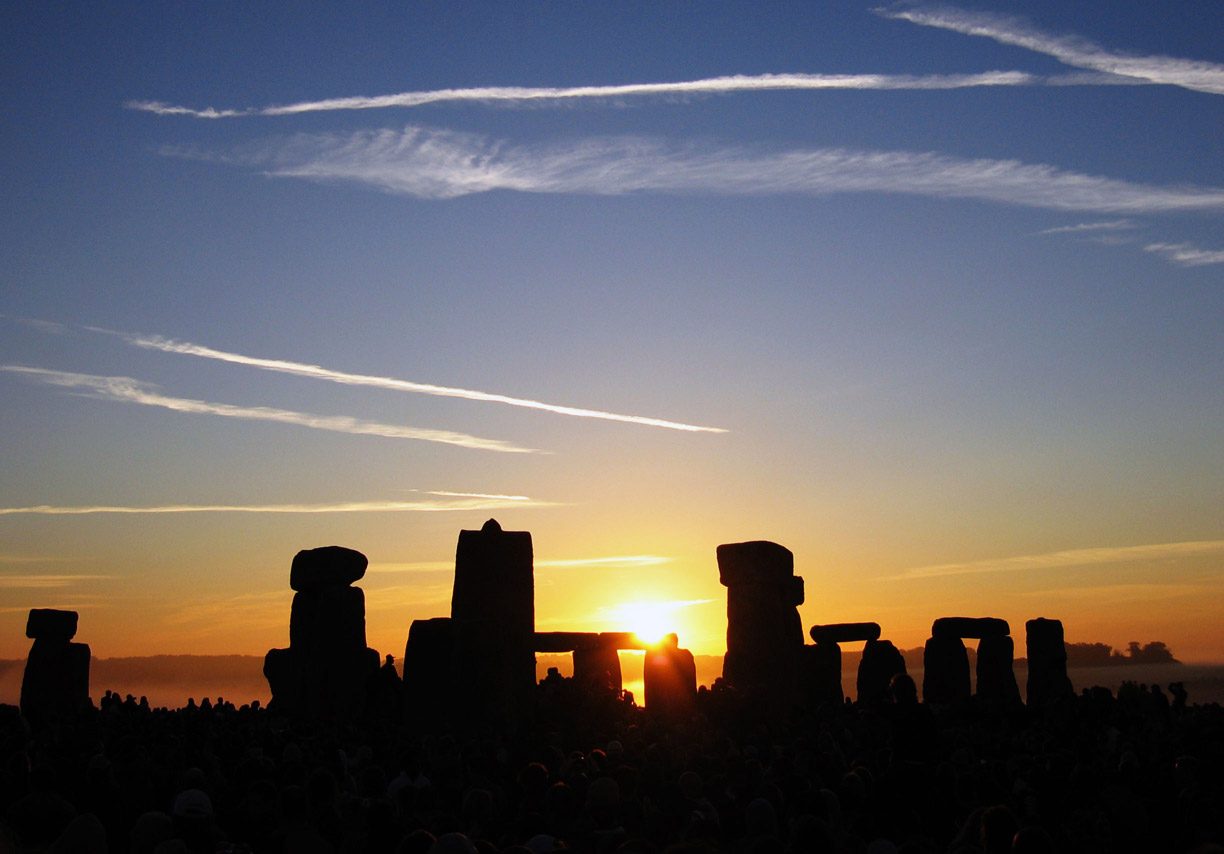
Gerald Hawkins went a great deal further. In Stonehenge Decoded (1965) he argued that the 56 Aubrey Holes could function as a machine for the moon: move markers around the ring and you can track the lunar nodal cycle and predict eclipses. Fred Hoyle later refined the model. The arithmetic Hawkins leaned on, three turns of the roughly 18.6 year lunar nodal cycle landing close to 56, is the kind of fit that is either profound or coincidental, and people have argued about which ever since.
Clive Ruggles and others have pushed back hard, arguing that the astronomical precision Hawkins claimed is overstated. Notice exactly what that argument is and is not. The critics still accept the solstice alignment as intentional and significant. The dispute is over how much precision the monument really encodes, not over whether its builders were watching the sky at all.
07Stonehenge never stood alone
Photographs crop it to a lone ring on an empty plain, and that framing is a kind of lie. Stonehenge sits inside a landscape crowded with other Neolithic and Bronze Age monuments, and several of its neighbors are tied directly to it.
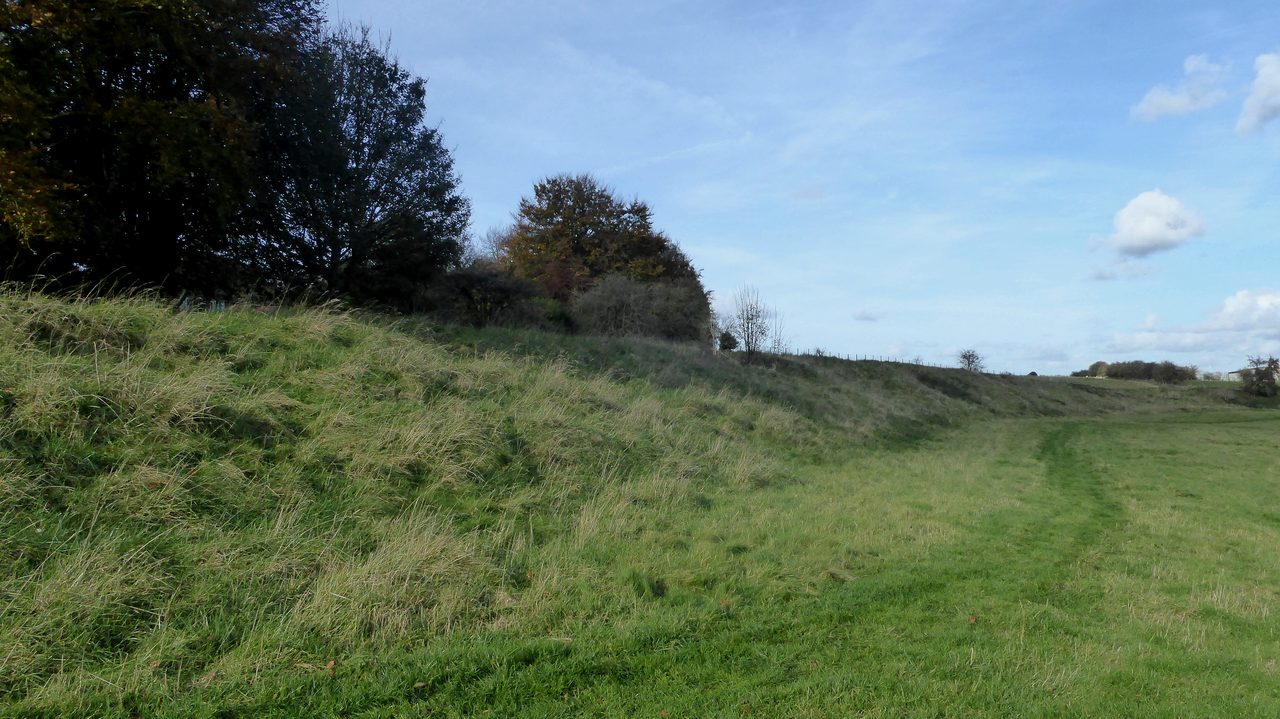
Durrington Walls, built around 2500 BCE, is the largest known henge in Britain, roughly 500 meters in diameter. Inside it stood timber circles, a Southern Circle and a Northern Circle, laid out in a pattern that mirrors Stonehenge's own, built in wood instead of stone.
Woodhenge, around 2300 BCE, is six concentric rings of timber posts. A child was buried at its center with a cleft skull, which leaves an open and genuinely uncomfortable question about sacrifice that the evidence does not answer either way. Older than both is the Cursus, roughly 3630 to 3370 BCE, a linear earthwork 3 kilometers long whose purpose nobody knows. A processional route and a boundary marker are the two standing proposals.
In 2008, the Stonehenge Riverside Project, again under Parker Pearson, found what they named Bluestonehenge at West Amesbury, where the Avenue reaches the River Avon: a henge with about 25 stone sockets set in a circle. The stones themselves were taken out in antiquity, possibly relocated to Stonehenge itself. The interpretation offered is a reception monument at the river landing, the first stop on a processional route running from water to stone.
Mike Parker Pearson reads the whole complex as one design in two halves. Durrington Walls, built of timber and thick with feasting evidence, is the domain of the living. Stonehenge, built of stone, is the domain of the dead and the ancestors. The River Avon connects the two. That is an interpretive model, the research file's own framing of the landscape, not a decoded fact.
08So what was it actually for
Timothy Darvill and Geoffrey Wainwright proposed that Stonehenge was a place of healing, a Neolithic Lourdes. Their case rests on a high proportion of the people buried nearby showing signs of illness or injury, and on some of them having come from a very long way off: isotope analysis of the Amesbury Archer burial points to an Alpine origin. Under this reading the bluestones matter most of all, since springs near the Preseli outcrops carried sacred associations and the stones themselves may have been credited with healing power.
A bolder reading holds that the monument encodes a complete cosmological model: the sarsen circle standing for the visible sky, the trilithon horseshoe for the underworld, the bluestones for ancestors or mediating spirits. It is a coherent story and it may even be right. It is also untestable against anything that survives. No direct evidence from the builders exists to confirm any symbolic scheme at all.
That is the shape of the entire purpose question. The engineering is measurable, and we keep getting better at measuring it. The intent is not measurable, and no amount of new geochemistry will change that.
09Merlin, ley lines, levitation, and the aliens
Stonehenge has been explained by everyone who ever stood in front of it, and most of those explanations tell you more about the explainer than about the stones.
The oldest surviving explanation is Geoffrey of Monmouth's, written around 1136 CE: the wizard Merlin magically carried the stones over from Ireland, which had itself received them from Africa, delivered by giants. It is medieval folklore with no historical basis whatsoever. It is also, in one narrow respect, accidentally onto something. The tradition it preserves is that the stones came from far away, and the bluestones really did.
Stonehenge, Avebury and the Dorset Cursus may all belong to a single planned ritual landscape spanning hundreds of square kilometers. That idea is speculative but reasonable. The ley-line version of it, from Alfred Watkins in 1921, claims Stonehenge sits on straight alignments of ancient sites, and mainstream scholarship regards that as pseudoarchaeology. Keep the two apart, though, because the density of genuine Neolithic and Bronze Age monuments in this region is real and extraordinary, whatever you make of lines drawn between them.
The claim that acoustic levitation or some resonance technique helped move the stones has no supporting archaeological evidence of any kind. The physics does not cooperate either: acoustic levitation does not scale to multi-tonne objects by any known mechanism.
No credible evidence supports alien involvement in Stonehenge's construction. The engineering is impressive and it is also within Neolithic human capability, as experimental archaeology has demonstrated. And the timeline argues against a single advanced intervention all on its own: this monument was raised, dismantled and rebuilt across more than 1,600 years, in one dated phase after another. That is not the signature of one visit. That is generations of people changing their minds.
Atlantis has nothing to do with Stonehenge either. Claims linking the two have no archaeological, geological or textual support, and they are not taken seriously anywhere in the academic literature.
The mainstream position is not that Stonehenge is ordinary. It is that the extraordinary parts keep turning out to have explanations that survive contact with the evidence. Experimental archaeology has repeatedly shown that feats which look impossible can be replicated with the tools ancient builders actually had, and the scale and the precision stay remarkable either way. The caution runs in both directions, too: coincidental alignments can look intentional when you go looking for intention, and several sites in this landscape are still incompletely excavated, so the extraordinary claims and the tidy ones alike should stay open to the next trench.
Fast Facts
- Site
- Salisbury Plain, Wiltshire, England
- Built
- ~3100 to 1500 BCE, in dated phases across more than 1,600 years
- Sarsens
- 52 survive of an estimated 75; largest ~25 tonnes
- Sarsen source
- West Woods, Marlborough Downs, ~25 km north, for 50 of the 52 (Nash et al., 2020)
- Bluestones
- 80+, 2 to 5 tonnes on average, some ~8 tonnes
- Bluestone source
- Preseli Hills, Pembrokeshire, Wales, ~240 km
- Altar Stone
- Northeast Scotland, more than 750 km (Clarke et al., 2024)
- Largest stone
- Stone 56, ~6.7 m above ground plus ~2.4 m buried
- Alignment
- Midsummer sunrise northeast, midwinter sunset southwest
- Burials
- Largest known Neolithic cremation cemetery in Britain, ~150 individuals
What we can actually stand behind
Stonehenge is real, it was built in phases across more than 1,600 years, and its builders shaped sarsens weighing as much as 25 tonnes with stone mauls, then locked them together with mortise-and-tenon and tongue-and-groove joints. Nearly all the sarsens came from the Marlborough Downs, the bluestones came roughly 240 kilometers from Wales, and the Altar Stone came from northeast Scotland. All of it is measured, published and checkable.
Whether the Waun Mawn circle in Wales was dismantled and moved to become Stonehenge's first stone phase is a serious live hypothesis, not a settled result. So is the reading of Stonehenge as a place of healing. So is the question of how much astronomical precision, beyond the solstice, the monument really encodes.
What it meant is still speculative. The cosmological reading, circle as sky and horseshoe as underworld, and the wider planned-ritual-landscape idea are both coherent and both untestable against what survives. Nothing from the builders explains their own intent.
Aliens did not build Stonehenge, Atlantis has nothing to do with it, and Merlin did not carry the stones over from Ireland. Not because the monument is unimpressive. Because a Welsh quarry with a half-worked stone still lying in it, thousands of maul fragments, repeatedly changed plans and a 1,600 year construction sequence are exactly what generations of human beings look like in the ground.
So the sourcing question is close to answered. We can name the ground almost every stone came from: West Woods on the Marlborough Downs for the sarsens, the Preseli Hills for the bluestones, northeast Scotland for the slab at the center. We know the order the rings went up in, and roughly how the joints were cut. What nobody has is one sentence from anyone who worked here. People hauled stone across Britain to a plain in Wiltshire, raised it, pulled it down, raised it differently, buried their dead among it and aimed the whole thing at a single sunrise, for sixteen centuries, and left no word about why. What would you have to believe to keep a project going that long?
Sources & further reading
Everything above is drawn from our research library on Theories of Anything, which is where we worked from. The papers, reports and primary records listed beneath them are where you can check us independently.
Image credits
- Stonehenge from the southeast photograph by TobyEditor, via Wikimedia Commons. CC BY 4.0 Source.
- Aubrey hole marker photograph by Rachelle Haun, via Wikimedia Commons. CC BY 2.0 Source.
- Carn Menyn bluestone outcrop, Preseli Hills photograph by ceridwen, via Wikimedia Commons. CC BY-SA 2.0 Source.
- The Altar Stone at Stonehenge photograph by The Stones of Stonehenge, via Wikimedia Commons. CC BY 4.0 Source.
- Summer solstice sunrise over Stonehenge, 2005 photograph by Andrew Dunn, via Wikimedia Commons. CC BY-SA 2.0 Source.
- Western bank of Durrington Walls photograph by Ethan Doyle White, via Wikimedia Commons. CC BY-SA 4.0 Source.
- Card crop of Stonehenge from the southeast photograph by TobyEditor, via Wikimedia Commons. CC BY 4.0 Source.


