The Sumerian Tablets: A Flood Story 1,000 Years Older Than Genesis
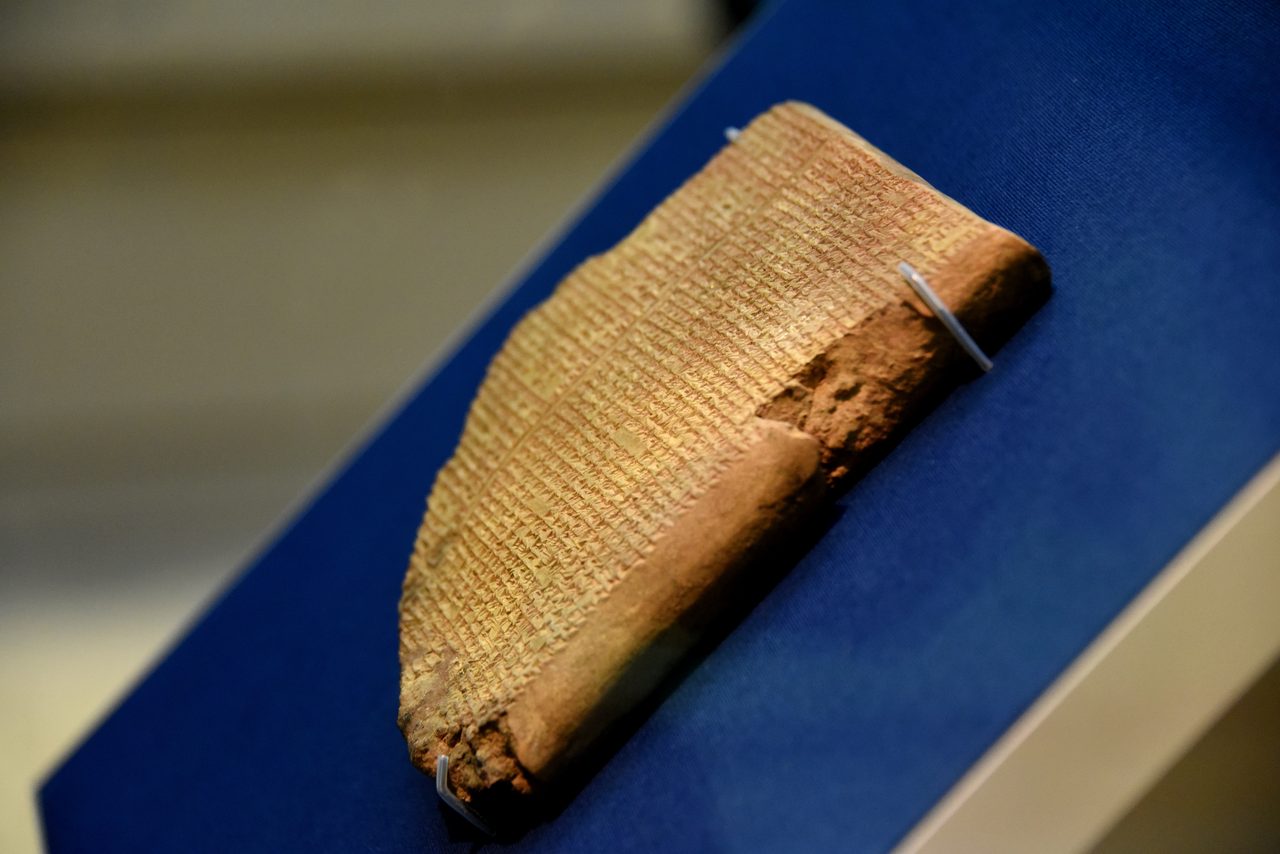
Long before Genesis, Sumerian scribes pressed a flood, a creation from clay, a garden, and the first man into wet tablets, and in 1872 a self-taught museum clerk read the flood back off a broken piece of one. It predates Noah by more than a thousand years, it is real, and it sits in the British Museum right now. Then there is the other claim: that these gods were astronauts from a hidden planet. Here is the whole file, every claim wearing its evidence.
In 1872 a self-taught museum clerk stood before the Society of Biblical Archaeology in London with a broken piece of clay in front of him and read out a flood. A god warns a man to build a ship. The waters come and drown the world. The ship grounds on a mountain, and the survivor sends out birds to find dry land. Every beat of it matched the story of Noah, with one problem for anyone who assumed the Bible got there first: this tablet was older. This is the file on the Sumerian texts, the clay library of the people who invented writing, opened claim by claim, every fact wearing its evidence.
01The People Who Invented Writing
The Sumerians were real, and we know where and when. They lived in southern Mesopotamia, modern southern Iraq, from roughly 4500 BCE to 1900 BCE, in cities with names we can still put on a map: Eridu, Uruk, Ur, Lagash, and Nippur. They invented cuneiform writing around 3400 BCE, built the first cities and the first schools and libraries, wrote the first known legal codes, and kept the first known pharmacopeia. They handed us the base-60 math we still use every time we read a clock or a compass: 60 seconds, 60 minutes, 360 degrees. They raised the stepped temple-towers called ziggurats and engineered the irrigation that fed the cities. None of this is fringe. It is the standard account of the first urban civilization on record.
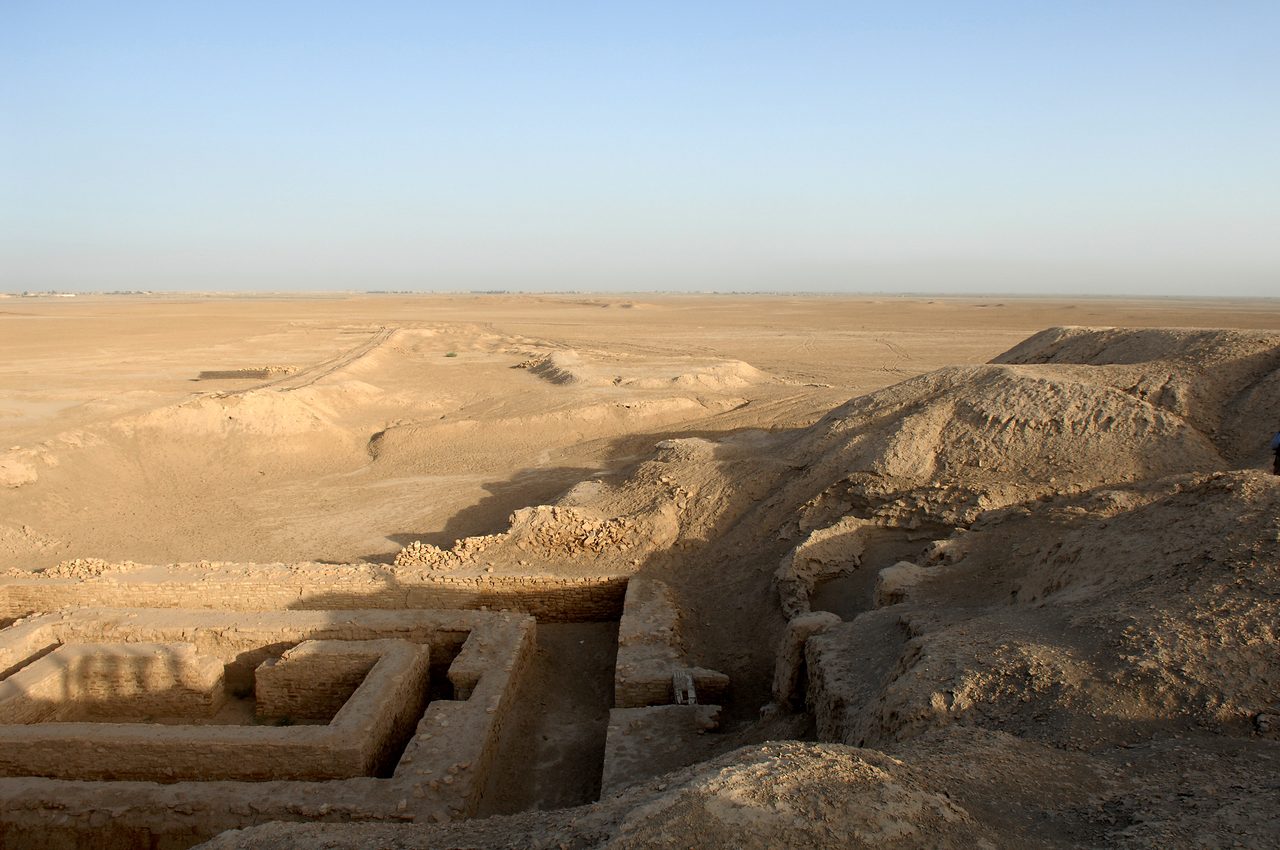
Two facts about them are stranger than the rest. Their language is an isolate, related to no other known tongue on earth, living or dead. And they called themselves the black-headed people, Sag-gig-ga, and said plainly that their knowledge, the writing, the law, the farming, the medicine, the astronomy, had been handed to them by the gods they called the Anunnaki. The Sumerians did not claim to have invented civilization. They claimed it was given to them.
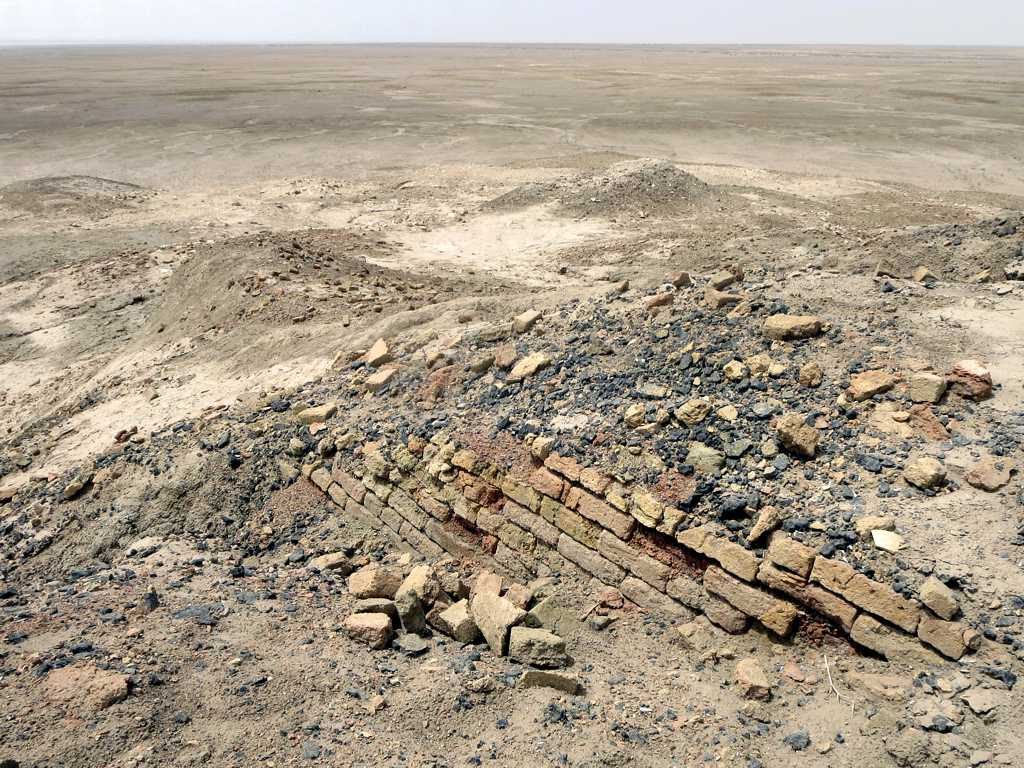
Three of their cities carry the story we are about to read. Eridu they held to be the first city of all, where kingship was first established, sacred to the god Enki, its Temple of Enki known as the House of the Deep. Nippur was the religious capital, home to the scribal school that copied out many of the great texts. And Ur was the city the Bible names as the birthplace of Abraham, its Royal Tombs, excavated between 1922 and 1934, packed with treasures like the Standard of Ur and the Ram in the Thicket. Read that last one twice: the founding father of the biblical line came from inside the Sumerian world.
02How A Dead Script Was Cracked
All of this survives because the Sumerians wrote on clay, and clay lasts. But for most of history nobody alive could read a word of it. The story of how that changed is one of the great detective cases of the nineteenth century, and it ends with the flood tablet from the first page.
Cuneiform is not an alphabet. It is a logo-syllabic script, wedge-shaped marks pressed into wet clay with a cut reed, the tablet then either fired hard or left damp so the clay could be wiped and reused. It began as pictographic proto-writing around 3300 BCE at Uruk, grew out of an older system of accounting tokens, and matured into a full script with syllable signs by about 2900 BCE. Over roughly three thousand years it was used to write not just Sumerian but Akkadian, Hittite, Elamite, Hurrian, and a string of other languages, until alphabets finally displaced it. The last known cuneiform tablet, an astronomical text from Uruk, is dated 79 or 80 CE. After that, the knowledge of how to read it died completely.
Getting it back took a chain of people. In 1802 a German scholar named Georg Friedrich Grotefend made the first break, on Old Persian cuneiform. He reasoned that a royal inscription would follow a fixed formula, a king's name, then great king, king of kings, then the name of his father, and by checking that pattern against known Persian royal genealogy he correctly picked out the names Darius and Xerxes. He got only 8 of the 30 signs he studied, and his work sat largely ignored until 1815, but the door was open.
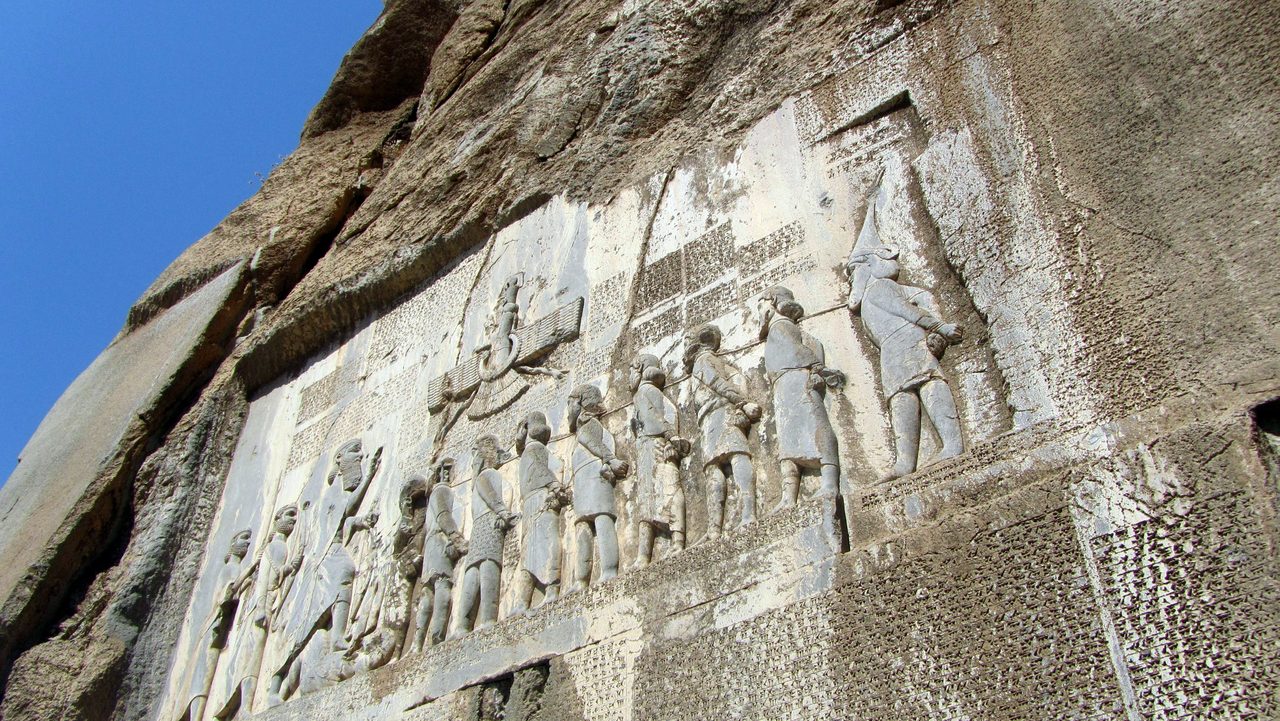
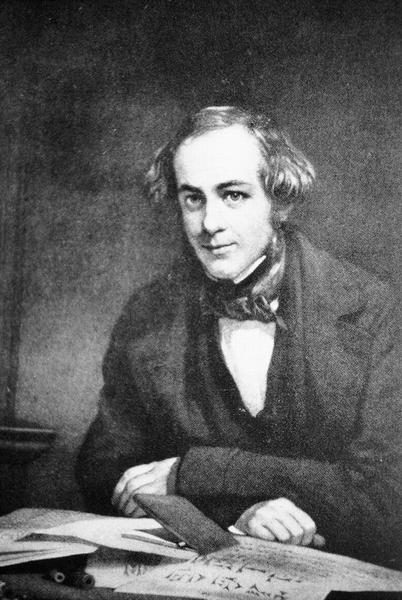
The man who walked through it was Henry Rawlinson, a British East India Company officer. Starting in 1835 he copied the Behistun Inscription, a giant trilingual text carved high into a cliff face in western Iran under the Persian king Darius I, telling the same royal story three times over in Old Persian, Elamite, and Babylonian cuneiform. It was the Rosetta Stone of the region. Rawlinson used the Old Persian column he could already partly read to work out roughly 100 sign values in the Babylonian column, publishing the results in 1847 and 1849.
By 1851 both Rawlinson and Edward Hincks could each read around 200 Akkadian signs, and in 1857 the Royal Asiatic Society ran the test that settled the matter. Edwin Norris, its secretary, handed the same freshly dug Assyrian inscription, from the reign of Tiglath-Pileser I, separately to four scholars, Rawlinson, Hincks, Julius Oppert, and William Henry Fox Talbot, and asked each to translate it alone and sealed, with no contact between them. On 29 May 1857 the jury opened the four envelopes and found the translations in close agreement, Rawlinson's and Hincks's the closest of all. Cuneiform was not guesswork. It was cracked.
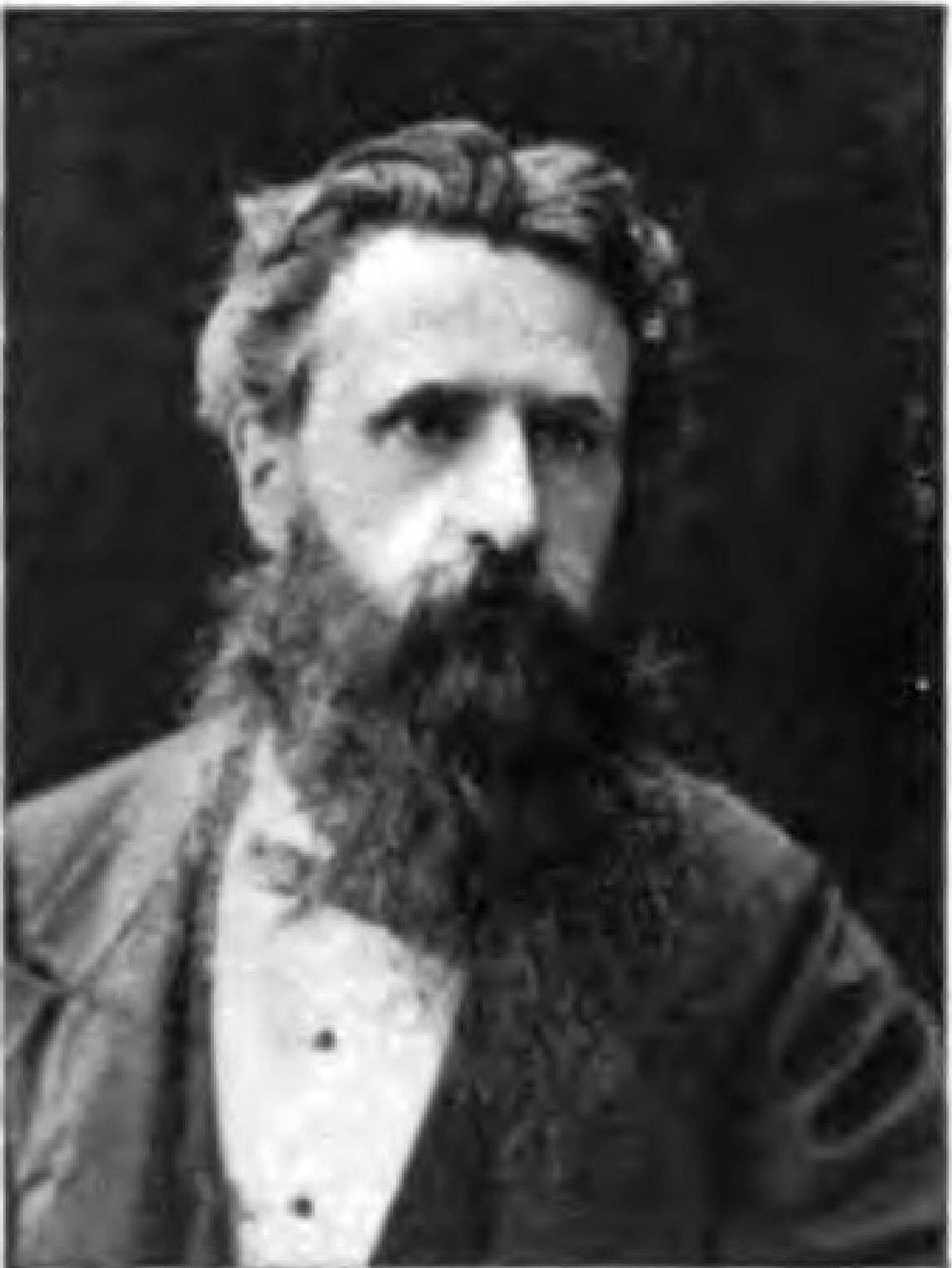
Which brings us back to the clerk. George Smith was a working-class Londoner, apprenticed at fourteen to a banknote engraver, with no university behind him at all. He taught himself Akkadian cuneiform on his lunch breaks at the British Museum until the Assyriologist Samuel Birch noticed his talent and got him hired in 1861 to sort tablet fragments. In 1872, sifting through pieces dug out of Nineveh by Hormuzd Rassam, he recognized a flood: a ship grounding on a mountain, birds released to find land. He hunted down more fragments to complete the story and announced it on 3 December 1872 to the Society of Biblical Archaeology, with the Prime Minister, William Gladstone, in the room, and accounts say he could barely contain himself. The text was Tablet XI of the Epic of Gilgamesh, and its near-match to Noah turned an academic finding into a public sensation. The Daily Telegraph then funded him to sail back to Nineveh in 1873 to dig up the missing pieces.
The tablet Smith read is catalogued today as British Museum object K.3375, the K standing for Kouyunjik, the mound that covers ancient Nineveh. It is a Neo-Assyrian copy from the great library of King Ashurbanipal, about the size of a modern tablet computer: once six columns of cuneiform, now a column and a half surviving on each face. The object is a late copy. The story pressed into it is not.
| When | What happened |
|---|---|
| 1802 | Georg Friedrich Grotefend correctly identifies the names Darius and Xerxes in Old Persian cuneiform |
| 1835 to 1837 | Henry Rawlinson copies the trilingual Behistun Inscription from a cliff face in western Iran |
| 1847 and 1849 | Rawlinson publishes roughly 100 sign values for Babylonian cuneiform |
| 1857 | Four scholars pass a sealed, independent blind test; the decipherment is declared a verified success |
| 1872 | George Smith reads a flood story off a broken Nineveh tablet and connects it to Noah |
03The Flood Before The Flood
Start with the flood, because it is the clearest case. The Eridu Genesis, written down around 1600 BCE from far older oral sources, is the oldest creation narrative we have in written form. In it the gods make human beings to do the labor the gods would rather not, exactly the setup a later reader will half-recognize. Then comes a Great Flood, and it predates Noah by more than a thousand years. The god Enki warns a man named Ziusudra that the waters are coming. Ziusudra builds a boat, rides out the flood, survives, and is granted eternal life. Swap the names and you have read this before.
The most famous version is older still as a story. The Epic of Gilgamesh, whose hero-king of Uruk is two-thirds divine and one-third human, reaches back to around 2100 BCE and is often called the oldest work of literature in the world. Gilgamesh, wrecked by the death of his friend Enkidu, goes looking for immortality and finds Utnapishtim, the man who survived the flood. Utnapishtim tells him the whole thing, and the flood account in Tablet XI is the one George Smith read, nearly identical to the story of Noah and older than it by more than a thousand years. There is even a serpent: Gilgamesh finds a plant that restores youth, and a snake steals it and sheds its skin, carrying off renewal, the same knot of serpent and eternal life that turns up in Eden.
Line the Sumerian flood up against Genesis and the parallels are not vague. They run point for point.
| Sumerian flood account | Genesis |
|---|---|
| The gods create humans to do their labor | God creates Adam to tend the garden |
| Enki warns Ziusudra of the coming flood | God warns Noah of the coming flood |
| Ziusudra builds a boat and survives | Noah builds an ark and survives |
| The flood wipes out humanity | The flood wipes out humanity |
| Ziusudra is granted eternal life | Noah is granted long life |
04Made From Clay And The Blood Of A God
The creation of humanity gets its fullest telling in the Atra-Hasis Epic, written around 1700 BCE. It opens with a labor dispute among the gods. The lesser gods, the Igigi, have been forced to dig the watercourses and do the heavy work for the ruling Anunnaki, and after forty days of it they rebel and refuse to go on. The solution is us. Enki and the birth goddess Ninhursag make human beings out of clay mixed with the blood of a slain god named Geshtu-e, the god who had intelligence, built as a replacement workforce. Later the gods decide there are too many humans and try to thin the population with plague, then drought, then a flood, and again it is Enki who quietly warns his man, Atra-Hasis, the Exceedingly Wise, to build and survive.
The Babylonian Enuma Elish, composed around 1100 BCE on older Sumerian foundations, tells creation as a killing. At the start is Tiamat, the primordial serpent-dragon of the salt sea, mother of the gods. The young god Marduk kills her and splits her body in two to make the sky and the earth, then organizes the Anunnaki into their stations, 300 in the heavens and 600 in the underworld, 900 in all, who build him his great temple Esagila in Babylon in thanks. Read it straight and it is startling: the world is literally made out of the body of a serpent, and she is not evil, she is the raw material of creation itself. The motif of a hero-god cutting down a serpent-dragon travels on from here into the Bible's own God against Leviathan.
Tiamat is not the only monster in the record, and none of them are quite what a later tradition would make of them. She is the primordial dragon, mother of all the gods, turning destructive only when her own children move against her. And on the great Ishtar Gate of Babylon marches the Mushussu, also called the Sirrush, a scaled dragon with an eagle's hind legs and a lion's forelegs, the sacred beast of the god Marduk. Hold that image. There is a modern claim that it was a living animal, and we will come back to it.
Here the alternative readings start. The Atra-Hasis line about humans made from clay mixed with a god's blood has been read by some as a memory of genetic engineering, two materials deliberately combined to manufacture a new kind of being. The source is even-handed about it. Against the reading: the Sumerians had no concept of genes, blood routinely stands for life-force or divine essence across ancient myth, and pushing modern biology onto the text is exactly the kind of anachronism to be suspicious of. For the reading: the text really does describe a deliberate, technical procedure of combining two ingredients to make something new, and that specificity does not dissolve neatly into pure metaphor. It is a genuine open question, and it sits at Tier 3, speculation the evidence neither confirms nor kills.
05The Garden, The Rib, And The Serpent
The single most specific parallel is a pun. In the Sumerian myth Enki and Ninhursag, set in Dilmun, a pure paradise where predators do not kill and no one falls sick, the plain Sumerian version of Eden, the god Enki eats eight forbidden plants and is cursed with sickness in eight parts of his body. The goddess Ninhursag heals him by creating eight healing deities, one per ailment. The one who heals his rib is named Ninti. And here is the thing you cannot get in any other language: Ninti means both Lady of the Rib and Lady of Life. The source calls this almost certainly the origin of the Eve story, the woman made from Adam's rib and named as the mother of all living. That double meaning only works in Sumerian. In Hebrew it is a broken pun that no longer explains itself, the fingerprint of a borrowed story.
The first man has a Sumerian draft too. In the Adapa Myth, Enki creates Adapa as the first fully civilized human and gives him great wisdom, but not immortality. Summoned to heaven before the high god Anu, Adapa is offered the bread and water of eternal life, but Enki has warned him in advance not to eat or drink what Anu offers. Adapa obeys, refuses the meal, and loses immortality forever, returning to earth mortal. The parallel to Adam is close enough that scholars call Adapa the clear predecessor, and the twist is the interesting part: in the Sumerian version the god's warning was the trick that cost humanity eternal life, while the biblical version flips it, making obedience the virtue and the questioning of the god the fall.
Enki is the busiest god in this world, and the serpents around him are not villains. In the text called Enki and the World Order he sets everything in order after creation, hands the other gods their duties, and teaches humanity farming, herding, and the crafts of civilization; the Anunnaki, it says, do him homage and decree the fates of mankind. His own emblem is two intertwined serpents identical to the caduceus, he is the god of water, knowledge, crafts, and mischief, and he lives in the Abzu, the freshwater deep beneath the earth. Beside him stands Ningishzida, whose name means Lord of the Good Tree, drawn as a serpent or a serpent-featured man, guardian of the door to heaven, carrying the same twin-serpent staff, escorting the first man Adapa into the divine presence. A serpent god of forbidden knowledge, tied to a sacred tree and standing at the threshold of the divine world: that is the exact cluster of motifs that reassembles in the Garden of Eden.
Whether that resemblance means these gods are the actual source of the Genesis serpent is a further step, and a contested one. The argument that Enki's serpent symbolism, his home underground, his creation of humanity, and his defiance of the divine council map directly onto the Eden serpent is acknowledged in the field as a real literary parallel. It is also disputed as a direct, one-to-one line of descent. The motifs rhyme. Proving that one text fathered the other is harder, and honest scholarship leaves it open at Tier 3.
Step back and the overall picture is not seriously disputed. Multiple Sumerian narratives, the flood, the creation, the paradise, the rib pun, the first man, predate their biblical counterparts and parallel them closely, and the chronology of the languages, Sumerian into Akkadian into Babylonian into Hebrew, makes the direction of borrowing clear enough. What stays debated is only the mechanism: direct literary copying, or a shared pool of older oral tradition that fed both. That the connection exists is solid Tier 2. Exactly how the stories traveled is the open part.
One more echo reaches past the Bible entirely. In the Descent of Inanna, the goddess of love, war, and the planet Venus goes down into the underworld through seven gates, stripped of a garment or a power at each one, until she stands before seven Anunnaki judges, is killed, and is hung on a hook, until Enki once again engineers her rescue.
That seven-gated descent lines up, structurally, with the seven levels of Patala, the serpent-realm of Hindu tradition. Whether that is genuine cultural contact, shared symbolism, or coincidence is unresolved, and firmly Tier 3.
06Kings Who Ruled For 36,000 Years
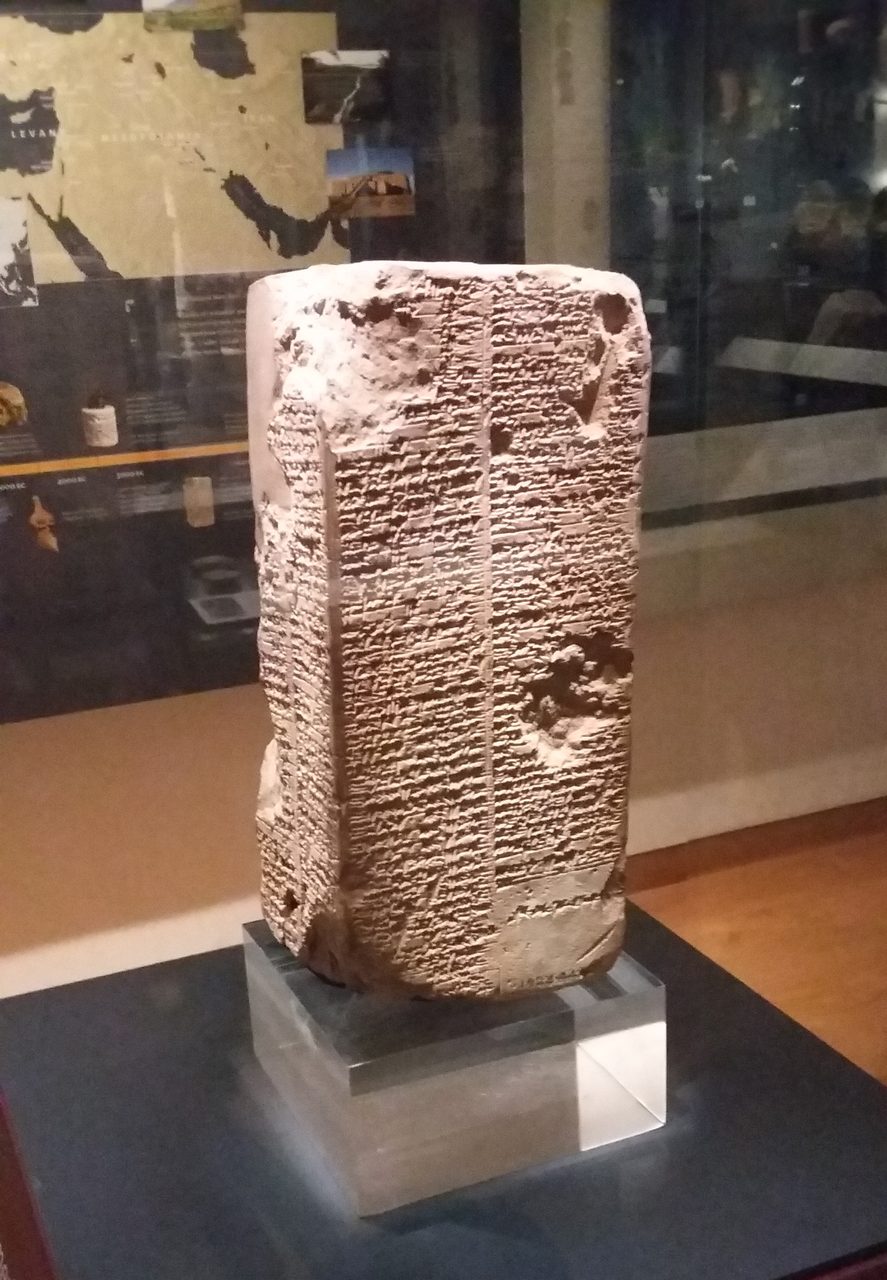
The Sumerian King List is a cuneiform record of the kings of Sumer from the moment kingship began, and it mixes myth and history without apology. Its pre-flood kings reign for spans no human body could survive. One version runs eight of them across a total of 241,200 years.
| King | City | Reign (years) |
|---|---|---|
| Alulim | Eridu | 28,800 |
| Alalgar | Eridu | 36,000 |
| En-men-lu-ana | Bad-tibira | 43,200 |
| En-men-gal-ana | Bad-tibira | 28,800 |
| Dumuzid the Shepherd | Bad-tibira | 36,000 |
| En-sipad-zid-ana | Larak | 28,800 |
| En-men-dur-ana | Sippar | 21,000 |
| Ubara-Tutu | Shuruppak | 18,600 |
After the flood, the list says, kingship descended from heaven a second time, and the reigns drop, still into the hundreds of years, then gradually down to ordinary human lifespans. That shape should sound familiar. The Bible does the same thing: a pre-flood age of enormously long-lived patriarchs, then the flood, then lifespans shrinking to normal. Two traditions, the same curve, which the source reads as a sign of a shared source tradition sitting behind both.
Take the numbers literally and you are in Tier 3. Some researchers argue the reign lengths are accurate records of a different kind of being, or of a different way of counting, perhaps astronomical cycles built on the Sumerian sar of 3,600, or perhaps the lengths of whole dynasties rather than single lives. Mainstream scholarship reads them as literary and theological: huge numbers that signal huge antiquity and divine authority, not a register of impossibly old men. Nothing in the tablets forces the literal reading, and nothing quite kills it either.
07Fully Formed, And Barely Read
Two loose ends keep the subject genuinely unsettled. The first is that Sumerian civilization seems to arrive fully formed. It shows up in the archaeological record already equipped with writing, city planning, and administration, with no clear run-up and no obvious developmental precursor that anyone has found. Alternative writers read that as a sign of outside intervention. Mainstream archaeology reads it as fast urbanization plus a patchy, incomplete excavation record, cities we simply have not fully dug. Which is right is a Tier 2 question: credible on the facts, unsettled on the cause.
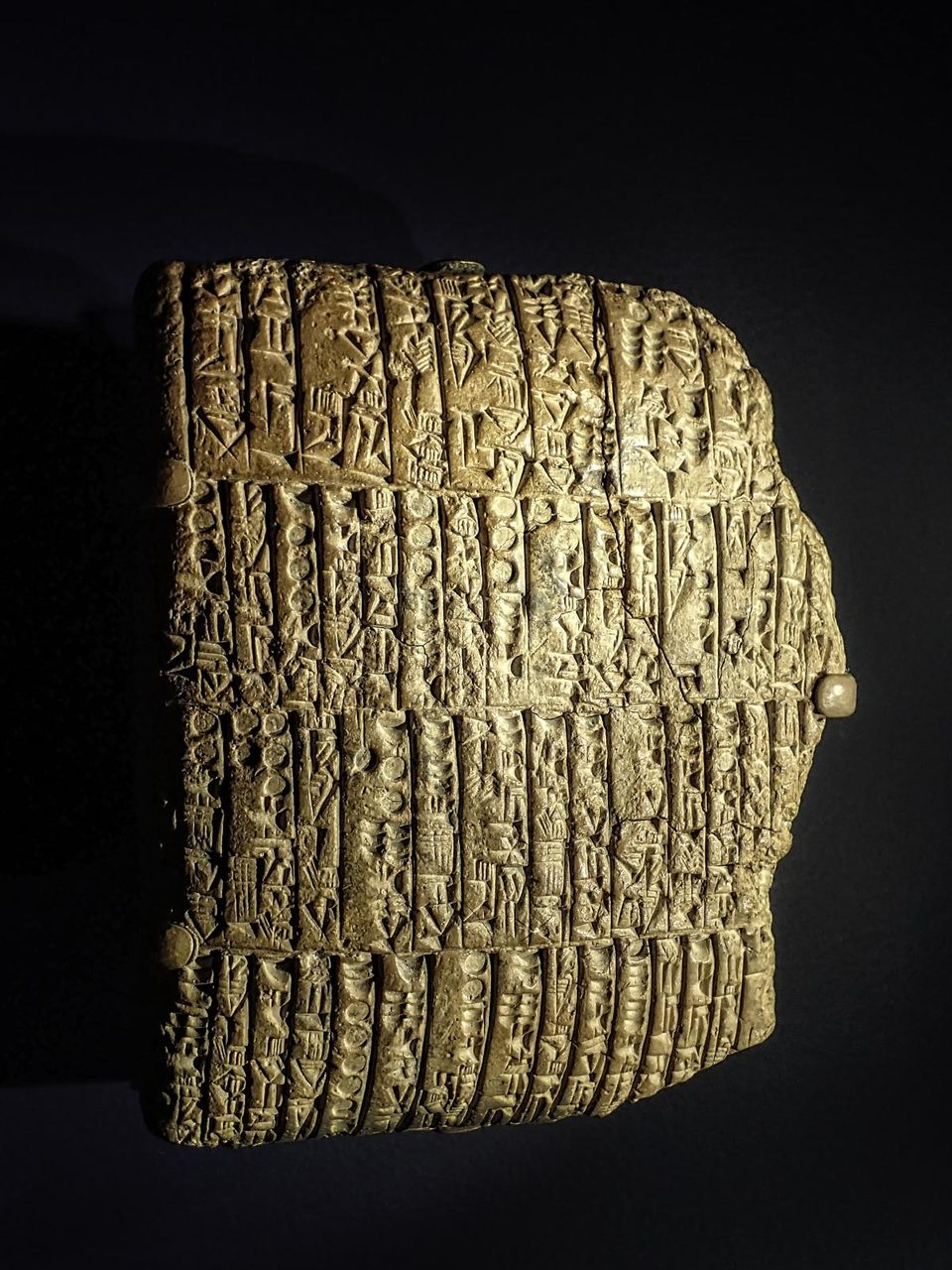
The second loose end is sheer scale, and it is the one that should stop you. The great cuneiform collections hold staggering numbers of tablets: roughly 130,000 in the British Museum, over 100,000 in the Iraq Museum, and tens of thousands more spread across Yale, the University of Pennsylvania, the Louvre, and collections worldwide. The total in existence is estimated at more than 500,000. And fewer than one in ten known cuneiform tablets has ever been fully translated. New ones keep coming out of the ground. Everything in this article, everything we think the Sumerians said about their gods and their flood and their making, is drawn from a sliver of what is actually written down and waiting.
08Where The Ancient-Astronaut Story Breaks
Now the claim that made the Anunnaki a household word, and where it falls apart. In a series of books beginning with The 12th Planet, the writer Zecharia Sitchin argued that the Anunnaki were flesh-and-blood extraterrestrials from a hidden planet he called Nibiru, the twelfth planet, who came to Earth, genetically engineered humanity to serve them, and were remembered as gods. It is a vivid story. It is also built on translations that Sumerologists do not accept.
Start with the word shem. Sitchin translated it as rocket ship, and the entire spacecraft reading leans on that. The standard reference, the Chicago Assyrian Dictionary, defines shem as name or reputation, a monument raised to commemorate a person. There is no Sumerological basis for reading a rocket into it. The word means what a name means.
Anunnaki itself gets the same treatment. Sitchin rendered it those who from heaven to earth came, which sounds like a landing party. Mainstream Assyriology translates it as Princely Seed or Children of An. And there is a plainer problem the reading cannot get around: no Sumerian text anywhere describes the Anunnaki arriving in a spacecraft. The biblical scholar Michael Heiser worked through Sitchin's translations line by line against the primary texts and published the rebuttals in full.
This is the heart of it. The claim that the Sumerian gods were literal extraterrestrial biological entities stands entirely on Sitchin's contested translations, and it does not survive them. The Sumerians drew their gods as petty, hungry, tired, jealous, and grieving, which is how humans have always drawn gods, projection, not a field report on alien biology. Modern readers see flying machines in texts that describe whirlwinds and storms because we live in the space age and our eyes go there, a confirmation bias, not a discovery. And mainstream Assyriology treats these tablets as what they are, literary and theological compositions, not news reports and not history logs. The ancient-astronaut reading is not a live scholarly debate. It is a modern overlay the texts do not support.
This has a name in the field: the translation trap. A great deal of the extraordinary content vanishes the moment standard Sumerological method is applied, and what is left is ordinary, if fascinating, ancient theology. Set the two readings side by side.
| Term | Sitchin's reading | Standard scholarship |
|---|---|---|
| Anunnaki | Those who from heaven to earth came | Princely Seed, or Children of An |
| Shem | Rocket ship, spacecraft | Name, reputation, monument (per the Chicago Assyrian Dictionary) |
| Blood, in creation | Literal DNA or genetic material | Life-force or divine essence, a metaphor |
There is a second, quieter reason to be careful. The Sumerian record is badly broken. Most tablets are fragments, cracked, chipped, or partial, and reconstructing them means scholars filling gaps with judgment, which can smuggle in bias. Treat a damaged, symbolic, theological text as if it were a technical report and you will find spaceships in it, because you brought them with you.
And the mixing of clay and blood to make people, the detail the genetic-engineering reading loves, is a creation metaphor found across many unrelated cultures. It does not require alien technology to explain. It requires only that ancient people, over and over, imagined humanity as something shaped from the earth and animated by the divine.
The same discipline applies to the Ishtar Gate dragon we set aside earlier. Some cryptozoologists point to the consistency of the Mushussu across Babylonian art and argue it must have been drawn from a real, living animal. There is no physical evidence for that, and a consistent depiction is exactly what standardized religious iconography produces. A rule for drawing a sacred beast is not a photograph of one.
None of this is one skeptic's opinion. The case against the alien reading is the mainstream one, made by scholars like Michael Heiser, by the standard dictionaries, by historians of pseudo-archaeology like Ronald Fritze, and by skeptics like Robert Carroll. And the texts themselves reached us through generations of careful scholars, Samuel Noah Kramer, Stephanie Dalley, Andrew George, and others, who read the tablets in the original and never once needed a rocket ship to find them extraordinary.
Fast Facts
- Who
- The Sumerians, southern Mesopotamia (southern Iraq), roughly 4500 to 1900 BCE
- Their writing
- Cuneiform, wedge marks in clay, invented around 3400 BCE; proto-writing at Uruk by 3300 BCE
- Key texts
- The Eridu Genesis, the Atra-Hasis Epic, the Epic of Gilgamesh, and the Enuma Elish
- The flood
- Recorded more than 1,000 years before the Genesis flood of Noah
- Deciphered
- Akkadian cuneiform verified by a four-scholar blind test in 1857
- The flood tablet
- Read by George Smith in 1872; British Museum object K.3375, from Ashurbanipal's library at Nineveh
- Still unread
- More than 500,000 tablets are thought to exist; fewer than 10% are fully translated
- The alien claim
- Sitchin's Nibiru, the 12th-planet Anunnaki reading, unsupported by Sumerology
What We Can Actually Stand Behind
The texts are real and genuinely ancient. The Sumerians existed, they invented cuneiform, and their flood, creation, garden, rib, and first-man narratives were written down long before Genesis, some by more than a thousand years. The parallels to the Bible are specific and well-documented, right down to a Sumerian pun that only makes sense in Sumerian. And we can read all of it because the decipherment was proven, not assumed: four scholars passed a sealed blind test in 1857, and George Smith read the flood off the tablet in 1872. That ground is solid.
The direction of the borrowing is well-supported but not fully closed. The chronology runs Sumerian to Akkadian to Babylonian to Hebrew, so the biblical versions are the later ones, but whether the transmission was direct literary copying or a shared oral tradition is still debated. The same goes for the Adapa-to-Adam line and for the fact that Sumerian civilization appears fully formed. Credible, documented, and honestly unsettled.
The bigger readings stay open, neither proven nor ruled out. That the King List's 36,000-year reigns are literal or encode astronomical cycles; that Enki is the direct source of the Eden serpent rather than a striking parallel; that the clay-and-blood creation is a memory of genetic engineering; that Inanna's seven gates and Patala's seven levels are connected: each is a coherent story built on the text, and none can be settled from it. Hold them as questions, not answers.
The ancient-astronaut reading fails. The Anunnaki were not extraterrestrials, and there was no twelfth planet: Sitchin's Nibiru, his rocket-ship translation of shem, and his those-who-from-heaven-to-earth-came rendering of Anunnaki are all rejected by standard Sumerology, and no Sumerian text describes these gods arriving from space. The gods' human moods are anthropomorphism, not alien biology, and the tablets are literary and theological, not historical reports. This is not a live debate. It is a modern overlay on an ancient library.
And the Mushussu was not a surviving animal. The consistency of the Ishtar Gate dragon is what standardized religious art looks like, not evidence of a living creature, and no physical remains support the cryptid reading.
So the oldest flood on record is Sumerian, the oldest garden is Sumerian, the woman made from a rib is a pun in a language almost nobody has spoken for four thousand years, and the founder of the biblical line came from a Sumerian city. Strip away the rocket ships and none of that goes away. It gets more interesting. Why does the very first written account of our creation describe it as a deliberate act by a council of beings, assembling us from two ingredients, one divine and one of the earth? Why does the flood keep coming, in tradition after tradition, always as a correction? And with more than 500,000 tablets still in the drawers and fewer than one in ten of them read, what is sitting in a museum basement right now, in a script we only relearned how to read a century and a half ago, still waiting for someone to translate the next line?
Sources & further reading
Everything above is drawn from our research library on Theories of Anything, and every claim traces back to the files below. The decipherment history (Grotefend, Rawlinson, the 1857 blind test, and George Smith's 1872 flood tablet) was verified through original research against primary references. Open the full file to check the sourcing and go deeper.
Image credits
- The Flood Tablet, Tablet XI of the Epic of Gilgamesh photograph via Wikimedia Commons, Osama Shukir Muhammed Amin FRCP(Glasg). CC BY-SA 4.0 Source.
- The Behistun Inscription, Western Iran photograph via Wikimedia Commons, PersianDutchNetwork. CC BY-SA 4.0 Source.
- Henry Creswicke Rawlinson, 1850 portrait via Wikimedia Commons. Public Domain Source.
- George Smith, Assyriologist portrait via Wikimedia Commons. Public Domain Source.
- Uruk Archaeological Site, Warka, Iraq photograph via Wikimedia Commons, Photo: SAC Andy Holmes (RAF)/MOD. UK Open Government Licence v1.0 Source.
- Cuneiform Tablet from Nippur, c. 2300-2100 BCE photograph via Wikimedia Commons, Mary Harrsch. CC BY 2.0 Source.
- The Sumerian King List, Ashmolean Museum photograph via Wikimedia Commons, M.atkinsonross. CC BY-SA 4.0 Source.
- Baked Bricks of the Ziggurat at Eridu photograph via Wikimedia Commons, David Stanley. CC BY 2.0 Source.
- Card crop of The Flood Tablet, Tablet XI of the Epic of Gilgamesh photograph via Wikimedia Commons, Osama Shukir Muhammed Amin FRCP(Glasg). CC BY-SA 4.0 Source.


_2300_-_2100_BCE.jpg)

.jpg)