The ME: Divine 'Software' That Booted Up Civilization
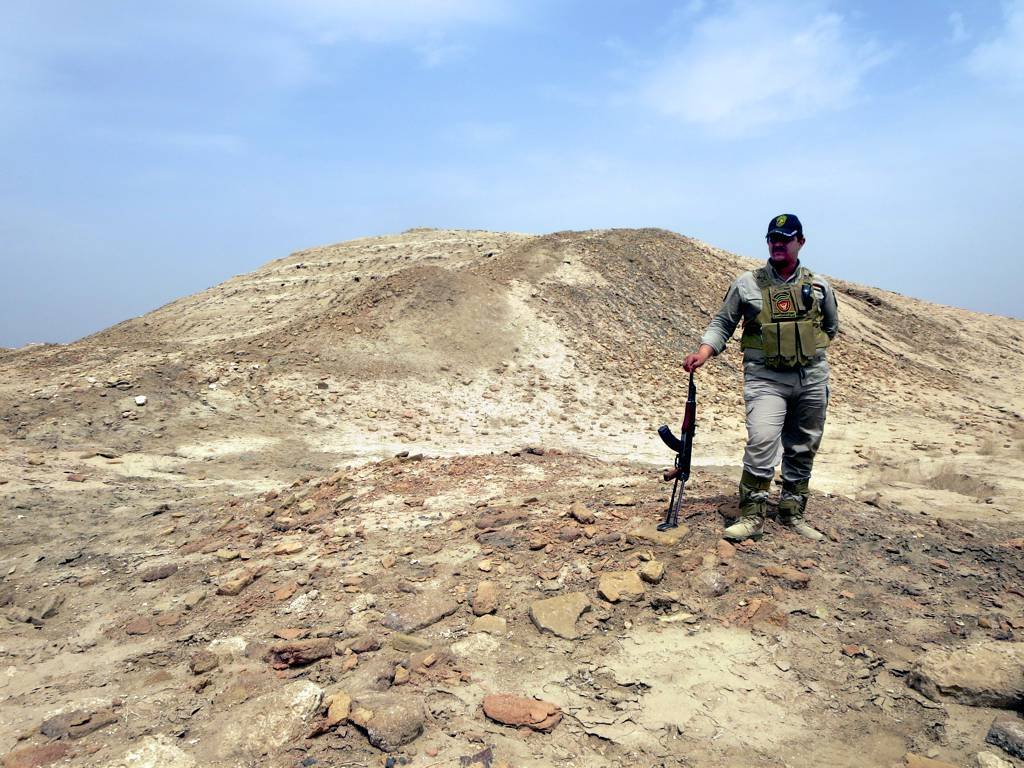
The Sumerians invented writing and left the oldest libraries on Earth, and buried in them is a claim stranger than any flood: civilization was not invented, it was handed over, already finished, as a set of divine programs called the ME. Kingship, writing, metalwork, music, priesthood, justice, sex, even deceit, more than a hundred of them, each one a power the gods held and humanity did not. The god of wisdom kept the whole library in the freshwater deep. Then the goddess of Uruk got him drunk, loaded the programs onto a boat, and sailed home with civilization itself. This is the file on the ME, opened program by program, every claim wearing its evidence.
Every civilization tells a story about where it came from. The Sumerians, who invented writing and left the oldest libraries on Earth, told the strangest one. They did not claim to have built civilization. They claimed it was handed to them, already finished, as a set of divine programs called the ME: kingship, writing, metalwork, music, priesthood, justice, sex, and even deceit, more than a hundred of them, each one a power the gods possessed and humanity did not. And in the oldest version of the story, a goddess got the god who kept them drunk and stole the whole library. This is the file on the ME, opened program by program, every claim wearing its evidence.
01What The ME Actually Were
Start with the word itself. ME, written with a single cuneiform sign and pronounced to rhyme with 'may,' is one of the hardest words in Sumerian to translate, and scholars render it a dozen ways: divine powers, divine ordinances, fundamental principles, cultural norms, offices, or, in the reading this file leans on, programs. The plural and the singular look identical on the clay. What makes the ME strange is that they are two things at once. They are abstract, powers and concepts with no physical form, and they are concrete, objects that can be picked up, handed over, and carried. They belong to the gods, who did not invent them so much as possess them, and they move: a god can give a ME to a human, or to another god, and in the central myth they are loaded onto a boat and shipped downriver like cargo.
02Software Versus Root Access
The ME are easy to confuse with another piece of Sumerian divine technology, and the file draws a hard line between them. The ME are know-how: the skill of the scribe, the technique of the smith, the etiquette of kingship, even the craft of weaving a basket. They are the tools for doing things, and in modern terms they behave like software, the applications a civilization runs on. The Tablets of Destiny are something else entirely. They do not teach a skill; they authenticate the supreme god's right to rule and carry the power to fix the fates of everything. They are not an application. They are the admin password, root access, the right to rule rather than the ability to do. The distinction is not academic. In one myth the goddess Inanna steals the ME, the software, to build up her city. In a completely separate myth the god Ninurta goes to war with the monstrous Anzu bird to win back the Tablets of Destiny, the root access. Two thefts, two kinds of power, operating at two different levels.
| Question | The ME | The Tablets of Destiny |
|---|---|---|
| Name | Sumerian 'me' | Sumerian 'Dub Namtara,' Akkadian 'Tup Shimati' |
| What they are | Know-how, cultural norms, and skills, from basket-weaving to kingship | The authentication of supreme rule and the power to determine fates |
| The parallel | Software and applications: the tools to do things | An admin password, root access: the right to rule |
| Who took them, and how | Inanna, who tricked them out of Enki at a banquet | Ninurta, who fought the Anzu bird to win them back |
03Over One Hundred Programs
The master list comes from one text: a Sumerian myth known as 'Inanna and Enki: The Transfer of the Arts of Civilization,' preserved on tablets from the early second millennium BCE. Samuel Noah Kramer, whose 'History Begins at Sumer' (1956) gave the ME their first full treatment for a general audience, translated the myth (he published it as 'Inanna and the God of Wisdom') and counted at least 94 individual ME named in it. Across the wider cuneiform corpus the total runs past 100. The catch is that only about 60 are still legible; the rest sit on tablets too damaged to read. And the list is not a gift basket of nice things. Alongside kingship, music, and justice, it names deceit, enmity, and destruction, which the file reads as deliberate: the gods handed over the complete package, the full spectrum of civilized life, dark programs included, the way the Tree of Knowledge held both good and evil at once.
| Category | Named ME (Sumerian term, meaning) |
|---|---|
| Governance and Authority | nam-en (lordship / high priesthood), nam-lugal (kingship), nam-diĝir (godship), aga zi (the legitimate crown), gišgu-za (the throne of kingship), giš-šibir (the royal scepter), nam-ukkin (governance by council) |
| Knowledge and Skills | nam-dub-sar (writing, the scribe's art), nam-Ğiš-šár (metallurgy), nam-nagar (carpentry), nam-ašgab (leather-working), nam-šidim (construction), nam-ad-gi-gi (counseling) |
| Music and Arts | nam-nar (music), nam-tigi (the tambourine), nam-balag (the drum), nam-a-la-hu (singing) |
| Religious Practice | nam-sita (libation), nam-isimu (purification rites), nam-en-na (office of en-priestess), nam-lukur (office of lukur-priestess) |
| War and Justice | nam-kalag (heroism / might), nam-ur-sag (being a warrior), nam-erim (hostility / enmity), di-ku (the art of judgment), nam-kur (destruction) |
| Sexuality and Emotion | nam-nita (masculinity), nam-munus (femininity), hi-li (sexual allure), nam-sub (the art of making love), nam-er (lamentation / weeping), nam-gestu (wisdom / understanding) |
| Abstract and Cosmic | nam-til (life), nam-tar (fate / destiny), me-lam (radiant aura, terrifying splendor), nam-ku (holiness), nam-hug (peace) |
| Deception and Negative ME | nam-lu-lul (deceit / falsehood), nam-tag (guilt), nam-er (lamentation), nam-kur (destruction) |
04How Inanna Stole Civilization
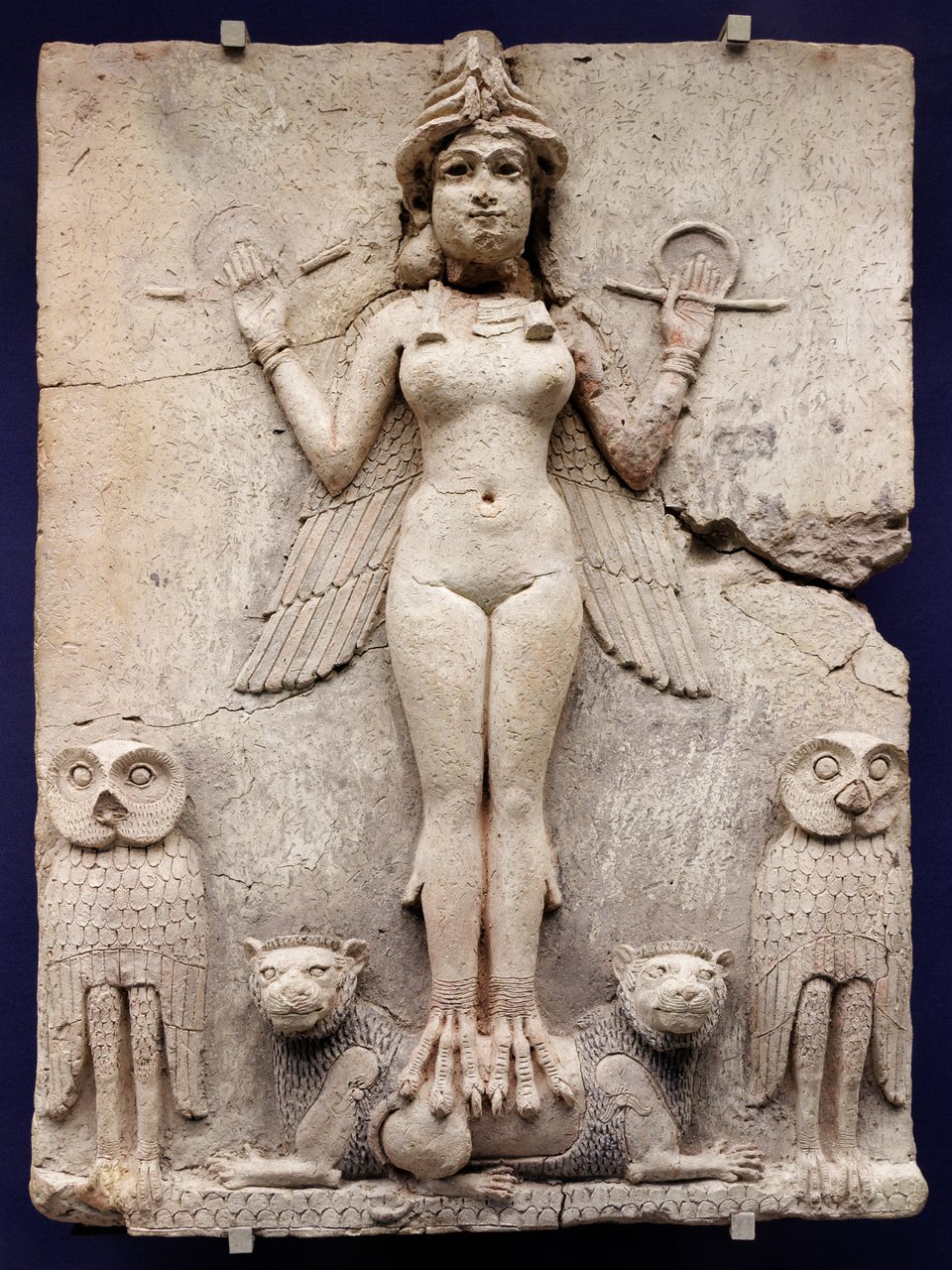
The theft plays out as a drinking story. Inanna, the goddess of Uruk, wanted to raise her city's standing, so she travelled to Eridu, the city of Enki, who held all the ME. Enki welcomed her with a great feast and kept pace with her cup for cup. As the beer took hold he grew expansive, then reckless, and began handing over the ME, one at a time and in whole clusters, toasting each gift as he gave it away.
Inanna took every one. As Enki offered them she loaded them onto her Boat of Heaven, the Ma-an-na, and by the text's own accounting she left with somewhere between 94 and more than 100 of them stacked aboard: kingship, the priestly offices, the crafts, the arts, the sexual and the martial powers, the whole apparatus of civilized life packed onto a single vessel and pushed out onto the river toward Uruk.
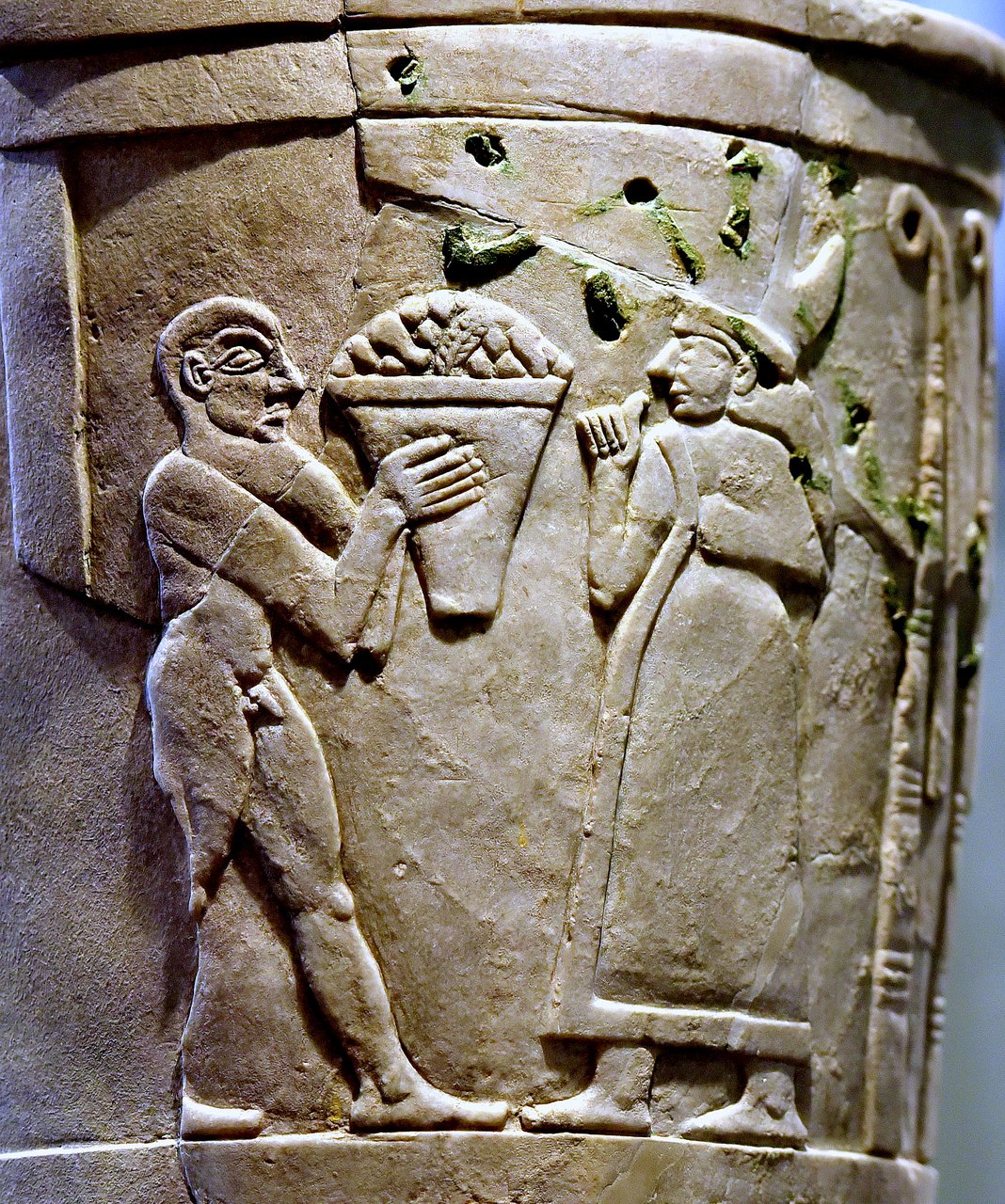
Then Enki sobered up. Realizing he had given away everything, he sent his two-faced servant Isimud, backed by a succession of monsters, to catch the boat and take the ME back, and he tried six separate times. Six times Inanna's own servant, Ninshubur, met the attack at the water and drove it off, and six times the Boat of Heaven sailed on. Inanna reached Uruk with every ME intact, unloaded them at her quay, and the city bloomed. Civilization, in this telling, did not grow in Uruk. It arrived there by boat, all at once, stolen.
The file does not leave the story as a story. It reads the plot as a coded argument about where civilization comes from, and sets out, beat by beat, what it takes each element of the myth to mean. These are the file's interpretations, not facts carried by the tablets, but they are stated openly and they are worth laying side by side.
| Element of the myth | What the file reads it as encoding |
|---|---|
| The ME are physical objects | Civilization is a transferable technology, not something a people grows on its own |
| They are loaded onto a boat | That technology can be moved, a portable package shipped from one place to another |
| A wisdom god hands them over | Humanity did not develop civilization independently; it was given |
| They are won by trickery | The same shape as Prometheus stealing fire and Eve taking the fruit |
| They are pursued six times | An echo of Genesis 3:22, the gods regretting that humans now hold the knowledge |
| The whole set transfers at once | An installation, not a slow climb: everything switched on together |
05Enki, Eridu, And The Deep
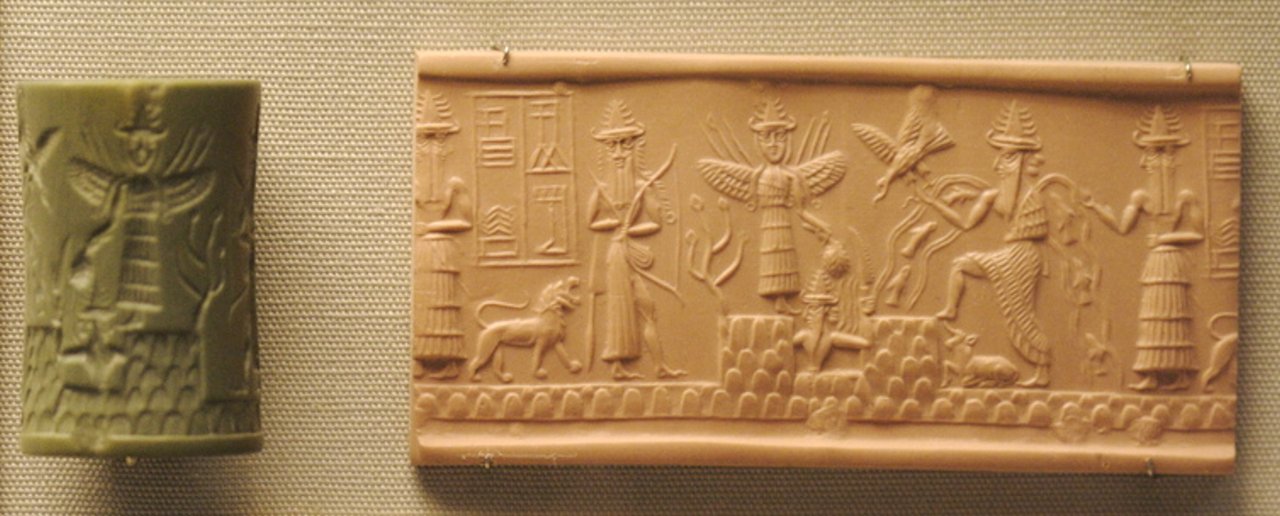
The god at the center of all this is worth knowing. Enki ruled over wisdom, fresh water, craft, magic, and civilization itself, and the texts draw him as clever, cunning, and unusually fond of humanity, forever bending or breaking the other gods' rules to help people out. His city was Eridu, which the Sumerians held to be the oldest city in the world and the place civilization began, and his temple there was the E-Abzu, the House of the Deep, built above the underground freshwater ocean. That ocean, the Abzu, was both the source of every life-giving water and the vault where the ME were kept. The keeper of civilization stored it underwater, beneath the first city.
The file sets Enki beside five other figures from other traditions and reads them as a recurring type: the wisdom-bringer who hands knowledge down to humanity, often against the will of the other gods. It is a suggestive line-up, and it is worth being exact about what it does and does not show.
| Tradition | The figure, and what they bring | Water connection |
|---|---|---|
| Sumer | Enki / Ea, keeper of the ME, maker of humans, trickster | Lives in the Abzu, the freshwater deep |
| Egypt | Thoth, inventor of writing and keeper of wisdom | Tied to the Nile flood |
| Greece | Prometheus, who gives fire and technology against divine will | None given |
| Hebrew tradition | The Serpent, who gives knowledge against God's will | None given |
| Mesoamerica | Quetzalcoatl, who gives civilization to humanity | Emerges from the sea |
| Mesopotamia | Oannes and the Apkallu, who teach every art of civilization | Emerge from the sea |
Here is the exact part. Only four of these six, Enki, Thoth, Quetzalcoatl, and Oannes, actually rise from or dwell in water in the file's own table; Prometheus and the Serpent do not. So the honest pattern is narrower than it first looks. What these figures genuinely share is the act of handing forbidden or civilizing knowledge down to humanity, usually in defiance of the gods. A single 'wisdom god emerges from the sea' motif running through all six is more than the evidence supports, and the file's own table is where that overreach comes apart.
One smaller pattern in the file is genuinely striking. Enki keeps the ME in the Abzu, underground and underwater. The Egyptian Book of Thoth was likewise said to lie hidden beneath the water, guarded by serpents. And across a range of traditions the most important knowledge is described as buried or sunk, hidden underground or under the sea, as if wisdom were something you had to descend to reach rather than climb toward.
06The Descent: When The Programs Were Stripped Away
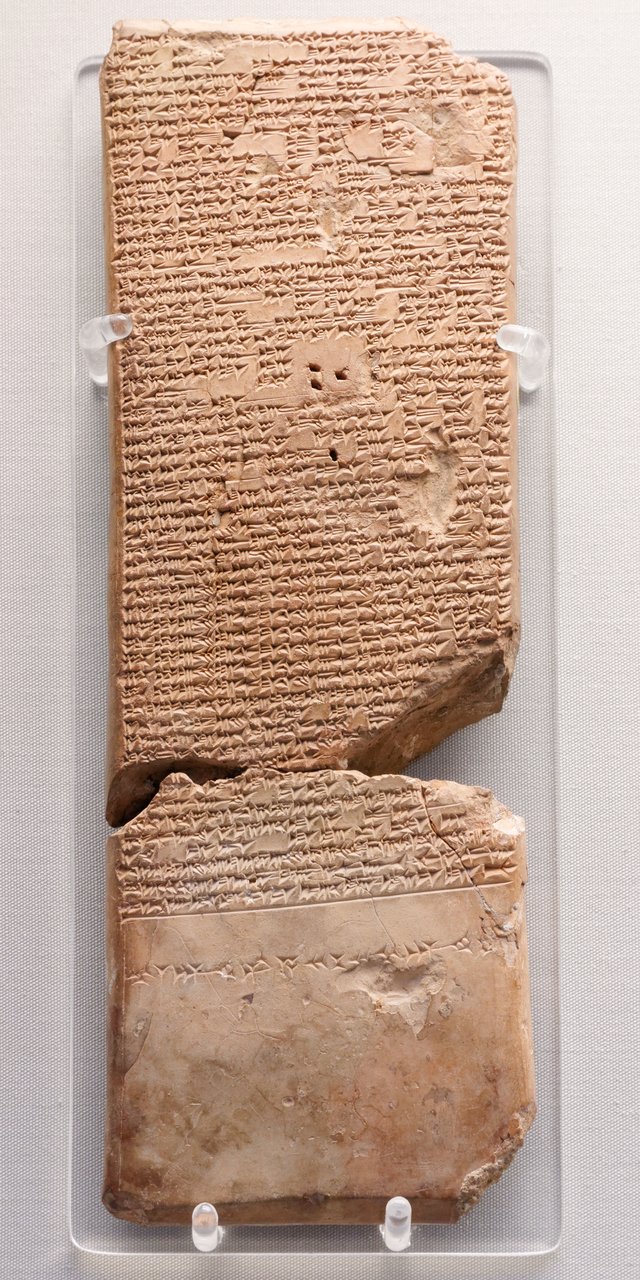
The ME turn up again in a second, darker myth: 'The Descent of Inanna,' where the same goddess goes down into the underworld to confront her sister Ereshkigal. The journey down runs through seven gates, and at each gate Inanna is made to surrender one piece of clothing or regalia, each piece one of her ME, a token of her divine power. Gate by gate she is stripped, until she arrives at the throne naked and powerless, where she is killed and her body hung on a hook. Three days later she is brought back to life through Enki's intervention, and on the way back up she recovers her ME at each gate, one at a time, until she is whole and armed again.
Read that sequence closely and the ME are doing something they did not do in the Enki story. Here they are not tools for building a city; they are personal power, worn on the body. Without them Inanna is not merely undressed, she is defenseless, which is why stripping them away is exactly what kills her. In this myth the ME behave like armor: they are what stands between a divine being and death, and losing access to them is losing access to divinity itself.
The file adds one more reading here, and this one is a genuine interpretive leap rather than primary text: that the seven gates might stand for the seven planetary spheres, the same seven that structure the descent-and-ascent journeys of later Gnostic and Hermetic writing. It is an evocative parallel and no more than that. The seven gates and the shedding of the ME are solidly in the myth; the planetary reading is a modern overlay laid on top, and it should be held that much more loosely than the text it interprets.
07Civilization As An Installation
This is the analogy the file is built around, and it is careful to flag it as a modern lens, not something a Sumerian would have recognized. If you read the ME as software, the whole myth snaps into a familiar shape. Some ME are foundational, kingship, justice, truth, the ones that let a society function at all, and they behave like an operating system. Others are specific, metallurgy, carpentry, music, tools for a single job, like application programs. Moving the ME from Eridu to Uruk is a data transfer; the city running at a higher level once they arrive is an installation; a civilization losing its ME and collapsing is a system failure. Even the ugly entries fit: the negative ME, deceit and destruction, read like bug reports, or like features nobody wanted but the system ships with anyway. And the fact that different gods hold different sets, with Enki holding the complete master copy, looks a great deal like version control.
| In the myth | The software parallel |
|---|---|
| Foundational ME: kingship, justice, truth | The operating system, what lets the whole society run |
| Specific ME: metallurgy, carpentry, music | Application programs, tools for particular jobs |
| Moving the ME from Eridu to Uruk | Data transfer |
| A city running higher once they arrive | Installation |
| No ME, then collapse | System failure |
| The negative ME: deceit, destruction | Bug reports, or features that ship anyway |
| Different gods hold different sets; Enki holds all | Version control |
Follow the analogy to its end and it lands on a claim about worldview. If the ME are technology issued by the gods, then the Sumerians did not see civilization as a human invention at all; they saw it as a divine installation, switched on from outside. The file notes that this reading sits comfortably beside two others in the same corpus: the Apkallu tradition, in which the Seven Sages arrive and simply teach humanity everything, and the Watcher tradition of 1 Enoch, in which the Watchers hand down metalworking, cosmetics, astronomy, and herb-craft. Three traditions, one shape: the knowledge did not grow here; it was delivered.
08What The Scholars Actually Say
None of this rests on one reader. Kramer opened the subject in the 1950s and identified the bulk of the list. Gertrud Farber's entry on the ME in the Reallexikon der Assyriologie, published in 1990, remains the comprehensive philological study, working through every attestation of the term in the cuneiform record and separating the ME as objects, as abstract principles, and as divine powers. Herman Vanstiphout analyzed the literary structure of 'Inanna and Enki,' and Bendt Alster argued that the ME sit precisely between abstract concept and concrete object, which is exactly the doubleness the myths keep insisting on.
The mainstream scholarly reading treats the ME as divine ordinances that structure a civilization, not as an inventory of transferred technology, and uses the concept as evidence for how the Sumerians modeled cultural authority: the idea that the institutions of society, kingship, priesthood, law, were sanctified as things granted from above rather than built from below. On the 'Inanna and Enki' myth specifically, Vanstiphout and others argue it is first of all a political story. Uruk was a rising power and Eridu an older, senior cult center, and a myth in which Uruk's goddess carries off all the ME from Eridu is a myth that legitimizes Uruk's supremacy. On that reading the story is about politics, not about a download.
That leads straight to the strongest counter-argument, and the file states it plainly. To mainstream archaeology the ME are literary and mythological motifs, not evidence that anything was literally transferred. The ME may simply be the Sumerian way of naming, sorting, and sanctifying the institutions of their own society, a theological filing system for civilization rather than a record of some outside contact. And the file turns the same caution on its own favorite device: the software analogy, however well it fits, may be importing modern computational habits of thought into ancient religious categories that were never meant to work that way. The analogy is a lens for us, not a claim the Sumerians made.
Two more scholarly cautions keep the subject honest. The first is about language: the ME carry at least three layers of meaning at once, object, abstract principle, and divine power, and Farber's philological work shows the term's range is wider than any single modern word can hold, which is exactly why 'software' captures a piece of it and misses the rest. The second is about those dark entries. The presence of negative ME, deceit and destruction sitting in the same list as music and justice, argues against reading the ME as a tidy 'gift of civilization.' They look less like a benefits package and more like a map of the whole cosmic order, its shadows included.
And there is a plain, physical limit under everything above. Of the more than 100 ME named across the corpus, only about 60 can still be read; the rest are lost on tablets too broken to make out. Every analysis of the catalog, this one included, is working from a partial list, and a single well-preserved tablet coming out of the ground could add programs that change the shape of the whole reading. The dataset is incomplete, and honesty about the ME starts with saying so.
09The Speculative Edge
Push past the scholarship and the file follows the idea to its speculative edge. The strangest feature of the ME, that abstract properties, kingship or holiness or wisdom, can be treated as objects, loaded onto a boat, and installed in a city, has been read as a rough anticipation of ideas in digital physics, where reality itself is modeled as information. In that framing, if civilization really was handed to humanity by non-human intelligence, the ME would be the specific modules of that transfer, and the whole event reads, in modern terms, like a Civilizational Upload. This is speculation, and the file marks it as such.
The same speculative thread ties the ME to a cluster of stories about knowledge arriving from outside the human world. The theft of the ME rhymes with Prometheus stealing fire and with Eve taking the fruit of the Tree of Knowledge. It rhymes harder with two traditions in particular: the Watchers of 1 Enoch, who teach humanity a specific syllabus of skills, and the Apkallu, the Seven Sages who rise from the sea to teach every art of civilization. Some readers go further and suggest the Apkallu story and the ME story may be two views of the same underlying event, told from different angles. It is a provocative idea, and it stays at Tier 3: a pattern worth noticing, not a fact established.
Fast Facts
- What the ME are
- Sumerian divine decrees or 'programs': the powers, offices, skills, and norms of civilization, held by the gods and handed to humanity
- The source
- The myth 'Inanna and Enki: The Transfer of the Arts of Civilization,' on tablets from the early 2nd millennium BCE
- How many
- More than 100 named across the corpus; only about 60 are still legible
- The catalog
- Kingship, writing, metallurgy, music, priesthood, and justice, alongside deceit, enmity, and destruction: the full spectrum, dark programs included
- ME versus Tablets of Destiny
- The ME are the software, the skills; the Tablets of Destiny are root access, the right to rule. Inanna stole the first; Ninurta fought for the second
- The heist
- Inanna got Enki drunk, loaded the ME onto her Boat of Heaven, and reached Uruk despite six attempts to take them back
- The software reading
- A modern lens, not an ancient claim: fundamental ME as an operating system, specific ME as applications, the transfer as an installation
- Tier 4 claims
- None. Every source kept its analysis inside Tiers 1 to 3
What We Can Actually Stand Behind
The primary texts are real and the reporting of them is straight. The ME are a genuine, well-attested Sumerian concept; more than 100 are named on the tablets and about 60 survive legibly; the 'Inanna and Enki' myth records the drunken banquet, the loading of the Boat of Heaven, and the six failed attempts to reclaim the ME; the 'Descent of Inanna' strips the goddess of one ME at each of seven gates, kills her, and returns her after three days; and Enki, keeper of the ME, belongs to Eridu, the E-Abzu, and the freshwater deep. The distinction between the ME as skills and the Tablets of Destiny as the right to rule is drawn straight from the sources. All of that is solid ground.
The interpretive layers are credible and correctly kept one step back. The mainstream reading, that the ME are how the Sumerians named and sanctified their own institutions, and Vanstiphout's argument that 'Inanna and Enki' legitimizes Uruk over Eridu as a political myth, are well-founded scholarship. The cross-cultural line-up of wisdom-bringers holds only as far as its evidence: the shared act is handing knowledge down to humanity, and only four of the six figures actually emerge from water, so the narrower pattern is the honest one. And the software analogy is exactly what the file says it is, an illuminating modern lens, not a claim the Sumerians made, with Farber's philological caution a standing reminder that the word ME is wider than any single translation.
The far readings are genuinely speculative and graded that way. That the ME anticipate digital physics and describe a 'Civilizational Upload'; that the seven gates of the Descent encode the seven planetary spheres of later Gnostic and Hermetic thought; and that the ME, the Watchers of 1 Enoch, and the Apkallu are all versions of one real transfer of knowledge from non-human beings: each is a coherent pattern built on the texts, and none can be settled from them. Hold them as questions, not answers.
There is no Tier 4 here, and that is the honest finding rather than a dodge. Every one of the file's four sources kept its analysis inside Tiers 1 through 3; not one advanced a claim dubious enough to have to rule out. The nearest thing to a hard limit is not a false claim but a missing one: roughly forty of the named ME are lost to broken tablets, so any complete reading of the catalog is working from an incomplete list. On this topic the honest bottom line is an open catalog, not a debunked one.
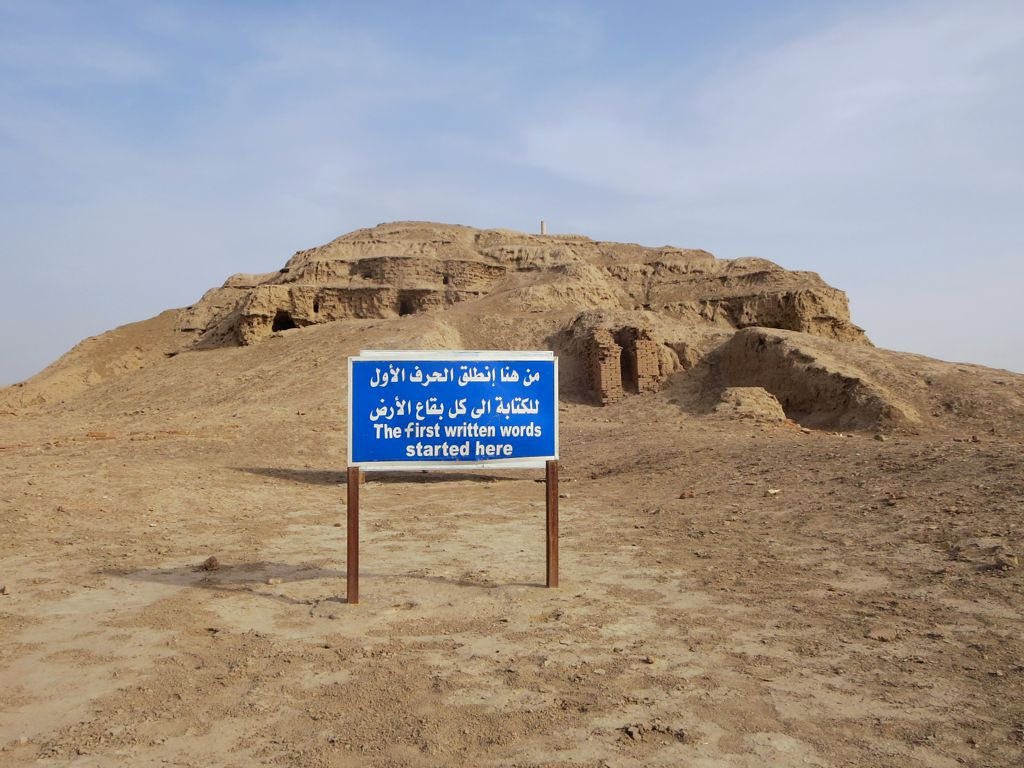
So the first people to write anything down did not tell a story about inventing civilization. They told a story about receiving it, complete, from a god who kept it underwater, and about a goddess who got that god drunk and carried it off by boat. Strip away the software metaphor and the strangeness only sharpens: kingship, music, justice, and even deceit and destruction, all of it framed not as something Uruk built but as something Uruk was handed, or took. And roughly forty of those programs are still missing, lost on tablets too broken to read. If the Sumerians were right that everything worth having could be listed, packaged, and delivered, then two questions outlast the myth. What was written on the forty ME we can no longer read? And why did the oldest civilization on record insist, in its very first stories about itself, that it had invented none of it?
Sources & further reading
Everything above is drawn from our research library on Theories of Anything, and every claim traces to the file below, A_1_02, together with the neighboring files it connects to. The ME catalog is quoted as the file gives it, including the roughly forty programs that are lost to damaged tablets. The software analogy is reported as what it is, a modern lens laid over an ancient text, never something the Sumerians themselves wrote. Open the full file to check the sourcing and go deeper.
Image credits
- The ziggurat ruins at Eridu, southern Iraq photograph by David Stanley, via Wikimedia Commons. CC BY 2.0 Source.
- The Adda Seal, an Akkadian cylinder seal impression, circa 2300 BCE, British Museum photograph by Nic McPhee, via Wikimedia Commons. CC BY-SA 2.0 Source.
- The Burney Relief ("Queen of the Night"), terracotta plaque, circa 1800-1750 BCE, British Museum photograph by Marie-Lan Nguyen, via Wikimedia Commons. CC BY 2.5 Source.
- Inanna receiving offerings, detail of the Warka Vase (Uruk Vase), circa 3200-3000 BCE, Iraq Museum photograph by Osama Shukir Muhammed Amin FRCP(Glasg), via Wikimedia Commons. CC BY-SA 4.0 Source.
- Cuneiform tablet, "The Descent of Ishtar to the Underworld," 7th century BCE, British Museum (K.162) photograph by Marie-Lan Nguyen, via Wikimedia Commons. CC BY 2.5 Source.
- The ziggurat at Uruk (Warka), Iraq photograph by David Stanley, via Wikimedia Commons. CC BY 2.0 Source.
- Card crop of The ziggurat ruins at Eridu, southern Iraq photograph by David Stanley, via Wikimedia Commons. CC BY 2.0 Source.
.jpg)


.jpg)