The Trickster: The Cosmic Rule-Breaker in Every Mythology
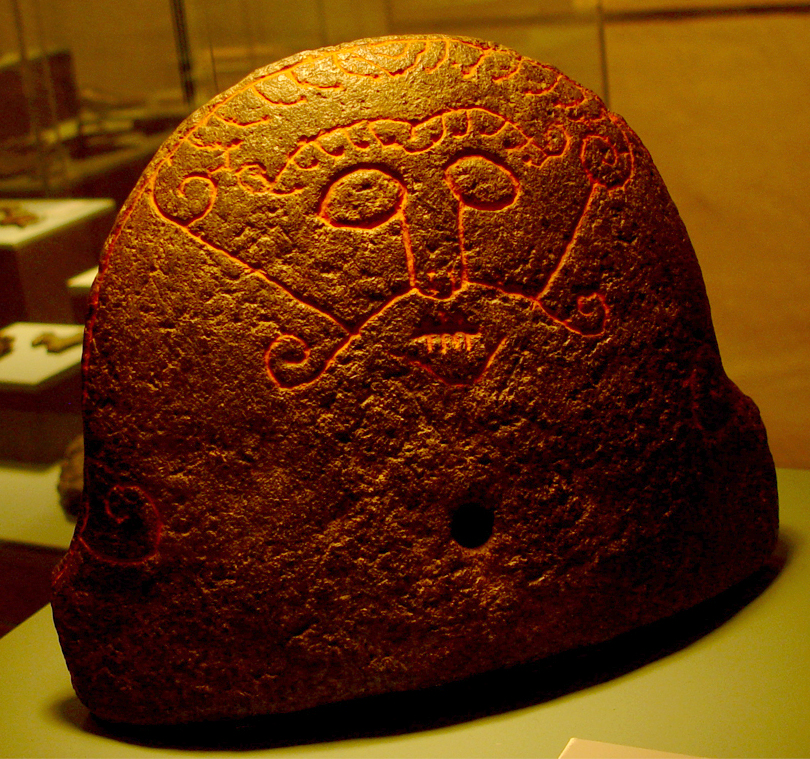
Coyote steals fire in a relay race. Anansi buys every story in the world from the sky god. Hermes robs Apollo the day he is born. A spider in Ghana, a monkey in China, a demigod across the whole Pacific: the thief who is also the maker, the liar who tells the one truth nobody else will, keeps arriving in traditions that never met. One school of scholars calls that a real universal archetype wired into the human mind. Another calls it a Western word laid over gods who have nothing to do with each other. Here is the file, every claim wearing its evidence, and the argument left open.
Start on five continents at once. In the American West, Coyote steals fire in a relay race and hides it in the wood, which is why you can still make a flame by rubbing two sticks. In Ghana, a spider named Anansi buys every story in the world from the sky god. In Greece, a newborn god climbs out of his cradle, invents a musical instrument, and rustles fifty of his brother's cattle before lunch. In China, a monkey born from a stone declares himself equal to Heaven. Across the entire Pacific, a demigod fishes islands up out of the sea. These traditions never met. Their trickster keeps arriving anyway: the thief who is also the inventor, the clown who is also the world-maker, the liar the story trusts with its one honest line. This is the file on the trickster, opened claim by claim, every fact wearing its evidence, including the biggest fact of all, which is that serious scholars still cannot agree on whether he is one figure or nine.
01The Category Somebody Built In 1956
The word trickster is doing a lot of work, and it helps to know who put it to work. The category as scholars use it today was built by the anthropologist Paul Radin in his 1956 book The Trickster: A Study in American Indian Mythology, published with commentaries by the classicist Karl Kerenyi and the psychiatrist Carl Jung. Radin's study centered on the Winnebago, or Ho-Chunk, trickster cycle, and out of it he drew seven traits he argued recur in trickster figures generally: the boundary-crosser, the shape-shifter, the rule-breaker, the appetite-driven figure of hunger and lust and curiosity, the being who is culture hero and fool at the same time, the one who is amoral rather than immoral (standing outside morality, not choosing evil), and the creator-through-destruction, whose chaos and accidents end up making the features of the world.
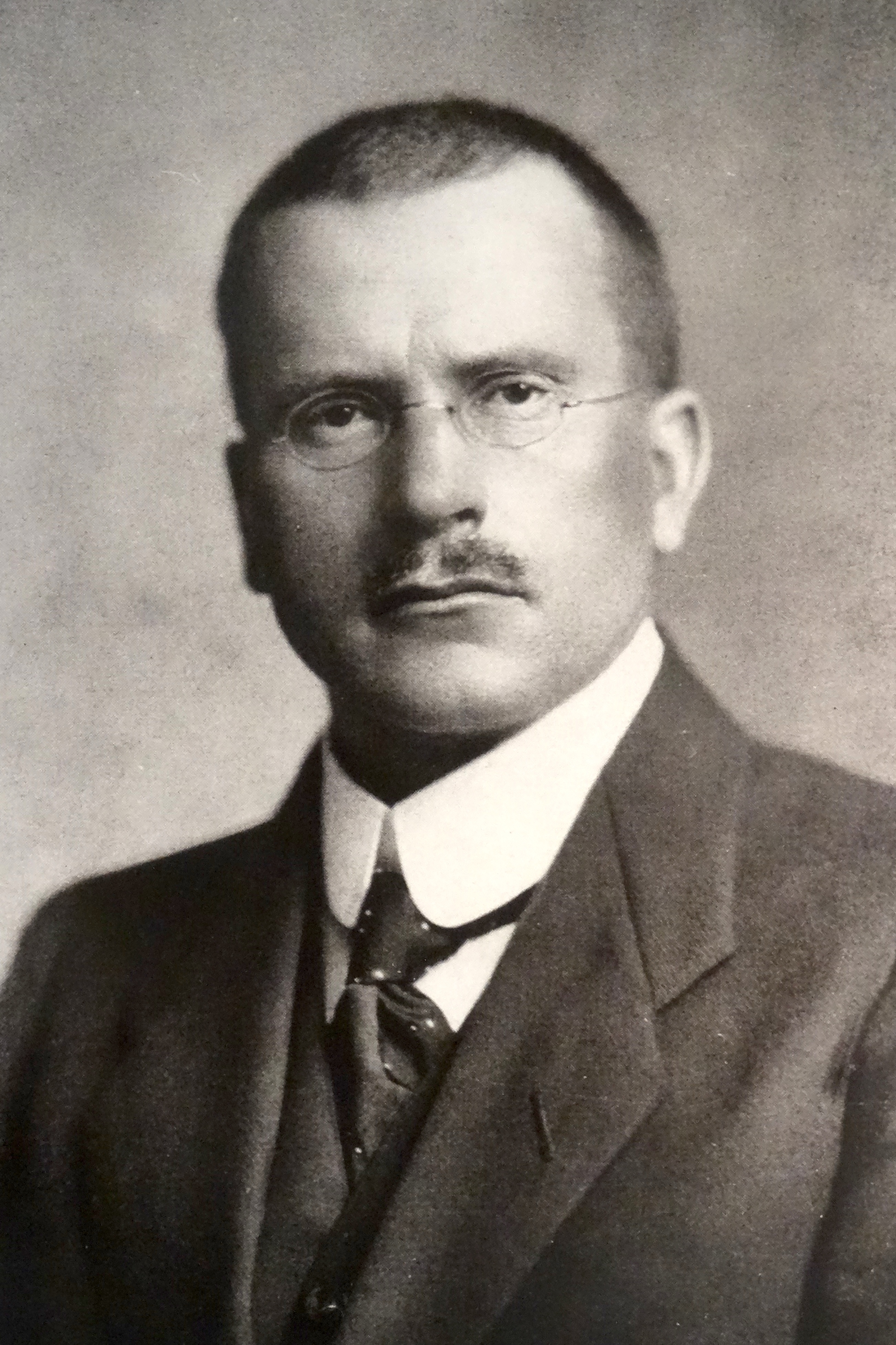
Jung's commentary gave the figure its most famous psychological reading. He argued the trickster is a face of the Shadow, the disowned and pre-conscious part of the psyche, a memory of an earlier, undifferentiated, pre-moral stage of the mind. As a civilization matures, Jung wrote, it either demonizes its trickster (Loki hardens into a devil) or shrinks him into the clown, the fool, the jester, but it never manages to delete him, because the psyche keeps needing his energy, and energy suppressed too hard erupts through the Shadow instead. Note carefully what this claim is and is not. That Jung argued this is a documented fact. Whether the mechanism he proposed, a collective unconscious shared by all of humanity, is real is a separate question and a much harder one. We come back to it.
Kerenyi, in the same volume, placed the trickster at the very start of things, as the spirit of disorder inside the act of creation. He named Hermes as the classical Greek trickster and argued the figure embodies a single principle: that nothing genuinely new arrives without breaking an existing order. Creation requires disruption. The trickster is the disruption.
Four decades later, in 1998, Lewis Hyde extended the idea in Trickster Makes This World: Mischief, Myth, and Art. Hyde called the trickster an artus-worker, a being who operates at joints and hinges, at every threshold and crossroads where a line can be crossed: between property and theft, sacred and profane, truth and lie, inside and outside. His central move was to reframe the trickster's stealing. The theft is not merely crime, Hyde argued, it is cultural creativity, because every act of making takes something out of one domain and carries it into another. In his own words, quoted in our research file: 'The trickster is the mythic embodiment of ambiguity and ambivalence, doubleness and duplicity, contradiction and paradox.'
02Coyote, The Animal Caught Between
Coyote is the trickster of the American West and the Plains, and he is not a minor figure. He appears across at least 60 distinct tribal traditions, from the Navajo and Apache Southwest, where he is Ma'ii, to the Okanagan and Nez Perce Plateau, to the Pawnee and the Crow, who call him Ishaye. The stories rhyme from nation to nation. He steals fire from its keepers by running it away in a relay race and hiding it in wood, which is the Karuk, Klamath, and Shasta explanation for why friction can still make a flame. He argues that the dead should stay dead, wins the argument, and then his own child dies. He carelessly scatters the stars into the random smear of the Milky Way. He shapes rivers and mountains and animal traits through competition and mishap. And here is the detail worth holding: the real coyote is itself a creature caught between categories, neither wolf nor dog, neither fully wild nor tame. The animal was not chosen by accident. The trickster is the in-between thing, so the myth reached for the in-between animal.

03Anansi, The Spider Who Owns Every Story
Anansi is a spider, and he is the trickster of the Akan and Ashanti peoples of Ghana and Cote d'Ivoire. In the founding story, all the stories in the world belong to Nyame, the sky god. Anansi wants them, so he strikes a bargain: he will buy them if he can capture four dangerous beings, Onini the python, Mmoboro the hornets, Osebo the leopard, and Mmoatia the fairy. He takes all four not by strength but by cunning, and Nyame, astonished that a small weak creature could do it, hands over ownership of every story. From then on they are all Anansi stories, Anansesem. Read the structure and you can see the philosophy inside it: a tiny powerless figure beats a supreme god with nothing but intelligence, brains defeating power, and the trickster who steals stories themselves becomes the patron of storytelling.

A second story sharpens the point. Anansi tries to hoard all the world's wisdom in a pot tied to his belly and climb a tree with it, until his own small son points out it would be easier to carry on his back. Humiliated by a child's better logic, Anansi drops the pot, and the wisdom scatters everywhere, which is why no single person holds all of it and everyone holds a little. He cheats his friends out of food, plays dead to dodge his obligations, and works every angle for gain. And these stories traveled. Enslaved people carried them across the Atlantic, where Anansi survived as Aunt Nancy and fed into the Brer Rabbit cycle. A figure built entirely out of survival through cunning, told by people held in absolute powerlessness, outlasted the transatlantic slave trade itself, which is about the hardest test of an archetype's durability there is.
04Hermes, The God Who Was The Border
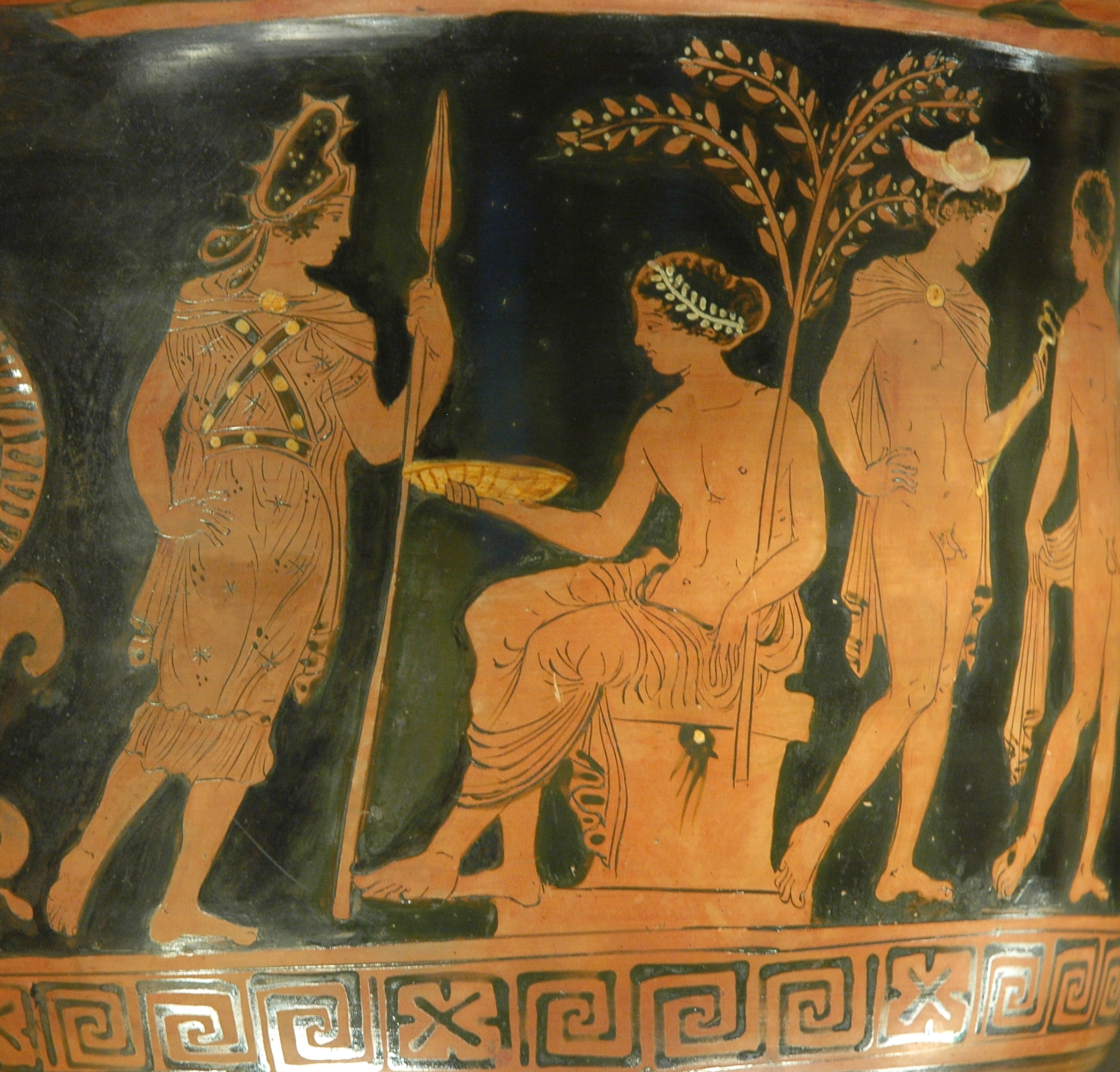
The oldest full trickster biography in Greek is the Homeric Hymn to Hermes, composed around 520 to 500 BCE, and it is a single outrageous day. Hermes is born in the morning. Before nightfall he has left his cradle, found a tortoise and invented the lyre by killing it and stringing its shell, stolen fifty cattle from Apollo's sacred herd by driving them backward so the tracks point the wrong way, invented fire-sticks to cook two of them as a sacrifice, climbed back into his crib to play the innocent newborn when Apollo comes accusing, lied to Zeus so charmingly that Zeus laughs and reconciles the brothers, and finally traded the lyre to Apollo in exchange for the cattle and the herald's staff, the kerykeion that becomes the caduceus. Thief, inventor, liar, and dealmaker, all before his first bedtime.
That range is the whole point of Hermes. He is inventor and thief at once. He is the psychopomp who guides souls down to Hades, crossing the last boundary of all. He is the god present in the herma, the stone markers set at crossroads and property lines, which means he does not merely cross the boundary, he is the boundary. He is the patron of hermeneutics, of interpretation and translation, carrying meaning from one domain into another, and he shape-shifts, appearing in the Odyssey as both a young man and an old one. Norman O. Brown read the double nature as an economic revelation: theft and trade are structurally the same act, both move property across a line, so Hermes being god of thieves and god of merchants at once is not a contradiction. It is the admission that, as Brown put it, commerce is sanctified trickery.
05Loki, The Seed Of Ragnarok Inside The Gods
Norse tradition, written down by Snorri Sturluson around 1220 in the Prose Edda and compiled around 1270 in the Poetic Edda from older material, gives the trickster his most consequential resume. Every one of the gods' greatest treasures exists because of Loki. Through a wager with dwarves that he engineered, the forge produces Mjolnir, Thor's hammer; Gungnir, Odin's spear; Skidbladnir, the folding ship; Draupnir, the ring that drips new gold rings; golden hair for the goddess Sif; and the boar Gullinbursti. The most powerful objects in the cosmos come into being specifically through trickster manipulation. Loki also shifts shape across species and gender at will. As a mare he conceives and bears Sleipnir, Odin's eight-legged horse; elsewhere he is a salmon, a fly, an old woman.
Then the same figure kills the best of the gods. Loki discovers that mistletoe alone was never made to swear the oath protecting Baldr, and he guides the blind god Hodr to throw a mistletoe dart that kills him, the single act that starts the countdown to Ragnarok. In the Lokasenna, his flyting, Loki walks into a feast and systematically exposes the secret and the hypocrisy of every god present, the trickster as the one who says out loud what everyone already knows. For that he is bound with the entrails of his own son beneath a serpent that drips venom onto his face; his wife Sigyn catches the venom in a bowl, and each time she turns to empty it his writhing shakes the earth. At Ragnarok he breaks loose and leads the forces of chaos against the gods, and he and the watchman Heimdallr kill each other.
What makes Loki more than a villain is his place in the family. He is Odin's blood-brother, sworn into the ruling order itself, not an outsider who broke in. And by his giantess consort Angrboda he fathers Fenrir the wolf and Jormungandr the world-serpent, two of the very monsters that destroy the gods at the end. Jan de Vries put it cleanly: Loki is not an intruder, he is a necessary function, because every ordered cosmos carries the seed of its own undoing, and the trickster is that seed.
06Enki, The Oldest Trickster On Record
The oldest trickster we can actually read is Sumerian. Enki, called Ea in Akkadian, is the god of fresh water, wisdom, craft, magic, and trickery, and he turns up in texts dating to roughly 2100 to 1800 BCE, which makes him one of the earliest documented trickster figures anywhere in the literary record. In the myth of Inanna and Enki, he gets drunk at a feast and hands the goddess Inanna the ME, the divine programs that run civilization itself: kingship and priesthood and truth and sexual intercourse and craft and music and writing and dozens more. When he sobers up and sends his servant Isimud to fetch them back, Inanna has already sailed for the city of Uruk with the whole operating system of culture aboard. The knowledge escapes through a gap in the authority's own self-control, which is about as pure a trickster mechanism as the record holds.
Enki works loopholes rather than open defiance. In the Atrahasis epic, when the god Enlil decrees that humanity will drown in a flood, Enki has sworn an oath not to warn anyone, so he does not warn anyone. He speaks to a reed wall, and he arranges for Atrahasis to be standing on the other side of it. He keeps the letter of the oath and breaks its whole spirit. In another text he answers the gods' complaint about the labor of the world by inventing humans out of clay to carry it, the trickster as problem-solver who reshapes the cosmic order to settle a grievance. Across the stories he stands as the mediator between Enlil, who is authority and decree and force, and humanity, which is weakness and mortality and work.
07Eshu At The Crossroads, The Living Trickster
Most of the tricksters in this file come from traditions the modern world treats as closed books. Eshu is not one of them. Under his many names, Eshu-Elegbara among the Yoruba, Legba in Fon and Haitian Vodou, Elegua in Cuban Santeria, Papa Legba in Louisiana, he is the most theologically developed trickster in any living religion, still worshipped, still consulted. He is the guardian of the crossroads, and nothing reaches the divine without going through him first; he is propitiated before any other spirit, he carries human sacrifices up to the supreme god Olodumare, and he transmits divine will through the Ifa divination system. His signature teaching tale is small and lethal: Eshu walks a road between two friends wearing a hat that is red on one side and blue on the other, and the two argue so bitterly over its true color that their friendship is destroyed. 'Spreading strife is my greatest joy,' he says. But the point is not cruelty. Eshu embodies ashe, the dynamic and unpredictable power that makes transformation possible at all, chaos as the engine of change rather than chaos for its own sake.
In 1988 the literary scholar Henry Louis Gates Jr. built a whole theory on him. In The Signifying Monkey, Gates identified Eshu as the principle of signification itself, language's power to mean more than one thing, to play, to revise, to subvert. The trickster, on this reading, is the origin of rhetoric, the living proof that meaning is never fixed, and Gates argued that Black American literary culture is itself organized around exactly this trickster signification, using indirection and double meaning and revision to move through the liminal space of racial oppression.
08Raven, When Creation Itself Is A Theft
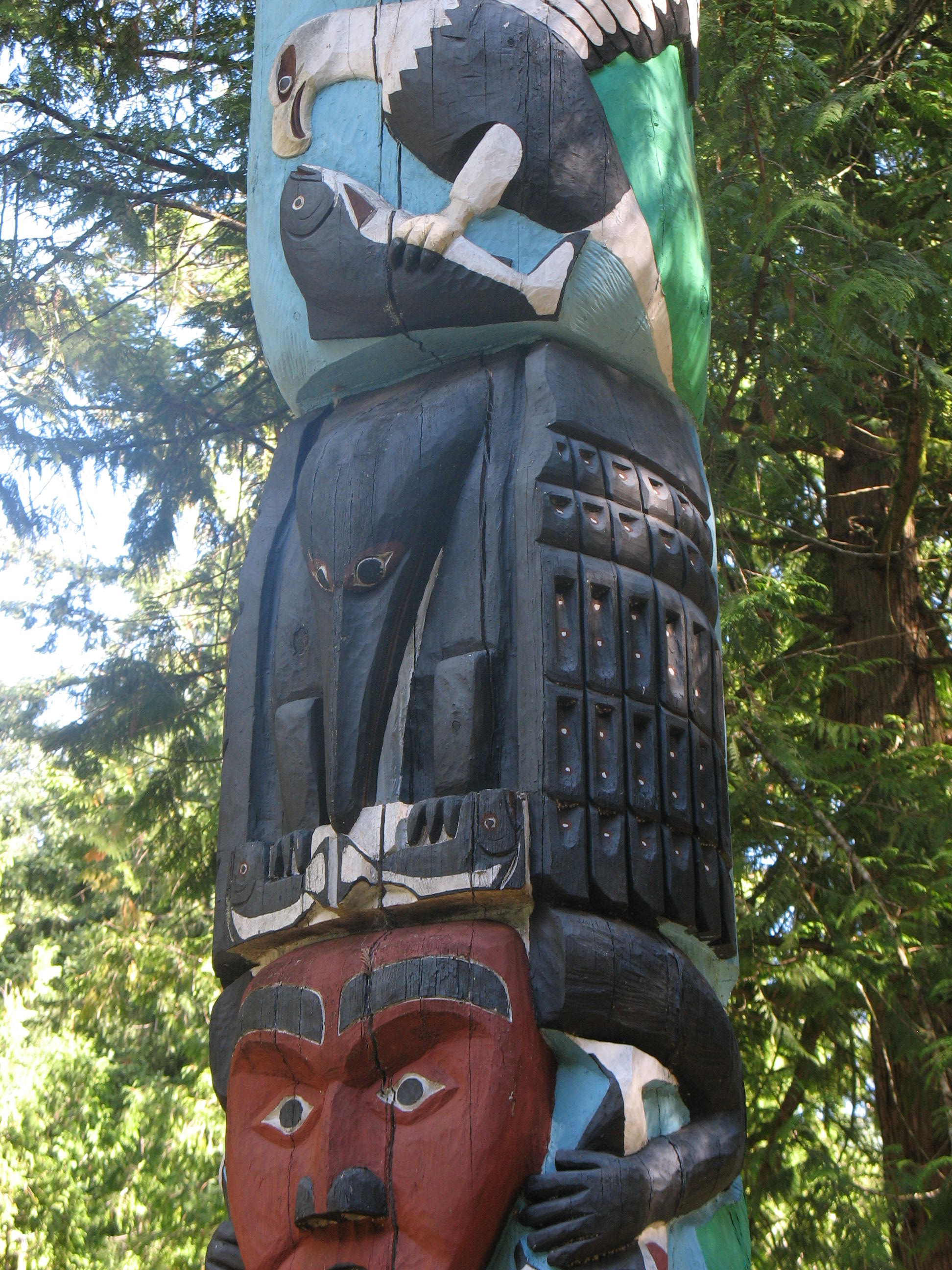
On the Northwest Coast, the trickster is Raven, called Yeil by the Tlingit, Xuuya by the Haida, Txamsm by the Tsimshian, and he is the being who brings the light. In the best-known story an old chief hoards the sun, the moon, and the stars in a nest of boxes. Raven turns himself into a hemlock needle, is swallowed by the chief's daughter in her drinking water, and is reborn as her human grandchild. He cries and cries until the doting grandfather opens the boxes to quiet him, then turns back into a bird and escapes through the smokehole with the light, his once-white feathers scorched permanently black by the soot on the way out. He is also endlessly, comically hungry, and much of the world gets made while he chases his next meal.
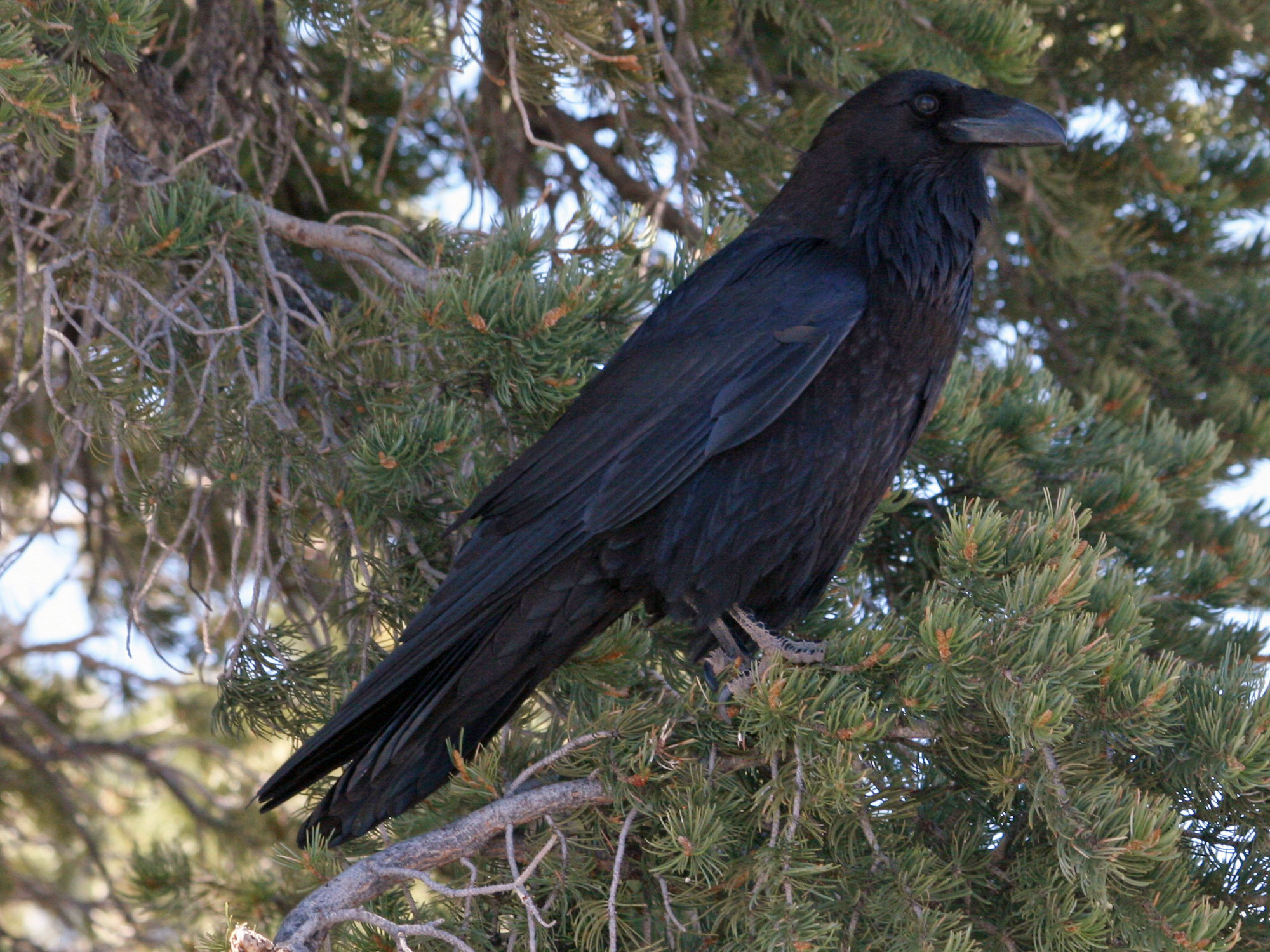
Raven breaks a category that scholars like to keep tidy. He is not only a trickster, he is the Creator. In some traditions he finds the first humans hiding in a clamshell on the beach and coaxes them out into the world; in others he lays down the coastlines, opens the rivers, sets the islands, and starts the tides. For the Tlingit and the Haida there is no clean line between the culture hero who builds the world and the trickster who breaks the rules, because creation here is a trickster act. The world arrives through greed and curiosity and rule-breaking, not through a solemn divine plan.
09Sun Wukong, The Monkey Who Fought Heaven
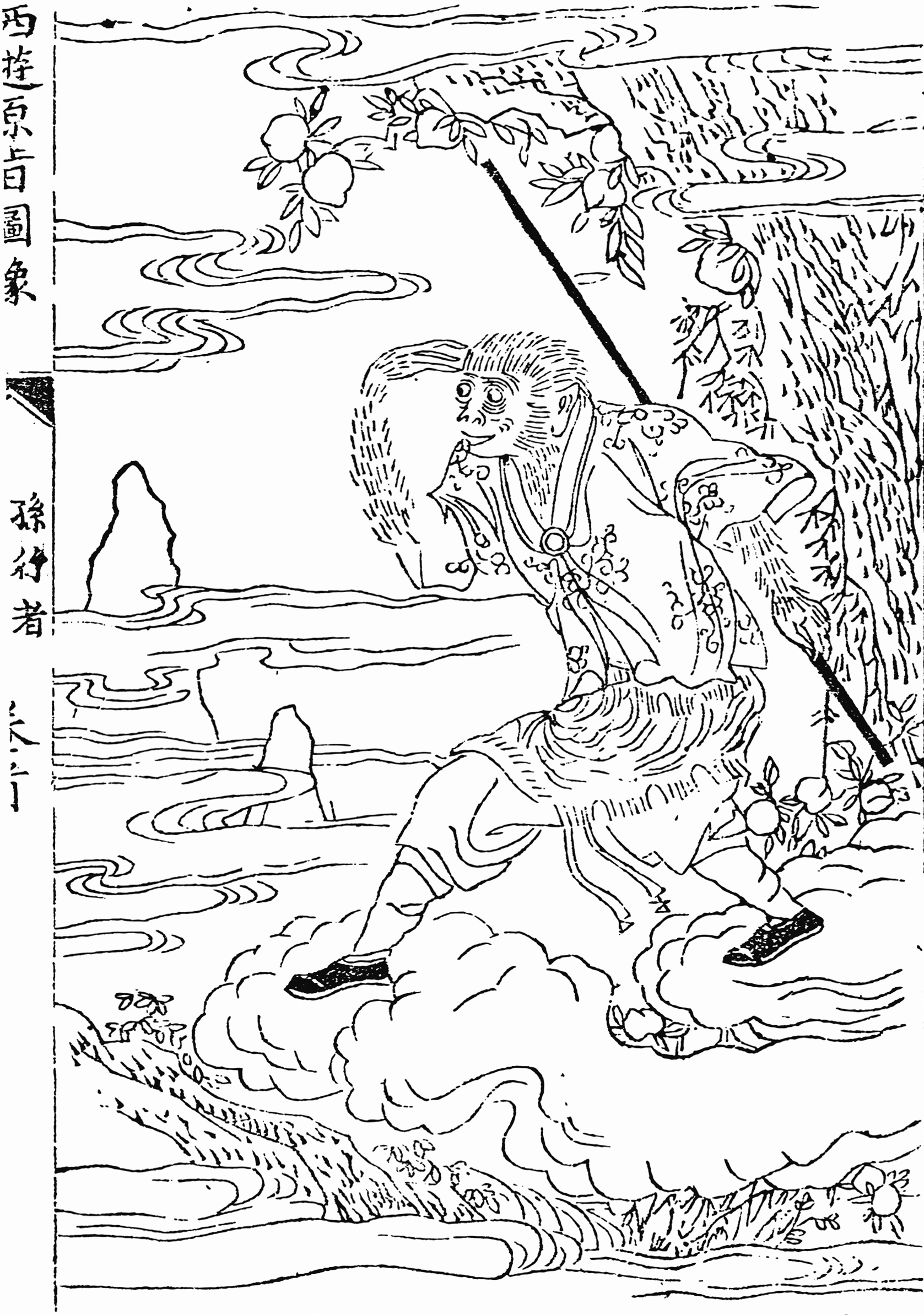
China's trickster is Sun Wukong, the Monkey King, and his story is the 16th-century novel Journey to the West, first printed around 1592. (The novel is traditionally credited to Wu Cheng'en, the attribution used by the standard English translation, though the earliest editions were published anonymously, so the authorship is not fully settled.) The Monkey runs the full trickster arc. He is self-created from a stone egg with no lineage at all. He steals the secrets of immortality and 72 transformations from the patriarch Subhuti, then defies every authority in Heaven: he demands the title Great Sage Equal to Heaven, crashes the immortals' Peach Banquet, eats the elixir pills of Laozi, and, mistaking the edge of the universe for a set of pillars, urinates on what turns out to be the Buddha's hand. The Buddha pins him under the Five Elements Mountain for 500 years. Only then is he released, to escort the monk Xuanzang on the pilgrimage to India, his chaos not destroyed but channeled, held in check by a magical headband that tightens when he strays, immense power finally aimed at a sacred purpose.
10Maui, The Youngest Child Who Slowed The Sun
Maui is one of the most widespread single trickster figures ever recorded, told from Aotearoa and New Zealand across to Hawaii, Samoa, Tonga, Tahiti, and the Marquesas. He fishes whole islands up off the ocean floor with a magical hook; the North Island of New Zealand is still Te Ika-a-Maui, the Fish of Maui. He snares the too-fast sun with ropes braided from his sister's hair and beats it until it agrees to cross the sky slowly, so the day is long enough to work in. He steals fire by putting out every fire in the world and then tricking his ancestress Mahuika into surrendering the flames she keeps hidden in her fingernails and toenails. And in his last exploit he dies. Trying to win immortality for humanity, he attempts to pass through the body of the sleeping death-goddess Hine-nui-te-po, entering between her thighs to emerge from her mouth; a small fantail bird laughs at the sight, the goddess wakes, and she crushes him between her obsidian thighs. Death stays permanent. Note that Maui is always the youngest child, never the firstborn, which is a trickster rule of its own: the trickster is never the establishment.
11Prometheus And The Rest Of The Family
Prometheus belongs here too, in his trickster dimension. He is a Titan, one of the older and displaced generation of Greek gods, which is itself a recurring trickster marker, the figure who belongs to a prior age. At Mecone he cheats Zeus by wrapping bare bones in tempting fat and hiding the good meat under an ugly stomach lining, the classic trick of appearance against substance. In Aeschylus he claims to have given humanity not only fire but number, writing, astronomy, medicine, agriculture, metallurgy, seamanship, and divination, the entire toolkit of civilization, and for it he is bound to a rock with an eagle eating his liver each day as it grows back each night, the trickster's cyclical punishment that rhymes with Loki's venom and, in a different register, with Sisyphus's stone. His full story lives in its own research file; here he is only one more thief of fire in a very long line.
And the line is long. The record holds many more, each real and independently attested: Wisakedjak and Nanabozho, the Great Hare of the Cree, Ojibwe, and Algonquian peoples, who remakes the earth after a flood from mud a diving animal brings up; Wakdjunkaga of the Winnebago, Radin's own case study, a being of such raw undifferentiated appetite that his intestines act on their own and he holds conversations with his own body; Reynard the Fox, the medieval European literary trickster who outwits the lion-king and the wolf and the bear and satirizes the whole feudal order; the Japanese Kitsune, shape-shifting fox spirits who run from malicious deceivers to benevolent guardians of the rice god Inari's shrines and often take the form of a beautiful woman; and the Tengu, once demonic bird-creatures of the mountains, later remembered as masters who teach forbidden martial arts to the humans they choose.
| Figure | Tradition | Form | A Signature Act |
|---|---|---|---|
| Coyote | Western and Plains North America | Coyote | Steals fire in a relay race; argues that the dead should stay dead |
| Anansi | Akan and Ashanti, Ghana | Spider | Buys every story from the sky god by capturing four dangerous beings |
| Hermes | Ancient Greece | Young god, shape-shifter | Rustles Apollo's cattle the day he is born, driving them backward |
| Loki | Norse | Shape-shifter (mare, salmon, fly) | Forges the gods' treasures, then engineers the death of Baldr |
| Enki | Sumer | God of fresh water | Lets the ME slip to Inanna while drunk; warns Atrahasis through a reed wall |
| Eshu / Legba | Yoruba and Vodou | Crossroads guardian | The two-colored hat that ends a friendship |
| Raven | Northwest Coast | Raven | Releases the sun, moon, and stars from a chief's hidden boxes |
| Sun Wukong | China | Stone-born monkey | Declares himself Great Sage Equal to Heaven and fights all of Heaven |
| Maui | Polynesia | Youngest-child demigod | Fishes islands out of the sea and snares the sun to slow it |
12The One Thing They Keep Doing
Line the traditions up and one act repeats in at least five of them that never shared a story: the trickster is the reason death is permanent, and never through malice. Coyote argues the dead should not come back, wins, and buries his own child. Maui dies inside the body of the death-goddess. In Ashanti and other African tellings, a trickster messenger, a lizard or a chameleon, delivers the bad message of death before the good message of resurrection can arrive. Wakdjunkaga fails through sheer carelessness to set up a return. And Loki, in the shape of a giantess, refuses to weep for the dead Baldr and so keeps him locked in Hel. This is a recurring shape our research file draws across five separately documented cases, not a single myth found everywhere, and it should be stated that carefully. But the shape says something consistent. In these stories mortality is not a sentence handed down by a just and angry god. It is an accident, a bug in a badly-managed cosmos, death made permanent because the trickster was impulsive or careless or reached for the wrong logic at the wrong moment.
13Why Does He Turn Up Everywhere?
Here is the real question, and the reason this file matters more than a tour of nine gods. The same broad figure, a boundary-crossing, shape-shifting, rule-breaking creature of appetite, appears in tradition after tradition that had no contact with the others. Something has to explain that. There are several candidate explanations, they do not agree, and the disagreement is not settled. This is the part to read slowly.
Start with what is actually observed, because that part is not in dispute. Trickster-like figures appear in essentially every mythological tradition that left behind a significant body of recorded folklore, and they share a striking cluster of traits, boundary-crossing, shape-shifting, appetite, amorality, and creation through destruction, across cultures with no documented historical contact between them. That recurrence is a real, observable fact. What it means is where the fight begins.
The famous answer is Jung's. The trickster recurs, on this reading, because he is a genuine universal archetype, a structure of the collective unconscious that every human mind carries, so every culture generates him independently the way every culture generates language. It is an elegant explanation and it has been enormously influential across a century of mythology, psychology, and popular culture. It is also, by its own nature, something no experiment can confirm or refute; the collective unconscious is not a thing anyone has managed to measure. That does not make it wrong. It makes it credible and unproven, which is exactly what Tier 2 means.
There is a serious counter-position, and this file will not pretend it is a fringe holdout so the tidy answer can win. Scholars including Laura Makarius and Robert Pelton, whose 1980 book The Trickster in West Africa is one of the standard works, have argued that trickster itself is the problem: a category invented by Western comparative mythology and then laid over figures that have very little to do with one another. Eshu is a fully theologized orisha with a living priesthood and an active divination system. Anansi is a folkloric culture-hero. Coyote fills a cosmogonic role in some Native traditions and a purely comic one in others. Flatten all three under one European-coined label, the argument runs, and you erase precisely the differences that matter most to the people who actually tell these stories. On this reading the universal trickster is not a discovery about the human mind. It is an artifact of how the West went looking. Both of these readings are Tier 2. Neither has won, and this file holds them as equals rather than promoting the one that makes a cleaner headline.
You can watch the whole tension play out in a single move that synthesizers love to make. Because Hermes is the god of interpretation, Anansi the patron of storytelling, and Eshu, in Gates's reading, the principle of signification itself, it is tempting to declare that the trickster is, structurally, the same god of interpretation showing up in unrelated traditions. It is a beautiful pattern. It is also exactly the kind of cross-cultural equivalence the critics warn about: three figures with three distinct roles in three distinct cultures, pressed into one shape by an observer standing outside all of them. Whether that shared shape is real or projected is the open question in miniature.
A further angle comes from the anthropologist Victor Turner, who in 1969 read the trickster through liminality, the state of being betwixt and between fixed categories. In a rite of passage a person passes through the liminal state briefly; the trickster, Turner argued, lives there permanently, and embodies communitas, the raw human bond that exists beneath social structure. And the liminal role is not only mythological. Cultures build it into living institutions: the Heyoka, the Lakota sacred clowns who do everything backward, ride facing the tail, say yes for no, and draw their power from visions of the Thunder Beings; the black-and-white striped Koshare and Koyemshi clowns of the Pueblo, who mock the spectators and satirize the sacred rite even as they enforce it; the Vidushaka, the comic brahmin of Sanskrit drama who says what the hero cannot; and the European court jester, licensed to insult the king under the protection of the fool's cap. That these institutions exist is solid ethnographic fact. Whether they add up to one unified trickster function across all of humanity is the interpretive part, and it stays Tier 2.
The newest angle skips Jung entirely and asks whether ordinary cognition is enough to explain the pattern. Three findings line up. Humans have what researchers call a hyperactive agency detection device, a bias toward reading intention into random events, and an amoral trickster maps neatly onto the felt randomness of luck. Human minds are also intensely tuned to detect cheating and deception, running what evolutionary psychologists call cheater-detection modules, some of the most heavily studied cognition there is, and trickster stories exercise that machinery directly. And Pascal Boyer has shown that mildly counter-intuitive concepts, beings that break just one or two expectations, are the most memorable and the most easily passed on; the trickster, at once human and animal, creator and destroyer, divine and base, is precisely that kind of concept. Put together, this would explain the trickster's near-universality through memorability and basic psychology alone, with no need for either historical diffusion or a Jungian collective unconscious. It is testable, it is gaining ground academically, and it is not yet the dominant view. Tier 2, and arguably the most falsifiable option on the whole table.
14The Speculative Edge
Past the debate sit three ideas worth naming and worth keeping firmly in the speculative column. The first is that trickster figures might encode real memories of cultural contact, the stranger who arrives with knowledge gained through deception, a folk record of how technologies actually spread through trade and theft and deceptive exchange; the trouble is that the pattern also appears in cultures that developed it with no outside contact at all. The second is a modern rhyme rather than a claim about the past: large language models that blend truth and confabulation, jailbreaking as boundary-exploitation, and the AI alignment problem all look structurally like the trickster, and in particular like Sun Wukong's golden headband, the problem of channeling enormous capability that carries no moral framework of its own. The third is Julien d'Huy's phylogenetic work, which borrows the methods of evolutionary biology to build family trees of myths and suggests that some trickster-adjacent motifs, fire-theft among them, may be 20,000 to 40,000 years old or older, predating any language we can reconstruct, which would make the trickster one of the oldest coherent stories humanity tells. All three are internally coherent. None is demonstrated, and d'Huy's methods are themselves innovative and contested. Hold them as questions, not findings.
15Four Claims That Do Not Hold
A figure this old and this widespread attracts claims that run past the evidence, and a few run past it far enough to be worth ruling out plainly.
That the tricksters are all secretly one being. The idea that Coyote, Anansi, Loki, Hermes, and the rest are literally a single entity that every culture met and renamed has no evidence behind it and works only by ignoring how deeply each figure is rooted in its own specific world. It is the universal-archetype instinct pushed off the cliff into a claim about reality that the material simply does not support.
That the trickster is really Satan. A recurring apologetic move equates every trickster with the Christian devil. It imposes a Christian moral frame onto traditions that predate Christianity, and it makes a basic category error, mistaking the trickster's amorality, his standing outside morality, for immorality, a deliberate choosing of evil, while ignoring everything the trickster creates and founds. It is true, and a separate and legitimate point, that medieval Christians did historically reidentify Loki with Satan; that is an example of one religion absorbing another's material, not evidence that the tricksters were 'always really' demonic.
That the tricksters were alien visitors. The ancient-astronaut reading, that these figures record literal extraterrestrials, has no textual or archaeological support and survives only by forcing a modern lens onto authors who had none. It is the same overlay this project rules out everywhere it turns up.
That the stories are just children's entertainment. The oldest dismissal is the colonial one, that trickster tales were primitive humor, folklore for children, nothing serious. The ethnographic record refutes it directly: these narratives were performed in sacred, restricted, ceremonially specific settings, and the depth documented by Radin, Hyde, Gates, and the scholars after them is not the depth of a nursery rhyme. This one fails not by over-reading the trickster but by under-reading him.
Fast Facts
- The pattern
- Boundary-crossing, shape-shifting, rule-breaking figures of appetite in nearly every tradition with recorded folklore
- Named by
- Paul Radin, The Trickster (1956), with commentaries by C.G. Jung and Karl Kerenyi
- Radin's seven traits
- Boundary-crosser, shape-shifter, rule-breaker, appetite-driven, culture hero and fool at once, amoral not immoral, creative through destruction
- Oldest on record
- Enki of Sumer, in texts dating to roughly 2100 to 1800 BCE
- Most widespread single figure
- Maui, told across Polynesia from Aotearoa and New Zealand to Hawaii
- Most theologically developed
- Eshu / Legba, a living orisha still worshipped in Yoruba religion and Vodou
- The open debate
- A universal archetype (Jung) versus a Western category that flattens distinct figures (Makarius, Pelton), held here as equals
- Ruled out
- One secret shared being; trickster-as-Satan; ancient astronauts; 'just children's stories'
What We Can Actually Stand Behind
The figures and the frameworks are real and richly documented. Coyote, Anansi, Hermes, Loki, Enki, Eshu, Raven, Sun Wukong, and Maui are each well-attested from primary texts and established scholarship, and what each tradition actually narrates is not in dispute. The scholarly apparatus is real too: Radin's seven-trait taxonomy, Jung's and Kerenyi's 1956 commentaries, Hyde's boundary-worker reading, and Gates's account of Eshu as signification are named, correctly cited arguments, whatever one thinks of them. And the raw observation holds: a boundary-crossing, rule-breaking figure recurs across dozens of independently documented traditions. That ground is solid.
Why he recurs, and whether 'trickster' is even one thing, is unresolved and contested two ways at once. Jung's universal-archetype reading is credible and hugely influential but rests on a collective unconscious no experiment can measure. The Makarius and Pelton counter, that 'trickster' is a Western category flattening a living orisha, a folkloric culture-hero, and a figure with sharply different roles across Native traditions, is every bit as serious. This file holds both as co-equal Tier 2 positions and deliberately does not pick a winner. Turner's liminality and the cognitive-science account (agency detection, cheater-detection, memorable counter-intuitive concepts) are further Tier 2 candidates, the cognitive one the most testable, none of them yet the dominant paradigm.
The bigger readings stay speculative, neither ruled out nor established. That trickster tales preserve real memories of cultural contact; that modern AI is a live trickster in the same structural sense; that d'Huy's phylogenetic methods date fire-theft motifs to 20,000 to 40,000 years ago and make the trickster one of humanity's oldest stories, each is coherent and each is unproven, with d'Huy's methods themselves still contested. Worth holding as open questions, not answers.
Three claims fail outright. That every trickster is secretly one being every culture met and renamed, that the trickster is really the Christian Satan, and that these figures record literal alien visitors, all three have no evidence, ignore each figure's deep roots in its own culture, and, in the alien case, only work by forcing a modern lens onto authors who had none. The trickster's amorality is not the devil's immorality, and the medieval identification of Loki with Satan is a case of Christianity absorbing older material, not proof the tricksters were 'always really' demonic.
And the oldest dismissal fails too, from the opposite direction. Trickster narratives are not 'primitive humor' or mere children's entertainment. They were performed in sacred, restricted, ceremonially specific settings, and the scholarship from Radin onward documents a depth no nursery rhyme carries. Underreading the trickster is as wrong as overreading him.
So the trickster is real in the only sense that can actually be checked: the stories are genuinely old, genuinely widespread, and genuinely full of the same moves, the theft, the shape-shift, the boundary crossed, the world accidentally made. Strip away the alien overlay and the single-being fantasy and none of that gets smaller. What stays open is the deepest question of all, and two schools of serious scholars still stand on opposite sides of it. When a spider in Ghana, a monkey in China, a raven on the Pacific coast, and a coyote in the desert all steal something they were never supposed to have and hand it to us, are we looking at one figure the human mind cannot help but dream, or at nine unrelated gods that a single Western word taught us to see as one? Both answers are still standing. Pick the one you can defend, and then notice which of your reasons you brought with you.
Sources & further reading
Everything above is drawn from our research library on Theories of Anything, and every claim traces back to the files below. Open the full file to check the sourcing and go deeper.
Image credits
- The Snaptun Stone, Moesgard Museum, Denmark photograph by Bloodofox via Wikimedia Commons. Public Domain Source.
- Portrait of Carl Gustav Jung photograph via Wikimedia Commons. Public Domain Source.
- Coyote (Canis latrans), Western Washington State photograph by VJAnderson via Wikimedia Commons. CC BY-SA 4.0 Source.
- Ananse Ntontan, an Akan Adinkra Symbol Named for Anansi artwork by Bosomba Amosah via Wikimedia Commons. CC BY-SA 4.0 Source.
- Apulian Red-Figure Bell-Krater Depicting Artemis, Apollo, and Hermes, Louvre Museum photograph by Jastrow via Wikimedia Commons. Public Domain Source.
- Carved Raven Figure, Pacific Northwest Coast Totem Pole photograph by Gerry Thomasen via Wikimedia Commons. CC BY 2.0 Source.
- Common Raven (Corvus corax), Grand Canyon, Arizona photograph by Dick Daniels via Wikimedia Commons. CC BY-SA 3.0 Source.
- 19th-Century Chinese Illustration of Sun Wukong illustration via Wikimedia Commons. Public Domain Source.
- Card crop of The Snaptun Stone, Moesgard Museum, Denmark photograph by Bloodofox via Wikimedia Commons. Public Domain Source.


_DSC1747vv.jpg)


.jpg)
_RWD.jpg)
