Vimanas: Flying Machines in the Ancient Epics
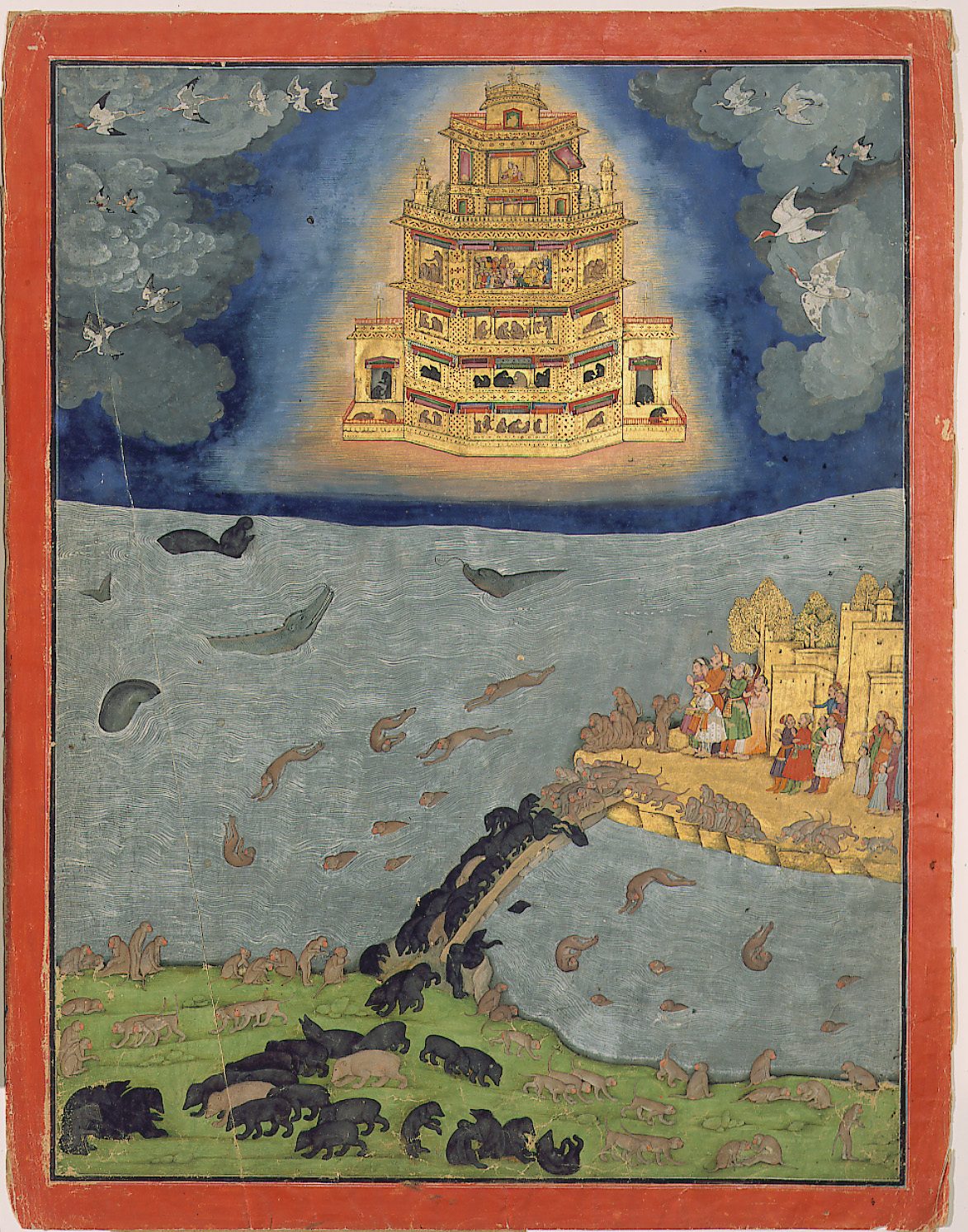
Ancient India's epics are full of flying machines, and so is the Book of Ezekiel. A NASA engineer even patented one of them. Here is the whole file, every claim wearing its evidence, including the famous "ancient" text that turns out to be barely a century old.
Rama flies home to his coronation in a chariot that moves at will and shines like the sun. Warriors in the Mahabharata cross the sky at the speed of thought. The prophet Ezekiel watches wheels within wheels rise out of a storm. Read those lines in the right mood and the ancient world starts to look like an airfield. So let's open the file and separate what the texts actually say from what a very modern imagination has bolted on.
01The texts that really are old
Two of Hinduism's great epics describe flight in plain terms. The Ramayana, composed roughly in the 5th to 4th century BCE, calls the Pushpaka Vimana a chariot that "resembles the sun," "moves at will," and is "resplendent as sunflowers." The Mahabharata, composed across the 4th century BCE to the 4th century CE, describes aerial vehicles used in battle that fly "with the speed of thought." Both are authenticated ancient texts. That much is not in question.
A third Sanskrit source, the Samarangana Sutradhara, really does contain construction details for mechanical bird-like flying machines in its Chapter 31. But it was written in the 11th to 12th century CE. It is a medieval engineering treatise, not an ancient one, and the corpus flags it as exactly that.
| Text | Roughly when | What it describes | Status |
|---|---|---|---|
| Ramayana (Pushpaka Vimana) | 5th to 4th century BCE | A chariot that "resembles the sun" and "moves at will" | Authenticated ancient |
| Mahabharata | 4th century BCE to 4th century CE | Aerial vehicles that fly "with the speed of thought" | Authenticated ancient |
| Samarangana Sutradhara | 11th to 12th century CE | Build details for mechanical bird-like machines (Ch. 31) | Medieval, not ancient |
| Ezekiel 1 and 10 | ~6th century BCE | "Wheels within wheels," living creatures, fire, flight | Authenticated ancient |
| 2 Kings 2:11 | ~6th century BCE | Elijah carried up in a "chariot of fire" | Authenticated ancient |
The flight texts are not only Indian. Two passages in the Hebrew Bible have been read the same way for a very long time.
Ezekiel 1 and 10, written around the 6th century BCE, describe "wheels within wheels," "living creatures," fire, and flight. A few books over, 2 Kings 2:11 has the prophet Elijah carried into the sky in a "chariot of fire" inside a whirlwind. Both are genuine, datable ancient scripture. What they were describing is where the argument starts.
02The engineer who tried to debunk it and switched sides
In the early 1970s, ancient-astronaut books were everywhere, and Erich von Däniken's were the loudest. One reader decided to take the Ezekiel passage apart and prove there was nothing to it. He was not a hobbyist. He was Josef F. Blumrich, a chief engineer at NASA's Marshall Space Flight Center.
In his 1974 book The Spaceships of Ezekiel, Blumrich set out to disprove von Däniken's ancient-astronaut claims and came away arguing the opposite. He concluded the prophet was describing a real vehicle: four sets of landing gear, omnidirectional wheels, a helicopter-like upper body, and a command module. The debunker had rebuilt the thing he came to dismiss.
And this part is on the record at the US Patent Office. Blumrich was granted US Patent 3,789,947 in 1974 for an omnidirectional wheel he derived from his engineering analysis of Ezekiel's description. The patent is real. It proves the passage can be read as a set of engineering instructions. It does not prove Ezekiel was watching an actual spacecraft.
Hebrew Bible scholars push back hard. Moshe Greenberg (1983) and Daniel Block (1997) argue that Blumrich's mechanical reading simply ignores the merkabah, the divine-chariot theophany, an interpretive tradition more than 2,000 years old that treats Ezekiel 1 and 10 as liturgical prophecy, a vision of God's throne, not a technical manual. Reading a helicopter into it means reading past everything the passage was built to mean.
| Tradition | The sky machine |
|---|---|
| Hindu | Pushpaka Vimana, battle vimanas |
| Egyptian | The Barque of Ra |
| Greek | Helios's chariot |
| Norse | Skiðblaðnir |
| Chinese | Immortal chariots |
| Persian / Islamic | Solomon's flying carpet |
| Irish | Tuatha Dé Danann arriving "in dark clouds" |
03Every culture parked a machine in the sky
Flying vehicles show up independently in at least eight traditions the doc surveys: Hindu, Egyptian, Greek, Norse, Chinese, Persian and Islamic, and Irish. Ancient-astronaut writers read that spread as a shared memory of real machines seen all over the ancient world. The doc reaches the more parsimonious explanation: this is what the universal human wish to fly looks like when it is written down in a dozen different rooms, not proof that the machines were ever real.
Two literary scholars go further, and they are worth hearing, because they read the Sanskrit for a living.
The Indologist John Brockington (1998) argues that vehicles like the Pushpaka Vimana work inside the epics as literary markers of divine or royal status. When Rama flies, the poem is signaling his cosmic authority, not filing an aerospace spec.
Wendy Doniger (1975 and 2009) reads it the same way across Vedic and epic Sanskrit: "aerial travel" reliably encodes divine power and territorial dominion. Kings who fly are kings who rule vast territory. Every major vimana passage sits in exactly that royal context, which is what makes the symbolic reading hard to wave off.
04The famous "ancient" text that is barely a century old
If you have ever seen a documentary claim that ancient Indians left behind detailed aircraft blueprints, the source is almost always one book. It is also the single most miscited object in this entire field.
The Vaimanika Shastra is not ancient. It was dictated by Pandit Subbaraya Shastry between 1904 and 1923 and published in 1952, and Shastry said he received it through yogic vision from the ancient sage Bharadwaja. That is its actual provenance: an early 20th-century channelled text. Alternative-history literature presents it as antiquity's aircraft manual anyway, and does so more often than with any other source.
When engineers actually tested it, the designs failed. An aeronautical engineering analysis at the Indian Institute of Science in Bangalore examined five aircraft described in the Vaimanika Shastra and found all five aeronautically non-viable: incorrect weight distributions, no lift-generating capability, and materials specifications that contradict themselves. Nothing in it would leave the ground.
Science historian Meera Nanda (2016) places the book inside early 20th-century Hindu revivalism, a movement keen to show that ancient India had reached technological supremacy first. On her reading, that political wish, not any historical evidence, is what produced the text and keeps it in circulation.
Modern aerospace students have run 3D models and computational fluid dynamics on the shapes the book describes, which sounds like validation and is not. The doc is blunt about it: those exercises demonstrate modern engineering creativity, and say nothing about whether the text is ancient or whether its craft could fly.
05Nukes and helicopters that were never there
Two more claims travel with the vimana story, and both fall apart on contact with the ground.
The Mahabharata's Brahmastra, described with a "blinding flash," a "mushroom cloud," and hair and nails falling out, is sometimes called the record of an ancient Indian nuclear weapon. There is no radioactive residue at any Indian archaeological site, and the famous Mohenjo-Daro "vitrified areas" were debunked long ago: archaeologist Jonathan Mark Kenoyer (1998) identified them as ordinary glass-like residue from kiln firing, not atomic fire.
Then there is the "Abydos helicopter," a ceiling beam in the Hypostyle Hall of the Temple of Seti I whose worn hieroglyphs look, to a modern eye, like a helicopter and a submarine.
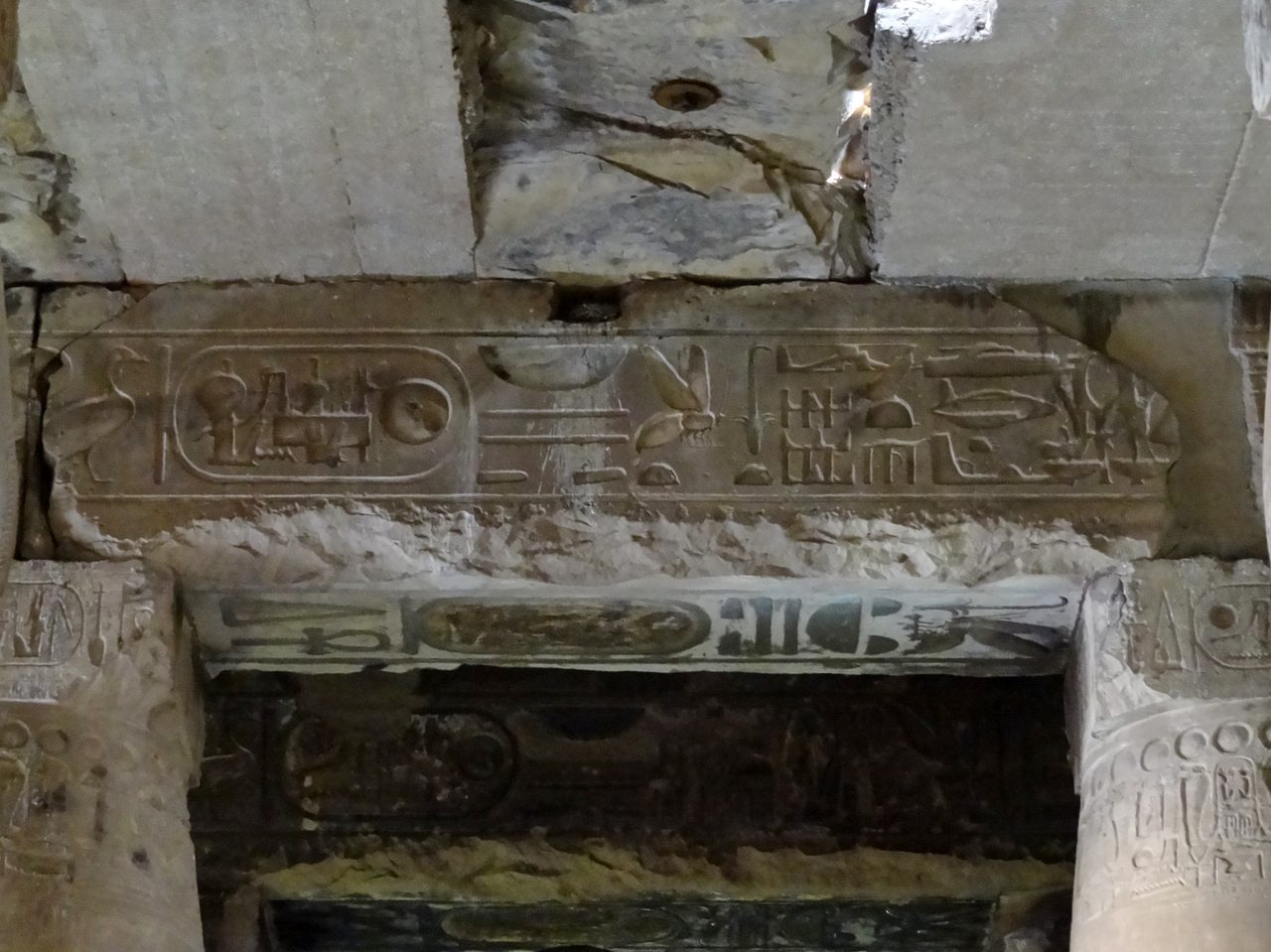
The panel is a palimpsest, and the mechanism is documented. Seti I's original royal cartouche (around 1294 to 1279 BCE) was plastered over and re-carved with the titulary of his son Ramesses II (around 1279 to 1213 BCE). After roughly 3,200 years the thin plaster eroded, exposing both inscriptions at once, and the overlapping carved shapes read as a "helicopter" the way clouds read as faces. Digital image analysis shows two distinct carving depths, and Egyptologist Katherine Griffis-Greenberg (1997) documented the identical overlap pattern at Karnak and Luxor wherever Ramesses II re-cut his father's cartouches. The palimpsest explanation is Tier 1. The "ancient helicopter" reading of the panel is Tier 4.
And underneath all of it sits the fact that never changes. After generations of excavation across the Indian subcontinent, at Mohenjo-Daro, Harappa, Lothal, and beyond, not one artifact, tool, material, or residue consistent with aerospace technology has ever been recovered. The texts are real. The hardware has never turned up.
Fast Facts
- Core ancient texts
- Ramayana and Mahabharata, both authenticated
- Ramayana's craft
- The Pushpaka Vimana, a chariot that "moves at will"
- Vaimanika Shastra
- Dictated 1904 to 1923, published 1952, not ancient
- Its five designs
- All judged aeronautically non-viable (IISc Bangalore)
- Ezekiel patent
- US 3,789,947, granted to J. F. Blumrich, 1974
- "Abydos helicopter"
- A re-carved cartouche, roughly 3,200 years eroded
- Aerospace artifacts found
- None, anywhere
What the sky machines actually add up to
The flight texts are genuinely ancient. The Ramayana, the Mahabharata, Ezekiel, and 2 Kings all really do describe chariots and vehicles that fly. That is settled, and so is the plain fact that no aerospace artifact has ever been dug up to match them.
What those descriptions meant is a real debate. The strongest scholarly reading, from Brockington and Doniger, is that flight in the epics is a literary marker of divine and royal power, not a memory of aerospace engineering.
The modern attempts to rescue the hardware, Hindu-revivalist claims of lost technological supremacy and student CFD models of the shapes, tell us about the 20th and 21st centuries, not the ancient one.
The headline claims fail. The Vaimanika Shastra is not an ancient manual, it was channelled between 1904 and 1923. The Brahmastra was not a nuclear bomb, there is no residue. The Abydos "helicopter" is a worn, re-carved cartouche. None of the three survive a look at the actual evidence.
Which leaves the honest question, the one the debunking never quite answers: why did so many separate peoples, with no way to fly and no word for it, keep writing the sky full of machines? The vehicles were never real. The longing that put them there was. And it is still the first thing we reach for whenever we look up.
Sources & further reading
Everything above is drawn from our research library on Theories of Anything, which is where we worked from. The papers, reports and primary records listed beneath them are where you can check us independently.
Image credits
- The Celestial Chariot (Pahari-school painting, c. 1650) via Wikimedia Commons (San Diego Museum of Art, Edwin Binney 3rd Collection). Public Domain Source.
- Abydos ceiling panel, Temple of Seti I photograph by Olaf Tausch, via Wikimedia Commons. CC BY 3.0 / GFDL Source.
- Card crop of The Celestial Chariot (Pahari-school painting, c. 1650) via Wikimedia Commons (San Diego Museum of Art, Edwin Binney 3rd Collection). Public Domain Source.
.jpg)
