The Younger Dryas Impact: The Comet That May Have Reset History
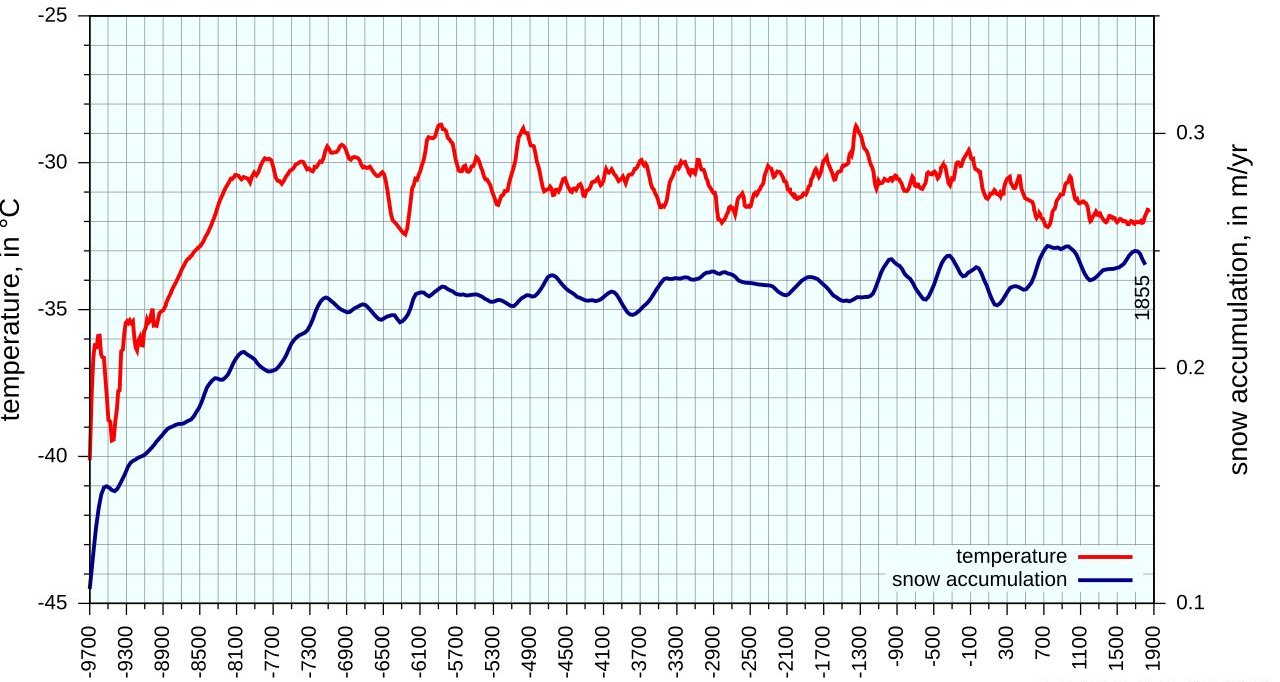
About 12,800 years ago the planet fell off a cliff. In a span that may have been as short as a single decade, one of the fastest climate shifts in the geological record, the Northern Hemisphere crashed back toward glacial cold and held there for roughly 1,200 years. Forests became tundra. More than 35 genera of North American megafauna vanished. The Clovis culture disappeared from the archaeological record. That the cooling happened is settled science, measured directly in Greenland ice. What no one has settled is what pulled the trigger. One camp says a comet struck the ice sheets. Another camp says the evidence does not hold. The fight between them has filled over 100 peer-reviewed papers, and it is still live in 2026. Here is the file, opened claim by claim, every fact wearing its evidence.
Some catastrophes leave a crater you can stand in. This one left an argument. Almost everyone has heard the dramatic version, a comet slamming into the ice at the end of the last ice age and nearly wiping the slate clean, and almost no one has heard the boring, important part underneath it: a real, measured, planet-scale cooling event that mainstream science does not dispute at all. The trick to reading the Younger Dryas honestly is to keep three questions apart. Did the climate collapse? Yes, beyond question. Did a comet cause it? Maybe, and that is where a hundred papers are still swinging. Did the collapse erase a lost civilization? That is a story, and we will treat it as one. Let us open the file.
01What Actually Happened Is Not In Dispute
Start with the part no one argues about. The Younger Dryas was a real and abrupt return to near-glacial cold, beginning about 12,800 years ago and ending about 11,600 years ago, roughly 1,200 years of deep freeze. It is named for Dryas octopetala, an Arctic-alpine flower whose pollen reappears in European sediments from exactly this window. Greenland ice cores record the numbers directly: temperatures dropped 7 to 10 degrees Celsius over Greenland and 2 to 6 degrees across the mid-latitudes, and the onset may have taken hold within a single decade, making it one of the fastest climate shifts in the entire geological record. European forests reverted to tundra. Sea ice spread. This is Tier 1, settled science, and it is the ground everything else stands on.
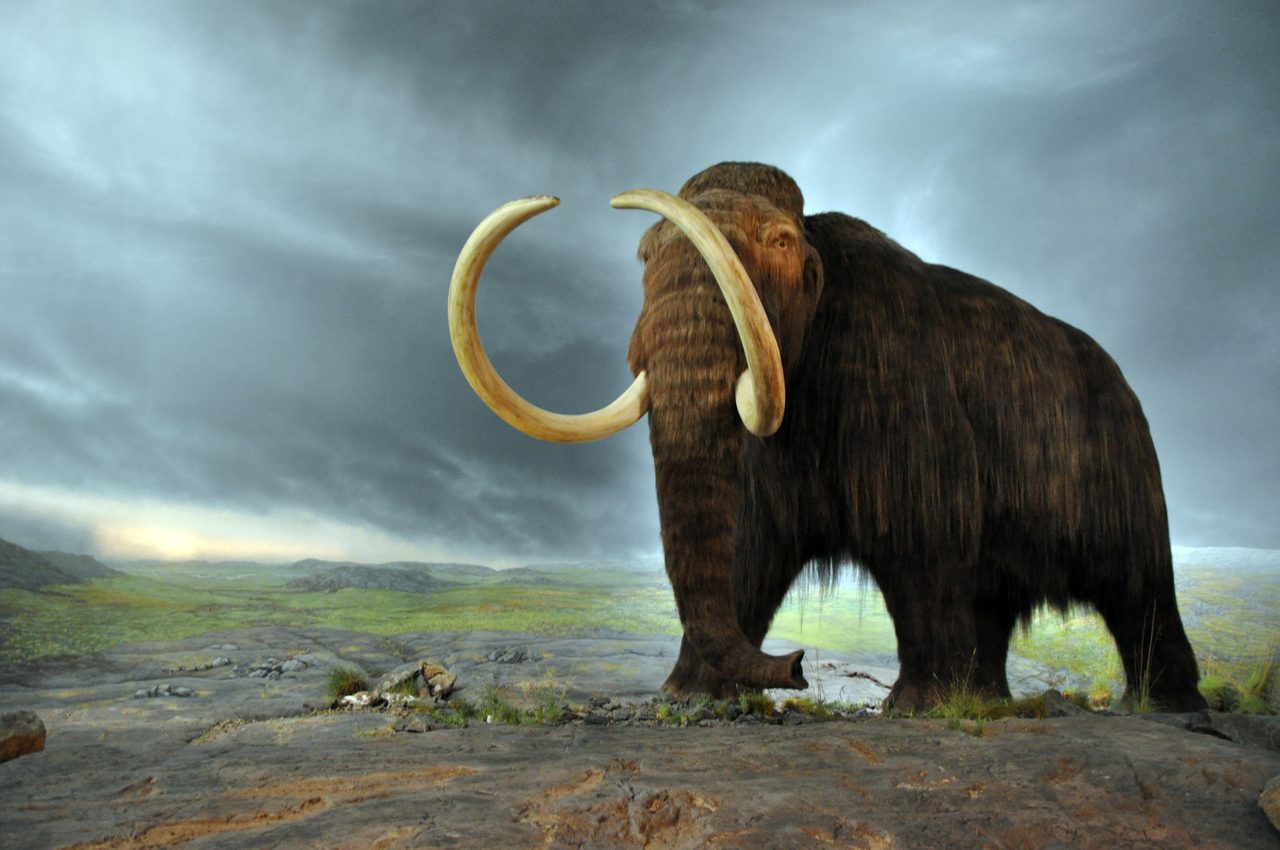
The dying came with it. During and immediately after the onset, more than 35 genera of North American megafauna went extinct, over 70 percent of the continent's large mammals gone inside roughly a thousand years. The casualty list is a bestiary: the woolly mammoth and the American mastodon, the giant ground sloth Megatherium, the saber-toothed cat Smilodon, the short-faced bear, the dire wolf, the American horse and camel, the two-ton armored Glyptodon. That this extinction pulse is real, and that it clusters at the Younger Dryas onset, is not in dispute. Why it happened is a separate fight, and we will get to it.
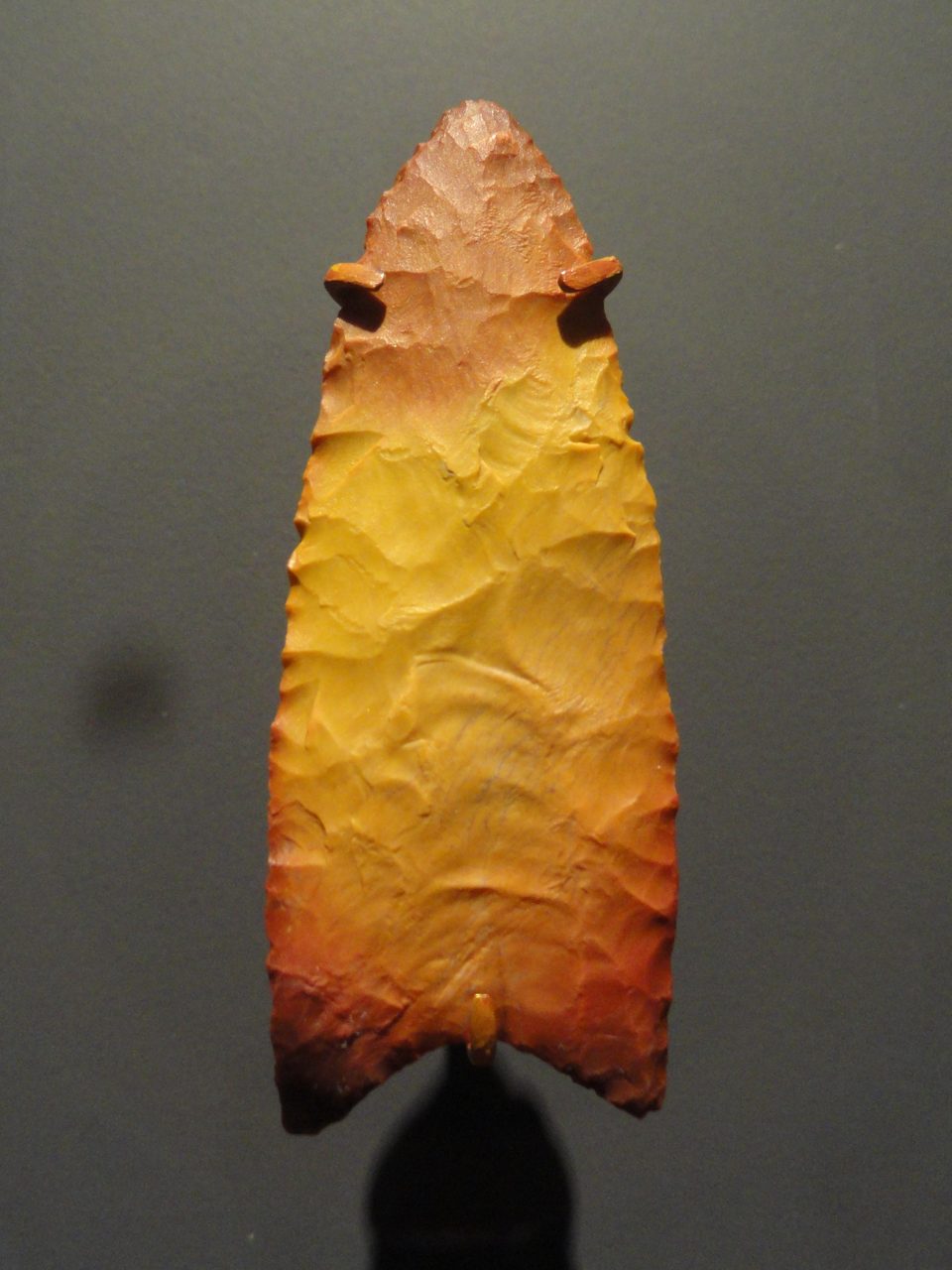
And a culture vanished. The Clovis people, whose distinctive fluted stone points appear across North America from about 13,400 to 12,800 years ago, were the most widespread early culture in the Americas. At the Younger Dryas boundary their signature points disappear from the archaeological record and are replaced by distinctly different tool traditions. The stratigraphy is clean and the discontinuity is a settled fact. Read the tier carefully, though: that the Clovis toolkit vanishes at this boundary is Tier 1. That a comet is what ended them is not. That claim rides on the contested layer we reach in a moment, not on this settled one.
| Measure | What The Record Shows |
|---|---|
| Onset | About 12,800 years ago (roughly 10,800 BCE) |
| Duration | About 1,200 years |
| End | About 11,600 years ago (roughly 9,600 BCE) |
| Temperature Drop | 7 to 10 C over Greenland, 2 to 6 C in the mid-latitudes |
| Onset Speed | Possibly within a single decade, one of the fastest shifts on record |
| Megafauna Lost | 35+ genera, over 70 percent of North America's large mammals |
| Named For | Dryas octopetala, an Arctic-alpine flower in the pollen record |
| Evidence Tier | Tier 1, verified by ice cores and the global stratigraphic record |
02A Catastrophe Written In Stone: The Channeled Scablands
In 1923 a geologist named J Harlen Bretz looked at the scarred terrain of eastern Washington State and said something his profession found outrageous: this landscape was carved by a single catastrophic flood, not by slow erosion over eons. For decades he was ridiculed and professionally marginalized, because catastrophism smelled like biblical flood geology and the field had fought hard to escape it. He was right anyway. In 1965 an international conference toured the Scablands and conceded the point. In 1979, at the age of 96, Bretz received the Penrose Medal, geology's highest honor. Vindication took 56 years.
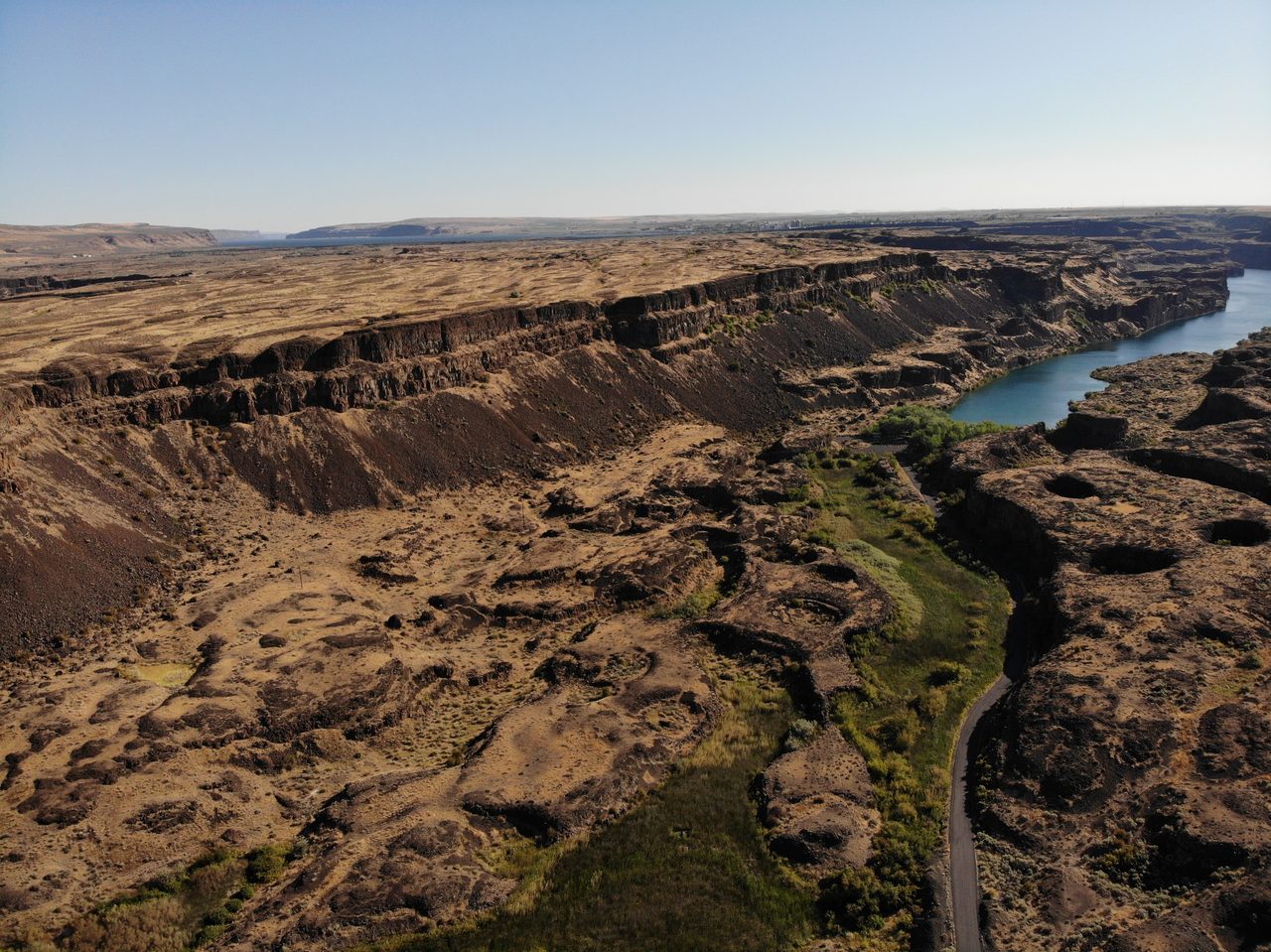
What Bretz saw is staggering, and it is all still there. Flood channels cut up to 300 feet deep straight through solid basalt. Current ripples up to 50 feet high and 500 feet apart, ripples, at that scale. Erratic boulders weighing hundreds of tons carried miles from their source. Dry Falls, a dead waterfall 400 feet high and three and a half miles wide, five times the width of Niagara, with no water flowing over it. The volume required to do this was on the order of ten times the combined flow of every river on Earth. The source was glacial Lake Missoula, dammed by ice, which burst and refilled and burst again as many as 40 times, each failure loosing roughly 2,500 cubic kilometers of water in a matter of days. This is Tier 1 geology, consensus since 1965. Lost worlds drowned by real floods are not a fantasy. They are the documented recent past.
Here the settled ground meets the contested. The Scablands prove catastrophic meltwater floods happened as the ice age broke, and the mainstream explanation needs no comet at all: ice dams fail, lakes empty, the land scars. But Randall Carlson has spent decades mapping flood features from the Great Lakes to the Gulf of Mexico, and argues the sheer scale of it matches what a cosmic impact on the Laurentide Ice Sheet would produce. Note the seam exactly. The floods are Tier 1. Reading them as the fingerprint of a comet, rather than of ordinary ice-dam collapse, is an interpretation that rides on the Tier 2 hypothesis we turn to now, not on the settled geology itself.
03So What Pulled The Trigger? The Comet Hypothesis
In 2007, 26 researchers led by R. B. Firestone published a paper in the Proceedings of the National Academy of Sciences with a bold title and a bolder claim: 'Evidence for an extraterrestrial impact 12,900 years ago that contributed to the megafaunal extinctions and the Younger Dryas cooling.' Their proposal was that fragments of a comet struck or airburst over the Laurentide Ice Sheet at the exact moment the climate fell apart. This is the Younger Dryas Impact Hypothesis, and it is the single contested claim this whole article circles. Not fringe, not proven. Tier 2.
The proposed mechanism is a chain reaction, and it is worth seeing in full because it ties the comet to both the cold and the floods. Fragments airburst over and strike the Laurentide Ice Sheet. The blast flash-melts enormous volumes of ice. Trillions of gallons of freshwater pour into the North Atlantic. That freshwater pulse disrupts the Atlantic Meridional Overturning Circulation, the great conveyor that carries tropical heat north. With the conveyor stalled, the Northern Hemisphere plunges toward glacial cold, the Younger Dryas itself. Meanwhile the meltwater carves continental floods and drowns coastlines, and the airbursts ignite continent-wide fires. It is an internally coherent story. Its weak joint is the very first link, because the mainstream holds that the freshwater pulse and the circulation shutdown happened without any comet at all, from ordinary glacial-lake drainage. That is the crux of the whole dispute.
The case rests on a specific set of physical markers said to appear in a thin layer at the Younger Dryas boundary across dozens of sites: nanodiamonds formed under extreme pressure, magnetic microspherules of rapidly melted iron, melt glass requiring 1,700 to 2,200 degrees Celsius far beyond any forest fire, elevated platinum of the kind enriched in certain comets, iridium of the same sort that fingerprinted the dinosaur-killing Chicxulub impact, shocked quartz, and high-temperature soot. Many of these turn up inside a distinctive carbon-rich soil layer nicknamed the 'Black Mat,' found at over 50 sites on four continents. Below the mat: Clovis points and mammoth bones. In the mat: the impact proxies. Above the mat: neither. The research file states the honest core of it in one line: 'The correlation in time is verified. The cause, comet versus other climate mechanism, remains the point of contention.'
The evidence is not confined to North America. Proposed impact markers have been reported at Murray Springs in Arizona, Topper in South Carolina, and Great Lakes sites; at Lommel in Belgium and Lingen in Germany; at Pilauco in Chile and Wonderkrater in South Africa, which pushed the claim into the Southern Hemisphere; and at Abu Hureyra in Syria, one of the earliest known agricultural settlements on Earth. Abu Hureyra is the strongest single-site case in the whole hypothesis. A 2020 paper in Scientific Reports reported melt glass at the site's Younger Dryas layer that would have required temperatures around 2,200 degrees Celsius to form, hotter than any wildfire or volcano, with the settlement occupied both below and above that layer as if a single catastrophic flash passed through. It is genuinely hard to explain by ordinary means. It is also a single locality, and like every marker on this list its interpretation is contested, which is precisely why it sits at Tier 2 and not Tier 1.
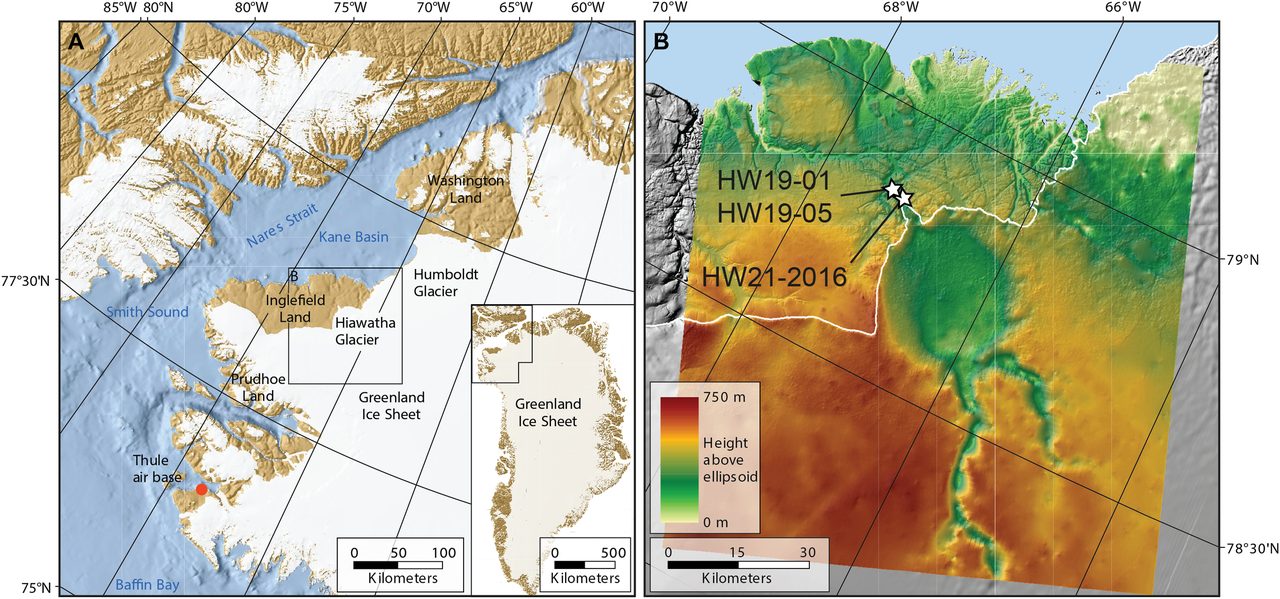
For a moment there was almost a crater. In 2018 a radar survey found a 31-kilometer impact structure buried under the Greenland ice, the Hiawatha crater, one of the 25 largest known on Earth, and it was floated as a possible Younger Dryas smoking gun. Then it was dated. In 2022 Hiawatha came back at roughly 58 million years old and was ruled out as a Younger Dryas candidate entirely. Be honest about what this does and does not mean. It is Tier 1 that Hiawatha is not the crater. But its discovery proved something the hypothesis needs: a major impact structure can hide completely beneath an ice sheet, which is exactly why proponents now favor an airburst-over-ice model that would leave no terrestrial crater to find.
If a comet did come, astronomers have a candidate for where it came from. The Taurid meteor stream, which Earth crosses every October and November, is debris from Comet 2P/Encke or from a larger parent comet that broke apart an estimated 20,000 to 30,000 years ago. This 'Taurid Complex' is a vast river of fragments, and at certain intervals Earth passes through its denser concentrations, the so-called Taurid Resonant Swarm. The hypothesis holds that around 12,800 years ago the planet may have plowed through an unusually dense stretch of it. This much is astronomically plausible, Tier 2, though there is no direct proof of a Younger-Dryas-age encounter. The astronomers Victor Clube and Bill Napier laid out the danger in their 1982 book The Cosmic Serpent and argued the stream still poses a periodic risk.
04The Case Against, And Why It Is Not Over
A hypothesis is only as strong as the beating it survives, and this one has taken a serious beating. The honest way to show a contested science is to lay the attacks and the answers side by side and let the reader see that neither camp has run out of ammunition.
| The Objection | The Proponents' Response |
|---|---|
| No impact crater has ever been found (multiple critics) | An airburst over ice leaves no terrestrial crater, as Tunguska did not in 1908 |
| The nanodiamonds are disputed (Daulton et al. 2010) | Some may be misidentified graphite, but Kennett et al. reconfirmed them by electron microscopy in 2015 |
| Meltwater, not a comet, caused the cooling (Broecker 2006) | Lake Agassiz drainage could shut down Atlantic circulation, but what triggered the sudden drainage? |
| Clovis did not end abruptly (Meltzer 2009) | Some continuity exists, but the tool technology changes sharply at the boundary |
| Humans, not a comet, killed the megafauna (the Overkill hypothesis) | Humans coexisted with megafauna for millennia; the extinction is suspiciously synchronous with the onset |
| An impact could not release enough energy (Boslough 2012) | Multiple simultaneous airbursts compound the energy |
In 2009 an independent evaluation by Surovell and colleagues tried to reproduce key impact markers at multiple sites and could not, a significant negative result the hypothesis has had to carry ever since. The research file logs this at Tier 2, credible and substantive but not a final verdict. That thread of reproducibility trouble runs straight into the strongest attack the theory has faced.
In 2023, V. T. Holliday and colleagues published a paper in Earth-Science Reviews titled 'Comprehensive refutation of the Younger Dryas Impact Hypothesis,' collating chronology problems, mineral misidentifications, and replication failures into one synthesis that concludes the hypothesis 'is not supported by the bulk of high-quality, independently reproducible evidence.' Be precise about the tier here. That this rigorous refutation exists and says exactly that is Tier 1. That it settles the question is not, because it did not go unanswered.
Within a year the refutation had a rebuttal, and the rebuttal had a rebuttal. In 2024, Martin Sweatman, J. L. Powell, and A. West published 'Rejection of Holliday et al.'s alleged refutation of the Younger Dryas impact hypothesis' in the same journal, Earth-Science Reviews, arguing that the refutation mischaracterized or omitted corroborating work from scores of papers and hundreds of researchers, and pointing to new platinum-anomaly data from additional sites in South America and the Middle East. Holliday and colleagues answered in the same 2024 issue, standing by their conclusion that there is no support for a cosmic catastrophe at the boundary. A third round followed. The research file's own verdict on this stretch is blunt: the debate is not settled, and active peer-reviewed exchange continued through 2024 and 2025. That is the clearest possible proof that the science is genuinely unsettled rather than quietly closed.
Then a new line of attack opened on one of the hypothesis's better markers. In 2025, a paper in PLOS ONE by C. E. Green and colleagues re-examined the platinum spike in the GISP2 Greenland ice core, one of the impact camp's stronger pieces of evidence, and argued it looks wrong for a comet. By their analysis the spike formed about 45 years after the Younger Dryas onset, spread over roughly 14 years rather than arriving in an instant, and was markedly poor in iridium compared with meteorites. Their proposed culprit is not a comet but an Icelandic volcanic eruption under the ice. It is one paper in an ongoing argument, not a verdict, but it puts a specific, testable non-cosmic explanation on the table for a marker the impact camp had counted on.
And in early 2026 the impact camp took a real, concrete hit. On February 11, 2026, PLOS ONE retracted two 2025 papers written by authors from the Comet Research Group, the same research lineage that launched the hypothesis in 2007. One, a Baffin Bay sediment study, was pulled after reviewers found marine plankton fossils misidentified as extraterrestrial 'comet dust,' 43 incorrect references traced to undisclosed use of an AI tool in writing the manuscript, and missing data that made the work impossible to check. The other, a shocked-quartz study co-authored by James Kennett and Malcolm LeCompte, both from the research lineage that has driven this hypothesis from the start, was retracted over an unreliable age model and an incomplete sampling strategy that left open whether the reported signal was a real single event or just a change in how fast sediment piled up. Both notices record that several of the original authors disagreed with the retraction. The physicist Mark Boslough, a longtime critic, called it consistent with concerns raised across roughly 85 flagged papers tied to the hypothesis.
Read that setback at its true size, neither smaller nor larger. Two specific 2025 papers failed and are off the table, and this is not the first retraction in the story: a 2021 Scientific Reports paper claiming a cosmic airburst destroyed the Bronze Age city of Tall el-Hammam was retracted in 2025 for errors in its data and methods, and cannot be cited as evidence either. But retracting three papers does not retract the hypothesis. The 2020 Abu Hureyra melt glass, the Black Mat record across more than 50 sites, the replicated platinum anomalies, and the entire 2024 same-journal exchange are all still standing on the table, untouched by these particular withdrawals. The honest summary is narrow and specific: these individual claims did not survive scrutiny, which sharpens what counts as evidence without settling the larger question either way. By 2025 the skeptical case had also reached the popular press, in a Skeptical Inquirer feature bluntly titled 'The Younger Dryas Impact: A Failed Hypothesis,' though a magazine headline carries nothing like the evidentiary weight of the peer-reviewed exchange.
| Year | What Happened |
|---|---|
| 2007 | Firestone et al. publish the impact hypothesis; immediate controversy |
| 2009 to 2012 | Heavy criticism; independent teams cannot replicate key markers |
| 2013 to 2015 | New studies reconfirm nanodiamonds and platinum at the boundary |
| 2018 | The Hiawatha crater is found under Greenland's ice |
| 2019 | Pilauco (Chile) and Wonderkrater (South Africa) extend evidence to the Southern Hemisphere |
| 2020 | The Abu Hureyra melt glass paper, the strongest single-site case |
| 2022 | Hiawatha is dated to about 58 million years and ruled out |
| 2023 | Holliday et al. publish their comprehensive refutation |
| 2024 | Same-journal rebuttal and counter-rebuttal; the debate stays live |
| 2025 | A paper argues the platinum spike is volcanic, not cosmic |
| 2026 | PLOS ONE retracts two 2025 pro-impact papers in February |
05Every Claim, Every Tier
This is the section that keeps everyone honest. The research file assigns each major claim its own tier, and reading them stacked together is the fastest cure for both bad conclusions, the one that says scientists proved a comet hit Earth and the one that says the whole thing is quackery. Neither is true. Here is the whole ledger.
| The Claim | Tier | The Basis |
|---|---|---|
| The Younger Dryas cooling event (12,800 to 11,600 years ago) | Tier 1 | Ice cores, radiometric dating, the global stratigraphic record |
| Megafaunal extinction at the onset | Tier 1 | Fossil record, multiple dating methods |
| Clovis culture disappears at the boundary | Tier 1 | Archaeological stratigraphy |
| Channeled Scablands carved by catastrophic flooding | Tier 1 | Geological consensus since 1965 |
| Impact markers (nanodiamonds, platinum, melt glass) at boundary sites | Tier 2 | 50+ sites on four continents; replication contested |
| The Abu Hureyra high-temperature event | Tier 2 | Published in Scientific Reports; localized and contested |
| A cosmic impact caused the Younger Dryas cooling | Tier 2 | The core contested claim; 100+ papers, unresolved |
| The Taurid Complex as the impact source | Tier 2 | Astronomically plausible; no direct proof of a YD-age encounter |
| Global flood myths derive from Younger Dryas flooding | Tier 2 to 3 | Timing alignment compelling but unprovable for most traditions |
| A lost pre-Younger-Dryas civilization destroyed by the impact | Tier 3 | Circumstantial; no direct evidence recovered |
| Gobekli Tepe's Pillar 43 encodes the impact date | Tier 3 | Contested archaeoastronomical interpretation |
The research file's own 2026 status line is the sentence to carry out of this whole article: the hypothesis 'has moved from "fringe" to "active scientific debate." Not universally accepted but no longer dismissible.' Over 100 peer-reviewed papers are involved, and the evidence base is genuinely mixed, several replicated proxies like the platinum anomalies alongside serious reproducibility and identification problems for others like the nanodiamonds. Its instruction is explicit: treat the impact cause as Tier 2, controversial and mixed, until site-level replication and the conflicting chronologies are reconciled. That is the honest state of it. Not proven. Not dismissed.
06The Reach Too Far: Did It Erase A Civilization?
Everything so far has been about a climate event and its possible cause. This last layer is different in kind. It takes the contested comet and builds an entire lost prehistory on top of it, and it is the part you are most likely to have heard first. Treat it for what the evidence says it is: speculation resting on the contested layer, not on the settled one.
The most famous version is Graham Hancock's. In his telling a sophisticated maritime civilization flourished during the Ice Age on coastlines that sat up to 120 meters lower than today's, was destroyed by the Younger Dryas impact around 12,800 years ago, and scattered its survivors, who reappear across the world's mythologies as the 'gods,' 'sages,' and 'Watchers' who taught farming, building, and astronomy to the peoples they reached. It is a genuinely gripping idea, and it is Tier 3, speculative. No wall, no tool, no artifact of this civilization has ever been recovered.
The circumstantial scaffolding is real enough to see why the idea has legs, and thin enough to see why it stays Tier 3. Its supporters point to Gobekli Tepe, to the water-erosion argument for an older Sphinx, to agriculture appearing independently in roughly ten regions within a couple of thousand years of the Younger Dryas ending, to shared megalithic techniques across unconnected cultures, and to submerged structures off Japan and India. The keystone is Pillar 43 at Gobekli Tepe, the 'Vulture Stone,' which Sweatman and Tsikritsis argued in 2017 encodes the date around 10,950 BCE in the constellations carved on it, squarely inside the Younger Dryas window. Mainstream archaeologists dispute that reading. Each of these planks is its own contested argument elsewhere, and stacking them does not make the pile stronger than its weakest board.
Gobekli Tepe deserves its own careful line, because it is where a Tier 1 fact and a Tier 3 story sit closest together. The site's dates are solid archaeology: construction begins around 9,500 BCE, roughly 11,500 years ago, and the whole complex was deliberately buried around 10,000 years ago. Those dates are Tier 1, and they are striking, monumental architecture demanding organized labor and planning, appearing right after the Younger Dryas ends with no obvious local precursor. But that is where the settled part stops. Reading those dates as proof of a vanished mother-civilization, or as a memorial to a comet, is Tier 3 interpretation laid over Tier 1 stone. The stone is real. The story is a reading.
There is one pattern in the dates that even skeptics find worth a second look. Several independent events cluster around the beginning and end of the Younger Dryas window, and one of them is the destruction date Plato gave for Atlantis, roughly 9,600 BCE, a date he could not have reverse-engineered to match a catastrophe science would not identify for another two thousand years. More than 500 cultures worldwide carry flood traditions, and a real global meltwater catastrophe at the end of the ice age would, if the impact reading is right, give many of them a single physical cause. The timing is compelling. It is also, for most of these traditions, unprovable, which is why the flood-myth link sits at Tier 2 to 3, not higher.
| Event | Approximate Date |
|---|---|
| Proposed Younger Dryas impact | About 12,800 years ago |
| Younger Dryas ends, massive glacial melt begins | About 11,600 years ago |
| Plato's date for the fall of Atlantis | About 11,600 years ago (9,600 BCE, per the Timaeus) |
| Gobekli Tepe construction begins | About 11,500 years ago |
| Meltwater Pulse 1B, rapid sea-level rise | About 11,300 years ago |
One last thread ties the sky back to the myths. Clube and Napier suggested that the 'cosmic serpent' and dragon imagery found in cultures worldwide might be a memory of a real object, a giant fragmenting comet trailing a bright, sinuous tail across the sky over years. If a disintegrating Taurid parent comet really did loom over the late Ice Age, it would be a physical reason so many separate peoples wove serpents and dragons into their stories of both catastrophe and creation. It is an elegant reading and an unfalsifiable one, which is exactly where Tier 3 lives.
Fast Facts
- The Settled Event
- A real, abrupt cooling from about 12,800 to 11,600 years ago
- Measured In
- Greenland ice cores: a 7 to 10 C drop, onset possibly within a decade
- The Contested Claim
- That a comet or airburst over the ice sheets caused it
- The Origin Paper
- Firestone et al., PNAS, 2007, 26 co-authors
- Strongest Single Site
- Abu Hureyra, Syria: melt glass requiring about 2,200 C (2020)
- Ruled Out
- The Hiawatha crater, re-dated to about 58 million years old (2022)
- Retracted
- Tall el-Hammam airburst (2025); two pro-impact papers (Feb 2026)
- The Papers Involved
- Over 100 peer-reviewed, and the debate is live in 2026
- The Speculative Reach
- A lost civilization and Pillar 43, both Tier 3
What We Can Actually Stand Behind
The event is real and it is measured. The Younger Dryas cooling happened, abruptly, about 12,800 to 11,600 years ago, recorded directly in Greenland ice. More than 35 genera of megafauna went extinct at its onset. The Clovis toolkit vanishes cleanly at the boundary. The Channeled Scablands were carved by catastrophic floods as the ice age broke. None of this is in scientific dispute, and none of it depends on a comet being real.
Whether a comet or airburst caused any of it is the actual open question, and it is open in both directions. Over 100 peer-reviewed papers are in the fight. Real, replicated markers like the platinum anomalies sit alongside real reproducibility failures like the disputed nanodiamonds. The 2020 Abu Hureyra melt glass is genuinely hard to explain, and a 2025 paper argues the platinum spike is volcanic, not cosmic. The 2024 refutation-and-rebuttal exchange ran in the same journal in the same year. Nothing here is proven, and nothing here has been dismissed.
The lost-civilization reset built on top of the impact is a story, not a finding. A vanished Ice Age mother-culture, survivors becoming the world's 'sages,' Pillar 43 encoding the impact date: no wall, no tool, no artifact of any such civilization has ever been recovered, and Gobekli Tepe's real dates prove only that capable people were building around 9,500 BCE, not why. This layer rests on the contested claim, not the settled one.
And some specific claims have simply failed, and must be named as failures. The Hiawatha crater is not the smoking gun; it is about 58 million years old. The Tall el-Hammam airburst paper was retracted in 2025. Two 2025 pro-impact papers were retracted in February 2026, one after marine plankton were mistaken for comet dust and AI-fabricated references slipped into the text. These particular claims do not stand. That narrows what counts as evidence, and it is worth being clear about the limit of the word 'no' here: it lands on these specific retracted and ruled-out claims, not on the wider hypothesis, which remains unproven and undismissed.
So keep the three layers apart and the file stays honest. Something plunged the planet back into the cold about 12,800 years ago, killed off a continent's giants, and ended the Clovis world, and that much is beyond argument. Whether the trigger was a comet is a real fight between real scientists that a century of ice cores has not yet resolved. And whether any of it drowned a forgotten civilization is a story we cannot prove and have not disproven. The cooling is written in the ice for anyone to read. The question the ice will not answer is the one that keeps the file open: what came down out of the sky 12,800 years ago, and if the answer ever comes back a comet, how much of the human story would we have to write again?
Sources & further reading
Everything above is drawn from our research library on Theories of Anything, deep-read in full rather than skimmed. The corpus files are where we worked from; the papers and primary sources listed beneath them are where you can check us independently.
Image credits
- A line chart of central Greenland temperature and snow accumulation across the Holocene Diagram: DeWikiMan, after R. B. Alley (GISP2 ice-core data). CC BY-SA 4.0 Source.
- A life-size recreation of a woolly mammoth Photo: Flying Puffin. CC BY-SA 2.0 Source.
- A Clovis fluted stone point, the distinctive tool technology of the Clovis culture Photo: Daderot. CC0
- The dry, abandoned waterfall cliff of Dry Falls in the Channeled Scablands of Washington Photo: DKRKaynor. CC BY-SA 4.0 Source.
- A radar cross-section diagram of the Hiawatha impact structure Source: Kenny et al., Science Advances. CC BY 4.0 Source.
- Card crop of a line chart of central Greenland temperature and snow accumulation Diagram: DeWikiMan, after R. B. Alley (GISP2 ice-core data). CC BY-SA 4.0 Source.


