The Abduction Phenomenon: The Experience Is Documented, The Abductors Are Not

Thousands of people, across cultures and decades, report the same disturbing thing: taken against their will by non-human beings, examined, and set back down with the clock wrong and the memory torn. Keep three questions apart and the file stays honest. Do people really have this experience? Yes, and that part is not seriously in dispute. Are they being physically abducted by extraterrestrials? That is unproven, full stop. And can any single tidy explanation, sleep paralysis, false memory, a seizure, a fantasy-prone mind, a cultural script, account for every reported feature? No, and that is what keeps the phenomenon genuinely open. Here is the file, opened claim by claim, every fact wearing its evidence.
Some mysteries hand you a body. This one hands you a testimony. For more than sixty years, people from wildly different lives have walked into a doctor's office, a researcher's study, or a television studio and described the same nightmare: taken by non-human beings, held down, examined, and set back on the ground again with the clock wrong and the memory torn. The fastest way to lose the thread is to ask a single question. Ask three instead. Do people actually have this experience? Are they actually being abducted by aliens? And can any one ordinary explanation make the whole thing disappear? Keep those apart and the file reads honestly. Let them blur together and you end up either believing too much or dismissing too fast. Here is the file, opened claim by claim, every fact wearing its evidence.
01Where The Modern Story Begins
Strip it to the definition and here is what the abduction phenomenon actually is: individuals reporting that they were taken against their will by non-human entities, subjected to medical or reproductive procedures, and returned with partial or no memory of it. As a subject of serious cultural attention and research it emerged from the 1960s onward, and it has never gone away. Notice exactly what that sentence claims and what it does not. It says people report this. It does not yet say anyone has proven who or what is doing the taking. That gap is the whole story.
The modern case file has a starting stretch worth knowing. In Brazil in 1957, Antonio Villas Boas reported an abduction and a reproductive encounter, one of the earliest documented cases of its kind. Four years later, in New Hampshire in 1961, Barney and Betty Hill reported missing time on a night drive and, under later hypnotic regression, produced an abduction narrative that included Betty's now-famous 'star map'; John Fuller's 1966 book The Interrupted Journey built the first widely read abduction account around them. We open the Hill case in full in its own dossier, so here it stays a landmark, not a deep dive. In Arizona in 1975, Travis Walton reported a five-day disappearance witnessed by his logging crew, a case still argued over decades later.
Then two books turned a scattering of strange reports into a recognized pattern. In 1981 the artist Budd Hopkins published Missing Time, a documented study arguing that a single, consistent abduction pattern ran across many experiencers who had never met each other.
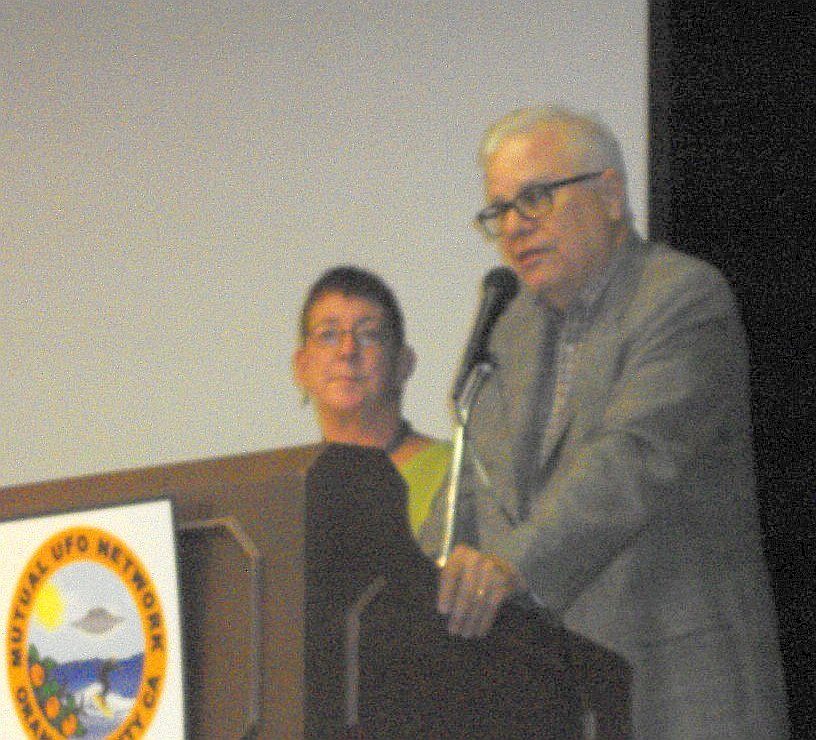
Six years later Whitley Strieber published Communion: A True Story, his first-person account of his own encounters. It went to number one on the New York Times bestseller list, and the face on its cover, the enormous dark eyes and outsized head of the 'grey', became the single most recognizable image of the phenomenon on Earth. Communion did not prove aliens. It did something arguably more consequential: it handed the culture a shared picture, a thread we pick back up when the skeptics get their turn.
How many people are we talking about? A 1991 Roper Poll was read to suggest that as many as roughly 3.7 million Americans may have had abduction-like experiences. Treat that number with real caution: the survey's methodology has been heavily criticized, because it inferred abduction from indirect indicator questions rather than from direct accounts. It is a headline figure, not a measurement, and it earns a lower tier for exactly that reason.
The subject also had its brush with the academy. In 1992 the first major academic conference on the phenomenon, the MIT Abduction Study Conference, was organized by Harvard psychiatrist John Mack and physicist David Pritchard. Two years later Mack published Abduction: Human Encounters with Aliens, which drew a Harvard investigation we will come to. On the other side of the argument, psychologist Susan Clancy published Abducted: How People Come to Believe They Were Kidnapped by Aliens in 2005, pressing the sleep-paralysis and false-memory explanation. The serious study of this phenomenon has always had both camps in the room.
| Year | The Milestone |
|---|---|
| 1957 | Antonio Villas Boas reports an abduction in Brazil, one of the earliest documented cases |
| 1961 | Betty and Barney Hill report missing time in New Hampshire (full case file in its own dossier) |
| 1966 | John Fuller's The Interrupted Journey, the first widely read abduction book |
| 1975 | Travis Walton's five-day disappearance in Arizona, witnessed by his logging crew |
| 1981 | Budd Hopkins publishes Missing Time, naming a pattern that runs across strangers |
| 1987 | Whitley Strieber's Communion reaches number one and fixes the 'grey' in popular culture |
| 1991 | A Roper Poll is read to suggest millions of Americans may be affected (methodology criticized) |
| 1992 | The MIT Abduction Study Conference, organized by John Mack and David Pritchard |
| 1994 | John Mack publishes Abduction, drawing a Harvard review |
| 2005 | Susan Clancy publishes Abducted, pressing the sleep-paralysis and false-memory case |
02What The Reports Actually Say
If this were only mass delusion, you might expect the stories to wander. They do not wander nearly as much as they should. Researchers who collected hundreds of independent accounts kept finding the same furniture arranged in the same rooms.
Across the reports, a set of elements recurs at strikingly stable rates. Non-human beings appear in about 95 percent of accounts, most often the 'greys' with their oversized heads, large dark eyes, and small bodies, though tall, insectoid, reptilian, and near-human types are all described too. A return to the starting place, confused and partly amnesiac, shows up in about 90 percent. Paralysis runs near 80 percent, a medical examination near 70, missing time near 65, some form of usually telepathic communication near 60, and reproductive or hybrid content near 50. The consistency is the part that is genuinely hard to wave away. It does not tell you what causes the experience. It tells you the experience has a shape.
| Reported Element | Appears In (Approx.) | What Experiencers Describe |
|---|---|---|
| Non-human beings | 95% | Most often 'greys' with large heads, large dark eyes, and small bodies; also tall, insectoid, reptilian, and human-appearing types |
| Return | 90% | Placed back at the original location, confused, partly amnesiac, sometimes with physical marks |
| Paralysis | 80% | Unable to move or speak during the encounter |
| Medical examination | 70% | Procedures on the eyes, skin, and reproductive organs using unfamiliar instruments |
| Missing time | 65% | A gap in both memory and the clock that cannot be accounted for |
| Communication | 60% | Usually described as telepathic, often about ecological destruction or spiritual evolution |
| Reproductive or hybrid content | 50% | Sperm or ova collection, presentation of 'hybrid children', forced-breeding narratives |
03The Researchers Who Took It Seriously
Three names carried most of the serious research, and they did not agree with one another. Reading them together, with their findings and their critics side by side, is the honest way to see both how much they documented and where each one is vulnerable.

Budd Hopkins (1931 to 2011) came to this as an artist, not a scientist, and pioneered the use of hypnotic regression to draw out accounts. He argued that abductions ran in families across generations, and he catalogued claimed physical evidence: scoop marks, unexplained bruising, and what he described as nasal implants. He co-founded the Intruders Foundation to support experiencers. His method is also his weakness, and his critics named it early: leading questions during hypnosis can shape, or even manufacture, the very memories they appear to recover. That criticism follows every researcher on this list who leaned on regression.
John E. Mack (1929 to 2004) was the heaviest credential the phenomenon ever attracted: a Harvard Medical School psychiatrist and a Pulitzer Prize winner, having taken the 1977 prize for A Prince of Our Disorder, his biography of T. E. Lawrence. He interviewed roughly 200 experiencers using modified clinical methods, and he pointedly did not lead them with hypnotic regression the way some of his peers did. When a figure of that standing takes a subject seriously, the subject gets taken seriously, which is exactly what happened next.
Mack's headline finding was not about spaceships. It was about the people. He reported that his interviewed experiencers were not psychiatrically disturbed: no elevated rates of psychosis, fantasy-proneness, or dissociation compared with the general population. Read that carefully and in his voice, because it is his attributed clinical conclusion about his sample, not this article's diagnosis of anyone. What it establishes is narrow and important. Whatever is happening to these people, being mentally ill is, as a group, not it.
From there Mack reached for something far more speculative, and he is owed an honest label for it. He proposed a 'dual reality' framework: the experiences were neither purely physical abductions nor purely psychological events, but perhaps something involving consciousness reaching into other dimensions of reality. That is a genuinely interesting idea and an entirely unproven one. It is Tier 3, an interpretation, and Mack himself presented it as a hypothesis rather than a finding.

Here is the part that gets told wrong most often, so here it is straight. After Abduction appeared, Mack faced a formal but ultimately unsanctioned Harvard review. In 1994 the Dean appointed a peer-review committee, chaired by Dr. Arnold 'Bud' Relman, the editor of the New England Journal of Medicine, and it ran for fourteen months. The committee did criticize aspects of his research methods in a draft finding. But its conclusion reaffirmed Mack's academic freedom, and it held that he remained a member of the Harvard faculty in good standing. Dean Tosteson imposed no disciplinary action and no sanctions. This was a serious institution reviewing a controversial member and ultimately affirming his freedom to pursue the work, not an institution silencing him. The distinction matters, and the record is clear on which one it was.
Mack did not live to see how the argument would turn out. He was killed in a car accident in London in 2004.

David Jacobs, a historian at Temple University, took the regression method further than anyone. In Secret Life (1992) and The Threat (1998) he argued that the abductions were not random encounters but a program: a systematic alien effort at hybridization.
That hybridization-program conclusion is the most extreme reading any of the major researchers reached, and it is the lowest-confidence claim in this whole file. Its academic reception has been very negative. Present it for exactly what it is: one researcher's interpretation, well outside anything the evidence establishes, resting heavily on a hypnotic method his own peers regard as prone to producing the very narratives it claims to find.
Jacobs's methods have also drawn a documented ethics complaint. A research subject, who has spoken publicly under the pseudonym Emma Woods, filed a complaint concerning the conditions and consent basis of a long series of hypnotic-regression sessions Jacobs conducted with her between 2004 and 2007. The matter was covered in the False Memory Syndrome Foundation's Spring 2011 newsletter. The federal Office for Human Research Protections declined to investigate directly, accepting the position that the work did not fall under its research jurisdiction, and asked Temple University to review the matter voluntarily. Those are the documented facts, and they are worth stating plainly and leaving there.
04The Skeptics' Toolkit
So how do you explain the experience without aliens? Skeptical researchers have built a real toolkit, and it is a good one. The honest move is to show each tool at full strength, and then show exactly where it stops.
| The Explanation | What It Accounts For | Where It Falls Short |
|---|---|---|
| Sleep paralysis with hypnopompic hallucination | Paralysis, a sensed 'presence', and fear; well documented in sleep science, with cross-cultural parallels such as the incubus, the Old Hag, and kanashibari | Cannot explain cases that begin while fully awake, independent corroboration, or physical marks |
| False memory and hypnotic confabulation | How leading questions during regression can build a narrative; well documented in memory research (Loftus) | Cannot explain pre-hypnosis memories, cases reported without hypnosis, or physiological markers |
| Fantasy-prone personality | That some people are more prone to vivid fantasy or hallucination | Only a small correlation is found, and Mack's own subjects showed no elevated fantasy-proneness |
| Temporal lobe epilepsy | Complex hallucinations, a sense of presence, and altered time perception; connects to Persinger's 'God Helmet' work | Most experiencers show no epileptic markers, and the hallucinations differ in character |
| Cultural scripting | That media supplies a template; narratives track cultural evolution, with greys dominating after Close Encounters | Cross-cultural cases with little media exposure, such as Ariel School, and elements appearing before their cultural introduction |
Two pieces of mainstream research carry a lot of this weight. Richard McNally, in Remembering Trauma (2003), found that people reporting abduction experiences correlated with sleep paralysis, hypnagogic hallucination, and fantasy-proneness rather than with any genuine external event. Susan Clancy, in Abducted (2005), found that the narratives are typically recovered or elaborated through hypnosis, a process well known to produce confabulated memories. Both are attributed findings from serious researchers, and both are stated here as their conclusions about their data, not as a verdict on any individual's mind.
The critics also aim squarely at the researchers' methods. Mack's supportive work was faulted for methodological inadequacy and a lack of controls. Hopkins's and Jacobs's reliance on regressive hypnosis was faulted specifically for the risk of implanting false memories in suggestible subjects. Note that this is a criticism of methods, not a diagnosis of the people who sat for those sessions, and that difference is the whole point of this article's discipline.
Here is where the toolkit runs out of reach. Sleep paralysis is real, but some cases begin while the person is fully awake and upright. False memory is real, but some accounts predate any hypnosis, and some experiencers were never hypnotized at all. Fantasy-proneness is real, but the correlation is small, and Mack's sample did not show it. Temporal lobe epilepsy is real, but most experiencers carry no epileptic markers. Cultural scripting is real, but it cannot easily account for reports with physical traces, independent corroboration, or witnesses with little media exposure. Every tool explains some of the phenomenon. No single tool explains all of it. Hold that thought, because there is one case that puts it under a spotlight.
05The Case That Resists The Easy Answers: Ariel School, 1994
On September 16, 1994, at the Ariel School in Ruwa, Zimbabwe, about twenty-two kilometres southeast of Harare, roughly 62 children between the ages of five and twelve reported that a craft descended near their playground during morning recess, and that one or more beings appeared beside it. Asked to describe what they saw, many of the children independently drew strikingly similar images. This was not a case that stayed local. The Zimbabwean UFO researcher Cynthia Hind visited on September 20, a BBC correspondent, Tim Leach, on September 19, and John Mack himself flew in to interview the witnesses that November.
Ariel School is the case skeptics have the hardest time dissolving, and it is worth being clear about why. The witnesses were numerous, independent, and of the same young age. They had limited prior exposure to UFO media. Many have held to their accounts into adulthood, as documented in the 2022 film Ariel Phenomenon. Several reported a telepathic message about environmental destruction, a recurring theme in the wider literature. And no conventional explanation, from mass hysteria to a misread aircraft, has ever won broad acceptance. It does not prove what the children saw. It does prove that the tidy 'they just watched too much television' explanation collides here with sixty-two contrary witnesses who had barely watched any.
06What The Scholarship Actually Concludes
Step back and ask what the scholarship, the careful part, actually concludes. It is not what either loud camp wants to hear.
First, the phenomenon is real. People consistently, and across very different cultures, report these experiences, and the experiences carry a measurable psychological impact. That is not in serious dispute, and it is the ground the honest analysis stands on. Something is happening to these people. The word 'something' is doing exactly as much work as it should, and no more.
Second, the extraterrestrial cause is unproven. For all the reports, the recurring imagery, and the sincerity of the witnesses, no verified physical evidence has ever established that the experiences are literal abductions by beings from elsewhere. The largest version of the idea, that non-human intelligences have been visiting and shaping humanity across the long span of history, is the subject of our Ancient Astronauts file, and it lands in the same honest place: an old and genuinely compelling idea that the evidence has never closed.
Third, and this is the finding that most surprises people, experiencers are generally psychologically normal. Mack, Appelle, and other researchers found no elevated psychopathology among them. There is one honest caveat to keep attached: 'normal' does not automatically mean 'accurate reporter', and traits such as absorption or dissociation may run somewhat higher without being anything like a disorder. Being a reliable narrator of an ordinary event and being a reliable narrator of an extraordinary one are not the same test.
Fourth, no single skeptical explanation accounts for every reported feature of the phenomenon. Awake-onset cases, independently corroborated experiences, physical traces, and reports that predate any media exposure each defeat at least one of the tidy explanations. The conclusion the careful literature actually reaches is not a triumphant 'it is aliens' and not a dismissive 'it is nothing'. It is that the phenomenon is most likely multi-causal and heterogeneous: several different real mechanisms at work, plus a residue that none of them fully explains.
| The Claim | Tier | The Basis |
|---|---|---|
| People genuinely have these experiences, consistently and cross-culturally | Tier 2 to 3 | Documented reports across cultures and decades, with measurable psychological impact |
| Experiencers are generally psychologically normal | Tier 1 to 2 | Mack, Appelle, and others find no elevated psychopathology |
| No single skeptical mechanism explains every reported feature | Tier 2 to 3 | Awake-onset cases, corroboration, physical traces, and pre-media cases each break at least one |
| The phenomenon is likely multi-causal and heterogeneous | Tier 2 to 3 | The best fit once no single cause holds up |
| The cause is literal extraterrestrial abduction | Tier 3 | Unproven; no verified physical evidence establishes it |
| Abductions are a proven alien hybridization program | Tier 4 | The proven version of Jacobs's thesis; no evidentiary basis, and a very negative academic reception |
Fast Facts
- The Documented Part
- People consistently report these experiences, and experiencers show no elevated psychopathology (Mack, Appelle)
- The Unproven Part
- That the cause is literal abduction by extraterrestrials
- Earliest Documented Case
- Antonio Villas Boas, Brazil, 1957
- The Popularizers
- Budd Hopkins, Missing Time (1981); Whitley Strieber, Communion (1987)
- The Academic Moment
- The 1992 MIT Abduction Study Conference
- The Harvard Study
- John Mack's Abduction (1994), followed by a formal but unsanctioned Harvard review
- The Mass-Witness Case
- Ariel School, Zimbabwe: about 62 children, September 16, 1994
- The Skeptics' Best Tools
- Sleep paralysis, false memory, fantasy-proneness, temporal lobe epilepsy, cultural scripting
- The Honest Verdict
- Real experience, unproven cause, most likely multi-causal
What We Can Actually Stand Behind
The experience is real and thoroughly documented. Across cultures and decades people report the same core narrative, and it carries measurable psychological weight. The people who report it are, as a group, psychologically normal: Mack, Appelle, and other researchers found no elevated rates of psychosis, fantasy-proneness, or dissociation. That much is not seriously in dispute, and it is the settled ground everything else stands on.
Whether the cause is literal extraterrestrial abduction is unproven. No verified physical evidence has ever established it. Read that word precisely: unproven is not the same as disproven, and the honest research verdict leaves the extraterrestrial interpretation open rather than confirmed. Mack's 'dual reality' framework sits here too, an interesting hypothesis and nothing more.
The skeptical explanations are each real and credible, and each is partial. Sleep paralysis, false memory, fantasy-proneness, temporal lobe epilepsy, and cultural scripting every one accounts for some cases and none accounts for all of them. Awake-onset cases, independent corroboration, physical traces, and low-media-exposure witnesses such as the Ariel School children each break at least one tool. The best current reading is that the phenomenon is multi-causal, not one tidy thing.
And the strongest version of the claim fails outright. There is no established evidentiary basis for a proven alien hybridization program, the phenomenon's most extreme reading (Jacobs's), which has met a very negative academic reception. Be precise about where this 'no' lands: on the claim that alien abduction is a demonstrated fact, and on the confirmed-hybridization-program version specifically, not on the milder and still-open claim that the experience is real and remains unexplained.
So keep the three layers apart and the file stays honest to the end. Something is happening to these people, and that much is documented. Whether anything from elsewhere is behind it is unproven, not disproven, and no honest reading gets to skip that word. And whether any single ordinary mechanism can dissolve the whole thing, sleep and suggestion and story and a misfiring temporal lobe, keeps running one case short. That is an uncomfortable place to stand, because it lets no one win. It is also, right now, the true one. If the experience is real and the easy answers keep coming up just short, then the honest position is neither belief nor dismissal. It is an open file. What would it actually take to close it?
Sources & further reading
Everything above is drawn from our research library on Theories of Anything, which is where we worked from. The papers, reports and primary records listed beneath them are where you can check us independently.
Image credits
- The Great Dome of the Massachusetts Institute of Technology rising above Killian Court Photo: Beyond My Ken (the Great Dome, MIT). CC BY-SA 4.0 Source.
- Researcher Budd Hopkins, photographed in Rome in 1997 Photo: Carol Rainey. CC BY-SA 4.0 Source.
- Whitley Strieber and Anne Strieber giving a presentation to a UFO research audience Photo: RobertoTenore. CC BY-SA 3.0 Source.
- David M. Jacobs, retired Temple University historian Photo: Hinata47d. CC BY-SA 4.0 Source.
- Gordon Hall, a columned stone building at Harvard Medical School Photo: SBAmin (Drsamir). CC BY-SA 3.0 Source.
- Card crop of the Great Dome of the Massachusetts Institute of Technology Photo: Beyond My Ken (the Great Dome, MIT). CC BY-SA 4.0 Source.
_and_Great_Dome.jpg)


