Ancient Astronauts: The Big Idea
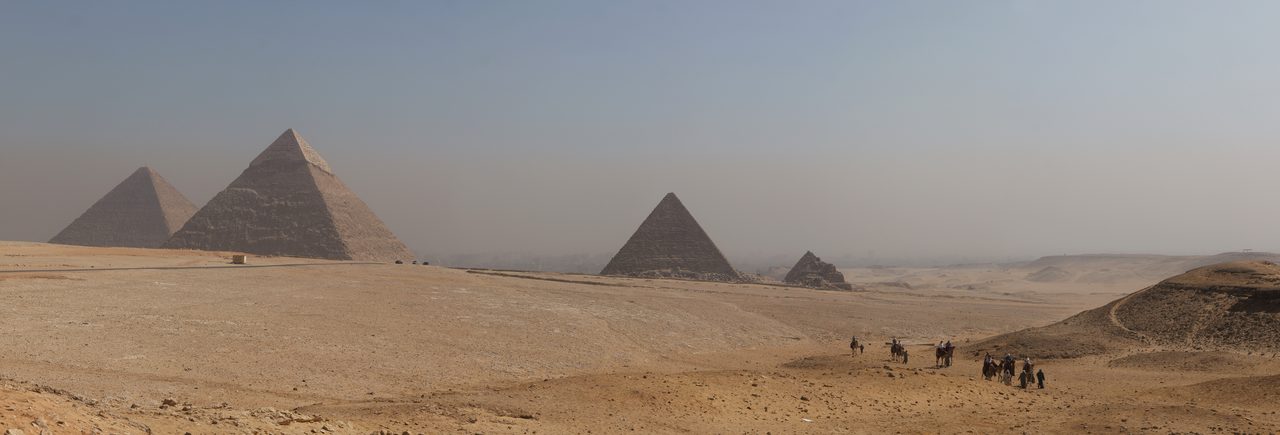
The pyramids of Giza are real. The Nazca lines are real. The giant stone heads of Easter Island are real, and you can buy a ticket and stand in front of every one of them. The claim that sold something like 70 million copies of Erich von Daniken's Chariots of the Gods? is that the people who lived at these places could not possibly have built them, and that someone came down from the sky to help. It is one of the most popular ideas about the human past there is. It is also, site by site and text by text, wrong. Here is the whole case laid out as a scorecard, each famous piece of evidence set beside the specific archaeologist, Assyriologist, or anthropologist who answered it, and then the part the theory works hardest to keep you from seeing: the uncomfortable idea sitting underneath the spaceships.
Every few years the same images go viral: the pyramids of Giza, the Nazca lines drawn across the Peruvian desert, the giant stone heads of Easter Island, captioned with some version of 'humans could not have built this.' Here is the part that is actually true. Those places are real, they are astonishing, and you can stand in front of every one of them. The claim built on top of them is that the people who lived there could not have made them alone, and that someone came down from the sky to help. It is one of the most successful ideas about the human past ever sold. It is also, site by site and text by text, wrong, and the reason it is wrong turns out to be more interesting than the reason it is popular.
A quick note on what this is and is not. Our companion file, UFOs Before the Word Existed, asks a different question: whether it is even fair to read a medieval sky-omen as a UFO report. This piece is narrower and more physical. It is about the specific claim that named, still-standing places and surviving texts, the pyramids, Puma Punku, the Vimanas, Sitchin's Sumerian tablets, are hard evidence that aliens visited the ancient world. That claim can be checked, one item at a time. So let us check it.
01Who Built the Big Idea
The theory has founders, and knowing them matters, because the idea did not stay in paperback. It became a television franchise and a permanent fixture of the modern UFO conversation. Here is the short roster of the people who built the big idea.
| Figure | Best Known For | The Central Claim |
|---|---|---|
| Charles Fort (1874 to 1932) | The Book of the Damned (1919) | Catalogued anomalous phenomena and floated extraterrestrial explanations. Regarded as the forerunner of the whole genre. |
| Erich von Daniken (born 1935) | Chariots of the Gods? (1968), about 70 million copies | The pyramids, Nazca, Puma Punku, and Easter Island needed alien help; the ancient gods were astronauts, and religious visions were alien encounters. |
| Zecharia Sitchin (1920 to 2010) | The 12th Planet (1976) and the Earth Chronicles | The Sumerian Anunnaki came from a planet called Nibiru and genetically engineered humans to work as slaves. |
| Robert Temple (born 1945) | The Sirius Mystery (1976) | The Dogon of Mali knew of the invisible companion star Sirius B before telescopes could show it, taught by amphibious Nommo beings from the Sirius system. |
| Giorgio Tsoukalos (born 1978) | Ancient Aliens (History Channel, from 2009) | The on-screen face of the modern revival, and the source of the 'I'm not saying it was aliens, but it was aliens' meme. |

Erich von Daniken is the reason any of this is a mass phenomenon. His 1968 book Chariots of the Gods? sold on the order of 70 million copies and set the template every later proponent works from: take an impressive ancient site, declare it beyond its builders, and hand the credit to visitors from the stars. He did not invent the idea. Charles Fort was cataloguing anomalies and floating extraterrestrial explanations back in 1919. But von Daniken turned it into an industry, and Giorgio Tsoukalos and the Ancient Aliens series turned the industry into television.
Two names get pulled into this camp and do not belong. Graham Hancock, author of Fingerprints of the Gods (1995), argues for a lost advanced human civilization, not alien visitors, and explicitly distances himself from alien claims. And two serious scientists brush the same territory without endorsing the theory: the Nobel laureate Francis Crick floated 'directed panspermia,' the idea that life on Earth was deliberately seeded from elsewhere, in his 1981 book Life Itself, which the research file is careful to call speculative and not ancient astronaut theory as such. Carl Sagan, writing with Iosif Shklovskii in Intelligent Life in the Universe in 1966, allowed the bare possibility of ancient contact in principle while rejecting the specific claims. Possibility in principle is not evidence, and none of these three is saying it was aliens.
02The Scorecard: Eight Claims, Eight Rebuttals
This is the heart of the matter, so here it is laid out plainly, both sides stated fairly. The archaeologist Kenneth Feder, in his textbook Frauds, Myths, and Mysteries, made the general case years ago: the ancient achievements the theory calls impossible are well explained by documented human capability, and archaeologists and engineers have physically replicated many of the supposedly impossible techniques using only period tools. What follows is that case run claim by claim, each famous piece of evidence set beside the specific rebuttal that answers it.
| Site or Text | The AAT Claim | The Named Rebuttal | Verdict |
|---|---|---|---|
| Pyramids of Giza | Too precise and massive for ancient Egypt; needed alien help. | Experimental archaeology; quarry marks, workers' villages, and the Wadi al-Jarf 'Diary of Merer' logbooks; a workforce of roughly 20,000 to 30,000. | Human-built. No aliens needed. |
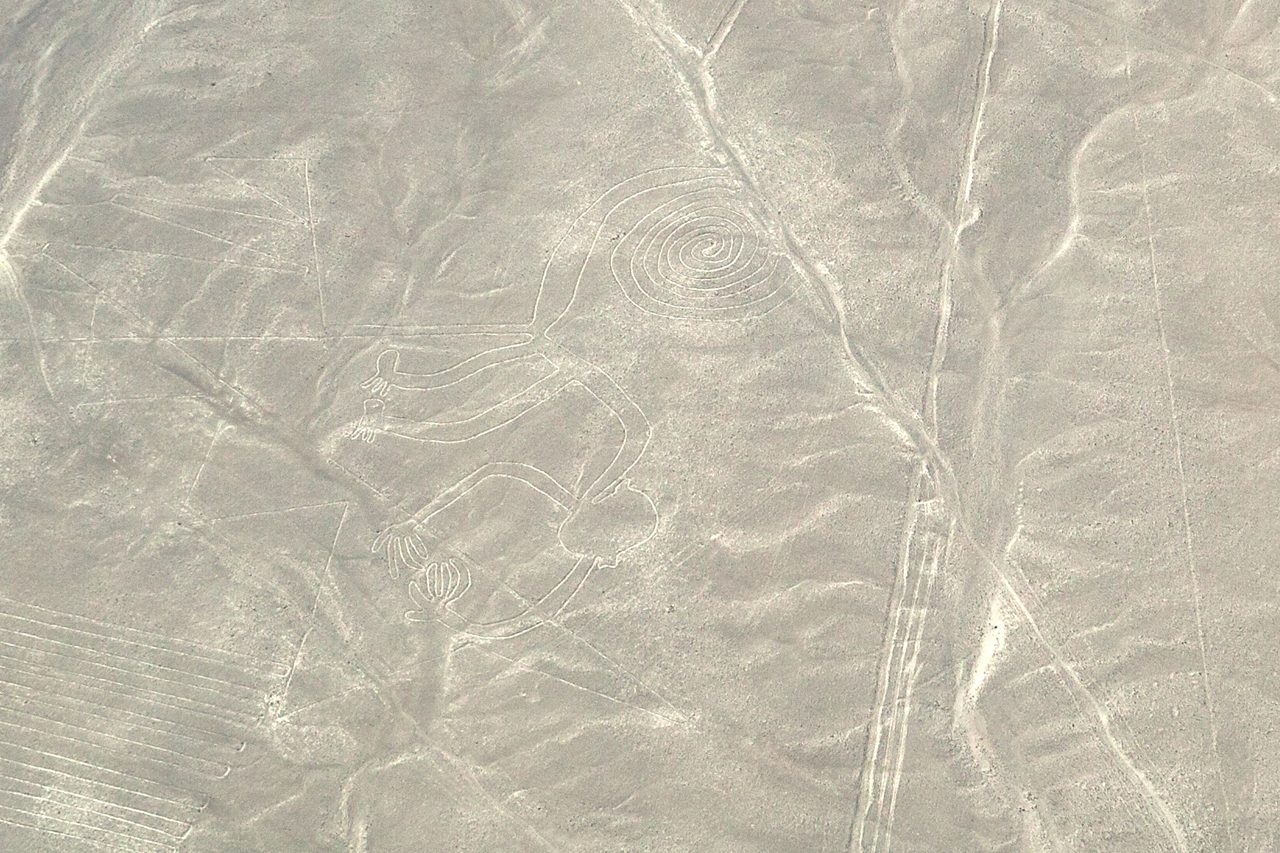
| Nazca Lines | Visible only from the air, so made for viewers overhead. | Visible from the surrounding hills; ceremonial and astronomical; stakes and string, replicated experimentally. | Human-made. No aliens needed. |
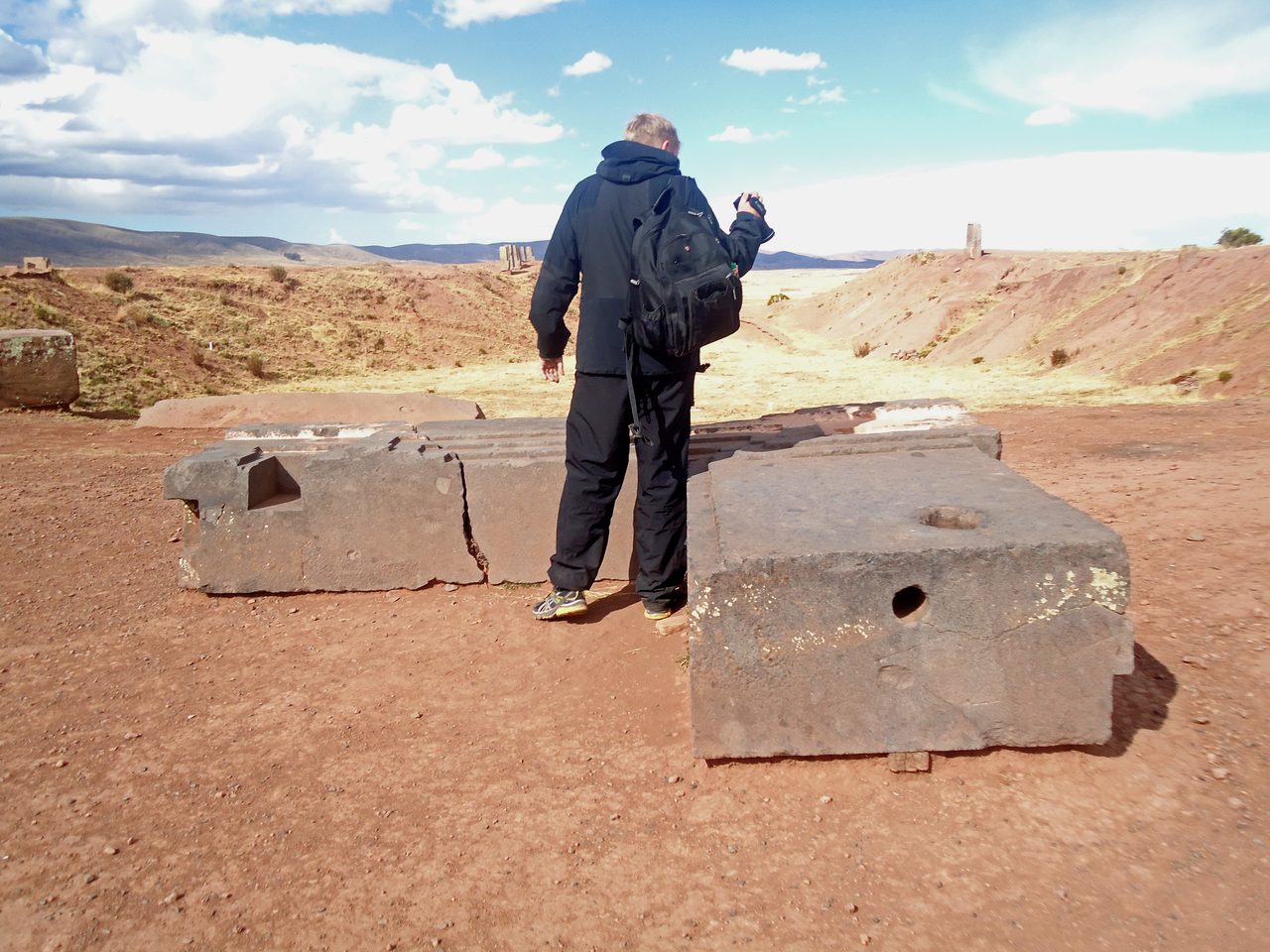
| Puma Punku | Stone-cutting too precise for the Tiwanaku to have achieved. | Documented pounding stones, bronze tools, and abrasives; the precision is overstated in AAT literature. | Human-built. No aliens needed. |
| Easter Island Moai | Too heavy to move without advanced technology. | Hunt and Lipo (2011), The Statues That Walked: 'walked' upright with ropes; confirmed by Rapa Nui oral tradition. | Human-moved. No aliens needed. |
| Vimanas (Hindu texts) | The described flying vehicles are literal alien spacecraft. | Literary and religious imagery with no physical remains; poetry, not an engineering manual. | Mythology, not machinery. |
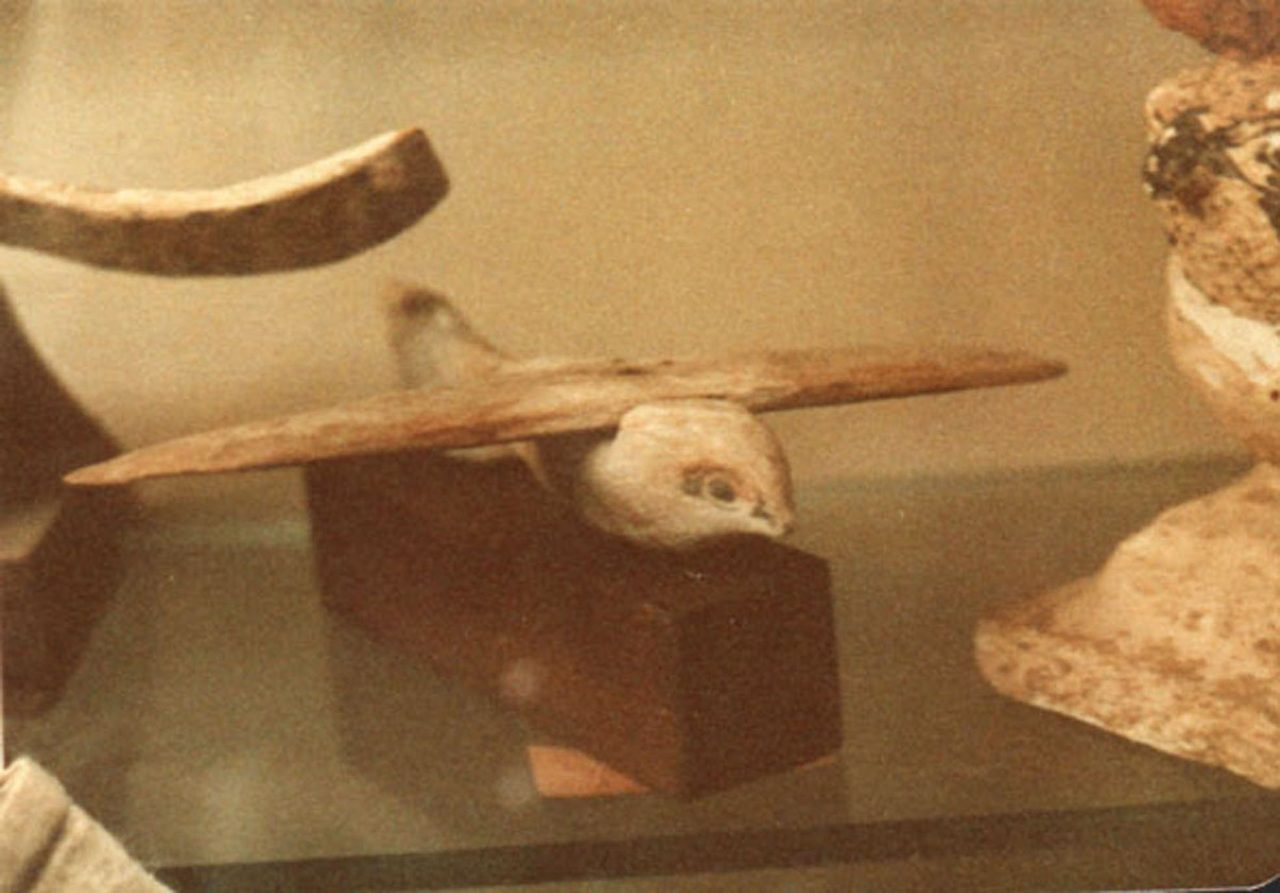
| The Saqqara Bird | A model airplane or glider from ancient Egypt. | Aerodynamic analysis: it has no tailplane and cannot fly; a painted wooden toy or votive. | A carved bird. It does not fly. |
| Sitchin's Anunnaki reading | Sumerian texts describe alien genetic engineering of humans. | Assyriologists Michael Heiser and Francesca Rochberg: the translations are consistently wrong. | Mistranslation, not evidence. |
| Dogon and Sirius B | A West African people knew of the invisible star Sirius B before telescopes. | Walter van Beek's 1991 field re-study found no such indigenous knowledge; likely projected by the original interviewer. | No secret star knowledge. |
Start with the pyramids of Giza, the flagship. The claim is that they are too precise and too massive for ancient Egypt to have raised. The evidence on the ground says otherwise: quarry marks, the excavated villages where the workers lived, and papyrus logbooks, including the remarkable Diary of Merer found at Wadi al-Jarf, document a human workforce of roughly 20,000 to 30,000 people moving stone with copper tools, ramps, and organized labor. We are not guessing at how it was done. We have the builders' own paperwork.
The Nazca lines are supposed to be visible only from the air, and therefore made to be seen by someone flying overhead. They are not only visible from the air. They can be read from the surrounding hills, they served ceremonial and astronomical purposes, and their construction, simple wooden stakes and string on a vast scale, has been reproduced experimentally. Big is not the same as impossible.
Puma Punku in Bolivia is the theory's favorite, its precisely cut stone blocks held up as flatly impossible for the Tiwanaku. But the Tiwanaku were a sophisticated civilization, and cutting hard stone with pounding stones, bronze tools, and abrasives is well documented. The research file is blunt that the precision itself is overstated in the ancient astronaut literature: the blocks are impressive, not machined.
The Easter Island Moai are called too heavy to move without advanced technology. In 2011 the archaeologists Terry Hunt and Carl Lipo showed, in The Statues That Walked, that a standing Moai can be rocked forward and 'walked' upright by a few teams working ropes, no machinery required. The most striking part: Rapa Nui oral tradition had said all along that the statues walked. The islanders had been telling the truth, and it took the field decades to listen.
The Vimanas of Hindu scripture, read by the theory as literal spacecraft, are literary and mythological flying vehicles, cousins of the Greek winged chariot and the Norse flying ship. There are no physical remains, because they were never physical. Vedic literature is religious poetry, not an engineering manual, and reading it as one is a category error, not a discovery.
The Saqqara Bird, a small painted wooden bird from Egypt around 200 BCE, gets promoted to a model glider or airplane. It is a painted wooden bird, most likely a toy or a votive object, and the aerodynamics are decisive: it cannot fly, because it has no tailplane, and the original artifact never had one. Carved bird figures like it are found all over the ancient world.
Then there is Zecharia Sitchin, who claimed the Sumerian texts describe the Anunnaki genetically engineering humans as a slave race. This is not a matter of opinion. Professional Assyriologists, the file names Michael Heiser and Francesca Rochberg, show Sitchin's translations are consistently wrong: he misreads cuneiform signs, invents meanings that exist nowhere in the language, and ignores the established scholarship on the very texts he cites. Heiser's detailed rebuttal, The Myth of a Sumerian 12th Planet, is public and specific. Sitchin's Nibiru is not hiding in the tablets. It is not in them at all.
The Anunnaki themselves, and the original Sumerian tablets, each have their own research file in our library, and neither says what Sitchin needs it to say. The alien reading is not decoded from the Sumerian. It is imposed on top of it.

The Dogon case looks, at first, like the strongest card in the deck: a West African people who supposedly knew that Sirius has an invisible companion star, Sirius B, long before any telescope could reveal it. But when the anthropologist Walter van Beek carried out a careful field re-study of the Dogon and published it in 1991, he found no indigenous Dogon knowledge of Sirius B at all. The original 1930s account, by the anthropologist Marcel Griaule, most likely records Griaule's own astronomical knowledge being fed back to him by his informants, rather than any secret star-lore. The photograph beside this paragraph was taken by van Beek himself, in Mali, among the very people whose supposed cosmic secret he could not find.
03The Logic Underneath
Notice that the cases all fail in the same handful of ways. The theory runs on a small set of reliable logical moves, and once you can name them you start to see them everywhere.
| The Logical Move | Why It Fails |
|---|---|
| Argument from ignorance | 'We do not know exactly how X was built, therefore aliens.' The absence of an explanation is not evidence for one specific explanation. |
| False dichotomy | Either ancient people had modern technology or aliens helped, a framing that erases the real option: ancient human ingenuity with the materials on hand. |
| Cherry-picking | Wave around a few genuine oddities like the Antikythera Mechanism and the Baghdad Battery, and quietly ignore the vast archaeological record of gradual, traceable technological development. |
| Appeal to wonder | The sheer impressiveness of a structure is treated as proof it was impossible. Impressive does not mean impossible. |
| Unfalsifiability | Any counter-evidence gets absorbed: the aliens erased the traces, or worked through human hands. A claim that can explain away everything predicts nothing. |
The last move matters most, because it is what keeps the theory out of science entirely. A hypothesis that can absorb any possible counter-evidence is not bold. It is empty, because it can never be wrong, and a claim that forecasts nothing is not a rival to archaeology. It is a way of never having to look.
04The Idea Has a Nasty Root
There is one more problem, and it has nothing to do with masonry or cuneiform. The research file does not tuck it into a footnote, and neither will we. It states, in plain words, that the ancient astronaut theory 'implicitly carries a colonial and racist subtext.' Here is what that means, set out in full.
| The Move | The Effect |
|---|---|
| Alien-help claims cluster on non-European civilizations: Egyptian, Mesoamerican, Polynesian, African. | The wonders of the colonized world are treated as too advanced for the people who actually made them. |
| The same claims are rarely aimed at European achievements like the Parthenon, Roman aqueducts, or Gothic cathedrals. | European genius is simply assumed; everyone else's is put on trial. |
| The framing implies that indigenous peoples were not capable of their own greatest works. | It quietly writes them out of their own history. |
| It dismisses sophisticated indigenous knowledge systems that archaeologists and ethnographers have carefully documented. | Real, hard-won human knowledge gets erased to make room for a spaceship. |
Look back at the scorecard and the pattern is impossible to unsee. Every case on it, the pyramids of Giza, the Nazca lines, Puma Punku, the Easter Island Moai, the Vimanas of Hindu scripture, the Dogon, comes from a non-European culture. As the research file puts it, the claims fall on Egyptian, Mesoamerican, Polynesian, and African civilizations, and almost never on European ones. The Parthenon never needed a spaceship. The Roman aqueducts never needed one. The Gothic cathedrals never needed one. Only other people's monuments do.
And this is not a modern gloss laid over an innocent idea. Jason Colavito, in The Cult of Alien Gods (2005), traced the theory's origins directly to 19th-century racist assumptions that non-European peoples could not have built their own monuments. The spaceships are the new part. The assumption underneath them is very old.
05What the Theory Gets Right, by Accident
It would be easy to stop there, but that would be its own kind of dishonesty. A few of the instincts underneath the theory are sound, and the research file grades them fairly rather than mocking all of it.
Could extraterrestrial life exist somewhere? Yes, and that is real science, not fringe speculation. Astrobiology is a serious, active field, and the Drake equation, the Fermi paradox, and the steady discovery of exoplanets keep the question of life beyond Earth wide open. The theory borrows the credibility of that question and spends it somewhere it was never earned.
Were ancient people more capable than we used to assume? Absolutely, and the ceiling keeps rising. Sites like Gobekli Tepe and finds like the Antikythera Mechanism have forced scholars to revise ancient human capability sharply upward. The irony is exact: the more impressive our ancestors turn out to be, the less any of it needs an alien.
Do myths ever encode real events? Sometimes, genuinely, yes. Oral traditions can preserve real historical and geological memory across long spans of time: flood stories, and Aboriginal memories of coastlines drowning as the seas rose, appear to carry authentic ancient information. That is a Tier 2 idea worth taking seriously, and it is still a long way from a spacecraft.
And should genuinely anomalous evidence be taken seriously? Yes, within scientific method. Anomalies are where real progress begins, when they are investigated rigorously rather than used as a blank cheque for the answer you already wanted. The problem was never curiosity. It was the shortcut.
Fast Facts
- The Big Seller
- Erich von Daniken's Chariots of the Gods? (1968) has sold on the order of 70 million copies. Its thesis: the pyramids, Nazca, Puma Punku, and the Easter Island Moai were beyond ancient human ability and required visitors from the sky.
- The Scorecard
- Every headline case, the pyramids, Nazca, Puma Punku, the Moai, the Vimanas, the Saqqara Bird, Sitchin's Anunnaki, and the Dogon, has a specific, named archaeological, Assyriological, or anthropological rebuttal. None of them requires aliens.
- The Sitchin Problem
- Assyriologists Michael Heiser and Francesca Rochberg show Zecharia Sitchin's Sumerian translations are consistently wrong: he misreads cuneiform, invents meanings, and ignores established scholarship.
- The Dogon Reversal
- Anthropologist Walter van Beek's 1991 field re-study found no indigenous Dogon knowledge of the star Sirius B. The famous 1930s account most likely reflects the interviewer's own astronomy projected onto his informants.
- The Uncomfortable Root
- The research file states plainly that the theory carries a colonial and racist subtext: it is aimed at non-European monuments and almost never at European ones. Jason Colavito traced its origins to 19th-century assumptions that non-European peoples could not have built their own works.
- Right by Accident
- Astrobiology is real science, and finds like Gobekli Tepe and the Antikythera Mechanism keep revising ancient human capability upward. Neither fact is evidence for alien visitors.
- The Bottom Line
- The sites are real and astonishing. The builders were human. The claim that named ancient sites and texts record literal alien visitation does not survive contact with the evidence.
So Did Ancient Astronauts Build Any of It?
Every site and text in this story is real, and so is the human genius that made it. Experimental archaeology reproduces the pyramids with copper tools, ramps, and organized labor of roughly 20,000 to 30,000 people, and the Wadi al-Jarf logbooks, the Diary of Merer, document the work in the builders' own hand. Hunt and Lipo showed the Easter Island Moai can be 'walked' upright with ropes, exactly as Rapa Nui oral tradition always said. The Nazca lines were laid out with stakes and string and can be seen from the surrounding hills. Human capability is not in doubt.
One of the theory's instincts is half right, and worth keeping. Myths do sometimes encode real events: flood stories and Aboriginal memories of rising seas preserve genuine geological history across thousands of years. That is a real and fascinating phenomenon. It is also a long way from evidence that the storytellers ever met anyone from another planet.
As a bare abstract question, could an advanced civilization ever have made contact, careful scientists like Carl Sagan and Francis Crick granted the logical possibility. But logical possibility is not evidentiary support. The specific evidence the theory actually cites does not survive scrutiny, and the hypothesis is built to be unfalsifiable, so it has never earned the paradigm status its fans claim for it. It stays Tier 3: culturally huge, scientifically unsupported.
And the core claim is a no. The idea that named ancient sites and texts are physical evidence of alien visitation collapses case by case: Sitchin's translations are consistently wrong, the Dogon's secret star knowledge evaporates under a proper field study, the Saqqara Bird cannot fly, and every 'impossible' monument has a documented, replicated, human method behind it. Worse, the premise itself carries the colonial assumption that certain peoples could not have built their own wonders. Mainstream archaeology, history, Assyriology, and biology uniformly reject it, and on the evidence here, they are right to.
So the pyramids still stand, the lines still cross the desert, the Moai still watch the sea, and not one of them needed a spaceship. The real puzzle was never in the stone. It is in us. Why is it easier, for so many people, to believe in visitors from another star than in the farmers, quarrymen, and astronomers who were standing right there? What would it take to give the ancient dead the credit the evidence has already handed them?
Sources & further reading
Everything above is drawn from our research library on Theories of Anything, which is where we worked from. The papers, reports and primary records listed beneath them are where you can check us independently.
Image credits
- The pyramids of the Giza plateau, panorama photograph by Kallerna, 13 October 2010, via Wikimedia Commons. Creative Commons Attribution-ShareAlike 3.0 Unported, or GNU Free Documentation License 1.2 or later Source.
- Portrait of Erich von Daniken photograph by Sven Teschke, 18 October 2009, via Wikimedia Commons. Creative Commons Attribution-ShareAlike 3.0 Germany (CC BY-SA 3.0 DE) Source.
- The Nazca Lines monkey geoglyph, Peru photograph by Unukorno, 12 September 2013, via Wikimedia Commons. Creative Commons Attribution 3.0 Unported (CC BY 3.0) Source.
- Carved stone at Puma Punku, Bolivia photograph by Janikorpi, 10 August 2011, via Wikimedia Commons. Creative Commons Attribution-ShareAlike 3.0 Unported (CC BY-SA 3.0) Source.
- The Saqqara Bird wooden artifact, front view photograph by Dawoud Khalil Messiha, via Wikimedia Commons. Public domain (released into the public domain by the copyright holder) Source.
- Dogon women on the path to market, Mali, 1990 photograph by W.E.A. (Walter) van Beek, 1990 (African Studies Centre Leiden, van Beek Collection), via Wikimedia Commons. Creative Commons Attribution-ShareAlike 4.0 International, or GNU Free Documentation License 1.2 or later Source.
- Card crop of The pyramids of the Giza plateau, panorama photograph by Kallerna, 13 October 2010, via Wikimedia Commons. Creative Commons Attribution-ShareAlike 3.0 Unported, or GNU Free Documentation License 1.2 or later Source.


