1947 to Now: The Disclosure Timeline
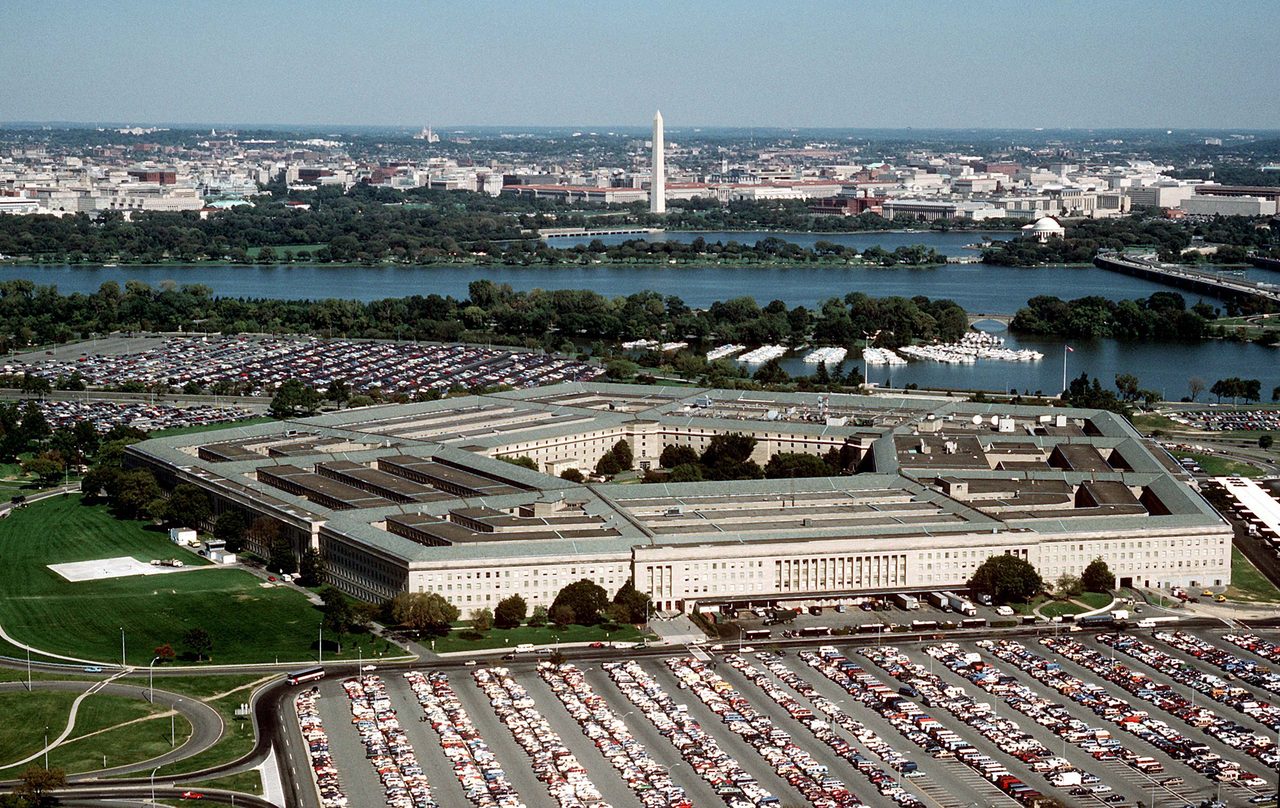
For nearly eighty years the United States government has run official desks, secret programs, and public offices aimed at the unidentified objects in its skies, and for nearly eighty years it has told the public two things that cannot both be the whole truth. In March 2024 the Pentagon's own anomaly office reviewed the record back to 1945 and reported no evidence of extraterrestrial technology or hidden reverse-engineering programs. Eight months earlier, a decorated Air Force intelligence officer had sat before Congress, under oath and on penalty of perjury, and testified that the government holds 'intact and partially intact craft of non-human origin' and 'non-human biologics.' Both statements are on the record. Both are documented facts. This is the whole timeline, Project Sign to AARO, and it holds that one gap open where it belongs, because the evidence does.
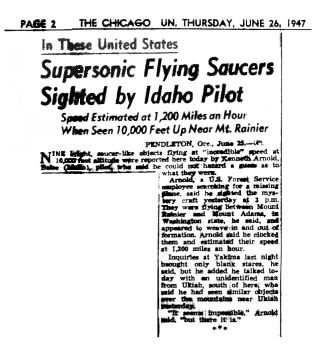
Start the clock in the summer of 1947, when an Idaho pilot named Kenneth Arnold reported fast-moving objects near Mount Rainier and a newspaper printed the phrase 'flying saucer' for what may have been the first time. It has not stopped since. For nearly eighty years the United States government has run official desks, secret programs, and public offices pointed at one question: what are the unidentified objects in its skies, and does anyone in authority actually know? This is the whole timeline of that engagement, from the first Air Force desk to the anomaly office running today, from a headline in the Chicago Sun to a classified session of the Senate Intelligence Committee. It is the richest and most tangled story in this wing, and it ends on a gap that no one has closed.
Two ideas organize the eighty years. The first is chronological: the story runs Sign, Grudge, Blue Book, then a long silence, then AAWSAP and AATIP, the 2017 New York Times break, the ODNI counts, AARO, and the 2023 hearings where witnesses finally spoke under oath. The second is epistemic: every claim below wears the tier the research file gives it, from Tier 1 documented fact to Tier 3 speculation, and the article refuses to collapse the one dispute that defines the whole subject today. It treats Project Blue Book as a single entry and defers the desk's full institutional biography to the dossier that owns it. Everything else, it lays out in order.
01The First Desks: Sign, Grudge, Blue Book
The first desk opened as Project Sign, the United States Air Force's founding UFO investigation, which ran from 1947 to 1949. Its analysts did not reach a skeptical conclusion. In 1948 they produced an internal assessment, the 'Estimate of the Situation,' that concluded the objects were interplanetary in origin. That conclusion did not survive the top of the Air Force: Chief of Staff General Hoyt Vandenberg rejected it.
What happened next to the Estimate is a hole in the record shaped like its own conclusion. By the account of Edward Ruppelt, who later directed the program and wrote its authoritative insider history, Vandenberg ordered the copies destroyed, and no copy has ever been recovered. That destruction rests on Ruppelt's memoir alone, which is why it sits a tier below the rest of this section. The deep story of Sign, its reforms, and the panel that reshaped it belongs to the Project Blue Book dossier; this timeline keeps it to a single entry.
In 1949 Sign became Project Grudge, and the rename was a change of posture. Grudge carried an explicit debunking mandate, and its report concluded that UFOs were misidentifications, hoaxes, or psychological phenomena. The desk had stopped trying to find out and started trying to explain away.
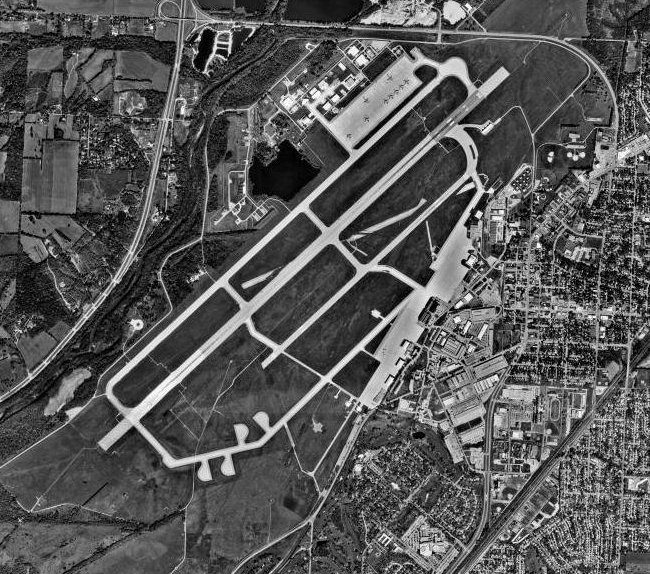
In 1952 the program was reorganized one last time as Project Blue Book, the name history remembers, and it ran until 1969 as the longest-running US government UFO program. Blue Book investigated 12,618 cases; 701 of them, about 5.5 percent, were still officially 'unidentified' when it closed. It was directed first by Captain Edward Ruppelt and later by Major Hector Quintanilla, with Northwestern University astronomer Dr. J. Allen Hynek as its scientific advisor. Every record was eventually declassified, roughly 130,000 pages now held at the National Archives as Record Group 341.
That is as far as this timeline goes into Blue Book, on purpose. The reforms Ruppelt made, the two decades it took Hynek to turn from hired skeptic into advocate, and the CIA panel that set the desk's marching orders all live in the Project Blue Book dossier. Here, Blue Book is one link in an eighty-year chain, and the next link was already being forged in secret while Blue Book was still open.
02The Order to Debunk: Robertson and Condon
While Blue Book handled the public caseload, the intelligence community quietly set its tone. From January 14 to 18, 1953, the CIA convened the Robertson Panel, chaired by Caltech physicist H.P. Robertson. In only about twelve hours of review, later criticized by Hynek and others as far too little, the panel recommended a public debunking campaign that would use mass media to strip UFOs of their 'aura of mystery,' and it recommended monitoring civilian UFO organizations such as NICAP and APRO for subversive potential. The report was declassified in 1975 through the CIA's FOIA reading room.
There is a serious counter-reading, and the article owes it airtime. Skeptics, including former AARO director Sean Kirkpatrick writing in 2024, argue the panel's debunking recommendation was a rational Cold War security measure, not a cover for contact. The genuine fear was that adversaries could exploit UFO reports to jam military communications, and defusing public hysteria was a defensible response to that risk rather than evidence of hidden extraterrestrial knowledge.
The next institutional verdict came dressed as independent science. The Condon Report of 1968, a 1,485-page study the Air Force commissioned from the University of Colorado under physicist Edward Condon, summarized that 'nothing has come from the study of UFOs ... that has added to scientific knowledge.' A leaked memo from project coordinator Robert Low showed the conclusion was steered from the start: 'the trick would be,' he wrote, to describe the project so that, 'to the public, it would appear a totally objective study.' The report led directly to Blue Book's closure in 1969.
As with Blue Book's own files, the report did not agree with itself. Roughly 30 percent of the cases inside the Condon Report remained unexplained, a direct contradiction of the reassuring summary bolted on top of them.
The Condon Report has its defenders too, and they make a real point. They argue the 30 percent 'unexplained' figure counts cases with insufficient data rather than cases that actively defied explanation, and that the report's core scientific conclusion, that no new physics was demonstrated, holds up regardless of how many individual cases stayed open.
03The Money in the Dark: AAWSAP and AATIP
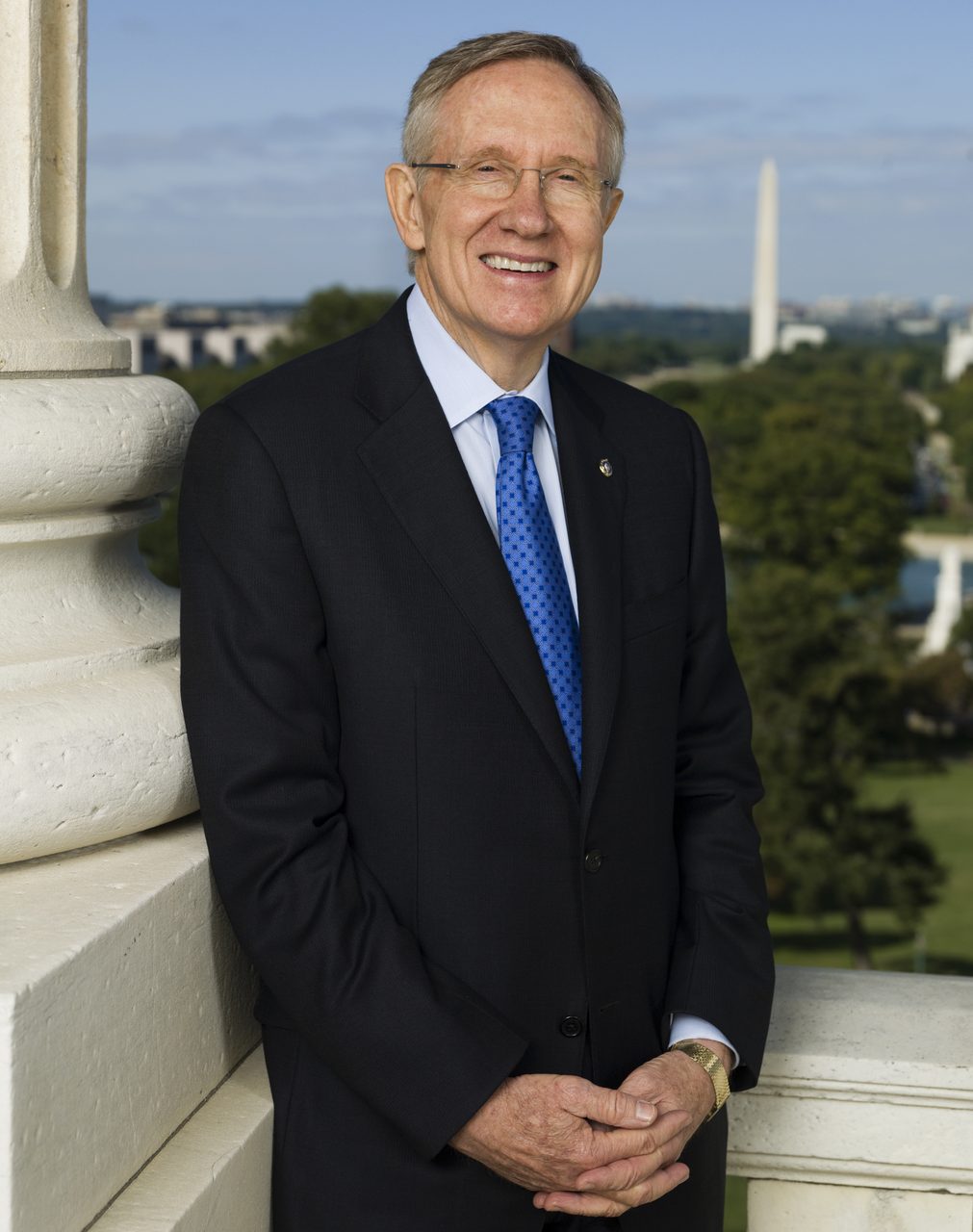
For almost forty years after Blue Book closed, there was no public US UFO program. There was a private one. In 2007 the Defense Intelligence Agency stood up AAWSAP, the Advanced Aerospace Weapon System Applications Program, on $22 million in funding that Senator Harry Reid of Nevada secured with the support of Senators Ted Stevens and Daniel Inouye. The contract went to Bigelow Aerospace Advanced Space Studies, ran from 2007 to 2012, and produced 38 Defense Intelligence Reference Documents on advanced physics, including a study of Skinwalker Ranch as a 'living laboratory' for anomalous phenomena. Reid died in 2021; the funding he championed is a matter of public Congressional record.
AAWSAP had a smaller successor or parallel, AATIP, the Advanced Aerospace Threat Identification Program. Luis Elizondo says he directed it, a claim some Defense Department officials dispute, and it is genuinely unsettled which account is right. What is not disputed is that Elizondo resigned in October 2017, publicly citing excessive secrecy and government inaction, and that his departure lit the fuse for what came next.
04December 16, 2017: The Break
On December 16, 2017, the New York Times published the story that ended the government's forty-year silence. Reported by Leslie Kean, Ralph Blumenthal, and Helene Cooper, it revealed AATIP's existence and ran alongside three Navy videos of unidentified objects, GIMBAL, GOFAST, and FLIR1. There is a clean before and after here: this is the date the modern disclosure era begins, the moment the subject moved from the fringe back into the paper of record.
05The Government Starts Counting: ODNI and AARO
The first official counting followed. On June 25, 2021, the Office of the Director of National Intelligence released a preliminary assessment of 144 UAP reports from military and intelligence sources between 2004 and 2021. It identified exactly one, a deflating balloon, leaving 143 unexplained, and it flagged 18 incidents involving unusual movement patterns.
A 2022 annual report, published in January 2023, expanded the total to 510 cases and built new reporting categories. Crucially, the ODNI reports did not wave the phenomenon away. They established UAP as a legitimate national security concern and stated plainly that the cases are not all attributable to foreign adversary technology, sensor errors, or known phenomena.
In July 2022 the Pentagon created a standing office for the problem, the All-domain Anomaly Resolution Office, reporting to the Deputy Secretary of Defense and directed first by Dr. Sean Kirkpatrick. AARO opened a public reporting portal for current and former government employees, the first time the government invited insiders to come forward through an official channel.
Then AARO delivered the conclusion that anchors one side of this whole story. Its Historical Record Report, Volume I, released in March 2024, reviewed UAP claims back to 1945 and found no evidence of extraterrestrial technology or hidden reverse-engineering programs. It investigated the specific leads whistleblowers had provided, identified at least one alleged 'crash retrieval' as a misidentified classified Air Force aerospace program from the 1960s, and found no sign of any secret program holding non-human technology. Members of Congress including Rubio, Gillibrand, and Burchett criticized the report as incomplete. Volume II, meant to cover more recent history, was expected in 2024 and slipped.
AARO's report carries the full institutional authority of the US government. It also carries a structural challenge it cannot answer from the inside. Critics including Grusch, Mellon, and Elizondo argue that AARO was denied access to the very compartmented programs in question. You cannot find, they point out, what is deliberately hidden from you. That challenge is unresolved.
06Under Oath: The 2023 Hearings
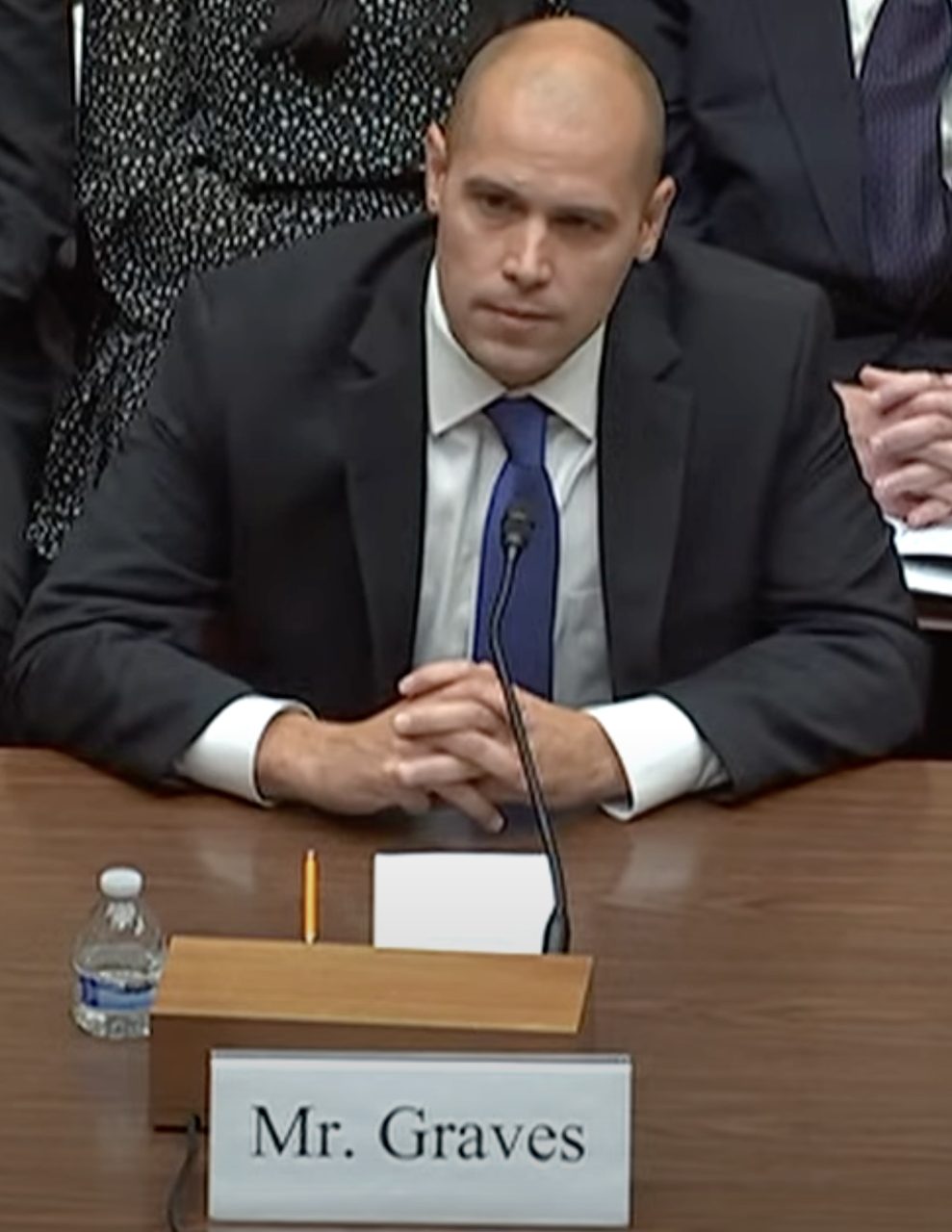
On July 26, 2023, the House Oversight Committee did something the government had avoided for decades: it put UAP witnesses under oath in public. Three retired officers testified. Commander David Fravor gave a detailed account of the 2004 Nimitz 'Tic Tac' encounter. Lieutenant Ryan Graves testified that UAP encounters had been routine during East Coast F/A-18 training operations, not rare anomalies but a regular feature of the airspace.
And then David Grusch, a retired Air Force intelligence officer, testified under oath and on penalty of perjury that the US government possesses 'intact and partially intact craft of non-human origin' and 'non-human biologics.' This is the single most consequential sentence in the modern timeline, and it is worth being exact about what it is: sworn testimony, not released physical evidence. Grusch swore to what he says he was told by others; the government has not publicly produced a craft or a body that would confirm or refute him. His situation is unresolved, neither vindicated nor debunked, and this article keeps it there.
Grusch could testify at all because of a law passed months earlier. The NDAA for fiscal year 2023 included UAP whistleblower protections, Section 6802, giving current and former government employees and contractors legal cover to report UAP information to Congress or the intelligence community's inspector general. The testimony had a statutory foundation, not just a microphone.
The same period produced a legislative push and a legislative retreat. The UAP Disclosure Act of 2023, a bipartisan Schumer-Rounds amendment, aimed to force controlled disclosure, including an eminent-domain provision over recovered materials. It was partially stripped from the final NDAA for fiscal year 2024, its eminent-domain and controlled-disclosure provisions weakened before passage.
Science weighed in too, carefully. NASA convened a 16-member independent UAP study panel chaired by astrophysicist David Spergel, which released its report on September 14, 2023. It recommended standardized data collection, AI and machine-learning analysis tools, and an end to the stigma that keeps pilots and scientists quiet. NASA named Mark McInerney its first Director of UAP Research. Tellingly, panel members received threats and harassment simply for serving, a small ugly measure of how charged the subject remains.
Not everything happened in public. In November 2023 the Senate Select Committee on Intelligence held a closed, classified session with Grusch. Its content remains classified, with no public transcript. What leaked out was tone: Senators Rubio and Warner said afterward that the testimony was 'very concerning.'
07The Defining Tension
Step back and the shape of the modern story is a contradiction that will not dissolve. On one side, AARO, the government's own anomaly office, looked at the record and concluded there is nothing extraordinary to find. On the other, Grusch, a cleared intelligence officer, swore under oath that there is. The research file behind this article is blunt about what that means: this is 'a significant institutional counter-narrative,' and, crucially, 'BOTH positions are documented facts (Tier 1).' Neither is a rumor. Neither is fringe. They simply cannot both be the whole truth.
This article will not pretend to know which side is right, because the evidence does not yet allow it and the honest thing is to say so. AARO's conclusion is real and authoritative. Grusch's testimony is real and sworn. The question of who was allowed to see what remains open, and almost everything after this point in the timeline is, in one way or another, the country arguing about that gap.
082024 to 2026: Dilution and Doubt
The skeptical case did not come only from outsiders. Kirkpatrick resigned as AARO's director in December 2023, was succeeded by Dr. Jon Kosloski in mid-2024, and then made his views public. In a Scientific American op-ed in January 2024 he wrote that 'the immense public interest in UAPs stems from a desire for the extraordinary,' but that 'the extraordinary requires extraordinary evidence ... I found none.' He went further, describing some UAP advocates as operating like a 'religion' immune to contradictory evidence. This is the man who ran the government's investigation saying, on the record, that he looked and found nothing extraordinary.
Meanwhile the legislation kept getting sanded down. Section 1687 of the NDAA for fiscal year 2024 did require the Defense Department to build a process for reviewing UAP records, but it dropped both the eminent-domain provision and the independent review board that the original Schumer-Rounds act had proposed. A second attempt, UAPDA 2.0 in 2024, resubmitted for the fiscal year 2025 NDAA, had its scope cut again in negotiations. The pattern is consistent: the boldest disclosure mechanisms keep dying in conference committee.
Elizondo told his own version in Imminent, published in August 2024 and cleared through the Defense Department's pre-publication security review. The book uses the word 'Somber' for the reality of UAP, discusses a consciousness dimension to the interaction, and names specific programs and officials, some redacted. One caution matters here: pre-publication clearance is not verification. It means only that the material is not classified, or that the classified parts were redacted; it says nothing about whether the content is accurate, and the research file is explicit on that point.
New evidence arrived from an unexpected quarter. Ukrainian astronomers at the Kyiv Main Astronomical Observatory, using daytime optical monitoring during wartime, reported fast-moving unidentified objects they sorted into 'phantoms,' completely dark with no optical radiation, and 'cosmics,' luminous. Their 2022 to 2023 observations estimated speeds of 3 to 15 kilometers per second and sizes of 3 to 12 meters. The work first circulated as a 2022 observatory preprint and should be read as early, unreplicated science rather than settled fact, but it is a reminder that the phenomenon is being logged well outside the US chain of command.
The institutional response also matured. A bipartisan Congressional UAP Caucus formed in 2024 to coordinate legislative strategy across both chambers, a structural shift from ad hoc hearings to standing coordination.
The most recent chapter is a promise, not a delivery. Representative Eric Burlison submitted a UAP Disclosure Act of 2025 as an amendment to the fiscal year 2026 NDAA, and in February 2026 the second Trump administration teased potential UAP disclosure, drawing cautious optimism from transparency advocates. It is worth being precise: as of this writing that is a political signal awaiting follow-through, not a disclosure event that has actually happened.
09The Rest of the World Was Looking Too
The United States is not the only government that built a desk for this. At least eleven official and semi-official programs across four continents have investigated UAP, and their verdicts range from France's careful case files to a Canadian engineer's flat conclusion that the objects were real. The comparison is Tier 2 in the research file, credible but less rigorously sourced than the American paper trail.
| Country · Program | Years | Status | What The Record Shows |
|---|---|---|---|
| France · GEIPAN (CNES) | 1977 to present | Active | About 5,300 cases analyzed over 40 years; roughly 2 to 3 percent unexplained ('Type D') today, down from a 2007-era figure near 28 percent (see the note below) |
| France · COMETA Report | 1999 | Published | A military and scientific panel concluded the extraterrestrial hypothesis was 'most likely' for some cases |
| UK · MOD UFO Desk (DI55) | 1950 to 2009 | Closed, files released | About 12,000 reports; 'no defense threat identified' |
| UK · Condign Report | Classified 2000, released 2006 | Released | Attributed UAP to 'buoyant charged plasma'; widely criticized |
| Chile · CEFAA | 1997 to present | Active | Military pilot videos and official government assessments |
| Brazil · Operacao Prato | 1977 to present | Partially active | Military witnessed and photographed UAP at Colares; Capt. Hollanda later died, ruled a suicide |
| Canada · Project Magnet | 1950 to 1969 | Closed | Engineer Wilbert B. Smith concluded UFOs were real; the program was shut down after pressure |
| Argentina · CEFAE | 2011 to present | Active | An Argentine Air Force official study group |
| Peru · OIFAA (DIFAA) | 2001 to present | Active | A Peruvian Air Force program |
| Uruguay · CRIDOVNI | 1979 to present | Active | The longest continuously running program in South America |
| Japan · Defense Ministry | 2020 to present | Protocols established | Self-Defense Forces directed to log and report UAP encounters |
One row in that table needed an asterisk, and it is an honest lesson in how slippery even official numbers can be. This article's own backing file lists GEIPAN at roughly 3,700 cases with about 22 percent unexplained. Two other files in the same research base put France at roughly 2,500 cases with about 3 to 5 percent unexplained, and one of those then contradicts itself with a 28 percent figure further down the same page. None of them is simply wrong. GEIPAN's own published statistics resolve it: the agency has analyzed on the order of 5,300 cases across forty years, and its 'Type D' unexplained rate has fallen sharply over time, from a March 2007 CNES figure near 28 percent to roughly 2 to 3 percent over the most recent decade. GEIPAN itself explains the decline, and not by claiming that fewer strange things get reported. It names three causes: case volume roughly tripled while most new reports are mundane, Thai lanterns and photographic artifacts that never reach Type D; the agency tightened its Type D criteria in 2008 and split the category into D1 and D2 by strangeness and consistency; and better investigative tools now resolve more cases conventionally. The corpus's several numbers are not really a contradiction. They are different-era snapshots quoted without their dates, the high one from around 2007 and the low one current, which is exactly how a single real statistic can end up looking like three conflicting ones.
Two more national records are worth naming. Australia's Joint Air Board and Department of Air investigated UFOs from the 1950s through the 1990s; the 1966 Westall mass sighting, with more than 200 witnesses, drew state-level attention, and the RAAF collected reports for decades before ceasing formal acceptance around 1996. No dedicated Australian UAP program exists today, which is notable given the country's place in Five Eyes intelligence sharing.
China's picture is thinner and harder to read. Its Civil Aviation Administration issued UAP reporting guidelines in 2021, the Chinese Academy of Sciences runs informal study groups examining aerial phenomena, and amateur organizations document cases outside any formal government structure. English-language documentation of Chinese UAP investigation remains minimal, so this record sits low on the tier scale by necessity, not by choice.
10The Objections, and Where the Trail Goes Cold
The sharpest objection is that all of this is theater. Skeptics such as Mick West and Metabunk, and Jason Colavito, argue that the Congressional hearings are political performance driven by constituent interest and media attention rather than genuine security concern. Their evidence is an absence of evidence: no substantive classified proof has been released despite multiple hearings, and the strongest legislative provisions are stripped in conference every time. The research file's own answer is that the closed November 2023 SSCI session and Grusch's formal complaint to the intelligence community inspector general are real institutional mechanisms, not performances for a camera. Both readings are on the table, and the article leaves them there.
A second dispute cuts at the foundation. Pentagon spokesperson Susan Gough stated in 2019 and 2020 that AATIP was focused on 'advanced aerospace threats' broadly, not specifically on UFOs. Elizondo disputes that, insisting the program was centrally about UAP. The research file does not pick a winner, and neither will this article: the truth may lie in the difference between a compartmented program's official charter and what its people actually spent their time on. Documented on both sides, resolved on neither.
Some of the material that would support Grusch's testimony exists only as leaked paper of uncertain provenance. The Wilson-Davis memo, alleged notes of a 2002 meeting between DIA Director Rear Admiral Thomas Wilson and physicist Eric Davis, surfaced in 2019 from the Edgar Mitchell estate. In it, Wilson allegedly describes being denied access to a Special Access Program controlling recovered UAP material, held by a private aerospace contractor, despite running the DIA. Neither Davis nor Wilson has denied the memo's authenticity, though neither has said much about it, and Grusch's 2023 account of compartmented crash-retrieval programs is consistent with it. Davis separately told the New York Times in July 2020 that he had briefed Congressional committees on 'off-world vehicles not made on this earth.' None of it has a verified chain of custody, which is exactly why it stays Tier 3: suggestive, unconfirmed, and doing no load-bearing work in the verdict below.
It is worth naming one famous artifact that did get resolved, in the wrong direction for believers. The MJ-12 documents, purported 1950s papers describing a secret UFO control group, were analyzed by the FBI and concluded to be fabricated in a 1988 memo. The researcher Stanton Friedman defended their authenticity for years, but his case is Tier 3 against the FBI's Tier 1 finding. In a story this full of genuine unknowns, the most famous 'smoking gun' is the one thing that has been affirmatively shown to be fake.
And plenty is still simply unknown. Much of AATIP and AAWSAP remains classified; the 38 Defense Intelligence Reference Documents are only partly available through FOIA. Russian and Soviet UAP program details are largely unavailable, and what exists is thin and low-tier. China's investigations are barely documented in English. The full legislative history of the UAP Disclosure Act and the fate of its successors after 2024 is not yet written. This timeline is honest about its own edges: it is a map of what the government has said and done, not a solved case.
Fast Facts
- The Span
- Nearly eighty years, from Project Sign in 1947 to the UAP Disclosure Act of 2025 and a February 2026 disclosure tease. One continuous government engagement with unidentified objects, under many names.
- The First Desks
- Project Sign (1947 to 1949), Project Grudge (1949 to 1951), and Project Blue Book (1952 to 1969), the Air Force's official UFO programs. See the Project Blue Book dossier for the deep institutional story.
- The Money
- AAWSAP, a Defense Intelligence Agency program, ran on $22 million secured by Senator Harry Reid from 2007 to 2012 and produced 38 Defense Intelligence Reference Documents.
- The Break
- On December 16, 2017, the New York Times revealed AATIP and released three Navy UAP videos, GIMBAL, GOFAST, and FLIR1, opening the modern disclosure era.
- The Count
- ODNI's June 2021 assessment reviewed 144 reports and identified exactly one. The 2022 report expanded the total to 510.
- The Tension
- AARO's March 2024 report found no evidence of extraterrestrial technology. In July 2023 David Grusch testified under oath to 'intact and partially intact craft of non-human origin.' Both are on the record.
- The World
- At least eleven official and semi-official programs have investigated UAP, from France's GEIPAN to Uruguay's CRIDOVNI, the longest continuously running in South America.
- The Fake
- The MJ-12 documents, once treated as smoking-gun proof of a cover-up, were concluded fabricated by the FBI in 1988.
What The Timeline Actually Shows
The spine is not in dispute, and it is remarkable on its own terms. The United States ran official UFO programs under three names from 1947 to 1969, buried its boldest early conclusion, and accepted a CIA panel's order to debunk. Decades later it funded AAWSAP on Reid's $22 million, saw the New York Times break AATIP in December 2017, counted 144 and then 510 UAP reports through ODNI, stood up AARO, and put witnesses under oath in July 2023. All of that is Tier 1. And here is the part that matters most: both halves of the defining dispute are also Tier 1. AARO officially concluded there is no evidence of non-human technology, and David Grusch swore under oath that recovered non-human craft exist. This article does not resolve which is right, because at the level of documented fact both are simply true as things that were said and done. AARO reported it. Grusch swore it. The gap between them is real, and it is open.
Around that spine sits a credible middle layer. At least eleven other official and semi-official programs have investigated UAP, from GEIPAN's careful French case files to Uruguay's decades-long CRIDOVNI, though their sourcing is lighter than the American record. Ukrainian astronomers logged fast, unexplained daytime objects during the war, early and unreplicated but real work. And the skeptical counter-arguments belong here too, at their strongest: that the Robertson Panel's debunking order was rational Cold War security, and that the Condon Report's 30 percent 'unexplained' was mostly thin data rather than defiant mystery. Credible, contested, and short of proof.
One layer stays speculative, and the article keeps it there. The leaked Wilson-Davis memo, the alleged private-contractor control of recovered material, and the compartmented crash-retrieval programs that would substantiate Grusch are consistent with his testimony but have no verified chain of custody. They are suggestive, not confirmed, and they carry none of the verdict's weight.
And one thing gets refused outright, because the record refuses it. The MJ-12 documents, for decades the most famous 'proof' of a government UFO cover-up, were concluded fabricated by the FBI in 1988. Stanton Friedman's defense of them never rose above Tier 3. That is the one affirmative 'no' this timeline can give: the celebrated smoking gun is a forgery. Note carefully what does not go here. Neither AARO's conclusion nor Grusch's testimony is debunked; neither belongs at Tier 4. The single thing proven false in this whole story is the fake that both skeptics and believers should have abandoned long ago, and the real dispute stays exactly where the evidence leaves it, unresolved.
So this is where eighty years of official looking actually leaves us. The government built desks to explain the objects away, panels to debunk them, and then, a generation later, offices to count them and hearings to swear about them. It has told the public there is nothing extraordinary here in the very years its own cleared witnesses have sworn under oath that there is. This dossier is about how governments responded, not what the phenomena are; for that second question the research base points elsewhere, to the taxonomy of the intelligences people claim to have met. But the first question ends on a gap no one has closed. AARO looked and says it found nothing. Grusch says AARO was never allowed to look where the answer is kept. One of them is describing the world as it is. The record does not yet say which. After eighty years of official looking, the question that decides everything is still the simplest one: who has actually been allowed to see?
Sources & further reading
Everything above is drawn from our research library on Theories of Anything, which is where we worked from. The papers, reports and primary records listed beneath them are where you can check us independently.
Image credits
- The Pentagon viewed from the northeast, photographed between the late 1980s and 1998 photograph by Master Sgt. Ken Hammond, U.S. Air Force, via Wikimedia Commons. Public domain Source.
- Chicago Sun 'flying saucer' headline, June 26, 1947 Chicago Sun, June 26, 1947, digitized from Chicago Public Library microfilm, via Wikimedia Commons. Public domain Source.
- Wright-Patterson Air Force Base, Ohio, aerial orthophoto, October 10, 2000 United States Geological Survey, via The National Map and Wikimedia Commons. Public domain Source.
- Official U.S. Senate portrait of Harry Reid, 2009 United States Senate Photographic Studio, via Wikimedia Commons. Public domain Source.
- Ryan Graves testifying before the U.S. House, July 26, 2023 U.S. House Committee on National Security, the Border, and Foreign Affairs, via Wikimedia Commons. Public domain Source.
- Card crop of The Pentagon viewed from the northeast, photographed between the late 1980s and 1998 photograph by Master Sgt. Ken Hammond, U.S. Air Force, via Wikimedia Commons. Public domain Source.


