Underwater Lakes and the Things Living in Them: Brine Pools and the Outer Edge of Life
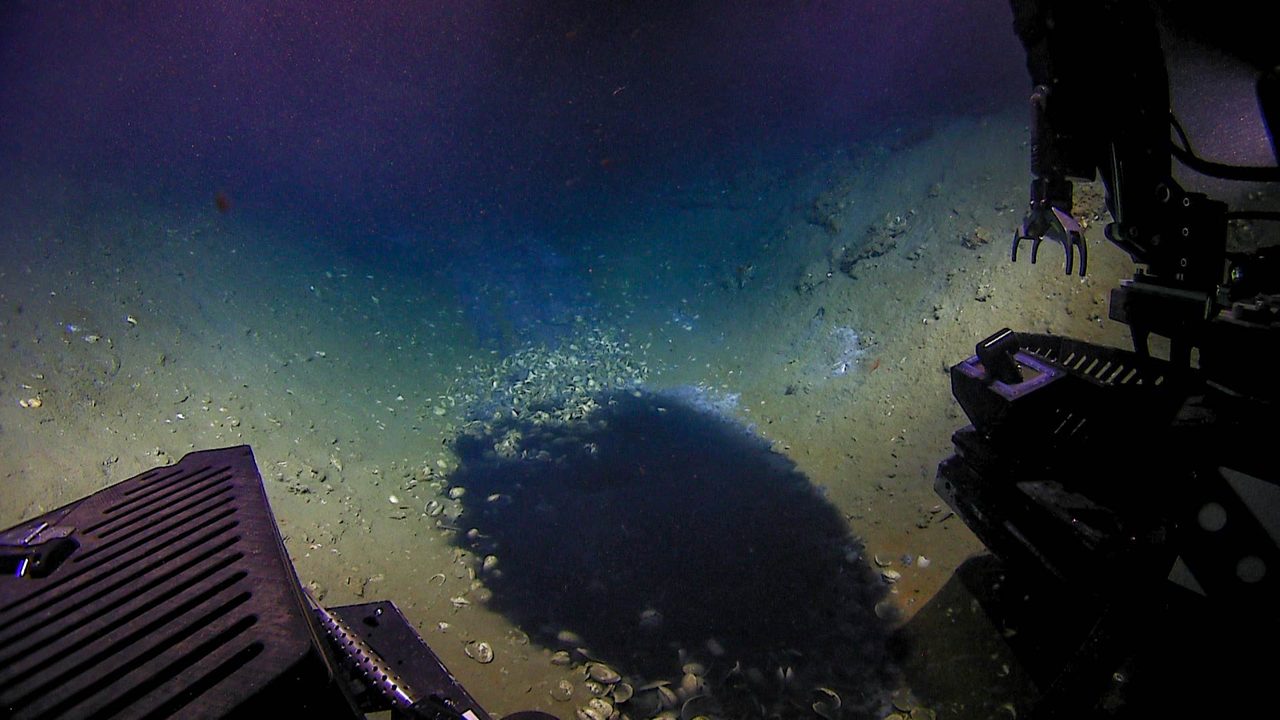
On the floor of the Gulf of Mexico there is a lake. It has a surface you can see, a shoreline, and small waves that lap when a submersible noses into it. This is not a trick of the light. It is brine so heavy with salt that it refuses to mix with the ocean above, pooling in the seabed like liquid resting inside liquid. Fall in and you die. Yet crowded against its lethal edge, mussels and tube worms and mats of microbes live in stubborn abundance. And brine pools are only the doorway. Follow the extremophiles out to their limits, to 122 degrees Celsius, to acid stronger than battery acid, to salt at the point of crystallizing, and you stop studying deep-sea curiosities and start mapping the outer boundary of where life is possible anywhere in the universe. This file opens the underwater lakes, the organisms that ring them, the moons where the same chemistry may be running right now, and the one celebrated claim about extreme life that turned out to be flatly wrong. Every fact wears its evidence.
Almost every headline about extreme life makes the same quiet mistake. It blurs three very different things together: what has actually been found and measured, what is a reasonable bet, and what is a hope dressed up as a discovery. Keep them apart and this subject becomes one of the most honest thrills in science. The brine pools are real, and so are the organisms living at their edges, measured directly by robot submarines. The idea that the same conditions could host life on other worlds is a serious, mainstream bet, not a proof. And the boldest single claim anyone ever made about extreme life, that a bacterium had swapped a poison into its own DNA, collapsed under scrutiny and was finally struck from the record. Read it in that order and you get the real story instead of the hype. Drop into the lake first.
01There Is a Lake at the Bottom of the Sea
Start with the thing that sounds made up and is not. On the floor of the Gulf of Mexico there are actual lakes. They form where slabs of salt left behind by a Jurassic sea, buried deep and squeezed upward into domes that geologists call salt diapirs, slowly dissolve into the water seeping past them. The result is brine carrying more than 200 grams of salt per liter, roughly six times the 35 grams per liter of ordinary seawater. That much dissolved salt makes the brine markedly denser than the sea around it, so instead of mixing away it collects in hollows on the seabed and simply sits there, a pool with a mirror-flat surface and a distinct shoreline where the dense brine meets the lighter ocean. A lake, at the bottom of the sea. This is settled oceanography, Tier 1, and it is the strange, real thing every other claim in this file is anchored to.
The Gulf is not the only place this happens, and it is not the most extreme. The Red Sea hides its own brine pools, first discovered in 1966, and the largest and hottest of them is a basin called the Atlantis II Deep, sitting around 2,200 meters down. Its brine runs near 68 degrees Celsius and carries a staggering 270 grams of salt per liter, close to eight times the salt of normal seawater. What lifts Atlantis II Deep beyond a curiosity is what has settled out on its floor: metal-rich muds carrying commercially significant concentrations of zinc, copper, silver, and gold. These are not fantasy underwater lakes. They are mapped, sampled, and in the Red Sea's case already eyed for mining.
| Feature | Gulf Of Mexico Brine Pools | Red Sea: Atlantis II Deep |
|---|---|---|
| Salinity | Over 200 g/L, about six times seawater | About 270 g/L, close to eight times seawater |
| How It Forms | Buried Jurassic salt diapirs dissolving into the seabed | A deep brine basin, first found in 1966 |
| Setting | Pools in seafloor depressions, with a visible surface | About 2,200 meters deep, and about 68 C |
| The Signature | The clearest 'underwater lake' visual there is | Metal-rich muds: zinc, copper, silver, and gold |
02A Shoreline Lined With the Dead
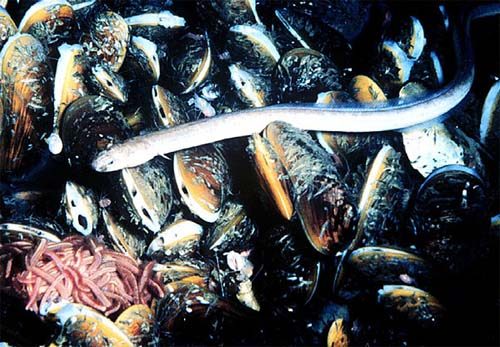
Here is the part that turns a geological oddity into a biological one. The brine itself is a death trap. It holds almost no oxygen and is often laced with lethal concentrations of hydrogen sulfide and methane, so an animal that blunders in simply dies. Researchers have a name for the rings of carcasses this leaves: brine pool kill zones. And yet the shoreline, the exact seam where the poisonous brine meets the breathable ocean, is one of the densest gatherings of life in the deep sea. Thick mats of chemosynthetic microbes carpet the edge, and around them cluster specialized tube worms, mussels, and snails, feeding on the chemistry leaking out of the brine. Life does not merely survive at the border of the lethal lake. It crowds there.
03Hotter, Saltier, and More Acid Than Life Should Tolerate
Zoom out from the brine pools and they turn out to be one outpost in a much larger territory. Most of the organisms thriving at these edges belong to the Archaea, a whole domain of life that Carl Woese only formally recognized in 1977. For years the archaea were known almost entirely from extreme places, the methane-makers, the salt-lovers, the heat-lovers, which is why 'archaea' and 'extremophile' became nearly synonymous. That turned out to be a sampling accident. Archaea are everywhere, ordinary soil and seawater included. But it was the extremophiles that first showed how far the envelope of life could be pushed, and how far it can be pushed is genuinely startling.
Take heat. The current record holder for growth at high temperature is an archaeon with an unglamorous name, Methanopyrus kandleri strain 116, which reproduces at 122 degrees Celsius when the pressure is high enough to keep water liquid (Takai and colleagues, 2008). That is well past the boiling point of water at the surface. Nobody has found anything alive and growing hotter, and there may be a hard ceiling not far above it: the best estimates put the theoretical upper limit for life somewhere around 150 degrees Celsius, the point where the large molecules life is built from, proteins and DNA, come apart faster than any cell can repair them.
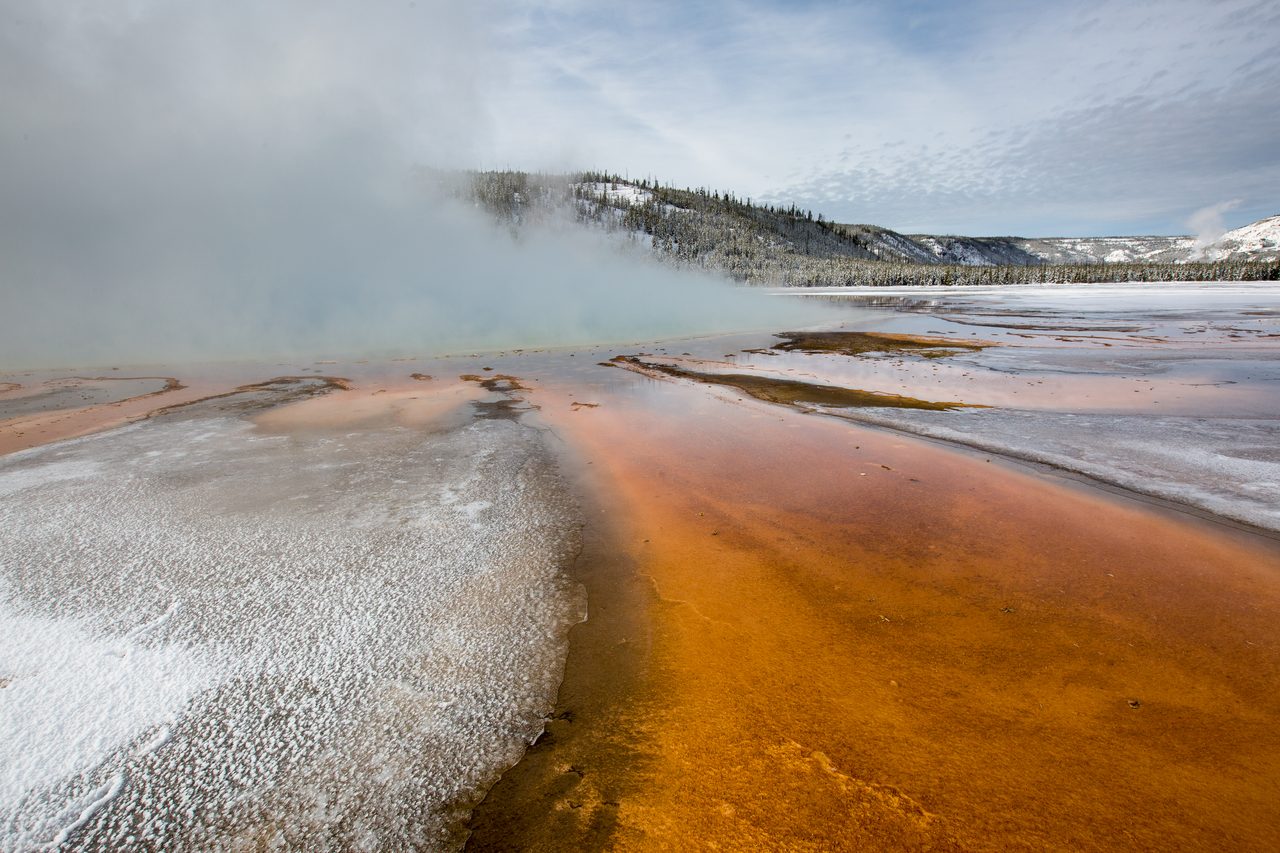
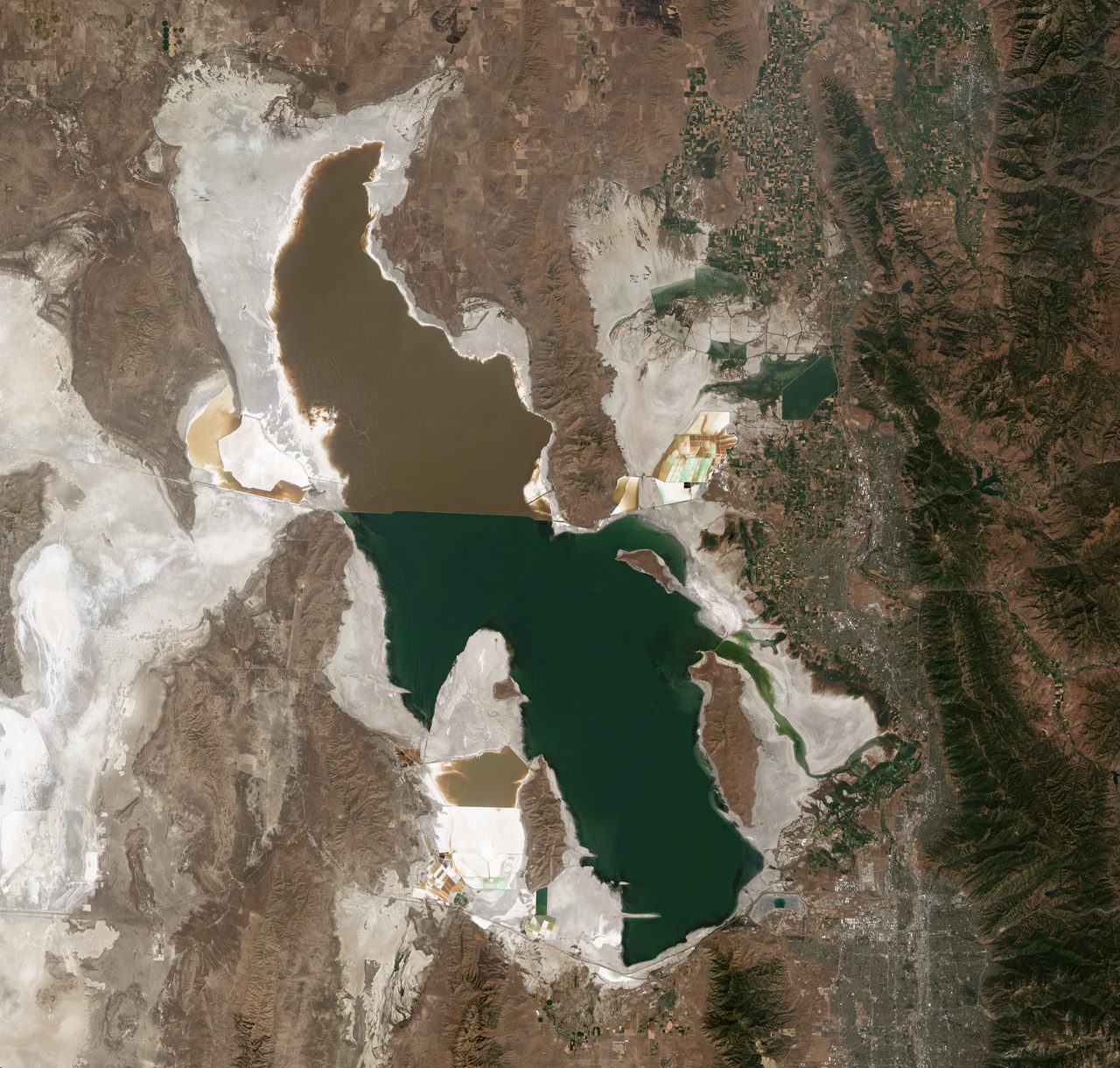
Now salt. Halophiles, the salt-lovers, do not merely tolerate brine, they need it. The archaeon Halobacterium salinarum grows happily in water saturated with sodium chloride, around 300 grams per liter, the point where salt begins crystallizing out. This is not a laboratory stunt. The Dead Sea and the Great Salt Lake run on communities of halophilic archaea and salt-adapted algae like Dunaliella, and their handiwork is visible from orbit: the arms of the Great Salt Lake glow different colors depending on how salty each side is and which salt-loving organisms have taken it over.
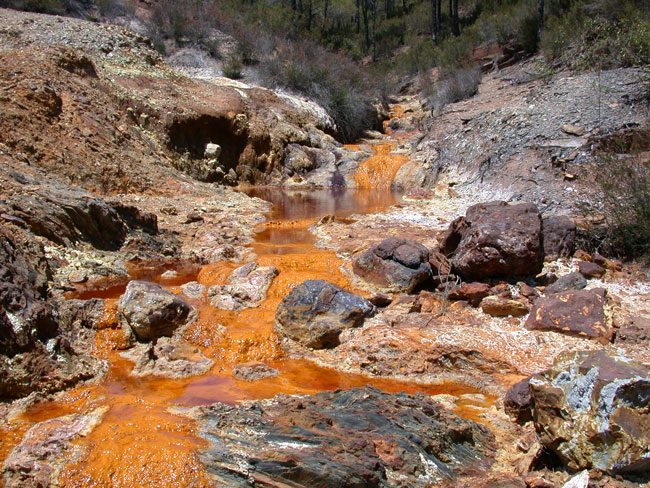
And acid. At the other chemical extreme, acidophiles thrive in conditions that would dissolve most living tissue. Picrophilus torridus grows best at a pH of 0.7, lower than battery acid. Iron-oxidizing acidophiles such as Acidithiobacillus ferrooxidans flourish in the runoff from mines, acid mine drainage, at a pH below 2, staining whole rivers a deep rust red. These are not organisms clinging to life at the margins. They are optimized for a chemistry we would otherwise call industrial waste.
And the map keeps growing. Beyond the brine pools and the boiling springs, life turns up in the hadal ocean trenches under more than 1,000 atmospheres of crushing pressure, and in soda lakes so alkaline they run past pH 12, the mirror image of the acid extremes. Organisms have been pulled from places once written off as sterile: kilometers down inside solid rock, in the cooling water of nuclear reactors, drifting in the stratosphere. Every one of these finds does the same thing. It moves the boundary of where life is possible outward, and that outward-moving boundary is the whole reason any of this matters beyond Earth.
| The Extreme | Champion Or Setting | The Measured Limit |
|---|---|---|
| Heat | Methanopyrus kandleri, an archaeon | Growth at 122 C under pressure |
| Salt | Halobacterium salinarum; the Dead Sea, the Great Salt Lake | Saturated brine, about 300 g/L |
| Acid | Picrophilus torridus; Acidithiobacillus in mine runoff | Optimal growth at pH 0.7; growth below pH 2 |
| Pressure | Hadal ocean trenches | Over 1,000 atmospheres |
| Alkalinity | Soda lakes | pH above 12 |
04Why This Is Really a Story About Aliens
Put the pieces together and the reason extremophiles obsess astrobiologists becomes obvious. For most of the history of the search for life, we assumed life needed roughly what we need: moderate temperatures, fresh water, sunlight. Extremophiles demolished that assumption one habitat at a time. If life on Earth can run at 122 degrees, in saturated brine, in acid, in total darkness on nothing but chemistry, then the list of places in the solar system that might host something alive gets a great deal longer. The convergence of Earth extremophile biology and planetary science is one of the most productive intersections in modern science, and it points at two moons in particular.
It also points backward, to the root of the family tree. When researchers reconstruct the Last Universal Common Ancestor, the single population that every living thing on Earth descends from, the portrait that comes back looks a lot like an extremophile. One major phylogenomic study concluded that this ancestor was thermophilic and chemosynthetic, at home in a hot, hydrogen-rich, metal-sulfide environment (Weiss and colleagues, 2016). That is consistent with life getting started somewhere hot and chemically charged rather than in a sunny, temperate pool, though it is a strong inference drawn from gene trees, not proof of any single birthplace. Read at the right tier, it says something quietly radical: extreme chemistry may not be where life clings on at the edges. It may be where life began.
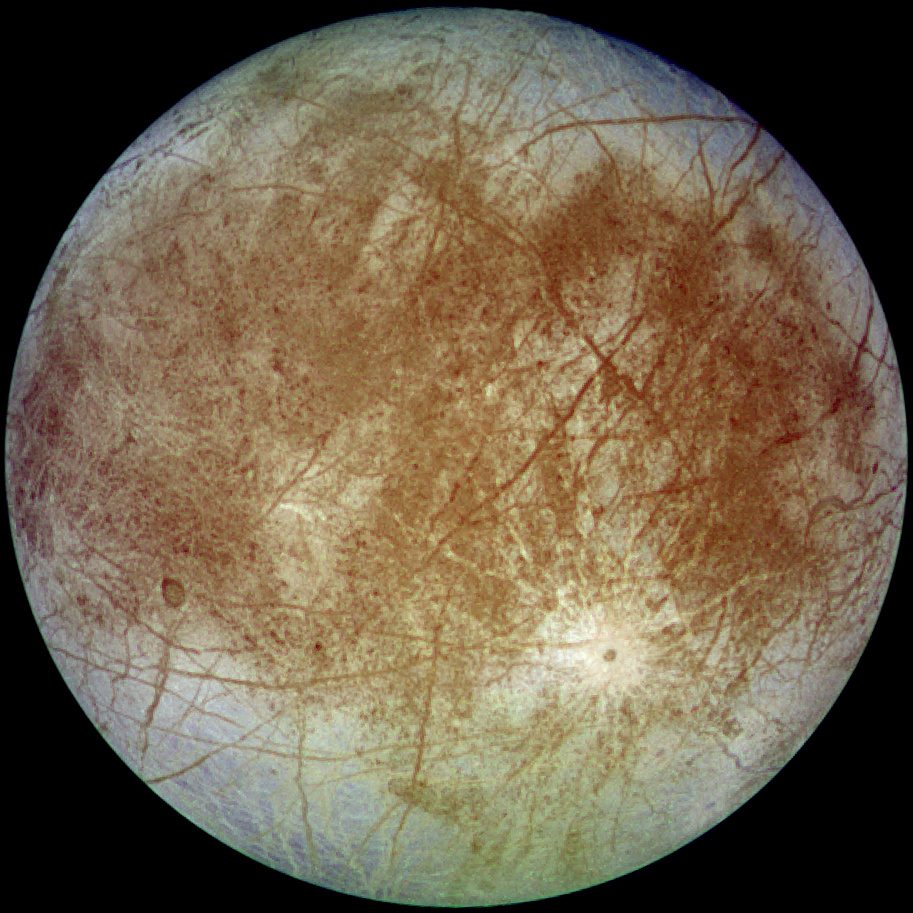
The first is Europa, one of Jupiter's moons. Beneath an ice shell somewhere between 10 and 30 kilometers thick, ice-penetrating radar and Hubble observations point to a global ocean of liquid water roughly 100 kilometers deep. And it need not be a frozen, dead ocean. As Jupiter's gravity flexes the moon, that tidal heating could drive hydrothermal activity on the ocean floor, the same kind of hot, mineral-rich chemistry that feeds Earth's deep-sea vents and brine systems. NASA judged the question serious enough to build a mission around it: the Europa Clipper, launched in 2024, is on its way to find out.
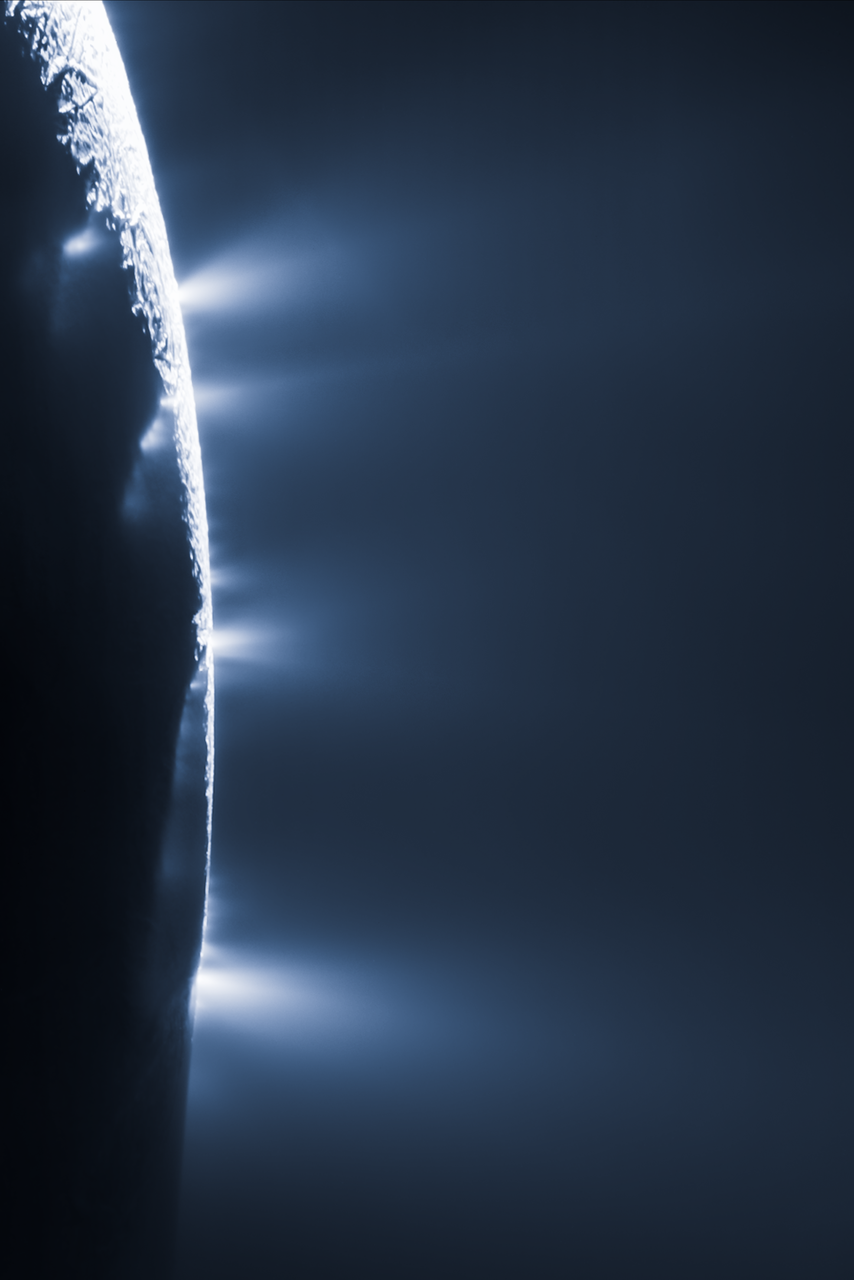
The second is Enceladus, a small moon of Saturn, and here the evidence is even more direct. The Cassini spacecraft flew through plumes of water vapor erupting from cracks near the moon's south pole and analyzed what was in them: molecular hydrogen, carbon dioxide, methane, and tiny grains of silica. Those silica nanoparticles are the tell. They can only form in water hotter than about 90 degrees Celsius, which means there is hot water reacting with rock at the bottom of Enceladus's hidden ocean right now (Hsu and colleagues, 2015). A little moon of Saturn is, by this evidence, running hydrothermal chemistry under its ice, the same chemistry that rings the brine pools with life.
05The Life We Might Not Even Recognize
Here honesty demands a hard turn, from evidence to hypothesis. A handful of researchers have floated a genuinely strange possibility called the shadow biosphere. The idea, argued by Cleland and Copley, and separately by Davies and Lineweaver, around 2005, is that Earth might harbor a second, entirely independent form of life, one built on different biochemistry: a different molecular handedness, alternative genetic molecules in place of DNA, perhaps even a solvent other than water. If such life existed, it could be hiding in exactly the extreme environments this file has toured, and we might have walked right past it, because every standard tool we use to detect life is tuned to find life like ours. Be clear about the tier. Not one example of a shadow organism has ever been found. The shadow biosphere is Tier 3, a live and unproven hypothesis, and its real value is the uncomfortable question it forces: how would we even know if we were looking at life that did not share our chemistry?
06When Science Catches Itself
Which brings us to the cautionary tale at the center of this whole subject, the moment the search for weird life got out ahead of itself in public and then had to walk it back. In 2010, at a heavily promoted NASA press conference, a team announced what would have been the most important extremophile ever found.
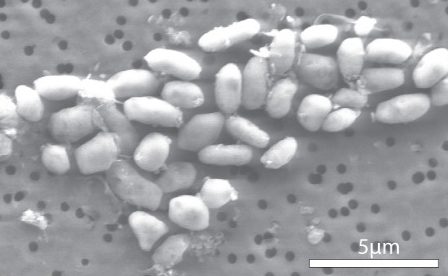
The claim was spectacular. A bacterium designated GFAJ-1, pulled from the arsenic-rich waters of Mono Lake in California, could supposedly do something no known life can: substitute arsenic for phosphorus in the very backbone of its own DNA (Wolfe-Simon and colleagues, published in Science in 2011). If true, it would have meant life could be built from a different set of elements than we thought, a huge boost to every argument in this file. It was not true. Within months, multiple independent laboratories tested the claim and could not reproduce it. GFAJ-1 turned out to be merely arsenic-tolerant, a genuinely impressive trick, while still absolutely requiring phosphorus to live. It never built arsenic into its biochemistry at all.
The story did not end with a quiet correction. It ended, fifteen years later, with the formal machinery of science reversing itself in public. On July 24, 2025, the journal Science retracted the original arsenic-life paper outright. The journal's editor-in-chief, H. Holden Thorp, was careful to state the grounds: the retraction was made because 'the reported experiments do not support its key conclusions,' and explicitly not because of any fraud or misconduct. The original authors did not agree. In an accompanying letter they stood their ground, writing that they 'stand by the data as reported.' That disagreement is not a footnote to be embarrassed about. It is the process working out loud: a bold claim published, tested by others, found wanting, and finally struck from the record, with the dissent preserved for anyone to read.
This is the opposite of a scandal. It is the reason to trust the rest of the file. Extraordinary claims about life draw extraordinary scrutiny, and the ones that cannot survive it, even famous ones with a NASA logo behind them, get pulled. The brine pools, the 122-degree archaeon, the plumes of Enceladus: those are still standing precisely because they went through the same gauntlet and held.
07The Other Deep-Sea World
One last piece of housekeeping, because it is easy to run these two together. Brine pools are one of the deep ocean's two great communities that live on chemistry instead of sunlight. The other is the hydrothermal vents, which run on a different chemistry entirely and deserve their own file, not a paragraph borrowed here. We tell that story in full separately, in Life Without the Sun: Hydrothermal Vents. For this file, it is enough to know the brine pools are a distinct world, with a distinct trick, sitting a stone's throw away in the same dark.
08Every Claim, Every Tier
Stack the claims up in one place and the subject stays honest. Here is the whole file, each line wearing the tier the evidence earns.
| The Claim | Tier | The Basis |
|---|---|---|
| Seafloor brine pools are real hypersaline 'lakes' with visible surfaces (Gulf of Mexico, Red Sea) | Tier 1 | Oceanographic survey and ROV imagery |
| Dense communities of life ring the brine-seawater interface | Tier 1 | Deep-sea biology of the pool edges |
| Microbes grow up to 122 C, in saturated brine, and down to pH 0.7 | Tier 1 | Cultured extremophiles (Takai et al. 2008 for the heat record) |
| Europa and Enceladus hold subsurface oceans with likely hydrothermal activity | Tier 2 | Radar and Hubble; Cassini plume chemistry (Hsu et al. 2015) |
| The Last Universal Common Ancestor was a chemosynthetic thermophile | Tier 2 | Phylogenomic reconstruction (Weiss et al. 2016) |
| A 'shadow biosphere' of alien biochemistry hides on Earth | Tier 3 | Hypothesis only; no example ever found |
| The bacterium GFAJ-1 builds arsenic into its DNA | Tier 4 | Refuted by independent labs; retracted by Science in 2025 |
Fast Facts
- The Visual Hook
- Seafloor brine pools with real surfaces and shorelines
- How Salty
- Over 200 g/L in the Gulf of Mexico, about 270 g/L in the Red Sea, versus about 35 g/L for seawater
- Hottest Known Life
- Methanopyrus kandleri, growing at 122 C (Takai et al., 2008)
- Most Acidic Known Life
- Picrophilus torridus, optimal at pH 0.7
- The Payoff
- Europa and Enceladus: subsurface oceans with likely seafloor hydrothermal activity
- The Speculation
- A 'shadow biosphere' of alien biochemistry (Tier 3, no evidence)
- The Debunked Claim
- Arsenic-based DNA in GFAJ-1, retracted by Science in 2025
- Told Separately
- Hydrothermal vents, in their own dossier
What We Can Actually Stand Behind
The underwater lakes are real, and so is the life at their edges. Brine pools with visible surfaces and shorelines sit on the floors of the Gulf of Mexico and the Red Sea, filled with brine several times too salty to mix with the sea above. Their interiors are anoxic kill zones, and their shorelines swarm with tube worms, mussels, snails, and microbial mats. Push out from there and the extremes are just as real: life grows at 122 degrees Celsius, in saturated brine, and at a pH below battery acid. Every bit of this is measured, mainstream science.
The leap from Earth's extremes to alien oceans is a serious bet, not a proven fact. Europa almost certainly hides a vast ocean under its ice, and Enceladus is venting the chemistry of an active hydrothermal system into space right now. Extremophiles show that such places could, in principle, be habitable, and the deepest root of Earth's own family tree looks like a chemosynthetic thermophile. Could is the operative word. No life has been found on either moon. This is Tier 2, credible and unresolved, and the Europa Clipper is on its way partly to test it.
The shadow biosphere is a fascinating question, not a discovery. The notion that Earth hosts a second, independent form of life built on alien biochemistry, hiding in extreme places our instruments are not tuned to detect, has exactly zero confirmed examples behind it. It earns its place only as a Tier 3 hypothesis and as a useful warning about the blind spots in how we hunt for life.
And one famous claim is simply false, and has to be named as such. No, the Mono Lake bacterium GFAJ-1 does not build arsenic into its DNA. Independent laboratories could not reproduce the 2011 result, the organism merely tolerates arsenic while still needing phosphorus, and in July 2025 the journal Science formally retracted the paper. This is the flat no in the file. It also stands as the best evidence that the rest of the file is trustworthy, because this is exactly what happens to extreme-life claims that cannot take the weight.
So keep the layers apart and the wonder survives the scrutiny. There are lakes at the bottom of the sea, ringed by creatures living off poison in the dark, and there are moons in this solar system running the very same chemistry beneath their ice, waiting for a probe to arrive and look. What we have not found, anywhere, is the life itself on another world, or a single organism on this one built from a different playbook than ours. The brine pools prove that life will take hold in nearly any crack we once called impossible. The open question is the one the extremophiles keep daring us to ask: if life can live here, at the bottom of a poison lake, at 122 degrees, in acid, then when we finally pull a sample from beneath the ice of Europa, what are the odds it comes back empty?
Sources & further reading
Everything above is drawn from our research library on Theories of Anything, which is where we worked from. The papers, reports and primary records listed beneath them are where you can check us independently.
Image credits
- A small brine pool on the deep seafloor of the Gulf of Mexico Photo: NOAA Office of Ocean Exploration and Research. Public domain
- A brine pool eel and pink worms on a dense bed of deep-sea mussels Photo: NOAA (courtesy of NOAA, for the California Academy of Sciences). Public domain
- Vividly colored thermophile microbial mats ringing the edge of Grand Prismatic Spring Photo: Neal Herbert, National Park Service (Yellowstone). Public domain
- A satellite view of the Great Salt Lake showing a color contrast between its two arms Image: Copernicus Sentinel-2, ESA (contains modified Copernicus Sentinel data 2018). CC BY-SA 3.0 IGO Source.
- The deep red, iron-stained acidic water of the Rio Tinto river in Spain. Photo: Carol Stoker, NASA Ames Research Center. Public domain
- Jupiter's moon Europa, showing dark fracture lines across its bright icy surface Image: NASA / JPL / DLR. Public domain
- Water-ice plumes erupting from the south polar fractures of Saturn's moon Enceladus Image processing: Mark McCaughrean, from Cassini / NASA / JPL-Caltech / Space Science Institute data. CC BY-SA 4.0 Source.
- A microscope image of the GFAJ-1 bacterium, cultured on an arsenic-containing medium Image: NASA / Jodi Switzer Blum. Public domain
- Card crop of a small brine pool on the deep seafloor of the Gulf of Mexico Photo: NOAA Office of Ocean Exploration and Research. Public domain

.png)