Cattle Mutilation: The Ranchers' Losses Were Real, and Almost Every Investigation That Examined the Evidence Answered Predation
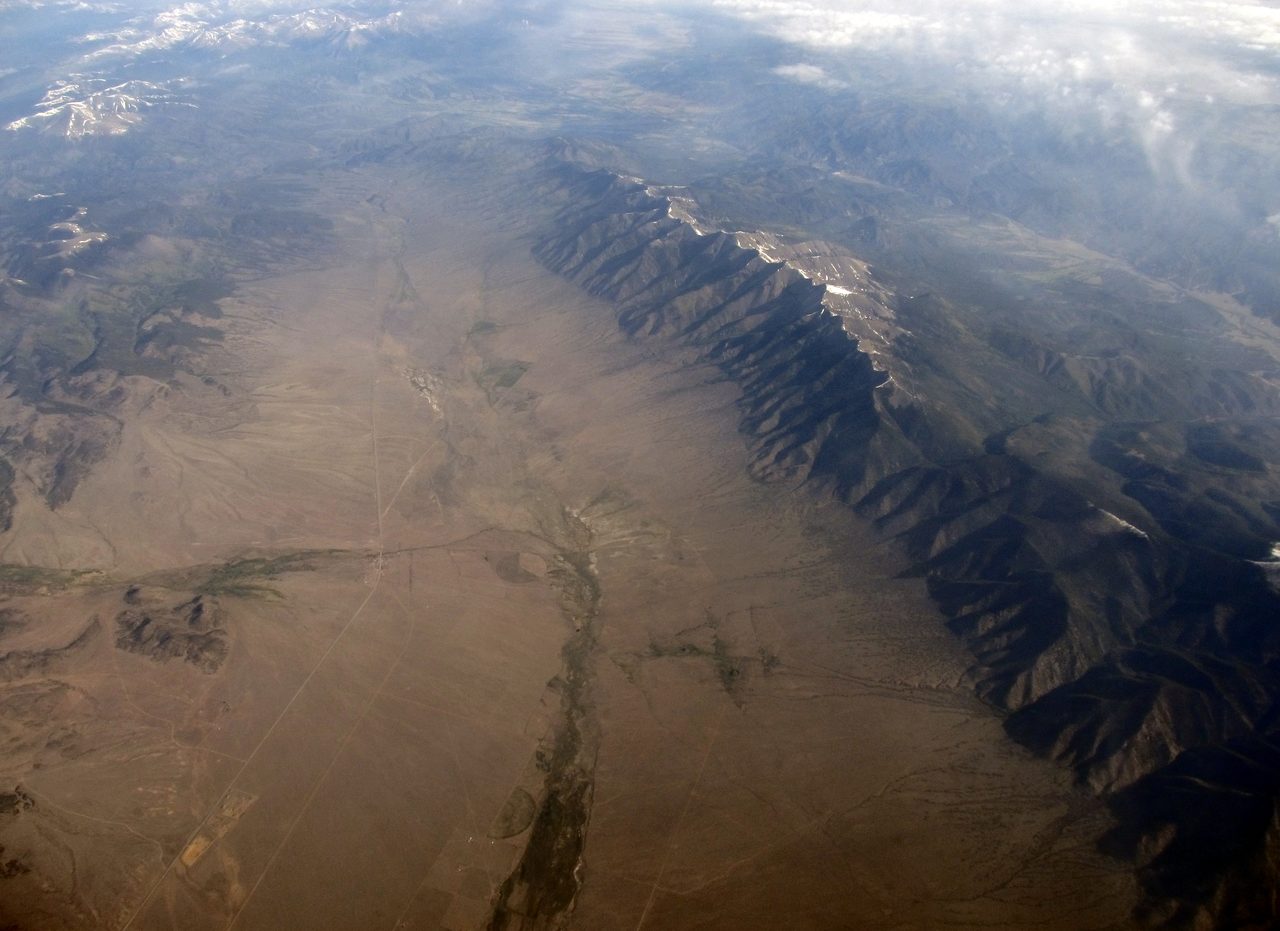
Between 1975 and 1980, ranchers across Colorado, New Mexico, Kansas, Montana and the wider Great Plains found animals dead in their own pastures with soft tissue missing and the edges of the damage looking clean enough to have been cut. That part is not in dispute. The animals were real, the money was real, and nobody in authority treated it as a joke: the Colorado Bureau of Investigation opened a case in May 1975 and had looked at 203 reported mutilations by December, nineteen carcasses went to Colorado State University for necropsy, a reward was posted, the Bureau of Alcohol, Tobacco and Firearms put an agent on a suspected cult, and in May 1979 the district attorney of New Mexico's First Judicial District took a $44,170 Justice Department grant and hired a man who had just finished 28 years as an FBI special agent to spend a year finding out what was killing the livestock. His name was Kenneth M. Rommel Jr. He inspected 25 carcasses himself and gathered information on about 90 reports. What he concluded, and the one word inside his conclusion that almost every retelling drops, is the spine of this page. So is the thing that has never once been produced in sixty years: any physical trace of anything that was not already living in the field.
A beef animal is a capital asset. In the mid-1970s a rancher in Colorado or New Mexico who walked out at first light and found one of his dead in a pasture had lost money, and if it happened twice in a season he had a problem worth calling the sheriff about. A great many people made that call.
What they described was consistent enough to become a genre. An animal dead with no obvious cause. Soft tissue gone. The edges of the missing tissue looking too clean and too regular to be an accident. Within a few years the reports had a name, cattle mutilation, and a lineup of suspects that ran from an organised cult to an unmarked helicopter to a craft nobody could identify.
Two different questions have been tangled together ever since, and this page keeps them apart on purpose. The first is what a rancher found in a field. That is testimony about a carcass, and it is generally not in dispute: the animal was dead, tissue was missing, and the edges looked clean. The second is what caused it, and that is where every dispute actually lives. Almost every investigation that examined the physical evidence answered the second question with predation and decomposition. None of them disputed the first.
Hold onto that split, because the popular version of this story and the dismissive version both cheat on it. The popular version takes a rancher's honest description of a carcass and treats it as a finding about cause. The dismissive version takes a finding about cause and treats it as proof the rancher was a fool. He was not a fool. He was out an animal, and he did the responsible thing and reported it. One more thing before we start: this page describes what investigators recorded, clinically and once, and then moves on. There is no reason to linger, and there are no photographs of dead animals here.
01September 1967: The Mare Called Lady
The case that began the modern phenomenon involved a three-year-old Appaloosa mare named Lady, owned by Berle Lewis and his wife Nellie of Alamosa, Colorado, and stabled at Harry King's ranch. She failed to return for her usual evening drink on September 7, 1967, and King found her dead about a quarter of a mile from the ranch on September 9, 1967, with the head and neck stripped of flesh.
The press called her Snippy. Snippy was in fact the name of her sire, and the mix-up stuck for decades, which tells you most of what you need to know about how carefully this story has been handled since. Our own research file gets that detail right, which most popular accounts do not. It gets the dates wrong, and the correction matters because it is the first of several: September 7 is when she was last seen, and September 9 is when she was found.
Then look at what happened to the founding case when people with credentials examined it.
The Condon Committee examined the Lady case and found no evidence to support the assertion that the horse's death was associated in any way with abnormal causes. Later reporting recorded that the horse had been shot in the rump, and that two students from Alamosa State College confessed to having gone into the pasture and shot the carcass some weeks after the case became public.
Read that in the order it is written, because compressing it produces a false claim about named people. The students shot an animal that had already been dead for weeks and had already been in the newspapers. Nothing here says they killed her, and nothing available to this page says what did. That is the honest shape of the case that started all of it: a committee finding of no abnormal causes, a post-publicity interference with the carcass, and a famous name that belonged to a different horse.
02What The Ranchers Actually Lost
Before this page reaches anything with a flying saucer in it, get the ledger straight. A rancher who found a dead animal had lost a substantial capital asset whatever the cause. Ranchers reported those losses to sheriffs, to state investigators, to their senators and to the press. The authorities did not shrug. They responded with a state bureau investigation, necropsies at a state university, a posted reward, a federal agency inquiry and a year-long federally funded investigation. People do not spend that on a joke.
The Colorado Bureau of Investigation opened its own investigation in May 1975 under Carl Whiteside. By December the CBI had investigated 203 reported cattle mutilations, nineteen animals had undergone necropsy at Colorado State University with no conclusive result, and a $40,000 reward had been offered.
Nineteen carcasses on a university necropsy table is not a rumour being humoured. It is a state bureau spending public money to find out whether a crime was being committed against people in its own jurisdiction, and it is the clearest single answer to anyone who thinks the ranchers were laughed at.
In January 1975 the Bureau of Alcohol, Tobacco and Firearms tasked agent Donald E. Flickinger with investigating a possible link between the mutilations and an organised cult. His investigation closed by spring 1975 after finding insufficient evidence of cult involvement.
Note what that is. The cult explanation, which is still repeated as though nobody ever bothered to check it, was checked by a federal agency inside the wave itself and was not sustained. That is a finding, not an absence.
| Who, And When | What They Did | How It Ended |
|---|---|---|
| Bureau of Alcohol, Tobacco and Firearms, January 1975 | Tasked agent Donald E. Flickinger with investigating a possible link between the mutilations and an organised cult. | Closed by spring 1975. Insufficient evidence of cult involvement. |
| Colorado Bureau of Investigation, from May 1975, under Carl Whiteside | Investigated 203 reported cattle mutilations by December, sent nineteen animals for necropsy at Colorado State University, and a $40,000 reward was offered. | The necropsies produced no conclusive result. |
| The FBI, March 1979 to January 1980 | Authorised by the Assistant Attorney General of the Criminal Division on March 2, 1979 and tasked to the Albuquerque field office on March 5, 1979. Confined by jurisdiction to Indian lands, specifically the Santa Clara Pueblo and Jicarilla Apache reservations. | The investigator Mel Sedillo Jr. reported that in each instance his examination showed the animals had been attacked by predators. Closed January 15, 1980: no federal interest in continuing in the absence of further reports. |
| District Attorney, First Judicial District of New Mexico, May 1979 to June 1980 | Operation Animal Mutilation, directed by Kenneth M. Rommel Jr. on a $44,170 US Department of Justice Law Enforcement Assistance Administration grant. Rommel personally inspected 25 carcasses and gathered information on roughly 90 reported New Mexico mutilations. | Reported in June 1980 that the mutilations were predominantly the result of natural predation, while some cases contained anomalies that could not be accounted for by conventional wisdom. |
The wave of reports peaked between 1975 and 1980 across Colorado, New Mexico, Kansas, Montana and other Great Plains and Mountain states. Further waves were reported in the 1990s and 2000s in Argentina, the United Kingdom and Sweden.
03Bloat, Blowflies, And An Edge That Looks Cut
Here is the part that decides the whole question, and it is not an argument. It is a description of what happens to a body left in a field.
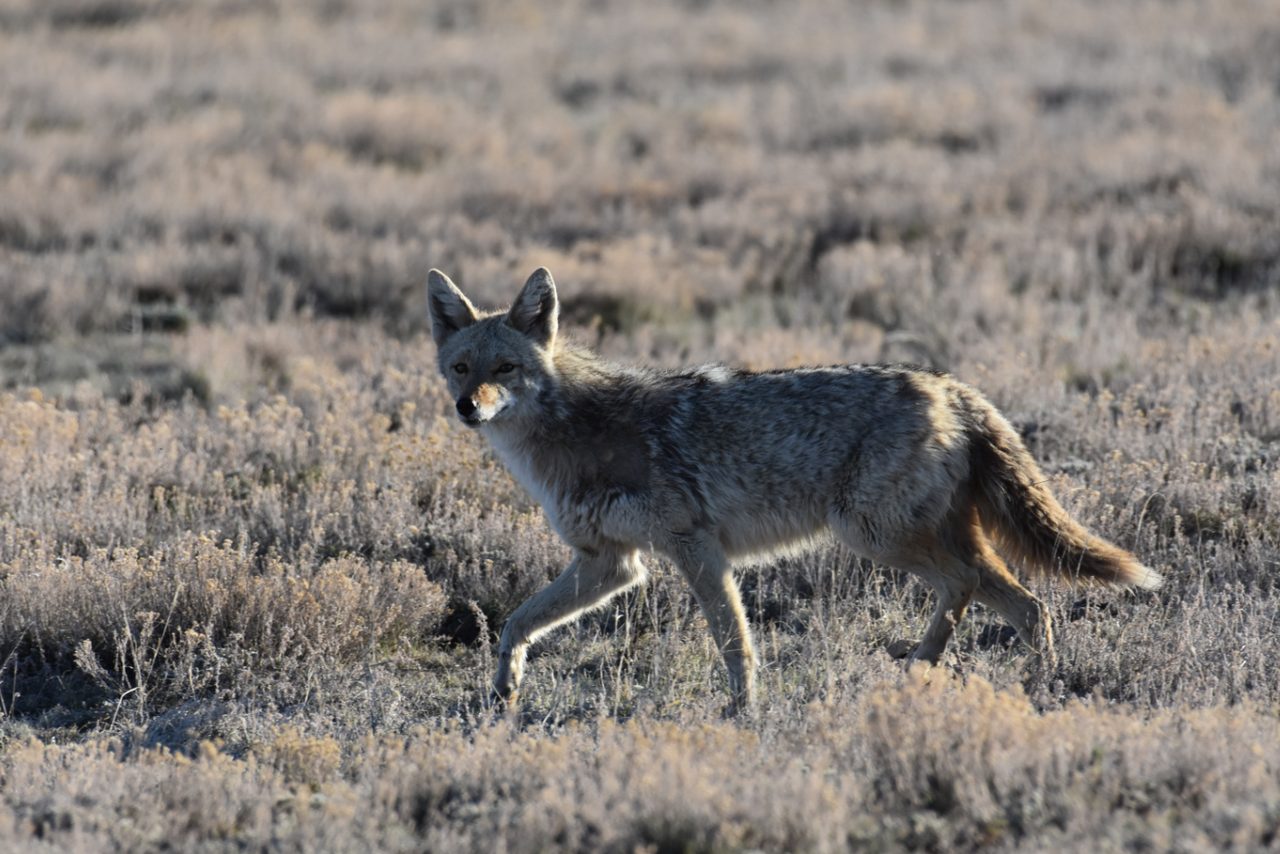
Our research file's Tier 1 summary of the 1979-80 New Mexico investigation states that all of the reported cases could be explained by natural predation and decomposition. Soft-tissue organs, the lips, tongue, eyes, genitals and anus, are consumed first by blowflies, maggots, ravens and small scavengers, producing wound edges that look surgical to an untrained observer.
That is our own research file's wording, and one word in it is stronger than the investigation it is summarising. The report's own conclusion was that the mutilations were predominantly the result of predation, not that every single case was accounted for. Section 04 gives that sentence in full, and this page uses the report's word rather than our file's.
Veterinary and forensic study confirms the mechanism: post-mortem bloat stretches the hide, and when the stretched hide ruptures it opens along clean-looking lines that resemble incisions; blowfly larvae feeding on the exposed margins then eat them back to a smooth, regular edge.
Read that twice, because it is the answer to the question the phrase surgical precision is really asking. Nobody has to have cut anything. Gas pressure opens the hide along a line, and then an insect the size of a fingernail tidies the edge. The result is a margin that an experienced rancher, who has seen plenty of ordinary dead cattle, correctly recognises as not looking like the ordinary ones. His observation is good. The inference that a blade made it is the step that fails.
A law enforcement test in Arkansas put the question in a field: the body of a recently deceased cow was left in a field and observed. Post-mortem bloating produced incision-like tears in the hide that matched the 'surgical' cuts reported on mutilated cattle.
That is the strongest single item on this page, and it is worth being precise about why. It is not a skeptic reasoning about what could have happened. It is somebody putting the hypothesis in a field and watching it come true. Two caveats travel with it. The accounts available to this page disagree on which agency ran the test and on how long the observation lasted, so no elapsed time is printed here. And a demonstration that the effect can arise naturally is not a demonstration that it always did.
Comparative experiments have also been run on hide and flesh cut surgically against hide and flesh damaged by predators, exposing both to natural conditions over time. They showed pronounced differences between the two as they aged.
Take exactly what that gives you and nothing more. It establishes that the surgical-versus-scavenger question is empirically testable rather than a matter of opinion, which is genuinely useful. The research pass behind this page did not establish which of the two patterns the reported field cases matched, and this page will not pretend otherwise.
04Operation Animal Mutilation, 1979 To 1980
Our own research file describes this investigation as an FBI-commissioned report by a veterinary pathologist named Dr. C.M. Rommel Jr. who examined fifteen cases. Every element of that sentence is wrong, and correcting it makes the investigation more impressive rather than less.
Operation Animal Mutilation was directed by Kenneth M. Rommel Jr., who had just retired after 28 years as an FBI special agent working counter-intelligence and major crimes including bank robbery. He was not a veterinarian and not a pathologist.
That is a better fact than the one our file carried. A career federal criminal investigator, not a debunker and not a vet, was handed a year and a federal grant and told to find out whether a crime was being committed against New Mexico ranchers. He arrived as an investigator of crimes, which is exactly what the ranchers were asking for.
The investigation was run by the district attorney's office of New Mexico's First Judicial District and funded by a $44,170 grant from the US Department of Justice Law Enforcement Assistance Administration. It began in May 1979 and its final report was issued in June 1980. Secondary accounts describe the report as running 297 pages.
The grant figure, the funding body and the dates were confirmed from more than one independent source for this page. The page count rests on a single secondary account and was never checked against the report itself, which is why it is written here as something described rather than something established. Note also who commissioned it: a district attorney, the officer whose job is to prosecute, not the Bureau our file credits.
Rommel's report set out five objectives at the outset: to test the reliability of the information the grant was based on; to determine the cause of as many mutilations as possible, especially in New Mexico; to determine whether livestock mutilations constituted a major law enforcement problem; if so, to establish its scope and recommend action; and if not, to recommend that no further law enforcement investigations be funded.
Objective four is the one to notice, and it is the strongest possible answer to the charge that this inquiry was a foregone conclusion. The investigation committed in writing, before it began, to recommending action if it found a real problem. It was designed to be able to come out either way. Very little else in this entire subject was.
Rommel personally inspected the carcasses of 25 reported mutilations and gathered information on roughly 90 mutilations reported in New Mexico overall, a total that included six horses and one buffalo calf as well as cattle.
Two corrections in one card. He inspected 25 carcasses, not fifteen; the number fifteen belongs to a different investigation entirely, and section 05 shows where it came from. And the animals were not all cattle, which is a small honest complication of the popular name for the phenomenon. Six horses and a buffalo calf are in there too.
| The Figure | Who Put It Forward | What Kind Of Number It Is |
|---|---|---|
| 130 mutilations in Colorado, with further reports across nine states | Senator Floyd K. Haskell | A figure cited by a senator during the wave. Not an investigated total. |
| An estimated 8,000 mutilations in Colorado, causing approximately $1 million in damages | An FBI record | An estimate recorded in a file. It cannot be reconciled with the figure above, and this page treats neither as a count. |
| 40 mutilations investigated by December 13, 1973, most on land near US Highway 81 | Kansas law enforcement | A law enforcement investigation count. Firmer than the two Colorado estimates. |
| 25 mutilations reported across five Nebraska counties as of August 28, 1974 | Contemporary reporting of law enforcement records | A law enforcement report count. Firmer than the two Colorado estimates. |
| 203 reported cattle mutilations investigated by December 1975 | The Colorado Bureau of Investigation | Cases a state bureau actually worked. Nineteen of the animals went to necropsy. |
| 10,000 head of cattle mysteriously mutilated by 1979, by some estimates | Recorded in Rommel's own report as the scale of the claim he was testing | An estimate the investigation set out to check, not a finding of the investigation. |
| 25 carcasses inspected in person, roughly 90 reports gathered | Kenneth M. Rommel Jr., Operation Animal Mutilation | The only line in this table where somebody looked at the animals himself. |
Rommel's June 1980 conclusion was that the mutilations were predominantly the result of natural predation, while some cases contained anomalies that could not be accounted for by conventional wisdom. His report also recorded the scale of the claim he was testing, noting that by some estimates 10,000 head of cattle had been mysteriously mutilated by 1979.
Predominantly is his word, and it is the word that both sides of this argument delete. An article that flattens him into it was all coyotes misrepresents him exactly as badly as an article that pretends he never reported. He looked at 25 animals, he found predation, and he wrote down that some of what he saw did not fit. That is what an honest investigator's conclusion looks like: mostly, plus a remainder he refused to tidy away.
Operation Animal Mutilation closed in 1980 with Rommel's report as its primary finding.
Our file says the FBI closed it. The FBI never ran it. It was closed by the office that opened it, a New Mexico district attorney working on a Justice Department grant, and getting that right is not pedantry. Most of the grievance in this subject is about federal agencies allegedly refusing to look, and the record of who actually looked is the first thing anyone should be able to state correctly.
05The FBI's Own File, And Why It Is So Thin
The FBI's own separate inquiry was authorised by the Assistant Attorney General of the Criminal Division on March 2, 1979 and tasked to the Albuquerque field office by FBI headquarters on March 5, 1979. Its trigger was correspondence from Senator Harrison Schmitt of New Mexico reporting fifteen mutilations on New Mexico Indian country over the preceding three years, and it was confined by jurisdiction to Indian lands, specifically the Santa Clara Pueblo and Jicarilla Apache reservations. The investigator Mel Sedillo Jr. reported that in each instance his examination showed the animals had been attacked by predators. On January 15, 1980 Assistant US Attorney Richard J. Smith concluded that there was no federal interest in continuing the investigation in the absence of further reports.
There is the missing fifteen. It is Senator Schmitt's count of mutilations on Indian country, not Rommel's caseload, and our research file has welded two entirely separate 1979 investigations into one. They had different sponsors, different jurisdictions, different investigators and different sizes. This page keeps them apart, and once they are apart the most persistent grievance in the whole subject turns out to have an honest answer.
The FBI publishes its Animal Mutilation file in five parts in the FBI Vault, filed under Unexplained Phenomenon. The Bureau's own summary of the file states that in the mid-1970s reports of scattered animal mutilations in western and midwestern states concerned many people, that the FBI was asked to investigate but was unable to do so for lack of jurisdiction except where mutilations were found on Indian lands, and that the records consist mainly of press clippings and correspondence concerning the issues between 1974 and 1978.
Why didn't the FBI investigate is the question this subject has asked ever since, usually with an implication attached. The Bureau's own answer, in its own file, is that for almost all of the wave it legally could not. Cattle on private ranch land in Colorado is a state matter. The Bureau got jurisdiction only where the animals were found on Indian lands, and on exactly those cases it did investigate, and its investigator reported predators every time.
One more thing that summary quietly deflates. A large FBI file on cattle mutilation is, by the Bureau's own description, largely a file of newspaper clippings and correspondence. Our own research file claims a specific page count for the FOIA release. That number could not be verified anywhere, the Bureau states no total, and this page prints no page count at all rather than repeat one it cannot stand behind.
FBI files on animal mutilation were released under the Freedom of Information Act. They document widespread rancher reports in the late 1970s, primarily from New Mexico, Colorado and neighbouring states, and the Bureau's conclusion that most cases had prosaic explanations.
Some of the FBI files note that a small number of cases showed anomalies that could not be conclusively explained, while not rising to the level of evidence for organised criminal activity.
Keep that one. It is the second time on this page that the skeptical side, at its own highest evidence tier, has left a remainder in writing. Rommel did it with the word predominantly and the Bureau did it here, and the two investigations were separate. An account that presents these inquiries as having explained one hundred per cent of cases is misrepresenting the inquiries.
On April 20, 1979 a public conference on cattle mutilations was held at the Albuquerque Public Library, chaired by Senator Harrison Schmitt and the United States Attorney R. E. Thompson, attended by law enforcement agencies from several states, news media and members of the public.
No attendance figure appears here on purpose. The FBI's own memorandum and the secondary literature give numbers that differ by more than a factor of two, and a headcount nobody agrees on adds nothing that the guest list does not already say. A sitting senator and a United States Attorney chaired a public meeting about dead cattle, with police from several states in the room. That is the fact worth having.
06The Objection From The Ranching Side
Rommel's report did not settle the argument, and the sharpest objections to it came from inside law enforcement rather than from the fringe.
Rommel's investigation has been challenged from the ranching side. Gabe Valdez, the New Mexico State Police officer who handled many of the mutilation reports, later told the investigator Christopher O'Brien that during the six to eight months Rommel was actively investigating, the state went suddenly quiet with very few if any true mutilations reported to officials.
That is worth stating plainly and then looking at squarely, because of the shape it has. As an argument it cannot lose. If reports continue during an investigation, the phenomenon is real; if they stop, whoever is responsible knew to stop. There is no result the claim would accept as a refutation. This page does not endorse it and does not mock it either. Valdez was the officer on the ground for a great many of these cases and had earned the right to be sceptical of a man who arrived after him.
On May 2, 1979 Gabe Valdez told the press that two drugs had been found in the remains of a mutilated bull discovered in Torrance County, New Mexico on February 15, 1979: chlorpromazine, marketed as Thorazine, which he said had been used to tranquilise and immobilise the animal, and a second unnamed drug he said had been used to clog the blood and remove it through the jugular vein.
This is the single most cited specific in the entire proponent case, and it is a statement made to journalists by a named officer in May 1979. The research pass behind this page found no laboratory named, no analysis published, no independent confirmation and no follow-up. That does not make Valdez wrong. It does mean that what exists is a press statement, not a toxicology result, and a page that presents it as a laboratory finding is upgrading it without permission.
Also in 1979, on the suspicion that cattle were being marked in a way visible from the air at night, investigators screened rancher Manuel Gomez's herd near Dulce, New Mexico and reported that five animals carried a substance that fluoresced under ultraviolet light.
Same treatment, and for the same reason: no substance was identified, and no independent confirmation was located for this page. Manuel Gomez was a rancher who reported repeated losses and let investigators walk his herd with a lamp, which is a cooperative man with a real problem. Dulce is a real town in northern New Mexico and it appears here only as a place where reports clustered. The underground-base story attached to that name belongs to our Draconians dossier and is not imported here.
07The Cases That Stayed Open
A small percentage of investigated cases present features that trained veterinary pathologists find difficult to explain through natural decomposition alone: precise circular tissue cores resembling biopsy punches rather than typical scavenger damage; reports of elevated radiation readings or unusual chemical residues at carcass sites; and an absence of expected blood pooling in carcasses found on dry ground. Our file notes that the measurement methodology behind the radiation and residue reports is often challenged. These cases remain genuinely unexplained and do not by themselves point to any specific cause.
That is the honest middle of this subject and it is the easiest paragraph on the page to abuse in either direction. The last sentence is not a disclaimer bolted onto the claim; it is part of the claim. Unexplained means unexplained. It does not mean unexplained by ordinary means and therefore explained by extraordinary ones, which is the substitution the whole genre runs on.
What gives this residue its weight is where it comes from. It is not the proponents' number. Rommel wrote it into his conclusion with the word predominantly, the FBI's own files record anomalies that could not be conclusively explained, and our research file's own Tier 2 section describes the same subset. Three separate skeptical sources, none of them trying to keep a mystery alive, all decline to claim a clean sweep. That is more persuasive than any single unexplained case, and it is a long way short of evidence for a cause.
08Where The UAP Association Actually Came From
Nothing in anything above mentions a craft. The link between dead cattle and unidentified objects is not something the investigations produced; it arrived through journalism, and mostly through one journalist.
Linda Moulton Howe directed special projects at KMGH-TV in Denver from 1978 to 1983, where A Strange Harvest was made. She received an Emmy award for audio achievement in connection with that documentary, and a Southwest Book Award in 2015 for An Alien Harvest. An Alien Harvest was published in 1989 by Linda Moulton Howe Productions, with a second edition in 2014 carrying forewords by Jacques Vallee and Jim Marrs.
The investigative journalist Linda Moulton Howe is the most prominent proponent of a link between cattle mutilation and UAP. Her 1980 documentary A Strange Harvest and her 1989 book An Alien Harvest documented hundreds of cases with detailed rancher testimony and field photographs. Our own research file's assessment is that her conclusions go well beyond what the evidence supports.
Both halves of that are true at once and this page carries both. Howe went to the ranches, sat with the people who had lost animals, wrote down what they said and photographed what they showed her. Hundreds of cases of first-hand rancher testimony exist in a usable form largely because she did that work, and a great deal of the material that skeptics have since argued about was collected by her. Where she goes further than the evidence, the criticism belongs to the people who made it rather than to us.
Howe's conclusions have been directly criticised by name. The investigator Joe Nickell characterised her as a credulous journalist and argued that photographs she presented as evidence of mysterious phenomena were misinterpretations of photographic accidents. The author John Michael Greer wrote that what she offered for her government-conspiracy claims was the very ambiguous evidence provided by rotting cow carcasses.
Proponents note a spatial and temporal correlation between UAP sighting waves and mutilation report waves in the San Luis Valley and around Dulce, New Mexico. The correlation does not establish causation; both phenomena may cluster independently in remote, dark-sky rural areas with attentive observing populations.
That second sentence is our own file's, at our file's own tier, and it is the most disciplined thing in it. Think about what the two phenomena have in common before you think about what connects them. Both require a big empty landscape, a dark sky, and people who are outside at night and know exactly what the horizon normally looks like. Ranch country supplies all three, which is a reason for the two report types to coincide that involves no craft at all. Reported UAP activity near this same terrain is covered in our wider file on military UAP encounters; a single property with its own long history of livestock reports has its own dossier, Skinwalker Ranch, and this page does not re-derive it.
09The Other Explanations On Offer
Some researchers, including Colm Kelleher and George Knapp in Hunt for the Skinwalker (2005) and Christopher O'Brien in Stalking the Herd (2014), hypothesise that unmarked helicopter sightings in mutilation areas represented covert USDA or military prion-disease surveillance, sampling cattle tissue for bovine spongiform encephalopathy or chronic wasting disease without alarming the agricultural industry.
The circumstantial support offered for the prion-surveillance hypothesis is threefold: the organs most often reported missing (brain stem, lymph nodes, rectal core) are the tissues relevant to prion testing; unmarked helicopters were documented in rural use by the DEA and the military in the same period; and government interest in prion-disease surveillance dates from the 1970s onward.
No direct documentary evidence has confirmed the prion-surveillance hypothesis.
It is a genuinely clever hypothesis and it is the most interesting wrong-shaped idea in the file, because it would explain the helicopters, the tissue selection and the official silence in one move. It has never produced a document. A verification pass for this page also found that searching for corroboration of it returns our own published research file, which is not corroboration of anything, and that loop was discarded rather than counted. Tier 3 is where it sits and where it stays until a paper trail exists.
The earliest scholarly skeptical treatment was published while the wave was still running: James R. Stewart of the Department of Social Behavior at the University of South Dakota published 'Cattle Mutilations: An Episode of Collective Delusion' in The Zetetic, volume 1 number 2, Spring/Summer 1977. Its thesis, stated in its title, was that the episode was better explained as a social phenomenon than as a physical one.
One honest limit on that. The verification pass behind this page confirmed the citation against the publisher's own archive, which is more than can be said for most of the bibliography, but it did not read the article's body. So Stewart's thesis is stated here as his title states it, and no data, survey result or mechanism is attributed to him. Somebody should go and read it; the scanned pages are public.
Then there is the argument the proponents make when all the individual cases have been picked apart, and it deserves to be stated at full strength. They argue that the sheer volume of reports, estimated in the thousands worldwide, and the consistency of the reported features suggest a non-random phenomenon beyond scavenger activity. Thousands of people in different states describing the same specific damage is not nothing, and anyone who waves it away has not felt its weight.
The answer to it is just as real. Skeptics respond that reporting bias, media amplification and confirmation bias adequately explain that consistency, and that controlled studies repeatedly show natural decomposition producing the reported features. Skeptics argue that once a rancher has read in his local paper what a mutilated animal looks like, he knows what to look for, he knows to call it in, and the ordinary dead cattle he would previously have buried without a second thought become data. The consistency is real. So is the mechanism that manufactures consistency.
10What This Page Refuses
Claims that extraterrestrial beings surgically harvest cattle organs for biological research lack any physical evidence. No alien biological material, tool or technology has ever been recovered from a mutilation site, and the 'surgical precision' narrative is contradicted by veterinary forensic analysis.
Claims of 'laser-like' incisions predate any known portable medical laser technology of the 1970s, and are inconsistent with the wound characteristics observed under magnification.
Those are flat noes, and they are our own research file's, at its own lowest tier, in a file that is otherwise sympathetic to the phenomenon. Read the first one for the thing it actually says. Thousands of reported sites, decades of access, ranchers and police and state investigators and a federally funded operation walking those fields, and not one recovered object. Not a fragment, not an instrument, not a trace of anything that was not already grazing there or feeding on what stopped grazing.
Fast Facts
- The Founding Case
- A three-year-old Appaloosa mare named Lady, owned by Berle Lewis and his wife Nellie of Alamosa, Colorado. Last seen September 7, 1967; found dead about a quarter of a mile from Harry King's ranch on September 9, 1967. The press called her Snippy, which was her sire's name.
- How The Founding Case Ended
- The Condon Committee found no evidence to support the assertion that the horse's death was associated in any way with abnormal causes. Later reporting recorded a gunshot wound to the rump, and a confession by two Alamosa State College students to shooting the carcass some weeks after the case became public.
- The Mechanism
- Post-mortem bloat stretches the hide; when it ruptures it opens along clean-looking lines resembling incisions, and blowfly larvae feeding on the exposed margins eat them back to a smooth, regular edge. Soft tissue goes first because that is what scavengers and insects reach first.
- The Demonstration
- A law enforcement agency in Arkansas left the body of a recently deceased cow in a field and watched it. Bloating produced incision-like tears matching the 'surgical' cuts reported on mutilated cattle. Accounts differ on the agency and on how long the observation ran, so no elapsed time is stated here.
- Who Ran Operation Animal Mutilation
- Kenneth M. Rommel Jr., freshly retired after 28 years as an FBI special agent in counter-intelligence and major crimes. Not a veterinarian and not a pathologist, contrary to our own research file.
- Who Paid For It
- The district attorney of New Mexico's First Judicial District, on a $44,170 grant from the US Department of Justice Law Enforcement Assistance Administration. May 1979 to a June 1980 report. Not the FBI.
- What He Examined
- 25 carcasses inspected in person, and information gathered on roughly 90 reported New Mexico mutilations, including six horses and one buffalo calf.
- What He Concluded
- That the mutilations were predominantly the result of natural predation, while some cases contained anomalies that could not be accounted for by conventional wisdom. Predominantly is his word.
- The FBI's Actual Involvement
- A separate inquiry, authorised March 2, 1979, tasked to Albuquerque March 5, 1979, confined by jurisdiction to Indian lands. Investigator Mel Sedillo Jr. reported predator attacks in each instance. Closed January 15, 1980. The Bureau's own file summary says it was unable to investigate the wider wave for lack of jurisdiction.
- What The FBI File Contains
- Five parts in the FBI Vault under Unexplained Phenomenon, consisting mainly of press clippings and correspondence between 1974 and 1978. Our own file claims a specific page count; it could not be verified and is not printed here.
- The State-Level Response
- Colorado Bureau of Investigation, from May 1975 under Carl Whiteside: 203 reported mutilations investigated by December, nineteen necropsies at Colorado State University with no conclusive result, and a reward offered.
- The Cult Hypothesis
- Investigated by the Bureau of Alcohol, Tobacco and Firearms from January 1975 through agent Donald E. Flickinger. Closed by spring 1975 for insufficient evidence of cult involvement.
- The Residue
- A small percentage of investigated cases remain genuinely unexplained. Rommel's conclusion allows for it, the FBI's own files note anomalies that could not be conclusively explained, and our research file carries the same subset at Tier 2. None of it points to a specific cause.
- The Thing Never Recovered
- No alien biological material, tool or technology has ever been recovered from a mutilation site. Not one, from thousands of reported cases across sixty years.
So What Was Killing The Cattle?
The mechanism is established and so is the investigative record. Post-mortem bloat stretches the hide until it ruptures along clean-looking lines, and blowfly larvae feeding on the exposed margins eat those margins back to a smooth, regular edge; soft tissue goes first because it is what insects and small scavengers reach first. A law enforcement test in Arkansas put that hypothesis in a field with a dead cow and watched it come true, producing incision-like tears that matched the reported cuts. Kenneth M. Rommel Jr., a retired FBI special agent of 28 years, spent May 1979 to June 1980 on a $44,170 Justice Department grant for the district attorney of New Mexico's First Judicial District, inspected 25 carcasses himself, gathered information on roughly 90 reports, and concluded predation, predominantly. The FBI's own investigator on Indian lands reported predator attacks in every instance he examined. The Colorado Bureau of Investigation worked 203 reported cases and sent nineteen animals for necropsy. And the losses those investigations were responding to were real losses, reported by real people who did the responsible thing.
A small percentage of investigated cases stayed open, and the people who left them open were the skeptics. Rommel's own word was predominantly, not entirely, and he wrote that some cases contained anomalies that could not be accounted for by conventional wisdom. The FBI's files note anomalies that could not be conclusively explained while falling short of evidence for organised criminal activity. Our research file describes the same subset: precise circular tissue cores unlike typical scavenger damage, reports of elevated radiation or unusual residues whose measurement methodology is often challenged, and an absence of expected blood pooling on dry ground. Take that at exactly its own weight. It is three independent refusals to claim a clean sweep, and our file says in the same breath that these cases do not by themselves point to any specific cause. Also here: Linda Moulton Howe's documentation of hundreds of cases of rancher testimony, which is a real contribution, alongside the criticism of her conclusions from Joe Nickell and John Michael Greer, which is theirs and is named.
Everything that proposes a cause sits here, and none of it has produced a document. The prion-surveillance hypothesis argued by Colm Kelleher and George Knapp and by Christopher O'Brien is ingenious and would tie the unmarked helicopters, the tissue selection and the official silence together in one move; no direct documentary evidence has confirmed it. The UAP correlation in the San Luis Valley and around Dulce is a correlation, and our own file supplies the alternative in the same sentence: both phenomena may cluster independently in remote, dark-sky rural areas with attentive observing populations. Gabe Valdez's 1979 statement to the press about chlorpromazine in a Torrance County bull, the report of five animals in Manuel Gomez's herd fluorescing under ultraviolet light, and Valdez's later argument that New Mexico went quiet precisely while Rommel was working are all real claims by named people, and this page found no laboratory, no analysis and no independent confirmation behind any of them.
Two flat noes, and they are our own research file's, at its own lowest tier. That extraterrestrial beings surgically harvest cattle organs for biological research: no. It lacks any physical evidence, no alien biological material, tool or technology has ever been recovered from a mutilation site, and the surgical-precision narrative is contradicted by veterinary forensic analysis. That the incisions were laser-like: no. The claims predate any known portable medical laser technology of the 1970s and are inconsistent with the wound characteristics observed under magnification. Sixty years, thousands of reported cases, ranchers and sheriffs and state bureaus and a federally funded operation walking those fields, and the recovered-evidence column is still empty.
So the honest position on cattle mutilation is not the one either side wants. The ranchers were not credulous, they were correct about everything they were in a position to observe, and the damage they described is exactly what a stretched hide and a blowfly produce. The investigations that answered them were serious, well funded and designed to be able to come out the other way, and they answered predation. And then two of those same investigations, independently, declined to say all. Which leaves the only question actually worth anyone's time now, and it is a question about paper rather than about pastures. Rommel's report exists; it is a public district attorney's document from June 1980, described as running to a few hundred pages, and almost everyone who cites it is citing a summary of a summary. What is in the cases he could not account for? Somebody should open the report and read that section, and until somebody does, the residue in this story stays exactly the size the investigators left it.
Sources & further reading
Everything above is drawn from our research library on Theories of Anything, which is where we worked from. The papers, reports and primary records listed beneath them are where you can check us independently.
Image credits
- Northern San Luis Valley, Colorado, from the air Ken Lund, via Wikimedia Commons. CC BY-SA 2.0 Source.
- Coyote, Rio Mora National Wildlife Refuge, New Mexico U.S. Fish and Wildlife Service, via Wikimedia Commons. Public domain (U.S. Fish and Wildlife Service) Source.
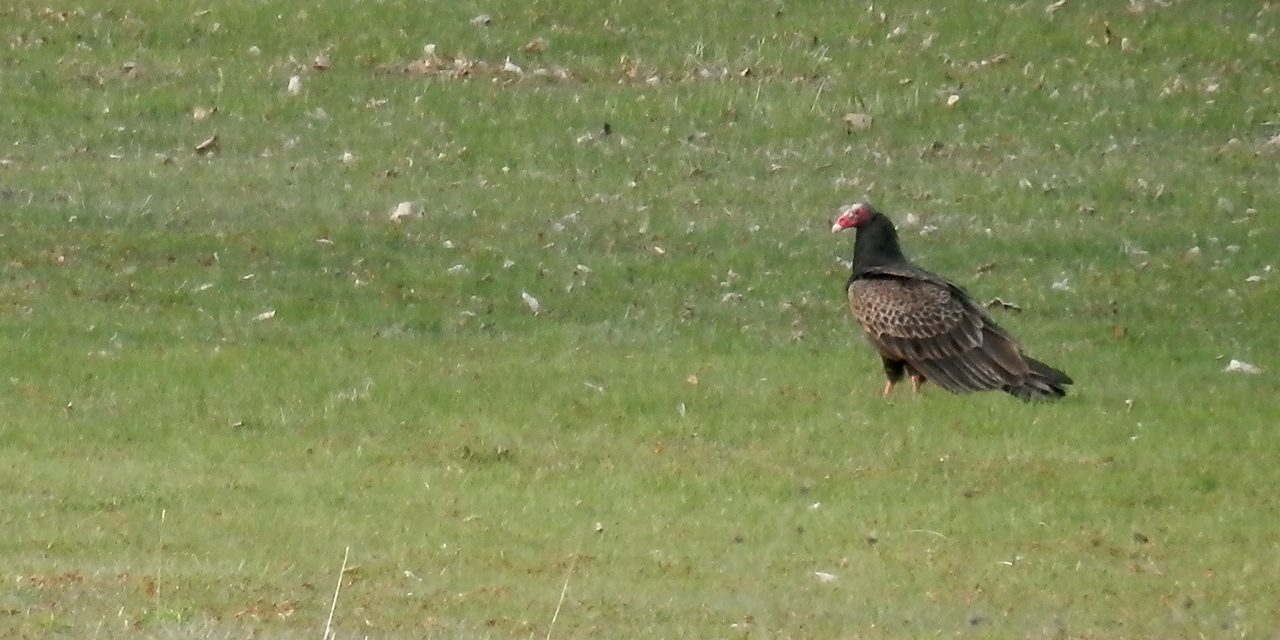
- Turkey vulture (Cathartes aura) Ryan Hodnett, via Wikimedia Commons. CC BY-SA 4.0 Source.
- Card crop of Northern San Luis Valley, Colorado, from the air Ken Lund, via Wikimedia Commons. CC BY-SA 2.0 Source.
.jpg)

.jpg)