Dragon Typology: Why the World's Serpent-Gods Don't Agree
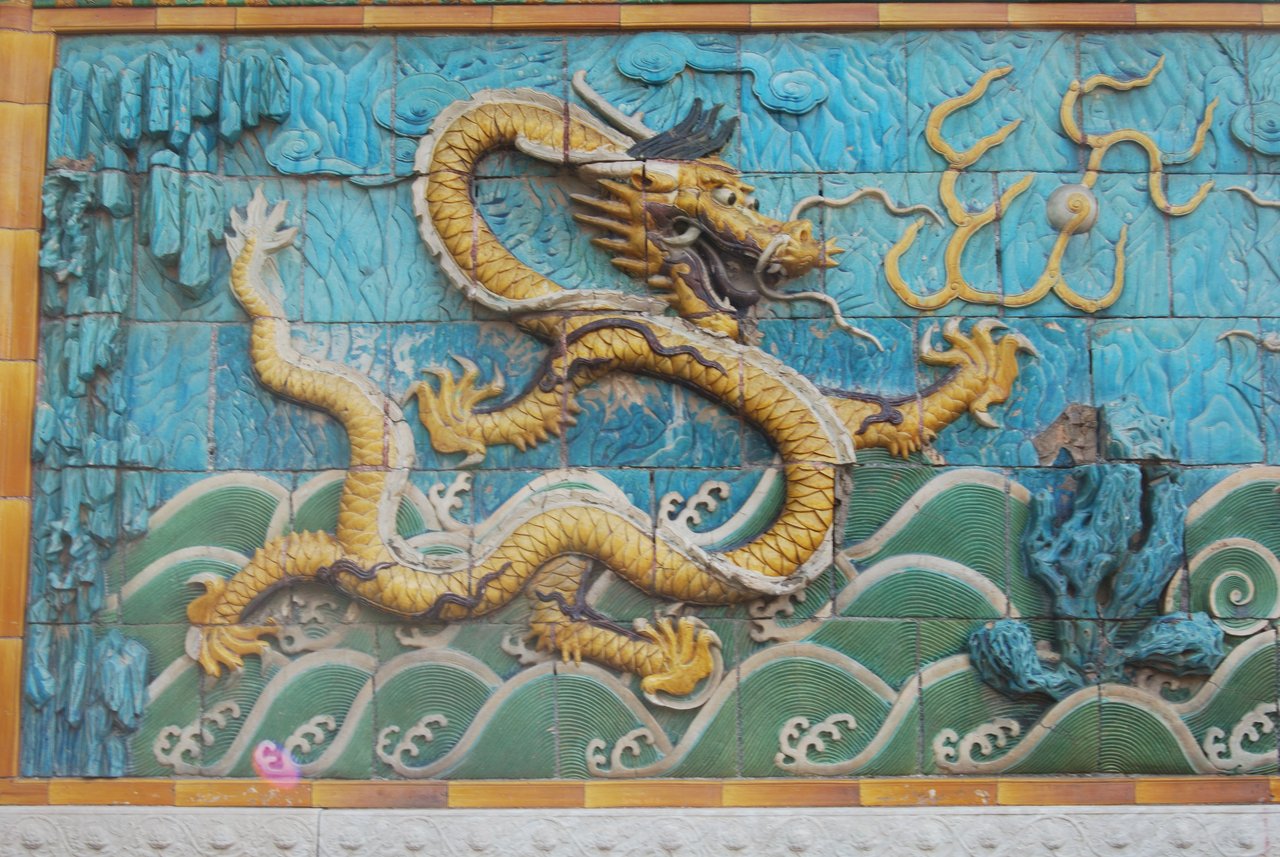
In China, the five-clawed dragon stood for the emperor himself, and using its image without permission could cost you your life. It brought the rain, ruled the rivers, and stood for wisdom, and in the whole of Chinese tradition no hero was ever sent to kill it. In medieval Europe, the dragon was the hoard-guarding monster the hero existed to slay. Both are called dragons in English, and that one shared word hides a false assumption at the center of comparative mythology: that the world ever agreed on what a dragon is. It never did. Giant serpents rise up in nearly every mythology on Earth, from the Near Eastern chaos-dragon to the South Asian nāga to the feathered serpent of Mesoamerica to the Rainbow Serpent of Aboriginal Australia, and they are not one being wearing many masks. Some exist to be killed. Some exist to be honored. Some made the world. Every claim below wears its tier. And the question the evidence still cannot close is the oldest one the dragon asks: why did so many peoples who never met all raise a great serpent over their world, and mean such contradictory things by it?
Start with the word, because the word is the trap. English hands you one noun, dragon, and makes it carry a fire-breathing hoard-guardian, a benevolent rain-god, a cobra-hooded water spirit, a feathered creator, and a serpent that carved the rivers of a whole continent. Pull those apart and a surprising thing falls out: the world never had one dragon. It had dozens, and some of them are each other's exact opposites. What follows is the dragon taken tradition by tradition, each claim wearing the weight the evidence actually gives it.
01The Serpent on Almost Every Map
Giant serpents and dragons appear in nearly every major mythological tradition on Earth: European, Greek, Near Eastern, Chinese, Japanese, South Asian, Mesoamerican, Aboriginal Australian, Norse, and Slavic, among others. Almost no large culture failed to put an enormous serpent somewhere in its cosmos. As a motif it is one of the most widespread in all of comparative mythology, which is precisely why it is so tempting to assume it means one thing everywhere. It does not.
Here is the file's central claim, and it is worth stating flatly: 'dragon' is not a single, unitary concept. The traditions do not merely differ in detail, they disagree at the root, on the one question that matters most, which is whether the serpent is friend or enemy. The European dragon of the Chaoskampf is evil and must be slain. The Chinese lóng is benevolent. The South Asian nāga is dangerous and holy at once. The serpents of Mesoamerica and Aboriginal Australia are not enemies at all, but creators. One English word is doing the work of at least four incompatible ideas.
02Ten Traditions, Ten Different Dragons
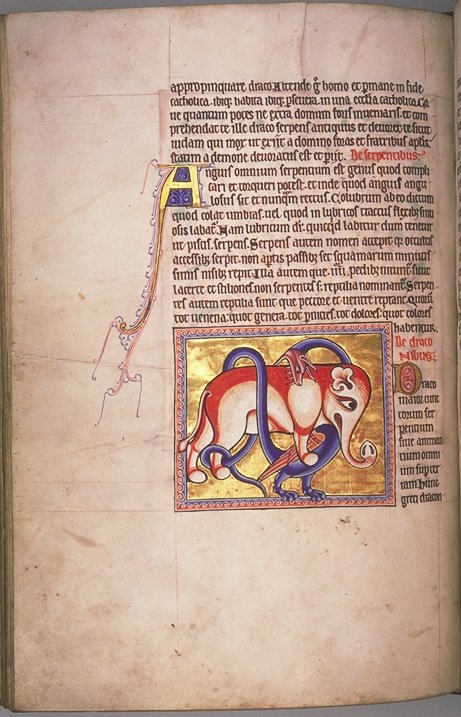
Set the world's great serpents side by side and the disagreement is immediate. They differ in shape, in whether they carry legs or wings, in which element they command, and above all in what they mean to the people who tell their stories. The valence column is the one to read across: it swings from Negative to Positive and back with no pattern that a single shared origin could explain.
| Tradition | Name(s) | Form | Legs and Wings | Element | Valence |
|---|---|---|---|---|---|
| European (Germanic, Celtic) | Dragon, wyrm, lindwurm, wyvern | Reptilian, scaled | Two to four legs; wings often added after the 12th century | Fire, venom | Negative: hoards treasure, must be slain |
| Greek | Drakon, the Hydra, Python | Large serpent, sometimes many-headed | Usually none | Venom, water | Negative: a guardian-monster to be overcome |
| Near Eastern | Tiamat, Leviathan, Illuyanka, Lotan | Sea serpent, chaos dragon | Variable | Water, chaos | Negative: the cosmic enemy of order |
| Chinese | Lóng | Composite: antlers, scales, claws, whiskers | Four legs, no wings; flies by its de power | Water, rain, rivers | Positive: imperial symbol, rain-bringer, wisdom |
| Japanese | Ryū | Like the Chinese lóng, but three claws to China's five | Four legs, no wings | Water, storms | Mixed: wrathful or benevolent |
| South Asian | Nāga | Serpent, often a many-headed cobra, or a human-serpent hybrid | None | Water, underground treasure | Ambivalent: protects dharma, yet dangerous |
| Mesoamerican | Quetzalcoatl, Kukulkan | Feathered serpent, avian and reptilian | Feathered, typically no legs | Wind, rain, Venus | Positive: culture hero, creator deity |
| Aboriginal Australian | Rainbow Serpent (Yurlungur, Wagyl) | Enormous iridescent water serpent | None | Water, rain, fertility | Positive: cosmogonic, shapes the landscape |
| Norse | Jörmungandr, Níðhöggr, Fáfnir | World-serpent, tree-gnawer, a shapeshifted dwarf | Variable | The world ocean, the underworld | Negative: agents of Ragnarök and decay |
| Slavic | Zmey, Zmiy | Multi-headed, fire-breathing | Wings; three, seven, nine, or twelve heads | Fire | Negative: defeated by bogatyr heroes |
03Chaoskampf: The Hero Who Kills the Serpent
There is a name for the pattern the European and Near Eastern dragons belong to. In 1895, Hermann Gunkel coined the term Chaoskampf, 'the struggle against chaos,' in his study Schöpfung und Chaos in Urzeit und Endzeit. It describes a specific mythological engine: a storm-god or order-god does battle with a serpentine monster of chaos, and by defeating it establishes or preserves the ordered world. Kill the serpent, and creation holds.
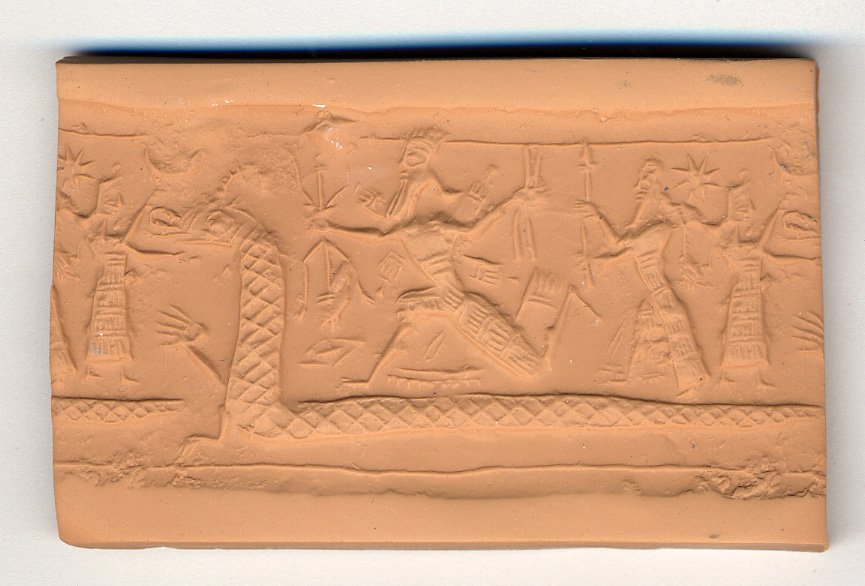
Once you have the pattern, you see it everywhere in the ancient world, the same story told in a dozen languages. A god kills a serpent, and the source texts are old, specific, and scattered across cultures that were often centuries and mountain ranges apart.
| The Slayer | The Serpent | Source Text | Approx. Date |
|---|---|---|---|
| Marduk (Babylonian) | Tiamat | Enuma Elish | c. 1100 BCE |
| Baal (Ugaritic) | Lotan (Litanu) | the Baal Cycle, KTU 1.5.I | c. 1400 BCE |
| YHWH (Hebrew) | Leviathan / Rahab | Job 41, Psalm 74, Isaiah 27:1 | c. 6th century BCE |
| Tarhunna (Hittite) | Illuyanka | CTH 321 | c. 1400 BCE |
| Indra (Vedic) | Vṛtra | Rig Veda 1.32 | c. 1500 BCE |
| Thor (Norse) | Jörmungandr | the Prose Edda | c. 13th century CE (older oral roots) |
| Zeus (Greek) | Typhon | the Theogony, 820 to 880 | c. 700 BCE |
| Apollo (Greek) | Python | the Homeric Hymn to Apollo | c. 7th century BCE |
| Heracles (Greek) | the Hydra | Apollodorus, Bibliotheca | c. 2nd century CE |
| Thraetaona (Persian) | Azi Dahaka | the Avesta, Yasht 5, 9, and 19 | c. 1000 BCE |
Now the insight that turns a list into an argument. The Chaoskampf pattern is not global. It clusters, tightly, in the Indo-European and Semitic traditions, the cultures of the ancient Near East, Europe, Iran, and Vedic India. It is largely absent from Chinese, Aboriginal Australian, and Mesoamerican feathered-serpent lore, where the great serpent is not an enemy to be put down but a cosmogonic force to be honored. The dragon-slaying story is a regional inheritance wearing a global costume. Where the hero and his sword are missing, so is the whole idea that a serpent is something you defeat.
04The Chinese Dragon Breaks the Whole Pattern
Nothing breaks the slay-the-dragon assumption faster than China. The Chinese lóng is categorically different from the European dragon, and not by a little. It is benevolent. It is bound up with rain, agriculture, rivers, imperial authority, and wisdom, not with destruction or greed. Where the European dragon is a problem to be solved, the lóng is a blessing to be courted.
It was also, in the most literal sense, imperial. The five-clawed lóng was reserved as a symbol of the emperor himself, and using the five-clawed dragon motif without authorization was a capital offense, punishable by death. The dragon in China was not the monster at the edge of the kingdom. It was bound to the sovereign at its center.
The Han-dynasty scholar Wang Fu set down the classic description, and it shows how thoroughly the lóng is an assembly of other creatures rather than a reptile to be feared. He gave it the 'head of a camel, horns of a deer, eyes of a demon, ears of a cow, neck of a snake, belly of a clam, scales of a carp, claws of an eagle, palms of a tiger.' This is a cosmic composite, a being built from the whole living world, not a scaled predator.
And look at everything the lóng does not do. It does not breathe fire; it commands water, calling down the rain and dwelling in rivers and the sea. It does not hoard treasure. Most telling of all, there is no Chinese dragon-slaying hero, no figure whose defining deed is killing a dragon. The single most famous thing a European or Near Eastern hero can do to a serpent, kill it, simply does not exist as a story in China. An entire mythological plot is missing, because in China the dragon was never the enemy.
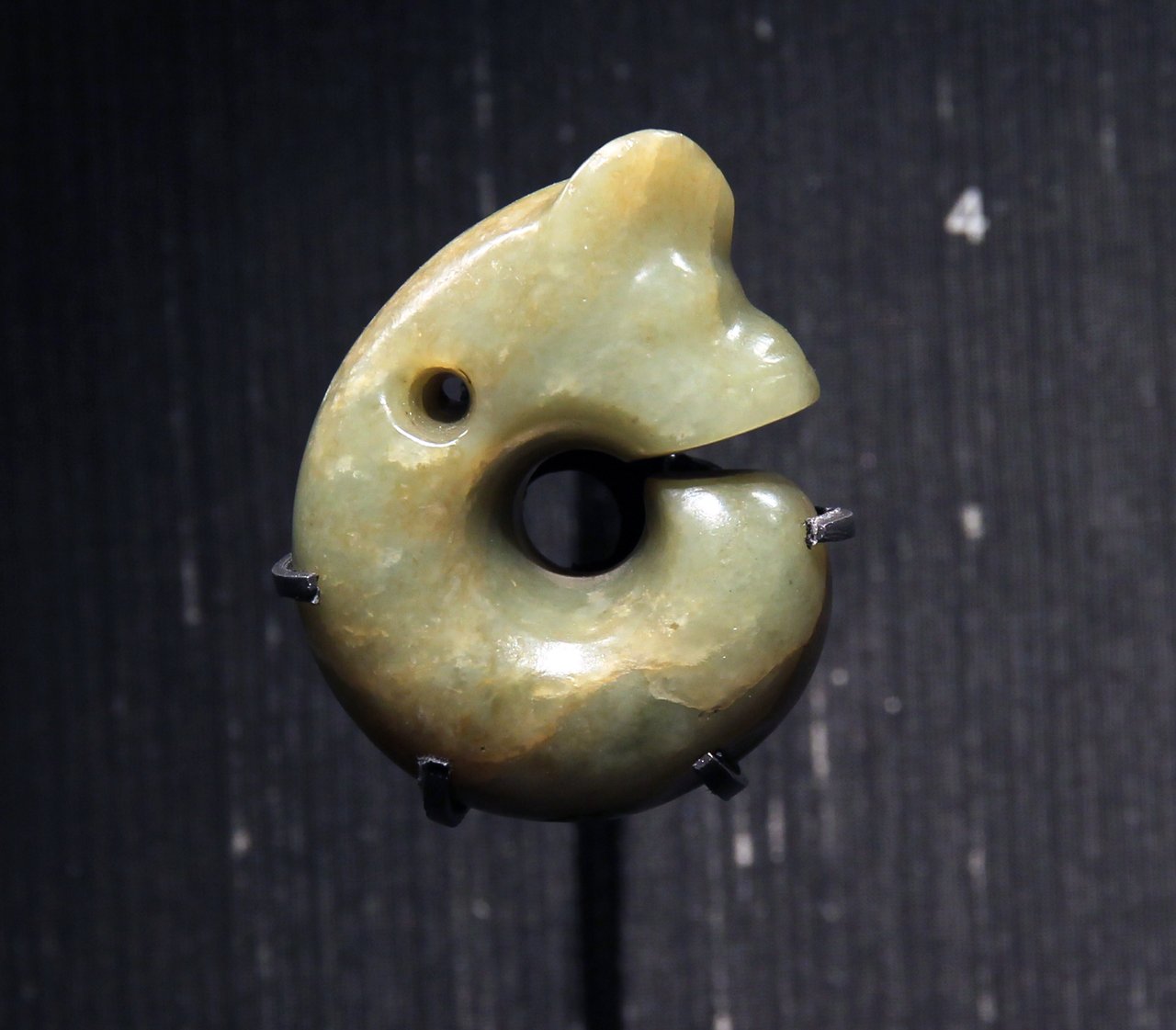
This is not a late or literary invention. Dragon imagery in China reaches back to at least the Hongshan culture, roughly 4700 to 2920 BCE, whose carved jade zhūlóng, or 'pig-dragons,' recovered in Liaoning Province, are among the oldest dragon-associated artifacts anywhere. And it never became a museum piece: the Dragon Boat Festival is still celebrated every year, with dragon-prowed boats and rice dumplings wrapped in dragon-associated bamboo leaves, tying the serpent to water and seasonal renewal in living practice. The Chinese dragon is older than most written mythology and still alive in the streets.
05How to Kill a Dragon, in Proto-Indo-European
So the slaying tradition is not universal. But where it does exist, it is no coincidence. In How to Kill a Dragon: Aspects of Indo-European Poetics (1995), Calvert Watkins showed that the phrase 'the hero slew the serpent' is not merely a recurring theme but a fixed formula, a set piece of inherited Proto-Indo-European poetry, preserved almost word for word across languages that split apart thousands of years ago. The Vedic Sanskrit 'ahann ahim,' 'he slew the serpent,' describing Indra killing Vṛtra, and the Hittite 'MUS-an kuenta,' 'he slew the serpent,' describing Tarhunna killing Illuyanka, are the same line, carried down two separate branches of the same family tree.
That shared wording carries a date. Because the formula survives as cognate phrasing, and not merely as a similar theme, the dragon-slaying myth can be traced to a common Proto-Indo-European origin and is, at a minimum, roughly 5,000 years old. This is a genuine inheritance, one ancestral story handed down through Sanskrit, Hittite, Greek, Norse, and Avestan, not a case of unrelated peoples happening to imagine the same fight. Within Indo-European, the dragon really is one dragon. The mistake is only in assuming that this family's dragon is the world's.
06So Why Serpents, Almost Everywhere?
If the slaying story is only regional, the serpent itself is not. Something put a giant snake into the myths of peoples who had no contact with one another. Why?
The file's own answer is deliberately untidy: the near-universality of the great serpent most likely has several independent causes rather than a single 'dragon memory' handed down from one source or one event. Different peoples, in different places, could each arrive at a serpent-god by a different route, and probably did. Here are the leading candidates, and each carries exactly the confidence the evidence supports, no more.
Large-predator memory. David E. Jones, in An Instinct for Dragons (2000), argued that the dragon fuses the features of the apex predators our ancestors evolved to fear, the big cats, the raptors, and above all the snakes, into a single instinctual composite, a nightmare pre-installed by evolution. It is plausible evolutionary psychology. It is also, by nature, without direct proof.
Fossil misreading. Adrienne Mayor, in The First Fossil Hunters (2000), showed that ancient peoples dug up the bones of dinosaurs and other extinct giants and read them as the remains of dragons and monsters. The case is well documented for one specific pairing, the Protoceratops and the gryphon, and less clear for serpentine dragons in general, but the mechanism is real: a skeleton in the ground is enough to start a legend.
Living crocodilians. A five to seven metre Nile or saltwater crocodile is a real, armored, water-dwelling reptile large enough to seed a dragon legend on its own, no imagination required. This fits the riverine and aquatic serpents especially well. What it cannot explain is the ones that fly, or the ones that breathe fire, which no crocodile ever did.
Hydrological symbolism. Michael Witzel (2012) reads the serpent as the personified power of water itself, of rivers and floods that give life and take it in the same season, creative and destructive by turns. This fits the Chinese lóng and the Near Eastern chaos-dragon closely, since both are, at bottom, water. A god of the river that feeds you and the flood that drowns you would look a great deal like an ambivalent serpent.
A deep common myth. In the same 2012 work, Witzel proposes something far bolder: a shared 'Laurasian' story-line, a mythological inheritance possibly reaching back to a Paleolithic common ancestor of much of Eurasian myth, that already contained a dragon-slaying element. If it holds, some of the resemblance really would trace to one deep root. It is the most tantalizing explanation on the table and the least proven, and the Paleolithic dating is where it strains hardest. This is the honest edge of the whole question.
07Two Answers the Evidence Rules Out
Two answers get offered anyway, and both fail outright. The first is the young-earth creationist claim that dragon myths are a folk memory of humans living alongside dinosaurs. This contradicts every line of evidence there is, geological, paleontological, and radiometric, and runs aground on a single hard fact: roughly 65 million years separate the last non-avian dinosaurs from the first humans. No one remembers what no ancestor ever saw. There was no overlap to remember.
The second is the reptilian-extraterrestrial reading, associated with David Icke and ancient-astronaut theory, which holds that dragon myths encode ancestral memories of reptilian aliens. There is no physical evidence for it of any kind, and the claim is built so that no evidence could ever count against it, which places it outside what can be tested at all. Dragon mythology is a human and cultural phenomenon, an answer to water and fear and power. It is not a garbled report of visiting reptiles.
08The Rainbow Serpent Never Needed a Hero
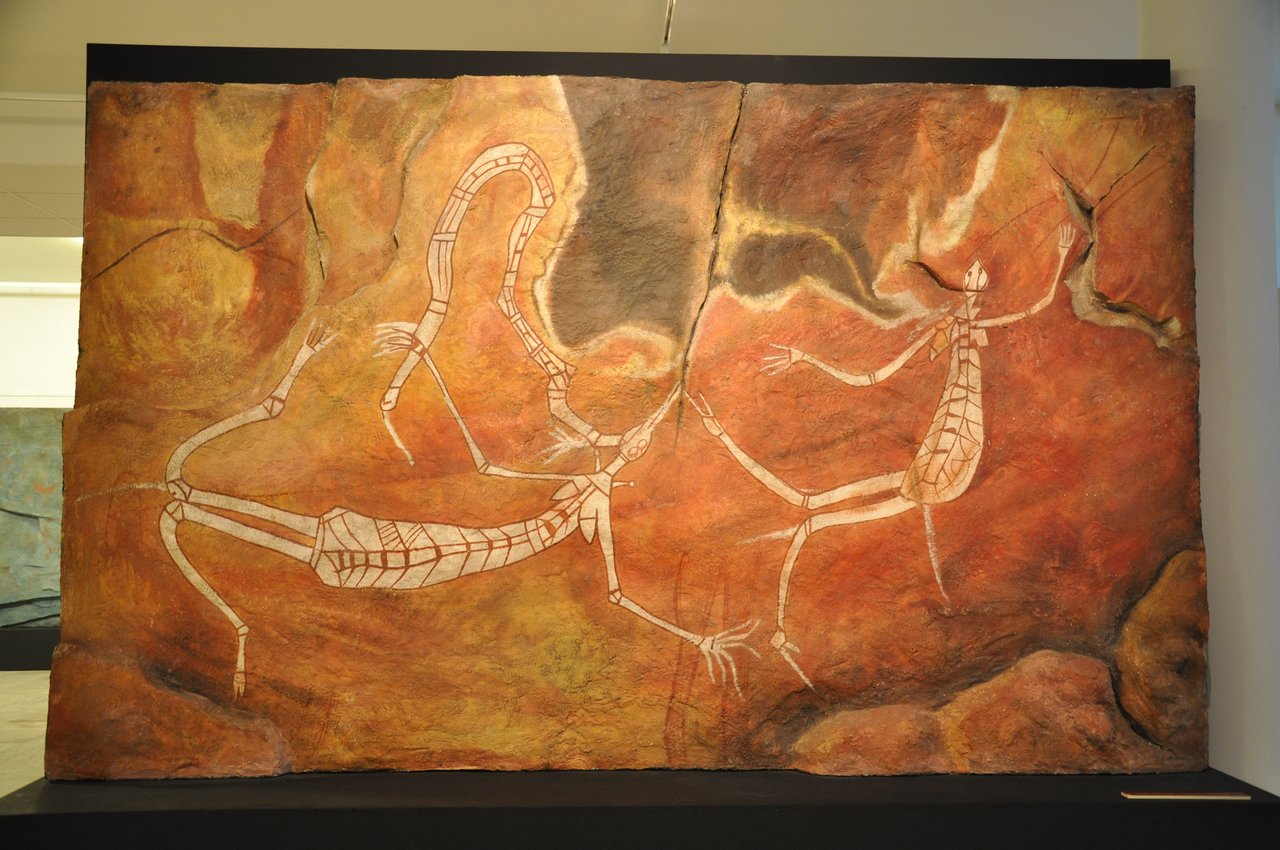
For the clearest proof that a great serpent tradition can stand completely outside the slaying pattern, go to Australia. The Rainbow Serpent is one of the oldest continuously held religious beliefs on the planet. Rock art associated with it in Arnhem Land dates back at least 6,000 years, and quite possibly a good deal further. This is not a myth recovered from a dead text. It is a living belief that has been held, without a single break, since deep in prehistory.
And the Rainbow Serpent is a creator, not an enemy. In the Dreaming, it shaped the landscape as it moved, gouging out the rivers and waterholes, and it enforces law and order. Crucially, there is no Aboriginal dragon-slaying myth. No hero is sent to kill the Rainbow Serpent. It is respected and it is feared, deeply, but it is never conquered, because in this tradition the serpent is the source of the world, and you do not kill the thing that made you.
It is not a single local figure, either. The Rainbow Serpent is known across the Australian continent under many names, Yurlungur, Wagyl, Ungud, Borlung, and Ngalyod among them, differing in local detail while holding to one core concept. A whole continent kept the same serpent for thousands of years, and never once imagined killing it.
This is what makes the Rainbow Serpent decisive for the argument. It is a major serpent tradition of enormous antiquity that owes nothing to the Indo-European or Semitic Chaoskampf, not a worn-down variant of the slaying myth, but a structurally different thing built on a different foundation, the serpent as maker of the world. If one of the oldest serpent religions on Earth developed entirely without a dragon-slayer, then the slay-the-dragon story was never the human default. It was only ever one branch, and a fairly local one, of a much stranger family.
Fast Facts
- The claim
- Dragons and giant serpents appear in nearly every major mythology on Earth, yet 'dragon' is not one concept. The serpent is cast as evil, benevolent, ambivalent, or as the creator of the world, depending entirely on who is telling the story.
- Slay the dragon
- The Chaoskampf pattern, named by Hermann Gunkel in 1895: a storm or order god defeats a serpent of chaos and secures the world, from Marduk and Tiamat to Indra and Vṛtra. It clusters in Indo-European and Semitic traditions.
- The Chinese exception
- The lóng is benevolent, a rain-bringer and imperial symbol with no fire-breathing, no treasure-hoard, and no dragon-slaying hero at all. The five-clawed dragon stood for the emperor, and using it without permission was punishable by death.
- Five thousand years deep
- Calvert Watkins reconstructed 'the hero slew the serpent' as inherited Proto-Indo-European poetry, with cognate phrasing in Vedic Sanskrit and Hittite, dating the slaying myth to at least 5,000 years old.
- The oldest serpent
- The Rainbow Serpent of Aboriginal Australia, a creator being with rock art at least 6,000 years old, is one of the oldest continuously held religious beliefs on Earth, and it has no dragon-slaying myth at all.
- Ruled out
- That dragon myths are folk memory of humans living beside dinosaurs (contradicted by a roughly 65-million-year gap), and that they encode reptilian aliens (no evidence, and unfalsifiable).
- The open question
- Why the great serpent recurs almost everywhere: a shared root in deep prehistory, or the same human answer to the snake, reached independently again and again.
What the Evidence Actually Holds
The descriptive spine is documented fact. The comparative morphology of the world's dragon traditions, Hermann Gunkel's 1895 naming of the Chaoskampf and its ancient slayer-and-serpent pairings from Marduk and Tiamat to Indra and Vṛtra, the categorical benevolence of the Chinese lóng and its five-clawed imperial restriction, Wang Fu's composite description, the jade dragons of the Hongshan culture at roughly 4700 to 2920 BCE, the still-living Dragon Boat Festival, Calvert Watkins's Indo-European dragon-slaying formula with its Vedic and Hittite cognates, and the Rainbow Serpent's rock-art antiquity of at least 6,000 years are all on solid ground. The central claim rests on all of it: 'dragon' is not one concept, and the traditions genuinely disagree about what a dragon is.
The comparative reading and the explanations for the serpent's reach are credible but open. That the Chaoskampf clusters in Indo-European and Semitic lore while the Chinese, Australian, and Mesoamerican serpents sit outside it, that the slaying formula is a genuine inheritance at least 5,000 years deep, and that the motif's near-universality is best explained by several independent causes at once, predator memory, fossil misreading, living crocodilians, and the symbolism of water, are all real, all argued, and none of them closed.
The deepest explanation stays unsettled. Witzel's proposal of a shared 'Laurasian' myth carried out of the Paleolithic, one ancient story-line already holding a dragon inside it, is the most intriguing account of why the serpent recurs and the least proven, straining hardest at its Paleolithic dating. And the master question it points at, whether the world's great serpents grew from one deep root or were invented again and again independently, remains genuinely open. This article does not pretend to close it.
Two readings are ruled out flatly. Dragon myths are not a folk memory of humans living beside dinosaurs: that contradicts all geological, paleontological, and radiometric evidence and the roughly 65-million-year gap between the last non-avian dinosaurs and the first people. And they do not encode reptilian extraterrestrials: there is no physical evidence of any kind, and the claim is framed so that nothing could ever disprove it, which puts it outside the reach of evidence entirely. The dragon is one of humanity's oldest ideas. It is not a memory of monsters, and not a message from them.
So keep the traditions apart, the way the evidence demands, and the dragon stops being one creature and becomes a question. Half the world raised a giant serpent over its rivers and its myths, and could not agree on the first thing about it: whether to kill it or crown it, to fear it or thank it for the rain. The European hero drew his sword. The Chinese emperor put the serpent on his throne. The people of Arnhem Land watched it carve the rivers and called it the maker of the world. Maybe the memory of one serpent traveled with us out of some shared prehistory, splitting into a hundred contradictory gods along the way. Maybe the snake, coiled at the edge of every human life, was always going to become something enormous wherever people stopped to look at it. The evidence cannot yet close the gap between those two answers. But the serpent is still there in nearly every story we tell, and it is still asking.
Sources & further reading
Everything above is drawn from our research library on Theories of Anything, and every claim traces back to the files below. The primary file is the Dragon Typology cross-cultural study, B_3_09; the others go deeper on the individual traditions named in the comparative tables, from the Chinese lóng to the chaos-dragons of the ancient Near East and the feathered serpent of Mesoamerica. Open the full files to check the sourcing and go further.
Image credits
- The Nine-Dragon Wall, Forbidden City, Beijing photograph by Wikimedia Commons user Wing, via Wikimedia Commons. CC BY-SA 3.0 Source.
- Jade coiled pig-dragon (zhūlóng), Hongshan culture, circa 3500 BCE, British Museum photograph by Vassil, via Wikimedia Commons. CC0 1.0 Source.
- Dragon miniature, folio 65v, Aberdeen Bestiary, circa 1200 CE unknown medieval illuminator, digitized by the University of Aberdeen, via Wikimedia Commons. Public domain Source.
- Namaroto spirits and the Rainbow Serpent Burlung, museum replica, Anthropos Museum, Brno photograph by HTO, via Wikimedia Commons. Public domain Source.
- Weather-god fighting a Bashmu dragon, Neo-Assyrian cylinder seal impression, British Museum photograph via the British Museum, via Wikimedia Commons. CC BY-SA 4.0 Source.


