Gunung Padang: A Real Megalithic Hill, and the Dating Claim a Journal Withdrew
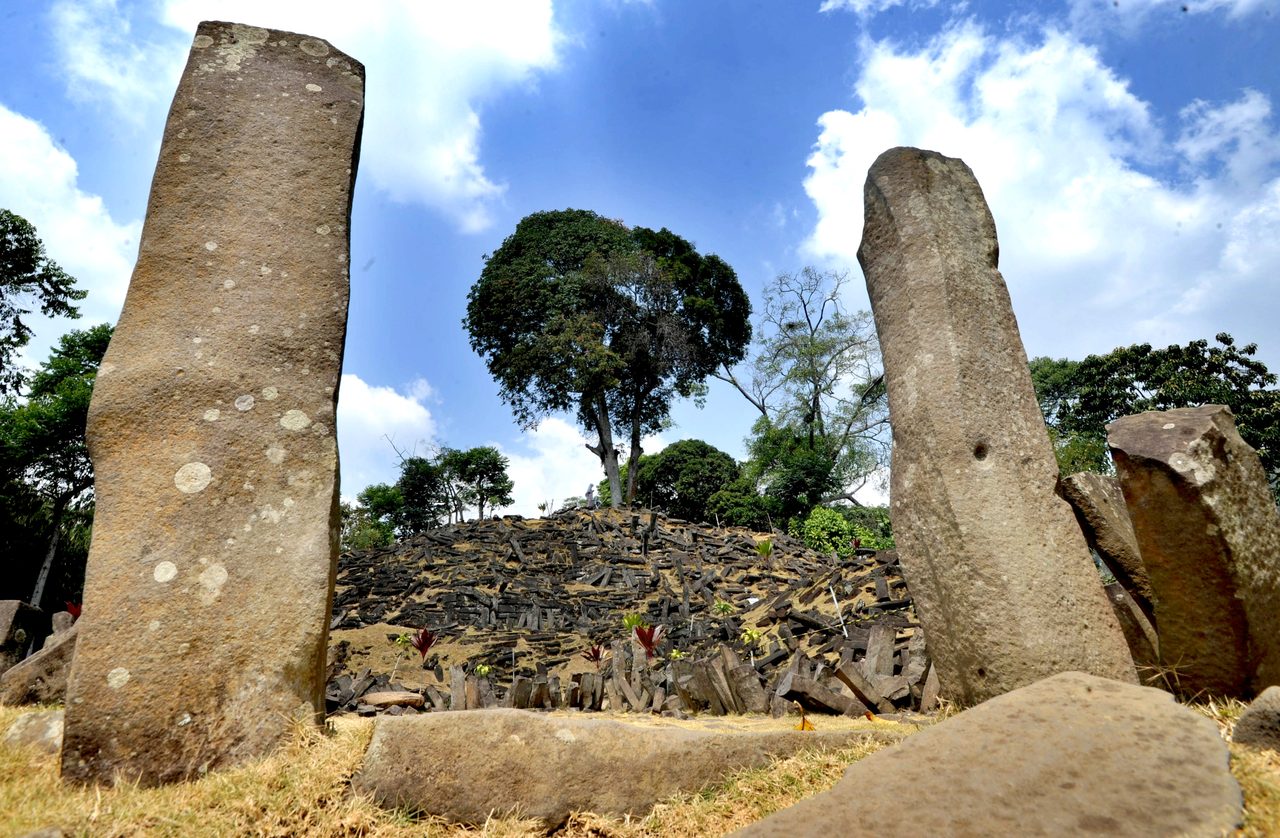
Five terraces of columnar stone stand on a hilltop in West Java, and nobody disputes that people moved and stacked it. In 2023 a paper in Archaeological Prospection went much further, reporting buried construction layer under layer, back tens of thousands of years. In 2024 the journal retracted that paper and said exactly why. Here is the file, every claim wearing its evidence.
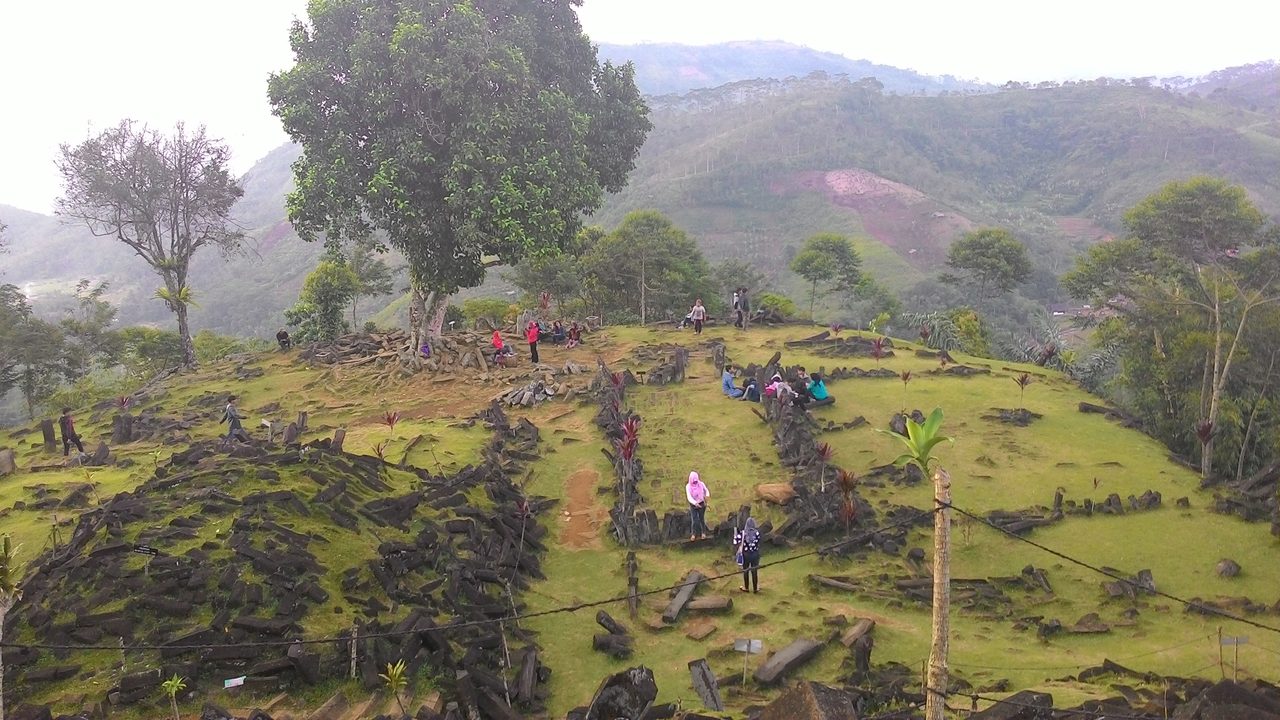
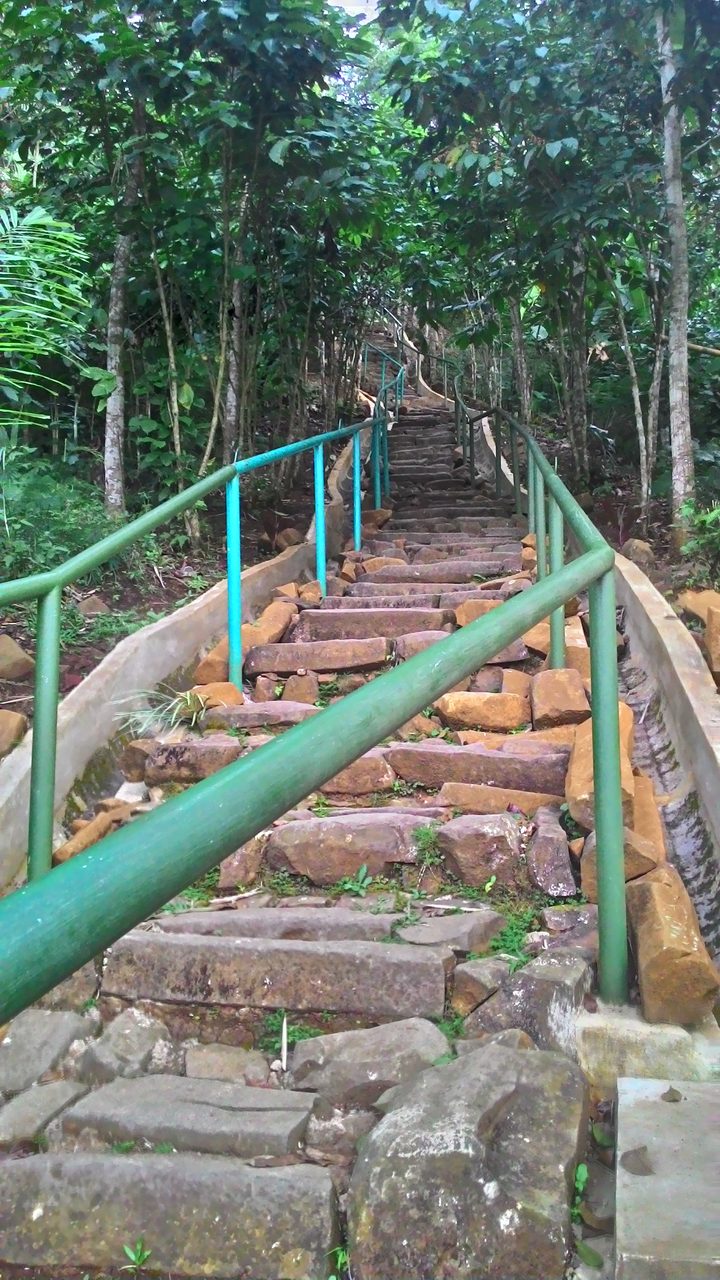
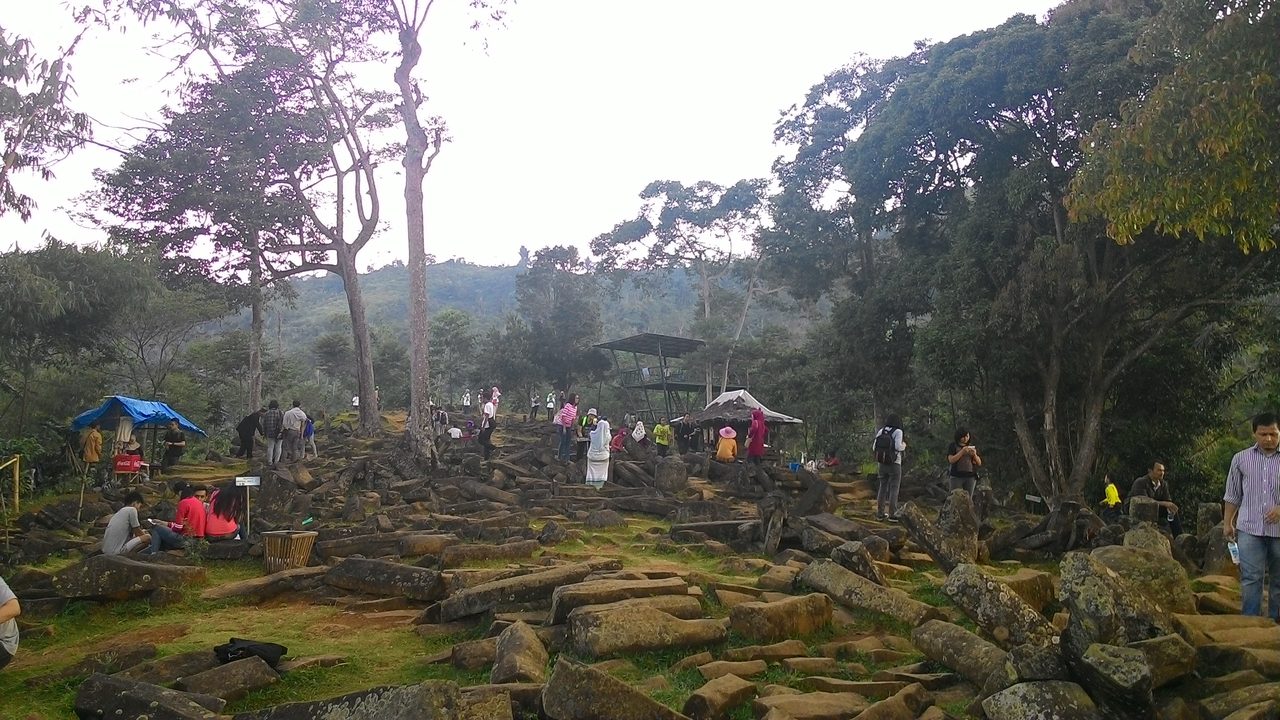
Go to Karyamukti village in the Cianjur regency of West Java and climb. At about 885 meters above sea level, five terraces of dark stone step across the hilltop, joined by stone stairways, and the ground underfoot is a field of columnar blocks. A Dutch colonial naturalist wrote the site up in 1914. Indonesia has it registered as heritage. Visitors walk it. None of that is in dispute and none of it needs defending: it is a real megalithic site and it is genuinely impressive. Then in 2023 a paper in the journal Archaeological Prospection reported something else. Under those terraces, it said, lie deeper layers of construction, and the deepest of them go back tens of thousands of years, which would make this hill the oldest pyramid in the world by a margin wide enough to rewrite the timeline of civilization. In 2024 the journal retracted that paper. The retraction is not a footnote to this story. It is the story.
| Feature | Detail |
|---|---|
| Where | Karyamukti village, Cianjur regency, West Java, Indonesia |
| Elevation | About 885 meters above sea level |
| The Surface | Five ascending terraces joined by stone stairways |
| Area | About 3,100 square meters of terraced surface |
| The Stone | Columnar andesite and basalt, volcanic rock that fractures into rough rectangular blocks |
| First Described | N.J. Krom, Dutch colonial naturalist, 1914 |
| Status | Registered heritage site, Indonesian authorities |
01A Real Hill In West Java
Gunung Padang sits in Karyamukti village, in the Cianjur regency of West Java, Indonesia, at about 885 meters above sea level. The terraced surface covers roughly 3,100 square meters. The Dutch colonial naturalist N.J. Krom described the site in 1914, and Indonesian authorities have since registered it as heritage. Not one word of that is contested by anybody in this argument, on either side of it.
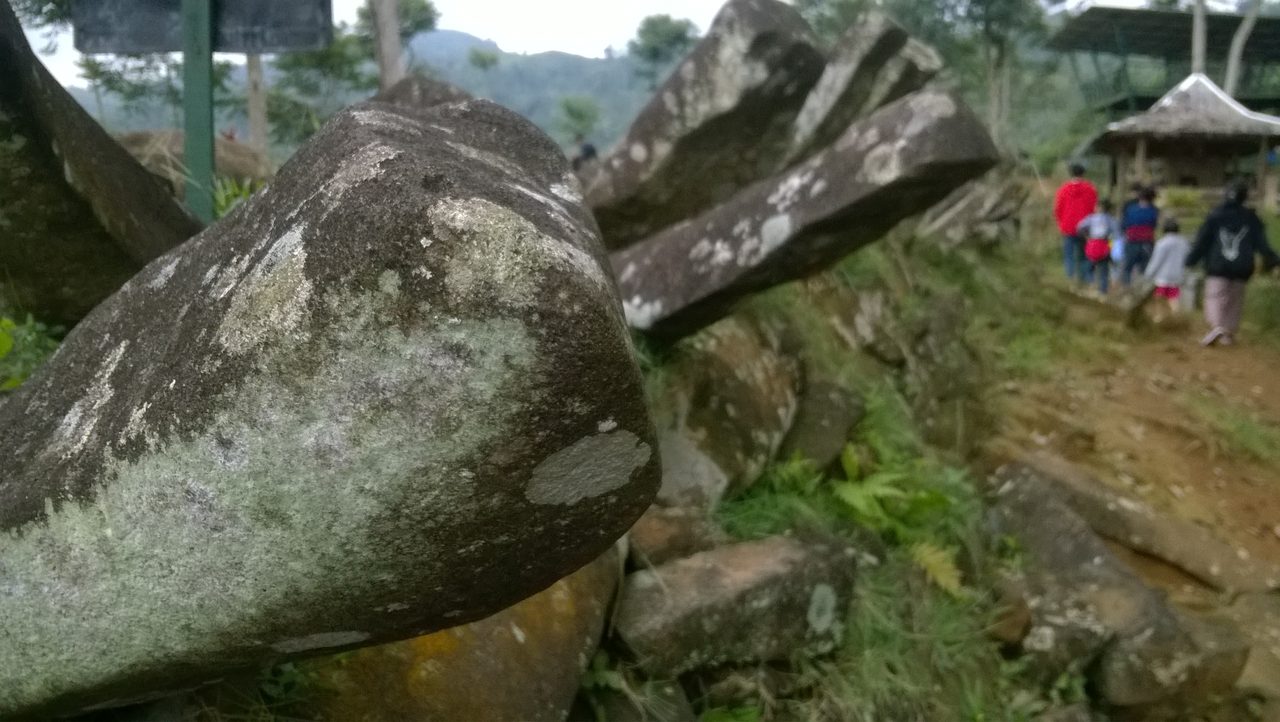
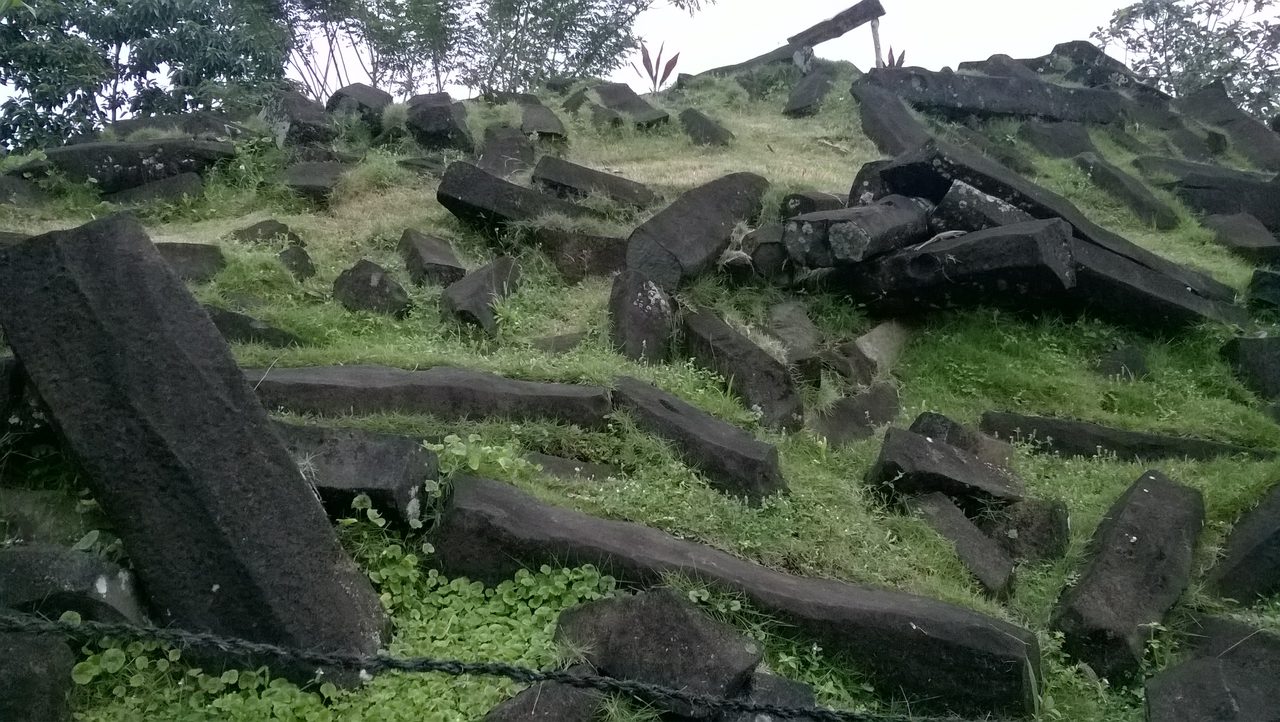
The surface site is five ascending terraces connected by stone stairways, built from columnar andesite and basalt: volcanic stone that cools and fractures into roughly rectangular columns on its own, without anyone touching it. Hold on to that last part. Every hard question about this hill comes back to it.
02The Terraces, And The Stair
A note that holds for every block in this file marked Our Own Check. Our research document does not carry those details. They come from an independent verification pass we ran on 27 July 2026, they are flagged to be synced back into the library, and they are kept in separately labeled blocks so you can see at a glance which claims came out of the research file and which came from us. A few surfaces cannot carry a block label at all: the pull quote, the fast-facts box, the verdict at the end. Where that same verification-pass material turns up in those, it names its own source in line instead.
The five platforms are one rectangular and four trapezoidal, laid out along a northwest to southeast axis and shrinking as they rise. The central stairway runs roughly 370 steps at about a 45 degree incline over some 110 meters. In June 2014 Indonesia declared a National Site Area around the hill covering 29 hectares, about 72 acres, which is the legal protection zone and not the footprint of the terraces themselves. Two honest limits on this block: it rests on a single encyclopedia entry citing the site's heritage listing documents, and a different file in our own library gives the stair as about 400 steps rather than 370. Neither figure has been checked against the listing itself.
Here is what even the sharpest critics grant. The upper terraces show clear evidence of deliberate human arrangement: those stone columns were moved, stacked and set into terraces by people. Nobody is arguing that Gunung Padang is an untouched hillside. The dispute is about the deeper layers, and whether the subsurface is more phases of human construction or the natural geological layering of a volcanic hill.
03The Stone Is Volcanic, And That Is The Whole Problem
Before any argument about dates, there is a fact about rock that decides how the argument has to be run. Skip it and every photograph of this site looks like proof of something.
West Java is volcanically active country, and columnar basalt is one of the ordinary things volcanic processes make there. The hill Gunung Padang stands on is composed of volcanic rock. Columnar jointing, where cooling lava contracts and cracks into rectangular or hexagonal columns, is a thoroughly understood natural phenomenon: it is what produced the Giant's Causeway and Devil's Postpile, and nobody has ever needed a lost civilization to explain either one.
So the geology sets the bar, and the bar is not negotiable. Any claim of deep construction at this site has to be distinguished from natural columnar basalt layers that could sit inside a volcanic hill whether or not a single person ever climbed it. Finding stone columns underground at Gunung Padang is not by itself evidence of anything. Finding stone columns that people put there is. Those are two different findings, and this entire controversy lives in the gap between them.
04What The 2023 Paper Reported
Now the disputed part. Read the next three blocks knowing the ending, because the ending belongs to the fact and not to a footnote: this paper does not stand. Archaeological Prospection retracted it in 2024. What follows is what it claimed while it stood, which is what the whole argument has been about ever since.
Danny Hilman Natawidjaja and his co-authors reported ground-penetrating radar, seismic tomography, electrical resistivity tomography and core drilling at the site, and read the results as several buried phases beneath the visible terraces, reaching roughly 20 to 30 metres down. The headline figure that travelled worldwide was an initial phase around 25,000 years ago, in the Palaeolithic, with later phases through the Holocene. We do not print a unit by unit table of dates here, and the reason is itself worth knowing: the figures circulate in two different calendars, some sources giving years BCE and others giving years before present, a difference of about 1,950 years, and different accounts number the buried units differently. Any table we printed would be false precision about a claim that has since been withdrawn.
| Depth below the terraces | What the paper reported there |
|---|---|
| The surface | The five stone terraces you can walk on, which nobody disputes are real |
| To roughly 15 metres | Buried columnar rock the paper read as earlier building phases |
| To roughly 28 metres | A massive basaltic formation the paper read as shaped |
Those ages came from carbon-14 run on soil samples taken from between the stones at various depths. From that sequence the authors argued for a multi-phase construction site, built and rebuilt across tens of thousands of years. That single sentence carries the entire extraordinary claim. It also carries the flaw the retraction turned on.
05Where The Dates Actually Came From
The radiocarbon dates were run on soil organic matter lying between stones. Not charcoal from a hearth. Not bone. Not an artifact. Soil. And soil between stones has an obvious second explanation: it is sediment that worked its way into the spaces between volcanic columns and settled there, in which case the date tells you the age of the dirt and nothing whatsoever about anybody building anything.
Lutfi Yondri and other Indonesian archaeologists have pressed the same objection from the artifact side: no diagnostic stone tools, no pottery, no cultural material of any Paleolithic period has been recovered from the deep layers. A site worked and reworked across tens of thousands of years ought to be thick with the debris of the people who worked it. The deep layers are not.
Named critics, from our own verification pass. The archaeologist Flint Dibble of Cardiff University made the objection concrete: radiocarbon-dating old soil does not by itself demonstrate that anyone built anything. His example was that coring several meters into the ground almost anywhere, the grounds of the Palace of Westminster included, could return a soil sample tens of thousands of years old with no structure of that age anywhere near it. Bill Farley of Southern Connecticut State University said the paper “was not worthy of publication,” and predicted the retraction before it happened. The volcanologist Sutikno Bronto reached a different conclusion altogether: that “Gunung Padang is the neck of an ancient volcano and not an artificially created pyramid.” This block is expert commentary published in reputable outlets. It is not itself peer-reviewed, and it is not in our research file.
06The Retraction, And The Answer To It
Retractions are usually quiet, hedged, and hard to pin down. This one is none of those. It has a date, a document number of its own, and a reason written in plain language.
The original paper carries twelve named authors, led by Danny Hilman Natawidjaja: “Geo-archaeological prospecting of Gunung Padang buried prehistoric pyramid in West Java, Indonesia,” published online in Archaeological Prospection on 20 October 2023 under DOI 10.1002/arp.1912. The retraction is a separate document with its own separate DOI, 10.1002/arp.1932, published online on 18 March 2024 and printed at Archaeological Prospection volume 31, issue 2, page 199. It was agreed between the journal's editors-in-chief, Eileen Ernenwein and Gregory Tsokas, and the publisher John Wiley and Sons. We resolved both DOIs through Crossref, the DOI registration agency itself, because Wiley's own pages refused our requests both times we tried them, and we cross-checked the result against four independent secondary sources. One thing to say plainly: our own research file gets this pairing wrong. Its bibliography attaches the retraction's DOI to the original paper's citation. We are flagging that rather than repeating it.
The notice says why, and the wording is what matters. Four independent outlets quote it in matching language: that “the radiocarbon dating was applied to soil samples that were not associated with any artifacts or features that could be reliably interpreted as anthropogenic or man-made,” and that “the interpretation that the site is an ancient pyramid built 9,000 or more years ago is incorrect, and the article must be retracted.” Read that carefully. The dating itself was never the accusation. What the dating was attached to was.
Our research file carries its own note on this, written directly into the section that reports the paper's findings, and it is worth quoting because it is a document marking its own limits: the paper “was formally retracted by Archaeological Prospection in 2024 (DOI: 10.1002/arp.1932) after an investigation found serious methodological concerns including peer-review process irregularities, misattribution of natural soil organics to human activity, and insufficient evidence for artificial construction at deep layers.” The findings above are kept, in the file and here, as context for the controversy. They are not kept as standing science.
The authors did not accept it, and a file that carried only the winning side would be doing the thing it criticizes. All twelve of them publicly disputed the retraction in an open letter. Note where it is hosted: grahamhancock.com, the site of a named proponent of the lost-civilization case, not a neutral venue, and the letter is written by the disputing parties themselves. Their claims, none of which we checked independently: that natural columnar-joint rock formations are absent within a five kilometer radius of Gunung Padang; that Units 1 to 3 show mortar-like material between columnar stones, deliberate alignment patterns, and weathering inconsistent with natural geological processes; that their soil-organic sampling from trench walls and cored sections followed standard archaeological practice; and that they recovered a stone artifact they call the Kujang Stone, whose sharp edges they say geological processes alone cannot explain. Treat the fact of the dispute as well attested. Treat the content of it as unverified proponent assertion, because that is precisely what it is.
07The Other Dating Argument, The One About The Surface
There is a second dating disagreement at this site, far smaller and far less famous, and we are not going to smooth it over, because it runs straight through our own research file.
Our file dates the surface structures to the Indonesian megalithic tradition, roughly 2,500 to 1,500 BCE or later, consistent with other Sundanese megalithic sites.
Our verification pass found reputable reporting of a substantially younger conventional date for the same surface structures. Pottery fragments recovered at the site have been dated to 45 BCE through 22 CE by Indonesia's National Archaeological Research Center and the Bandung Archaeological Center, a figure corroborated across two independent sources. Lutfi Yondri, the same archaeologist our file cites as a critic of the deep-layer claim, is reported elsewhere as dating the surface site to the 2nd to 5th centuries CE, and Harry Truman Simanjuntak is reported giving a 6th to 8th century CE estimate for surface use. Those last two rest on a single source and are weaker than the pottery figure.
We are not resolving that, and we are not going to pretend one of those blocks quietly cancels the other. Both readings are on the table, our file's and the reporting against it, and the distance between them is thousands of years. What is worth noticing is how small that gap looks beside the one this article is actually about. Whichever answer is right, both of them sit comfortably inside ordinary, documented human history in this region. The retracted claim was for tens of thousands of years earlier than either.
08What The Oldest-Pyramid Claim Would Need
Take the deepest date at face value for a moment. Construction beginning roughly 27,000 years ago puts builders on this hill during or before the Last Glacial Maximum, and that is the point at which the claim loses all its company. No comparable Paleolithic site anywhere in the world shows large-scale stone construction of this type. Not one. This is the most extraordinary element of the whole case and simultaneously the least supported.
The word pyramid is doing heavy work in the coverage. The visible terraced surface genuinely does have a pyramidal profile, so the shorthand is not absurd on its face. But whether the entire hill is an artificial construction, as some proponents claim, or a natural volcanic hill carrying surface modifications, remains unproven. Those are not neighboring pictures. They are different worlds, and only one of them needs rewriting the human timeline.
From there some proponents go further still and offer Gunung Padang as evidence for a lost advanced civilization in Southeast Asia during the Ice Age. That extrapolation goes far beyond the geological and archaeological data. A contested date taken from soil on a hillside is not a civilization, and calling it one does not make the soil say anything new.
| The Claim | What The Evidence Shows |
|---|---|
| The world's oldest pyramid, built more than 20,000 years ago | Rests entirely on reading the deepest soil dates as construction dates; the paper making the case was retracted in 2024 |
| The buried columnar structures are built architecture | The Indonesian Geological Agency and international archaeologists have questioned whether they are artificial construction or natural geological formations |
| Radiocarbon proves construction at depth | The dated material is soil organic matter from between stones, not charcoal from hearths, bone or artifacts |
| Advanced Paleolithic engineering built it | No tools, no inscriptions and no diagnostic cultural material earlier than the regional megalithic tradition have been documented |
| People arranged the stone on the upper terraces | Granted, by critics as well as proponents; this part is not in dispute at all |
So here is the oldest-pyramid claim with its support taken away. It depends entirely on accepting the deepest radiocarbon dates as construction dates, and that is a methodological leap most geologists and archaeologists reject, for a reason that is not a matter of taste: natural volcanic rock layers sitting beneath surface constructions will yield old dates whether or not anybody built anything at all. An old date from under a monument is not a monument.
And the version where the builders held advanced engineering knowledge comparable to later civilizations has nothing behind it whatsoever. No tools. No inscriptions. No diagnostic cultural material from any period earlier than the regional megalithic tradition. This is not a claim the evidence argues against. It is a claim with no evidence attached to it in either direction, presented as though it had some.
09Why This One Stays Loud
Gunung Padang is a politically charged site in Indonesia. It has received government backing and it attracts nationalist interest. That is not an accusation against anyone: it is a plain fact about the environment this research was carried out in, and it is exactly the kind of pressure that makes independent verification more necessary, not less.
The institutional response has been broad and consistent. Claims of construction dates exceeding 20,000 years have been extensively disputed. The radiocarbon sampling has been criticized specifically for dating soil between stones, which may reflect natural organic material rather than construction events. The Indonesian Geological Agency and international archaeologists have questioned whether the subsurface columnar structures represent artificial construction at all. And professional archaeological organizations have called for more rigorous excavation methodology before anyone accepts a chronology that would fundamentally revise the timeline of human civilization.
If the shape of that argument sounds familiar, it should. The same fight is running at another hill in another country, over the shape of a landform rather than the age of its soil, and there a professional body of archaeologists put its objection in writing. That file is open too: The Bosnian Pyramids. The geology has nothing in common. Almost everything else does.
Fast Facts
- Site
- Gunung Padang, Karyamukti village, Cianjur regency, West Java, Indonesia
- Elevation
- About 885 meters above sea level
- Surface
- Five ascending terraces joined by stone stairways, about 3,100 square meters
- The Stone
- Columnar andesite and basalt, volcanic rock that fractures into rough rectangular blocks
- First Described
- N.J. Krom, 1914
- Protected Area
- National Site Area of 29 hectares, about 72 acres, declared June 2014 (Our Own Check, outside the research file)
- Surface Dating
- Contested: roughly 2,500 to 1,500 BCE or later in our research file, against pottery reported at 45 BCE to 22 CE by Indonesian institutions (Our Own Check). Unresolved
- The Paper
- Natawidjaja et al., twelve named authors, Archaeological Prospection, online 20 October 2023, DOI 10.1002/arp.1912 (Our Own Check, outside the research file)
- The Retraction
- DOI 10.1002/arp.1932, online 18 March 2024, agreed between the journal's editors-in-chief and Wiley (Our Own Check; our file records only the year)
- Stated Reason
- The radiocarbon dating was applied to soil not associated with any artifact or feature interpretable as man-made (Our Own Check, quoted across four outlets)
- Deepest Claimed Age
- Around 25,000 years ago for the earliest phase, as the retracted paper claimed it. The figures circulate in two calendars, so we give the headline claim rather than a range.
- Not Recovered
- No Paleolithic tools, pottery or diagnostic cultural material from the deep layers
What we can actually stand behind
Gunung Padang is real and it is a real megalithic site. Five ascending terraces of columnar andesite and basalt stand on a volcanic hill in Karyamukti village, West Java, at about 885 meters above sea level, covering roughly 3,100 square meters, joined by stone stairways, described by N.J. Krom in 1914 and registered as heritage by Indonesia. Critics and proponents agree that people moved, stacked and arranged the stone on the upper terraces. And the retraction is a matter of public record: our research file records that it happened in 2024, while our own verification pass, run outside that file and flagged for sync back into it, supplies the document itself, DOI 10.1002/arp.1932, published online 18 March 2024, agreed between the editors-in-chief of Archaeological Prospection and Wiley, on the stated ground that the radiocarbon dates came from soil not associated with any artifact or feature that could be read as man-made.
Geophysical survey and core drilling were carried out and something is down there; what the subsurface material IS, natural volcanic layering or human construction, is the open question, and the Indonesian Geological Agency and international archaeologists have pressed exactly that question rather than answering it. The site's conventional surface date is itself in conflict: our research file says roughly 2,500 to 1,500 BCE or later, while other reputable reporting puts pottery from the site at 45 BCE to 22 CE. That conflict is unresolved and we are not resolving it here. And the political weather is real: government backing and nationalist interest are documented, which raises the bar for independent verification rather than lowering it.
Construction beginning roughly 27,000 years ago, during or before the Last Glacial Maximum, is unproven and stands entirely alone: no comparable Paleolithic site anywhere shows large-scale stone construction of that type. The dates behind it came from soil organic matter between stones rather than from charcoal, bone or artifacts, so they may date sediment that filled the spaces between natural volcanic columns. No diagnostic Paleolithic tools, pottery or cultural material has been recovered from the deep layers. Whether the entire hill is artificial, rather than a natural volcanic hill with modified surfaces, is likewise unproven. And the authors' rebuttal, including the Kujang Stone and the claim that no natural columnar formations exist within a five kilometer radius, is self-published by the disputing parties and independently unverified.
No, Gunung Padang is not the world's oldest pyramid, and nothing currently on the table makes it one. The claim depends entirely on treating the deepest soil dates as construction dates, and natural volcanic rock beneath a surface construction returns old dates whether or not anyone built anything. The journal that published the case withdrew it on precisely that ground. And no, there is no evidence of advanced Paleolithic engineering here: no tools, no inscriptions, no diagnostic cultural material earlier than the regional megalithic tradition, nothing recovered from the deep layers that a person made. That is not evidence pointing somewhere else. That is an absence sitting exactly where the evidence would have to be.
So climb it anyway. The terraces are there, the stair is there, the columns are stacked where people stacked them, and a Dutch naturalist wrote it all down before anyone thought to call it a pyramid. What the retraction took away was not the site. It was one reading of what lies beneath it, withdrawn for a reason so plain it is almost dull: the dates came from dirt that nobody could tie to a builder. The hill kept everything else it ever had. And here is the part that will not leave us alone. A genuine megalithic site with real, checkable, human work on it was not enough to hold the world's attention, and the moment somebody put a number in the tens of thousands on it, the world arrived. Why does a true thing have to be impossibly old before we agree to look at it?
Sources & further reading
Everything above is drawn from our research library on Theories of Anything, which is where we worked from. The papers, reports and primary records listed beneath them are where you can check us independently.
Image credits
- Gunung Padang, standing stones and the terraced mound photograph by Arie Basuki, via Wikimedia Commons. CC BY-SA 4.0 Source.
- The fifth terrace photograph by Beeyan, via Wikimedia Commons. CC BY-SA 3.0 Source.
- The entrance stairway photograph by Beeyan, via Wikimedia Commons. CC BY-SA 3.0 Source.
- Columnar stone, close up photograph by Gilangsmntr, via Wikimedia Commons. CC BY-SA 4.0 Source.
- Scattered columnar blocks on the hillside photograph by Gilangsmntr, via Wikimedia Commons. CC BY-SA 4.0 Source.
- The fourth terrace and its viewing tower photograph by Beeyan, via Wikimedia Commons. CC BY-SA 3.0 Source.
- Card crop of Gunung Padang, standing stones and the terraced mound photograph by Arie Basuki, via Wikimedia Commons. CC BY-SA 4.0 Source.


