Hollow Earth Theory
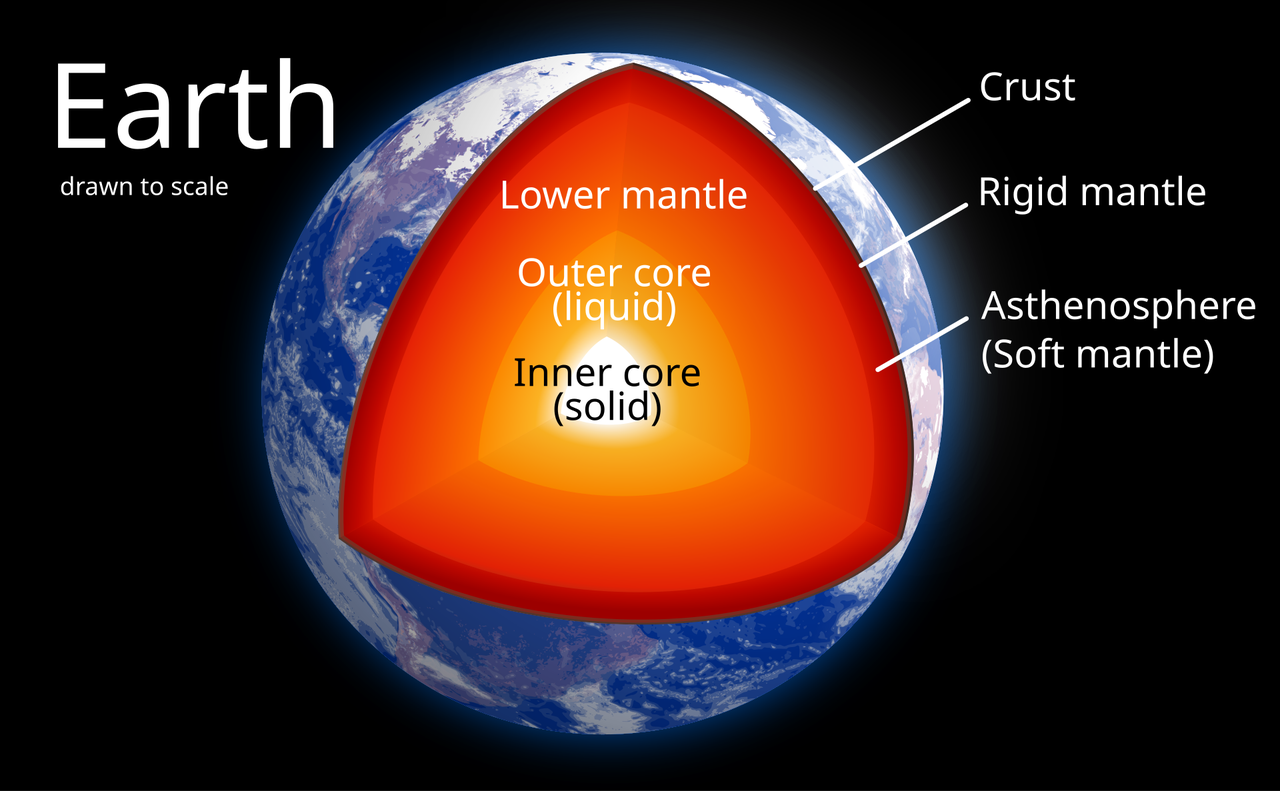
In 1692 Edmond Halley told the Royal Society that the Earth was three nested shells separated by luminous atmospheres, and he was doing real science: nobody could yet measure the inside of a planet. In 1818 a US Army officer named John Cleves Symmes Jr. put openings at both poles and asked Congress to fund an expedition to find one. Congress tabled it. Then seismology arrived, and the planet got weighed, and the argument ended: the ground under your feet is rock and metal all the way down, denser toward the middle, with a mean density of 5,515 kg per cubic meter and no room anywhere for a second world. The theory outlived its evidence by two hundred years. Here is the file, every claim wearing its tier.
Every so often an idea gets built by serious people, outlives every reason anyone had for holding it, and keeps walking anyway. The hollow Earth is the cleanest example we have. It started in the Royal Society, not on a message board. It was refined by one of the greatest mathematicians in history. It got a US Army officer as far as a petition that Congress actually took up. And then the twentieth century measured the inside of the planet, layer by layer, and the answer came back the same every single way it was asked. Here is the file. The history is real, the myths underneath it are real, the people are real, and the hollow part is not.
01It Started As Real Science
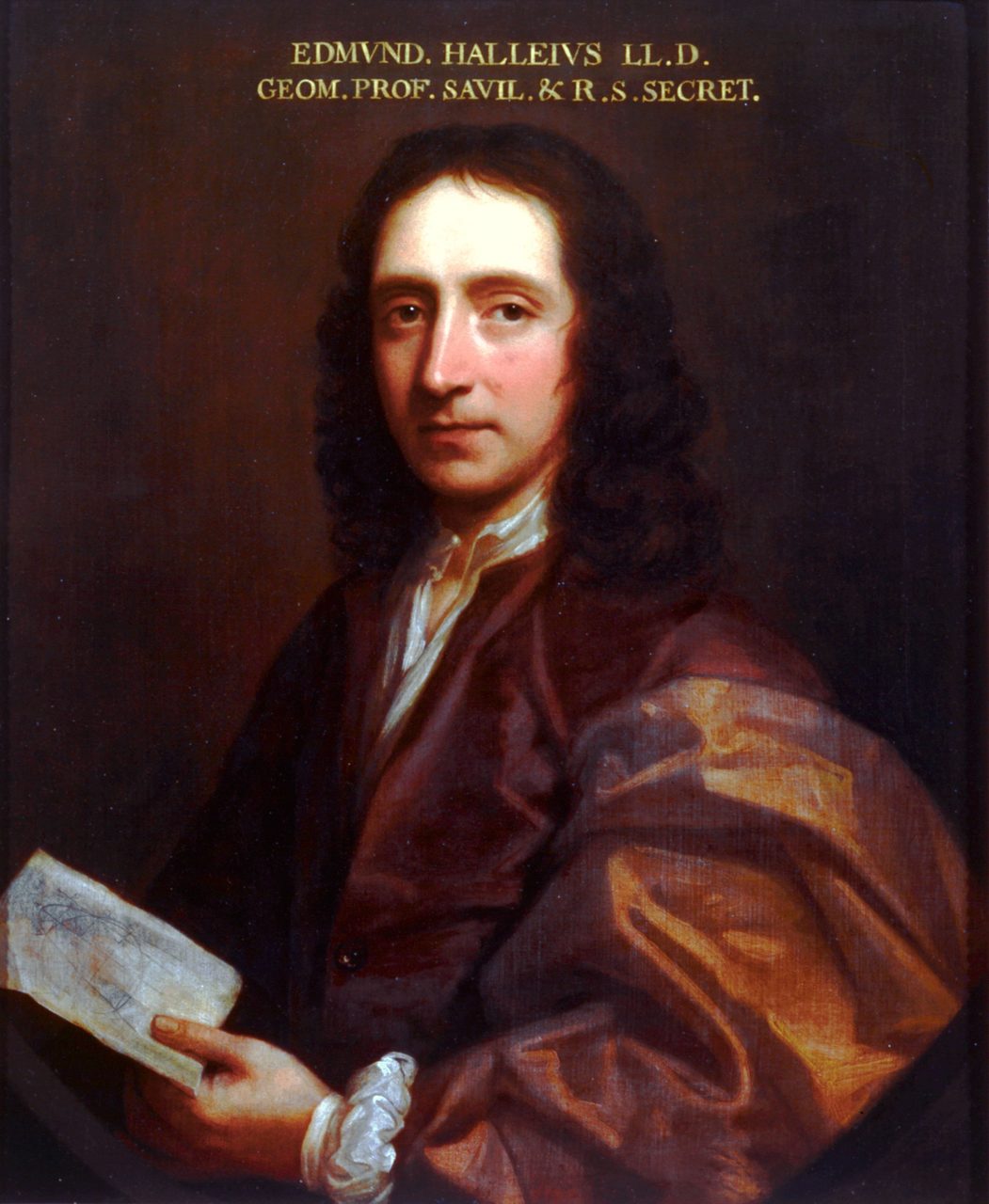
Begin with the honest half, because the hollow Earth did not start as a conspiracy. In 1692 Edmond Halley proposed it as a serious scientific hypothesis, and in his own century that is exactly what it was. There was no seismology and no gravimetry. Nobody had weighed the planet, and nobody had watched an earthquake wave travel through it. The Earth's interior was entirely unknown. What Halley did have was a real anomaly to explain: the compass would not stay put. His model was an attempt to account for anomalous compass variation.
The model was specific, and it was published where real science was published. Halley proposed three concentric shells, roughly matching the sizes of Mars, Venus and Mercury, each separated from the next by a luminous atmosphere. It appeared in the Philosophical Transactions of the Royal Society. That is the same journal, and the same institution, that carried the rest of the era's serious natural philosophy. This was not the fringe. This was the frontier.

Then Leonhard Euler, one of the greatest mathematicians in history, took the idea and made it simpler. Where Halley had nested shells, Euler proposed a single large cavity with an interior sun to light it. That detail is worth sitting with, because it is the strongest thing anyone can honestly say in the theory's favor. A mind of that caliber could entertain a hollow planet, and nothing available to him ruled it out. The empirical constraints that kill the idea had not been built yet.
That is the whole of the theory's respectable period, and it is worth being exact about where it ends. It ends the moment the planet becomes measurable. Everything after that is people arguing with instruments.
02Symmes Put Holes At The Poles, And Took It To Congress
The version most people actually picture, the one with a way in at the top of the world, does not come from Halley or Euler. It comes from an American, and it comes with a date and a printed document you can still look at.
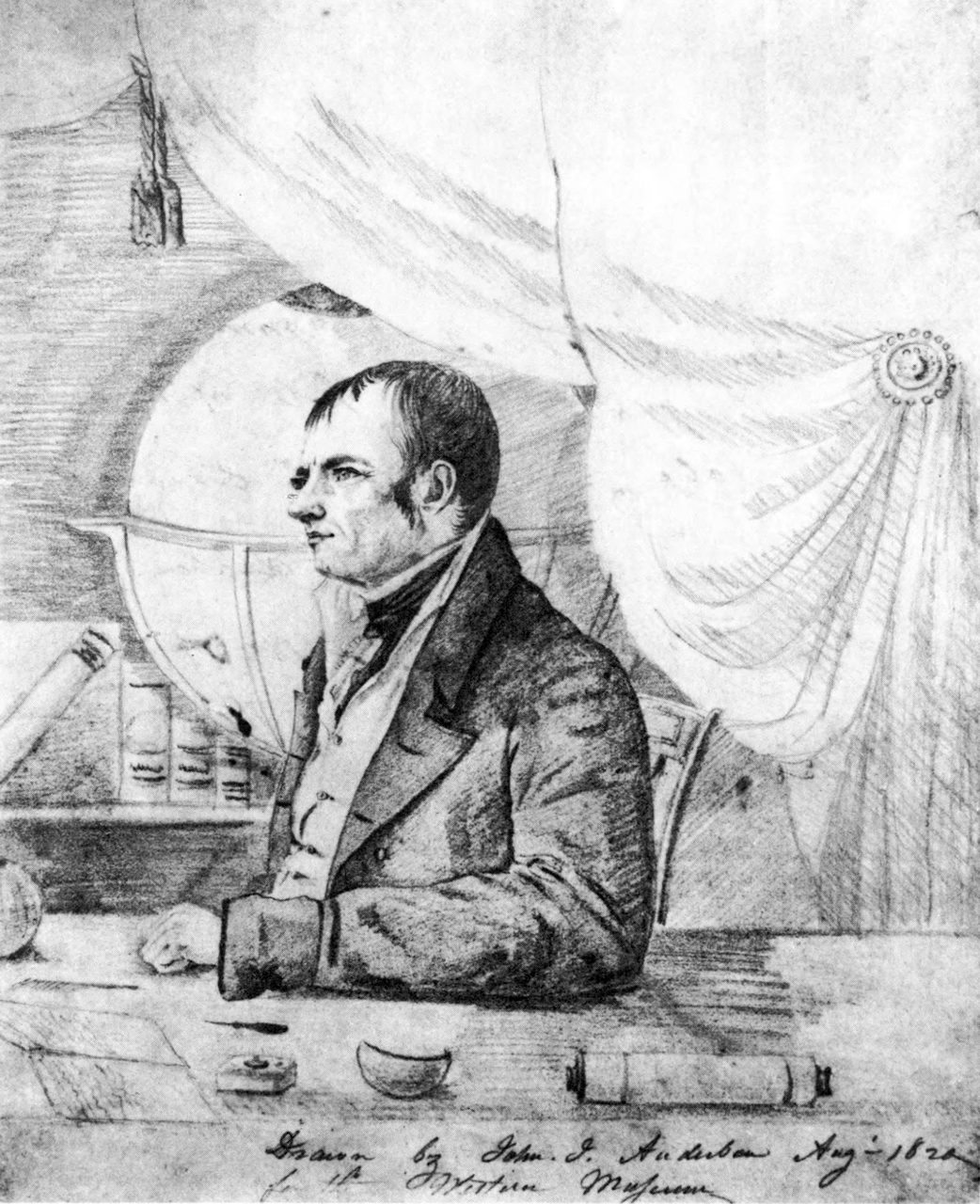
John Cleves Symmes Jr., a US Army officer, launched a vigorous public campaign beginning in 1818. His claim was that the Earth is hollow with openings at both poles, and those openings have carried his name ever since: the Symmes Holes. He did not stop at lectures. He petitioned the US Congress to fund an expedition to the North Pole to find the entrance, and he gathered enough support that the petition was formally tabled. It was never approved. But it was taken up, by a legislature, as a thing worth putting on the record.
One honest note about how we are filing him, because it matters on a site that puts a tier on everything. Our own research file never assigned Symmes a tier. His campaign sits in the document's summary rather than inside any of its numbered evidence sections, even though the file's own bibliography carries an academic paper on exactly this subject, Duane Griffin's 2004 study of Symmes's theory in the journal Physical Geography, which it lists and never cites. So we are not going to hand him a tier the file did not give him. What follows is well-documented history that our tier apparatus simply never got around to filing.
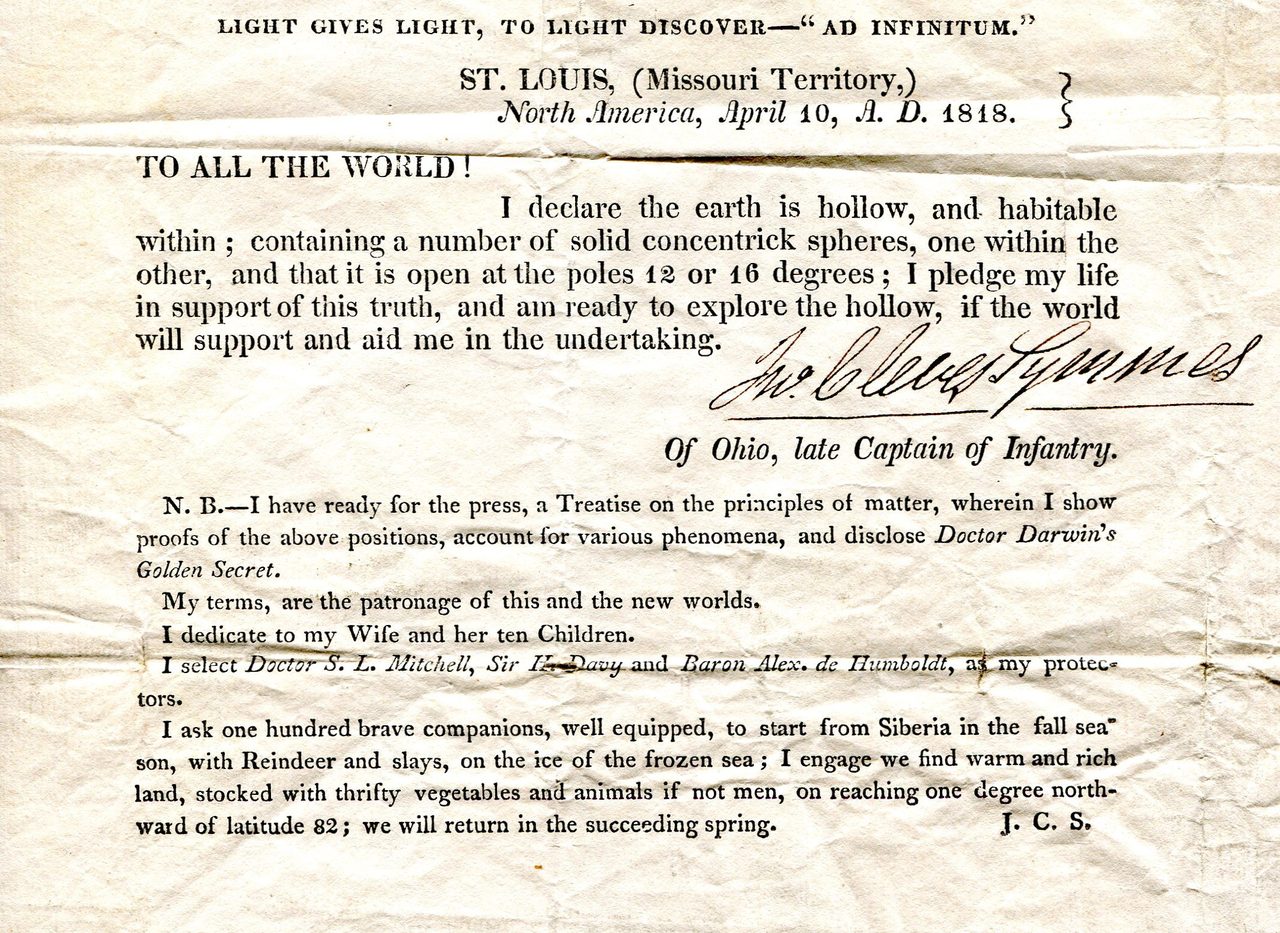
That circular is the part that makes this feel less like a curiosity and more like a real historical event. Symmes printed it, dated it, and distributed it. There is a physical sheet of paper at the start of this and a petition in a legislature at the end of it, which is more than most fringe theories can show for themselves.
03The Older Stories Underneath
None of this arrived in an empty room. The idea of a world beneath this one is about as close to a human universal as mythology gets, and that inheritance has done more to keep the hollow Earth alive than any of its physics ever did.
Virtually every ancient civilization had traditions of subterranean worlds. The Greek Hades. The Norse Svartalfaheimr. The Hindu Patala. The Chinese Diyu. The Mayan Xibalba. The Hopi Sipapu. Six named underworlds from opposite ends of the world, all of them putting something beneath the ground we stand on.
Two names travel further than the rest, and they are the ones that reach the modern versions. Agartha, a subterranean kingdom of enlightened beings, was popularized by Saint-Yves d'Alveydre in 1886 and by Ferdinand Ossendowski in 1922. Shambhala is a hidden kingdom of Tibetan Buddhist tradition. Both were woven into early twentieth-century esoteric traditions, and that is where the hollow Earth picked them up. We are going to stop exactly there, because that is exactly where our file stops. It gives a name, two popularizers, two dates and a tradition. It does not give a technology, a hidden master race, or a door.
And the file draws its own line, which we will repeat rather than soften: these mythological traditions are culturally significant, but they do not constitute evidence for a physically hollow Earth. A story told about what lies under a mountain is a story. It is not a survey.
The real carved underworlds, and the wider cross-cultural survey of those traditions, belong to a different file and a different article: Underground Cities and the Myths Beneath Them. This one stays on the theory itself.
04What Is Actually Down There
Now the part that ends the argument. The interior of the Earth is not a matter of opinion, and it has not been one for a century. It has been measured, repeatedly, by methods that have no idea what answer they are supposed to give.
The instrument is the planet itself. Seismic waves from earthquakes travel through the Earth's interior and are recorded by global seismometer networks, and their velocities, refractions and reflections directly map the density and composition of each interior layer. A wave changes speed when the material changes. It bends at a boundary. It reflects off one. Every one of those effects is a measurement of what the wave just passed through, read off an instrument on the far side of the world.
That method found the interior piece by piece, and each piece has a name and a date on it. Richard Dixon Oldham first identified the Earth's core in 1906, from the seismic shadow zones where waves failed to arrive. Beno Gutenberg determined the core-mantle boundary in 1913, at a depth of approximately 2,891 km. Inge Lehmann, in Denmark, discovered the solid inner core sitting within the liquid outer core in 1936. Three researchers, three decades, three independent results, and not one of them turned up a cavity.
It all came together in 1981, when Adam Dziewonski and Don Anderson published the Preliminary Reference Earth Model, PREM, in Physics of the Earth and Planetary Interiors. PREM is a complete radial profile of the Earth's density, seismic velocity and attenuation, from the surface to the center. It demonstrates that no hollow regions exist.
Here is what that model actually gives you, and it is worth watching which way each number is counted. A solid inner core with a radius of approximately 1,221 km measured out from the center, at a density around 13,000 kg per cubic meter. A liquid outer core reaching out to a radius of approximately 3,480 km, at roughly 10,000 to 12,000. A silicate mantle above it, reaching from the crust down to approximately 2,891 km below the surface, at roughly 3,300 to 5,600. And a thin crust over the top of all of it. That is the entire structure of the planet. There is no line in it for empty space.
| Layer | State And Extent | Density |
|---|---|---|
| Inner core | Solid, radius approximately 1,221 km from the center | ~13,000 kg/m3 |
| Outer core | Liquid, out to a radius of approximately 3,480 km from the center | ~10,000 to 12,000 kg/m3 |
| Mantle | Silicate, down to approximately 2,891 km below the surface | ~3,300 to 5,600 kg/m3 |
| Crust | Thin, the outermost layer | Surface rocks, ~2,700 kg/m3 |
| The whole planet | Mean density, measured | 5,515 kg/m3 |
05The Planet Weighs Too Much To Be Empty
Seismology is only half of the case, and the other half is older than the shadow zones. Earth's total mass is 5.972 x 1024 kg, determined from the gravitational constant G and orbital mechanics, and the measurement that opened that door was Henry Cavendish's, made with a torsion balance in 1798. One eighteenth-century bench experiment, and the weight of the world was on the table.
Now compare that mass against what the planet is made of where you can touch it. Earth's mean density is 5,515 kg per cubic meter. Surface rocks average approximately 2,700. The whole Earth is roughly twice as dense as its own surface, which means the missing density has to be somewhere, and the only somewhere left is down. It requires a very dense core, an iron-nickel alloy.
The shape of that density has been measured too, and this is the number that turns the hollow Earth inside out. Earth's moment of inertia, expressed as I/MR2, is 0.3308. For a sphere of uniform density it would be 0.4. Coming in under that value proves the core is denser than the mantle, with mass concentrated toward the center. A hollow Earth predicts exactly the opposite arrangement, everything flung out into the shell and nothing in the middle. The planet turns like something heavy is in there, because something heavy is.
Put those together and the hollow version fails twice over. A hollow Earth could not produce the surface gravity we measure, approximately 9.81 m/s2, and it could not produce the measured total mass either. A genuinely hollow Earth would come out at roughly 20 to 30 percent of the mass we actually observe, with gravitational effects wildly inconsistent with observation. That is not a rounding error or a modeling quibble. That is most of the planet missing.
And then there is the compass, which is where Halley came in. Earth's magnetic field is generated by convective motions in the liquid iron outer core, the geodynamo, modeled by Gary Glatzmaier and Paul Roberts in 1995. The irony is exact. The anomaly Halley invented a hollow Earth to explain is produced by the one thing a hollow Earth does not have, because a hollow planet has no mechanism to generate a global dipole magnetic field at all.
06There Are No Openings At The Poles
So much for the interior. The other half of the modern claim is a way in, and this is where the theory stops being a historical curiosity and starts making checkable statements about places on a map.
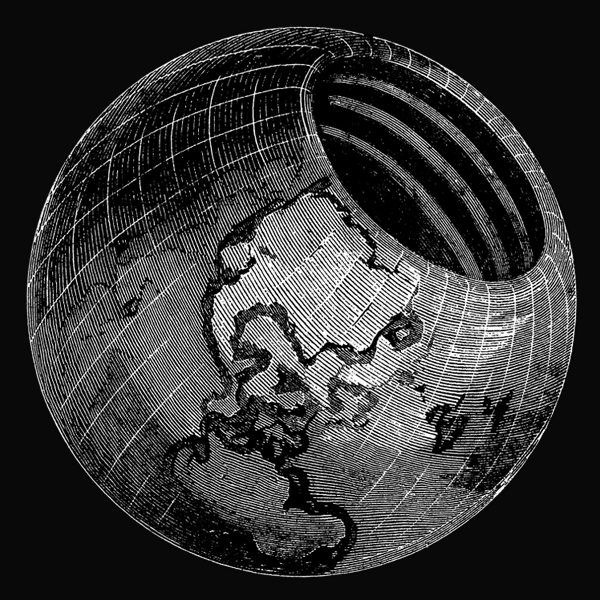
This is the claim as its own believers drew it. A gridded globe with real coastlines, the top cut away, a wide opening at the pole, and sphere inside sphere inside sphere. The engraving comes from the 1878 compilation of the theory assembled by Symmes's son Americus, and it is a fair and honest picture of what is actually being asserted. Not a metaphor about the unconscious. A hole, at a specific latitude, large enough that you could send an expedition to find it.
Which is the best thing about it, frankly. A hidden inner realm is hard to falsify. A hole in the Arctic is not. It is either at that latitude or it is not, and anyone with a ship, a plane or a satellite can go and look.
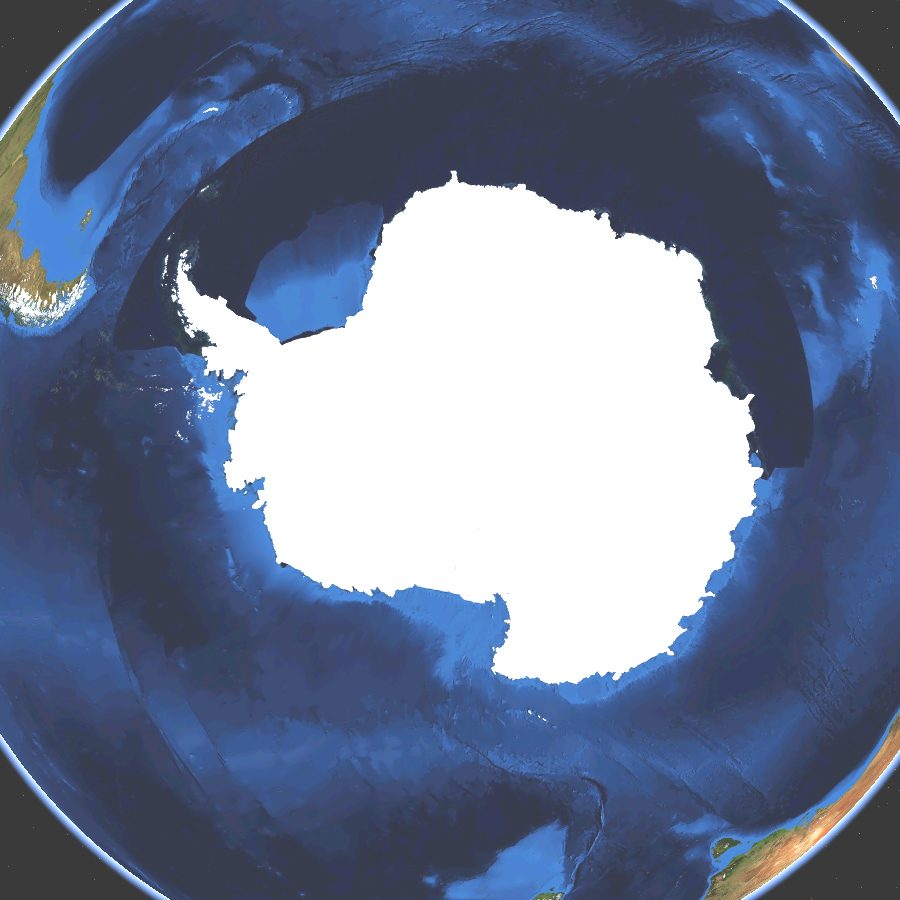
It has been checked, four independent ways, and there is nothing there. Satellite imagery has covered the poles continuously since the 1960s. Arctic and Antarctic expeditions have kept a continuous presence since the early twentieth century. Commercial airliners have been flying polar routes since the 1950s. Submarines have transited beneath the Arctic ice. Different technologies, different operators, different reasons for going, and all of them return the same result: no polar openings exist. The north pole is covered by ocean. The south pole is covered by a continental ice sheet.
Any one of those could in principle be argued with. All four at once, held for the better part of a century by people who mostly were not thinking about this question at all, is not a cover-up. It is a settled geographic fact.
The broader verdict is the same, and our file states it flatly. All the geophysical evidence, seismic wave propagation, gravitational measurements, moment of inertia, magnetic field dynamics and mineral physics experiments at extreme pressures, is consistent only with a solid, dense interior structure: an iron-nickel core, a silicate mantle, a thin crust. Not mostly consistent. Only consistent.
07Byrd's Diary, And The Ship That Never Found A Door
Two specific stories carry most of the modern theory's weight, and the useful thing about both is that they can be checked against documents that still exist.
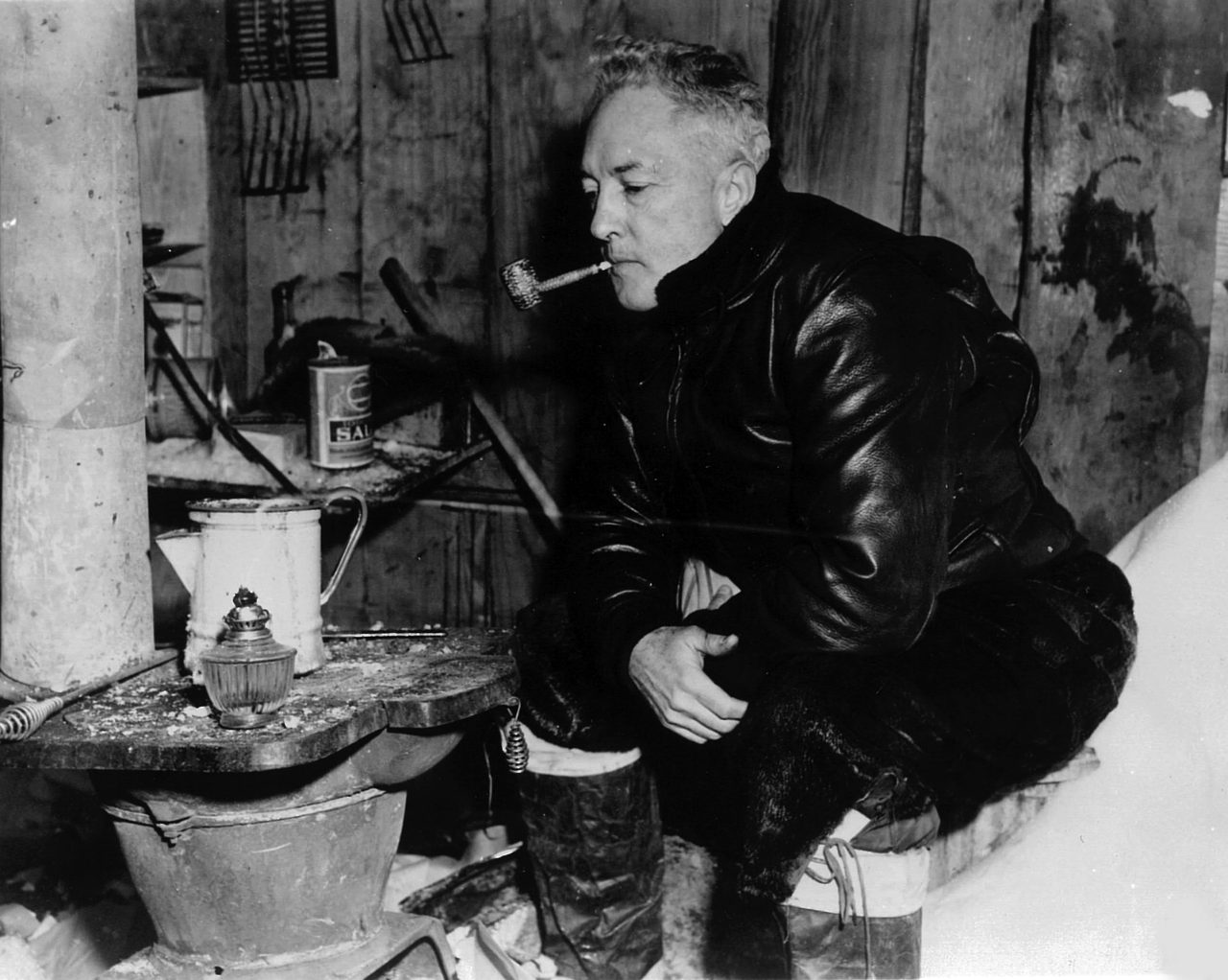
The first is Admiral Richard Byrd. The claim is that on his 1926 North Pole flight, or his 1947 Antarctic flights, he flew into a polar opening and through to the inner world. It rests on fabricated diary entries that were first published in fringe literature in the 1960s. Byrd's actual flight logs, held at the National Archives, record normal polar flights with no anomalous observations. The real Byrd is not a suppressed witness. He is a man whose own paperwork does not say what the story needs it to say.

The second is the Nazi base. The claim is that Germany established bases inside a hollow Earth accessible from Antarctica, usually pinned to the Neuschwabenland expedition of 1938 to 1939 and sometimes dragged forward to Operation Highjump in 1946 to 1947. It has no documentary support, and it is contradicted by the expeditions' actual records. Neuschwabenland was an aerial mapping expedition. Highjump was a military training exercise. Two real operations, both with real records, and neither record describes anything of the kind.
08What Is Actually Alive Down There
Here is where a lazy debunk stops, and where the genuinely interesting part starts. The Earth is not hollow. It is also not dead.
There is a real deep biosphere. While the Earth is not hollow, microbial life has been found at depths exceeding 5 km in the continental crust, and in sediments on the ocean floor. Not in caverns. In the crust.
Tullis Onstott at Princeton and the Deep Carbon Observatory have documented thriving microbial communities in South African gold mines, at temperatures up to approximately 60 C. Deep, hot and alive, found in the working shafts of an industry that was down there digging for something else entirely.
The scale is the part that should stop you. Total biomass of subsurface life may rival or exceed surface biomass, estimated at approximately 15 to 23 gigatonnes of carbon by Bar-On and colleagues in the Proceedings of the National Academy of Sciences in 2018. A living world that may match or outweigh the one we can see, and it is inside the rock.
Our file is careful here, so we will be too. This deep biosphere is not evidence for a hollow Earth. It demonstrates something different, that the deep underground is biologically active. Solid rock, full of life. Those two facts sit together perfectly well, and only one of them ever needed a cavity to be interesting.
09Why A Dead Theory Keeps Walking
So why is this still here? Our file's own counter-arguments section gives two reasons, and neither of them is geological. The hollow Earth taps into deep mythological archetypes of hidden underground worlds, the same ones we listed earlier and that almost every culture carries. And it appeals to conspiratorial thinking about what authorities are hiding, which is a machine that runs on absence. The less there is to find, the better the suppression must be working.
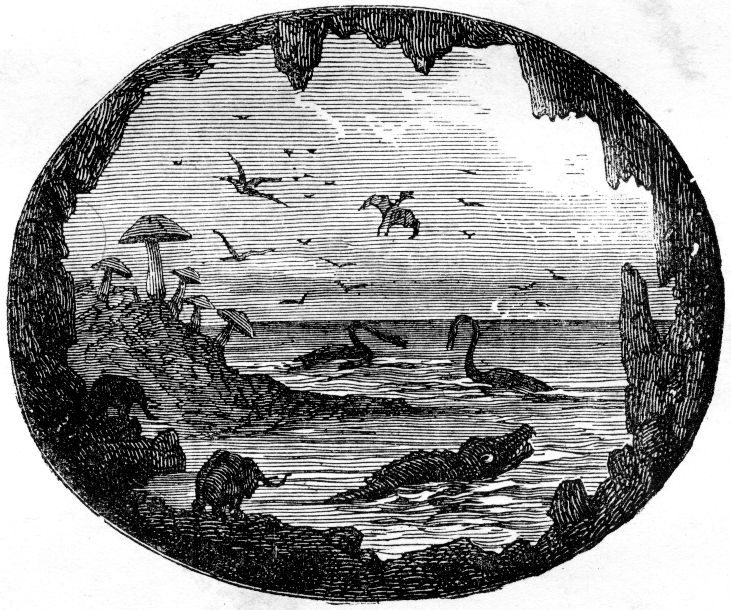
The other engine is fiction, and it is very good fiction. Jules Verne's Journey to the Center of the Earth in 1864. Edgar Rice Burroughs' Pellucidar series, running from 1914 to 1963. Numerous films and video games since. Popular culture keeps the concept in the public imagination, and an idea that gets a great novel and a half-century book series does not need to be true to stay in circulation. It only needs to keep being worth imagining.
But there is a sharper point in the file, and it is the one that decides the case. Compare the hollow Earth to the expanding Earth hypothesis, which had some legitimate scientific backing before it was disproven. The hollow Earth never had that standing. It was already contradicted by gravitational evidence available since Cavendish's 1798 measurement, which means modern advocates are not working at the edge of what is known. They are ignoring well-established physics that has been sitting on the table for more than two centuries.
10Every Claim, Every Tier
Here is the whole file on one page, each claim wearing what our research actually supports. It matters that these do not blur into each other, because the history is genuine, the myths are genuine, the deep life is genuine and the hollow planet is not. Flatten all four into one sneer and you get three of them wrong.
| The Claim | Tier | The Basis |
|---|---|---|
| Seismic waves map the interior directly, layer by layer | Tier 1 | Oldham 1906, Gutenberg 1913, Lehmann 1936 |
| PREM gives a full radial profile with no hollow regions | Tier 1 | Dziewonski and Anderson, 1981 |
| Earth's mean density is 5,515 kg/m3, far above surface rock | Tier 1 | Mass from G and orbital mechanics; Cavendish 1798 |
| The core is denser than the mantle | Tier 1 | Moment of inertia 0.3308 against 0.4 for a uniform sphere |
| The magnetic field comes from the liquid iron outer core | Tier 1 | The geodynamo, modeled by Glatzmaier and Roberts, 1995 |
| A hollow Earth would carry 20 to 30 percent of the real mass | Tier 1 | Gravity and total mass both wildly inconsistent |
| Halley proposed a shelled hollow Earth in 1692 as real science | Tier 2 | Philosophical Transactions of the Royal Society |
| Euler reduced it to one cavity with an interior sun | Tier 2 | Entertained before the empirical constraints existed |
| Nearly every ancient culture told of a world underneath | Tier 2 | Hades, Svartalfaheimr, Patala, Diyu, Xibalba, Sipapu |
| Agartha and Shambhala entered 20th-century esoteric tradition | Tier 2 | Saint-Yves d'Alveydre 1886, Ossendowski 1922 |
| Those traditions are culture, not evidence of a hollow planet | Tier 2 | The file's own stated caveat, kept here |
| Symmes campaigned from 1818 and petitioned Congress | Untiered | Our file never filed it; tabled, never approved |
| Microbial life lives deeper than 5 km in the continental crust | Tier 3 | Onstott and the Deep Carbon Observatory |
| Subsurface biomass may rival or exceed the surface's | Tier 3 | Bar-On et al. 2018, PNAS: approximately 15 to 23 Gt C |
| The Earth is hollow | Tier 4 | Debunked; every line of geophysics says solid and dense |
| Openings exist at the poles | Tier 4 | Debunked; satellites, expeditions, polar flights, submarines |
| Byrd flew into a polar opening | Tier 4 | Debunked; fabricated diary, ordinary real flight logs |
| Nazi bases sit inside the Earth below Antarctica | Tier 4 | Debunked; Neuschwabenland mapped, Highjump trained |
Fast Facts
- The Serious Version
- Halley, 1692: three concentric shells roughly the sizes of Mars, Venus and Mercury, separated by luminous atmospheres, published by the Royal Society. Tier 2, and genuine science for its century
- The Popular Version
- Symmes, from 1818: openings at both poles and a petition to Congress for an expedition to find one. Untiered in our own file, formally tabled and never approved
- What Is Actually Down There
- A solid inner core, a liquid outer core, a silicate mantle and a thin crust, mapped by seismic waves and pinned down by PREM in 1981
- The Weight Problem
- Mean density 5,515 kg/m3 against approximately 2,700 for surface rock; a hollow Earth would carry 20 to 30 percent of the measured mass
- The Spin Problem
- Moment of inertia 0.3308, below the 0.4 of a uniform sphere, which puts the dense material in the middle and not out in a shell
- The Compass Problem
- The magnetic field is generated by convection in the liquid iron outer core; a hollow Earth has no mechanism to make one
- The Poles
- Tier 4, false. Satellites since the 1960s, polar airline routes since the 1950s, submarines under the Arctic ice. Ocean in the north, ice sheet in the south
- The Byrd Diary
- Tier 4, fabricated. First printed in fringe literature in the 1960s; his real flight logs are at the National Archives and record nothing unusual
- The Nazi Base
- Tier 4, unsupported. Neuschwabenland was aerial mapping, Operation Highjump was a military training exercise
- The Real Strangeness
- Tier 3 in our file: living microbes deeper than 5 km inside solid crust, and a subsurface biomass estimated at 15 to 23 Gt C
What We Can Actually Stand Behind
The geophysics is not in dispute and it is not close. Seismic waves map the interior directly, and they found the core (Oldham, 1906), the core-mantle boundary at approximately 2,891 km (Gutenberg, 1913) and the solid inner core inside the liquid outer core (Lehmann, 1936). PREM assembled all of it into one radial model in 1981 and shows no hollow regions anywhere. Earth's mass, 5.972 x 1024 kg, and its mean density of 5,515 kg per cubic meter are far too high for a shell. The moment of inertia, 0.3308 against the 0.4 of a uniform sphere, proves the core is denser than the mantle. The magnetic field is generated by convection in the liquid iron outer core. Four independent lines of evidence, one answer.
The history and the mythology are real, and they deserve to be treated that way. Halley's 1692 proposal was a serious scientific hypothesis in a century with no seismology and no gravimetry, published by the Royal Society as three concentric shells separated by luminous atmospheres, and built to explain anomalous compass variation. Euler simplified it to a single cavity with an interior sun. Subterranean worlds are close to a human universal: Hades, Svartalfaheimr, Patala, Diyu, Xibalba, Sipapu, with Agartha and Shambhala carried into early twentieth-century esoteric tradition by Saint-Yves d'Alveydre in 1886 and Ferdinand Ossendowski in 1922. Our file supplies the caveat itself and we keep it intact: culturally significant, and not evidence for a physically hollow Earth.
The deep biosphere is the one genuinely open thing in this file. Microbial life below 5 km in the continental crust and in ocean floor sediments; thriving communities in South African gold mines at temperatures up to approximately 60 C, documented by Onstott and the Deep Carbon Observatory; a subsurface biomass estimated at 15 to 23 Gt C that may rival or exceed everything living on the surface. Our file rates all of this Tier 3, and we are holding it there rather than promoting it on our own authority. The file is also explicit that it is not evidence for a hollow Earth, and neither are we.
And then the flat noes, said flatly. No, the Earth is not hollow: seismic wave propagation, gravitational measurements, moment of inertia, magnetic field dynamics and mineral physics experiments at extreme pressures are consistent only with a solid, dense interior of iron-nickel core, silicate mantle and thin crust. No, there are no polar openings: satellite imagery since the 1960s, continuous polar expeditions since the early twentieth century, commercial polar air routes since the 1950s and submarine transits beneath the Arctic ice all agree, and the poles are ocean in the north and continental ice sheet in the south. No, Admiral Byrd did not fly into the inner Earth: those diary entries were fabricated and first published in fringe literature in the 1960s, while his real logs at the National Archives record ordinary polar flights. And no, there were no Nazi bases inside the Earth: Neuschwabenland was an aerial mapping expedition and Operation Highjump was a military training exercise, both documented, neither one a door.
So the case is closed, and it closed a long time ago. The Earth is solid, and dense, and it gets denser the whole way down, and every instrument we have ever pointed at it says the same thing in a different language. What Symmes was looking for is not down there. But something is. There is a living biosphere inside the crust, thriving in hot rock kilometers below anything with a root or a lung, and our own file rates it Tier 3 for a reason: the size of it is still an estimate, and that estimate says it may rival everything alive on the surface, or it may outweigh it. We went looking for a hollow world and found a solid one that turned out to be inhabited. So the question the ground still holds is not whether there is a way in. It is how much is already living down there, in the rock, and how much of it we have never met.
Sources & further reading
Everything above is drawn from our research library on Theories of Anything, which is where we worked from. The papers, reports and primary records listed beneath them are where you can check us independently.
Image credits
- Earth's Internal Structure, To Scale diagram by IsadoraofIbiza via Wikimedia Commons. CC BY 3.0 Source.
- Edmond Halley portrait by Thomas Murray via Wikimedia Commons. Public Domain Source.
- Leonhard Euler pastel portrait by Jakob Emanuel Handmann, Kunstmuseum Basel, via Wikimedia Commons. Public Domain Source.
- John Cleves Symmes Jr. portrait by John James Audubon via Wikimedia Commons. Public Domain Source.
- Symmes' Circular No. 1, 1818 document scan via Wikimedia Commons. Public Domain Source.
- Symmes's Concentric Spheres, 1878 engraving via Wikimedia Commons, HathiTrust Digital Library. Public Domain Source.
- Antarctica From Satellite Data NASA World Wind rendering by Koyos via Wikimedia Commons. Public Domain Source.
- Rear Admiral Richard Byrd, Antarctica 1947 photograph by the US Navy and National Science Foundation via Wikimedia Commons. Public Domain Source.
- MS Schwabenland, 1939 photograph from the National Museum of the U.S. Navy via Wikimedia Commons. Public Domain Source.
- Edouard Riou's Verne Illustration illustration by Edouard Riou via Wikimedia Commons. Public Domain Source.
- Card crop of Earth's Internal Structure, To Scale diagram by IsadoraofIbiza via Wikimedia Commons. CC BY 3.0 Source.


.jpg)


.jpg)
