Why Ancient Sites Sit on Magnetic Weirdness
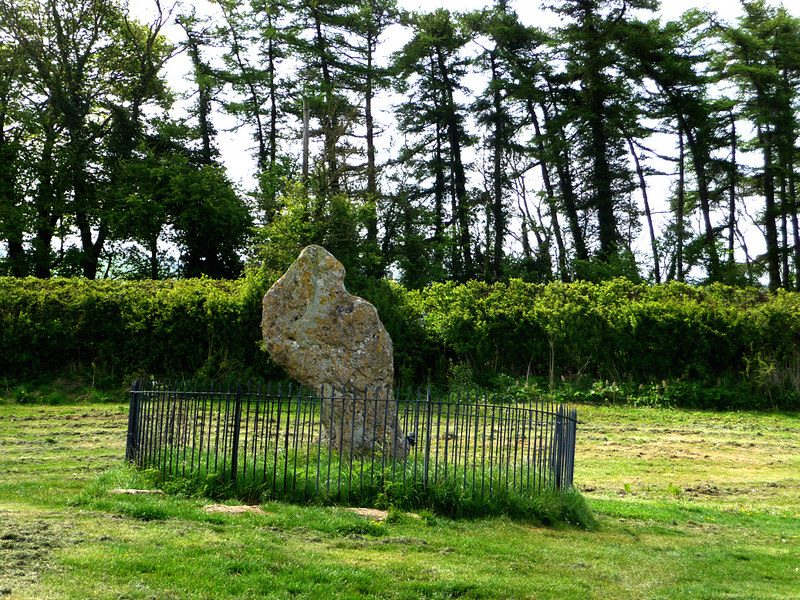
Bring a magnetometer to the right standing stone and the needle really does jump. Bring a Geiger counter to the King Stone at Rollright and the count really does climb, though it stays comfortably inside safe limits. For ten years a team of volunteer physicists carried real instruments to real megaliths and wrote down what they found, and that much is true, and stranger than the skeptics admit. What is not true is almost everything built on top of it: that these circles are power generators, that the stones heal you, that a magnetic field on a fault line reliably rewrites the human mind. Here is the whole file, the measured and the mythical, graded tier by tier.
Two very different things get called the same story, and telling them apart is the whole job here. The first is a matter of physics you can put an instrument to: at a handful of ancient stone sites, magnetometers, Geiger counters, and ultrasound detectors have registered real, measurable anomalies. The second is a matter of belief you cannot: that those anomalies are a lost technology, an energy the stones broadcast and the body can drink. The instruments are honest. The mythology is not. What follows keeps them apart, because the moment you weld the measured fact to the mystical claim, you get exactly the confusion this subject has drowned in for decades.
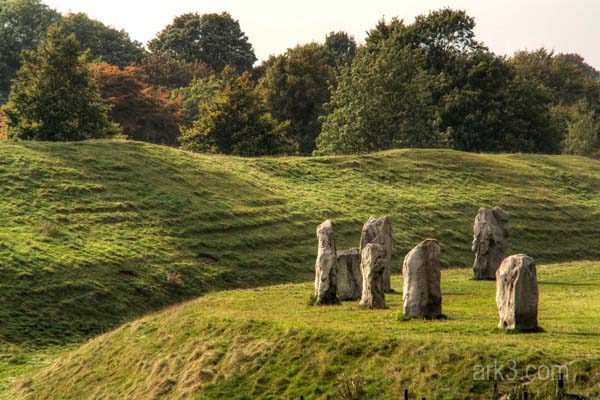
The measured part is not vague hand-waving about somewhere in England. It is specific ground. Instruments have logged anomalies at the Rollright Stones in Oxfordshire, at Carnac in Brittany, at Avebury in Wiltshire, and inside the Irish passage tombs. These are real places you can stand in, and at particular stones within them the needle genuinely moves. The question was never whether the readings exist. It is what, if anything, they mean.
01Real Stones, Real Magnetism
Start with the least mysterious fact in the file: some of these stones are magnetic because of what they are made of. The spotted dolerite bluestones at Stonehenge, hauled from the Preseli Hills in Wales roughly 250 kilometers away, are laced with magnetite, and Darvill and Wainwright documented their raised magnetic susceptibility in 2014. That is not folklore. It is a rock property you can measure with a standard instrument.
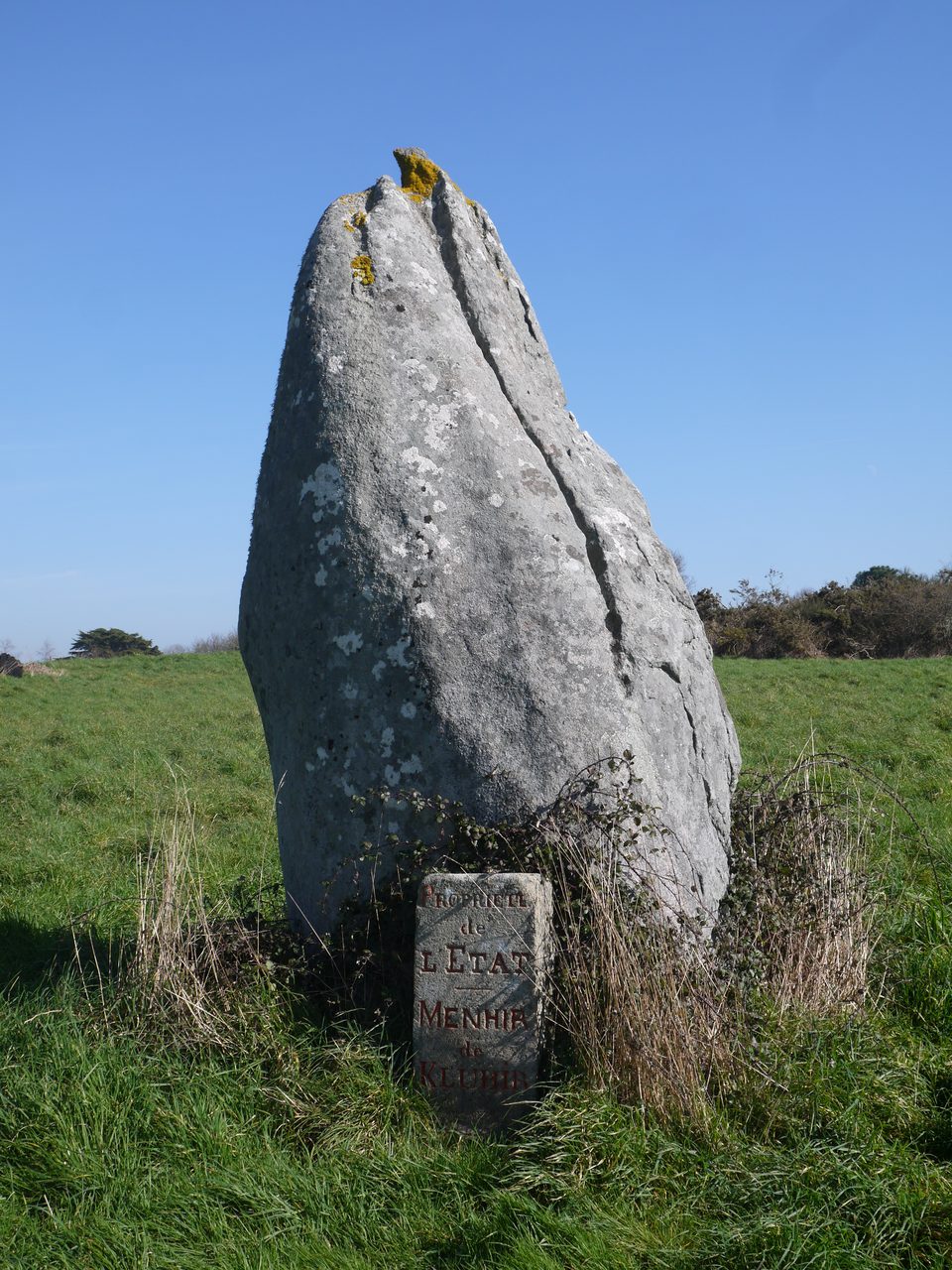
Carnac tells the same story in a different stone. Many of the menhirs standing in the Breton fields are granite, and granite carries a measurable residual magnetism of its own. Put a sensor to one of these stones and you are reading the iron-bearing minerals inside it, the same physics as a compass needle, not a signal from anywhere else.
Widen the lens and the pattern holds. Basalt, used at megalithic sites all over the world, sits among the most magnetically susceptible of all common rock types. A great many of the stones ancient builders chose to raise happen to be exactly the rocks that register on a magnetometer.
So the honest headline of the measured layer is almost boring, and it matters that it is boring. The magnetism of these stones is a function of their mineral composition, their magnetite, hematite, and ilmenite content, and not of anything anomalous or unexplained. The stones are magnetic the way iron filings are magnetic. Nothing supernatural has entered the room yet.
02The Dragon Project
The most serious attempt to actually measure this ground was not run by a university. It was run by volunteers, over ten years, and it is both more real and more limited than either side usually lets on. Paul Devereux, a British researcher who edited The Ley Hunter magazine for two decades, founded the Dragon Project in 1977 with a plain idea: take the old folklore that these sites hold energies and, instead of arguing about it, point instruments at it.
Under Devereux, the project ran multi-year monitoring at the Rollright Stones in Oxfordshire and at other sites, returning again and again with real equipment rather than settling for a single afternoon's readings. This was a sustained field effort from 1977 to 1987, not a one-off.
The magnetometers found something. Gauss magnetometers recorded localized magnetic variations as much as 50 percent above the local background at specific stones. That is a genuine, sizeable departure, and it was tied to particular stones rather than smeared evenly across the whole site.
The Geiger counters found something too, and here the honesty of the number matters. At the King Stone, the single weathered monolith that stands apart from the King's Men circle at Rollright, detectors picked up a slight elevation in radiation. It was real, and it was comfortably within normal safe limits. Slightly raised is not dangerous, and the file says so plainly.
The strangest readings were acoustic. Ultrasound detectors registered emissions from some stones at dawn around the equinoxes. A seasonal correlation was noted, dawn and the turning of the year, but noticing a correlation is not proving a cause, and the project did not claim it had found one.
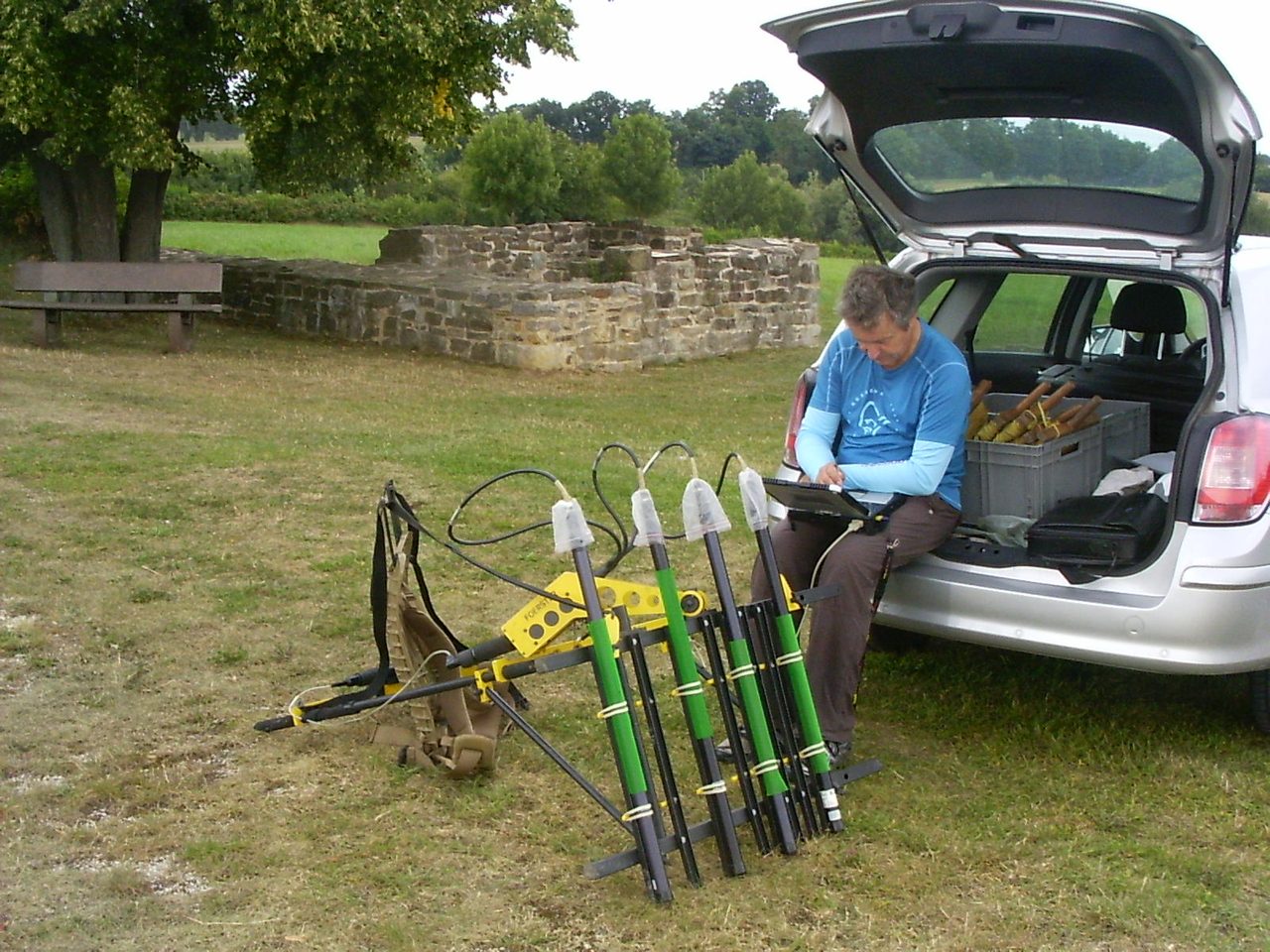
Now the caveat that decides how much weight all of this can bear. The measurements were taken by volunteer physicists and engineers, and their data collection was documented and repeatable. But the results were never published in a major peer-reviewed journal. That is the exact, honest status of the Dragon Project: real instruments, real readings, real method, and no passage through the filter that lets the rest of science check the work. It is not fake data. It is also not peer-reviewed science. Both of those are true at once, and pretending otherwise in either direction is where this subject goes wrong.
03The Field Frozen In Fired Clay
There is a branch of hard science that touches this subject from an unexpected angle. Archaeomagnetism, which reads the thermoremanent magnetism locked into fired archaeological materials, is a well-established and routine dating technique. When clay is heated past a certain point and then cools, it freezes a snapshot of the Earth's magnetic field into itself, and that snapshot can be read centuries later.
The method works because the record is real. Archaeomagnetic studies confirm that ancient fires, kilns, and heated stones preserve measurable traces of the Earth's magnetic field as it stood at the moment of heating. This is not a fringe reading. It is how a great deal of archaeological dating gets done.
And it settles one thing while proving nothing about another. Archaeomagnetism shows that ancient people necessarily handled and heated stones that carried measurable magnetic properties, whether or not they ever noticed. But it is a dating tool, not a mind-reading tool. That they touched magnetic materials is certain. That they knew those materials were magnetic, and cared, is a completely separate claim the method cannot reach.
04The Sound Inside The Chamber
The magnetism is only half of the measurable weirdness. The other half is sound. Newgrange and Cairn L at Loughcrew, both in Ireland, generate infrasonic resonance when standing waves build inside their stone chambers. Speak or drum in the right place and the room itself answers back at a frequency near the edge of what the ear can consciously hear.
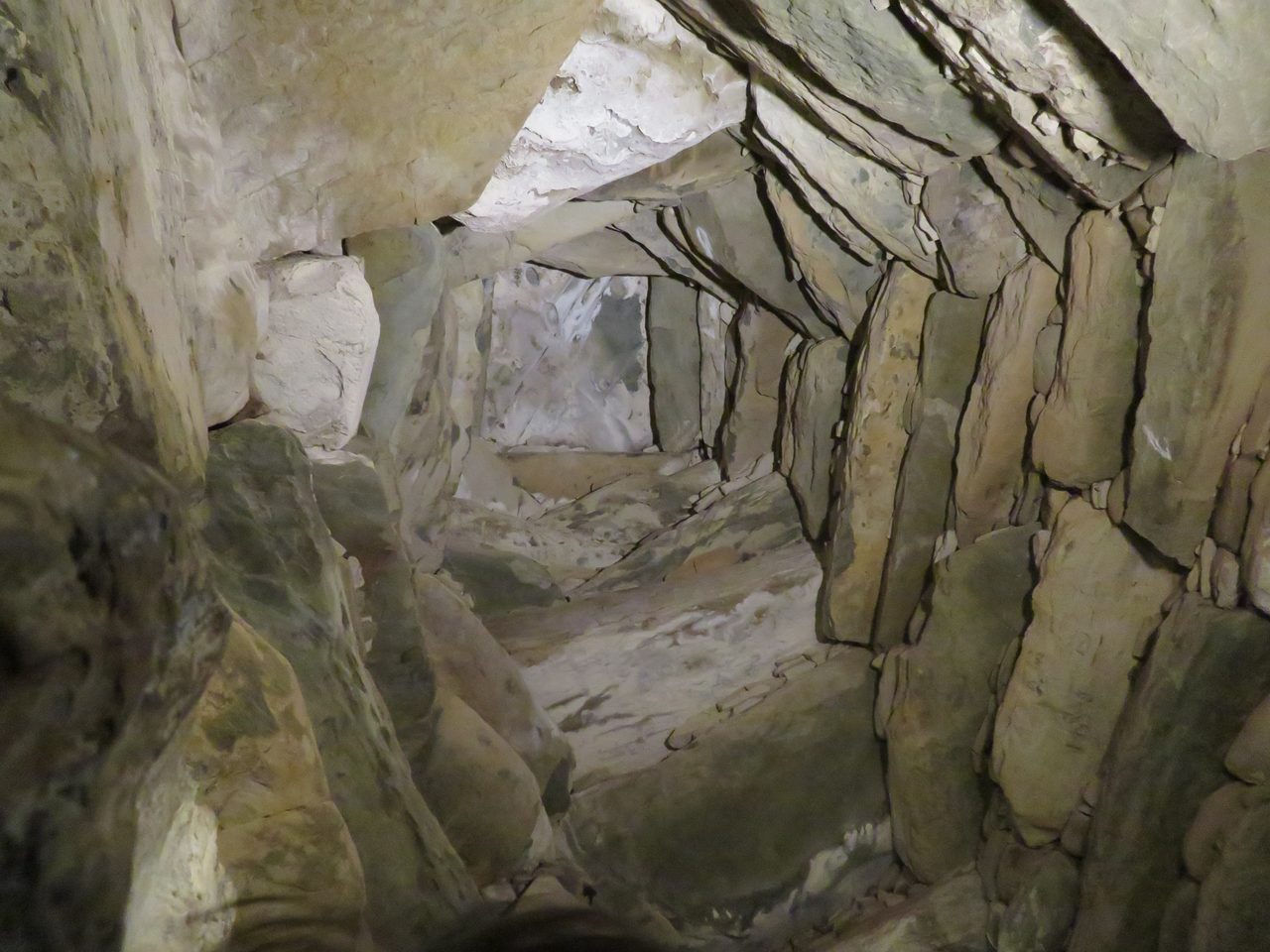
The frequency is the interesting part. Acoustics work by Jahn, Devereux, and Ibison in 1996, and later by Cook and colleagues in 2008, put the resonance at around 110 hertz, and modern neuroscience has shown that this specific frequency activates regions of the brain tied to language, emotional processing, and altered states. A room that hums at 110 hertz is, measurably, a room that nudges the brains of the people standing in it.
This is why some researchers stop treating sound and magnetism as separate coincidences and start treating them as co-selected: the same sites that sit on magnetically active stone also happen to ring at close to the one frequency that moves the human brain. Whether that pairing was chosen or simply stumbled into is the open question, but the pairing itself is documented.
05Did The Builders Choose The Magnetic Stones?
Here the file crosses from measurement into intention, and the ground gets softer. Fieldwork tied to the University of Oxford and Bournemouth University, including Darvill and Wainwright's own survey work and additional academic research, has found that at some Welsh sites the builders preferentially raised stones with measurably higher magnetic susceptibility, even when perfectly good non-magnetic stone lay within reach nearby. If that holds, it is not an accident of geology. It is a choice.
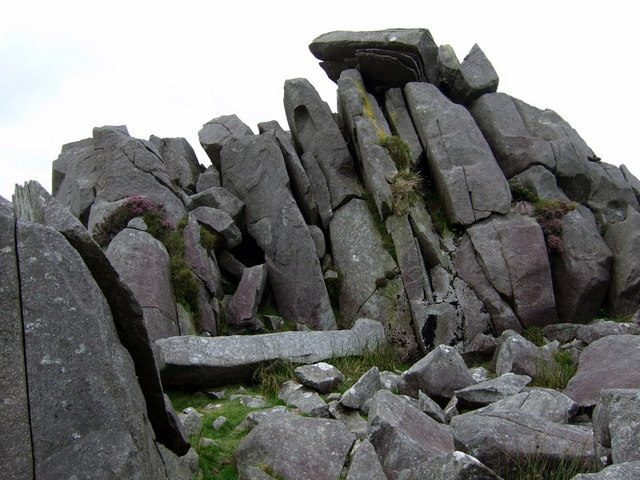
Stonehenge sharpens the same point. The specific bluestones dragged all the way from the Preseli Hills were not just any Welsh rock. Compared with the other stone types available at Preseli, the chosen bluestones carry both enhanced magnetic and enhanced acoustic properties, and separate acoustic studies have found these stones ring with a clear, bell-like tone when struck. The builders passed over nearer, easier stone to move these particular ones roughly 250 kilometers. Something about them mattered.
But here is the discipline the believers skip. That the builders selected these stones is credible. Why they selected them cannot be read off the physical evidence at all. Magnetic susceptibility is one candidate reason. So is color, so is texture, so is the bell-like ring, so is the plain cultural significance of a sacred source place. The stones were chosen. The claim that they were chosen for their magnetism specifically is a guess wearing the clothes of a measurement.
06The Mind On The Fault Line
There is a bolder version of the intention claim, and it moves the argument from the stones to the skull. Michael Persinger was a psychology professor at Laurentian University in Ontario, and he is best known for the God Helmet, a device he built with the engineer Stanley Koren that aimed weak, patterned magnetic fields at the temporal lobes to see what the brain would do.
Persinger's larger theory was geological. He proposed that many sacred sites sit on or near tectonic fault zones, where the stress of grinding rock generates electromagnetic fields, and that those fields can act on human consciousness, producing altered states, visions, and the distinct feeling of a presence in the room. In this reading, the holiness of a holy site is partly a brain event triggered by the ground beneath it.
There is real evidence pointing his way. A statistical correlation does exist between sites that people report as haunted and their proximity to geological faults and aquifers. Places where the earth is restless are, disproportionately, places people report as strange.
And in the laboratory, the God Helmet appeared to deliver. Persinger reported that stimulating the temporal lobes with weak magnetic fields could produce experiences of presence and altered states in his subjects, seeming to reproduce on demand exactly the effect his theory predicted.
Then someone ran the test properly, and it did not hold. In 2005, Granqvist and colleagues published a controlled, blinded replication in Neuroscience Letters, and the result cut against Persinger. The sensed presence and the mystical experiences were predicted by how suggestible each subject was, not by whether the magnetic field was actually switched on. Once the experimenters no longer knew who was being stimulated and who was not, the field stopped mattering and suggestibility explained the results. That is a failed replication of the God Helmet's core claim, and it deserves to be said in exactly those words rather than softened into some scientists disagree.
There is also a plainer reason sacred sites cluster near faults, one that needs no effect on consciousness at all. Fault zones throw up springs, mineral deposits, and dramatic landscape features, and those are exactly the things that draw people to settle and to sanctify a place for entirely practical reasons. The correlation can be completely real and mean nothing more than that faults make good, striking, well-watered places to build.
07Could They Feel It?
Suppose, for the sake of argument, that ancient builders really did select for magnetism. How would they have known? The speculative answer is that they possessed some empirical awareness of these properties, perhaps read through the twitch of a dowsing rod, which could in theory respond to a magnetic gradient, or through some direct bodily sensitivity we no longer credit. It is not impossible. It is also entirely unproven.
The science here is genuinely open. Human magnetoreception research, including work by Wang and colleagues in 2019, has shown that some people's brains do produce unconscious responses to changes in the geomagnetic field. But an unconscious dip in a brain-wave reading is a long way from a person consciously feeling an anomaly under one particular stone and choosing to build there. The first is now measured. The second remains a leap.
Stretch this all the way to the grand version, the one that ties every stone to a planet-wide web of earth energy, ley lines, and geodetic grids, and it collapses. At the scale that framework is claimed, it remains scientifically unsubstantiated, and it is a different argument from the one measured here. We take the alignment statistics and the earth-grid debate apart in a companion file on ley lines and the earth grid; this file stays with the instruments.
08Where The Claims Break
Now the refusals, and they are flat. The claim that stone circles function as electromagnetic generators or energy transmitters has no basis in physics. The anomalies the instruments actually recorded are small, localized variations in a field, not coherent power being generated or broadcast by anything. A magnetometer reading 50 percent above background at one stone is a curiosity of the rock. It is not a machine, and no arrangement of standing stones turns a mineral property into a power supply.
The healing claim fails just as cleanly. The idea that visiting these sites delivers measurable health benefits through earth energies is unsupported by medical research. Whatever people genuinely feel at Avebury or Newgrange is well explained by the placebo effect, by meditation-like calm, and by the real psychological value of pilgrimage and time spent in a striking natural place. Those effects are worth something. They are not evidence of a crystal-energy field, and no study has ever found one.
| The Claim | The Counter-Argument |
|---|---|
| The builders selected these stones for their magnetic properties | Selection is real, but the reason is not readable from the stone: color, texture, acoustic ring, or the cultural weight of a sacred source place fit the evidence just as well. |
| Magnetic anomalies at these sites alter human consciousness | The laboratory effect needed controlled fields, and a blinded replication (Granqvist and colleagues, 2005) traced the experience to suggestibility, not the field; natural anomalies are weaker still. |
| The Dragon Project proved the reality of earth energies | Its data was never published in a peer-reviewed journal and its methodology has been questioned; real readings are not the same as vetted findings. |
| Sacred sites correlate with geological faults | Faults also produce springs and resource-rich soils, a fully practical reason to settle and build there, with no effect on the mind required. |
| Humans can sense magnetic fields | An unconscious brain response (Wang and colleagues, 2019) is not the same as conscious awareness of a specific magnetic spot in the landscape. |
Fast Facts
- The Measured Core
- Magnetometers logged variations up to 50 percent above background at specific stones; a Geiger counter found a slight, safe radiation rise at Rollright's King Stone; ultrasound detectors caught dawn emissions near the equinoxes.
- The Dragon Project
- Paul Devereux's 1977 to 1987 field study at the Rollright Stones and elsewhere. Real instruments, volunteer physicists and engineers, a documented and repeatable method, but never published in a major peer-reviewed journal.
- Why The Stones Register
- Stonehenge's bluestones carry magnetite, Carnac's menhirs are granite with residual magnetism, and basalt is among the most magnetic of common rocks. It is mineral composition, not anomaly.
- The Selection Clue
- At some Welsh sites, and at Stonehenge, builders preferentially used stones with higher magnetic and acoustic properties (Darvill and Wainwright, 2014). Whether they chose for magnetism specifically cannot be determined from the stones alone.
- The God Helmet, Corrected
- Persinger's weak-field temporal-lobe effect failed a controlled, blinded replication: Granqvist and colleagues (2005) found the experiences were predicted by suggestibility, not by the magnetic field.
- The Chamber Frequency
- Newgrange and Cairn L resonate near 110 hertz, a frequency modern neuroscience links to language, emotion, and altered states.
- The Hard No
- Stone circles are not power generators, which has no basis in physics, and site visits deliver no crystal-energy health benefit beyond placebo and the real value of pilgrimage.
So Are These Sites Wired, Or Not?
The weirdness is real and it is measured. Magnetometers, Geiger counters, and ultrasound detectors recorded genuine anomalies at real stones: up to 50 percent above background at Rollright, a slight and safe radiation rise at the King Stone, dawn ultrasound near the equinoxes. Stonehenge's bluestones really do carry magnetite, Carnac's granite really does hold residual magnetism, and archaeomagnetism reads the Earth's old field straight out of fired clay. None of that is in dispute.
Some of the interpretation earns a serious look without earning a verdict. At Welsh sites and at Stonehenge the builders do seem to have preferred stones with higher magnetic and acoustic properties. Newgrange and Cairn L really do ring near 110 hertz, a frequency that measurably moves the brain. And haunted-site reports really do cluster near faults. Credible, partial, and unfinished, every piece of it.
The bridge everyone wants to cross stays unbuilt. That ancient people consciously sensed these fields and deliberately chose their ground for them is possible and unproven. Human magnetoreception is real at the level of an unconscious brain-wave shift, but that is not the same as a builder feeling an anomaly underfoot and siting a monument on it. Interesting. Not established.
And the load-bearing myths get a flat no. No, these stone circles are not energy machines or power generators; the anomalies are small local field variations, with no basis in physics for generating power. No, the sites do not heal you through earth energies; the felt benefits are placebo, calm, and the value of pilgrimage, and no medical study has ever found more. And no, the God Helmet did not prove that magnetic fields rewrite the mind; its core effect failed a controlled, blinded replication and turned out to track suggestibility instead. Three honest noes, and the file is sharper for saying them.
So the ground under these stones really is a little strange, and the strangeness really was measured, by real people carrying real instruments who then, crucially, never let the wider scientific world check their work. Strip away the power grids and the healing fields and what survives is smaller and better: a set of monuments that sit, more often than chance seems to allow, on rock that registers on a magnetometer and rings near the frequency that stirs a human brain. Maybe that is coincidence. Maybe the builders had a sensitivity we have lost and cannot yet measure. The instruments can tell us the field is there. They cannot yet tell us whether anyone, thousands of years ago, stood on that spot and felt it. So which was it, and how would we ever build the instrument that could finally say?
Sources & further reading
Everything above traces to our research library on Theories of Anything, and every tier is the file's own grade kept at grade. The primary file is O_1_06, Geomagnetic Anomalies at Ancient Megalithic Sites, which carries the Dragon Project's magnetometer, Geiger, and ultrasound readings and their honest peer-review status, the bluestone and granite magnetism, the archaeomagnetic dating, the 110 hertz chamber resonance, Persinger's tectonic-strain theory and the Granqvist replication that broke the God Helmet's core claim, and the Tier 4 refusals this file ends on. The alignment statistics and the wider earth-grid debate live in the companion file on ley lines. Open the full files to check the sourcing and go deeper.
Image credits
- The King Stone, Rollright Stones, Oxfordshire photograph by Chris Gunns, via Wikimedia Commons. Creative Commons Attribution-ShareAlike 2.0 Generic Source.
- Carn Menyn bluestone outcrop, Preseli Hills, Wales photograph by ceridwen, via Wikimedia Commons. Creative Commons Attribution-ShareAlike 2.0 Generic Source.
- Granite menhir at Kerluhir, Carnac, France photograph by Simon de l'Ouest, via Wikimedia Commons. Creative Commons Attribution-ShareAlike 3.0 Unported Source.
- The corbelled ceiling inside Newgrange, County Meath, Ireland photograph by O'Dea, via Wikimedia Commons. Creative Commons Attribution-ShareAlike 4.0 International Source.
- Avebury stone circle, Wiltshire, England photograph by Ark3pix, via Wikimedia Commons. Creative Commons Attribution-ShareAlike 3.0 Unported Source.
- A modern magnetometer survey at Kastell Buch, Baden-Wurttemberg, Germany photograph by Pimvantend, via Wikimedia Commons. Creative Commons Attribution-ShareAlike 3.0 Unported Source.
- Card crop of The King Stone, Rollright Stones, Oxfordshire photograph by Chris Gunns, via Wikimedia Commons. Creative Commons Attribution-ShareAlike 2.0 Generic Source.


