Star People: The Tribes Who Say They Came from the Sky
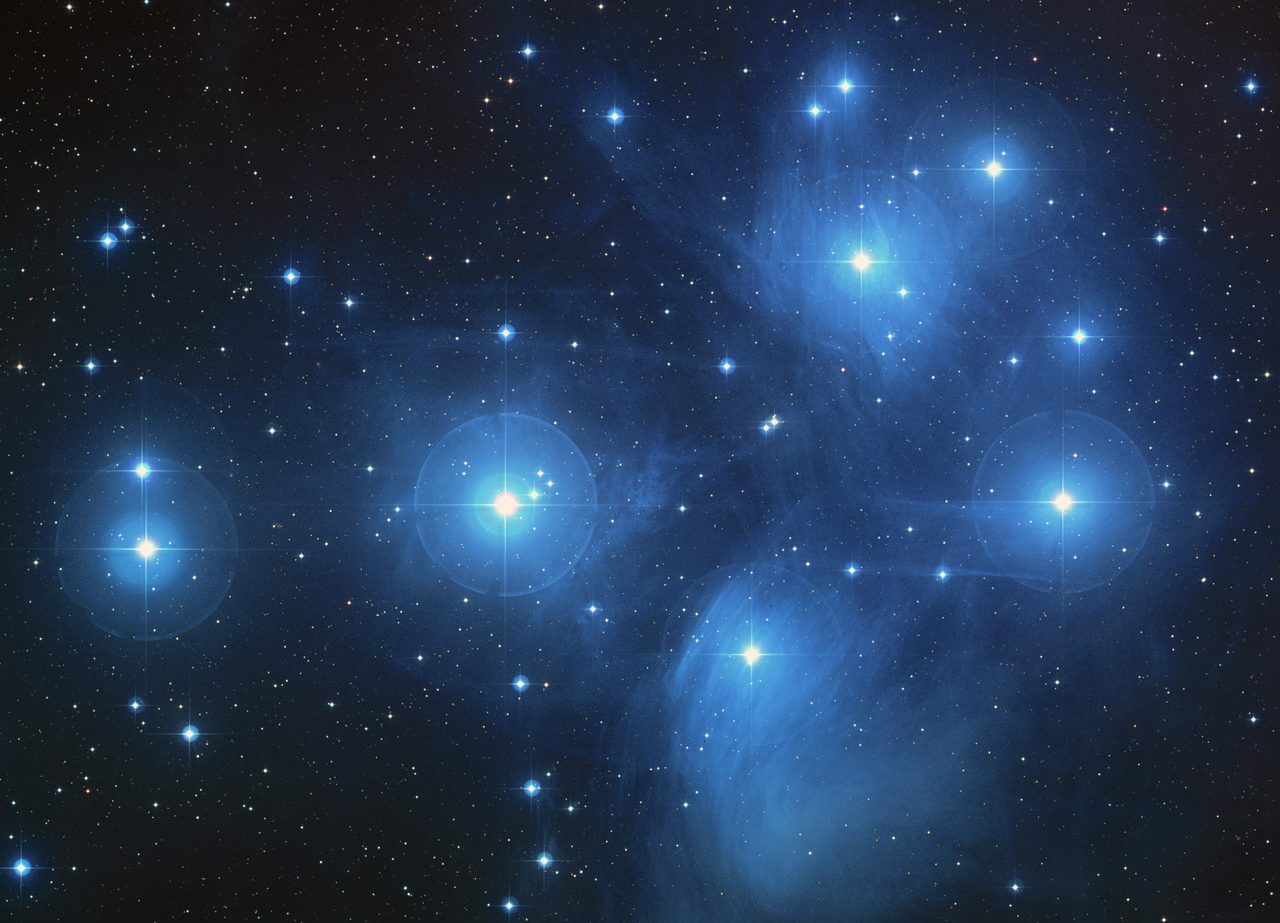
Ask the oldest cultures on Earth where they came from and when the year begins, and a striking number answer with named stars. Not the sky in general. The Pleiades, whose rising opens the Māori year, and whose fleeing women appear in Greek and Aboriginal Australian traditions alike. Sirius, which told Egypt when the Nile would flood, and which the Pawnee knew as the Wolf Star. The dark shapes in the Milky Way itself, where Aboriginal astronomers read an emu whose position tracks the real birds' breeding season, inside what is arguably the oldest astronomical knowledge system on Earth. This dossier is the world map of those claims: which peoples, which stars, what the record actually holds. It is also a reckoning with the industry that hijacked them, because the ancient-astronaut reading of these traditions does not just fail the evidence. It insults the people who did the watching.
Every culture watched the sky. Some cultures put themselves in it. Across the world, real peoples with real names hold traditions that tie their ancestry, their calendars, their clan origins, or their new year to specific, named stars: not to the heavens as a mood, but to the Pleiades, to Sirius, to figures drawn in the dark dust lanes of the Milky Way. Our research file surveys those claims as ethnography, an atlas of who says it, and about which star. This dossier follows it around the world, and it carries two standing obligations. First, several of these are living cultures, Hopi, Aboriginal Australian, and Dogon among them, and their knowledge gets treated here as knowledge, with the documentation disputes stated out loud. Second, the loudest modern interpretation of these traditions, the ancient-astronaut reading, fails on the evidence, and the way it fails needs to be said plainly.
01The Same Seven Stars, Everywhere
Start with the cluster that owns this entire subject. The Pleiades, catalogued as Messier 45 in the constellation Taurus, are visible from virtually everywhere on Earth, and they are referenced in more mythological traditions than any other celestial object. Whatever else divides the world's star lore, nearly everyone, everywhere, told a story about this one small knot of stars.
The Greek version is the one the West knows. The Pleiades are the seven sisters, Maia, Electra, Taygete, Alcyone, Celaeno, Sterope, and Merope, pursued by Orion and placed in the sky by Zeus. And the myth was load-bearing: the cluster's heliacal rising in May marked the start of the sailing and planting season, a calendar rule written down in Hesiod's Works and Days, at line 383. The seven sisters were not just a story. They were the farmer's and the sailor's clock.
Now the part that should stop you. Multiple Aboriginal Australian groups tell Pleiades traditions of their own, and many describe the same scene the Greeks did: a group of young women fleeing a pursuer, the Orion myth's shape playing out a hemisphere away. Ray Norris and Duane Hamacher documented these as among the world's oldest surviving astronomical myths, potentially 35,000 or more years old on linguistic-dating arguments. And here our own research pass adds an honesty note: the research file pins that figure to a specific 2009 journal citation that we could not independently verify as a real, findable publication. The underlying scholarship is genuine and the deep-age argument is real. The exact number should be held as an argument in progress, not a settled citation.
And the roll call keeps going. In Japan the cluster is Subaru, the origin of the car manufacturer's name and logo: six stars visible to the naked eye, six stars on the badge. In Māori tradition, Matariki, the heliacal rising of the Pleiades, marks the Māori New Year. In Cherokee tradition the Pleiades are the Ani'tsutsa, The Boys, seven boys who ascended to the sky during a ceremonial dance. And in Hindu tradition they are Krittika, the six nurses who raised the war god Kartikeya, also called Skanda. The same seven stars, named again and again, on every side of the planet.
| Culture | Their Name For It | The Tradition |
|---|---|---|
| Greek | The Pleiades, the Seven Sisters | Maia, Electra, Taygete, Alcyone, Celaeno, Sterope, and Merope, pursued by Orion and placed in the sky by Zeus; the May rising opened the sailing and planting season per Hesiod |
| Aboriginal Australian | Multiple names across groups | Young women fleeing a pursuer; documented among the world's oldest surviving astronomical myths |
| Japanese | Subaru | The origin of the car manufacturer's name and its six-star logo |
| Māori | Matariki | Its heliacal rising marks the Māori New Year |
| Cherokee | Ani'tsutsa, The Boys | Seven boys who ascended to the sky during a ceremonial dance |
| Hindu | Krittika | The six nurses who raised the war god Kartikeya, also called Skanda |
02Australia: The Oldest Star Knowledge On Earth
Cross to Australia and the timescale changes. Aboriginal Australian cultures maintain what is arguably the oldest astronomical knowledge system on Earth: oral traditions potentially spanning 10,000 to 65,000 years, a span that makes every written astronomy on the planet look recent.
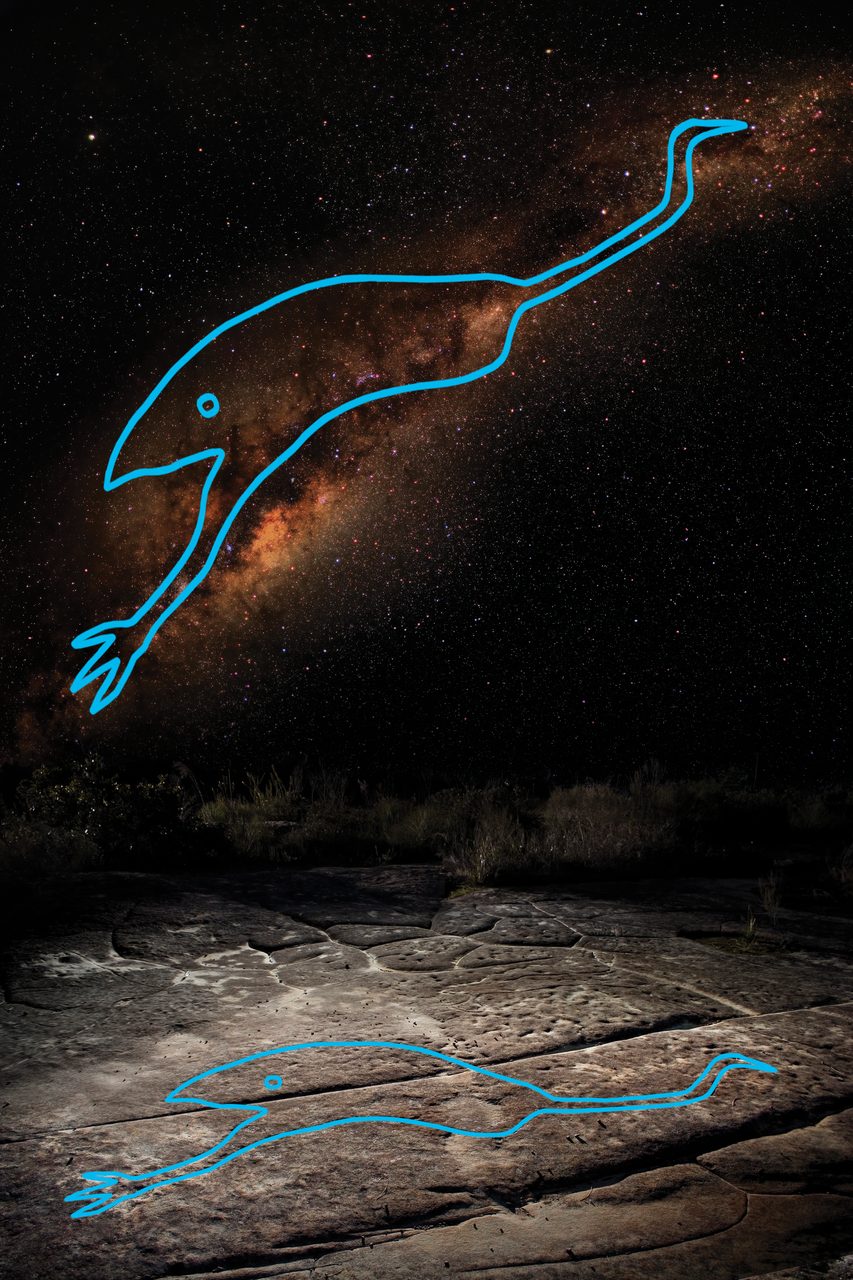
And the method is unlike anything Greece imagined. Aboriginal groups identify constellations formed not by bright stars but by dark nebulae, the interstellar dust clouds silhouetted against the glow of the Milky Way. The most famous is the Emu in the Sky, formed by the Coalsack Nebula and the dark lanes running through Centaurus, Scorpius, and Sagittarius, and recognized across multiple Aboriginal groups. Where other traditions connected the dots, these astronomers read the darkness between them.
This knowledge is precise enough to embarrass the word myth. Duane Hamacher and Ray Norris documented Aboriginal knowledge of variable stars, of stellar proper motion, and of celestial events tied to seasonal ecological indicators, most famously the position of the Emu in the Sky correlating with real emu breeding seasons on the ground. A constellation that tracks the breeding season of the animal it depicts is not decoration. It is a working instrument, and it may be the oldest one still running.
03Sirius: The Star Nobody Could Ignore
The other universal star is the brightest one. Sirius, alpha Canis Majoris, is the brightest star in the night sky, and it is universally prominent across world traditions. Where the Pleiades collected stories by being strange, a tight little crowd of stars, Sirius collected them by being impossible to miss.
Egypt ran its calendar on it. As Sopdet, also rendered Sothis, Sirius returned to the dawn sky each year, and that heliacal rising, falling around July 19 in the Ptolemaic calendar, heralded the Nile flood and the Egyptian New Year. The goddess Isis was associated with the star. Read that at survey scale: the most important event in Egypt's agricultural year, the flood that fed the civilization, was announced from the sky by a star with a goddess attached.
Among the Pawnee, in North America, the same star was the Wolf Star, associated with death and with the southeast direction. A different sky-country, a different meaning, the same gravitational pull on the human imagination.
And among the Dogon of Mali, Sirius is Sigi tolo, a star that stands at the center of the Dogon creation narrative.
That one sentence sits on top of one of the most contested episodes in modern anthropology, graded Tier 2 in our research file as a historical episode: what Marcel Griaule and Germaine Dieterlen reported the Dogon knew about an invisible companion of Sirius, what Walter van Beek's 1991 restudy could not confirm among his own informants, and the still-unresolved argument over where that reported knowledge actually came from. This dossier deliberately stops at the mention. The full ethnography, the complete claims table, and the whole controversy already have their own file in this wing: The Dogon, the Nommo, and the Secret of Sirius. What matters for this survey is the pattern point: one more people, one more name, the same brightest star.
04The Pueblo Southwest: Born Through Worlds, Governed By Stars
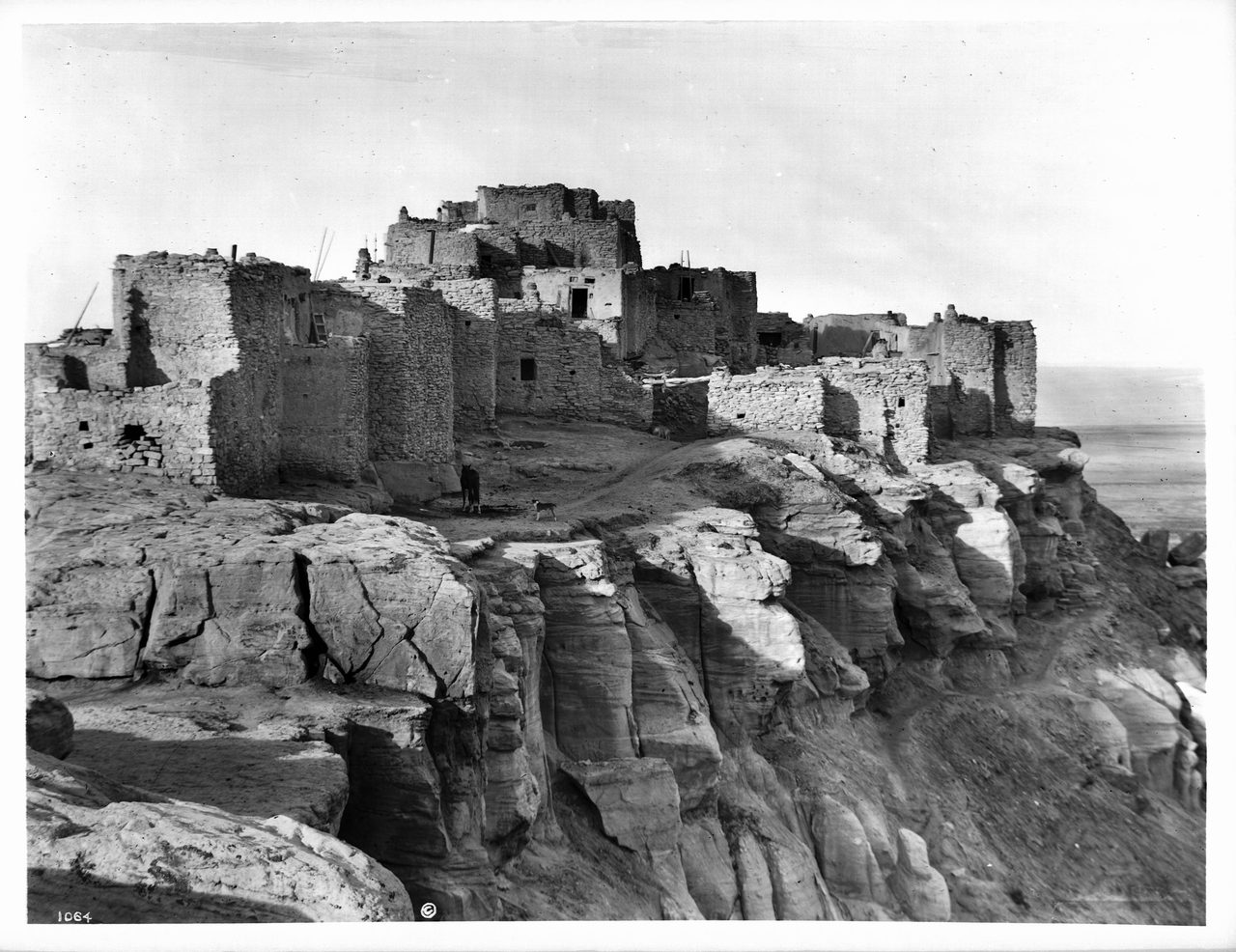
Cross to the American Southwest and the tier changes, honestly. Hopi oral tradition describes emergence through successive worlds, First World through Fourth, guided by spiritual beings including Masau'u, guardian of the Earth, and star-associated kachinas. Multiple Hopi accounts reference the stars, and the Pleiades under the Hopi name Chöösöngwu, as a source of ancestral connection. And the documentation carries a dispute this article refuses to hide: the standard published source, Frank Waters's Book of the Hopi (1963), has been criticized by some Hopi elders for inaccuracies and for unauthorized disclosure of restricted knowledge. So this section stands at Tier 2, and it stands there for the right reason: the tradition is real and Hopi, and the fullest outside account of it is contested by the very people it describes.
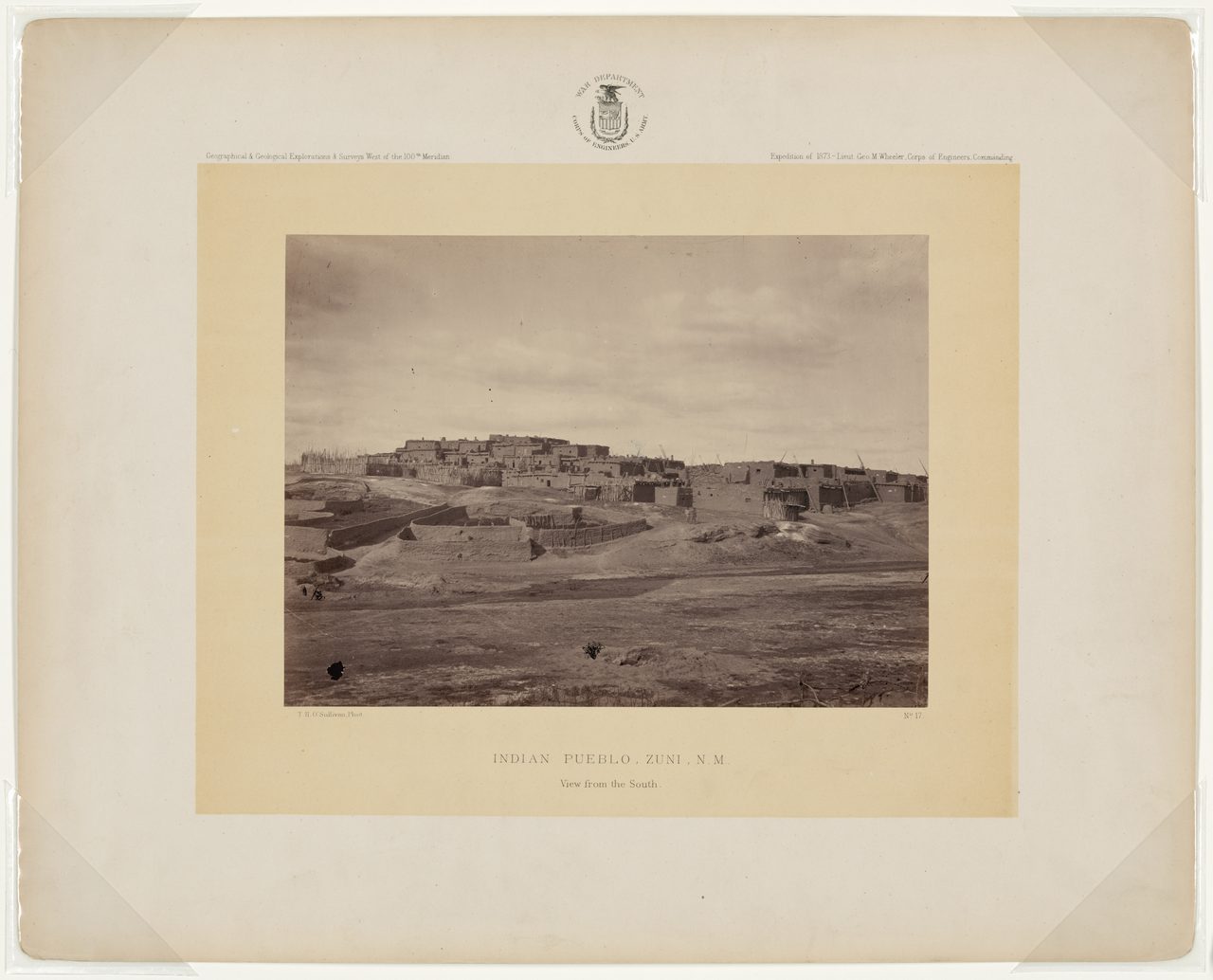
The Zuni case is sharper still, because there the sky is an office. Zuni cosmology includes the Star Priests, the Shiwi'ma, who maintain astronomical knowledge and govern the ritual calendar by stellar observation. Pueblo traditions more broadly connect clan origins to celestial sources, with specific clans tracing lineage to stars, to constellations, or to Sky Father beings. The record is long: Cushing documented these traditions in 1883, Matilda Coxe Stevenson in 1904, Young in 1988. A century of ethnography agrees the traditions exist and are held; the Tier 2 grade marks the distance between the record and its interpretation.
| People | The Star | The Claim | Tier |
|---|---|---|---|
| Egyptian | Sirius as Sopdet/Sothis | Heliacal rising, circa July 19 in the Ptolemaic calendar, heralded the Nile flood and the New Year; Isis associated with the star | 1 |
| Pawnee | Sirius as the Wolf Star | Associated with death and the southeast direction | 1 |
| Dogon | Sirius as Sigi tolo | Central to the creation narrative; the wider controversy is cross-linked, not repeated here | 1 name, 2 dispute |
| Hopi | The stars, and the Pleiades as Chöösöngwu | Emergence through successive worlds; the stars as a source of ancestral connection | 2 |
| Zuni and Pueblo | Stellar observation broadly | Star Priests govern the ritual calendar; clans trace lineage to stars, constellations, or Sky Father beings | 2 |
05The Ancient-Astronaut Reading, And What It Costs
Enter the interpretation that made star people a household phrase and a punchline at the same time. Erich von Däniken (Chariots of the Gods?, 1968) and Zecharia Sitchin (The 12th Planet, 1976) read traditions like these as literal accounts of extraterrestrial contact: Hopi star ancestors as colonists from elsewhere, Hindu vimanas as spacecraft. The books sold millions of copies. They are supported by no mainstream archaeology and no mainstream anthropology, and the method underneath is consistent wherever it is checked: mistranslation, selective citation, and disregard for cultural context.
The deeper problem with that industry is not that it is wrong. It is what the wrongness implies. The ancient-astronaut school, von Däniken, Sitchin, and the Ancient Aliens television series after them, has been criticized for racist underpinnings: the implication that indigenous peoples could not have developed complex knowledge without extraterrestrial help. Scholars like Jason Colavito have documented the ideological connections running between ancient-astronaut theories and 19th-century racial pseudoscience. Notice which traditions keep getting reassigned to aliens: the indigenous ones, the peoples whose documented astronomy was among the oldest and most precise on Earth.
So take the research file's grade at full strength. The claim that indigenous star myths are, as a class, garbled UFO encounters is explicitly marked debunked. Reducing rich astronomical mythologies to ancient alien encounters strips indigenous peoples of their intellectual agency and their astronomical expertise, when Aboriginal Australians, Polynesian navigators, and Mesoamerican astronomers demonstrably developed sophisticated observational astronomy through their own ingenuity. The Emu in the Sky does not need a flying saucer. It needs exactly what produced it: countless generations of people paying attention.
One speculative reading does survive with its dignity, so long as it stays labeled. Star-people myths may encode an intuitive sense of what science calls panspermia: the possibility that the molecular building blocks of life, and perhaps life itself, arrived on Earth from interstellar sources via comets or meteorites. The science half is genuinely plausible, argued by Fred Hoyle and Chandra Wickramasinghe in Lifecloud (1978), with real support in the amino acids found in the Murchison meteorite in 1969. But our research file is exact about the logic, and so is this article: the connection between that chemistry and these mythologies is purely analogical, not evidential. The myth and the science share a sentence, not a source.
Fast Facts
- The Universal Cluster
- The Pleiades are referenced in more mythological traditions than any other celestial object: the Greek Seven Sisters, Aboriginal Australian traditions of fleeing young women, Japan's Subaru, the Māori Matariki, the Cherokee Ani'tsutsa, the Hindu Krittika.
- The Oldest Astronomy
- Aboriginal Australian star knowledge, oral traditions potentially spanning 10,000 to 65,000 years, is arguably the oldest astronomical knowledge system on Earth, including dark constellations like the Emu in the Sky and documented knowledge of variable stars and stellar proper motion.
- The Brightest Star
- Sirius is universally prominent: Sopdet heralding Egypt's Nile flood and New Year, the Pawnee Wolf Star of death and the southeast, the Dogon Sigi tolo at the center of a creation narrative.
- The Southwest
- Hopi tradition describes emergence through successive worlds with the stars and the Pleiades, Chöösöngwu, as a source of ancestral connection; the Zuni Star Priests, the Shiwi'ma, govern the ritual calendar by stellar observation, documented since 1883.
- The Disputed Book
- Frank Waters's Book of the Hopi (1963), the standard published account of Hopi tradition, has been criticized by some Hopi elders for inaccuracies and unauthorized disclosure of restricted knowledge. This article keeps that criticism attached.
- The Critique
- Scholars like Jason Colavito have documented the ideological connections between ancient-astronaut theories and 19th-century racial pseudoscience: the implication that indigenous peoples could not have developed complex knowledge on their own.
- Ruled Out
- Two claims are explicitly marked debunked by the research file itself: that the Dogon were taught by aliens, and that indigenous star myths as a class are garbled UFO encounters.
- The Open Question
- The traditions are real and old. Exactly how old stays open: linguistic-dating arguments reach 35,000 years and beyond, and even the research file's own citation for that headline figure could not be independently pinned down.
What The Evidence Actually Holds
The traditions themselves are real, named, and documented, and that is the headline. Greek tradition names the seven sisters, and Hesiod's Works and Days ties their May rising to the sailing and planting calendar at line 383. Aboriginal Australian Pleiades traditions, young women fleeing a pursuer in the same shape as the Orion myth, are documented among the world's oldest surviving astronomical myths. Japan's Subaru, the Māori Matariki new year, the Cherokee Ani'tsutsa, and the Hindu Krittika all name the same cluster. Aboriginal dark-constellation astronomy is real and precise: the Emu in the Sky read from the Coalsack Nebula and the Milky Way's dark lanes, with documented knowledge of variable stars, stellar proper motion, and seasonal ecological indicators. And Sirius's prominence is genuinely worldwide: Sopdet announcing the Nile flood in Egypt, the Pawnee Wolf Star, the Dogon name Sigi tolo. That these peoples hold and held these traditions is not in dispute.
The interpreted layer holds at Tier 2, documented but carrying live disputes. Hopi emergence tradition, the successive worlds, Masau'u, the star-associated kachinas, and the Pleiades as Chöösöngwu, is real Hopi tradition, and its standard published documentation is itself contested: some Hopi elders have criticized Frank Waters's Book of the Hopi for inaccuracies and unauthorized disclosure of restricted knowledge, a criticism this article keeps attached to every Hopi claim it makes. The Zuni Star Priests and the broader Pueblo pattern of clans tracing lineage to celestial sources rest on a century of ethnography, Cushing in 1883, Matilda Coxe Stevenson in 1904, Young in 1988. The Dogon Sirius controversy is a real, unresolved historical episode, weighed in full in its own dossier, not here. And the colonial-pseudoscience critique of the ancient-astronaut industry, the ideological line Jason Colavito and others have documented running from 19th-century racial pseudoscience into that literature, is documented scholarship, not a mood.
The speculative readings stay on the speculative shelf, both of them. The ancient-astronaut interpretation of von Däniken and Sitchin sold millions of books and is supported by no mainstream archaeology or anthropology, resting instead on mistranslation, selective citation, and disregard for cultural context. And the gentler panspermia analogy, real chemistry by way of Hoyle, Wickramasinghe, and the Murchison meteorite's amino acids, connects to these myths only by analogy, never by evidence. Neither reading tells you anything about what a Cherokee dance or a Hopi emergence account actually is.
Ruled out, explicitly, twice. First: the claim that the Dogon were taught by aliens is marked debunked in the research file, and this article rules it out with it. The most parsimonious explanation for the reported Dogon knowledge of an invisible companion of Sirius remains cultural contamination from European visitors; Walter van Beek's restudy failed to confirm the knowledge among his own informants; Marcel Griaule's methodology has been questioned; and the claim has never been independently verified and should not be presented as established fact. Second: the claim that indigenous star myths are, as a class, garbled UFO encounters is marked debunked alongside it. Aboriginal Australians, Polynesian navigators, and Mesoamerican astronomers developed sophisticated observational astronomy through their own ingenuity, and reducing that record to alien visits strips them of an intellectual agency the evidence says they earned. No part of this survey supports the literal star-visitor reading. None of it needs to.
Read the map one last time. A Greek farmer opens the plowing season when seven sisters rise, on the word of a poem with a line number. An Aboriginal elder reads a shape made of darkness whose position matches the emu's real breeding season, inside a knowledge system that may be older than any other astronomy on Earth. An Egyptian priest watches for the star that brings the flood. A Pawnee sky carries a Wolf Star, a Hopi account climbs through worlds with the stars for kin, a Zuni priesthood keeps the calendar by watching. Our research file's key finding says it exactly: whether these traditions represent imaginative mythologizing of the night sky, garbled memory of real contact, or something else entirely, they constitute one of the oldest layers of human cosmological thought. The ancient-astronaut industry looked at all of this and gave the credit to visitors. The evidence gives it back to the watchers. What stays genuinely open is the depth of the time involved: the linguistic-dating case reaches 35,000 years, a widely reported argument associated with Ray Norris suggests the Seven Sisters motif could preserve observations up to roughly 100,000 years old, and even our own file's citation for its headline figure could not be pinned down. However the numbers finally land, the habit they measure is one you can still practice tonight. How long, exactly, have we been telling the sky who we are?
Sources & further reading
Everything above is drawn from our research library on Theories of Anything, and every claim traces back to the files below. The primary file is the Star People Origins survey itself, C_5_30, which carries the six named Pleiades traditions, the Aboriginal dark-constellation astronomy, the worldwide Sirius pattern, the Hopi and Zuni documentation with its honesty flags preserved, the counter-arguments section naming Jason Colavito's critique, and the two explicitly debunked claims this article rules out. The Dogon material deliberately kept to a single paragraph here has its full depth in C_2_09, the wing's dedicated Dogon dossier, and the Griaule versus van Beek dispute has its own epistemics file at A_3_20. Open the full files to check the sourcing and go further.
Image credits
- The Pleiades star cluster (Messier 45 / NGC 1432) NASA, ESA, AURA/Caltech, Palomar Observatory (Digitized Sky Survey), via Wikimedia Commons. Public domain Source.
- The Emu in the Sky, Aboriginal dark-constellation, with a tracing of the matching Elvina Track rock engraving, Ku-ring-gai Chase National Park, Australia Barnaby Norris and Ray Norris, via Wikimedia Commons. CC BY-SA 4.0 Source.
- Hopi pueblo of Walpi on First Mesa, Arizona, circa 1901 photograph by C.C. Pierce, via Wikimedia Commons. Public domain Source.
- Zuni Pueblo, New Mexico, 1873 (Wheeler Survey) photograph by Timothy H. O'Sullivan, via Wikimedia Commons. Public domain Source.
- Card crop of The Pleiades star cluster (Messier 45 / NGC 1432) NASA, ESA, AURA/Caltech, Palomar Observatory (Digitized Sky Survey), via Wikimedia Commons. Public domain Source.

.jpg)
_on_mesa,_ca.1901_(CHS-1064).jpg)
