The Sweet Potato Paradox: A Vegetable That Crossed an Ocean
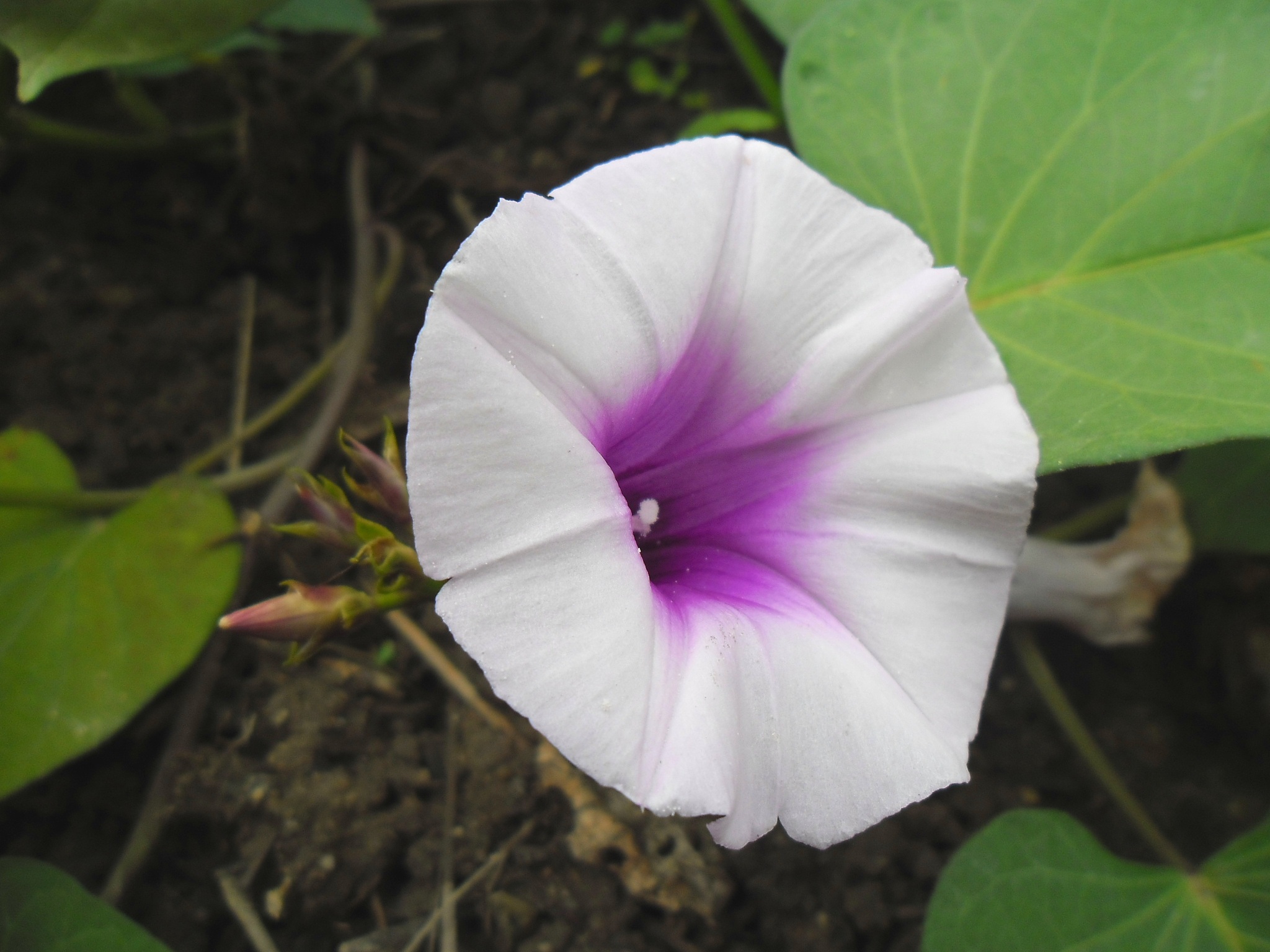
Here is a fact that should not be possible. When the first European ships reached the far islands of the Pacific, they found the sweet potato already there, already a staple, already woven into farming, feasting, and language across Hawaii, New Zealand, Easter Island, Tonga, and the Cook Islands. But the sweet potato is a plant of the Americas. Its wild relatives grow in Ecuador and Peru, an entire ocean away, and it was thriving in Polynesia centuries before Columbus was born. So how did an American vegetable end up feeding half the Pacific before any European set foot there? Genetics, archaeology, and even the word for the plant all agree the crossing really happened. What they cannot agree on is who, or what, carried it. One camp says Polynesian voyagers reached South America and brought it home. Another says the ocean itself did the work, no people required. Two peer-reviewed teams looked at overlapping evidence and reached opposite conclusions, and the argument is still live. Here is the whole file, every fact wearing its evidence.
Keep three questions apart, because the loudest versions of this story collapse them into one. First, is the sweet potato really an American plant? Yes, beyond any doubt. Second, was it really growing across Polynesia before Europeans arrived? Yes, and we can now date it at multiple sites. Third, how did it get there, by human hands or by the ocean alone? That is the fight, and it is genuinely unresolved. Slide the three apart and the paradox sharpens instead of dissolving. Let us open the file.
01The Paradox, Stated Plainly
Start with what is not in dispute, because it is the strangest part. The sweet potato, Ipomoea batatas, belongs to the morning glory family (Convolvulaceae) and is unmistakably a plant of Central and South America. Its wild progenitor relatives are native to the Americas, nowhere near the Pacific islands. Yet when the first European explorers reached Polynesia, the sweet potato was already a major staple crop across an enormous span of ocean: Hawaii, New Zealand, Easter Island, the Marquesas, Tonga, and the Cook Islands, grown there for centuries before any European contact, and already embedded in island farming, ritual, and speech. A plant with no natural range anywhere near these islands was feeding the people who lived on them long before the outside world knew the islands were there. That is the paradox, and everything else in this file is an attempt to explain it.
02A Plant Born in the Americas
The sweet potato's American birth certificate is written in its genome. Its closest known wild relative is Ipomoea trifida, and the crop itself is a hexaploid, carrying six sets of chromosomes, the product of complex and ancient hybridization events. The picture got sharper very recently. In 2022 a team led by Pablo Munoz-Rodriguez, publishing in New Phytologist, identified and formally described a previously unrecognized wild relative from coastal Ecuador and Colombia, naming it Ipomoea aequatoriensis, and showed it likely played a direct role in the origin of the sweet potato's six-set genome. The plant's ancestry runs through the northwest coast of South America. It does not run through the Pacific.
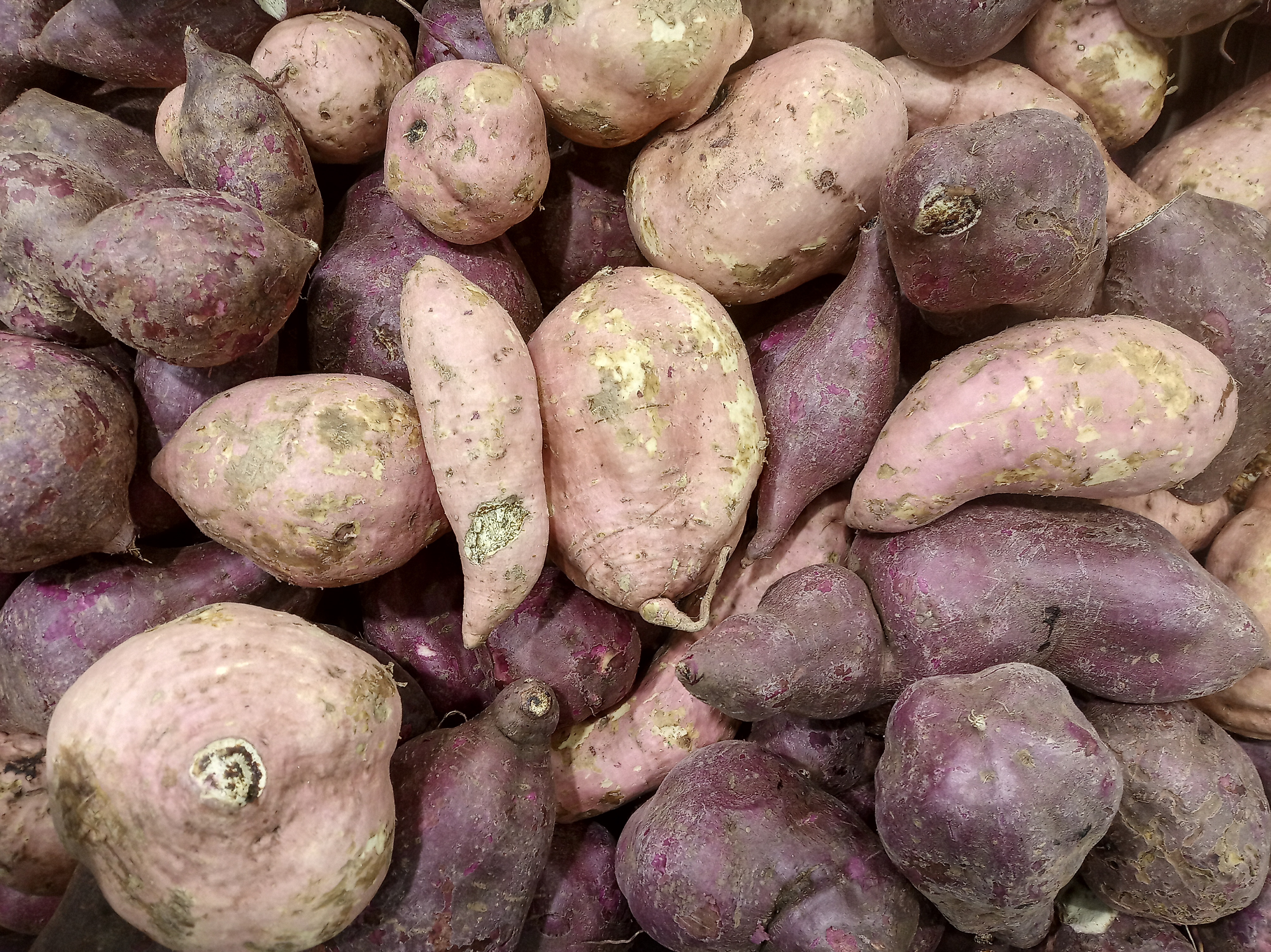
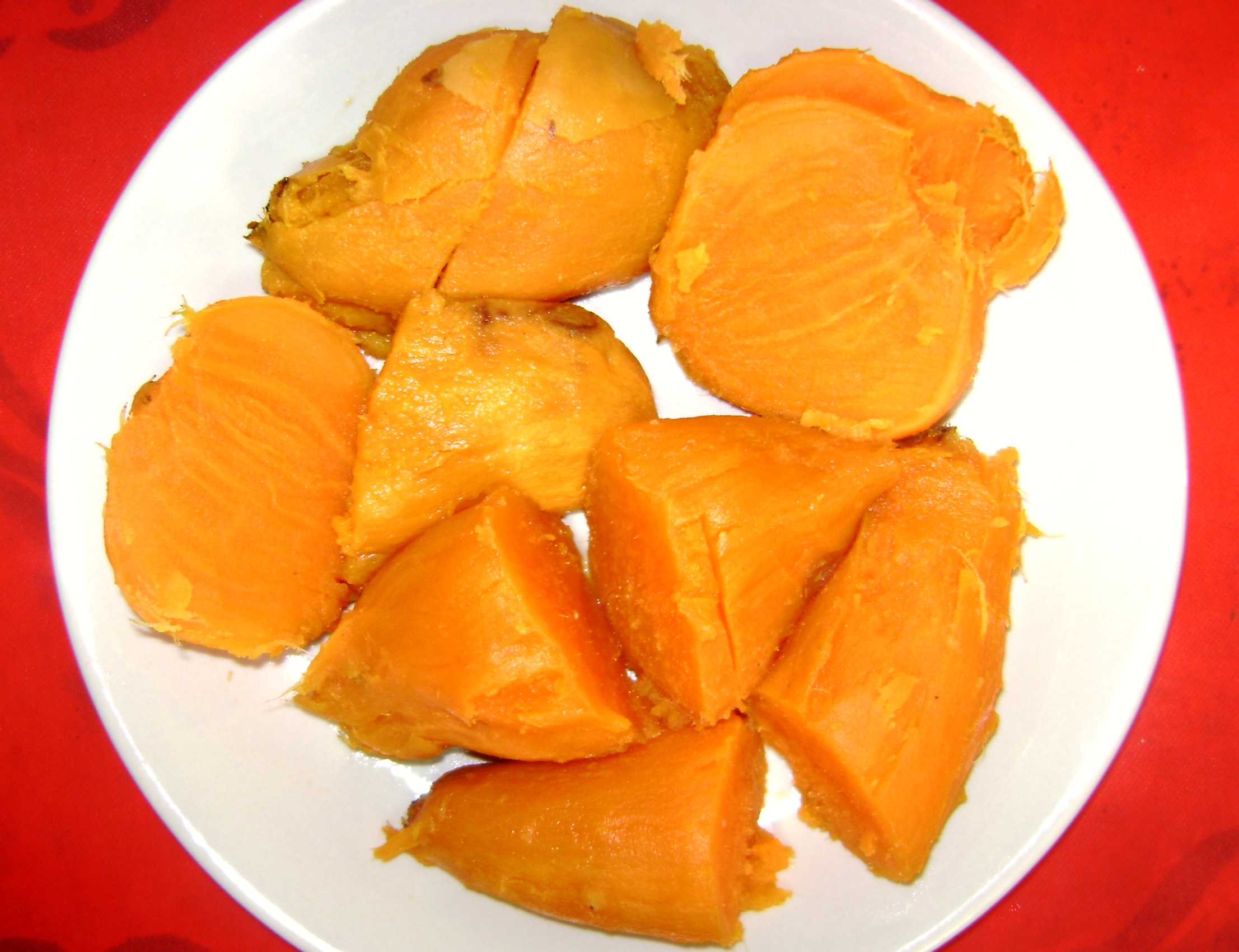
Putting a date on domestication is harder, and honesty means giving a range rather than a false single number. The oldest known archaeological sweet potato remains come from caves in the Chilca Canyon of south-central Peru, radiocarbon dated to roughly 8080 BC, about ten thousand years ago. Broader domestication estimates vary meaningfully with method and region, commonly cited anywhere from about five thousand to ten thousand years ago, with some sources placing domesticated sweet potato in Central America by at least five thousand years ago and spread by local peoples to the Caribbean and South America by around 2500 BCE. That spread of figures is genuine disagreement in the literature, not a settled fact, so treat it as a range.
03Already Growing in Polynesia Before Columbus
The earliest hard archaeological evidence for the sweet potato in Polynesia comes from the Tangatatau rockshelter on Mangaia, in the Cook Islands. In 1991 Hather and Kirch reported carbonized sweet potato remains there, published in Antiquity, radiocarbon dated to roughly 1000 to 1100 CE, often cited in the later literature as 988 to 1155 CE. That is about five centuries before European contact. This is not a soft inference from a plant sitting in a modern garden. It is charred food, in the ground, carbon dated.
The record has only firmed up since. In 2021 Ian Barber and T. F. G. Higham, publishing in PLOS ONE, identified the Purakaunui site in coastal Otago, New Zealand, as the southernmost pre-Columbian sweet potato record anywhere in Oceania, more than two hundred kilometers south of the crop's previously known Polynesian limit. Bayesian modeling of the site's storage pits placed their construction between 1425 and 1459 CE at ninety-five percent probability, among the most tightly constrained archaeological dates ever achieved in New Zealand. The study frames its own finding as support for pre-Columbian human transport rather than natural dispersal, and pairs the radiocarbon science directly with Maori oral knowledge of the crop.
The chronology reached even further back in 2024. Ian Barber, working at the University of Otago and publishing in Antiquity, identified microscopic kumara starch granules, alongside taro and Pacific yam, at Triangle Flat in Golden Bay, on New Zealand's South Island, dated to AD 1290 to 1385. That coincides with the very first Polynesian settlement of New Zealand itself, and gives the earliest secure evidence for kumara cultivation on the South Island, as early as anywhere else in Polynesia. It fits Maori oral tradition, which describes kumara as a crop already established in the ancestral homeland of Hawaiki before New Zealand was settled, not a later arrival.
Beyond these well-pinned sites, the secondary literature places sweet potato in Hawaii by about 1300 CE, in the old farmlands of Kohala, and on Easter Island by roughly 1200 to 1300 CE. These dates are less independently locked down than the Cook Islands and New Zealand figures, so hold them a little more loosely, but they point the same way: a crop already spread across the Pacific well before any European saw it.
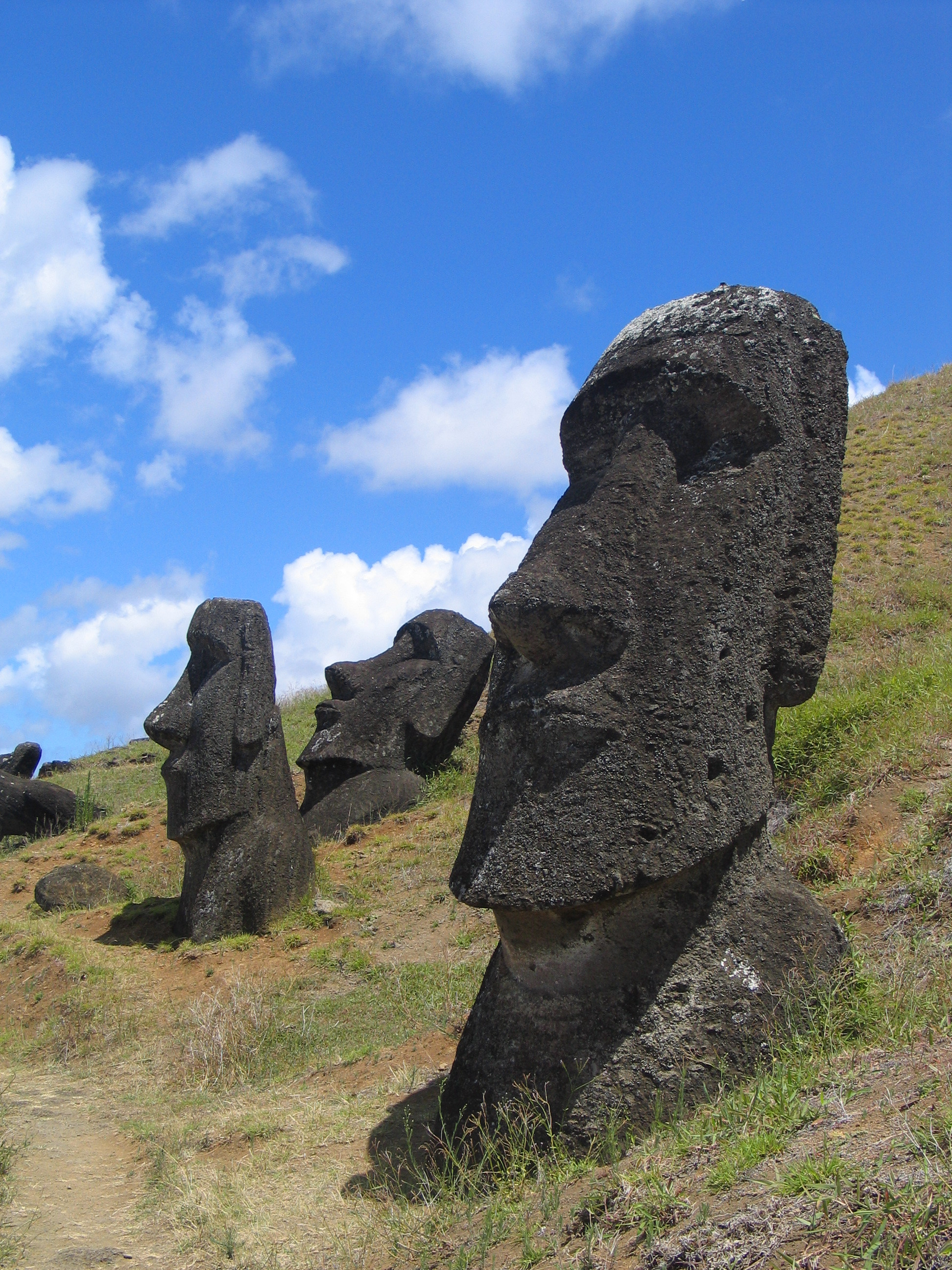
There is even a dated eyewitness. On April 5, 1722, Easter Sunday, the Dutch explorer Jacob Roggeveen became the first European to sight Easter Island, which is how it got its European name. His expedition's own account describes a volcanic island of several thousand people with cultivated fields of sweet potatoes, bananas, and sugar cane, and many chickens. That is a direct, dated European record of an already mature sweet potato farming system, more than two centuries before radiocarbon dating existed as a science. It does not by itself prove the plant arrived before Columbus, since in principle it could have been introduced shortly before 1722, but it is one more independent sign of how deeply the crop was woven into island life.
| Site or Region | Where | Date | Standing |
|---|---|---|---|
| Tangatatau, Mangaia | Cook Islands | ~1000 to 1100 CE | Tier 1, earliest secure remains |
| Easter Island (Rapa Nui) | Southeast Pacific | ~1200 to 1300 CE | Tier 2, secondary consensus |
| Triangle Flat (Golden Bay) | New Zealand, South Island | AD 1290 to 1385 | Tier 1, kumara starch granules |
| Kohala | Hawaii | ~1300 CE | Tier 2, secondary consensus |
| Purakaunui | New Zealand, Otago | 1425 to 1459 CE | Tier 1, southernmost record |
04A Contrast, New Guinea Is A Different Story
One honest caution before going further: the clean Polynesian chronology does not stretch across the whole Pacific. In 2022 Barron, Mountain, and Denham, publishing in Archaeology in Oceania, used microCT scanning and direct AMS radiocarbon dating on charred sweet potato fragments from the Nombe rockshelter in the Papua New Guinea highlands, and got dates of only about 148 to 300 years before present. That is after European ships were already moving through the Indo-Pacific, not a pre-Columbian date at all. The well-dated pre-Columbian Polynesian case, the Cook Islands and New Zealand, is a genuinely different and better-evidenced question from the much murkier timing of the sweet potato's separate role in the New Guinea highlands, where the record so far skews far more recent. Keeping the two apart matters.
05The Word That Traveled, Kumara
Then there is the clue hiding in plain speech. The words for sweet potato in the Andean languages Quechua and Aymara, recorded variously as kumar, cumar, and khumara, are strikingly close to the Polynesian cluster around kumara: Maori kumara, Cook Islands Maori kumara, Rapa Nui kumara, Tongan and Samoan kumala. The Dutch linguists Willem Adelaar and Pieter Muysken, in their standard reference on the languages of the Andes, call this word-sharing between Polynesian and Central Andean languages, in their own words, 'near proof of incidental contact,' while carefully framing it as sporadic contact rather than sustained migration. A crop and its name appear to have traveled together across the widest ocean on Earth.
It is worth getting the history of this observation right, because it is often mistold. The kumara parallel was not first noticed by some early conquest-era chronicler. The real, verifiable record credits the German botanist Berthold Seemann, who lived from 1825 to 1871 and traveled both the Pacific islands and the west coast of South America aboard HMS Herald, and who pointed the word-match out around the 1860s. The connection was then formally documented and publicized by the botanist O.F. Cook in two papers in 1916. This is a nineteenth-century observation, and that fits the timeline: Europeans did not begin systematically recording Polynesian languages until the voyages of the 1770s, so the two vocabularies could not have been lined up side by side much before that.
How much weight the parallel can bear is itself debated, and one linguist has tried to make the case quantitative. R. Fenwick has argued that the match between the Proto-East-Polynesian kumara and the Quechuan forms khumara, kumar, and cumar is too specific to be chance, and has calculated the odds of that exact match arising at random, given the full sound inventories of both proto-languages, at roughly one in a million. It is a genuinely rigorous attempt to put a number on the coincidence. We were not able to track down Fenwick's original publication to check the calculation directly, so treat the exact figure as a claimed result rather than a confirmed one, but the argument itself is serious.
The linguistic argument also has a real counter-case, and balance means stating it. Aired in scholarly discussion of the problem, the objection runs on two specific points. First, the Canari language once spoken by the coastal Ecuadorian peoples, the region closest to the proposed contact zone, was displaced by Quechua when Inca colonizers arrived, and the particular word often cited as the source form, comal, recorded in a Spanish document in 1582, may reflect post-conquest conditions rather than a genuine pre-contact word. Second, the Inca empire did not expand to reach the Ecuadorian coast until the late fifteenth century, centuries after the archaeologically dated Polynesian contact window of roughly 1000 to 1300 CE. Using Quechua, a language the Inca spread, as the comparison for a contact event the Inca empire itself postdates is a real problem the confident version of the linguistic case tends to skip. The objection was aired informally rather than in a formal paper, but the historical facts it rests on, the Inca timing and the Canari displacement, are well established.
06Two Rigorous Studies, Opposite Answers
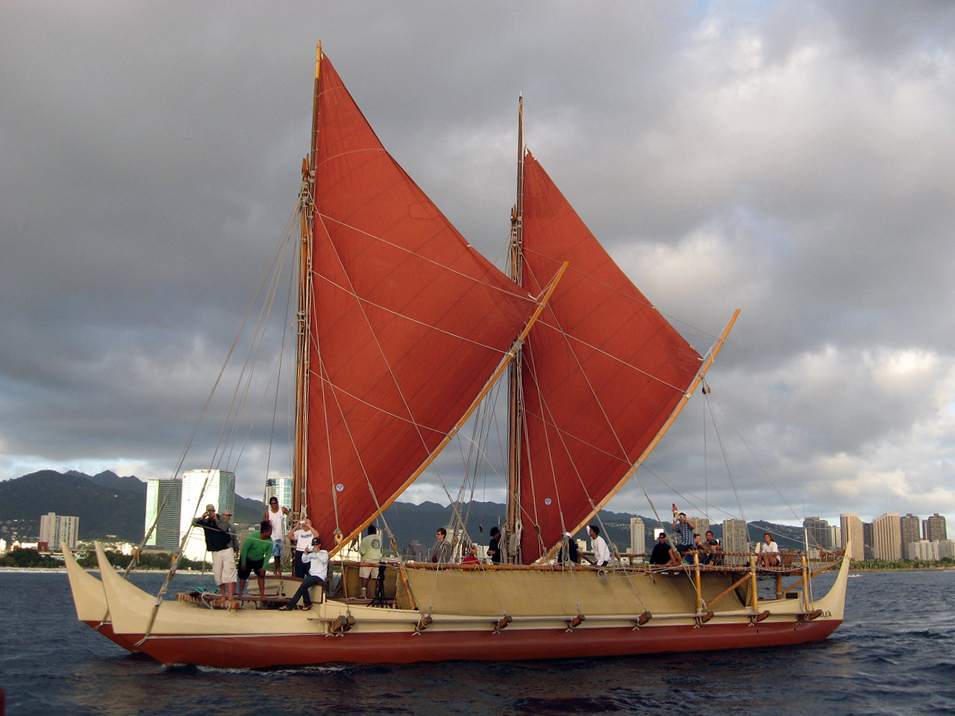
So who carried it? For a long time the leading answer was people, and the strongest genetic support came in 2013. Roullier, Benoit, McKey, and Lebot, publishing in PNAS, tested what researchers call the tripartite hypothesis for how the sweet potato spread across Oceania. It has three strands: a pre-Columbian transfer to eastern Polynesia around 1000 to 1300 CE, most likely by direct contact between Polynesian voyagers and South American peoples; a later Spanish introduction through the Manila-to-Acapulco galleon route in the sixteenth century; and a third, separate Portuguese introduction by way of Africa and India, carrying a Caribbean variety. Using both chloroplast and nuclear genetic markers, and crucially combining modern plants with historical herbarium specimens to see past centuries of later replanting and recombination, the team found strong support for a genuinely separate, older, pre-Columbian lineage in Polynesian sweet potatoes, distinct from the two European-introduced lineages. The methodology and the distinct lineages are solid. The specific reading, that the oldest lineage arrived by human contact, is the part the other side disputes.
Five years later a different team reached the opposite conclusion. In 2018 Pablo Munoz-Rodriguez and colleagues, publishing in Current Biology, sequenced whole chloroplasts and 605 single-copy nuclear regions from 199 specimens covering the sweet potato and all its known crop wild relatives. They concluded that the sweet potato arose as a distinct species at least 800,000 years ago, long before any human was anywhere near the Pacific. More pointedly, one specimen in their dataset, collected in the Society Islands during a 1769 Pacific voyage by the naturalists Joseph Banks and Daniel Solander and now held at the Natural History Museum in London, carried a chloroplast lineage the team estimated had diverged from South American sweet potato more than 100,000 years ago, roughly 111,500 years in their most-cited figure. Lead author Munoz-Rodriguez put the headline bluntly: the sweet potato, he said, 'crossed the ocean from America to Polynesia without any help from people.' The team argued this challenged not just human transport of the crop, but the broader case for any pre-Columbian trans-Pacific contact at all.
07The 2018 Paper Did Not End The Argument
The 2018 study made headlines as if it had closed the case. It did not, and the pushback came fast and by name. The evolutionary biologist Moritz Matschiner published a detailed technical reanalysis, with reproducible code and reworked data, challenging the central claim directly. His points are specific. The Banks and Solander specimen from 1769 shows no unusual genetic anomaly at all: it differs from closely related specimens by only about ten sequence changes, well inside normal population variation, not the outlier signature a hundred-thousand-year headline implies. A divergence time calculated from a single genetic marker, the chloroplast, reflects only that one marker's own history, which can be far older than the moment the plant carrying it actually arrived somewhere, especially given the same study's own description of a chloroplast capture event. And the original study's own Bayesian analysis converged poorly, with effective sample sizes as low as eight, well below the standard for a reliable date. Matschiner's critique circulated as a technical exchange rather than a formally published journal correction, so it is a serious, named, detailed challenge, not a finished overturning.
A second challenge came from ancient-DNA specialists. Professor Lisa Matisoo-Smith and Dr. Michael Knapp of the University of Otago, in an on-the-record expert reaction through the New Zealand Science Media Centre, disputed the study's methods. Their objection: the central claim rests on a single degraded 250-year-old herbarium leaf, and the researchers did not follow the standard ancient-DNA extraction and contamination-control protocols that a sample that old and that degraded demands. As they put it, 'this specimen is not fresh tissue and will have degraded DNA,' and the necessary protocols do not appear to have been followed. They added that a mutation pattern implying more than a hundred thousand years of isolation is hard to square with humans only reaching Polynesia about a thousand years ago, and that no archaeological sweet potato anywhere in Polynesia predates roughly fifteen hundred years. They called for independent replication in a dedicated ancient-DNA facility before the natural-dispersal conclusion is accepted.
The third challenge came from the dirt. Patrick Kirch of the University of California, Berkeley, who co-authored the original 1991 Mangaia dating that opens this file, faulted the 2018 study on different grounds: it had no direct paleobotanical evidence of the sweet potato in a pre-human context, such as fossil pollen predating Polynesian settlement, and its genetic dating did not engage with the actual radiocarbon-dated tuber evidence from Pacific archaeological sites, the very evidence the earlier sections here rest on. A genetic divergence time, however carefully computed, does not by itself establish when or how a plant physically arrived somewhere. That is the heart of Kirch's objection.
08Could The Ocean Have Done It Alone?
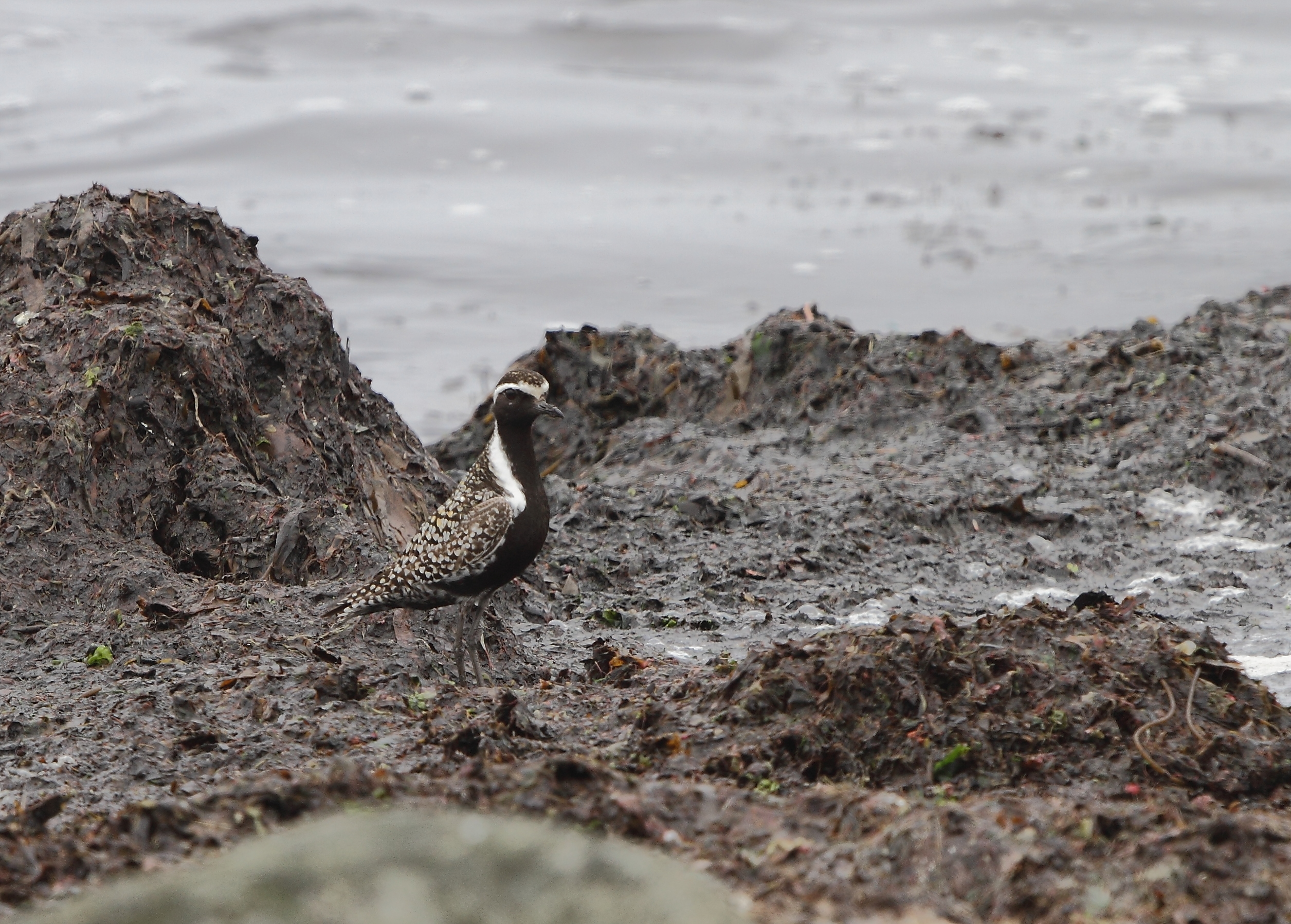
If not people, then what? The natural-dispersal side has its own history, and some of it is genuinely marginal. Long before the 2018 genetics, in 1966 the ethnographer Ralph Bulmer proposed that migratory Pacific golden plovers, birds that breed in Alaska and Siberia and winter across the Pacific including the west coast of South America, might have carried sweet potato seeds across the ocean on their bodies or in their guts, with stomach acid perhaps even scarifying the seed coat in a way that could help it germinate. Bulmer's own verdict, echoed by later commentators, was that this bird route is 'highly improbable' though it 'cannot be altogether discounted.' It is a real historical hypothesis, and a genuinely unlikely one.
The more serious natural-dispersal work turned to the water itself. In 2008 Montenegro and colleagues, in the Journal of Archaeological Science, used oceanographic computer modeling of currents and winds to test the feasibility of both human-voyaging and natural-drift routes for the sweet potato's prehistoric arrival, an early attempt to move the debate from argument to quantity.
The most direct empirical test came in 2022. Temmen, Montenegro, Juras, and Degrand, publishing in Quaternary Science Reviews, ran laboratory buoyancy experiments and numerical drift modeling specifically on sweet potato seed capsules, and the result is genuinely nuanced rather than a clean verdict either way. None of the tested capsules stayed afloat on their own past about forty days, which makes colonization by simple free drift look unlikely. But the capsules could plausibly survive a full crossing riding on floating vegetation mats, a real and documented way other Pacific plants and animals have dispersed, and seed viability, while it dropped, was not eliminated even after 121 days in seawater. The modeled drift trajectories that did reach land concentrated along a real corridor running from the South American coast, with the highest landfall odds from roughly 8 to 18 degrees south, toward Rapa Nui, the Marquesas, the Tuamotus, and as far as Kiribati. Here is the twist: that natural-drift corridor overlaps substantially with the same zone where the actual archaeological and genetic evidence places the earliest sweet potatoes. So the 2022 study does not hand the win to either side. It shows only that natural drift is not physically impossible, given the right raft.
09What This Is Not
Two things this file is not, before the verdict. First, it is not the same evidence as the famous DNA. In 2020 Ioannidis and colleagues found a South American genetic signal, matching most closely the Zenu people of coastal Colombia, in living Polynesians, dated by demographic modeling to around 1150 to 1230 CE. That timing sits close to, and slightly after, the earliest sweet potato dates at Mangaia around 1000 to 1100 CE, which is broadly consistent with a real human contact event. But consistency in timing is not proof that the sweet potato traveled on the same voyage that left the genetic trace: the two lines of evidence are complementary, not identical. The full case for that genomic contact, and for Polynesian voyaging capability, the Kon-Tiki experiments, and the contested pre-Columbian Polynesian chicken bones in Chile, belongs to this wing's parent survey, Who Reached the Americas First, and is not re-argued here.
Second, not every out-of-place Pacific plant tells the sweet potato's story. The bottle gourd, originally African, was being grown in the Americas by around ten thousand years ago, yet genetic work traces the American gourds to an Asian rather than a directly African lineage, which points to a very early arrival alongside the first peopling of the Americas, not a later dramatic ocean crossing. It is a useful reminder that a strange plant does not automatically mean a deliberate voyage. The sweet potato has to earn its paradox on its own evidence, and it does.
| The Explanation | What Carries It | Tier |
|---|---|---|
| Polynesian voyagers reached South America and carried it home | Roullier 2013: a distinct pre-Columbian lineage, plus the shared kumara word | Tier 2, contested |
| Natural ocean drift on rafts of floating vegetation | Temmen 2022: feasible in experiment, not demonstrated | Tier 2, contested |
| The 2018 genetics prove nature did it, no people needed | Munoz-Rodriguez 2018: the 1769 Banks and Solander specimen | Tier 2, three named critiques unresolved |
| Migratory golden plovers ferried the seeds across | Bulmer 1966 | Tier 3, its own author called it improbable |
| No natural mechanism is possible, so it had to be people | Contradicted by the 2022 drift experiments | Tier 4, false |
Fast Facts
- Where It Is From
- Central and South America, its wild relatives native to the Americas, confirmed by genetics
- Where It Turned Up
- Across Polynesia, Hawaii to New Zealand to Easter Island, before any European arrived
- The Oldest Polynesian Date
- Carbonized remains on Mangaia, Cook Islands, about 1000 to 1100 CE
- The Newest Evidence
- Kumara starch at Triangle Flat, New Zealand, AD 1290 to 1385, dated in 2024
- The Word
- Andean kumar and cumar, Polynesian kumara and kumala, a near-match noticed in the 1860s
- The Human-Contact Case
- Roullier 2013, a distinct pre-Columbian genetic lineage in Polynesian sweet potatoes
- The Natural-Dispersal Case
- Munoz-Rodriguez 2018, a 100,000-year chloroplast divergence, challenged by name
- The Physical Test
- Temmen 2022, drift is possible on floating vegetation rafts, but not proven
- The Verdict
- The crossing is real; who or what made it is still an open scientific fight
What We Can Actually Stand Behind
Two things are settled, and they are the important two. The sweet potato is an American plant, its wild relatives native to Central and South America, its ancestry now traced through a wild relative described only in 2022. And it was growing across Polynesia centuries before Columbus, dated in real charred remains and starch granules from the Cook Islands to the far south of New Zealand, most recently pushed back to AD 1290 to 1385 by 2024 fieldwork. The crossing happened. On that, genetics, archaeology, and the shared word all agree.
How it happened is the live question, and it is a Tier 2 standoff, not a solved case. The human-contact reading rests on Roullier's 2013 finding of a distinct, older, pre-Columbian lineage in Polynesian sweet potatoes, and on the kumara linguistic parallel that Adelaar and Muysken called near proof of incidental contact. The natural-dispersal reading rests on Munoz-Rodriguez's 2018 phylogenomics and its hundred-thousand-year chloroplast divergence. Both are real, peer-reviewed, and rigorous, and they disagree. The 2018 paper's strongest single piece of evidence, the 1769 Banks and Solander specimen, has drawn three serious named challenges, on its statistics, its ancient-DNA handling, and its failure to weigh the physical archaeological record, none of them fully resolved. The 2022 drift experiments add real nuance without settling anything. This is genuinely unresolved.
Some pieces are interesting and stay unconfirmed. The idea that migratory golden plovers ferried sweet potato seeds across the Pacific is a real 1966 hypothesis, but even its own author judged it highly improbable, and it sits at the far edge of plausibility. It is speculation, and it wears the label.
And one claim should be retired outright. No, it is not true that no natural mechanism could possibly have carried the sweet potato across the Pacific. That flat assertion, still repeated as if it settled the matter in favor of human contact, is contradicted by direct experiment: the 2022 Temmen study showed that a sweet potato seed capsule can survive a full ocean crossing on a raft of floating vegetation, and that seeds stay viable in seawater for months. That does not prove the ocean did it. It only proves the door cannot be slammed shut on the natural side, which means the human-contact case has to be won on its own evidence, not by declaring the alternative impossible.
So the paradox stands, half of it solved and half of it wide open. An American plant was feeding Polynesia before Europe knew Polynesia was there. That much is fact, carbon dated and gene sequenced and carried in a shared word for the same root. Whether it got there in the hulls of Polynesian canoes that had touched the coast of South America, or riding a mat of drifting vegetation on a current that runs the same way, is a question two of the best studies in the field have answered in opposite directions, with credible scientists still lined up on both sides. The sweet potato crossed an ocean. The one thing we still cannot say for certain is whether anyone was steering. So which was it: did people carry the plant across the water, or did the water carry the plant?
Sources & further reading
Everything above is drawn from our research library on Theories of Anything, which is where we worked from. The papers, reports and primary records listed beneath them are where you can check us independently.
Image credits
- Sweet Potato (Ipomoea batatas) Flower photograph by Earth100 via Wikimedia Commons. CC BY-SA 3.0 Source.
- Harvested Sweet Potato Tubers photograph by Filo gene via Wikimedia Commons. CC BY-SA 4.0 Source.
- Boiled Sweet Potato (Camote), Peru photograph by Dtarazona via Wikimedia Commons. CC BY-SA 3.0 Source.
- Hokule'a Sailing Near Honolulu photograph by HongKongHuey via Wikimedia Commons. CC BY 2.0 Source.
- Moai at Rano Raraku, Easter Island photograph by Aurbina via Wikimedia Commons. Public Domain Source.
- Pacific Golden Plover (Pluvialis fulva) photograph by Marton Berntsen via Wikimedia Commons. CC BY-SA 4.0 Source.
- Card crop of Sweet Potato (Ipomoea batatas) Flower photograph by Earth100 via Wikimedia Commons. CC BY-SA 3.0 Source.
_Flower.jpg)

.JPG)


