Utnapishtim's Ark: The Flood Story Older Than Noah
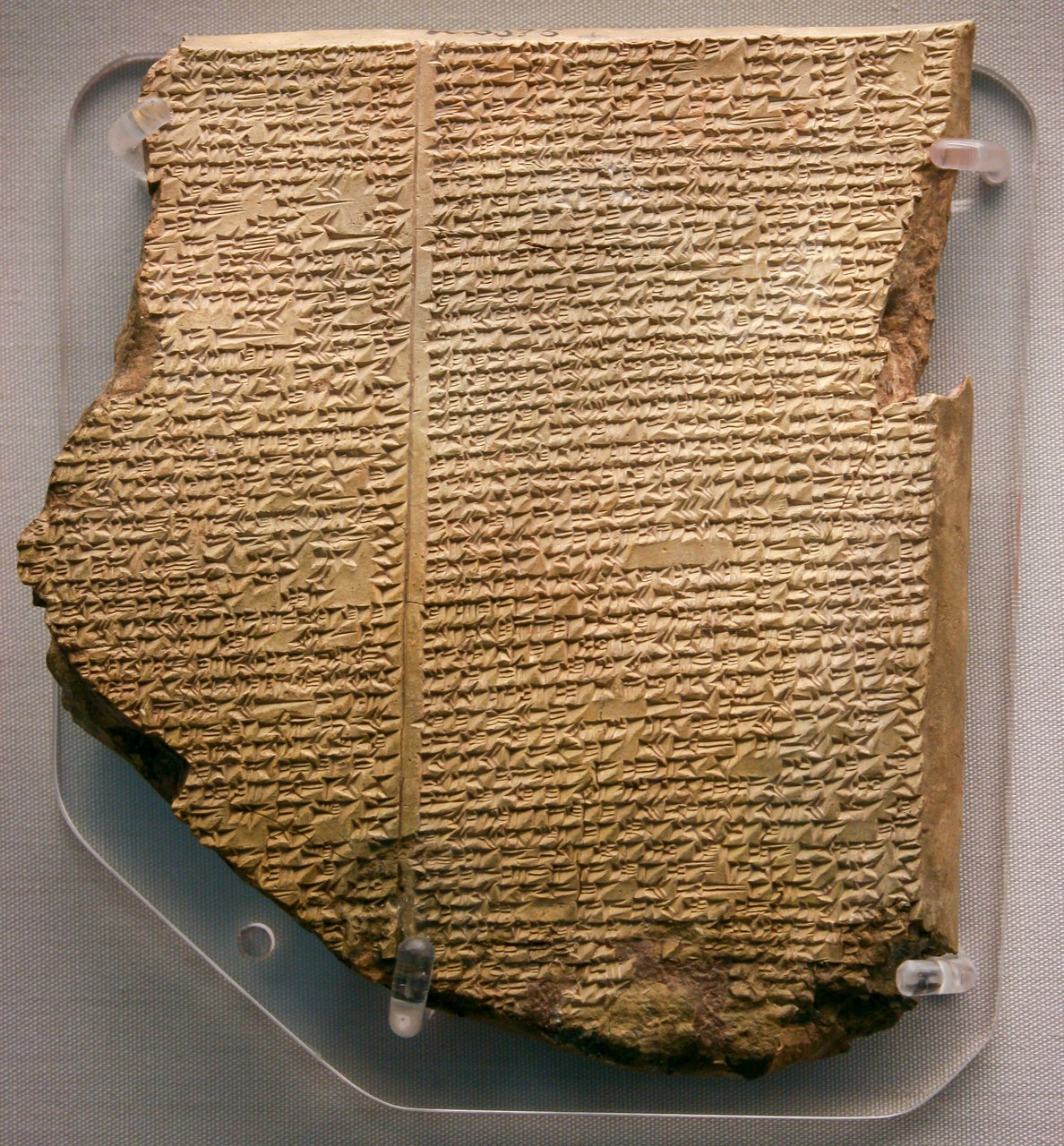
A broken clay tablet from a buried Assyrian library carries a flood story centuries older than the one in Genesis. In it a man named Utnapishtim is warned by a god who speaks to a wall, builds not a rectangular ark but a perfect cube, rides out six days and seven nights of storm, lands on a mountain, and sends out a dove, a swallow, and a raven to test the drowned world for dry land. Nine of its beats line up with Noah's, in order. And the moment you reach the oldest version of this flood, an older one is already waiting underneath it. Here is the Babylonian account, read from the tablet itself, every claim wearing the evidence it has earned, and one question left floating: was there ever a real flood down there under all these stories?
In 1872 a flood story surfaced in London that was older than the one in the Bible, and it stopped a room full of scholars cold. It had been written in cuneiform on a broken clay tablet pulled from a buried Assyrian library, and it told of a man who built a great boat, loaded it with the seed of all living things, rode out a storm that drowned the world, sent birds out over the water to find dry land, and made sacrifice on a mountaintop when it was over. His name was not Noah. It was Utnapishtim, and his flood had been told across Mesopotamia for centuries before the book of Genesis. This is that story, read from the tablet itself, and the honest question it forces: how did the same flood end up in two scriptures, and which one remembered it first?
01The Flood That Surfaced in 1872
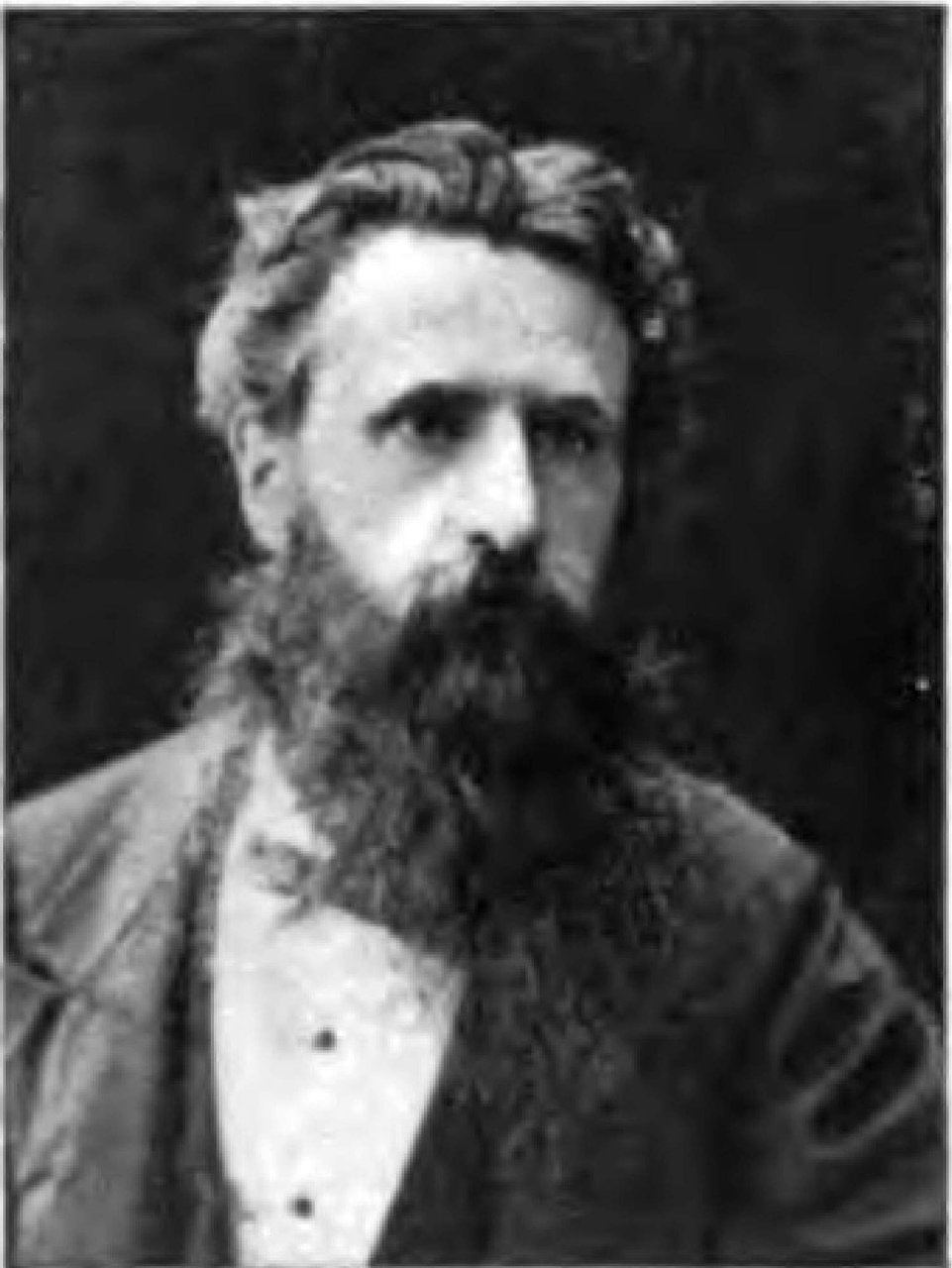
The account did not come down through an unbroken tradition. It was dug out of the ground and pieced back together. The clay tablets that carry it belonged to the great library of the Assyrian king Ashurbanipal at Nineveh, excavated in 1853 by Hormuzd Rassam, and it was there, among thousands of cuneiform fragments, that George Smith found a flood. On 3 December 1872 he read his translation aloud before the Society of Biblical Archaeology in London, and the sitting Prime Minister, William Ewart Gladstone, was reportedly in the room. It was the first time anyone had shown that the flood of the Bible had a Mesopotamian ancestor, and it caused a public sensation.
The tablet Smith read was incomplete, missing a crucial fragment, and the story of what happened next is almost as good as the flood itself. The following January, in 1873, Edwin Arnold, editor of the Daily Telegraph, put up the money for Smith to sail back to Nineveh and hunt for the missing piece. The expedition did return with more tablets, though whether the exact fragment Smith was chasing was among them is not clearly settled. A newspaper funded an archaeological dig to complete an ancient poem, and it more or less worked.
The poem itself is far older than those Nineveh tablets. The Epic of Gilgamesh survives in layers. There are five independent Sumerian poems from roughly 2100 to 1800 BCE; an Old Babylonian version from about 1800 to 1600 BCE, the first time the story was pulled into a single Akkadian narrative, known from tablets held at Pennsylvania and Yale; and the Standard Babylonian version from around 1200 BCE, attributed to the scholar-priest Sin-leqi-unninni, expanded to twelve tablets and roughly 3,000 lines. The flood is on the eleventh of those twelve tablets, and that Standard Babylonian version is what Smith was reading.
02The One Mortal Who Never Died
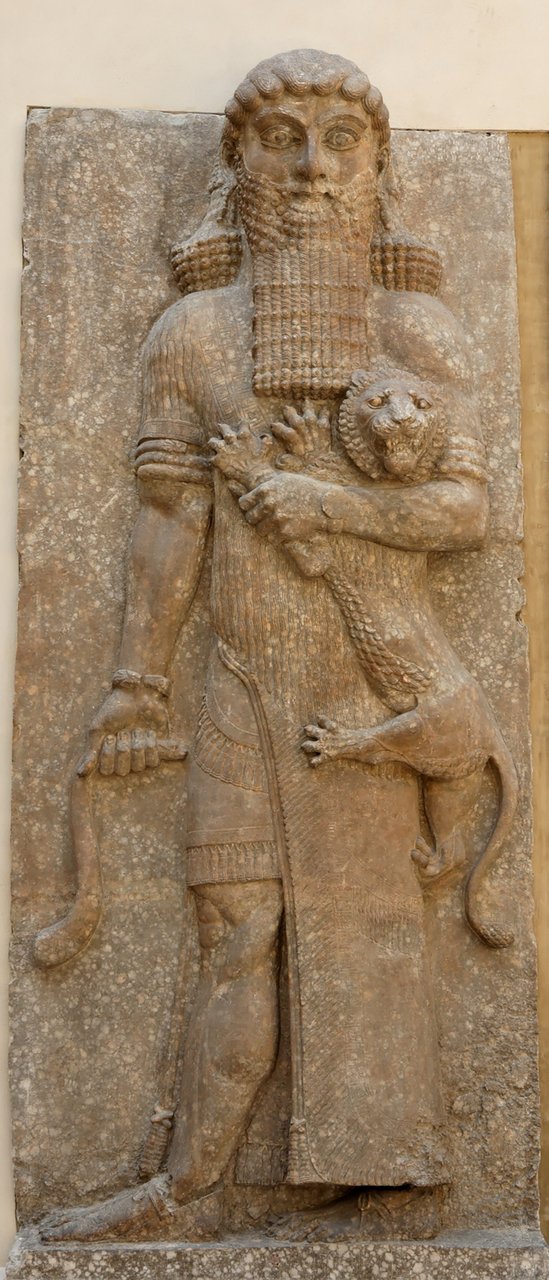
Gilgamesh was, before anything else, a king. The Sumerian King List records him as the fifth ruler of Uruk's First Dynasty, a son of Lugalbanda, credited with a reign of 126 years somewhere around 2700 to 2600 BCE. Archaeology confirms Uruk as a major city in the early third millennium BCE, its monumental walls traditionally attributed to him. Most Assyriologists accept that a real king stands behind the legend, a historical Gilgamesh elevated first to hero and then to god.
But the epic is not really about the king. It is about the day the king learned he was going to die. When his companion Enkidu dies, Gilgamesh comes apart, and he sets out across the wilderness looking for the one thing no king can command: a way not to die. That search is what carries him, in Tablets IX and X, past the alewife Siduri and across the Waters of Death with the ferryman Urshanabi, to the very edge of the world. He is going to find Utnapishtim, the only mortal who was ever made immortal. And when he reaches him at last and asks how it was done, Utnapishtim answers with a story: the story of the flood.
03Six Days and Seven Nights
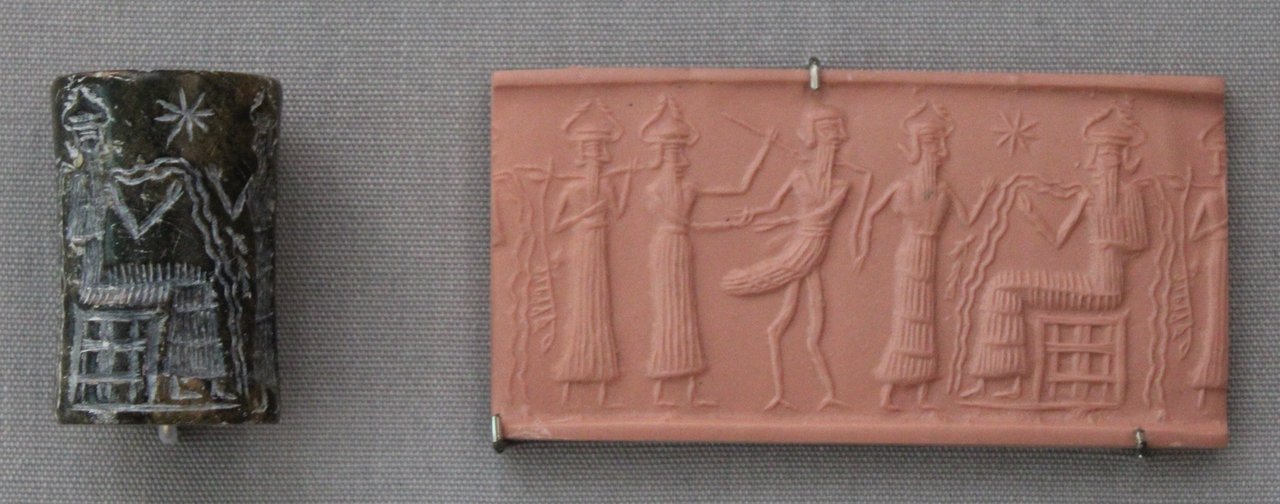
On Tablet XI, Utnapishtim tells it in the first person. The great gods met in council, Anu, Enlil, Ninurta and Ennugi among them, and resolved to wipe out humankind with a flood. One of them broke ranks. Ea was bound by an oath not to warn any human, so he found a device that kept the letter of the oath while breaking its spirit: he did not speak to Utnapishtim, he spoke to the reed wall of Utnapishtim's house, and let the man happen to overhear. The words survive in the widely cited Kovacs translation: 'Reed house, reed house! Wall, wall! O man of Shuruppak, son of Ubartutu: Tear down the house and build a boat! Abandon wealth and seek living beings! Spurn possessions and keep alive living beings!' That single line tells us where Utnapishtim lived, the city of Shuruppak, and what he was told to save above everything he owned: living things.
So he tore down his house and built the boat, and here the Babylonian flood breaks sharply from the one most people know. Noah's ark is a long rectangular vessel. Utnapishtim's is a cube. The text gives it as 120 cubits on every side, a floor of about one iku, roughly 3,600 square meters, raised in six decks that made seven levels and divided into nine internal compartments, the whole thing sealed watertight with bitumen and pitch. It is a perfect cubic ark, not a boat shaped like any ship a person would actually sail.
Then the storm came, and it was worse than the gods had bargained for. It raged for six days and seven nights, so overwhelming that the gods themselves fled in terror up to the heaven of Anu, abandoning the world they had condemned to the water. On the seventh day it broke, and the sea went still.
The boat came to rest on Mount Nimush and sat there, unmoving, for days while the water slowly withdrew. To find out whether the land had come back, Utnapishtim ran an experiment with three birds. He let a dove go; it found nowhere to land and came back. He let a swallow go; it too came back. Then he let a raven go, and the raven did not return, because it had found the water low enough to feed and fly on its own. The dry land was there again.
Utnapishtim came out onto the mountain and made a sacrifice, pouring out libations and burning incense, and the gods came swarming down to the smell of it. In the text's own unforgettable image, 'the gods smelled the sweet savor, and collected like flies over the sacrifice.' There is nothing distant or dignified about them. They mob the first offering since the flood began, drawn helplessly to the smoke.
Enlil arrived last, and he was furious, because Utnapishtim was living proof that a human had survived the flood he had ordered. It was Ea who faced him down, arguing that it was unjust to have drowned the innocent along with the guilty. Enlil relented, and he granted Utnapishtim and his wife what no other mortals would ever receive: 'let Utnapishtim and his wife become like us, the gods.' Then he settled them far off, 'at the mouth of the rivers,' a place no ordinary person could reach. That is the whole reason Gilgamesh had to cross the Waters of Death to get there. Utnapishtim is the one human being in the entire tradition ever granted eternal life, and the flood is the reason he has it.
One honesty note before the comparison, because it matters. There is no single complete manuscript of any of this. The Standard Babylonian text is reconstructed from many broken tablets found at different sites, and every modern translation is the product of editorial choices about how to fill the gaps. 'The' text of Tablet XI is really a careful scholarly assembly of fragments, confident in its broad shape and genuinely uncertain in some of its details.
04Noah's Flood, Told First
Set that narrative beside Genesis 6 to 9 and the parallels are not vague thematic echoes. They are specific, and they run in the same order. Divine displeasure with humankind. A warning to one righteous man. The building of a boat. The loading of living things. A flood of a set duration. A landing on a mountain. The sending out of birds. A sacrifice when the water goes down. A covenant, or its equivalent, afterward. Nine beats, and the Babylonian version hits every one of them before Genesis does.
| The Shared Beat | How Tablet XI Tells It |
|---|---|
| Divine displeasure | The gods resolve in council to wipe out humankind |
| Warning to one man | Ea warns Utnapishtim through the reed wall of his house |
| Building the boat | A sealed cube, 120 cubits a side, six decks, nine compartments |
| Loading living things | 'The seed of all living things' taken aboard |
| Flood duration | A storm of six days and seven nights |
| Mountain landing | The boat grounds on Mount Nimush |
| Sending out birds | Dove, then swallow, then raven |
| The sacrifice | An offering the gods swarm 'like flies' |
| A covenant, or its equivalent | Utnapishtim and his wife are granted immortality |
The differences matter too, and one of them is startling. Noah's ark is a long rectangular boat. Utnapishtim's is a perfect cube, 120 cubits on every side. And where the biblical flood is essentially the last thing that happens to its hero, Utnapishtim's ends with a reward that belongs to him alone: the survivor himself made into a god. Strip away those local details, though, and the underlying frame is identical. This is not one flood story that faintly recalls another. Beat for beat, in sequence, it is the same story, and the Babylonian one is centuries older.
05Older Than Noah, Older Than Utnapishtim
Which raises the obvious question, and here the scholarship is settled at one level and genuinely unsettled at another. At the settled level: the direction of borrowing runs from Mesopotamia to the Bible, not the other way around. This is the consensus position, not a fringe claim. The Mesopotamian flood tradition is demonstrably older than the biblical one, the Atrahasis epic from around 1700 BCE preserves an earlier version still, and the Sumerian flood poem of Ziusudra is older yet again.
Here is the nuance an article called 'older than Noah' has to get right, because it cuts the other way too. Utnapishtim's flood is not the original Mesopotamian flood. The flood episode appears only in the Standard Babylonian Gilgamesh, the version from around 1200 BCE, and the philologist Jeffrey Tigay, whose study of the epic's evolution the research file itself cites, argued that it was very likely a later insertion, lifted and adapted from the separate, older Atrahasis tradition by the same redactor who assembled the standard text. Whether the fragmentary Old Babylonian Gilgamesh already carried a flood is unknown; its tablets are too broken to say. So the story that beat Genesis is itself a borrowing. Utnapishtim's account is downstream of an older source, not the wellspring.
And that older source does not even tell the story the same way. In the Atrahasis epic, an Old Babylonian composition of the 18th to 17th century BCE, the gods do not send the flood out of some vague displeasure. They send it because humankind has grown too numerous and too loud, and the noise of the teeming human world is keeping the god Enlil from sleeping. The flood is population control by a god who wants quiet. That is a specific, checkable difference from the Gilgamesh telling, and a reminder that 'the Mesopotamian flood' was never one fixed thing.
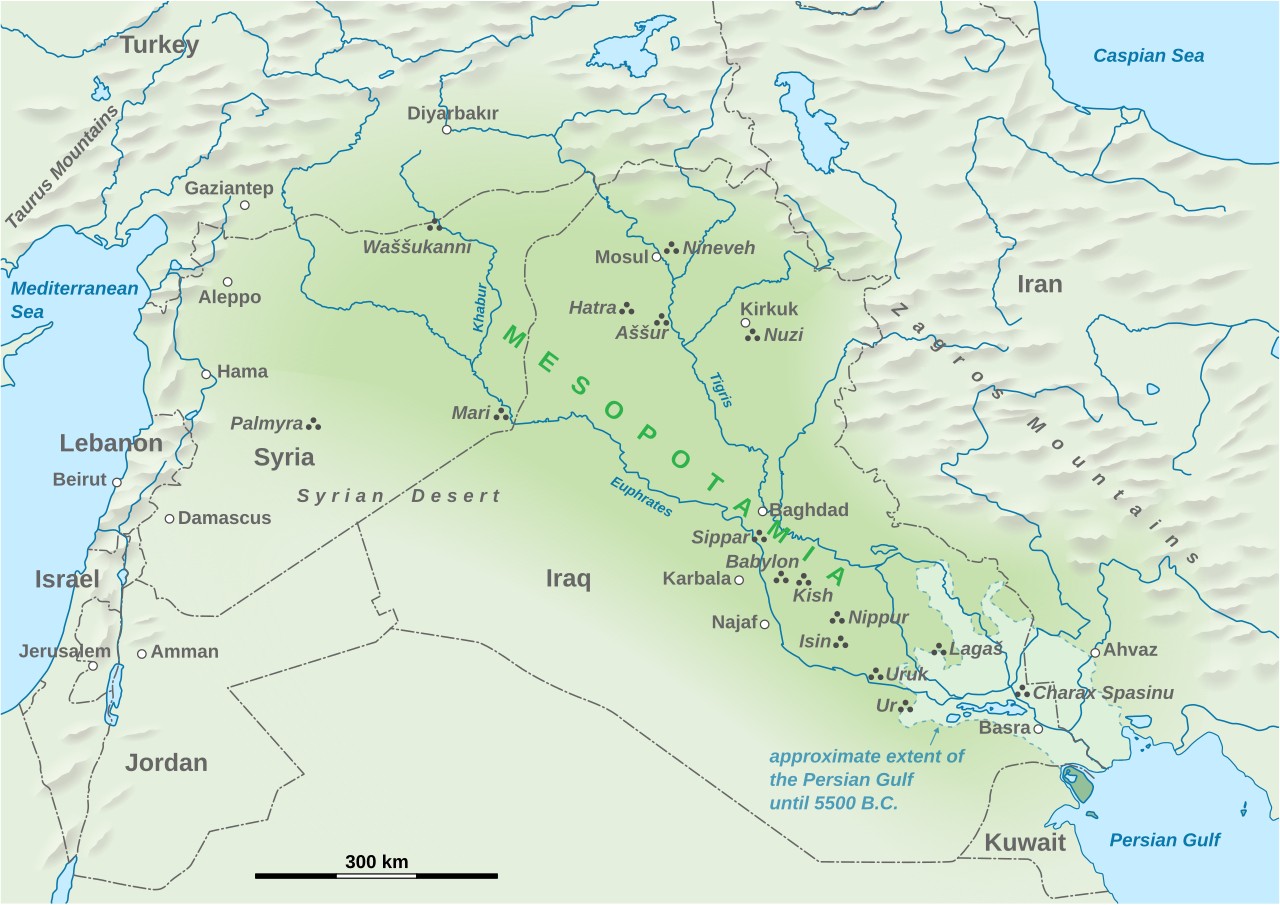
Older than Atrahasis is the Sumerian flood story, sometimes called the Eridu Genesis. It survives on a single tablet excavated at Nippur, and only the lower third of it is preserved; the physical copy dates to roughly the 17th century BCE, though many Sumerologists put the underlying composition centuries earlier, into the third millennium BCE. Its flood hero is named Ziusudra, a king of Shuruppak, and that detail closes a quiet loop, because Utnapishtim, in the reed-wall warning, is addressed as the man of Shuruppak. The oldest survivor and the most famous one come from the same city. This is the deepest attested layer of the tradition we can reach.
| The Telling | Its Survivor | How Old | What Sets It Apart |
|---|---|---|---|
| Sumerian flood poem (Eridu Genesis) | Ziusudra, king of Shuruppak | Copy c. 17th century BCE; composition likely 3rd millennium BCE | The oldest attested layer; one tablet from Nippur, only its lower third preserved |
| Atrahasis epic | Atrahasis | Old Babylonian, c. 1700 BCE (18th to 17th century BCE) | The flood is sent because human noise and overpopulation disturb Enlil's rest |
| Gilgamesh, Tablet XI | Utnapishtim, man of Shuruppak | Standard Babylonian, c. 1200 BCE | The flood here is a later interpolation, adapted from Atrahasis |
| Genesis 6 to 9 | Noah | The youngest of the four | Drew on the Mesopotamian tradition, per scholarly consensus |
What none of this settles is exactly how the story crossed from Mesopotamia into the Bible. Priority is one question; mechanism is another, and the second is genuinely open. Did the biblical writers borrow directly from a Mesopotamian text, the way one author works from another? Did the story travel by shared oral tradition across the ancient Near East, arriving in Israel already worn smooth by centuries of retelling? Or do both traditions preserve a common memory of something that actually happened, each shaping it their own way? The research file is honest that this is still argued, not decided, and it is worth resisting anyone, from either the skeptical or the devout side, who tells you it is simple.
The flood is not only a Mesopotamian and biblical story, of course. Versions of it turn up across the world's mythologies, and that wider chorus is its own subject, one we take up in full in our companion dossier, 500 Flood Myths. Here the focus stays narrow on purpose: one Babylonian account, read closely, and its single closest relative in Genesis.
06The Serpent and the Stolen Plant

There is a coda to Gilgamesh's visit that is too good to leave out, and it folds the flood back into the mortality quest that brought him. Before he leaves, Utnapishtim tells Gilgamesh of a plant that grows at the bottom of the sea, a plant that makes an old man young again. Gilgamesh dives for it and gets it. Then, while he stops to bathe, a serpent slips up, eats the plant, and sheds its skin as it slides away, carrying off the renewal that should have been his. In its own comparative section, the research file reads this scene alongside the serpent of Genesis 3, the creature that likewise stands between humanity and access to immortality and divinity, a parallel comparative mythologists have analyzed at length. The connection is the research document's own framing, drawing on the work of Forsyth, and it is a resonance worth noticing: in both the Babylonian and the biblical imagination, it is a snake that decides humans do not get to live forever.
07The Giant That Wasn't
One reading has to be ruled out, and it is a popular one, because Genesis places its own giants, the Nephilim, in the verses immediately before its flood. Some alternative writers seize on that adjacency and identify Gilgamesh himself as a literal Nephilim, a physical giant, pointing to the epic's description of him as 'two-thirds divine, one-third human' and to king lists that give him superhuman size. The text really does make Gilgamesh enormous. But that is what Mesopotamian royal literature does with its kings; oversized, part-divine heroes are the genre's standard hyperbole, not a field report. There is no archaeological evidence of literal giants at Uruk, and 'two-thirds divine' is a statement about status and glory, not about a skeleton.
Fast Facts
- The story
- Tablet XI of the Epic of Gilgamesh preserves a flood account centuries older than Genesis, in which the survivor Utnapishtim rides out a divine flood and is granted immortality for it.
- The ark
- Not the long rectangular boat of Noah but a sealed cube, 120 cubits on every side, built in six decks with nine internal compartments and caulked with bitumen and pitch.
- The warning
- Bound by an oath of secrecy, the god Ea will not warn Utnapishtim directly, so he speaks to the reed wall of the man's house and lets him overhear.
- The birds
- Utnapishtim sends out a dove, then a swallow, then a raven; the raven does not come back, and that is how he knows the dry land has returned.
- The parallel
- Nine narrative beats line up with Genesis 6 to 9 in the same sequence, and the direction of borrowing, from Mesopotamia to the Bible, is scholarly consensus.
- Older still
- The Gilgamesh flood is itself a late addition adapted from the older Atrahasis epic, and older than that is the Sumerian Ziusudra poem, the oldest attested layer.
- Ruled out
- That Gilgamesh was a literal Nephilim or giant. 'Two-thirds divine' is standard royal hyperbole, and there is no evidence of giants at Uruk.
- Still open
- How the story reached Genesis, by direct borrowing, shared oral tradition, or a common memory, and whether any real flood lies behind the whole tradition at all.
What the Evidence Actually Holds
The documented spine is solid. Tablet XI's flood narrative is on the record, and it was famously rediscovered when George Smith read it in London in 1872: the divine council, Ea's warning to the reed wall, the cube-shaped boat, the six days and seven nights of storm, the grounding on Mount Nimush, the dove and swallow and raven, the sacrifice the gods swarm 'like flies,' and the grant of immortality at the mouth of the rivers. The point-for-point parallel with Genesis 6 to 9 is real and specific, running nine shared beats in the same order, and the scholarly consensus that the biblical account drew on the older Mesopotamian tradition, rather than the reverse, is not seriously in doubt.
The lineage behind the story is credible and argued. The flood episode looks like a later interpolation into the Standard Babylonian Gilgamesh, adapted from the older Atrahasis epic, whose flood has a different motive entirely, the gods silencing a humankind that had grown too loud, with the Sumerian Ziusudra poem older still. The comparison between the serpent that steals Gilgamesh's plant of youth and the serpent of Genesis 3 sits here too, as does an honest caveat: there is no complete manuscript of Tablet XI, only a scholarly reconstruction from many broken tablets. All of this is well founded and none of it is closed. Genuinely open, and belonging here rather than in the settled column, is exactly how the story reached the Bible: by direct literary borrowing, by shared oral tradition, or by a common memory each culture reshaped.
One reading stays speculative. That a real inundation lies behind the whole tradition, the Black Sea flood hypothesis, or the flooding of the Persian Gulf as sea levels rose after the last Ice Age, has been argued from the way the Sumerian King List sorts its kings into before and after a flood. It is not accepted by mainstream Assyriology, and it is offered here as a maybe, not a finding.
One reading the evidence rules out. That Gilgamesh was a literal Nephilim or a physical giant, read off the epic's line that he was 'two-thirds divine, one-third human.' That line is standard Mesopotamian royal hyperbole, the way the genre inflates its kings, and there is no archaeological evidence for literal giants at Uruk. The Nephilim of Genesis 6 sit right before the biblical flood, which is what invites the conflation, but adjacency in a text is not evidence on the ground.
So the tablet that surfaced in 1872 did not so much undermine the flood as deepen it. The story is older than Noah, and older than Utnapishtim, and probably older than Ziusudra too, receding into a Mesopotamian past we can only partly read. Whether it traveled from one people to the next by copying, by word of mouth, or by the shared memory of some real dark water that once came up over the fields, no one can yet say for certain. Utnapishtim still sits at the mouth of the rivers, deathless, the only man who ever outlived the end of the world. And the question he leaves floating on the water is the one the whole tradition keeps circling back to: was there ever a real flood down there under all these stories, or only the oldest story we have?
Sources & further reading
Everything above is drawn from our research library on Theories of Anything, and every claim traces back to the files below. The primary file is the full analysis of the Epic of Gilgamesh, A_1_17, and this dossier draws its flood chapter from it. A_1_08 is the overview of the epic as humanity's oldest literary work, and A_1_01 goes deeper on the Sumerian tablets that carry the older Ziusudra flood. The granular detail of Tablet XI, the specifics of George Smith's 1872 rediscovery, and the Atrahasis and Sumerian lineage behind Utnapishtim were confirmed against standard translations and reference works alongside the research file. Open the full files to check the sourcing and go further.
Image credits
- Tablet XI, the Flood Tablet of the Epic of Gilgamesh, British Museum photograph by Mike Peel, via Wikimedia Commons. CC BY-SA 4.0 Source.
- Portrait of George Smith, Assyriologist from Morris Jastrow's The Civilization of Babylonia and Assyria (1915), via Wikimedia Commons. Public domain Source.
- Cylinder seal depicting the god Ea, British Museum photograph by Zunkir, via Wikimedia Commons. CC BY-SA 4.0 Source.
- Hero-and-lion relief, Dur-Sharrukin (Khorsabad), Louvre photograph credited to Jastrow, via Wikimedia Commons. Public domain Source.
- Map of ancient Mesopotamia and Syria map by Goran tek-en, via Wikimedia Commons. CC BY-SA 4.0 Source.
- Dice snake (Natrix tessellata) shedding its skin photograph by Daor1009, via Wikimedia Commons. CC BY-SA 4.0 Source.


