Window Areas: Earth's Portal Zones
Some addresses on Earth keep showing up in the strange-events file. A valley in Norway that has been photographed and instrumented for forty years. A stretch of Texas highway where some of the lights are cars and some of them are not. A Sicilian village where the furniture kept catching fire until the police found out who was lighting it. The idea that certain places generate anomalies the way a magnet generates a field has a name, window areas, and it is old enough to have a founding text. This is the concept file for the wing, so we do the honest thing the legend never does: we sort the coordinates that reward a camera from the ones that only reward a reputation. Tier by tier, real place by real place, here is which of Earth's portal zones are still open questions, which ones already have an answer, and which ones never had a case at all.
Every culture keeps a short list of places where the ordinary rules seem to loosen. Modern anomaly research kept the habit and gave it a label. A window area is a real spot on the map that produces a disproportionate share of a region's strange reports, decade after decade, no matter which flavor of strange is in fashion at the time. Lights in one era, monsters in the next, hauntings after that, all clocking in at the same coordinates. It is a genuinely interesting pattern, and it is also exactly the kind of pattern a human brain is built to see whether or not it is really there.
This is the wing's umbrella file on the idea, so it does two jobs at once. It takes the strongest cases seriously enough to name the instruments pointed at them, and it refuses to let a reputation stand in for evidence. Two of the most famous window areas, Skinwalker Ranch and the Bermuda Triangle, get their own full dossiers elsewhere in this wing and only a passing mention here. What is left is the more revealing middle of the list: the places most people have never heard of, where the evidence actually swings from world-class to nonexistent, and where you can watch the difference between a mystery and a marketing campaign play out in real time.
01What a Window Area Actually Is
The term window area was popularized by researchers who noticed that anomalous reports do not spread evenly across a map, they clump. John Keel, who wrote The Mothman Prophecies in 1975, and the astronomer J. Allen Hynek are the names most attached to the idea: that certain geographic locations generate persistent anomalous reports across decades or even centuries, and that the specific category of report (lights, creatures, hauntings) matters less than the stubborn fact of the location itself. As an observation it is credible. As a mechanism it is unproven. That gap is the honest place to start.
The research document behind this article lines up seven named window areas in a single comparison table, which is the fastest way to see how wildly the evidence varies from one to the next. Same list, radically different footing.
| Window Area | Reported Phenomena | Study Status | Research File's Tier |
|---|---|---|---|
| Skinwalker Ranch (Utah) | UAP, creatures, poltergeist activity | Studied under the DIA's AAWSAP program | Tier 2 to 3 |
| Bermuda Triangle | Ship and plane disappearances | Reviewed by NOAA and the US Coast Guard | Tier 4, debunked |
| Hessdalen (Norway) | Persistent nocturnal lights | Instrumented by Project Hessdalen | Tier 2 |
| Point Pleasant (West Virginia) | Mothman, UAP, a bridge collapse | No formal study | Tier 3 to 4 |
| Yakima (Washington) | Nocturnal lights | Minor academic study | Tier 2 to 3 |
| Canneto di Caronia (Sicily) | Spontaneous fires from 2004 | Italian government investigation | Tier 2 |
| Zone of Silence (Mexico) | Radio interference, strange lights | No formal study | Tier 3 to 4 |
Two of those rows anchor the extremes, and both have their own file. Skinwalker Ranch in Utah's Uintah Basin carries the strongest institutional paper trail of any site here: the Defense Intelligence Agency's AAWSAP program spent about 22 million dollars between 2008 and 2012 partly studying the property, and yet no controlled experiment has ever captured its phenomena on demand. The full account lives in Skinwalker Ranch. At the opposite pole sits the Bermuda Triangle, the most thoroughly dismantled mystery in the set: Lloyd's of London, NOAA, and the US Coast Guard all find no elevated risk in those waters, and a case-by-case review turned up conventional explanations for every incident examined. That takedown is laid out in The Bermuda Triangle and the Devil's Sea. Everything between those two poles is where this article lives.
Before any single site, one caution belongs up front, because the source document saves it for its very last word. Reputations are self-feeding. People go looking for anomalies where anomalies have already been reported, which generates more reports, which draws more people. A place can earn a permanent spot on the cursed-coordinates list through nothing but attention, entirely independent of whether anything unusual happens there more often than anywhere else. Keep that loop in mind as the list gets stranger, because the only reliable way to break it is to point an instrument at the place and read what the instrument says.
02Hessdalen: The Anomaly That Sits Still for Science
Since 1984, the lights in the Hessdalen valley in central Norway have been recorded with cameras, radar, and spectrometers, in one of the longest-running scientific watches ever kept on an anomalous-light phenomenon anywhere. The effort has a name, Project Hessdalen, and an institution behind it: Ostfold University College operates an ongoing automated monitoring station in the valley. This is the single most important fact about Hessdalen and the thing that separates it from every folklore site on the list. The lights are not a story anyone has to take on faith. They have been photographed, repeatedly, on instruments.
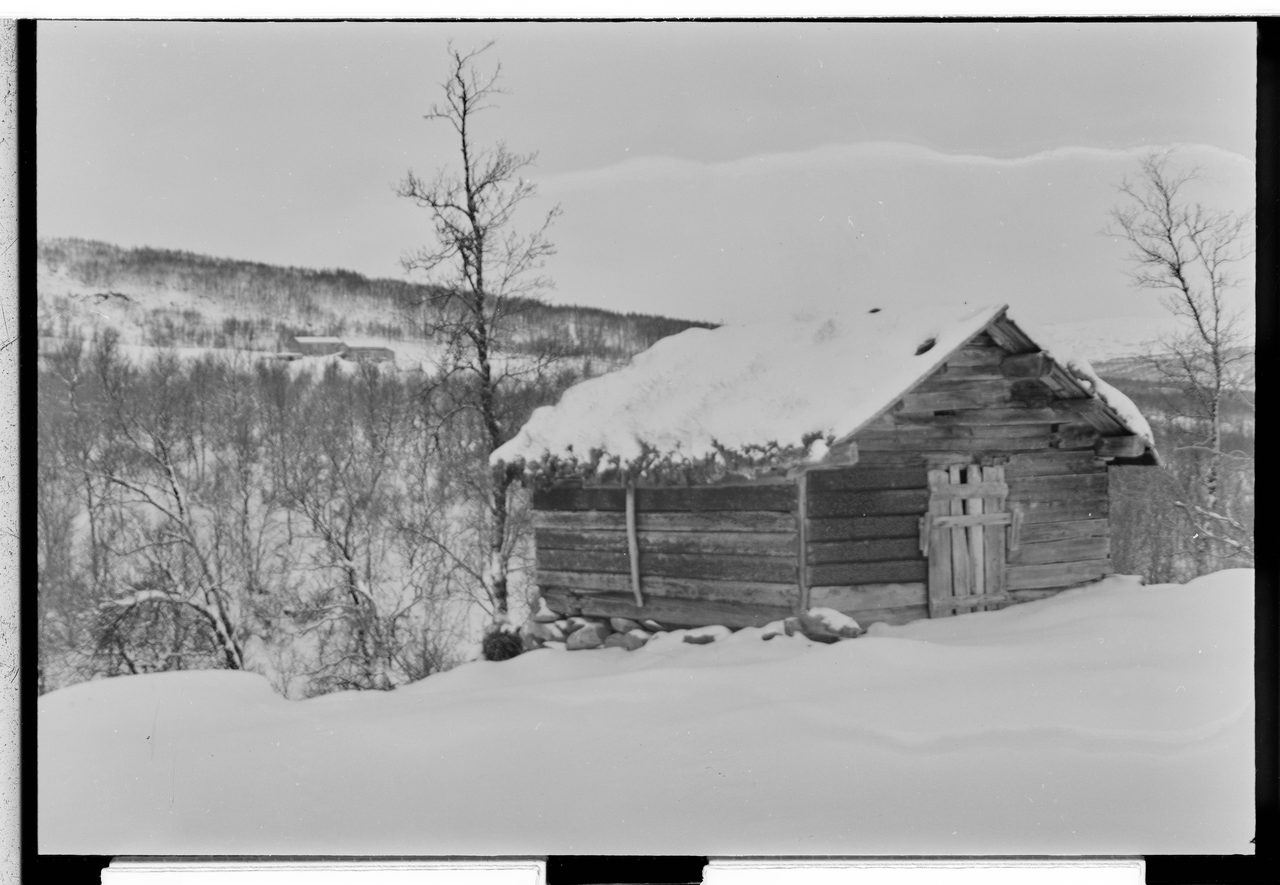
What the lights are is still an open scientific question, and the leading answers are physical, not paranormal. Monitoring by Project Hessdalen and researchers at Oslo University, continuing as recently as 2024, has centered on the idea that the lights are interactive plasma shaped by local magnetic-field anomalies. The favored mechanism is a natural geological battery: the valley's unusual geology, with copper and zinc deposits separated by the Hesja river, may generate earthlights or plasma orbs when triggered by seismic activity or magnetic fluctuations, a slow natural fuel cell venting light.
Notice how narrow the remaining mystery actually is. Nobody serious is arguing about whether the Hessdalen lights exist, the cameras closed that question. The argument is entirely about the mechanism, earthlights versus plasma versus piezoelectric discharge, and those candidates are not even mutually exclusive. That is what a real open question looks like: a repeatable, measurable phenomenon whose cause has not yet been pinned down. Hold that standard as we go, because most of the sites on this list cannot come close to meeting it.
03Marfa: Some of the Lights Are Cars
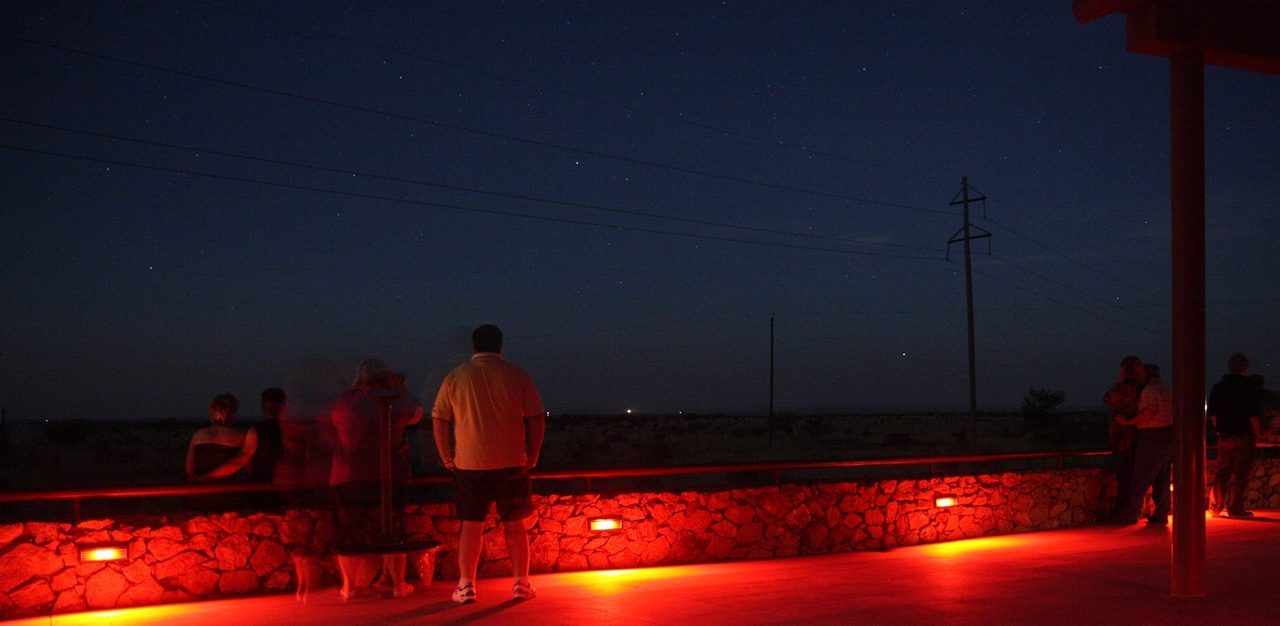
The Marfa Lights appear on Mitchell Flat, the desert basin east of Marfa, Texas, along US highways 67 and 90. A settler named Robert Reed Ellison logged the first recorded sighting in 1883 and guessed they were Apache campfires. They were not. The lights have been reported steadily ever since; Texas planted a state historical marker in 1988, and the state highway department maintains an official viewing platform on US 67 where anyone can drive up and wait for them.
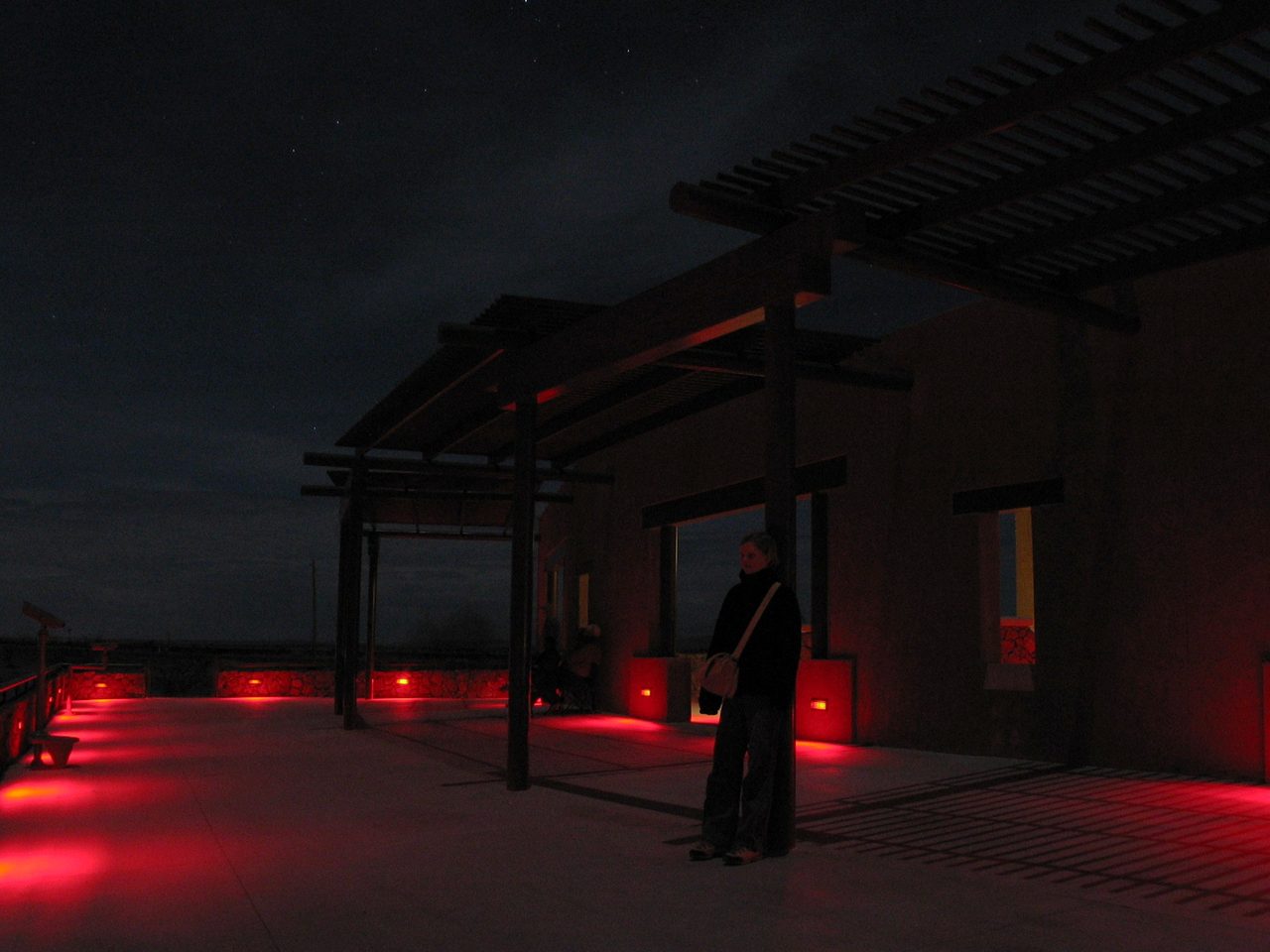
In a typical year the lights show up on ten to twenty nights, usually to the south-southwest of the viewing area. They split and merge, shift between white, yellow, red, and blue, hover, and dart. Here is the honest complication most unexplained-lights stories bury: a large share of them are unquestionably car headlights on US 67, bent into floating orbs by layers of warm and cool air acting like a mirage. The traffic explanation is real, and it accounts for a great deal of what tourists photograph.
In 2004, physics students from the University of Texas at Dallas made the point rigorously. They tracked the appearances against actual traffic on US 67 and concluded that most of the lights people see are vehicle headlights refracted through atmospheric temperature inversions. If the story ended there, Marfa would be a solved mirage and nothing more.
It does not end there, which is what earns Marfa its section. The engineer James Bunnell spent years running cameras and instruments on Mitchell Flat, work he documented in his 2009 book Hunting Marfa Lights, and he recorded lights that could not be traced to any vehicle. Some of them radiated infrared, meaning a real heat source rather than a reflection of somebody's high beams. A reflected headlight does not glow warm on a thermal sensor. Something out there occasionally does.
The strongest single piece of evidence is peer-reviewed. A paper by Karl D. Stephan, James Bunnell, John Klier, and Laurence Komala-Noor, published in 2011 as 'Quantitative intensity and location measurements of an intense long-duration luminous object near Marfa, Texas' in the Journal of Atmospheric and Solar-Terrestrial Physics, quantified one intense, long-duration luminous event near Marfa with instrumented intensity and location measurements. The authors could not determine what caused it, but noted its resemblance to ball lightning or atmospheric plasma. That is a genuinely rare artifact in this whole field: a single anomalous event with numbers attached, in a journal.
The candidate explanations for the genuinely anomalous Marfa lights are all physical and all unconfirmed: atmospheric refraction for the headlight cases, piezoelectric discharge from quartz-bearing rock squeezed under tectonic stress, ball lightning, or static electricity off mineral deposits. Swamp gas and bioluminescence, the usual go-to culprits elsewhere, are both poor fits for high desert with no swamp.
So Marfa lands in an unusual place: partly solved, not fully. Most of what a visitor sees on a given night is traffic. But the pre-automobile reports from the 1880s, before there was a single car headlight anywhere near Mitchell Flat, and Bunnell's instrumented non-vehicular lights, are still unexplained. That is a real and different verdict from the Bermuda Triangle's clean debunk. Marfa is not a myth that dissolves on inspection. It is a real anomaly with a large mundane fraction and a small, stubborn, measured remainder.
04Point Pleasant: A Real Bridge and a Borrowed Prophecy
The corpus doc gives Point Pleasant, West Virginia exactly one line in its comparison table: Mothman, UAP, a bridge collapse, no formal study, Tier 3 to 4. That single row hides one of the most instructive cases in the wing, because it braids together a genuine tragedy and a piece of pure folklore, and the folklore has spent more than fifty years trying to take credit for the tragedy.
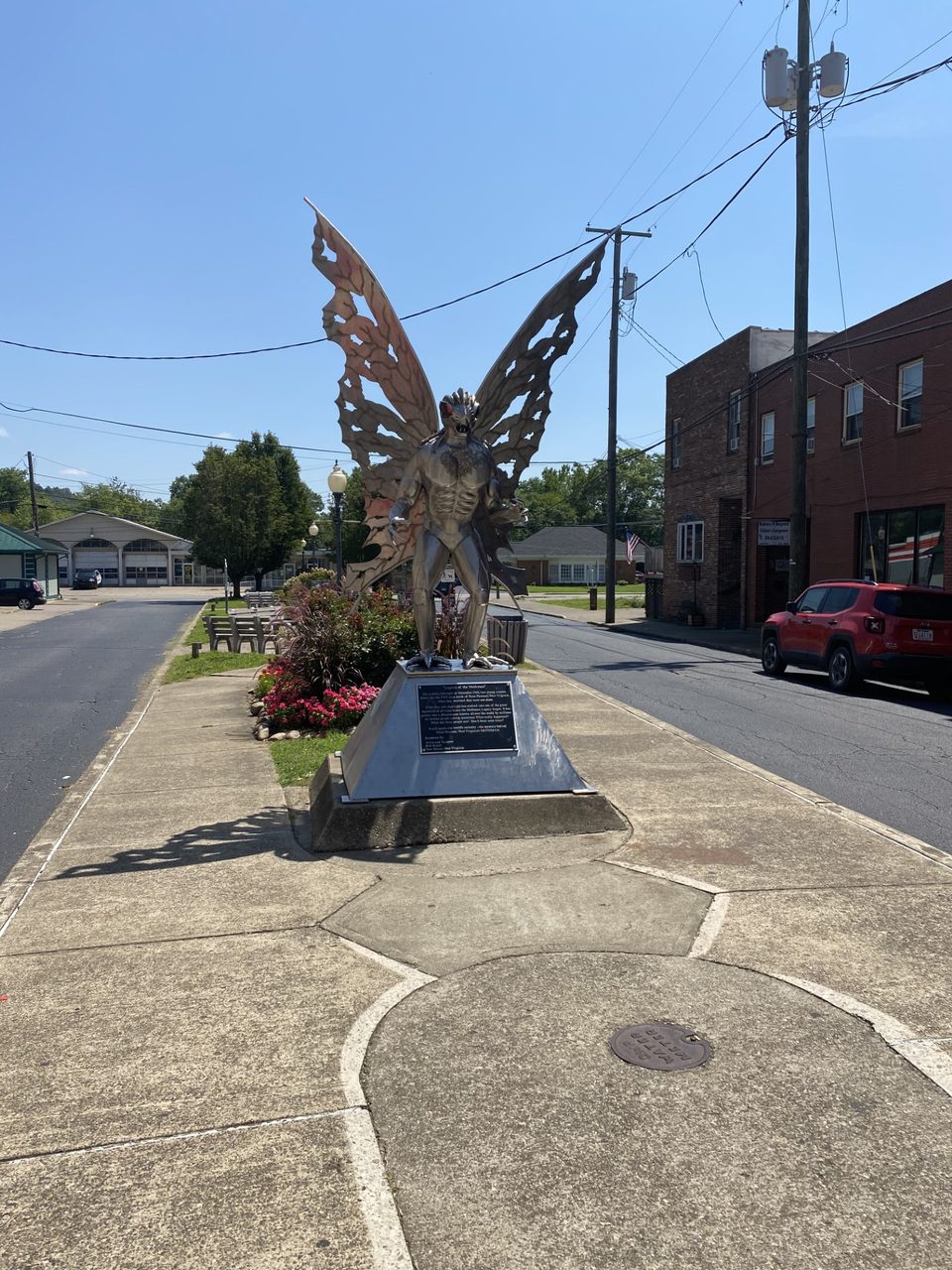
It began on November 15, 1966, when two young couples, Roger and Linda Scarberry and Steve and Mary Mallette, told Point Pleasant police they had seen a large gray winged figure with glowing red eyes near the TNT area, the grounds of a former World War Two munitions plant north of town. Their account is the first widely reported sighting of what a newspaper soon named the Mothman.
Over the following thirteen months, into December 1967, more than a hundred additional sightings were reported to police, radio stations, and regional papers, and national press coverage carried the creature well beyond West Virginia. What is documented here is the volume of reports, not the existence of a monster. The reports are a real historical fact regardless of what, if anything, was actually out by the old plant.
The tragedy is not folklore. On December 15, 1967, the Silver Bridge, a suspension bridge carrying US 35 across the Ohio River between Point Pleasant and Gallipolis, Ohio, collapsed during evening rush hour and killed 46 people. The National Transportation Safety Board traced the failure to a single fractured eyebar in the suspension chain, brought down by stress-corrosion cracking. This is settled engineering history, disputed by no credible source: a metal part reached the end of its life and forty-six people died for it.
The link between the two is where the case turns mythological. John Keel, who investigated the sightings in person and later wrote The Mothman Prophecies in 1975, proposed a causal or precognitive connection between the Mothman and the bridge, the idea that the creature was an omen of the disaster. There is no mechanism behind this and nothing corroborates it. The bridge failed because of corrosion in a 1920s-era eyebar, a process entirely indifferent to how many people had reported a winged figure. The prophecy is a story laid over a coincidence of timing, and a devastating one, which is exactly why it spread and stuck.
Point Pleasant has since built a durable identity on the story, with an annual Mothman Festival and a Mothman Museum. Which is the honest end of the file: a real reporting wave, a real and unrelated engineering disaster, and a thriving tourism economy built on a connection that never existed.
05Yakima: The Study That Concludes Nothing
Yakima, Washington earns the same single-row treatment in the corpus, filed as nocturnal lights with a minor academic study. That study has a name the table leaves out. Beginning in August 1972, the physicist and UFO researcher David Akers ran a field investigation of nocturnal lights near the Yakima Indian Reservation, around Toppenish, reportedly at the request of the astronomer J. Allen Hynek. During an intensive stretch from August 20 to 31, 1972, lights were reported nightly across a string of towns: Union Gap, Harrah, Zillah, Toppenish, Wapato, and Mabton.
Akers did not just watch. He brought instruments: SLR cameras shooting visible and near-infrared, a compass-spin detector, an infrared photometer, an audio recorder, and a Geiger-Muller counter for energetic particles. He captured some low-altitude light activity on film. What he did not capture was a confirmed anomaly. The instruments recorded lights; they did not establish that the lights were anything the towns' own headlights, aircraft, or campfires could not produce.
Reports around the reservation reportedly began around 1971 and spiked in the late summer of 1972, and some compilers describe intermittent monitoring for years afterward, though the documentation for those later decades is far thinner than for the 1972 work itself. Yakima is the honest middle of the list: a real, instrumented investigation that produced footage and no conclusion, which is a very different thing from either Hessdalen's measured phenomenon or a site with no study at all.
06Canneto di Caronia: The Mystery That Got Solved
Every site so far has ended on some version of still open. Canneto di Caronia is the one that closes. It is a small village on the northern coast of Sicily, and for a while it produced the most genuinely alarming window-area phenomenon on this whole list, and then the police worked out exactly what was causing it. The ToA source document, written before the resolution was on the record, still lists the fires as documented but unexplained, and even names the fire origin still unexplained as an open gap. That framing is now out of date, and the update is the most useful thing in this article.
The fires began on December 23, 2003, at the home of Antonino Pezzino, where a television reportedly exploded. Over the following weeks, electrical devices across the area started failing on their own, fuses, air conditioners, appliances, even car door locks, and by February 9, 2004 fires had spread to two homes on Via Mare, and the mayor evacuated 39 residents. Between January and March 2004, roughly 92 fires were reported. The most unnerving detail, the one that made international news: the fires reportedly kept happening after the village's electricity was disconnected and switched over to portable generators.
The response was serious. In April 2004 the Italian government stood up an interdisciplinary task force, coordinated by the Sicilian civil-protection service and drawing in the armed forces, police, utility companies, physicists from NASA, and Italy's National Research Council. They threw real instruments at the problem: aerial remote sensing, geophysical and geochemical surveys, magnetometry, electromagnetic-field detection, radio-spectrum monitoring. They logged anomalous electromagnetic readings, unexplained lights, and even damage to helicopter rotors during overflights, and their scientific conclusion was inconclusive. At the level of physics, in 2004, nobody could say what was starting the fires.
The answer came from police work, not physics. On June 24, 2008, Italian prosecutors concluded that the original 2003 to 2004 wave was arson and closed the investigation on that basis. Then the fires returned in 2014, a second distinct wave, and this time the Carabinieri installed hidden cameras. On March 5, 2015, they arrested Giuseppe Pezzino, then 26, and implicated his father Antonino, of the same family whose home saw the first outbreak. Video evidence captured roughly 40 staged incidents, backed by phone taps, supporting charges of arson, conspiracy to defraud, and filing false emergency reports. The reported motive was almost too on the nose for a window area: to have the fires classified as unexplained phenomena that would qualify for government disaster aid.
Put the two threads together and Canneto di Caronia is not an open case at all. Italian authorities attributed both waves to arson and fraud, a 2008 prosecutorial finding for the first and a filmed arrest for the second. That does not erase the fact that the 2004 task force genuinely could not identify a physical mechanism at the time, which is worth remembering the next time a place is called unexplained by science. Unexplained by the instruments in 2004 and solved by a hidden camera in 2015 are both true, and only one of them is the ending. It is the cleanest lesson in the whole file: Hessdalen and Marfa are open because the phenomenon is real and the cause is unknown; Canneto was open only because nobody had yet caught the man with the lighter.
07The Zone of Silence: Two Facts, Filed Apart
The Zone of Silence, the Zona del Silencio, is a patch of the Chihuahuan Desert on the Durango, Chihuahua, and Coahuila border in northern Mexico, inside the Mapimi Biosphere Reserve. It is the clearest example on this list of why you have to keep two facts about a place from bleeding into each other, because here one fact is worthless and the other is world-class, and the site's whole mystique depends on you not noticing which is which.
The legend says the desert eats signals. Radios supposedly go dead inside it, hence the name; compasses spin, electronics fail, strange lights drift, and the wildlife allegedly runs to albino animals and mutant plants. None of it survives contact with a survey. No controlled study has ever shown anomalous radio propagation there, and the silence traces back to a single mid-century anecdote; modern visitors get normal phone and radio reception. The compass claim is not documented by any geological survey either. There are minor local magnetic variations, but nothing unusual for a desert full of iron-rich rock. As a set of paranormal claims, the Zone of Silence does not survive its own debunking.
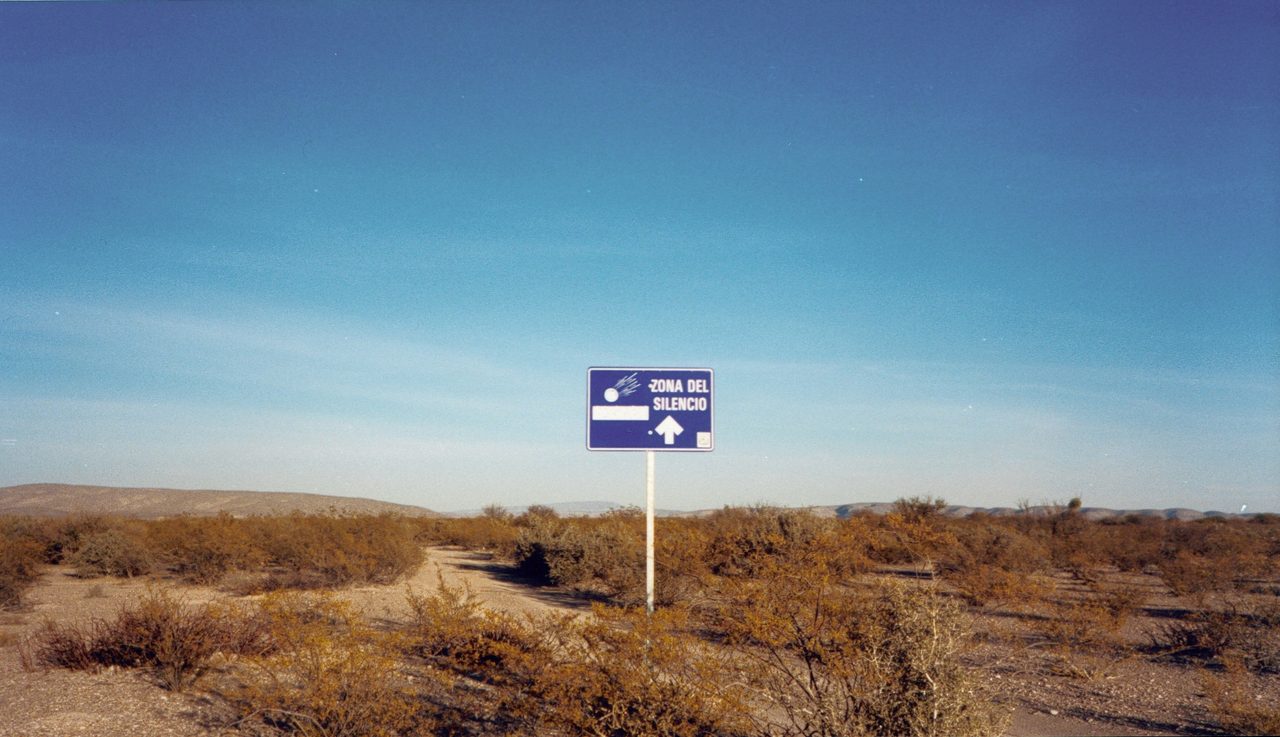
And yet the Zone of Silence genuinely is home to something extraordinary. It just has nothing to do with radios.
On February 8, 1969, the Allende meteorite fell across this area, scattering fragments over roughly 300 square kilometers. It is the largest carbonaceous chondrite ever recovered, and inside it are calcium-aluminum-rich inclusions dated to 4.567 billion years ago, among the oldest solids known anywhere in the solar system. This is not folklore or a tier of speculation; it is a cornerstone specimen of planetary science, catalogued in a 1971 Smithsonian survey of the fall and studied in laboratories worldwide ever since. The zone has other real footnotes too, an Athena rocket that went off course from Utah and crashed here in 1970, a genuinely unusual desert-adapted biosphere, but the meteorite is the crown.
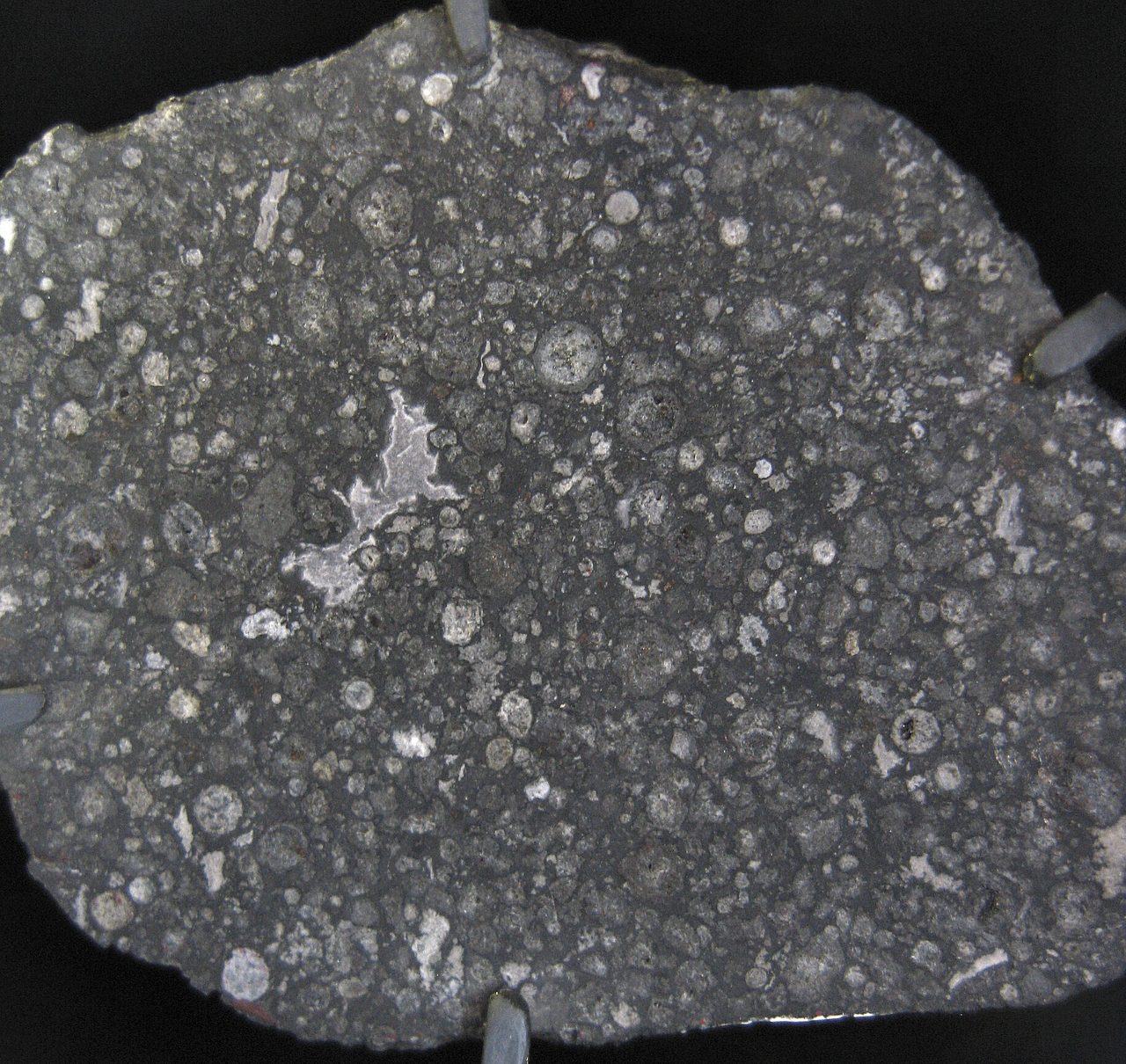
And here is the tell. The meteorite did not fall here because the ground has some pull. Meteorite strewn fields stretch out along the object's entry path, their shape set by the angle of descent and the atmosphere, not by anything under the sand. Allende landed in the Zone of Silence by pure chance, and the zone has been quietly borrowing its scientific prestige ever since, letting a 4.5-billion-year-old rock lend gravity to a radio myth that has none of its own.
08Mount Shasta: A Real Volcano Under an Invented City
Mount Shasta closes the list of sites because it is the purest version of the whole problem: a spectacular real thing with an entirely invented thing bolted onto it, and a century of people preferring the bolt-on.
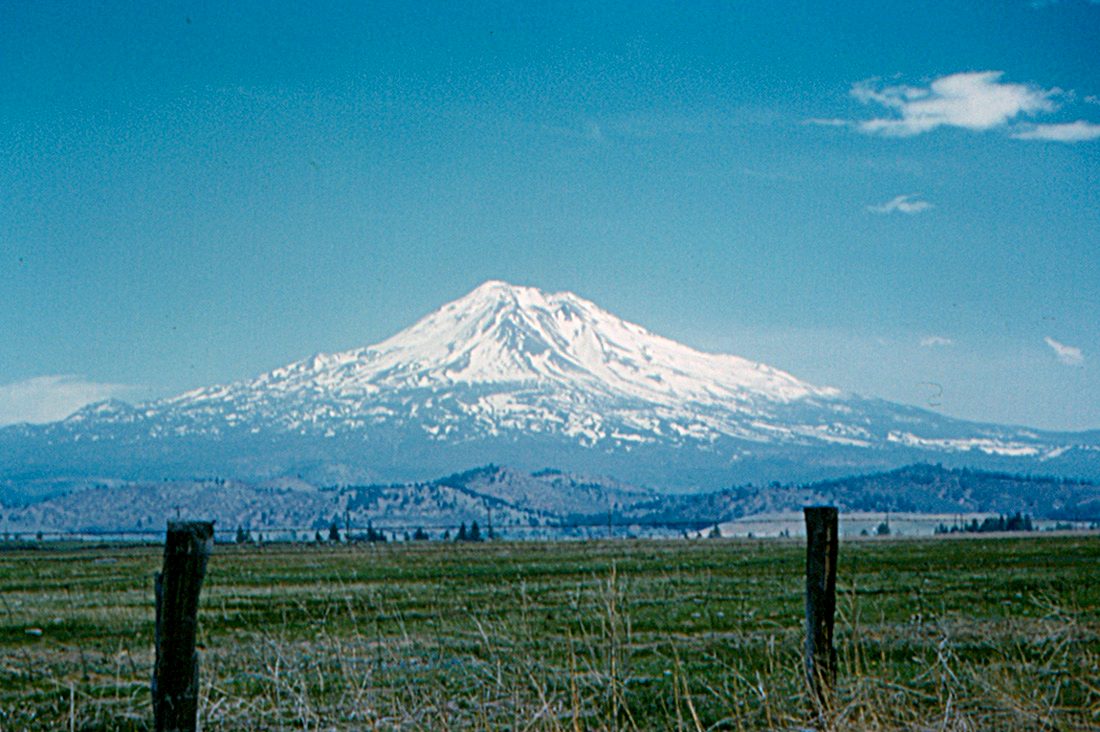
The mountain itself is well understood. Mount Shasta is an active stratovolcano in the Cascade Range, 4,322 meters or 14,179 feet high, last erupting around 1250 CE with possibly a small event near 1786. Its height regularly produces lenticular clouds, the smooth lens-shaped caps that form when air is forced up and over a peak, and that get mistaken for hovering craft with great reliability. It is genuinely sacred to the Wintu, Shasta, Modoc, Achomawi, and Atsugewi peoples, whose traditions hold it as a place of spiritual power. Those traditions do not include Lemurians or a hidden city. That part was added later, from outside.
The hidden city is a modern invention with a paper trail. Frederick Spencer Oliver's 1905 novel A Dweller on Two Planets first placed a colony of survivors from the lost continent of Lemuria inside Mount Shasta; later tellings added tall robed figures, mysterious lights, humming sounds, and a tunnel network linking the mountain to other peaks and underground cities. Lemuria itself was never real. It began as a respectable 19th-century guess, a land bridge the zoologist Philip Sclater proposed in 1864 to explain how lemurs turned up on both sides of the Indian Ocean, and plate tectonics erased the need for it in the 1960s; James Churchward's 1926 The Lost Continent of Mu spun the dead hypothesis into mysticism. There is no geological, archaeological, or historical evidence for a sunken Pacific continent or for anything living inside Mount Shasta. This is the most speculative claim in the entire source document, and it earns that ranking.
What is real, and in some ways stranger than the myth, is the legal history the myth generated. The I AM Activity, founded by Guy and Edna Ballard in Chicago in the 1930s, grew to roughly a million followers. Guy Ballard, writing as Godfre Ray King, published Unveiled Mysteries in 1934, claiming he had met the Ascended Master Saint Germain on the slopes of Mount Shasta. Ballard was convicted of mail fraud in 1942, but the conviction was overturned in United States v. Ballard in 1944, when the US Supreme Court ruled that the truth or falsity of a religious belief cannot be put on trial, however demonstrably false it may be, only the believer's sincerity can. It is a landmark First Amendment decision that exists because of a story about a magic mountain, and the I AM Foundation operates to this day while Shasta remains a major New Age pilgrimage destination.
So the assessment writes itself. Nothing supports a hidden city or Lemurian survivors under Mount Shasta; the mountain's spiritual reputation runs on its genuine physical grandeur plus a stack of 20th-century occult books, not on anything anyone has ever dug up. A real volcano, a real Supreme Court case, and a city that was published rather than discovered.
09The Other Triangles
Two more named zones deserve a mention, one because it shows the Bermuda template being copied wholesale into another ocean, and one because the wing's own front page promises it.
The Dragon's Triangle, also called the Devil's Sea, is a stretch of the Pacific bounded by Japan, Guam, and Taiwan, marketed as a Pacific Bermuda Triangle by Charles Berlitz, the same author who sold the original. The pitch: Japan declared it a danger zone after losing five research vessels between 1952 and 1954, and Kublai Khan's invasion fleet vanished there in 1281. Both claims dissolve on inspection. Kublai Khan's fleet was real and really destroyed, by a typhoon so consequential it gave Japanese the word kamikaze, the divine wind; that is documented history, not an anomaly. The 1952 losses trace to a single event, the research ship Kaiyo Maru No. 5, destroyed by the eruption of Myojin-sho, an active undersea volcano, after which Japan flagged that specific volcanic patch as dangerous, not a triangle. The western Pacific carries roughly 60 percent of the planet's volcanic activity, constant typhoons, and enormous shipping traffic, so losses there are statistically expected. It is the Bermuda playbook run again: cherry-pick the incidents, omit the known causes, inflate the anomaly.
The Bridgewater Triangle is the one this article includes to keep a promise. The wing's landing card names it, but the backing research document never covered it, so what follows comes from independent web research rather than the ToA corpus, and is flagged for corpus sync in the sourcing note below. The term was coined by the cryptozoologist Loren Coleman in his 1970s book Mysterious America for roughly 200 square miles of southeastern Massachusetts, loosely bounded by Rehoboth, Freetown, and Abington and centered on the Hockomock Swamp. The swamp is real and evocative, about 16,950 acres, the largest freshwater wetland in the state, with a name from an Algonquian term often rendered as place where spirits dwell; the Wampanoag used it defensively during colonization and as a burial ground, and colonial folklore attached a spirit figure, Hobomock, to it. The area has since accumulated a genre-spanning pile of reports, UFOs, Bigfoot, glowing orbs, hauntings, and precisely none of the instrumented monitoring Hessdalen has or the government investigation Canneto and Skinwalker each got. By this article's own standard it is the weakest site here: folklore and reported sightings, with no camera pointed at any of it.
Fast Facts
- The Concept
- A window area is a place that generates persistent anomalous reports across decades, regardless of which phenomenon is in fashion. Popularized by John Keel and J. Allen Hynek. Credible as an observation, unproven as a mechanism.
- The Two Poles
- Skinwalker Ranch carries the strongest institutional paper trail (the DIA's 22-million-dollar AAWSAP study); the Bermuda Triangle is the most thoroughly debunked. Both have their own full dossiers in this wing.
- Best Documented
- Hessdalen, Norway: real lights recorded by cameras, radar, and spectrometers since 1984 through Project Hessdalen. The phenomenon is confirmed; the mechanism (earthlights, plasma, or piezoelectric discharge) is the open question.
- Best Instrumented Case
- Marfa, Texas: most lights are car headlights bent by temperature inversions, but pre-automobile 1880s reports and Bunnell's infrared-radiating, non-vehicular lights remain unexplained. A 2011 peer-reviewed paper quantified one event.
- The One That Got Solved
- Canneto di Caronia, Sicily: fires from 2003 baffled a NASA-and-CNR task force, but Italian prosecutors ruled the first wave arson in 2008, and a 2015 hidden-camera sting produced a named arrest. The motive was disaster aid.
- Two Facts, Filed Apart
- The Zone of Silence's radio and compass anomalies are debunked folklore, but the Allende meteorite that fell there in 1969 is a genuine Tier 1 specimen, with inclusions dated to 4.567 billion years, among the oldest solids in the solar system.
- A Volcano, Not a City
- Mount Shasta is a real active stratovolcano; the Lemurian hidden city inside it was published in a 1905 novel, not discovered. The related I AM Movement produced a real Supreme Court case, United States v. Ballard (1944).
- Ruled Out
- Portal or trans-dimensional gateway hypotheses explain everything and predict nothing, which puts them outside science entirely. And most cursed coordinates owe their reputation to a self-feeding loop of attention, not to anything measurably unusual happening there.
What Earth's Portal Zones Actually Hold
Start with what is flatly documented, because it is substantial. The Allende meteorite is a cornerstone of planetary science, its inclusions dated to 4.567 billion years. Mount Shasta is a real active stratovolcano, and United States v. Ballard is a genuine 1944 Supreme Court ruling. The Silver Bridge collapse of 1967 was engineering, a fractured eyebar and stress corrosion, and killed 46 people. Canneto di Caronia's fires were resolved as arson by an Italian prosecutorial finding in 2008 and a filmed 2015 arrest. And the Bermuda and Dragon's Triangles are both thoroughly debunked, their disappearances explained by storms, volcanism, and statistics. All checkable, all real.
The window-area concept itself lives here: as a way to organize the observation that strange reports clump at certain coordinates, it is a credible and useful heuristic, not a proven mechanism. So do the two best sites. Hessdalen's lights are a real phenomenon, recorded on instruments since 1984, with the physical cause still under debate. Marfa's lights are partly explained as traffic mirages and partly not, with the 1880s pre-automobile reports and Bunnell's non-vehicular, infrared-radiating lights genuinely unexplained, and one event quantified in a 2011 peer-reviewed paper.
Several threads stay speculative and belong here. The specific physical mechanisms proposed for Hessdalen and Marfa, piezoelectric discharge, plasma, earthlights, are plausible and unconfirmed. The 1972 Yakima investigation was real and instrumented but reached no conclusion, footage without a finding. And the Bridgewater Triangle, included to honor the wing's own front page, is folklore and reported sightings with no instrumented monitoring behind it, the weakest site in the file and web-sourced rather than corpus-sourced.
And several claims get refused outright, because the evidence refuses them. Portal or trans-dimensional gateway hypotheses are unfalsifiable, explaining everything and predicting nothing, which places them outside science. The Zone of Silence's radio-silence and compass anomalies do not survive a survey; the silence is a single old anecdote, the magnetism is ordinary. Mount Shasta's Lemurian hidden city was published in a 1905 novel, not discovered by anyone. And John Keel's precognitive link between the Mothman and the Silver Bridge is a story laid over a coincidence, with no mechanism connecting a corroding eyebar to a winged figure. The quietest Tier 4 truth sits under all of it: a place can hold its spot on the cursed-coordinates list on reputation alone, entirely on the strength of how many people have already gone looking there.
So the portal zones sort themselves, if you let the evidence do it instead of the legend. A few are real questions science has not closed, a couple are cautionary tales about how a mystery gets manufactured and, in one Sicilian case, how it gets solved. The pattern that ties them together, that strange reports clump at certain coordinates, is real. What no camera, task force, or Supreme Court has settled is why. Is a window area a place where something physical, geology, magnetism, atmosphere, genuinely runs stranger than average, or is it just the map of where we have agreed in advance to keep looking? Point an instrument at the next one and you will get one of exactly two answers. Which coordinates would you aim it at first?
Sources & further reading
Everything above is drawn from our research library on Theories of Anything, which is where we worked from. The papers, reports and primary records listed beneath them are where you can check us independently.
Image credits
- A long night exposure of visitors at the Marfa Lights viewing platform under a starry sky Photo: Jon Hanson, via Wikimedia Commons. CC BY 2.0 Source.
- A nighttime long-exposure photograph of the Marfa Lights viewing platform Photo: Daniel Schwen, via Wikimedia Commons. CC BY-SA 2.5 Source.
- A polished stainless-steel statue of a muscular winged humanoid with large reflective eyes Photo: Csassen13, via Wikimedia Commons. CC0 1.0 Source.
- A 1953 black-and-white winter photograph of the Hessdalen hamlet in Norway Photo: National Archives of Norway (Riksarkivet), Billedbladet NA collection, via Wikimedia Commons. CC BY-SA 4.0 Source.
- A blue roadside sign reading Zona del Silencio with a meteor icon Photo: Cryptocône, via Wikimedia Commons. CC BY-SA 3.0 Source.
- A polished cross-section of a dark stony meteorite Photo: Shiny Things, via Wikimedia Commons. CC BY 2.0 Source.
- A snow-capped conical volcano rising above forested foothills under a clear blue sky Photo: Roger Wollstadt, via Wikimedia Commons. CC BY-SA 2.0 Source.
- Card crop of a long night exposure of visitors at the Marfa Lights viewing platform Photo: Jon Hanson, via Wikimedia Commons. CC BY 2.0 Source.
_(cropped).jpg)


