Beyond the Aztecs: Mesoamerica Had Twenty Civilizations, Not Two
Everyone knows two names: the Maya and the Aztec. Ask most people who else built pyramids, carved gods into stone, or wrote in glyphs across ancient Mexico, and the list runs dry. It should not. Mesoamerica was never a duet. It was a crowded three-thousand-year conversation among at least twenty distinct civilizations, and the single symbol the Aztecs are most famous for, the feathered serpent, was already ancient when they inherited it. It was carved into a stone monument on the Gulf Coast at least 1,500 years before anyone spoke the name the world remembers. This dossier is the deep-history prequel: the Olmec who laid the foundation, the Zapotec who wrote first, the Mixtec who painted their dynasties into folded books, the Purepecha who cast bronze and never fell to the Aztecs, and the peoples of that world who are still here, still speaking their languages, today.
There is a story most of us were handed about ancient Mexico, and it has exactly two characters in it: the Maya and the Aztec. Pyramids, calendars, feathered serpents, gold, and blood. Two great civilizations, and then a blank. The blank is the lie. Mesoamerica was not a stage with two actors on it. It was one of the handful of places on Earth where civilization was invented from scratch, and over three thousand years it produced at least twenty distinct major cultures, each with its own gods, its own cities, and in several cases its own writing. The Maya and the Aztec are simply the two that colonial and modern history decided to remember.
Take the most famous image the Aztecs ever left us, the feathered serpent. It did not begin with them. Its earliest known depiction is carved into a basalt monument at the Olmec city of La Venta, on the Gulf Coast, and the Olmec were building there while the Aztecs were still more than a thousand years away from existing at all. Our research file puts the gap plainly: the feathered serpent was already on the monuments of Mesoamerica at least 1,500 years before the Aztecs gave it the name the world remembers, Quetzalcoatl. That figure, the Aztec-era serpent and everything the reader already knows about him, has his own full dossier. This one is about what came before, and it starts with the people who put the serpent on the wall in the first place.
01The Olmec: Mesoamerica's Foundation Layer
Start where everything else starts. The Olmec flourished on the Gulf Coast lowlands of what is now Veracruz and Tabasco from around 1500 to 400 BCE, first at the city of San Lorenzo and later at La Venta. We do not know what they called themselves. Olmec is a much later Aztec word meaning rubber people, an outsider's label for a civilization that was already ancient by the time the Aztecs coined it. And what they left behind is anything but faded.
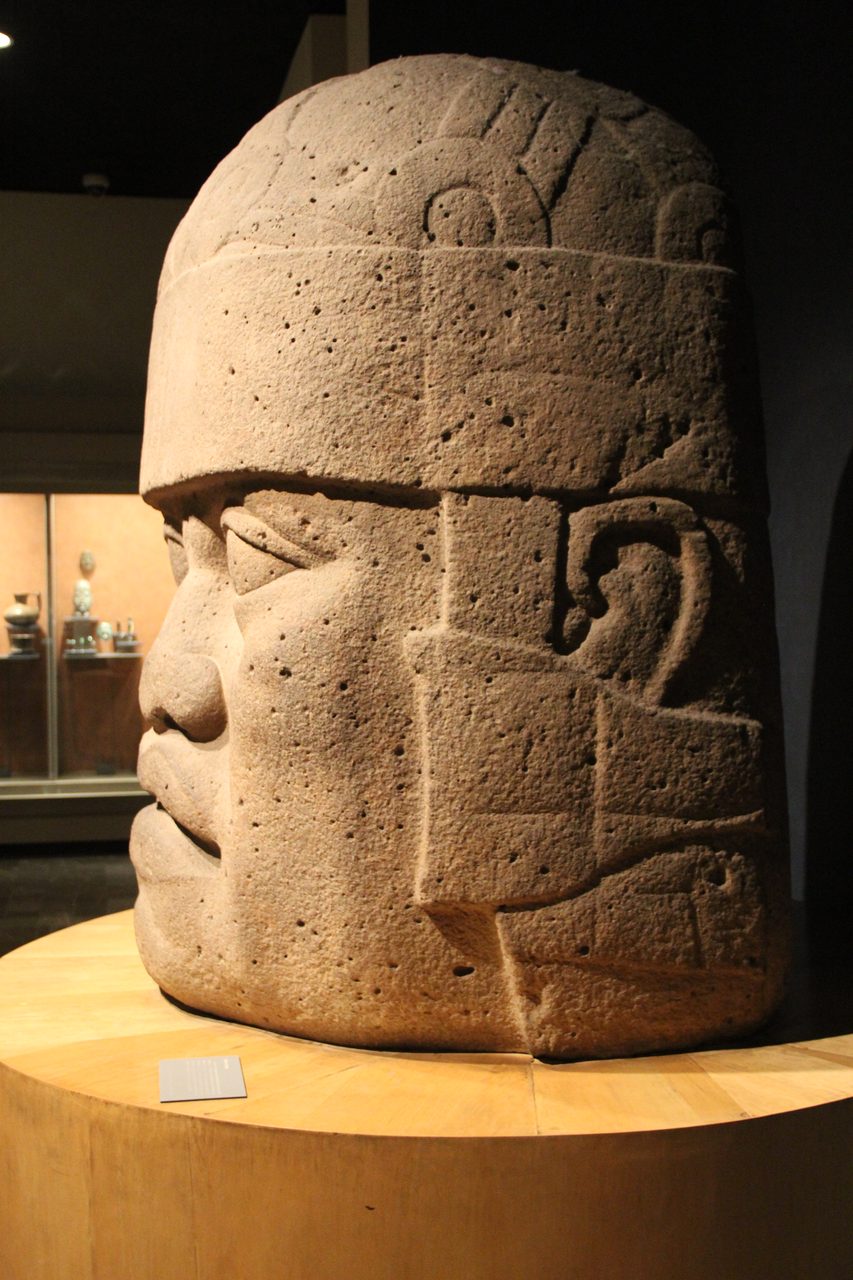
Seventeen colossal stone heads survive. The largest stands 3.4 meters tall and weighs roughly 50 tonnes, and every one of them was carved from basalt hauled more than 80 kilometers from the Tuxtla Mountains, an act of organized labor by a society with no wheels and no draft animals. These are among the most extraordinary sculptures of the ancient world, and almost nobody outside the field can name the culture that made them.
Who were they? The heads are read as portraits, most likely of individual rulers, though some scholars argue for ballplayers. Read that carefully, because it is exactly where the certainty stops: the identification is an interpretation, not a settled fact. The faces are unmistakably individual and specific, each with its own features and headgear. The names that once went with them are gone.
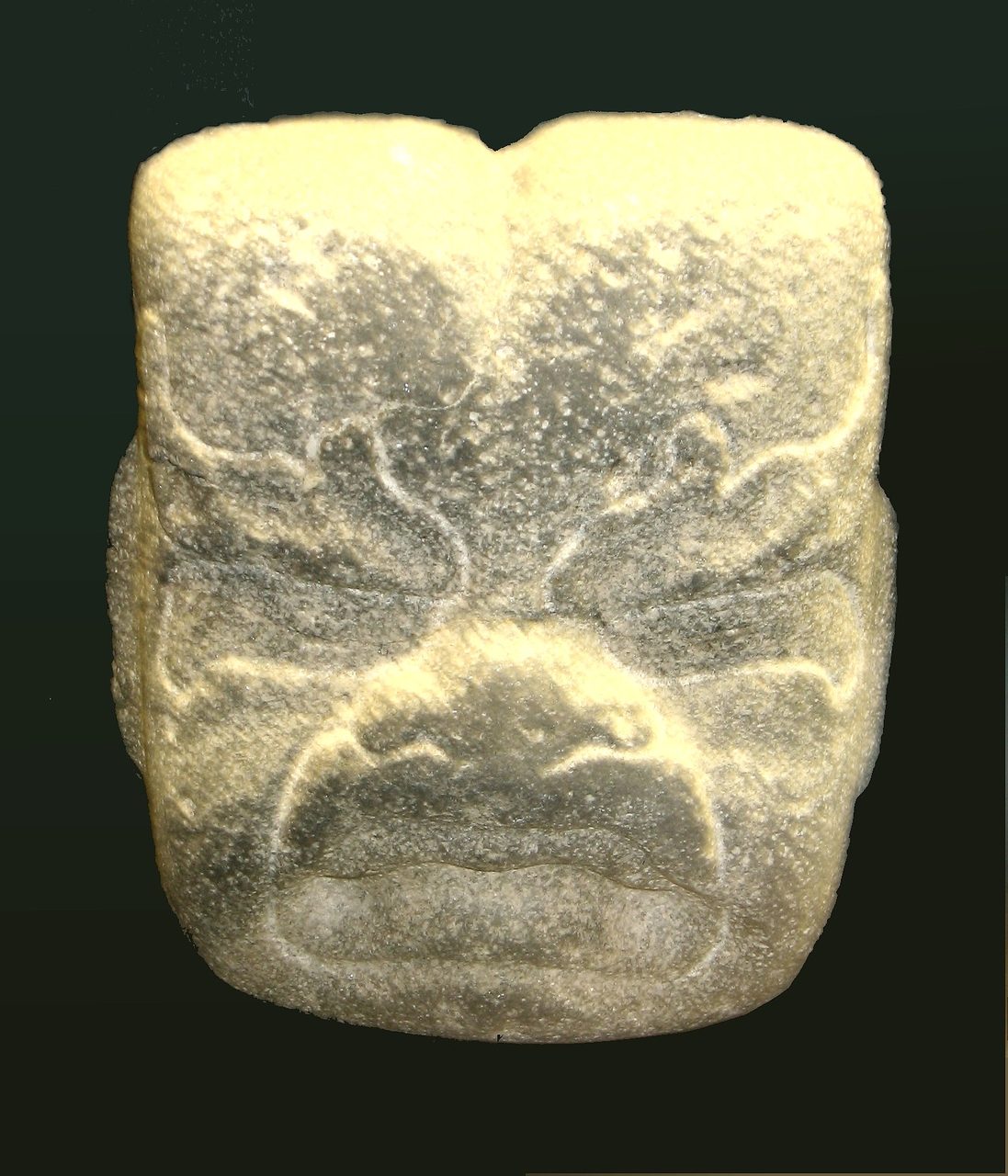
Here is the part that matters most, and the research file is careful to flag how we know it: the Olmec left no written texts, so everything about their gods comes from reading their images. Read that way, the Olmec invented the religious vocabulary the rest of Mesoamerica would speak in for the next three millennia. The were-jaguar, a human-feline hybrid with a snarling mouth and a cleft head, perhaps a shaman in transformation or the child of a mythic jaguar-human union. The Young Maize God, a youthful deity shown emerging from a cleft in the earth exactly as a maize shoot breaks through soil, carved into Olmec jade. The ball game, ullamaliztli, whose oldest known court in all of Mesoamerica sits at the Olmec site of Paso de la Amada around 1400 BCE. And the feathered serpent, whose earliest depiction anywhere is the one on La Venta Monument 19, some 1,500 years ahead of the Aztecs. Every civilization in this article inherited pieces of that vocabulary.
None of this is fringe. The Olmec foundation was established by Michael Coe and Richard Diehl's field archaeology and mapped in detail by Karl Taube's study of the iconography. This is the mainstream account of where Mesoamerican religion began, and it begins a thousand years and more before the cultures most people have actually heard of.
02The Zapotec: The Cloud People Who Wrote First
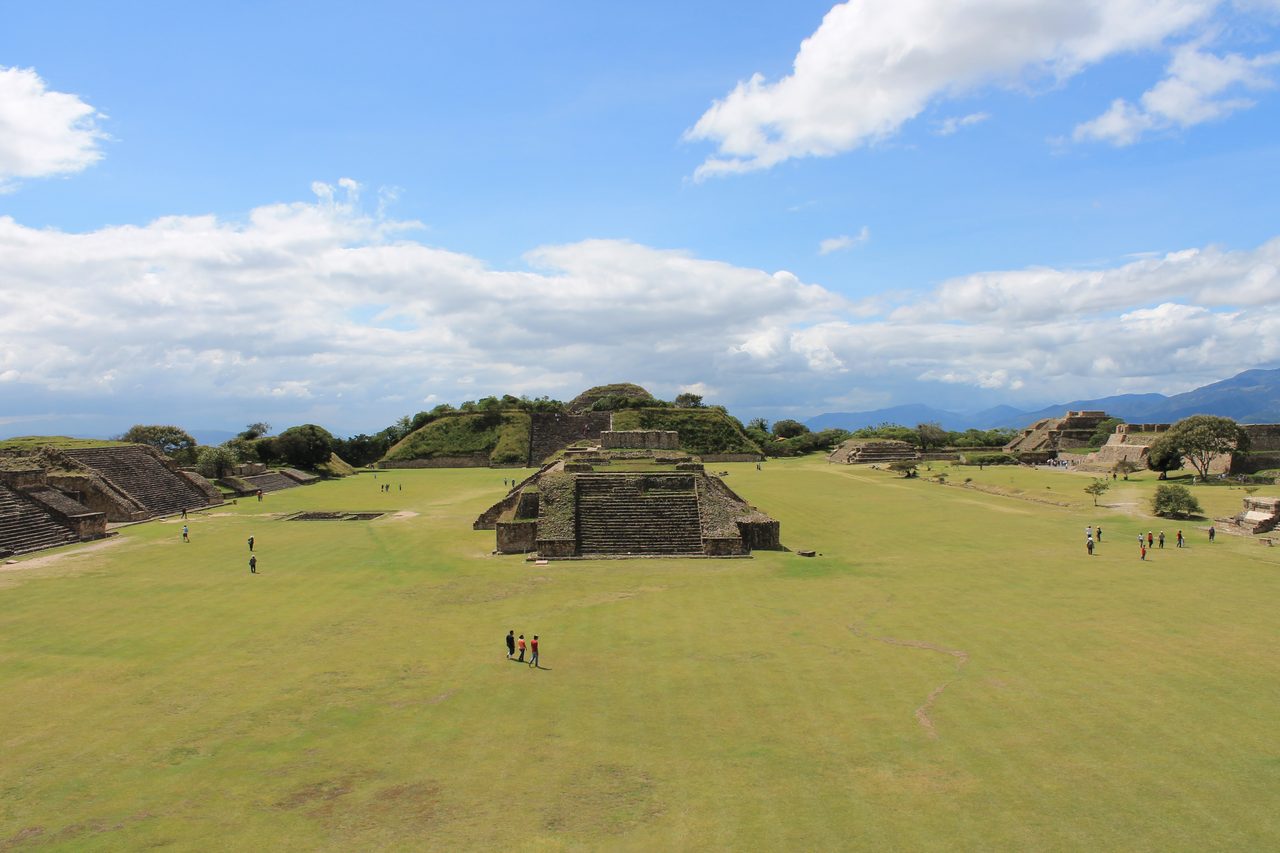
Southwest of the Olmec heartland, in the mountain valleys of Oaxaca, the Zapotec called themselves Ben'zaa, the Cloud People. Around 500 BCE they did something audacious: they sheared the top off a mountain that rises where three valleys meet and built a city on the leveled summit. Monte Alban was the first true city in Oaxaca, and it ran for roughly fourteen centuries.
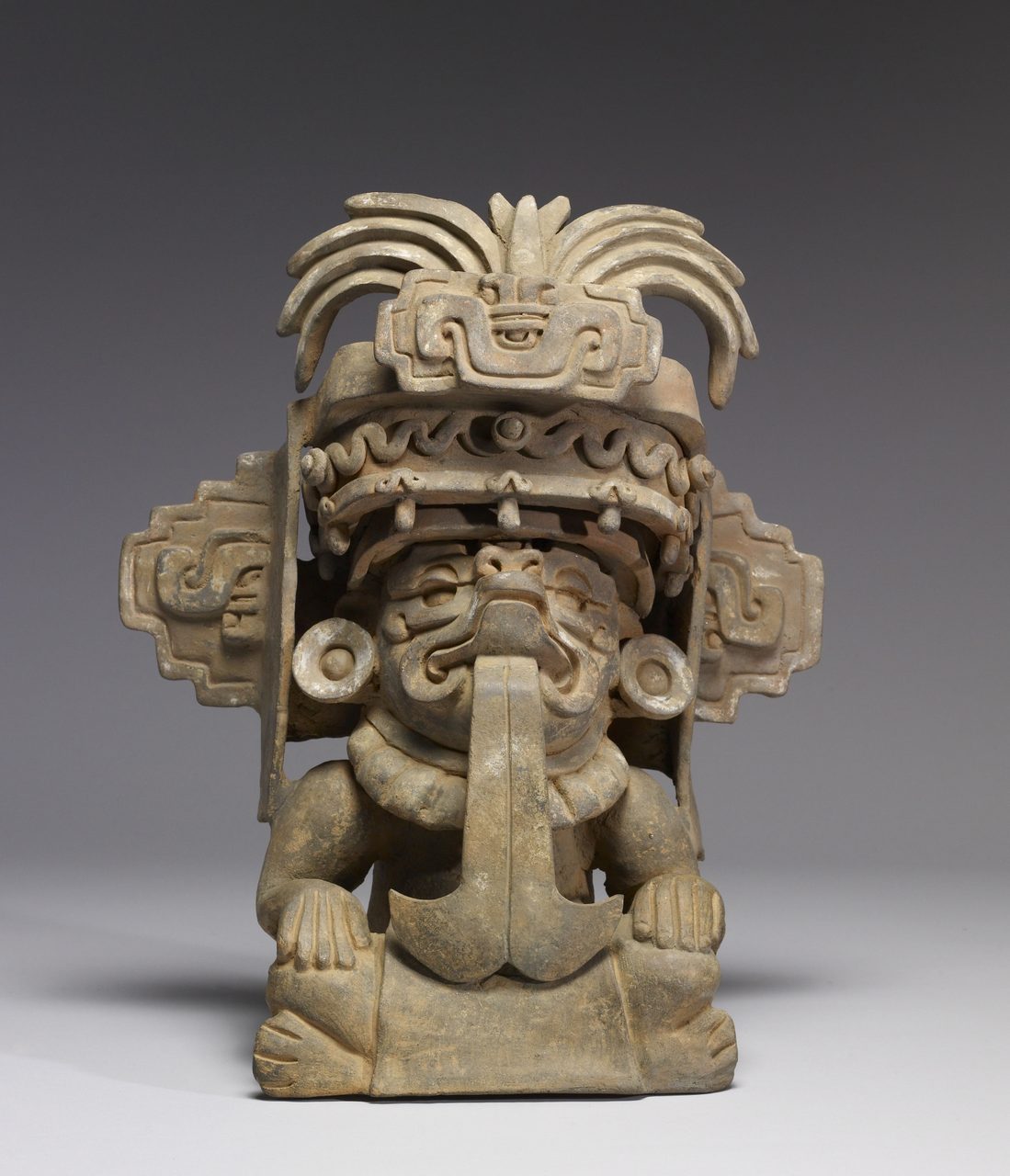
Their supreme god was Cocijo, Lightning and Rain, a face built from serpent, jaguar, and bird, with a forked tongue and a headdress sprouting maize. He is the same divine idea the Aztecs would call Tlaloc and the Maya called Chaac, and his image dominates the ceramic urns recovered from Monte Alban. Below him stood Pitao Cozobi, god of maize and sustenance, and Pitao Bezelao, lord of the dead, whose domain was the city the Zapotec called Lyobaa, the Place of Rest. We know it as Mitla, and they believed it held an actual entrance to the underworld.
And then there is the fact almost nobody outside archaeology has heard: the Zapotec wrote first. The carved stone slabs at Monte Alban known as the Danzantes, the Dancers, date to roughly 600 to 400 BCE and carry glyphic name-tags beside their figures. That makes them the oldest known writing system in the Americas, older than any surviving Maya text. It is still only partly deciphered. Sit with that for a moment: the earliest writing in the entire hemisphere belongs to a civilization most people cannot name.
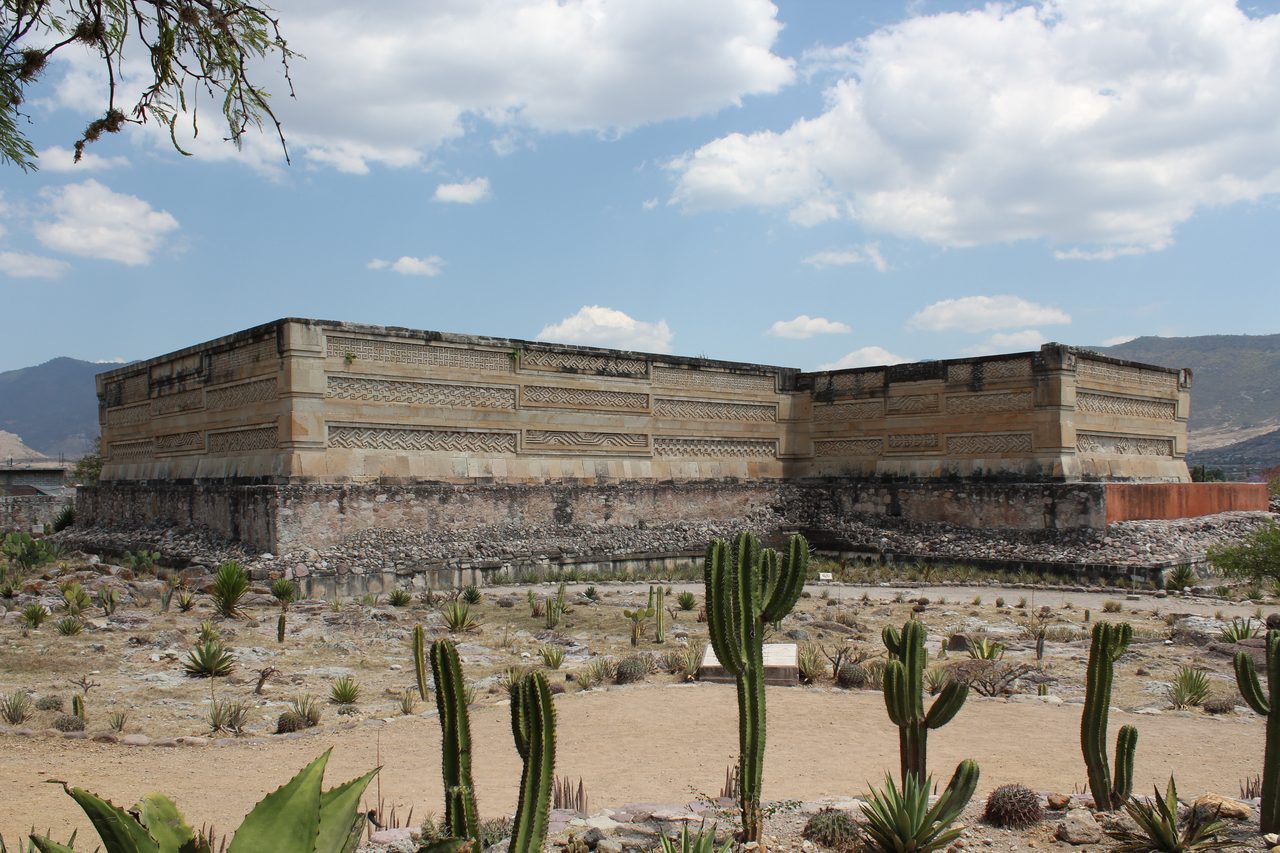
Mitla itself is a different order of marvel. Its palaces are faced with geometric stone mosaic, tens of thousands of small cut stones fitted into step-fret patterns without a drop of mortar, a precision facade that is unique in all of the ancient Americas. Nobody else made anything quite like it.
03The Mixtec: A History Painted In Folded Books
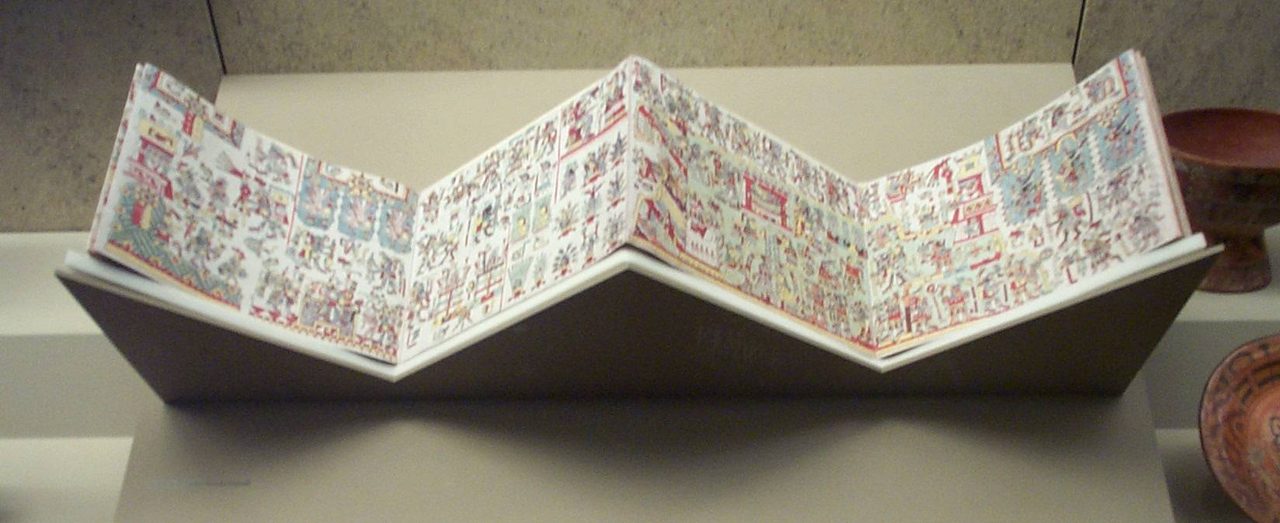
The Zapotec's neighbors in the Oaxaca highlands, the Mixtec, called themselves Nuu Dzahui, the People of the Rain, after Dzahui, the rain god who was the same divine power the Zapotec knew as Cocijo and the Aztecs as Tlaloc. And they left behind the finest manuscripts to survive from the pre-Columbian Americas. These are the codices: screenfold books of deerskin, painted and folded like an accordion, read in vivid pictographic narrative. The Codex Zouche-Nuttall, now in the British Museum, follows the campaigns of a warlord named Eight Deer Jaguar Claw, who lived from 1063 to 1115 CE, a real named man whose biography we can still read nine centuries later. The Codex Vindobonensis preserves the Mixtec creation story: the world rising from primordial water, the gods emerging, culture heroes descending from the sky, and the Mixtec people being born from a sacred tree at Apoala. The Codex Bodley traces the royal genealogy of the Tilantongo dynasty.
And when Alfonso Caso opened Tomb 7 at Monte Alban in 1932, he found the single richest cache of goldwork ever recovered from the ancient Americas. Mixtec elites had reused the old Zapotec tomb centuries after it was cut and filled it with lost-wax gold: deity figures, pectorals, and jewelry of a craftsmanship that stops you cold. The Mixtec were the master goldsmiths of Mesoamerica, and Tomb 7 is the proof anyone can go and see.
04The Purepecha: The Empire The Aztecs Could Never Take
West of the Aztec heartland, around Lake Patzcuaro in Michoacan, was a state the Mexica feared and never conquered. The Purepecha, often called by the Spanish-imposed name Tarascan, were one of the very few Mesoamerican powers to fight the Aztec Triple Alliance to a standstill and stay independent to the end. The empire that terrified its neighbors could not swallow this one.
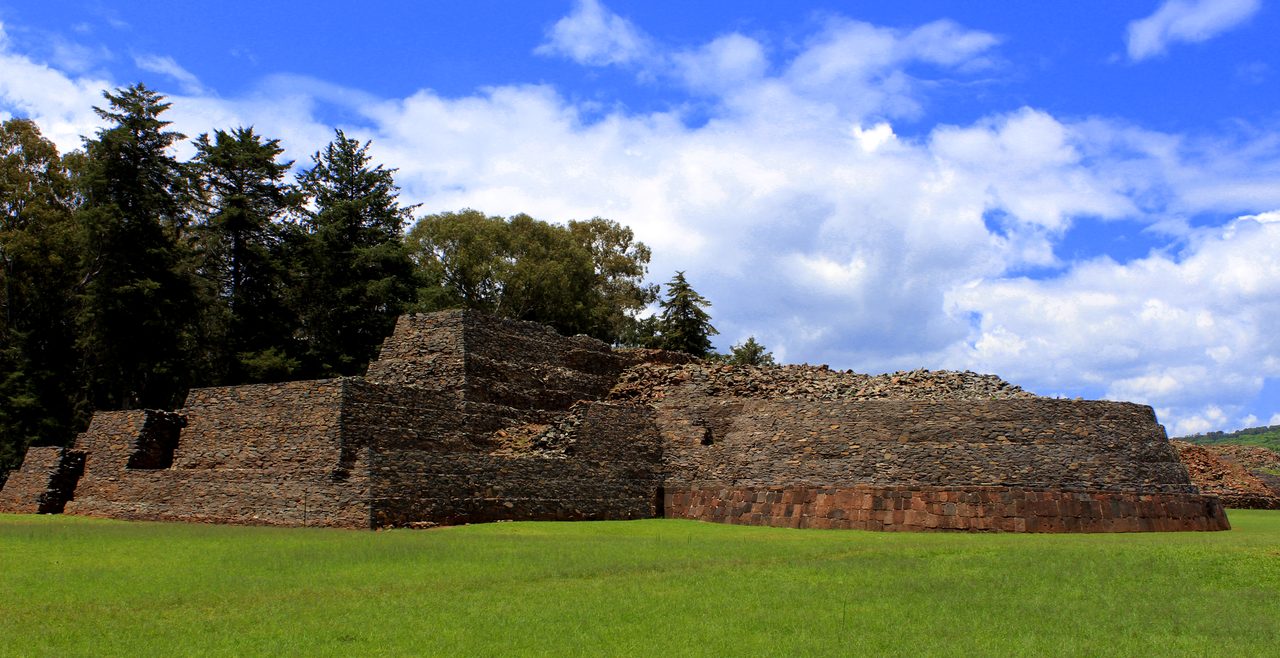
Their mythology reaches us through the Relacion de Michoacan, compiled around 1540 by the Franciscan friar Jeronimo de Alcala from Purepecha informants, and that origin matters, so hold it in mind. Their supreme god was Curicaueri, god of fire, the sun, and war, honored with perpetual sacred fires kept burning on the great stepped platforms called yacatas at the capital, Tzintzuntzan, on the shore of Lake Patzcuaro. Beside him was Xaratanga, goddess of the crescent moon, maize, and the farming year, and the Purepecha held that the union of the two created the gods and humankind.
That Relacion is not a neutral window, and this is the honest caution the research file itself keeps. Like almost every surviving text about these non-Maya, non-Aztec cultures, it was written down by or for Spanish missionaries, filtered through a Christian frame that reshaped what it recorded. We should read it as what it is: indigenous memory transcribed by the people who had just conquered its keepers, not an untouched native voice. The archaeology, the fired platforms, the burials, the metal, verifies the parts it can reach. It cannot recover the rest, and pretending otherwise would be the easy dishonesty this subject invites.
But the Purepecha carry one distinction nobody disputes, and it is metallurgical. They were the only civilization in all of Mesoamerica to develop working bronze, alloying copper with tin and with arsenic to make tools, weapons, and ritual objects. In a world that raised pyramids and wrote books using stone and obsidian, the Purepecha alone were casting bronze.
Where did the technique come from? This is where the honest answer is a shrug held at arm's length. Purepecha bronze appears suddenly around 1200 CE, and its methods look strikingly like the metallurgy of coastal Ecuador, far to the south. The metallurgist Dorothy Hosler, who effectively wrote the book on ancient West Mexican metal, considers maritime contact along the Pacific coast the most plausible explanation. But plausible is exactly where it stops. The research file is explicit that hard archaeological evidence of an actual contact route remains limited, and this stays firmly at Tier 3, an intriguing lead rather than a proven crossing. Nobody has found the boats.
05The Totonac, The Huastec, And A Rite Still Performed Today
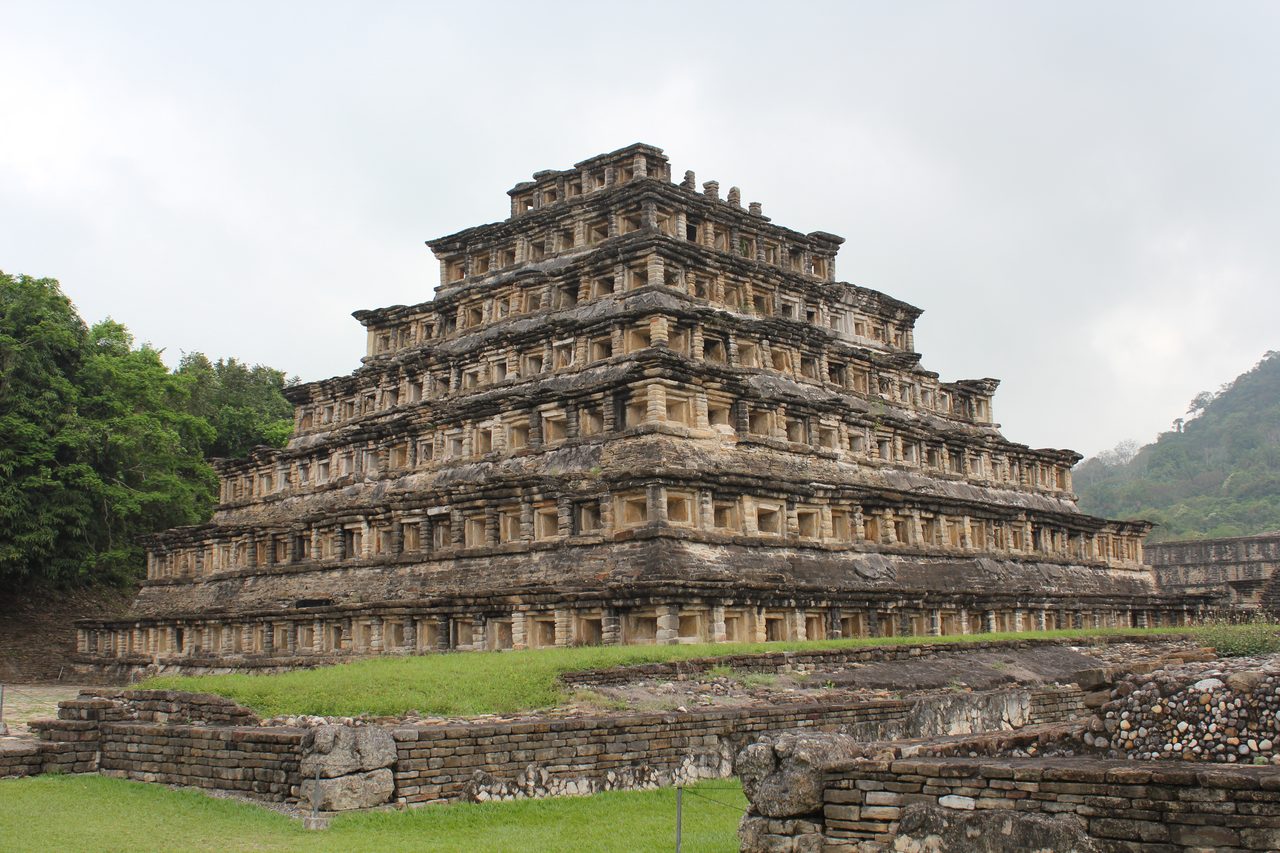
Two more belong in any honest count. On the coast of Veracruz, the Totonac built El Tajin, whose Pyramid of the Niches carries exactly 365 recessed niches, one, it appears, for every day of the solar year, a calendar rendered in architecture. And the Totonac are bound to a ritual you can still go and watch: the Danza de los Voladores, the Dance of the Flyers, in which four men climb a pole some 30 meters high and throw themselves off, spiraling down on ropes, thirteen revolutions each. Four flyers times thirteen turns makes 52, the length of the Mesoamerican Calendar Round. This is not a reconstruction and not a relic. It is a living practice, performed today, recognized by UNESCO as Intangible Cultural Heritage since 2009.
That last point deserves to be said flat out, because the survey format can quietly bury it. None of these are vanished peoples. The Zapotec and Mixtec languages are still spoken across Oaxaca, Purepecha is still spoken around Lake Patzcuaro in Michoacan, and there are millions of Zapotec, Mixtec, and Purepecha people alive in Mexico right now. The empires and city-states in this article belong to the past tense. The peoples do not. When we say the Zapotec built Monte Alban, we mean their ancestors raised it fifteen centuries ago, not that the Zapotec are gone. They are not gone. They are reading, farming, voting, and dancing the Voladores this year.
To the north, along the Gulf, the Huastec, who call themselves Teenek, kept their own distinctive tradition: rounded pyramidal architecture unlike anyone else's, and the worship of Tlazolteotl, goddess of earth, fertility, and moral filth, a deity so compelling that the Aztecs eventually absorbed her into their own pantheon. Borrowing ran in every direction across this world, and it did not begin or end with the two cultures history chose to remember.
06One Serpent, Twenty Faces
Step back far enough and a pattern jumps out. For all their differences, every one of these civilizations shared a core religious grammar. The ball game as cosmic drama, sun against underworld, life against death. Maize as the sacred substance from which humanity itself was made, told independently in the Maya Popol Vuh, in Aztec myth, and in Mixtec narrative. World-ages that rise and end in catastrophe, over and over. Rain and lightning gods at or near the top of nearly every pantheon: Cocijo, Dzahui, Tlaloc, Chaac. And one shared machinery of time, the 260-day ritual count, the 365-day solar year, and the 52-year Calendar Round locking them together.
Why do they all rhyme? That is a genuinely open question, and the research file keeps it open. One camp, associated with Michael Coe, casts the Olmec as the mother culture, the single source that seeded the core religious and political ideas everyone else inherited. Another, argued by Kent Flannery and Joyce Marcus, sees sister cultures instead: several societies developing the shared complex in parallel, trading and borrowing across a network rather than copying from one founder. The evidence genuinely underdetermines the answer, and it sits at Tier 3 in both directions. What is not in doubt is that the shared grammar is real, and that its oldest surviving words are Olmec.
| Civilization | Heartland And Era | Chief Deity Or Sky-Bringer | What They Left Behind | Tier |
|---|---|---|---|---|
| Olmec | Gulf Coast (Veracruz and Tabasco), c. 1500 to 400 BCE | The were-jaguar and the earliest feathered serpent | Colossal basalt heads, the oldest ball court, and the feathered-serpent image 1,500-plus years before the Aztecs | 1 |
| Zapotec | Oaxaca valleys, c. 500 BCE to 900 CE | Cocijo, Lightning and Rain | Monte Alban and the Danzantes, the oldest known writing in the Americas | 1 |
| Mixtec | Oaxaca highlands, Postclassic | Dzahui, the Rain | The screenfold codices and the finest pre-Columbian goldwork (Tomb 7) | 1 |
| Purepecha (Tarascan) | Michoacan, Lake Patzcuaro | Curicaueri, Fire and Sun | The yacatas of Tzintzuntzan and the only bronze metallurgy in Mesoamerica | 1 |
| Totonac | Coastal Veracruz, c. 600 to 1200 CE | A storm and rain complex | El Tajin's 365-niche pyramid and the still-performed Voladores rite | 2 |
| Huastec (Teenek) | Northern Gulf Coast | Tlazolteotl, Earth and Fertility | Distinctive rounded pyramids, and a goddess the Aztecs adopted | 2 |
| "Only two civilizations" | The popular story | None; it is a modern misreading | A colonial and modern bias, not history: at least twenty existed | 4 |
Fast Facts
- The Foundation
- The Olmec (c. 1500 to 400 BCE) built the first great Mesoamerican civilization on the Gulf Coast and supplied the religious vocabulary, the were-jaguar, the maize god, the ball game, and the feathered serpent, that everyone after them inherited.
- The Deep Serpent
- The earliest known feathered serpent is carved on Monument 19 at the Olmec city of La Venta, at least 1,500 years before the Aztec figure the world remembers.
- The First Writing
- The Danzantes stelae at Monte Alban, c. 600 to 400 BCE, carry the oldest known writing system in the Americas. It is Zapotec, and still only partly deciphered.
- The Painted Histories
- The Mixtec recorded real dynasties in screenfold codices; the Codex Zouche-Nuttall follows the warlord Eight Deer Jaguar Claw (1063 to 1115 CE), and Tomb 7 at Monte Alban held the richest goldwork of the ancient Americas.
- The Unconquered
- The Purepecha of Michoacan never fell to the Aztecs, and were the only Mesoamerican civilization to work bronze.
- The Living Rite
- The Totonac Danza de los Voladores is not a relic; it is performed today and has been UNESCO Intangible Cultural Heritage since 2009. Zapotec, Mixtec, and Purepecha are still spoken languages, with millions of speakers now.
- The Real Count
- Mesoamerica held at least twenty distinct major civilizations across three thousand years, not two. The Maya-and-Aztec story is a bias of the record, not the record itself.
What The Evidence Actually Holds
The archaeology and the iconography are solid, and they carry the whole spine of this article. The Olmec built the foundation, and the feathered serpent was carved at La Venta at least 1,500 years before the Aztecs, the load-bearing fact of the entire deep-history throughline. Seventeen colossal basalt heads survive, hauled from mountains more than 80 kilometers off. The Zapotec built Monte Alban and cut the oldest known writing in the Americas into the Danzantes; Cocijo, Pitao Cozobi, and Pitao Bezelao ran their pantheon; Mitla's mortar-free stone mosaic is unique in the hemisphere. The Mixtec painted real dynasties into the codices and left the richest goldwork the ancient Americas have produced in Tomb 7. The Purepecha kept their independence from the Aztecs and, alone in Mesoamerica, cast bronze. All Tier 1, all documented.
A second layer is well-supported but interpretive, and it stays there. The colossal heads are read as portraits of rulers or ballplayers, a strong reading rather than a settled identification. The Totonac and Huastec traditions, El Tajin's 365-niche pyramid, the still-living Voladores rite, and the Huastec goddess Tlazolteotl that the Aztecs absorbed all sit at Tier 2. So does the biggest structural claim of all: that every one of these civilizations shared one religious grammar, the ball game, maize-born humanity, cyclical world-ages, supreme rain gods, and a common calendar. The pattern is real and documented; naming any single civilization its sole author is where the certainty runs out.
Two genuinely open questions stay open, and the research file refuses to force either. Whether the Olmec were the mother culture that seeded everyone else, or whether the shared complex grew up among sister cultures in parallel, is unresolved, and the evidence points both ways. And the striking resemblance between Purepecha bronze and the metallurgy of coastal Ecuador remains a lead, not a landing: Dorothy Hosler considers Pacific maritime contact the most plausible explanation, but definitive evidence of an actual route is still missing. Both are Tier 3, and this article will not promote them past it.
And the popular story this whole dossier was built to answer: no. Mesoamerica was never just the Maya and the Aztec. That framing is not a historical finding, it is an artifact of colonial and modern bias about which cultures were judged worth remembering, and the research file debunks it outright. At least twenty distinct major civilizations rose and fell across three thousand years, the Olmec, Zapotec, Mixtec, Teotihuacano, Totonac, Huastec, Purepecha, Toltec, Tlaxcalan, and more. The honest limitation is the opposite of the myth: not that there were too few civilizations to notice, but that so much of what we know about the non-Maya, non-Aztec cultures survives only in colonial-era documents written through a missionary lens, which is exactly why the stone, the gold, and the still-spoken languages matter so much. They are the record that did not pass through the conqueror's hand.
So follow the serpent to the end. The Olmec put it on the wall. The Zapotec, the Mixtec, the Purepecha, and a dozen peoples in between carried the shared world forward, each in their own hand, and the same feathered serpent kept surfacing down the centuries, all the way to the Yucatan, where the Maya knew it as Kukulkan. Two civilizations was never the real number. It was only the number that survived the retelling. So the question worth sitting with is not which two peoples built ancient Mexico. It is this: if a single symbol threads the Olmec of 1000 BCE to the Maya of 1000 CE through nearly every civilization between them, how much of that three-thousand-year conversation are we still missing, only because we were taught just two of its names?
Sources & further reading
Everything above is drawn from our research library on Theories of Anything, and every claim traces back to the primary file below. The core file is C_2_16, Mesoamerican Mythology Beyond Maya and Aztec, which carries the Olmec foundation and the feathered serpent at La Venta, the Zapotec, Mixtec, and Purepecha material, the Totonac and Huastec traditions, the shared religious complex, the two live scholarly debates held at Tier 3, and the Tier 4 debunk of the two-civilizations myth this article is built around. It is also honest that most surviving texts for these cultures are colonial-era documents written through a missionary lens, a caution this article keeps. The wider cyclical-world-age pattern the shared complex draws on has its own file at C_5_26. The two endpoints of the feathered serpent this article deliberately does not retell, the Aztec figure and the Yucatec Maya elaboration, each have their own dossier, linked in the text above. Open the full files to check the sourcing and go further.
Image credits
- Olmec colossal head, San Lorenzo, Veracruz, National Museum of Anthropology, Mexico City photograph by Gary Todd, via Wikimedia Commons. CC0 1.0 Source.
- Olmec were-jaguar stone carving, American Museum of Natural History photograph by Madman2001, via Wikimedia Commons. CC BY-SA 3.0 Source.
- The Gran Plaza at Monte Alban, Oaxaca photograph by DavidConFran, via Wikimedia Commons. CC BY-SA 3.0 Source.
- Zapotec effigy urn of Cocijo, the rain deity, Walters Art Museum, Baltimore via the Walters Art Museum, on Wikimedia Commons. CC BY-SA 3.0 (photograph); artwork public domain Source.
- Fretwork mosaic, Palace of the Columns, Mitla, Oaxaca photograph by Arian Zwegers, via Wikimedia Commons. CC BY 2.0 Source.
- The Codex Zouche-Nuttall on display, British Museum, London photograph by Kaihsu Tai, via Wikimedia Commons. CC BY-SA 3.0 / GFDL 1.2+ Source.
- The yacata platforms of Tzintzuntzan, Michoacan photograph by Michelle Domínguez Granillo, via Wikimedia Commons. CC BY-SA 3.0 Source.
- The Pyramid of the Niches, El Tajin, Veracruz photograph by Arian Zwegers, via Wikimedia Commons. CC BY 2.0 Source.
- Card crop of Olmec colossal head, San Lorenzo, Veracruz, National Museum of Anthropology, Mexico City photograph by Gary Todd, via Wikimedia Commons. CC0 1.0 Source.


.jpg)


.jpg)