The Book of Jubilees: The Angelic Calendar and the Rewritten Genesis
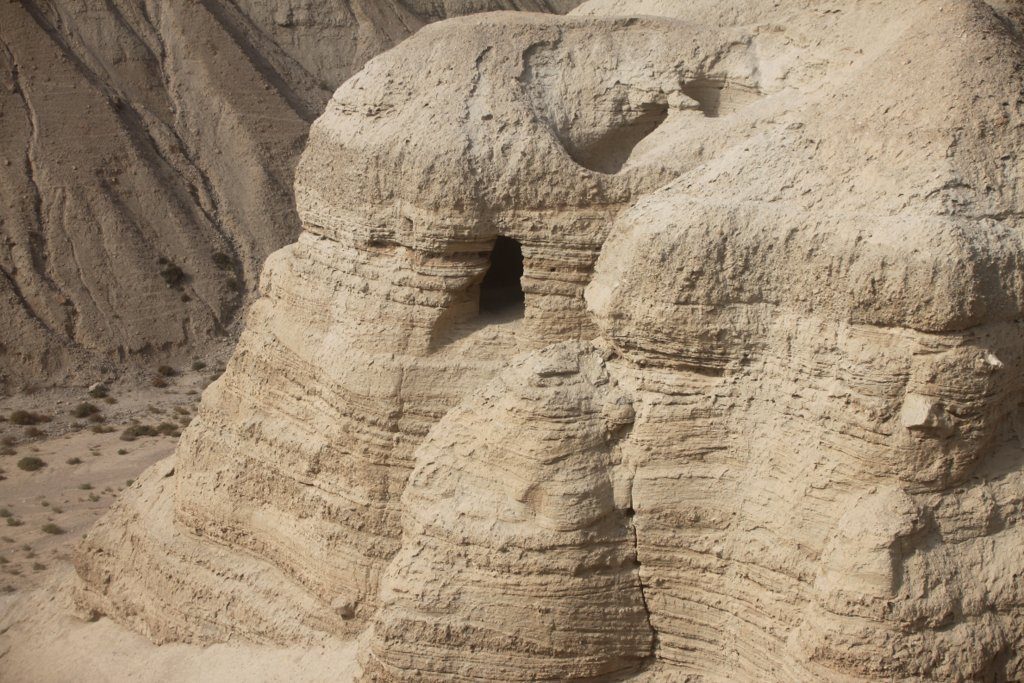
Set 1 Enoch aside and a stranger book is left standing on its own. The Book of Jubilees retells Genesis and the first half of Exodus, but it reorganizes the whole story onto a rigid clock: 50 jubilees, 2,450 years, every event dated to its week of years. It runs on a 364-day solar calendar it openly defends, and it uses that calendar to condemn everyone who watches the moon. It names a demon, Mastema, who bargains with God after the Flood to keep one-tenth of the evil spirits so the testing of humanity never stops. And it claims all of this was dictated to Moses on Sinai by an angel, a second revelation standing beside the Torah. Mainstream Judaism kept almost none of it. This is the Jubilees-specific file: what this book argued, why it lost, and how it survived complete anyway, in fifteen Hebrew fragments from the Qumran caves and one Ethiopian canon that never let it go.
There is a book that copies out the opening of the Bible and then quietly rebuilds it. It keeps the names, Adam and Enoch and Noah and Abraham, and it keeps the shape of Genesis, but it runs the whole thing on a different clock, defends a calendar the rest of Judaism rejected, and introduces a named adversary who does not appear in Genesis at all. That book is Jubilees, and it survives complete in exactly one place: the Bible of the Ethiopian Orthodox Church, which never stopped counting it as scripture. This dossier is about what makes Jubilees Jubilees, the material that belongs to this book and no other.
One thing this file will not do is re-tell the Watcher story. The fallen angels who descend, take human wives, father the giant Nephilim, and leave demonic spirits behind when their offspring die: that narrative is 1 Enoch's, told in full on this wing's flagship dossier, The Book of Enoch and the Watchers, and Jubilees inherits it rather than inventing it. What this article keeps is only what Jubilees adds to the inheritance, and what it builds that Enoch never had: a calendar with a grievance, a demon with a name, and a chronology that turns all of Genesis into a countdown.
01A Rewritten Genesis, Reorganized By The Clock
Read Jubilees beside Genesis and the first surprise is structural. It covers the same ground, Genesis chapter 1 through Exodus chapter 12, from creation to the eve of the Exodus, but it reorganizes every event into a rigid chronological grid: each episode dated to a specific jubilee period, a specific week of years inside it, and a specific year inside that. The whole span from Creation to Israel's entry into Canaan is measured out as 50 jubilees, which is 2,450 years. That grid is not decoration. It is the book's organizing argument and the source of its name: history counted out as a series of jubilees, ticking toward the land.
The retelling adds material Genesis never states. Jubilees opens creation with a detailed angelic taxonomy and has the angels made on the very first day, ranks of them created before anything else. It carries an expanded Watcher narrative across its chapters 4 through 10, running parallel to 1 Enoch 6 through 16. It introduces Mastema, whose name comes from a Hebrew word for hostility, as the leader of the evil spirits, a figure who will test Abraham and stand against Moses. And it folds in page after page of legal material: purity rules, festival dates, and bans on intermarriage. This is not a copy of Genesis. It is Genesis rewritten to carry a priesthood's worth of law and a cosmology the original never spelled out.
02The Calendar That Starts A Fight
At the center of Jubilees is a calendar, and it is the thing the book cares about most. Jubilees runs on a 364-day solar year, divided into four seasons of exactly 91 days each. Those 91 days break down into three months of 30 days plus one intercalary day: twelve 30-day months and four intercalary days across the year, and the sum is 364. The number is chosen, not observed, and it buys one specific thing. 364 divides evenly by 7. Every date lands on the same weekday every year, forever, which means a festival can never drift onto the Sabbath and force one holy day to trample another. In Jubilees' logic, a calendar that lets a feast collide with the Sabbath is not a scheduling error. It is a desecration waiting to happen.
So Jubilees goes on the attack. It does not merely prefer its solar year; it condemns the people who track the moon. The text warns, in as many words, that some will study the moon and let it corrupt the sacred calendar, dragging the appointed times out of place from one year to the next. That is a direct shot at lunar reckoning, which is the system that in fact became normative Judaism. Jubilees is not describing a calendar. It is prosecuting a rival one, by name.
Jubilees did not fight alone. The same 364-day scheme turns up in 1 Enoch's Astronomical Book (chapters 72 through 82) and in Qumran sectarian texts like the Temple Scroll and 4QMMT, a shared calendrical tradition traced in detail from Enoch's own side on our Book of Enoch dossier. Here it is enough to say Jubilees was one loud voice in a movement, not a lone eccentric, and that the calendar it defended had allies among the very people who buried the scrolls.
It is tempting to read deep astronomy into all this, and here the honest tier drops. Yes, 364 equals 7 times 52, a mathematically clean year of exactly 52 weeks, and the jubilee cycle itself is 49 years, which is 7 times 7, symmetry all the way down. But our file is careful, and so is this article: no real astronomical period actually corresponds to 49 years, so the jubilee is elegant numerology, not a measured celestial cycle. And how the Jubilees calendar relates to older Near Eastern astronomy, the Babylonian Enuma Anu Enlil, the Egyptian civil year, remains genuinely underexplored in the scholarship. The math is beautiful. What the math proves about hidden astronomical knowledge is, at Tier 3, still an open guess.
03Mastema And The One-Tenth Bargain
The bones of the fallen-angel story, Watchers down from heaven, human wives, giant offspring, demonic spirits, belong to 1 Enoch and live on our Book of Enoch dossier; this file leaves them there and does not re-run them. What Jubilees does with that inheritance is its own, and it is genuinely strange.
Start with a twist Enoch does not share. In Jubilees, the Watchers do not fall on arrival. They are sent down first to teach humanity, and only afterward do they sin with human women and ruin the mission they came for. It is a partially sympathetic origin: angels who came to help and then fell, rather than rebels who came to corrupt. Our research file grades this reading of the descent at Tier 2, a documented feature of the Jubilees text as scholars read it, and one of the clearest places where Jubilees edits the story it borrowed.
Then comes the figure who makes Jubilees unmistakable. Mastema, the name built from a Hebrew word for hostility, leads the evil spirits. He is a Satan-shaped adversary who does the tempting the later tradition would hand to the devil: it is Mastema, in Jubilees, who tests Abraham, and Mastema who opposes Moses. That Mastema exists and plays these roles is Tier 1, stated plainly in the text itself.
The bargain is where Jubilees earns its reputation. When the Flood destroys the giants, their spirits do not die with them; they persist as demons, and they begin to afflict Noah's descendants. Noah prays for every last one of them to be bound and shut away. God agrees, and the demons are being rounded up, until Mastema steps in and negotiates. Let one-tenth remain under my command, he asks, so that the testing of humanity can continue, and God grants it. That is a full theodicy in a single scene: evil persists after the Flood not by accident but by a permitted quota, a tithe of demons left in the world on purpose. Nothing like it is in 1 Enoch. Our file grades the one-tenth bargain at Tier 2, distinctive to Jubilees.
This is not a dead-end curiosity. Jubilees' demonology, a named prince of evil spirits and a divinely licensed remnant of demons, fed forward into later Jewish and Christian pictures of Satan and the hierarchy of hell (Segal, 2004). A great deal of what later readers assume is biblical about the devil is closer to Jubilees than to Genesis, which never names such a figure at all. Tier 2, and a load-bearing one for the history of the idea of the devil.
04A Law That Claims Sinai
Jubilees does not present its rules as one author's opinion. It frames the entire book as a revelation given to Moses on Mount Sinai, dictated by the Angel of the Presence, which sets its law right beside the Torah and effectively claims the status of a second revelation. The festivals, the Sabbath code, the purity system: Jubilees says they were disclosed at Sinai with the same authority as the commandments everyone already accepted. That is an audacious move, and the book makes it without blinking.
The law itself is severe. Jubilees takes hard lines on Sabbath observance, on the exact dates of festivals, and on intermarriage with outsiders, and those positions line up strikingly with the rigorous practice that Josephus and Philo would later attribute to the Essenes. This is priestly, separatist law, drawn tight against the surrounding world, and it reads as if the boundary between Israel and everyone else were the most urgent thing a book could be about.
Whether that makes Jubilees an early document of Essene thought, or an independent tradition the Essenes later adopted, is genuinely unsettled in the scholarship (Kugel, 2012). The alignment is real; the direction of influence is not pinned down. This article keeps that exactly where the file keeps it, at Tier 2, and does not pretend the arrow points one way when the evidence does not.
05Written In A Crisis
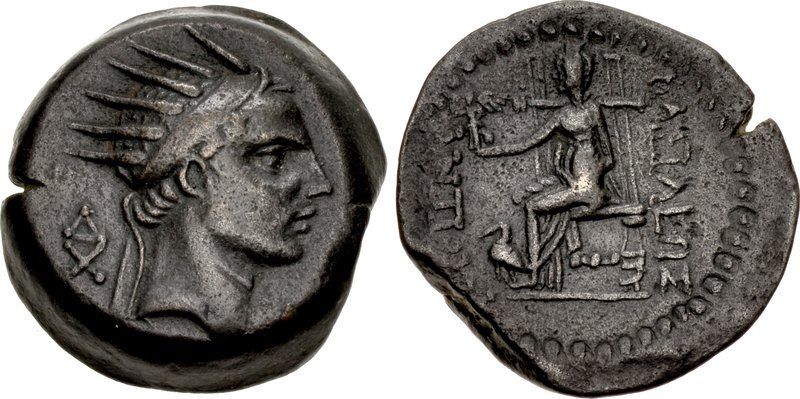
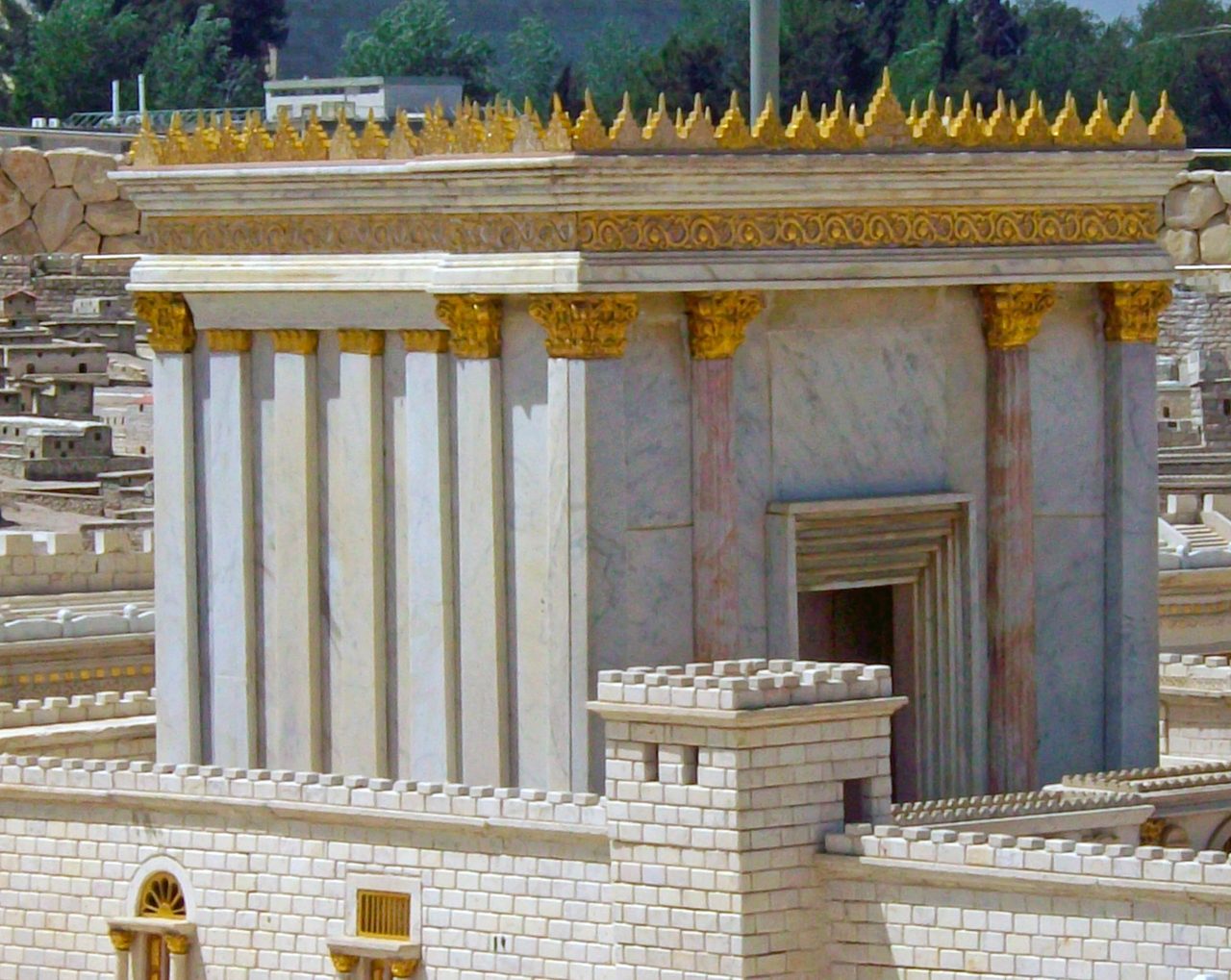
A book this preoccupied with calendars, purity, and separation from Gentiles did not come from nowhere. Scholarly consensus dates Jubilees to roughly 160 to 150 BCE, during or just after the Maccabean revolt, and reads its obsessions as a direct response to the crisis Antiochus IV Epiphanes forced on Judea when he desecrated the Jerusalem Temple in 167 BCE. When a foreign king outlaws your festivals and defiles your sanctuary, a book that fixes the festivals to an unbreakable heavenly calendar and walls the people off from outsiders reads less like antiquarianism and more like resistance in ink.
VanderKam's close analysis of the book's internal chronology narrows the window further, to between 161 and 152 BCE (VanderKam, 1977). The original language was Hebrew, a fact the Qumran fragments later put beyond dispute. Tier 2 on both counts, standard scholarship rather than speculation.
Its bond with the Qumran community is close but not fully defined: Jubilees may have been written by a proto-Essene circle, or simply embraced by the Qumran group as authoritative after the fact. Either way, the people of the Dead Sea Scrolls treated it as something close to scripture. Tier 2, with the exact relationship left honestly open.
Push the reading one step further and it turns speculative, so mark the tier change. Some scholars see Jubilees not merely reacting to Antiochus but constructing an entire counter-history to Hellenism: a worldview in which Jewish law is primordial and its antiquity absolute, so that any drift toward Greek culture becomes a cosmic betrayal rather than a mere lapse. It is a compelling reading of the book's ambition. It is also interpretation stacked on interpretation, and our file grades it Tier 3.
06How A Losing Book Survived
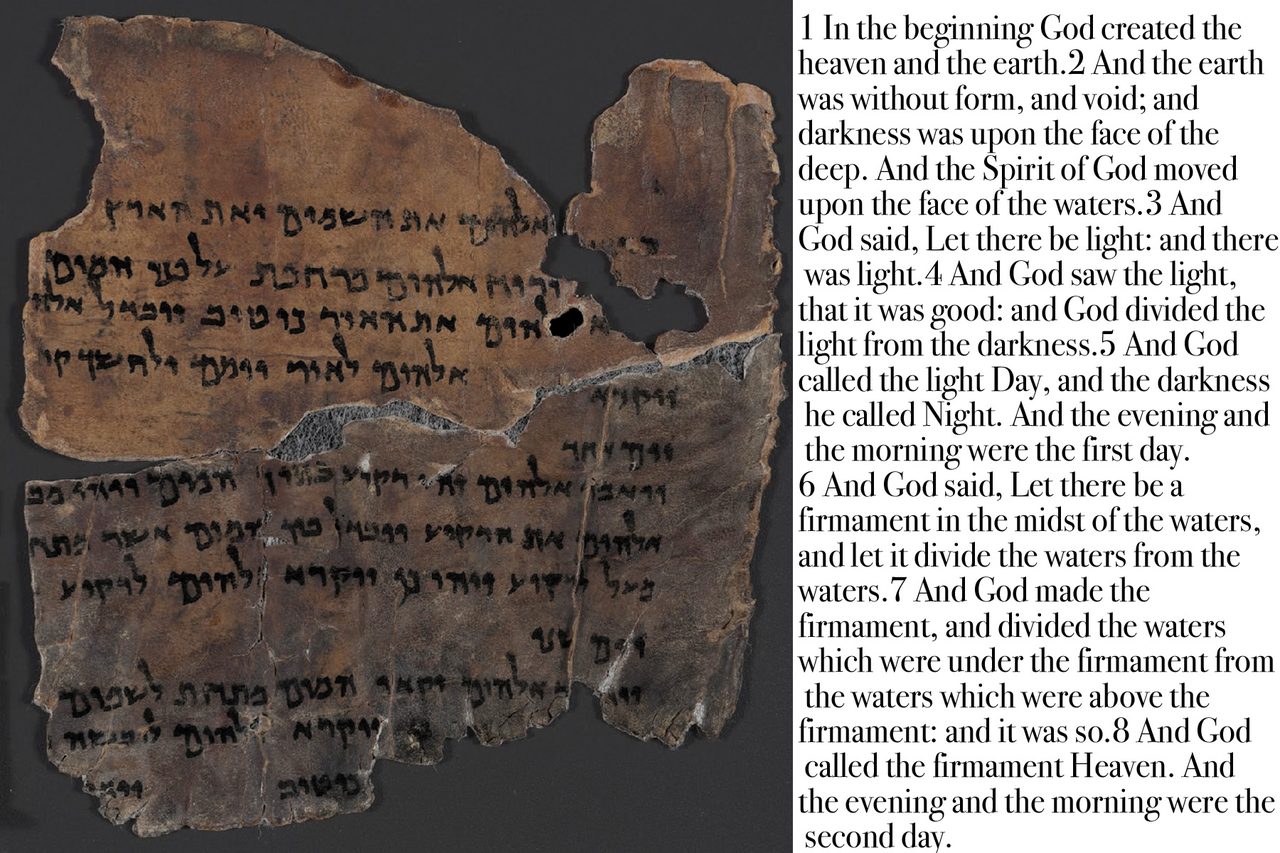
Here is the fact that should stop anyone who thinks Jubilees was fringe. At Qumran, archaeologists recovered 15 fragmentary Hebrew manuscripts of Jubilees, spread across five separate caves (1, 2, 3, 4, and 11), copied between roughly 100 BCE and 50 CE. That makes Jubilees one of the most heavily attested non-biblical books in the entire Dead Sea Scrolls library, outnumbered essentially only by 1 Enoch. A community copied this book 15 times. They were not humoring a curiosity. They were living by it.
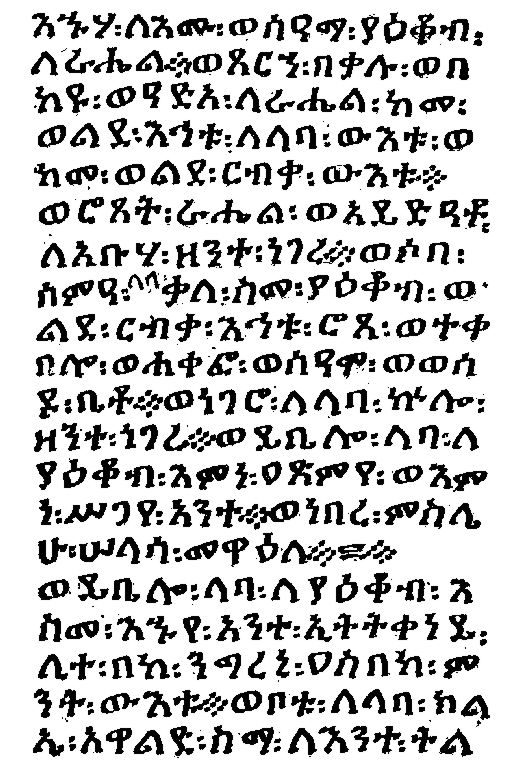
And yet the only complete Jubilees on Earth is in Ge'ez, classical Ethiopic. The Ethiopian Orthodox Church preserved it whole, under the title Kufale, inside its own biblical canon, where it has been counted as scripture without interruption; about 25 Ge'ez manuscripts are known (VanderKam, 1989). While the rest of the Jewish and Christian world let Jubilees fall out of the canon and mostly out of memory, one African church kept reading it as the Bible, and that is the only reason we can read it at all.
Between those two poles sit the scraps: fragmentary Latin and Syriac versions, preserved through quotations in the church fathers, proof that Jubilees once circulated widely across late antiquity before it thinned to almost nothing. And the Qumran Hebrew fragments do one more crucial job. Where they overlap the Ethiopic, they confirm that the Ge'ez translation is essentially faithful. The book the Ethiopian Church preserved is, in its bones, the book the Qumran scribes copied two thousand years ago.
Jubilees is not the only Second Temple book that survived only by slipping out of the mainstream. Its nearest parallel case is 2 Enoch, which comes down to us complete only in Old Church Slavonic, told in our Enoch's Sequels dossier. Both are pseudepigraphic works that extend the Enochic and Genesis material, and both owe their entire survival to a single non-mainstream manuscript tradition on the edge of the Christian world. Lose the argument at the center, survive at the margin: with these books it is almost a genre.
| Witness | Language | What Survives | Tier |
|---|---|---|---|
| Ethiopian Orthodox canon | Ge'ez (classical Ethiopic) | The only complete text; about 25 manuscripts; canonical scripture as Kufale, read without interruption | 1 |
| Qumran caves 1, 2, 3, 4, and 11 | Hebrew (the original language) | 15 fragmentary manuscripts, copied c. 100 BCE to 50 CE; among the most-copied non-biblical books at Qumran, second only to 1 Enoch | 1 |
| Patristic citations | Latin and Syriac | Fragmentary versions, evidence of wide circulation across late antiquity before the text nearly vanished | 1 |
| Cross-check | Hebrew against Ge'ez | Where the two overlap, the Qumran fragments confirm the Ethiopic translation is essentially accurate | 1 |
Fast Facts
- The Retelling
- Jubilees rewrites Genesis 1 through Exodus 12, reorganized onto a strict chronological grid of 50 jubilees, 2,450 years, from Creation to Israel's entry into Canaan. The jubilee count is the source of the book's name.
- The Calendar
- A 364-day solar year: four seasons of 91 days, twelve months of 30 days plus four intercalary days. Because 364 divides by 7, every date keeps the same weekday every year, so a festival can never fall on the Sabbath.
- The Lunar Verdict
- Jubilees openly condemns those who track the moon, warning that the moon will corrupt the appointed times, a direct polemic against the lunar reckoning that became normative Judaism.
- Mastema
- A named leader of the evil spirits whose name means hostility. He tests Abraham, opposes Moses, and after the Flood negotiates to keep one-tenth of the demons so the testing of humanity never ends, a theodicy unique to Jubilees.
- The Second Sinai
- Jubilees frames itself as revealed to Moses on Sinai by the Angel of the Presence, claiming the authority of a second revelation beside the Torah, with rigorous Sabbath, festival, and intermarriage law later associated with the Essenes.
- The Crisis Date
- Scholarly consensus places composition around 160 to 150 BCE, during or after the Maccabean revolt, responding to Antiochus IV Epiphanes's desecration of the Temple in 167 BCE. The original language was Hebrew.
- The Survival
- Complete only in Ge'ez inside the Ethiopian Orthodox canon (about 25 manuscripts), plus 15 fragmentary Hebrew manuscripts across five Qumran caves and fragmentary Latin and Syriac. The Qumran Hebrew confirms the Ethiopic is faithful.
What The Evidence Actually Holds
What is documented is documented, and it is a lot. Jubilees really does retell Genesis 1 through Exodus 12 on a jubilee grid of 50 jubilees and 2,450 years. It really does run on a 364-day solar calendar, four seasons of 91 days, twelve 30-day months plus four intercalary days, engineered so festivals never collide with the Sabbath, and it really does condemn the followers of the moon in its own words. It survives complete in Ge'ez in the Ethiopian canon in about 25 manuscripts, and in 15 fragmentary Hebrew manuscripts across five Qumran caves, with fragmentary Latin and Syriac besides, and the Qumran Hebrew confirms the Ethiopic is essentially accurate. None of that is in doubt.
The interpretive frame around those facts holds firmly at Tier 2. Composition around 160 to 150 BCE, in the shadow of the Maccabean revolt and Antiochus IV's desecration of the Temple, with a Hebrew original the Qumran fragments confirm. The Watchers sent down first to teach and only later falling, Jubilees' own softening of the descent. Mastema and the one-tenth bargain, a demonology unique to Jubilees that fed later conceptions of Satan (Segal, 2004). And the book's claim to be a second Sinai revelation, carrying strict, Essene-aligned law whose exact relationship to the Essenes stays debated (Kugel, 2012). Solid, sourced, and stated as scholarship, not as certainty.
Then the reach exceeds the grip, and the file says so. The elegant arithmetic, 364 as 7 times 52, the jubilee as 7 times 7, is real, but no actual astronomical period matches the 49-year jubilee, so the numerology is beautiful without being proven celestial knowledge, and the Jubilees calendar's links to older Near Eastern astronomy remain underexplored. Reading the whole book as a total counter-history to Hellenism, its law cast as primordial and any drift toward Greek culture as cosmic betrayal, is a powerful interpretation and no more than that. Tier 3, all of it, and marked as such.
And two claims fail outright, on the research document's own authority. First, the framing device: Jubilees was not literally dictated to Moses by an angel on Sinai. That is a pseudepigraphic convention, a standard Second Temple method of lending a new book old authority, and the file treats it as a literary device, not a historical event. Second, the modern upgrade of that same device: Jubilees is not the suppressed original or true version of Genesis that rabbinic authorities buried. It is a creative, agenda-driven retelling composed centuries after Genesis, and the claim that it preserves a purer or hidden Bible confuses the book's own self-presentation with history. Our research file rejects both readings explicitly. No on both.
So line it up. A community at Qumran copied this book at least 15 times, more than almost anything but 1 Enoch, to defend a solar calendar that never became Judaism's and a Genesis that never became the Bible's. On both counts, Jubilees lost. Its calendar lost to the moon. Its Genesis lost to Genesis. And then it did not vanish. It waited, complete, in Ge'ez, in the one canon on Earth that never stopped reading it, for two thousand years. So here is the question this dossier leaves open. When a religious tradition loses an argument this thoroughly, does the losing text simply disappear, or does it go quiet at the margin, the way this one did in Ethiopia, and wait for the argument to matter again?
Sources & further reading
Everything above is drawn from our research library on Theories of Anything, and every claim traces to the files below. The primary file is A_2_11, the Book of Jubilees, which carries the Genesis-to-Exodus retelling and the jubilee chronology, the 364-day solar calendar and its condemnation of lunar reckoning, the Mastema demonology and the one-tenth bargain, the second-Sinai legal claim, the Maccabean-crisis dating, the manuscript record across Ge'ez, Hebrew, Latin, and Syriac, and the two Tier 4 rejections this article ends on. The shared Watcher narrative that Jubilees inherits is handled on the Book of Enoch backing file, A_2_03, and the wider Qumran manuscript context sits in the Dead Sea Scrolls file, A_2_04. Open the full files to check the sourcing and go further.
Image credits
- A Qumran cave above the Dead Sea photograph by Peter van der Sluijs, via Wikimedia Commons. GFDL / CC BY-SA 3.0 Source.
- Dead Sea Scroll 4Q7, a Qumran fragment of Genesis chapter 1 via Wikimedia Commons. CC0 1.0 Source.
- 15th-century Ge'ez manuscript page of Genesis, British Library Oriental MS. 480 via Wikimedia Commons. Public domain Source.
- The Second Temple in the Holyland Model of Jerusalem, Israel Museum photograph by Daniel Case, via Wikimedia Commons. GFDL / CC BY-SA 3.0 Source.
- Bronze coin of Antiochus IV Epiphanes Classical Numismatic Group, via Wikimedia Commons. GFDL / CC BY-SA 2.5 Source.
- Card crop of A Qumran cave above the Dead Sea photograph by Peter van der Sluijs, via Wikimedia Commons. GFDL / CC BY-SA 3.0 Source.


,_15th_century_(The_S.S._Teacher%27s_Edition-The_Holy_Bible_-_Plate_XII,_1).jpg)

