Dynastic Serpent Lineage
Across Asia, Africa, and Europe, ruling families told the same strange story about themselves: we are not like you, because our ancestor was a serpent. Not a serpent on a banner. A serpent in the family tree. Thirteen traditions make the claim as literal genealogy: Kerala families who still tend the groves of their naga ancestors today, Chinese emperors whose dragon descent was enforced with the death penalty, a Chinese diplomat who watched the Khmer king climb a golden tower every night to meet a nine-headed serpent, a Japanese imperial chronicle that runs the emperor's bloodline straight through the Dragon King's daughter, Alexander's mother and her serpent visitor, a Frankish sea-beast with five horns, and an entire modern nation that calls itself children of the dragon. This is the dossier on the claim itself: where it is documented, where it is legend, and where it tips into fantasy. The question underneath never quite goes away: why, across so much of the Old World, the same animal?
Every dynasty needs a story about why it gets to rule. Most reach for gods, conquest, or heaven's mandate. But scattered across the ancient world, many with no documented connection between them, a specific and much stranger story keeps appearing: the claim that the royal family is literally, biologically descended from a serpent or a dragon. Not honored by one. Not symbolized by one. Descended from one. Our research file catalogs thirteen traditions that made this exact claim, spanning Asia, Africa, and Europe, and in at least one place the claim is not ancient history at all. It is being maintained, in family compounds, right now.
01The Claim, Stated Precisely
First, the boundary, because this file is strict about it. What counts is a ruling family claiming one or more of the following: a founder ancestor who was literally a serpent, dragon, or naga being; a founding marriage uniting a human with such a being; the ruling line possessing serpent blood or essence that distinguishes royalty from commoners; or the dynasty's legitimacy deriving from that serpent or dragon heritage. What does not count: generic dragon symbolism, artistic decoration without a genealogical claim, and modern New Age reinterpretation. The file works exclusively from primary sources recording biological or genealogical claims. Everything below passed that filter.
02Kerala: The Groves Are Still Tended
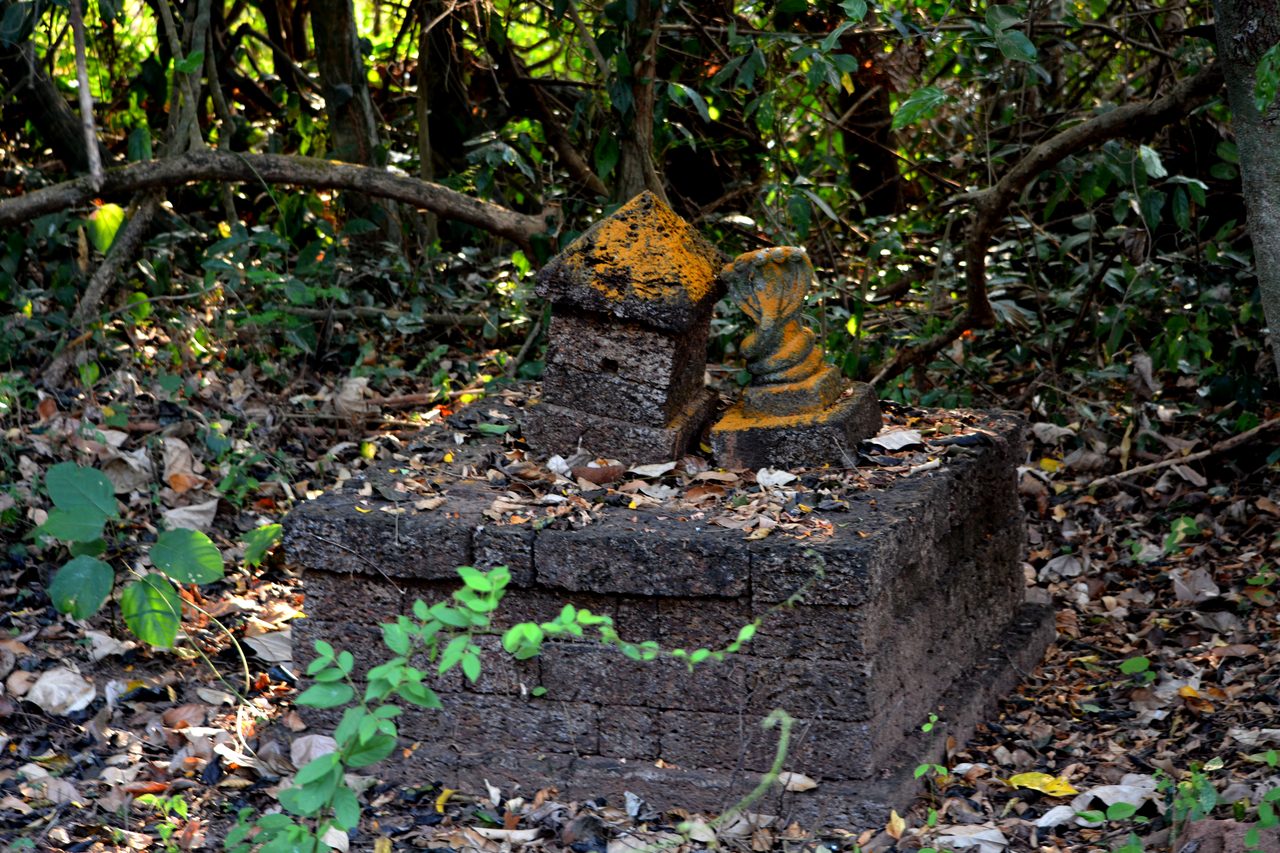
Start with the case you can still walk into. The Nair, the warrior-aristocratic community of Kerala in southern India, maintain active naga ancestry claims through living ritual. Inside family compounds stand sarpa kavu, serpent groves: sacred stands of living trees sheltering stone naga images called nagakal, maintained for centuries by the same families. The grove is not a memorial. It is understood as the dwelling place of the family's naga ancestors.
The ritual calendar around it is public and observable. At Naga Panchami, held on the fifth day of the bright half of Shravan, in July or August, milk offerings are poured over cobras and naga images, and live cobras are sometimes brought into households and worshipped. And in the Sarpam Thullal ritual dance, women enter trance states and channel naga spirits, exhibiting cobra-like movements and hood-like postures, a rite performed to cure infertility, illness, or misfortune attributed to angered nagas.
The file flags this as a key finding, and it is the reason Kerala leads this dossier: the Nair tradition is one of the few cases anywhere on Earth where serpent ancestry claims are maintained through living ritual in the 21st century. This is not historical reconstruction. It is observable practice.
03China: Descent Enforced By Law
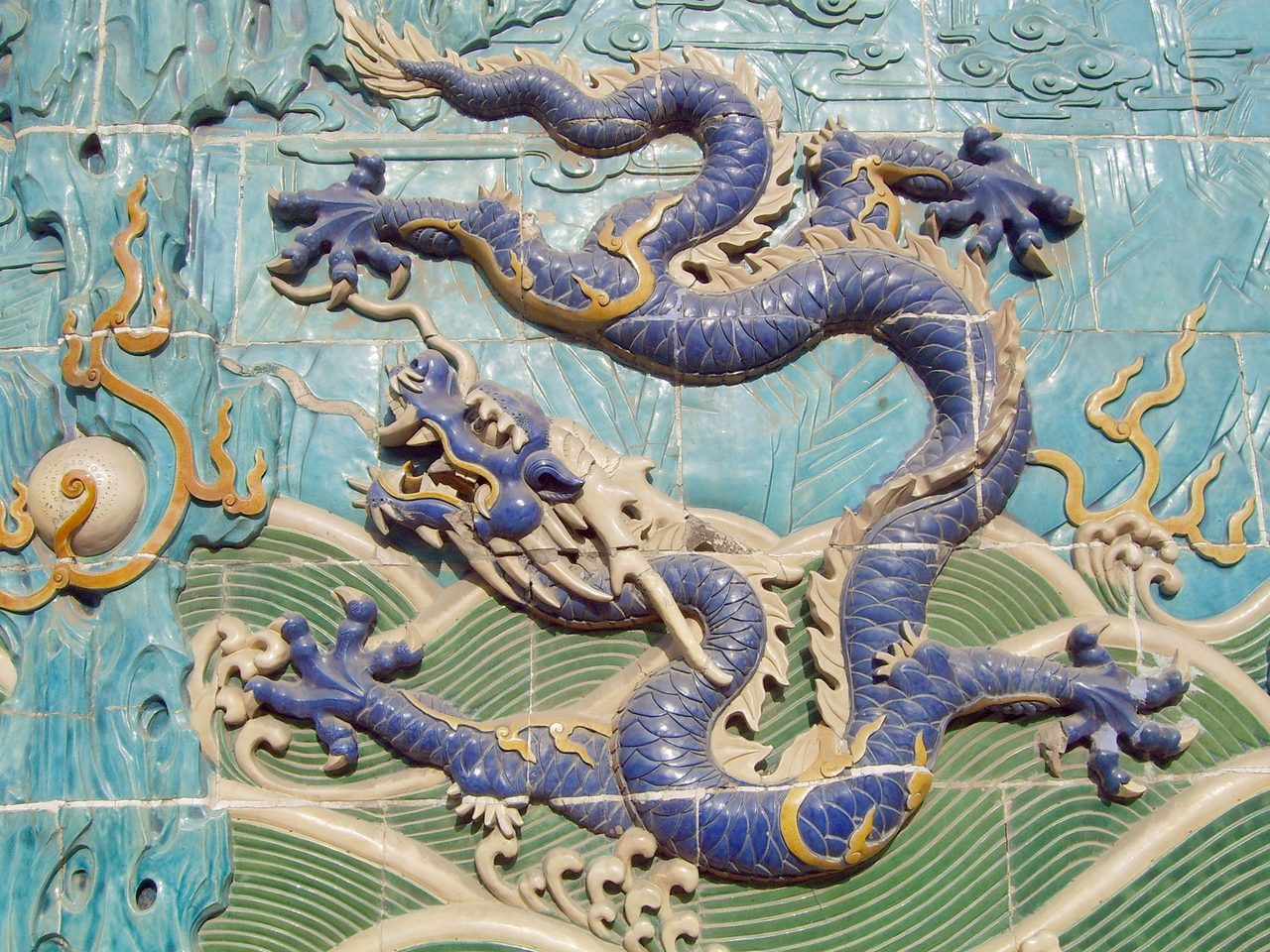
In China the claim climbed all the way into the legal code. The emperor held the title Zhenlong Tianzi, the True Dragon Son of Heaven, and the file is explicit about how it was understood: as literal descent, not as symbolism. And the bloodline claim came with enforcement.
Here is the detail that separates China from every softer case. Only the emperor could wear the five-clawed dragon on ceremonial robes. Princes wore four-clawed dragons, commoners three claws or fewer, and usurping the five-clawed dragon was punishable by death, enforced throughout the Ming dynasty from 1368 to 1644 and the Qing from 1644 to 1912. Think about what that means: an entire empire's sumptuary law was organized around exactly how much dragon a person was entitled to claim. Genealogy from a mythical being, graded by claw count, defended by the executioner.
The architecture said the same thing. Nine-dragon screens, the jiulongbi, protected the principal entrances of palaces, nine being the most yang and most powerful number in Chinese numerology, the number of the dragon. And the lineage claim ran deep into the court's own historiography: Sima Qian's Shiji, the Records of the Grand Historian, written around 94 BCE, records the Yellow Emperor, Huangdi, traditionally reigning 2697 to 2597 BCE and described in some traditions as having a dragon's face or body, ascending to heaven on a dragon. The Shiji is a court history, not a book of myths, and it treats the account as historical narrative.
04Southeast Asia: A Region Of Naga Thrones
Across mainland Southeast Asia, naga ancestry is not one dynasty's eccentricity. It is a regional-scale pattern shared by Khmer, Thai, Lao, Burmese, and Vietnamese traditions. In Thailand, naga balustrades flank virtually every temple stairway and naga associations run through royal titles and regalia. In Laos, Phaya Nak protects Vientiane and the Mekong, and naga imagery is ubiquitous down to the national Beer Lao brand. In Burma, Shan state dynasties claimed naga ancestry, the Pyu people incorporated naga imagery into city foundations from the 2nd century BCE to the 9th century CE, and Mandalay tradition required naga approval for the placement of the capital. The transmission line is well documented: Indian naga traditions diffused into Southeast Asia on Hindu cultural influence, Pallava to Khmer to Thai to Lao.
The Indian end of that line is the Pallava dynasty, which ruled a major portion of South India from the 3rd to the 9th century CE, roughly 600 years. Their foundation legend: a Brahmin sage married a nagi, a naga princess, a female serpent being in human form, and their offspring became the Pallava royal line. The dynasty's name may itself derive from the Sanskrit for young shoot or sprout, a new lineage growing from old roots. The stone remembers the story: Mamallapuram carries extensive naga iconography in its rock-cut temples, with the great Descent of the Ganges relief featuring naga figures in protective positions, and the capital Kanchipuram carries more.
Downstream sits the Khmer Empire of Cambodia, and its founding story is the naga marriage in its fullest form. The Indian Brahmin Kaundinya, remembered in Cambodia as Preah Thong, married Soma, a naga princess, daughter of the naga king who ruled the flooded land, and the naga king drank the waters to create dry land for the couple to rule. The file notes what makes this more than a pretty legend: it is recorded independently in Chinese, Khmer, and Indian sources. Multiple independent attestation, which is the coin of the realm in this discipline.
Then comes the single best piece of evidence in this entire file, because it is not a legend at all. Zhou Daguan, a Chinese diplomat of the Yuan dynasty, lived at Angkor for roughly a year in 1296 and 1297 CE and wrote down what he saw in his Zhenla Fengtu Ji, the Customs of Cambodia. He reports that the Khmer king climbed a golden tower every night to consort with a naga spirit that appeared in the form of a woman; that if the naga failed to appear the king would die; that if the king failed to appear calamity would befall the kingdom; and that no one else was permitted to enter the tower during this time. The file frames it exactly right: this is not mythology. It is an eyewitness account by a foreign diplomat describing court ritual in a functioning state, with no evident motive to fabricate. A note on grading: the file's own final reliability summary places this account at Tier 1, its highest grade, and that is the tier it wears here. Eyewitness records of court ritual earn unusually high confidence, because whatever one believes about nine-headed serpents, the ritual itself was seen, performed, and believed.
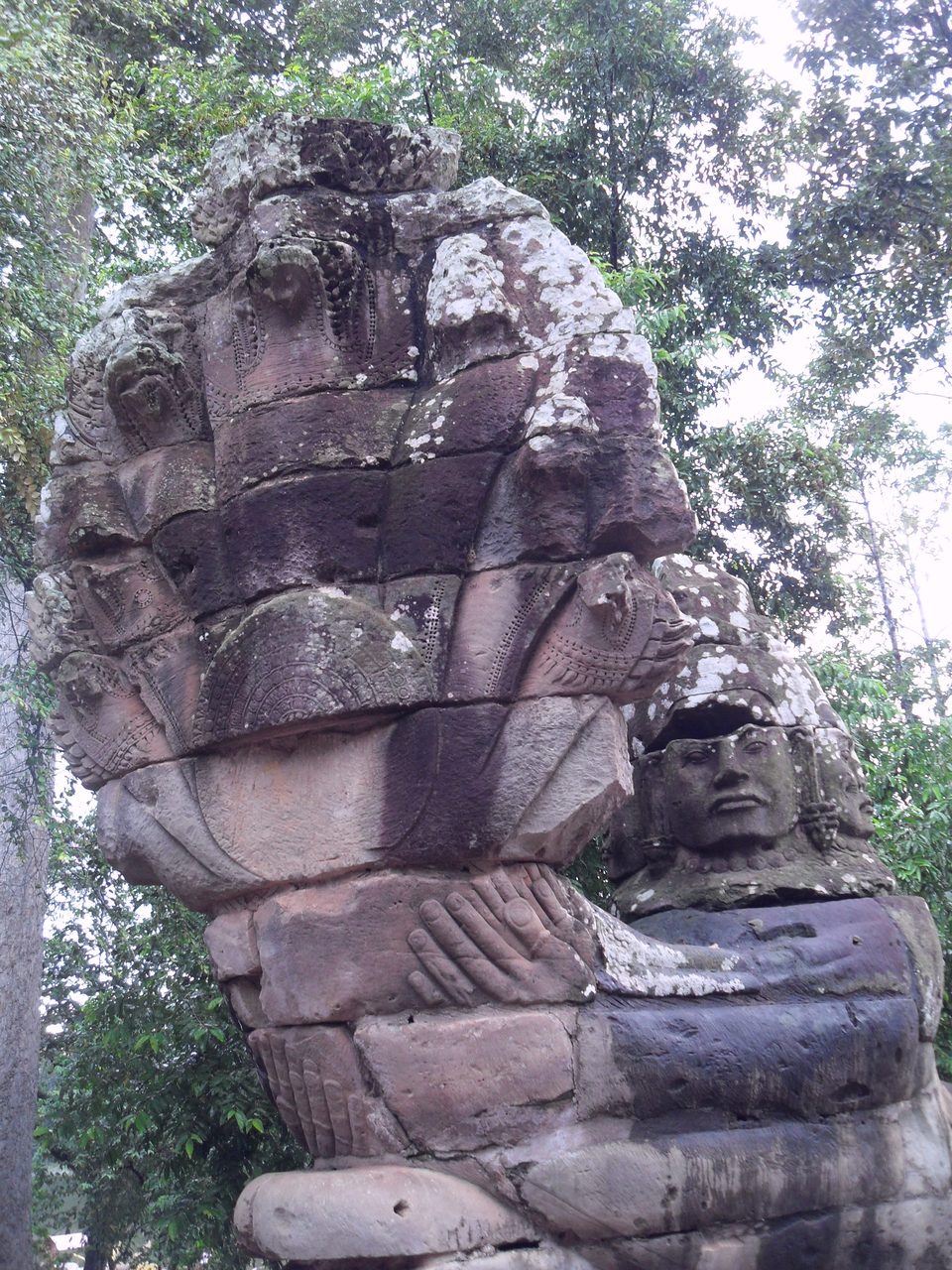
The monuments back the chronicle. Angkor Wat, built around 1113 to 1150 CE, carries massive naga balustrades along its processional causeways, described in the file as dynastic symbols, not decoration. Angkor Thom, around 1181 to 1218 CE, goes further: five gates, each flanked by 54 devas and 54 asuras pulling a naga, 108 figures per gate, and behind the Bayon temple's more than 200 massive stone faces, naga hoods emerge. The serpent is built into the architecture of the state at a scale you can still walk through.
05Japan: A Dragon In The Imperial Family Tree
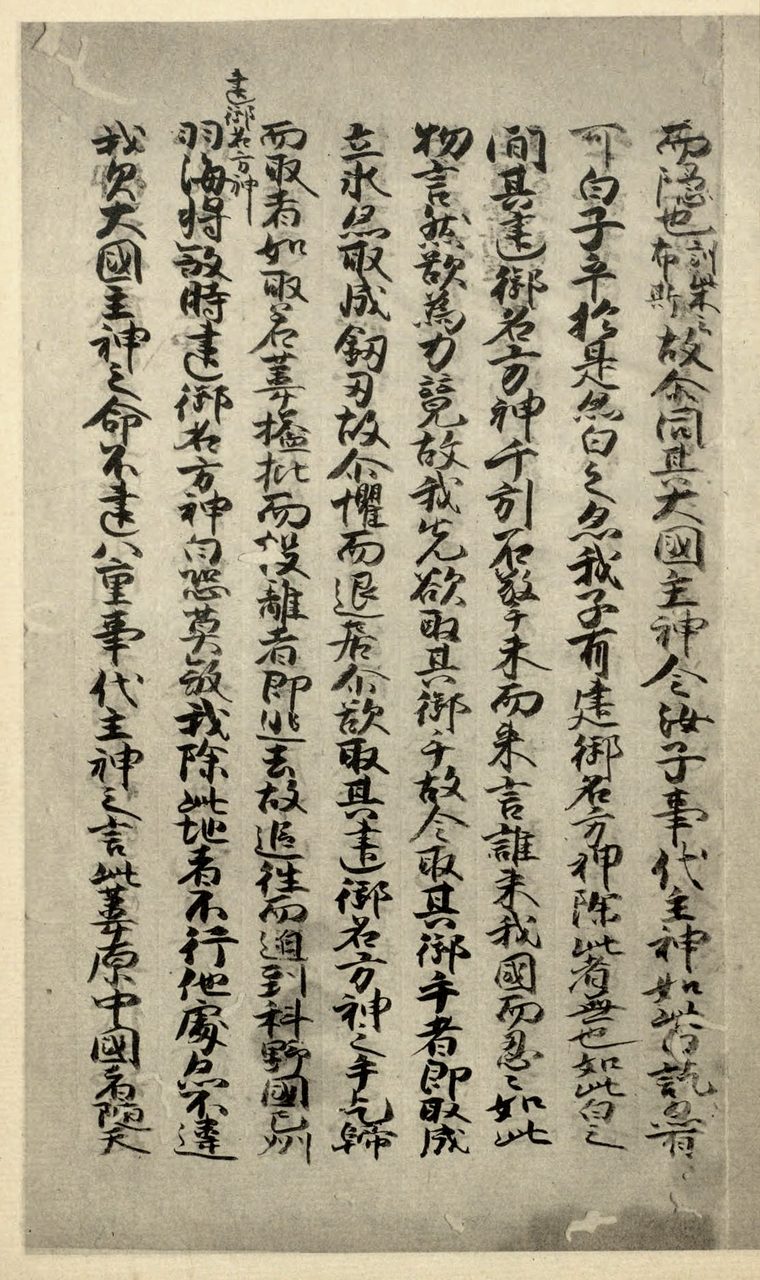
Japan's case is the most precisely documented genealogy on the list, because the chain is written out step by step in the Kojiki of 712 CE and the Nihon Shoki of 720 CE, Japan's two oldest surviving chronicles. The sun goddess Amaterasu's grandson Ninigi descends to Earth. Ninigi's son Hoori marries Otohime, also called Toyotama-hime, the daughter of Ryujin, the Dragon King of the Sea, who controlled the tides with magical jewels. Their son is Ugayafukiaezu, a human-dragon hybrid. And his son is Emperor Jimmu, traditionally reigning from 660 BCE, the first Emperor of Japan, from whom every subsequent emperor descends.
| Generation | Figure | Nature |
|---|---|---|
| 1 | Amaterasu, the Sun Goddess | Divine |
| 2 | Ninigi, her grandson, descends to Earth | Divine |
| 3 | Hoori, Ninigi's son | Semi-divine |
| 4 | Otohime (Toyotama-hime), the Dragon King's daughter | Dragon |
| 5 | Ugayafukiaezu, their child | Human-dragon hybrid |
| 6 | Emperor Jimmu, first Emperor, traditionally r. 660 BCE | Human, dual lineage |
| 7 | All subsequent Emperors | Inherit the dual lineage |
The chronicles even preserve the moment the two bloodlines separated. Otohime lived with Hoori in the undersea palace for three years, and at childbirth she reverted to her true form, a dragon or sea creature, the wani, and asked her husband not to watch. He watched. Shamed, she returned to the sea and sealed the passage between the worlds. The file's key finding here is worth stating plainly: the Japanese imperial genealogy explicitly passes through a non-human being, and every subsequent emperor's legitimacy derives, in part, from dragon ancestry.
06Vietnam: A Whole Nation Claims The Dragon
Vietnam took the same claim and did something no royal court did: it gave the bloodline to everyone. Lac Long Quan, the Dragon Lord of Lac, descended from dragons and tied to the sea, united with Au Co, a mountain fairy. Their union produced a pouch of one hundred eggs and one hundred children: fifty followed the Dragon Lord down to the sea and became the coastal Vietnamese, fifty followed the fairy into the mountains and became the highland peoples. The eldest son became King Hung, founder of the Hung dynasty of Van Lang, traditionally dated 2879 to 258 BCE, and the founding is still celebrated every year at the Hung Kings Festival on the tenth day of the third lunar month.
The file marks the significance as a key finding: Vietnam is one of the few cases where serpent and dragon lineage became a national identity marker rather than a royal monopoly. The saying is current, not archaic: Con Rong chau Tien, children of the Dragon, grandchildren of the Fairy. Every Vietnamese person claims dragon descent, not just the ruling family. Where China guarded the dragon bloodline with a death penalty, Vietnam handed it to the entire nation.
07The Mediterranean: Athens, Egypt, Alexander
The Greek world kept its serpent kings at the very root of its most famous city. Cecrops, the first legendary king of Athens, was born autochthonous, from the earth itself, and was depicted as half-man, half-serpent: human head and torso, serpent body below the waist. He is credited with founding the Acropolis, which bore his name as Cecropia, and with introducing marriage customs, burial of the dead, and writing. Notice the shape of that resume: a serpent-being who brings civilization. The file draws the comparison itself, to Oannes and the Apkallu rising from the water to teach the Sumerians, and to Quetzalcoatl in Mesoamerica. The serpent ancestor and the serpent civilizer keep turning out to be the same figure.
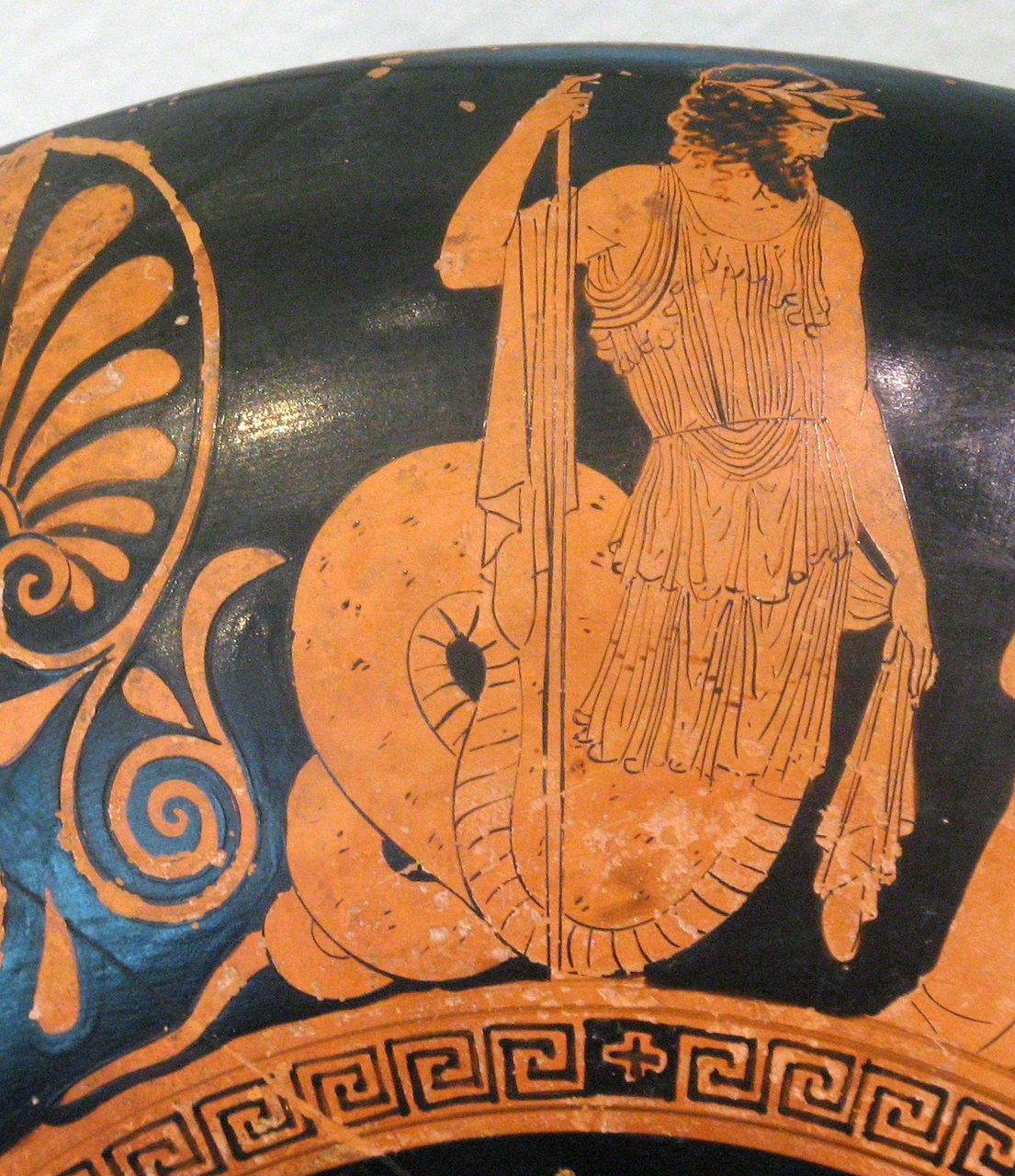
And here is what earns Athens a Tier 1 line in the file: the pictures agree with each other. Cecrops's half-serpent depiction is consistent across multiple vase paintings of the 5th and 4th centuries BCE, always the same form, human above and serpent below. That is not a one-off artistic choice. It is a stable artistic tradition confirming that the genealogical claim was standard, shared knowledge in classical Athens.
Athens doubled down with Erichthonius, another autochthonous, serpent-associated early king. Born from the earth, he was placed as an infant in a chest guarded by serpents. When the daughters of Cecrops opened the chest and saw a child who was part serpent, they went mad and threw themselves from the Acropolis. Erichthonius went on to establish the Panathenaia festival. Athens, the city that invented so much of what we call reason, traced its first two kings to the body of a serpent.
Egypt belongs on this list, and its file lives next door. Every pharaoh wore the Uraeus, the rearing cobra of the goddess Wadjet, as the mark of divine kingship, said to spit fire at the king's enemies; the Pyramid Texts of roughly 2400 to 2300 BCE, the oldest religious texts in the world, identify the pharaoh with serpent deities; and pharaohs including Hatshepsut and Amenhotep III recorded divine birth scenes on temple walls, sometimes involving Amun in his primordial serpent aspect Kematef. That entire story, the crown, the goddess, the whole long evolution of the royal cobra, has its own full dossier in this wing: Wadjet, the Cobra Goddess. Here it stands as one more throne in the pattern.
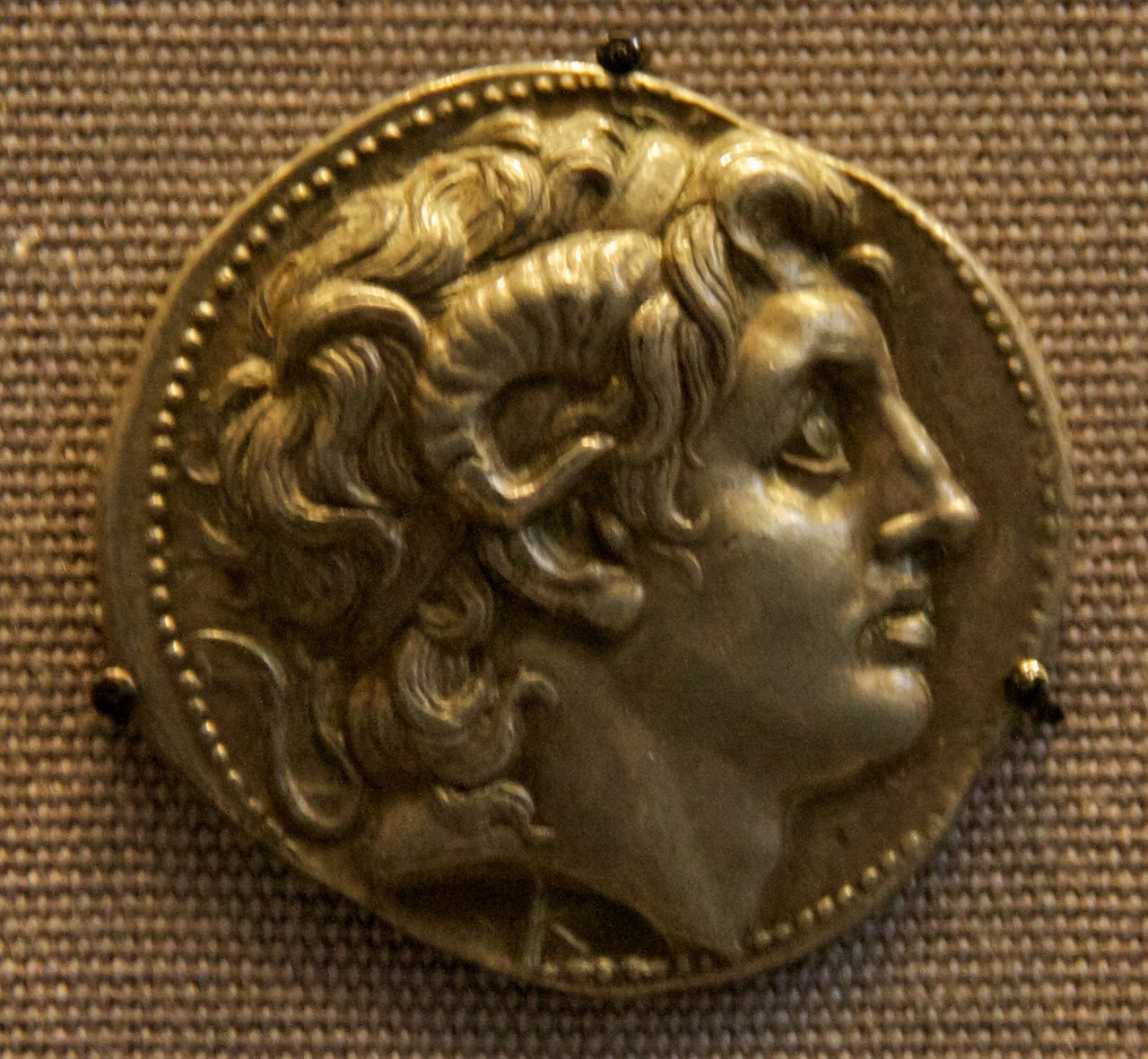
Then there is the most famous king in the ancient world. Per Plutarch's Life of Alexander, written around 100 CE, Olympias told her son Alexander that his true father was not Philip of Macedon but Zeus-Ammon, who had come to her as a great serpent. Philip himself reportedly saw a serpent sleeping beside Olympias on multiple occasions, and afterward, in Plutarch's telling, was less eager to lie with her. The background detail is historically attested: Olympias participated in Dionysian and Orphic mystery cults involving tame snakes, a documented practice among Macedonian royal women. And Alexander acted on the story. After conquering Egypt he traveled to the oracle of Zeus-Ammon at Siwa Oasis, which confirmed him as son of Ammon, and his coins thereafter carried his portrait with the ram's horns of Ammon. The file's key finding: the Alexander story follows the exact cross-cultural pattern, a human mother, a divine or non-human father in serpent form, and a royal child of dual nature.
08The Franks: The Long-Haired Kings
Medieval Europe has its own entry, and it is stranger than most people who invoke the Merovingians realize. Per the 7th-century chronicle of Fredegar, Merovech, the legendary founder of the Merovingian dynasty of the Franks, who lived around 411 to 457 CE, had two fathers. His mother, already pregnant by King Chlodio, was bathing in the sea when she was impregnated a second time by a bestea Neptuni Quinotauri similis, a beast of Neptune similar to a Quinotaur, a bull-like sea creature with five horns. The chronicle's claim is dual paternity: one father human, one aquatic and non-human, and the Merovingian royal line carried both bloods.
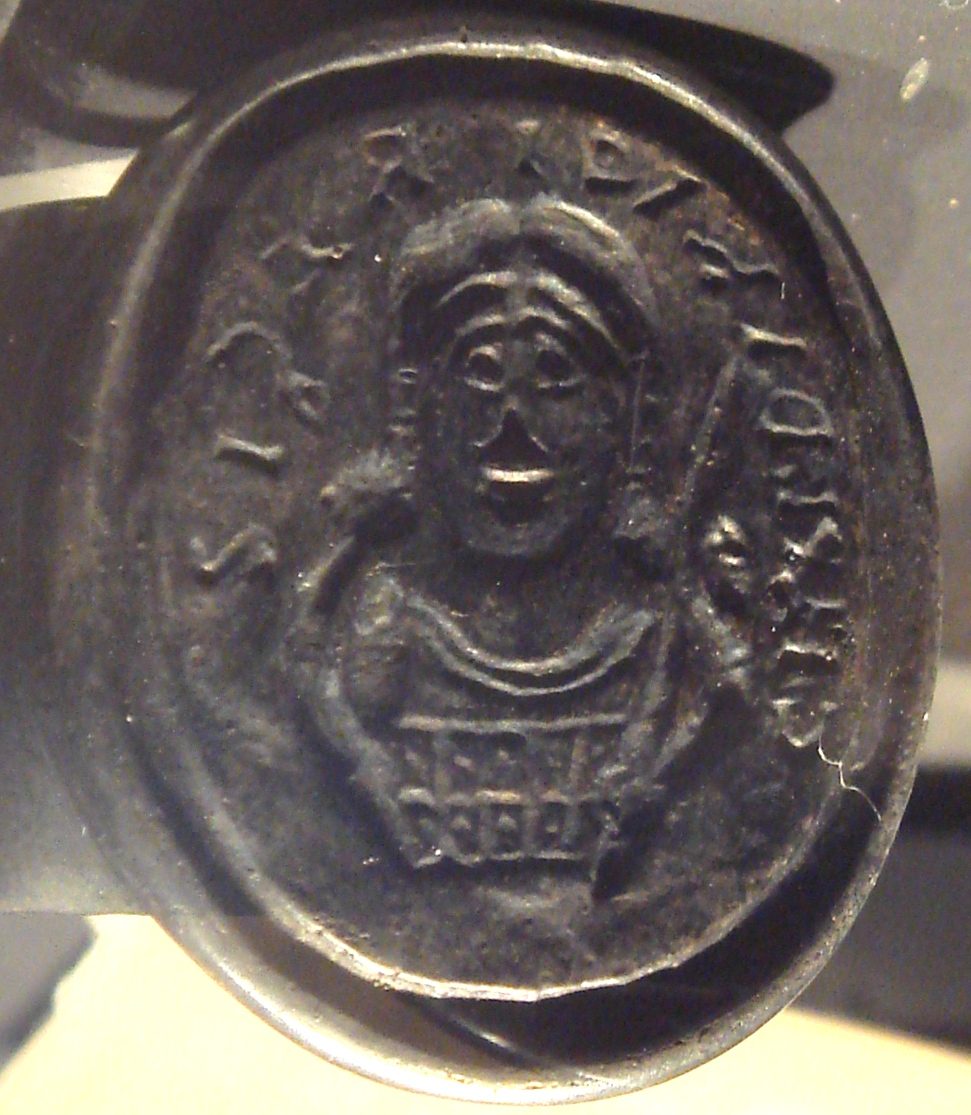
The dynasty's attributes read like the claim taken seriously. The Merovingians were the reges criniti, the long-haired kings, whose uncut hair carried their power, a motif the sources themselves compare to Samson. They were credited with healing by touch, the royal touch for scrofula that later passed to the Capetian kings. Their right to rule ran through blood, not anointing or election: an inherent, biological royal essence. And when the Carolingians finally deposed Childeric III in 751 CE, they did not merely dethrone him. They specifically cut his hair, and confined him to a monastery. You do not cut a king's hair unless you believe, or your subjects believe, that the power lives in the bloodline's body.
What was the Quinotaur? The file's interpretive layer, graded between credible and speculative, suggests it may preserve a garbled memory of pre-Frankish water-spirit traditions, and notes the parallel to Oannes and the Apkallu, civilizing beings emerging from the water. A five-horned sea bull is not a serpent, which is exactly why the file keeps it in the survey: the underlying claim, a non-human aquatic ancestor granting royal legitimacy, is the same claim wearing a different body.
09The Thirteen Thrones
Line them up. The file's own cross-cultural table catalogs thirteen traditions that made the literal claim, each with a named connection type: a founding marriage, direct descent, divine birth, dual paternity, or autochthonous serpent birth. The tier column below carries the grade each tradition's claim wears in our research file, as presented through this article.
| Tradition | Region And Era | The Founding Claim | Tier |
|---|---|---|---|
| Nair | Kerala, India, ongoing | Naga ancestors dwelling in family serpent groves, living ritual | 1 |
| Chinese Imperial | China, to 1912 CE | True Dragon Son of Heaven, literal descent codified in law | 1 |
| Egyptian Pharaonic | Egypt, Pyramid Texts c. 2400-2300 BCE onward | Divine serpent kingship, the Uraeus and divine birth scenes | 1 |
| Athenian | Greece, 5th-4th c. BCE sources | Cecrops, autochthonous half-serpent founder-king | 1 iconography, 2 narrative |
| Khmer | Cambodia, 1st-15th c. CE | Kaundinya weds the naga princess Soma; the king-naga ritual | 1 ritual, 2 legend |
| Pallava | South India, 3rd-9th c. CE | A Brahmin sage weds a naga princess; their line rules | 2 |
| Japanese Imperial | Japan, chronicles 712-720 CE | Imperial descent through the Dragon King's daughter | 2 |
| Alexander the Great | Macedon, 356-323 BCE | Zeus-Ammon as serpent father, per Plutarch | 2 |
| Vietnamese | Vietnam, traditional from 2879 BCE | The whole nation descends from the Dragon Lord Lac Long Quan | 2 |
| Merovingian | Francia, 5th-8th c. CE | Merovech's dual paternity by the sea-beast Quinotaur | 2 |
| Burmese and Shan | Burma, from 2nd c. BCE | Shan dynasties claim naga ancestry; naga-approved capitals | 1 regional pattern |
| Thai | Thailand | Naga in royal titles and regalia, temple balustrades everywhere | 1 regional pattern |
| Lao | Laos | Phaya Nak, protector of Vientiane and the Mekong | 1 regional pattern |
10Why Serpents? The Three Models
Now the harder question, and the file is honest that every answer to it lives on the speculative shelf. Why serpents, specifically, and not eagles or lions? The biological reading starts with Lynne Isbell's The Fruit, the Tree, and the Serpent (2009): humans carry an innate neurological response to snakes, and snakes are present in human environments on every continent except Antarctica. Claim descent from the most feared creature and you claim power over a universal fear, which is political legitimacy in its purest form. The symbolic reading stacks alongside it: a skin-shedding animal suggests immortality and eternal dynastic renewal, an animal that emerges from underground suggests chthonic power over earth, agriculture, and the dead, and unblinking eyes suggest all-seeing vigilance, which is to say governance. And the diffusionist reading is strong exactly where the record is strong, the well-documented spread of Indian naga traditions into Southeast Asia, and weak everywhere else: it cannot easily explain the Merovingian, Athenian, and Egyptian parallels.
The file's own boldest observation sounds like a conclusion, and it is important to say plainly that the file itself shelves it as speculation, so this article does too. The observation: the serpent is the only creature that simultaneously functions as ancestor, civilizer, divine being, and royal legitimizer across all major cultural zones. No other animal, not eagles, not lions, not wolves, not bears, shows the same breadth and specificity of dynastic ancestry claims, and no single theory adequately explains the convergence. That is a genuinely strange fact about the human record. It is also, on the current evidence, only a well-framed question.
The file then lays out the three interpretive models side by side, with each one's strengths and weaknesses stated in its own words.
| Model | The Idea | Strength | Weakness |
|---|---|---|---|
| Political Propaganda | Divine ancestry is a universal legitimacy strategy; the revered serpent conferred authority. The mainstream position among academic historians and anthropologists, per the file. | Explains motive and breadth without extraordinary claims | Does not explain why the specific serpent form recurs across unconnected cultures |
| Mythologized Contact | Something happened, encounters with an advanced or lost culture or anomalous phenomena, later mythologized into serpent genealogy. The file names Graham Hancock, in cautious versions, among proponents. | Explains the cross-cultural convergence on serpent form | Speculative; the something is undefined; risks unfalsifiability |
| Literal Hybrid Lineage | A non-human intelligent species interbred with or modified certain human lineages. The file names David Icke among proponents. | Takes ancient sources at face value | No physical or genetic evidence; requires an undiscovered species; rejected by mainstream science |
11What The Skeptics Say
The skeptical case deserves its full hearing, with one honesty note first: the file's own counter-arguments section is general framing rather than named, citable scholarship, so it carries less weight here than, say, the five-named-scholar rebuttal apparatus in our Wadjet file. The arguments themselves are still serious. Mythological beings across cultures may reflect universal cognitive patterns, archetypal projections of human fears, aspirations, and social structures, rather than encounters with real entities. Pattern-recognition bias and agency detection are well-documented tendencies of the human mind. Oral traditions transform over generations, so a metaphor can crystallize into literal belief. Entity-encounter experiences have conventional explanations, from sleep paralysis and hypnagogic states to psychoactive substances. There is no independently verified physical evidence, no skeletal remains, no artifacts, no DNA, confirming any of the beings described. And cross-cultural comparison always risks cherry-picking resemblances while ignoring the real differences between traditions.
Against that, keep the file's own ledger of what scholarship actually accepts, because it is a longer list than most skeptics expect. Accepted: that serpent and dragon ancestry claims are well documented across multiple cultures. That the claims served political functions of legitimation and divine right. That Indian naga traditions diffused into Southeast Asia through Hinduism and Buddhism. That Chinese dragon symbolism was codified into enforceable law. That Athenian serpent-king traditions are attested in art and literature. And that Zhou Daguan recorded the Khmer king-naga ritual as an eyewitness. The existence and seriousness of the pattern is not in dispute. Only its explanation is.
The file's own scorecard of the open questions: whether the cross-cultural convergence requires a common source or is fully explained by independent invention; whether any historical kernel underlies the mythological claims; and whether the pattern reflects a deep human archetype or a memory of actual events. Debated, and honestly labeled as such.
Fast Facts
- The Pattern
- Thirteen traditions spanning Asia, Africa, and Europe claimed literal genealogical descent from serpent or dragon beings: a founder ancestor, a founding marriage, serpent blood in the royal line, or legitimacy through the heritage. Symbolic decoration is explicitly excluded from the count.
- The Living Case
- The Nair of Kerala still maintain sarpa kavu, serpent groves housing their naga ancestors, inside family compounds, with milk offerings at Naga Panchami and the Sarpam Thullal trance dance. Observable practice in the 21st century, not reconstruction.
- The Law
- China's emperor was the True Dragon Son of Heaven, understood as literal descent. Only he could wear the five-clawed dragon; usurping it was punishable by death through the Ming and Qing dynasties, 1368 to 1912.
- The Eyewitness
- Zhou Daguan, a Chinese diplomat at Angkor in 1296 to 1297 CE, recorded the Khmer king's nightly ritual union with a nine-headed naga spirit in a golden tower. An eyewitness account of court ritual in a functioning state, graded Tier 1 by our file's final summary.
- The Chronicle
- Japan's Kojiki and Nihon Shoki run the imperial genealogy step by step through Otohime, the Dragon King's daughter, to Emperor Jimmu. Every emperor's legitimacy derives, in part, from dragon ancestry.
- The Nation
- Vietnam made the claim national: one hundred children of the Dragon Lord Lac Long Quan and the fairy Au Co, celebrated every year at the Hung Kings Festival. Con Rong chau Tien, children of the Dragon.
- Ruled Out
- The literal reading, a non-human species interbreeding with royal lines, is graded fringe by the file itself: no physical evidence, no genetic evidence, an undiscovered species required, rejected by mainstream science.
- The Open Question
- Why did unconnected dynasties across three continents, many with no documented contact between them, reach for the same animal? No single theory adequately explains the convergence.
What The Evidence Actually Holds
The pattern itself is real and documented. The Nair naga-ancestor ritual complex, the serpent groves, Naga Panchami, and Sarpam Thullal, is living, observable practice in Kerala today. The Chinese imperial dragon-descent claim was codified into enforceable sumptuary law, five claws for the emperor alone, on pain of death, through the Ming and Qing. Zhou Daguan's eyewitness account of the Khmer king-naga ritual stands at Tier 1 per our file's own final reliability summary. Cecrops's half-serpent form is consistent across multiple vase paintings of the 5th and 4th centuries BCE, a stable artistic tradition, not a one-off. And the diffusion of Indian naga traditions into Southeast Asia, from the Pallava dynasty outward, is well documented, a regional pattern shared independently by Khmer, Thai, Lao, Burmese, and Vietnamese tradition. That these claims were made, maintained, enforced, and believed is on the record.
The individual foundation stories are credible as attested tradition and legendary as history. The Pallava naga marriage, backed by six centuries of rule and the naga iconography of Mamallapuram. The Khmer marriage of Kaundinya and Soma, independently attested in Chinese, Khmer, and Indian sources. The Japanese imperial chain through the Dragon King's daughter, written out in the Kojiki and Nihon Shoki. Alexander's serpent paternity per Plutarch, with the Siwa oracle visit and the horned coinage as the historical anchors. The Vietnamese descent from Lac Long Quan, alive in a national festival and a national saying. The Merovingian Quinotaur per Fredegar, with the long-haired kings and Childeric III's shearing as the claim taken seriously. And Erichthonius, the serpent child in the chest. Each is a real, sourced tradition. None is evidence that the ancestor existed.
Every explanation of why the serpent specifically recurs stays speculative, and the file grades its own boldest finding accordingly: that the serpent is the only creature functioning as ancestor, civilizer, divine being, and royal legitimizer across all major cultural zones. The fear-management reading built on Lynne Isbell's work, the renewal and chthonic symbolism, the mythologized-contact model, and the archetype-versus-memory debate all remain open. The convergence is a well-framed question, not a finding of fact.
Ruled out, explicitly. The claim that the lineages are literally true, that a non-human intelligent species interbred with or genetically modified royal families, a reading the file attributes to David Icke and certain alternative researchers, is graded fringe and unverifiable by the research file itself, and this article rules it out with it. There is no physical evidence, no genetic evidence of non-human DNA in any royal lineage, and the claim requires an undiscovered intelligent species that mainstream science rejects entirely. Thirteen thrones told the same story. That is a fact about human belief, not a fact about human biology.
So hold the whole map in one view. A family in Kerala pours milk in a grove where its serpent ancestors are said to dwell, this year, like every year. An empire on the other side of Asia once executed people for wearing one claw too many. A diplomat watched a king climb a golden tower to keep an appointment with a nine-headed serpent, and wrote it down like a man describing the weather. A chronicle in Japan, a festival in Vietnam, a vase in Athens, a sea-beast in a Frankish chronicle, a serpent beside a Macedonian queen's bed. The wider question of how the world's serpent gods rose and fell is mapped in The Serpent-God Pattern, and Egypt's own royal cobra holds court in Wadjet, the Cobra Goddess. This file's question is narrower and sharper. Kings could have claimed descent from anything: the sun, the lion, the eagle, the storm. Across three continents, again and again, far beyond the reach of any documented transmission line, they chose the serpent. What did every throne see in that one animal?
Sources & further reading
Everything above is drawn from our research library on Theories of Anything, and every claim traces back to the files below. The primary file is the dynastic serpent lineage dossier itself, B_3_01, which carries the definitional boundary, the thirteen-tradition comparison table, the named primary sources from Zhou Daguan's chronicle to Fredegar's, the three interpretive models, and the accepted-versus-debated ledger quoted throughout this article. The Egyptian royal cobra has its own full dossier at B_3_02; the cross-cultural serpent survey is C_1_01; the world-religions file carries the wider serpent traditions; the Apkallu file holds the water-civilizer parallel the Cecrops and Quinotaur material points to; and the Reptilian overview houses the modern fringe readings this article rules out. Open the full files to check the sourcing and go further.
Image credits
- Nine-Dragon Screen, Beihai Park, Beijing photograph by Shizhao, via Wikimedia Commons. CC BY-SA 3.0 Source.
- A sarpa kavu (serpent grove) with naga stones, Kerala, India photograph by Manoj Karingamadathil, via Wikimedia Commons. CC BY-SA 3.0 Source.
- A deva figure holding the seven heads of a naga, Angkor Thom, Cambodia photograph by BrightRaven, via Wikimedia Commons. CC BY 3.0 Source.
- Page from the Shinpukuji manuscript of the Kojiki, 1371-72 facsimile of Japan's 712 CE chronicle via Wikimedia Commons. Public domain Source.
- Kekrops depicted on a red-figure cup, Codrus Painter, 5th century BCE, Antikensammlung Berlin photograph by Mark Landon, via Wikimedia Commons. CC BY 4.0 Source.
- Posthumous silver tetradrachm of Alexander the Great with the ram's horns of Zeus-Ammon, circa 305-281 BCE, British Museum photograph by Mike Peel (www.mikepeel.net), via Wikimedia Commons. CC BY-SA 4.0 Source.
- Museum replica of the seal ring of Childeric I, from the Treasure of Childeric, Tournai photograph by PHGCOM, via Wikimedia Commons. Public domain Source.
- Card crop of Nine-Dragon Screen, Beihai Park, Beijing photograph by Shizhao, via Wikimedia Commons. CC BY-SA 3.0 Source.


.png)
.jpg)

