Wadjet, the Cobra Goddess
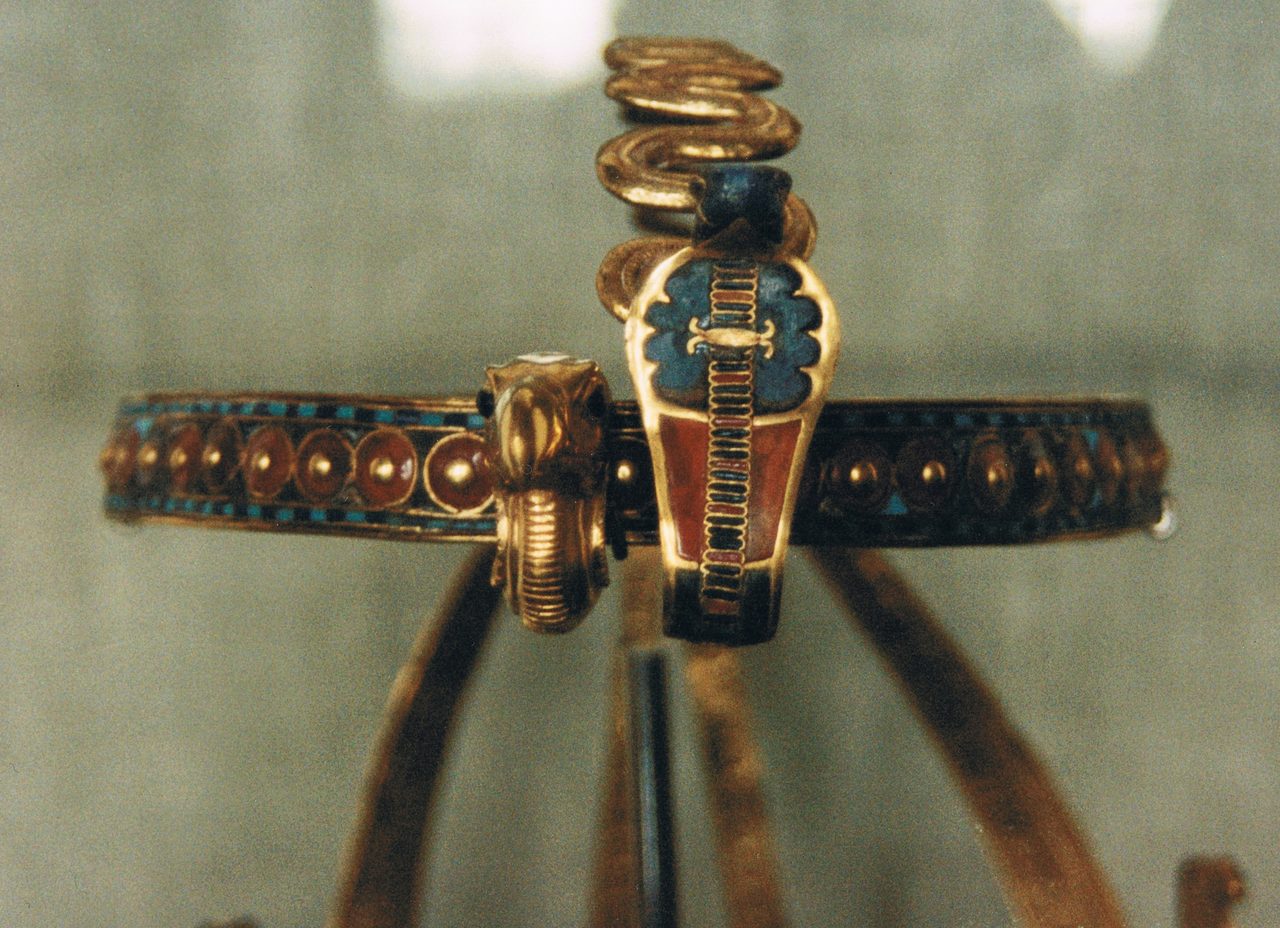
Look at the forehead of any pharaoh, on statues and temple walls across more than three thousand years of kings, and something is looking back: a rearing cobra, hood flared, ready to strike. She is not decoration. She is Wadjet, the green one of the Delta, a goddess older than the unified Egyptian state, written into the formal royal name of every king Egypt ever crowned. Around her, Egypt kept an entire pantheon of serpent gods, and the roster reads like a protection detail: Mehen shielding the sun god through the underworld every night, Meretseger guarding the tombs, Renenutet nursing the harvest, Nehebkau holding the door to eternity. Exactly one Egyptian serpent, Apophis, was consistently the enemy, and Egypt sent other serpents to fight him. This is the dossier on the civilization that made the snake a guardian: the excavated city, the constitutional cobra, the Greek fusion that carried her to Pompeii, the 4th-century chisels that tried to take her off the monuments, and the honest asterisk on every number. One question stays coiled at the end: why did Egypt, of all peoples, trust the serpent?
Find any image of an Egyptian pharaoh, a statue, a relief, a golden mask, and look at the forehead. There is a snake there. A cobra, hood flared, rearing to strike, mounted at the exact point where the king meets the world's gaze. It is called the Uraeus, and it is not an ornament. It is a goddess named Wadjet, she is older than Egypt itself, and she is the front door into one of the strangest facts in the history of religion: a land full of venomous snakes chose to cast its serpent gods, almost without exception, as guardians.
01The Green One of the Delta
Her name tells you where she comes from. Wadjet, also rendered Wadjyt, Uto, or Buto, derives from the Egyptian wꜣḏ, 'the green one,' 'the papyrus-colored one.' She is the cobra of the Delta marshlands, the goddess of Lower Egypt, and her core function was royal protection, expressed above all through cobra iconography on the regalia of kings.
She is also one of the oldest deities in the entire Egyptian pantheon. Wadjet's origins are Pre-Dynastic, predating roughly 3100 BCE, which means she is older than the unified Egyptian state itself. Before there was a crown to protect, there was the cobra.
In later theology she is drawn into the deepest solar machinery of the religion, associated with the Eye of Ra and the Eye of Horus. The myths also give her a tender job: she is said to have nursed the infant Horus in the marshes of Chemmis, the cobra as protective mother. Our research file is precise about what kind of claim that story is. The theological associations are credible and documented; the nursemaid narrative itself is mythology, culturally significant but unverifiable as physical fact, and this article presents it as story, not history.
02The Snake on the Crown
The Uraeus, Egyptian jʿr.t, 'the rearing cobra,' is Wadjet herself, coiled on the royal brow. The Egyptians believed she spat fire at the pharaoh's enemies, the 'fiery serpent' motif: a living weapon of divine protection, worn on the forehead of the most powerful person in their world.
Here is the part most people miss: the cobra was not merely ornamental, it was constitutional. In unified Egypt, Wadjet of Lower Egypt was paired with the vulture goddess Nekhbet of Upper Egypt as the 'Two Ladies,' the nebty, and every pharaoh bore a nebty name as the second of the five names of the royal titulary. The cobra was written into the formal identity of every king who ever ruled Egypt. That is not iconography. That is the machinery of the state.
| Period | Dates | The Cobra's Form | Attested |
|---|---|---|---|
| Pre-Dynastic | About 3500 to 3100 BCE | A single cobra on headgear | Earliest attestations at Hierakonpolis |
| Old Kingdom | 2686 to 2181 BCE | Cobra on the nemes headdress | Djoser and Khufu |
| Middle Kingdom | 2055 to 1650 BCE | The double uraeus appears | Royal women also wear the uraeus |
| New Kingdom | 1550 to 1069 BCE | Double uraeus standard | Hatshepsut, Tutankhamun, Ramesses |
| Ptolemaic | 332 to 30 BCE | Triple and multiple uraei | Syncretism with Greek serpent gods |
| Roman | 30 BCE to 395 CE | Isis-Thermouthis fusion | Hybrid serpent-goddess imagery |
And the Uraeus was not a male privilege. Nefertiti's crown features a prominent cobra, and when Hatshepsut ruled as pharaoh she wore the full double-uraeus regalia.
Our file draws the credible interpretation from that: the cobra was not a purely martial emblem. It was the marker of legitimate divine authority itself, and it attached to whoever legitimately held that authority, regardless of gender.
Serpents beside thrones appear in other traditions too, and we map that wider royal-serpent pattern in The World Serpent. What Egypt adds is constitutional depth: the cobra written into the formal titulary of every king, from the first attestations at Hierakonpolis to the Roman era.
03Three Thousand Years at Buto
Wadjet had a real address. Her cult center was Per-Wadjet, known to the Greeks as Buto, at the site now called Tell el-Fara'in in the western Nile Delta, and it has been under excavation since 1983: von der Way's digs from that year, Hartung's from the 2000s onward, both programs ongoing. What they confirm is remarkable. Occupation runs from the Predynastic period through the late Roman era, continuous cobra-deity worship spanning more than 3,000 years at a single site, and the complex stands among the earliest known temples in Lower Egypt.
The digging has not stopped. Ongoing German Archaeological Institute (DAI) excavations, noted for 2023 to 2026, are refining the site's Pre-Dynastic stratigraphy, an update our research file tags simply as recent rather than assigning it a settled evidence tier yet. The honest reading: the oldest layers of Wadjet's city are still coming into focus.
04A Pantheon of Guardians
Wadjet is the most famous Egyptian serpent deity. She is nowhere near the only one, and this is where the file stops being a biography and becomes a pattern. Egypt maintained an entire pantheon of serpent gods, and the roster reads like a protection detail.
Every night, as the sun god Ra sailed through the Duat, the underworld, a giant serpent named Mehen coiled around his solar barque, protecting Ra from the chaos serpent Apophis. Read that again: in Egyptian religion, the supreme god's bodyguard is a snake. The file frames this as critical to its whole thesis, because it puts the serpent-as-protector at the highest level the theology has.
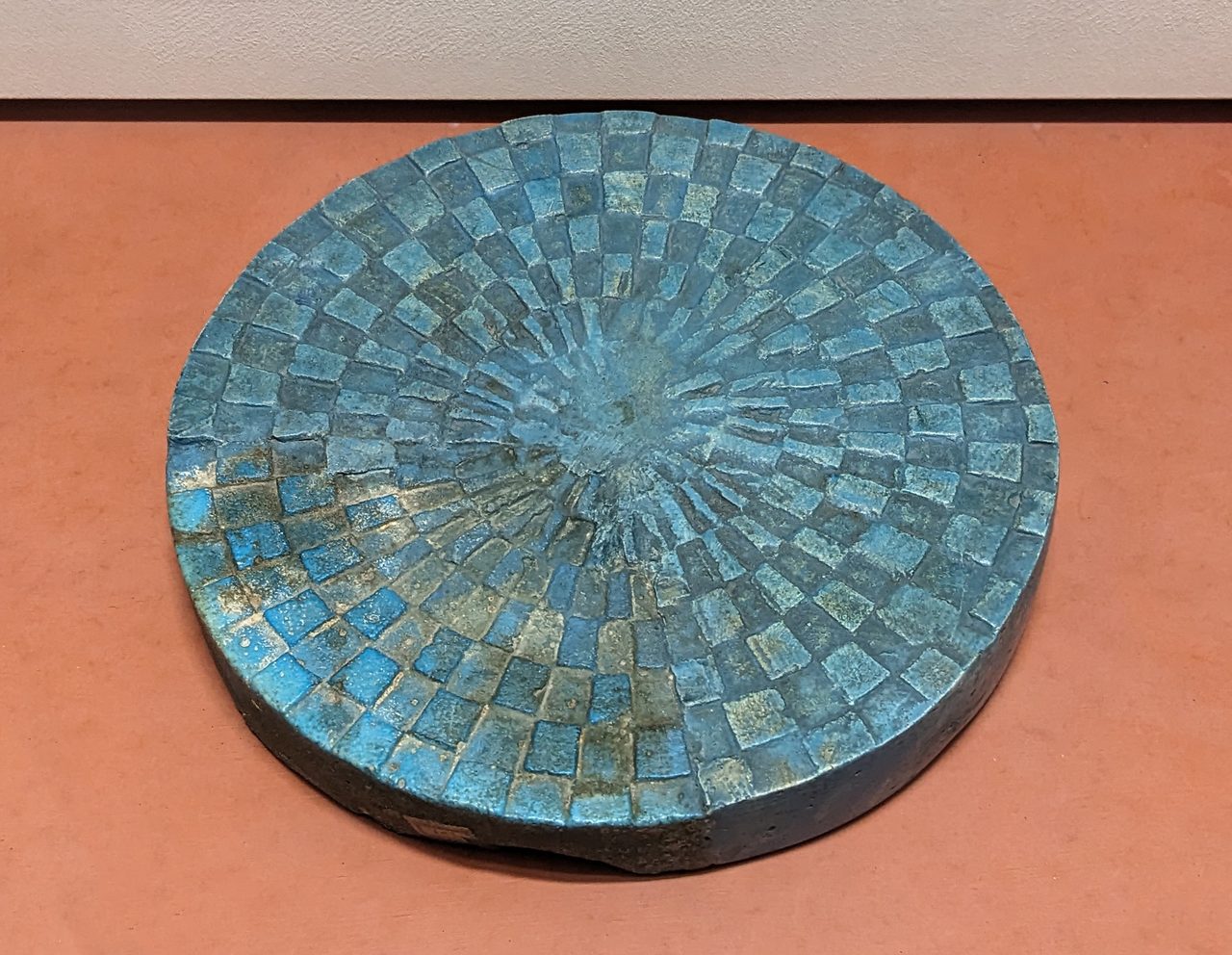
Mehen was beloved enough to become a game. The Mehen board game, played on a spiral, serpent-shaped board, dates to roughly 3000 BCE and is one of the oldest known board games anywhere. Mehen and Apophis both appear again in our Pyramid Texts dossier, where Egypt's underworld literature gets its own file.
In the fields, the serpent fed people. Renenutet, 'She Who Nourishes,' also called Thermouthis, is the cobra goddess of harvest, nourishment, and nursing, depicted as a cobra-headed woman nursing the pharaoh or a child, with major cult sites in the Fayum oasis region. Hold onto her name: she returns at the end of this story wearing Greek clothes.
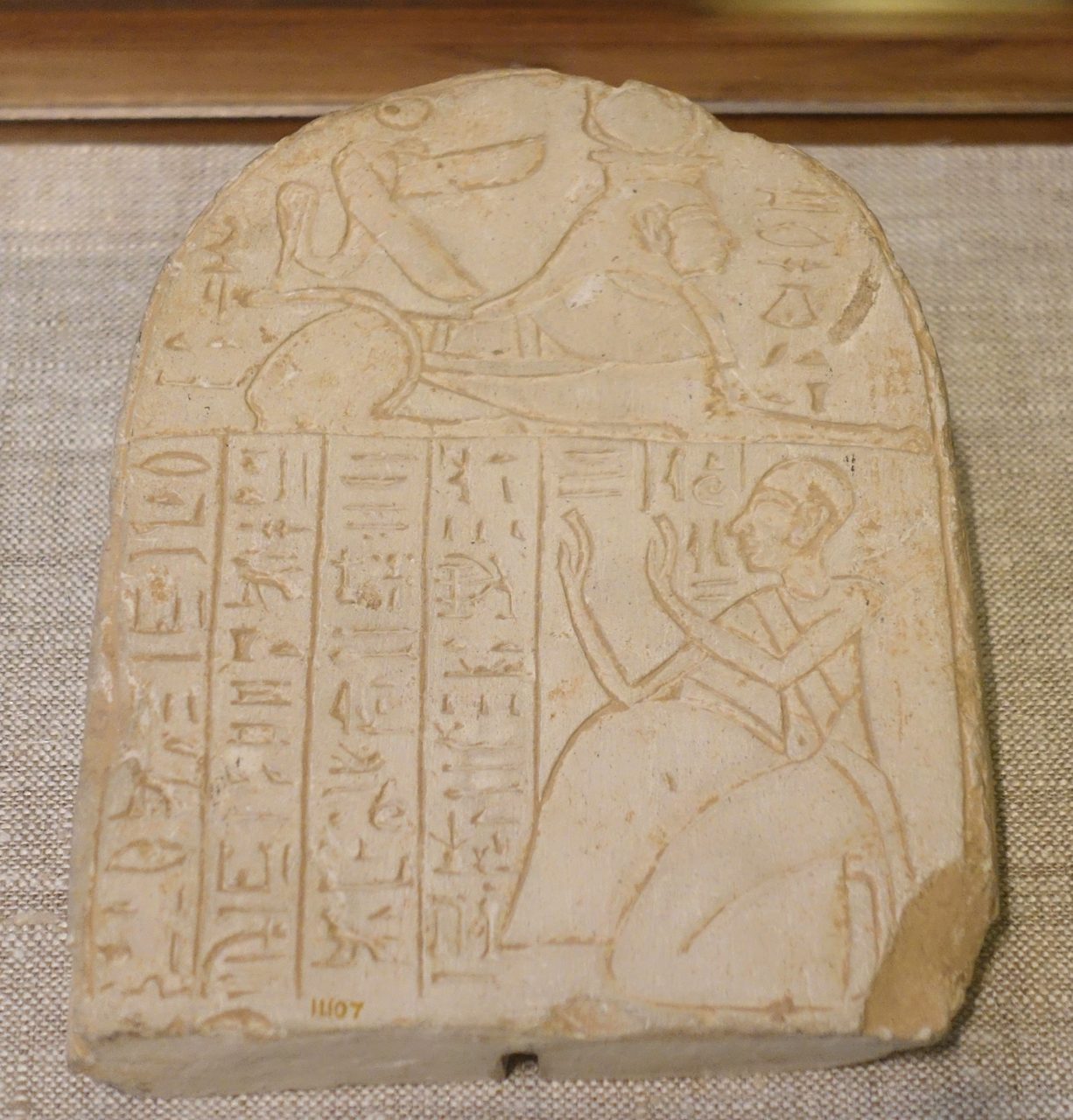
In the desert west of Thebes, the serpent guarded the dead. Meretseger, 'She Who Loves Silence,' is the cobra goddess of the Theban Necropolis, the Valley of the Kings and the Valley of the Queens, protector of tombs and punisher of tomb robbers. And she gives us something rare in ancient religion: evidence of what ordinary people believed. The workmen of Deir el-Medina, the village that built the royal tombs, left hundreds of votive stelae to her. Not state propaganda, not court theology: hundreds of personal offerings, one of the best-documented cases of working-class serpent veneration in antiquity.
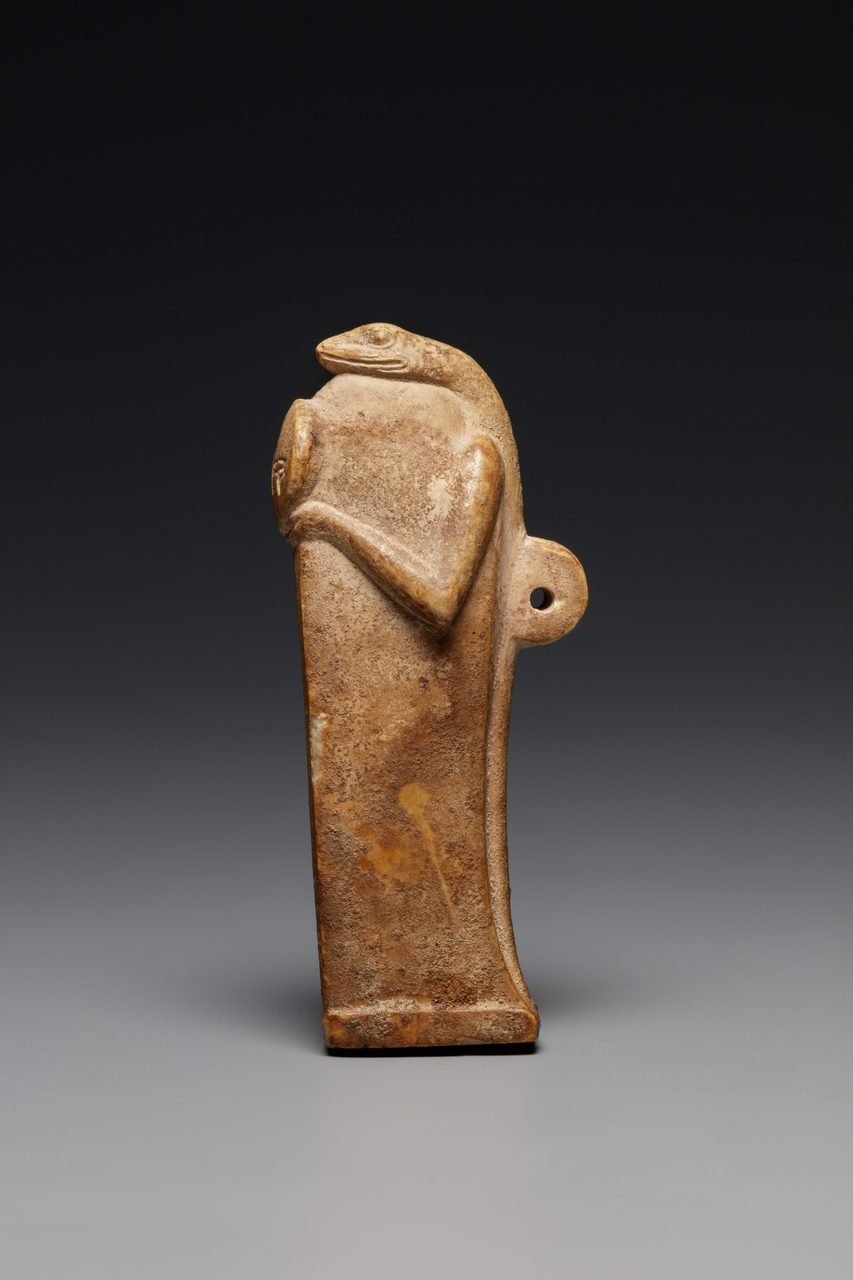
At the door of eternity, the serpent stood guard again. Nehebkau, 'He Who Harnesses the Spirits,' guards the entrance to the afterlife and assists at the Weighing of the Heart, the judgment on which every Egyptian soul's fate turned. Tradition even has him fed by the sun god Atum himself, elevation into the highest divine company, a detail the file rates credible rather than fully verified.
Behind the headline names stands a second rank, each figure carrying the evidence tier the research file itself assigns:
| Figure | Role | File's Tier |
|---|---|---|
| Wepset | 'She Who Burns,' uraeus protector of Osiris | Tier 1 |
| Sata | Underworld gatekeeper serpent | Tier 1 |
| Denwen | Fire serpent, or dragon, said to be capable of destroying the gods | Tier 1 to 2 |
| Amunet | Primordial Ogdoad goddess, sometimes serpent-form | Tier 1 |
| Kauket | Primordial darkness goddess, serpent-headed | Tier 1 |
| Irto | 'Maker of the Earth' | Tier 2 |
05Apophis, the One Exception
Now the exception, because there is exactly one and the file names it honestly. Apophis, also called Apep, is the great chaos serpent of the underworld who attacks Ra every night, and he is the only consistently negative serpent figure in Egyptian religion. But notice what Egypt did with its one evil serpent: it set other serpents against him. Mehen coils around Ra's barque precisely to hold Apophis off, and Wadjet stands among his opponents. The Egyptian cosmic battle is serpent versus serpent, not serpent versus good.
And even he was not the devil. Apophis embodied isfet, chaos, the necessary cosmological opposite of ma'at, order. That is an interpretive framing, so it wears Tier 2, but it matters: Egypt's worst serpent was a structural force in the architecture of the cosmos, not 'evil' in the later monotheistic sense.
06The Tally, and Its Asterisk
Add it up and the research file states its own headline number: twelve or more major serpent deities in the Egyptian pantheon, eleven or more of them, 92 percent and up by the file's own arithmetic, originally positive or protective, and exactly one, Apophis, consistently negative. The file calls that 'the highest positive-serpent ratio of any documented ancient religion.' As statistics in this field go it is unusually defensible, for one reason: the pantheon is small and enumerable, and the exception is named instead of buried. But the same file, to its credit, immediately complicates its own number, and the complication has to travel with it.
Olaf Kaper (2003) documents several minor serpent demons in later Egyptian magical texts, apotropaic spells worked through Heka, that are consistently negative. Count those, and the ratio moves. The percentage depends heavily on which entities are counted and where the line between 'deity' and 'demon' is drawn, and the research file concedes the point in as many words: 'the document's statistical framing overstates the clarity of the data.' So here is the honest version of the claim. Of the major named serpent deities of Egypt, all but Apophis were protectors. Turn that into a percentage and you have entered a definitional argument, not a measurement.
One more boundary, kept on purpose. There is a wider version of this claim, that serpent gods began as positive figures across most of the world's traditions, and it is genuinely contested, with real exceptions in other cultures' own primary texts. That survey is its own dossier, The Serpent-God Pattern, where the cross-cultural evidence gets weighed on its own terms. This file makes the smaller, harder claim: whatever the rest of the world did, Egypt made its serpents guardians.
07The Greeks Arrive, and Bow
When Greek settlers arrived in Egypt, the standard colonial script says the newcomers' gods displace the locals'. With the serpents, the opposite happened. Greeks in Egypt adopted serpent worship outright as the cult of the Agathodaimon, the 'Good Spirit': arrivals embracing local serpent reverence rather than demonizing it.
The file adds, at Tier 2, that Alexandria itself was founded on a site associated with Agathodaimon serpent worship: a credible claim, rated a notch softer than the cult's existence, which is documented outright.
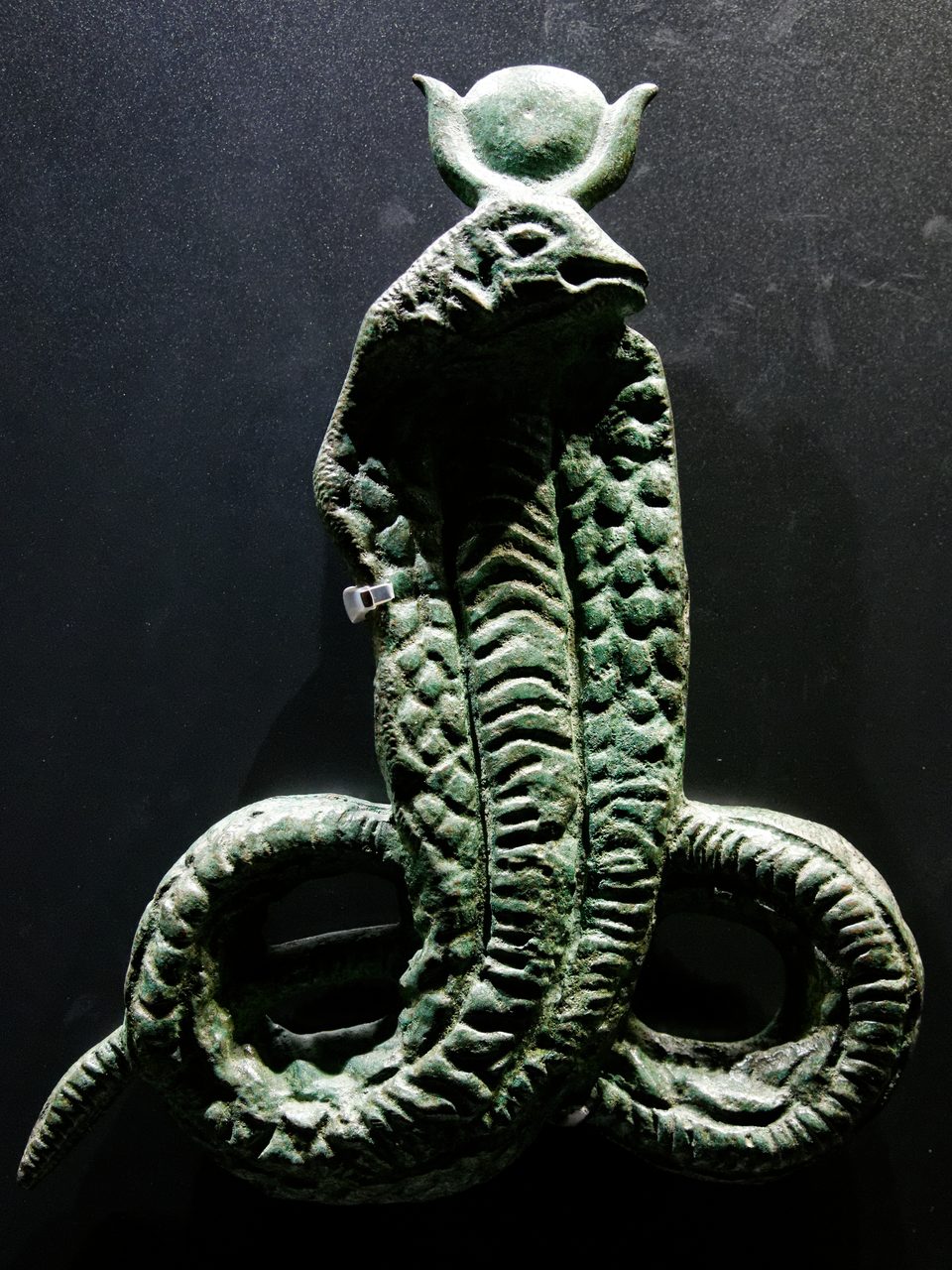
The fusion went further. In the Ptolemaic period, Wadjet and Renenutet merged into the Greek-influenced hybrid Isis-Thermouthis, the great goddess Isis depicted with a serpent body below the waist. And the hybrid traveled: bronze statuettes of Isis-Thermouthis have been found as far afield as Pompeii and Rome. At the very moment Egypt passed into Mediterranean hands, its serpent goddess was not suppressed. She went international.
08The Chisels Come Out
Then the door closed. From the 4th century CE onward, serpent imagery in Egypt was systematically reinterpreted as satanic. Coptic Christian Egypt deliberately destroyed or repurposed serpent temples, and on pharaonic monuments the Uraeus itself was sometimes physically chipped off during iconoclasm: chisels taking the cobra from the foreheads of kings who had worn her since the Pre-Dynastic period. Our research base counts this among the clearest documented demonization events anywhere in its files. Note carefully what this is and is not: it is a documented historical process, visible in texts, institutions, and stone. It is not a conspiracy claim, and this article does not frame it as one.
But the file immediately checks its own story, and this counter travels with the claim above. The clean 'positive, then demonized' arc follows Elaine Pagels' The Origin of Satan (1995). David Frankfurter's Religion in Roman Egypt (1998) demonstrates something messier and more human: Egyptian serpent cults persisted alongside Christian institutions well into the 5th century CE. The transition was gradual and syncretic, not an abrupt binary switch, and the chisel marks record what institutions eventually did to the imagery, not a single moment when belief ended. A demonization happened, and the stones show it. It was a fade measured in generations, not an overnight erasure.
09The Neighbors Had Serpents Too
Egypt's serpent pantheon did not exist in a vacuum. Across the ancient Near East, the neighbors ran strikingly parallel systems, and unlike many cross-cultural patterns, this one is attested in statues, reliefs, seal impressions, and temple decorations, physical artifacts you can stand in front of today. Here is the comparison at a glance, kept deliberately brief: the Mesopotamian side of this story, Ningishzida above all, is getting a dossier of its own in this wing. The file tags every row Tier 1 except the Minoan comparison, which it rates Tier 2 as interpretation.
| Figure | Tradition | In One Line | Egyptian Parallel |
|---|---|---|---|
| Ningishzida | Sumerian | 'Lord of the Good Tree,' underworld guardian, intertwined-serpent proto-caduceus | Nehebkau |
| Nirah | Sumerian | Serpent vehicle and symbol of Inshushinak | Mehen |
| Lotan (Litanu) | Levantine (Ugaritic texts) | Seven-headed sea serpent, cognate to the biblical Leviathan | Apophis |
| Illuyanka | Hittite | Dragon defeated by the storm god | Apophis |
| Snake Goddess | Minoan / Greek | Knossos figurines, household and chthonic protector | Wadjet and Renenutet |
| Nehushtan | Canaanite | Moses' bronze healing serpent, Numbers 21:8-9 | The Uraeus and Meretseger |
| Mushussu | Mesopotamian | Dragon of Marduk, guardian of the Ishtar Gate, physically extant on the Gate | The Uraeus |
The pattern across that table is functional. Protection recurs (Wadjet, Mehen, Mushussu), healing recurs (Meretseger, Nehushtan), underworld guardianship recurs (Nehebkau, Ningishzida), and chaos combat recurs (Apophis, Lotan, Illuyanka). Egypt and Mesopotamia keep their serpents positive the longest, while the Levantine line drifts toward demonization, Leviathan hardening into a chaos-enemy figure. And because every tradition on the table is backed by physical artifacts, the file calls this one of the best-evidenced cross-cultural patterns in its entire database.
Before anyone builds a lost-shared-source theory on that table, the file's own counter-arguments section dismantles the temptation. Morris (2020) and Balaji Mundkur's The Cult of the Serpent (1983) argue that serpent symbolism emerges independently in ecologically similar environments, convergent evolution of religious imagery rather than evidence of shared ancient knowledge, and the comparative table implies a connected tradition without establishing any transmission mechanism. Structural similarity across cultures does not by itself demonstrate historical connection. Parallel is not pipeline.
10What the Skeptics Say
Take the skeptics seriously, because the file does. The deepest skeptical reading starts in the eye. Lynne Isbell's The Fruit, the Tree, and the Serpent (2009) argues that snake detection was wired into primates by co-evolutionary pressure, heightened snake awareness later ritualized by cultures. Under this model, Wadjet worship is a cognitive byproduct of threat detection, not evidence of a considered serpent theology, and Egypt's ecology, a land with many venomous snakes, makes reverence look like fear management. The file's rebuttal is specific: the ecological model predicts fear-based avoidance. It does not predict what Egypt actually built, an elaborate protective-divine framework in which the named serpent deities are, all but one, cast as guardians. Fear explains why Egyptians noticed snakes. It does not explain why they trusted them.
The second reading is politics. John Baines (1995) contends the Uraeus was primarily a political-legitimation device, rulers adopting cobra imagery to project power, with 'divine' status a secondary ideological accretion; Barry Kemp (2006) similarly treats the nebty name as political symbolism rather than evidence of genuine serpent theology. The file's rebuttal here is archaeological: Pre-Dynastic Nagada I and II pottery, from roughly 3800 to 3400 BCE, shows serpent veneration predating the unified Egyptian state. The cobra was sacred before there was a crown to put her on. The state co-opted an existing reverence; it did not invent one.
The third reading points at Apophis himself: his existence shows Egypt did not hold a uniformly positive view of serpents. True, and the file concedes it. But the shape of the exception is the tell. Egypt answered its chaos serpent with guardian serpents, Mehen and Wadjet set against Apophis, which is not the architecture a culture builds when it fears snakes as such.
11The Ladder Down
The file keeps its own speculative shelf, labeled honestly. Tier 3, discussable but unproven: the 'Eye of Wadjet' as a possible origin for the Third Eye concept found in later traditions; a proposed linguistic connection between the Hebrew nachash, serpent, and Egyptian serpent terminology; and any strong one-direction diffusion claim, such as Wadjet as the sole origin of later serpent-icon systems, asserted without chain evidence. Interesting, open, and none of it load-bearing for anything above.
And Tier 4, where the file says no and means it: the claim that all serpent-staff symbols worldwide derive from a single Wadjet origin, and any claim that the Uraeus represents 'alien technology' or a literal fire-breathing creature. The Egyptians believed the Uraeus spat fire at the king's enemies; that belief is a documented Tier 1 fact about Egyptian religion. A real fire-breathing cobra, or a piece of nonhuman hardware on the royal brow, is a Tier 4 fantasy about it. The distance between what a culture believed and what physically existed is the whole discipline of this site, and this is a textbook case.
Below even that sits the register the file calls mythological: Wadjet literally nursing Horus in the Chemmis marshes, Mehen as a literal cosmic entity. These are theological narratives, culturally significant and historically real as beliefs, but they are not physical claims, and no tier of physical evidence applies to them. They are kept as story, which is what they are.
Fast Facts
- The Goddess
- Wadjet, the cobra goddess of Lower Egypt. Her name means 'the green one,' after the Delta marshes, and her origins are Pre-Dynastic, before roughly 3100 BCE, older than the unified Egyptian state.
- The Crown
- The Uraeus, the rearing cobra on the royal brow, is Wadjet herself, believed to spit fire at the king's enemies. Paired with the vulture Nekhbet as the 'Two Ladies,' she stood in the second of every pharaoh's five royal names: constitutional, not decorative.
- The City
- Per-Wadjet (Buto), modern Tell el-Fara'in, under excavation since 1983: occupation from the Predynastic period to the late Roman era, more than 3,000 years of continuous cobra-deity worship at a single site.
- The Pantheon
- Twelve and more serpent deities, nearly all protective: Mehen shields the sun god nightly, Renenutet feeds the harvest, Meretseger guards the tombs, Nehebkau keeps the door to the afterlife. The file's own caveat travels with the count: the exact ratio depends on where 'deity' ends and 'demon' begins.
- The Exception
- Apophis, the chaos serpent who attacks Ra every night, is the only consistently negative serpent in Egyptian religion, and he is fought by other serpents. Serpent versus serpent, not serpent versus good.
- The Reversal
- From the 4th century CE, serpent imagery was recast as satanic and uraei were chipped off monuments. The counter on record: serpent cults persisted alongside Christian institutions into the 5th century, a gradual, syncretic transition, not a switch.
- Ruled Out
- Alien technology on the royal brow, a literal fire-breathing cobra, and a single Wadjet origin for all the world's serpent-staff symbols. The research file flags all three as claims to avoid stating as fact.
- The Open Question
- Egypt knew exactly how dangerous its snakes were. Why did it make them guardians?
What the Evidence Actually Holds
The archaeology and the primary record hold. Wadjet is Pre-Dynastic, predating roughly 3100 BCE. Her city, Per-Wadjet at Tell el-Fara'in, has been under excavation since 1983 and shows occupation from the Predynastic period into the late Roman era, more than 3,000 years of cobra-deity worship at one site. The Uraeus evolves through six documented stages, from Hierakonpolis to the Roman-era Isis-Thermouthis fusion. Every pharaoh's nebty name paired Wadjet with Nekhbet as a constitutional feature of kingship. The workmen of Deir el-Medina left hundreds of votive stelae to Meretseger. The Mehen board game is attested from roughly 3000 BCE. Apophis is the only consistently negative serpent in the system, and Isis-Thermouthis bronzes reached Pompeii and Rome. All of it is on the record.
The interpretive layer is credible and contested, and this article keeps every counter attached. That Apophis embodied isfet, the cosmological opposite of ma'at, rather than 'evil' in the later monotheistic sense. That the Uraeus marked legitimate divine authority regardless of gender. The file's own tally of twelve-plus serpent deities with all but Apophis positive, which travels with Olaf Kaper's counter that the percentage depends on how 'deity' versus 'demon' is defined, the file itself conceding that its statistical framing overstates the data's clarity. The 4th-century-CE demonization and uraeus-chiseling as a documented historical process, which travels with David Frankfurter's evidence that serpent cults persisted into the 5th century and that the transition was gradual and syncretic. The skeptics' ecological and political readings and the file's rebuttals, above all the Nagada I and II pottery that puts serpent veneration before the unified state. And the Near Eastern parallels read as convergence, per Morris and Mundkur, not as proof of contact.
Three ideas stay speculative and are labeled that way by the research file itself: the Eye of Wadjet as a possible origin of the Third Eye concept, a linguistic connection between Hebrew nachash and Egyptian serpent terminology, and one-direction diffusion claims that would make Wadjet the sole source of later serpent-icon systems. None has chain evidence. None is load-bearing here.
Ruled out, explicitly. The Uraeus was not alien technology, and there was no literal fire-breathing cobra on the pharaoh's brow: the fire-spitting Uraeus is a documented belief, not a documented animal. And the world's serpent-staff symbols do not all derive from a single Wadjet origin. The research file flags each of these as claims to avoid stating as fact, and this article rules them out with it.
So stand at Tell el-Fara'in, where the trenches are still open and the oldest stratigraphy is still being read, and hold the whole arc in one view. A cobra goddess older than Egypt. More than three thousand years of continuous worship in one city. A crown that made her part of every king's formal name. A pantheon in which serpents guard the sun, the harvest, the tombs, and the door to eternity, with one chaos serpent held off, night after night, by the others. Then Greek settlers who bowed to her instead of erasing her, and a demonization that arrived with chisels and still took generations to complete. How the rest of the world answered the serpent, most traditions honoring it, some casting it as the enemy, is told in The Serpent-God Pattern. Egypt's answer was its own: it looked at a feared, venomous animal and put it in charge of protection. The open question is not whether that happened. The record settles that. The question is why: what did Egypt see in the serpent that we no longer do?
Sources & further reading
Everything above is drawn from our research library on Theories of Anything, which is where we worked from. The papers, reports and primary records listed beneath them are where you can check us independently.
Image credits
- Gold Diadem or Crown of Tutankhamun (KV62), Egyptian Museum photograph by Paul Appleyard, via Wikimedia Commons. CC BY-SA 2.0 Source.
- Mehen board game, faience, circa 2900-2700 BCE, found at Abydos, Louvre Museum via Wikimedia Commons. CC0 1.0 Source.
- Isis-Thermouthis bronze relief, 1st century BCE to 2nd century CE, Louvre Museum photograph by Marie-Lan Nguyen, via Wikimedia Commons. CC BY 2.5 Source.
- Votive stela of the priest Neferhor praying to Meretseger, Deir el-Medina, reign of Ramesses III, Oriental Institute Museum photograph by Daderot, via Wikimedia Commons. CC0 1.0 Source.
- Amulet of Nehebkau, Late Period (664-332 BCE), Metropolitan Museum of Art via Wikimedia Commons. CC0 1.0 Source.
- Card crop of Gold Diadem or Crown of Tutankhamun (KV62), Egyptian Museum photograph by Paul Appleyard, via Wikimedia Commons. CC BY-SA 2.0 Source.


_MET_LC-30_8_308_EGDP028756.jpg)