Enki vs. Enlil: The Two Gods Who Fought Over Humanity
At least a thousand years before Genesis, the first people to write anything down set down an argument between two gods, and humanity was the thing they were arguing about. Enlil ruled by command, granted kingship to human rulers, and once decreed the Flood to wipe the human race off the face of the Earth. Enki kept breaking his own council's rules to keep people alive, and warned them the Flood was coming. The same two roles keep resurfacing across the ancient world: the authority who commands, and the wise rebel who hands us the knowledge the authority forbids. This is the file on Enki and Enlil, opened claim by claim, every one wearing its evidence.
Every mythology has gods who help people and gods who punish them. The Sumerians, who invented writing and left the oldest libraries on Earth, did something stranger: they split those two impulses into two named gods, wrote down the argument between them, and made humanity the stakes. Enlil ruled by command and once decreed the Flood to erase the human race. Enki kept breaking his own divine council's rules to keep people alive, and warned them the Flood was coming. Four thousand years later the same two roles are still legible in the Serpent and Yahweh, in Prometheus and Zeus. This is the file on Enki and Enlil, opened claim by claim, every one wearing its evidence.
01Two Gods, One Argument
Enki and Enlil are not minor figures, and this is not a fringe reading of them. They are attested in thousands of cuneiform tablets across roughly 2,500 years of continuous religious writing, and their rivalry, or complementarity, is the central axis of Mesopotamian theology. What makes them worth reading together is not that they were worshipped but how the Sumerians used them: as two opposite answers to a single question, what do the gods owe humanity. Enlil answers order, and obedience. Enki answers survival, and knowledge. Nearly every myth in this file is a round in that argument.
02Enki, The God Who Broke The Rules For Us
Take Enki first, and briefly, because most of his story is told in its own file. Enki, called Ea in Akkadian, was the god of fresh water, wisdom, magic, and craft, and his name means 'Lord of the Earth' or 'Lord of the Below.' His city was Eridu, which the Sumerians held to be the oldest city in the world, and his temple there, the E-abzu, stood above the underground freshwater ocean where he kept the ME, the divine programs of civilization. The full account of the ME and of Enki's Eridu lives in our companion dossier on the ME; here it is enough to know he was their keeper. What matters for this file is his character, and across the entire textual tradition it holds steady: Enki helps humanity, usually by defying the other gods. He forms people from clay and divine blood. He sends the Seven Sages to teach them every art of civilization. He warns them of the Flood in direct violation of the divine council's decree. He is, in the source file's own words, the closest Sumerian ancestor of the Genesis serpent, of Prometheus, and of the Gnostic wisdom-bringer who smuggles knowledge past the ruling god.
03Enlil, The God Whose Word Was Law
Enlil is the god this file exists to put on the record, because unlike Enki he has never had his own treatment here. He was the executive power of the cosmos. His name means 'Lord of the Wind' or 'Lord of the Command,' and both readings matter: he was the storm, and he was the order that could not be refused. In Akkadian he became Ellil, and later simply Bel, 'the Lord.' His consort was Ninlil; his sons included the moon god Nanna, the war god Ninurta, and the plague god Nergal. His divine number was 50, one below Anu's 60, which in the Sumerian counting system marked him as the second-highest power in existence and the true active head of the divine assembly. Anu reigned. Enlil governed.
Read the texts he appears in and a hard-edged personality emerges. In the Atra-Hasis epic he decrees the Flood to destroy humanity, annoyed by the noise of a species that had grown too numerous. In Enlil and Ninlil he pursues and impregnates the goddess Ninlil, is banished to the underworld for it, and fathers a run of underworld deities on the way down. In the gentler Enlil and Sud he courts and marries the same goddess properly. He owns the Tablet of Destinies, the single emblem of supreme divine authority. And in the hymns he is the god without whom, in their own phrase, 'no city would be built, no settlement founded.' When the Babylonians later rewrote creation in the Enuma Elish, they handed Enlil's entire role to their own god Marduk, which tells you exactly how much the role carried: taking it over was how you claimed the top of the pantheon.
His stance toward humanity is best called ambivalent, and it runs in four modes. As protector he grants kingship to human rulers and sends the rain that feeds the fields. As destroyer he decrees the Flood and sends plague and famine as population control. As authority his word, his inim, is absolute and cannot be altered by anyone. As punisher he is capable of transgression himself, banished for what he does to Ninlil. Put those together and the shape is familiar: in modern comparative mythology, the supreme authority who grants earthly power and destroys humanity when it displeases him is the same archetype as the Old Testament Yahweh in his commanding and wrathful aspects. That recognized parallel is the engine of everything that follows in this file.
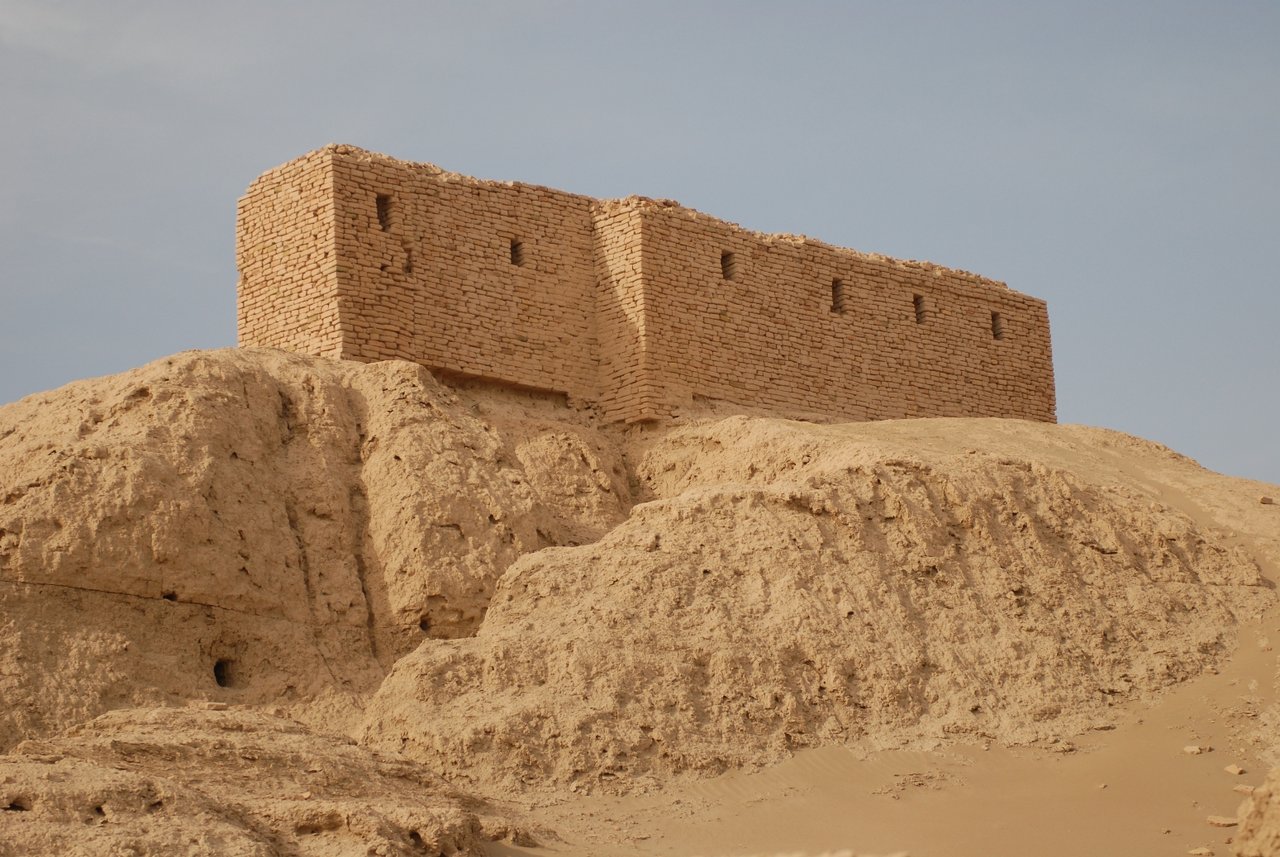
And Nippur was where that authority lived. For roughly 3,000 years Nippur, modern Nuffar in Iraq, was the religious capital of Sumer, never the political one, and the distinction is the whole point. No king ruled legitimately without the endorsement of Nippur's priesthood, and the Ekur, the 'Mountain House,' Enlil's temple, was held to be the literal bond between heaven and earth. This is not a claim we take on faith. Nippur was excavated by the University of Pennsylvania between 1889 and 1900 and again from 1948 to 1952, and by the University of Chicago's Oriental Institute from 1948 to 1990, and the tens of thousands of tablets pulled out of it are the backbone of the entire Sumerian literary corpus. The city that worshipped the god of command is the reason we can read any of these myths at all.
04Anu And The Great Gods
Above both of them, at least on paper, sat Anu. Anu was the sky, his name meaning simply 'Heaven,' and his divine number was 60, the highest in the system. He was the titular head of the pantheon and its most remote member, a king who over the centuries retired further and further into the background while his son Enlil did the actual governing. Together the three of them formed the ruling triad of the cosmos, and the Sumerians divided reality cleanly among them.
| God | Realm | Divine number | Role |
|---|---|---|---|
| Anu | Heaven | 60 | Distant, nominal supreme authority |
| Enlil | The atmosphere and the earth | 50 | Active executive power: kingship and fate |
| Enki | The waters and the below | 40 | Wisdom, magic, and craft |
Around the triad turned the rest of the pantheon, and several of its members matter to this story.
| Deity | Domain | Why they matter here |
|---|---|---|
| Inanna / Ishtar | Love, war, and the planet Venus | Descends to the underworld; receives the ME from Enki |
| Ninhursag / Ki | Earth mother, birth | Co-creates humanity with Enki |
| Nanna / Sin | The moon | Patron of Ur; father of the sun god and of Inanna |
| Utu / Shamash | The sun, and justice | Dispenser of divine justice; helps Gilgamesh |
| Ningishzida | Serpents, the doorway of heaven, healing | Enki's serpent-associated son; the intertwined-serpent emblem |
| Ninurta | War and agriculture | Son of Enlil; the dragon-slayer |
| Nergal | The underworld, plague | Son of Enlil; co-rules the dead with Ereshkigal |
| Ereshkigal | Queen of the underworld | Inanna's sister, who kills her at the throne |
| Tiamat | The primordial salt-water chaos | Slain by Marduk; her body becomes heaven and earth |
05The Core Opposition
Now lay the two gods side by side, which is what the source file does, and label the comparison honestly before reading it: this is an interpretation, not a statement carried by any single tablet. The Sumerians did not write 'Enki and Enlil are a dialectic.' They wrote myths, and modern readers noticed that those myths keep sorting the two gods into opposite columns. The source file's own section marks this as Tier 2 to 3 for exactly that reason, the per-god facts underneath are solid, the opposition drawn from them is a reading. On that reading, the pattern is remarkably consistent.
| Enki | Enlil | |
|---|---|---|
| Orientation | For humanity | For cosmic order |
| Method | Cunning, craft, subversion | Command, decree, force |
| Knowledge | Distributes it: the ME, the Sages | Restricts it, wary of human advancement |
| The Flood | Warns humanity and provides escape | Decrees destruction |
| Symbol | The serpent, water, the fish | Wind, the mountain, the storm |
| Temple | The E-abzu, the deep waters | The Ekur, the mountain house |
The single clearest round of that argument is the Flood: Enlil decreed it to erase humanity, and Enki broke ranks to warn people and hand them the means to survive. The full story, the divine council, the reed wall, the ark, the aftermath, is told in our companion dossier on Utnapishtim and the Ark, so we will not retell it here. What matters is the shape. One god votes to end the species; the other saves it behind his back. That is the whole relationship compressed into a single event.
06The Serpent And The Staff
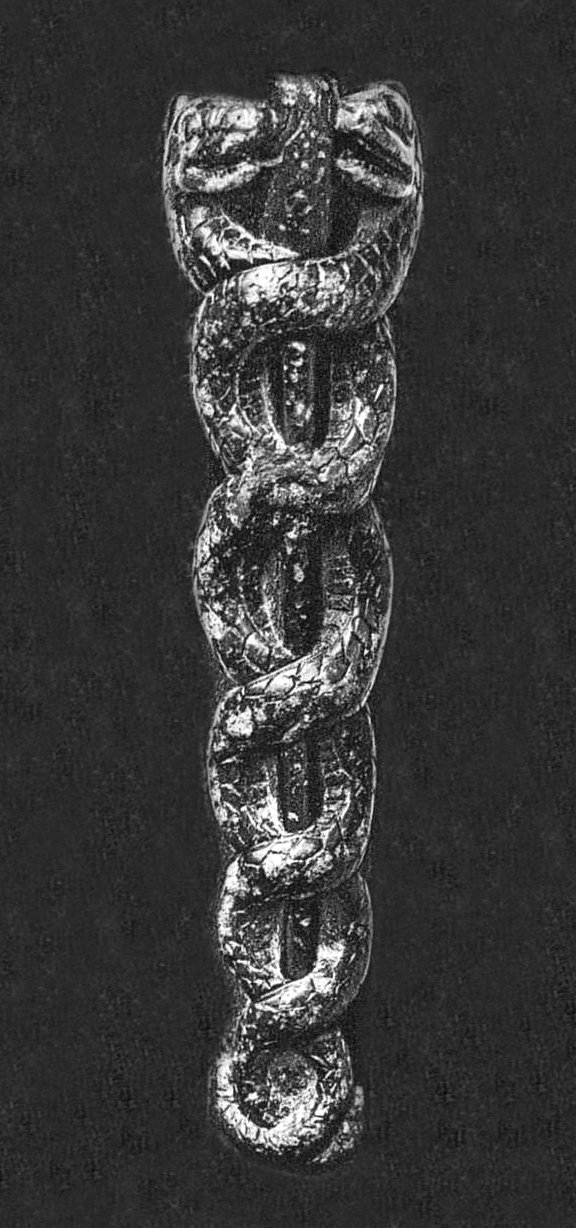
Enki's oldest symbol is the serpent, and it comes attached to a detail specific enough to go and check. His associate, sometimes named as his son, was Ningishzida, whose name means 'Lord of the Good Tree,' a serpent god depicted as two snakes entwined around a central staff. That image predates the Greek caduceus, the familiar twin-serpent staff, by more than a thousand years, and it survives on a real object anyone can look at: the libation vase of Gudea, carved from green steatite around 2100 BCE at Lagash and now held in the Louvre. Its central engraving shows exactly that, two serpents twining up a rod, flanked by a pair of dragons. The Louvre's own catalog reads the scene as a caduceus and identifies the twined serpents as the god Ningishzida himself.
The serpent runs deeper into Enki's domain than his family tree. His realm, the Abzu, the freshwater deep, was reached through serpent-guarded waters, so the snake sits at the very threshold of his wisdom, symbol and gatekeeper at once. This part is credible rather than certain, a Tier 2 reading of the iconography rather than a flat textual statement, but it is well grounded in the imagery.
Push one step further and you reach the claim people actually care about, and it has to be held loosely. Enki's full symbolic package, a serpent bound to water, wisdom, and forbidden knowledge, is the same package worn by the serpent in Eden, the one who offers the knowledge that God forbids. If the Enlil archetype is the commanding god of the Garden, then the Enki archetype is the snake in its branches. It is a striking mapping and no more than that, a Tier 3 parallel the sources themselves flag as speculative, not a demonstrated line of descent from Ningishzida to Genesis.
07The Same Fight, Told Everywhere
That Eden parallel is not a one-off. The source file lines the Enki-Enlil pairing up against seven other traditions and finds the same two-role structure in each: an authority who commands and restricts, and a wisdom figure who hands knowledge down against that authority's will. It is the richest and most provocative claim in the file, and also the one that most needs its evidence read carefully, so here it is laid out and then weighed.
| Tradition | The authority | The wisdom-giver who defies it |
|---|---|---|
| Sumerian | Enlil | Enki |
| Genesis | Yahweh in the Garden | The Serpent |
| Gnostic | Yaldabaoth, the Demiurge | Sophia, or the Instructor |
| Greek | Zeus | Prometheus |
| Egyptian | Ra in his wrathful aspect | Thoth |
| Hindu | Indra | The Nagas, or Shiva |
| Zoroastrian | Angra Mainyu | The wisdom aspect of Ahura Mazda (in some readings reversed) |
| Norse | Odin in his wrathful aspect | Odin the wisdom-seeker (one figure, not two) |
Here is the caution the file attaches to its own table, and it must not be softened. A pattern this clean can mean one of three very different things. It may reflect genuine cultural diffusion, the story spreading outward from Mesopotamia along the same routes as everything else the ancient world traded. It may reflect the independent development of a universal human archetype, the same shape arrived at separately because human minds keep reaching for it. Or it may reflect selective pattern-matching by researchers, a template pressed onto traditions that only look alike once you have decided to line them up. The honest answer is that the question remains unresolved. The pattern is real on the page; what produced it is not settled.
08The Kings Who Were Real
Leave the gods and the Sumerian record hands you something firmer: kings. The Sumerian King List, the master roster of who ruled, opens in pure myth, with god-kings like Alulim of Eridu reigning 28,800 years each, and runs on through semi-legendary heroes like Gilgamesh (that first number, and what to do with it, is the last section of this file). But keep reading down the list and the reigns shrink toward human length, the dates sharpen, and the names begin matching objects archaeologists have pulled out of the ground. These are not legends. These are men we can date.
| Ruler | Approx. date BCE | City | How we know |
|---|---|---|---|
| Enmebaragesi | ~2600 | Kish | The earliest king confirmed by a contemporary inscription |
| Mesannepada | ~2600 | Ur | Founder of the First Dynasty of Ur, archaeologically confirmed |
| Eannatum | ~2450 | Lagash | His victories are recorded on the Stele of the Vultures |
| Lugalzagesi | ~2340 | Umma, then Uruk | The last major Sumerian king before Sargon's conquest |
| Sargon of Akkad | ~2334 to 2279 | Akkad | The first empire-builder in recorded history |
| Gudea | ~2144 to 2124 | Lagash | Over 30 surviving statues and his own inscribed Cylinders A and B |
| Ur-Nammu | ~2112 to 2095 | Ur | Founded the Ur III dynasty and issued the earliest known law code |
| Shulgi | ~2094 to 2047 | Ur | Self-deified; vast building and literary programs |
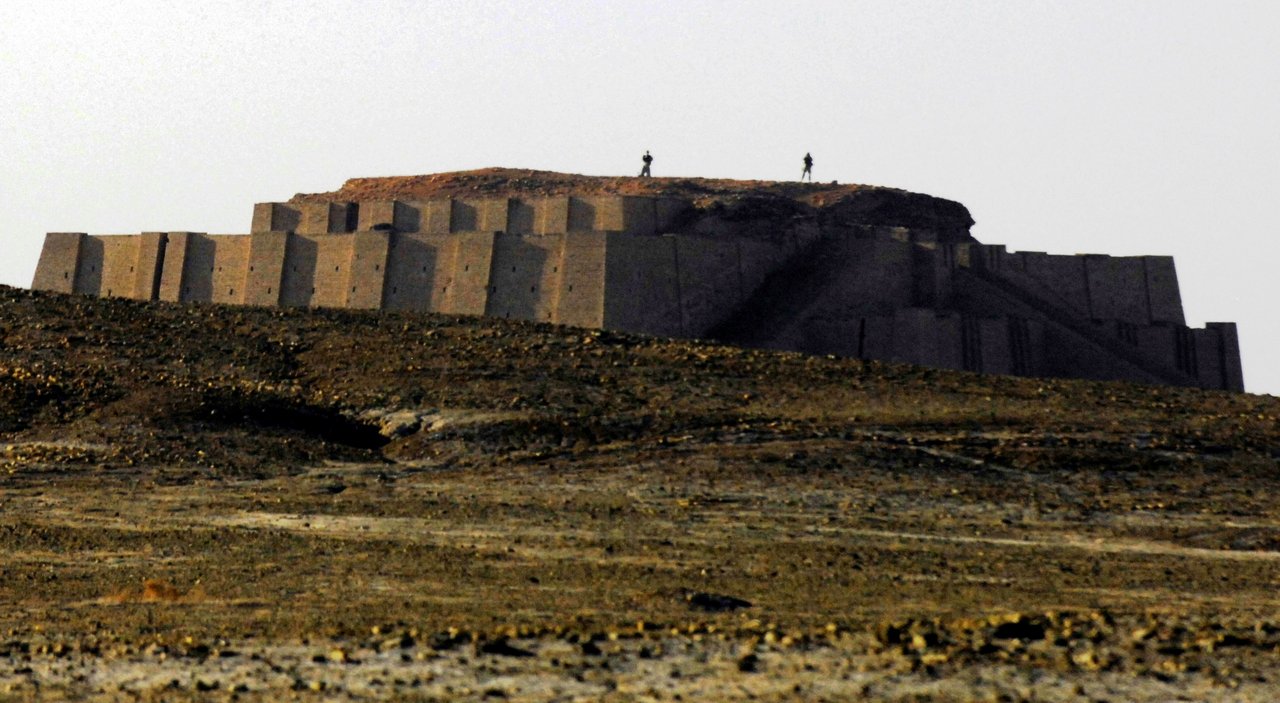
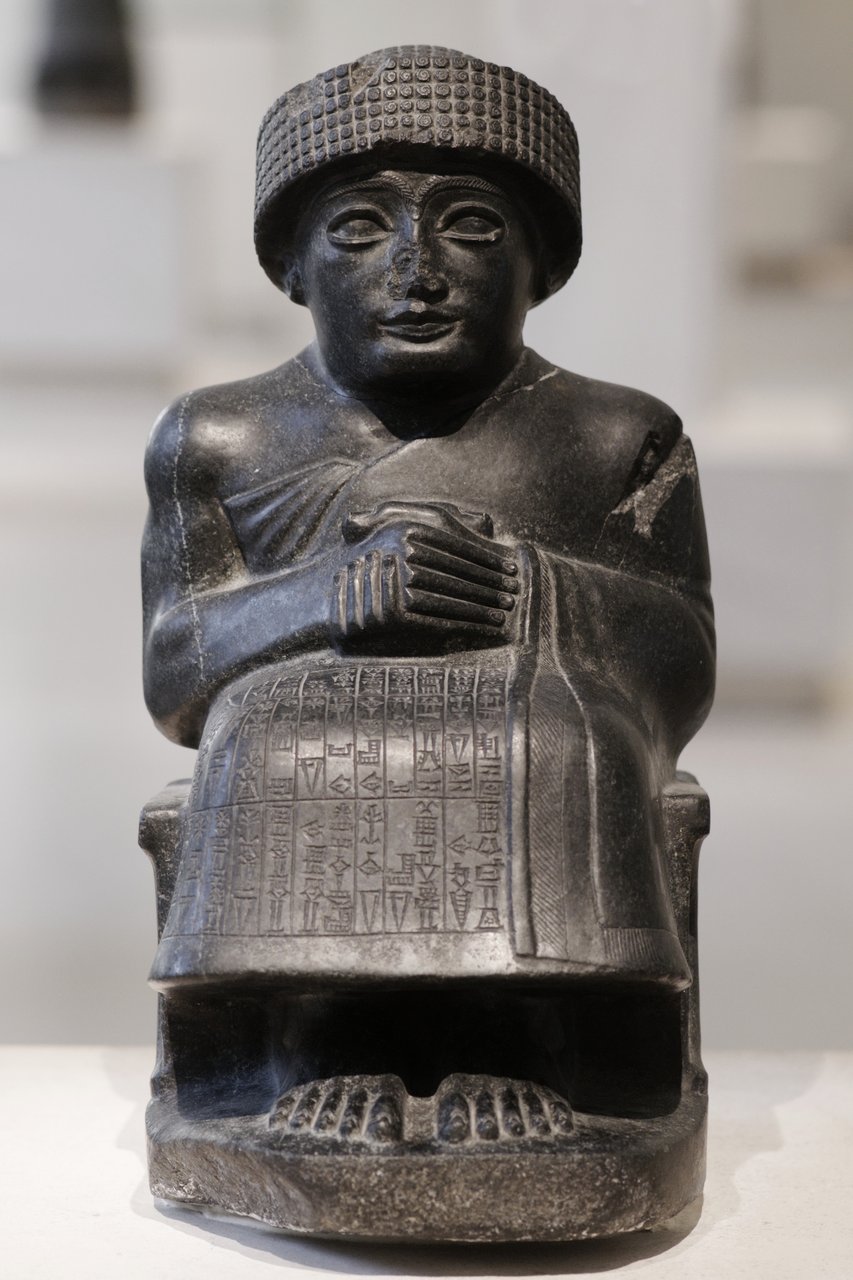
Two of them anchor the rest. Gudea of Lagash left more than thirty statues of himself and two clay cylinders covered in his own inscriptions, which is why his roughly twenty-year reign is not in doubt. Ur-Nammu founded the Ur III dynasty and built the Great Ziggurat of Ur, a great stepped temple-tower of brick dedicated to the moon god Nanna, which his son Shulgi finished and which still stands in southern Iraq. Ur-Nammu's own monumental stele, showing him standing before the gods, was recovered in about 106 fragments during Leonard Woolley's 1925 excavation season and reassembled at the University of Pennsylvania Museum. When the file says these kings were real, this is what it means: you can go and look at what they built.
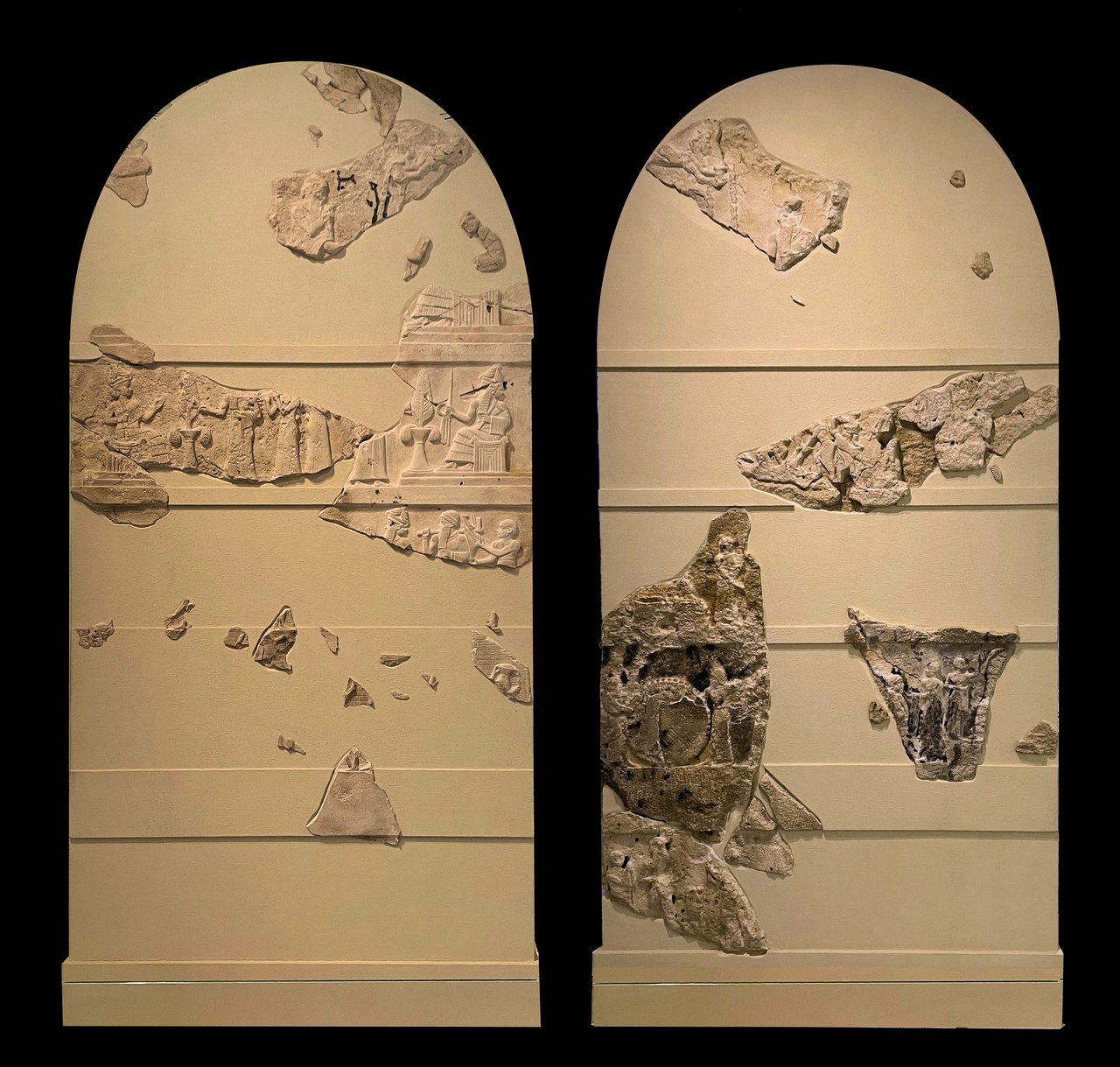
The two cities at the heart of the theology were just as real, and they were rivals. Eridu was remembered as the first city of all, the place where, in the King List's own words, 'kingship descended from heaven.' Nippur held the other kind of power, the religious veto, and no king ruled legitimately without its blessing. When Babylon rose between roughly 1800 and 539 BCE it eventually eclipsed both, and its god Marduk, Enki's own son, absorbed the roles and honors of Enlil and Anu together, folding the whole old hierarchy into a single Babylonian deity.
There is a tidy reading of that rivalry, and it sits one tier down. Eridu was Enki's city and Nippur was Enlil's, so the political tension between the two centers looks like the Enki-Enlil opposition playing out on a map: wisdom's first city against command's holy city. It is a credible pattern and a satisfying one, but it is an interpretation laid over the politics, not a fact the tablets assert, so we hold it at Tier 2.
09Where The Story Breaks Down
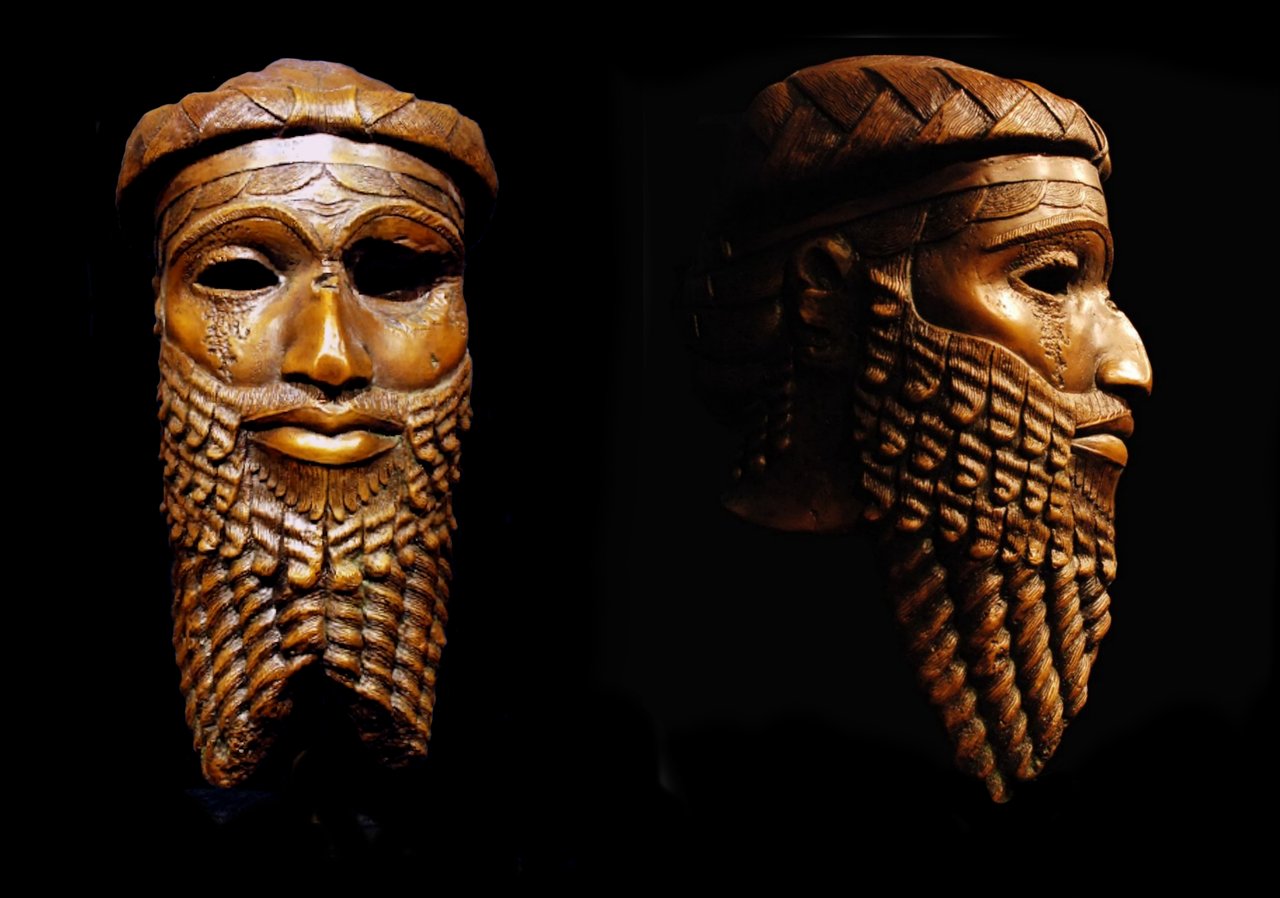
Now the parts that do not hold, stated as plainly as the rest. The pre-Flood reigns on the King List, Alulim's 28,800 years and the others like it, are not historical fact. They are mythology, and reading them as a literal record of impossibly long-lived ancient kings is unsupported, full stop. The same caution applies to a smaller and more tempting claim: Sargon of Akkad's birth legend, in which he is set adrift on a river in a basket, is often paired with the infancy of Moses, but which story influenced which, if either did, is debated and not settled. A resemblance is not a lineage.
And then there is the reading this whole subject is most often dragged into. Zecharia Sitchin, in The 12th Planet (1976), interpreted these creation myths as literal accounts of alien genetic engineering, casting the Anunnaki as extraterrestrials who manufactured humanity. Professional Assyriology has rejected this completely. Michael Heiser and others have catalogued specific, checkable translation errors running through Sitchin's work: the term he renders as 'rocket ship' standardly means 'name,' 'reputation,' or 'monument,' and 'Anunnaki' means 'princely seed' or 'children of An,' not his invented 'those who from heaven to earth came.' No credentialed Sumerologist accepts his readings. The related idea, that Enki forming humanity from clay encodes hidden genetic knowledge, projects modern science onto ancient metaphor; the clay-creation motif turns up in unrelated cultures the world over and reflects nothing more exotic than the universal human experience of shaping wet clay into form. This is Tier 4, and the file says no.
10What Holds And What Is Still Argued
Strip it back to what is firmly established and a great deal survives. Enki and Enlil are real fixtures of a real religion, attested across thousands of tablets. Their rivalry, or complementarity, genuinely is the central axis of Mesopotamian theology. Enki's serpent association is documented in both text and carved stone. The Flood story, with Enki warning humanity against Enlil's decree, is on clay at least a thousand years before Genesis was written. And Gudea, Ur-Nammu, Shulgi, and Sargon were unquestionably real men. None of that is in dispute.
What stays open is the interpretation, and it is worth naming the live questions rather than smoothing them over. Is the Genesis serpent a deliberate echo of Enki or an independent tradition that happens to rhyme? What exactly were the ME, physical objects, abstract powers, or both? Is the Enki-Enlil dialectic a genuine universal archetype or a pattern researchers impose? And is there a real link between Enki's Seven Sages and the fish-teacher traditions of other cultures? These are not settled, and anyone who tells you they are has left the evidence behind.
Fast Facts
- The two gods
- Enki (Akkadian Ea), god of wisdom and fresh water, protector of humanity; Enlil, god of wind and command, head of the divine assembly
- Their cities
- Enki's Eridu, held to be the first city; Enlil's Nippur, the religious capital whose priesthood legitimized every king
- Divine numbers
- Anu 60, Enlil 50, Enki 40, in the Sumerian counting system, ranking their authority
- The core opposition
- Enlil commands, restricts knowledge, and decrees the Flood; Enki subverts, distributes knowledge, and warns humanity
- The serpent staff
- Ningishzida's twin-serpent emblem on the Gudea vase (~2100 BCE, Louvre) predates the Greek caduceus by over 1,000 years
- Kings we can confirm
- Enmebaragesi, Mesannepada, Eannatum, Lugalzagesi, Gudea, Ur-Nammu, Shulgi, and Sargon of Akkad are all historically attested
- The cross-cultural claim
- The same two roles appear in Genesis, Gnostic, Greek, Egyptian, Hindu, Zoroastrian, and Norse tradition (Tier 2, and possibly pattern-matching)
- Tier 4 claims
- The pre-Flood reigns of 28,800 years, and Sitchin's ancient-alien reading of the Anunnaki. Both unsupported
What We Can Actually Stand Behind
The gods, the cities, and the kings are solid ground. Enki and Enlil are well-attested deities across thousands of cuneiform tablets and some 2,500 years; the Anu-Enlil-Enki triad and their divine numbers are drawn straight from the texts; Nippur and its Ekur were excavated over a century of University of Pennsylvania and University of Chicago work; and Enmebaragesi, Mesannepada, Eannatum, Lugalzagesi, Gudea, Ur-Nammu, Shulgi, and Sargon are historically confirmed rulers whose statues, inscriptions, ziggurat, and stele we can still touch. The Flood myth, Enki warning humanity against Enlil's decree, is on clay at least a thousand years before Genesis. That much is not in doubt.
The comparative structure is credible and correctly kept one step back. The Enki-Enlil opposition is a genuine and consistent pattern in the myths, but calling it a 'dialectic' is a reading, not something the tablets declare. The cross-cultural line-up, the same authority-and-wisdom-giver pair in Genesis, Gnostic, Greek, Egyptian, Hindu, Zoroastrian, and Norse tradition, is a real and striking resemblance, and the Eridu-versus-Nippur rivalry does map onto it neatly. But these are interpretations laid over the evidence, well-founded and worth taking seriously, not proven descent.
One step further out sits the serpent. That Enki's serpent-water-wisdom package is the same one worn by the snake in Eden, and that the two figures are versions of one archetype, is an evocative Tier 3 parallel. The iconography is real and the Gudea vase is a genuine, datable object; the direct line from Ningishzida to the Genesis serpent is a mapping the sources themselves flag as speculation. Hold it as a question worth asking, not an answer.
And there is a real Tier 4 here, which the file names rather than dodges. The pre-Flood reigns of 28,800 years are not historical record, and reading them as literal ancient lifespans is unsupported. Zecharia Sitchin's interpretation of the Anunnaki as flesh-and-blood extraterrestrials who genetically engineered humanity has been rejected by professional Assyriology outright, on the strength of specific translation errors documented by Michael Heiser and others, and no credentialed Sumerologist accepts it. To both, the honest answer is a plain no.
So the first people to write anything down did not imagine one god set over humanity. They imagined two, locked in an argument, one who commands and one who defies him, and they made us the stakes. That same argument keeps surfacing afterward, in the Garden, on Olympus, in the Gnostic heavens, across cultures that had every chance to invent it on their own. Whether that means the story spread outward from Mesopotamia, or that every human society reaches for the same two gods without being told to, or only that we are very good at finding a pattern we already expect, is the one question none of the evidence can close. But it is worth sitting with. When you next tell a story about a wise rebel who hands you the knowledge the ruler forbids, are you remembering Enki, or are you simply built to keep inventing him?
Sources & further reading
Everything above is drawn from our research library on Theories of Anything, and every claim traces to file A_1_04 below. Where this file deliberately keeps a subject short, the fuller treatment lives in a companion dossier: the ME and Enki's Eridu are covered in full in The ME, and the Flood warning is covered in full in Utnapishtim and the Ark. Open the files to check the sourcing and go deeper.
Image credits
- Temple ruins at Naffur (Nippur), Iraq photograph by Jasmine N. Walthall, U.S. Army, via Wikimedia Commons. Public domain (U.S. government work) Source.
- The serpent god Ningishzida on the libation vase of Gudea, circa 2100 BCE, Louvre 19th-century excavation illustration by Ernest de Sarzec, via Wikimedia Commons. Public domain Source.
- Seated diorite statue of Gudea, prince of Lagash, Louvre photograph by Jastrow, via Wikimedia Commons. Public domain Source.
- The Great Ziggurat of Ur, Iraq U.S. Department of Defense photograph by Cherie A. Thurlby, via Wikimedia Commons. Public domain (U.S. government work) Source.
- The Stele of Ur-Nammu, front and back, University of Pennsylvania Museum photograph by Onceinawhile, via Wikimedia Commons. CC BY-SA 4.0 Source.
- Museum replica of the bronze "Mask of Sargon of Akkad," Roemer- und Pelizaeus-Museum Hildesheim photograph by Hans Ollermann, via Wikimedia Commons. CC BY-SA 2.0 Source.
- Card crop of Temple ruins at Naffur (Nippur), Iraq photograph by Jasmine N. Walthall, U.S. Army, via Wikimedia Commons. Public domain (U.S. government work) Source.


.jpg)
