The Fair Folk: The Hidden People, And The Roads That Still Bend Around Them
Ireland has a whitethorn tree that a motorway was contractually required to avoid. Iceland has a rock outside Reykjavík where road building reportedly failed for decades, and the road curves around it still. Kauaʻi has a fishpond wall about 900 feet long that tradition credits to builders who work only at night. Nearly every human culture keeps a file on hidden neighbors, and the files agree with one another far more closely than unconnected cultures have any obvious right to. This is that pattern, tradition by tradition, under one rule stated up front: a tradition is evidence about what people believe and carry, and never on its own evidence that the thing described is out there.
Start with what makes this file different from most of what this wing carries. There is no argument here about whether a text is authentic or a photograph has been doctored. The evidence is overwhelming, and it is evidence of something other than what a reader hoping for a monster came for. What we have is testimony: centuries of it, from Ireland and Iceland and Kauaʻi and Japan and West Africa, describing neighbors nobody can see. That testimony is real, it is well recorded, and it proves something enormous about human beings. On its own it proves nothing whatever about fairies.
So here is the rule this page runs on, and it does not bend anywhere below: a tradition is evidence about what people believed and passed on. It is never, by itself, evidence that the thing described is out there. The rule bites hardest exactly where the material is most seductive, at the moment when cultures with no historical contact turn out to have written down the same warnings in the same order. A pattern that wide is a genuine finding. What causes it is a separate question, and this page does not get to skip from one to the other.
One piece of housekeeping, because it changes how you should read every chip below. Our research file on the fair folk does not sort its material into the four tiers its sibling files use. Its descriptive sections carry no per-claim rating at all, and the file's own header rates the whole body Tier 2, well-documented folklore with debated interpretive frameworks. That is what the catalogue here wears. The one place the file gets claim-specific is its counter-arguments table, five contested claims each with its own rating, and those five ratings are used below exactly as written. Nothing on this page is Tier 1, and that is not an oversight.
01The Same Neighbours, Everywhere
Across virtually every human culture there are traditions of hidden peoples: beings who inhabit a parallel realm adjacent to the human world and normally invisible inside it. What our file flags is not that the traditions exist but how closely they agree, across cultures with no historical contact. They share an association with liminal spaces, twilight and crossroads and thresholds. They share the ability to abduct humans, and a particular interest in children and in brides. They share vulnerability to specific substances: iron, salt, rowan, running water. And they share a predictable encounter pattern, time distortion, disorientation, and a set of taboos you are expected to already know. That convergence is the whole reason this file exists.
| Tradition | What they are called | What the tradition describes |
|---|---|---|
| Irish and Scottish | Aos Sí, Daoine Sídhe, the Fair Folk, the Good People | Beings living in fairy mounds, the sídhe, descended from the Tuatha Dé Danann |
| Welsh | Tylwyth Teg, the Fair Family | Beautiful beings living underground who steal children |
| Cornish | Pixies, Piskies, Knockers | Small tricksters; the Knockers specifically inhabit mines |
| Icelandic | Huldufólk, the Hidden People | Full-sized beings living inside rocks |
| Scandinavian | Huldra, Nisse, Tomte, Trolls | Nature spirits; the huldra is a forest woman with a tail, the nisse a household spirit |
| Germanic | Elves (Alben), Dwarves (Zwerge), Kobold | Underground smiths, household spirits, mine spirits |
| Slavic | Domovoi, Leshii, Rusalka, Vila | House spirits, forest spirits, water spirits |
| Japanese | Yōkai, Tengu, Kappa, Kitsune | Shapeshifting supernatural beings |
| Hawaiian | Menehune | Small skilled builders who work at night |
| Māori | Patupaiarehe | Fair-skinned beings on misty mountaintops who play flutes and steal women |
| Filipino | Duwende, Engkanto | Invisible mound-dwellers who enchant humans |
| West African | Aziza (Dahomey), Mmoatia (Akan) | Forest dwarfs who teach herbalism and magic |
| Native American | Nunnehi (Cherokee), Jogah (Iroquois) | Immortal spirit people living in mountains and rivers, sometimes helpful |
| Persian and Islamic | Jinn, Peri | Invisible beings of 'smokeless fire' |
That last row is the one place this page deliberately stops short. The jinn are not folklore to the people who hold them. Our own cross-reference calls that material a living-religion tradition in its own right, and this wing gives it a file of its own at The Djinn. They appear in the table above because our file put them there, as one entry in a global comparison. Everything about them beyond that entry belongs to their own page, and it stays there.
02Four Ways To Explain That, And Our File Picks None
Our file sets out four explanations for the universality and then declines to choose between them. Psychological archetype: the pattern is a projection of human awareness of unseen agencies, the agency-detection habit running in the dark. Memory of displaced populations: earlier inhabitants of a place, remembered afterward as small or hidden people. Nature personification: an animistic reading of natural forces as intentional agents. And a genuine phenomenon: something is consistently encountered, and each culture interprets it in its own vocabulary. Four doors. Our file walks up to all of them and opens none.
Notice what the shape of that list does to the argument people usually build out of this material. Three of the four explanations are entirely about us. Only the fourth is about anything outside a human head. The universality that makes the fourth door tempting is precisely the evidence that fits all four equally well, which is why a pattern this wide cannot be used to pick a door. If you have ever seen the cross-cultural agreement offered as proof that something real was being seen, that is the move this page will not make.
03Ireland: The People Of The Mounds
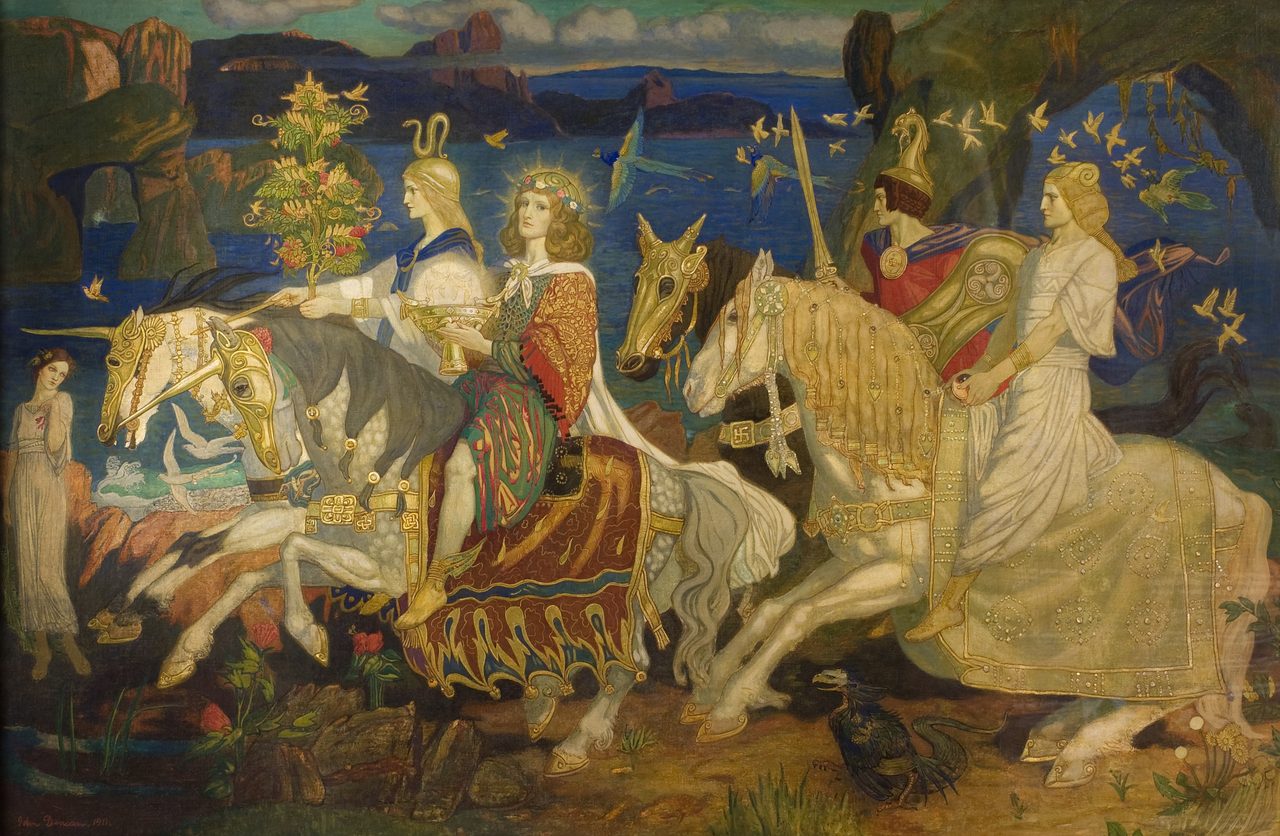
The Irish tradition has an origin story with a defeat in it. The Tuatha Dé Danann, the Peoples of the Goddess Danu, were a divine race of skilled magicians who ruled Ireland in the mythological age. They were beaten by the Milesians, ancestors of the Gaels. They then retreated into the sídhe, the fairy mounds and barrows, and became invisible. From that underground realm they became the Aos Sí, the people of the mounds. Every fairy in this section is, in the tradition's own account, a defeated god who went below and stayed.
Our file states it plainly and in its own words: Irish country people maintained fairy faith into the twentieth century, and in some areas, today. That sentence governs the tone of everything that follows. What is described below is not a set of quaint beliefs a modern country has outgrown and can be visited like a museum. Parts of it are current practice, held by people alive now, and this page reports it the way it would report any other living practice: in the present tense, and without a smirk.
The tradition also has specialists. Fairy doctors, the bean feasa and fear feasa, were healers who claimed their knowledge came from contact with the Aos Sí. They treated ailments attributed to the fairy blast, also called elfshot, a sudden pain read as the strike of a fairy arrow, and they worked with herbal remedies, charms, and ritualized communication with the fair folk. The most famous name in this line is not a country healer at all. Rev. Robert Kirk (1644 to 1692), a Scottish minister, wrote The Secret Commonwealth of Elves, Fauns, and Fairies in 1691. He was, according to the tradition that grew up around him, taken by the fairies and never returned.
04The Rules, And What Breaking Them Costs
| The rule | What the tradition says |
|---|---|
| Never thank them | A thank-you implies the transaction is complete, which offends them |
| Never eat their food | Consuming food in the fairy realm traps you there permanently |
| Never use their names | They are called the Good People, the Gentry, the Fair Folk: euphemisms, to avoid attracting their attention |
| Carry iron | Iron repels them. Horseshoes on doors, iron scissors in the cradle, cold iron weapons |
| Count the hours | Time distorts. A night in the fairy realm is years, or centuries, at home |
| Watch the cradle | Changelings. A human baby is taken and a fairy child, often sickly, left in its place; rowan wood and iron are held to prevent it |
Read the rules together and a shape appears that is not the shape of a fairy tale. This is a protocol. It governs speech, food, naming, metal, timekeeping and the watching of infants, and every clause has a stated penalty. The three prohibitions our file lists first are all about debt and attention: do not close the account, do not accept their hospitality, do not say the name out loud. The rest are physical: iron on the threshold, rowan by the cradle, and a clear-eyed understanding that a night out there costs you years back here.
Nobody writes a protocol this detailed for a story they are merely telling. That observation is worth exactly what it is worth, which is a great deal about how seriously the belief was held, and nothing at all about what was on the other side of the threshold.
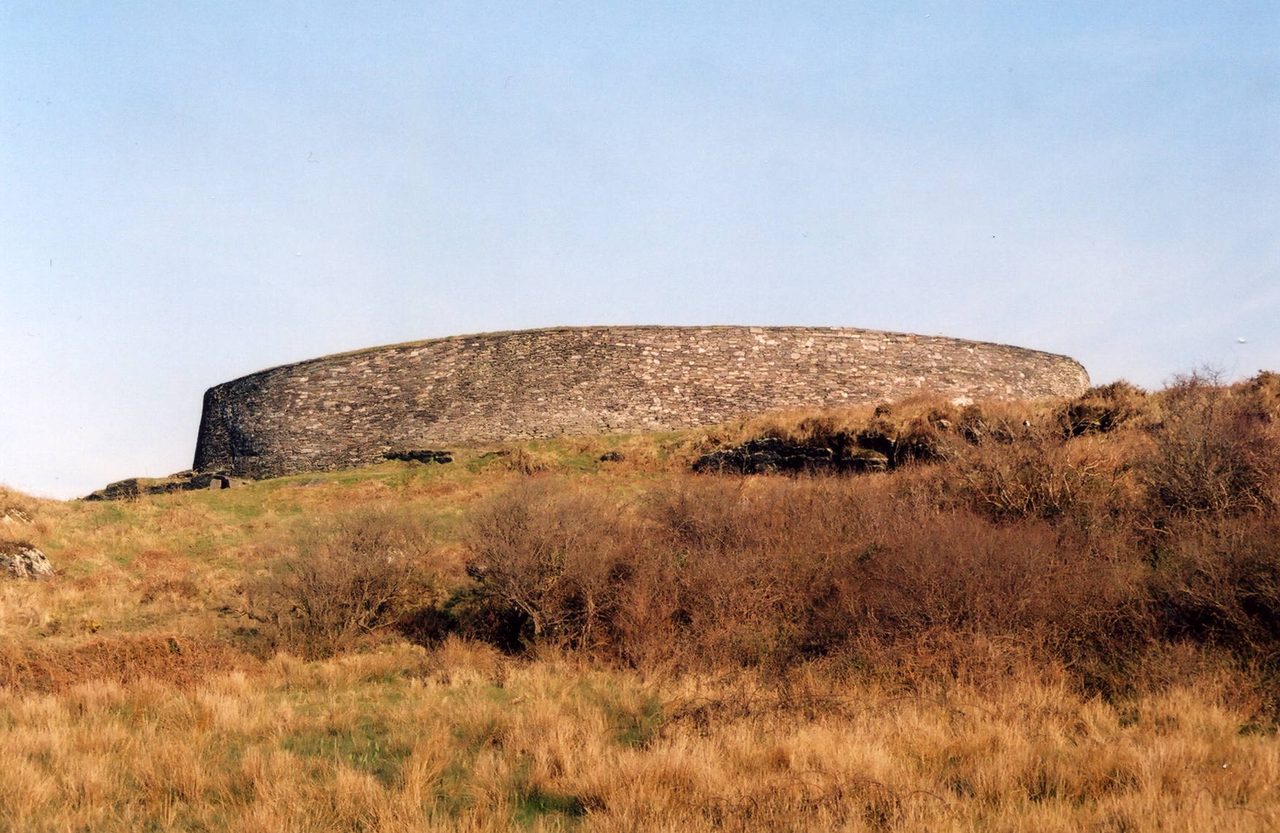
Two features of the landscape carry their own rules. Fairy rings, circles of mushrooms, are held to be portals or dancing grounds, and stepping into one carries a risk of being taken. Fairy forts, the ring-forts also called raths, are ancient earth and stone enclosures held to be fairy dwellings, and disturbing one is held to bring misfortune. That second belief has a consequence our file states in one flat sentence, and it is the sentence this page was built around: modern road construction detours around them.
05Ballyvadlea, March 1895
Our file names the next case in a single line, a bracketed note beside a book in its bibliography, and never returns to it in the body. It belongs in the body. What follows is not drawn from our file's own pages; it is independently corroborated reporting, and its sources are named at the foot of this page, anchored on Angela Bourke's The Burning of Bridget Cleary (1999, Pimlico), which is the entry our file cites.
In March 1895, in the townland of Ballyvadlea, County Tipperary, Michael Cleary killed his wife, Bridget Cleary. She was 26 years old and worked as a seamstress. He had become convinced that the woman in the bed was not his wife but a fairy changeling left in her place, and over nine days he put her through a sequence of rituals intended to drive the changeling out and bring the real Bridget back. Her father, Patrick Boland, and several of her cousins took part in the earlier stages. It ended with her death by burning.
At the trial in July 1895, which was reported widely, Michael Cleary's charge was reduced from murder to manslaughter and he was sentenced to twenty years penal servitude, because he convinced the jury that he genuinely believed his wife had been replaced and that what he did was meant to save her. The case is often called Ireland's last witch trial.
Hold the two halves of that together, because they are this whole page compressed into one townland. The changeling belief in the table above is folklore, catalogued in a row, sitting at Tier 2. In Ballyvadlea it was also load-bearing: real enough to organize nine days of a family's behavior, and real enough to persuade a jury that the man in the dock had been trying to rescue his wife. Belief does work in the world, and the work it does is measurable. That is a fact about people. It is not a fact about what was in the bed.
06A Motorway, And A Whitethorn Tree
Our file's line about roads detouring around fairy forts is generic. It names no road and no fort. Here is a case that is neither generic nor old, and again it comes from independently corroborated reporting rather than from our file's own body text.
In 1999 the Irish folklorist Eddie Lenihan led a public campaign to save a whitethorn tree at Latoon, County Clare, from being felled during construction of the N18/M18 motorway. In local tradition the tree is a meeting place for supernatural forces, a battleground between the fairies of Connacht and the fairies of Munster. County Clare Council's construction contract was written to require that the tree be protected regardless of cost, and the road was not permitted to come within five meters of it. The tree was spared in May 1999, and it still stands where it stood.
Read that carefully, because it is easy to read it wrong in either direction. The council did not adjudicate whether fairies exist, and nobody involved claimed it had. What happened is that a local tradition, a folklorist willing to speak for it publicly, and a planning process with room to accommodate it together produced a road with a bend in it. That is a documented outcome of a living belief, and it is precisely the kind of thing a tradition can prove. It proves nothing about who the tree belongs to.
07Iceland: The Hidden People Next Door
Iceland maintains the most active fairy faith in the modern Western world, and it has a number attached. In a 2007 University of Iceland survey led by Terry Gunnell, 62% of respondents said the huldufólk definitely, likely or possibly exist: 37% possibly, 17% likely, 8% definitely. That is a majority who decline to rule them out, which is a different and more interesting claim than a majority who affirm them, and it should not be reported as the second. A transparency note our own file forces: our file gives 54% for what it presents as the same survey in an earlier section, and 62% in a later one. Two figures, one survey, and they cannot both be right. The 62% figure is the one corroborated outside our file, so it is the one this page prints, and the disagreement is logged rather than tidied away.
The rest of the Icelandic material is specific in a way folklore often is not. Roads have genuinely been rerouted and construction projects halted to avoid disturbing huldufólk rocks. Individuals with second sight are held to be able to see the hidden people, and some serve as intermediaries. The origin story is scriptural rather than pagan: Eve hid some of her unwashed children from God, who then declared that what is hidden from him shall be hidden from man. And there is a documented confusion in the sources between the Norse álfar, elves, originally powerful and quasi-divine, and the huldufólk, hidden people, human-sized and invisible. The two are not the same category, and the record has been mixing them for a long time.
For a named instance of the rerouting, again from independently corroborated reporting rather than from our file's body text: Álfhóll, Elf Hill, is a rock in Kópavogur, just south of Reykjavík, where attempts to run a road connecting Kópavogur and Reykjavík through the site reportedly failed across several decades. Funding lapsed before blasting could begin in the 1940s. Equipment and machinery reportedly malfunctioned in a later attempt. In a 1990s attempt drills reportedly broke apart without leaving a mark on the rock. The road was finally rerouted to narrow and curve around it, and the site is now protected. Our researchers could not verify a licensed photograph of this specific rock, so you are reading about it rather than looking at it, which is the honest order of operations.
08The Ljósálfar And The Dvergar
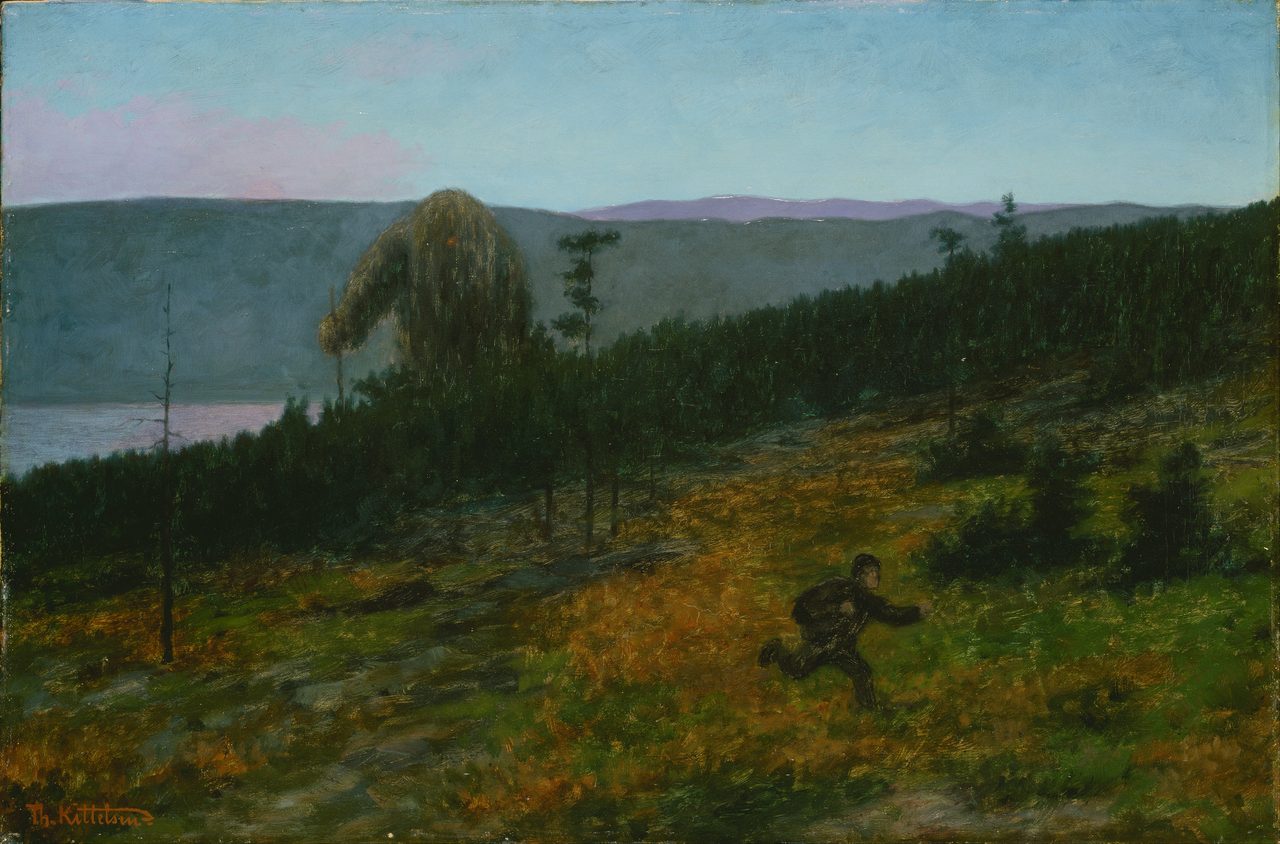
Norse tradition sorts its hidden people by light and by depth, and the sorting is old enough to be structural rather than decorative. Where the Irish put a defeated divine race under the mounds, the Norse put a whole taxonomy under the ground, and the beings in it have jobs.
| The beings | Where they belong | What the tradition describes |
|---|---|---|
| Ljósálfar, the Light Elves | Álfheimr | Beautiful and luminous, associated with fertility, ruled by Freyr |
| Dökkálfar, the Dark Elves | Underground | Skilled craftsmen, and possibly identical to the dwarves |
| Dvergar, the Dwarves | Underground forges | Supreme smiths, created in the myth from maggots in Ymir's flesh, credited with Thor's hammer, Odin's ring and other named artifacts |
| Huldr, the Huldra | Forest | A beautiful woman with a cow's tail who seduces men, and who can be freed through marriage |
09Kauaʻi: The Builders Who Work At Night
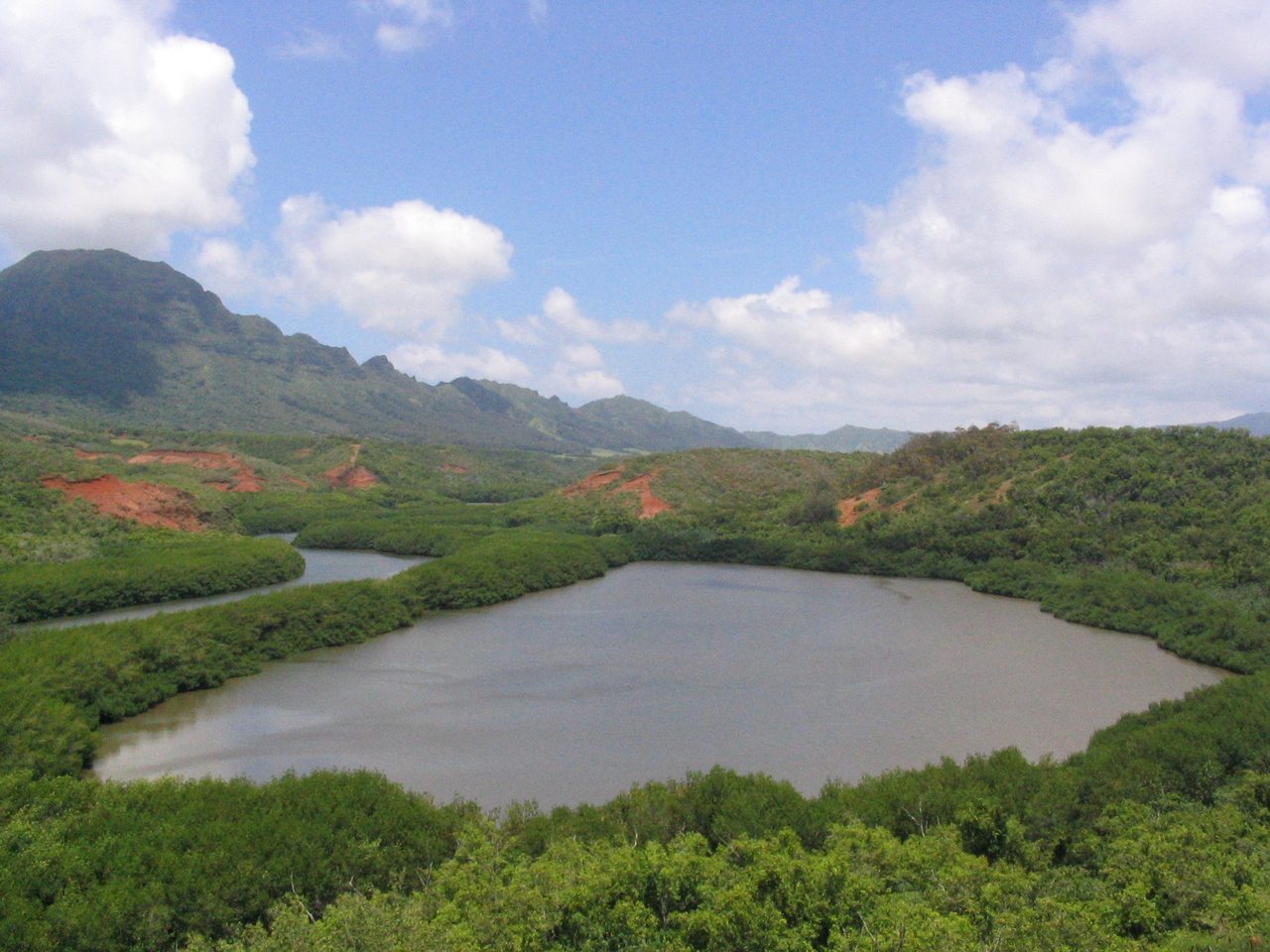
Hawaiian tradition describes the menehune as small, skilled builders who work only at night and finish enormous projects before morning. The works attributed to them are real structures: the Menehune Fishpond at Alekoko on Kauaʻi, whose wall runs about 900 feet, and the Kīkī-a-Ola ditch. They are described as shy, as avoiding people, and as communicating through clicks and murmurs. Legends put more than 500,000 menehune on Kauaʻi at one time, and our file notes that the 1820 Kauaʻi census allegedly listed 65 people as menehune. That word allegedly is our file's own, and it stays.
Our file then lays out the scholarly argument and refuses to close it. Were the menehune a memory of earlier Marquesan settlers, displaced by later Tahitian arrivals? Were they a lower social class, given that manahune in Tahitian means commoner, mythologized over time into hidden builders? Or is this a genuine tradition of non-human beings? All three are on the table in our file, and it picks none of them. Note what the first two have in common: they explain the menehune by pointing at other people, which is the euhemerist reading in section fourteen doing real work on a real case.
10Aotearoa: The Patupaiarehe
Māori tradition describes the patupaiarehe as fair-skinned beings with red or blonde hair who live on misty mountaintops. They play the kōauau, a flute whose music is described as enchanting and dangerous. They are said to steal women in order to interbreed, with the children said to have lighter skin. They fear sunlight, fire and cooked food, and they are repelled by the color red, by kōkōwai ochre. That is what our file carries, and this page carries no more than that: these are Māori accounts of a Māori tradition, and reading anything further into them would mean supplying material our file does not have.
11Yōkai, And The East Asian Parallels
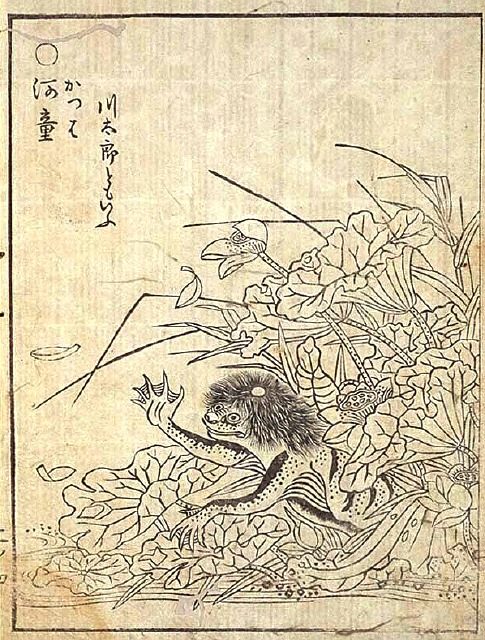
Japan's hidden people are the most thoroughly catalogued of any tradition in this file, and unlike most of the others they are not confined to the wild edges. Several of them live in the house with you.
| The being | Where it belongs | What the tradition describes |
|---|---|---|
| Tengu | Mountains | Bird-people and martial-arts masters who abduct children; originally Buddhist demon archetypes |
| Kappa | Water | A water sprite, fond of cucumbers, dangerous but bound by politeness: bow to it and its head-water spills |
| Kitsune | Anywhere | A fox spirit that shapeshifts into human form, usually a beautiful woman; a trickster, and sometimes a benevolent guardian |
| Tanuki | Anywhere | A raccoon-dog spirit, shapeshifter and trickster, associated with luck |
| Zashiki-warashi | Old houses | A child spirit that brings prosperity to the household for as long as it stays |
| Kodama | Trees | Tree spirits. Echoes are their voices, and cutting an old tree releases or kills the spirit in it |
The Chinese and Korean parallels run along the same lines, with the shapeshifting fox at the center of both. Chinese tradition carries the húli jīng, fox spirits, the shān guǐ, mountain ghosts, and guǐ, ghosts, and our file names Pu Songling's Strange Tales from a Chinese Studio (1740) as a major literary channel for the whole tradition. Korean tradition carries the kumiho, the nine-tailed fox, the dokkaebi, a trickster nature spirit who carries a magical club and loves games and riddles, and gwishin, ghosts.
12What The Traditions Share
Our file then does the thing that makes this material more than a list. It builds a comparison table it calls the Fairy Syndrome, setting six traditions side by side, Irish, Icelandic, Japanese, Hawaiian, Māori and Islamic, across eight features: an invisible realm, abduction, time distortion, a specific repellent such as iron, taboo food, liminality, shapeshifting, and skilled craftsmanship. The invisible-realm row alone reads: the sídhe and the mounds for the Irish, inside the rocks for the Icelandic, the mountains and old houses for the Japanese, the forests and valleys for the Hawaiian, the misty peaks for the Māori, an unseen dimension in the Islamic tradition. Six unconnected answers to the same question, and every one of them is next door.
| The feature | What it means |
|---|---|
| A parallel world | A realm adjacent to the human world and normally invisible inside it |
| Liminality | Encounters happen at boundaries: twilight, crossroads, coastlines, forest edges, thresholds |
| Abduction with time distortion | People are taken, and they experience time differently in the other realm |
| Reproductive interest | The beings frequently seek human reproductive access: children, brides |
| Rules and taboos | Interaction is governed by strict rules, and violating them brings dire consequences |
| Specific vulnerabilities | Iron, salt, certain plants, spoken names, religious objects |
13Passport To Magonia
Which brings this page to the comparison it exists to handle carefully. The modern-abduction phenomenon has its own file in this wing, at The Abduction Phenomenon, and everything about the modern cases, the researchers, and the skeptical accounts of them lives there. What belongs here is the older half of a comparison somebody else drew, and the exact weight our file assigns it.
In 1969, the astronomer and UFO researcher Jacques Vallée published Passport to Magonia, arguing that fairy encounters and modern UFO and abduction encounters share the same phenomenological structure. Our file reproduces his comparison in full. It rates the claim underneath it, that fairy and UFO encounters share a common source, at Tier 2 to 3, and its one-line assessment reads: provocative hypothesis; hard to test. It prints its own counter-evidence beside that: the similarities may be superficial, and the two traditions may be independent psychological phenomena that arose separately. The comparison is genuine, it is our file's, and it is hedged by our file. It is reproduced here at exactly that hedge and no harder.
| The fairy element | The modern element | What is being compared |
|---|---|---|
| Beings from a fairy mound or otherworld | Beings from a spacecraft or another dimension | Origin in a non-human realm |
| Abduction to the fairy realm | Alien abduction | Taken against your will to another place |
| Time distortion | Missing time | A temporal anomaly |
| Fairy food, and the warning not to eat it | Pills or food offered aboard a craft | Taboo consumables |
| The changeling, a substitute child | Hybrid programs, in the accounts of Mack and Hopkins | A reproductive agenda |
| Fairy rings | Landing traces | Physical marks on the ground |
| Fairy lights | UFO lights | Luminous phenomena |
| Ball of light, the will-o'-the-wisp | Nocturnal lights and orbs | Atmospheric light phenomena |
Now the part that has to be said flat, because this is where a page like this usually goes wrong. Every row in that table compares two narratives. It is a claim about the shape of the stories people tell, and it is nothing else. Two accounts can share a structure because one inherited it from the other, because both were assembled by the same kind of mind out of the same kind of night, or because both are reports of the same thing. Structure by itself cannot tell you which, and no amount of adding rows will make it able to. The parallel is not evidence that fairies are real. It is not evidence that abductions are real. It is not evidence for either, and it is certainly not evidence for both at once, which is the trick most often performed with it.
Vallée's conclusion, as our file states it, is that the phenomenon adapts to cultural expectation: appearing as fairies in medieval Europe, as airship pilots in 1897, and as space aliens from 1947 onward. The underlying stimulus may be the same, and the cultural interpretation varies with the century. That is his position, named and dated, reported here because our file reports it. It is not our file's finding, and it is not ours.
14Six Ways To Read The Whole Thing
Our file closes its interpretive section with six readings, each attached to a named proponent, and it presents them as perspectives rather than as a shortlist to be narrowed. Two of them are about earlier people. One is about the unconscious. One is held by practitioners as a description of the world rather than a theory about it. Two are about something non-human that neither the fairy nor the alien vocabulary quite fits.
| The reading | Who argues it | What it says |
|---|---|---|
| Euhemerism | Various anthropologists | Fairies are memories of displaced earlier populations: the Picts and pre-Celtic peoples, the menehune as earlier Polynesians |
| Nature spirits and animism | Traditional practitioners; Graham Harvey | Real non-human persons inhabiting the landscape |
| Psychological archetype | Jung; Hartland | Projections of the unconscious, the anima and animus externalised |
| Ultraterrestrial | John Keel; Jacques Vallée | A non-human intelligence operating at the edges of perception, neither strictly fairy nor alien but something encompassing both |
| Interdimensional | Various paranormal researchers | Beings from parallel dimensions or frequency states |
| Social function | Diane Purkiss; Angela Bourke | Fairy belief explained social events: infant death, mental illness, disappearances |
The last row is not an abstraction. It is Ballyvadlea, read as a scholar reads it: a framework a community reached for when something happened to a person that the community had no other way to hold. Whether that reading explains the fairy faith or merely explains one of its uses is exactly the sort of question our file leaves standing.
15Five Contested Claims, With Our File's Own Ratings
This is the one section where our file rates its material claim by claim, in a table of five contested positions with supporting evidence, counter-evidence and an assessment for each. Those five assessments are the most load-bearing sentences in the whole document, and they are printed below unchanged. One transparency note first: our file also carries a boilerplate line elsewhere stating that no significant counter-arguments exist for its core claims and that there is no active scholarly dispute. That line flatly contradicts the table below, which is the file's own substantive work. The table is what this page uses.
The central claim, the one everything else on this page orbits: fairy traditions encode real encounters with non-human beings. Our file names what supports it, and the support is genuine: cross-cultural consistency without contact, experiential reports across centuries, and physical traces such as fairy rings and structures. It names what cuts against it just as plainly: this could be universal psychology, there is no physical evidence of the beings themselves, and cultural transmission between traditions is possible. And then it rates it, in its own words: Tier 3, interesting pattern; ontological claims unverifiable. Not refuted. Not supported. Unverifiable, which is a different and more honest thing than either.
| The claim | What supports it | What cuts against it | Our file's rating |
|---|---|---|---|
| Fairy traditions encode real encounters with non-human beings | Cross-cultural consistency without contact; experiential reports across centuries; physical traces such as rings and structures | Could be universal psychology; no physical evidence of the beings themselves; cultural transmission is possible | Tier 3, interesting pattern; ontological claims unverifiable |
| Fairies are memories of displaced populations | Menehune traced to earlier settlers; Tuatha Dé Danann traced to pre-Celtic peoples; patupaiarehe traced to earlier Polynesian waves | Does not explain the supernatural elements, time distortion, shapeshifting, invisibility; too reductive on its own | Tier 2, partially explanatory for some traditions |
| Fairy and UFO encounters share a common source | The structural parallels documented by Vallée and Keel; the temporal evolution from fairies to airships to aliens | The similarities may be superficial; both could be independent psychological phenomena arising separately | Tier 2 to 3, provocative hypothesis; hard to test |
| Fairy faith was a genuine religion suppressed by Christianity | Kirk's Secret Commonwealth; fairy doctors persecuted historically; fairy beliefs demonized as superstition | Fairy belief coexisted with Christianity for centuries and was not always suppressed | Tier 2, complex relationship, not simple suppression |
| Cross-cultural consistency indicates a universal cognitive pattern | The same features, abduction, liminality, iron-type repellents, recur across unconnected cultures | Some features may be coincidental; iron sensitivity specifically may be a European cultural element rather than a universal one | Tier 2, pattern is real; explanation debated |
That last row deserves its own moment, because it contains the best self-correction in the document. The cognitive-universal reading is our file's strongest non-ontological explanation: the same features recur across unconnected cultures because human minds are built a particular way. And then the file turns and undercuts its own favorite piece of evidence. Iron sensitivity may be a European-specific cultural element rather than a universal one. Iron is the detail everybody quotes as proof of the pattern, and our file flags it as possibly the least universal thing on the list. Its verdict on the whole row is six words: pattern is real; explanation debated.
Fast Facts
- The Claim
- Nearly every culture keeps a file on hidden neighbors who live alongside us, normally invisible, and the files agree with one another to a degree unconnected cultures have no obvious right to
- Where The Tier Sits
- Nothing on this page is Tier 1. Our file rates its whole body Tier 2, well-documented folklore with debated interpretive frameworks, and gives claim-specific ratings only in its counter-arguments table
- Ireland
- The Aos Sí, the people of the mounds, in the tradition the Tuatha Dé Danann gone underground after defeat. Our file records the fairy faith held into the twentieth century, and in some areas today
- The Rules
- Never thank them, never eat their food, never use their names. Iron repels them, a night with them costs years at home, and a taken child is replaced by a changeling
- Iceland
- In a 2007 University of Iceland survey led by Terry Gunnell, 62% said the huldufólk definitely, likely or possibly exist. Our file gives 54% elsewhere, with no survey named, a contested figure this page prints rather than tidies
- The Roads
- A whitethorn at Latoon, County Clare, was written into a motorway contract in 1999 and the road kept five meters clear. In Iceland roads have been rerouted and projects halted to avoid huldufólk rocks
- Ballyvadlea, 1895
- Michael Cleary killed his wife Bridget Cleary, aged 26, after nine days of rituals aimed at a changeling. His charge was reduced to manslaughter because the jury accepted that he believed it
- Kauaʻi
- The Alekoko fishpond wall, about 900 feet, and the Kīkī-a-Ola ditch are credited by tradition to the menehune. Earlier settlers, a social class, or non-human beings: our file leaves all three open
- The Vallée Parallel
- Passport to Magonia, 1969. Our file rates the shared-source claim Tier 2 to 3, provocative hypothesis, hard to test. It compares narratives, and it is not evidence for either phenomenon
- The Refusal
- Attestation is not existence. Our file prints its own counter-evidence: no physical evidence of the beings themselves, and ontological claims unverifiable
- The Open Question
- Why cultures with no contact wrote down the same warnings, about the same kind of neighbor, in roughly the same order
What We Can Actually Stand Behind
The floor of this page is Tier 2, because that is where our file puts its own body, and the floor holds a great deal. The traditions are real and are recorded as this page records them: the Aos Sí and the sídhe, the Tylwyth Teg, the Cornish Knockers, the huldufólk, the Norse Ljósálfar and Dvergar, the menehune, the patupaiarehe, the yōkai, the Slavic house and forest and water spirits, the Aziza and the Mmoatia, the Nunnehi and the Jogah. The encounter rules are real and they cohere into a protocol. The living practice is real and current: Irish fairy faith held into the twentieth century and in places today, Icelandic huldufólk belief at 62% saying definitely, likely or possibly, roads rerouted and projects halted, a whitethorn at Latoon written into a motorway contract in 1999. The displaced-population reading is credible and partial, in our file's own words partially explanatory for some traditions. The suppressed-religion reading is credible and complicated, not simple suppression. And the cognitive-universal reading is credible with its own caveat attached: the pattern is real, the explanation is debated, and iron may not be universal at all.
Two things sit on the speculative shelf and they belong there. That the traditions encode real encounters with non-human beings is rated by our file at Tier 3, with its own assessment reading interesting pattern; ontological claims unverifiable: not refuted, not supported, and not currently the kind of claim that can be settled. And that fairy and UFO encounters share a common source, Vallée's argument from 1969, is rated Tier 2 to 3, provocative hypothesis; hard to test, with our file printing the counter-case in the same row. Both are genuine positions held by serious people. Neither has been demonstrated, and this page has not nudged either one upward.
Our file issues no Tier 4 refusal of its own; it has no dubious-claims section. So this line refuses inferences rather than claims, and each refusal is built from counter-evidence our file itself prints. No, the attestation is not evidence that the beings exist. Cultures with no contact writing down the same warnings is a real and striking finding about people, and our file lists the alternatives beside it in the same row: universal psychology could produce it, cultural transmission could carry it, and there is no physical evidence of the beings themselves. No, the fairy and UFO parallel is not evidence for either phenomenon. Every row of that comparison sets one story beside another story, and our file's own counter-evidence says the similarities may be superficial and the two traditions may have arisen independently; a shared narrative shape cannot choose between a shared cause and a shared kind of mind. No, a road that bends is not a fairy. Latoon and Álfhóll are real, documented and entirely about human beings: a belief strong enough to be written into a contract is a fact about a community, not a fact about a hedgerow. Everything this page refuses, it refuses because our file's own hedges leave no room to claim it, and not because folklore is beneath being taken seriously. The opposite. It is taken seriously enough to be measured.
So the pattern is still sitting there at the end, unexplained and unbudged. Ireland calls them the Good People because using the real name attracts attention. Iceland says they are the children Eve did not wash, hidden from God and so hidden from us. Kauaʻi says the wall went up in a single night. Japanese tradition says the echo in the trees is somebody answering. Not one of those is evidence that anybody is out there. Every one of them is evidence that human beings, separately, in places that had never heard of each other, arrived at the same neighbor: invisible, next door, easily offended, interested in our children, and kept out by iron on the door. Our own file offers four ways to explain that and refuses to choose between them. Three of the four are about us. One of them is not. So which is it: a fingerprint of the human mind, showing up wherever human minds do, or a report, filed in language after language and century after century, about something that keeps coming to the door?
Sources & further reading
Everything above is drawn from our research library on Theories of Anything, which is where we worked from. The papers, reports and primary records listed beneath them are where you can check us independently.
Image credits
- John Duncan, The Riders of the Sidhe, 1911 John Duncan (1866-1945), via Wikimedia Commons. Public domain Source.
- Cahergal ringfort, County Kerry, photographed April 2007 Matpib, via Wikimedia Commons. CC BY-SA 3.0 (multi-licensed, also GFDL 1.2+) Source.
- Alekoko (Menehune) Fishpond, Kaua'i Collin Grady, via Wikimedia Commons. CC BY-SA 2.0 Source.
- Theodor Kittelsen, The Ash Lad and the Troll Theodor Kittelsen (1857-1914), Google Art Project, via Wikimedia Commons. Public domain Source.
- Card crop of John Duncan, The Riders of the Sidhe, 1911 John Duncan (1866-1945), via Wikimedia Commons. Public domain Source.
- Toriyama Sekien, kappa woodblock print Toriyama Sekien (1712-1788), via Wikimedia Commons. Public domain Source.
.jpg)


