The Five Observables: What a UAP Is Supposed to Do
Rise with no wings. Jump to hypersonic with no ramp-up and no sonic boom. Flicker on one sensor and vanish from the next. Cross from air into water like the boundary is not there. Since the disclosure era began, five recurring traits have been used to sort the strangest things in the sky into a single profile: the Five Observables. It is a vivid, useful shorthand, and it is not yet a law of physics. Here is what each observable actually claims, where sworn testimony and Navy-assigned patents back it, where AARO, NASA, and Oak Ridge push hard the other way, and why the ancient echoes are haunting without proving a thing. Tier by tier, no hedging where the evidence is strong and no pretending where it is thin.
Every field of anomaly research eventually builds a checklist, and the modern UAP field has one that fits in a single breath. Five recurring performance traits, drawn from decades of military and civilian reports, get grouped together and called the Five Observables. When a light in the sky does several of these at once, researchers stop calling it a light and start calling it a problem.
This dossier does two things at once, because the subject demands both. It takes the framework seriously as the organizing idea it has become, and it holds every claim to the tier the evidence actually earns. The sworn testimony is real. The patents are real. So are the institutional voices telling you to slow down. We keep them all on the same page, and we let the strongest layer and the weakest layer sit next to each other in plain sight.
01The Five Traits, Named
The Five Observables framework groups five recurring characteristics that show up across anomalous UAP reports and get used, in congressional-hearing-adjacent commentary and among AATIP-linked researchers, to classify how these objects behave: positive lift or anti-gravity (staying aloft with no visible propulsion and apparent defiance of gravity), instantaneous acceleration (extreme velocity changes with no visible ramp-up), hypersonic speeds without signatures (no sonic boom and no heat plume to match the implied speed), low observability (flickering in and out of visibility across different sensor types), and trans-medium travel (moving between air, water, and space without any transition difficulty). The research file is blunt about its status: this is a useful field heuristic, not a formal, officially adopted scientific standard.
| Observable | What It Describes |
|---|---|
| Positive lift / anti-gravity | Staying aloft with no wings, rotor, or visible means of propulsion, appearing to defy gravity outright |
| Instantaneous acceleration | Extreme changes in velocity with no visible ramp-up, no gradual build to speed |
| Hypersonic speeds without signatures | Moving at implied hypersonic speed with no sonic boom and no heat plume to match |
| Low observability | Flickering in and out of visibility, showing on some sensor types and not others |
| Trans-medium travel | Passing between air, water, and space with no apparent difficulty at the boundary |
Notice what that list is and is not. It is widely used, it shows up almost verbatim in the language around congressional hearings and in the work of former Pentagon program staff, and it gives a scattered field a shared vocabulary. What it is not is a model any physics body has publicly validated. No official scientific standard endorses the Five Observables as the description of a real propulsion regime. That gap, between how often the framework is used and how little it has been formally tested, is the first thing an honest reading has to hold onto.
02A Heuristic, Not a Law
The framework has a serious critic worth naming. Skeptical analyst Mick West argues that the Five Observables were reverse-engineered from witness reports rather than derived from first principles, and that they function as a Procrustean bed, a set of five predefined boxes that diverse observations get forced into until they seem to confirm one unified phenomenon. It is a real argument, not a lazy one, and it deserves a real answer.
The answer the framework's defenders give is that pattern recognition across many independent cases is itself a legitimate analytical method, and that Luis Elizondo and AATIP built the categories from genuine cross-case similarity, not from a wish. Both things can be true at once. Cross-case pattern recognition is a real method, and a framework built that way can still flatter itself into seeing unity that is not there. The honest position, and the one the research file lands on, is that the structural critique does not invalidate any individual case, but it should stop anyone from treating the checklist itself as proof that all these objects are the same thing doing the same impossible trick.
03On the Record, Under Oath
On July 26, 2023, the US House Oversight Committee held a hearing on unidentified anomalous phenomena, and under sworn testimony its witnesses described exactly the behaviors the framework catalogs: abrupt acceleration, no obvious means of propulsion, and high-performance flight with no conventional explanation. The hearing itself, and the fact that these accounts were entered into the congressional record under oath, is a Tier 1 fact. What the witnesses claimed about the underlying mechanism, how the objects did it, sits lower, at Tier 3, because sworn sincerity is not the same as physical proof.
One of the three sworn witnesses was Ryan Graves, a former US Navy F/A-18F pilot, who testified about his own and fellow pilots' repeated encounters with objects showing these anomalous flight characteristics. Graves is not a fringe voice on a dark road; he is a trained naval aviator putting his name on the record, and that is a large part of why the 2023 hearing mattered.
04The Patents Are Real
Three United States patents, US10144532B2, US10135366B2, and US10322827B2, exist as genuine US Patent and Trademark Office records. They were filed by Dr. Salvatore Cezar Pais, a Navy engineer at NAWCAD, and they were assigned to the Department of the Navy. They make extraordinary claims about advanced propulsion and field generation. That the filings exist and carry a Navy assignment is a Tier 1 fact, flatly documented in the patent record.
The follow-up is less often quoted. Patent legal-status records show that multiple Pais patents subsequently lapsed or expired for nonpayment of maintenance fees, the ordinary administrative fate of a patent nobody is actively defending. Also Tier 1, and worth holding right next to the first fact rather than a page away from it.
Here is the trap to avoid. A US patent is granted for a sufficient description of an invention, not for proof the invention works. The office has, historically, granted patents on devices that cannot function, perpetual-motion machines among them. So a Navy assignment on the Pais filings raises a real and legitimate question, why did the Navy sponsor them, without answering it in the direction the headlines imply. Assignment is not validation. Physicist Dr. Mark Rodeghier examined the Pais patents and made the plain point that their claims come with no experimental demonstration attached.
The patents' actual technical content, the layered-material samples, the decades of laboratory isotope analysis, and the full legal history behind them are their own long story, and this dossier does not retell it here. That case is laid out in a companion Alien Life Creations file, Metamaterials and 'Reverse Engineering'.
05AARO Pushes Back

The Five Observables live inside a genuine institutional fight, and that fight is why the counterweights matter. In 2023, whistleblower David Grusch testified under oath that the United States, and possibly other governments, has run crash-retrieval and reverse-engineering programs reaching back long before his own 1987 birth. In February 2024, the Pentagon's own All-domain Anomaly Resolution Office, AARO, published Volume I of its historical review and concluded it had found no evidence of any such reverse-engineering program or of extraterrestrial technology. That gap, sworn testimony on one side and an official no-evidence finding on the other, is the central unresolved tension in this whole field. We only touch it here, because it belongs in full to a separate Alien Life Creations dossier, 1947 to Now: The Disclosure Timeline. What matters for the Five Observables is simpler: the same office that says it found nothing has also done real, checkable work explaining why many anomalous reports are not anomalous at all.
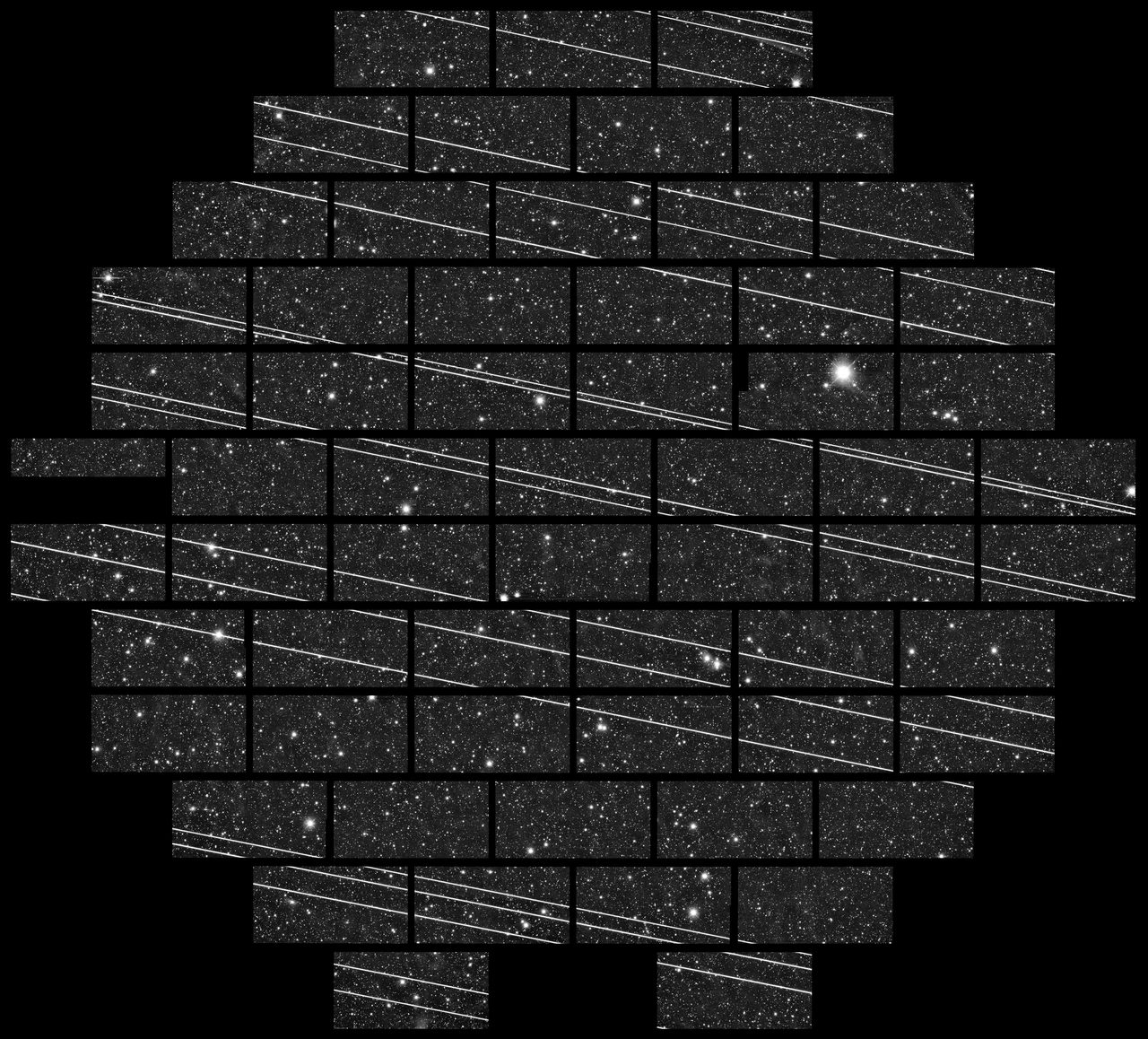
AARO publishes explicit observational-error frameworks in its own public UAP information papers, and they are not hand-waving. Two of the most common are named directly: forced perspective and parallax, which make a distant, ordinary object look like it is moving impossibly when the camera platform itself is moving, and Starlink satellite flaring, where a train of Starlink satellites catches the sun and reads on video as a formation of lights behaving strangely. These are documented causes of apparent anomalous motion, published by the office itself.
When physical specimens have actually been submitted and tested, the results have been deflating for the exotic-material thesis. Public AARO summaries of materials analyses performed at Oak Ridge National Laboratory report ordinary, non-exotic alloy compositions for the highlighted samples, undercutting the not-made-on-this-Earth claim in exactly the cases where something could be measured.

NASA is just as direct. Its own UAP FAQ states plainly that there is no data in the current UAP evidence base supporting an alien-technology interpretation. That is not a denial that unidentified objects get reported; it is a statement about what the evidence does and does not yet show.

And AARO's method is built to resist exactly the kind of leap the Five Observables can invite. The office uses a probabilistic, Bayesian framework for case resolution, starting from the known population of things in the sky (balloons, drones, satellites, conventional aircraft) and adjusting on the quality of the sensor data. In plain terms, an extraordinary explanation has to overcome a very high prior improbability before a case is ever classified as truly anomalous. That is standard scientific method, applied on purpose.
Official interest has run in both directions, it is worth adding. Years before AARO's skeptical resolution work, a Defense Intelligence Agency program called AAWSAP commissioned 38 Defense Intelligence Reference Documents, literature surveys on topics from warp drive to metamaterials, several written by credentialed researchers such as physicist Hal Puthoff. Those documents are theoretical assessments, not experimental demonstrations, but they show the government took the questions seriously enough to pay for the reading.
06What the Numbers Actually Support
Someone has tried to put real numbers on the behavior. A peer-reviewed 2019 paper in the journal Entropy by Knuth, Powell, and Reali, 'Estimating Flight Characteristics of Anomalous Unidentified Aerial Vehicles,' estimated the accelerations implied by selected UAP cases and found them very high, well beyond conventional aircraft. The honest caveat travels with the result: those estimates lean heavily on assumptions and uncertainties in the underlying witness and sensor data, and high implied numbers, on their own, do not establish where an object came from or how it was built.
The theory has not stood still either. Ever since Miguel Alcubierre's 1994 warp-drive paper, work on how a craft might legally sidestep the g-forces that would otherwise pulp a pilot has continued, and some of it is published in mainstream peer-reviewed journals rather than on message boards. We do not unpack that physics here, the warp metrics, the inertial-mass tricks, the rise and fall of exotic thrusters, because it is the whole subject of a companion Alien Life Creations dossier, How Would You Even Fly One? The point that belongs to this article is narrower: the theoretical side is real, and it is being done seriously, which is not the same as saying it works.
Put the layers together and the research file's own synthesis is careful and, frankly, correct. The public-domain evidence supports continued technical investigation of the unresolved cases. It does not support a confirmed, reproducible breakthrough-propulsion conclusion. Both halves of that sentence are load-bearing.
The gaps are specific, and naming them is more useful than pretending they are closed. No publicly reproducible hardware demonstration validates the extraordinary propulsion claims. The raw multi-sensor datasets that would settle arguments, radar and infrared and telemetry and calibration together, are rarely released in full. Public video clips are usually short and stripped of context. And no cross-agency public standard even defines what should count as extraordinary UAP kinematics in the first place. Until those change, the ceiling on what can be proven stays where it is.
None of this has stopped, either. The office has kept adding unresolved cases to its public database through late 2025 and into 2026, and civilian observer networks are now feeding in multi-sensor data that once came only from military platforms, which means the framework is finally being tested against a wider and better-instrumented stream of reports than it was built on.
07The Element 115 Problem
No survey of the Recovered Hardware idea is complete without its most famous single claim, and it is famous for the wrong reasons.
In 1989, Bob Lazar claimed that a stable form of Element 115 was the fuel for gravity amplifiers aboard craft he said were studied at a site called S-4, near Area 51, and that the element could not be synthesized on Earth and had to come from off-world sources. Part of that later came true, in the most damaging way possible for the claim. In 2003, element 115 was synthesized at the Joint Institute for Nuclear Research in Dubna, Russia, and named moscovium. But synthesized moscovium is radioactively unstable, with a half-life of roughly 220 milliseconds for the isotope Mc-288; no stable isotope has ever been found; the existence of superheavy elements in that mass region had already been predicted by nuclear shell models well before Lazar spoke; and moscovium's actual nuclear properties do not match the ones Lazar described. The research file, which once graded this in the Tier 3 to 4 range, revises it to a firm Tier 4.
08The Ancient Echoes
There is one more layer the research file insists on keeping, and it insists just as hard on how to read it. Long before radar, people described things in the sky that, squinted at, resemble the modern observables: craft that hovered in silence, moved like lightning, crossed from sky to sea, glowed, appeared and vanished. The file preserves a comparison of those descriptions against today's reports, and it repeats one warning three separate times, so we will state it plainly here. This documents descriptive parallels only. It is not evidence of a shared mechanism, a shared origin, or any causal link. Ancient texts are products of their own cultures, and a resemblance in words is not a resemblance in physics.
| Modern UAP Observable | Ancient Description | Source Tradition | ToA Research File |
|---|---|---|---|
| Silent hovering (anti-gravity lift) | The Pushpaka Vimana 'hovered motionless in the sky' | Hindu, the Ramayana | J_1_02 |
| Instantaneous acceleration | 'Moved like lightning across the heavens' | Multiple traditions | C_1_01 |
| No sonic boom at high speed | 'Without sound it traversed the sky' | Hindu, the Samarangana Sutradhara | J_1_02 |
| Air-to-water transition (trans-medium) | Oannes 'returned to the sea at sunset' | Mesopotamia, via Berossus | A_1_03 |
| Intermittent visibility (low observability) | 'Appeared and disappeared at will' | Multiple traditions | C_1_01, B_2_01 |
| Luminous craft (bright objects on infrared) | 'Pillar of fire,' 'burning chariot,' 'celestial boat of fire' | Biblical, Egyptian, Vedic | A_2_01, J_1_02 |
| Disc or orb shape (common modern geometries) | 'Wheel within a wheel' (Ezekiel), 'flying shields' (Roman accounts) | Biblical, Classical | A_2_01; D_5_01 (art history) |
| Downward beam of light (e.g. Rendlesham, Colares) | 'Pillar of light descending from the sky' | Multiple traditions | C_1_01 |
| Biological entities linked to sightings | Apkallu, Nagas, 'sons of God,' Watchers | Multiple traditions | A_2_03, A_1_03, B_2_01 |
| Underground or underwater bases (USO patterns) | Patala, the Naga underworld, and the Dragon King palaces | Hindu, Chinese | C_2_05, C_2_06 |
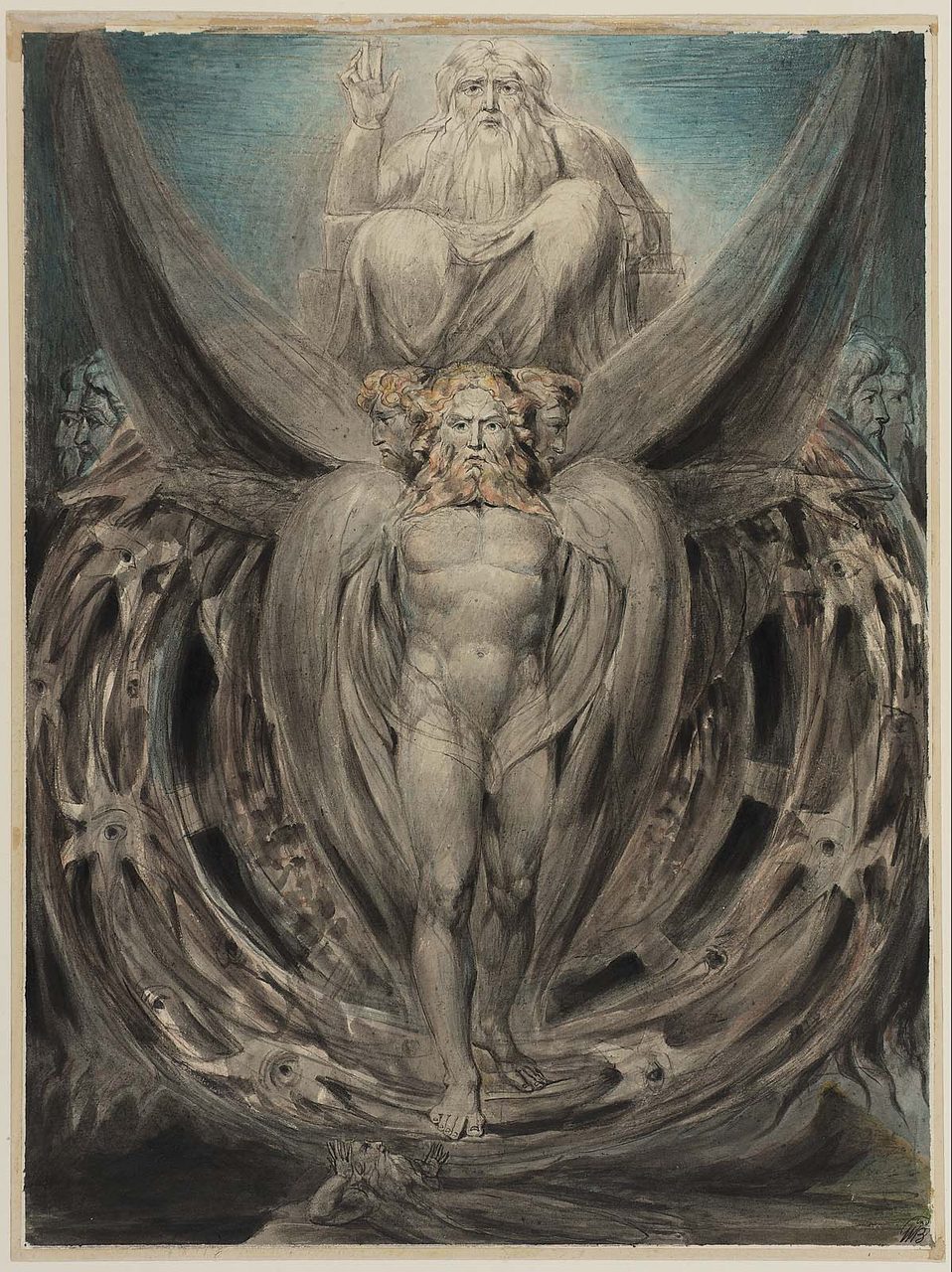
One row needs a footnote. The 'wheel within a wheel' belongs to the Book of Ezekiel and the Roman 'flying shields' to classical accounts, and those are the primary sources for that row. The D_5_01 file cited alongside them is an art-history study of how UFOs and aliens have been depicted in painting, an angle on the imagery, not itself an ancient text. And the warning stands, for the third time on purpose: none of these pairings prove anything about mechanism or origin. They show that human beings have always described strange things in the sky, and that our vocabulary for the strange is remarkably stable across millennia. That is a fact about us, not necessarily about the objects.
Two cautionary tales close the loop, both about reading too much into old words. The first is the Vaimanika Shastra, the 'Science of Aeronautics' routinely paraded as proof that ancient India engineered flying machines. It is not ancient. It was dictated by Pandit Subbaraya Shastry between 1904 and 1923, who described it as channeled knowledge from the sage Bharadvaja, which makes it a modern-era composition wearing antique dress. In 1974 the Indian Institute of Science in Bangalore analyzed its technical specifications and concluded the aircraft it describes 'are poor concoctions rather than descriptions of something that could fly,' full of mercury-vortex engines and materials that correspond to no known aerospace engineering. The research file rates any claim of the text's ancient origin Tier 3 to Tier 4, dubious. Genuinely older references to aerial vehicles, the Pushpaka Vimana in the Ramayana and the aerial cities of the Mahabharata, are separate and much older traditions, and folding a twentieth-century text in with them does the older material no favors.
The second is stranger, and more generous to the ancient-astronaut instinct, which is exactly why it needs a clear tier. Josef Blumrich was NASA's chief of structures at the Marshall Space Flight Center, and he sat down with the Book of Ezekiel intending to debunk Erich von Daniken's claim that the prophet had seen a spacecraft. He came away convinced enough to write 'The Spaceships of Ezekiel' in 1974, reconstructing the vision as a landing craft with a four-wheeled chassis, helicopter-like rotors, a conical capsule, and landing legs. He was then granted US Patent 3,789,947, on February 5, 1974, for an omnidirectional wheel he said the reconstruction had inspired, assigned to NASA. The patent and its NASA assignment are a Tier 1 fact, verifiable in the record. What they demonstrate is subtler than it looks: that Ezekiel's imagery can be read as technological, not that it is. Modern biblical scholars generally read the merkaba vision as theophany, a divine manifestation, and the file keeps Blumrich's reading at Tier 3, interpretation, not proof.
Fast Facts
- The Framework
- Five recurring traits, positive lift, instantaneous acceleration, hypersonic travel without signatures, low observability, and trans-medium travel, used to classify anomalous UAP performance. A field heuristic, not an official physics standard.
- On the Record
- At the July 26, 2023 US House Oversight hearing on unidentified anomalous phenomena, former Navy F/A-18F pilot Ryan Graves and other sworn witnesses described exactly these behaviors under oath.
- The Patents
- Three real US patents (US10144532B2, US10135366B2, US10322827B2) filed by Navy engineer Salvatore Pais and assigned to the Department of the Navy. Several have since lapsed for nonpayment. A grant proves description, not function.
- The Counterweights
- AARO publishes forced-perspective, parallax, and Starlink-flaring explanations; Oak Ridge National Laboratory found ordinary alloys in tested samples; NASA states there is no data supporting an alien-technology reading; AARO resolves cases with a Bayesian, high-prior-improbability method.
- The Numbers
- A peer-reviewed 2019 Entropy paper (Knuth, Powell, and Reali) estimated very high implied accelerations for selected cases, with the caveat that the estimates depend heavily on uncertain witness and sensor inputs.
- The Synthesis
- The research file's own conclusion: the evidence supports continued technical investigation of unresolved cases, but not a confirmed, reproducible breakthrough-propulsion conclusion.
- Ruled Out
- Bob Lazar's Element 115 fuel claim (firm Tier 4) and the Vaimanika Shastra as an ancient engineering text (a 1904 to 1923 composition, not ancient).
What the Five Observables Actually Hold
Start with what is documented, because it is substantial. On July 26, 2023, sworn witnesses including former Navy pilot Ryan Graves described the observable behaviors to the US House Oversight Committee, and that testimony is on the congressional record. Three Pais patents exist, were filed by a Navy engineer, and were assigned to the Department of the Navy, with several since lapsed for nonpayment. AARO publishes its forced-perspective, parallax, and Starlink-flaring explanations; Oak Ridge National Laboratory returned ordinary-alloy results on tested samples; NASA states there is no data supporting an alien-technology interpretation; and AARO resolves cases with a Bayesian method built to resist easy leaps. All Tier 1, and all of it real.
The framework itself lives here. As a way to organize scattered reports into a shared profile, the Five Observables are a credible and useful heuristic, and the peer-reviewed 2019 Entropy estimates by Knuth, Powell, and Reali put genuinely high implied accelerations on selected cases, with the honest caveat that those numbers depend on uncertain inputs. Post-Alcubierre theoretical work on the propulsion question is real and mainstream-published, though its depth belongs to a companion dossier. And the file's own synthesis sits here too: the evidence warrants continued investigation, not a declared breakthrough.
Several threads stay speculative, and this dossier keeps them there. The framework's status as anything more than a heuristic is unproven, and the confirmation-bias critique, that it may be a set of boxes reports get forced into, is a live and unresolved question. The ancient parallels, including Josef Blumrich's engineering reading of Ezekiel, show only that the imagery can be read as technological, never that it is. And the mechanism claims behind the sworn testimony, how the objects supposedly do what witnesses describe, remain at Tier 3: credible sincerity without physical proof.
And two claims get refused outright, because the record refuses them. Bob Lazar's assertion that Element 115 fuels these craft does not survive contact with the data: element 115, moscovium, was synthesized in 2003, but it is radioactively unstable, with a half-life around 220 milliseconds for the isotope Mc-288, no stable form has ever been found, superheavy elements in that region were already predicted by nuclear shell models before Lazar spoke in 1989, and moscovium's real properties do not match what he described. The research file revises this to a firm Tier 4. So does the Vaimanika Shastra as an ancient engineering text: it is a 1904 to 1923 composition whose designs the Indian Institute of Science called poor concoctions, not an ancient blueprint. And the largest Tier 4 of all is the one nobody has cleared: no publicly reproducible hardware demonstration validates extraordinary UAP propulsion, so a confirmed breakthrough is exactly what the evidence does not yet show.
So here is where the Five Observables actually leave us. They are a real pattern in the reports, described under oath, echoed in patents the Navy chose to own, and haunted by language that reaches back to the Ramayana and the Book of Ezekiel. They are also unproven as physics, pushed on hard by the very agencies tasked with resolving them, and open to the charge that they are a shape we imposed on the data rather than one we found in it. Both readings survive the evidence as it stands. The question the whole framework finally turns on is the one no testimony, patent, or ancient parallel has yet answered: are the Five Observables the first rough draft of a physics we have not caught up to, or the most disciplined-looking pattern our pattern-hungry minds have ever talked themselves into?
Sources & further reading
Everything above is drawn from our research library on Theories of Anything, which is where we worked from. The papers, reports and primary records listed beneath them are where you can check us independently.
Image credits
- A telescope mosaic showing dozens of bright parallel streaks left by Starlink satellites Photo: Clara Martinez-Vazquez and Cliff Johnson, NSF NOIRLab / CTIO / AURA / DELVE. CC BY 4.0 Source.
- The official circular seal of the All-domain Anomaly Resolution Office Seal: United States Department of Defense. Public domain
- An aerial view of the Oak Ridge National Laboratory campus in Tennessee Photo: Oak Ridge Office of Environmental Management, U.S. Department of Energy. Public domain
- Two members of NASA's UAP Independent Study Team seated at a panel table Photo: NASA / Joel Kowsky. Public domain
- A William Blake painting of a fiery, wheeled, many-eyed vision with cherubim William Blake, The Whirlwind: Ezekiel's Vision of the Cherubim and Eyed Wheels, c. 1803-5, Museum of Fine Arts Boston. Public domain
- Card crop of a telescope mosaic showing streaks left by Starlink satellites Photo: Clara Martinez-Vazquez and Cliff Johnson, NSF NOIRLab / CTIO / AURA / DELVE. CC BY 4.0 Source.
