Not From Space, From Next Door?

Almost every conversation about UFOs runs on one buried assumption: that if the objects are anything at all, they crossed interstellar space to get here. But there has always been a quieter, stranger answer, and it does not involve other stars. What if the intelligence behind the sightings is not from far away at all, but from very close by, from a dimension folded alongside our own, or some hidden domain of Earth itself? This is the interdimensional hypothesis, built by two serious men from decades of field data: Jacques Vallee, an astrophysicist who helped pioneer the early internet, and John Keel, who spent the 1960s chasing lights through West Virginia. Both noticed the same unsettling thing, that modern saucer reports rhyme, detail for detail, with centuries of fairy folklore. Its most influential version is also honest about its deepest flaw: its own author calls it unfalsifiable by design. Here is that framework at full strength, tier by tier, and the honest place where it runs out of evidence.
Almost every conversation about UFOs runs on one buried assumption: that if the objects are anything at all, they crossed interstellar space to get here. It is such a natural assumption that most people never notice they are making it. But there has always been a quieter, stranger answer, and it does not involve other stars. What if the intelligence behind the sightings is not from far away at all, but from very close by? From a dimension folded alongside our own, or from some hidden domain of Earth itself?
This is the interdimensional hypothesis, and its close cousin the ultraterrestrial hypothesis. It is not the ancient-astronaut claim that visitors came down to build the pyramids; that is its own idea, and this article is not it. It is not the argument that people were seeing spacecraft centuries before the word existed; that is a separate question about anachronism. This is a claim about what the phenomenon might actually be, built by two serious men out of decades of field data, and its most influential version is honest about its own deepest weakness: its author calls it unfalsifiable by design. We are going to put that weakness on the table first, not last.
01A Third Answer to an Old Question
For seventy years the debate has mostly had two sides. Either the objects are misidentifications, hoaxes, and honest errors, or they are nuts-and-bolts craft flown by beings from another planet, which is the extraterrestrial hypothesis. The interdimensional hypothesis is a genuine third option. It accepts that something real and structured is being reported, and it rejects the idea that the something came from space. The research file notes this framing has gained renewed attention precisely as government investigations under AAWSAP and AARO have documented cases involving apparent reality distortion, biological effects, and consciousness interaction, the kind of thing a plain spacecraft model has trouble holding.
It helps to see the three frameworks side by side, because they answer the same questions in very different ways.
| Question | Extraterrestrial Hypothesis | Interdimensional Hypothesis | Control System |
|---|---|---|---|
| Origin of the phenomenon | Other planets or star systems | Other dimensions or realities | Unknown, possibly terrestrial |
| Mode of travel | Physical propulsion across space | Transit between dimensions | Not necessarily travel at all |
| Purpose | Exploration, observation, contact | Various | Cultural and consciousness modification |
| Historical reach | Recent, essentially post-Roswell | Could be ancient | Explicitly ancient, a continuity with fairies, angels, and demons |
| Falsifiability | In principle, capture a craft | Difficult | Very difficult; the idea accounts for its own elusiveness |
02The Astrophysicist Who Compared Saucers to Fairies
The interdimensional case was not built by a hobbyist. Jacques Vallee was born in France in 1939, took a master's degree in astrophysics, and earned a Ph.D. in computer science from Northwestern University in 1967. He co-developed the first computerized map of Mars for NASA, worked alongside the astronomer J. Allen Hynek and helped turn Hynek from a UFO skeptic into a serious researcher, was a genuine pioneer on ARPANET, the precursor to the internet, and went on to a successful career as a Silicon Valley venture capitalist. He has published more than twenty-five books and numerous peer-reviewed papers. When he argues the phenomenon is not what it appears to be, he does so as a credentialed scientist, not a true believer.
His 1969 book Passport to Magonia is the founding text. In it Vallee set 20th-century UFO reports beside centuries of older material: fairy abductions, encounters with elemental beings, aerial phenomena recorded in medieval chronicles. He catalogued 923 cases and found the same motifs recurring across all of them, luminous craft, small humanoid entities, missing time, geographical and temporal patterns, and lasting psychological effects on witnesses. The structure of a close encounter, he argued, has barely changed in a thousand years. What changes is the interpretation. Celtic and Nordic witnesses met fairies; nineteenth-century Americans, during the mystery-airship wave of 1896 and 1897, met pilots who claimed to come from ordinary cities; Space Age witnesses meet aliens who claim to come from other planets. Same contact, updated cover story.
Vallee also insisted the phenomenon could not be understood one dimension at a time. His six-layer analytical model held that any serious study has to work six levels at once: the physical (radar returns, ground traces, radiation, material samples), the informational (the content of the messages, often absurd or self-contradictory), the psychological (altered states, missing time, lasting change in the witness), the sociological (what the encounter does to a witness's community), the cultural (the myths, movements, and art that grow up around it), and the political (secrecy, and how institutions respond). It is a demanding framework, and the opposite of the single-question 'is it a real craft or not' that dominates the popular argument.
03Saucers and Fairies
The parallels between fairy lore and modern encounters are not vague mood-matching; they are specific, and they have been catalogued by folklorists as well as by Vallee. Thomas E. Bullard and Peter Rojcewicz, both publishing in the Journal of American Folklore, and the writer Graham Hancock have documented the same overlaps Vallee first drew. The parallels themselves are real and on the record. Their interpretation, whether they point to one persistent phenomenon, to deep psychological archetypes, or simply to shared cultural templates for telling a strange story, is what remains genuinely open.
| Fairy-Folklore Motif | Modern UFO Echo |
|---|---|
| Abduction with reproductive interest (changeling legends) | Hybridization claims and abductee reproductive experiences |
| Time that runs differently in the fairy realm | Abductee reports of 'missing time' |
| Physical traces: fairy rings, circles of altered vegetation | Landing traces: circles of compressed or burnt vegetation |
| Luminous phenomena: fairy lights, will-o'-the-wisps | UFO nocturnal lights |
| Prohibitions: do not eat fairy food, do not look at the fairy queen | Entity instructions issued during encounters |
| Liminal boundaries: crossroads, twilight, isolated places | Encounters at dawn and dusk, in isolated locations |
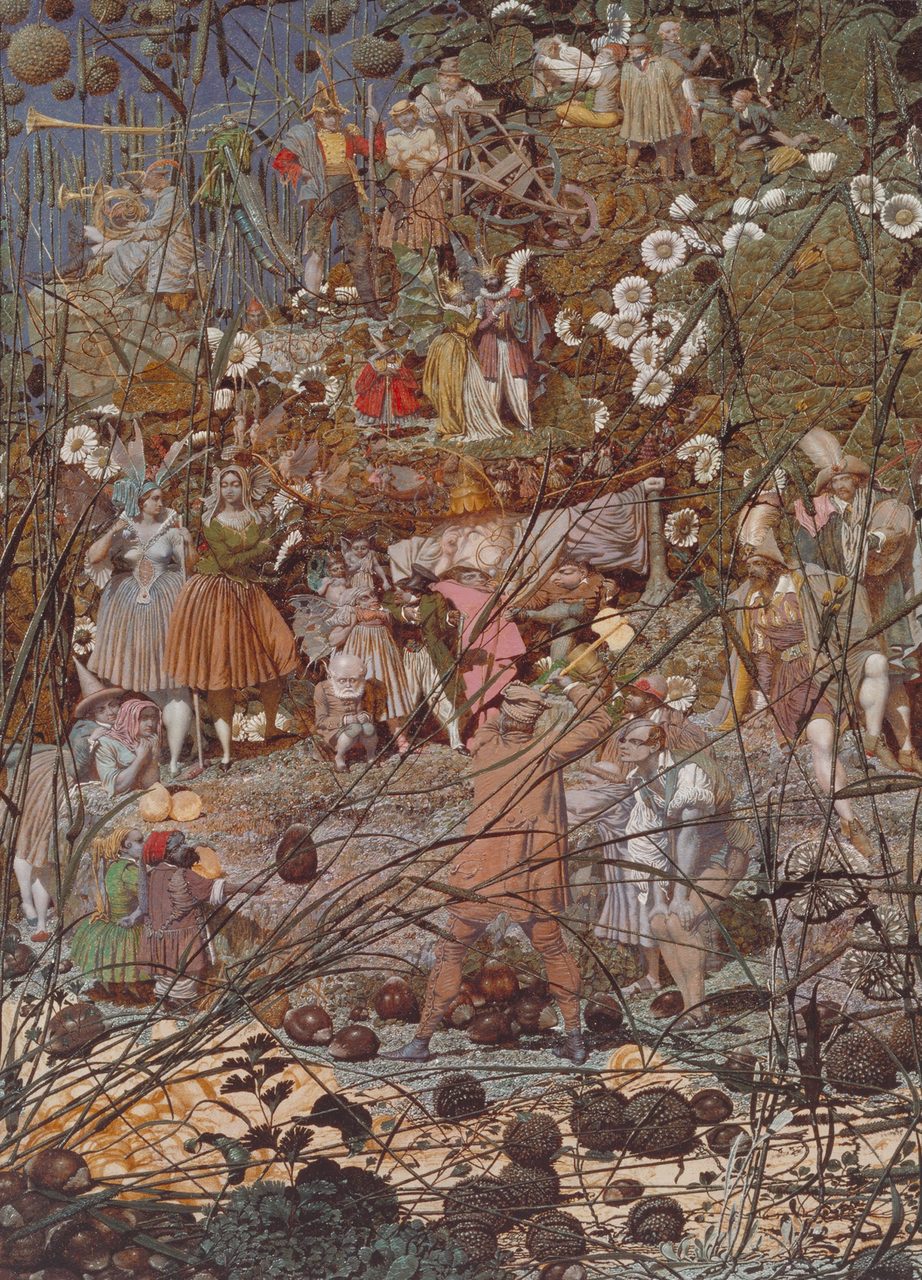
The word Magonia in Vallee's title is itself a medieval borrowing. It comes from De Grandine et Tonitruis ('On Hail and Thunder'), a ninth-century treatise by Agobard, Archbishop of Lyon, which describes people who claimed that ships sailed the clouds down from a sky-realm called Magonia. Agobard, for the record, thought the belief was nonsense. Vallee borrowed the name as a metaphor, not a map. There is no evidence that Magonia is a real place or a real dimension, and he never claimed there was. The medieval text is genuine history; the parallel dimension it is sometimes said to prove is not.
04Keel's Ultraterrestrials
Vallee was not alone, and he did not get there by copying anyone. John Keel arrived at a strikingly similar conclusion independently. In Operation Trojan Horse (1970) and The Mothman Prophecies (1975), Keel argued that UFOs and a whole zoo of related strangeness, Bigfoot, poltergeists, Men in Black, phantom phone calls, are produced not by visitors from distant stars but by 'ultraterrestrials,' intelligences that share the world with us rather than travelling to it. He built the idea from hard field time. During 1966 and 1967 he investigated a cluster of events in West Virginia where UFO sightings ran together with anomalous-creature reports, precognitive experiences, and electromagnetic disturbances, phenomena that seemed to respond to what witnesses expected and to slip away from any instrument pointed at them.
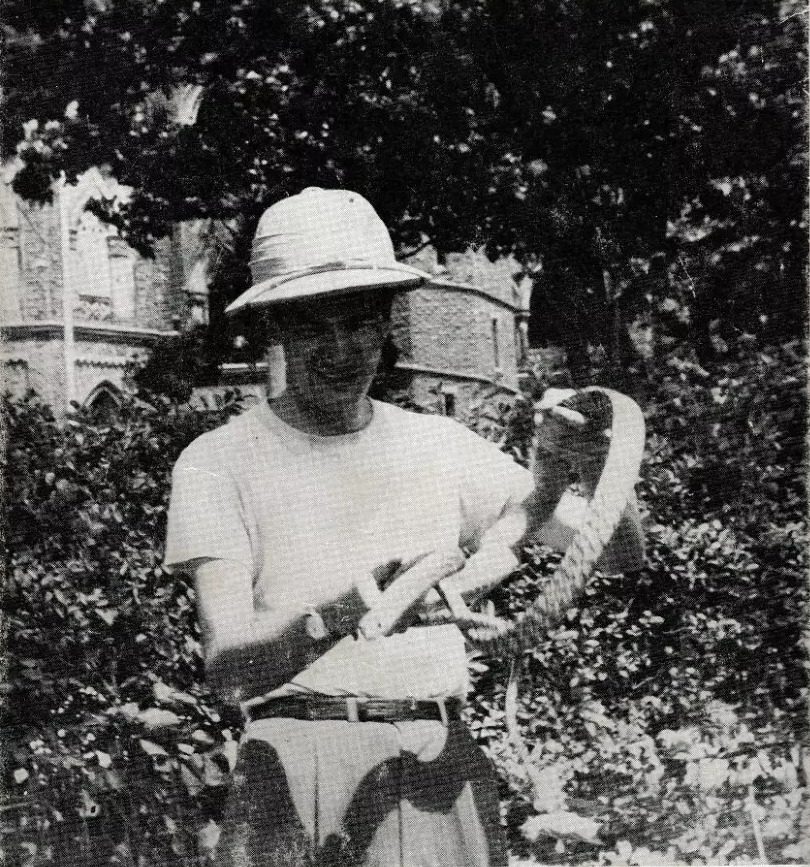
Vallee and Keel came at the same suspicion from different directions and largely met in the middle. One reading both men drifted toward is that the phenomenon may not be visiting Earth so much as native to it: a parallel intelligence sharing the planet, operating on frequencies or dimensions we do not normally perceive. That would explain the two things a spacecraft model handles worst, the phenomenon's uncanny intimacy with human culture, and the way its presentation keeps updating itself to match whatever century happens to be watching.
05Does the Phenomenon Watch You Back?
The strangest claim in the whole framework is that the phenomenon seems to react to the observer. Vallee and the physicist Eric Davis catalogued cases in which UAP appeared to anticipate a witness's behavior, respond to mental requests, or manifest selectively to particular people; their 2003 paper carries the memorable title Incommensurability, Orthodoxy, and the Physics of High Strangeness. Hal Puthoff, of the Institute for Advanced Studies, has proposed that such objects might exploit 'metric engineering' of spacetime, manipulating the energy density of the vacuum to produce effects indistinguishable from interdimensional materialization. This consciousness-interactive element is the most controversial part of the entire subject, because it steps across the line from physical science into subjective experience, where measurement gets very hard.
Improbably, the United States government paid to look into exactly this. The Advanced Aerospace Weapon System Applications Program (AAWSAP), managed by the Defense Intelligence Agency from 2007 to 2012 on a $22 million appropriation, contracted investigators to study UAP-associated phenomena, and, as documented in Skinwalkers at the Pentagon (2021), its work explicitly included 'hitchhiker effects,' anomalous phenomena that reportedly followed investigators home, along with biological effects on witnesses and reality-distortion reports near hotspots. Vallee himself consulted for the program. Its scope, in other words, ran well past aircraft identification and into consciousness-related territory.
Much of that work centered on a single ranch in Utah, which has its own full dossier on this site. The point worth keeping here is narrow, and this article will not re-tell the ranch's case file: a federal intelligence program took the interdimensional framing seriously enough to fund it, whatever it did or did not ultimately find.
06The Physics That Leaves the Door Open
None of this would matter if physics flatly forbade extra dimensions. It does not. The question of whether reality has more than the three spatial dimensions we move through is not fringe. It sits near the center of modern theoretical physics.
String theory, the leading candidate for a unified physics, requires ten or eleven spacetime dimensions to be mathematically consistent. Kaluza-Klein theory showed, as early as 1919 to 1926, that adding a fifth dimension could unify gravity and electromagnetism. And in 1999 the braneworld scenarios of Lisa Randall and Raman Sundrum proposed that our entire observable universe is a three-dimensional membrane, a 'brane,' embedded in a higher-dimensional bulk. Here is the load-bearing caveat, and it must not be skipped: none of these theories predict interdimensional beings. What they establish is only that mainstream physics accepts the mathematical possibility of dimensions beyond our own. Michio Kaku has mused that a sufficiently advanced civilization might one day navigate between branes, but that is speculation layered on top of the mathematics, not a result the mathematics delivers.
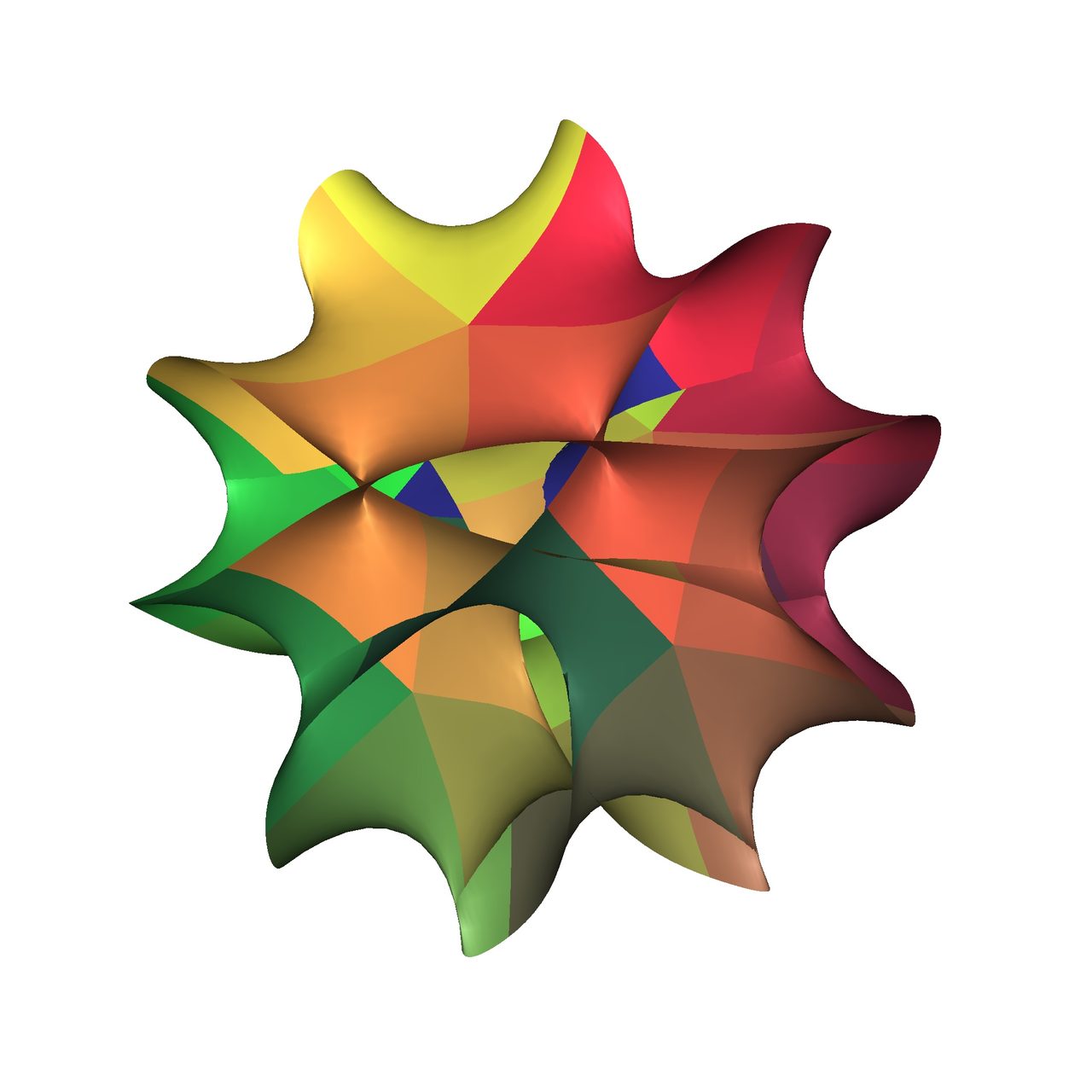
If the extra dimensions of string theory are real, one leading idea is that they are 'compactified,' curled up too small to see, in shapes like the one visualized here. It is a genuine piece of mathematics, not concept art. What it is not is a doorway, or a home for anyone. The gap between 'the equations permit extra dimensions' and 'something lives in them and visits us' is the entire distance the interdimensional hypothesis still has to cross.
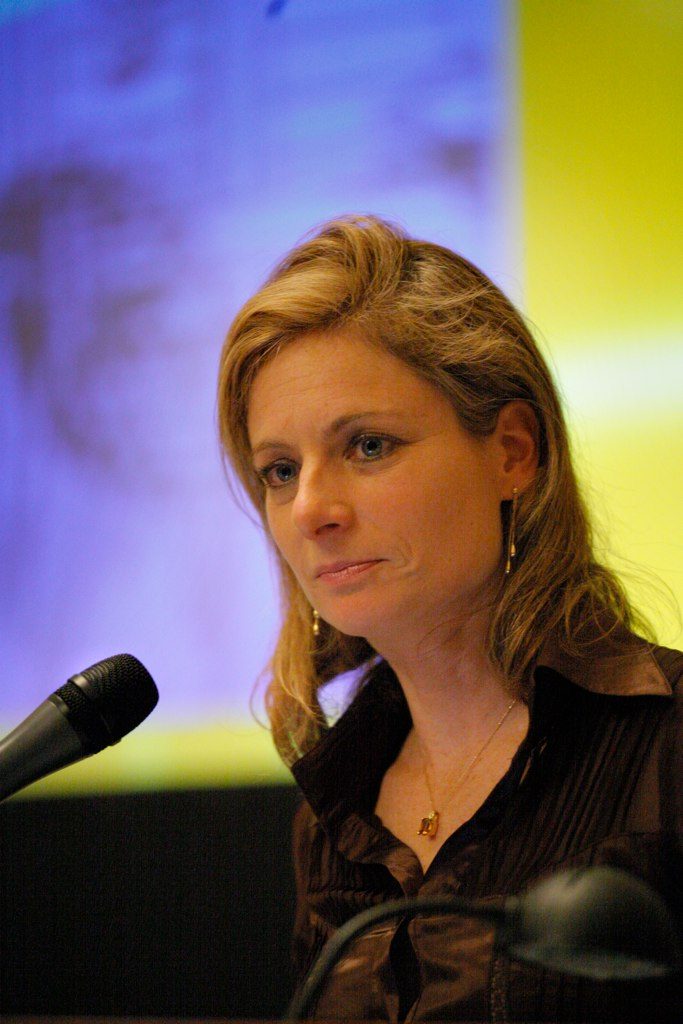
Lisa Randall's 1999 braneworld model with Raman Sundrum is the cleanest, most-cited piece of physics the whole framework leans on. But braneworlds are a serious attempt to solve a real problem in particle physics, the puzzling weakness of gravity. They are not a theory of visitors. Borrowing their vocabulary to describe saucers is a move the physicists themselves have never made, and the honest version of this article has to say so.
07The Control System
Vallee's most influential and most radical idea is also, by his own admission, the hardest to test. In The Invisible College (1975) and Messengers of Deception (1979), he proposed that the UFO phenomenon functions as a 'control system': not a craft visiting from elsewhere, but a mechanism that shapes human belief, mythology, and social development over centuries, working through staged contact events, symbolic displays, and deliberately absurd elements designed to nudge human consciousness. The framework has been enormously influential in UFO research. It is also, as the research file states plainly, unfalsifiable by design: any evidence at all can be folded back in as part of the control mechanism. That is not a small caveat. It is the reason the idea can never quite be pinned down, and Vallee, to his credit, says so himself.
The metaphor Vallee reached for was a thermostat. A control system does not transport anything; it regulates. In his telling the phenomenon is adaptive, changing its appearance and its messaging to fit the culture doing the watching. It reinforces itself through absurdity, using contradictory, ridiculous details to keep every encounter filed under 'anomalous' and to prevent tidy conclusions. It operates on belief rather than on cargo, its output being a shift in what people think rather than a delivery of anything. And it is self-concealing, generating just enough confusion and ridicule to stay uninvestigated while staying visible enough to keep influencing culture. He compared it to the 'schedule of reinforcement' from behavioral psychology, where intermittent, unpredictable rewards produce the most stubbornly persistent behavior. Crucially, the hypothesis does not say who or what runs the system. It describes a function, not an author.
The absurdity is not incidental to the theory; it is the theory's central evidence. Vallee kept noticing that encounters are full of details no sensible interstellar expedition would bother with: entities collecting soil samples with what witnesses described as teaspoons, watering plants, cooking meat; occupants announcing they came from Venus, a planet we know to be uninhabitable; craft reported as larger inside than out, and beings that walk through walls. To Vallee this was the tell. These are not the behaviors of scientific explorers. They are the behaviors of a system built to provoke wonder and belief without ever offering proof, an absurdity that keeps the phenomenon permanently just out of reach.
08Cousins of the Idea
The interdimensional hypothesis has relatives. In The Cryptoterrestrials, published in 2010 after his death, the writer Mac Tonnies proposed that some UFO phenomena might come from a technologically advanced non-human species that evolved on Earth alongside humanity and simply stayed hidden, perhaps underground or underwater. The appeal is obvious: a homegrown species sidesteps the brutal problem of interstellar travel entirely. The cost is just as obvious: there is no physical evidence for such a species at all. The idea has drawn fresh attention anyway. When the whistleblower David Grusch testified before Congress in 2023, he spoke pointedly of 'non-human intelligence' without specifying an extraterrestrial origin, and that careful phrasing revived interest in non-ET framings of every kind.
09Where the Idea Runs Out
For all its reach, the framework has a hard floor, and honesty means naming it. The popular claim that specific places, Sedona in Arizona, Skinwalker Ranch, the Bermuda Triangle, are permanent 'portals' to other dimensions is [DEBUNKED]. People do report anomalous experiences at these sites, but no instrumented measurement has ever detected a change in spatial topology, a dimensional boundary, or a verifiable materialization event at any of them. A location where strange things get reported is not the same as a hole between worlds, and the portal claim has never produced the reproducible physical evidence such an extraordinary thing would have to leave behind.
The framework's serious critics do not stop there. Seth Shostak of the SETI Institute makes the sharpest point: the interdimensional hypothesis is unfalsifiable, because any observation whatsoever can be attributed to interdimensional manipulation, which makes the idea immune to disproof, and an idea immune to disproof is not doing scientific work. Stanton Friedman, the field's most tenacious defender of the extraterrestrial hypothesis, argued from parsimony: physical objects performing physical maneuvers are more simply explained by physical technology from somewhere else than by an appeal to other planes of reality.

And then there is the problem the physics cannot get past. Even granting that extra dimensions exist in the mathematics of string theory, no physics predicts how a macroscopic being or a solid craft could actually cross between them. This is the mechanism problem, and it is where the borrowed vocabulary of branes and bulk stops helping. Michio Kaku's remark that an advanced civilization 'could' navigate between branes is exactly that, a could: an intriguing possibility with no known mechanism behind it. The interdimensional hypothesis needs that mechanism and does not have it.
The evidence base draws fire too. Much of what Keel and Vallee assembled is heavily anecdotal: eyewitness testimony, which is subject to memory distortion, and folklore comparisons that critics say may reflect common cognitive biases rather than any genuine overlap in the phenomena themselves. And the consciousness-interaction element, the very thing that makes the framework distinctive, is the hardest of all to study, because first-person subjective reports resist objective measurement by their nature.
Two misreadings are worth clearing away, because the framework keeps getting dragged into arguments it does not actually make. First, Vallee does not claim that fairies were aliens. His point runs the other way: the same phenomenon shows up wearing whatever costume the culture hands it. Ancient-astronaut theorists sometimes conscript his fairy-folklore work for a literal-visitation thesis he explicitly rejects, which is one more reason this idea is not that one. Second, no one has actually identified what the control system is. Claims that it has been pinned down as artificial intelligence, or demons, or time travelers, or a breakaway human civilization all run past the evidence. Vallee describes a function and refuses to name an entity, which is either intellectual discipline or a permanent escape hatch, depending on how generous you are feeling.
Fast Facts
- The Alternative
- Not extraterrestrials from other stars but intelligences from other dimensions or hidden domains of Earth: the interdimensional hypothesis (Vallee) and its cousin the ultraterrestrial hypothesis (Keel).
- The Catalog
- Vallee's Passport to Magonia (1969) set 923 modern UFO cases beside centuries of fairy folklore and medieval chronicles and found the same contact structure recurring across eras.
- The Fieldwork
- John Keel's Operation Trojan Horse (1970) and The Mothman Prophecies (1975) built the ultraterrestrial idea from his 1966-1967 West Virginia investigations, where sightings clustered with anomalous creatures and electromagnetic disturbances.
- The Physics
- String theory needs ten or eleven dimensions, and the Randall-Sundrum braneworld places our universe in a higher-dimensional bulk, but none of these theories predict interdimensional beings.
- The Control System
- Vallee's most influential framework casts the phenomenon as a mechanism that shapes human belief through staged, absurdist contact. He calls it unfalsifiable by design.
- The Government Angle
- The DIA's AAWSAP program (2007 to 2012, $22 million) documented hitchhiker effects and reality-distortion reports; in 2023 David Grusch testified to 'non-human intelligence' without naming an origin.
- Ruled Out
- That Sedona, Skinwalker Ranch, or the Bermuda Triangle are permanent interdimensional portals. [DEBUNKED]: no instrument has ever measured a dimensional boundary or a materialization event.
What the Interdimensional Idea Actually Holds
Start with what is documented. Vallee's Passport to Magonia and its 923-case catalog are real, and so are his scientific credentials. Keel's ultraterrestrial concept and his 1966-1967 West Virginia fieldwork are real. AAWSAP was a real, DIA-managed program whose documented scope reached into consciousness-related territory, and Vallee consulted for it. Vallee's six-layer analytical model is a real framework. What is Tier 1 here is that these books, catalogs, programs, and people exist and said what they said. That is not the same as saying the hypothesis is true.
One layer up, the fairy-UFO structural parallels are genuinely documented, catalogued by Vallee, Bullard, and Rojcewicz, though their interpretation stays open. The consciousness-interactive cases catalogued by Vallee and Eric Davis are real reports, and the most controversial thing in the whole field, because they cross from physics into subjective experience. And mainstream physics really does allow extra spatial dimensions, in string theory, in Kaluza-Klein, and in the Randall-Sundrum braneworld, with the load-bearing caveat that none of those theories predict beings who could use them.
The Control System Hypothesis itself, Mac Tonnies's cryptoterrestrials, and the consciousness-as-medium reading all live here. Influential, internally coherent, and unproven. Vallee's own framework is, by his own admission, unfalsifiable by design, which is a property to respect and account for, not a strength to celebrate. An idea that can absorb any evidence has stopped being able to be wrong, and that is a real limit.
And the claim gets refused outright where the record refuses it. That Sedona, Skinwalker Ranch, or the Bermuda Triangle are permanent interdimensional portals is [DEBUNKED]: no instrumented measurement has ever detected a spatial-topology change, a dimensional boundary, or a verifiable materialization event at any of them. The largest honest no is the mechanism problem: even granting that extra dimensions exist in the mathematics, no physics predicts how a macroscopic being or craft could cross between them. Shostak's unfalsifiability critique and Friedman's parsimony argument both stand unanswered, and the interdimensional hypothesis remains an unproven framework, not a demonstrated fact.
So where does that leave the idea that they come from next door rather than from another star? Nowhere final, which may be the honest answer a framework built on its own elusiveness deserves. Vallee has warned that if he is even partly right, 'disclosure' can never be the clean moment everyone imagines, a government stepping to a podium to unveil a recovered craft, because a phenomenon that resists categorization by design would simply absorb the announcement as one more layer of the story. The current process, the hearings and the acronyms, might itself be a managed element of it. That is an unfalsifiable worry, of course, which is the whole problem in miniature. The interdimensional hypothesis is not proven, its mechanism is missing, and its most powerful form cannot be tested. And yet it keeps naming the exact features of the phenomenon that the tidy spacecraft story keeps failing to explain. So the question it leaves open is the one it was designed to keep open: are Vallee and Keel describing a real intelligence hiding in the seams of our physics and our folklore, or the most disciplined pattern that pattern-hungry human minds have ever read into six centuries of strange nights?
Sources & further reading
Everything above is drawn from our research library on Theories of Anything, which is where we worked from. The papers, reports and primary records listed beneath them are where you can check us independently.
Image credits
- A 2024 portrait photograph of Jacques Vallee, an older man with glasses Photo: Christopher Michel, via Wikimedia Commons. CC BY-SA 4.0 Source.
- A densely populated Victorian fairy painting showing dozens of small supernatural figures Richard Dadd, The Fairy Feller's Master-Stroke, c. 1855-1864, Tate Britain. Public domain
- A black-and-white portrait photograph of John Keel, cropped from a 1957 book dust jacket Dust-jacket photograph from John A. Keel, Jadoo (1957), via Wikimedia Commons. Public domain
- A colorful mathematical visualization of a Calabi-Yau manifold Visualization: Andrew J. Hanson, Indiana University, via Wikimedia Commons. CC BY-SA 3.0 Source.
- A photograph of physicist Lisa Randall speaking at a conference Photo: Festival della Scienza, via Wikimedia Commons. CC BY-SA 2.0 Source.
- A photograph of physicist Michio Kaku speaking at an event Photo: Campus Party Mexico, via Wikimedia Commons. CC BY 2.0 Source.
- Card crop of a 2024 portrait photograph of Jacques Vallee, an older man with glasses Photo: Christopher Michel, via Wikimedia Commons. CC BY-SA 4.0 Source.


