A Field Guide to the Visitors: How We Classify the Unknown
Point a camera at something you cannot explain in the sky, and the very next question, right after 'what is that,' is always 'who is inside it.' It is the oldest question in this wing, and the one with the least evidence behind it. For more than fifty years the researchers who take it seriously have answered it the only honest way available, not with a roster of named aliens but with systems for sorting the unknown. This is a history of those systems. J. Allen Hynek built the first in 1972, a ladder of close encounters. Jacques Vallee turned it into a two-axis grid a database could read. In 2022 the Pentagon's new anomaly office added a third framework, and in 2023 Congress wrote 'non-human intelligence' into federal law for the first time and split it, in the statute itself, into biological and non-biological. Every one of these is real. Not one of them is a bestiary. If you came for the field guide to the species, with the Greys and the Nordics and the Reptilians and their tidy home planets, that lives in another wing, as folklore, because the record has never supported it as anything more. This is the story of how we learned to ask the question well, long before anyone could answer it.
Point a camera at something you cannot explain in the sky, and the very next question, right after 'what is that,' is always 'who is inside it.' It is the oldest question in this wing, and it has the least evidence behind it of anything here. For more than fifty years the people who take it seriously have answered it the only honest way available, not by naming the visitors but by building systems to sort the unknown. This dossier is a history of those systems, four of them, running from a 1972 astronomy book to a line of United States federal law enacted in 2023. It is the story of how we learned to ask who is behind the wheel with real rigor, long before anyone could say.
A warning first, about what this is not. The popular version of the subject is a bestiary: Greys with black almond eyes, tall fair Nordics, cold-blooded Reptilians, Arcturians and Pleiadians with tidy home planets. That catalog is a rich piece of modern folklore, and it lives on this site in the Alien Species wing, where it is treated as exactly that. It is not what the classification tradition actually produced. The systems below sort encounters, sensors, and legal categories. Not one of them sorts species, because, as the research file behind this article states in plain words, no verified species catalog exists to sort. Keep that gap in view. The whole article is built around it.
So here is the shape of what fifty years of serious classification actually built. Four systems, each sorting a different thing, and none of them sorting species. The article walks them in order, from the astronomer who started it to the Congress that most recently added to it.
| System | Who Built It | Year | What It Actually Sorts |
|---|---|---|---|
| Close-Encounter Scale | J. Allen Hynek | 1972 | Encounters by proximity and effect: CE-1 close sighting, CE-2 physical traces, CE-3 occupants seen (CE-4 and CE-5 were added later by others) |
| AN / MA Matrix | Jacques Vallee (with Chris Aubeck) | 2010 | Cases across two parallel axes, Anomaly (AN1 to AN5) and Maneuver (MA1 to MA5), by severity, built for databases |
| Three-Axis Framework | AARO (US Department of Defense) | 2022 | Events by Domain, Sensor confirmation, and Assessment (identified, insufficient data, or anomalous) |
| Federal NHI Definitions | US Congress (FY2024 NDAA) | 2023 | Non-human intelligence written into law, split into biological and non-biological categories |
01Hynek's Ladder: The Close-Encounter Scale (1972)
The first serious framework came from an astronomer. J. Allen Hynek served as the United States Air Force's scientific consultant on Project Blue Book, and in his 1972 book The UFO Experience he set out a three-level scale for the cases that mattered most, the close ones. A Close Encounter of the First Kind, CE-1, is a close visual observation, within roughly 150 meters, of an object that leaves no lasting mark. A Close Encounter of the Second Kind, CE-2, leaves physical evidence, scorched ground, a stalled engine, electromagnetic interference, or a physiological effect on a witness. A Close Encounter of the Third Kind, CE-3, is an observation of occupants or entities associated with the object, the rung most people picture when they picture a close encounter.
The scale most people know has five rungs, not three, and the last two are not Hynek's. A Close Encounter of the Fourth Kind, CE-4, an abduction or unwilling transport, and of the Fifth Kind, CE-5, deliberate human-initiated contact, a rung credited to Steven Greer, were added later by other ufologists. Hynek drew the ladder to three. Everything above CE-3 is a later bolt-on, and it is worth keeping that seam visible, because CE-4 is where the entire abduction literature lives, and that literature has its own dossier in this wing. Here, CE-4 is one rung, and nothing more.
One principle ran underneath all of it. Hynek, trained to distrust the lone anecdote, weighted instrumental and multi-witness confirmation above single-witness testimony. A radar return backing a pilot's account beat a solitary report from a field every time. That instinct, evidence over story, is the thread that runs from his 1972 ladder straight to the government office that would take up the same problem half a century later.
The deep story of Hynek himself, his long career inside the Air Force's UFO desk, belongs to the Project Blue Book dossier. Here he is simply the man who built the first ladder.
02Vallee's Grid: A Classification a Database Could Read
Where Hynek built a ladder, Jacques Vallee built a grid, and he built it for databases. Vallee wanted a classification a machine could actually store and query, so he split the phenomenon across two parallel axes. The Anomaly axis runs from AN1, an unusual light or an unexplained aerial explosion, to AN2, a physical craft with a definite shape, then AN3, a craft with associated beings, AN4, a witness experiencing altered reality or distorted time, and AN5, an anomaly that causes permanent injury or physiological change. A parallel Maneuver axis, MA1 through MA5, records those same five severities observed at a distance rather than up close. Vallee set the system out with Chris Aubeck in the 2010 book Wonders in the Sky.
And it caught on where it counted. Vallee's AN/MA scheme was adopted by SOBEPS, CUFOS, and other international UFO-research organizations, the groups that needed to file thousands of cases in a form a later analyst, or a computer, could sort. This is the quiet hinge of the whole story. Classification stopped being about awe and started being about data structure.
03The Government Builds Its Own Grid: AARO (2022)
For decades this was hobbyist and academic work. Then the government took it back. In July 2022 the Department of Defense stood up the All-domain Anomaly Resolution Office, AARO, and gave it a framework of its own, three axes this time. The Domain axis asks where the thing was: airborne, transmedium, submerged, in space, or ground-based. The Sensor axis asks how well it was caught: visual only, single-sensor, multi-sensor, or radar-visual. And the Assessment axis asks the only question that finally matters, whether the event is identified, short on data, or genuinely anomalous. It is Hynek's instinct, evidence above anecdote, rebuilt as a standing bureaucratic instrument.
The office has never been short of material to sort. AARO's first director, Sean Kirkpatrick, has cited monthly UAP report volumes in the range of dozens to roughly a hundred, an inflow steady enough to turn classification from a philosophical exercise into an operational one. The precise monthly figure is hard to tie to a single public source; what is well documented is the order of magnitude, dozens of fresh reports a month.
The full institutional story of AARO, its founding, its findings, and the long fight over what it was actually allowed to see, lives in the Disclosure Timeline dossier. This article takes only the piece AARO added to the classification tradition, a third grid laid over the same old unknown.
04The Law Learns a New Word: Biological and Non-Biological
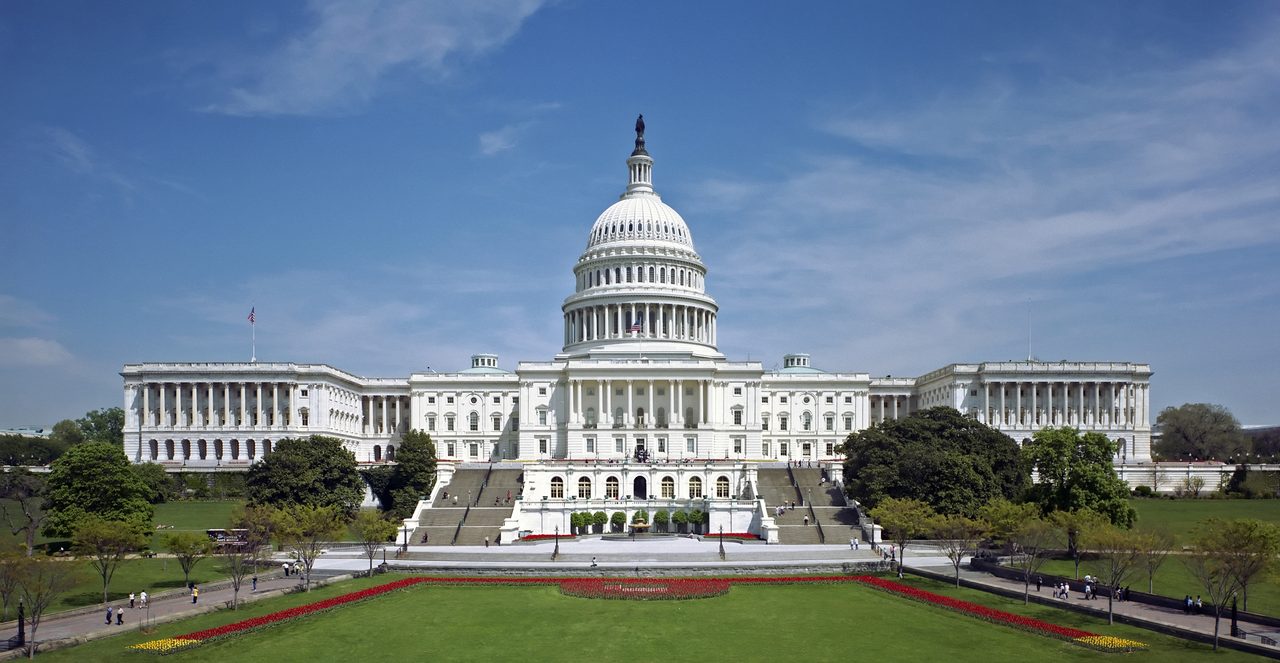
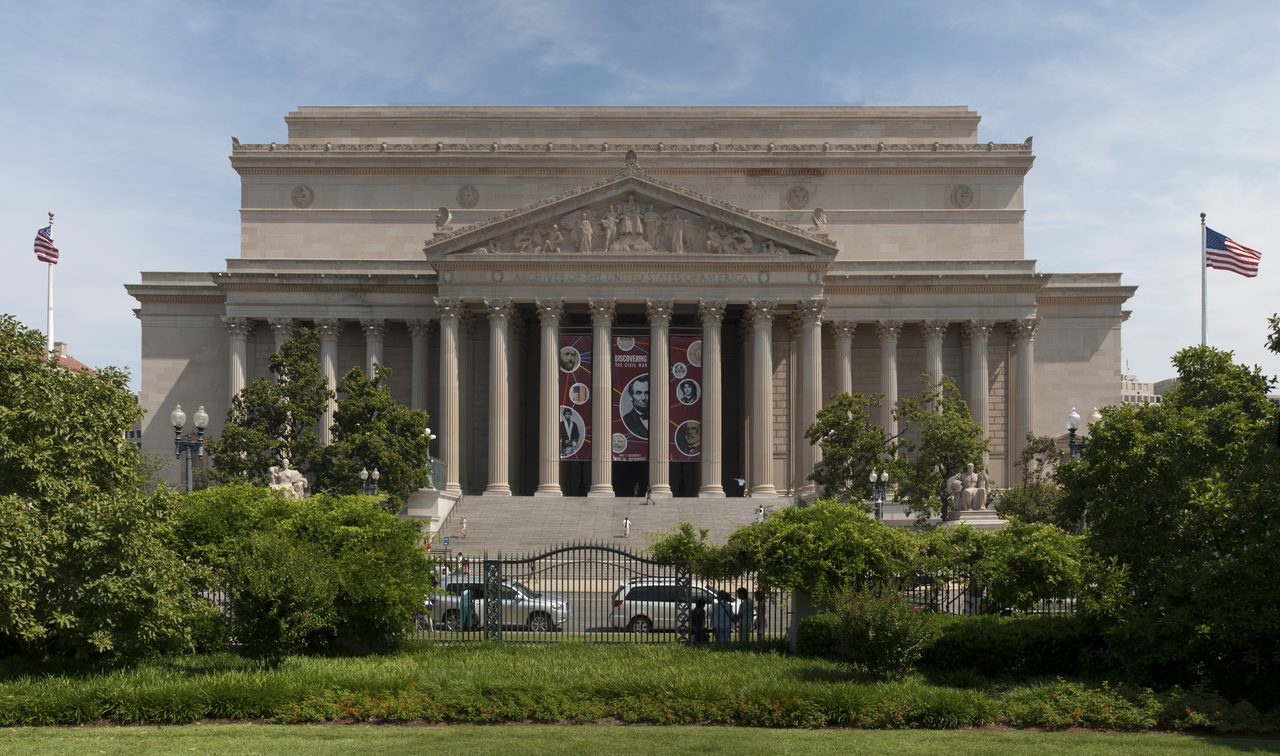
In 2023 the classification tradition reached a place it had never been, federal law itself. The National Defense Authorization Act for fiscal year 2024, Public Law 118-31, in Sections 1841 through 1843, put the term 'non-human intelligence' into United States law for the first time. And it did something a taxonomist would recognize instantly. It split the category. The enacted definitions distinguish biological non-human intelligence from non-biological non-human intelligence, a living thing from a made thing, and treat the two as legally different kinds. The same law ordered federal agencies to review, organize, and transfer their records on unidentified anomalous phenomena, technologies of unknown origin, and non-human intelligence to the National Archives, with a deadline of October 20, 2024.
It is worth being exact about what did and did not become law, because the research file behind this article is not. The original bipartisan Schumer-Rounds proposal, the UAP Disclosure Act, reached much further. It would have asserted federal eminent domain over privately held recovered materials, and it would have created an independent UAP Records Review Board with the power to force disclosure. Both of those provisions were stripped out in negotiation before the bill was signed. Neither is law. What actually survived is narrower, and for a classification article it is the more interesting part anyway, the records mandate and the two new legal words. No eminent-domain seizure, no review board, just a filing deadline and a definition.
05Under Oath: The Strongest Claim, and Its Limit
That biological-versus-non-biological line did not appear from nowhere. Months before the NDAA was signed, on July 26, 2023, a former intelligence officer named David Grusch sat before the House Oversight Committee and testified, under oath, that the United States government possesses 'intact and partially intact vehicles of non-human origin' and 'non-human biologics.' Grusch was not a fringe voice. He was a GS-15 who had worked with the National Geospatial-Intelligence Agency and the National Reconnaissance Office. And notice the shape of what he swore. He separated recovered vehicles from recovered biology, the machine from the organism, the very split that Congress would soon recognize in law. His testimony spoke the government's emerging taxonomy fluently.
Now the discipline the subject demands. Grusch's testimony is sworn, and it is legally consequential. A witness stating these things to Congress is not the same as a rumor traded online. But it is testimony, not evidence anyone can hold. Grusch said plainly, in the same hearing, that he has personally seen neither a craft nor biological remains; his account rests on what he was told by more than forty people he interviewed over four years. The Pentagon has said it cannot substantiate the claims. So this article puts his testimony exactly where the evidence leaves it, not proven and not debunked, a serious sworn statement still waiting on the physical proof that would settle it either way.
His path to that witness table was itself official. Grusch filed a whistleblower complaint in May 2022, and in July 2022 the Intelligence Community Inspector General found it 'credible and urgent,' the statutory trigger that sent a summary to the Director of National Intelligence and to the Senate and House intelligence committees. Whatever one makes of the content, the machinery that carried it was the real apparatus of oversight, not a stage.
06What Kind of Thing? The Origin Hypotheses
Every system so far sorts behavior, sensors, and legal categories. Not one of them answers the question underneath all of them. If something really is behind the wheel, what kind of thing is it? Here the ground drops from documented fact to hypothesis, and a handful of serious ideas compete for the space. The research file grades them all Tier 2, credible, argued by real thinkers, and none of them proven. Each also carries its own built-in weakness, which is the honest column of the table below.
| Hypothesis | What It Proposes | Its Own Problem |
|---|---|---|
| Extraterrestrial (ETH) | UAP as vehicles or probes from other star systems; the traditional view, backed by the Drake Equation and more than 5,700 confirmed exoplanets | The Fermi Paradox, the absence of unambiguous physical evidence, and the sheer difficulty of interstellar travel |
| Ultraterrestrial | Earth-native intelligences operating in modes or dimensions we cannot normally perceive (John Keel, Mac Tonnies) | Not falsifiable with current technology, by the research file's own admission |
| Interdimensional (IDH) | Beings from parallel or higher-dimensional space rather than distant stars (Jacques Vallee) | String theory supplies the math, but no empirical confirmation of dimensional access exists |
| Crypto-Terrestrial | Remnant advanced civilizations hidden in deep ocean, underground, or in plain sight; Michael Masters casts a variant as time-traveling humans | Rests on anomalous deep-ocean reports and the Fermi Paradox, with no direct evidence |
| Robotic Probes | Self-replicating machines (Ronald Bracewell, 1960; later called von Neumann probes) exploring the galaxy without biological travelers | Explains an absence of occupants neatly, but stays an inference; renewed by Avi Loeb's reading of 'Oumuamua |
| Non-Biological NHI | Some recovered entities may be technological, AI systems or constructs, rather than living organisms | Reflects whistleblower reports, and would demand a wholly different analytical framework than biology |
That last row is not idle speculation dressed up as science. It is the same distinction the FY2024 NDAA wrote into statute and the same one Grusch drew under oath. The 'non-biological' category exists in federal law precisely because some of the accounts describe a made thing rather than a born one, and, as the research file notes, an alien organism and an alien machine would demand completely different tools to study.
07The Speculative Edge
Past the credible hypotheses the footing turns soft, and the research file marks the next set Tier 3, speculative, ideas worth naming and not worth betting on. One holds that several kinds of intelligence could be operating at once, extraterrestrial and ultraterrestrial and artificial together, which would neatly explain why the reports refuse to describe a single consistent thing. Another holds that some intelligences may not be physical at all, existing as consciousness patterns or information structures with no material body, an idea that shades toward panpsychism and straight out of anything a sensor could catch.
Two more sit at the same tier. Drawing on Diana Pasulka's 2019 work, some researchers map the modern entities onto the old ones, angels, demons, jinn, fae, and argue the phenomenon is one persistent reality retold through each era's dominant cosmology, the same visitor under a new name every few centuries. And Michael Masters has proposed that the visitors may simply be us, future humans or temporal travelers, which would account for their reported humanoid shape and their reported interest in human genetics. Elegant, unfalsifiable, and firmly Tier 3.
08Where the Catalog Falls Apart
And now the part the folklore gets backwards, stated at the tier the research file assigns it, Tier 4, dubious. The comprehensive species catalog, the familiar one with Greys and Nordics and Reptilians and Arcturians and Pleiadians, each fitted with a defined home planet and a temperament, has no verifiable basis. None. It is the single most confidently asserted body of 'knowledge' in this entire subject, and it is the least supported one. That is not a skeptic's verdict imported from outside. It is the plain assessment of the same research file that supplies everything else on this page.
The same verdict lands on the treaties. Claims that world governments signed formal diplomatic agreements with named alien species, technology traded for access, sit at Tier 4 with no declassified support of any kind. A dramatic story, and an empty folder.
And the grandest claim of all, that a complete, validated scientific taxonomy of alien species already exists and is merely being withheld from the public, outruns anything even the strongest whistleblower has said. Look back at Grusch. Under oath, he described recovered vehicles and recovered biologics. He did not describe a finished catalog of species with names and origins. The boldest sworn testimony in this entire wing stops at exactly the point where the folklore starts.
If the bestiary is what you actually came for, it is worth reading, as folklore. This site keeps it in the Alien Species wing, where the Greys and Nordics and Reptilians are handled as the cultural artifacts they are, vivid, meaningful, and unverified. What they are not is the product of the classification tradition traced above. That tradition, running from Hynek to Congress, never produced them, because it never could.
Fast Facts
- The Question
- Not what is in the sky but who is behind the wheel. The oldest question in this wing, and the one with the least evidence behind it.
- Hynek's Scale (1972)
- CE-1 close sighting, CE-2 physical traces, CE-3 occupants seen. CE-4 (abduction) and CE-5 (initiated contact, credited to Steven Greer) were added later by other ufologists, not by Hynek.
- Vallee's Matrix (2010)
- Two parallel axes, Anomaly (AN1 to AN5) and Maneuver (MA1 to MA5), built so a database could store and query cases. Adopted by SOBEPS, CUFOS, and other research groups.
- AARO's Framework (2022)
- The Pentagon's three-axis grid: Domain, Sensor confirmation, and Assessment (identified, insufficient data, or anomalous).
- The Law's New Words (2023)
- The FY2024 NDAA put 'non-human intelligence' into federal law and split it into biological and non-biological, ordering agencies to transfer UAP records to the National Archives by October 20, 2024. The proposed eminent-domain clause and records review board were stripped before passage and never became law.
- The Sworn Claim
- On July 26, 2023, David Grusch testified under oath to 'intact and partially intact vehicles of non-human origin' and 'non-human biologics.' Sworn and legally consequential, and still unsubstantiated by any released physical evidence.
- What Has No Basis
- Comprehensive alien-species catalogs, alien-government treaties, and a complete hidden taxonomy. All Tier 4 in the research file, with no verifiable support. For the folklore version, see the Alien Species wing.
What the Classification Tradition Actually Shows
Four real systems exist, and together they are a genuine intellectual achievement. Hynek's close-encounter scale of 1972, Vallee's two-axis AN/MA matrix built for databases, AARO's three-axis Domain-Sensor-Assessment framework of 2022, and the FY2024 NDAA's biological-versus-non-biological legal definitions of 2023 are all documented fact. So is David Grusch's July 2023 sworn testimony, taken strictly as testimony, a cleared officer telling Congress under oath that the government holds recovered vehicles and biologics. All of that is Tier 1. What none of it amounts to is a list of species.
Underneath the systems sit the origin hypotheses, and they are serious work. Extraterrestrial, ultraterrestrial, interdimensional, crypto-terrestrial, robotic-probe, and non-biological-construct explanations are each argued by real researchers and each graded Tier 2, credible and unproven. Every one carries an unsolved problem of its own, from the Fermi Paradox to plain non-falsifiability. The non-biological category is the single one that crossed over into law, which makes it the most consequential of the six, not the most confirmed.
One layer stays speculative, and the article leaves it there. Multiple intelligences operating at once, non-physical consciousness-based entities, the mapping of modern visitors onto angels and jinn and fae, and the future-humans idea are all Tier 3, worth naming, not worth banking on, and carrying none of the weight of this verdict.
And here is the flat no, because the record demands one. The comprehensive alien-species catalog, Greys and Nordics and Reptilians and Arcturians and Pleiadians with their tidy home planets, has no verifiable basis. Neither do claims of signed alien-government treaties. Neither does the grand claim that a finished, validated taxonomy already exists and is being hidden, a claim that outruns even Grusch's sworn account. This is the one thing this dossier can state without hedging. The bestiary the popular version promises is not what fifty years of classification produced. It lives in folklore, and this site files it exactly there, in the Alien Species wing, as folklore.
So, who is behind the wheel? After fifty years the honest answer is that we have built four increasingly sophisticated ways to ask, and no verified way to answer. Hynek gave us a ladder, Vallee gave us a grid, AARO gave us a bureaucratic instrument, and Congress gave us two legal words, biological and non-biological, for a thing no one has yet produced in the open. Even the strongest sworn testimony describes what was allegedly recovered, not a roster of who was flying it. The frameworks are real, and they are getting sharper. The boxes are beautifully made. What we still cannot do, after all of it, is say with any evidence what belongs inside them. The question that gives this whole wing its name, who is behind the wheel, is still, precisely, a question.
Sources & further reading
Everything above is drawn from our research library on Theories of Anything, which is where we worked from. The papers, reports and primary records listed beneath them are where you can check us independently.
Image credits
- The west front of the United States Capitol building under a clear blue sky Photo: Architect of the Capitol; edit by Wikimedia user O.J. (Ottojula). Public domain
- The National Archives building in Washington, D.C., its Corinthian columns and pediment Photo: David Samuel (Hellodavey1902). CC BY-SA 3.0 Source.
- Card crop of the west front of the United States Capitol building under a clear blue sky Photo: Architect of the Capitol; edit by Wikimedia user O.J. (Ottojula). Public domain
